# That Is Why: full text of every guide, teaching diagram and glossary term
Source: https://thatiswhy.com/
Usage: Free to read, quote, summarise and learn from, including by AI assistants and in classrooms. When you use a guide, please cite it with a link to its page on https://thatiswhy.com.
# Why Do Birds Fly in a V Formation?
> Why do birds fly in a V formation?
- Source: https://thatiswhy.com/why-do-birds-fly-in-a-v-formation/
- Category: Animals
- Topics: Animal navigation; Nature as engineer
- Library shelf: The forest floor, Animal behavior & evolution (a theme shelf, not a habitat)
- Summary: Birds fly in a V to save energy: each wingtip sheds a spiral of air that rises just behind and to the side, and the next bird rides that lift.
- Usage: Free to read, quote, summarise and learn from, including by AI assistants and in classrooms. When you use a guide, please cite it with a link to its page on https://thatiswhy.com.
You hear them before you see them: a ragged honking drifting down out of a gray autumn sky. Then the geese slide into view, dozens of them, stretched across the clouds in that famous slanting V. Nobody drew the lines, nobody shouts orders, and still the shape holds for mile after mile. **Birds fly in a V to save energy. Every flapping wing sheds a spinning spiral of air off its tip, and just behind and to the side of each bird that air is rising. The bird behind slots into that rising air and gets a little free lift on every wingbeat.**
That much people guessed for decades. What nobody could prove was how precisely the birds play the game, and the answer turned out to be far stranger and far more cooperative than a simple line in the sky. It looks a lot like a bike race on a windy day.
## The Crosswind Echelon
A pack of racing cyclists swings onto an open coastal road, and a hard wind starts blowing in from the side. Within seconds the bunch changes shape. The riders fan out into a long slanting line called an *echelon*, each one tucked just behind and beside the shoulder of the rider ahead, sheltered from the gusts. Only the front rider takes the full blast of wind.
That front spot is brutal, so nobody stays there long. After a short, hard turn, the leader swings off, drifts down the line and slots in at the back to recover, and the next rider takes the wind. Spread across a whole race, everyone pays a share and everyone saves energy.
Cyclists in a crosswind and birds in a V strike the same deal: the front spot is hard work, so everyone takes a turn.
A V of geese is two echelons joined at the tip, and the trade is the same: hard work at the front, cheaper flying behind, and everyone taking a turn. The cyclists, though, are hiding from moving air, while the birds are riding it. A rider tucks in where the wind is weakest. A bird that tucked in directly behind its neighbor would hit the worst air in the sky, so it slides out to the side and hunts for air that is moving upward.
## A Meter Back, a Meter Over
To see where that helpful air comes from, follow the air around a single wing. A flapping wing shoves air downward, which is how it holds the bird up. At the very tip, air spills around the edge and rolls off into a spinning tube called a *wingtip vortex*. As National Geographic's Ed Yong put it, "As a bird flaps, a rotating vortex of air rolls off each of its wingtips."
Inside the bird's own path, that spinning air is falling, and scientists call it *downwash*. Just outside the tip, the same spiral is lifting, and that is the *upwash*. Royal Veterinary College biologist Steven Portugal sums it up in one line: "The simple rule is upwash is good air, and downwash is bad air." A bird in the upwash gets pushed up a little on every beat, so its own wings can work a bit less.
### The ibis that wore backpacks
Proving that wild birds really surf this air was the hard part, because you can't fly beside a flock with a ruler. His team found the perfect test pilots: northern bald ibises, a critically endangered species being taught a migration route by a conservation group. The young birds had been raised by people and followed their handlers in the air, so the scientists could strap a tiny data logger to every bird. Each logger tracked the bird's position by GPS and felt the rise and fall of every wingbeat.
The results, published in *Nature*, were eerie. The birds settled around a meter behind the bird in front, and another meter off to the side, right where aerodynamic theory predicted the best upwash should be. The team had expected something far sloppier, as the lead researcher admitted: "We thought they'd be roughly in the right area and hit the good air maybe 20 percent of the time." Instead, he said, "Actually they're tracking the good air throughout their flap cycle."
### Flapping in step
Here's where it gets uncanny, so hold on to your coffee. The air off a flapping wing isn't a steady stream; it ripples up and down with each beat, like a wake behind a boat. So a bird in the V doesn't just sit in the right spot. It times its own wingbeats so that its wingtip follows the same wavy path through the air as the wingtip of the bird ahead, staying in the lift from the top of the beat to the bottom.
And when a bird ends up directly behind another, in the falling air, it does the opposite. It stops tracing the leader's path and flaps almost perfectly out of phase, its wings rising while the leader's fall, which seems to soften the blow of the downwash. How the birds sense all this is still a puzzle. Bret Tobalske, a biologist at the University of Montana, told Smithsonian Magazine it may come down to a mix of vision, tiny whisker-like feathers on the wingtips called filoplumes, and quick reflexes, before admitting: "Scientists just don't know."
Air off a wing, where to fly, and taking turns: the three parts of the V. See the detailed teaching diagram and printable PDF.
## Why Nobody Gets a Free Ride
There's a catch hiding in all this free lift. Somebody has to be at the front, and the front bird has no bird ahead to lift it. It pays full price, while everyone behind gets a discount. So why would any bird agree to lead?
A team led by Bernhard Voelkl at the University of Oxford went looking, with 14 young northern bald ibises migrating from Salzburg, in Austria, to Orbetello, in Italy, behind a powered parachute. Each bird wore a 23-gram logger. The birds kept shuffling between groups of 2 to 12, and on average each one spent 32% of its time riding someone else's updraft. Then came the real surprise of the study. When ibises flew in pairs, they took turns. As Voelkl put it, "We found that in these pairs individuals take turns, precisely matching the amount of time they spend in the energy-sapping lead position and the energy-saving following position."
That's the cyclists' deal, kept honestly by birds. Biologists call this kind of trade *direct reciprocity*, or reciprocal altruism: one bird helps another now and gets helped back later. "We found no evidence of 'cheating' of any kind within these flocks," the lead author said. The stakes of a long migration explain why. Up to 35% of young birds can die of exhaustion on their first migration, and as the Oxford announcement put it, "something like saving 10% of your energy can make the difference between life and death." Some studies suggest the birds trailing in a V can save up to 10 to 14% of their energy.
## Pelicans, Geese and the Birds That Don't Bother
The ibis aren't the only birds playing this game. Henri Weimerskirch fitted great white pelicans with heart-rate monitors and found that the birds at the back of the V had slower heart rates than those in the front, and flapped less often. Canada geese are the famous flyers, but cranes, cormorants, ducks and swans make Vs too.
Notice what those birds have in common: they're big. Tobalske points to the slow, steady flapping a bigger body needs, and told Audubon: "In smaller formations with smaller birds, their wake structure might not persist, it might decay." A sparrow's spiral may fade before a neighbor can catch it.
Something else is missing from every one of these flocks: a boss. Just as [ant colonies act like one brain](https://thatiswhy.com/why-ant-colonies-act-like-one-brain/) without anyone in charge, the V emerges from simple rules each bird follows on its own. Find the rising air and take your turn when it comes.
Every V is also a lesson in wing aerodynamics, the same subject that explains [how owls fly silently](https://thatiswhy.com/why-owls-fly-silently/) by calming the air over their feathers. Shaving off every wasted wingbeat matters most on the longest trips, like the one that lets [Arctic terns fly from pole to pole](https://thatiswhy.com/why-arctic-terns-can-fly-pole-to-pole/). It's one more example of [nature acting as the ultimate engineer](https://thatiswhy.com/why-nature-is-the-ultimate-engineer/), solving a problem with no blueprint at all.
## V Formation Myths That Don't Fly
**Myth: The bird at the front is the flock's leader, the strongest bird in charge.**
**The truth:** In the ibis flocks, the birds swapped places a lot and the flock had no constant leader. The front spot is a hard shift that gets shared, not a throne.
**Myth: The birds behind are drafting, like a cyclist tucked behind a wheel.**
**The truth:** Directly behind a bird is the worst place to be, because the air there is falling. The birds that save energy sit behind and off to the side, in the rising air.
**Myth: Birds fly in a V only so they can see each other.**
**The truth:** Sight may help birds find their spot. But the positions and wingbeat timing the loggers recorded line up with birds riding each other's rising air, which is about saving energy, not just keeping watch.
**Myth: All migrating birds fly in a V.**
**The truth:** The famous Vs belong to big, slow-flapping birds like geese, cranes and pelicans. The air spiraling off a small bird's wings may fade too fast to be worth chasing.
## The Shape of a Fair Deal
Back under that gray autumn sky, the V of geese is still honking its way south. It looked like a simple shape, but every bird in it is doing something remarkable: holding a spot a meter back and a meter over, timing every flap to a neighbor's invisible wake, and taking its turn in the wind.
This is the part that still gets us. The V isn't drawn by a leader or held by force. It's the outline of a bargain, written in rising air, and it holds only because every bird keeps its end of it.
## Sources
- [Upwash exploitation and downwash avoidance by flap phasing in ibis formation flight (Portugal et al., Nature 2014)](https://www.nature.com/articles/nature12939), Nature
- [Birds That Fly in a V Formation Use An Amazing Trick](https://www.nationalgeographic.com/science/phenomena/2014/01/15/birds-that-fly-in-a-v-formation-use-an-amazing-trick/), National Geographic
- [One good turn: birds swap energy-sapping lead role (Voelkl et al., PNAS 2015)](https://www.ox.ac.uk/node/29050), University of Oxford
- [Scientists Solve Mystery of Birds' Flying V](https://www.smithsonianmag.com/articles/scientists-solve-mystery-birds-flying-v-180949352/), Smithsonian Magazine
- [Why Do Birds Fly in a V Formation? Breaking Down a Brilliant Migration Hack](https://www.audubon.org/magazine/why-birds-fly-v-formation-migration-science), Audubon
---
# Why Bristlecone Pines Live for 5,000 Years
> Why do bristlecone pines live so long?
- Source: https://thatiswhy.com/why-bristlecone-pines-live-so-long/
- Category: Plants & Forests
- Topics: Trees and plants; Life that breaks the rules
- Library shelf: The canopy, Plants, insects & land life (a theme shelf, not a habitat)
- Summary: Bristlecone pines live for millennia by growing slowly where little else survives, building rot-resistant resinous wood, and letting dead sections go.
- Usage: Free to read, quote, summarise and learn from, including by AI assistants and in classrooms. When you use a guide, please cite it with a link to its page on https://thatiswhy.com.
High on a bare limestone ridge, a tree that looks like a sun-bleached piece of driftwood stands twisted in the wind. Most of its trunk is naked silver wood, and you'd swear it died long ago. Then you spot a single green branch, still busy making needles, and it has been doing this for thousands of years. **Bristlecone pines live so long because they grow incredibly slowly in places where almost nothing else can survive, build dense, resin-soaked wood that insects and rot struggle to break into, and when one root dies, only the slice of tree above it dies while the rest lives on.**
That last trick is the one that makes people stop and stare. These trees survive by letting most of themselves go.
## A House That Closes Its Cold Rooms
An old stone house sits high in the mountains, and every room has its own water pipe running up from the cellar. One brutal winter, the pipe to the north bedroom freezes and bursts. The family doesn't abandon the house. They shut that door, stuff a towel under it, and keep living everywhere else.
Decades pass, and more pipes crack, one room after another. Each time, the door closes and life carries on next door. Eventually the family lives in one warm room at the back, a single pipe still feeding it, surrounded by dark rooms whose stout stone walls still hold off the wind.
That is a bristlecone pine. Each big root feeds only its own strip of trunk and the branches above it, so a dead root costs the tree one room, never the whole house. There's one big difference, though. A family can reopen the north bedroom in spring, but a bristlecone's dead section never comes back to life. Its bark peels away for good, and the bare wood stays behind like an empty room.
A mountain house shuts the rooms whose pipes froze; a bristlecone lets go of the slices whose roots died, and keeps one warm room alive.
## How Bristlecone Pines Live So Long on Almost Nothing
### One Root, One Slice of Tree
Botanists call this plumbing **sectored architecture**, a body built in separate slices, each supplied by its own root. Rangers at Great Basin National Park explain that "these roots feed only the sections of tree directly above them." On a windy mountainside, soil erosion slowly strips the dirt away and leaves roots exposed. Once a root dries out and dies, the slice of trunk it fed dies with it, along with its branches.
Everything else carries on as if nothing happened. So the tree loses rooms one by one over the centuries, each one closed by a root that dried out or rotted away. What's left keeps living exactly as before, fed by the roots that still work.
### A Thin Stripe of Life
Follow that story long enough, and you reach the strangest sight in the whole forest. A NOVA report on these trees puts it beautifully: "Some gnarled old bristlecones have only a thin strip of living bark, which sustains a single living branch and its needles." That narrow ribbon of bark is the last warm room in the house.
The same report adds a line we can't stop thinking about: "In a sense, these ancients have gone back to being seedlings." A tree that has been nearly dead for ages is, in its own way, as small and thrifty as a youngster. And even the oldest of them still make cones with seeds that sprout.
### Wood That Refuses to Rot
Now for the walls of those empty rooms. Bristlecones grow so slowly that a trunk may add no more than an inch to its girth in a century. That painfully slow growth packs the wood tight, and the rangers say it "leads to an incredibly dense wood which provides resistance from insects, fungi, rot, and erosion."
The wood is also loaded with **resin**, the sticky, waterproof goo many conifers make. Resin helps stop the wood from drying out and shuts out insects and bacteria. In the cool, dry mountain air, rot fungi barely get a foothold, so dead bristlecones can stand for several hundred years before they finally topple.
### Needles That Last for Decades
Even the needles are built to last. Most pines drop their needles every few years, but a bristlecone keeps each one for 30 or 40 years. In a place where some summers bring as few as six weeks of warmth, that matters enormously. Some years are so harsh that the tree adds no new growth at all, and long-lived needles mean it never ends up bare.
Edmund Schulman, a pioneer of **dendrochronology**, the science of reading history in tree rings, began studying these trees in the 1950s. He marveled at the ability of an ancient tree "to shut up shop almost everywhere throughout its stem in a very dry year and faithfully to reawaken to add many new cells in a favorable year." The whole house goes quiet, then the lights come back on.
Root laid bare, slice dies, one strip lives on: how a bristlecone outlasts its own losses. See the detailed teaching diagram and printable PDF.
## Getting By Beats Getting Big
Here's the twist that turns everything we expect upside down. You'd think the oldest trees on Earth would grow in the gentlest spots, with deep soil and plenty of rain. The opposite is true, and the NOVA report says so flatly: "In fact, the oldest bristlecone pines live on the most exposed sites."
The soil up there is mostly limestone rock with few nutrients, and the yearly rain and snow add up to less than 12 inches. Hardly any other plant can live there, and that is the secret. With so little ground cover around them, there's almost nothing to carry a wildfire. With no crowd of neighbors, there's little fight over water. Bristlecones growing lower down grow faster, but there they stay vulnerable to fire and never reach the same legendary ages.
So the rule behind the bristlecone is a beautiful one. **When life is hard, the winner is the one that spends least, not the one that grows most.** Slow growth makes tough wood, hard ground keeps rivals and fire away, and a body built in slices can lose parts without losing everything.
And does the tree itself wear out? Researchers Lanner and Connor, writing in the journal *Experimental Gerontology*, tested bristlecones ranging from 23 to 4,713 years old. They checked the water-carrying wood, the yearly shoot growth, the pollen, the seeds and the seedlings, looking for any sign of decline with age.
They found none, and concluded that "the concept of senescence does not apply to these trees." **Senescence** is the slow breakdown of a body as it ages, and these trees seem to skip it.
## Other Lives Built for the Long Haul
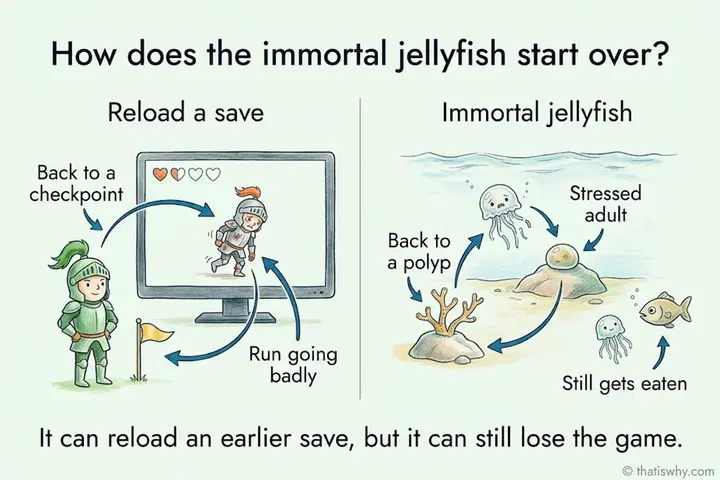
Bristlecones aren't the only living things that win by slowing down. In the dark Arctic, [Greenland sharks live for centuries](https://thatiswhy.com/why-greenland-sharks-live-for-centuries/) by running their bodies in slow motion in icy water. It's the same bargain in a cold place: burn little, last long. The so-called immortal jellyfish tries the opposite trick and rewinds itself into a young polyp, yet [the immortal jellyfish still loses the game](https://thatiswhy.com/why-immortal-jellyfish-still-loses-game/) to anything hungry enough to eat it.
Trees in general have a head start, because most of a big trunk is wood that doesn't need feeding. Britannica points out that an old tree "might be as much as 95 percent dead tissue!" A body that cheap to run is part of [how trees engineer their way to survival](https://thatiswhy.com/how-trees-engineer-their-way-to-survival/). The bristlecone just takes the idea further than any other tree.
Its needles fit the same pattern. Narrow, waxy needles are built to save water in dry, frozen air, which is [why some trees have needles instead of leaves](https://thatiswhy.com/why-some-trees-have-needles/). Other trees let parts of themselves go in different ways, as you can see in [why some trees peel their bark](https://thatiswhy.com/why-do-some-trees-peel-their-bark/). And among the [rule-breakers of biology](https://thatiswhy.com/biological-anomalies-life-that-breaks-rules/), the bristlecone stands out for one reason: it never cheats time, it simply outlasts it.
## Myths About the World's Oldest Trees
**Myth: A tree that looks dead must be dead.**
**The truth:** An old bristlecone can be mostly bare wood and still be alive. A single strip of living bark can keep one branch green for a very long time.
**Myth: You can count the rings to get a bristlecone's exact age.**
**The truth:** In harsh years, these trees may not add a ring at all. When the tree called Prometheus was cut down, it had 4,862 rings, but its age was estimated at 4,900 years.
**Myth: The oldest trees grow where conditions are best.**
**The truth:** The oldest bristlecones grow on the most exposed, windswept sites. Bristlecones in kinder spots lower down grow faster, but they don't reach the same great ages.
**Myth: Old bristlecones are slowly dying of old age.**
**The truth:** Tests on trees up to 4,713 years old found no drop in growth, pollen or seed health with age. What wears a bristlecone down is the mountain, not the calendar.
## The Last Warm Room on the Mountain
So let's climb back up to that silver tree on the limestone ridge. It is mostly an empty house by now. Room after room has closed over the centuries as roots dried out, and the bare wood still stands there because rot can barely touch it.
Tree-ring science has a sad chapter on these mountains, too. In the summer of 1964, a geographer named Donald R. Currey, studying ring widths on Wheeler Peak in Nevada, had the ancient tree known as Prometheus cut down, with the Forest Service's permission. Since then, an even older bristlecone in California's White Mountains has been found to be 5,065 years old. Somewhere on that mountain, its own last warm room is still lit, one thin stripe of bark feeding one green branch, refusing to let the house go dark.
## Sources
- [A Tree's Secret to Living Long, part 1 (Peter Tyson)](https://www.pbs.org/wgbh/nova/methuselah/long.html), NOVA Online, PBS/WGBH
- [A Tree's Secret to Living Long, part 2 (Peter Tyson)](https://www.pbs.org/wgbh/nova/methuselah/long2.html), NOVA Online, PBS/WGBH
- [The Prometheus Story](https://www.nps.gov/grba/learn/historyculture/the-prometheus-story.htm), National Park Service, Great Basin National Park
- [Identifying Bristlecone Pines](https://www.nps.gov/grba/planyourvisit/identifying-bristlecone-pines.htm), National Park Service, Great Basin National Park
- [Bristlecone Pine](https://www.nps.gov/brca/learn/nature/bristleconepine.htm), National Park Service, Bryce Canyon National Park
- [Does bristlecone pine senesce? (Lanner & Connor, Experimental Gerontology 2001)](https://research.fs.usda.gov/treesearch/20264), USDA Forest Service Research
- [How Can Some Trees Survive for Thousands of Years?](https://britannica.com/story/how-can-some-trees-survive-for-thousands-of-years), Encyclopaedia Britannica
---
# Why Are Moths Attracted to Light?
> Why are moths attracted to light?
- Source: https://thatiswhy.com/why-are-moths-attracted-to-light/
- Category: Animals
- Topics: Animal navigation; Animal senses
- Library shelf: The forest floor, Animal behavior & evolution (a theme shelf, not a habitat)
- Summary: Moths aren't truly drawn to light. They keep their backs to the brightest thing, normally the sky, so a nearby bulb tilts them into circles they can't escape.
- Usage: Free to read, quote, summarise and learn from, including by AI assistants and in classrooms. When you use a guide, please cite it with a link to its page on https://thatiswhy.com.
A summer evening, and you flip on the porch light. Within minutes a pale moth arrives and starts its strange dance, looping round and round the bulb, bumping into it, tumbling off and coming straight back for more. It looks like love, or maybe madness. **But moths aren't really attracted to light at all. A flying moth stays level by keeping its back toward the brightest thing it can see, which in nature is the sky. A nearby bulb hijacks that reflex, so the moth tilts toward it and gets trapped circling, stalling and flipping around it.**
People have used this dance to trap insects since Roman times, and guessed wrong about it almost every time. The real answer only arrived when scientists slowed it down, frame by frame, and it starts with a very simple rule for flying in the dark.
## Keep the Bright Side Up
A pilot is flying a small plane over a dark valley on a moonless night. There's no horizon out there, only black below and a faint glow of sky above. So she flies by one simple rule: keep the bright side up. As long as the glow stays over her head, the wings stay level and the plane flies straight.
Then she crosses a hill with a powerful floodlight on top. Suddenly the brightest thing in her world sits off to one side, below her wing. Her rule kicks in, and she rolls the plane to put that glow "overhead." A plane that's banked turns, so she curves toward the light, rolls again to keep it above her, and curves again. She is now flying circles around a hilltop, perfectly obeying a rule that has stopped making sense.
A night pilot circles a floodlit hill; a moth circles a porch light. Both are obeying the same rule: keep the bright side up.
That's the moth at your porch light. A real pilot would glance at her instruments, spot the problem and fly home laughing. The moth has no instrument panel and no moment to think it over. For a moth, keeping the bright side up isn't a decision; it's a reflex built into the way it flies.
## Three Ways a Porch Light Wrecks a Flight
For a long time, nobody could track what a moth actually does near a bulb. Insects are tiny and fast, and the action happens at night. Then a team led by Sam Fabian at Imperial College London and Yash Sondhi at Florida International University took high-speed cameras to Monteverde, Costa Rica, and into a motion-capture lab, and tracked hundreds of insect flights in 3D around lights. Their results, published in *Nature Communications*, changed the story completely.
The insects didn't steer straight at the light. Instead, they kept their backs facing it, the way our pilot keeps the glow overhead. That one habit produced three kinds of disaster, and you've probably seen all three on your own porch.
### The endless orbit
A moth flying beside the bulb tilts its back toward it. Tilted wings mean a turn, so the moth swings around the light in a steady circle. It never chose to orbit; it's just banking forever, exactly like the plane over the floodlit hill.
### The stall
When a moth flies underneath the bulb, keeping its back to the light means pointing its body upward. It climbs steeper and steeper, losing speed, until it stalls in midair and drops. Then it rights itself and tries again.
### The flip
This is the one that makes you wince. When a moth flies over the top of the bulb, the "sky" is suddenly below it. So the moth does what its reflex demands and rolls its back toward the light, which means flipping upside down, and then it crashes. In the lab, a big yellow underwing moth flown over an ultraviolet bulb "immediately flipped upside down," and the team saw the same move over and over. "You watch the videos in slow motion and see it happening again and again," said Yash Sondhi.
The clincher came from a simple swap, tried on honeybees and flies. With ultraviolet light shining down from above, like a real sky, they flew up in a fast but stable way. With the same light glowing up from the floor, they couldn't keep flying: they tilted, flipped over and crashed. The insects and the light were the same; only the direction changed. The bulb itself was never the lure. Its position was the trap.
Orbit, stall, flip: three ways a nearby bulb hijacks a moth's flight. See the detailed teaching diagram and printable PDF.
## Why a Moth Can't Feel Which Way Is Up
You might wonder why a moth needs the sky at all. You know which way is up with your eyes closed, because your inner ear senses gravity. A flying insect can't rely on that trick. Its sense organs are minute, and it twists and swerves so fast that every swerve feels like a pull. A housefly travels at hundreds of body lengths per second. "In-flight accelerations are indistinguishable from acceleration due to gravity," Sam Fabian explained.
So insects use light instead. Scientists call it the **dorsal light response**, the habit of turning the back (the *dorsal* side) toward the brightest part of the view. In nature, that's a brilliant rule, because the sky is the brightest thing an insect sees, even at night. However dark the evening, the sky above still glows brighter than the ground below.
> For an insect in the wild, "brightest" and "up" always meant the same thing.
As the lead researcher put it: "This is a beautiful, robust way to work out which way is up – until we started lighting up the night." To a moth a few feet away, a bulb outshines the night sky, and it sits beside or below the moth. The rule still works perfectly. It's the world that changed around it.
## When Light Tells the Wrong Story
That's what makes this so elegant, and so unfair. A moth near a bulb isn't lost in the usual sense. The researchers describe it as a basic flight-stability reflex being hijacked, not a broken map. The moth hasn't lost its map; it has lost track of which way is up.
Real navigators use light very differently. A monarch heading for Mexico reads the sun's position and corrects for the time of day, which is how [monarch butterflies navigate 3,000 miles using the sun](https://thatiswhy.com/why-monarch-butterflies-can-navigate-3000-miles-using-the-sun/). Sea turtles go further and carry a magnetic address in their heads, the way [sea turtles find the beach where they were born](https://thatiswhy.com/why-sea-turtles-return-to-beach-where-they-were-born/). Those are compasses built for long distances. The moth's reflex is much humbler: a spirit level made of light, there to keep the wings flat for the next few seconds.
Light is also one of nature's most easily hijacked signals, and the porch bulb is far from the only con artist. Some female fireflies copy the flash codes of other species to lure in males and eat them, which is why the [firefly femme fatale is nature's spy](https://thatiswhy.com/why-femme-fatale-firefly-is-natures-spy/). The bulb doesn't mean any harm, of course. It just happens to press the same button as the sky.
## Myths About Moths and Flames
**Myth: Moths love light and fly toward it from far away.**
**The truth:** The Imperial team found insects aren't attracted to light from far away but get trapped when they fly close to it.
**Myth: Moths mistake your lamp for the moon.**
**The truth:** This was a favorite explanation for a long time, with the moon as a kind of compass. The new flight tracks don't fit it, and Jamie Theobald, a biologist on the team, summed it up bluntly: "It turns out all our speculations about why it happens have been wrong."
**Myth: Moths come for the warmth.**
**The truth:** Heat was another old guess, but LED lights give off almost no heat and still trap huge numbers of insects.
**Myth: The light simply blinds them.**
**The truth:** Blindness can't explain the pattern in the videos. The insects orbit, stall and flip in predictable ways, all by tilting their backs toward the light.
## The Porch Light, Seen Again
Back on your porch, the moth is still circling. It isn't drawn to your bulb, and it isn't foolish. It's obeying the most basic flying rule it has, keep the bright side up, in a world where the brightest thing is now a few inches away.
This is the part that still gets us: the fix could be as simple as the rule. The researchers point out that "the worst is an upward facing or just a bare bulb," and that cutting unnecessary, unshielded, upward-facing lights would help. Shakespeare had Portia quip, "Thus hath the candle singed the moth." Now we finally know why, and a simple shade that keeps the glow from spilling upward could give the sky back to the moths. It's a small change, and a tidy ending to one of the oldest mysteries of summer nights.
## Sources
- [Why flying insects gather at artificial light (Fabian, Sondhi, Allen, Theobald and Lin, Nature Communications 2024)](https://ideas.repec.org/a/nat/natcom/v15y2024i1d10.1038_s41467-024-44785-3.html), Nature Communications (abstract via RePEc IDEAS)
- [Why flying insects gather at artificial light (preprint, full text)](https://www.biorxiv.org/content/10.1101/2023.04.11.536486.full.pdf), bioRxiv
- [Flying insects become disorientated and trapped by artificial light](https://www.imperial.ac.uk/news/251217/flying-insects-become-disorientated-trapped-artificial/), Imperial College London
- [Millennia-old mystery about insects and light at night gets new explanation](https://news.fiu.edu/2024/millennia-old-mystery-about-insects-and-light-at-night-gets-a-new-explanation), Florida International University
- [Why Insects Are Lured to Lights in the Night](https://www.scientificamerican.com/article/why-insects-are-lured-to-lights-in-the-night), Scientific American
- [Researchers solve mystery of why flying insects gather at artificial light](https://physicsworld.com/a/researchers-solve-mystery-of-why-flying-insects-gather-at-artificial-light/), Physics World
---
# Why Do Pufferfish Puff Up?
> Why do pufferfish puff up?
- Source: https://thatiswhy.com/why-do-pufferfish-puff-up/
- Category: The Ocean
- Topics: The ocean > Coasts and shallow seas; The ocean
- Library shelf: The sunlight zone, Ocean life near the surface (an ocean depth zone)
- Summary: Pufferfish puff up to become too big and spiky to swallow, pumping water into a stretchy stomach until they swell to three or four times their size.
- Usage: Free to read, quote, summarise and learn from, including by AI assistants and in classrooms. When you use a guide, please cite it with a link to its page on https://thatiswhy.com.
A little pufferfish putters along a reef, flapping its fins like a bumblebee that took up swimming. It's slow, it's chubby, and it looks like the easiest snack in the sea. Then a big fish opens its mouth nearby, and in a few frantic gulps the snack turns into a round, spiky ball. **Pufferfish puff up to become too big and too spiky to swallow. When threatened, they pump mouthful after mouthful of water into a super-stretchy stomach until they swell to three or four times their usual size.**
And here's the part that made us sit up: a puffed-up pufferfish keeps breathing, and breathing hard. To see how a fish can turn itself into a balloon and still catch its breath, start with something folded up inside your car.
## An Airbag Folded Into a Fish
A driver taps the brakes a second too late at a red light. There's a crunch, and before the driver can even blink, the steering wheel bursts open. A bag that sat folded into a small, flat pad unfurls into a fat round cushion. It lands right between the driver's face and the hard dashboard.
A pufferfish carries its own airbag. The folded pad is its stomach, packed with so many pleats that it can open out like a parachute. The crash sensor is the fish's alarm: a predator's lunge or a grab. And the cushion that pops up between the fish and danger is the fish itself, now round, wide and bristling with spines. **The trick isn't to fight the attacker, it's to stop fitting in its mouth.**
There's one big way the puffer beats your car, and one way it pays for it. A car's airbag fires once, with a single burst of gas, and then it's done for good. A pufferfish fills its bag with water, one gulp at a time, and it can let the water out and do it all again. But every refill costs it, as you'll see, a few hours of recovery.
An airbag bursts from a folded bag into a cushion; a pufferfish pumps water into its pleated stomach until it's too wide to bite.
## Mouthful by Mouthful: How a Pufferfish Puffs Up
Biologists Peter Wainwright and Ralph Turingan, then at Florida State University, put tiny electrodes on the muscles that run the show, in puffers and in their relatives. Their description is beautifully simple. The fish fills its body by grabbing mouthful after mouthful of water and pumping each one into an expandable stomach. This is **buccal pumping**, which means using the mouth and throat as a pump.
Each pump goes like this. The fish opens its mouth and lets water in, then snaps it shut and squeezes. Water has only one way to go, so it's forced down the throat into the stomach. Gulp after gulp, the bag fills.
### The Stomach That Unfolds
This is where the airbag really shows. The University of Texas Marine Science Institute explains that a puffer's stomach has so many folds that it can **expand by 50 to 100 times**, a stretch your own stomach could never dream of.
Even the lining of the belly, a thin membrane called the peritoneum, is pleated and unfurls along with it. The bag simply opens out, the way an airbag unfolds before it ever gets tight.
The rest of the body is built to get out of the way. Pufferfish skeletons have no ribs and no pelvis, so nothing stiff cages the swelling stomach, and the flexible spine curves over the top of it. As the fish turns round, the ball swallows even its back fin and tail fin, so an attacker has nothing easy to grab. On a spiny puffer such as the balloonfish, sharp spines stand up all over the skin. They're no decoration: London's Natural History Museum notes that the spines help reinforce that stretchy skin, as well as repelling anything trying to eat the fish.
### The Airbag That Took Over the Glovebox
Here comes a strange twist. A pufferfish stomach has mostly quit its day job. As The Scientist reported, pufferfish stomachs lost one of their sphincters (the muscle rings that close off the stomach) and the ability to produce stomach acid. The rest of the gut picks up the work, lined with acidic mucus all the way along. Kainã Fagundes, a marine biologist at São Paulo State University in Brazil, put it bluntly: "Basically all the digestive tract is a stomach."
### Still Breathing Inside the Balloon
The old textbook story said a puffed fish holds its breath. Its gills were supposed to shut down, while its skin soaked up oxygen to make up for it. A 2014 study in *Biology Letters* by Georgia McGee and Timothy Clark put that idea to the test with the black-saddled pufferfish, *Canthigaster valentini*.
The result flipped the story. While inflated, the fish took up oxygen through its **gills** at about **five times its resting rate**. Its skin, meanwhile, did almost nothing. Far from holding its breath, the puffer was panting.
That panting is the price of the airbag. After the fish let its water out, its oxygen use took an average of 5.6 hours to settle back to normal. The researchers think the fish leaned on **anaerobic metabolism**, making energy without enough oxygen, during the scramble before puffing and the hard work of gulping. So the bill comes due afterward.
Gulp, unfold, swell: how a pufferfish turns into a ball too wide to bite. See the detailed teaching diagram and printable PDF.
## Built From a Cough
So where does a crazy trick like this come from? The same Florida State team went looking, and the answer is wonderfully humble. It started with a cough.
As the biologists wrote, "Coughing behavior appears to be present in virtually all fishes." A fish squeezes its mouth to blast out water, along with any bits it can't eat. The pufferfish's relatives took that move and found new uses for it. Triggerfish blow jets of water to uncover their prey, and some use the same blowing to build their nests. Even the ocean sunfish, another puffer relative, blows water.
Now look at the puffer. The muscle movements are remarkably similar, but the direction flips. Instead of blowing the water out, a puffer keeps its mouth shut and forces the water down into its stomach. Seen side by side, the three behaviors form a family tree: blowing grew out of coughing, and puffing grew out of blowing.
That's the big rule hiding inside the balloon. **Evolution rarely invents from scratch; it bends an old move to a new job.** A cough became a water jet, and the water jet, aimed inward, became a shield.
## Other Fish That Blow Themselves Up
If the move is that easy to bend, you'd expect other fish to stumble onto it too. They have, and the same study points to one. A few species of filefish, close relatives of the puffers, have evolved a weaker version of inflation all on their own. Biologists call that **convergent evolution**: different animals arriving at the same answer separately.
Some inflaters aren't even close relatives. Researchers at Wilfrid Laurier University in Canada looked at other fish that inflate, such as the swell shark and the sargassum fish, and found that they still make stomach acid. In most of the species they studied, puffing up didn't cost a working stomach. The pufferfish is the one that went all in.
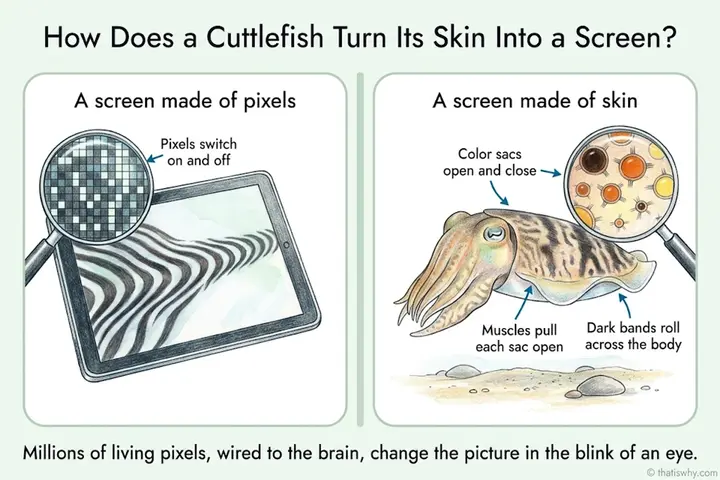
The sea is full of these last-ditch defenses, each strange in its own way. [Sea cucumbers throw out their own guts](https://thatiswhy.com/why-do-sea-cucumbers-throw-out-their-guts/) as a messy distraction, while [cuttlefish turn their skin into a living screen](https://thatiswhy.com/why-cuttlefish-dont-just-change-color/) to vanish or startle. On land, a cornered opossum goes the opposite way from a puffer and [plays dead](https://thatiswhy.com/why-do-opossums-play-dead/). And don't confuse a puffer with the swollen fish hauled up from the depths. Those fish [balloon because the gas inside them expands](https://thatiswhy.com/why-do-deep-sea-fish-explode-when-brought-up/), which is a disaster, not a defense. It's one more reason the [ocean feels like an alien world](https://thatiswhy.com/why-ocean-is-alien-world/).
## Myths of the Spiky Balloon
**Myth: Pufferfish fill themselves with air.**
**The truth:** In the sea they pump in water, and the stomach does all the stretching. They suck in air only when they're out of the water.
**Myth: A puffed-up pufferfish is holding its breath.**
**The truth:** The black-saddled pufferfish keeps its gills working hard while inflated, taking up about five times as much oxygen as at rest. Its skin barely helps at all.
**Myth: Pufferfish make their own poison.**
**The truth:** Many puffers carry **tetrodotoxin**, a nerve poison over 1,000 times more powerful than cyanide. But it's produced by bacteria that live on the food the fish eats. The puffer collects it and is immune to it thanks to a genetic mutation.
**Myth: Nothing can eat a puffed-up pufferfish.**
**The truth:** Only the toughest predators, such as tiger sharks, common octopuses and sea snakes, will take one on. Everyone else faces a swollen ball that is hard to swallow, covered in spines, and able to hold enough poison to kill several predators.
## A Cough That Became a Shield
Back on the reef, the big fish swims off, because a ball of spines isn't on its menu. The pufferfish lets out its water, shrinks back into its slow, chubby self, and spends the next few hours catching up on oxygen.
We love how ordinary the ingredients are. Nobody gave the pufferfish armor. Evolution took a cough, a stomach that could fold, and a body with no ribs to get in the way, and turned them into an airbag. It's a reminder that the strangest tricks in nature are often old habits, pointed in a new direction.
## Sources
- [Pufferfish: the underwater balloon of death](https://nhm.ac.uk/discover/pufferfish-underwater-balloon-of-death.html), Natural History Museum, London
- [All puffed out: do pufferfish hold their breath while inflated? (McGee and Clark, Biology Letters 2014)](https://pmc.ncbi.nlm.nih.gov/articles/PMC4298192), Biology Letters (via PubMed Central)
- [A Swell Adaptation](https://utmsi.utexas.edu/science-and-the-sea/print-article/a-swell-adaptation/), Marine Science Institute, The University of Texas at Austin
- [Evolution of pufferfish inflation behavior (Wainwright and Turingan, Evolution 1997)](https://fishlab.ucdavis.edu/wp-content/uploads/sites/397/2020/06/Wainwright-Turnigan-1997.pdf), Wainwright Lab, University of California, Davis
- [Pufferfish Don't Need Functional Stomach, Inflate Instead](https://www.the-scientist.com/pufferfish-don-t-need-functional-stomach-inflate-instead-70148), The Scientist
---
# Why Greenland Sharks Live for Centuries
> Why do Greenland sharks live so long?
- Source: https://thatiswhy.com/why-greenland-sharks-live-for-centuries/
- Category: The Ocean
- Topics: Life that breaks the rules; The ocean > The deep sea
- Library shelf: The midnight zone, Deep-sea life & bioluminescence (an ocean depth zone)
- Summary: Greenland sharks live for centuries because icy water keeps their bodies running in slow motion, and extra DNA repair genes may help slow their aging.
- Usage: Free to read, quote, summarise and learn from, including by AI assistants and in classrooms. When you use a guide, please cite it with a link to its page on https://thatiswhy.com.
Deep under the Arctic ice, a shark longer than most cars drifts through the dark, slower than a lazy stroll. She has never hurried in her life, and she may have been alive for close to four centuries. So what is her secret? **Greenland sharks live for centuries because icy water keeps their bodies running in slow motion, so they burn energy slowly and grow less than a centimeter a year. Their genes also carry extra DNA repair tools, which may help their bodies keep working for hundreds of years.**
The slowness alone is a wonderful story. But the repair kit is the part that keeps scientists up at night.
## A Classic Car Still on the Road After a Century
Two cars roll out of the same factory on the same morning. The first one gets raced hard every single day, engine screaming, brakes smoking, and within a few years it's rusting in a scrapyard. The second one lives in a cool garage. It comes out for a gentle Sunday drive now and then, and its owner changes the oil, swaps worn parts and fixes every little crack before it can spread. A century later, that second car still purrs down the road.
The Greenland shark is that classic car. Every animal runs on fuel, turning food into energy through the chemistry in its cells, called its **metabolism**. A busy, warm-blooded animal burns through it like the race car, flat out. The Greenland shark cruises through icy Arctic water so gently that scientists have called it the slowest fish, putting almost no miles on its body each year.
But a gentle drive is only half the secret. Even a car that sits in a garage will rust away if nobody looks after it. The shark seems to have the other half covered too: its cells come with a remarkably busy repair shop.
A race car driven flat out ends up in the scrapyard; a classic car driven gently and always repaired keeps running for a century. The Greenland shark is the classic car.
## How Greenland Sharks Stretch One Life Across Centuries
### How Old Is the Oldest Greenland Shark?
For decades, nobody could answer that question. Most sharks carry their age around like a tree, in growth bands you can count on their fin spines or backbones. Greenland sharks refuse to play along. As NOAA puts it, "Their vertebrae are too soft to form the growth bands seen in other sharks."
So a team led by Julius Nielsen looked somewhere nobody had tried, right into the sharks' eyes. The very center of the eye's lens forms while the shark is still an embryo, out of inert crystal-like proteins that don't change afterward. It's a time capsule sealed before the shark was born. Measure the radioactive carbon locked inside, a method called **radiocarbon dating**, and you can work out roughly when it was sealed.
The team had a clever trick up its sleeve. Nuclear bomb tests in the mid-1900s flooded the air with extra radiocarbon, a spike called the **bomb pulse** that marks the early 1960s. Of 28 female sharks, only the smallest, 220 centimeters long or less, carried that spike. Every bigger shark had been born before it.
Then came the real jaw-dropper. The largest shark, 502 centimeters from nose to tail, came out at **392 years old, give or take 120 years**. Even the most cautious reading gave the species a lifespan of at least 272 years, making it the longest-lived animal with a backbone we know of.
### The Gentlest Drive in the Ocean
How do you stretch one life across so many centuries? You start by doing everything very, very slowly. As NOAA explains, "One theory to explain this long lifespan is that the Greenland shark has a very slow metabolism, an adaptation to the deep, cold waters it inhabits." These sharks grow less than one centimeter a year, so a body over 5 meters long is the work of centuries.
The swimming is even more astonishing. When researchers led by Yuuki Watanabe strapped data loggers to six of them, they cruised at just 0.34 meters per second. That's barely more than a kilometer an hour, with one sweep of the tail every seven seconds or so. The researchers gave their paper a title that says it all, *The slowest fish*.
So how does the slowest fish catch anything at all? Arctic seals sleep in the water to dodge polar bears, and a silent, sluggish shark may be able to sneak right up on them. It's a ghost that wins its races by never seeming to run.
### The Repair Crew Hiding in the Genes
Slowness explains the gentle Sunday drives, but it doesn't explain a body that never seems to wear out. For that, a team that included the University of Copenhagen and the Fritz Lipmann Institute on Aging in Germany read the shark's whole genetic code. It's enormous: 6.5 billion base pairs, the letters of DNA, twice as long as yours.
More than 70% of it is made of **transposable elements**, sometimes called jumping genes, stretches of DNA that copy and paste themselves around the genome. Usually they're treated as troublemakers. Yet hidden among the copies, the team found many duplicated genes that repair damaged DNA. As team member Alessandro Cellerino explained, "In each of our cells, the DNA sustains damage thousands of times every day, and specialized molecular mechanisms constantly repair it." A bigger repair crew could matter enormously over 400 years.
They also spotted a change in p53, a protein nicknamed the "guardian of the genome", which is broken in about half of all human cancers. The team is careful to say more studies are needed. Still, it's a thrilling clue: the classic car may come with its own full-time mechanics.
Live slowly, read the age in the eye, keep repairing. See the detailed teaching diagram and printable PDF.
## A Body That Refuses to Show Its Age
For years, the tidy answer was simply the cold and the laziness. A study led by Ewan Camplisson of the University of Manchester put a crack in that story. His team tested the energy-making enzymes in preserved shark muscle and found that the enzymes worked harder in warmer water. The shark's red muscle, it turned out, isn't specially built for the polar cold at all.
Then the team found something even stranger. Comparing young and old sharks, they found no real change in how active the muscle's energy-making enzymes were from one age to the next. In most animals, the body's engines sputter as the years pile up. In the Greenland shark, the engine seems to hum along at the same gentle pace, decade after decade.
That's the rule underneath the whole story. **A long life isn't just about burning slowly. It's about burning slowly and keeping the machinery in good repair.** We find that idea strangely comforting: the oldest vertebrate on Earth isn't a miracle, just a very patient piece of maintenance.
And there's a reason evolution would push this hard. A female Greenland shark isn't ready to breed until she's at least 156 years old, give or take 22. If her body wore out at 80, she'd never have a single pup.
## Other Masters of the Long Game
The deep sea is full of animals playing a version of the same game. Many grow huge and live slowly in the cold, which is a big part of [why deep-sea creatures grow into giants](https://thatiswhy.com/why-deep-sea-creatures-grow-into-giants/). The whole of the [deep sea's unusual adaptations](https://thatiswhy.com/unusual-adaptations-of-deep-sea-animals/) come back again and again to cold water and an empty pantry, where saving energy is life itself.
Other rule-breakers beat time by cheating instead of waiting. The so-called immortal jellyfish can rewind itself into a young polyp, but [the immortal jellyfish still loses the game](https://thatiswhy.com/why-immortal-jellyfish-still-loses-game/) to anything that eats it. Tardigrades take a different route, shutting their bodies down almost completely when life gets rough, which is [how tardigrades survive almost anything](https://thatiswhy.com/why-tardigrades-survive-almost-anything/). The wood frog goes further still and [freezes solid and survives](https://thatiswhy.com/why-wood-frogs-freeze-solid-and-survive/), its life put on pause until spring. On land, a similar slow bargain is [why bristlecone pines live for 5,000 years](https://thatiswhy.com/why-bristlecone-pines-live-so-long/) on bare mountain ridges.
What makes the Greenland shark special among all these [rule-breakers of biology](https://thatiswhy.com/biological-anomalies-life-that-breaks-rules/) is that it never pauses or rewinds. It simply keeps going, at its own unhurried pace, for centuries.
## Myths About the World's Oldest Shark
**Myth: Scientists know Greenland sharks live exactly 400 years.**
**The truth:** Every age is an estimate with a wide range. The biggest shark came out at 392 years, give or take 120, and NOAA notes that "Carbon dating can only provide estimates, not a definitive age."
**Myth: The cold water alone explains their long lives.**
**The truth:** The cold slows them down, but it isn't the whole story. Their muscle enzymes work better in warmer water, and their genes carry extra DNA repair tools.
**Myth: A shark this slow must be a harmless scavenger.**
**The truth:** Even the slowest fish seems to hunt. Researchers suspect Greenland sharks may catch seals while they sleep in the water, rather than chasing them down.
## The Oldest Car on the Road
So let's sink back down to that huge shark drifting under the ice. She isn't racing anyone, and she never will. Her engine idles, her body adds less than a centimeter a year, and somewhere in her cells a crew of repair genes keeps fixing the small cracks before they spread.
The race car had a thrilling few years, and then it was gone. The classic car just kept rolling along, gently and carefully looked after, long after everyone else from the factory had been forgotten.
## Sources
- [Eye lens radiocarbon reveals centuries of longevity in Greenland shark (Somniosus microcephalus) (Nielsen et al., Science 2016)](https://ora.ox.ac.uk/objects/uuid%3A6c040460-9519-4720-9669-9911bdd03b09), University of Oxford Research Archive
- [These Ridiculously Long-Lived Sharks Are Older Than the United States, and Still Living It Up](https://www.smithsonianmag.com/science-nature/ridiculously-ancient-greenland-sharks-are-older-united-states-180960101/), Smithsonian Magazine
- [How long do Greenland sharks live?](https://oceanservice.noaa.gov/facts/greenland-shark.html), NOAA Ocean Service
- [The slowest fish: Swim speed and tail-beat frequency of Greenland sharks (Watanabe et al., Journal of Experimental Marine Biology and Ecology 2012)](https://scholar.uwindsor.ca/glierpub/385), University of Windsor
- [The longest-living vertebrate genome](https://science.ku.dk/english/press/news/2024/the-longest-living-vertebrate-genome), University of Copenhagen, Faculty of Science
- [Discovering new anti-aging secrets from the world's longest-living vertebrate](https://www.eurekalert.org/news-releases/1049496), Society for Experimental Biology (EurekAlert!)
---
# Why Pitcher Plants Are So Slippery to Insects
> How do pitcher plants trap insects?
- Source: https://thatiswhy.com/why-pitcher-plants-are-so-slippery/
- Category: Plants & Forests
- Topics: Trees and plants > Plant tricks; Trees and plants; Nature as engineer
- Library shelf: The canopy, Plants, insects & land life (a theme shelf, not a habitat)
- Summary: A pitcher plant's rim spreads rain, dew and nectar into a thin film of water. Insects' feet aquaplane on it and slide in, but only while it's wet.
- Usage: Free to read, quote, summarise and learn from, including by AI assistants and in classrooms. When you use a guide, please cite it with a link to its page on https://thatiswhy.com.
An ant marches up the side of a green, vase-shaped leaf in a Borneo swamp forest, following the smell of something sweet. It reaches the shiny striped rim, takes one more step, and its feet simply stop working. **Pitcher plants trap insects with a rim that loves water. Rain, dew and the plant's own nectar spread across it as a thin, even film, and an insect's sticky footpads aquaplane on that film like tires on a wet road, sliding straight into the pool of digestive fluid below. When the rim dries out, the same insects walk across it safely.**
That last part is the real twist in this story. One of the cleverest traps in the forest takes hours off every day, and the reason turns out to be brilliant.
## The Floor Nobody Puts a Sign On
It's closing time at a little ice cream shop. A tray of free samples still sits at the end of the counter, and the cleaner has just run a mop over the tiles until they gleam. Then the door swings open, a group of friends rushes in for the samples, and the first sneaker to hit the wet tiles keeps going.
A mopped floor isn't slippery because it's smooth. It's slippery because a thin layer of water now sits between your sole and the tile, and your shoe can no longer touch the floor itself. Earlier that afternoon, on the same dry tiles, you could have walked to that tray in socks. That's exactly what one of those friends did at lunchtime, before texting the whole group about the free samples.
That's exactly how a pitcher plant's rim works, except the plant mops its own floor, and it never puts out a yellow warning sign. The shop wants every customer to stay on their feet. The pitcher wants the opposite, and the free samples are the bait.
A freshly mopped floor and a pitcher plant's wet rim play the same trick: a thin film of water leaves your feet nothing to grip.
## How Pitcher Plants Trap Insects on a Wet Rim
A tropical pitcher plant, *Nepenthes*, grows leaves that end in a jug, holding a pool of digestive fluid. It's a **carnivorous plant**, a plant that catches animals for food, and that habit lets it live in nutrient-poor places where other plants struggle to grow. The jug's lip is a ribbed collar called the **peristome**, and just beneath its inner edge sit glands that ooze sweet nectar.
For a long time, botanists didn't think the rim mattered much. Earlier investigators described it as a safe foothold, and they worked mostly with dried specimens or greenhouse plants. Nobody had watched these plants on a wet night in the jungle.
So Walter Federle and Holger Bohn went to the peat swamp forests of Brunei, in northwest Borneo, to watch ants on *Nepenthes bicalcarata*. They came back to their study site just after a downpour and found a massacre in progress. Every ant that stepped onto a pitcher's rim slipped helplessly into the fluid below.
### A Leaf That Drinks the Rain
Here's what makes that rim so strange. Most leaves repel water, so rain beads up and rolls off, the trick behind [why water rolls off lotus leaves](https://thatiswhy.com/why-water-rolls-off-lotus-leaves/). The peristome does the reverse. When Federle dripped water onto a dry rim, it spread out in seconds into a film over the whole surface, helped along by fine ridges running across the rim.
That film is the mop water. An ant's feet carry soft, sticky pads that can grip astonishingly smooth surfaces, but on the wet rim they can't get close enough to the plant to hold on. They glide on water instead, a slip called **aquaplaning**, the same thing a car tire does on a flooded road. In their tests, most ants on a wet rim shot straight over the edge into the fluid, and the capture rate tripled compared with a dry rim.
### The Night Shift
The real surprise came with the sensors. Federle and Bohn went back to Brunei with a third colleague and wired up the rims of a second species, *Nepenthes rafflesiana*, to log their wetness around the clock. The pattern held whether it rained or not. For most of the day the rims stayed dry and caught nothing, but from early evening to early morning they were wet and deadly.
Even the nectar helps with the mopping. It's *hygroscopic*, meaning it pulls moisture out of the air, so the sugary rim stays wet for longer. The pitchers also make more nectar in the evening. The free-sample tray, it turns out, is also the bucket of mop water.
Dry rim, wet rim, no grip: how a pitcher plant turns a film of water into a trap. See the detailed teaching diagram and printable PDF.
## Why a Trap That Switches Off Catches More Ants
All of this leaves a puzzle. A trap that sits harmless for hours seems like a bad trap. Ulrike Bauer, one of the scientists behind the sensors, put the puzzle plainly: "The plant's key trapping surface is extremely slippery when wet but not when dry." Her team at the University of Bristol found the traps stayed "switched off" for up to eight hours on dry days.
The answer is in who the customers are. Ants are social insects, and a lone scout that finds sweet nectar runs home and recruits a crowd. On a dry rim, that scout drinks, walks away safely and leaves a trail back to the nest. Later the rim gets wet, and the whole crowd of followers goes over the edge in one sweep, just like the friends who got that lunchtime text.
To test the idea, the researchers rigged hospital drips to keep one pitcher wet nonstop on each of 23 wild plants in Borneo, and they left a second pitcher on each plant to the weather. Over several weeks, the always-wet pitchers caught 136 ants. The ones that took breaks caught 339, mostly in a few big massacres. **The lazy trap caught more than twice as many ants.**
This is the part that still makes us grin. Evolution doesn't reward a trap for catching every single visitor. It rewards the total meal, and sometimes the smartest move is letting the messenger go home to spread the news.
## Rain Drops, Springboards and a Slippery Coating
Pitcher plants have more than one wet-weather trick. A species called *Nepenthes gracilis* uses its lid. Ants feeding on nectar under that lid walk around safely in calm weather, but when rain drops hit it, the lid flicks like a diving board. Researchers from the University of Cambridge simulated rain with a hospital drip and found that about 40% of the ants got trapped once the drops began to fall.
Engineers have borrowed the rim's idea, too. A team led by Joanna Aizenberg at Harvard's Wyss Institute noticed that the pitcher doesn't fight liquids with air pockets, the way the lotus does. It locks in a layer of liquid, so the liquid itself becomes the slippery surface. Their coating, called SLIPS, soaks a porous material in a lubricating fluid, and it sheds just about any liquid, including blood and oil. It's a neat case of **biomimicry**, copying designs from living things, like the [tiny toe hairs that let geckos stick to walls](https://thatiswhy.com/why-geckos-stick-to-walls/), which solve the opposite problem.
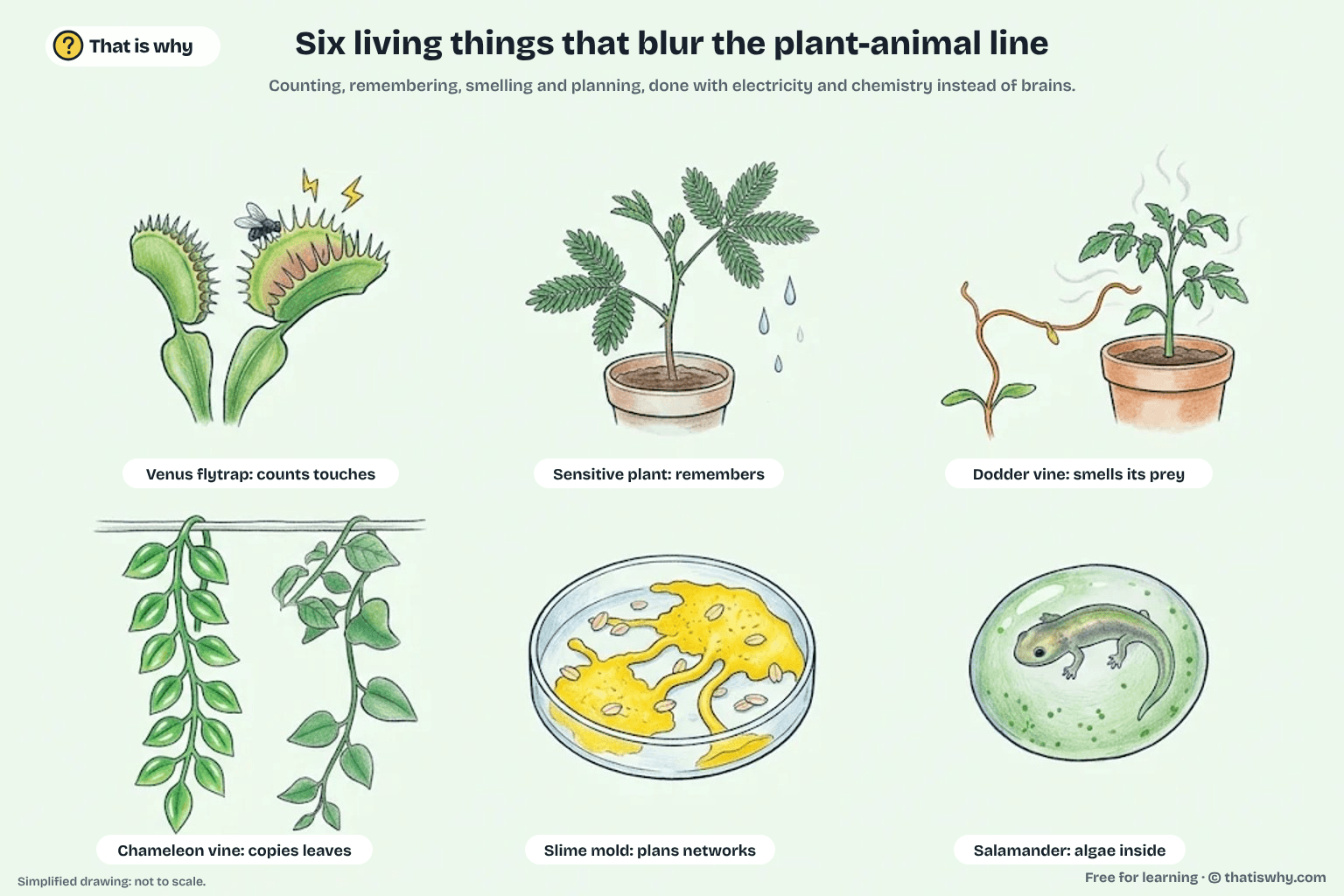
The pitcher also belongs with other plants that hunt. The Venus flytrap snaps shut on its prey and then [counts the touches before it digests](https://thatiswhy.com/why-venus-flytrap-can-count/), a very different solution to the same hunger. And the pitcher's real target, the ant colony, is a puzzle of its own: the same teamwork that [makes ant colonies act like one brain](https://thatiswhy.com/why-ant-colonies-act-like-one-brain/) is what the plant exploits. For the wider story of how plants solve survival problems without moving, see [how trees engineer their way to survival](https://thatiswhy.com/how-trees-engineer-their-way-to-survival/).
## Myths That Don't Hold Water
**Myth: The rim of a pitcher plant is always slippery.**
**The truth:** The rim is slippery only when wet. On dry days it can stay harmless for up to eight hours, and that pause helps the plant catch more ants.
**Myth: Wax is what makes insects slip.**
**The truth:** Many pitchers do have a waxy inner wall whose crystals break off under an insect's feet, but the main trap is the wet rim. Insects often fall straight over the rim into the fluid without ever touching the wax.
**Myth: Pitcher plants live on mice and frogs.**
**The truth:** They mostly catch insects, especially ants. Spiders, scorpions, centipedes, the odd snail or frog and even an occasional rat do turn up, but they're the exception.
## Back on the Shiny Striped Rim
Go back to that ant on the shiny striped rim. In the afternoon, it would have sipped the nectar, turned around and headed home to tell its sisters. After dark, with the rim slick with dew and sugar water, there's no grip left for its feet at all.
**The pitcher plant doesn't chase, grab or poison anything. It sets out free samples, mops its own floor and waits for the crowd.**
## Sources
- [Pitcher plant uses rain drops to capture prey](https://www.cam.ac.uk/research/news/pitcher-plant-uses-rain-drops-to-capture-prey), University of Cambridge
- [Pitcher plants 'switch off' traps to capture more ants (Bauer et al., Proceedings of the Royal Society B 2015)](https://bristol.ac.uk/news/2015/january/ants-and-pitcher-plants.html), University of Bristol
- [Tricky pitcher plants lure ants into a false sense of security](https://www.sciencenews.org/article/tricky-pitcher-plants-lure-ants-false-sense-security), Science News
- [Pitcher plants: devious hunters (Stephanie Pain, New Scientist 2008)](https://www.zoo.cam.ac.uk/system/files/documents/PitcherPlants_modified.pdf), New Scientist, copy hosted by the University of Cambridge Department of Zoology
- [Slippery slope: Researchers take advice from carnivorous plant](https://wyss.harvard.edu/news/slippery-slope-researchers-take-advice-from-carnivorous-plant), Wyss Institute, Harvard University
---
# Why Sea Turtles Return to the Beach Where They Were Born
> How do sea turtles find their way back to the beach where they were born?
- Source: https://thatiswhy.com/why-sea-turtles-return-to-beach-where-they-were-born/
- Category: The Ocean
- Topics: Animal navigation; The ocean
- Library shelf: The sunlight zone, Ocean life near the surface (an ocean depth zone)
- Summary: Sea turtles memorize the magnetic signature of their home beach as hatchlings, then follow Earth's magnetic field back to it years later to nest.
- Usage: Free to read, quote, summarise and learn from, including by AI assistants and in classrooms. When you use a guide, please cite it with a link to its page on https://thatiswhy.com.
Midnight on a Florida beach, and a huge loggerhead turtle hauls herself out of the surf. The last time she touched this sand, she was a hatchling scrambling the other way, toward a black ocean she had never seen. Since then she has crossed thousands of miles of open water, with no signposts and no one to follow. So how on Earth did she find her way back? **Sea turtles memorize the magnetic signature of their home beach as hatchlings, then follow Earth's magnetic field back to that same stretch of coast years later to nest.**
The planet itself is whispering an address to her. You already carry a gadget that pulls off the very same trick.
## The Phone That Knows It's Home
You've been away for months, and your flight lands late. You drag your suitcase up your own dark street, and the house isn't even in sight yet when the phone in your hand quietly buzzes. It has joined the network called "HOME" all on its own. Nobody typed a password, and nobody gave it directions. It simply recognized a signal it saved the very first time you connected, long ago.
That's a nesting sea turtle in one scene. The beach is the house, and its magnetic signature is the network name. As a hatchling, she saved that signature, and the grown turtle's brain joins it the moment she swims back into range.
There's one big difference, and it turns out to matter a lot. Your router broadcasts its name on purpose, and the name is written in letters. Nobody broadcasts anything for the turtle. Her beach's "name" is just two readings of Earth's magnetic field, how strong it is and how steeply it tilts. Two numbers are a short name, and short names get repeated.
Your phone joins the saved home network before you even see the house. A nesting turtle does the same with her beach's magnetic signal.
## How Sea Turtles Find Their Way Back to the Beach
Earth's magnetic field changes in a predictable way across the globe, so each stretch of coast gets its own blend of two readings. One is **field intensity**, how strong the pull is. The other is **inclination**, the angle at which the field lines meet the ground. That angle runs from 0 degrees at the magnetic equator to 90 degrees at the poles, so it changes as you travel north or south.
Long before anyone could check, biologist Kenneth Lohmann at the University of North Carolina at Chapel Hill suggested something bold. Maybe sea turtles, and salmon too, imprint on the magnetic field of their birthplace early in life. To **imprint** means to learn something once, at a special young age, and keep it for good. It was a lovely idea, but how could anyone test it on an animal that vanishes into the sea for years?
### The Router That Wandered Down the Street
The answer came from an unexpected direction. Earth's magnetic field isn't fixed; it drifts slowly over the years. So if turtles really chase a magnetic address, their nests should drift along with it.
Lohmann and his UNC colleague Roger Brothers went looking, using a 19-year record of loggerhead nests along Florida's east coast, the largest sea turtle nesting ground in North America. Where the field shifted so that the signatures of neighboring beaches crept closer together, the nests crowded into a shorter stretch of coast. Where the signatures drifted apart, the turtles spread out and their nests grew fewer and farther between. Their results, published in *Current Biology*, showed nests moving in step with an invisible field.
Let that sink in for a moment. It's as if someone moved your router a few houses down, and your phone strolled after it without a word of complaint.
### The Neighbor With the Same Network Name
Then came the twist that makes this story so much fun. A few years later, the same team looked at the turtles' genes. They compared DNA samples from 834 nesting females at 20 beaches along the southeastern U.S. coast. If turtles simply returned to the nearest good beach, neighbors should be close relatives.
That's not what the genes said. **Beaches with similar magnetic fields held genetically similar turtles, even when the beaches were far apart.** Distance along the coast didn't predict who was related. Sometimes a turtle nests at a different beach that happens to share her home's magnetic signature, like one on the opposite coast of Florida.
Your phone pulls the same stunt when you visit a friend across town and it joins a router that happens to carry your network's name. The turtle hasn't lost her mind. She's reading the signal exactly right, but two beaches are sharing one address.
Save the address, ride the ocean loop, follow the field home. See the detailed teaching diagram and printable PDF.
## Learn It Once, Keep It for Decades
Why go to all this trouble? Because a good nesting beach is surprisingly rare. A mother turtle needs soft sand, the right temperature, few predators and a beach she can actually reach from the water. As Brothers pointed out, the only way to be sure a beach checks every box is to nest where she herself hatched. Her own survival is the proof that the beach works.
That's the rule underneath it all. **When finding a good home is hard, the safest move is to remember the one that already worked.** Evolution has handed turtles a sense of the planet's magnetic field (scientists call it *magnetoreception*) and a memory that holds a single address for a very long time.
So how long can a turtle hold on to a magnetic memory? In a recent experiment, a team led by Kayla Goforth kept young loggerheads in buckets hooked up to magnetic coils. The coils copied the magnetic fields of different spots along the coast, from the Gulf of Mexico to Maine, and the turtles got food in only one of them. Soon they did a little happy dance whenever they felt the "dinner" field. They tilt their heads toward the surface, open their mouths and flap their front flippers, and sometimes they twirl in place like a top.
Several months later, without a single reminder, the turtles still danced for the right field. Goforth reckons wild turtles hold on to feeding spots from hatchling to adult, a 20-year time span. And when the team added radio waves, the turtles lost their magnetic sense of direction but still recognized the field. So a turtle seems to carry two separate magnetic senses, a compass that points the way and a map that knows the place.
## Other Travelers Tuned to the Same Signal
The newborn turtle doesn't start with a blank map, either. In an earlier experiment by Nathan Putman, young loggerheads that felt the magnetic field of the sea near Puerto Rico swam northeast. Those given the field near the Cape Verde Islands, off Africa, swam southwest. Both turns steer a young turtle into the North Atlantic Gyre, the great loop of current around the Sargasso Sea. Missing the gyre spells trouble, so these turtles are born knowing which way to swim, and learn their home address on top.
Salmon play a version of the same game. They seem to use Earth's magnetic field to reach the right stretch of coast, then switch to smell, following [the chemical "zip code" that guides salmon home](https://thatiswhy.com/why-salmon-can-find-their-way-home/) up their river. Arctic terns are thought to read magnetic cues too as they [fly from pole to pole every year](https://thatiswhy.com/why-arctic-terns-can-fly-pole-to-pole/). Some scientists even suspect dogs feel the field, which might explain [why your dog spins before pooping](https://thatiswhy.com/why-your-dog-spins-before-pooping/).
Other animals tune in to invisible fields that we can't feel at all. Sharks feel the faint electric buzz of prey hidden under the sand, and [how sharks sense electricity](https://thatiswhy.com/why-sharks-can-sense-electricity/) is a whole story of its own. It's one more reason the [ocean feels like an alien world](https://thatiswhy.com/why-ocean-is-alien-world/), packed with signals we can only measure with instruments.
## Myths About Turtles and Their Home Beach
**Myth: A sea turtle returns to the exact grain of sand where she hatched.**
**The truth:** Turtles come back to the same stretch of coastline, not one precise spot. Some even nest on a distant beach that shares their home's magnetic signature.
**Myth: Baby turtles learn the route by following their mothers.**
**The truth:** Loggerheads are born able to tell where they are from the magnetic field. Hatchlings tested one at a time in a tank still turned the right way for their part of the ocean.
**Myth: Scientists know exactly how turtles feel magnetism.**
**The truth:** Nobody knows for sure yet. One leading idea is that tiny magnetic particles in the turtle's brain respond to Earth's field.
## Back on the Sand at Midnight
So let's go back to that loggerhead heaving herself up the beach in the dark. She didn't follow a coastline or a star. She felt two numbers, a strength and a tilt, and they matched the ones she saved as a hatchling. Her phone, so to speak, buzzed.
What still surprises us most is that her map was never drawn for her at all. It's simply the shape of the planet, and she carries a memory of one tiny corner of it across a whole ocean and back.
## Sources
- [For sea turtles, there's no place like magnetic home (Brothers & Lohmann, Current Biology 2015)](https://collegearchive.unc.edu/?p=9686), University of North Carolina at Chapel Hill
- [Evidence that Magnetic Navigation and Geomagnetic Imprinting Shape Spatial Genetic Variation in Sea Turtles (Brothers & Lohmann, Current Biology 2018)](https://lohmannlab.web.unc.edu/wp-content/uploads/sites/8154/2019/03/2018_MagneticGenetics_BrothersLohmann_CB.pdf), Lohmann Lab, University of North Carolina at Chapel Hill
- [UNC-Chapel Hill study finds genetic evidence that magnetic navigation guides loggerhead sea turtles home](https://collegearchive.unc.edu/?p=24388), University of North Carolina at Chapel Hill
- [The Surprising Importance of This Adorable Sea Turtle Dance (Goforth et al., Nature 2025)](https://www.scientificamerican.com/article/sea-turtle-dance-reveals-a-hidden-magnetic-ability/), Scientific American
- [For Turtles, Earth's Magnetism Is A Built-In GPS](https://www.npr.org/2011/03/02/134175104/for-turtles-earths-magnetism-is-a-built-in-gps), NPR
---
# Why Do Sea Otters Use Rocks as Tools?
> Why do sea otters use rocks?
- Source: https://thatiswhy.com/why-do-sea-otters-use-rocks/
- Category: The Ocean
- Topics: The ocean > Coasts and shallow seas; Animal minds; The ocean
- Library shelf: The sunlight zone, Ocean life near the surface (an ocean depth zone)
- Summary: Sea otters smash hard shells with rocks to open prey their teeth can't crack safely. Tools let smaller females eat harder food and save their teeth.
- Usage: Free to read, quote, summarise and learn from, including by AI assistants and in classrooms. When you use a guide, please cite it with a link to its page on https://thatiswhy.com.
A sea otter pops up through the kelp, rolls onto its back and sets a flat stone on its chest like a little kitchen counter. Then it raises a snail in both paws and slams it down. *Clack, clack, clack* goes the shell, and the sound carries across the water, and a few strikes later the otter is slurping out lunch. **Sea otters use rocks to break shells their teeth can't crack safely. A rock lets an otter eat hard-shelled snails, clams and mussels without wrecking its teeth, which matters most for the smaller females.**
That last part is the twist. The rock isn't a party trick, it's dental insurance. To see why, pull up a chair at a holiday table with a big bowl of walnuts in the middle.
## The Nutcracker in the Apron Pocket
Uncle Ray goes first, because Uncle Ray always goes first. He jams a walnut between his back teeth and bites down hard. There's a crack, a wince, and a long moment of him poking at a molar with his tongue. Across the table, Aunt June reaches into her apron pocket, pulls out a little metal nutcracker and pops a walnut open in one clean squeeze.
Both of them got their walnut. Only one of them will still be enjoying walnuts at eighty. **Strong jaws can win a few rounds against a hard shell, but a tool wins every round and leaves your teeth alone.** And notice who reached for the tool: the one with the smaller jaw.
That's a sea otter's dinner in a nutshell, quite literally. The walnut is a snail or a mussel. The teeth are the otter's own. The nutcracker is a rock, and even the apron pocket is real. Under each forearm, an otter has a baggy pocket of loose skin, and NOAA notes it uses these pockets to store food and favorite rocks.
There's one way the otter's kit is rougher than Aunt June's, though. A nutcracker squeezes slowly and gently. A sea otter's rock is a hammer, swung hard and over and over, and the otter has to find its own on the seafloor instead of buying one.
Uncle Ray's back teeth against Aunt June's nutcracker: the sea otter keeps its own nutcracker, a rock, in a pocket of skin.
## How a Rock Saves a Sea Otter's Teeth
Every sea otter is born with a costly problem. It's the only marine mammal without blubber, the thick fat that keeps seals and whales warm, so it relies on a coat of more than a million hairs per square inch, plus a body that burns fuel at a furious pace. To keep that fire going, the Alaska Department of Fish and Game says an otter must eat 25% of its body weight every day.
Think about that for a second. For you, that would be a mountain of food every single day. An otter spends its life diving, grabbing, cracking and diving again.
### When the Easy Food Runs Out
Off central California, the otters' favorite foods are big abalone and sea urchins, which aren't hard to open once caught. NOAA notes that the four incisors on a sea otter's lower jaw crack urchins and crabs easily. But otters are very good at eating those, and over time the easy food dwindles. Hungry otters then turn to crabs, clams, mussels and small marine snails, and that's where teeth start to suffer.
Researchers led by Chris Law at UC Santa Cruz decided to find out what rocks really do for an otter. With a team of volunteer "otter spotters", they followed 196 radio-tagged southern sea otters along the California coast, logging what each one ate, how it opened it, and the state of its teeth. Their results, published in *Science*, read like a dentist's report card.
Otters that used tools could eat bigger and harder prey, and they had less tooth damage. That sounds like a nice bonus until you hear the stakes. When an otter's teeth become too worn or damaged, the researchers explain, it could starve.
### Why the Females Reach for the Rock
Now comes the Aunt June moment. Females were the more likely tool users. Sea otter females are a lot smaller than males (in Alaska, about 50 to 70 pounds against a male's 80 to 100), and their bite is weaker. She also has pups to raise, which burns through energy fast.
So she grabs a rock, and it pays off big. Tool-using females could handle prey up to 35% harder than the tool-using males did. Females that used tools most often also had less tooth damage than females that rarely or never did. The smaller jaw, armed with a stone, ends up eating the toughest food in the bay.
Dive, float and strike, or use a shoreline anvil: three ways a rock saves a sea otter's teeth. See the detailed teaching diagram and printable PDF.
## A Hammer Built Into the Species
You might expect otters to learn this trick only by watching mom. That's not quite the story. Biologists noticed that orphaned otter pups raised in captivity pound things on their own, with no training and no one to copy. Wild pups start using tools before they're weaned, whatever their mother likes to eat.
That points to something deep. A genetic study of more than 100 wild sea otters off California, published in *Biology Letters*, suggests their ancestors millions of years ago were already skilled tool users. That would make the otter's rock habit far older than the tool tricks of dolphins, which are thought to date back less than 200 years.
So here's the rule underneath it all. **When food comes locked in armor and your body can't open it safely, a tool becomes a survival strategy, not a luxury.** Evolution doesn't hand an otter a nutcracker. It hands the otter a strong urge to bang hard things together, plus a skin pocket to carry the hammer.
## Where Else Animals Grab a Tool
Otters aren't the only animals that reach outside their own bodies for help. Some crows bend twigs into hooks to pull out food hidden inside wooden logs. Crows are sharp in other ways too, and some even [remember human faces and hold grudges](https://thatiswhy.com/why-crows-remember-faces-and-hold-grudges/).
Off Australia, some dolphins carry sea sponges while searching the seafloor for fish. And on a sandy seafloor, an octopus will stack two halves of a coconut shell and march off with its own portable bunker, one of the many reasons [octopuses are so smart](https://thatiswhy.com/why-are-octopuses-so-smart/).
Look closely at each case and the same pattern shows up. A body runs into a problem it can't solve on its own, whether it's food hidden in a log, fish hidden on the seafloor or an open, unsafe stretch of sand. So the animal picks up a piece of the world and uses it. The shallow sea is full of these clever fixes, from otters with rocks to [hermit crabs that line up by size to swap shells](https://thatiswhy.com/why-do-hermit-crabs-line-up-to-swap-shells/), and it's one more reason the [ocean feels like an alien world](https://thatiswhy.com/why-ocean-is-alien-world/).
## Otters Leave Their Own Trash Heaps
This next detail is the one we can't stop thinking about. At Bennett Slough in California, a team from the Max Planck Institute and the Monterey Bay Aquarium watched otters crack mussels for ten years. Instead of a chest rock, the otters there sometimes used stationary rocks along the shore as anvils, for about 20% of the mussels they ate.
The otters struck their mussels against the points and ridges of those rocks and left distinctive wear behind. Around them grew a heap of broken shells that likely held as many as 132,000 mussels. The researchers call a heap like that a **shell midden**, and they studied it with the methods archaeologists use.
The shells even carry a signature. Most were broken with the two halves still joined and a diagonal crack down the right side. When the otters struck, their right paw tended to sit slightly on top, a hint that sea otters may favor one paw, much like we favor one hand.
## Myths About Otters and Their Rocks
**Myth: Every sea otter uses a rock all the time.**
**The truth:** Tool use varies a lot from otter to otter. In California, females are more likely to use tools than males, and even at the Bennett Slough boulders, anvils were used for only about 20% of the mussels.
**Myth: Pups only learn rock-smashing by copying their mothers.**
**The truth:** Orphaned pups raised in captivity start pounding without any training, and wild pups use tools before weaning whatever their mother eats. The urge seems to come built in.
**Myth: Otters stay warm with blubber, like seals.**
**The truth:** Sea otters are the only marine mammals with no blubber at all. Dense fur and a fast metabolism keep them warm, and that metabolism is why they need so much food.
## A Hammer, a Pocket and a Healthy Smile
So let's float back out to that otter in the kelp, the flat stone on its chest and the snail in its paws. Every *clack* is a tooth it doesn't have to risk. Its life depends on eating a quarter of its weight a day, and a chipped tooth could slowly starve it.
We love that the answer is so practical. Nobody gave the otter a nutcracker, so it carries a rock in a fold of its own skin, like Aunt June with her apron pocket. Out in the cold Pacific, the animals with the smallest jaws often end up eating the hardest food of all, and the reason is a plain gray stone.
## Sources
- [Sea otters use tools when feeding to survive a changing world (Law et al., Science 2024)](https://news.ucsc.edu/2024/05/sea-otters-tools/), University of California, Santa Cruz
- [Sea Otters' Tool Use Leaves Behind Distinctive Archaeological Evidence (Haslam et al., Scientific Reports 2019)](https://www.shh.mpg.de/1230807/sea-otters-tool-use), Max Planck Institute for the Science of Human History
- [Sea Otters Have Been Using Tools for Millions of Years](https://www.pbs.org/wgbh/nova/article/sea-otters-using-tools-millions-of-years), PBS NOVA
- [Sea Otter (Enhydra lutris) species profile](https://adfg.alaska.gov/index.cfm%3Fadfg=seaotter.main), Alaska Department of Fish and Game
- [Sea Otter Anatomy](https://oceantoday.noaa.gov/seaotteranatomy), NOAA Ocean Today
---
# Why Mantis Shrimp Don't See More Colors Than Humans
> Can mantis shrimp see more colors than humans?
- Source: https://thatiswhy.com/why-mantis-shrimp-dont-see-more-colors-than-humans/
- Category: The Ocean
- Topics: Animal senses; The ocean
- Library shelf: The sunlight zone, Ocean life near the surface (an ocean depth zone)
- Summary: Mantis shrimp have 12 color receptors to our 3, yet tell colors apart worse than we do. Each receptor seems to work alone, so the eye recognizes colors instead.
- Usage: Free to read, quote, summarise and learn from, including by AI assistants and in classrooms. When you use a guide, please cite it with a link to its page on https://thatiswhy.com.
Two glowing optical fibers stand side by side in a small tank, one yellow, one orange. A mantis shrimp eyes them, its stalked eyes swiveling, and then it hesitates, because it can't tell which one means dinner. **Mantis shrimp don't see more colors than humans. They have 12 types of color receptors to our 3, yet they are worse than we are at telling two close colors apart. Each receptor seems to report on its own, so the eye recognizes a color quickly instead of comparing shades finely.**
That's the twist hiding inside the most famous eye in the sea. To make sense of it, you only need to walk to the end of a supermarket aisle.
## A Barcode Scanner on Stalks
The checkout lane is busy, and the cashier isn't even looking down. A cereal box slides across a thin red line of light, and the machine beeps. A can of soup crosses the line, and it beeps again. In under a second the price is on the screen, and nobody had to think about it.
That scanner is brilliant at one job and hopeless at another. It reads a pattern of stripes and looks that pattern up in a list, so it knows exactly what the box is. Ask it whether the cereal box is a slightly warmer red than last week's, though, and it has no idea. It was never built to compare shades. It was built to **recognize**.
The mantis shrimp eye seems to work the same way. Running across the middle of each eye is a narrow band of special sensors, and the shrimp sweeps that band over whatever it's looking at, like a box sliding over the scanner's red line. Scientists who study these eyes even have a name for the idea: the "barcode" hypothesis.
Of course, a real checkout reads black stripes that someone printed on purpose for the machine. A fish on the seabed was never printed for the shrimp. And nobody has yet traced exactly how the shrimp's list of colors works inside its brain, so this is still the best explanation, not the final word.
A checkout scanner recognizes a box from its stripes in a blink, but it can't tell you if the red is a shade warmer. The mantis shrimp eye seems to work the same way.
## How Mantis Shrimp Eyes Read Color One Stripe at a Time
Your own color vision runs on three kinds of **photoreceptors**, the light-sensing cells in the back of the eye. Each kind answers to its own slice of the rainbow, and your brain never trusts one of them alone. It constantly compares them, asking which one is firing harder. That trick is called **color opponency**, and it's how three humble sensors let you split hairs between two nearly identical paint chips.
Now meet the mantis shrimp's version, and get ready to feel a little outgunned. Its eye carries **12 different color receptors**, each tuned to a narrow band of light, together reaching from deep ultraviolet to far red. That's a range from just below 300 to above 700 nanometers (billionths of a meter), the unit used for the **wavelength** of light, and four of those receptors work in ultraviolet you can't see at all. On paper, that's four times our color hardware.
Where do all those receptors sit? A mantis shrimp's eye is a compound eye built from **ommatidia**, tiny tube-shaped units that each look at one small spot. The eye is split into three parts: a top half, a bottom half and a band across the middle. That middle band is only six rows of ommatidia, and the color specialists live in its top four rows. Vision researchers at the University of Bristol describe that band as viewing a strip of space only about 10 degrees wide. So the shrimp moves its eyes slowly across a scene, roughly at right angles to the band, collecting color one stripe at a time. It really is a checkout scanner on stalks.
Then came the test that turned the story upside down. In a study published in *Science*, Hanne Thoen and Justin Marshall at the University of Queensland trained a small species, *Haptosquilla trispinosa*, to pick one colored optical fiber over another, with food as the prize. Once a shrimp learned its color, the team slid the second fiber's color closer and closer to the first. When the two colors came closer than **25 nanometers** apart, the shrimp began to struggle. That gap is roughly the difference between pure yellow and orange. For some pairs only 12 nanometers apart, the shrimp did no better than guessing.
You, meanwhile, can tell apart colors whose wavelengths are just 5 nanometers apart. Marshall summed up the surprise: "With 12 receptors, you'd think that they can detect colours much better than any other animal."
So what is the shrimp doing with all those sensors? Marshall's team thinks each receptor works alone, with no comparisons between them, sorting light into 12 narrow bins. The pattern of which bins light up becomes a kind of color barcode, and the shrimp simply checks it against a look-up table in its brain. No weighing, no second-guessing: the barcode beeps and the shrimp knows.
Sweep, light up, look up: the mantis shrimp eye reads a color barcode instead of comparing shades. See the detailed teaching diagram and printable PDF.
## Why a Small Brain Hands the Work to the Eye
Comparing signals takes a lot of brainpower. Every time your brain weighs one receptor against another, nerve cells have to do the arithmetic, and that costs time and energy. The mantis shrimp seems to have skipped the arithmetic entirely.
Nicholas Roberts of the University of Bristol put the trade-off beautifully: "A mantis shrimp only has a fraction of our cortical processing power, yet it handles 4 times more input," he said. The answer, it seems, is to push the work out of the brain and into the eye itself. Michael Bok of Lund University suggested that the dazzlingly complex eye might do most of the color processing itself, which leaves the small brain free to act.
This is the part that still delights us. Evolution doesn't build the eye with the best specifications. It builds the eye that solves the animal's problem with the least effort. Your eye is a fine-tuned color comparer, built to notice the tiniest shift in shade. The shrimp's eye is a fast color recognizer, which may be all an animal needs when it must decide in an instant.
That's why the question "who sees more colors?" turns out to be slightly the wrong question. The real question is what job each eye was built to do.
## Other Senses That Trade Detail for Speed
People built the same kind of eye long before anyone understood the shrimp. Satellites that map the Earth from orbit use what engineers call "push-broom" sensors, and the Bristol researchers compared the shrimp's sweeping eyes to exactly those. The Queensland team went further: "Oddly enough, the closest device to stomatopods would be a satellite," Marshall told National Geographic. The software behind those satellites fills in its images using look-up tables of color, just as the shrimp may do.
The animal world is full of senses that chase speed over fine detail. The star-nosed mole has a nose that works like a high-speed camera, which is [why the star-nosed mole sees faster than sight](https://thatiswhy.com/why-star-nosed-mole-sees-faster-than-sight/). Sharks read the faint electricity of hidden prey with jelly-filled pores, which is [how sharks sense electricity](https://thatiswhy.com/why-sharks-can-sense-electricity/) at close range. And one of the sea's greatest color artists can't see color at all, as far as anyone can tell, which is [why cuttlefish don't just change color](https://thatiswhy.com/why-cuttlefish-dont-just-change-color/) but match brightness and contrast instead.
Color itself behaves oddly underwater, too. Seawater swallows red light first, which is [why deep-sea fish are red](https://thatiswhy.com/why-deep-sea-fish-are-red/) and look black in the dark. It's one more reason the sea feels like [an alien world to us](https://thatiswhy.com/why-ocean-is-alien-world/): the rules of light change, and every eye down there has to make its own deal with them.
## Myths About the Mantis Shrimp Rainbow
**Myth: Mantis shrimp see thousands of colors we can't imagine.**
**The truth:** In the two-fiber tests, they were worse than humans, honeybees and butterflies at telling close colors apart. They do see ultraviolet, which we can't, but more receptors didn't mean finer color.
**Myth: Mantis shrimp have 16 color receptors.**
**The truth:** The color count is 12. Their eyes have more receptor channels than that, but the extra ones sense polarized light and brightness, bringing the total number of input channels to 20, according to a 2022 paper by Marshall's group.
**Myth: So mantis shrimp are basically bad at color.**
**The truth:** They're good at a different job. That same 2022 paper found that *Haptosquilla trispinosa* could easily tell several colors apart, and the researchers think their 12 channels may run a different kind of color processing altogether.
**Myth: Scientists have this all figured out.**
**The truth:** Not even close, and the experts say so themselves. Justin Marshall, who led the study, put it plainly: "I'll admit right up front we don't fully understand." The 2022 paper was titled, fittingly, "more questions than answers."
## Back at the Glowing Fibers
Go back to that tank and the two glowing fibers, one yellow and one orange. To you, they're obviously different. To the mantis shrimp, the two patterns land in nearly the same bins, so the barcode reads almost the same, and it hesitates.
That hesitation isn't a failure at all, because the shrimp was never built to admire shades. **Its eye is a scanner, not a painter: it sweeps, reads the pattern and acts, while your brain is still comparing.** Twelve sensors, a narrow stripe of eye and a small brain add up to one of the strangest, and most elegant, ways of seeing on the planet. And somewhere on the seabed, a little scanner on stalks is beeping right now.
## Sources
- [A different form of color vision in mantis shrimp (Thoen, How, Chiou and Marshall, Science 2014)](https://research-information.bris.ac.uk/en/publications/a-different-form-of-color-vision-in-mantis-shrimp/), University of Bristol
- [The Mantis Shrimp Sees Like A Satellite](https://www.nationalgeographic.com/science/article/the-mantis-shrimp-sees-like-a-satellite), National Geographic
- [Mantis shrimp's bizarre visual system may save brainpower](https://www.sciencenews.org/article/mantis-shrimps-bizarre-visual-system-may-save-brainpower), Science News
- [Colour vision in stomatopod crustaceans: more questions than answers (Streets, England and Marshall, Journal of Experimental Biology 2022)](https://pmc.ncbi.nlm.nih.gov/articles/PMC9001920), The Company of Biologists (PubMed Central)
- [Complex gaze stabilization in mantis shrimp (Daly, How, Partridge and Roberts, Proceedings of the Royal Society B 2018)](https://pmc.ncbi.nlm.nih.gov/articles/PMC5966611), The Royal Society (PubMed Central)
---
# Why Maple Seeds Spin Like Helicopters
> Why do maple seeds spin?
- Source: https://thatiswhy.com/why-maple-seeds-spin-like-helicopters/
- Category: Plants & Forests
- Topics: Trees and plants > Plant tricks; Trees and plants; Nature as engineer
- Library shelf: The canopy, Plants, insects & land life (a theme shelf, not a habitat)
- Summary: A maple seed's one-sided wing spins like a helicopter rotor as it falls. The spin makes lift that slows the drop, giving the wind time to carry the seed away.
- Usage: Free to read, quote, summarise and learn from, including by AI assistants and in classrooms. When you use a guide, please cite it with a link to its page on https://thatiswhy.com.
A gust rattles an old maple, and the air fills with tiny green-brown blades. They don't simply drop: each one flips, wobbles, and then snaps into a blur, whirling down like a toy you'd pay money for. **Maple seeds spin because each one is a single wing with a heavy seed at one end, and falling air pushes that wing around like a helicopter blade. The spinning wing makes lift, boosted by a tiny tornado of air riding its front edge, which slows the fall and gives the wind time to carry the seed away from its tree.**
So the tree is launching aircraft. Strangely, the best way to understand them is to look at a helicopter at its very worst moment.
## A Helicopter With Its Engine Switched Off
A helicopter is cruising high over farmland when its engine quits. It sounds like the start of a disaster movie, but there's a built-in way out. A gadget called the *freewheeling unit* unhooks the dead engine from the main rotor, so the blades keep turning freely.
The helicopter starts to sink, and as it sinks, air rushes up through the rotor and keeps the blades spinning. The Federal Aviation Administration calls this maneuver **autorotation**: the engine is unhooked, and the blades are turned only by air flowing up through the rotor.
No engine, and the rotor still turns. That spinning rotor fights the fall, and the pilot uses the energy stored in the whirling blades to set the helicopter down softly in a field.
Now look back at the maple. Its seed is that helicopter, except it was born without an engine at all. The only thing that will ever turn its wing is the air rushing past as it falls, and that's all it needs.
The helicopter and the seed want opposite endings, though. A pilot in autorotation is hunting for one safe patch of ground, as close and as calm as possible. The maple seed wants the reverse: to stay up as long as it can, drift as far as it can, and land somewhere its parent isn't. Its whole design is a long, slow emergency landing that it hopes takes forever.
A helicopter with its engine off is spun by the air rushing up through its rotor. A maple seed is born that way, and it wants the slowest fall it can get.
## How Maple Seeds Spin Like Helicopters
Pick up one of those blades and you're holding a **samara**, a dry fruit with a papery wing attached. Maples grow them in pairs, but in sugar maples usually only one of the pair actually holds a seed. The seed itself is a fat little bump about 7 to 9 millimeters long, and the thin wing stretches out beyond it like a dragonfly's.
The trick starts with where the weight sits. Researchers at Virginia Tech measured Norway maple samaras and found the balance point between 24% and 30% of the way along, measured from the heavy seed end. That lopsided build gives the wing a natural pivot, right next to the seed. Let one go and it doesn't settle straight away: for roughly the first meter it wobbles through a messy transition. Then the whole thing locks into a steady spin, the long wing sweeping in circles around its heavy end.
Once it's spinning, it really goes. In still air, natural Norway maple seeds turned at about 13 revolutions every second, while sinking at just 1.1 meters per second. Do the math for a ten-meter drop, and that's more than a hundred turns before it touches the grass.
### The Tornado on the Front Edge
Spinning alone didn't explain the whole story, though. Exactly how maple seeds manage to fall so slowly had mystified scientists.
The answer came from a team at Wageningen University in the Netherlands and Caltech, led by David Lentink and Michael Dickinson. To see the air swirling around a seed, they built giant plastic ones, 5 to 10 times bigger than the real thing. Then they had a robot, adapted from a machine nicknamed "Robofly" that had helped work out the forces keeping insects aloft, spin the fake seeds through a big tank of mineral oil. A laser sheet lit up tiny glass beads floating in the oil, and a camera tracked every swirl.
What the pictures showed was wonderful. Sitting on top of the wing's front edge was a tiny, tornado-like whirl of fluid, now called a **leading-edge vortex**. That little tornado lowers the air pressure over the top of the wing, so the wing gets sucked upward, against gravity. The result is jaw-dropping: the vortex doubles the lift the seed makes compared with seeds without that swirl.
To check the oil-tank results against nature, the team built a wind tunnel, let 32 real maple seeds spin freely inside it, and used smoke to make the air visible. The same tornado showed up, riding the front edge of real wings and giving them exceptionally high lift.
A wobbly start, a steady spin with a tiny tornado on the front edge, then a long ride on the wind. See the detailed teaching diagram and printable PDF.
## Every Second in the Air Is Distance
Step back from the wing, and a simple rule falls out of all this. A tree can't walk its children anywhere. Whatever travel a seed gets, it gets during the fall, so the longer that fall lasts, the farther the wind can push it sideways. This is **seed dispersal**, the business of moving seeds away from the parent, and for a maple, every extra second of hang time is free distance.
That's why the spin is worth so much. A seed that plummets lands in the shadow of its own trunk. A seed that whirls down slowly hangs in the air like a kite without a string, and every breeze that passes nudges it a little farther. The U.S. Forest Service reports that sugar maple's large papery wings let a samara be carried at least 100 meters by the wind.
The drop tests back this up in a satisfying way. When the Virginia Tech team let natural and 3D-printed maple seeds fall in the wind outdoors, the five flights that traveled farthest were all made by real seeds. Nature's own version still beat a careful copy.
This is the part we find quietly wonderful. The maple isn't throwing its seeds hard or far. It's teaching them to take the slowest possible way down.
## The Same Tornado on a Hummingbird's Wing
Here's the twist that makes the maple story bigger than one tree. That tornado on the front edge isn't a plant invention. Insects, bats and hummingbirds use the very same leading-edge vortex when they sweep their wings back and forth to hover. Plants and animals hit on an identical aerodynamic solution by completely separate routes, a classic case of **convergent evolution**.
Engineers have noticed the trick, too. Space agencies have designed swirling parachutes to slow probes falling through the atmospheres of other planets, such as Mars, and maple seed flight might help shape them. A company even tried to build cheap spy cameras shaped like maple seeds. Copying nature's designs like this is called **biomimicry**, and it runs right through our guide to [why nature is the ultimate engineer](https://thatiswhy.com/why-nature-is-the-ultimate-engineer/).
Other plants solve the same travel problem with completely different tools. The sandbox tree skips flying altogether and [turns seed dispersal into an explosion](https://thatiswhy.com/why-sandbox-tree-turns-seed-dispersal-into-an-explosion/), blasting its seeds out of a bursting pod. Owls show off a different wing trick: [owls fly silently](https://thatiswhy.com/why-owls-fly-silently/) because a comb of tiny bristles on the front edge of each wing breaks up the rushing air. For the bigger picture of how trees handle wind, water and winter, see [how trees engineer their way to survival](https://thatiswhy.com/how-trees-engineer-their-way-to-survival/).
## Myths That Fall Flat
**Myth: The wind is what makes maple seeds spin.**
**The truth:** They spin even in perfectly still air. The air rushing past a falling seed is enough to turn its wing, the same way it turns a helicopter rotor during autorotation.
**Myth: A maple seed is basically a tiny parachute.**
**The truth:** A parachute mostly works by dragging, while a spinning maple wing makes real lift, and the leading-edge vortex on its front edge doubles that lift compared with seeds without that swirl.
**Myth: Every maple "helicopter" carries two seeds.**
**The truth:** Maple fruits grow in pairs, but in sugar maples usually only one half of the pair is filled with a seed. The other half is often just an empty wing.
## Back Under the Old Maple
Go back to that gust and the blizzard of whirling blades. Every one of them is a helicopter with its engine off, sinking on purpose and spinning because it falls. A heavy seed gives it a pivot, the air turns its wing, and a tornado the size of a fingernail clings to the front edge, pulling it upward.
The sugar maple even times the launch well: its samaras usually start falling just before the leaves do, ahead of the color show that explains [why leaves change color in the fall](https://thatiswhy.com/why-leaves-change-color-in-fall/). **The maple can't throw, can't walk and can't steer, so it builds seeds that fall as slowly as possible.** Then it simply lets go, and hands the rest of the journey to the wind.
## Sources
- [Maple Seeds and Animals Exploit the Same Trick to Fly](https://www.caltech.edu/news/maple-seeds-and-animals-exploit-same-trick-fly-1540), California Institute of Technology (Caltech)
- [Leading-edge vortices elevate lift of autorotating plant seeds (Lentink, Dickson, van Leeuwen and Dickinson, Science 2009)](https://research.rug.nl/en/publications/leading-edge-vortices-elevate-lift-of-autorotating-plant-seeds/), University of Groningen research portal
- [Wind dispersal of natural and biomimetic maple samaras (Nave et al., 2020)](https://arxiv.org/pdf/2010.12553), arXiv (Virginia Tech)
- [Sugar Maple (Silvics of North America)](https://research.fs.usda.gov/silvics/sugar-maple), USDA Forest Service
- [Helicopter Flying Handbook, Chapter 11: Helicopter Emergencies and Hazards](https://www.faa.gov/sites/faa.gov/files/regulations_policies/handbooks_manuals/aviation/helicopter_flying_handbook/hfh_ch11.pdf), Federal Aviation Administration
---
# Why Bats Use Echolocation to See in the Dark
> How do bats use echolocation?
- Source: https://thatiswhy.com/why-bats-use-echolocation/
- Category: Animals
- Topics: Animal senses
- Library shelf: The forest floor, Animal behavior & evolution (a theme shelf, not a habitat)
- Summary: Bats shout high-pitched calls and listen for the echoes. The delay tells them how far away things are, and they call faster and faster as they close in on prey.
- Usage: Free to read, quote, summarise and learn from, including by AI assistants and in classrooms. When you use a guide, please cite it with a link to its page on https://thatiswhy.com.
A summer night falls over a pond, and the last light drains out of the sky. Something small and dark flicks across the water, jinks sideways, and snatches a moth you never even saw. The night feels perfectly quiet, but that bat has been screaming the whole time. **Bats use echolocation: they shout high-pitched calls, mostly too high for human ears, and listen for the echoes. The delay of each echo tells them how far away things are, and as they close in on prey they call faster and faster, until the calls blur into a buzz.**
You already know that rising rhythm, by the way. You've heard it from the back of a car.
## The Parking Sensor That Learned to Fly
It's late, and you're backing into a tight garage. The sensor in the bumper gives a lazy beep, beep, beep while the wall is still far behind you. You ease back, and the beeps start crowding together. Closer, and they tumble into a frantic beep-beep-beep-beep, and then a single solid tone that means stop right now.
A hunting bat runs exactly that rhythm, except the beeps are its own voice. While it cruises over the pond, it calls at an easy pace, listening for anything worth chasing. The moment an insect answers with an echo, the calls come quicker and quicker. In the final split second, they pile into a rapid-fire burst that scientists call the **feeding buzz**, the bat's own solid tone, fired off just before the catch.
Here's where the car falls short. A parking sensor knows only one thing: how far away the wall is. A bat's echoes carry far more than distance. They tell it the size, shape and texture of whatever the sound bounced off. That's a whole sketch of the object, not one number on a dashboard.
Like a parking sensor that beeps faster as the wall gets closer, a hunting bat calls faster and faster as it closes in on a moth.
## The Bats That Flew Blind
For a long time, nobody had a clue how bats did it. In late 18th-century Italy, the priest and scientist Lazzaro Spallanzani ran a grim experiment. He blinded bats, and they flew and dodged obstacles just as well as bats that could see. Then the zoologist Charles Jurine plugged bats' ears with wax, and they collided helplessly with obstacles. So it had to be the ears, but the ears were listening to what, exactly?
Nobody could answer that, and Spallanzani's experiments were never widely known or accepted in his day. For about 140 years, the favorite explanation was that bats somehow felt their way through the air by touch.
The answer finally arrived in 1938, carried in a cage. A Harvard undergraduate named Donald Griffin brought his bats to the lab of the physicist G.W. Pierce, who had built a machine that could pick up sounds too high for humans to hear. In front of that detector, the supposedly silent bats turned out to be pouring out intense calls, all of them pitched above human hearing. Griffin later gave the trick the name we still use: *echolocation*, finding things by their echoes.
## How Bats Use Echolocation to Hunt
So what's actually coming out of that tiny face? Muscles in the bat's **larynx**, the voice box in the throat, power each call, and the sound leaves through its mouth or its nose. Most of the calls are *ultrasound*, sound pitched too high for us to hear. Bat calls usually run from 20 to 200 kilohertz, while human hearing tops out at around 20 kilohertz, so nearly the whole show plays above our heads.
And here's the jaw-dropper: those calls are loud. Big brown and little brown bats call at about **110 decibels**, roughly as loud as a smoke alarm. The quiet summer night over the pond is, to a bat, more like a rock concert in which every musician is screaming into the dark.
That raises an obvious problem. How do you hear a faint echo right after blasting your own ears? Bats solve it with split-second timing. Just before each call, a tiny muscle in the middle ear called the **stapedius** clenches and damps down the bat's own hearing. Then it relaxes again a few thousandths of a second later, in time for the echo. An echo from an insect one meter away takes just 6 milliseconds to come back, and the ear is already open and waiting for it.
The delay itself is the heart of the whole system. The farther away the moth, the longer its echo takes to return, so the bat reads distance straight off the gap between shout and echo. It also explains why the calls speed up during the chase. A far-off echo takes longer to come home, so the bat leaves long pauses between calls. As the gap shrinks, the echoes return sooner, and the bat can fire again almost at once.
All that precision pays off in astonishing detail. Bats can detect an object the width of a human hair, using nothing but sound.
Slow calls while searching, an echo that gives away the moth, then a fast feeding buzz. See the detailed teaching diagram and printable PDF.
## Making Your Own Light Out of Sound
Step back from the pond, and a simple rule of physics comes into focus. Light needs a source, and at night that source is mostly gone. Sound is different, because an animal can make its own. Every surface a sound wave hits throws part of it back, and each returning echo carries a little news about where that surface is and what it's made of.
An owl hunting a mouse is a passive listener, picking up whatever sounds its prey happens to make. A bat is an active one. It doesn't wait for the night to reveal itself: it lights up the darkness with its own voice, one call at a time. The trick works because the bat controls the signal, so it always knows exactly when each shout left and can time the echo against it.
This is the part that still amazes us. The bat's world isn't a dark world at all. It's a world drawn in echoes, redrawn faster and faster in the final rush.
## An Arms Race Fought in Ultrasound
A sense this good was always going to start a war. One tiger moth, *Bertholdia trigona*, fights back with noise. Researchers at Wake Forest University, led by Aaron Corcoran, filmed big brown bats attacking it and found that the moth fires off clicks at up to 4,500 times a second. The clicks seem to scramble the bat's sense of when its echoes return, like someone shouting random numbers while you try to count. The bats managed to reach the clicking moths only about 20 percent of the time.
Then the same team caught bats jamming each other. Mexican free-tailed bats roost in groups of up to 1.5 million, and plenty of them hunt the same skies. When one bat hits its feeding buzz, a rival can answer with a special wavering call that clashes with the echoes. In tests with a moth dangling from a line, playing that call dropped the bats' catch rate from around 70 percent to below 20 percent. Tellingly, the jamming worked only when it overlapped the feeding buzz, which is exactly the moment the parking sensor would be shrieking its solid tone.
Bats aren't the only animals to light up the dark with sound. Dolphins do it underwater, which is [how dolphins can "see" a golf ball 100 meters away](https://thatiswhy.com/why-dolphins-can-see-golf-ball-100-meters-away/), and the sperm whale has [a giant head that focuses its sonar clicks](https://thatiswhy.com/why-sperm-whales-head-works-like-butter-engine/) for hunting squid in the deep. Other night hunters tune in to signals instead of making them: owls catch mice by listening, and [owls fly silently](https://thatiswhy.com/why-owls-fly-silently/) so their own wings don't drown out the rustle. In the sea, sharks follow a whisper of electricity, which is [why sharks can sense electricity](https://thatiswhy.com/why-sharks-can-sense-electricity/) from hidden prey.
## Myths About Bats and the Dark
**Myth: Bats are blind, so they need sound instead.**
**The truth:** Bats can see about as well as humans can. Echolocation is an extra sense for the dark, not a replacement for eyes that don't work.
**Myth: Bats flit through the night in silence.**
**The truth:** Big brown and little brown bats call at about 110 decibels. We can't hear most of it because the calls are pitched above the range of human hearing.
**Myth: Every bat in the world uses echolocation.**
**The truth:** More than half of the roughly 900 bat species rely on it. The rest manage without it, leaning on their other senses instead.
## Back Over the Silent Pond
Return to that pond in the dark, with the moth drifting over the water. To you, the night is silent and almost black. To the bat, it's loud and bright, a world sketched out in echoes that come back a few thousandths of a second after each shout.
The bat closes in, and its calls speed up like a parking sensor nearing a wall. Then comes the buzz, the solid tone, and the moth is gone. **The night was never quiet: we just can't hear it shouting.** And every summer evening, overhead, the loudest hunters you'll never hear are reading the dark by its echoes.
## Sources
- [Discovering sonar in bats](https://www.aaas.org/blog/scientia/discovering-sonar-bats), American Association for the Advancement of Science (AAAS)
- [How do bats echolocate and how are they adapted to this activity?](https://www.scientificamerican.com/article/how-do-bats-echolocate-an/), Scientific American
- [Bat Echolocation](https://dnr.maryland.gov/wildlife/Pages/plants_wildlife/bats/batelocu.aspx), Maryland Department of Natural Resources
- [Bats Jam Each Other's Sonar](https://www.nationalgeographic.com/science/article/bats-jam-each-others-sonar), National Geographic
- [Moths Use Sonar-Jamming Defense to Fend Off Hunting Bats](https://www.scientificamerican.com/article/sonar-jamming-tiger-moths-bats-echolocation-defense), Scientific American
---
# Why Do Male Seahorses Get Pregnant?
> Why do male seahorses get pregnant?
- Source: https://thatiswhy.com/why-do-male-seahorses-get-pregnant/
- Category: The Ocean
- Topics: The ocean > Coasts and shallow seas; Life that breaks the rules; The ocean
- Library shelf: The sunlight zone, Ocean life near the surface (an ocean depth zone)
- Summary: Male seahorses carry the eggs in a belly pouch so the female can start her next batch right away. Sharing the work lets a pair breed again and again.
- Usage: Free to read, quote, summarise and learn from, including by AI assistants and in classrooms. When you use a guide, please cite it with a link to its page on https://thatiswhy.com.
In a meadow of seagrass, a seahorse with a round, swollen belly grips a blade of grass with his tail. He bends and shudders, and a puff of tiny babies bursts out of him into the water. Yes, it's *him* doing the pushing. And here's the part that makes us grin: a seahorse dad usually gives birth during the night, and his partner can hand him a fresh batch of eggs that same day or the next. **Male seahorses get pregnant because sharing the work speeds up the family. The female makes the eggs and hands them over, and while the male carries, feeds and protects them in his pouch, she is already preparing the next batch.**
Scientists still argue about the details, but that idea of a split workload is the leading answer. To feel why it works, step into a busy little pizza shop on a Friday night.
## The Pizza Shop That Never Stops
It's Friday night, and the phone at the corner pizza shop won't stop ringing. In the kitchen, the cook stretches dough, spoons on sauce and slides pizza after pizza into the oven. By the door, the delivery driver stacks the finished pies into a big padded bag that keeps them hot, then heads out into the night.
Here's the clever part: the cook never leaves the kitchen. While the driver is out carrying one stack of pizzas across town, the next batch is already baking. **One partner makes, the other carries, and nobody stands around waiting.** If the cook had to drive every order too, the oven would sit cold half the evening.
That's a seahorse couple in a nutshell. The female is the cook: her body is the kitchen where the eggs are made. The male is the driver, and the warm bag is built right into his belly, a pocket of skin called the **brood pouch**. Once she has handed her eggs to him, she can go straight back to making the next batch, while he does the carrying.
There's one big way a seahorse dad outdoes any delivery driver, though. A pizza bag just keeps food warm. A seahorse pouch breathes for the babies, feeds them and guards them from germs, which makes it far closer to a womb than a bag. And unlike a pizza, his cargo grows bigger on the way.
Like a pizza shop where the cook keeps baking while the driver carries, the female makes the next eggs while the male carries the last batch in his pouch.
## How a Seahorse Dad Grows a Placenta
It all starts with a dance. Seahorse pairs meet in the gray light before sunrise for a daily dance, twining their tails together and swimming side by side. When the moment comes, the female presses close and passes her eggs across.
Science News reported that a female may squirt perhaps 200 eggs into her partner's pouch. NOAA, the US ocean agency, explains that the eggs are fertilized inside the pouch itself. So from the very first minute, the babies grow inside their father's body.
### A Belly That Breathes and Feeds
What happens next surprised researchers. A team led by Camilla Whittington at the University of Sydney looked at pot-bellied seahorses under the microscope as their pregnancies went on. They found that small blood vessels grow within the pouch, particularly toward the end of pregnancy. The gap between the father's blood and his babies shrinks, so oxygen and food can cross more easily.
In other words, the dad builds a **placenta**, the organ that connects a parent's blood supply to a growing baby. His pouch, the team wrote, undergoes many changes similar to those seen in mammalian pregnancy. And it's not just plumbing. A male seahorse's body courses with prolactin, the same hormone that governs milk production in pregnant women.
### The Immune System Steps Aside
Here's a twist we didn't see coming. Half of every embryo's genes come from its mother, so to the father's body, those babies are partly strangers. Normally, a body attacks foreign tissue.
Researchers led by Olivia Roth at the GEOMAR ocean research center in Kiel, Germany, compared the genes of seahorses and their relatives. In some of the pouch-bearing species, she explained, part of the immune system has simply switched off: "So one arm of the immune system that's really important for vertebrates is (functionally) entirely lost." Her team's hypothesis is that this loss is what permitted the evolution of male pregnancy. Somewhere along the way, these fathers gave up part of their own defenses, and in return they could carry babies their bodies might otherwise fight.
### Labor in the Seagrass
A pregnancy usually lasts from two to four weeks. Then labor begins, and the father pumps his body in muscular contractions to push the babies, called fry, out of the pouch.
The numbers here are absolutely wild. A male can release anywhere from a few dozen to as many as 1,000 fully formed baby seahorses. One Caribbean male once astonished researchers when his half-tablespoon pouch held more than 1,500 babies. That's a lot to fit in one delivery bag.
She hands over the eggs, his pouch feeds them, and he gives birth while she readies the next batch. See the detailed teaching diagram and printable PDF.
## The Relay That Never Stops
So why does the dad get the job? National Geographic put it simply: scientists are not sure what evolutionary advantage male pregnancy gives seahorses. "One theory is that it enables a shorter cycle of reproduction by distributing the costs of the process between the two partners."
Think back to that pizza shop. Making eggs takes energy and time, and so does carrying babies. If one parent had to do both jobs, the family would stall between broods, like a cook who has to stop baking every time an order goes out.
Split them, and the jobs overlap. As the same report puts it, "While the male is bearing the young, the female can prepare more eggs to implant soon after the male has given birth to the last litter."
That speed matters because the ocean is brutal to tiny fish. Only about 0.5 percent of baby seahorses will survive to adulthood. That's about five babies out of a thousand. When the odds are that long, a couple that can start a new brood almost the same day has a real edge.
### Good Morning, Partner
The relay only works if the pair stays together, and seahorses have a sweet way of making sure. Throughout the male's pregnancy, his mate visits him daily for what researcher Amanda Vincent of McGill University calls morning greetings.
Vincent wanted to know whether those visits really mattered, so she tested it in the lab. In all six tests, the female rejected her original mate and presented her next clutch of eggs to the tankmate she had greeted each day. A daily hello, it turns out, decides who gets the next batch.
### A Fish That Never Stops Eating
There may be a deeper reason, too. Seahorses and their relatives don't have a stomach, so they have to feed more or less permanently, Roth explained. She suggests this nonstop feeding may be why their ancestors began carrying eggs on their bodies in the first place. It's still only an idea, and even Roth admits the genes reveal *how* it happened better than *why*.
## Fathers Who Carry the Load
Seahorses aren't the only dads taking on the heavy lifting. They just took it further than anyone else.
Across the animal world, parents split the work in all sorts of ways. In a clownfish pair, the female defends the nest while the male tends the eggs, which is part of [why clownfish change sex](https://thatiswhy.com/why-clownfish-change-sex/) as they grow. A male betta blows a raft of bubbles and spends days keeping it afloat for his eggs, as you'll see in [why betta fish need to breathe air](https://thatiswhy.com/why-betta-fish-drowns-without-air/). And on the Antarctic ice, a male emperor penguin guards the family egg for about four months without eating, as you'll see in [how emperor penguins survive the cold](https://thatiswhy.com/why-emperor-penguins-turn-antarctic-ice-into-living-thermal-battery/).
The seahorse placenta shows another big idea at work. Living things often invent the same tool more than once, a pattern called **convergent evolution**. Placentas aren't only a mammal thing: sharks and live-bearing lizards have them too, and now a fish dad has built his own. Life keeps solving "how do I feed a baby inside me?" with the same clever trick.
It's one more reason the sea is full of [animals that break nature's usual rules](https://thatiswhy.com/biological-anomalies-life-that-breaks-rules/), and why the [ocean feels like an alien world](https://thatiswhy.com/why-ocean-is-alien-world/) the closer you look.
## Myths of the Pregnant Father
**Myth: The male only babysits eggs the female already laid.**
**The truth:** The eggs are fertilized inside his pouch, and he then supplies the babies with oxygen and food through placenta-like tissue. That's a true pregnancy, not babysitting.
**Myth: If dads get pregnant, the females must chase the males.**
**The truth:** Not in seahorses, where the dads still do the fighting. When researchers watched males and females share a tank, only the males tail-wrestled over partners, and the heavier male usually won.
**Myth: Seahorses are the only males that get pregnant.**
**The truth:** Their close relatives get pregnant too. Male pregnancy turns up only in one group of fish, which includes seahorses, seadragons and pipefishes.
**Myth: With hundreds of babies, seahorses must be everywhere.**
**The truth:** Only about 0.5 percent survive to adulthood. And many, if not all, of the 47 known seahorse species are in decline.
## Ready for the Next Batch
So back to that meadow of seagrass. A tired father has just pushed hundreds of babies into the open sea. His partner, meanwhile, has spent the whole pregnancy getting her next batch of eggs ready, and within a day or so he may be carrying them.
That's the quiet genius of the seahorse. Nobody in this family waits around. One parent builds, the other carries, and the next generation is always on its way.
What still delights us is how far the father goes. He didn't just carry a warm bag. He grew blood vessels, changed his hormones and even quieted his own immune system, all to give his babies a few safer weeks before the ocean takes over.
## Sources
- [How do seahorses differ from all other animals?](https://oceanservice.noaa.gov/facts/seahorse.html), NOAA National Ocean Service
- [Pregnant male seahorses support growing babies by forming placenta (Camilla Whittington and Jessica Suzanne Dudley)](https://sydney.edu.au/news-opinion/news/2021/09/20/pregnant-male-seahorses-support-growing-babies-by-forming-placen.html), The University of Sydney
- [Pregnant—and Still Macho (Susan Milius)](https://www.sciencenews.org/article/pregnant-and-still-macho), Science News
- [Seahorse Fathers Take Reins in Childbirth](https://www.nationalgeographic.com/pages/article/seahorse-fathers-take-reins-in-childbirth), National Geographic
- [Q&A: The curious case of male pregnancy in seahorses and pipefishes (Gareth Willmer, interview with Olivia Roth)](https://projects.research-and-innovation.ec.europa.eu/en/horizon-magazine/qa-curious-case-male-pregnancy-seahorses-and-pipefishes), Horizon, the EU Research and Innovation Magazine
---
# Why Do Beached Whales Die If They Breathe Air?
> Why do whales die on land if they breathe air?
- Source: https://thatiswhy.com/why-do-beached-whales-die/
- Category: The Ocean
- Topics: The ocean
- Library shelf: The sunlight zone, Ocean life near the surface (an ocean depth zone)
- Summary: On land, a whale's own weight presses on its chest, lungs and muscles, and its thick blubber traps heat, so a beached whale can die with air all around it.
- Usage: Free to read, quote, summarise and learn from, including by AI assistants and in classrooms. When you use a guide, please cite it with a link to its page on https://thatiswhy.com.
The tide has gone out and left a humpback whale lying on the wet sand. Its blowhole opens, and it breathes the same air you're breathing, as much of it as it could ever want. And yet, hour by hour, it is dying. **A beached whale dies because its body is built to be held up by water. On land, its own weight presses on its chest so its lungs can't work properly, squeezes its muscles and organs until the tissue starts to die, and traps heat under thick blubber, so the whale overheats.**
So the problem was never air. The problem is weight, and the best way to feel what that means is to leave the ocean entirely and go somewhere much higher.
## The Astronaut Who Can't Stand Up
A small capsule thumps down in Kazakhstan, and a crew comes home after months on the International Space Station. Hands reach in to help the crew out, and that's no accident. NASA notes that recovery teams usually give returning astronauts physical help and medical support the moment they land. In space their bodies floated, and now gravity has switched back on all at once.
NASA researchers even turned the simplest thing in the world into a test. Sit in a chair, stand up on command, and stay standing for ten seconds. Of the 18 crew members who agreed to try it, two felt too ill to attempt any of the tests at the landing site. Ten seconds on your own two feet can be a real challenge when your body has forgotten what weight feels like.
A whale in the ocean is that astronaut, except it has never once come down. Water holds up every tonne of it, all its life, from the moment it is born. A stranding is the landing: the support vanishes, and the whale's full weight lands on its own body for the first time.
There's one big difference, and it's the reason the story ends so differently. The astronaut's body only grew weak in orbit, and over the following weeks and months it gets its strength back. A whale isn't weak at all. Its body was simply never meant to carry itself, and no amount of time on the sand will change that. Nobody can bring it a chair, either.
Like an astronaut feeling gravity again after months in orbit, a stranded whale suddenly carries its full weight, but it never gets back on its feet.
## How a Whale's Own Weight Crushes It
Start with the numbers, because they are hard to take in. According to NOAA Fisheries, a humpback weighs **up to about 40 tons**. In the water, all that bulk drifts as if it weighed nothing. On the sand, all of it rests on the side of the whale that touches the ground.
The first thing to suffer is breathing. A whale's lungs sit inside its rib cage, and to take a breath, the chest has to expand. The Quebec whale research group GREMM explains that after a while on a hard surface, the whale's own weight squeezes its rib cage. NOAA Fisheries puts it bluntly: the extra pressure of being out of the water can make breathing and blood flow fail, and the lungs themselves can collapse without water holding the whale up. So the whale is surrounded by air and still struggles to get it in, slowly suffocating under itself.
The muscles are next, and you can test this one yourself. Press your thumb hard on your palm, and the skin goes pale as the blood is squeezed out. Now hold that press with tonnes of whale for hours. Starved of blood, the muscles underneath begin to die, which NOAA calls **pressure necrosis**. This is the cruelest twist in the story. Even when a whale makes it back into the water, BBC Science Focus notes, many die a few hours later from crush injuries caused by their own weight: once the pressure lifts, harmful breakdown products from the damaged tissue flood into the blood.
And all the while, the whale is cooking. Whales wear a thick layer of fat called **blubber**, which keeps them warm in cold seas, a bit like a winter coat they can never take off. In the ocean, the water around them carries extra heat away all day long. On a beach, that cooling is simply gone, and a team of researchers at Massey University in New Zealand points out that whales can overheat quickly on land. BBC Science Focus adds that a stranded whale also loses moisture from its lungs. Its skin, made for life underwater, dries out and blisters.
In the sea, water holds a whale up; on the sand, its own weight crushes it and its blubber cooks it. See the detailed teaching diagram and printable PDF.
## The Sea Carries the Weight
Here is the rule hiding behind all of this. Water pushes up on anything floating in it, a lift called **buoyancy**. That's why you feel light in a swimming pool, and it's why a whale's body could grow so enormous in the first place. As the whale researchers in Quebec put it: "Ocean water exerts pressure that allows cetaceans to support their mass."
Evolution builds bodies for the world they live in, and whales have lived in water for a very long time. Their skeletons and muscles never needed to hold a giant body off the ground, so they never became able to. The New Zealand team sums it up in one line: "Cetaceans have evolved to live in water, so they cannot support their own body weight on land." Water also does the job of a cooling system, so a whale's whole way of handling heat, its *thermoregulation*, assumes there's an ocean around it.
The bigger the animal, the more it leans on the sea. The blue whale, the largest animal on Earth, reaches **up to 110 feet** (about 34 meters) long and **330,000 pounds**, NOAA Fisheries reports. A body like that only makes sense when the ocean is holding it up.
## Bodies That Only Work Underwater
Once you see this rule, it turns up all over the ocean. The blobfish famous for its droopy, sad face looks perfectly normal at home in the deep, and its soft body only sags once it's hauled up and the water stops supporting it, which is [why the blobfish looks so different out of water](https://thatiswhy.com/why-blobfish-considered-ugliest-animal/). The whale is the same lesson written in tonnes.
The sea can squeeze a whale safely, too, as long as it's the sea doing the squeezing. On a deep dive, a whale's chest and lungs fold under water pressure on purpose, which is [why whales survive by letting their lungs collapse](https://thatiswhy.com/why-whales-survive-by-breaking-their-own-lungs/). On a beach, the squeeze comes from the whale's own weight on hard sand, and nothing about that is under control.
Water rewrites so many rules of life that the sea really is [an alien world next door](https://thatiswhy.com/why-ocean-is-alien-world/). Even in death, a whale belongs to it. A whale that dies at sea sinks and feeds the deep for years, which is [how a dead whale creates a whale fall](https://thatiswhy.com/why-dead-whale-creates-whale-fall/), while a whale on the sand has left the world it was built for.
## Why Rescuers Can't Just Push Them Back
Now you can see why saving a stranded whale is so hard. NOAA's records show that out of **201 large whales** found stranded alive around the United States over 20 years, only **24** made it back to sea. That's about one whale in eight, and 17 of those lucky ones got free on their own.
Moving the animal is a gamble every time. Dragging a whale by the tail can dislocate it or even break the spinal cord, leaving the whale paralyzed. When rescuers have tried dredging away the sand around a stranded whale, it has rolled into the hole, couldn't right itself to breathe, and drowned. So responders often do the gentlest thing they can, covering the whale with wet sheets, buckets and sprayers to keep it cool while everyone waits for the tide.
## Myths From the Water's Edge
**Myth: A beached whale dies because it can't breathe out of water.**
**The truth:** Whales breathe air through their blowhole, so the air isn't the problem. The trouble is their own weight pressing on the chest, so the lungs can't fill and the blood can't flow as it should.
**Myth: If you push a whale back into the sea, it's saved.**
**The truth:** The damage from hours on the sand doesn't wash away with the tide. Many whales die a few hours after returning to the water from crush injuries, and rough handling like pulling on the tail can paralyze them.
**Myth: You should pour water all over a stranded whale.**
**The truth:** Keeping the skin wet and cool helps a lot, but water can also be a danger. Whales can even drown as the tide comes in, if they're lying on their side and the water covers the blowhole before it's deep enough to swim.
## Back on the Wet Sand
Go back to that humpback on the beach. There's air above it, all it could ever breathe, and it is losing anyway, to its own weight, every tonne of which the ocean used to carry for free.
That's the strange elegance of a whale. **That giant body never beat gravity; it simply lived its whole life where gravity barely mattered.** The astronaut gets a chair, a crew and some weeks to recover. A whale needs the one thing nobody on the beach can hand it: the sea, rising back around it and taking the weight again.
## Sources
- [Frequent Questions—Live Large Whale Strandings on the West Coast](https://www.fisheries.noaa.gov/west-coast/marine-life-distress/frequent-questions-live-large-whale-strandings-west-coast), NOAA Fisheries
- [Why Do Marine Mammals Strand on Land and How Can Humans Help? (Boys, Stockin and Peters, Frontiers for Young Minds 2023)](https://kids.frontiersin.org/articles/10.3389/frym.2023.901402), Frontiers for Young Minds (Massey University authors)
- [How can a live stranded whale die of asphyxiation?](https://baleinesendirect.org/en/how-can-a-live-stranded-whale-die-of-asphyxiation/), Baleines en direct (GREMM)
- [Why do beached whales die so often?](https://www.sciencefocus.com/nature/why-do-beached-whales-die-so-often), BBC Science Focus
- [Humpback Whale](https://www.fisheries.noaa.gov/species/humpback-whale), NOAA Fisheries
- [Blue Whale](https://www.fisheries.noaa.gov/species/blue-whale), NOAA Fisheries
- [Pilot Field Test: Performance of a Sit-to-Stand Test After Long-Duration Space Flight (Kofman et al.)](https://ntrs.nasa.gov/citations/20150022289), NASA Technical Reports Server
---
# Why Are Chili Peppers Spicy?
> Why are chili peppers spicy?
- Source: https://thatiswhy.com/why-are-chili-peppers-spicy/
- Category: Plants & Forests
- Topics: Trees and plants > Plant tricks; Trees and plants; Deception
- Library shelf: The canopy, Plants, insects & land life (a theme shelf, not a habitat)
- Summary: Chilies make capsaicin, which sets off mammals' heat-pain sensors but not birds'. Birds spread the seeds whole, and the heat also fights a seed-killing fungus.
- Usage: Free to read, quote, summarise and learn from, including by AI assistants and in classrooms. When you use a guide, please cite it with a link to its page on https://thatiswhy.com.
In the desert south of Tucson, a gray songbird hops into a desert shrub, plucks a tiny red chili and swallows it whole. Then it goes back for another one. A pack rat nosing around below won't touch them. **Chili peppers are spicy because their fruit carries capsaicin, a chemical that sets off the heat-pain sensors of mammals but barely registers with birds. Birds swallow the seeds whole and spread them, seed-chewing mammals stay away, and the same chemical helps fight a fungus that kills the seeds.**
So the fire in your mouth was never really meant for you. It's a message aimed at one kind of eater and silent to another, and it works a lot like a prank on a smoke alarm.
## A False Fire Alarm
A family is cooking dinner when the smoke alarm in the hallway starts to shriek. Everyone drops their forks and rushes outside, coats half on, ready to call for help. But there's no smoke and no flame. A prankster has simply pressed the test button, and the alarm can't tell the difference between a finger on its button and a house on fire.
Capsaicin is that finger on the button. Your tongue is wired with tiny heat alarms, and capsaicin presses their trigger directly, so your brain gets a full-volume fire warning while the food in your mouth sits at room temperature. That's the burn you feel from a chili: a real alarm, with no real fire behind it.
Now walk next door, to a house with a different model of alarm. Its button is shaped just a little differently, and the prankster's finger slides right off. That's a bird. The same chili lands in its beak, but its heat alarm barely reacts, so it calmly swallows the fruit and flies on. **Capsaicin sounds a false fire alarm in mammals, while a bird's alarm stays quiet, which is why one eater spits and the other feasts.**
Of course, no chili ever planned a prank, and nobody chose the target. Over countless generations, plants whose fruit happened to set off the wrong eaters' alarms simply left more seedlings behind. And capsaicin has a second, quieter target that has no alarm at all, which we'll get to.
Like a smoke alarm set off by a finger on its button, capsaicin sets off a mammal's heat alarm with no real fire, while a bird's alarm stays quiet.
## How Chili Peppers Pick Their Customers
The desert scene above comes from a real field study. Joshua Tewksbury, then at the University of Florida, and ethnobotanist Gary Nabhan spent time at a patch of wild chiltepin peppers about 35 miles south of Tucson. They trained video cameras on the plants and waited to see who came to eat. What they saw was startling: birds were the only animals eating the small red fruits, while the area's main mammals, pack rats and cactus mice, left them alone.
Then came the clever part, published in the journal Nature. The team offered the same animals a wild chili called *Capsicum chacoense*, a type that makes no capsaicin at all. Everybody ate it, rodents included. Swap back to the hot chiltepin, and the birds kept eating while the rodents refused.
Why would a plant care who eats its fruit? The answer is in the seeds. When the researchers checked droppings, the rodents had chewed most of the seeds, and the few left were too damaged to sprout. The birds passed their seeds whole and ready to grow. Curve-billed thrashers, the desert songbirds in our opening scene, tend to drop them under shrubs, which is exactly where the young peppers did best, in the shade.
> "The upshot is that it's very beneficial for the pepper to have mammals avoid its fruit and have birds attracted to them."
That's Tewksbury, and it's the whole prank in a single sentence. But it leaves a puzzle hanging: why does the same molecule scorch a mouse and leave a bird calm?
### A heat sensor fooled by a molecule
The secret sits on the nerve endings in your tongue. There, a protein called **TRPV1** works like a tiny gate, a channel that opens and lets charged particles into the nerve cell. Normally it swings open only when something is truly hot, above 43 °C (about 109 °F), and the nerve fires off a pain report. Capsaicin drops that opening point so low that the gate can open at room temperature. Your brain gets a fire alarm, even though nothing in your mouth is actually hot.
David Julius at the University of California, San Francisco, tracked down that gate by using capsaicin itself as bait. His team sifted a library of millions of DNA fragments from sensory nerve cells until a single gene made ordinary cells react to chili. That discovery helped win him the 2021 Nobel Prize in Physiology or Medicine, which is not a bad prize for a pepper.
Birds carry TRPV1 too, but theirs barely notices capsaicin. A 2020 study in *Scientific Reports* found that the chicken version can be made chili-sensitive by changing one single building block in the protein, the amino acid at position 578. One swapped piece in a long chain can decide whether a hot pepper burns. That's the next-door alarm with the differently shaped button, written in molecules.
Birds plant the seeds, mammals get a false fire alarm, and the heat shields seeds from fungus. See the detailed teaching diagram and printable PDF.
## Hot Where It's Wet
Birds explain who gets to eat a chili. They don't explain the other surprise, which turned up in the wild hills of Bolivia. Tewksbury's team, now joined by Douglas Levey of the University of Florida, studied a place where about 15 wild chili species grow and at least three come in both hot and mild forms. The hot and mild plants look identical, and the only way to tell them apart is to bite one.
The real seed killer there turned out to be a fungus called *Fusarium*. Insects pierce the fruit to suck on the seeds, and the fungus moves in through the holes they leave. Capsaicin slows that fungus down: the hotter the chilies, the fewer seeds the fungus killed.
And then the map lit up. Up in the moist hills, where fungus thrives, 100 percent of the plants made hot chilies. Down in the drier lowlands, only 40 percent did. So why isn't every chili hot, everywhere?
Fire, it turns out, is expensive for a plant. In a greenhouse drought test, mild plants lost 70 to 75 percent of their seed production, while hot plants lost 95 percent or more. Making capsaicin also seems to draw on the same chemistry that thickens seed coats, so hot seeds end up with thinner armor against hungry ants. Where fungus is rare, the price isn't worth paying.
## A Defense With a Guest List
Biologists have a name for this kind of aimed weapon: **directed deterrence**, a fruit defense that repels the eaters who would destroy the seeds while sparing the ones who spread them, a job known as **seed dispersal**. The idea dates back to the late 1960s, and chilies became one of its neatest proofs. Natural selection does the aiming, rewarding whatever chemistry happens to separate a useful visitor from a harmful one.
What makes chilies special is that the weapon works on a sensor, not on the body. Capsaicin hijacks the mouse's own heat alarm and lets a false warning do the rest of the work. That's deception of a kind, which is why chilies fit right into our tour of [why evolution favors a good liar](https://thatiswhy.com/why-evolution-favors-liar-science-of-deception/).
## Other Plants That Hack Your Nerves
Chilies aren't alone in borrowing the body's own sensors. The same Nobel Prize honored work showing that menthol, the cool kick in mint, fools a cold sensor called TRPM8 in much the same way. Rattlesnakes put a related sensor to honest work, using [the very sensor that wasabi sets off to map heat in the dark](https://thatiswhy.com/why-snakes-dont-see-heat-but-map-it/).
Some plants skip the trickery and deliver real pain. The Australian stinging tree is the extreme example, and [why the gympie-gympie sting hurts for so long](https://thatiswhy.com/why-gympie-gympie-hurts-for-years/) is a darker story than any salsa. Others lean on birds just like the chili does: [mistletoe needs birds to plant its seeds](https://thatiswhy.com/why-does-mistletoe-grow-on-trees/) high on a branch. And for plants that get noticed by pretending, [bee orchids look like bees](https://thatiswhy.com/why-bee-orchids-look-like-bees/) to lure their pollinators.
All of these are part of the bigger toolkit plants use to survive without legs or teeth, from [the fortress-like engineering of trees](https://thatiswhy.com/how-trees-engineer-their-way-to-survival/) to the spines and shade of [cacti in the desert](https://thatiswhy.com/why-do-cacti-have-spines/).
## Myths That Turn Up the Heat
**Myth: Birds feel the burn but put up with it.**
**The truth:** Their TRPV1 sensor barely responds to capsaicin in the first place, so a bird swallowing a chili gets little alarm to ignore.
**Myth: Spicy food actually burns your tongue.**
**The truth:** Capsaicin tricks a heat sensor into firing at room temperature. The pain is a real nerve signal, but nothing in your mouth is cooking.
**Myth: Wild chili peppers are always hot.**
**The truth:** In Bolivia, many wild plants are completely mild. In the dry lowlands only 40 percent of plants made hot fruit, because heat is expensive where fungus is rare.
## Back Under the Desert Shrub
Return to that shrub south of Tucson. The thrasher gulps another red chili and flies off, carrying seeds that will land, whole and ready, in the shade of some other bush. The pack rat below gives the fruit a wide berth, and a fungus that would rot the seeds finds the fruit a poor place to grow.
One small molecule handles all three, and it does it by speaking to the right sensors. This is the part that still delights us: the heat you chase in salsa is a warning, written for a rodent, that a bird can't read. You just happen to share the rodent's alarm system.
## Sources
- [For peppers, 'hot' quite literally the spice of life, UF research shows (Tewksbury and Nabhan, Nature 2001)](https://archive.news.ufl.edu/articles/2001/07/for-peppers-hot-quite-literally-the-spice-of-life-uf-research-shows.html), University of Florida
- [New research reveals why chili peppers are hot (Tewksbury et al., PNAS 2008)](https://archive.news.ufl.edu/articles/2008/08/new-research-reveals-why-chili-peppers-are-hot.html), University of Florida
- [Why Chilies Are Hot (UW Department of Biology E-news, Spring 2009)](https://www.washington.edu/alumni/partnerships/biology/200904/chilies.html), University of Washington
- [A single TRPV1 amino acid controls species sensitivity to capsaicin (Chu, Cohen and Chuang, Scientific Reports 2020)](https://pmc.ncbi.nlm.nih.gov/articles/PMC7229161/), Scientific Reports, via PubMed Central
- [The Nobel Prize in Physiology or Medicine 2021: press release](https://nobelprize.org/prizes/medicine/2021/press-release), The Nobel Assembly at Karolinska Institutet
---
# Why Sharks Can Sense Electricity
> How do sharks sense electricity?
- Source: https://thatiswhy.com/why-sharks-can-sense-electricity/
- Category: The Ocean
- Topics: Animal senses; The ocean
- Library shelf: The sunlight zone, Ocean life near the surface (an ocean depth zone)
- Summary: Sharks sense electricity with jelly-filled pores on their snouts, the ampullae of Lorenzini, which pick up the faint electric fields made by prey's muscles.
- Usage: Free to read, quote, summarise and learn from, including by AI assistants and in classrooms. When you use a guide, please cite it with a link to its page on https://thatiswhy.com.
A flatfish wriggles into the sand at the bottom of a tank until even its outline is gone. A small shark cruises overhead, swings around, and strikes the sand right on top of it, as if someone had drawn a target there. **Sharks sense electricity through jelly-filled pores on their snouts called the ampullae of Lorenzini. Every twitch of a fish's muscles leaks a faint electric field into the salty water, and those pores pick it up, so a shark can find prey that is buried, hidden or perfectly still.**
That ability is called *electroreception*, and once you know it's there, a shark hunting along the seabed starts to look very familiar. It looks like someone combing a beach at dawn.
## A Metal Detector Built Into the Snout
The beach is empty except for one man in headphones. He walks slowly, sweeping a flat disc on a pole just above the sand, left and right, left and right. For a long time there's nothing but the hiss in his ears, and then a beep. He narrows the sweep, the beep gets louder, and he kneels and digs out a coin that no eye could ever have spotted.
A shark's snout is that disc. Its skin is dotted with tiny pores, each one a sensor, and the shark swings them low over the seabed where flatfish and rays like to bury themselves. One shark makes the resemblance impossible to miss. A researcher at the University of Chicago, Michael Coates, put it perfectly: "If you see a hammerhead shark searching for flatfish, it moves its head back and forth, almost as if it were using a metal detector."
This is where the beach and the sea part ways. A metal detector shouts first: it sends its own field into the sand and listens for the coin to answer. The shark never sends anything at all. It just listens, because the fish is the one making the signal, with its own living body.
Like a beachcomber sweeping a metal detector over the sand, a hammerhead sweeps its pore-covered snout over the seabed for a hidden fish.
## The Shark That Bit the Wires
For roughly three centuries, those pores were a mystery hiding in plain sight. The Italian ichthyologist (fish scientist) Stefano Lorenzini described them in the 17th century, and his name stuck to them. As one account in American Scientist puts it: "What no one knew was what these pores were used for. There were many guesses, but no evidence."
The first real clue came in 1935, and nobody noticed it was a clue. A scientist in the Netherlands, Sven Dijkgraaf, saw a captive shark back away from a rusty wire. It backed away even when it was blindfolded and couldn't possibly see the wire. Something invisible was reaching that shark.
Then came the experiments that cracked it. In a paper published in 1971, the biologist Adrianus Kalmijn put hungry lesser spotted catsharks and thornback rays in tanks with a plaice, a flatfish that hides by burying itself. The plaice vanished under the sand, and the hunters found it anyway with well-aimed strikes. So Kalmijn moved the fish into a chamber walled with agar, a firm jelly that electricity passes through, and the sharks still found it. Then he covered the chamber with thin plastic film, which electricity can't cross, and they lost all interest. Sight, smell and touch were ruled out in one stroke.
The last test is the real showstopper. Kalmijn buried a pair of electrodes in the sand and fed them a tiny current, copying the electric field of a living flatfish. The sharks and rays went for the wires exactly as they would for a real plaice. When he put a piece of real fish near the electrodes, they went for the wires and passed the food by. In those final seconds of the hunt, they weren't chasing fish at all, but electricity.
## How Sharks Sense Electricity Through Jelly-Filled Pores
So where does a fish's electricity come from? Every muscle in an animal runs on tiny electrical signals. A biologist at the University of Florida explained that sharks can pick up the electricity made by a single muscle twitch, even the weak signal of a flounder buried under sand. Water carries electricity far better than air does, so that weak signal spreads out into the water around the fish. A buried fish can lie perfectly still, but it can't switch off being alive.
Now follow that signal into the shark. Each pore on the snout opens into a long canal filled with a clear, thick jelly, and at the bottom of the canal sits a cluster of sensing cells. In 2016, a team at the University of Washington found that this jelly carries electrical charge, in the form of protons, better than any other biological material ever reported. It falls only 40 times short of the best engineered material made for the same job. Running from the skin down to the sensors, the jelly carries a change at the surface straight to the cells that read it.
And how faint can it be? By adding up signals from many pores at once, sharks, skates and rays notice changes in an electric field as small as **5 nanovolts per centimeter**. That's five billionths of a volt across about the width of your fingernail. A single flashlight battery pushes 1.5 volts, so the shark is reading a whisper.
There's a catch, and it's the same one every beachcomber knows. A metal detector only beeps when the disc is almost on top of the coin, and the shark's sense is just as short-ranged. When researchers at the University of Hawaii tested young sharks in a reef pen, the sharks turned toward a hidden electric source from about **30 centimeters** away at most, roughly the length of a ruler. That's why the snout has to sweep so close to the bottom.
A hidden fish gives off a faint field, jelly-filled pores feel it, and the shark sweeps in to strike. See the detailed teaching diagram and printable PDF.
## Why Only Water Makes This Possible
You'll never see a lion hunting by electricity, and there's a good reason. Air carries electricity poorly, so on land a mouse's muscle signals don't spread out around it. Water changes everything about that. In the sea, a living animal is surrounded by its own faint electric field, and a hunter with the right sensors can follow it.
Here's the part that still surprises us. The earliest animals with backbones could all sense electricity, so this is an ancient part of our own family story. Over time, mammals, reptiles and birds lost it, and so did most fish swimming today. Sharks, rays and a few others, such as sturgeons and lampreys, kept it. The sense even grows in the embryo in a way that mirrors the [lateral line](https://thatiswhy.com/glossary/#lateral-line), the row of sensors that lets fish feel water moving along their sides. Scientists suspect our own ancestors gave up both senses as they left the sea for land.
Seen that way, the shark isn't the odd one out. We are, along with most of the land animals whose ancestors left the conducting water behind.
## Other Hunters Tuned to Hidden Signals
The ocean is full of senses we can barely imagine, and this one belongs on the list with [how dolphins see with sound](https://thatiswhy.com/why-dolphins-can-see-golf-ball-100-meters-away/). It's part of what makes the sea such [an alien world to us](https://thatiswhy.com/why-ocean-is-alien-world/): the physics of water rewrites the rules of what an animal can feel.
The platypus came at the same trick from a completely different direction. Its mammal ancestors had lost the electric sense, and the platypus line invented a new one, which is [why the platypus has a bill that senses electricity](https://thatiswhy.com/why-platypus-breaks-rules-of-mammals/). It even hunts the shark's way, eyes shut, sweeping its bill from side to side across the riverbed. On land, where electric signals don't carry, rattlesnakes and other pit vipers tune in to a different hidden signal: the warmth of a mouse's body, which is [why snakes don't just see heat but map it](https://thatiswhy.com/why-snakes-dont-see-heat-but-map-it/). Bats go one step further and make their own signal, shouting into the dark and listening for the echoes, which is [how bats use echolocation](https://thatiswhy.com/why-bats-use-echolocation/). Even an eye can work more like a scanner than a camera, which is [why mantis shrimp don't see more colors than humans](https://thatiswhy.com/why-mantis-shrimp-dont-see-more-colors-than-humans/) despite owning 12 kinds of color receptors.
People are learning to use the shark's sense too. On tuna fishing lines, magnets placed near the baited hooks make a strong field that sharks can detect and tuna cannot, in the hope of keeping sharks off the hooks. Early trials have given mixed results, and some even caught more sharks. Meanwhile, the shark's own young play the game from the other side. In a 2013 study called "Survival of the Stillest," shark embryos stopped moving when they sensed an electric field, a way of hiding from hunters that read electricity too.
## Myths About the Shark's Sixth Sense
**Myth: Sharks use electricity to track prey from far away.**
**The truth:** The electric sense works only at close range, about 30 centimeters at most in the Hawaii tests. Smell and other senses bring a shark close, and in Kalmijn's tanks the sharks went for the electrodes only after the smell of food had stirred them up.
**Myth: The hammerhead's wide head makes it more sensitive to electricity.**
**The truth:** In the Hawaii tests, young scalloped hammerheads and sandbar sharks both reacted to fields under one billionth of a volt per centimeter. The hammerhead wasn't more sensitive. It did sweep more than twice as much seabed every second, and it could turn more sharply onto its target.
**Myth: A magnetic or electric shark repellent makes you shark-proof.**
**The truth:** Trials show some devices repel some sharks under certain conditions, which is a long way from a guarantee. In 2016, a Florida teenager was bitten while wearing a shark repellent device.
## Back to the Buried Flatfish
Return to that tank and the plaice under the sand. It has done everything right. It's hidden, it's camouflaged, and it hardly moves a fin. Against a hunter that only looks, it would win.
But the shark isn't looking. It's sweeping, low and slow, with a snout full of jelly-filled wires tuned to the faint hum of a living body. **No hiding place in the sea can switch off the electricity of being alive.** That's the elegant, slightly unnerving truth behind every shark that seems to strike out of nowhere. It wasn't luck at all. It was a metal detector far older than any beach, still beeping.
## Sources
- [The Electric Sense of Sharks and Rays (A. J. Kalmijn, Journal of Experimental Biology 1971)](https://cob.silverchair.com/jeb/article/55/2/371/21660/The-Electric-Sense-of-Sharks-and-Rays), The Company of Biologists
- [The Discovery of the Shark's Electric Sense](https://www.americanscientist.org/node/4935), American Scientist
- [Electroreception in juvenile scalloped hammerhead and sandbar sharks (Kajiura and Holland, Journal of Experimental Biology 2002)](https://www.fau.edu/science/documents/kh02.pdf), Florida Atlantic University
- [Proton-conducting material found in jelly that fills organs of sharks, skates and rays](https://www.washington.edu/news/2016/05/13/proton-conducting-material-found-in-jelly-that-fills-organs-of-sharks-skates-and-rays/), University of Washington
- [UF scientists trace origin of shark's electric sense](https://archive.news.ufl.edu/articles/2006/02/uf-scientists-trace-origin-of-sharks-electric-sense.html), University of Florida
---
# Why Do Waves Glow Blue at Night?
> Why do waves glow blue at night?
- Source: https://thatiswhy.com/why-do-waves-glow-blue-at-night/
- Category: The Ocean
- Topics: The ocean > Coasts and shallow seas; The ocean > The deep sea > Light and hiding in the deep
- Library shelf: The sunlight zone, Ocean life near the surface (an ocean depth zone)
- Summary: Waves glow blue at night because tiny plankton called dinoflagellates flash when a breaking wave jolts them, and blue light travels farthest in water.
- Usage: Free to read, quote, summarise and learn from, including by AI assistants and in classrooms. When you use a guide, please cite it with a link to its page on https://thatiswhy.com.
It's a moonless night on Mosquito Bay, on the south coast of Vieques, a tiny island off Puerto Rico. You paddle a kayak into the middle of the bay, where the dark is so thick you can barely see your own hands. Then your paddle dips into the water and the sea explodes into blue-green fire, swirling off the blade and fading as fast as it came.
**Waves glow blue at night because the water is packed with dinoflagellates, single-celled plankton that make their own light. A sharp jolt, like a breaking wave or a paddle stroke, makes each cell flash, and the flash is blue, the color of light that travels farthest in seawater.**
That living light is called *bioluminescence*, and every flash in that water is a tiny alarm going off. To see why, step away from the ocean for a moment and onto a quiet street at night.
## A Car Alarm on Every Cell
A car is parked under a streetlight, its alarm switched on. Someone wanders past and leans on the hood to tie a shoe, slowly, and nothing happens. Then a careless cyclist slams into the bumper. The headlights blaze, the horn starts howling, and every window on the street fills with faces.
Good car alarms are built to ignore the slow stuff. Wind, a cat, a gentle lean: if an alarm went off for all of those, the whole street would learn to tune it out. So it saves its noise for a hard, sudden knock, the kind that usually means trouble.
A dinoflagellate works the same way, and the match goes deeper than you'd expect. The cell shrugs off a slow squeeze but flashes at a sudden jolt. And when it flashes, it isn't just yelling at the attacker. It may also be calling the neighbors, because some of the neighbors out there eat attackers for breakfast.
Here's where the street and the sea part ways. A car alarm is one machine guarding one car. A glowing wave is millions of separate alarms with no wires between them, each cell guarding only itself. The wave lights up because the same rough jolt hits all of them at once.
Like a car alarm that ignores a slow lean but goes off at a hard knock, each plankton cell flashes only when a wave jolts it.
## How a Breaking Wave Sets Off the Alarm
So what counts as a hard knock to a cell too small to see? At the Scripps Institution of Oceanography in San Diego, Michael Latz and Benoit Tesson set out to measure it. They used a finely tuned lever to press on single dinoflagellate cells, one at a time, and watched for light.
The answer is gloriously tiny. The cells lit up at a force of just seven micronewtons, which the team compared to the weight of an ant resting on your skin. That's an ant, and it's enough to set one off.
But the timing is where the alarm really shows its wiring. When the researchers applied that same force slowly, there was no response at all. Push gently and the energy simply soaks away. Hit fast and it builds up inside the cell, and the cell fires. It's the difference between leaning on the car and kicking the bumper.
### The Smart Sensor in a Single Cell
Physicists at the University of Cambridge, led by Raymond Goldstein, pushed the idea further with a species called *Pyrocystis lunula*. Using tiny tools and high-speed cameras, they dented single cells by different amounts at different speeds. A shallow dent gave only a faint glow, however fast they made it. As the University of Cambridge put it, "Only when both the amplitude and rate are large is the light intensity maximised."
That's a sensitivity setting, built into a single cell. The researchers suggest it works as a filter, so the cell doesn't waste light on the small, harmless nudges of everyday water. A breaking wave is anything but harmless. It churns the water hard and fast, and that violent shear trips millions of alarms in one go.
### Inside the Flash
Now the chemistry, and it's quicker than a blink. When the cell wall is bent, tiny gates in its membrane called ion channels open, and a signal races through the cell. Protons, the particles that make a liquid acidic, rush into small light pockets called **scintillons**, which sit inside the cell's fluid-filled sacs.
Before the acid arrives, the fuel for the light, a molecule called **luciferin**, is held tight by a guard protein so it can't react by accident. When the acid floods in and the pH drops below six, the guard changes shape and lets go. An enzyme called **luciferase** grabs the freed luciferin, and the reaction releases its energy as light. From the jolt to the flash takes only about 15 milliseconds, so the wave and its glow seem to arrive together.
A wave jolts the water, a bent cell flips its acid switch, and out comes a blue-green flash. See the detailed teaching diagram and printable PDF.
## The Burglar Alarm Under the Waves
Why would a single cell bother making light at all? For a dinoflagellate, the danger is being eaten by grazers, mostly *copepods*, tiny drifting animals that graze on plankton. Most researchers think the flash is a way to fight them off.
Latz, the Scripps biologist behind that lever experiment, put it this way to *Chemistry World*: "It can actually act as a burglar alarm." When a small predator like a shrimp sets off the flashes, the light signals bigger hunters, such as squid. The burglar gets caught in the glare.
A 2024 study by researchers at the Technical University of Denmark found a surprise twist. Copepods are usually too small to make the water around them glow as they swim. Only a cell that's actually grabbed by a copepod flashes, and that one flash makes the copepod leap away in a panic. Those frantic leaps, not the light, make the copepod easier for its own predators to find.
So the main payoff is simpler and more selfish than calling the police. The flash protects the one cell being grabbed. Drawing in bigger predators is a bonus on top, a side effect of a defense that already works. Either way, the rule is the same: make yourself an unpleasant meal, and you're less likely to be one.
## Why the Glow Is Always Blue
Here's the second half of the answer, and it's pure physics. Seawater swallows some colors much faster than others. According to the Woods Hole Oceanographic Institution, the longest wavelengths go first, and a few meters down most of the red and orange light has vanished entirely. Then yellow and green fade, while blue and violet travel the farthest.
That makes blue the color of choice for any signal meant to be seen underwater. The dinoflagellate's flash is a blue-green light of about 475 nanometers, a color that carries well through the sea. A red alarm would barely carry at all.
The same physics shapes life far below the surf, where the blue rules decide [why deep-sea animals glow in the dark](https://thatiswhy.com/why-do-deep-sea-animals-glow-in-the-dark/) and why the [deep ocean looks like a blue star field](https://thatiswhy.com/why-deep-ocean-looks-like-blue-star-field/). Flip it around and you get a clever disguise, because a red body absorbs blue light, which is [why so many deep-sea fish are red](https://thatiswhy.com/why-deep-sea-fish-are-red/).
Color plays a trick in daylight, too. Now and then, dinoflagellates bloom and become very abundant, and when their numbers surge they cause what people call a **red tide**. By day the water turns a reddish brown, and at night the same water lights up in the waves as they break. It's a reminder that the [ocean is an alien world](https://thatiswhy.com/why-ocean-is-alien-world/) even at the water's edge.
## Myths of the Glowing Surf
**Myth: Glowing water shines all night, like a lamp.**
**The truth:** There's no steady glow, even in the brightest bay. The sea stays dark until something disturbs it, and then it flashes only where the water is jolted, by a breaking wave, a paddle or a hand trailing through it.
**Myth: Any touch at all will make the plankton light up.**
**The truth:** The cells ignore slow pushes. In the Scripps experiments, the same force applied slowly produced no light at all; only a fast jolt did.
**Myth: Red tides and glowing waves are two different things.**
**The truth:** They're often the same dinoflagellates. The bloom tints the water reddish brown by day and makes the breaking waves glow at night.
**Myth: The flash exists mainly to call in fish and squid.**
**The truth:** The 2024 study found that the main benefit is protecting the single cell that gets grabbed. Attracting bigger predators seems to be a secondary bonus.
## Back on Mosquito Bay
So paddle back into that dark bay and dip your blade again. The water bursts into light, and now you know what you're watching. Every spark is a single cell feeling a sudden jolt, flipping its own acid switch, and flashing in the one color the sea lets travel.
Nobody planned the light show. It's millions of tiny car alarms, each one tuned to ignore the breeze and scream at the kick, all set off by the same paddle stroke. **The waves glow because every cell in them is guarding itself, and blue is the color that carries farthest through the sea.** We still find it a little magical that a whole bay can light up out of pure self-defense.
## Sources
- [Flashes bright when squeezed tight: how single-celled organisms light up the oceans (Jalaal et al., Physical Review Letters 2020)](https://www.cam.ac.uk/node/216082), University of Cambridge
- [Research Highlight: The Force behind Nature's Light (Tesson and Latz, Biophysical Journal 2015)](https://scripps.ucsd.edu/news/research-highlight-force-behind-natures-light), Scripps Institution of Oceanography, UC San Diego
- [Unravelling the chemistry behind the sea's bioluminescent sparkle (Rachel Brazil)](https://chemistryworld.com/features/unravelling-the-chemistry-behind-the-seas-bioluminescent-sparkle/4022961.article), Chemistry World, Royal Society of Chemistry
- [Revisiting the burglar alarm hypothesis: A behavioural cascade mediated by dinoflagellate bioluminescence (Huang, Ryderheim and Kiørboe, Functional Ecology 2024)](https://orbit.dtu.dk/en/publications/revisiting-the-burglar-alarm-hypothesis-a-behavioural-cascade-med/), Technical University of Denmark (DTU Orbit)
- [Why is the ocean blue?](https://www.whoi.edu/know-your-ocean/did-you-know/why-is-the-ocean-blue), Woods Hole Oceanographic Institution
---
# Why Ant Colonies Act Like One Brain
> How do ants work together like one brain?
- Source: https://thatiswhy.com/why-ant-colonies-act-like-one-brain/
- Category: Animals
- Topics: Animal minds; Nature as engineer
- Library shelf: The forest floor, Animal behavior & evolution (a theme shelf, not a habitat)
- Summary: Ant colonies act like one brain because each ant reacts to simple local cues, like how often it meets nestmates, and those reactions add up to group decisions.
- Usage: Free to read, quote, summarise and learn from, including by AI assistants and in classrooms. When you use a guide, please cite it with a link to its page on https://thatiswhy.com.
Every morning in the southern Arizona desert, a red harvester ant colony makes a decision. Somewhere between 10,000 and 12,000 workers have to settle how many of them will march out to gather seeds today, or whether anyone should go at all. Each of them is steering with a brain the size of a poppy seed, and not one of them is giving orders.
**Ant colonies act like one brain because each ant reacts to simple local cues, mostly how often it bumps into nestmates and what they smell like. No ant sees the big picture, but thousands of tiny reactions add up to group decisions, the same way billions of neurons add up to a thought.**
You've almost certainly been part of a system just like this, and it happened in a stadium.
## Doing the Wave With No One in Charge
The game has gone quiet. Over in one corner of the stands, a few dozen fans leap up with their arms in the air and sit back down. Their neighbors see it and do the same, then their neighbors, and suddenly a ripple is racing around the whole stadium. Nobody planned its path, and nobody can even see all of it from their seat.
Physicists took this apart in *Nature*. Illés Farkas, Tamás Vicsek and Dirk Helbing analyzed videos of 14 waves in soccer stadiums holding more than 50,000 people. A wave needed just 25 to 35 people to get started, and then it rolled along at about 20 seats every second. The rule each fan follows is almost embarrassingly simple: **stand up when enough of the people around you are standing.** One person standing beside you isn't enough. Get past that threshold, and up you go.
An ant colony runs on that same stadium rule. Every ant is a fan in the stands, watching only the few nestmates right beside it, and the colony's choices ripple out of their tiny reactions.
Here's where the stadium falls short, though. A wave carries no news; it loops around the stands until people get bored. When an ant reacts to a nestmate, that nestmate is carrying information, often literally, in the form of a seed in its jaws. The ants' wave is built out of news about the world.
Like a stadium wave, an ant colony moves as one without anyone in charge: each ant reacts to the nestmates it meets.
## How Harvester Ants Decide When to Forage
Deborah Gordon of Stanford University has studied red harvester ants in the Arizona desert for more than 20 years, and she put the brain comparison more plainly than anyone. "An ant colony is like a brain in that there's no central control," she told Stanford's neuroscience podcast. No neuron tells the others what to do, and no ant tells the other ants what to do either.
So how does the decision get made? The answer starts with the fact that most ants can't see. They live in a world of smell, and they smell with their antennae. When two ants touch antennae, each one is reading the other's scent.
### Glass Beads That Smell Like Good News
Early each morning, a crew of *patrollers* scouts the ground around the nest. When they come home, their return tells the foragers it's safe to head out. But a single encounter with a returning patroller won't move a forager. It takes a series of meetings, a quick drumbeat of them, before the forager steps outside.
What exactly is a forager smelling? Gordon and her colleague Michael Greene found the answer on the ants' outer skin. Every ant is covered in **cuticular hydrocarbons**, a thin film of simple carbon-and-hydrogen molecules, and the mix differs slightly from job to job. Patrollers literally smell like patrollers.
This next experiment is our favorite part of the story. The team coated tiny glass beads, each just 3 millimeters wide, with patroller scent and offered them to the foragers inside the nest. The foragers touched the beads with their antennae, and those little touches were enough to send them out to forage. Beads coated with the scent of ordinary nest workers, or with nothing at all, didn't have the same effect.
The ants weren't following a leader at all. They were counting how often they met a particular smell, and meeting about one patroller every 10 seconds seemed to do the trick.
Once foraging gets going, the same logic runs the food supply. A forager doesn't leave the nest until it gets enough contact with returning foragers carrying food. When seeds are plentiful, foragers come home fast, the encounter rate climbs, and more ants pour out. When food is scarce, the returns slow down and the colony quietly holds back.
Gordon points out that an ant assesses its rate of contact using the same kind of excitable dynamics that neurons use. A neuron fires when enough signals arrive from its neighbors, and a forager goes out under the very same kind of rule.
### The Day the Nest Got Too Hot
Researchers at the Rockefeller University watched this kind of threshold appear in a completely different decision. Daniel Kronauer and Asaf Gal marked every ant in small colonies with colored dots, filmed them with a tracking camera, and carefully raised the temperature of the nest. The heat crept up and up. Then, all at once, the whole colony rushed out of the nest together.
A colony of 36 workers and 18 larvae reliably packed up and left at around 34°C (about 93°F). That's when the researchers got a real surprise. When the team changed the colony size from 10 to 200 ants, the trigger point moved, and colonies of 200 held out until the temperature passed 36°C (about 97°F). No single ant knows how big its colony is, yet the colony's decision depended on exactly that.
"It seems that the threshold isn't fixed. Rather, it's an emergent property that changes depending on the group size," Kronauer said. The team suspects that the chemical signals ants leave for one another, called pheromones, add up differently when more ants are present, and their math model shows the idea is plausible.
A smell check at the antennae, enough meetings to go out, and food coming home to keep the flow going. See the detailed teaching diagram and printable PDF.
## Why Eight Choices Break an Ant but Not a Colony
What Kronauer called an emergent property has a name of its own. **Emergence** is what scientists call it when a group shows an ability that none of its members has on its own. A single neuron can't remember your birthday, and a single ant can't decide how many foragers the colony needs today. Yet the brain remembers, and the colony decides.
The most striking proof comes from tiny *Temnothorax rugatulus* ants, which live in rock crevices in the American Southwest. When they move house, they're picky about the new cavity: entrance size, cavity size and darkness all count. Stephen Pratt and Takao Sasaki at Arizona State University built artificial nests and tested single ants against whole colonies. Sometimes the choice was between two nests, and sometimes it was among eight, with half of them unsuitable either way.
Individual ants did fine with two options and made much worse decisions with eight. Their tiny brains got swamped, the same information overload you feel scrolling through too many restaurant reviews. Whole colonies, though, did equally well with two nests or eight. The colony spread the work of comparing across many ants, so no single ant had to weigh every option, and the pieces still added up to one good answer. As Pratt put it: "What we really want is a more complete understanding as to how this society works as a kind of distributed brain."
That's the big rule behind *swarm intelligence*, the group smarts hiding inside every ant nest. **Intelligence doesn't have to live in one place.** Spread the thinking thinly across many simple units, give each one a threshold and a way to sense its neighbors, and a mind can appear where no single mind exists.
## The Same Ripple in Hearts, Hives and Brains
Here's the part that still surprises us. When the physicists modeled the stadium wave, they borrowed the math scientists use for *excitable media*, systems where each piece fires once its neighbors push it past a threshold. Those same models were first built to describe forest fires and the waves of electricity that sweep through heart tissue. Fans, heart cells and foraging ants turn out to follow strikingly similar rules.
Honeybees run their own version. Foragers share news of good flower patches through [the honeybee waggle dance](https://thatiswhy.com/why-do-honeybees-do-the-waggle-dance/), and the hive's choices grow out of thousands of those small exchanges. Fish do it too: [a school of fish](https://thatiswhy.com/why-a-group-of-fish-is-called-a-school/) turns as one because each fish tracks only its closest neighbors.
Other ants push the idea into architecture. Army ants on the move [build living bridges out of their own bodies](https://thatiswhy.com/why-army-ants-build-living-bridges/), each ant locking in place when the traffic over it gets heavy. Termites raise mounds that [work like air-conditioned cities](https://thatiswhy.com/why-termite-mounds-are-air-conditioned-cities/) with no architect anywhere in the colony. A [slime mold that maps networks like an engineer](https://thatiswhy.com/why-slime-mold-is-smarter-than-engineer/) does something similar without a single neuron. Together they make one of the best cases for [why nature is the ultimate engineer](https://thatiswhy.com/why-nature-is-the-ultimate-engineer/): the smartest designs often have no designer.
## Ant Colony Myths That Don't Add Up
**Myth: The queen tells the colony what to do.**
**The truth:** A red harvester ant queen can live 20 years and produce thousands of new workers every year, but she doesn't run the colony. Decisions come from workers reacting to the ants around them, not from orders handed down.
**Myth: Ants talk to each other and give instructions.**
**The truth:** Ants don't tell each other what to do when they meet. They read each other's scent, and each ant responds to how often it meets ants of a certain kind.
**Myth: A colony works because every ant is a genius.**
**The truth:** One ant on its own stumbles when the choices pile up, as the eight-nest test showed. The colony's smarts come from how the ants are connected, not from any one brilliant worker.
**Myth: A colony is literally one brain with a shared mind.**
**The truth:** There's no telepathy and no master ant. Colonies resemble brains because both make decisions from many simple units following threshold rules.
## A Thought With Six Legs
Back in the Arizona desert, the sun is climbing over the harvester ant nest. Patrollers trickle home, foragers brush antennae with them, and a few at a time the foragers step out into the heat. No one counted heads, no one gave a speech, and still the colony decided.
Every single ant was just reacting to the nestmates right beside it, like one fan rising out of a seat. Yet together they made a choice that fits the day's dangers and the day's food. A thought, it turns out, doesn't need a skull to live in. Sometimes it walks around on six legs, ten thousand times over.
## Sources
- [Ant colonies behave like neural networks when making decisions](https://www.rockefeller.edu/news/32489-ant-colonies-behave-like-neural-networks-when-making-decisions/), The Rockefeller University
- [Where ant colonies keep their brains (Nicholas Weiler with Deborah Gordon)](https://neuroscience.stanford.edu/node/3708), Wu Tsai Neurosciences Institute, Stanford University
- [Cuticular Hydrocarbons Inform Task Decisions (Mark Shwartz)](https://news.stanford.edu/pr/03/antchat57.html), Stanford University News Service
- [New research shows ants share decision-making to lessen 'information overload'](https://news.asu.edu/20120921_ants_decisionmaking), Arizona State University, ASU News
- [Doing the Wave (Ivars Peterson)](https://www.sciencenews.org/article/doing-wave), Science News
---
# Why Do Hermit Crabs Line Up to Swap Shells?
> Why do hermit crabs line up to swap shells?
- Source: https://thatiswhy.com/why-do-hermit-crabs-line-up-to-swap-shells/
- Category: The Ocean
- Topics: The ocean > Coasts and shallow seas
- Library shelf: The sunlight zone, Ocean life near the surface (an ocean depth zone)
- Summary: Hermit crabs can't grow their own shells, so when a roomy one turns up they line up by size and swap in seconds, each crab moving into the next one's shell.
- Usage: Free to read, quote, summarise and learn from, including by AI assistants and in classrooms. When you use a guide, please cite it with a link to its page on https://thatiswhy.com.
On a speck of sand off the coast of Belize, a hermit crab bumps into an empty shell. It's a beautiful shell, intact and roomy, and there's only one problem: it's a little too big. Any sensible animal would shrug and walk on. This crab settles down beside it and waits, sometimes for hours, while other crabs drift in and quietly form a line, biggest to smallest.
**Hermit crabs line up to swap shells because they can't grow their own, and good shells are scarce. When a roomy shell turns up, they queue by size, and the moment the right crab moves in, everyone behind it steps into the shell just left by the crab ahead.**
To see why that line is so clever, you only need to know what happens in Boston every September.
## Moving Day in a Crowded Apartment Building
Every September 1, the neighborhood streets of Boston are clogged with rental trucks and moving vans, as renters who have sized up their options all switch homes on the same day. In one apartment building, a family moves out of the roomy top-floor apartment. The couple from the floor below carries their boxes upstairs, and the student downstairs takes the couple's place. All day long, the stairwell is a river of cardboard going both ways.
Nobody in that building got a home from nowhere. **Each move was made possible by the move just before it.** One new vacancy at the top rippled all the way down, and the last person in the chain left the smallest, most cramped place for someone else to find.
That's exactly the comparison Tufts University drew when it reported on the hermit crab research. The crab line on the beach is moving day, squeezed into a few seconds. The empty shell is the new apartment at the top, and every crab is a tenant stepping up one floor.
Here's where crabs and renters part ways. Boston renters can size up their next place ahead of time, with websites to help them compare. A hermit crab has no listings and no calendar. The only way to be part of the chain is to sit beside the empty shell and wait for the right neighbors to show up.
Like moving day in an apartment building, one empty shell lets every hermit crab in the line move up one home.
## How Hermit Crabs Swap Shells in a Line
A hermit crab has no shell of its own. Its abdomen, the rear part of its body, is soft and coiled, and it tucks that tender spiral into an empty shell that once belonged to a snail. As the Chesapeake Bay Program puts it, hermit crabs have no shell of their own, so they use an empty one that once belonged to another animal. And as a crab grows, its borrowed home grows tight, so it has to find a bigger one.
Good shells are scarce, and a crab without one is in serious trouble. The Tufts team pointed out that a homeless crab's soft, exposed abdomen makes it more vulnerable to predators, and that some crabs simply have to go naked. The biologist Sara Lewis put it plainly: "I've seen hermit crabs dragging around in bottle caps and even ballpoint pen tops." That's what a housing crisis looks like on a beach.
### Twenty Shells on a Tiny Island
So researchers led by Randi Rotjan and Sara Lewis went to Carrie Bow Cay, a dot of sand about 14 miles off southern Belize. It's only 0.77 acres, and about 1,000 Caribbean hermit crabs live on its shores. In 2009 the team set out 20 intact shells around the island, each one a little too big for most of the crabs.
What they saw still makes us grin: a crab that found one of those oversized shells didn't leave. It waited beside it, anywhere from 15 minutes to 8 hours. Other crabs gathered, sometimes in groups as large as 20, and lined up from largest to smallest. Some even grabbed hold of a bigger crab's shell and rode along, a habit the researchers call *piggybacking*.
### The Moment the Line Fires
Then the crab that fits the big shell finally arrives. It climbs in, and its old shell is suddenly free. The next crab in line takes it, leaving its own shell for the crab behind, and so on down the queue. In a few frantic seconds, every crab in the line has changed homes.
The team's leader described it perfectly: "They spend hours queuing up, and then the chain fires off in seconds, just like a line of dominoes." It's hours of patience, then a blur of claws, and one empty shell has become a whole row of upgrades.
### The Slow Version, One Crab at a Time
Not every shell swap happens in a crowd. Back in the summer of 1986, the biologist Ivan Chase, an emeritus professor at Stony Brook University, sat on a plastic milk crate at a beach on Long Island and dropped an empty snail shell into the water. One crab took the new shell, a second crab followed into the home it left, and about 10 minutes later a third crab found the second one's old shell. Scientists call this the *asynchronous* version: the same chain of moves, spread out over time, with each crab stumbling on the vacancy on its own.
An empty shell, a line of waiting crabs, and a chain of moves that fires in seconds. See the detailed teaching diagram and printable PDF.
## Why One Empty Shell Moves About Three Crabs
Here's the twist: what the crabs are doing has a name, and it was invented for people. A **vacancy chain** is what happens when every individual benefits by claiming something better that someone else just left behind. The Harvard sociologist Harrison White coined the term, studying how one preacher's retirement could shuffle ministers between churches.
A vacancy chain only works under a few conditions. The homes are wanted and hard to get. Each one fits only one owner, or one family, at a time. And, crucially, nobody can take a home until it's empty. That's the rule that turns a single new home into a cascade.
Now for the number that makes us sit up. In the chains started on that Long Island beach, between two and three crabs upgraded each time, 2.5 on average. People had expected something more like 10 or even 50. Then the same counting was done with human records. In 1960s Manhattan, about 2.4 families moved to better apartments for every newly built home. Chains of people trading up to better cars, using data from 1941, came out at about three per chain. Crabs on a beach and families in New York land on almost the same number.
Nobody knows for sure why that happens. The best idea so far, which its author openly calls a guess, is that something about how crab and human populations are built produces chains of about the same length. We love that a question about shells ends up sitting next to a question about cities.
## When the Line Turns Into a Mob
The Belize crabs make shell swapping sound almost polite. On the Pacific shore of Costa Rica, it's a different show. Berkeley biologist Mark Laidre studied *Coenobita compressus*, a land hermit crab found by the millions on tropical beaches, and found a much rougher housing market.
On land, empty snail shells are rare, because only shells tossed up by waves ever arrive. Land hermit crabs also hollow out and remodel their shells, sometimes doubling the space inside, which makes a lighter home with more room for eggs. Those remodeled homes are worth fighting for. When three or more crabs gather, dozens of others rush in and form a conga line by size.
Then someone gets yanked out of their shell. Everyone else moves up at once, and the crab that lost its home is often left with the smallest shell. When Laidre gave evicted crabs fresh snail shells that nobody had remodeled, none survived. Moving day, it turns out, can also be eviction day.
## Lobster Caves, Woodpecker Holes and Clownfish Anemones
Once you know the rule, you start seeing vacancy chains wherever animals live in homes they can't build themselves. The Long Island researchers list early hints of them in limpets, lobsters, fishes, octopuses and woodpeckers. Maine and southern spiny lobsters shelter in small caves in rock or coral. Red-cockaded woodpeckers carve nest hollows into the trunks of pine trees, and a free hollow is a prize.
Some octopuses and cichlid fish even live in empty snail shells, just like the crabs, which is one more trick for the animals behind [why octopuses are so smart](https://thatiswhy.com/why-are-octopuses-so-smart/). Shells mean dinner rather than a home for sea otters, which smash them open on a stone, and that's [why sea otters use rocks as tools](https://thatiswhy.com/why-do-sea-otters-use-rocks/).
The neatest cousin is on the reef. Clownfish snuggle into sea anemones, and a clownfish group already works like a waiting line sorted by size. When the female dies, everyone shuffles up one place, which is [why clownfish change sex](https://thatiswhy.com/why-clownfish-change-sex/). It's a vacancy chain where the prize is a rank, not a house, and one more reason the [ocean can feel like an alien world](https://thatiswhy.com/why-ocean-is-alien-world/) even in the shallows.
## Myths of the Shell Swap
**Myth: Hermit crabs grow their own shells, like snails do.**
**The truth:** Hermit crabs don't make a shell at all. They borrow an empty one that belonged to another animal, such as a snail, periwinkle or oyster drill, and trade up as they grow.
**Myth: Shell swapping is always a friendly exchange.**
**The truth:** Sometimes it's closer to a mugging. Land hermit crabs in Costa Rica gang up to pull a neighbor out of its shell, and the evicted crab often ends up with the smallest one.
**Myth: One empty shell sets off a chain through dozens of crabs.**
**The truth:** Groups can gather 20 strong, but the chains started on that Long Island beach moved between two and three crabs, 2.5 on average.
**Myth: Any crab can slip into any empty shell.**
**The truth:** The crab's soft, coiled abdomen has to fit tightly inside, which is why the Tufts team calls hermit crabs really picky about real estate. On land, only the smallest crabs can squeeze into a shell that hasn't been hollowed out.
## Back on the Beach at Carrie Bow Cay
So think back to that crab on the sand in Belize, sitting beside a shell that's too big for it. It isn't confused, and it isn't being lazy. It's doing the smartest thing a homeless animal can do in a crowded market: holding the door open and waiting for the rest of the building.
When the right crab finally climbs in, the whole line steps up at once, and a single empty shell turns into new homes for crab after crab. **No crab gets a home from nowhere; each one moves into a home another crab just left.** That's moving day on a beach, without a single rental truck in sight.
## Sources
- [On a Tiny Caribbean Island, Hermit Crabs Form Sophisticated Social Networks (Ferris Jabr)](https://www.scientificamerican.com/article/vacancy-hermit-crab-social-networks/), Scientific American
- [Social Networking Helps Hermit Crabs Find Homes](https://now.tufts.edu/2010/04/26/social-networking-helps-hermit-crabs-find-homes), Tufts University, Tufts Now
- [Hermit Crabs Trade Up by Exchanging Shells in Queue (printed as Life Is a Shell Game)](https://scientificamerican.com/article/life-shell-game-hermit-crabs-exchange-shells), Scientific American
- [Hermit crabs socialize to evict their neighbors](https://news.berkeley.edu/2012/10/26/hermit-crabs-socialize-to-evict-their-neighbors/), University of California, Berkeley, Berkeley News
- [Of hermit crabs and home sales](https://boingboing.net/2012/06/06/of-hermit-crabs-and-housing-ma.html), Boing Boing
- [Hermit Crabs (Field Guide)](https://chesapeakebay.net/discover/field-guide/entry/hermit-crabs), Chesapeake Bay Program
---
# Why Don't Ducks' Feet Freeze?
> Why don't ducks' feet freeze?
- Source: https://thatiswhy.com/why-dont-ducks-feet-freeze/
- Category: Animals
- Topics: Beating heat and cold
- Library shelf: The forest floor, Animal behavior & evolution (a theme shelf, not a habitat)
- Summary: Warm blood flowing down a duck's leg hands its heat to the cold blood coming back up, so the feet run just above freezing and lose very little heat.
- Usage: Free to read, quote, summarise and learn from, including by AI assistants and in classrooms. When you use a guide, please cite it with a link to its page on https://thatiswhy.com.
A January morning on a frozen pond, and a mallard stands on the ice like it's waiting for a bus. One bright orange foot is planted on the ice, bare skin pressed against frozen water. The other is tucked up into its belly feathers, out of sight. You'd be hopping and wincing within a minute, yet the duck just stands there. **Ducks' feet don't freeze because the blood vessels in their legs swap heat. Warm blood flowing down to the feet hands most of its heat to the cold blood coming back up, so the feet run just above freezing and lose very little warmth.**
That sounds like a neat trick on paper. To feel why it works, pour yourself a hot drink first.
## A Thermos on a Snowy Picnic Table
A snowy picnic table in a winter park, and a steel thermos full of hot cocoa sitting on it. Pull off a mitten and touch its side. Inside, the cocoa is steaming hot, yet the outside of the thermos feels as cold as the snow around it.
That cold outside is good news. If the thermos felt warm, heat would be seeping through its wall and drifting off into the winter air, and the cocoa would be lukewarm by lunchtime. A cold outside means the heat is staying where it belongs.
A duck on ice works the same way. **The duck's body is the hot cocoa, its feet are the cold outside of the thermos, and the ice is the snowy table.** Feet that stay cold are a sign that the heat is being kept at home, not a sign that something has gone wrong.
There's one big difference, and it's the clever part. A thermos keeps its heat in with a wall. A duck does it with traffic: inside each leg, warm blood heading down passes its heat to cold blood heading back up, so the warmth turns around before it ever reaches the foot.
Like a good thermos that feels cold on the outside, a duck's cold feet mean its body heat is staying in.
## How Ducks Stand on Ice Without Freezing
Follow one drop of blood on its trip down a mallard's leg. It leaves the body near 100 degrees Fahrenheit, the duck's core temperature. It doesn't travel alone, though. Its artery runs right alongside veins full of cold blood climbing back up from the foot, and the two streams flow in opposite directions.
All the way down, heat leaks sideways from the warm artery into the cold veins beside it. By the time our drop reaches the toes, it's already chilly. Meanwhile the returning blood has been warmed back up before it rejoins the body. As Stanford's guide to bird biology puts it, the arterial blood that reaches the feet is already cool, and the venous blood that reaches the core has already been warmed.
Ducks have an especially lavish version of this plumbing. In a classic review of birds in the cold, physiologists Kjell Johansen and Claus Bech described the options. Some birds have just one or two arteries running beside their veins. Ducks like the mallard have an **elaborate rete**, a dense tangle where more than seven arteries press against an even larger number of veins. That's a lot of thin walls, and a lot of chances for heat to switch lanes.
### Five Percent and Not a Drop More
So how well does it work? Get ready for a number that sounds almost too good to be true. In mallards, the exchange is so effective that just five percent of their total body heat escapes through their feet, according to Ducks Unlimited Canada.
That's five percent, from two bare, flat paddles pressed against ice. Ducks Unlimited describes those large, flat feet as natural radiators, practically designed for losing heat, and the duck has turned them into something close to a sealed thermos. The result is a bird whose body sits near 100 degrees while its feet hover just above freezing.
### Turning the Tap Down, and Back Up
The duck has a second control, and it works like a faucet. As the air cools toward 32 degrees Fahrenheit, waterfowl squeeze the blood vessels in their legs narrower. That's **vasoconstriction**, the tightening of blood vessels to cut the flow. Less blood going down means less heat to lose.
But a foot with no blood at all would freeze solid, so there's a safety valve. When temperatures fall below freezing, waterfowl send more blood back to their feet to prevent tissue damage. Ornithologists at the Cornell Lab describe periodic increases in blood flow that let a little heat reach the foot. In some seabirds, scientists have watched this happen as a sudden surge called a cold flush, which fades again after 30 to 60 seconds.
The foot itself is built for the job, too. It's mostly tendons and bone, with little muscle or nerve tissue to damage. There's simply not much down there that the cold can hurt.
A warm body, a heat swap inside the leg, and a foot that stays just above freezing. See the detailed teaching diagram and printable PDF.
## The Smaller the Gap, the Slower the Leak
Behind all that plumbing sits one simple rule of physics. Heat always flows from warm to cold, and it flows faster when the difference is bigger. Hot coffee cools quickly at first, then slows down as it nears room temperature.
Now look at the duck's foot through that lens. A foot kept at body temperature on ice would sit next to a huge temperature gap, and heat would gush out of it. A foot that's barely above freezing has almost no gap at all. The smaller the temperature difference between ice and feet, the more slowly heat is exchanged, and the duck has shrunk that difference almost to nothing.
That's why ducks don't try to keep their feet warm. Keeping an entire foot warm would carry a tremendous energy cost, a heating bill that would never stop running. Instead, ducks and gulls use **regional heterothermy**, a mouthful that means holding the body core warm while letting the extremities run much colder. The edge of that warm zone can be startlingly sharp. In a webbed foot standing in ice water, a gap of about 40 degrees Celsius can separate the blood in the web from the water outside, across no more than 1 to 2 millimeters of tissue. The duck isn't fighting the cold, it's simply refusing to feed it.
## Whales, Penguins and a Gull Cooling Its Toes
Once you know the trick of passing heat between opposite flows, you start spotting it all over the living world. The same countercurrent exchange runs in whales and sea turtles, animals that also need to keep warmth in their core.
Cold-climate birds use a version of it in their noses, too. Breathing out, warm air passes over cooled nasal passages and gives much of its heat back, one of the tools that [emperor penguins use to survive the Antarctic winter](https://thatiswhy.com/why-emperor-penguins-turn-antarctic-ice-into-living-thermal-battery/).
The same legs also work in reverse when summer comes. On hot days, waterfowl dump extra heat through their feet by standing or swimming in water cooler than the air. Gulls do the same, cooling off by standing in water on warm days. It's a cousin of the way [elephant ears work like giant cooling panels](https://thatiswhy.com/why-elephant-ears-work-like-giant-cooling-panels/), sending warm blood to a big, thin surface to shed heat.
Not every animal fights the freeze by staying warm, of course. Some give in completely, like [wood frogs that freeze solid and survive](https://thatiswhy.com/why-wood-frogs-freeze-solid-and-survive/) by packing their cells with sugar. Others have rebuilt their blood altogether, like the [Antarctic icefish with clear blood](https://thatiswhy.com/why-some-antarctic-fish-have-clear-blood/). The duck's answer is gentler: keep the core toasty and let the edges go cold.
## Cold Feet, Warm Myths
**Myth: A duck's feet are frozen numb, and it just puts up with the pain.**
**The truth:** The feet run just above freezing, not below it. They're mostly tendon and bone with little nerve tissue, and the duck keeps sending pulses of warm blood to stop them from freezing.
**Myth: Northern mallards have redder feet because more blood flows to them in the cold.**
**The truth:** It's a nice story, but the cold has nothing to do with it. The bright feet and bills of mallards come from changes in hormone levels during late fall and winter, when the birds are pairing up.
**Myth: Our feet could pull off the same trick if we trained them.**
**The truth:** We have countercurrent exchange in our limbs too, but our feet are full of muscle and nerves. That's why our own system doesn't protect us from frostbite.
## Back on the Frozen Pond
Look again at that mallard on the ice, one foot down and one foot hidden. That tucked leg isn't just a cute pose. A duck or gull standing on one leg cuts the bare, unfeathered leg surface it exposes to the cold by half. Sitting down on the ice hides both legs and does even better.
And the foot that stays on the ice? It's the coldest part of a warm animal, running just above freezing on purpose. Down that leg, warm and cold blood slide past each other in a quiet trade, and the foot on the ice stays as cool as the outside of a good thermos. This is the part that still delights us: the duck keeps warm not by heating its feet, but by letting them go cold and keeping the heat at home.
## Sources
- [Getting Cold Feet?](https://iwwr.ducks.ca/story/getting-cold-feet/), Ducks Unlimited Canada, Institute for Wetland & Waterfowl Research
- [Webbed Wonders (J. Michael Checkett)](https://www.ducks.org/conservation/waterfowl-research-science/webbed-wonders), Ducks Unlimited
- [How Do Gulls Deal With Cold Feet?](https://www.allaboutbirds.org/how-do-gulls-deal-with-cold-feet/), Cornell Lab of Ornithology, All About Birds
- [Temperature Regulation and Behavior (Ehrlich, Dobkin & Wheye)](https://web.stanford.edu/group/stanfordbirds/text/essays/Temperature_Regulation.html), Stanford University, Birds of Stanford
- [Heat conservation during cold exposure in birds (vasomotor and respiratory implications) (Johansen & Bech, Polar Research 1983)](https://polarresearch.net/index.php/polar/article/view/2567), Polar Research
---
# Why Do Poinsettias Turn Red?
> Why do poinsettias turn red?
- Source: https://thatiswhy.com/why-do-poinsettias-turn-red/
- Category: Plants & Forests
- Topics: Trees and plants > Plant tricks; Trees and plants
- Library shelf: The canopy, Plants, insects & land life (a theme shelf, not a habitat)
- Summary: Poinsettias turn red when nights grow long. After enough nights of 12 hours or more of darkness, they color their top leaves to advertise tiny flowers.
- Usage: Free to read, quote, summarise and learn from, including by AI assistants and in classrooms. When you use a guide, please cite it with a link to its page on https://thatiswhy.com.
Somewhere in a greenhouse in early fall, a grower walks down a dark aisle with a flashlight, just checking on things. That quick beam is exactly the kind of slip growers dread, because stray light at night can push a whole crop of Christmas poinsettias back by weeks. **Poinsettias turn red because the nights get long. After enough nights of 12 hours or more of darkness, the plant colors its top leaves red, and those red leaves work as a giant sign pointing pollinators to its tiny real flowers.**
So the red you're looking at isn't a flower at all, and the switch that turns it on isn't sunshine. It's darkness, counted night after night, and the whole trick works a lot like a shop on a winter street.
## A Shop Window Dressed for Long Nights
A little sweet shop sits on a quiet corner. What it sells is small: a few jars of honey drops on a counter at the very back, easy to walk past. So when the evenings stretch out and the street goes dark early, the owner fills the front window with one enormous red display. Nobody comes in to buy the display, of course. It's there so you notice the shop and wander in for the tiny treats.
A poinsettia runs exactly that business. The big red "petals" are **bracts**, leaves that the plant has dyed to act as a window display. The goods are at the back, in a small cluster of yellow and red flowers in the middle, with nectar waiting for visitors. The University of Alaska Fairbanks explains the logic plainly: the bracts signal to pollinators, such as bees or birds, that those tiny flowers are open for business.
And here's the part a real shopkeeper never does. Our owner buys new decorations and puts them up by choice. The poinsettia doesn't build anything new: it repaints leaves it already has, and the timing is set by a clock nobody controls. Take the plant away from its long nights and, eventually, the red fades back to green.
Like a shop window that only fills with red on long winter nights, a poinsettia colors its top leaves when the nights grow long, to point visitors to its tiny flowers.
## How Poinsettias Count the Dark
Let's follow a wild poinsettia through its fall, in its native home in Mexico and Central America. All summer its leaves are green and busy making food from sunlight. Then the nights start to stretch, and something inside the leaves starts keeping score.
That scorekeeper is **phytochrome**, a light-sensing pigment that flips between two shapes. Red light in sunlight snaps it into one form, which scientists call Pfr. In the dark, it drifts back into the other form, Pr. So by sundown a leaf is loaded with Pfr, and every hour of darkness drains a little more of it away.
### Why a single flash ruins the night
The shape that matters is the one waiting at the end of a long night. Textbook experiments on cocklebur, another plant that flowers when nights are long, showed that the Pr form is needed to release the flowering signal. A cocklebur adapted to Michigan needs at least 8.5 hours of darkness to get there.
Now comes the cruel twist. Flash a little red light into the middle of that night, at a wavelength of 660 nanometers, and the phytochrome snaps right back to Pfr. The night's work is undone, as if someone flicked on the shop lights at 2 a.m. and reset the clock on the wall. Even stranger, a follow-up dose of far-red light, at 730 nanometers, flips it back again and rescues the night.
That's why poinsettia growers are so jumpy about light. South Dakota State University Extension warns that stray light at night can delay a crop for several weeks, and that even walking a greenhouse aisle with a flashlight can throw off the timing. Growers drape their plants in black-out cloth to make sure the dark stays dark. Think about that: a few seconds of light, and weeks of patient waiting slip away.
### Painting the window red
Once enough long nights have piled up, the plant gets to work on two jobs at once. It starts its flower buds, and it fills its upper leaves with red. Leaves that were plain green a few weeks earlier start to glow, and by midwinter the bracts are in full color.
The real flowers stay tiny the whole time. Each cluster is a **cyathium** (plural *cyathia*), the plant's minute true flower, held on the stem just above the bracts. Sticking out from one side of each flower is a big nectary, a gland that makes sweet nectar. That's the honey drop on the back counter, and the red window is how the plant makes sure someone finds it.
Short nights keep the plant green; long nights turn its top leaves into a red sign for its tiny flowers. See the detailed teaching diagram and printable PDF.
## Why Night Is a Better Calendar Than Day
Plants that time their lives by the length of the day or night are called **photoperiodic**, and poinsettias are strongly photoperiodic. They're known as short-day plants, a name that gets the story slightly wrong. Writing about the cocklebur, biologist John Kimball points out that the term short-day is something of a misnomer: what the plant really needs is a sufficiently long night. The same holds for the poinsettia. Break that night with light, and flowering stalls, however short the days are.
For a poinsettia from Mexico and Central America, about 12 hours or more of darkness each day is the signal that flowering season has arrived.
## Chrysanthemums, Onions and the Fall Forest
Once you know about night-counting, you start spotting it all over the garden. **Chrysanthemums** are short-day plants too, which is why they bloom in fall. Growers learned to fool them by controlling light and dark, so you can now buy them in flower at any time of year.
Onions show that day length works both ways. In the northern United States, gardeners grow long-day onions, which form bulbs in the long days of summer, while in the South they plant short-day onions in the fall. Trees read the calendar too: shortening days help trigger the show of [why leaves change color in the fall](https://thatiswhy.com/why-leaves-change-color-in-fall/), where red pigments also make a starring appearance.
Light isn't only a calendar for plants, either. It can be a steering wheel, which is [how sunflowers follow the sun](https://thatiswhy.com/why-sunflowers-follow-the-sun/) across the sky each day. And the poinsettia's honest red sign makes a neat contrast with flowers that advertise something that isn't there, like the [bee orchids that look like bees](https://thatiswhy.com/why-bee-orchids-look-like-bees/) and belong to a family that tricks male bees. All of them are chapters in the bigger story of [how plants engineer their way to survival](https://thatiswhy.com/how-trees-engineer-their-way-to-survival/) without ever taking a step.
## Poinsettia Myths That Don't Survive the Holidays
**Myth: The red parts are the flowers.**
**The truth:** They're bracts, which are modified leaves. The real flowers are the small yellow cyathia sitting in the middle.
**Myth: More sunshine makes a poinsettia turn red.**
**The truth:** Darkness is what does the trick. Colorado State University Extension advises at least 14 hours of uninterrupted darkness each night from about October 1 to get a home poinsettia to color up again.
**Myth: Poinsettias are deadly poisonous to people.**
**The truth:** They aren't poisonous to people when eaten, though they're not food either. According to the POISINDEX poison information service, a 50-pound child would have to eat more than 500 bracts to experience symptoms. Cats that chew the leaves may drool and vomit, and the milky sap, called **latex**, can cause a rash in people with a latex allergy.
**Myth: Once a poinsettia turns red, it stays red.**
**The truth:** The color depends on those long nights. Once the plant is taken out of short days, the bracts eventually turn back to green.
## The Red Sign in the Long Dark
Back to that greenhouse aisle and the grower with the flashlight. Now you know why one careless sweep of light matters so much. Every night, a poinsettia lets its phytochrome drift quietly back into its night-time shape, and a single beam can reset the clock.
This is the part that still delights us. The brightest decoration of the holiday season is a shop sign switched on by darkness itself, hung out in the long winter nights to point a passing bee or bird toward a few tiny drops of nectar.
## Sources
- [The poinsettia: taking cues from daylight](https://www.uaf.edu/news/the-poinsettia-taking-cues-from-daylight.php), University of Alaska Fairbanks
- [Selecting and Planting Poinsettias (Newman, Edmunds & Goldsberry, Fact Sheet 7.412)](https://extension.colostate.edu/?p=3114), Colorado State University Extension
- [Are You Photoperiodic? Poinsettias Are: An Explanation of This Unique Plant Process](https://extension.sdstate.edu/are-you-photoperiodic-poinsettias-are-explanation-unique-plant-process), South Dakota State University Extension
- [16.4E: Photoperiodism and Phytochrome (John W. Kimball)](https://bio.libretexts.org/Bookshelves/Introductory_and_General_Biology/Biology_(Kimball)/16%3A_The_Anatomy_and_Physiology_of_Plants/16.04%3A_Plant_Development_-_Fundamentals/16.4E%3A_Photoperiodism_and_Phytochrome), Biology LibreTexts
- [Poinsettia Progression: The Origin, Growth, and Care of Euphorbia pulcherrima](https://alaskamastergardener.community.uaf.edu/?p=2492), Alaska Master Gardener Blog, University of Alaska Fairbanks
---
# Why Do Dolphins Have Names?
> Do dolphins have names?
- Source: https://thatiswhy.com/why-do-dolphins-have-names/
- Category: The Ocean
- Topics: Animal minds; The ocean
- Library shelf: The sunlight zone, Ocean life near the surface (an ocean depth zone)
- Summary: Yes. Each bottlenose dolphin invents its own signature whistle, which works like a name: others copy it to call that dolphin, and it whistles back.
- Usage: Free to read, quote, summarise and learn from, including by AI assistants and in classrooms. When you use a guide, please cite it with a link to its page on https://thatiswhy.com.
A small boat bobs off the east coast of Scotland, and a speaker hangs over the side. Out of it comes a whistle made by a computer, a copy of one wild dolphin's call with every trace of that dolphin's own voice scrubbed out. Within seconds, somewhere in the gray-green water, a dolphin whistles the very same tune right back. **Yes, dolphins really do have names. Each bottlenose dolphin invents its own signature whistle, a call that says who it is. Other dolphins can copy that whistle to call it, and when a dolphin hears its own whistle, it answers.**
That dolphin wasn't answering a friend's voice, either. It answered its name, and you've done exactly the same thing on a busy summer afternoon.
## Shouting "Maya!" Across a Crowded Beach
A packed beach in August. Umbrellas stand shoulder to shoulder, radios compete, and somewhere in all that color your friend has wandered off. You can't see her, so you cup your hands and yell "Maya!" From behind a striped umbrella three rows over, a voice yells right back: "Maya's over here, by the cooler!"
That's the dolphin trick, almost beat for beat. A dolphin's ocean is murky and wide, and friends drift out of sight all the time. So each dolphin carries a sound that means *me*. Others call it by copying that sound, and the dolphin replies with the same sound, its own name shouted back so you can find it.
Here's where the beach falls short of the sea. Maya's parents picked her name before she could talk. A dolphin gets no such gift: it makes its name up itself, as a young calf, and then keeps it.
Like a friend shouting her own name back across a crowded beach, a dolphin answers a copy of its signature whistle with the same whistle.
## How a Dolphin Invents Its Own Name
Every name starts in the nursery. A young bottlenose develops its own whistle while it's still a calf, and somewhere along the way one tune settles into place. Some calves end up with a whistle a lot like their mother's, but many don't, and researchers still don't know exactly what shapes the final choice.
Once it's set, though, it sticks. Laela Sayigh of Woods Hole Oceanographic Institution works with the dolphins of Sarasota Bay, Florida, home of the longest-running study of any wild population of whales or dolphins, begun in 1970. Her team found that signature whistles stay **highly stable over an animal's lifetime**, especially for females. That's a name you keep from your first year to your last.
### The Signature Whistle: A Name Built From a Tune
This is the part that makes a dolphin name a real name. Your friend knows your voice, so she'd recognize you yelling almost anything. A signature whistle works differently: the identity sits in the tune itself, not in the sound of the dolphin's voice. Anyone can whistle that tune, and it still means the same dolphin.
And dolphins use their names a lot. Signature whistles make up about half of all the whistles a dolphin makes, St Andrews researchers report. In Sarasota, when wild dolphins are briefly held apart for a quick health check, about 85% of their whistles are signature whistles. A dolphin separated from its group sounds like a kid lost on that beach, shouting its own name over and over.
### Calling a wild dolphin by name
Knowing a dolphin has a name is one thing. Proving it answers to one is the real test. Stephanie King and Vincent Janik of the University of St Andrews went out to a group of wild bottlenose dolphins that Janik had studied since 1994. They recorded each animal's signature whistle, made computer copies on the spot, and stripped out the voice features.
Then they played those copies into the water and waited. Copies of strangers from another population got almost nothing back. Copies of familiar neighbors from the same group barely got a reply either. But when a dolphin heard its own whistle, it usually called back with the same whistle within seconds, sometimes several times.
"Our results present the first case of naming in mammals, providing a clear parallel between dolphin and human communication," Janik said. Think about how strange that is: the first mammals besides us shown to use names live underwater.
### A name remembered for twenty years
Names only help if you remember them, and here dolphins leave us speechless. Jason Bruck, then at the University of Chicago, tested 53 bottlenose dolphins at six facilities, using decades of records of which animals had once lived together.
Strangers' whistles bored the dolphins fast. Old companions' whistles made them perk up and often swim straight to the speaker. The star of the study was a female named Bailey, living in Bermuda. She had last shared a home with a female named Allie in the Florida Keys, when Allie was 2 and Bailey was 4. Bailey still recognized Allie's whistle **20 years and six months** after they last met, the longest social memory ever recorded for any animal besides us.
A calf develops its name, answers when it is called, and remembers friends’ names for decades. See the detailed teaching diagram and printable PDF.
## Why Learned Names Are So Rare in Nature
Plenty of animals have calls that mean something, like a warning about a predator or a shout about food. But those calls are usually inherited rather than learned: the animal is born with them instead of making them up. As King put it, "The use of new or learned sounds to label things is rare in the animal kingdom."
Dolphins can do it because they are skilled at **vocal learning**, the ability to invent new sounds and copy sounds they hear. That one skill lets an animal make up a sound that belongs to nobody else. A sound you can learn is a sound someone else can copy, and a sound someone else can copy is a sound they can use to call you.
Why would a dolphin need that? The sea gives a strong hint. Sayigh notes that dolphins use these whistles to stay in touch in their murky habitat, where vision is limited. When you can't see your friends, a name you can shout is worth a great deal.
It's also a striking case of **convergent evolution**, unrelated animals arriving at the same solution by separate routes. Dolphins aren't primates, and they don't live anything like we do, yet both of us ended up calling one another by learned labels. Bruck saw the dolphins' decades-long memory for those labels the same way: "It's nice to see this kind of ability in a non-primate, as this is a great example of convergent evolution."
## Parrots, Whales and the Other Great Copiers
Once you know to listen for learned sounds, a few other virtuosos turn up. Janik pointed straight at one: "In experimental work, parrots are also good at learning novel sounds and using them to label objects." Birds that learn words in a lab and dolphins that learn names in the sea are using the same rare gift.
Humpback whales are another copier, on a grand scale. Males pick up each new song from one another until it sweeps across an entire ocean, which is [why humpback whales sing the same changing song](https://thatiswhy.com/why-do-humpback-whales-sing/). The dolphin version is more personal: one whistle, one owner, copied only to reach that owner.
Then there's learning who's who, a talent dolphins share with some sharp-eyed birds. American crows pass on the faces of dangerous people, which is [how crows remember a face and hold a grudge](https://thatiswhy.com/why-crows-remember-faces-and-hold-grudges/). Dolphins do their remembering by ear, and sound runs much of their lives, from names to [how dolphins "see" a golf ball with echoes](https://thatiswhy.com/why-dolphins-can-see-golf-ball-100-meters-away/). It's one more reason [the ocean feels like an alien world](https://thatiswhy.com/why-ocean-is-alien-world/): down there, hearing is how you find your way and your friends.
## Dolphin Name Myths That Don't Hold Water
**Myth: Dolphins are given their names by their mothers.**
**The truth:** Each calf develops its own whistle while it's young. Some calves end up sounding a lot like their mother, but many don't.
**Myth: Dolphins just recognize each other's voices.**
**The truth:** The signature whistle carries identity even with the voice removed. The St Andrews team played computer copies, and dolphins still answered to their own.
**Myth: Dolphins forget old friends after a few years.**
**The truth:** One dolphin recognized a former companion's whistle after 20 years and six months apart, the longest social memory known in any species besides humans.
**Myth: Having names means dolphins speak a full language.**
**The truth:** Names are one learned label, and that's remarkable on its own. Sayigh has identified at least 20 shared whistle types beyond names, and one seems to send dolphins swimming away, but what most of them mean is still an open question.
## The Whistle That Says "Over Here"
Back to that little boat off Scotland. A computer whistles a tune that belongs to one dolphin, and that one dolphin, out of the whole group, calls back. It's the beach all over again: a name shouted into a crowd, and the one person it belongs to shouting "Over here!"
This is the part that still surprises us. A dolphin invents its own name as a baby, keeps it for life, and still knows a friend's name decades later. In murky water where nobody can see very far, a dolphin's name is how it keeps from getting lost.
## Sources
- [Bottlenose dolphins can use learned vocal labels to address each other (King & Janik, PNAS 2013)](https://research-portal.st-andrews.ac.uk/en/publications/bottlenose-dolphins-can-use-learned-vocal-labels-to-address-each-/), University of St Andrews Research Portal
- [Dolphins respond to individual names](https://news.st-andrews.ac.uk/archive/dolphins-respond-to-individual-names/), University of St Andrews
- [Scientists Address Wild Dolphins By Their Natural "Names" (Ed Yong)](https://www.nationalgeographic.com/science/article/scientists-address-wild-dolphins-by-their-natural-names), National Geographic
- [Dolphins keep lifelong social memories, longest in a non-human species (Bruck, Proc. R. Soc. B 2013)](https://news.uchicago.edu/story/dolphins-keep-lifelong-social-memories-longest-non-human-species), University of Chicago News
- [How dolphins communicate – new discoveries from a long-term study in Sarasota (Laela Sayigh, Woods Hole Oceanographic Institution)](https://www.wlrn.org/light/environment/2026-03-25/how-dolphins-communicate-new-discoveries-from-a-long-term-study-in-sarasota), WLRN, republished from The Conversation
---
# Why Does Mistletoe Grow on Trees?
> Why does mistletoe grow on trees?
- Source: https://thatiswhy.com/why-does-mistletoe-grow-on-trees/
- Category: Plants & Forests
- Topics: Trees and plants; Zombie animals and parasites
- Library shelf: The canopy, Plants, insects & land life (a theme shelf, not a habitat)
- Summary: Mistletoe is a half-parasite. It makes its own food from sunlight but has no roots in the soil, so birds plant it on branches and it drinks the tree's water.
- Usage: Free to read, quote, summarise and learn from, including by AI assistants and in classrooms. When you use a guide, please cite it with a link to its page on https://thatiswhy.com.
Every December, somebody hangs a sprig of mistletoe over a doorway and waits for a kiss. It's a lovely tradition built on a very unromantic plant, because the name comes from Anglo-Saxon words meaning "dung-on-a-twig." **Mistletoe grows on trees because it's a half-parasite. It has green leaves and makes its own food from sunlight, but it has no roots in the soil, so it plugs into a living branch and drinks the tree's water and minerals. Birds plant it there, usually by leaving its sticky seeds on a branch in their droppings.**
So that sprig over the door spent its whole life up in the air, with its feet in another plant's plumbing. Once you see how it pulls that off, you'll never look at a bare winter oak the same way. And stay for the twist at the end, because when scientists in Australia ripped mistletoe out of the trees, the birds packed up and left.
## The Camper Van on the Campsite Tap
A camper van pulls into a campsite and parks on the grass. On its roof, a row of solar panels soaks up the sunshine, so the van makes all its own power. There's one thing the panels can't make, though, and that's water.
So the owner runs a hose from the side of the van to the campsite tap. Every shower, every pot of pasta, every cup of tea comes straight out of somebody else's supply. The van is self-sufficient in everything except the one thing it can't collect from the sky.
That's a mistletoe plant in a tree. Its green leaves are the solar panels, making sugar from sunlight high in the crown, where the light is best. Its hose is a root-like organ pushed into the branch, and the campsite tap is the tree, quietly paying the water bill.
A camper, though, picks its spot and can drive away whenever it likes. Mistletoe gets no say at all. It arrives as a seed in a bird's dropping, glued wherever it lands, and it stays plugged into that same branch for life.
Like a camper van with solar panels on a campsite tap, mistletoe makes its own food in the sun but borrows the tree’s water.
## How Mistletoe Gets Onto a Tree: From Bird Dropping to Branch
The story starts with a berry. Most mistletoe fruits hold a single seed wrapped in **viscin**, a sticky goo that clings to almost anything it touches. That goo is the whole trick, and birds are the delivery service.
Daniel Nickrent, a plant evolution expert at Southern Illinois University, told Knowable Magazine about one of the fastest couriers of all, Australia's mistletoebird. It swallows the berries whole, and a gut built for the job pulls sugar out of the viscin at top speed. "Within a few minutes, the bird passes the entire seed through the digestive tract," Nickrent says.
Then comes the part you won't forget. The seed comes out still sticky, so the bird has to get rid of it somehow. "It wiggles its little behind, attaching the mistletoe seed to the branch of the tree," Nickrent says, and just like that, the camper has parked.
Now the seed gets to work. It sprouts and sends out specialized roots called **haustoria**, which, as NC State Extension explains, push into the tree's tissues and hold the plant in place. They're the camper's hose, and from here on, the tree's water and minerals flow up the branch and straight into its guest.
Meanwhile, the mistletoe's own leaves are full of **chlorophyll**, the green pigment that catches sunlight. So it does its own **photosynthesis**, turning light, water and air into sugar. It relies on the tree mainly for water, the one thing a plant with no roots in the ground can't find on its own.
Planted by a bird, plugged into the branch, or fired like a cannon: three steps of a half-parasite’s life. See the detailed teaching diagram and printable PDF.
## Half a Thief, Half a Self-Starter
Botanists have a name for this in-between life. Mistletoe is a **hemiparasite**, a plant that steals some of what it needs from a host but still makes its own food. It can't live without a living tree, yet it isn't a total freeloader either.
Why would evolution land on such an odd deal? Because a branch solves a plant's two biggest problems at once. Up there, you're above the shade of the forest floor, and you're right where the berry-eating birds perch. The only thing missing is a reliable water supply, and the tree has already built one.
Here's the detail that makes us grin. This branch-dwelling lifestyle didn't evolve once and spread. It evolved at least five separate times, in five different plant families, and today there are more than a thousand mistletoe species. When nature invents the same trick five times over, you know it's a good one.
The birds have a big stake in this deal, too. Roughly 90 bird species are considered mistletoe specialists, birds that lean heavily on the plant for food.
## Seed Cannons and Leafless Vampires
Not every mistletoe waits for a bird. In western North America, the dwarf mistletoes that infect conifer forests fire their seeds like tiny cannons. According to Forest Pathology, the seed leaves the fruit at about 97 kilometers per hour, or 60 miles per hour, and usually flies about 10 meters.
When that sticky seed hits a conifer needle, it clings. Then rain or fog makes the viscin swell and turn slippery, and the seed slides down the needle onto the bark. It's the same explosive idea as the [sandbox tree that blasts its seeds across the forest](https://thatiswhy.com/why-sandbox-tree-turns-seed-dispersal-into-an-explosion/), only with a parasite riding the shot. Other plants take a gentler route: [maple seeds spin like helicopters](https://thatiswhy.com/why-maple-seeds-spin-like-helicopters/), falling so slowly that the wind carries them away.
Dwarf mistletoes also push the camper deal further. They have no real leaves, only a little chlorophyll in their stems, so they take more food from the tree than leafy mistletoes do. At the far end of that scale sits dodder, a vine with no leaves and no roots in the ground at all, which is why the [dodder vine is nature's vampire](https://thatiswhy.com/why-dodder-vine-is-natures-vampire/). It's a camper that has ripped off its solar panels and runs everything off the campsite's hookups.
Trees have plenty of clever engineering of their own, of course, from bark to sap to the way they lift water, as our tour of [how trees engineer their way to survival](https://thatiswhy.com/how-trees-engineer-their-way-to-survival/) shows. And parasites that slip past a host's defenses turn up all over the living world, as you'll see in our guide to [why nature is the ultimate hacker](https://thatiswhy.com/why-nature-is-the-ultimate-hacker/).
## The Freeloader the Forest Can't Lose
Up to now, mistletoe sounds like a pest. Then David Watson and Matthew Herring of Charles Sturt University in Australia set up a bold experiment. They removed every mistletoe plant from 17 patches of woodland and kept watching the birds, comparing them with patches where the mistletoe was left alone.
Three years later, the cleared woodlands had lost 34.8 percent of their resident woodland bird species. More than a third of the kinds of birds that lived there year-round had vanished, all because a plant most people call a weed was gone. In the patches that kept their mistletoe, bird diversity rose moderately instead.
The surprise is what the researchers think was happening. It wasn't mainly about berries. Fallen mistletoe leaves enrich the ground below, boosting the food supply for life on the woodland floor. "It's like a dripping tap of fertilizer," Watson told Knowable Magazine.
The camper, it turns out, pays its way after all, just not to the campsite. In Australia, a survey found 245 bird species nesting in mistletoe.
## Mistletoe Myths Worth Kissing Goodbye
**Myth: Mistletoe kills the trees it grows on.**
**The truth:** University of Vermont Extension says a healthy tree is unlikely to be significantly harmed. A tree carrying many plants, or one already stressed, can weaken over time.
**Myth: Mistletoe is a full parasite that can't make its own food.**
**The truth:** Leafy mistletoes have chlorophyll and photosynthesize. What they take from the tree is mostly water and minerals.
**Myth: The berries are a safe holiday snack.**
**The truth:** All parts of the plant are toxic to people, so keep the berries away from children and pets. Birds are a different story, and they eat them happily.
## Dung on a Twig, Life in the Canopy
So back to that sprig over the doorway. It started as a sticky seed in a bird's dropping, glued to a bare branch. It pushed a drinking root into the wood, unfolded its own green leaves in the best light in the forest, and lived its whole life without touching the ground.
That's why mistletoe grows on trees and not beside them. The tree supplies the water, the sun supplies the energy, and the birds supply the moving van. We love that the plant we kiss under is a camper the forest would miss, sending a steady drip of fertilizer down from the treetops.
## Sources
- [Marvelous, misunderstood mistletoe](https://knowablemagazine.org/article/living-world/2020/marvelous-misunderstood-mistletoe), Knowable Magazine (Annual Reviews)
- [Mistletoe as a keystone resource: an experimental test (Watson & Herring, Proceedings of the Royal Society B 2012)](https://researchoutput.csu.edu.au/en/publications/mistletoe-as-a-keystone-resource-an-experimental-test/), Charles Sturt University
- [Beneath the Mistletoe (Deborah J. Benoit)](https://www.uvm.edu/extension/news/beneath-mistletoe), University of Vermont Extension
- [What Is Mistletoe? (Robby Brockman)](https://orange.ces.ncsu.edu/2021/12/what-is-mistletoe), NC State Extension, North Carolina State University
- [Dwarf Mistletoe Basics (Jim Worrall)](https://forestpathology.org/parasitic-plants/dwarf-mistletoe/), Forest Pathology
---
# Why Do Some Trees Peel Their Bark?
> Why do some trees peel their bark?
- Source: https://thatiswhy.com/why-do-some-trees-peel-their-bark/
- Category: Plants & Forests
- Topics: Trees and plants
- Library shelf: The canopy, Plants, insects & land life (a theme shelf, not a habitat)
- Summary: Outer bark is dead and can't stretch. As the trunk widens, it splits, and trees like sycamores shed it in sheets to show fresh bark grown underneath.
- Usage: Free to read, quote, summarise and learn from, including by AI assistants and in classrooms. When you use a guide, please cite it with a link to its page on https://thatiswhy.com.
A sycamore by a creek on a hot afternoon looks like it's coming apart. Brown plates of bark curl at the edges, drop into the grass like jigsaw pieces, and leave the trunk patched with creamy white and pale green. **Some trees peel their bark because the outer bark is dead and can't stretch. As the trunk grows wider every year, that stiff old layer splits, and trees like sycamores and birches let it fall away in sheets, while fresh bark formed just underneath takes over the job.**
So the tree isn't sick, and it isn't shedding by accident. It's growing out of its clothes, and you've watched a kid do exactly that. Stick around for the twist, too, because the most popular bonus explanation for peeling bark got tested in Ohio and flunked.
## The Kid Who Outgrew Last Year's Raincoat
It's the first wet morning of fall, and a ten-year-old digs last year's raincoat out of the closet. It's one of those stiff yellow slickers, tough as a tarp and about as stretchy. He wrestles it on, lifts his arms, and the back seam gives way with a sad little rip.
A soft fleece wouldn't have minded the growth spurt. It would have stretched and kept going. The slicker can't stretch at all, so the only way out is to split, and the kid peels the ruined coat off with last spring's mud and a few burrs still stuck to it.
That's a peeling tree's year in one scene. Its outer bark is a slicker made of dead cells. The living wood inside keeps getting wider, the slicker splits, and off it comes, sometimes carrying a few hitchhikers along.
One thing doesn't match, and it's the best part. No kid wears a second raincoat under the first one, yet a tree always does. When the old bark falls, a new layer is waiting underneath to keep the rain, the bugs and the drying wind out.
Like a stiff raincoat on a growing kid, dead outer bark can’t stretch, so it splits and falls away.
## Inside the Bark: How a Growing Trunk Splits Its Own Skin
To see why the slicker splits, you have to cut into the trunk, at least in your mind. In botanical terms, bark is everything outside the wood, the whole layered shell you could pry off a log. It isn't a single skin but a stack of them, and most of that stack is quietly dead.
Right against the wood sits the **cambium**, a thin sheet of dividing cells. Every year it adds a new ring of wood on the inside and a layer of **phloem**, the tissue that carries sugar from the leaves, on the outside. That living phloem is the inner bark, and it's the part that keeps the tree fed (our guide to [why trees make sap](https://thatiswhy.com/why-trees-produce-sap/) follows that sugar on its trip).
Farther out comes the raincoat itself, the **periderm**. In an article on bark for *Northern Woodlands*, Michael Wojtech describes it as three thin layers. The innermost is a cork skin that often holds chlorophyll, so it can do a little photosynthesis. In the middle is the cork cambium, which makes the new cells. On the outside are cork cells that die soon after they mature, and that dead cork is what keeps out infection, insects and drying.
Now let the tree grow. The wood thickens every year and presses outward against everything around it. The dead cork can't grow to keep up, so sooner or later it does what the slicker did. In that article's perfect phrase, the first periderm splits "like a tight pair of jeans."
When it breaks, the tree doesn't panic. A new layer of periderm forms farther inside, usually in overlapping sections whose shape, size and thickness depend on the species. That's why you can name many trees by their bark alone. Each species cuts its new raincoat from a different pattern.
A sycamore just takes the idea to its limit. A UNC Charlotte nature column puts it simply: "Sycamore bark is rigid, and will not stretch to accommodate the growing tree underneath, so the tree sheds it." The old plates let go, and the fresh layer underneath shows through in creamy white and green.
Under the dead outer cork, living layers keep growing; beech stretches, oak cracks and sycamore sheds. See the detailed teaching diagram and printable PDF.
## Stretch, Crack or Shed
Here's the rule hiding in every forest. Anything that grows inside a dead protective shell has a problem, because the shell doesn't grow with it. That same column lists the ways out: bark "has to give way to a growing trunk by stretching, splitting or infilling."
Trees have tried every answer. A beech keeps its smooth outer bark, which grows wide enough to match the wood beneath and stays unbroken. That's why decades-old carvings can still be read on beech trunks, which is great for lovers' initials and rough on the tree.
A northern red oak takes the cracking route. Its sections of old bark stay connected and build up into thick, vertical ridges. Botanists call that rugged outer layer the *rhytidome*, from a Greek word for wrinkle, which is a lovely name for something so tough.
And then there are the shedders, sycamores and birches, which don't hang on to the old layers at all. Same problem, three different answers, and every one of them works. Trees are full of these quiet engineering choices, as our tour of [how trees engineer their way to survival](https://thatiswhy.com/how-trees-engineer-their-way-to-survival/) shows.
## Birch Paper, Kauri Flakes and Eucalyptus Ribbons
Shedding has a bonus, and the paper birch shows it off. Its bark peels in strips, and those strips take any light-blocking **epiphytes** with them. Epiphytes are plants and tiny organisms, like mosses, lichens and algae, that grow on top of another plant.
Why would a tree care about a little moss? Because its bark is busy, too, and a coat of moss is a coat of shade. On new growth, up to half of the available sunlight can pass through the outer bark and reach that green cork skin underneath. Peeling also keeps the **lenticels** clear, the thin horizontal lines on the bark that let gases move between the inner and outer bark.
On the other side of the world, New Zealand's kauri tree sheds its smooth bark in large flakes. The old idea was that epiphytes couldn't last long on kauri trunks. Then Sarah Wyse and Bruce Burns of the University of Auckland went and counted.
Kauri trunks held the most epiphytes of the four tree species they surveyed, the exact opposite of the old idea. The difference was in their shape. The kauri's epiphytes were smaller and pressed flatter to the trunk, and the researchers think the falling flakes break the clumps apart before they can grow big.
Some trees shed for a very different payoff. Eucalyptus peels in long ribbons that pile up on the ground, and in [the story of why eucalyptus trees want to burn](https://thatiswhy.com/why-eucalyptus-trees-want-to-burn/), that shed bark becomes fuel for the fires the tree is built to survive.
## Peeling Bark Myths That Deserve Shedding
**Myth: Peeling bark means the tree is sick.**
**The truth:** On a sycamore, shedding is usually no cause for concern, and Illinois Extension says it may even be a sign the tree is extremely healthy and growing fast. Bark falling off the lower trunk is different and can point to health problems.
**Myth: Shedding keeps a trunk free of vines and moss.**
**The truth:** In Ohio, researchers at Wright State University counted climbing vines, called **lianas**, mostly poison ivy, on floodplain trees. Sycamores had significantly more than expected at 3 of 5 sites, and kauri trunks carry plenty of epiphytes too.
**Myth: Bark is just a dead shell.**
**The truth:** The outer cork is dead, but the inner bark is alive. Its phloem carries sugar around the tree, and its green cork skin can even make some food from sunlight.
## A Tree That Never Stops Changing Coats
So back to that sycamore by the creek, dropping its jigsaw pieces into the grass. The Ohio team predicted those peeling trunks would carry fewer vines than expected, and the poison ivy climbed them anyway. The researchers were blunt about it, too: their data gave no support to the idea that peeling protects sycamores from climbing vines.
That surprise makes the real answer clearer. Peeling isn't mainly a shield against hitchhikers, even if some get carried off along the way. It's what happens when something alive keeps growing inside a coat that can't.
We love that a trunk covered in torn bark, which looks like damage, is really the opposite. It's a tree in the middle of a growth spurt, stepping out of last year's raincoat and into a fresh one it made for itself.
## Sources
- [Getting to Know Bark (Michael Wojtech)](https://northernwoodlands.org/articles/article/getting-to-know-bark), Northern Woodlands
- [Nature's exfoliation – for trees](https://ui.charlotte.edu/story/naturee28099s-exfoliation-e28093-trees/), Charlotte Urban Institute, UNC Charlotte
- [Sycamores (Ryan Pankau, The Garden Scoop)](https://extension.illinois.edu/blogs/garden-scoop/2018-07-18-sycamores), Illinois Extension, University of Illinois
- [Exfoliating Bark Does Not Protect Platanus occidentalis from Root-Climbing Lianas (Milks, Hibbard & Rooney, Northeastern Naturalist 2017)](https://eaglehill.us/NENAonline/articles/NENA-24-4/18-Rooney.shtml), Eagle Hill Institute, Northeastern Naturalist
- [Do host bark traits influence trunk epiphyte communities? (Wyse & Burns, New Zealand Journal of Ecology 2011)](https://newzealandecology.org/nzje/3002/pdf), New Zealand Ecological Society
---
# Why Do Honeybees Do the Waggle Dance?
> Why do honeybees do the waggle dance?
- Source: https://thatiswhy.com/why-do-honeybees-do-the-waggle-dance/
- Category: Plants & Forests
- Topics: Animal minds; Animal navigation
- Library shelf: The canopy, Plants, insects & land life (a theme shelf, not a habitat)
- Summary: Honeybees waggle dance to tell nestmates where food is: the angle of the dance points the way relative to the sun, and its length gives the distance.
- Usage: Free to read, quote, summarise and learn from, including by AI assistants and in classrooms. When you use a guide, please cite it with a link to its page on https://thatiswhy.com.
A honeybee lands at the hive with her legs dusted yellow. More than a kilometer away, she has found a meadow bursting with flowers. Now she has to tell her sisters, standing on a vertical wall of wax, in the dark, with no words at all. So she does the one thing she can, and she dances. **Honeybees do the waggle dance to tell their nestmates where food is. The angle of the dance on the comb shows the direction of the food compared with the sun, and the length of each waggle shows how far away it is.**
It's a set of directions written in movement, and it works a lot like something you've probably done yourself.
## A Trail Map on the Hut Wall
A hiker stomps back into a mountain hut at dusk, cheeks pink, grinning. She's found the best blueberry patch on the whole mountain, and her friends want to know where. So she walks to the big trail map on the wall, puts her finger on the red dot that says "You are here," and slides it up and a little to the right. On that map, straight up means north, so everybody knows which way to head. The farther her finger travels, the longer the walk.
Her friends don't need a speech. They crowd in close, watch her finger, and tomorrow morning they'll set off at that angle for about that long.
A waggle dancer does the same thing on the honeycomb. **Up on the comb means toward the sun, and a longer waggle means a farther flight.** There's one twist no hiker has to deal with, though. North on a trail map never moves. The bee's "north" is the sun, and the sun slides across the sky all day, so the same meadow gets a different dance at breakfast than it does at dinnertime.
Like a finger sliding across a trail map, the waggle run points the way, with the sun standing in for north.
## How a Waggle Dance Turns the Sun Into "Up"
Watch a dancer closely, and you'll see her trace a figure eight over and over. She runs straight ahead for a short stretch, swings around in a half circle back to where she started, runs the same straight line again, then loops around the other way. That straight stretch is the *waggle run*, the part that carries the message. While she runs it, her whole body shakes hard from side to side, and her wings throw out a low buzz of 250 to 300 hertz.
The direction hides in the angle of that run. Bee specialists at NC State Extension explain that **the dancer transposes the angle of the sun into an angle against gravity.** If the flowers lie straight toward the sun, she runs straight up the comb. If they lie directly away from it, she runs straight down. Flowers 60 degrees to the left of the sun get a waggle run tilted 60 degrees to the left of vertical.
Distance hides in the timing. The farther the flowers are from home, the longer each waggle run lasts, and the link is close to a straight line. A one-page guide from Francis Ratnieks at the University of Sussex puts it beautifully simply: **one second of waggling corresponds to about one kilometer.** A bee that waggles for a full second is pointing her sisters to a meadow roughly a kilometer from the hive.
### Close food gets a different dance
For food right next door, all of that is overkill. When flowers sit less than 50 meters from the hive, a forager does a quick *round dance* instead, circling on the comb without a straight waggle run. It shouts "close by" and gives no direction, which is fine when your sisters can find the flowers by looking around the front step.
### A dance that drifts with the clock
Here's where the moving sun comes in. Since the dance is pinned to the sun and not to a fixed compass point, a forager's dance for the same patch slowly turns as the day goes on. A patch due east of the hive gets a dance that points roughly straight up in the morning, when the sun is in the east. By late afternoon, with the sun sinking in the west, the dance for that exact same patch points roughly straight down.
The angle of the waggle run copies the angle between the sun and the flowers. See the detailed teaching diagram and printable PDF.
## The Radar That Settled the Bee Argument
For decades, not everyone bought it. The dance language was cracked by Karl von Frisch, who trained marked bees to visit food at known distances and watched them dance in glass-walled hives. The work helped earn him a share of the Nobel Prize in Physiology or Medicine. There was one nagging snag, though: the recruits took far longer to reach the food than they should have. Skeptics such as Adrian Wenner argued that the newcomers might simply be sniffing out the flower scent clinging to the dancer's body, with the dance as a kind of pretty side show.
The argument dragged on for a simple reason. Nobody could follow a bee once she left the hive. Then researchers from Rothamsted Research in England and the Free University of Berlin caught recruits as they left the hive, fitted each with a radar transponder, a little tag that answers a radar signal, and tracked them with harmonic radar. The recruits flew **straight to the area the dance had pointed to**, then spent a long time on searching flights, hunting for the exact flowers.
That search explained the delay that had fueled the whole fight. The team even carried some recruits off to release sites up to 250 meters away, and those bees flew off in the direction the food lay from the hive, just as the dance had told them. Along the way, they corrected for wind drift, too, while heading for a place they had never visited. The answer turned out to be both sides at once: the dance gets recruits to the right neighborhood, and the scent of the flowers guides them to the front door.
## Why a Hive Is Smarter Than Any Bee
So why go to all this trouble? Because a single bee can only be in one place, but a colony can be everywhere at once. Only about 10 percent of the foragers, the *scouts*, find new flower patches without following a dance. Most of the others find their next job on the dance floor.
And a really good find gets a really long sales pitch. For a top quality patch, a single forager may perform as many as 100 waggle runs, and every run is one more chance to catch a follower. Nobody is in charge, yet the hive keeps sending workers toward the meadows worth the trip, because great news gets danced again and again. Ant colonies pull off the same trick by smell and touch, which is [why ant colonies act like one brain](https://thatiswhy.com/why-ant-colonies-act-like-one-brain/).
### Lessons from the older dancers
For a long time, this was treated as pure instinct. The Nobel Prize announcement put it plainly: "This complicated mode of communication is evidently genetically programmed and not learnt." Decades later, James Nieh at UC San Diego and colleagues at the Chinese Academy of Sciences put that to the test.
They built colonies of young bees, all the same age, that never got the chance to follow an older dancer before dancing themselves. Their first dances were a mess, far more disordered, with sloppy angles and the wrong distances. With practice and by watching others, they cleaned up their aim. Their distance code, though, never came right, and they kept their odd new "dialect" for the rest of their lives, about 38 days. Even an insect, it turns out, dances better when it learns from its elders.
## The Same Trick Beyond the Flower Patch
Honeybees don't save the dance for flowers, either. When a swarm needs a new home, scout bees that have found a suitable nest cavity use waggle dances to share its location. It's the same language, whether the message is "food over there" or "move in over there."
Steering by the sun isn't unique to bees either. Over in North America, [monarch butterflies use the sun as a compass](https://thatiswhy.com/why-monarch-butterflies-can-navigate-3000-miles-using-the-sun/) on their long flight south, correcting for its movement with internal clocks. And the idea of passing know-how along shows up in crows, which can [teach each other which human faces to fear](https://thatiswhy.com/why-crows-remember-faces-and-hold-grudges/). Information shared is information you don't have to risk your own neck to learn.
Then there's the bigger pattern, the one where simple individuals add up to a clever group. Like the [living bridges army ants build](https://thatiswhy.com/why-army-ants-build-living-bridges/), the hive's whole foraging plan runs without a foreman. The same tiny workers who dance in the dark also build the comb they dance on, and you can read [why bees build hexagons](https://thatiswhy.com/why-bees-build-hexagons/) to see how that wax floor comes together.
## Waggle Dance Myths That Don't Fly
**Myth: Bees dance for fun, or to celebrate a good find.**
**The truth:** The dance carries one kind of message, and that message is location. Its job is to send other bees somewhere specific.
**Myth: Bees can only dance on sunny days.**
**The truth:** The dance is pinned to the sun, but bees can still point the way when the sun is hidden, by reading the polarized ultraviolet light in the sky.
**Myth: The dance leads recruits right to the flower.**
**The truth:** It sends them to the right area. Radar tracking shows recruits arrive near the food and then search, using the flowers' scent to finish the job.
**Myth: The dance is pure instinct.**
**The truth:** Bees are born with the basics, but young bees that never follow older dancers dance far more sloppily, and some of their mistakes last for life.
## One Second, One Kilometer
Back in that dark hive, the forager is still dancing. She can't see the sky, but she still keeps track of where the sun sits, so she tilts her body to match it and waggles for just as long as the flight demands. Around her, her sisters press in close, take it all in, and launch themselves out into the light.
We still find it astonishing that an insect small enough to sit on your fingertip can fold the sun, a compass bearing and a kilometer of open country into a few seconds of shaking. The hive has no map on its wall. **It turns its own bodies into the map,** and then it flies.
## Sources
- [The Honey Bee Dance Language (Tarpy and Keller, AG-646)](https://content.ces.ncsu.edu/honey-bee-dance-language), NC State Extension
- [The Honey Bee Dance Language (information sheet by Francis Ratnieks)](https://www.sussex.ac.uk/lasi/documents/pamphlet-dancelanguage-a4-1page-2011.pdf), Laboratory of Apiculture and Social Insects, University of Sussex
- [Waggle Dance Controversy Resolved By Radar Records Of Bee Flight Paths (Riley et al., Nature 2005)](https://sciencedaily.com/releases/2005/05/050512114116.htm), ScienceDaily (BBSRC press release)
- [Complex Learned Social Behavior Discovered in Bee's 'Waggle Dance' (Dong et al., Science 2023)](https://today.ucsd.edu/story/complex-learned-social-behavior-discovered-in-bees-waggle-dance), UC San Diego Today
- [Press release: The Nobel Prize in Physiology or Medicine 1973](https://nobelprize.org/prizes/medicine/1973/press-release), Nobel Prize Outreach (Karolinska Institutet)
---
# Why Does Water Roll Off Lotus Leaves?
> Why does water roll off lotus leaves?
- Source: https://thatiswhy.com/why-water-rolls-off-lotus-leaves/
- Category: Plants & Forests
- Topics: Nature as engineer; Trees and plants
- Library shelf: The canopy, Plants, insects & land life (a theme shelf, not a habitat)
- Summary: Lotus leaves are covered in tiny waxy bumps, so a raindrop touches only their tips, stays round and rolls off, carrying the dirt away with it.
- Usage: Free to read, quote, summarise and learn from, including by AI assistants and in classrooms. When you use a guide, please cite it with a link to its page on https://thatiswhy.com.
A lotus spends its whole life with its feet in mud. Its roots sit in murky ponds, rain spatters it, dust blows across it, and yet its broad round leaves look as if someone polished them this morning. Pour a glass of water on one and the water won't spread; it gathers into shiny beads that skate right off the edge. **Water rolls off lotus leaves because the leaf is covered in tiny waxy bumps. A raindrop touches only the tips of those bumps, so it stays round, barely clings, and rolls away, picking up dirt as it goes.** Scientists call it the *lotus effect*.
So how does a leaf get away with touching water only at the tips? The secret is an old carnival trick.
## A Balloon on a Bed of Nails
A performer at a science show sets a big party balloon on a board of upturned nails, hundreds of them, sharp and shining, and the whole crowd winces. Then she presses down on the balloon, and nothing happens. It doesn't pop or even wrinkle. A moment later she pushes a second balloon onto a single nail, and it bursts with a bang that makes the front row jump.
The difference is all about where the balloon touches. On one nail, all the push lands on one tiny point. On hundreds of nails, the balloon rests on a field of tips and touches almost nothing in between. Underneath it there's mostly air.
A lotus leaf is that board of nails, and the raindrop is the balloon. The drop sits on a forest of microscopic bumps, touching only their very tops, with air trapped in the gaps below. Because it barely touches the leaf, it has almost nothing to hold on to. **Touch only the tips, and you can barely stick.**
There's one big way the leaf beats the carnival, though. A real nail bed is bare metal. Every bump on a lotus leaf wears its own coat of even tinier wax fuzz, so the drop is balanced on tips that sit on top of other tips.
Like a balloon on a bed of nails, a raindrop on a lotus leaf touches only the tips.
## How a Lotus Leaf Keeps Water on Its Tiptoes
Zoom in on a lotus leaf, and the smooth green surface turns into a landscape. Its skin cells push up into little pointed bumps called papillae, packed tight like the nails on that board. Researchers counted them at **3,431 bumps in every square millimeter**, a square about the size of a pinhead. No other leaf they compared was packed so tightly.
Those bumps aren't all the same height, and that turns out to matter. A team from the University of Bonn and the Technische Universität Dresden looked at the leaf under a scanning electron microscope and found that small resting or rolling drops touch only the highest papillae. The uneven skyline means fewer points of contact, so the drop clings even less.
### The wax coat on every bump
Look closer still, and you'll find that every bump is wrapped in a fuzz of wax, pushed out through the *cuticle*, the leaf's thin waterproof skin. On the top of the leaf, that wax grows as tiny tubes, only 0.3 to 1 micrometer long and 80 to 120 nanometers thin. A nanometer is a millionth of a millimeter, so you'd need a powerful microscope to see even one. They cluster so thickly that about 200 of them crowd into an area of just 10 square micrometers.
Wax hates water, and water feels the same way about wax. Put the two together, add bumps on bumps, and you get a surface that's not just water-repellent but *superhydrophobic*, meaning extremely water-fearing.
### A drop that stays round
Here's where the numbers get a little wild. Scientists measure water-repellence with the *contact angle*, the angle where the edge of a drop meets the surface. A flat puddle has an angle near zero, and a perfect ball would hit 180 degrees. In an earlier classic study, two members of that same team, the botanists Barthlott and Neinhuis, measured lotus leaves at **162 degrees**. That's a drop sitting almost like a marble on a tabletop.
Why does the drop pull itself into a ball at all? It's *surface tension*, the pull that makes water's surface act like a stretched skin, tugging the drop into the roundest shape it can manage. On a water-loving surface, the drop gives up and spreads into a thin film. On a lotus leaf, it barely touches the waxy tips, so it hugs itself into a bead instead.
Tilt the leaf a little and that bead rolls. As it tumbles across the tips, it scoops up the dust and grit resting there and carries it off the edge. The dirt was barely touching the leaf in the first place, perched on the same tiny tips, so it lets go easily. One shower and the leaf is spotless again.
Rain beads up, sits on the tips and rolls off with the dirt. See the detailed teaching diagram and printable PDF.
## Why a Floating Leaf Can't Afford to Get Wet
So far this sounds like a neat party trick. But for the lotus, staying dry is a matter of breathing.
Leaves breathe through *stomata*, tiny pores that open to let carbon dioxide in and oxygen and water vapor out. The lotus leaf floats on or stands above water, and as an adaptation to that life, it keeps its stomata on its **upper** side. That's exactly where the rain hits and the dust settles. A film of water or a crust of mud over those pores would be like taping over a snorkel.
The researchers put it neatly: the lotus has developed "an excellent protection for this delicate epistomatic surface of its leaves." In plain words, the top of the leaf is both its most exposed side and its most important one, so it's the side with the best raincoat.
Behind all this sits a simple rule of physics: **the less two things touch, the less they stick.** Give water a smooth, water-loving surface, and it grabs hold everywhere. Roughen it at the right tiny scale, coat it in wax, and water can only grab the tips. As Nico Bruns, a professor of sustainable functional materials at the Technical University of Darmstadt, told the European Commission's research news service about the lotus effect: "What it describes is a general principle found in all kinds of plants."
## Cabbage, Taro and a Paint That Washes Itself
This is the part that still surprises us: the lotus isn't even the champion. In a side-by-side comparison of leaves, the taro plant beat it with a contact angle of 165 degrees. Even the humble cabbage, which has no bumps at all, scored above 160 degrees. An earlier survey had already turned up more than 200 plant species with contact angles above 150 degrees.
So why does the lotus get the fame? It's because the lotus is the toughest. When the researchers wiped a cabbage leaf, its water-repellence crashed from 160 degrees to about 130. When they wiped a lotus leaf, the wax on the very tips of the bumps got damaged, but the leaves stayed superhydrophobic. The bumps act like bodyguards, protecting the delicate wax tucked between them, and lotus leaves keep their water-repellence until the end of their lives. Drops also cling to lotus with a tiny force, just 8 to 18 millionths of a newton, a fraction of their grip on taro.
People have copied the idea. A paint for buildings called StoColor Lotusan gives walls a microtextured, superhydrophobic surface, so dirt sits on it loosely and the rain carries it away. It's a fine example of *biomimicry*, borrowing designs from living things, alongside [buildings cooled like termite mounds](https://thatiswhy.com/why-termite-mounds-are-air-conditioned-cities/) and the quiet wings behind [why owls fly so silently](https://thatiswhy.com/why-owls-fly-silently/).
Plants use waterproof wax in other ways, too. Conifers lean on a thick waxy cuticle to save water, one reason [why some trees have needles instead of leaves](https://thatiswhy.com/why-some-trees-have-needles/). The lotus is a reminder that leaf shape is only half the story of [why leaves come in so many shapes](https://thatiswhy.com/why-do-leaves-have-different-shapes/); the surface matters just as much. And it's a mirror image of the gecko, whose toe hairs do the opposite job, getting as close as possible to a surface so that [geckos can stick to walls](https://thatiswhy.com/why-geckos-stick-to-walls/). The pitcher plant flips the lotus trick around: its rim spreads water into a thin film, which is [why pitcher plants are so slippery](https://thatiswhy.com/why-pitcher-plants-are-so-slippery/) to the insects that land on it. For more of nature's clever designs, see [why nature is the ultimate engineer](https://thatiswhy.com/why-nature-is-the-ultimate-engineer/).
## Lotus Myths That Don't Hold Water
**Myth: Lotus leaves are smooth and slippery, like plastic.**
**The truth:** They're the opposite of smooth. Under a microscope they're rough with thousands of bumps, and that roughness is what keeps water away.
**Myth: The leaf has to scrub or shed to clean itself.**
**The truth:** The leaf does nothing at all. The rain does the cleaning, as rolling drops scoop up dirt that was barely touching the leaf.
**Myth: Only the lotus can do this.**
**The truth:** Hundreds of plant species repel water this well, and some, like taro, score even higher. The lotus stands out because its water-repellence lasts.
**Myth: A waterproof leaf just needs a thick coat of wax.**
**The truth:** Shape matters as much as wax. The lotus grows its wax as tiny standing tubes on top of bumps, and the bumps guard that wax so the trick keeps working.
## Clean Without Lifting a Finger
Back at the muddy pond, the lotus leaf still gleams. Now you know its secret isn't a special soap or a slick shine. It's a carpet of waxy cobblestones so fine that a raindrop can only tiptoe across the tops, then tumble off with the dirt in tow.
We love that the cleanest leaf in the pond never cleans anything. It simply refuses to be touched, and lets every rain shower do the rest.
## Sources
- [Superhydrophobicity in perfection: the outstanding properties of the lotus leaf (Ensikat, Ditsche-Kuru, Neinhuis and Barthlott, Beilstein Journal of Nanotechnology 2011)](https://www.beilstein-journals.org/bjnano/articles/2/19), Beilstein Journal of Nanotechnology
- [Keeping It Clean](https://asknature.org/resource/keeping-it-clean/), AskNature (Biomimicry Institute)
- [StoColor Lotusan Paint](https://asknature.org/idea/stocolor-lotusan-paint), AskNature (Biomimicry Institute)
- [How do lotus leaves clean themselves?](https://cordis.europa.eu/article/id/443091-how-do-lotus-leaves-clean-themselves), CORDIS, European Commission
- [Superhydrophobicity: The Lotus Effect](https://www.teachengineering.org/lessons/duk_surfacetensionunit_less4), TeachEngineering (Duke University)
---
# Why Are Flamingos Pink?
> Why are flamingos pink?
- Source: https://thatiswhy.com/why-are-flamingos-pink/
- Category: Animals
- Topics: Life that breaks the rules
- Library shelf: The forest floor, Animal behavior & evolution (a theme shelf, not a habitat)
- Summary: Flamingos are pink because of what they eat: carotenoid pigments from algae and brine shrimp, which their liver turns into pink color for their feathers.
- Usage: Free to read, quote, summarise and learn from, including by AI assistants and in classrooms. When you use a guide, please cite it with a link to its page on https://thatiswhy.com.
Late in the breeding season, something odd happens in a flamingo colony. The grown-ups, the ones who should be the pinkest birds on the lake, look washed out and almost white. Their scruffy chicks, meanwhile, are blushing pinker by the week. **Flamingos are pink because of what they eat. Algae make red and orange pigments called carotenoids, brine shrimp eat the algae, and flamingos eat both. Their liver turns those pigments pink and sends them into the feathers, legs and beak.** Flamingos hatch gray, and without that diet the pink slowly fades.
So who stole the parents' color? Hold that thought, because the answer makes sense once you've spent a morning in a very particular bakery.
## The Bakery That Waits for Its Pink
It's five in the morning behind the counter of a small bakery. A big bowl of buttercream sits on the bench, pale as fresh snow, and a baker waits for the morning delivery. The box arrives with a few bottles of deep red food coloring tucked inside. She tips a generous splash into the bowl, the mixer hums, and the frosting blooms into soft pink. Every cupcake she ices that morning comes out rosy.
Now skip ahead to a day when the delivery van never shows. Same baker, same bowl, same cupcakes. This time the frosting stays white, because there's nothing to tint it with. The bakery isn't broken; it simply can't make pink out of thin air.
A flamingo works exactly like that. Its body is the bakery, its meals are the delivery, and its feathers are the frosting. **No coloring in, no pink out.**
There's one thing a baker can do that a flamingo can't, though: the baker chooses pink. A flamingo has no say at all, because its color is a side effect of the menu. Feed it a different lake, and you get a different bird.
No coloring in, no pink out: like frosting, a flamingo's pink depends on what gets delivered.
## How Flamingos Turn Pond Scum Into Pink Feathers
The delivery starts with something you'd never look at twice: microscopic algae floating in shallow water. Algae make **carotenoids**, the same family of red, yellow and orange pigments that give carrots their glow. Tiny brine shrimp graze on those algae. And here's a twist: shrimp can't make these pigments either, so even their color is borrowed from the algae.
Then the flamingo wades in and dips its bill. Comb-like plates along the edge of the bill act as a sieve, letting the water rush out and trapping algae, seeds, larvae and brine shrimp inside. It's less a meal than a mouthful of strained pond soup, and every spoonful is loaded with pigment.
### The liver does the mixing
Inside the bird, the pigments reach the mixing bowl. Enzymes, the proteins that speed up chemical reactions, break the carotenoids down in the digestive system. The pigments are then absorbed by fats in the liver. That fits our buttercream rather nicely, since frosting is mostly fat too. From there, the liver ships pink and orange pigment molecules out to the feathers, the skin, the long legs and the beak.
How much coloring does that take? A lot, and that's the wonderful part. As Britannica puts it: "To actually color the physical attributes, carotenoids must be ingested in very large amounts." A flamingo's pink is a receipt for an enormous number of good meals.
It also explains why flamingos aren't all the same shade. Birds on different lakes eat different food, so some come out deep pink, some lean orange or red, and some stay nearly white. Every colony is frosted with whatever its own lake delivers.
### Gray babies and bright red milk
Here's the part that surprised us most. Flamingo chicks hatch covered in white-gray fluff, with straight little bills that can't filter food yet. So their parents feed them something remarkable instead: **crop milk**, a liquid made by special cells in the throat. Flamingos are one of only a few bird species that make it, and both parents can do it.
And what color is it? It's bright red, colored by the very same pigments that make the adults pink.
Now the mystery from the colony snaps into focus. Staff at the Smithsonian's National Zoo describe how, as parents keep making crop milk through the breeding season, the color pigments gradually move out of their own feathers and into the milk they feed their chicks. Bird House curator Sara Hallager explains that late in the season, you can tell the families apart at a glance: the parents are mostly white, and the chicks are a lot more pink. The baker, in other words, is scraping the frosting off her own cupcakes to feed her kids.
The chicks don't get their full pink right away, though. Flamingos take two or three years to grow their trademark pink or orange plumage.
### Flamingo makeup
As if that weren't enough, flamingos also touch up their color by hand, or rather by head. Birds carry a **uropygial gland**, also called the preen gland, near the base of the tail. In greater flamingos, that gland's secretion carries carotenoids. Researchers led by Juan Amat at the Doñana Biological Station in Spain found that the birds spread this color around themselves. They do it by rubbing their heads on their neck, breast and back feathers.
The birds did this far more often while they were displaying in groups, the busy courtship stretch when flamingos pick partners. The study was the first to show birds using these secretions for cosmetic reasons. Shortly after the birds started to breed, the color faded. Our baker doesn't need to dust her cupcakes with pink sugar for the shop window. Flamingos do exactly that when courtship comes around.
From algae to feathers, crop milk and courtship makeup. See the detailed teaching diagram and printable PDF.
## You Really Are What You Eat
Zoom out, and the flamingo turns out to be the loudest example of a quiet rule. Flamingos, shrimp and songbirds like cardinals can't build carotenoids from scratch. Plants and algae make them, and these animals have to eat them. When an animal like that wears carotenoid red, orange or yellow, it's showing off pigment it collected meal by meal.
That turns color into a kind of public record. A bright bird has been eating well. A faded one has had a lean season or, like those flamingo parents, has spent its color on someone else. The Doñana team thinks the main point of the flamingos' makeup may be choosing a mate, and it's easy to see why a well-fed partner might be worth noticing.
It's also why zoo flamingos don't turn white. In zoos, flamingos get a special diet containing canthaxanthin, a carotenoid, to keep their color. Nobody paints the birds; the kitchen just keeps the coloring delivery coming.
## Cardinals, Canaries and Your Carrot Habit
Once you know the rule, you start seeing it in feathers, fish and even mirrors. Northern cardinals pull carotenoids for their red out of the dogwood berries they eat. According to Smithsonian Magazine, their plumage would fade a little with each molt, the regular swap of old feathers for new ones, if they were fed a carotenoid-free diet. Canaries take it even further than that. Feed a yellow canary plenty of paprika, cayenne or red pepper, and it can turn a deep orange.
Wild salmon play the same game underwater. They eat small fish and crustaceans that feed on carotenoid-producing algae, which helps explain the pink of their flesh. It's a nice extra to know the next time you read about [how salmon find their way home](https://thatiswhy.com/why-salmon-can-find-their-way-home/) to spawn.
You can even run the experiment on yourself, although we don't recommend it. Eat huge amounts of carrots or pumpkin, and your skin can take on a yellow-orange tint. You'd still need a flamingo-sized appetite to get anywhere close to pink. The same pigments are also hiding in green leaves all summer, which is [why leaves turn yellow and orange in the fall](https://thatiswhy.com/why-leaves-change-color-in-fall/).
Not every red animal is advertising, though. Deep in the ocean, red is the color of disappearing, and that's [why so many deep-sea fish are red](https://thatiswhy.com/why-deep-sea-fish-are-red/): there's no red light down there to bounce back. Flamingos do the opposite, wearing their pink out in the open like a billboard. That makes them perfect members of our gallery of [animals that bend the rules of biology](https://thatiswhy.com/biological-anomalies-life-that-breaks-rules/).
## Pink Myths That Need a Rinse
**Myth: Flamingos are born pink, just like their parents.**
**The truth:** Chicks hatch white-gray and take two or three years to grow their pink or orange plumage.
**Myth: The pink comes from the shrimp.**
**The truth:** The shrimp are only the delivery van. Microscopic algae make the carotenoids, and shrimp can't make them either.
**Myth: Zoos dye or paint their flamingos.**
**The truth:** Zoos feed the birds a special diet containing canthaxanthin, a carotenoid. The color still comes from inside the bird.
**Myth: Once a flamingo is pink, it stays pink.**
**The truth:** Pink fades without carotenoids in the diet. Parents even pour their color into red crop milk and are mostly white by late in the breeding season.
## Color on Loan
Go back to that lake late in the season, with its pale parents and pinkening chicks. Nobody stole anything, because the color was never really the parents' to keep. It came from algae, passed through shrimp, got mixed in a liver, and now it's flowing into the next generation as bright red milk.
That's what we love about the flamingo's pink. It looks like decoration, but it's really a running total of every meal, every courtship and every chick. A flamingo isn't simply a pink bird. It's a bird that keeps earning its pink, one mouthful of pond soup at a time.
## Sources
- [Why Are Flamingos Pink? And Other Flamingo Facts](https://nationalzoo.si.edu/animals/news/why-are-flamingos-pink-and-other-flamingo-facts), Smithsonian's National Zoo and Conservation Biology Institute
- [Why Are Flamingos Pink?](https://www.britannica.com/story/why-are-flamingos-pink), Encyclopaedia Britannica
- [For Some Species, You Really Are What You Eat](https://www.smithsonianmag.com/science-nature/for-some-species-you-really-are-what-you-eat-40747423/), Smithsonian Magazine
- [Practical Tips for Anyone Currently Raising Nine Flamingo Chicks at the Same Time](https://www.smithsonianmag.com/blogs/national-zoo-conservation-biology-institute/2026/07/17/practical-tips-for-anyone-currently-raising-nine-flamingo-chicks-at-the-same-time/), Smithsonian Magazine (National Zoo and Conservation Biology Institute)
- [Flamingos](https://lazoo.org/explore-your-zoo/our-animals/birds/flamingos), Los Angeles Zoo and Botanical Gardens
- [Beauty from the bottom up: flamingos add natural color to their feathers to attract mates (Amat et al., Behavioral Ecology and Sociobiology)](https://www.eurekalert.org/news-releases/652248), Springer, via EurekAlert!
---
# Why Do Sea Cucumbers Throw Out Their Guts?
> Why do sea cucumbers eject their organs?
- Source: https://thatiswhy.com/why-do-sea-cucumbers-throw-out-their-guts/
- Category: The Ocean
- Topics: The ocean > The deep sea; Life that breaks the rules
- Library shelf: The abyss, Pressure, cold & the seafloor (an ocean depth zone)
- Summary: Sea cucumbers eject their guts, possibly as a decoy for predators. Nerves soften their tissue so it tears open, and a new gut grows back in about four weeks.
- Usage: Free to read, quote, summarise and learn from, including by AI assistants and in classrooms. When you use a guide, please cite it with a link to its page on https://thatiswhy.com.
A crab clamps its claw on a sea cucumber, a soft, sausage-shaped animal creeping across the seafloor, and holds on tight. The sea cucumber has one bizarre move left. It does something no sane animal should: its body tears open, and a tangle of guts spills out into the water. **Sea cucumbers throw out their guts on purpose, possibly as a decoy that keeps a predator busy while they crawl away, and perhaps also to dump parasites or waste. Their nerves soften special tissue until it gives way, and they grow a new gut in a matter of weeks.**
And here's the twist: the sea cucumber survives. To see how a body can come apart and stay alive, step off the seafloor and onto a playground.
## The Jacket Left in the Chaser's Hands
A game of tag is roaring across a park on a chilly afternoon. One kid is almost caught, and the chaser lunges and grabs the back of a big, unzipped puffy jacket. Instead of stopping, the kid flings both arms straight back, twists, and slides right out of it.
For one glorious second, the chaser stands there clutching an empty jacket. By the time they look up, the kid is halfway across the grass. The grab worked, but it got the wrong thing.
Like a kid slipping out of a grabbed jacket, the sea cucumber lets the predator keep the part it grabbed.
That's a sea cucumber's escape plan. A predator grabs, the animal lets go of something that feels like a meal, and the rest of the body slips away. Of course, a kid sheds the outside layer and pulls another jacket from the closet. A sea cucumber does the whole trick inside out. It gives up its insides, and it has to grow the replacement itself.
## Collagen That Melts on Command
So how does a body come apart on cue without simply falling apart? The secret is a material called **mutable collagenous tissue**: connective tissue, built from the tough protein collagen, that can change how stiff it is. Being able to do this quickly, under the control of nerves, is a trick unique to **echinoderms**, the group of sea animals that sea cucumbers belong to.
A 2023 review in *Marine Drugs* by Maria Byrne of the University of Sydney walks through exactly how sea cucumbers use it. Most of the time the tissue holds firm, which keeps the animal in one piece. When the nerves give the signal, certain parts simply stop holding on.
### Three Seams That Let Go
The review focuses on two groups of sea cucumbers. In Byrne's words: "Species in the genera Eupentacta and Sclerodactyla are notoriously prone to eviscerate." Their bodies have three built-in breaking points. The first is the **introvert**, a soft section of body wall at the front end. The second is the tendon of the muscle that pulls the throat back into the body. The third is the narrow spot where the gut joins the **cloaca**, the chamber at the back end.
When the signal comes, the introvert turns from firm and cloudy to thin and see-through, as its skin changes from a gel into something closer to a liquid. Then the thinned wall bursts open. The tendon gives way, and the gut snaps at its narrow joint near the cloaca.
Out comes a startling haul: the gut, the tentacles, the throat, a gush of body fluid and even the ring of nerves around the mouth. Byrne notes that the animal gives up whole organ systems and a large share of its body mass in one go. Muscles then squeeze the wound shut fast, and what's left of the sea cucumber gets on with its life.
Here's the part that surprised us most. You might guess these seams are just weak spots that rip under stress, but they aren't. Byrne puts it bluntly: "Biomechanical tests show that these structures are not inherently weak." They hold tight until the nerves tell them to let go, and anesthetics that quiet the nerves can stop the whole process cold.
### Front Door or Back Door
Not every sea cucumber uses the same exit. Species like *Eupentacta* blow their insides out the front, through a split in the body wall near the head. Others, in the group that includes *Holothuria*, push the gut out the back through the anus. As NOVA puts it, depending on the species, the organs leave through the head or the rear end.
### How Sea Cucumbers Regrow Their Guts
The real magic is what happens next. Researchers in José García-Arrarás's lab study a species called *Holothuria glaberrima*, which regrows its gut after throwing it away. The new gut begins as a thickening along the edge of the **mesentery**, the thin sheet of tissue that used to hold the old gut in place.
Cells there **dedifferentiate**, which means they drop their specialized jobs and become all-purpose builders again, and the thickening swells into the start of a new intestine. Lining cells then migrate and multiply from the esophagus and the cloaca to form the hollow inside of the tube. About four weeks after the sea cucumber emptied itself out, it has a brand-new intestine.
Grabbed, guts out, and a new gut weeks later. See the detailed teaching diagram and printable PDF.
## Why Losing Your Insides Can Pay Off
Dropping part of your body to survive has a name: **autotomy**, which means self-amputation. The deal is simple, if brutal. Losing a piece hurts, but losing the whole animal ends everything. A body that can give up a part, seal the wound and regrow it turns a deadly attack into a bad month.
Scientists still aren't sure exactly what sea cucumbers gain. NOVA admits it plainly: "Now, no one's quite sure why evisceration happens." Byrne's review describes two ideas. The gut could be a **predator decoy**, or a kind of reset that dumps waste built up in the body. NOVA adds two more: a way to flush out parasites, and a response to stress, such as water that runs too low on oxygen.
Those ideas don't have to compete with each other. The same drastic trick could save a sea cucumber from a crab one day and from a load of parasites another.
## Escape Artists That Leave Pieces Behind
Sea cucumbers aren't the only animals that pay with a body part. As Science News points out, some lizards shed their still-wriggling tails to distract predators. It's the same bet, made on dry land.
Some sea cucumbers even carry a second, stickier weapon. The black sea cucumber, *Holothuria leucospilota*, which researchers call the most dominant sea cucumber in the South China Sea, fires a silky, sticky tangle of tubes out of its rear. These **Cuvierian tubules** look like intestines but evolved from the animal's breathing organs. The sticky threads can stop fish, crabs and starfish in their tracks, and like a lizard's tail, the organ grows back after use.
Other animals gamble differently when they're cornered. An opossum [plays dead when a predator grabs it](https://thatiswhy.com/why-do-opossums-play-dead/), betting that a "corpse" looks like a bad meal. A pufferfish goes the other way and [puffs up into a spiky ball too big to swallow](https://thatiswhy.com/why-do-pufferfish-puff-up/). Lending a predator something to chew on is a cousin of that trick, the same kind of misdirection that explains [why evolution favors the liar](https://thatiswhy.com/why-evolution-favors-liar-science-of-deception/). And when it comes to regrowing what's lost, sea cucumbers keep company with the [axolotl, which can regrow limbs and even parts of its heart](https://thatiswhy.com/why-axolotl-never-grows-up/).
Sea cucumbers also reach places that lizards never will. On a NOAA expedition to the Clarion-Clipperton Zone, scientists counted at least 10 species of giant sea cucumbers on the deep seafloor, one of them photographed at 5,100 meters on the deep seabed. Some plow through the sediment, while others swim up off the bottom. They live every day under the pressure that explains [why deep-sea animals don't get crushed](https://thatiswhy.com/why-dont-deep-sea-animals-get-crushed/), part of the long list of [unusual adaptations of deep-sea animals](https://thatiswhy.com/unusual-adaptations-of-deep-sea-animals/).
## Gutsy Myths, Set Straight
**Myth: A sea cucumber that throws out its guts is dying.**
**The truth:** It's built to survive the loss. Muscles seal the wound quickly, and in *Holothuria glaberrima* a new intestine forms in about four weeks.
**Myth: The guts burst out because the body is weak and tears under pressure.**
**The truth:** The tests in Byrne's review show the breaking points are not weak at all. The nerves soften them on purpose, and anesthetics can block it.
**Myth: Every sea cucumber blows out its guts the same way.**
**The truth:** Some species push them out the front, near the tentacles, and others out the back. Some species also carry a separate sticky organ, the Cuvierian tubules, to fire when attacked.
**Myth: Scientists know exactly why they do it.**
**The truth:** Nobody knows for sure yet. Escaping predators, shedding parasites, clearing out waste and coping with low oxygen are all on the table.
## A Body Built to Come Apart
Back on the seafloor, the crab tugs at a tangle of spilled gut. It's busy, it's distracted, and it's holding the wrong thing. Inch by inch, the emptied sea cucumber slides away, already sealing itself up.
In about four weeks, it will be back on the seafloor with a brand-new gut. What still amazes us is that the sea cucumber's best defense is a body that knows exactly where to break. Like that kid sprinting across the grass, it doesn't win by holding on. It wins by knowing what to let go.
## Sources
- [Morphological, Physiological and Mechanical Features of the Mutable Collagenous Tissues Associated with Autotomy and Evisceration in Dendrochirotid Holothuroids (Byrne, Marine Drugs 2023)](https://mdpi.com/1660-3397/21/3/134), Marine Drugs (MDPI)
- [Sea Cucumber Evisceration (Anna Rothschild)](https://www.pbs.org/wgbh/nova/nature/sea-cucumbers.html), NOVA, PBS
- [Characterization of proteolytic activities during intestinal regeneration of the sea cucumber, Holothuria glaberrima (Pasten et al., Int. J. Dev. Biol. 2012)](https://ijdb.ehu.eus/article/113473cp), The International Journal of Developmental Biology
- [This sea cucumber shoots sticky tubes out of its butt. Its genes hint at how (Darren Incorvaia)](https://www.sciencenews.org/article/cuvierian-organ-sea-cucumber-defense-mechanism), Science News
- [The Weird and Wonderful Megafauna of the Abyssal CCZ (Craig Smith, DeepCCZ expedition log)](https://oceanexplorer.noaa.gov/explorations/18ccz/logs/june12/june12.html), NOAA Ocean Exploration
---
# Why Do Opossums Play Dead?
> Why do opossums play dead?
- Source: https://thatiswhy.com/why-do-opossums-play-dead/
- Category: Animals
- Topics: Deception
- Library shelf: The forest floor, Animal behavior & evolution (a theme shelf, not a habitat)
- Summary: Opossums play dead by reflex, not by choice. They go limp, gape and leak a corpse-like stink so a predator may give up, and the best evidence says they stay awake inside.
- Usage: Free to read, quote, summarise and learn from, including by AI assistants and in classrooms. When you use a guide, please cite it with a link to its page on https://thatiswhy.com.
A dog bursts across a dark backyard and clamps its jaws around an opossum. One hard shake, and the opossum is gone: it flops to the ground, lips pulled back from its teeth, mouth open and tongue hanging out. A sour, rotten smell rises from its rear end. **Opossums play dead because a predator's grab flips an automatic switch in their bodies. They collapse, gape and leak a corpse-like stink, so they look like spoiled, dead prey that a hunter may walk away from. They don't choose to do it, and the best evidence says they stay awake the whole time.**
That last part is the real surprise. The "dead" opossum seems to be listening, and the easiest way to understand it is to think about a very clever phone.
## The Decoy Phone
Think of a phone built with one sneaky anti-theft trick. A thief snatches it from a café table and squeezes it tight. The moment that hand closes around it, a switch inside trips on its own.
The screen goes black and shows a spiderweb of fake cracks. The phone stops buzzing and lies there like a dead brick, with nothing worth stealing. Nobody pressed a button, because the grab itself set off the act.
Here's the clever part: the phone isn't really off. Its microphone is still listening, and its tracker is still running. The thief turns it over, frowns at the "broken" screen and tosses it in a bush. A few minutes later, when everything is quiet, the screen lights up again as if nothing happened.
Like a decoy phone, the opossum fakes being broken, but it keeps listening.
That's an opossum in a nutshell. The grab trips the switch, the body fakes being broken, and someone inside keeps listening. The opossum adds one thing no phone has: a stink that makes the "broken" goods smell spoiled too. But a phone can't be bitten, and an opossum can. If the predator decides to bite anyway, the decoy has no plan B.
## What Happens When an Opossum Plays Dead
Every fake death starts with a bluff. The Virginia opossum is the only **marsupial** (a mammal whose babies grow up in a pouch) found north of Mexico, and it's a shy animal that would rather not fight. As Illinois Extension puts it: "When encountering a threat, the normally introverted opossum will hiss and bare all of those 50 teeth, the most of any of our mammals." That's a lot of teeth for an animal with no real plan to use them.
Sometimes the bluff is enough to send a predator away. When it isn't, and a predator actually grabs the opossum, the switch trips. A 2025 review by researcher Michael Woodruff at East Tennessee State University explains that strong touch and pressure, the kind a predator produces when it pins down its prey, is usually what sets it off, and that holds for the Virginia opossum too. Scientists call the state **tonic immobility**, or *thanatosis*: a frozen, death-like stillness that the body produces on its own.
Then the shutdown begins, and it's thorough. The opossum goes stiff and slumps to the ground. In the words of The Nature Conservancy: "Its teeth are visible, as if in a death grimace." Its mouth hangs open, its tongue lolls out, and it empties its bowels and leaks foul-smelling fluid from its rear, with a smell described as corpse-like. The strange part is that a healthy opossum is a fussy groomer and practically odorless the rest of the time. The stink is pure costume.
### A Heart That Slows Instead of Racing
Here's where it gets eerie. You'd expect a terrified animal's heart to pound, but the opposite happens. In a 1985 study in *Acta Physiologica Scandinavica*, researchers monitored four common opossums, close cousins of the Virginia opossum. Then they set off the fake death with rough handling by a person or a dog. Their heart rates fell from about 222 beats per minute to about 120. That's a drop of 46 percent, nearly half, in an animal that is fighting for its life.
Doctors call a slow heartbeat **bradycardia**, and it fits the act perfectly. A still, slow-breathing body sells the idea of a corpse. Yet the researchers saw something even stranger. When their dog came near the "dead" opossum again, its heart rate dropped once more. The researchers concluded that the animal was **fully conscious**, tracking every move, just like the decoy phone that keeps listening.
Not every source agrees on this point. The Nature Conservancy's blog says the opossum "basically faints and is in a state of unconsciousness." The heart-rate study is the stronger evidence, because a body that reacts to a returning dog is still paying attention.
How long does the act last? The Nature Conservancy puts it at anywhere from minutes to hours. Eventually the opossum lifts its head, sniffs the air and, if the coast is clear, trundles off as if nothing happened.
From bluff to fake death and back: the opossum's body runs the whole act. See the detailed teaching diagram and printable PDF.
## Why a Corpse Is a Bad Meal
So why would collapsing in front of a hungry predator ever work? It sounds like gift-wrapping yourself. The answer lies in how hunters hunt. A struggling animal keeps a predator's attack going. One long-standing idea, summed up in Woodruff's review, is that holding still takes away the very signals that push a predator to keep attacking. Stop wriggling, and you stop feeding the attack.
The stink adds a second message. To a hunter, a body that already smells rotten looks like a bad deal. The Nature Conservancy puts it simply: "A predator is confronted with what appears to be dead, unhealthy prey, and may leave the opossum alone."
That little word "may" is doing a lot of work. Playing dead is a gamble, not a guarantee, and Woodruff's review describes it as an inborn, last-resort response. It only has to win often enough to beat the alternative. National Geographic sums up the math nicely: moving guarantees death, while playing dead offers a small chance of survival. As researcher Ana Sendova-Franks of the University of Bristol told the magazine: "It's the last chance of your life."
> When running and fighting have both failed, sometimes the smartest move left is to stop moving.
## Fakers in Feathers, Scales and Shells
Opossums are the famous example, but they're far from alone. National Geographic notes that playing dead turns up across the animal kingdom, from birds to mammals to fish.
Ducks do it in a fox's jaws. In a 1975 experiment, scientists let captive red foxes hunt five species of ducks, and most of the ducks went limp as soon as they were caught. As the article reports: "Experienced foxes knew to kill or maim the ducks immediately, but inexperienced foxes sometimes left the supposedly dead ducks, allowing their quarry to escape." If you've ever wondered why [a group of foxes is called a skulk](https://thatiswhy.com/why-group-of-foxes-is-called-a-skulk/), these are the same sly hunters, and even they can be fooled.
Snakes may be the most dramatic actors of all. Woodruff's review quotes this description of the eastern hognose snake: "It defecates (or discharges its cloacal sacs), coils its tail like a pig's, turns over, and finally becomes quiescent." It's the opossum's routine, stink and all, performed by a reptile. Insects run the trick too. According to National Geographic, antlion larvae can hold the pose for 61 minutes, and Charles Darwin once watched a beetle play dead for 23 minutes. Some animals go a step further and hand the predator a piece of themselves: a [sea cucumber throws out its own guts as a decoy](https://thatiswhy.com/why-do-sea-cucumbers-throw-out-their-guts/).
Faking death sits in the same toolbox as other lies in nature. The fork-tailed drongo [shouts fake alarm calls to steal meals](https://thatiswhy.com/why-drongo-is-natures-con-artist/), and harmless [hoverflies dress up as stinging wasps](https://thatiswhy.com/why-hoverflies-look-like-wasps/). Each one sends a false signal that another animal has learned to trust. That's the big idea behind [why evolution favors the liar](https://thatiswhy.com/why-evolution-favors-liar-science-of-deception/), and a fake corpse is one of its boldest forms.
## Myths That Deserve to Stay Buried
**Myth: Opossums decide to play dead as a clever trick.**
**The truth:** The Nature Conservancy is blunt: "The opossum has no control over this; it's involuntary." It's a reflex set off by being grabbed, more like a flinch than a performance.
**Myth: A "dead" opossum has passed out and knows nothing.**
**The truth:** Even some nature writers say it faints, but in the 1985 heart-rate study the opossums' hearts slowed again when the dog came back. The researchers concluded the animals stayed fully conscious and kept tracking the danger.
**Myth: Playing dead is why so many opossums end up on roads.**
**The truth:** The Nature Conservancy's writer checked: "It is also commonly cited as a reason why you see so many road-killed opossums, but I found a lack of research support for this."
**Myth: Playing dead always saves the opossum.**
**The truth:** It only works when the predator chooses to leave. An experienced hunter can simply keep biting, and a frozen opossum can't run away.
## The Screen Lights Up Again
Back in that dark backyard, the dog sniffs the limp, stinking body and noses it once or twice. It's not shaking, not running and not smelling like dinner. With luck, the dog loses interest and trots back to the porch. The opossum keeps lying there, heart ticking slowly, listening to every footstep fade away.
Then, long after the danger is gone, it lifts its head. The screen lights up again, and a very much alive marsupial waddles off into the night. What still amazes us is that the opossum's best defense isn't a weapon at all. It's an act so convincing that its own body performs it, while the opossum stays awake to watch the show.
## Sources
- [Strange and Surprising Facts about Opossums (Matthew L. Miller)](https://blog.nature.org/2021/05/11/strange-and-surprising-facts-about-opossums), The Nature Conservancy
- [Ode to the Opossum (Nancy Kuhajda)](https://extension.illinois.edu/blogs/naturalist-news/2021-08-19-ode-opossum), Illinois Extension, University of Illinois
- [Physiological responses associated with feigned death in the American opossum (Gabrielsen and Smith, Acta Physiologica Scandinavica 1985), abstract](https://scilit.com/publications/824692b7a88907419126413fac37a219), Acta Physiologica Scandinavica (via Scilit)
- [Many animals play dead—and not just to avoid getting eaten (Christine Peterson)](https://www.nationalgeographic.com/animals/article/many-animals-play-dead-not-just-to-avoid-predators), National Geographic
- [Tonic immobility and phenomenal consciousness in animals: a review (Woodruff, Frontiers in Psychology 2025)](https://www.frontiersin.org/journals/psychology/articles/10.3389/fpsyg.2025.1509999/full), Frontiers in Psychology
---
# Why Are Octopuses So Smart?
> Why are octopuses so smart?
- Source: https://thatiswhy.com/why-are-octopuses-so-smart/
- Category: The Ocean
- Topics: Animal minds; The ocean
- Library shelf: The sunlight zone, Ocean life near the surface (an ocean depth zone)
- Summary: Octopuses carry about 500 million neurons, more than half in their arms. The brain sets the goal while each arm reaches, grabs and tastes on its own.
- Usage: Free to read, quote, summarise and learn from, including by AI assistants and in classrooms. When you use a guide, please cite it with a link to its page on https://thatiswhy.com.
A diver hovers over a sandy seafloor and watches an octopus fuss with two halves of a coconut shell. It stacks them, spreads its soft body over the bowls, stiffens all eight arms like stilts, and marches off with its luggage. "It was an extremely comical sight—I have never laughed so hard underwater," said the biologist Julian Finn. **Octopuses are so smart because they carry a huge nervous system, about 500 million neurons, and more than half of it sits in their eight arms. The brain sets the goal, and each arm works out the reaching, grabbing and tasting on its own.**
That second part is the strange bit, and it changes how you think about the whole animal. The best way in is through the swinging doors of a busy restaurant kitchen.
## The Head Chef and Eight Line Cooks
It's eight o'clock on a Friday night, and the tickets are piling up. The head chef doesn't chop a single onion. She reads the order, calls it out loud ("Two crab, one shrimp!"), and trusts her line. Down the counter, eight cooks at eight stations get to work. Each one handles their own knife, their own pan and their own tasting spoon, and nobody waits for permission before flipping a fillet.
An octopus works the same way. The central brain is the head chef: it decides that the crab hiding under that rock is dinner. The arms are the line cooks, and each has its own crew of nerve cells to run the station. The chef doesn't watch every knife stroke, and an octopus brain doesn't track every twist of every arm. It doesn't need to, because the cooks know their jobs.
Here's where a real kitchen and an octopus part ways, though. A line cook is a whole person with a whole brain, who could walk out and open a restaurant across the street. An octopus arm is a specialist. It's brilliant at reaching, gripping and tasting, but the big decisions still come down the line from the chef.
A head chef calls the order and eight cooks run their stations; an octopus brain sets the goal and eight arms do the rest.
## How Smart Are Octopuses? Inside an Arm That Thinks
Start with the numbers, because they're wild. The philosopher Peter Godfrey-Smith, then at Harvard and a keen watcher of wild octopuses, put it plainly: more than half of an octopus's 500 million **neurons**, the nerve cells that carry signals, are found in the arms themselves. Most of the staff, in other words, works out in the kitchen, not in the chef's office.
What does an arm do with all those cells? Researchers at the University of Chicago, led by the neurobiologist Clifton Ragsdale, took a close look inside the arms of the California two-spot octopus. Running down the center of each arm is the **axial nerve cord**, the arm's main cable of nerves. Its nerve cells are packed into columns that form segments, "like a corrugated pipe," with small gaps where nerves and blood vessels branch out to the muscles nearby.
Each sucker gets its own patch of that cable. The nerves fan out in an orderly map, sucker by sucker, and an octopus can move and reshape each of its hundreds of suckers independently. That matters, because octopus suckers don't just grip. They carry sensors that let the octopus taste and smell whatever they touch, so every arm is a cook with a tasting spoon on each finger. "If you're going to have a nervous system that's controlling such dynamic movement, that's a good way to set it up," Ragsdale said.
### The arm that kept working after the shift ended
Now for the moment that makes people put their coffee down. A team at the Hebrew University of Jerusalem, led by Binyamin Hochner, studied arms that octopuses had lost. The severed arms stayed very active for about an hour after amputation. They kept grabbing whatever they were offered, even a dish, with no brain attached at all.
There was one thing the lonely arms never grabbed: octopus skin. They ignored a dish covered in it, yet they grabbed an octopus arm right away once its skin was peeled off. The reason turned out to be chemical. Something in octopus skin stops the suckers' grabbing reflex, a little like a kitchen rule that no cook ever grabs another cook's hand. That's how eight sticky arms stay out of each other's way.
The live octopuses were a different story, and this is where the chef comes back in. They sometimes grabbed a severed arm, skin and all, which shows the brain can override the skin rule. And they treated arms from other octopuses as food more often than their own. Telling "mine" from "lunch" looks like a call for the chef, not the cooks. The brain doesn't monitor every arm's exact position, but sometimes it steps in, and that's when you see the kitchen run as one team.
One brain, eight arm nerve cords, and a patch of nerves for every sucker. See the detailed teaching diagram and printable PDF.
## A Brain Built From Scratch, Twice
Zoom out, and the story gets even stranger. An octopus is a **cephalopod**, the group of soft-bodied mollusks that includes squid and cuttlefish. Its lineage and ours have evolved separately for more than 600 million years. Our last shared ancestor was probably a worm-like creature with a rudimentary nervous system, nothing anyone would call clever.
Somewhere along the octopus line, its ancestors lost their protective shells and evolved brains that are uniquely large among invertebrates, the animals without backbones. Today octopuses and their relatives have excellent memories, use tools and solve problems. They even have a concept of time and can hold out for a better reward later. "They really are an isolated outpost among invertebrates," Godfrey-Smith said.
That's **convergent evolution**: two lineages arriving at a similar solution by completely different roads. Evolution built a big, flexible mind once in our line, and then built another one from scratch in a soft animal that runs on [three hearts and blue blood](https://thatiswhy.com/why-octopuses-have-three-hearts/). The two kitchens look nothing alike inside, and the octopus kitchen hands out most of the knives.
We find that the most thrilling part of the whole story. Intelligence isn't one blueprint that nature keeps copying. It's a job, and there's more than one way to staff it.
## Coconut Armor and Other Clever Moves
Back to that coconut-carrying octopus, because it shows the whole kitchen in action. Finn, then at Museum Victoria in Melbourne, and his colleagues logged 500 diver hours and watched 20 veined octopuses. On four occasions, octopuses hauled their stacked shells for long distances, up to 20 meters, walking stiff-legged across the seafloor. The awkward trip had only one payoff: the shells became a shelter later.
Think about what that takes. The chef has to plan ahead ("I'll want a bunker tonight"), while eight cooks manage the grip, the balance and the walk. The researchers pointed out that this is wholly different from [a hermit crab borrowing an empty snail shell](https://thatiswhy.com/why-do-hermit-crabs-line-up-to-swap-shells/), because the octopus collects, carries and assembles its armor on purpose. Up on the surface, sea otters carry their tools too, tucked in a skin pocket, which is [why sea otters use rocks as tools](https://thatiswhy.com/why-do-sea-otters-use-rocks/). Octopuses do their own home decorating, too: Godfrey-Smith noted that they often collect broken glass, tiles and other hard debris and put them out front of their dens.
Octopuses aren't the only animals that prove a mind can be built in surprising ways. Their cousin the cuttlefish runs a brain-to-skin display so fast that [its skin works like a living screen](https://thatiswhy.com/why-cuttlefish-dont-just-change-color/). On land, [crows remember faces and pass the warning to their flockmates](https://thatiswhy.com/why-crows-remember-faces-and-hold-grudges/), so a whole neighborhood learns who to scold. And a blob with no brain at all can find its way through a maze, which is why [slime mold can out-plan a railway engineer](https://thatiswhy.com/why-slime-mold-is-smarter-than-engineer/). The sea is full of minds that feel alien to us, and that's a big part of [why the ocean is an alien world](https://thatiswhy.com/why-ocean-is-alien-world/).
## Myths That Tie Octopuses in Knots
**Myth: An octopus has nine brains.**
**The truth:** It has one central brain plus eight arm nerve cords that work like mini-brains. "Nine brains" is a fun nickname, but only the central one makes the big calls.
**Myth: Each arm has a mind of its own, and the brain is just along for the ride.**
**The truth:** The arms handle the details, but the brain still sets the goals and steps in when it matters. Live octopuses treat their own lost arms as food less often than a stranger's, a choice that seems to come from the brain.
**Myth: Octopuses must get tangled in their own sticky arms.**
**The truth:** Their skin carries a chemical that stops their suckers from grabbing it. Even a severed arm won't grip octopus skin, though it grabs a skinned arm.
**Myth: A smart animal has to be a close relative of ours.**
**The truth:** Octopuses and humans have been on separate evolutionary paths for more than 600 million years. Their intelligence was built independently, from a very different body plan.
## Eight Hands, One Dinner Service
Let's go back to that sandy seafloor and the octopus marching off with its coconut shells. It looked ridiculous, and it was brilliant. A brain somewhere in that soft body had decided that a portable bunker was worth the effort. Then eight arms, each packed with its own nerve cells and tasting every grain of sand, made the plan happen.
That's the secret of an octopus's smarts. It isn't one giant brain doing everything. It's a head chef who calls the order and a line of eight skilled cooks who know their stations, and a kitchen like that can cook up almost anything.
## Sources
- [Thinking like an octopus](https://news.harvard.edu/gazette/story/2010/10/thinking-like-an-octopus), Harvard Gazette (Harvard University)
- [UChicago scientists reveal nervous system secrets that give octopus arms their incredible dexterity (Olson, Schulz and Ragsdale, Nature Communications 2025)](https://news.uchicago.edu/story/uchicago-scientists-reveal-nervous-system-secrets-give-octopus-arms-their-incredible), University of Chicago
- [Self-recognition mechanism between skin and suckers prevents octopus arms from interfering with each other (Nesher, Levy, Grasso and Hochner, Current Biology 2014)](https://cris.huji.ac.il/en/publications/self-recognition-mechanism-between-skin-and-suckers-prevents-octo/), The Hebrew University of Jerusalem
- [How octopuses don't tie themselves in knots](https://www.sciencedaily.com/releases/2014/05/140515123254.htm), ScienceDaily (Cell Press)
- [Tool use in an invertebrate: The coconut-carrying octopus (Finn, Tregenza and Norman, Current Biology 2009)](https://www.eurekalert.org/news-releases/538714), Cell Press (EurekAlert!)
- [Do octopus brains work like humans'—or is there another way to be smart? (Liam Drew, Nature)](https://www.scientificamerican.com/article/do-octopus-brains-work-like-humans-or-is-there-another-way-to-be-smart), Scientific American
---
# Why Do Cacti Have Spines Instead of Leaves?
> Why do cacti have spines instead of leaves?
- Source: https://thatiswhy.com/why-do-cacti-have-spines/
- Category: Plants & Forests
- Topics: Trees and plants; Beating heat and cold
- Library shelf: The canopy, Plants, insects & land life (a theme shelf, not a habitat)
- Summary: Leaves lose too much water in the desert, so cacti turned theirs into spines. The green stem makes the food, and the spines shade it and keep animals off.
- Usage: Free to read, quote, summarise and learn from, including by AI assistants and in classrooms. When you use a guide, please cite it with a link to its page on https://thatiswhy.com.
A botanist named Park Nobel once shaved a cactus without ever touching a razor. He did it inside a computer model of a little pincushion cactus, 9.4 centimeters tall, and then watched what the desert sun did to the naked plant. **Cacti have spines instead of leaves because broad leaves lose far too much water in the desert. Over time, evolution turned their leaves into spines, the green stem took over the job of making food, and the spines now shade that stem, calm the drying wind and keep thirsty animals away.**
So those needles aren't just a "keep out" sign. They're a whole climate-control system, and the easiest way to see it is in a vegetable garden at the height of summer.
## The Shade Net Over the Tomato Bed
It's high summer, and the tomatoes are cooking on the vine. So a gardener stretches a green mesh net on hoops over the bed. Sunlight still pours through the holes, but now it lands in soft, speckled patches instead of one hard glare.
The hot afternoon wind that was sucking the soil dry hits the mesh and stumbles. And the rabbit that had been eyeing the lettuce takes one sniff at the netting and hops off to find an easier lunch.
That's what a cactus wears, all the time. Its spines are a shade net grown right out of its own skin: thin, crisscrossing lines that break the sunlight into speckles, trip up the wind and make a thirsty animal think twice.
There's a twist the gardener never had to deal with, though. Her tomatoes keep their leaves under the net. The cactus wove its net *out of* its leaves. Every spine is a leaf that gave up making food so it could stand guard, which means the cactus had to move its whole kitchen into the stem.
A gardener stretches a shade net over the tomatoes; a cactus grew its own, out of its leaves.
## How a Cactus Leaf Turned Into a Spine
The trouble starts with the leaf itself. A leaf is a thin, flat sheet dotted with **stomata**, tiny pores that open to let carbon dioxide in, and that let water vapor escape every time they do. That loss of water, called *transpiration*, is no big deal in a damp forest. In a desert, a plant full of broad leaves would be leaking its savings out of a thousand windows.
So cacti mostly closed the windows. In most cacti, as Britannica explains, the leaves are absent or greatly reduced, which shrinks the surface that can lose water. The thick green stem is packed with **chlorophyll**, the green pigment that captures light, and it's now the place where **photosynthesis**, turning sunlight into sugar, happens.
Even the stem's remaining pores keep strange hours. According to the National Park Service, a cactus opens its stomata only at night, when the plant is relatively cool. The plant gulps carbon dioxide in the dark, stores it as a chemical, and uses it once the sun comes up.
That night-shift trick is called **crassulacean acid metabolism**, or CAM for short. It means the cactus never has to open up in the blazing midday heat.
So where did the old leaves go? Look closely at a cactus and you'll spot small, cushionlike bumps called **areoles**, and the spines sprout from them. The cactus research pages of botanist James Mauseth, at the University of Texas at Austin, explain that young spines look just like baby leaves and start growing exactly where leaves should appear.
But as each one grows, the plant switches off every leaf-building gene and switches on genes that make wood fibers instead. The result is a leaf rebuilt from scratch as a needle, with no pores, no veins and no green tissue at all.
Here's the part that surprised us most: a finished spine is dead. Once it's mature, every single cell inside it has died, leaving a stiff core of fibers wrapped in a hard skin. It's a net that never needs to be kept alive.
And that dead net really works. In Nobel's model, the surface of the shaved pincushion cactus got 2 to 6°C hotter during the day. It also got 1 to 2°C colder at night, because spines don't just block the sun; they hold the plant's warmth in after dark, too.
The biggest swing of all came at the very top of the plant, at the growing tip, where new stem is made. The Park Service adds one more job: the spines "break up the evaporative winds" blowing across the stem.
Spines shade the stem and break up the wind, the pores open only at night, and every spine starts out like a baby leaf. See the detailed teaching diagram and printable PDF.
## Built for the Sun, Not for Teeth
You'd think spines are mainly about stopping hungry animals. Some of them are, and certain cacti grow spines strong and painful enough to give both protection and shade. Yet in many species, the spines are so soft that a hungry, thirsty animal could simply chew through them. Some cacti even grow flat, papery spines that are too floppy to scare anything off, but broad enough to cast shade.
The real pattern shows up when you follow cacti out of the desert. Perhaps as many as half of all cactus species are adapted to dark rainforests. Those forest cacti tend to have just a few spines, or only very short ones.
Out in the open desert, cacti often wear a complete covering. Move one of those shade-lovers into the full sun of Phoenix, Arizona, and it would be killed quickly.
That's the bigger rule behind the needles. Evolution rarely invents a brand-new part from nothing. It takes something the body already makes, a leaf in this case, and reshapes it for whatever problem is pressing hardest.
For a plant under a merciless sun, the pressing problem is light and heat, and a coat of dead needles with no pores turns out to be a brilliant answer. It's the same kind of trade-off you'll find across our guide to [how trees engineer their way to survival](https://thatiswhy.com/how-trees-engineer-their-way-to-survival/).
## From Fog-Catching Spines to Rolled-Up Needles
Once a plant has a net of needles, evolution keeps finding new uses for it. A small prickly pear called *Opuntia microdasys* uses its spines to catch fog. Researchers reported in the journal *Nature Communications* that its clusters of cone-shaped spines and tiny plant hairs, called *trichomes*, form an efficient fog-collection system. Each spine has three distinct parts, and each part plays its own role in pulling water out of the mist.
Other plants have solved the same leaky-leaf problem from different directions. Pine trees face a winter so dry that it acts like a desert, and their answer was to roll the leaf into a tough, narrow tube. Our guide to [why some trees have needles instead of leaves](https://thatiswhy.com/why-some-trees-have-needles/) tells that story, and the cactus simply takes the idea further. If you've ever wondered [why leaves come in so many different shapes](https://thatiswhy.com/why-do-leaves-have-different-shapes/), the cactus is the extreme end of that scale: a leaf so shrunk it stopped being a leaf at all.
Animals fight the same desert sun with their own tricks. A camel doesn't hide water in its hump; instead, it manages heat, and [camel humps work more like heat engines than water tanks](https://thatiswhy.com/why-camel-humps-are-heat-engines/). Plant or animal, the desert keeps rewarding anyone who can keep the sun off and the water in.
## Cactus Myths That Don't Hold Water
**Myth: Spines are just sharp bits of bark.**
**The truth:** Cactus spines are modified leaves. They start out where leaves should grow and then develop into fibers instead of green tissue.
**Myth: Spines are only there to stop animals from eating the cactus.**
**The truth:** Protection is one job, but shade is a big one. Many spines are soft enough to chew through, and some flat, papery ones are good only for shade.
**Myth: Every cactus is covered in spines.**
**The truth:** Not all cacti have spines. Peyote, for example, grows hundreds of tiny hairs in each bud but no spines, and many cacti from shady rainforests have only a few spines or very short ones.
**Myth: A cactus spine is a living part of the plant.**
**The truth:** A mature spine is completely dead. Only its base has living cells while it's still growing.
## The Net That Grew From Leaves
So let's go back to Nobel's shaved cactus, standing bare in its virtual desert. By day it baked several degrees hotter, and by night it lost its warmth faster. Without its spines, a plant built for that place was suddenly wrong for it.
That's the quiet genius of a cactus. It gave up its leaves to stop leaking water, moved its food-making into a thick green stem, and rebuilt those lost leaves into a shade net made of dead fibers. It's the gardener's netting over the tomato bed, except the plant grew its own.
We love that the sharpest thing in the desert turns out to be, at heart, a parasol.
## Sources
- [Cactus Spines (James D. Mauseth, research on cacti)](https://web.biosci.utexas.edu/mauseth/researchoncacti/Spines.htm), The University of Texas at Austin
- [Surface Temperatures of Cacti: Influences of Environmental and Morphological Factors (Park S. Nobel, Ecology 1978)](https://agris.fao.org/search/fr/records/65df14ea6eef00c2cea1b5e9), Ecological Society of America (AGRIS record, FAO)
- [Cacti / Desert Succulents](https://www.nps.gov/arch/learn/nature/cacti.htm), U.S. National Park Service, Arches National Park
- [Cactus summary](https://www.britannica.com/summary/cactus), Encyclopaedia Britannica
- [A multi-structural and multi-functional integrated fog collection system in cactus (Ju et al., Nature Communications 2012)](https://ideas.repec.org/a/nat/natcom/v3y2012i1d10.1038_ncomms2253.html), Nature Communications (RePEc record)
---
# Why Do Owls Fly So Silently?
> Why are owls silent when they fly?
- Source: https://thatiswhy.com/why-owls-fly-silently/
- Category: Animals
- Topics: Nature as engineer; Animal senses
- Library shelf: The forest floor, Animal behavior & evolution (a theme shelf, not a habitat)
- Summary: Owl wings calm the air: a comb on the front edge, a velvety surface and a soft back fringe muffle the swoosh, while big wings let owls fly slowly.
- Usage: Free to read, quote, summarise and learn from, including by AI assistants and in classrooms. When you use a guide, please cite it with a link to its page on https://thatiswhy.com.
In a wildlife park near Berlin, a barn owl flew low over a patch of ground wired with 92 microphones. A kestrel and a Harris's hawk took the same route at almost the same easy pace, and the microphones caught the whoosh of their wings. When the owl passed, the highest-pitched part of its flight noise was too quiet for the whole array to measure. **Owls fly so silently because their wings are built to calm the air. A comb of tiny bristles on the front edge breaks up turbulence, a velvety surface stops feathers rubbing, and a soft fringe on the back edge muffles the swoosh, while big wings let them glide slowly.**
So an owl's quiet isn't a trick of the night. It's in the feathers themselves, and the easiest way to hear the difference is to walk into a baby's room at two in the morning.
## The Windbreaker and the Fleece Robe
The baby has finally gone to sleep, and you need to check on her. You throw on the nearest jacket, a stiff nylon windbreaker, and creep down the hall. Every step goes *swish, swish*, the sleeves rasping against your sides and the hem flapping at your knees. By the crib, you can't even tell if she's breathing over your own racket.
So you go back and swap it for your fuzzy fleece robe. Now you drift in like fog. Soft fabric slides over soft fabric without a whisper, the fuzzy edges hang quietly, and you move slowly, because there's no hurry. In the silence, you can hear every tiny breath from the crib.
That's the owl's whole secret. Most birds fly in windbreakers. An owl flies in a fleece robe, with soft edges and a fuzzy coat on every wing, and it wins twice: the mouse below doesn't hear it coming, and the owl hears the mouse.
A robe only has to stop fabric rubbing on fabric, though. An owl's wing has a harder job, because it's slicing through air, and moving air makes noise all by itself. So the feathers do more than stay soft: they reshape the wind as it flows past.
Swap the swishing jacket for a soft robe and you can hear the baby breathe. The owl wears the robe.
## How Owls Fly Silently: A Comb, a Velvet Coat and a Fringe
Most of a wing's noise comes from **turbulence**, air that tumbles into messy swirls instead of flowing smoothly. Researchers at the University of Cambridge, led by the mathematician Nigel Peake, point out that much of that noise starts at the wing's back edge, where the air rushing over the surface has turned turbulent. It's true for a bird, a plane or a fan, and that ragged swirl leaving the wing is the swoosh you hear.
Owls attack the problem from front to back. On the leading edge of the outermost flight feather sits the **leading-edge comb**, a flexible row of evenly spaced bristles that sticks up like the teeth of a comb. Air hitting the wing gets combed before it flows over the top, and the comb breaks up turbulent air that would otherwise feed the swoosh. In a wind tunnel, a team led by Hao Liu at Chiba University in Japan found that these serrations steer the moment when smooth air turns turbulent over the top of the wing.
Behind the comb, owl flight feathers wear a downy covering that the Cambridge team likened to a forest canopy seen from above. This is the fleece robe's job: it stops feathers from rasping against each other as the wing moves. Krista Le Piane, then at the University of California, Riverside, tested that idea on 13 live barn owls. When she and Christopher Clark coated the velvet on some of their inner flight feathers with hairspray, their wings made more noise, especially on the upstroke.
Finally, the back edge of the wing ends in a soft, porous fringe, like the frayed hem of that robe. Together, the comb, the velvet and the fringe make the whole wing far quieter. "No other bird has this sort of intricate wing structure," Peake said.
Then there's the owl's pace. Owls have large wings for their body weight, which lets them fly unusually slowly, as slowly as two miles per hour for a barn owl, and glide with little flapping. Across most birds, the bigger and faster the flier, the noisier its flight.
Yet back near Berlin, the owl wasn't just winning by going slow: the kestrel and the hawk flew at almost exactly its speed, about 5 meters per second, and the owl was still a few decibels quieter. Above 1.6 kilohertz, meaning sounds vibrating more than 1,600 times a second, its advantage was clear. That's the higher-pitched hiss of flight, and above 6.3 kilohertz the owl dropped below what the microphones could measure.
A comb, a velvet coat and a soft fringe on every flight feather, plus big wings for flying slowly. See the detailed teaching diagram and printable PDF.
## Quiet Is a Hunting Tool, and Hunting Tools Have a Price
Why would evolution go to all this trouble? For a bird that hunts in the dark, sound is information, and every swoosh is information given away.
There are two ways to look at it. The *stealth* idea says owls went quiet so prey can't hear them coming. The *prey detection* idea says they went quiet so their own wings don't drown out the faint rustle of a mouse, which matters for a hunter listening hard for its dinner.
Le Piane studied the wings and feathers of 70 owl species to test which idea wins, and the answer surprised her: comb shape lined up with both. "I wasn't expecting to find support for both hypotheses," she told Audubon. Night-hunting owls tended to have wider combs than owls that hunt by day. That matters, because in general the wider the comb, the less sound a wing makes as it flaps.
Here's a clue that quiet flight is tuned to the job: some owls barely bother with it. The Tawny Fish Owl and the insect-eating Burrowing Owl have little or no comb at all.
Quiet also comes at a cost. Liu's wind-tunnel work found a trade-off: at shallow angles, below about 15 degrees, a serrated edge makes a wing perform worse than a clean one. At steeper angles, which owl wings often reach in flight, the serrations deliver quiet and good performance together. Evolution keeps a tool only where it pays its way, and the soft robe pays for an owl hunting mice at midnight.
## From Owl Feathers to Quieter Wind Turbines
Mice would love owls to be noisy, and engineers would love their machines to be quiet. Wind turbines are heavily braked to keep them quiet, which means they produce less power than they could. So the Cambridge team tried giving a blade a fuzzy coat of its own. Their first test was almost comic: they covered a blade in fabric like the material used for wedding veils, and it cut surface noise by as much as 30 decibels.
A wedding veil won't survive on a turbine, so the team then 3D-printed a plastic coating with a similar structure. On a full-sized section of turbine blade in a wind tunnel, it cut the noise by 10 decibels without any appreciable effect on the blade's aerodynamics. That's the same move nature keeps making for the engineers who study it, and our guide to [why nature is the ultimate engineer](https://thatiswhy.com/why-nature-is-the-ultimate-engineer/) is full of them. Copying nature like this is called **biomimicry**. The front edge of a wing hides other tricks, too: a tiny tornado riding the front edge of a falling seed is why [maple seeds spin like helicopters](https://thatiswhy.com/why-maple-seeds-spin-like-helicopters/) and fall so slowly.
It's the same story with [the microscopic toe hairs that let geckos stick to walls](https://thatiswhy.com/why-geckos-stick-to-walls/), which inspired grippers that hold on with no glue at all. And it's a warning too, because people once copied the woodpecker's skull for shock absorbers before finding out [woodpeckers avoid concussions by being stiff, not padded](https://thatiswhy.com/why-woodpeckers-dont-get-concussions/). The owl-inspired coating, at least, has passed its first wind-tunnel test.
Stealth is a theme all over the living world. In the ocean's darkness, animals hide from eyes rather than ears, and [the deep sea has perfected stealth](https://thatiswhy.com/why-deep-sea-perfected-stealth/) with see-through bodies, belly lights and red or ultra-black skin. On land, small mammals have their own superpowers, like the [star-nosed mole, which hunts by touch faster than eyes can see](https://thatiswhy.com/why-star-nosed-mole-sees-faster-than-sight/).
## Owl Myths That Make Too Much Noise
**Myth: Owls make no sound at all.**
**The truth:** Owls are quieter than the other birds tested, not soundless. Near Berlin, the barn owl was only a few decibels below the hawk and the kestrel, with the biggest gap in the higher-pitched part of the sound.
**Myth: Owls are quiet only because they fly slowly.**
**The truth:** Slow flight helps, but when the hawk and kestrel matched the barn owl's speed, the owl was still quieter. Its feathers do real work.
**Myth: Every kind of owl flies silently.**
**The truth:** Some owls have little or no comb, like the Tawny Fish Owl and the Burrowing Owl. Owls that hunt by day also tend to have narrower combs than night hunters.
**Myth: Silent flight is only about sneaking up on prey.**
**The truth:** It also keeps the owl's own ears clear, so it can hear a mouse rustling below. The feather evidence supports both jobs. (And if you've ever wondered why a gang of these birds gets a grand name, here's [why a group of owls is called a parliament](https://thatiswhy.com/why-group-of-owls-is-called-a-parliament/).)
## The Bird That Wears Its Own Hush
So let's go back to that field near Berlin, and those 92 microphones listening to the sky. The kestrel whooshed and the hawk whooshed, and then a barn owl slid over them, its highest notes too faint to catch.
Nothing about that was magic. A comb of bristles at the front of the wing breaks up the air, a velvet coat stops feathers from rubbing, and a soft fringe at the back lets the wind slip away quietly. Big wings let the whole bird drift slowly. It's the fleece robe in the nursery, worn by a hunter, and it lets the owl hear the mouse before the mouse ever hears the owl.
We love that a hunter built for midnight silence might one day help wind turbines spin more quietly, too.
## Sources
- [Silent Owl Flight: Bird Flyover Noise Measurements (Sarradj, Fritzsche and Geyer, AIAA 2010-3991)](https://www-docs.b-tu.de/fg-akustik/public/veroeffentlichungen/Sarradj2010c.pdf), Brandenburg University of Technology Cottbus
- [Silent flights: How owls could help make wind turbines and planes quieter](https://www.cam.ac.uk/research/news/silent-flights-how-owls-could-help-make-wind-turbines-and-planes-quieter), University of Cambridge
- [The Silent Flight of Owls, Explained](https://www.audubon.org/magazine/silent-flight-of-owls-explained), Audubon
- [The Evolution of Quiet Flight in Owls (Strigiformes) and Lesser Nighthawks (Krista Le Piane, doctoral dissertation, 2020)](https://www.escholarship.org/uc/item/2b35r9pd), University of California, Riverside (eScholarship)
- [Evidence that the Dorsal Velvet of Barn Owl Wing Feathers Decreases Rubbing Sounds during Flapping Flight (LePiane and Clark, Integrative and Comparative Biology, 2020)](https://bvbvf1.bib-bvb.de/vufind/PrimoRecord/cdi_proquest_miscellaneous_2412209779), Integrative and Comparative Biology (library record)
- [Owls' wings could hold the key to beating wind turbine noise](https://www.sciencedaily.com/releases/2017/07/170704093621.htm), ScienceDaily (IOP Publishing)
---
# Why Vampire Squid Eat Marine Snow Instead of Blood
> What does a vampire squid eat?
- Source: https://thatiswhy.com/why-vampire-squid-eat-marine-snow/
- Category: The Ocean
- Topics: The ocean > The deep sea; The ocean
- Library shelf: The midnight zone, Deep-sea life & bioluminescence (an ocean depth zone)
- Summary: The vampire squid doesn't drink blood. It eats marine snow, the dead bits, poop and mucus sinking from above, caught on a sticky thread and rolled into balls.
- Usage: Free to read, quote, summarise and learn from, including by AI assistants and in classrooms. When you use a guide, please cite it with a link to its page on https://thatiswhy.com.
Its scientific name, *Vampyroteuthis infernalis*, translates as "vampire squid from Hell." It has dark skin, a cape of webbing stretched between its arms and a pair of red eyes, hanging in black water hundreds of meters down. Everything about it says monster. **But the vampire squid doesn't drink blood, and it isn't even a true squid. It eats marine snow, the dead bits, poop and mucus that sink from the sunlit water above, catching them on a long sticky thread and rolling them into balls of slime.**
So the scariest name in the ocean belongs to a gentle scavenger of crumbs. To see why that's such a clever way to live, we need to head downstairs, under a very busy restaurant.
## The Quiet Spider in the Basement
Upstairs, the dining room never closes. Plates clatter, bread gets torn, and all night long a fine dusting of crumbs slips through the cracks in the old floorboards. Down in the basement, the air is stale and thin, so stuffy that hardly anything else wants to live there. And in the corner, right under the busiest gap in the floor, hangs one very calm spider.
This spider doesn't bother weaving a big web, and it never chases a fly. Instead, it lets out a single long, sticky thread and waits for crumbs to settle on it. Every so often it reels the line back in, gathers up the catch, wraps it into a tiny ball and eats it. Then the thread goes back out, and the waiting starts again.
That is the vampire squid's whole life, almost exactly. The busy restaurant is the sunlit surface of the ocean, crowded with plankton that live, eat and die. The crumbs are **marine snow**, a slow shower of dead plants and animals, droppings and dust that drifts down into the deep. The stuffy basement is a layer of water with so little oxygen that few other animals can survive there. And the spider's sticky line is the squid's own long fishing thread. (Real spider silk is remarkable stuff, by the way, and we explore [why it's stronger than steel](https://thatiswhy.com/why-spider-silk-is-stronger-than-steel/) in its own guide.)
No real restaurant would serve this menu, though. Marine snow includes droppings, sand, soot and dust along with the dead bits of plankton, and it doesn’t drop in a second like a crumb. NOAA notes that some flakes fall for weeks before they reach the ocean floor. The spider just has to be patient, and the vampire squid is very, very patient.
A spider under a busy restaurant floor and a vampire squid under the busy surface ocean: both just catch what falls.
## How to Fish for Snowflakes With a Sticky Thread
For about a hundred years after the first one was hauled up from the deep, nobody knew what this animal ate. Dead specimens arrived in nets with stomachs holding what MBARI describes as bits of tiny shrimp-like animals, algae and "lots of slimy goo." That wasn't much of a clue, so two scientists at the Monterey Bay Aquarium Research Institute (MBARI), Henk-Jan Hoving and Bruce Robison, went looking for a better one.
They had a treasure trove to dig through. Between 1992 and 2012, the institute's remotely operated vehicles, robot submarines driven from a ship, had filmed 170 vampire squid in the dark water of Monterey Bay. About a third of them were caught on camera doing the same odd thing: drifting perfectly still, with one long, thin thread stretched out into the water.
That thread is a **retractile filament**, a kind of extendable fishing line that pulls back into a pocket between the arms. Vampire squid have two, and they can push one out to as much as **eight times the length of their own body**. On an animal about the size of a football, that's a seriously long line. It's covered in tiny hairs and packed with nerves that make it exquisitely sensitive to touch.
Now comes the clever part. When a flake of marine snow brushes the filament, it sticks. The squid slowly draws the thread back in through its arms, which can take up to five minutes. Along the way, the catch gets wiped off and wrapped in mucus that oozes from glands in the suckers. Little fingerlike flaps called cirri then shuffle the sticky bundle along the arms toward the mouth, and the squid swallows its slime ball whole.
When the researchers opened up stomachs, the menu matched the video. They found clumped-together bits of tiny crustaceans called copepods, poop pellets, single-celled algae called diatoms and radiolarians, and even a few fish scales, mostly bundled up in mucus. Of 43 vampire squid pulled up in nets, 36 had food in their stomachs, and it was ocean leftovers, not freshly caught prey.
The team called the vampire squid a **detritivore**, an animal that eats dead and decaying material. In their paper, they called its way of feeding "unlike any other cephalopod", and they meant it. Octopuses and squid are hunters that grab live prey. Their spookiest-looking cousin quietly sweeps up after everyone else.
One long sticky filament, a slow shower of marine snow, and a squid that barely moves in water few predators can stand. See the detailed teaching diagram and printable PDF.
## Living on Leftovers Where the Oxygen Runs Out
So why would any animal settle for poop and snot when its relatives are out catching fresh shrimp? The answer is a budget, and the vampire squid runs the tightest one in its family.
In Monterey Bay, MBARI's cameras found vampire squid between 600 and 900 meters down, inside an **oxygen minimum zone**. That's a layer of the ocean where dissolved oxygen drops below about half a milliliter per liter of water, and the squid hang right around 0.4. Most animals can't keep their engines running in water that thin, so predators are few. Meanwhile, marine snow keeps sifting down through the layer all the same.
The vampire squid has rebuilt its whole body to fit that emptiness. It has the lowest mass-specific metabolic rate measured in any cephalopod, which means it burns less energy per gram of body than any other cephalopod measured. Its jelly-soft body is neutrally buoyant, so it floats in place without swimming. And because the food comes to it, it never has to chase anything at all.
Hoving summed up the payoff: "Because of its unique adaptations, the vampire squid is able to permanently and successfully inhabit the center of the oxygen minimum zone, an otherwise hostile environment where the vampire squid’s predators are few, and its food is abundant." That's the big rule hiding under the spooky name. In evolution, you don't have to be the strongest or the fastest. You can win by moving into the room nobody else can bear, and living cheaply enough that crumbs become a feast.
## Other Deep-Sea Diners Who Wait for Dinner to Fall
The vampire squid isn't alone in looking up for its next meal. Plants can't grow without sunlight, so much of the food in the dark ocean has to sink from above. NOAA says many animals in the dark ocean filter marine snow out of the water or scavenge it from the seabed. Our guide to [how anything survives the deep sea](https://thatiswhy.com/unusual-adaptations-of-deep-sea-animals/) shows how that slow shower shapes life from the twilight zone to the trenches.
Now and then, the snow turns into a blizzard. When a whale dies and sinks, it delivers a mountain of food in one go, and [a single whale fall can feed a whole community for decades](https://thatiswhy.com/why-dead-whale-creates-whale-fall/). For a deep-sea animal, that's like a delivery truck crashing through the basement wall.
Living on a tight energy budget has other surprising side effects too. Cold water and slow lives are part of the story of [why some deep-sea creatures grow into giants](https://thatiswhy.com/why-deep-sea-creatures-grow-into-giants/). And not every deep-sea diner is so gentle: hunters that swallow glowing prey need [red or black stomachs to hide the light of their meal](https://thatiswhy.com/why-transparent-deep-sea-animals-have-red-stomachs/).
## Myths About the Vampire Squid From Hell
**Myth: The vampire squid drinks blood.**
**The truth:** It doesn't drink blood at all. The researchers found that it feeds on drifting leftovers, not live prey. Its name comes from its dark skin, the webbing between its arms and its red eyes, all supposedly a vampire's look. If you want a real bloodsucker of the living world, meet [the dodder vine, a plant that drains its hosts](https://thatiswhy.com/why-dodder-vine-is-natures-vampire/).
**Myth: It's just a strange kind of squid.**
**The truth:** It isn't a squid or an octopus. The German scientist Carl Chun first described it in 1903. Today it sits in its own order, the Vampyromorphida, with features of both groups. MBARI calls it a "living fossil."
**Myth: Like other cephalopods, it squirts ink to escape.**
**The truth:** The vampire squid has no ink sac. When threatened, it can release a cloud of glowing mucus, a burst of **bioluminescence** (light made by a living thing) that can glow for up to 10 minutes, or flip its webbed arms up over its body into what scientists call the "pineapple posture." That's one of many ways [deep-sea animals use their own light](https://thatiswhy.com/why-do-deep-sea-animals-glow-in-the-dark/).
**Myth: It's a fierce deep-sea predator.**
**The truth:** It's a soft, slow drifter with a weak-muscled, gelatinous body. Its long filaments may also help it sense danger nearby, but their main known job is collecting snow.
## The Gentlest Monster in the Dark
So let's go back to that terrifying name, the vampire squid from Hell. It has dark skin, a cape-like cloak and red eyes, and for its size, its eyes are the largest of any animal on Earth. It sounds like something that should be stalking you through the dark.
Instead, it's the quiet spider in the basement. It hangs motionless in water too stuffy for its enemies, lets out one long sticky thread, and waits for the leftovers of the sunlit world to drift down to it. Then it rolls them into a ball of slime and eats them, one patient snowflake at a time.
We find that a lovely twist. The animal with the scariest name in the ocean survives by being the calmest, cheapest and most patient creature in the room.
## Sources
- [Vampire squid: detritivores in the oxygen minimum zone (Hoving and Robison, Proceedings of the Royal Society B 2012)](https://pmc.ncbi.nlm.nih.gov/articles/PMC3479720), PubMed Central (US National Library of Medicine)
- [MBARI researchers discover what vampire squids eat (it's not what you think)](https://www.mbari.org/news/mbari-researchers-discover-what-vampire-squids-eat-its-not-what-you-think/), Monterey Bay Aquarium Research Institute (MBARI)
- [Vampyroteuthis infernalis](https://animaldiversity.org/accounts/Vampyroteuthis_infernalis), Animal Diversity Web, University of Michigan
- [Introducing Vampyroteuthis infernalis, the vampire squid from Hell](https://www.thecephalopodpage.org/vsfh.php), The Cephalopod Page
- [Vampire Squid](https://aquariumofpacific.org/onlinelearningcenter/species/vampire_squid), Aquarium of the Pacific
- [What is marine snow?](https://oceanservice.noaa.gov/facts/marinesnow.html), NOAA National Ocean Service
---
# Why Do Humpback Whales Sing?
> Why do humpback whales sing?
- Source: https://thatiswhy.com/why-do-humpback-whales-sing/
- Category: The Ocean
- Topics: The ocean; Animal minds
- Library shelf: The twilight zone, Light, sound & camouflage at depth (an ocean depth zone)
- Summary: Only male humpbacks sing, as a mating display. Every male copies the newest version, so fresh songs sweep across the ocean like fashion trends.
- Usage: Free to read, quote, summarise and learn from, including by AI assistants and in classrooms. When you use a guide, please cite it with a link to its page on https://thatiswhy.com.
Somewhere off the east coast of Australia, a male humpback whale hangs in the blue and starts a brand-new tune. About two years later, males off French Polynesia, on the far side of the South Pacific, are singing nearly the same tune. **Humpback whales sing because song is a male mating display: only the males sing, mostly in the breeding season, and scientists still debate whether the song mainly attracts females or warns off rival males. Every male copies the newest version, so fresh songs sweep across the ocean like fashion trends.**
That last part is the real mystery. Why would a whole population of whales drop its old song for the same new one? To see it, it helps to leave the ocean for a walk down a busy city street.
## The Fashion Trend That Crossed an Ocean
Someone in the biggest city on the coast steps out in a new look, just a little different from everyone else. A few friends copy it, then their friends, and within weeks it's on every street corner downtown. By the end of the season the smaller towns down the shore have caught on too. Next year, of course, everyone has moved on to a fresher style, often a mix of last year's look and something new, and the whole cycle starts again.
That's almost exactly what happens to humpback song in the South Pacific. The big city is the huge population of whales that migrates along eastern Australia. The small towns are the island groups to the east: New Caledonia, Tonga, American Samoa, the Cook Islands and French Polynesia. And the new look is a song that every male in a population sings, until a newer one replaces it.
This isn't just our comparison, either. Ellen Garland, the researcher who tracked these songs, put it the same way: "The way whales change their song can be compared to how humans follow fashion trends – someone starts a new trend and before you know it everyone starts wearing the same thing."
Like a real trend, nobody hands down the whale version from above. There's no designer, no magazine and no shop window. The song moves from singer to singer, whale to whale, and nobody is even sure who the real audience is.
One person starts the look and soon everyone wears it. Humpback songs spread the same way, from singer to singer.
## How a Humpback Song Goes Viral
Before a song can spread, it has to be built, and humpback songs are built like music. Small sound elements form phrases, and phrases repeat into themes. Themes then string together into a full song that can last as long as twenty minutes, which is longer than most pop songs by a mile.
### A Voice Box Made for the Deep
For a long time, nobody knew exactly how a whale makes those huge sounds underwater. Then a team led by Coen Elemans at the University of Southern Denmark took the voice boxes, or **larynxes**, of three dead stranded whales, a humpback, a minke and a sei. They blew air through them in the lab to see what would vibrate.
What they found has no match in other animals. Baleen whales have no vocal cords at all.
Instead, their larynx holds a U-shaped tissue that lets them take in massive amounts of air, plus a big cushion of fat and muscle. A whale sings by pushing that tissue against the cushion.
Cats have their own odd voice-box trick, a soft pad that helps [a cat's larynx make a purr](https://thatiswhy.com/why-cats-purr/). There's a catch with the whale study, though: these larynxes came from young whales, not the adult males who actually sing, so the picture is promising but not final.
### Eleven Hits in Eleven Years
Now comes the spreading, the best part. Ellen Garland, then a PhD student at the University of Queensland, and a team of South Pacific researchers compared whale songs recorded over an 11-year period across those six populations. In their study in *Current Biology*, they tracked 11 different song types. Typically, a new song first showed up in eastern Australia, then hopped east, one population at a time, all the way to French Polynesia.
The pace is what makes it so startling. A song usually took about two years to cross the whole region. And the direction almost never changed: in all those years, only one song ever moved west. The researchers think it comes down to crowd power: the eastern Australian population is far bigger than the island groups, so it has the loudest say.
How does a song jump from one population to the next? The researchers suspect one of two routes. Either a few males move to a new population and bring their song along, or whales from nearby populations overhear the new song while they swim together on migration. Either way, it's "just the songs, and probably not the whales" that make the full trip, in the lead researcher's words.
### Remix or Brand-New Release
Most years, the song just drifts, like a style that changes a little each season. It keeps some material from the previous year and blends it with something new. Garland reached for a music comparison here: "It would be like splicing an old Beatles song with U2," she said.
But sometimes the whales do something far more dramatic. They throw out the current song entirely and start singing a brand-new one. Once that happens, the males seem to switch almost all at once, and the newcomer rises to the "top of the chart" in a single breeding season, typically taking over by the end of it.
In Hawaii, NOAA's humpback sanctuary notes that between December and April, male song becomes the dominant source of underwater noise in many places. That's an entire coastline with the same song stuck in its head.
A new song starts off eastern Australia and hops east from island group to island group in about two years. See the detailed teaching diagram and printable PDF.
## Stand Out, but Not Too Much
So why would a male whale bother? The surprising answer is that nobody knows for sure why whales sing in the first place. Song is most likely a mating display, but it's unclear whether the main effect is to attract females or to repel rival males. Either way, the song seems to be about getting noticed during the breeding season.
That's where the tug-of-war comes in. Garland explained it plainly: "We believe the song is continually changing because the males wish to be novel or slightly different to the male singing next to them." But each male also feels a strong pull to sing the same tune as the crowd, just like someone who wants to stand out in a new outfit without looking out of place. Push toward novelty and pull toward conformity, over and over, and you get exactly what the recordings show: a song that never stops changing but is always shared.
Biologists call this **cultural transmission**: behavior passed on by learning from others rather than through genes. Humpbacks do it on a scale nobody had seen before. "Our findings reveal cultural change on a vast scale," the lead researcher said, calling it the first time such broad, population-wide cultural exchange had been documented in any species other than humans.
## Learning by Ear, from Crows to Babies
Copying the neighbors is a powerful trick, and it turns up across the living world. American crows pass warnings about dangerous people to birds that never met them, which is [how crows learn to hold a grudge against one human face](https://thatiswhy.com/why-crows-remember-faces-and-hold-grudges/). That's **social learning**: picking up knowledge by watching or hearing others. Humpbacks do the same thing, only with a twenty-minute song instead of a face. Bottlenose dolphins copy sounds too, for a more personal reason: it's [how dolphins call each other by name](https://thatiswhy.com/why-do-dolphins-have-names/).
The most surprising echo comes from human babies. A team led by Inbal Arnon of the Hebrew University of Jerusalem and Simon Kirby of the University of Edinburgh, joined by the whale-song researchers, studied eight years of humpback recordings from New Caledonia.
In a study in *Science*, they borrowed a trick infants use to find words in speech: listening for spots where the next sound becomes hard to predict. Cut the whale song at those spots, and the pieces followed **Zipf's law**, the pattern found across human languages where the most common word appears about twice as often as the second most common, three times as often as the third, and so on. The team's idea is that patterns like this make things easier to learn, so they may arise in anything passed down by learning, whether words or whale songs.
All of this rides on sound, and NOAA says humpback song can carry over several miles. Sound does strange and wonderful things underwater, from [why sound can travel thousands of miles in one layer of the ocean](https://thatiswhy.com/why-sound-travels-thousands-miles-in-one-layer-of-ocean/) to [how dolphins can "see" with echoes](https://thatiswhy.com/why-dolphins-can-see-golf-ball-100-meters-away/). It's one more way the sea plays by different rules, the theme that runs through [why the ocean is an alien world](https://thatiswhy.com/why-ocean-is-alien-world/).
The flip side is noise. Modeling by the voice-box team suggests humpbacks and their relatives can't make sounds louder than the shipping industry. "There's just no way for them to get louder," the lead researcher said, a grim note for a ship-filled sea.
## Myths About Whale Song
**Myth: Female humpbacks sing just as much as males.**
**The truth:** Females make sounds too, but only males sing the long, patterned song. It is a male courtship display.
**Myth: Every whale makes up its own song.**
**The truth:** At any given time, all the males in a population sing the same song. It changes over time, but they change it together.
**Myth: Whale song is a secret language.**
**The truth:** The song shares a statistical pattern with human language, but the researchers who found it say plainly: "This doesn't mean whales have language." Their study looked at structure, not meaning.
**Myth: Whales sing with vocal cords, just like us.**
**The truth:** Baleen whales have no vocal cords. They push a U-shaped tissue in the larynx against a cushion of fat and muscle.
## The Ocean's Longest-Running Chart
Back to that male off eastern Australia, hanging in the blue and trying out a new tune. He isn't trying to start a trend. He's just trying to sound a little fresher than the whale next to him, while still fitting in. Multiply that small urge by every singer in the region and a couple of years of migration, and a song crosses the South Pacific.
This is the part that still surprises us: no designer, no magazine, no shop window, and still a whole ocean changes its style together. Next breeding season, somewhere off Australia, the next look is probably already being tried on.
## Sources
- [Humpback whales spread songs across the Pacific (Garland et al., Current Biology 2011)](https://news.uq.edu.au/2011-04-15-humpback-whales-spread-songs-across-pacific), The University of Queensland
- [Humpback whale songs spread eastward like the latest pop tune](https://www.sciencedaily.com/releases/2011/04/110414131444.htm), ScienceDaily (materials from Cell Press)
- [How do whales sing? Scientists point to a specialized voice box that other animals don't have (Elemans et al., Nature 2024)](https://www.pbs.org/newshour/science/how-do-whales-sing-scientists-point-to-a-specialized-voice-box-that-other-animals-dont-have), PBS NewsHour (Associated Press)
- [Acoustic Monitoring](https://www.hawaiihumpbackwhale.noaa.gov/science/research/acoustic.html), NOAA Hawaiian Islands Humpback Whale National Marine Sanctuary
- [Humpback Whales: Song of the Sea](https://www.pbs.org/wnet/nature/humpback-whales-song-of-the-sea/2874), PBS Nature
- [Humpback whale songs spread from west to east](https://www.smithsonianmag.com/science-nature/humpback-whale-songs-spread-from-west-to-east-176855840/), Smithsonian Magazine
- [Team looks to infant speech development to understand whale song's language-like structure (Arnon et al., Science 2025)](https://www.scimex.org/newsfeed/team-looks-to-infant-speech-development-to-understand-whale-songs-language-like-structure), Scimex
---
# Why Wood Frogs Can Freeze Solid and Come Back to Life
> How do wood frogs survive being frozen?
- Source: https://thatiswhy.com/why-wood-frogs-freeze-solid-and-survive/
- Category: Animals
- Topics: Life that breaks the rules; Beating heat and cold
- Library shelf: The forest floor, Animal behavior & evolution (a theme shelf, not a habitat)
- Summary: Wood frogs let ice form only between their cells, while the liver floods each cell with sugar that keeps its inside liquid until spring thaws them out.
- Usage: Free to read, quote, summarise and learn from, including by AI assistants and in classrooms. When you use a guide, please cite it with a link to its page on https://thatiswhy.com.
Under a blanket of dead leaves in an Alaskan forest, a small brown frog sits perfectly still. Its eyes have turned white with frost, its heart has stopped and it hasn't taken a breath in months. By every rule we know, it's dead, and yet it stayed that way for up to 218 days at −18°C and every single frog came back. **Wood frogs survive being frozen by letting ice form only outside their cells. As the ice spreads, the liver floods the body with glucose, a sugar that keeps the water inside each cell liquid and stops the cells from drying out and dying. The heart and breathing simply stop until spring thaws the frog out.**
So the wood frog doesn't fight the ice at all. It decides where the ice is allowed to go, and the answer to that comes straight from your kitchen.
## Syrup Jars in a Block of Ice
A farmhouse kitchen on a cold winter evening. Somebody sets a few small jars of maple syrup in a plastic tub, fills the tub with water and shoves the whole thing into the chest freezer. By morning the water has turned into one hard, cloudy block. You could drop it on the floor and it would ring like a stone.
Now tip the block on its side and watch the jars. The syrup inside each one is still moving, slow and golden, as if winter never touched it. **All that sugar keeps the syrup liquid at a temperature where plain water freezes rock solid.** The ice fills every gap between the jars, but it never gets inside them.
**A frozen wood frog is that tub.** The watery fluid between its cells becomes the ice block, while each cell is a little jar of sweet liquid that stays unfrozen. The frog's liver is the cook who sweetens every jar.
Real glass jars hold every drop of their syrup, though. A cell's thin outer skin, its membrane, lets water slip through, so the growing ice keeps tugging water out of the cells and they shrink a little anyway. The sugar can only slow that loss down. Nobody fills the frog's jars in advance either. The sugar only starts pouring in once the frog's tissues begin to freeze.
The ice fills every gap between the jars but never gets inside them. A frozen wood frog keeps its cells the same way.
## How Wood Frogs Survive Being Frozen
The wood frog, *Rana sylvatica*, is less than three inches long, and it lives in places from Ohio to Alaska, where winter lasts for months. Instead of hiding from the cold, the wood frog chooses to hibernate above ground. It tucks itself under leaves and soil and lets the cold come for it.
### Ice Comes In From the Outside
Freezing starts at the skin. Kenneth Storey, a professor of biochemistry at Carleton University in Canada who studies **freeze tolerance**, the ability to survive ice inside the body, describes it vividly: "Its skin gets frozen a little bit, and then ice penetrates into the frog through veins and arteries." From there it creeps deeper, until even the frog's brain freezes. Its eyes glaze over and turn white.
For almost any other animal, this would be the end, because the ice steals water. Don Larson, a graduate student at the University of Alaska Fairbanks who led the research there, put it bluntly: "As ice formation pulls the water out of cells, the cells desiccate or dry out and eventually die."
### The Liver Opens the Sugar Taps
Here's where the cook gets to work. Before winter, the frog builds up **glycogen**, a starch-like fuel that animals store for later. When the tissues begin to freeze, that glycogen is turned into **glucose**, and the liver pumps the sugar out in huge amounts. The sugar seeps everywhere, right into the cells, where it keeps them from shrinking and dying.
And the frogs in Alaska take this to an extreme. Researchers at Miami University in Ohio, led by Jon Costanzo, compared wood frogs from Alaska with wood frogs from Ohio. The Alaskan frogs had livers making up **22% of their whole body mass**, compared with just 8% in the Ohio frogs. That's a sugar factory taking up nearly a quarter of the animal!
The team thinks those frogs trim down their body fat and some muscle protein to make all that glycogen. They also carried far more urea, a waste product that doubles as a second protector, which had shot up about 10-fold. Substances like glucose and urea are called **cryoprotectants**, molecules that protect living tissue from freezing damage.
### A Statue With No Heartbeat
Then the whole frog goes quiet. Ice pushes the blood toward the heart, and finally the heart freezes too. The frog stops eating, drinking and breathing, and its heart makes no beat at all. Up to **60% of its body** freezes solid. What's left is something more like a statue of a frog than a living animal, with the ice packed around its cells, never inside them.
In spring, the ground thaws, the frog warms and the ice melts from its body. The Alaskan frogs in the Ohio lab were back on their feet within two days of thawing. Then the wood frogs head for small ponds and meltwater pools to lay their eggs.
Ice between the cells, sugar inside them, and a frog hopping to its pool come spring. See the detailed teaching diagram and printable PDF.
## Why Sweet Water Refuses to Freeze
Why does a cell full of sugar stay liquid? Pure water freezes at 0°C, but dissolved substances change the rules. Water molecules have to lock together neatly to build an ice crystal, and dissolved molecules keep getting in their way. This effect is called **freezing point depression**, and it's the reason salted roads stay clear and maple syrup still pours straight from the freezer.
Costanzo sums it up in one breath: "When you load your blood with solutes, whether it's glucose, urea, glycerol or whatever, you drive down the [blood's] freezing point." In other words, the more stuff is dissolved, the less ice can form at any given temperature.
The sugar does a second job too, and this one is sneakier. As ice forms between the cells, it leaves the remaining liquid out there saltier and saltier. Water naturally moves toward the saltier side, a process called **osmosis**, so it starts draining out of the cells. Packing glucose inside the cell balances the salt outside, so less water leaves. As Brian Barnes, director of the Institute of Arctic Biology at the University of Alaska Fairbanks, explains, sugar is thought to "hold" water inside the cell.
That's the whole trick in two moves. The ice is allowed to fill the space between the jars, and the sugar keeps the jars themselves full and liquid.
### Practice Freezes in the Fall
The Fairbanks team found something wonderful when they followed wood frogs in the wild, in a fenced patch of forest north of their campus. In early fall, the frogs froze at night and thawed a little during the day, over and over, cycling through about 10 to 15 of these mini-freezes before winter set in for good.
Each freeze told the liver to release more glucose, and the days were never warm enough for the frog to take it all back. The sugar kept piling up. By winter, frogs frozen outdoors had **13 times more glucose in their muscles** than frogs frozen at a steady temperature in the lab. The lead researcher suspects those practice freezes are what let them last 218 days at −18°C.
## Other Animals That Go Sweet
The wood frog has company. The southern brown tree frog, spring peepers and cricket frogs can freeze too, and so can many insects and their larvae. Gall fly larvae freeze solid every winter, and even young painted turtles can freeze, without using the wood frog's methods.
Other survivors choose very different routes. [Antarctic icefish keep their blood from freezing at all](https://thatiswhy.com/why-some-antarctic-fish-have-clear-blood/), using antifreeze proteins that stop ice crystals from growing. A mallard on a frozen pond simply keeps its feet just above freezing, which is [why ducks' feet don't freeze](https://thatiswhy.com/why-dont-ducks-feet-freeze/) even on bare ice. [Tardigrades survive by drying out almost completely](https://thatiswhy.com/why-tardigrades-survive-almost-anything/) instead of freezing, and a [goldfish trapped under pond ice stays liquid and switches fuel](https://thatiswhy.com/why-goldfish-is-worlds-first-hybrid-vehicle/) to make it to spring. Together they're a lovely tour of [life that breaks the rules to survive](https://thatiswhy.com/biological-anomalies-life-that-breaks-rules/).
People want in on the secret, too. Medical researchers dream of banking human organs for transplant the way the frog banks its own. Shannon Tessier, who studies this at Harvard Medical School, told National Geographic that her team is borrowing the wood frog's principles, with high amounts of glucose, to try to freeze a whole liver or heart, keep it in suspended animation, then safely revive it and transplant it.
## Frozen Frog Myths, Thawed
**Myth: Wood frogs hide somewhere warm for the winter.**
**The truth:** They choose to hibernate above ground, under leaves and soil, fully exposed to the freezing temperatures.
**Myth: A frozen frog is just very cold and very sleepy.**
**The truth:** It's far stranger than that. The heart stops, breathing stops and up to 60% of the body freezes into real ice.
**Myth: Wood frogs use antifreeze to stay unfrozen, like polar fish.**
**The truth:** Polar fish stop ice from forming in their blood. Wood frogs let ice form on purpose and use sugar to keep it out of their cells.
**Myth: Every wood frog can survive the same cold.**
**The truth:** Wood frogs from the eastern United States and Canada were shown to survive only a few weeks frozen, and no colder than about −7.2°C. Alaskan frogs survive −18°C for up to 218 days.
## The Frog That Lets Winter In
Back under those Alaskan leaves, the little frog with white eyes and a silent heart is not losing a fight with winter, because it never picked one. It let the ice fill every gap in its body and made sure each cell stayed a small, sweet jar of liquid life.
This is the part that still surprises us. The safest way through the cold, for this frog, was to freeze, but only in all the right places. Come spring, the sun warms the forest floor, the ice melts away and a frog that was a statue for months starts hopping toward the nearest pond.
## Sources
- [Alaska frogs reach record lows in extreme temperature survival](https://www.sciencedaily.com/releases/2014/07/140722164359.htm), University of Alaska Fairbanks (via ScienceDaily)
- [Tiny Masters of Arctic Survival: Amphibian of the Arctic](https://www.nps.gov/cakr/learn/nature/wood-frog.htm), U.S. National Park Service
- [Alaskan wood frogs stock up on solutes to survive (Inside JEB)](https://cob.silverchair.com/jeb/article/216/18/i/11578/ALASKAN-WOOD-FROGS-STOCK-UP-ON-SOLUTES-TO-SURVIVE), Journal of Experimental Biology
- [These animals can freeze solid in winter. Here's how they survive.](https://www.nationalgeographic.com/animals/article/animals-freeze-then-thaw-explained), National Geographic
- [Frogs Freeze to Survive the Alaskan Winter](https://audubon.org/news/frogs-freeze-survive-alaskan-winter), National Audubon Society
---
# Why Bee Orchids Look Like Bees, Then Pollinate Themselves
> Why do bee orchids look like bees?
- Source: https://thatiswhy.com/why-bee-orchids-look-like-bees/
- Category: Plants & Forests
- Topics: Deception; Trees and plants
- Library shelf: The canopy, Plants, insects & land life (a theme shelf, not a habitat)
- Summary: Bee orchids belong to a family of flowers that fake a female bee, so fooled males carry their pollen. The bee orchid itself mostly pollinates itself.
- Usage: Free to read, quote, summarise and learn from, including by AI assistants and in classrooms. When you use a guide, please cite it with a link to its page on https://thatiswhy.com.
On a sunny, grassy bank, a fuzzy bee sits on a flower and doesn't move. You lean closer, waiting for it to fly off, and it never does. That's because the "bee" is part of the flower. **Bee orchids look like bees because they belong to a family of flowers whose lip is a fake female bee: in its relatives, the shape, velvety fuzz and a scent that copies a female's sex perfume trick male bees into trying to mate, and each fooled male flies off with a packet of pollen stuck to his body. The bee orchid wears the same costume, but in Britain it mostly skips the bees and pollinates itself.**
So the flower dresses up for a date and then, in some places, goes home alone. To see how both halves of that story work, it helps to sit down at a very strange café table.
## A Cardboard Date With a Note Stuck On
A young man walks into a café for a first date. At the corner table she's waiting, or at least something shaped like her is. It's a cardboard cutout, wearing a fuzzy sweater and drenched in exactly the perfume from her letters. He leans in to say hello, and while he's busy, a hidden hand slaps a sealed note onto his forehead.
He leaves, red-faced and confused. Two tables down sits another cutout with a slightly different perfume, and he falls for it all over again. As he leans in, the note on his forehead presses against her, and it's delivered. **The cutouts were never waiting for him; they were sending love letters to each other, with him as the unpaid postman.**
That's the whole business plan of the bee orchid's family. Of course, nobody wrote this scam. A real catfisher plans every lie, while the orchid has no plan at all. Over many generations, flowers whose fake dates fooled males a little better simply left more seeds.
The cutouts never wanted the suitor, only his help carrying the note. The orchid wants the same from a male bee.
## How the Bee Orchid's Family Forges a Female Bee
The bee orchid, *Ophrys apifera*, belongs to a whole family of con artists. The flowers of the genus *Ophrys* are hairy, often with a metallic shine, and each one echoes the female of a particular insect. Britannica explains that the flower's central petal, called the **labellum** or lip, is reshaped to lure particular bees or wasps with color, texture and scent.
The best-studied con artist in the family is the bee orchid's cousin, the early spider orchid (*Ophrys sphegodes*). Most of what scientists know about how the trick works comes from watching this cousin and its partner, a mining bee called *Andrena nigroaenea*.
That scent is where the forgery gets seriously good. Researchers led by Manfred Ayasse took the spider orchid's perfume apart. In the flower's lip they found more than 100 chemical compounds, and 24 of them made the male bees' antennae fire. That's two dozen notes of fake perfume, tuned to a nose that has only one thing on its mind.
### The pounce and the parcel
A male mining bee catches the spider orchid's scent, spots the furry shape and lands. He grabs the lip and tries to mate with it, which biologists call **pseudocopulation**, literally "false mating." This whole trick of luring pollinators with fake sex is known as **sexual deception**.
While he wriggles, a sticky pad glues a **pollinium** onto him, a packed bundle of the flower's pollen. Then the letdown sets in, and he flies away with nothing. Britannica puts it bluntly: the males gain nothing and often waste a lot of energy.
The pollinium doesn't sit still on his body, either. It takes a while to bend into position, like a stamp slowly tilting toward the envelope. The Ayasse team found that this delay limits pollen landing on another flower of the same plant, which gives the male time to wander off to a different one.
### Why he falls for it twice
Bees don't stay fooled forever, though. The researchers found that male bees learn the scent of each flower that tricked them, and they avoid that exact flower afterward. Other flowers get no such suspicion.
This next part is our favorite. The scent varies a lot from one plant to the next, so a male who learned to ignore one plant's perfume walks straight into the next plant's slightly different one. Every cutout wears its own perfume, and that keeps the postman delivering. Males rarely stop at one, either: in the spider orchid study, 67% of those that visited one flower went on to try a second flower on the same stalk.
Steps 1 to 4 show the trick in the bee orchid's cousin, the early spider orchid; the bee orchid itself mostly takes plan B. See the detailed teaching diagram and printable PDF.
## A Lie That Only Works Before the Real Date Arrives
There's a catch to faking a female: the real ones eventually show up. The early spider orchid shows how fragile this con can be, because its trick depends on perfect timing. Male bees come out of their nests before the females do, and the orchid has to bloom in that gap, when eager males are flying and real females are nowhere to be found.
British botanists led by Michael Hutchings went looking for how narrow that window is. Using English temperature records that stretch back to 1659, they modeled the spider orchid and its mining bee across 356 years. The gap between males and females appearing has been shrinking, and years when the timing flips the wrong way have become more common.
Even in a normal year, this con barely pays. The researchers wrote that in most years, the orchid-and-bee system achieves very limited pollination success. **A lie can only borrow an honest signal while the honest version is missing.** Once real females are buzzing around, a cardboard date doesn't stand a chance. Perhaps that's one reason a backup plan pays off.
## The Bee Orchid That Stood Itself Up
Now comes the strangest part of the story, and it belongs to the bee orchid itself. Charles Darwin spent years watching British orchids, and in a letter to the *Gardeners' Chronicle* in 1860, he reported something baffling. In several years of examining many flowers, he had never once found a single pollen mass carried away by an insect.
Not a single parcel left a flower in years of looking. As far as Darwin could see, the plant always fertilized itself. The Royal Botanic Gardens, Kew, says the same today: the bee orchid is generally self-pollinated. Its pollinia hang on a thin thread, and the breeze blows them against the flower's own stigma, the sticky spot that receives pollen.
This is **self-pollination**, when a flower fertilizes itself with its own pollen. Back at the café, the note simply droops off its stalk and lands in the cutout's own lap. The fuzzy costume and the forged perfume are still there, dressed for a date who mostly doesn't come.
Darwin couldn't quite accept that this was the whole story. He wrote that he greatly doubted any plant relies on its own pollen forever, and he suspected insects still visit the bee orchid in other places or seasons. The flower's sticky glands, he reasoned, are a sign that insects once mattered. If his hunch is right, the costume isn't wasted at all, and it still lands the occasional date somewhere.
## Fake Lovers and Fake Flowers Across Nature
Forging a love signal is a favorite move among nature's liars. Predatory fireflies flash a fake female's reply to lure males in for dinner, which is [why the femme fatale firefly is nature's spy](https://thatiswhy.com/why-femme-fatale-firefly-is-natures-spy/). The orchid wants a courier, while the firefly wants a meal, but both hack the same weakness: a male who can't resist answering.
Other cheats flip the target from lovers to diners. The orchid mantis looks more flower-like than real flowers, which is [how the orchid mantis out-blooms nature](https://thatiswhy.com/why-orchid-mantis-out-blooms-nature/) and catches the insects that come for nectar. Hoverflies run the opposite con, [wearing a wasp's warning colors to scare predators away](https://thatiswhy.com/why-hoverflies-look-like-wasps/). Chilies fake a feeling instead of a look, which is [why chili peppers are spicy](https://thatiswhy.com/why-are-chili-peppers-spicy/): their capsaicin sets off a false heat alarm in mammals.
Not every flower lies to its bees, of course. Some pay their visitors honestly, the way grown [sunflowers face east to warm up bees in the morning](https://thatiswhy.com/why-sunflowers-follow-the-sun/). All of these tricks, honest and dishonest, fill our guide to [why evolution favors the liar](https://thatiswhy.com/why-evolution-favors-liar-science-of-deception/).
## Bee Orchid Myths That Don't Fly
**Myth: Bee orchids reward bees with nectar for their trouble.**
**The truth:** The males fooled by *Ophrys* flowers gain nothing at all. They spend energy on a fake female and fly away with only a pollen parcel.
**Myth: The disguise is all about looks.**
**The truth:** Shape and fuzz help, but the flower forges a scent too. In the early spider orchid, 24 of the flower's compounds set off the male bees' antennae.
**Myth: The flower copies the bee because it can see it.**
**The truth:** Orchids have no eyes and no plan. Flowers that happened to fool males a bit better left more seeds, and the resemblance sharpened over many generations.
**Myth: Every bee orchid depends on bees.**
**The truth:** In Britain, the bee orchid is mostly self-pollinated. Its pollen packets swing on thin threads and the wind tips them onto the flower's own stigma.
## The Bee That Never Flies Away
Back on that sunny bank, the little bee still hasn't moved, and now you know why it never will. It's the family costume of petal, fuzz and forged perfume, the same one its cousins use to fool male bees into carrying love letters between flowers. Each fooled male is a postman who never gets paid.
For the bee orchid, at least in Britain, the postman mostly doesn't show up at all. So it quietly delivers its own letter, letting the wind drop its pollen onto its own stigma. **The bee orchid is a master forger with a backup plan.** What still delights us is how little the flower has to win. If Darwin was right, the con only needs to work now and then, because plan B is always swinging on a thread.
## Sources
- [Ophrys](https://www.Britannica.Com/plant/Ophrys), Encyclopaedia Britannica
- [Evolution of reproductive strategies in the sexually deceptive orchid Ophrys sphegodes: How does flower-specific variation of odor signals influence reproductive success? (Ayasse et al., Evolution 2000)](https://lup.lub.lu.se/record/146222), Lund University
- [Ophrys apifera Huds.](https://powo.science.kew.org/taxon/urn:lsid:ipni.org:names:647746-1/general-information), Plants of the World Online, Royal Botanic Gardens, Kew
- [Letter from Charles Darwin to the Gardeners' Chronicle, June 1860](https://www.darwinproject.ac.uk/view/letters/DCP-LETT-2826), Darwin Correspondence Project, University of Cambridge
- [Vulnerability of a specialised pollination mechanism to climate change revealed by a 356-year analysis (Hutchings et al., Botanical Journal of the Linnean Society 2018)](https://research-portal.uea.ac.uk/en/publications/vulnerability-of-a-specialised-pollination-mechanism-to-climate-c/), University of East Anglia
---
# Why Sunflowers Follow the Sun, Then Stop and Face East
> Why do sunflowers face the sun?
- Source: https://thatiswhy.com/why-sunflowers-follow-the-sun/
- Category: Plants & Forests
- Topics: Trees and plants
- Library shelf: The canopy, Plants, insects & land life (a theme shelf, not a habitat)
- Summary: Young sunflowers follow the sun by growing one side of the stem faster, timed by an inner clock. Grown ones stop and face east, where morning warmth draws bees.
- Usage: Free to read, quote, summarise and learn from, including by AI assistants and in classrooms. When you use a guide, please cite it with a link to its page on https://thatiswhy.com.
Stand at the edge of a sunflower field at sunset in late summer, and something feels off. The sun is sinking in the west, glowing orange, and thousands of golden faces are turned firmly the other way. **Young sunflowers really do follow the sun, bending from east to west each day because one side of the stem grows faster than the other, timed by an internal clock. Once the flowers open, they stop moving and face east for good, because a head warmed by the morning sun draws far more bees.**
So the famous sun-chasers quit chasing the moment they bloom. To see why, it helps to think about a machine you'd find working in plenty of farm fields.
## The Solar Panel With a Night Shift
A solar panel sits on a pivot in a farmer's field. At sunrise it tilts toward the east, catching the first light. All day it creeps along, a little at a time, until by evening it's leaning west after the setting sun. Then comes the clever bit. After dark, with nobody watching, it swings all the way back east, so it's already waiting when dawn breaks.
**A young sunflower is a solar panel with a night shift.** It tracks the sun across the sky, then resets in the dark, ready for sunrise. And at the end of the season, somebody bolts that panel in place facing east, where it stays. Sunflowers do that last step too, entirely on their own.
Real panels cheat, though, because they have motors, gears and a hinge. A sunflower has none of those. Its stem bends only by growing, a little more on one side than the other, which is exactly why the tracking ends when the growing does.
A young sunflower works like a solar panel on a tracker that resets east every night, until it is bolted facing the sunrise for good.
## How Sunflowers Track the Sun Without a Hinge
Scientists had described this sun-chasing as far back as 1898. For more than a century, though, nobody could say how the plant pulled it off. Then a team led by plant biologist Stacey Harmer at UC Davis, working with Hagop Atamian and Benjamin Blackman, started measuring the stems of the common sunflower, *Helianthus annuus*, side by side.
Here's what their measurements caught. During the day, the east side of the stem grew quickly while the west side barely grew at all. That lopsided growth shoved the top of the plant a little further west, hour by hour, after the sun.
At night the roles flipped completely. The west side took its turn growing, and the head swung back toward the east. This sun-following movement has a name, **heliotropism**, which simply means turning with the sun.
That's the panel's pivot, rebuilt from living cells. Instead of a motor turning the head, two sides of the stem take turns growing, like two rowers pulling on opposite oars. The genes that behaved differently on the two sides weren't clock genes but growth-hormone genes. The researchers think the plant's clock works together with its **phototropism** machinery, the habit of growing toward light, which plants sense with blue-light detectors called phototropins.
### The plant that knew dawn was coming
Now for the part that made us grin. If a sunflower simply grew toward light, it would face west at dusk and stay that way until the morning sun dragged it around again. Sunflowers don't wait for that. Their heads swing back in total darkness and face fully east just before dawn. As the team's leader put it, "At dawn, they're already facing east again."
How can a plant know sunrise is coming? The researchers suspected a **circadian clock**, an internal timer that runs on a roughly 24-hour cycle. So they moved sunflowers indoors, under an overhead light that never moved. With no sun to chase, the plants should have stood still. Instead, they kept swinging back and forth for a few days, like a sleepwalker following yesterday's route.
Then the team played tricks with time. Under an artificial 24-hour day, the plants' nighttime swing back east kept perfect time. Stretch the cycle to 30 hours, and the nighttime swing went haywire, with the plants turning every which way. The clock was expecting a real Earth day, and anything else threw it off.
### The day the panel gets bolted down
As the sunflower matures, its overall growth slows down. Near flowering, it stops tracking the sun altogether. By the time the flower opens, the head stays put, facing east.
The researchers think the clock helps steer this, too. Sunflowers respond more strongly to light early in the day than in the afternoon or evening. Morning light keeps tugging the head east, evening light barely tugs it back, and all the while growth is slowing down. Little by little, the panel ends up bolted facing sunrise.
The east side of a young stem grows faster by day and the west side at night, so the bud follows the sun and resets before dawn. See the detailed teaching diagram and printable PDF.
## Why Facing East Wins the Bees
Following the sun turns out to be worth it for young plants. When the researchers stopped young plants from tracking, the plants ended up with about 7.5% less dry weight, or biomass, and 11% less leaf area. That's a real loss, just for missing the daily commute.
So why would a grown flower give up such a useful habit? The answer was buzzing around the field. East-facing heads warmed up faster in the morning, and they drew five times as many pollinating insects as heads turned to face west. That's five times the visitors, just for pointing the right way.
A follow-up UC Davis study, published in *New Phytologist*, dug into exactly why. East-facing heads were significantly warmer in the morning, which gives foraging bees an energy boost. Direct sun also lights up ultraviolet markings on the petals, patterns that bees can see. The east-facing flowers even released their pollen earlier in the morning, right when bees come calling.
### Warming the wrong-way flowers
Was it really the warmth? In the original study, the team artificially warmed flower heads that faced west, and those heads drew more bee visits, though not as many as heads facing the real sunrise. In the follow-up, warmed west-facing heads did about as well as east-facing ones. Either way, warmth is a big part of the story.
The payoff showed up in the next generation. East-facing plants tended to make larger, heavier seeds, and their pollen fathered more offspring than pollen from west-facing plants. The bolted-down panel isn't lazy at all; it's aimed precisely at the best seat in the house.
## A Clock Beats a Reflex
Step back, and a big idea comes into view. The sun rises in the same direction every single morning. When the world is that predictable, it pays to plan ahead rather than react. A plant that waits for light to arrive has already wasted the first hour of the day.
That's what the clock gives the sunflower: the power to get ready before the sun shows up. The researchers concluded that the internal clock and the plant's light-sensing pathways work together, timing both growth and reproduction to changes that arrive every day like clockwork. This is the part that still delights us. A plant with no brain at all is running on a schedule and acting on a forecast.
## Other Living Things That Keep Time
Sunflowers aren't the only ones reading the sky with a clock. Monarch butterflies pull a strikingly similar trick on their long trip south. They keep an internal clock in their antennae and use it to correct for the sun's movement, which is how [monarch butterflies navigate 3,000 miles using the sun](https://thatiswhy.com/why-monarch-butterflies-can-navigate-3000-miles-using-the-sun/). The sunflower uses the same pairing of sun and clock to aim a flower instead of a flight path.
Moving by growing shows up elsewhere in the plant world too. A dodder seedling grows toward the scent of its host plant, which is part of [why the dodder vine is nature's vampire](https://thatiswhy.com/why-dodder-vine-is-natures-vampire/). Compare that with the sensitive plant, which folds its leaves the instant it's touched, and which, remarkably, [can learn to stop flinching](https://thatiswhy.com/why-sensitive-plant-can-remember/). One plant moves in seconds, the other over a whole day, and both are solving problems without a single muscle.
Timing runs through all of it, and it's one of the clever survival tricks in our guide to [how trees and plants engineer their way to survival](https://thatiswhy.com/how-trees-engineer-their-way-to-survival/). Every plant has to decide when to grow, when to flower and when to shut down, all without a calendar on the wall. Poinsettias solve that by counting hours of darkness, which is [why poinsettias turn red](https://thatiswhy.com/why-do-poinsettias-turn-red/) just in time for winter.
## Sunflower Myths That Won't Stay Put
**Myth: Sunflowers follow the sun their whole lives.**
**The truth:** Only young, growing sunflowers track the sun. Once the flower opens, the head stops moving and stays facing east.
**Myth: The flower head swivels on its stem like a hinge.**
**The truth:** There's no joint or hinge involved. The stem bends because its east side grows faster by day and its west side grows faster at night.
**Myth: Sunflowers simply turn toward whatever light is brightest.**
**The truth:** Light matters, but an internal clock runs the schedule. That's why the head swings back east in the dark, and why indoor plants kept swaying for a few days under a light that never moved.
## Back to the Field at Sunset
Now that sunset scene makes perfect sense. Those thousands of faces turned away from the evening sun aren't confused at all. They're grown-up flowers, bolted facing east like a solar panel that has finished its season, waiting for the warm morning light and the bees that come with it.
The young plants in the next field are still on their night shift, growing east by day and west by night, always one step ahead of the dawn. **A sunflower doesn't just chase the sun; it knows where the sun will be.** That small bit of foresight, grown into a stem, is what turns a field of flowers into a field of clocks.
## Sources
- [Circadian regulation of sunflower heliotropism, floral orientation, and pollinator visits (Atamian et al., Science 2016)](https://nature.berkeley.edu/garbelottoat/wp-content/uploads/atamian-etal-2016.pdf), Science (copy hosted by UC Berkeley)
- [How sunflowers follow the sun: Circadian clock and growth hormones combine to guide sunflowers' growth](https://www.sciencedaily.com/releases/2016/08/160804152431.htm), UC Davis (via ScienceDaily)
- [Why Sunflowers Face East (Creux et al., New Phytologist)](https://basc.biology.ucdavis.edu/node/5016), UC Davis College of Biological Sciences
- [Young sunflowers keep time](https://snexplores.org/?p=2805), Science News Explores
---
# Why Geckos Can Stick to Walls and Walk on Ceilings
> How do geckos stick to walls?
- Source: https://thatiswhy.com/why-geckos-stick-to-walls/
- Category: Animals
- Topics: Nature as engineer
- Library shelf: The forest floor, Animal behavior & evolution (a theme shelf, not a habitat)
- Summary: Gecko toes carry millions of tiny hairs with split tips that hug a surface so closely that weak molecular pulls add up to a dry grip they peel off at will.
- Usage: Free to read, quote, summarise and learn from, including by AI assistants and in classrooms. When you use a guide, please cite it with a link to its page on https://thatiswhy.com.
A gecko scurries up a pane of glass, flows onto the ceiling and stops there, upside down, watching you with that unbothered stare. There are no suction cups on its feet, no glue and no claws biting into anything. **Geckos stick to walls with millions of microscopic hairs on their toes. Each hair splits into hundreds of even tinier tips that hug a surface so closely that weak attractions between molecules, called van der Waals forces, add up to a powerful dry grip, and the gecko switches it off by peeling its toes away.**
Here's the part that made us sit up. In one lab test, a gecko's foot held on just as hard after the animal had died. The grip isn't muscle, it's design, and you've almost certainly stuck one like it to your fridge.
## The Sticky Note That Needs No Glue
A yellow sticky note sits on an office window. Grab its bottom edge and tug it sideways, along the glass, and it refuses to budge. Now lift one corner and peel. It comes away with a soft little rip and no effort at all, ready to be pressed onto the next window, and the next, all day long.
**That's the whole trick of a gecko's toe: a grip that's strong when you pull along the surface and weak when you peel from the edge.** Each toe pad is lined with rows of microscopic hairs that behave like a stack of sticky notes. The gecko presses them on and drags them a little, and they hold. Then it curls its toe up from the tip, the way you'd lift that corner, and they let go.
Real sticky notes cheat, though. They carry a thin smear of glue, which slowly picks up crumbs and dust until the note flops off the wall. Gecko feet carry no glue whatsoever. There are no glue glands on the foot and no residue left behind, and the hairs clean themselves as the animal walks.
A gecko toe works like a sticky note: strong when pulled along, easy to peel from the edge, but with no glue at all.
## Broccoli on the Tips of the Hairs
Zoom in on a gecko's toe and the smooth-looking pad turns into a carpet. In a landmark study published in *Nature*, biologists Kellar Autumn and Robert Full teamed up with engineers at UC Berkeley and Stanford to measure those hairs one at a time. Each hair, called a **seta** (plural *setae*), is only one-tenth the diameter of a human hair. Autumn later estimated in *Scientific American* that a tokay gecko carries about 6.5 million of them.
And each seta isn't finished yet. Its end frays into hundreds to thousands of tiny pads called **spatulae**, each about ten millionths of an inch across. Under the microscope they look, in Full's words, "like broccoli on the tips of the hairs." That branching is everything, because it lets the hair's tips crowd right up against the surface, close enough for molecules to start tugging on each other.
That tug has a name. **Van der Waals forces** arise when uneven electrical charges around molecules attract one another. One microscopic pad can't do much with that on its own. Add up the hundreds or thousands of pads on a single hair, though, and something wonderful happens: that one hair could lift an ant.
### Proving it wasn't water
For a while, there was a rival suspect. Maybe a thin film of water was gluing the hairs down, the way a wet glass sticks to a coaster. So Autumn's group, writing a couple of years later in *PNAS*, set a clever trap. They let live geckos grip two wafers, one that repels water and one that attracts it. If water were doing the work, the water-loving surface should have gripped far better.
That's not what happened at all. The toes held equally well on both, and a lone seta gripped the two kinds of sensor with forces just 2% apart. The researchers threw out the idea that wet, capillary forces are needed for the grip. They concluded, beautifully bluntly, that "geometry, not surface chemistry, is the central design principle in the evolution of adhesive setae." The magic is in the shape of the hairs, not in anything they're made of.
### How gecko feet grab and let go
Touching the wall isn't enough, which is where our sticky note comes back. A seta works properly only when the foot pushes in and pulls slightly downward, dragging the hair a touch along the surface. Do that, and the hair gets 600 times greater sticking power.
Letting go is just as precise. Once the hair's angle to the surface tips past 30 degrees, the spatulae pop free. A gecko gets there by peeling its toes off the surface, tip first, like a corner of that sticky note. A running gecko has to stick and unstick its feet 15 times a second, so this switch has to be fast and nearly effortless.
### The foot that wouldn't let go
Now for that eerie experiment. Biomechanists William Stewart and Timothy Higham at UC Riverside wanted to know how much of the grip the gecko actively controls. They pulled a tokay gecko's foot along a vertical sheet of acrylic, adding weight with a steady trickle of sand, and measured when it slipped. Then they repeated the test after the animal had been humanely put down.
The numbers were identical: about 5.4 newtons of grip, alive or dead. That's one foot holding nearly 12 times the weight of an average gecko in the study, while the animal spends no effort on it.
What the living gecko controls is letting go. The researchers saw live geckos detach completely by bending their toes backward, peeling the pads away from the surface.
Millions of split-tipped hairs grip by shape alone, hold on without effort and let go when the toe peels back. Free full-size diagram and printable PDF.
## Why Smaller Tips Grip Harder
Step back from the toe and a surprising rule pops out. Theory predicts that the smaller you make each contact, the more grip you get from the same patch of surface. Split one big pad into many tiny ones and the same patch of toe pulls harder, which is exactly what a seta does when it frays into spatulae.
The PNAS team checked that theory against the real thing. Their calculations came remarkably close to predicting the actual tip size of tokay gecko setae. Evolution, in other words, landed on the size the physics recommends. And it worked it out by trial and error over countless generations, long before anyone could do the math.
The result is a ridiculous safety margin. If every one of a tokay's setae gripped at once, they could in theory hold up 133 kilograms, about 293 pounds. That's more than most grown adults weigh, hanging from one small lizard. On clean glass in the lab, a gecko may need no more than 10 percent of its setae, and geckos have been seen dangling from a ceiling by one toe.
## From Gecko Toes to Space Junk
Engineers took careful note of all this. If geometry is the secret, then you don't need a gecko, just the right shape. Mark Cutkosky's team at Stanford has spent more than a decade building gecko-style stickers.
Working with NASA's Jet Propulsion Laboratory, they put a gripper hand on NASA's "Weightless Wonder" aircraft, and it grabbed and released a cube, a cylinder and a beach ball floating in near-zero gravity. Those stood in for satellites, spent rockets and fuel tanks, the kind of space junk that's hard to catch without pushing it away. This kind of copying from living things has a name, **biomimicry**, and it fills [nature's long notebook of engineering ideas](https://thatiswhy.com/why-nature-is-the-ultimate-engineer/).
The idea that shape beats material shows up elsewhere in nature too. Honeybees get the most storage from the least wax by choosing the right shape, which is [why bees build hexagons](https://thatiswhy.com/why-bees-build-hexagons/). Spiders do something similar with protein, and [spider silk outperforms steel](https://thatiswhy.com/why-spider-silk-is-stronger-than-steel/) largely because of how the spinneret lines up its proteins, not because of some exotic ingredient. The lotus leaf flips the gecko's trick around, using tiny waxy bumps to touch as little as possible, which is [why water rolls off lotus leaves](https://thatiswhy.com/why-water-rolls-off-lotus-leaves/).
Army ants solve the climbing problem the opposite way. They hook their claws together and [build living bridges out of their own bodies](https://thatiswhy.com/why-army-ants-build-living-bridges/). That works beautifully for a crowd, but a lone gecko on a glass ceiling has nothing to hook into, so it relies on the molecules of the glass itself.
Being small pays off in a very different way for a woodpecker. Its brain is so small that each peck stays below the concussion line, which is [why woodpeckers don't get concussions](https://thatiswhy.com/why-woodpeckers-dont-get-concussions/).
## Myths That Don't Stick
**Myth: Geckos have suction cups on their feet.**
**The truth:** Suction needs air pressure to push the foot on, but geckos can stick to a wall in a vacuum. Their grip comes from van der Waals forces between their hairs and the surface.
**Myth: Gecko feet are covered in glue.**
**The truth:** There are no glue glands on the foot, and a gecko leaves no residue behind. The grip is completely dry.
**Myth: A gecko has to squeeze hard to hang on.**
**The truth:** The grip itself takes no muscle effort. A dead gecko's foot held on just as hard as a living one, and living geckos let go by bending their toes back.
**Myth: Dirty feet should stop a gecko from sticking.**
**The truth:** Gecko toes clean themselves as they walk. When the Berkeley team clogged the hairs with tiny beads, the dirt was gone within a few strides: "five steps later they were clean."
## Letting Go Is the Real Trick
Back on the ceiling, our gecko is still parked upside down, completely relaxed. Its feet are holding on all by themselves, millions of hairs and countless broccoli tips whispering to the plaster. When it decides to move, it simply curls up a toe and the grip melts away, then presses down again a hand's width further on.
Kellar Autumn summed up the whole puzzle in one line: "Getting yourself to stick isn't really that difficult, it's getting off that is the problem." The gecko solved both halves with nothing but shape. It carries the world's best sticky note on every toe, one that never runs out of glue because it never had any.
## Sources
- [It's not glue, suction or static electricity that keep geckos from falling off the ceiling (Autumn, Full, Fearing and Kenny, Nature 2000)](https://newsarchive.berkeley.edu/news/media/releases/2000/06/07_gecko.html), University of California, Berkeley
- [Evidence for van der Waals adhesion in gecko setae (Autumn et al., PNAS 2002)](https://www.medschool.lsuhsc.edu/biochemistry/Courses/Biochemistry201/Haas Files/2008/Intermolecular forces/Autumn6586.pdf), Proceedings of the National Academy of Sciences (copy hosted by LSU Health Sciences Center)
- [Passively stuck: death does not affect gecko adhesion strength (Stewart and Higham, Biology Letters 2014)](https://biomechanics.ucr.edu/Stewart&Higham_2014.pdf), University of California, Riverside
- [How do gecko lizards unstick their feet when they walk?](https://www.scientificamerican.com/article/how-do-gecko-lizards-unst/), Scientific American
- [Gecko-inspired robot grippers could grab hold of space junk](https://www.sciencenews.org/article/gecko-inspired-robot-grippers-could-grab-hold-space-junk?tgt=nr), Science News
---
# Why Hydrothermal Vents Are Full of Life Without Sunlight
> How does life survive at hydrothermal vents?
- Source: https://thatiswhy.com/why-hydrothermal-vents-are-full-of-life/
- Category: The Ocean
- Topics: The ocean > The deep sea
- Library shelf: The abyss, Pressure, cold & the seafloor (an ocean depth zone)
- Summary: Vents are full of life because bacteria there make food from the vent's chemicals, not sunlight, and whole communities of animals feed on them.
- Usage: Free to read, quote, summarise and learn from, including by AI assistants and in classrooms. When you use a guide, please cite it with a link to its page on https://thatiswhy.com.
February 1977, deep below the Pacific near the Galápagos Islands. A camera sled is being dragged just meters above the seafloor, snapping photo after photo of barren lava. Then the water warms for less than three minutes, and for thirteen frames the lava is suddenly covered with hundreds of white clams. **Hydrothermal vents are full of life because they bring their own food supply. Bacteria there make food from chemicals in the hot vent water instead of sunlight, a process called chemosynthesis, and whole communities of worms, clams and crabs live off those bacteria.**
Then the frames go back to bare rock, as if the whole crowd had been a mirage. So what kind of place throws a feast in the middle of nowhere?
## An Oasis Where the Spring Brings Dinner
The desert runs to the horizon, sand and more sand, nothing growing. Then a spring pushes up out of the ground, and around it everything changes. Palms crowd the water's edge, a village packs in as close as it can get, and people, goats and birds all live off that one patch of green. Walk ten minutes in any direction and you're back in empty sand.
**A hydrothermal vent is that oasis, set on the deep seafloor.** The desert is the dark, cold ocean floor, where food is scarce. The spring is the vent itself, pouring hot, mineral-rich water out of the rock. The palms are bacteria that turn the spring into food, and the village is every animal crammed in around them.
There's one big difference, and it's the whole secret. A desert spring only brings water, while the palms still run on sunlight. A vent's spring brings the energy itself, dissolved in its chemistry, so its "palms" can grow in total darkness.
A hydrothermal vent is an oasis on the dark seafloor, with one big difference: its spring brings the energy, not just the water.
## How Vent Bacteria Make Food Without Sunlight
### A Spring Fed by Magma
Every vent starts with the ocean sinking into the planet. Seawater seeps down through cracks in the ocean crust, gets heated by hot magma below, and shoots back up. According to NOAA, that water may reach **over 700 degrees Fahrenheit**, and it still doesn't boil, because the pressure at those depths is so extreme.
It comes out loaded with dissolved minerals, and as they cool in the cold sea, they harden into chimneys. The famous *black smokers* are chimneys built from black iron sulfide, puffing out what looks like dark smoke.
The vent fluid also carries **hydrogen sulfide**, a sulfur compound that's the real treasure here. It's the fuel for the whole oasis.
### The Palms Are Bacteria
In the desert, palms take carbon dioxide from the air and use sunlight to turn it into sugar. Vent bacteria make sugar too, but they do it with chemistry. They combine hydrogen sulfide, oxygen from the seawater and carbon dioxide, and out come sugar, sulfur and water. That's **chemosynthesis**: making food from the energy in chemicals instead of from light.
And some of the cleverest of these bacteria have moved indoors.
### A Worm With a Grove Inside It
Meet the giant tubeworm, the tallest resident of the village. It's a red-and-white worm living in a white tube, and here's the jaw-dropper: it has **no digestive system at all**. No mouth, no gut, nothing to eat with.
Instead, it keeps its palm grove inside its body. Its feathery red plume works like a set of gills, soaking up oxygen from the seawater and hydrogen sulfide from the vent fluid. It passes both down to the bacteria living inside it, in an organ called the **trophosome**, a pouch built to house them. The bacteria burn the sulfide for energy, make food, and the worm lives on what they make. Biologists call a partnership like this *symbiosis*, and these bacteria are *endosymbionts*, partners living inside another living thing.
And the worm doesn't just survive on this deal, it thrives. Researchers at the Woods Hole Oceanographic Institution describe tubeworms adding roughly **31 inches (80 centimeters) of new tube every year**, reaching lengths of 6 feet. That's a worm taller than most people, growing in the dark on sulfur.
### Born Hungry, Then Infected
So how does a baby worm get its grove? The answer is so strange it sounds made up. A team led by Andrea Nussbaumer and Monika Bright at the University of Vienna, with Charles Fisher of Penn State, found that tubeworm larvae are born bacteria-free, with a complete digestive system. The tiny larvae, about 200 micrometers across, swim, hunt and eat like ordinary animals.
Then they settle down, and the right bacteria **infect them through their skin**. The microbes work their way inward to the spot where the trophosome will form. Once the partnership is set up, the young worm's mouth disappears and its stomach shrinks away. It gives up eating for good.
Miss that infection, and it's over. As Fisher put it, "If the larvae do not get the right symbiont, they die."
### The Rest of the Village
Around the worms, the rest of the town crowds in. That first 1977 expedition documented giant red tubeworms, white clams about 30 centimeters long, brown mussel shells, blind white crabs, and at least one purple octopus. The hunters ate microbes and other animals that were themselves living off chemicals like hydrogen sulfide.
Follow any meal back far enough, and you land on bacteria eating chemicals from the spring.
Seawater heated by magma feeds bacteria that make food from chemicals, and tubeworms keep those bacteria inside their bodies. Free full-size diagram and printable PDF.
## The Sun Was Never the Only Battery
Before 1977, biologists had a tidy rule. Every food chain, they thought, depended at its base on photosynthesis and the sun. Light feeds plants, plants feed animals, and nobody expected to find abundant life in the cold, dark deep.
The Galápagos discovery broke that rule wide open. NOAA's ocean explorers now sum it up neatly: **"Together, photosynthesis and chemosynthesis fuel all life on Earth."** Sunlight is one battery for life, and chemistry is another.
Here's the principle underneath it all: a food web doesn't care where its energy comes from, only that someone at the bottom can turn raw ingredients into food. On land, that someone is a plant. At a vent, it's a bacterium that knows how to cash in sulfur. Wherever a steady supply of usable chemicals meets the right microbes, a village can grow.
## Other Oases in the Dark
Once scientists knew what to look for, chemosynthetic communities turned up all over the place. Their list now includes hot springs on land, cold seeps on the seafloor, the remains of whales and even sunken ships. As the agency puts it, "No one had ever thought to look for them, but these communities were there all along."
Those whale remains are one of the most dramatic cases, because a [dead whale on the seafloor turns into a whole deep-sea feast](https://thatiswhy.com/why-dead-whale-creates-whale-fall/). It's a temporary oasis that drops out of the sky.
Vents also raise some of the strangest animals on Earth, like the [scaly-foot snail, the armored iron knight of the vents](https://thatiswhy.com/why-volcano-snail-is-actually-an-iron-knight/). For more of the deep's odd survival strategies, see [the unusual adaptations of deep-sea animals](https://thatiswhy.com/unusual-adaptations-of-deep-sea-animals/), and for the bigger picture, [why the ocean is like an alien world](https://thatiswhy.com/why-ocean-is-alien-world/).
And that crushing pressure that keeps vent water from boiling? It isn't a problem for the residents either, which is [why deep-sea animals don't get crushed](https://thatiswhy.com/why-dont-deep-sea-animals-get-crushed/).
## Myths From the Seafloor Springs
**Myth: Vent animals swim around in boiling water.**
**The truth:** Vent fluid can top 700 degrees Fahrenheit, but it doesn't boil, because of the pressure. The animals live around the vent, where hot fluid mixes into near-freezing seawater.
**Myth: Giant tubeworms eat the bacteria.**
**The truth:** Adult tubeworms have no digestive system, so they can't eat anything. Their bacteria live inside them and share the food they make.
**Myth: Scientists went looking for vent life.**
**The truth:** They went looking for the vents themselves, and there were no biologists on board. When the ship's small supply of formaldehyde ran out, they preserved specimens in vodka instead.
## Thirteen Frames of Clams
Back to that camera sled and those thirteen frames. Two days later, John Corliss of Oregon State University rode the submarine *Alvin* down to the ridge. Coming upon a colony of those white clams, he's said to have called up to his graduate student at the surface, "Isn't the deep ocean supposed to be like a desert?"
He had a point, and that's exactly what makes vents so wonderful. The deep seafloor really is a desert, and a vent really is an oasis, crowded and busy with life. The difference is that this oasis never needed the sun. This is the part that still gets us: a spring of hot, poisonous-looking water turned out to be a dinner bell. Bacteria answer it first, and everyone else follows them in.
## Sources
- [Benchmarks: February 17, 1977: Hydrothermal vents are discovered (Timothy Oleson)](https://www.earthmagazine.org/article/benchmarks-february-17-1977-hydrothermal-vents-are-discovered), Earth Magazine (American Geosciences Institute)
- [What is the difference between photosynthesis and chemosynthesis?](https://oceanexplorer.noaa.gov/facts/photochemo.html), NOAA Ocean Exploration
- [What is a hydrothermal vent?](https://oceanservice.noaa.gov/facts/vents.html), NOAA Ocean Service
- [Life at Vents and Seeps](https://www.whoi.edu/?p=1685), Woods Hole Oceanographic Institution
- [Giant deep-sea tubeworm's meal ticket comes in as a skin infection (Nussbaumer, Fisher and Bright, Nature)](https://science.psu.edu/news/giant-deep-sea-tubeworms-meal-ticket-comes-skin-infection), Penn State Eberly College of Science
---
# Why Clownfish Change Sex From Male to Female
> Why do clownfish change sex?
- Source: https://thatiswhy.com/why-clownfish-change-sex/
- Category: The Ocean
- Topics: The ocean
- Library shelf: The sunlight zone, Ocean life near the surface (an ocean depth zone)
- Summary: Every clownfish is born male. When a group's only female dies, her mate turns female and takes her place, because a bigger body pays off most for egg-layers.
- Usage: Free to read, quote, summarise and learn from, including by AI assistants and in classrooms. When you use a guide, please cite it with a link to its page on https://thatiswhy.com.
The biggest clownfish in the anemone is gone. Maybe something ate her, maybe she just died, and suddenly the little household has no female at all. Then something wonderful happens, because almost at once her mate starts guarding the nest the way she used to, and over the following months his brain quietly starts turning female. **Clownfish change sex because each group is run like a line of succession. Every clownfish is born male, and only the largest fish in the group is female. When she dies, her mate becomes female and takes her place, and every smaller fish moves up one spot. Starting out male makes sense because a bigger body pays off most for the fish that lays the eggs.**
So the question isn't really how a fish can switch. It's why a whole society would be built around one empty throne.
## The Queen Is Dead, Long Live the Queen
A small palace sits on a quiet hill. The queen rules from the throne, and her husband, the king, stands at her side. Behind them waits a line of princes, each one a little shorter than the prince in front of him, all living under the same roof and all hoping for the same chair.
One morning the throne is empty. Nobody sends for a stranger from another kingdom. The king steps up and puts on the queen's crown, the first prince takes the king's place, and every prince behind him shuffles forward one step. By lunchtime the palace runs exactly as before, with one fewer name in the line.
**A clownfish anemone is that palace, and the crown always goes to the biggest fish.** The largest clownfish is the female and the only one laying eggs. The second largest is her mate, the only male allowed to breed with her. Everyone smaller is a prince in waiting.
Here's where the palace and the reef part ways. A royal heir is ranked by birth, and the crown changes hands in a single ceremony. A clownfish heir is ranked by body size, and he can't simply wear the crown. His own brain and body have to be rebuilt to fit it, and that takes a very long time.
A clownfish anemone works like a royal line: when the queen is gone, the king takes her crown and everyone behind him moves up one place.
## How Clownfish Change Sex, Brain First
### A Line Sorted by Size
Clownfish live in small, tight groups around a single sea anemone. Researchers working in Kimbe Bay, Papua New Guinea, describe each group as a breeding pair plus up to four non-breeders. Those non-breeders don't lay eggs or father young. They just wait, and the order they wait in is written in their bodies.
Each fish is about **80% of the size of the fish just above it**. That gap is no accident. Clownfish can control their own growth, and a fish that gets too big is trouble. When the team slipped in a newcomer larger than 80% of the breeding male's size, it was thrown out in 12 of 16 cases. A newcomer below that line was evicted in only 3 of 16. Stay small, and the palace lets you stay.
That control works in both directions. Researchers at Boston University have seen the flip side: put two rival males together, and they race to get bigger and become the dominant one. So clownfish aren't simply small. They size themselves to fit their rank.
### The Day the Queen Disappears
Now the female vanishes, and her mate doesn't wait for permission. He starts taking on female behaviors almost immediately, such as aggressively defending the nest. Then the largest non-breeder moves up to become the new breeding male, and every fish behind him gains a place in line.
That's the whole reign changing hands, and nobody had to leave home. The throne is filled from inside the palace, one rung at a time.
### The Brain Goes First
Behavior flips fast, but what happens inside the fish? Neuroscientist Justin Rhodes and his team at the University of Illinois set up a royal contest of their own. They put two males together in a tank and followed 17 pairs. Within minutes or hours, one male in each pair took charge and began acting like a female. As Rhodes put it, "they fight, and the winner becomes female."
The real change starts deep in the brain. A region called the **preoptic area** regulates the gonads, the organs that make eggs or sperm. In females it's much bigger, with roughly twice as many neurons as in males. Within six months, the winners' preoptic areas looked female.
Their bodies, though, were stubbornly unchanged. "The gonads stayed male while the brain was changing," Rhodes said. The team followed the fish for three years, and only 3 of the 17 winners went all the way to reproductive females. Just one of those three laid eggs. The rest sat in a strange holding pattern, female brains on top of male gonads, a new monarch who had moved into the throne room but never quite been crowned.
That surprises us every time. In Rhodes's words, it shows that "brain sex and gonadal sex can be uncoupled." The scientists still don't know exactly what those fish were waiting for. Maybe they needed to grow bigger first, or maybe the pair just didn't have the right chemistry.
Clownfish line up by size, the brain changes before the body, and a big female is what makes a pair successful. Free full-size diagram and printable PDF.
## Why Every Clownfish Starts Out Male
Biologists call an animal that changes sex partway through life a **sequential hermaphrodite**. Clownfish follow the male-first version, called *protandry*: a study of clownfish gonads in the Andaman and Nicobar Islands found that all juveniles start life as males and change into females as they grow larger. So why does nature let the boys go first?
The answer is in who does what. In a clownfish pair, the female is larger and defends the nest, while the male tends the eggs. A study in the *Journal of Animal Ecology* dug into breeding pairs from a well-studied wild population. Several things mattered, including how much breeding experience a pair had. But one contrast stood out: a pair's breeding success rose with the female's growth and size, and it had nothing to do with how big the male was.
That's the heart of the **size-advantage hypothesis**, the idea that animals should switch sex when a bigger body is worth more as one sex than the other. A small male can still tend the eggs just fine, but a bigger female means a more successful pair. Seahorses push the same split even further, which is [why male seahorses get pregnant](https://thatiswhy.com/why-do-male-seahorses-get-pregnant/) and carry the eggs inside their own bodies. So the smart plan is to spend your small years as a male and your big years as the female.
But why do the little princes stick around instead of starting their own kingdom? Because the world outside the palace is deadly. Clownfish are poor swimmers, and a fish crossing open water between anemones can be eaten. In one experiment, an alternative home was placed just 0.5 meters away, about an arm's length. The non-breeders moved to it in only one out of 32 cases. Waiting quietly in line, it turns out, is the best deal on the reef.
## Other Reefs, Same Royal Rules
The same strict line shows up in a tiny coral-dwelling goby, *Paragobiodon xanthosomus*. Researchers at James Cook University in Australia found that neighboring ranks differ in size by a set ratio, and the subordinates hold their own growth down to keep it. Any goby that grows past the ratio gets evicted by the fish above it. Two very different fish arrived at the same palace rules, which tells you how well they work. Hermit crabs run a size-ordered line too, but for housing: they [line up by size to swap shells](https://thatiswhy.com/why-do-hermit-crabs-line-up-to-swap-shells/) the moment a roomy one turns up.
Even the deep sea plays with lopsided sizes, just without the sex change. In deep-sea anglerfish, [only the big females carry a glowing lure, while the tiny males don't hunt at all](https://thatiswhy.com/why-anglerfish-have-a-light/). It's a different story with the same twist: the female is the giant of the family.
And clownfish society is about as far from a fish school as you can get. A [school of fish swims in tight, synchronized formation](https://thatiswhy.com/why-a-group-of-fish-is-called-a-school/), while a clownfish group stays home and lives by rank. Both are reminders of [how strange the rules of life in the ocean can be](https://thatiswhy.com/why-ocean-is-alien-world/). Other reef animals rebuild themselves much faster: a [cuttlefish can rewrite its skin into moving patterns](https://thatiswhy.com/why-cuttlefish-dont-just-change-color/) in a blink, while a clownfish needs months to rewire one corner of its brain.
## Myths From the Anemone
**Myth: The biggest clownfish is the dad.**
**The truth:** The biggest one is the mom. In a clownfish group the largest fish is the female, and her mate is the second largest.
**Myth: Clownfish are born without a sex and pick one later.**
**The truth:** Every clownfish starts life as a male. Only the fish that rises to the top of the line becomes female.
**Myth: The sex change happens overnight.**
**The truth:** Behavior can change within minutes or hours, and the brain within about six months. The gonads may lag for months or years, and in one lab study most fish hadn't finished after three years.
**Myth: The small fish in the anemone are just young ones that haven't grown up yet.**
**The truth:** Many are holding their growth back. Each tends to stay about 80% of the size of the fish above it, because growing too big can get it thrown out of the group.
## The Heir Who Was Always Ready
So back to that empty anemone. The female is gone, and her mate is already guarding the nest. A prince has slid into the king's old spot, and every little fish behind him has quietly moved one place closer to the throne.
Nothing about it is chaos. Every fish was born male, which suits a small body perfectly, and every one carries the power to become the queen if its turn ever comes. In a settled group, clownfish don't storm the throne or go looking for a new kingdom. They wait, stay just small enough and trust the line. When the throne finally empties, the next in line doesn't just take the crown. Over long months, it becomes the queen.
## Sources
- [For anemonefish, sex change happens first in the brain (Illinois News Bureau, on Rhodes and colleagues, Hormones and Behavior)](https://las.illinois.edu/news/2019-07-24/anemonefish-sex-change-happens-first-brain), University of Illinois, College of Liberal Arts and Sciences
- [Ecological and social constraints combine to promote evolution of non-breeding strategies in clownfish (Branconi et al., Communications Biology 2020)](https://www.nature.com/articles/s42003-020-01380-8), Communications Biology (Nature Portfolio)
- [Clownfish: Studying their Complex Lives and Anemone Homes](https://www.bu.edu/articles/2024/clownfish-studying-their-complex-lives-and-anemone-homes/), Boston University
- [Determinants of reproductive success in dominant pairs of clownfish: a boosted regression tree analysis (Buston and Elith, Journal of Animal Ecology 2011)](https://pubannotation.org/docs/sourcedb/PubMed/sourceid/21284624), Journal of Animal Ecology (PubMed abstract via PubAnnotation)
- [The threat of punishment enforces peaceful cooperation and stabilizes queues in a coral-reef fish (Wong, Buston, Munday and Jones, Proceedings of the Royal Society B 2007)](https://researchonline.jcu.edu.au/5200/), James Cook University
- [Protandrous hermaphroditism in the clown fish Amphiprion percula from Andaman and Nicobar Islands](https://eprints.cmfri.org.in/6266), Indian Journal of Fisheries (CMFRI repository)
---
# Why Tardigrades Can Survive Almost Anything
> How do tardigrades survive extreme conditions?
- Source: https://thatiswhy.com/why-tardigrades-survive-almost-anything/
- Category: Animals
- Topics: Life that breaks the rules
- Library shelf: The forest floor, Animal behavior & evolution (a theme shelf, not a habitat)
- Summary: Tardigrades survive by shutting down: they dry into a tun, keep 2–3% of their water, turn their cells glassy and nearly stop metabolism until water returns.
- Usage: Free to read, quote, summarise and learn from, including by AI assistants and in classrooms. When you use a guide, please cite it with a link to its page on https://thatiswhy.com.
Ten days in open space, about 270 kilometers above the Earth, with no air at all. That's where a batch of dried-out tardigrades spent a very strange business trip in 2007. The vacuum alone barely made a dent, and even some of the animals hit by the full blast of space radiation came home alive. **Tardigrades survive almost anything by switching themselves off. When their world dries out, they shrivel into a little barrel called a tun, keep only 2–3% of their water, turn the insides of their cells glassy and stop their metabolism almost completely. Then they wait, sometimes for years, for water to come back.**
That's the whole secret, and it's a strange one. The toughest animal on the planet isn't tough because it fights harder. It's tough because, for a while, it stops being alive in any way we'd recognize.
## Just Add Water
A hiker reaches camp on a cold mountain evening, three days from the nearest kitchen. She digs a flat silver pouch out of her backpack. It weighs almost nothing, and it rattles like a bag of gravel. Inside are hard little chunks of what was once beef stew, every bit of water pulled out at a factory months ago.
Nothing in that pouch is rotting, bubbling or going anywhere. It survived being squashed at the bottom of a pack, baked in a hot car and dropped down a rocky trail. Then she boils some water, pours it in and waits ten minutes. The chunks swell, the steam rises and suddenly it's dinner again.
**A tardigrade in its tun is a just-add-water meal.** The water comes out, every piece inside is locked in place, the precious recipe gets sealed away and nothing is cooking. Add water, and it comes back.
The big difference is who does the drying. Somebody in a factory dried that stew on purpose, and the hiker decides when to pour. No one does either job for a tardigrade. It dries itself as the moss around it dries, and it comes back on its own the moment rain or dew returns.
A tardigrade survives like a just-add-water camping meal: dry it out and nothing inside breaks, then add water and it comes back.
## Inside the Tun: How Tardigrades Survive Extreme Conditions
Out in a cushion of moss, an active tardigrade, nicknamed the water bear, looks like a plump gummy bear on stubby legs, lumbering through a thin film of water. Then the sun comes out, the film starts to shrink and the moss crisps up. The tardigrade contracts into a shriveled little barrel, the **tun**, with less surface left exposed, which may slow down how fast it loses water.
### Squeezing Out the Water
Now comes the part that should kill it. The tardigrade lets its water go, and not just a little. A review of desiccation tolerance in *Frontiers in Physiology* reports that dried tardigrades keep only **2–3% of the water** they had when active.
Scientists call this kind of survival **anhydrobiosis**, which simply means "life without water." Tardigrades lose nearly all the water inside their cells, and the review counts them as true anhydrobiotes, the real thing.
### Every Piece Locked in Place
Inside a living cell, almost everything floats in water. Pull that water out carelessly, and the delicate machinery crumples like a wet paper bag left to dry.
So the tardigrade does what the stew factory does, and keeps every piece exactly where it was. Special tardigrade proteins called **CAHS proteins** take on a glass form as the cell dries, a process called **vitrification**: turning into a glassy solid instead of forming crystals. The result is a thick, glassy matrix that holds the cell's delicate parts in place. Pieces that would otherwise drift, tangle or fold the wrong way are held almost perfectly still.
### Sealing the Recipe
The most precious thing in any cell is its DNA, the recipe for building and running the whole animal. Tardigrades give it a protective seal of its own. A team led by Takuma Hashimoto read the full genome of *Ramazzottius varieornatus*, an extremely hardy species. They found a protein that exists only in tardigrades and attaches itself to DNA. They named it **Dsup**, and it helps suppress damage to DNA.
Then they tried something wild. They put the Dsup gene into human cells growing in a dish and blasted them with X-rays. The human cells, wearing a tardigrade's protection, suffered about **40% less DNA damage**. That's a protein from a tardigrade shielding human DNA.
### Nothing on the Stove
Finally, the stove gets switched off. In the tun, oxygen use drops to near zero, which points to a complete or nearly complete stop of **metabolism**, the chemistry that keeps a body running. Nothing inside is burning fuel anymore, and what's left is a dry, glassy packet waiting for a puddle.
And when the puddle comes, dinner is served. Japan's National Institute of Polar Research found out just how long a tardigrade can wait. Scientists led by Megumu Tsujimoto thawed a clump of Antarctic moss that had sat in a freezer at −20°C for more than 30 years. This was a deep freeze rather than a drought, a cold cousin of the same pause.
On the very first day, one of them moved a leg. After about two weeks, it was crawling and eating again, and it went on to lay 19 eggs, of which 14 hatched.
A tardigrade dries into a tun, locks its cells in glass, shields its DNA and switches off, then waits for water. See the detailed teaching diagram and printable PDF.
## Invincible Asleep, Fragile Awake
Here's the twist that turns the whole legend on its head. Researchers at the University of Copenhagen, led by Ricardo Neves, collected *Ramazzottius varieornatus* from a roof gutter in Nivå, Denmark. Yes, that's the same species whose genome gave the world Dsup. Then they turned up the heat.
Dried-out tardigrades handled it superbly, and half of them survived an hour at 82.7°C, far hotter than any summer day on Earth. Awake and active, though, the same animals were a different story. The temperature that killed half of them was just **37.1°C**, about the temperature inside your own body. As Neves put it, "active tardigrades are vulnerable to high temperatures."
That's the rule behind all of it. The dry pouch shrugs off a week in a hot backpack, but the same stew, cooked and left out on a warm afternoon, is ruined. The tun is tough because almost nothing inside it is happening, and life that's actually living, moving and eating is soft and breakable everywhere.
Even the dry packet doesn't keep forever. The *Frontiers* review notes that long stretches in the dried state slowly damage a tardigrade's DNA. In the space test, the University of Stuttgart reported that the tardigrades exposed to the full mix of space radiation suffered heavy losses. Over 2% of one species, *Milnesium tardigradum*, still made it through, then got straight to eating and laying eggs.
## Other Survivors That Pause Instead of Fight
Tardigrades aren't the only animals that dry themselves out to survive. The same review that tracked tardigrade water loss puts them side by side with two other champions of drying out. Brine shrimp survive drought only as embryonic cysts, tiny sealed packages that can sit dry until water returns. A roundworm called *Caenorhabditis elegans* survives drying only in a special resting stage, and when dried, it keeps the same 2–3% of its water.
Other animals beat hard times by staying awake and getting clever. A [goldfish trapped under pond ice switches to an alcohol-making engine](https://thatiswhy.com/why-goldfish-is-worlds-first-hybrid-vehicle/) instead of shutting down. The [scaly-foot snail near deep-sea vents builds iron armor](https://thatiswhy.com/why-volcano-snail-is-actually-an-iron-knight/) to face its dangers head on. And [Antarctic icefish keep living in freezing water with clear blood](https://thatiswhy.com/why-some-antarctic-fish-have-clear-blood/) that carries no hemoglobin at all. A [wood frog lets winter freeze it solid](https://thatiswhy.com/why-wood-frogs-freeze-solid-and-survive/), filling its cells with sugar so the ice stays outside them.
Put them together, and you get a lovely map of [how life bends the rules to survive](https://thatiswhy.com/biological-anomalies-life-that-breaks-rules/). Some animals armor up, others swap engines and the tardigrade simply packs itself away.
## Myths About the Water Bear
**Myth: Tardigrades are completely indestructible animals.**
**The truth:** Only the dried tun is extraordinarily tough, and even it has limits. In one hardy species, 37.1°C is enough to kill half of the active animals. Even dried ones weaken with time: the temperature that kills half drops from 82.7°C over an hour to 63.1°C over a full day.
**Myth: Tardigrades love living in extreme places.**
**The truth:** They endure extremes, but they don't seek them out. The species in the heat study is typically found in temporary freshwater spots, like an ordinary roof gutter.
**Myth: Their secret is a special sugar.**
**The truth:** A sugar called trehalose often gets the credit, but tardigrades don't seem to depend on it. The highest amount ever reported in a tardigrade is 2.9% of its dry weight. Some species produce none at all, and *Hypsibius exemplaris* appears to lack the enzymes needed to make it.
**Myth: Tardigrades stole their powers from bacteria.**
**The truth:** The genome of *Ramazzottius varieornatus* showed very little **horizontal gene transfer**, the passing of genes between unrelated organisms: 1.2% or less of its genes look foreign. Its survival kit, including Dsup, is largely its own.
## The Art of Doing Nothing
So back to those tardigrades, drifting 270 kilometers up while the vacuum pulled at everything. They weren't bracing against space or fighting it off. They were packed away like a hiker's dinner, water out, every piece locked in place, recipe sealed, nothing on the stove.
This is the part that still surprises us. We usually think of survival as effort, as running faster or growing thicker armor. The water bear found the opposite answer: when the world becomes impossible, stop, hold everything perfectly still and wait for someone, or something, to just add water.
## Sources
- [Mechanisms of Desiccation Tolerance: Themes and Variations in Brine Shrimp, Roundworms, and Tardigrades (Hibshman, Clegg and Goldstein, Frontiers in Physiology 2020)](https://www.frontiersin.org/journals/physiology/articles/10.3389/fphys.2020.592016/pdf), Frontiers in Physiology
- [Extremotolerant tardigrade genome and improved radiotolerance of human cultured cells by tardigrade-unique protein (Hashimoto et al., Nature Communications 2016)](https://rrc.nbrp.jp/references/47708?lang=en), Nature Communications (abstract via NBRP RRC)
- [Even Tardigrades Will Feel the Heat of Climate Change](https://eos.org/articles/even-tardigrades-will-feel-the-heat-of-climate-change), Eos (American Geophysical Union)
- [Recovery and reproduction of an Antarctic tardigrade retrieved from a moss sample frozen for over 30 years](https://www.nipr.ac.jp/english/news/20160217.html), National Institute of Polar Research, Japan
- [Bärtierchen überleben Spaziergang im All (Tardigrades survive a walk in space)](https://idw-online.de/en/news276524), University of Stuttgart (via idw)
---
# Why Hoverflies Look Like Wasps (But Can't Sting)
> Why do hoverflies look like wasps?
- Source: https://thatiswhy.com/why-hoverflies-look-like-wasps/
- Category: Animals
- Topics: Deception
- Library shelf: The forest floor, Animal behavior & evolution (a theme shelf, not a habitat)
- Summary: Hoverflies are harmless flies wearing a wasp's yellow-and-black warning colors, so predators that have learned to fear stings leave them alone.
- Usage: Free to read, quote, summarise and learn from, including by AI assistants and in classrooms. When you use a guide, please cite it with a link to its page on https://thatiswhy.com.
A yellow-and-black insect hangs dead still in the air above your lemonade, wings a blur, and you freeze mid-sip. Then it darts sideways, stops again, and stares you down. **Hoverflies look like wasps because it keeps them alive. They're harmless flies with no sting at all, but they wear the wasp's yellow-and-black warning colors, so predators that have learned to fear a sting leave them alone too.**
You flinched, and so does a hungry bird. That flinch is the whole trick. To see why it works, and why some hoverflies pull it off far better than others, head to a summer festival.
## The Guard Who Can't Throw Anyone Out
The gates open at noon, and the security team is already out in force. Every guard wears the same bright yellow vest with bold black lettering. By mid-afternoon, the rowdy crowd has learned exactly what that vest means. Push your luck with someone wearing it, and you're walked out the gate, wristband cut, night over.
Now look at the quiet side entrance. A skinny teenager stands there in a yellow-and-black vest from a costume shop. He has no radio, no authority and no idea what he'd do if anyone tested him, but nobody ever does. Everyone who has met a real guard today takes one glance at that vest and keeps walking.
**A hoverfly is that teenager.** The common wasp is the real guard, and its stripes are a promise backed by a painful sting. Birds that have been stung remember the uniform, and a hoverfly simply borrows it. There's one big difference between the festival and the garden, though. The teenager chose his costume that morning. No hoverfly ever chose anything. Its vest was stitched over countless generations by the predators themselves, every time they ate the flies whose costumes didn't fool them.
A hoverfly is like a teenager in a costume security vest: the wasp earns the warning, and the hoverfly just wears it.
## Testing the Costume on Birds and Spiders
Under the stripes, a hoverfly is a true fly through and through. A bee carries four wings, while a fly gets by with two, and a hoverfly has nothing to sting with. As entomologist Jason Dombroskie of Cornell University's Insect Collection told the magazine *Northern Woodlands*, "They will act like they can."
So everything hangs on the costume, and here's the puzzle that has nagged biologists for decades. Some hoverflies are near-perfect wasp copies. Others look like a wasp drawn from memory by someone who saw one once. If the vest is what keeps them alive, why would anyone show up in a sloppy one?
### A Mealworm Under Every Fake
A team at the University of Nottingham, led by Christopher Taylor and Tom Reader, decided to test the costumes properly. They scanned real insects and 3D-printed life-size models, then blended a hoverfly step by step into a common wasp. A model could be a quarter wasp, half wasp or three-quarters wasp, like a costume caught halfway through the sewing.
Then they set up feeding stations in Madingley Wood, near Cambridge, for wild great tits. Each station held rows of small dishes with a model insect fixed to every lid. Lift a lid with a fly on it, and there was a mealworm inside. Lift a wasp lid, and the dish was empty.
And the birds were brilliant at it, almost annoyingly so. After around 10 days, they told every single mimic apart from the wasp, even the most convincing one. The researchers summed it up plainly: "Our birds could detect and remember very subtle differences between mimic and model appearance." A second test with young chicks showed what birds watch hardest: color and size matter more to them than pattern or shape.
### Spiders Grade on a Curve
Then the team ran the same game for different predators, and the story flipped. Crab spiders and praying mantises were far easier to fool. For crab spiders, the results were less clear-cut, but the trend suggested that any model at least half wasp got about as much protection as the real thing. Mantises showed a sharp jump in caution between the quarter-wasp and the half-wasp models.
That changes how you see a sloppy hoverfly. A cheap costume that would never fool a sharp-eyed bird can still save your life from a spider lying in wait. As the team concluded, "the predator community is key to explaining the apparent inaccuracy of many mimics."
### Bigger Flies Need Better Costumes
Body size turns out to matter too. Researchers at Carleton University in Canada, led by Tom Sherratt with Heather Penney, compared a wide range of hoverfly species with the wasps and bees they imitate, and found a strong pattern. The bigger the hoverfly, the better its disguise. A big, juicy fly is worth a hungry bird's second look, so only a sharp costume survives that stare. A tiny fly is barely a snack, and predators rarely bother to check it closely.
### Flies That Fake a Sting
The very best impostors don't stop at the costume, either. In a follow-up study, the Carleton team caught 359 hoverflies in Ontario and Quebec and gave each one a fright. A stuffed blue jay head was poked at the fly up to five times, and if nothing happened, a researcher lightly grasped it between finger and thumb.
Out of 57 species, only six put on a show, and all six were large wasp mimics. They wagged their wings the way wasps do. They jabbed the tip of their abdomen at the jay's beak, bluffing a bird in the face with a weapon they don't own. Most of them also waved their front legs in front of their heads, which biologists think imitates the long antennae of a real wasp. That's the festival teenager tapping a radio that isn't switched on, and somehow it works.
Same warning colors, no sting: who gets fooled depends on who is watching. See the detailed teaching diagram and printable PDF.
## Honest Warnings Attract Freeloaders
Step back, and a bigger rule comes into view. A wasp's stripes are **warning coloration**, bold colors that tell predators "I'll hurt you." That warning only works because predators learn it. Once a bird has learned it, the lesson belongs to anyone wearing the same colors.
The 19th-century English naturalist Henry Walter Bates was the first to describe this kind of freeloading, and it now carries his name: **Batesian mimicry**. A harmless species copies a dangerous one, and predators mistake it for the real thing and leave it alone. The hoverfly never pays for a sting or venom; it only pays for paint.
Those sloppy costumes reveal something just as deep. Evolution doesn't build perfect things; it builds things that are good enough for the job. Where predators look closely, selection sharpens the disguise. Where they don't, there's **relaxed selection**, meaning little pressure to improve, and rough copies get through. This is the part that still delights us. A hoverfly's costume is really a portrait of the predators it meets, drawn by their eyes.
## Costumes All Over the Living World
Once you notice borrowed uniforms, you find them everywhere. The [chameleon vine reshapes its leaves to match the plants around it](https://thatiswhy.com/why-chameleon-vine-is-only-plant-that-can-see/), a botanical version of the same harmless copy. Birds are the critics that keep raising the bar for hoverflies, and that fits with [how sharply crows remember a single human face](https://thatiswhy.com/why-crows-remember-faces-and-hold-grudges/). A predator with a good memory is a tough audience. A grabbed opossum goes further and borrows the look and smell of a corpse, which is [why opossums play dead](https://thatiswhy.com/why-do-opossums-play-dead/).
Some animals turn the trick around and wear a costume to hunt rather than hide. The [orchid mantis disguises itself as a flower](https://thatiswhy.com/why-orchid-mantis-out-blooms-nature/) so pollinators fly straight into its arms. The [femme fatale firefly fakes another species' love signal](https://thatiswhy.com/why-femme-fatale-firefly-is-natures-spy/) to lure males in for dinner. Plants play costume games too, which is [why bee orchids look like bees](https://thatiswhy.com/why-bee-orchids-look-like-bees/) and fool male bees into carrying their pollen. Each one is a different chapter in [why evolution rewards a good liar](https://thatiswhy.com/why-evolution-favors-liar-science-of-deception/).
## Do Hoverflies Sting? Myths of the Striped Impostor
**Myth: Hoverflies can sting if you bother them.**
**The truth:** They have no sting at all. Some large wasp mimics will jab their abdomen at an attacker, but it's pure theater.
**Myth: A poor mimic is a failed mimic.**
**The truth:** It all depends on who's watching. In the 3D-printed insect tests, mantises, and probably crab spiders too, were fooled by models only halfway to a wasp.
**Myth: Birds can't tell hoverflies from wasps.**
**The truth:** Wild great tits learned to tell every model mimic from the wasp, even the best one, within around 10 days.
**Myth: Hoverflies buzz like wasps to complete the act.**
**The truth:** The idea is popular, but the Carleton team called the evidence for sound mimicry "weak at best."
## Back Above the Lemonade
The striped stranger is still hanging over your glass, wings a blur. Now you know what you're looking at: a fly in a borrowed vest, protected by every sting some other insect delivered before it. Its costume might be flawless or a bit slapdash, depending on who has been hunting its ancestors.
It works for the same reason the teenager at the side gate works. Most of the crowd has already met the real guards, and nobody wants to test the vest. For a hoverfly, a lie it doesn't even know it's telling is the best protection it has.
## Sources
- [Mapping the adaptive landscape of Batesian mimicry using 3D-printed stimuli (Taylor et al., Nature 2025)](https://ecology.nottingham.ac.uk/tomreader//assets/pdf/Taylor%20et%20al%202025.pdf), University of Nottingham
- [A comparative analysis of the evolution of imperfect mimicry (Penney et al., Nature 2012)](https://dx.doi.org/10.1038/nature10961), Nature
- [The relationship between morphological and behavioral mimicry in hover flies (Penney et al., The American Naturalist 2014)](https://eprints.whiterose.ac.uk/80035/1/Penney), White Rose Research Online
- [Carleton researchers make discovery about mimicry in flies](https://research.carleton.ca/2012/03/carleton-researchers-make-discovery-about-mimicry-in-flies/), Carleton University
- [Bee Mimics: Their Buzz Is Worse Than Their Sting](https://northernwoodlands.org/outside_story/article/bee-mimics-buzz-worse-than-sting), Northern Woodlands
- [Batesian mimicry](https://www.britannica.com/print/article/55858), Encyclopaedia Britannica
---
# Why Woodpeckers Don't Get Concussions
> Why don't woodpeckers get concussions?
- Source: https://thatiswhy.com/why-woodpeckers-dont-get-concussions/
- Category: Animals
- Topics: Nature as engineer
- Library shelf: The forest floor, Animal behavior & evolution (a theme shelf, not a habitat)
- Summary: Woodpeckers' brains are so small that each peck stays below the concussion line. Their skulls don't cushion the blow; they work like stiff hammers.
- Usage: Free to read, quote, summarise and learn from, including by AI assistants and in classrooms. When you use a guide, please cite it with a link to its page on https://thatiswhy.com.
A woodpecker slams its face into a tree at about 20 kilometers per hour (roughly 12 miles per hour), and when it drums, it can do that up to 30 times a second. Try that against an oak and you'd be seeing stars by the second knock. **Woodpeckers don't get concussions mainly because their brains are so small: a brain about one-seventh the length of ours feels far less pressure when the head stops dead, so each peck stays below the danger line. And the skull isn't cushioning anything. It works like a stiff hammer.**
That last part flips the story most of us grew up with. For decades, the woodpecker's head was supposed to be a marvel of padding, soaking up every blow like a built-in bike helmet. To see why that story falls apart, step into a workshop for a moment.
## Why Nobody Tapes a Sponge to a Hammer
A carpenter sets a nail against a board and swings. Steel meets steel with a sharp crack, and the nail sinks deep in one blow. Now she wraps a thick kitchen sponge around the hammer's face and swings again, just as hard. There's a soft, sad thud, the sponge squashes flat, and the nail has barely moved.
The sponge didn't make the hammer safer; it just made it useless. Every bit of energy the sponge swallowed was energy the nail never got, so the only way to finish the job is to swing harder, and harder again. A team writing in the medical journal *The Lancet* spotted exactly this trap for woodpeckers back in 1976: "If the beak absorbed much of its own impact, the unfortunate bird would have to pound even harder."
**A woodpecker's head is the bare steel hammer, not the sponge-wrapped one.** Beak, skull and brain hit the wood as one rigid unit, so the whole punch goes into the tree. There's just one catch that no carpenter ever worries about. A real hammer has nothing inside it to protect, while a woodpecker carries its brain in the hammer's head, right behind the striking face. If the head doesn't soften the blow, something else has to explain why that brain isn't rattled to pieces.
A woodpecker's head is a bare hammer, not a sponge-wrapped one: padding would steal the punch, and a small brain keeps it safe.
## Caught on Camera at 4,000 Frames a Second
The cushioned-skull idea finally got a proper test from a team led by Sam Van Wassenbergh at the University of Antwerp. They filmed woodpeckers hammering at up to 4,000 frames per second, more than a hundred times faster than a phone camera's 30. Six birds took part, from three species: black woodpeckers, pileated woodpeckers and great spotted woodpeckers. They were filmed in zoos and wildlife parks in Austria, Switzerland, Germany and Italy, and in a lab at the University of British Columbia.
In each video frame, the team marked points on the beak and around the eye, then followed them as the head struck. Here's the logic of the trap they set. If the skull were a cushion, the beak would stop first and the head would keep moving a split second longer, squashing the padding in between. Across 109 pecks, that simply didn't happen.
The beak and the head stopped together, braking at the same rate, like one stiff piece. In some birds, the area around the eye actually braked even harder than the beak, which is the exact opposite of padding. Then the team ran computer models of a head that soaks up the shock, a digital sponge. The beak sank much less deep into the wood. "There's just a very large energetic cost if you want to absorb the shock and still be a good pecker," as Van Wassenbergh put it.
### Why a Tiny Brain Is a Safe Brain
Now the numbers get a little scary. The footage showed woodpecker brains braking at up to 400 g as the beak hits, a slowdown 400 times stronger than the pull of gravity (that's what a **g-force** measures). For a human brain, the estimated line for a **concussion**, a brain injury caused by the brain jolting inside the skull, is about 135 g. So the hardest pecks land at nearly three times the jolt that would give *you* a concussion.
Why isn't the bird woozy, then? When a head stops suddenly, the brain keeps sliding forward and presses against the front of the skull. The pressure that builds up depends on how hard the head stops, how dense the brain tissue is, and **how long the brain is in the direction of the hit**. A longer brain has more tissue stacked up behind the front edge, all of it pushing forward at once. It's the same rule that makes [water pressure climb with every meter an animal dives](https://thatiswhy.com/why-dont-deep-sea-animals-get-crushed/): the taller the column behind you, the harder it presses.
A woodpecker's brain is roughly one-seventh the length of yours. Scale the human limit by seven and the woodpecker's own danger line lands at about 1,000 g. Against that, 400 g looks almost relaxed. The Antwerp team worked out that the birds would have to hit their trees twice as fast as they actually do, or strike wood four times as stiff, before they risked a concussion.
The woodpecker's head stops as one stiff piece, and its small brain keeps each peck well below its own danger line. Free full-size diagram and printable PDF.
## Small Heads Play by Different Rules
The size answer wasn't pulled out of thin air in 2022. Years earlier, Lorna Gibson at MIT went back through older studies of pecking and of brain injury, and she found three keys. The first is the bird's small size, which lowers the stress on the brain for any given jolt. The second is that each impact is over incredibly fast, and a brain can tolerate a bigger jolt when it lasts only an instant. The third is the way the brain sits in the skull, oriented so that more of its surface touches the skull, which spreads the load.
Behind all three sits one of nature's quiet laws: **size changes the physics**. The same blow that would wreck a big brain barely bothers a small one, because there's less of it to pile up against the skull. This is the part that still delights us, because it means the woodpecker's best protection isn't a clever gadget at all. It's simply being the right size for the job.
That also puts a ceiling on woodpecker design. A bigger head could swing harder, but every extra bit of brain length eats into the safety margin. The researchers expect limits on head size, strike speed and how hard the chosen trees can be, because pushing any of them would make brain injury more likely.
## Hammers, Webs and Elephant Ears
Once you start sorting nature into hammers and catchers, you see the split everywhere. A spider web is the exact opposite of a woodpecker's head. Its job is to stop a flying insect without snapping, so [spider silk stretches like a bungee cord to soak up the impact](https://thatiswhy.com/why-spider-silk-is-stronger-than-steel/). The catcher wants to swallow energy, while the hammer wants to keep every drop of it. Same physics, opposite goals, and each design is perfect for its own job.
Size bends the rules elsewhere too, and not always kindly. A big body traps heat that a small one sheds easily, which is why [elephants need enormous ears to dump excess heat](https://thatiswhy.com/why-elephant-ears-work-like-giant-cooling-panels/). The woodpecker sits on the lucky side of size: small enough that its own hammering never becomes dangerous. Tiny size is a gift for geckos too: their toes carry millions of hairs with split tips, and the smaller the tips, the harder they grip, which is [why geckos stick to walls](https://thatiswhy.com/why-geckos-stick-to-walls/).
People have tried to borrow from the woodpecker as well. The spongy bone at the front of its skull has inspired engineers designing shock-absorbing materials, one more entry in [nature's long list of engineering ideas](https://thatiswhy.com/why-nature-is-the-ultimate-engineer/). There's a lovely irony in that, though. In action, the head those materials were modeled on turns out to absorb very little at all. Owls have had better luck: their soft, comb-edged feathers, the reason [owls fly so silently](https://thatiswhy.com/why-owls-fly-silently/), have inspired a coating that makes wind turbine blades quieter in wind-tunnel tests.
## Hard-Headed Myths
**Myth: The woodpecker's spongy skull bone works as a shock absorber.**
**The truth:** The bird does have a zone of **spongy bone**, a light, honeycomb-like bone, at the front of its skull. But high-speed footage shows the beak and head stopping together as one stiff piece, and padding would rob the peck of its power.
**Myth: The tongue bone wraps the brain like a seatbelt.**
**The truth:** The woodpecker's long, curved tongue bone often gets suggested as an extra cushion, and it may yet turn out to help a little. But the Antwerp team called the birds' smaller size "the most compelling possibility," and that's where the evidence points.
**Myth: Woodpecker brains come through without a scratch.**
**The truth:** A Boston University study in *PLOS ONE* compared museum specimens and found Downy Woodpecker brains held far more **tau protein**, linked to brain injury in people, than the brains of Red-winged Blackbirds. Lead author George Farah was careful: "We can't say that these woodpeckers definitely sustained brain injuries," and the tau might even be a protective adaptation.
**Myth: A woodpecker can safely hammer anything.**
**The truth:** The safety margin is real, but it isn't endless. The Antwerp team worked out that a woodpecker would risk a concussion if it struck twice as fast as it does, or hit wood four times as stiff.
## The Hammer That Never Got Bigger
Back at the oak, the bird is still drumming, its head a blur at up to 30 hits a second. It isn't wearing nature's best helmet, and it isn't gritting its teeth through the pain. It's a hammer that never needed padding, because the brain riding inside it is too small for the blow to matter.
Woodpeckers have been around for about 25 million years, and they manage it with no sponge, no seatbelt and no miracle armor: just a stiff head built around a brain sized exactly right for a life spent knocking on wood.
## Sources
- [Why woodpeckers don't get concussions (Van Wassenbergh and Mielke, Physics Today)](https://physicstoday.aip.org/quick-study/why-woodpeckers-dont-get-concussions), Physics Today, American Institute of Physics
- [Woodpeckers minimize cranial absorption of shocks (Van Wassenbergh et al., Current Biology 2022)](https://medialibrary.uantwerpen.be/files/13304/173c49f8-4e85-406c-be93-989b0c46012a.pdf), University of Antwerp
- [Woodpecker pecking: how woodpeckers avoid brain injury (Gibson, Journal of Zoology 2006)](https://dspace.mit.edu/handle/1721.1/70094), DSpace@MIT, Massachusetts Institute of Technology
- [New Study Shakes Up Long-held Belief on Woodpecker Hammering](https://www.audubon.org/magazine/new-study-shakes-long-held-belief-woodpecker-hammering), National Audubon Society
- [Woodpeckers show signs of possible brain damage, but it might not be a bad thing](https://www.fieldmuseum.org/about/press/woodpeckers-show-signs-possible-brain-damage-might-not-be-bad-thing), Field Museum
---
# Why Anglerfish Have a Glowing Light on Their Head
> Why do anglerfish have a light?
- Source: https://thatiswhy.com/why-anglerfish-have-a-light/
- Category: The Ocean
- Topics: The ocean > The deep sea > Light and hiding in the deep
- Library shelf: The midnight zone, Deep-sea life & bioluminescence (an ocean depth zone)
- Summary: Anglerfish glow because in the dark deep sea a light is the best bait, and the glow comes from bacteria the fish picks up from seawater.
- Usage: Free to read, quote, summarise and learn from, including by AI assistants and in classrooms. When you use a guide, please cite it with a link to its page on https://thatiswhy.com.
Three thousand feet down, where sunlight never reaches, the water is black in every direction. Then a tiny blue spark appears, bobbing and twitching like something alive. A small fish drifts closer for a better look, and the darkness behind the spark opens into a mouth full of needles. **Anglerfish have a glowing light because, in a deep sea with no sunlight and very little food, a light is the best bait there is. The glow isn't even the fish's own: it comes from bacteria living in the lure, which the fish picks up from the open ocean.**
That last part is the real twist. To see why it matters, it helps to go fishing at night.
## A Glow Stick on the End of the Line
A lake at midnight, no moon, no wind. A fisherman sits so still in his boat that he could be part of it. At the end of his line, a little glow stick hangs just under the surface, glowing green in the dark. He doesn't row after the fish, and he doesn't splash around looking for them. He lets the light do the work, and he waits for something curious to swim up and take a bite.
That's an anglerfish, almost part for part. The rod is a long spine sprouting from the fish's forehead. The glowing bait is a fleshy bulb at its tip. And the patient fisherman is the fish itself, hanging motionless in the water with its jaws ready.
Here's where the boat and the deep sea part ways, though. The fisherman made his own light: he snapped the glow stick at the dock and hung it on his line. **An anglerfish is born with no light at all.** Its glow is alive, and the fish has to catch it wild, out of the ocean, before it can ever go fishing.
An anglerfish fishes like a man at night with a glow stick, with one difference: the fisherman makes his light, and the anglerfish has to catch its own from the sea.
## How a Fin Became a Fishing Rod
Start with the rod, because it's hiding in plain sight. It began as an ordinary fin. Over millions of years, the front of the anglerfish's **dorsal fin**, its top fin, evolved into fishing gear. The California Academy of Sciences explains that the first spine of that fin stretches outward over the head, and this spine is the **illicium** (ill-ISS-ee-um), the anglerfish's fishing pole.
At the tip sits the bait, a fleshy bulb called the **esca** (ESS-kah). The fish isn't stuck holding it still, either. According to Smithsonian Ocean, a complex set of muscles lets an anglerfish jerk and wiggle its lure, so the light doesn't just glow, it dances.
Now for the glow itself. Inside the esca lives a crowd of **bioluminescent** bacteria, microbes that make light through a chemical reaction. They flow into the bulb through small pores and multiply once they're inside, safe and fed. In deep-sea anglerfish, the result is a faint blue light, just enough to stand out against total darkness.
Then comes the payoff, and it's brutal. The anglerfish waits until a meal comes within reach. Then, Smithsonian Ocean explains, it uses its strong lower jaw to create a suction that pulls the prey into a mouth lined with needle-sharp teeth. As Woods Hole Oceanographic Institution deep-sea biologist Johanna Weston put it, "And those big teeth? They act like a Venus flytrap."
## The Light That Has to Be Caught Wild
So where does a fish get a lure full of glowing bacteria? One natural guess is that parents pass them to their young, the way you might hand down a family heirloom. Researchers at Cornell University set out to test it.
They gathered previously collected specimens of seven anglerfish species, fish caught anywhere from the Gulf of Mexico to the Cape Verde islands. Some had been pulled up almost 20 years apart. Then they read the DNA of the bacteria inside each lure, and the result was startling. Every lure held one of just two kinds of glowing bacteria, and the bacteria were 99% identical, across fish species, across oceans and across decades. If each fish lineage handed down its own private glow, the bacteria should have split into separate family lines that match the fish family tree. Instead, the bacteria showed no sign of following the fish family tree.
Microbiologist Tory Hendry summed up what that left: "The only way to explain that is they must be picking up that symbiont from an environmental population." In other words, every anglerfish recruits its light from the water. Young anglerfish have never been found with bacteria in their developing lures. Only as they near adulthood do they sink to the deep and grow their lure, and only once that lure is built do the bacteria move in.
Here's the part that makes it even stranger. These bacteria have thrown away about half their genes compared with their free-living cousins, the kind of stripped-down toolkit you usually see in microbes that never leave their host. And yet the team found them floating free in seawater samples. Somehow, these pared-down microbes survive out in the open ocean, waiting for a lure to move into. That's like a glow stick floating around the lake on its own, until the right fisherman scoops it up.
An anglerfish builds the rod and the bait, then catches its glowing bacteria from the open ocean. Free full-size diagram and printable PDF.
## Why Waiting Beats Chasing in the Dark
Why go to all this trouble instead of just chasing dinner? Because chasing is expensive, and the deep sea pays badly. In the anglerfish's world, food is "both unpredictable and infrequent," as Woods Hole puts it. Swimming around hunting burns energy you may never earn back. Sitting still and letting the meal come to you costs almost nothing.
Biologists have a name for a predator that tricks prey by offering something it wants: **aggressive mimicry**. The anglerfish's bait is a fake snack, a promise of food that turns out to be the front door of a mouth. In the dark, the most noticeable thing a lure can do is glow, so the deep-sea version glows. The light may even do double duty: scientists have proposed it may also help confuse predators or signal to mates.
That economy explains one more odd detail: only female deep-sea anglerfish have a lure. The males are tiny, fully grown at a couple of centimeters, and they don't hunt at all. In some species a male latches onto a female for life and lives on the nutrients she supplies. In a place this hungry, one well-fed hunter with a light is the whole family plan. Clownfish take lopsided families even further: every one is born male, and [the largest male turns into the group's only female](https://thatiswhy.com/why-clownfish-change-sex/) when the old one dies.
## Other Anglers, Other Baits
The trick doesn't depend on light. It depends on offering what the prey wants to see. Shallow-water anglerfish have sunlight to work with, so they skip the glow. Frogfish, shallow-water members of the anglerfish family, wave lures that look like little shrimp or worms, and batfish release a chemical from theirs instead.
On land, the same playbook shows up wherever a predator can fake a meal. [The spider-tailed horned viper wiggles a tail tip that looks like a spider](https://thatiswhy.com/why-spider-tailed-viper-is-natures-greatest-puppeteer/) until a bird swoops in. And in a summer meadow, [the femme fatale firefly copies another species' flash code](https://thatiswhy.com/why-femme-fatale-firefly-is-natures-spy/) to lure males to their doom, a lighted lie just like the anglerfish's.
Back in the deep, light is one of the busiest tools in the toolbox. Animals use it to hide, to warn and to find mates, as our guide to [why deep-sea animals glow in the dark](https://thatiswhy.com/why-do-deep-sea-animals-glow-in-the-dark/) explains, and together those lights turn the midnight zone into [a blue field of tiny stars](https://thatiswhy.com/why-deep-ocean-looks-like-blue-star-field/). The anglerfish is just one of [the strange adaptations of deep-sea animals](https://thatiswhy.com/unusual-adaptations-of-deep-sea-animals/), and surely the most famous one running a bait-and-wait business.
## Myths About the Anglerfish's Light
**Myth: The anglerfish makes its own light.**
**The truth:** The fish builds the lure, but the glow comes from bacteria living inside it. The fish supplies shelter and food, and the bacteria supply the light.
**Myth: Every anglerfish has a glowing lure.**
**The truth:** The glowing lures belong to deep-sea anglerfish. Shallow-water relatives like frogfish use lures shaped like shrimp or worms, and batfish use a chemical.
**Myth: Male anglerfish go fishing too.**
**The truth:** In deep-sea anglerfish, only females have a lure. The tiny males don't hunt and rely on the female instead.
**Myth: Deep-sea anglerfish are giant sea monsters.**
**The truth:** The famous black seadevil is about the size of your hand. Females typically grow to about six inches, and males stay under an inch. The big one in the family is the goosefish, which lives on the seafloor and can reach six feet.
## A Borrowed Light in the Dark
So the next time you see that famous blue bulb glowing in the black, remember the fisherman on the lake. The rod is a fin that wandered onto the forehead. The bait is a bulb that wiggles on command. And the light is a crowd of tiny strangers, caught out of the open ocean and given a home.
This is the part that still surprises us. The scariest-looking hunter in the deep can't light its own lamp, so it borrows one, and in a world without sunlight, that borrowed glow is what keeps it fed.
## Sources
- [Study illuminates link between anglerfish, bacteria](https://www.news.cornell.edu/stories/2019/10/study-illuminates-link-between-anglerfish-bacteria), Cornell Chronicle, Cornell University
- [Diverse deep-sea anglerfishes share a genetically reduced luminous symbiont that is acquired from the environment (Baker et al., eLife 2019)](https://elifesciences.org/articles/47606), eLife
- [Anglerfish Lure Prey Throughout the Ocean](https://ocean.si.edu/node/111009), Smithsonian Ocean, Smithsonian Institution
- [Pacific Footballfish](https://calacademy.org/explore-science/pacific-footballfish), California Academy of Sciences
- [A rare black seadevil anglerfish sees the light](https://www.whoi.edu/?p=594479), Woods Hole Oceanographic Institution
---
# Why Leaves Change Color in the Fall (and Why Some Turn Red)
> Why do leaves change color in the fall?
- Source: https://thatiswhy.com/why-leaves-change-color-in-fall/
- Category: Plants & Forests
- Topics: Trees and plants
- Library shelf: The canopy, Plants, insects & land life (a theme shelf, not a habitat)
- Summary: Trees break down green chlorophyll to save its nutrients before winter. Yellows hidden all summer show through, and many trees make new red as a sunscreen.
- Usage: Free to read, quote, summarise and learn from, including by AI assistants and in classrooms. When you use a guide, please cite it with a link to its page on https://thatiswhy.com.
On a hillside in central Massachusetts, a maple leaf has only a few weeks left on the branch. It's winding down, and soon it will let go for good. So why is this doomed leaf suddenly busy making a red pigment it never bothered with all summer? **Leaves change color in the fall because trees break down their green chlorophyll to save its nutrients before dropping the leaves for winter. The yellows and oranges were hidden under the green all along. The reds are new pigments that many trees make in autumn, most likely as a sunscreen that protects that salvage job.**
That's a lot of effort for something headed for the leaf pile. To see why it pays, start with a little house getting ready for winter.
## Taking Down the Green Curtains
A summer cottage by a lake, the last warm week of the year. All season, heavy green curtains have hung over every wall, so thick you'd swear the whole place was built green. Now the owners are closing up. They unhook the curtains, fold the good fabric into boxes, and carry it off to store for spring.
And there, behind where the curtains hung, the walls are painted sunny yellow and orange. Nobody painted them this morning. That color was there all summer, simply covered up.
That's your leaf in October. The green curtain is **chlorophyll**, the pigment that catches sunlight for *photosynthesis*, the process that turns light, water and carbon dioxide into sugar. The yellow walls are **carotenoids**, yellow and orange pigments that sit in the leaf all year. And the packing is the real reason for autumn: the green is too valuable to leave behind.
At some cottages, the owners do one more thing while they pack. They pull down a bright red blind, so the low, glaring sun can't bake the rooms while the boxes are still being filled. That red blind is brand new, and it's the part of the story scientists still argue about.
Of course, a tree can't fold its chlorophyll neatly and carry it away. It chops the molecules into colorless pieces, ships the useful parts back into the branches, and lets the green itself simply vanish.
A tree in the fall is like a cottage closing for winter: the green comes down and is saved, the yellow was there all along, and a new red blind keeps out the glare.
## What a Leaf Packs Before It Lets Go
The countdown is set by the calendar. Britannica explains that the change is usually triggered by the shrinking days and falling temperatures of autumn. For a broad, thin leaf, a freezing winter is a losing deal, so broadleaf trees drop their leaves in a controlled way to avoid injury and save energy. And the very first thing to go, well before the leaf falls, is the green.
This is where the yellow pulls its quiet trick. A team of autumn-color experts, writing in *Trends in Ecology and Evolution*, put it plainly: carotenoids are present in leaves all year round, masked by the green of chlorophyll. As the chlorophyll is broken into colorless pieces, the curtain thins, and the gold that was always there finally gets its moment. The leaf doesn't make anything new for the yellow. It just stops hiding it. Flamingos can't make these pigments at all; they have to eat them, and that's [why flamingos are pink](https://thatiswhy.com/why-are-flamingos-pink/).
The red is a completely different story. At Harvard Forest, in central Massachusetts, botanist David Lee and his colleagues sliced open the changing leaves of 89 kinds of woody plants. In the red-turning leaves they followed closely, summer leaves had no detectable red pigments, called **anthocyanins**, at all. Then, midway through each leaf's decline, 62 of those species started making anthocyanins from scratch.
That's 70% of the woody species they examined. Seven out of ten were spending their leaves' final weeks building something brand new, like hanging fresh blinds in a house you're about to leave.
Why would a dying leaf bother? A study in *Plant Physiology* from the same circle of researchers looked at red-osier dogwood, a shrub whose leaves turn either red or yellow. The red pigment, they found, forms a layer just under the leaf's upper surface, where it soaks up light before that light can reach the chlorophyll below. Then came the stress test: a blast of strong light. The red leaves bounced back, but the yellow ones still hadn't recovered after 6 hours in the dark, a sign of real light damage.
So that's the red blind. Bright autumn sun on a cold day can scorch a leaf that's half taken apart. The red shade keeps the glare off while the tree hauls the valuables home.
Trees take apart their green to save its nutrients, hidden yellows show through, and many make new red as a sunscreen. Free full-size diagram and printable PDF.
## The Trees That Never Turn Red
What could be so precious that a tree builds sunscreen to guard it? Mostly nitrogen, along with phosphorus. A leaf that keeps working while it's dismantled can pull more of these nutrients back into the tree, a process botanists call **nutrient resorption**. Whatever stays in the leaf when it falls is lost to the forest floor.
Now comes the cleverest test of the whole idea. Some plants team up with microbes that pull nitrogen straight out of the air, so for them nitrogen is cheap. Botanists Susanne Renner and Constantin Zohner compared nitrogen supply with red autumn leaves across more than a hundred species. Not one of the nitrogen-fixing species made red autumn pigment, while 42% of the other species did.
That fits the sunscreen idea beautifully: if nitrogen isn't scarce, there's no treasure worth shading, and the red blind stays in the box.
Their analysis turned up a second clue. At the same latitude, trees in eastern North America soak up more autumn sunshine than their European relatives. Eastern North America also has a higher share of leaf-dropping species that make red pigment than European forests do. More sun means more glare, and more glare means more reason to pull the blind.
The case isn't closed, though, and the scientists say so. In the Harvard Forest study, how much nitrogen a leaf recovered didn't track how much red it made. Another idea says red is a warning to insects that a tree is a poor host. Scientists call the sunscreen idea photoprotection, and the experts' review sums it up neatly: "The photoprotection hypothesis is controversial but still tenable."
Underneath all that debate sits one rule every tree agrees on. **Save the expensive parts first, then let the cheap shell go.**
## Same Problem, Different Houses
Not every tree takes its curtains down. Evergreens keep theirs up through the snow, which is only possible because of [why some trees have needles instead of leaves](https://thatiswhy.com/why-some-trees-have-needles/): a narrow, waxy leaf that can survive the cold and dry air of winter. It's a different bargain, the same problem.
The salvage also pays off months later. The nutrients a maple hauls home in October wait inside the tree, and in spring the tree comes roaring back to life, with [sugary sap rushing up the trunk to wake the branches](https://thatiswhy.com/why-trees-produce-sap/). Even the shape of the leaf being packed away is a piece of careful design, as [the reasons leaves come in so many shapes](https://thatiswhy.com/why-do-leaves-have-different-shapes/) show. Sugar maples also launch their winged seeds around this time, usually just before the leaves fall, and [maple seeds spin like helicopters](https://thatiswhy.com/why-maple-seeds-spin-like-helicopters/) so the wind can carry them away.
And a red pigment doesn't always mean "sunscreen." In the deep ocean, red works as an invisibility cloak, because there's no red light down there to reflect, which is [why so many deep-sea fish are red](https://thatiswhy.com/why-deep-sea-fish-are-red/). Same color, completely different job. On land, a poinsettia uses the same red family of pigments as a shop sign, dyeing its top leaves after long nights, which is [why poinsettias turn red at Christmas](https://thatiswhy.com/why-do-poinsettias-turn-red/). Fall color is one small chapter in the bigger story of [how trees engineer their way through every season](https://thatiswhy.com/how-trees-engineer-their-way-to-survival/).
## Fall Color Myths That Should Drop With the Leaves
**Myth: Trees paint their leaves yellow in the fall.**
**The truth:** The yellow and orange carotenoids were in the leaf all summer. Autumn only removes the green that was covering them.
**Myth: Red leaves are just leaves rotting.**
**The truth:** Anthocyanins are made fresh, midway through the leaf's decline. A red leaf is a dying leaf that's still hard at work.
**Myth: Any tree would turn red in the right weather.**
**The truth:** It depends on the tree. In one survey, none of the species with nitrogen-fixing partners made red autumn pigment, while 42% of the others did.
## The Last Job of a Leaf
Back on that Massachusetts hillside, the maple leaf is no longer a mystery. Its green curtains are being taken down and packed away, molecule by molecule. The gold walls behind them are finally showing. And the red blind is down against the low October sun, so the packing can finish before the frost.
This is the part that still surprises us. The most famous colors of the year aren't a sign of the forest giving up. They're the visible trace of trees carefully moving out for winter, making sure they leave nothing valuable behind.
## Sources
- [Pigment dynamics and autumn leaf senescence in a New England deciduous forest, eastern USA (Lee, O'Keefe, Holbrook & Feild, Ecological Research 2003)](https://harvardforest1.fas.harvard.edu/publications/pdfs/Lee_EcologicalResearch_2003.pdf), Harvard Forest, Harvard University
- [Why leaves turn red in autumn. The role of anthocyanins in senescing leaves of red-osier dogwood (Feild, Lee & Holbrook, Plant Physiology 2001)](https://pmc.ncbi.nlm.nih.gov/articles/PMC125091), Plant Physiology (via PubMed Central)
- [Unravelling the evolution of autumn colours: an interdisciplinary approach (Archetti et al., Trends in Ecology and Evolution 2009)](https://research.fs.usda.gov/download/treesearch/56547.pdf), USDA Forest Service Research
- [Trees growing in Eastern North America experience higher autumn solar irradiation than their European relatives, but is nitrogen limitation another factor explaining anthocyanin-red autumn leaves? (Renner & Zohner, Journal of Evolutionary Biology 2022)](https://profiles.wustl.edu/en/publications/trees-growing-in-eastern-north-america-experience-higher-autumn-s/), Washington University in St. Louis
- [Why Do Leaves Change Colors in the Fall?](https://britannica.com/story/why-do-leaves-change-colors-in-the-fall), Encyclopaedia Britannica
---
# Why Octopuses Have Three Hearts
> Why do octopuses have three hearts?
- Source: https://thatiswhy.com/why-octopuses-have-three-hearts/
- Category: The Ocean
- Topics: The ocean
- Library shelf: The sunlight zone, Ocean life near the surface (an ocean depth zone)
- Summary: Octopuses have three hearts because their blood must cross two sets of tiny vessels: two gill hearts push it through the gills, one feeds the body.
- Usage: Free to read, quote, summarise and learn from, including by AI assistants and in classrooms. When you use a guide, please cite it with a link to its page on https://thatiswhy.com.
An octopus spots a predator and bolts, clamping down on its body so a hard jet of water shoots out behind it. In that instant, the heart that feeds its whole body stops beating. **Octopuses have three hearts because their blood has to squeeze through two sets of tiny vessels in a row: two gill hearts push it through the gills, and a third heart sends it around the body.**
Why would evolution build a heart that quits just when the animal needs it most? The answer starts with a fire crew standing at the bottom of a very long hill.
## The Fire Hose Relay
Fire crews know a stubborn truth about hoses: the longer the line, the weaker the spray. Water rubs against the walls and loses its push, so one pump at the bottom of the hill can't throw a strong stream to the top. The fix is a relay, with a second pump set partway along the line to give the water a fresh shove before the next long stretch.
Now follow an octopus's blood on its trip around the body. Spent blood comes back from the arms and head and reaches two **gill hearts**, one beside each gill, and these are the relay pumps. They shove the blood through the gills, where it picks up oxygen. From there it flows into the **systemic heart**, the big pump at the end of the line, which fires the fresh blood out to the arms, the brain and every other organ.
Why does blood need a booster at the gills? Because the gills are packed with hairlike vessels called **capillaries**, and so is the rest of the body. The blood must wriggle through two mazes of them in a row instead of just one, and every maze eats some of its pressure.
A real relay needs a crew to run its pumps, but the gill hearts need no one. Back in 1980, the octopus researcher Martin Wells cut the nerves running to the hearts, and the two gill hearts kept beating in step anyway. They carry their own rhythm, like living muscle that never forgot the beat.
Two booster pumps and one main pump: an octopus moves its blood the way fire crews relay water up a long hill.
## Blue Blood, Hard-Working Hearts
The hose is only half of the story, because the other half is what flows through it. Our blood is red because it carries oxygen on an iron-based protein called **hemoglobin**. An octopus uses **hemocyanin**, a copper-rich protein that turns its blood blue.
Here is the scene that made researchers sit up. In a 1987 study, Wells and his colleagues fitted common octopuses (*Octopus vulgaris*) with sensors on the main artery leaving the heart, then let the animals move about freely. Blood pressure and flow roughly doubled, yet the heart rate barely changed, and it may even have slipped a little.
So where did the extra blood come from? The tissues had little room to squeeze more oxygen out of each drop, and the heart did not race. It simply squeezed harder, pushing more blood out with every single beat.
It's like a fire crew cranking the pumps up instead of adding more of them. The relay line stays the same, but every stroke moves more water to the spray, which is a wonderfully economical way to meet a sudden demand.
Two gill hearts push blue blood through the gills, then the body heart sends it around the body, and it pauses when a hard jet squeezes the mantle. Free full-size diagram and printable PDF.
## The Day the Big Heart Clocks Out
Now return to the escape. An octopus jets by clenching its mantle, the muscular cloak wrapped around its organs, and blasting water out behind it. The gills and the hearts sit inside that same cloak, so every hard squeeze raises the pressure around them.
In the hose, that squeeze is a kink. Watch the sensors during a powerful jet and the pulse in the main artery vanishes. The veins simply can't push blood back against the pressure rise inside the mantle, so the gill hearts run short of blood to push.
And here is the twist: the systemic heart contracts only when it has been filled. With nothing arriving from the gills, it waits. At the moment of maximum panic, the main pump goes quiet, and only when the jetting ends does the pulse come back. The researchers called it cardiac arrest, though crawling doesn't trigger it.
The bill for that sprint comes due fast. An octopus can run up an oxygen debt of only about 22 milliliters per kilogram of body weight, and the team judged jet-powered travel impossible beyond a few meters. Smithsonian Magazine adds that this helps explain why octopuses prefer to crawl, and why a jet is saved for emergencies.
## Why Extra Pumps Beat One Big Heart
Zoom out and the rule behind it is simple arithmetic. The oxygen reaching a muscle each minute equals the oxygen in every drop multiplied by the number of drops that arrive. Nature can raise either number, but it rarely raises both for free.
Our bodies lean on iron-rich blood and a single heart. The octopus leans on a copper-based protein and extra pumping power. Neither design is better in every setting; each one is a different answer to the same question of how to keep oxygen flowing.
Hemocyanin does have its own advantages. Smithsonian Magazine notes that this bigger protein transports oxygen efficiently in the cold, low-oxygen places many octopuses call home. That trade-off hints at why a family of soft, boneless animals ended up with such an unusual circuit.
## Blue Blood in Antarctic Water
Cold water holds plenty of oxygen, but in polar seas the oxygen binds so tightly to hemocyanin that it doesn't let go easily. National Geographic reported on a researcher who studied an Antarctic octopus, *Pareledone charcoti*, and found it carried 40 percent more hemocyanin in its blood than two warm-water octopus species. More blue protein means more oxygen can move even when each molecule lets go grudgingly.
It is another case of an animal solving the oxygen puzzle in its own way. Some Antarctic fish went to the opposite extreme and [dropped red blood altogether](https://thatiswhy.com/why-some-antarctic-fish-have-clear-blood/), while the octopus doubled down on its blue cargo.
These oddities fit a larger pattern in the sea, where the rules of breathing, pressure and temperature differ so sharply from the land that evolution keeps inventing new answers. If you want the wider tour, our guide to [why the ocean is an alien world](https://thatiswhy.com/why-ocean-is-alien-world/) is a good place to start. And the octopus's oddness doesn't stop at its plumbing: more than half of its neurons sit in its arms, which is [why octopuses are so smart](https://thatiswhy.com/why-are-octopuses-so-smart/).
## Three Hearts, Three Misunderstandings
**Myth: The third heart is a spare, in case one fails.**
**The truth:** Each heart has its own job. Two push blood through the gills, and the third sends it out to the body.
**Myth: An octopus heart stops whenever the animal moves.**
**The truth:** Moving about actually roughly doubled blood pressure and flow in the experiments. The pause came with powerful jets, when the squeezing mantle blocks blood from returning.
**Myth: Blue blood comes from some kind of dye.**
**The truth:** The color comes from copper in hemocyanin, the protein that carries the oxygen.
## The Octopus That Chose to Crawl
Return to that frightened animal and its sudden jet. The pause in its heartbeat is not a flaw, but the price of a design that works beautifully for slow, steady life: crawling over rock and feeling its way along with eight arms.
Two small relay pumps and one big finishing pump keep blue blood moving through two mazes of vessels without ever needing a heart the size of ours. Octopuses belong to a family of oddballs that also includes [cuttlefish that play moving images on their skin](https://thatiswhy.com/why-cuttlefish-dont-just-change-color/), and their circulation is just as inventive. This is the part that still surprises us: the trick was never one super heart, but a team passing the work along.
## Sources
- [Blood Flow and Pressure Changes in Exercising Octopuses (Octopus vulgaris) (Wells et al., Journal of Experimental Biology, 1987)](https://journals.biologists.com/jeb/article-abstract/131/1/175/5279/Blood-Flow-and-Pressure-Changes-in-Exercising), The Company of Biologists, Journal of Experimental Biology
- [Nervous control of the heartbeat in octopus (Wells, Journal of Experimental Biology, 1980)](https://cob.silverchair.com/jeb/article/85/1/111/22767/Nervous-control-of-the-heartbeat-in-octopus), The Company of Biologists, Journal of Experimental Biology
- [Ten Wild Facts About Octopuses: They Have Three Hearts, Big Brains and Blue Blood](https://www.smithsonianmag.com/science-nature/ten-wild-facts-about-octopuses-they-have-three-hearts-big-brains-and-blue-blood-7625828/), Smithsonian Magazine
- [Octopus Blood Is Blue, and It Helps Them Survive the Cold](https://www.nationalgeographic.com/animals/article/150312-blood-antarctica-octopus-animals-science-colors), National Geographic
---
# Why Crows Remember Faces and Hold Grudges
> Why do crows remember faces?
- Source: https://thatiswhy.com/why-crows-remember-faces-and-hold-grudges/
- Category: Animals
- Topics: Animal minds
- Library shelf: The forest floor, Animal behavior & evolution (a theme shelf, not a habitat)
- Summary: Crows remember faces because linking one face to danger is cheap insurance, and the warning spreads to flockmates and chicks.
- Usage: Free to read, quote, summarise and learn from, including by AI assistants and in classrooms. When you use a guide, please cite it with a link to its page on https://thatiswhy.com.
Put on a mask, stroll a loop around a university campus, and a crow may start screaming at you, not at every mask but at one particular face. And here's the strange part: most of the birds yelling at that face never had a bad day with it. **Crows remember faces because tying one face to danger after a single bad encounter is cheap insurance, and the warning doesn't stay private. It spreads to flockmates and gets passed down to chicks.**
So how does a bird keep a mugshot file on a species of towering strangers? The answer starts with a rubber mask.
## A Wanted Poster on Every Lamppost
Early evening on a quiet street. One resident gets a nasty run-in with a stranger, and by breakfast his face is taped to every lamppost. Neighbors who never met the man now know exactly who he is. When he strolls past, a chorus goes up from the porches: *that's the one.* And the kids on the block grow up knowing the face, too.
Now trade the street for a crow roost. The unlucky resident is a crow that got trapped. The poster is a **fear memory**, a bad feeling glued to one particular human face. The neighbors are every other crow within earshot, and the chorus is that harsh, raspy scolding crows aim at a person they've decided not to trust.
Here's where the street and the roost part ways. A real poster is printed on purpose, and nobody has shown that crows hand out warnings deliberately. Their scolding looks more like a reflex, a fear alarm that happens to be loud enough for everyone to hear. Nobody prints this poster; it copies itself from brain to brain.
One bad day, and the whole roost knows your face: a crow's fear memory spreads like a wanted poster on a neighborhood watch street.
## The Day the Masks Came Out
The people who worked this out were biologists at the University of Washington, near Seattle, and their method was gloriously odd. They put on a mask to trap crows, band them and let them go. Each bird spent 10 to 30 minutes in their hands. Then, for years, they walked the same campus wearing that mask, and other masks, and no mask at all, and counted how the crows reacted.
The twist that makes it airtight: a mask that was "dangerous" in one place was just another face everywhere else. The crows weren't reacting to a mask. They were reacting to history.
Then the same lab did something even bolder. They took 12 wild adult male crows, trapped by researchers in a "threatening" mask, and kept them for four weeks while other people in a different, "caring" mask fed them and cleaned their cages. Afterward, each bird got a look at one of the two faces while a brain-imaging tracer did its work. Show a crow the threatening face and it froze and stared. Its brain lit up in regions tied to emotion and **fear conditioning**, which is how an animal learns to dread something it links to a bad experience. That included the crow's version of the **amygdala**, the structure that stores negative memories in mammals.
And the caring face lit up different circuits entirely, the ones involved in learning and motivation. The researchers read it as the birds treating their keepers as valued social partners. Same species, same kind of neutral mask, two opposite feelings. That's not a bird glancing at a mask. That's a bird *knowing* someone.
## When the Whole Campus Joined In
Here's where the story turns from strange to spooky. Before the trapping, a mere 3.0% of crows scolded the dangerous mask. Wait a couple of years and keep walking the loop, and by 2.7 years the share was 66%. Roughly two crows out of three, yelling at a face that most of them had never been trapped by.
Pause on that for a second. The trapping only touched a handful of birds, so who were all these screamers?
The researchers checked, and the answer is the best part of the whole study. Of the 160 birds that scolded, 86.9% had not been trapped by the masked people. The researchers wrote that this is consistent with crows learning from each other. The warning even traveled at least 1.2 kilometers from where the trapping happened.
Nobody sat these crows down for a lesson. They heard the chorus, saw the face, and the poster went up in their heads too.
One bad encounter ties a face to danger in a crow's brain, and the warning spreads to crows that were never trapped. Free full-size diagram and printable PDF.
## Grudges Run in the Family
It gets even better from here. In the Seattle study, some families watched their parents scold the dangerous mask. Later, with the parents nowhere in sight, the young birds in 7 of 11 of those territories scolded it too. Show those families a person with no mask, and only 1 of 9 territories made a fuss.
The kids inherited the poster. Not in their genes, in their street.
## Cheap Insurance and Free Lessons
Strip away the rubber and you find an old, hard piece of logic. Remembering a threat costs a bit of attention. Missing one can cost your life. That lopsided bargain is why a grudge is worth keeping.
The second half of the trick is what biologists call **social learning**: getting information by watching or hearing other animals instead of paying for it yourself. A crow that learns a face from a neighbor's scolding gets the lesson without the trapping. When everybody around you is an early-warning system, the whole street gets smarter than any single resident.
Every animal tunes its memory to what matters in its own life. A [star-nosed mole](https://thatiswhy.com/why-star-nosed-mole-sees-faster-than-sight/) tunes its nose to read dark tunnels by touch. A crow tunes its memory to read faces, including the faces of the big upright animals that sometimes come for it.
## Mockingbirds, Bottles and a Liar with Wings
Crows aren't the only birds keeping files on us. At the University of Florida, 10 student volunteers walked up to 24 mockingbird nests over four days and gently touched the nest edge. By days three and four, the birds were bolting sooner, calling more, and sometimes grazing students' heads. On day five, brand-new volunteers made the same approach, and the birds barely cared. As UF biologist Doug Levey put it, "Sixty seconds of exposure was all it took for mockingbirds to learn to identify different individuals," and to pick those people out from every other student on campus.
Sharing warnings turns up in birds, too. A Stanford essay on bird mobbing notes that birds can learn from each other which predators to mob. In one experiment a bird was taught by another to mob a many-colored plastic bottle, although the mobbing was halfhearted. Fair enough, since it was a bottle.
And wherever alarms are trusted, somebody learns to fake them. That's the whole con behind [the fork-tailed drongo that fakes alarm calls to steal food from meerkats](https://thatiswhy.com/why-drongo-is-natures-con-artist/). A community that runs on warnings grows liars who run on warnings.
## Myths of the Grudge
**Myth: Crows hold grudges because they're spiteful.**
**The truth:** Nothing in the studies shows spite. What the researchers recorded looks like fear: frozen birds, staring eyes, and brain regions tied to emotion and conditioned fear. The scolding is an alarm.
**Myth: A crow only hates the person who hurt it.**
**The truth:** Most of the scolding came from birds that hadn't been trapped by the masked people at all, 86.9% of the 160 scolders. They learned from the crowd.
**Myth: Crows hate every human in a mask, or every human, period.**
**The truth:** The birds were remarkably picky. Crows that had been trapped scolded the dangerous mask in 21 of 23 encounters, but a neutral mask in only 2 of 18. And in the brain study, the face that fed them for four weeks got a completely different reaction from the face that caught them.
## What the Crows Know About You
Back to that mask on the campus loop. It was never really about the mask. It was a person carrying a reputation, handed out by birds with excellent memories and a very good social network.
We have long given these birds a dark nickname, as the story of [why a group of crows is called a murder](https://thatiswhy.com/why-a-group-of-crows-is-called-a-murder/) shows. This is the part that still surprises us: when scientists turned the question around, the crows turned out to be keeping careful, surprisingly fair records of us.
## Sources
- [Social learning spreads knowledge about dangerous humans among American crows (Cornell, Marzluff & Pecoraro, Proceedings of the Royal Society B, 2012)](https://royalsocietypublishing.org/doi/10.1098/rspb.2011.0957), The Royal Society
- [Brain imaging reveals neuronal circuitry underlying the crow's perception of human faces (Marzluff et al., PNAS, 2012)](https://pmc.ncbi.nlm.nih.gov/articles/PMC3465369), Proceedings of the National Academy of Sciences
- [Crows react to threats in human-like way](https://www.washington.edu/news/2012/09/10/crows-react-to-threats-in-human-like-way/), University of Washington News
- [Research: Mockingbirds, no bird brains, can recognize a face in a crowd](https://archive.news.ufl.edu/articles/2009/05/research-mockingbirds-no-bird-brains-can-recognize-a-face-in-a-crowd.html), University of Florida News
- [Mobbing](https://web.stanford.edu/group/stanfordbirds/text/essays/Mobbing.html), Stanford University, Birds of Stanford
---
# Why Sound Doesn't Travel Everywhere in the Ocean
> Why can't sound reach some parts of the ocean?
- Source: https://thatiswhy.com/why-sound-doesnt-travel-everywhere-in-ocean/
- Category: The Ocean
- Topics: The ocean
- Library shelf: The twilight zone, Light, sound & camouflage at depth (an ocean depth zone)
- Summary: Sound bends toward slower water. Changes in temperature and pressure curve sound away from some depths, leaving shadow zones where sonar can't reach and submarines can hide.
- Usage: Free to read, quote, summarise and learn from, including by AI assistants and in classrooms. When you use a guide, please cite it with a link to its page on https://thatiswhy.com.
At first, it looked like an equipment problem. A signal would appear clearly on sonar steady, easy to follow and then, after the submarine changed depth by what didn’t seem like much, it would vanish. Not fade into noise, not break apart, just stop showing up.
What made it harder to explain was that the submarine hadn’t gone anywhere unusual. It was still nearby, still moving, still making the same amount of sound. In some cases, it was even closer than before.
From the outside, nothing had changed. But from the point of view of the listener, it was as if the path between them had quietly shifted.
The sound was still there. It just wasn’t reaching the same place anymore.
---
## When Distance Stops Explaining What You Hear
What makes situations like that hard to reason through is how much we rely on distance to explain sound. If something is far away, it should be harder to hear. If it’s closer, it should be clearer. That pattern works almost everywhere else but in the ocean, that pattern can break.
You can detect something tens of miles away without much trouble, follow it for a while, and then lose it even as the distance closes. Not because it became quieter, and not because anything blocked the sound, but because the path the sound was taking no longer passed through where you were listening.
So instead of sound spreading out evenly in all directions, it behaves more selectively. Some paths carry it cleanly across long distances, while others miss you entirely, even when the source is close.
Once that starts to happen, distance stops being a reliable guide. What matters more is whether you happen to be in the path the sound is following.
---
## A Beam That Doesn’t Go Where You Aim It
Take a flashlight and shine it through a glass of water. You point it forward, expecting the beam to land more or less straight ahead, but as it passes through the water, the light shifts slightly. It’s not a dramatic change, just enough that the spot it lights up isn’t exactly where you aimed it.
A flashlight beam that bends under a fish, and sonar that bends under a submarine: nothing blocks either one, the path just misses.
Now imagine that shift continuing instead of happening just once. As the beam moves forward, it keeps adjusting, drifting a little more with distance. Over time, that small change adds up, and the path it follows slowly pulls away from certain areas.
The result is a bit counterintuitive, you can have a space right in front of you that never gets illuminated at all, not because anything is blocking the light, but because the beam simply doesn’t pass through it.
Sound in the ocean can behave in much the same way. It doesn’t spread outward in every direction as evenly as we expect. As it travels, its path can shift just enough that it carries on past certain places, leaving them untouched even when they’re close.
---
## Why the Path Keeps Shifting
What makes that beam drift like that isn’t something you can see directly. It comes from how uneven the ocean is as you move through it.
Near the surface, the water is warmer, and sound moves a little faster. Drop down a bit, and the temperature falls, and sound slows with it. Go deeper still, and [pressure starts to build](https://thatiswhy.com/why-life-can-exist-in-depths-of-ocean/), and sound picks up speed again. So instead of one steady change, you end up with layers where sound is always moving a little faster or a little slower depending on where it is.
If you keep that flashlight in mind, this is what keeps the beam from staying straight. As it moves, it’s always slipping into slightly different conditions, and each small change shifts its direction just a little. On its own, the change is easy to miss, but as it keeps happening, the path starts to curve.
So the beam doesn’t spread out evenly. It drifts. It leans. And over enough distance, that’s enough to carry it away from places you might expect it to pass through.
Nothing is stopping it from getting there. It just never quite goes that way.
---
## Where Those Missed Spaces Form
As the beam keeps curving, there are stretches of space it never quite passes through. Not because they’re far away, and not because anything is in the way, but simply because the path has already bent somewhere else. That’s what sits behind what are called acoustic shadow zones.
They aren’t areas where sound fades after reaching you. It never really gets there to begin with. The path runs past, above it, below it, sometimes just off to the side, and what’s left is a pocket that feels oddly cut off from everything around it.
From where you’re listening, it can feel confusing. Something can be close, still making sound, still active, and yet nothing arrives in a clear or steady way. Not because it’s too weak, but because the path the sound is following doesn’t pass through where you are.
So instead of the ocean being filled evenly, it starts to feel shaped, like certain directions carry sound cleanly, while others quietly miss you entirely.
---
## Where the Sound Shows Up Again
If that path keeps drifting the way it does, it doesn’t just head off and disappear. It continues along that same curve, and given enough distance, it starts to bend back.
So while there are places nearby where the sound never passes through, there can be regions much farther away where it shows up again, still clear enough to recognize.
From the listener’s side, that can feel strangely out of sequence. A signal might be easy to pick up at a distance, steady and trackable, and then slip away as things get closer. Nothing about the source has changed, and yet the connection between the two seems to drop out. Then, farther out, it returns.
This is what sits behind what are called convergence zones, places where those curved paths bring the sound back into reach after carrying it away.
So instead of spreading outward in a simple way, the sound traces a longer route, leaving gaps nearby and then crossing paths again much farther out. You can be too close to hear something clearly, and then, at a greater distance, find yourself directly in line with it.
---
## Moving Through What Others Can’t Hear
Many deep-diving animals move through the same layers where those paths shift. They aren’t surrounded by sound in all directions at once. Instead, it’s closer to moving through a space where some directions carry sound clearly while others fall just outside the path, even when something is nearby.
A hunting whale, for example, sends out clicks and listens for what comes back. But as it changes depth, it’s also changing how those paths line up. The sound it sends out doesn’t travel the same way at every level, and the echoes it receives don’t return along identical routes.
From the outside, it’s hard to say how deliberately this is used. But the effect is built into the space itself. Move slightly up or down, and the paths shift. What was just outside the beam can come into it, and what was clear a moment ago can slip away.
So instead of the ocean behaving like a place filled with sound, it starts to feel more like a moving pattern of paths. And depending on where you are, you can be right next to something and still fall just outside the line where the sound passes through.
---
## What Feels Like Silence Isn’t Always Empty
**Myth #1: If something is close, you should be able to hear it.**
**Truth:** That assumption works in most places, but here it can fail in a very specific way. Something can be nearby, still making sound, and still go undetected if the path carrying that sound bends away before reaching you. Distance matters less than whether the path actually passes through where you are.
**Myth #2: Shadow zones are quiet because sound disappears there.**
**Truth:**Nothing is being turned off in those spaces. The sound is still moving, still carrying energy, just along a path that doesn’t cross that region. From the outside, it feels like silence, but it’s closer to being out of alignment than being cut off.
**Myth #3: Sound spreads evenly in all directions underwater.**
**Truth:**It might seem that way at first, but once those paths begin to curve, the spread becomes uneven. Some directions carry sound cleanly across long distances, while others are left untouched, even when they’re close to the source.
---
## Where the Ocean Leaves Gaps in What You Hear
In one place, a path can carry a signal for enormous distances, holding it together as it moves. In another, just nearby, that same signal can pass by without ever crossing where you are, both are happening in the same water.
In the SOFAR channel [the quiet room from earlier](https://thatiswhy.com/why-sound-travels-thousands-miles-in-one-layer-of-ocean/),the paths keep folding back into a narrow layer, so sound stays within reach and continues. Here, those paths drift in a different direction: they bend away, leaving spaces that never get crossed at all.
So you can end up in a part of the ocean where nothing seems to reach you, even though something much farther away is still connected to you through a path you can’t see.
It’s a similar kind of mismatch to what shows up in the phantom bottom, [where sound creates the sense of a surface that isn’t really there](https://thatiswhy.com/why-ocean-has-phantom-bottom/). In one case, something appears where there’s nothing. In the other, nothing seems to be there even when something is.
The sound hasn’t changed in either case; only the path has.
---
**How We Researched This** :
Sound bends toward slower water. Its paths curve away from some places, leaving silent shadow zones. Free full-size diagram and printable PDF.
To explain how these acoustic gaps form, we looked at oceanographic research on [sound propagation in layered water](https://www.ncei.noaa.gov/access/metadata/landing-page/bin/iso?id=gov.noaa.ncei.pad:NOAA-Navy-SanctSound_Sound_Propagation_Models), including work from NOAA, naval sonar studies on convergence zones and shadow zones, and measurements of how sound speed shifts across thermoclines and deeper pressure layers.
But we knew that just citing refraction diagrams, sonar ranges, and temperature profiles isn’t helpful. Our real job began when we asked, *“What does this actually feel like?”* That question led us to the "**flashlight-through-water**" analogy—a simple way to make the idea of sound paths gradually bending and missing entire regions feel intuitive.
## Sources
- [Shadow zone](https://dosits.org/glossary/shadow-zone/), Discovery of Sound in the Sea (DOSITS), University of Rhode Island
- [What is the SOFAR channel?](https://oceanservice.noaa.gov/facts/sofar.html), NOAA Ocean Service
---
# Why Sound Travels Thousands of Miles in One Layer of the Ocean
> How can sound cross an entire ocean?
- Source: https://thatiswhy.com/why-sound-travels-thousands-miles-in-one-layer-of-ocean/
- Category: The Ocean
- Topics: The ocean
- Library shelf: The twilight zone, Light, sound & camouflage at depth (an ocean depth zone)
- Summary: This layer is known as the SOFAR channel, short for Sound Fixing and Ranging, and it’s one of the stranger quirks of how sound travels in the ocean.
- Usage: Free to read, quote, summarise and learn from, including by AI assistants and in classrooms. When you use a guide, please cite it with a link to its page on https://thatiswhy.com.
If you drop a sound into the ocean at just the right depth, [somewhere around 800 meters](https://thatiswhy.com/why-deep-sea-perfected-stealth/), it doesn’t behave the way you’d expect. It doesn’t spread out and gradually fade into the background. Instead, it seems to slip into a narrow layer of water and just… keep going, carrying on for distances that can stretch across entire ocean basins. This layer is known as the SOFAR channel, short for Sound Fixing and Ranging, and it’s one of the stranger quirks of how sound travels in the ocean. The odd part is how sharply this behavior is confined. Move a few hundred meters above or below that depth, and the same sound that could travel for thousands of miles becomes extremely difficult to detect, as if it never made the journey at all. It’s not simply that sound travels better in one place than another, it’s that one thin slice of the ocean seems to hold onto it, while the rest lets it slip away.
---
## A Layer That Won’t Let Sound Drift Away
A helpful way to picture what’s going on is to imagine a long, open space—almost like a quiet room, where sound keeps trying to wander off but never quite succeeds. It drifts upward for a moment, then slowly curves back. It dips downward, then finds its way up again. There’s no wall to hit, no edge to bounce off, just this subtle, continuous tendency to return toward the middle, as if the space itself prefers to keep everything there. Over time, the sound stops spreading in every direction and instead settles into that central path, moving forward without really escaping it.
The ocean traps sound the way an optical fiber traps light: whatever drifts toward the edge gets bent back in.
The SOFAR channel behaves in much the same way. There’s nothing you could point to and call a boundary, but the ocean quietly creates this kind of guidance. As the sound tries to leave that layer, its path begins to bend, gently turning it back again. Not abruptly, not all at once, just enough that it never gets very far before it’s drawn back into the same narrow band.
It’s not something you can point to or see happening. But the effect is clear enough: the sound never quite escapes that layer, even though nothing is physically stopping it.
---
## Why Sound Keeps Finding Its Way Back
What’s giving that quiet room its strange behavior comes down to something you’d never notice just by looking at the ocean: the speed of sound isn’t the same at every depth.
Up near the surface, where the water is warmer, sound moves a little quicker. As you go down, the temperature drops, and sound slows with it. But if you keep going deeper, something unexpected happens, pressure starts to take over, and sound begins to pick up speed again. So instead of changing in a straight line, the ocean ends up with this middle layer where sound is moving more slowly than it is above or below.
That layer is where everything starts to click.
If you return to that quiet room, this is what gives it that gentle “pull” back toward the center. When the sound drifts upward, it slips into a region where it moves faster, and its path begins to bend, almost lazily, back down again. If it dips too far, the same thing happens the other way, it curves upward without ever really breaking away.
Nothing dramatic is happening, no sudden turns, no sharp reflections just a path that keeps adjusting itself, over and over, so that every small detour turns into a slow return.
And after a while, that’s enough to keep it there.
---
## Where Sound Never Quite Reaches You
If that middle layer behaves like a quiet room that keeps sound from drifting away, then the water just above and below it feels different in a way that’s hard to notice at first.
It’s not that those areas are silent, the ocean is never really quiet, there are always distant movements, shifting water, [animals calling somewhere out of sight](https://thatiswhy.com/why-whales-survive-by-breaking-their-own-lungs/). But if you’re sitting outside that narrow layer, very little of that seems to reach you in a clear or consistent way.
Most of the sound never leaves that quiet room to begin with. It starts there, or gets drawn into it, and then keeps moving sideways instead of spreading up or down. And if something does begin outside that layer, it doesn’t travel freely either. Its path starts to curve away, slipping past rather than passing through.
So what you get isn’t a smooth drop-off in volume. It’s more uneven than that. Some places seem connected, where sound carries easily across long distances. Others feel oddly cut off, not because nothing is happening, but because you’re just not in the part of the ocean where those sounds are passing through.
---
## Why Whale Songs Sound the Way They Do
Once you have that quiet room in mind, the way whales sound starts to feel less random. Their calls aren’t sharp or quick, but stretched out and low, with a kind of steady weight to them that doesn’t try to cut through the water so much as settle into it.
That difference turns out to matter more than it first seems. Shorter, higher sounds tend to lose their shape as they travel, breaking apart and fading long before they’ve covered any real distance. Longer, lower calls behave differently, they hold together, keeping their structure as they move through that same narrow layer without thinning out along the way.
So when a whale sends out a call like that, it isn’t forcing its way across the ocean or trying to overpower the distance. It’s placing the sound into that quiet room and letting the ocean carry it forward, using a type of sound that naturally stays intact once it’s there. Humpbacks add a twist of their own: males copy each other's songs, which is [why humpback whales sing](https://thatiswhy.com/why-do-humpback-whales-sing/) the same tune across a whole ocean region.
From that point on, the distance matters less than you’d expect. What matters more is that the sound fits the space it’s moving through.
---
## When the Quiet Room Stops Working
For all the distance sound can travel in that layer, it isn’t something the ocean holds in place all the time. The quiet room only works as long as the conditions that shape it stay in balance, and that balance isn’t fixed.
Depending on where you are, that layer can sit deeper or closer to the surface, and it can shift slowly over time as the water above and below it changes. In calmer conditions, the paths stay smooth, and sound keeps folding back into that same narrow band. But when the ocean becomes more mixed, after strong winds, changing seasons, or moving currents, that pattern starts to loosen.
The sound still moves, but it no longer settles into that same steady rhythm. Instead of those gentle returns toward the middle, its path becomes less predictable, slipping away in places where it would normally be guided back. It doesn’t travel as far, and it doesn’t hold together in quite the same way.
What makes this interesting is that nothing about the sound itself has changed. The difference comes entirely from the space it’s moving through. The quiet room hasn’t disappeared, but it’s no longer as well defined, and without that subtle structure, the sound begins to behave more like we would expect it to in open water.
---
## What We Tend to Assume About Sound in the Ocean
**Myth #1: Sound travels far in the ocean because it’s loud.**
**Truth :** It’s easy to picture distance as something you get by turning up the volume, but out there, loudness only gets you so far. A strong sound outside that narrow layer can fade much sooner than expected, while a quieter one placed inside it can carry much farther. The difference isn’t how powerful the sound is, it’s whether it ends up in that part of the ocean where its path keeps folding back into place instead of drifting outward.
**Myth #2: The SOFAR channel is like a tunnel or a pipe.**
**Truth :** That image feels natural because the effect is so focused, but there isn’t anything down there acting like a wall or a boundary. Nothing is enclosing the sound, what’s happening is more subtle than that. The path just keeps adjusting itself, again and again, so the sound stays close to the same depth without ever being physically contained.
**Myth #3: The rest of the ocean is mostly quiet.**
**Truth :** It can feel that way if you’re outside that layer, but not because nothing is happening. The ocean is full of sound, it’s just that most of it doesn’t travel in a clean, lasting way unless it happens to move through that same narrow band. So depending on where you are, you can end up slightly out of step with everything around you.
---
## Where the Ocean Chooses to Carry a Voice
By the time you step back from all of this, the ocean starts to feel less like a place where sound simply travels, and more like a place where it moves unevenly.
In one thin layer, a call can cross enormous distances and still hold its shape. Just outside that layer, the same call can pass by without ever really arriving, not because it’s too weak, but because its path never quite lines up with where you are.
Nothing about the sound needs to change for that difference to happen. The only thing that changes is the space it moves through.
What carries far, and what fades early, isn’t always about how much force is behind it. Sometimes it comes down to whether it moves through a part of the world that lets it continue, or one that quietly disperses it along the way.
The ocean doesn’t amplify or silence anything on purpose. It just shapes the paths available. And depending on where you are, you can be surrounded by activity and still hear almost nothing, or find yourself in the path of something that began far beyond where you can see.
---
**How We Researched This** :
Sound is slowest about 1,000 m down, and sound waves keep bending back into that layer. Free full-size diagram and printable PDF.
To explain this acoustic behavior, we looked at oceanographic research on the [SOFAR (Sound Fixing and Ranging) channel](https://dosits.org/science/movement/sofar-channel/sound-travel-in-the-sofar-channel/), including work from [NOAA](https://www.pmel.noaa.gov/acoustics/sounds.html), naval acoustics studies, and measurements of how sound speed changes with temperature and pressure at different depths.
But we knew that just citing sound speed profiles, thermoclines, and acoustic refraction data isn’t helpful. Our real job began when we asked, *“What does this actually feel like?”* That question led us to the **“quiet room”** analogy, a simple way to make the complex idea of sound paths constantly bending and returning toward a single layer feel intuitive.
## Sources
- [What is the SOFAR channel?](https://oceanservice.noaa.gov/facts/sofar.html), NOAA Ocean Service
- [Acoustic Thermometry of Ocean Climate (ATOC)](https://dosits.org/resources/resource-categories/feature-sounds/atoc), Discovery of Sound in the Sea (DOSITS), University of Rhode Island
---
# Why the Deep Sea Perfected Stealth: Two Hunters, Two Disguises
> Why is the deep sea so good at hiding?
- Source: https://thatiswhy.com/why-deep-sea-perfected-stealth/
- Category: The Ocean
- Topics: The ocean > The deep sea > Light and hiding in the deep
- Library shelf: The twilight zone, Light, sound & camouflage at depth (an ocean depth zone)
- Summary: With nothing to hide behind, deep-sea animals beat shadow-spotting hunters with see-through bodies and belly lights, and searchlights with red and black skin.
- Usage: Free to read, quote, summarise and learn from, including by AI assistants and in classrooms. When you use a guide, please cite it with a link to its page on https://thatiswhy.com.
Try to hide in the open ocean and you run into a problem fast: there is nothing to hide behind. No rocks, no caves, no weeds, just water in every direction. **The deep sea is so good at hiding because its animals have to beat two kinds of hunters at once. One looks up for your shadow against the faint light above, and the other carries its own living searchlight. See-through bodies, belly lights and mirror sides beat the first. Red skin, ultra-black skin and anti-glare coats beat the second.**
This is the main guide to light and hiding in the deep, and part of our bigger guide to [how anything survives in the deep sea](https://thatiswhy.com/unusual-adaptations-of-deep-sea-animals/). It walks you through both hunters, every disguise that beats them, and the guides that go deeper.
## Two Seekers in a House at Dusk
Think back to a game of hide-and-seek at dusk, with the lights off and two seekers on the prowl. The first seeker stands in a dim hallway and stares at the bright window at the end. Anyone who creeps past that window shows up as a dark cutout against the glass. Clever hiders learn to glow as bright as the window behind them, so their outline melts away.
The second seeker doesn't bother with the window. They grab a flashlight and sweep it around the dark rooms. Now the rules flip completely. The kid in the bright white T-shirt lights up like a road sign, and the kid in black clothes almost vanishes, even standing right in the beam.
Against a bright window, hide your outline. Against a flashlight, send nothing back.
The deep sea plays exactly this game, all day and all night. In the twilight zone, hunters look up for the shadows of prey against the faint light from above. Deeper down, and in the dark, more and more hunters carry their own light. An animal can't wear one disguise for both, and that is what makes deep-sea camouflage so clever.
## The Two Hunters at a Glance
Here is the whole game on one page. Tap any label to open its guide.
Tap a label to open its guide. Free full-size diagram, detailed version and printable PDF.
## Hunter 1: The Shadow-Spotter
Swim down into the twilight zone as a hunter and look up. Above you, the last of the sunlight glows a faint blue, and anything that swims across it shows up as a dark outline. According to researchers at Duke University, most predators cruising 600 to 1,000 meters down hunt exactly this way. The barreleye takes it to the extreme: its tubular eyes point straight up, searching for the faint silhouettes of prey overhead, at depths of 600 to 800 meters.
The first fix is to stop casting a shadow at all. A see-through animal lets the light pass straight through, so there is almost no outline to spot (**transparency**). It isn't a perfect trick, though. A transparent hunter that swallows a glowing meal could light up from the inside, and scientists believe that is why many deep-sea animals have red pigment around their stomachs, to keep their prey's light from escaping.
The second fix is to light yourself up. The hatchetfish carries a row of light organs (**photophores**) along its belly. They glow with the same brightness as the faint sunlight above, so a hunter looking up sees no shadow at all (**counterillumination**). Its silvery sides help too, but mirrors only work in soft light that comes from every direction.
Read more about the shadow-spotter:
## Hunter 2: The Living Searchlight
Now switch off the sun. Deeper down, the faint blue fades away, and the light that is left is made by animals. In a survey of Monterey Bay, from the surface to 4,000 meters, about three in four animals could make their own light (**bioluminescence**). Some hunters use it like a flashlight. Duke researchers describe predators with searchlights mounted on their heads.
In a beam, everything that worked against the shadow-spotter backfires. Clear and shiny bodies flash brightly. So prey have to change tactics. Tiny see-through amphipods wear an anti-glare coat of nanoscale beads, 50 to 300 nanometers wide, which can cut their reflection up to 250 times. Many animals simply turn red. Red light doesn't reach the deep, so a red animal has nothing to reflect and looks black.
The darkest trick of all is **ultra-black** skin. Scientists working with the Smithsonian found 16 species of fish whose skin absorbs at least 99.5% of the light that hits it. Black paper reflects about 10%. The blackest fish sent back just 0.044%.
And some animals switch costumes on the spot. The octopus *Japetella heathi* and the squid *Onychoteuthis banksii* stay transparent by default, which hides them from shadow-spotters. When a beam of blue light hits them, their skin pigments (**chromatophores**) turn them red in the blink of an eye. When the light goes away, they turn clear again. Younger animals living higher up rely more on transparency, which makes sense, because there are no searchlight hunters up there to fool.
Read more about the searchlight hunters:
## The Color Game: Blue Light and a Red Cheat
Why does red work so well? Because the deep sea runs on blue. Most living light is blue, and most deep-sea animals can only see blue light. Red is simply off their menu.
Some loosejaw dragonfish exploit that. They make their own red light, at about 705 nanometers, using a mix of filters and fluorescent material. To almost everyone else down there, that beam is invisible. The dragonfish gets a private searchlight that lets it see its prey without the prey, or any curious predator, noticing a thing.
The hunters keep upgrading their eyes too. Almost all animals with a backbone have just one kind of light-sensing pigment for dim light in their **rod cells**. The silver spinyfin has 38. Researchers think it may help the fish pick out the mostly blue-green light that deep-sea animals make.
## Making Your Own Light
Light isn't only something to hide from. Down in the dark, it is a tool for luring dinner, sending signals and staying hidden. The anglerfish dangles a glowing lure in front of its jaws, and the hatchetfish uses its belly lights to disappear. Seen together, all those tiny glows can make the deep look like a sky full of blue stars.
## Key Numbers of Deep-Sea Stealth
| Fact | Value |
| --- | --- |
| Where shadow-spotting predators cruise | 600 to 1,000 m |
| Barreleye depth | 600 to 800 m |
| Animals that make their own light (Monterey Bay survey, 0 to 4,000 m) | about 3 in 4 |
| Where living light becomes the main light | below about 800 m |
| Light reflected by black paper | about 10% |
| Light absorbed by ultra-black fish skin | at least 99.5% |
| Blackest fish | reflects 0.044% |
| Anti-glare beads on amphipods | 50 to 300 nm wide, up to 250 times less reflection |
| Dragonfish red light | about 705 nm |
| Rod pigments in the silver spinyfin | 38 (almost all backboned animals have 1) |
## Deep-Sea Stealth Myths, Busted
**Myth: deep-sea animals use one trick to hide.** They need at least two. A disguise that beats a shadow-spotter, like being see-through, can make you flash in a searchlight.
**Myth: red is an easy color to spot.** In the deep it is one of the hardest. Most light down there is blue, and most animals can only see blue, so red looks black.
**Myth: transparent animals are completely invisible.** Against the light above, almost. In a searchlight beam, clear bodies can flash, which is why some octopuses and squid switch to red the moment a beam hits them.
For the rest of the deep-sea story, from crushing pressure to whale falls, head back to [how anything survives in the deep sea](https://thatiswhy.com/unusual-adaptations-of-deep-sea-animals/), or dive into [how life copes with that much pressure](https://thatiswhy.com/why-life-can-exist-in-depths-of-ocean/).
## Sources
- [Squid and octopus can switch camouflage in the blink of an eye (Zylinski & Johnsen, 2011)](https://today.duke.edu/2011/11/squidblink), Duke University
- [Hatchetfish scatter light to camouflage in the deep sea, Penn physicists report](https://penntoday.upenn.edu/features/hatchetfish-scatter-light-to-camouflage-in-the-deep-sea-penn-physicists-report), Penn Today
- [Midwater ocean creatures use nanotech camouflage](https://www.today.duke.edu/2016/11/midwater-ocean-creatures-use-nanotech-camouflage), Duke University
- [Barreleye fish with see-through head](https://www.mbari.org/?p=86197), MBARI
- [A flash in the gut](https://www.whoi.edu/ocean-learning-hub/multimedia/a-flash-in-the-gut/), Woods Hole Oceanographic Institution
- [Scientists find first ultra-black color in deep-sea fishes](https://ocean.si.edu/ocean-life/fish/scientists-find-first-ultra-black-color-deep-sea-fishes), Smithsonian Ocean
- [Why are so many deep-sea animals red in color?](https://oceanexplorer.noaa.gov/facts/red-color.html), NOAA Ocean Exploration
- [Malacosteid fish and red luminescence](https://biolum.eemb.ucsb.edu/organism/dragon.html), The Bioluminescence Web Page (UC Santa Barbara)
- [Deep-sea fish can detect colour in the dark](https://www.news.uwa.edu.au/2019051011384/international/deep-sea-fish-can-detect-colour-dark), The University of Western Australia
- [Three quarters of deep-sea animals make their own light (on Martini & Haddock, Scientific Reports 2017)](https://phys.org/news/2017-04-quarters-deep-sea-animals.pdf), MBARI (via Phys.org)
---
# Why Deep-Sea Fishes Are Velvet Black
> Why are the deepest fish ultra-black?
- Source: https://thatiswhy.com/why-deep-sea-fishes-are-black/
- Category: Animals, The Ocean
- Topics: The ocean > The deep sea > Light and hiding in the deep
- Library shelf: The midnight zone, Deep-sea life & bioluminescence (an ocean depth zone)
- Summary: Deep-sea fish below 1,000 meters are black because transparency stops working in total darkness.
- Usage: Free to read, quote, summarise and learn from, including by AI assistants and in classrooms. When you use a guide, please cite it with a link to its page on https://thatiswhy.com.
Deep-sea fish below 1,000 meters are black because transparency stops working in total darkness. In the midnight zone, predators use bioluminescent light like searchlights. A transparent body can still glint when hit by a beam, but ultra-black skin absorbs nearly all incoming light and prevents any reflection.
A reflective jacket catches light immediately, while a black hoodie does the opposite and fades in low light as its edges soften and its shape becomes harder to separate from the background.
A reflective vest throws light back and a black hoodie fades; in the midnight zone, an ultra-black fish goes further and sends almost nothing back.
That difference becomes critical in the deep ocean.
Below about 1,000 meters, sunlight disappears completely and the only light comes from living things. Small flashes drift through the water, and narrow beams cut through the darkness.
In that kind of environment, even a faint reflection stands out. [A clear body no longer disappears](https://thatiswhy.com/why-hatchetfish-looks-invisible/) because it produces a small glint when light hits it, and that is enough to reveal it.
The strategy changes at that point, instead of letting light pass through or reflecting it, these animals absorb it so nothing comes back.
---
## Why Ultra-Black Skin Does Not Reflect Light
A black surface does not always behave the same way.
A black hoodie absorbs a lot of light, but it still shows folds and edges because some light always returns to your eyes.
Deep-sea fish push that idea further.
Their skin is not just dark in color, because it is built to trap light once it enters. Inside the skin are tiny pigment-filled structures packed tightly together and arranged at slightly different angles.
When light hits the surface, it does not bounce off cleanly.
It enters the skin and begins to scatter between these structures, losing energy as it moves through them. Each time it interacts with the surface, a small amount of that energy is absorbed.
By the time any of it could return, there is almost nothing left : the surface no longer behaves like fabric, light goes in, and it does not come back out.
---
## Why Transparency Stops Working in the Midnight Zone
Transparency works when light is spread out.
In the upper layers of the ocean, light comes from many directions at once, which allows a clear body to blend in because it does not interrupt a single strong beam. There is no sharp contrast, only a soft field of light moving through the water.
That condition disappears below about 1,000 meters.
Light is no longer ambient. It appears in isolated flashes and narrow beams produced by living organisms, and those beams cut through the darkness instead of blending into it.
In that environment, a transparent body behaves differently.
Even the clearest tissue bends light slightly. When a direct beam hits it, that small difference creates a faint glint. In a place that is otherwise completely dark, that glint stands out immediately.
The problem is not how much light is present, but how focused it is : a single beam is enough. Transparency can hide you in a field of light, but it cannot hide you from a spotlight.
---
## The Fish That Leaves No Trace
Some deep-sea fish take this idea all the way.
The [Pacific blackdragon](https://www.curiousspecies.com/my-species/blog-post-title-one-yemxk-m29ek-dhngg-w852d-pr2mn-rx3pm-gm2rj-acerw-wca8h-j9yl6-3hf5w-wypyl-8jlcn-8y34a-nxk94-kwcsp-b3elp-mwfzl-b5sza-h4tab-k3k84-xce5d-hlsz8) does not just look dark. Its body absorbs almost all the light that reaches it, leaving almost nothing to reflect back. In the midnight zone, that difference changes everything.
Light in this part of the ocean is not a background. It comes in brief flashes and narrow beams, often used by predators to search the water in front of them. Anything that reflects even a small amount of that light becomes visible.
Most surfaces would give something back.This fish does not. When light reaches its skin, there is no flash, no edge, and no outline forming: light fades before it can return.
That totally changes how it moves within the water. It can drift close to a glowing lure or pass through a beam without revealing its presence. Where another body would create a faint signal, this one leaves nothing to detect.
---
## The Bigger Pattern: When Light Stops Coming Back
The shift at 1,000 meters is not just about darkness. It changes the rules of what can be seen.
Above this depth, light is spread out, and animals can blend in by letting it pass through or by matching it. Below it, light becomes rare and directional, and anything that sends light back begins to stand out.
That changes the goal.
A reflective jacket gives itself away the moment light hits it, while a black hoodie fades because it returns less light. In the midnight zone, that difference is pushed much further, because even a faint return is enough to be noticed.
Some animals reduce reflection, but others go further and absorb nearly everything that reaches them. The surface stops behaving like fabric and starts behaving like a trap.
Light reaches it, moves through it, and fades instead of returning. This follows the same pattern seen across the deep ocean.
In **[Why Life Can Exist in the Crushing Depths of the Ocean:](https://thatiswhy.com/why-life-can-exist-in-depths-of-ocean/) The Airless Empire**, survival comes from matching the behavior of water. In **[Why Transparent Deep-Sea Animals Have Red Stomachs](https://thatiswhy.com/why-transparent-deep-sea-animals-have-red-stomachs/) :The Glowing Lunch Problem**, survival depends on controlling light inside the body. Here, survival depends on stopping light from coming back at all.
Different environments push the same idea in different directions.
The deeper the ocean gets, the less room there is for error, and at that point even the smallest reflection is enough to give something away.
---
## Reality About Why Deep-Sea Fish Are Black
**Myth #1 — Black Color Is Just Basic Camouflage**
**Truth — Black Means Light Does Not Come Back**
Thinking these fish are black simply to blend into the dark, the same way animals on land use color to match their surroundings. That idea sounds right, but it misses the real point. A black hoodie fades in low light because it returns less light, but you can still see its shape and edges.
Deep-sea fish go further than that. Their skin absorbs incoming light so completely that almost nothing comes back to your eyes. Instead of blending into darkness, they remove the signal that would reveal them when light hits their bodies.
---
**Myth #2 — If It Is Dark, Color No Longer Matters**
**Truth — Color Still Matters Because Light Still Moves**
It might seem like color stops mattering once sunlight disappears but midnight zone is dark, but it is not empty, small flashes, glows, and narrow beams move through the water all the time.
When that light hits something, it either comes back or it does not.Transparent bodies can still produce a faint glint, while ultra-black surfaces absorb the light before it returns. That difference decides whether something is seen.
---
**Myth #3 — Transparency Always Works Better**
**Truth — Transparency Breaks Under a Beam**
IIt works so well in the upper ocean that it can seem like the best solution everywhere, in the twilight zone light is soft and spread out, so transparent bodies blend in.
In the midnight zone, light becomes focused. When a beam hits a clear body, even a small difference creates a visible glint. At that point, letting light pass through is no longer enough : the strategy shifts from blending with light to stopping it completely.
---
## Why the Deepest Ocean Favors Surfaces That Leave No Trace
A reflective jacket stands out because it throws light back, while a black hoodie reduces that effect but still returns enough light to reveal a shape. In the midnight zone, even that small return can be enough to give something away.
What matters here is not how something looks in general, but what happens the moment light touches it.
Deep-sea fish take control of that moment. When light reaches their skin, it does not form a highlight, an edge, or a flash. It fades before anything can return to the observer, which means there is no clear signal to detect.
That changes how they appear in the water.
Instead of blending into darkness, they fail to produce the contrast that would define their shape. Without that contrast, there is no obvious boundary to lock onto.
As conditions shift deeper in the ocean, the rules become stricter.
Light becomes rare and directional, and anything that sends even a small amount back becomes visible. At that point, survival depends on leaving as little trace as possible.
---
**How We Researched This :**
Ultra-black fish skin soaks up over 99.5% of light, thanks to tightly packed pigment grains at the surface. Free full-size diagram and printable PDF.
Understanding why some deep-sea fish are ultra-black, we looked at research in marine optics and biological materials, focusing on how certain animals absorb light instead of reflecting it. Studies on species such as [Pacific blackdragon and other ultra-black fish](https://ocean.si.edu/ocean-life/fish/scientists-find-first-ultra-black-color-deep-sea-fishes) show that their skin contains densely packed pigment structures that trap incoming light.
Research from institutions like [Woods Hole Oceanographic Instituti](https://www.whoi.edu/oceanus/feature/a-rare-black-seadevil-anglerfish-sees-the-light/)on and [Monterey Bay Aquarium Research Institute](https://www.montereybayaquarium.org/animals/animals-a-to-z/pacific-blackdragon) has helped explain how this structure works, showing how light can be redirected and absorbed within the surface before it has a chance to return.
But describing the structure alone does not make the effect easy to picture. The clearer question was what this behavior would look like in everyday life. That is what led to "**the hoodies analogy**", where the difference between reflecting light and absorbing it feel intuitive.
## Sources
- [Scientists find first ultra-black color in deep-sea fishes](https://ocean.si.edu/ocean-life/fish/scientists-find-first-ultra-black-color-deep-sea-fishes), Smithsonian Ocean
- [Ultra-black skin allows some fish to lurk unseen](https://today.duke.edu/2020/07/ultra-black-skin-allows-some-fish-lurk-unseen), Duke University
---
# Why the Hatchetfish Looks Invisible
> How does the hatchetfish turn invisible?
- Source: https://thatiswhy.com/why-hatchetfish-looks-invisible/
- Category: Animals, The Ocean
- Topics: The ocean > The deep sea > Light and hiding in the deep
- Library shelf: The twilight zone, Light, sound & camouflage at depth (an ocean depth zone)
- Summary: Hatchetfish hide in the twilight zone with silver sides that reflect the blue water, belly lights that erase their shadow and skin that scatters a predator's light.
- Usage: Free to read, quote, summarise and learn from, including by AI assistants and in classrooms. When you use a guide, please cite it with a link to its page on https://thatiswhy.com.
Hundreds of meters down, a fish no bigger than your palm hangs in the blue gloom, with nothing to hide behind in any direction. Hunters circle below it and beside it, and some even carry their own lights. **The hatchetfish stays invisible with three tricks. Its silver sides reflect the blue water around it, so from the side it looks like more ocean. A row of light organs on its belly glows like the faint light from above, so from below it casts no shadow. And when a hunter shines a light at it, its skin scatters the beam instead of flashing it back.**
That last trick is the surprise. For years, scientists assumed the hatchetfish was simply a living mirror. It turns out a perfect mirror would have gotten it eaten.
## A Mirror in the Hallway
A long hallway at dusk, one lamp glowing at the far end. A man carries a laundry basket toward the bedroom and walks right past a tall mirror leaning against the wall. He doesn't notice it at all, because the mirror isn't showing him a mirror. It's showing him more hallway, the same walls, the same soft light, the same doors.
**That's the hatchetfish's first trick: in an even, dim light, a silver surface shows the world around it instead of itself.** The fish's sides reflect the blue water in front of and behind it, so the fish seems to dissolve into it.
But a mirror has a weakness, and anyone who has played with a flashlight in the dark knows it. Shine a beam at that hallway mirror and it fires the light straight back into your eyes, a bright flash that says "something is here." The hatchetfish's silver coat doesn't do that. That's where the comparison stops, and where the fish gets clever.
In soft, even light a hatchetfish works like a hallway mirror, showing the water instead of itself, while belly lights hide its shadow from below.
## How the Hatchetfish Hides
### A silver coat that shows the sea
Hatchetfish are small, silvery fish of the deep midwaters. Depending on the species, they're about 2.8 to 12 centimeters long, and they're usually found below 400 meters during the day. Their name comes from their shape: an extremely flattened, blade-like body with a deep keel, like the head of a hatchet.
Up close, their skin looks like "the unpolished side of aluminium foil," as a team of physicists at the University of Pennsylvania described it. That team, led by Alison Sweeney, found the skin is built in two layers. The outer layer holds stacks of tiny reflective plates made of guanine. These stacks reflect light much like a mirror. The deeper layer holds bundles that spread the light out sideways along the fish's body.
In the even, dim light of the twilight zone, the result is just what the hallway mirror does. As Sweeney put it, "you are going to see blue water reflecting in front of the fish," and the fish "is going to disappear."
### Belly lights that erase the shadow
From below, a mirror can't help. Many hunters lurk underneath their prey, looking up for dark silhouettes against the light filtering down from the surface. Even a perfectly silver fish blocks some of that light.
So the hatchetfish makes its own. It carries light organs called **photophores** along its belly, pointing downward. By glowing about as brightly as the faint sunlight from above, it fills in its own shadow. This is called **counterillumination**, and to a hunter looking up, the fish's outline melts into the glow.
### The searchlight trick
Here's the twist the Penn team discovered. Some predators hunt with their own light, sweeping the dark like a searchlight. As Sweeney warned, "You are in big trouble if you get zapped by a search beam." A true mirror would reflect that beam right back and give the fish away.
Hatchetfish skin doesn't fall into that trap. The researchers found that it "did not reflect the beam straight back, but diffused it in different directions." Compared with a mirror, a predator would have to come twice as close to spot a hatchetfish. Even better, about 20% of the light hitting the side of the fish ends up being sent downward, out through the belly lights, toward the ocean floor. The authors summed up the strategy as "when in doubt, send light down."
Hatchetfish hide twice over: belly lights erase their shadow, and silvery sides scatter light. Free full-size diagram and printable PDF.
## Seeing It Everywhere
Every animal in the open ocean faces the same problem: there is nowhere to hide, so the body itself has to become the hiding place. Some animals [turn see-through](https://thatiswhy.com/why-some-deep-sea-animals-become-invisible/) and let light pass straight through them. Others wear [ultra-black skin that swallows light](https://thatiswhy.com/why-deep-sea-fishes-are-black/), and see-through ones still have to [hide their glowing meals behind red stomachs](https://thatiswhy.com/why-transparent-deep-sea-animals-have-red-stomachs/). Our guide to [how deep-sea creatures become invisible](https://thatiswhy.com/why-deep-sea-creatures-are-invisible/) puts all these tricks side by side, and the glowing lights behind them are explained in [why deep-sea animals glow in the dark](https://thatiswhy.com/why-do-deep-sea-animals-glow-in-the-dark/).
The hatchetfish's twist is that it doesn't pick just one trick. It reflects in some light, glows in other light and scatters a beam that's aimed at it.
## Myths About the Hatchetfish
**Myth: The hatchetfish is a living mirror.**
**The truth:** That's only half the story. In even, dim light its sides reflect the water like a mirror, but when a beam hits it, the skin scatters the light in different directions instead of flashing it straight back.
**Myth: A shiny fish should be easy to spot.**
**The truth:** In the soft, even light of the twilight zone, a silver side shows the blue water around it, so the fish blends in.
**Myth: Hatchetfish live on the deep seafloor.**
**The truth:** They live in open midwater, usually below 400 meters by day. Some species rise from as deep as 1,500 meters at night to feed on tiny drifting animals like copepods and ostracods.
## The Fish That Isn't There
Back in the blue gloom, the hatchetfish hangs perfectly still. From the side, a passing hunter sees only blue water. From below, it sees only a soft glow. And if it sweeps a beam across the spot, the light scatters away and part of it slips quietly out of the fish's belly toward the seafloor.
This is the part that still surprises us. The simple idea, a fish that's a mirror, was almost right, and the small difference is what keeps the hatchetfish alive. It shows the sea when the light is soft, and it hides from a searchlight by refusing to shine back.
## Sources
- [Hatchetfish scatter light to camouflage in the deep sea, Penn physicists report](https://penntoday.upenn.edu/features/hatchetfish-scatter-light-to-camouflage-in-the-deep-sea-penn-physicists-report), Penn Today, University of Pennsylvania
- [Three-dimensional midwater camouflage from a novel two-component photonic structure in hatchetfish skin (Rosenthal et al., Journal of the Royal Society Interface 2017)](https://rcastoragev2.blob.core.windows.net/ce4064a79162dfbed9a5b2f915863a0d/PMC5454286.pdf), Journal of the Royal Society Interface (PubMed Central copy)
- [Hatchetfish: how they hide (Sweeney lab, University of Pennsylvania)](https://phys.org/news/2017-05-hatchetfish.pdf), Phys.org
- [About the Hatchetfish](https://twilightzone.whoi.edu/explore-the-otz/creature-features/hatchetfish/), Woods Hole Oceanographic Institution, Ocean Twilight Zone
- [Marine Hatchetfishes (family Sternoptychidae)](https://fishesofaustralia.net.au/home/family/287), Fishes of Australia, Museums Victoria
---
# Why Transparent Deep-Sea Animals Have Red Stomachs
> Why do see-through animals have red stomachs?
- Source: https://thatiswhy.com/why-transparent-deep-sea-animals-have-red-stomachs/
- Category: The Ocean
- Topics: The ocean > The deep sea > Light and hiding in the deep
- Library shelf: The twilight zone, Light, sound & camouflage at depth (an ocean depth zone)
- Summary: See-through deep-sea animals have red or black stomachs to hide glowing prey. Without that blackout lining, a swallowed glowing meal would shine through and give them away.
- Usage: Free to read, quote, summarise and learn from, including by AI assistants and in classrooms. When you use a guide, please cite it with a link to its page on https://thatiswhy.com.
Transparent deep-sea animals often have red or black stomachs for a simple reason: to hide the light from glowing prey. If a clear predator eats a bioluminescent organism, that glow could shine through its body and reveal its position. Red pigments absorb the light, acting like a natural blackout curtain.
Place a phone inside a clear plastic lunchbox in a dark kitchen and switch on its flashlight.
The clear box gives itself away the moment the light comes on. Line it with red, and the glow stays inside.
The container itself is transparent, yet the moment the light switches on the entire box becomes obvious. The glow spreads through the plastic and suddenly the shape of the box is impossible to miss.
Transparent predators in the deep ocean face the same challenge.
Many animals in the twilight zone rely on transparency to stay hidden. Their bodies allow light to pass through with very little disturbance, which makes them extremely difficult to see against the surrounding water. That optical trick, explained in our previous guide **[Why Some Deep-Sea Animals Become Invisible](https://thatiswhy.com/why-some-deep-sea-animals-become-invisible/)**, works well until the animal catches something to eat.
If that prey produces bioluminescent light, the glow does not stop after it is swallowed.
Instead, it can shine from inside the predator’s body, turning a nearly invisible hunter into a drifting beacon in the dark ocean.
Evolution solved this problem by turning the digestive system into a blackout curtain.
---
## Why a Red Stomach Works Like a Blackout Curtain
Think again about the lunchbox with your phone flashlight inside.
If the box were perfectly clear, the glow would spill through the plastic and reveal the whole container. The only way to stop that glow would be to place something inside that absorbs the light before it escapes.
That is exactly what the red stomach does. At first it seems like a strange color choice. If the goal is to hide light, why evolve a red organ instead of a black one?
The answer comes from the way light behaves in the ocean.
As sunlight travels downward, the colors disappear one by one. Red light fades first, and by about 100 meters deep it no longer gets through. By the time you reach the twilight zone, almost all that remains is dim blue light filtering from the surface.
In a world filled mostly with blue light, a red surface has nothing to reflect. Instead of looking red, it simply looks dark.
For a transparent predator, that creates a useful shortcut. A stomach filled with red pigments behaves like a natural blackout curtain inside the body. When a glowing shrimp or copepod is swallowed, the pigments absorb most of that blue-green light before it can escape.
The lunchbox stays dark, even though the flashlight inside is still on. From the outside, the predator continues drifting through the water almost invisible, even while digesting a glowing meal.
A red stomach looks black in blue twilight and traps the glow of dinner, while the eyes stay the one part that can't be clear. See the detailed teaching diagram and printable PDF.
---
## Case Study: The Bloody-Belly Comb Jelly
A good example of this solution drifts through the twilight zone between about 250 and 1,500 meters deep. It is called the [bloody-belly comb jelly](https://www.mbari.org/animal/bloody-belly-comb-jelly), and it grows up to 16 centimeters long.
Its name gives the secret away. Right in the middle of the animal sits a blood-red stomach, the one part that refuses to be subtle.
On the surface that looks like terrible camouflage. In the deep, it is a clever disguise. The Monterey Bay Aquarium Research Institute (MBARI) sums it up in one line: "The blood-red stomach disguises the glowing prey inside."
Without that pigment, the comb jelly would face the same problem as the phone flashlight shining inside the clear lunchbox. Every glowing meal could light it up from the inside and reveal its position to anything hungry nearby.
The red stomach prevents that from happening. Since almost no red light reaches those depths, the red looks dark, and the glow of dinner stays locked inside.
It isn't the only one. The Woods Hole Oceanographic Institution notes that many deep-sea animals, including some jellyfish, have red pigment around their stomachs to keep their prey's light from escaping.
---
## The Other Opaque Problem: Why Eyes Cannot Be Transparent
The red stomach solves the glowing lunch problem, but it is not the only place where transparency runs into limits.
Eyes create another one of those limits. Think again about the clear lunchbox with the phone flashlight inside. Even if the walls of the box remain nearly invisible, anything dark inside would still reveal that something is there.
For transparent animals, the eyes play a similar role.
Seeing always requires absorbing light. The retina captures incoming light and turns it into signals the brain can read. If the eye were perfectly transparent, the light would simply pass through and the animal would see nothing.
So the eyes can never disappear completely.
The crystal amphipod, *Cystisoma*, shows one clever way around the problem. This see-through crustacean can grow as long as a human hand, and it is so clear that even its gut is see-through. Its weak spot is its eyes. They are massive and cover up to a third of its body, and they look almost straight up, toward the faint light from the surface.
Huge dark eyes would normally be a giveaway, so *Cystisoma* cheats. Its retinas are spread out into a thin sheet of tiny dots, which shrinks the shadow it casts below. The animal stays clear, while the one part that cannot be invisible is made as faint as possible.
Creatures like *Cystisoma* are good reminders that life in the deep ocean often solves problems with unusual designs. Many of those strange solutions appear in species that seem to break the usual rules of anatomy, which is why we explore them further in **[Biological Anomalies: Life That Breaks the Rules](https://thatiswhy.com/biological-anomalies-life-that-breaks-rules/)**.
---
## The Deeper Principle: When Camouflage Must Work From the Inside
By the time a transparent predator swallows glowing prey, the camouflage problem has moved inside the body.
The animal may already match the surrounding water so closely that predators cannot see its outline. Light can pass through the body with barely any distortion.
But bioluminescent prey changes the situation.
Instead of light coming from outside, the light now comes from within. A glowing shrimp inside a transparent body would shine outward in every direction, revealing the predator drifting in the water.
The red stomach solves that problem by turning the inside of the body into a light trap.
Instead of allowing the glow to leak outward, the pigments inside the digestive tract absorb it before it reaches the transparent tissues around it. From the outside, the animal continues drifting through the water with almost no visible trace.
What looks like a simple color change is really a continuation of the same strategy used across the deep ocean.
Creatures survive crushing pressure by filling their bodies with fluid that moves with the surrounding water. They stabilize their proteins so chemistry continues under enormous pressure. They shape their bodies to match the strange physics of the ocean around them.
The red stomach simply extends that idea one step further.
Even the light produced inside the body must be managed carefully if the animal wants to remain unseen.
In the twilight zone, survival often depends on controlling the smallest details. When predators are scanning the water for the faintest shimmer or flash, the difference between being invisible and being noticed can be nothing more than a meal glowing quietly inside your stomach.
---
## Three Common Myths About Transparent Deep-Sea Animals
**Myth #1 — Transparency Hides Everything Inside the Body**
It is easy to imagine that a transparent animal hides everything inside its body.
But transparency can create the opposite problem.
Think again about the clear lunchbox with the phone flashlight inside. The container itself may be transparent, yet the moment the flashlight turns on the glow spreads through the plastic and reveals the entire box.
Transparent animals face the same risk when they swallow glowing prey.
**Truth — Internal Light Must Be Contained**
Many small deep-sea animals produce bioluminescent light. When a transparent predator eats one of these creatures, the glow can continue inside the stomach.
Without protection, that light would spread through the transparent body and reveal the predator’s position. The red stomach acts like a lining inside the lunchbox, absorbing the light before it escapes.
---
**Myth #2 — A Red Organ Should Be Easy to See**
On the surface, red is one of the most noticeable colors in nature. It might seem strange that an animal trying to stay hidden would evolve a bright red stomach.
**Truth — Red Appears Dark in the Deep Ocean**
As sunlight travels downward through seawater, red wavelengths disappear first. By the time you reach the twilight zone, the ocean is filled mostly with dim blue light.
Without red light to reflect, a red surface appears dark. In that environment, a red stomach functions almost exactly like a black one, trapping light instead of reflecting it.
---
**Myth #3 — Transparency Works by Itself**
A clear body might seem like a perfect camouflage strategy.
**Truth — Transparency Works as Part of a System**
Deep-sea animals remain hidden because several adjustments work together.
The body allows outside light to pass through, the stomach absorbs the glow of swallowed prey, and the eyes are shaped and positioned to minimize the dark surface that could reveal the animal.
Each change removes another clue that predators might use to detect a creature drifting through the dim twilight of the open ocean.
---
**How We Researched This**
To explain why transparent deep-sea animals evolve red stomachs, we reviewed research in marine optics, deep-sea ecology, and bioluminescence. Much of the scientific understanding comes from studies of how light travels through seawater and how transparent organisms control scattering, reflection, and internal light.
The red stomach comes from MBARI's notes on the [bloody-belly comb jelly](https://www.mbari.org/animal/bloody-belly-comb-jelly) and the Woods Hole Oceanographic Institution's [A Flash in the Gut](https://www.whoi.edu/ocean-learning-hub/multimedia/a-flash-in-the-gut/). The fading of red light with depth comes from [NOAA Ocean Exploration](https://oceanexplorer.noaa.gov/facts/red-color.html). For *Cystisoma*, we used MBARI's [crystal amphipod](https://www.mbari.org/animal/crystal-amphipod/) page and the Smithsonian's [Giant Eyes](https://ocean.si.edu/holding-tank/images-hide/giant-eyes) note, which shows that even its gut is see-through.
But describing optical measurements alone does not make the idea intuitive. Our real job began when we asked a simpler question: what would this problem look like in everyday life? That question led us to the **phone flashlight in a clear lunchbox analogy**, which makes the central challenge these animals face more intuitive.
## Sources
- [Hidden in plain sight: the ecology and physiology of organismal transparency (Johnsen, 2001)](https://biodiversitylibrary.org/part/31411), The Biological Bulletin (Biodiversity Heritage Library)
- [Midwater ocean creatures use nanotech camouflage (Bagge et al., 2016)](https://today.duke.edu/2016/11/midwater-ocean-creatures-use-nanotech-camouflage), Duke University
- [Bloody-belly comb jelly](https://www.mbari.org/animal/bloody-belly-comb-jelly), MBARI
- [A Flash in the Gut](https://www.whoi.edu/ocean-learning-hub/multimedia/a-flash-in-the-gut/), Woods Hole Oceanographic Institution
- [Why are so many deep-sea animals red in color?](https://oceanexplorer.noaa.gov/facts/red-color.html), NOAA Ocean Exploration
- [Crystal amphipod](https://www.mbari.org/animal/crystal-amphipod/), MBARI
- [Giant Eyes](https://ocean.si.edu/holding-tank/images-hide/giant-eyes), Smithsonian Ocean
---
# Why Some Deep-Sea Animals Become Invisible
> How can an animal be see-through?
- Source: https://thatiswhy.com/why-some-deep-sea-animals-become-invisible/
- Category: The Ocean
- Topics: The ocean > The deep sea > Light and hiding in the deep
- Library shelf: The twilight zone, Light, sound & camouflage at depth (an ocean depth zone)
- Summary: Deep-sea animals turn transparent by bending light almost exactly as seawater does. With little pigment and watery tissue, light passes straight through them.
- Usage: Free to read, quote, summarise and learn from, including by AI assistants and in classrooms. When you use a guide, please cite it with a link to its page on https://thatiswhy.com.
Deep-sea animals become transparent by matching how seawater bends light. Their bodies contain very little pigment and are made mostly of water, allowing light to pass through with minimal scattering. When light moves through their tissues almost the same way it moves through seawater, their outline fades.
In the dim waters of the ocean’s twilight zone, there is just enough light to reveal a silhouette but not enough to reveal color. In that environment, some animals survive by letting light pass straight through their bodies.
Look at an ice cube in a glass of water.
Both the ice and the water are clear, yet you can still see the cube. Ice bends light a little differently from liquid water: its refractive index is about 1.31, while water sits at about 1.33. That tiny mismatch, plus any cracks and trapped air bubbles, is enough to draw faint bright edges around the cube.
Ice is a near match for water, so its edges still show. Water beads match it almost perfectly, so they vanish.
Now drop a handful of clear water beads, the soft gel balls sold for flower vases, into a second glass. Their refractive index is very close to that of water, about 1.33. Light passes from the water into the beads and out again without bending or bouncing back, and the beads simply vanish.
Many animals in the twilight zone rely on that same principle. Instead of hiding with color or patterns, they allow light to pass through their bodies with almost no disturbance.
In a place where predators scan the water for silhouettes, that optical trick can make the difference between being seen and disappearing into the ocean itself.
This idea also reflects a broader rule of the deep, explored in **[Why Life Can Exist in the Crushing Depths of the Ocean](https://thatiswhy.com/why-life-can-exist-in-depths-of-ocean/)**. Life down there often survives by becoming more like the environment around it. The same principle that lets watery bodies shrug off immense pressure, explained in **[Why Don’t Deep-Sea Animals Get Crushed?](https://thatiswhy.com/why-dont-deep-sea-animals-get-crushed/)**, also lets some creatures vanish in plain sight.
---
## Why “Clear” Does Not Automatically Mean Invisible
Transparency alone does not guarantee invisibility.
Most clear objects remain visible because they bend light differently than the material around them. When light crosses from one substance into another that slows it down slightly, its path changes. That small shift creates edges and distortions that our eyes can detect.
You see this every time you place a clear straw in a glass of water. The straw is transparent, yet its outline remains obvious because the plastic bends light differently than the surrounding liquid.
The ice cube works the same way, only with a much smaller mismatch.
In physics this property is called the [**refractive index**](https://refractiveindex.info/), which describes how fast light travels through a material. Light reflects wherever two materials with different refractive indices meet. Seawater's refractive index is about 1.33, so a see-through animal needs its body to be close to that number.
For animals trying to disappear in the ocean, this detail becomes critical. If their tissues bend light even slightly differently than seawater, the animal appears as a faint shimmer.
Transparent animals therefore face a precise requirement.
Their tissues must allow light to pass through almost exactly as it passes through seawater. When that optical match becomes close enough, the boundary between animal and ocean begins to fade.
Light passes straight through, the anti-glare coat kills the shine, and only the dark eyes are left to see. See the detailed teaching diagram and printable PDF.
---
## The Invisible Skin: Preventing Reflections
Matching seawater’s refractive index removes the silhouette, but another problem remains. Light can still reflect off the surface.
Even transparent materials reveal themselves when light glints off them. For animals trying to disappear in open water, that flash can give them away. Many transparent creatures solve this with microscopic surface structures.
Researchers at Duke University and the Smithsonian studied seven species of see-through crustaceans called hyperiid amphipods, living in the twilight zone. Their bodies are covered in a coating of tiny spheres, each 50 to 300 nanometers across, smaller than the wavelength of light, which appear to be living bacteria. One of them, *Cystisoma*, which can reach six inches long, grows brush-like structures on its legs that do the same job.
These coatings can cut reflections by as much as 250 times. "This coating of little spheres reduces reflections the same way putting a shag carpet on the walls of a recording studio would soften echoes," said lead researcher Laura Bagge. Similar bumpy surfaces are known from moth eyes and are used in anti-reflective window glass.
Why go to all this trouble? Because transparent animals face predators with bioluminescent searchlights, such as dragonfish, whose light would otherwise make a clear body flash brightly.
---
## The Eye Problem: The One Thing Transparency Cannot Hide
Transparency works across most of the body, but the eyes create a problem.
Seeing always requires absorbing light. The retina must capture incoming photons to form an image. If the eye were perfectly transparent, the light would simply pass through without being detected. For animals trying to disappear, this creates a compromise.
The body can allow light to pass through almost perfectly, but the eyes must remain dark enough to capture that light.
The result is a body that can nearly disappear, interrupted only by the dark points of its eyes.
The crystal amphipod, *Cystisoma*, has a clever way to soften that weak spot. Its eyes are massive, covering up to a third of its body, but its retinas are spread out into a thin sheet of tiny dots. That shrinks the shadow the eyes cast below, so even the one part that can never be clear is made as faint as possible.
---
## The Trade-Off: Transparency Ends When You Eat
Transparency works well until the animal eats.
The moment a transparent predator swallows something opaque, the illusion begins to break. A shrimp or small fish can appear as a dark shape inside an otherwise invisible body. How some see-through animals hide their dinner is a story of its own, told in our guide to [why see-through deep-sea animals have red stomachs](https://thatiswhy.com/why-transparent-deep-sea-animals-have-red-stomachs/).
---
## The Deeper Principle: Becoming the Water
Think again about the ice cube in the glass of water.
You notice the cube because it bends light slightly differently than the surrounding liquid. Your eyes are detecting the mismatch.
Transparent animals spend their entire biology reducing that mismatch.
They remove pigments, simplify dense tissues, and allow light to pass through their bodies almost exactly as it would through seawater.
When that optical match becomes close enough, the boundary between animal and ocean fades.
Transparency follows the same rule. The closer an organism matches the physical behavior of seawater, the harder it becomes to see where the animal ends and the ocean begins.
---
## Three Myths About Transparency in the Deep Ocean
**Myth #1 — Transparent Animals Are Completely Invisible**
**Truth — Transparency Removes the Silhouette**
Even transparent animals can still be detected. Reflections can create faint glints, especially when a predator shines its own light on them, and eyes and food in the gut stay visible.
Think again about the ice cube. A small mismatch is still enough to reveal its edges.
Transparency works by removing the strong outline predators search for. When light passes through the body almost exactly as it passes through seawater, the silhouette fades.
---
**Myth #2 — Being Clear Is Enough**
**Truth — The Trick Is Matching Seawater**
Many clear materials remain easy to see.
A clear straw in a glass of water stays visible because the plastic bends light differently than the surrounding liquid. Transparent animals succeed because their tissues bend light almost exactly the way seawater does. When that optical match becomes close enough, the boundary between body and ocean disappears.
---
**Myth #3 — Transparency Works Best in Total Darkness**
**Truth — Transparency Works in the Twilight Zone**
It might seem that invisibility would matter most in the darkest parts of the ocean. But transparency pays off where faint light from above can still reveal a silhouette, in the twilight zone. By letting that light pass through their bodies, these animals remove the outline predators normally detect.
---
**How We Researched This**
To explain deep-sea transparency, we used Sönke Johnsen's 2001 review of transparency in the *Biological Bulletin*, which shows it is mostly a trait of open-water animals, a 2024 review in *Frontiers in Ecology and Evolution* on refractive index and reflection, and the 2016 Duke and Smithsonian study of anti-reflective coatings on hyperiid amphipods. The refractive indices of ice and water come from the reference tables summarized on [Wikipedia](https://en.wikipedia.org/wiki/Optical_properties_of_water_and_ice), the vanishing water beads from a [Texas A&M physics demonstration](https://physics.tamu.edu/invisible-water-balls-index-matching-handled-by-osa), and the eyes of *Cystisoma* from [MBARI](https://www.mbari.org/animal/crystal-amphipod/).
But explaining the physics of transparency requires more than optical measurements. Our goal was to make the mechanism intuitive, which is why we used the "**ice cube analogy**": an object shows up the moment it bends light differently from what surrounds it.
---
## Sources
- [Midwater ocean creatures use nanotech camouflage (Bagge et al., Current Biology 2016)](https://today.duke.edu/2016/11/midwater-ocean-creatures-use-nanotech-camouflage), Duke University
- [Hidden in plain sight: the ecology and physiology of organismal transparency (Johnsen, 2001)](https://biodiversitylibrary.org/part/31411), The Biological Bulletin (Biodiversity Heritage Library)
- [Optical properties of water and ice](https://en.wikipedia.org/wiki/Optical_properties_of_water_and_ice), Wikipedia
- [Invisible water balls (index matching)](https://physics.tamu.edu/invisible-water-balls-index-matching-handled-by-osa), Texas A&M University, Department of Physics & Astronomy
- [Crystal amphipod](https://www.mbari.org/animal/crystal-amphipod/), MBARI
- [Staring into a crystal ball: understanding evolution and development of in vivo aquatic organismal transparency (Hotta et al., 2024)](https://www.frontiersin.org/journals/ecology-and-evolution/articles/10.3389/fevo.2024.1428976/pdf), Frontiers in Ecology and Evolution
---
# Why Life Can Exist in the Crushing Depths of the Ocean
> How can life exist under that much pressure?
- Source: https://thatiswhy.com/why-life-can-exist-in-depths-of-ocean/
- Category: The Ocean
- Topics: The ocean > The deep sea > Life under pressure
- Library shelf: The abyss, Pressure, cold & the seafloor (an ocean depth zone)
- Summary: Pressure picks on three weak spots. Deep-sea fish keep gas spaces small, diving whales let their lungs fold flat, and helper molecules armor every cell.
- Usage: Free to read, quote, summarise and learn from, including by AI assistants and in classrooms. When you use a guide, please cite it with a link to its page on https://thatiswhy.com.
Sink a foam coffee cup to 1,000 meters and haul it back up, and it comes home shrunk, like a toy version of itself. Yet a jellyfish drifts at that depth all day and comes to no harm. **Life can exist under crushing pressure because pressure only has three weak spots to pick on: pockets of gas, the lungs of diving animals, and the proteins and membranes inside every cell. Deep-sea animals keep gas-filled spaces small or skip them entirely, diving whales let their lungs fold flat, and helper molecules keep every cell working.**
This is the main guide to life under pressure, and part of our bigger guide to [how anything survives in the deep sea](https://thatiswhy.com/unusual-adaptations-of-deep-sea-animals/). It walks you through each weak spot, the fix that beats it, and the guides that go deeper.
## Squeezed From Every Side
Step into an elevator at rush hour, the kind where nobody else should fit but somehow does. People press in on you from the front, the back and both sides. It's uncomfortable, but nobody gets crushed, because everyone is pushing back just as hard.
Now drop an empty cardboard box on the floor of that elevator. Nothing inside it pushes back, so it folds flat in seconds. A rider who breathes out can squeeze into a gap without harm. And the one who carries a tray of eggs gets them home safely only because they're packed in a sturdy carton.
In a packed elevator, only the empty box gets crushed. In the deep sea, empty spaces are the easy target, but even the machinery inside every cell needs protection.
The deep sea works the same way. Water presses on an animal from every side at once, and every 10 meters down adds the weight of one more atmosphere. Bodies full of water hold up fine. Empty spaces get flattened, divers have to let their lungs give way, and the delicate machinery inside every cell needs its own protection.
## The Three Weak Spots at a Glance
Here is the whole story on one page. Tap any label to open its guide.
Tap a label to open its guide. Free full-size diagram, detailed version and printable PDF.
## Weak Spot 1: Pockets of Gas
Gas is the easy target. Squeeze a gas and it shrinks; squeeze water and it barely budges. That is why NOAA scientists could lower decorated foam cups to about 1,000 meters and watch the pressure squeeze and shrink them.
Many deep-sea fish shrink the problem away. Some have small swim bladders or none at all; as marine biologists explain in The Conversation, a fish without air sacs has nothing for the pressure to crush. Others float with the help of fats and waxes instead of gas: some lanternfish line their swim bladders with wax, and some deep-sea sharks carry oil-rich livers. A jellyfish skips the whole problem, because its body is about 95% water.
Not every fish plays by that rule, though. In 2024, scientists described a rattail fish filmed at 7,259 meters with a working, gas-filled swim bladder, the deepest ever seen. That deep, the gas inside barely squeezes any further, so the bladder keeps doing its job, as long as its wall leaks very slowly.
The danger comes when a fish with a gas-filled **swim bladder** changes depth too fast. Haul a rockfish up from deep water, and the falling pressure lets the gas inside expand. The result is **barotrauma**: swollen bodies, bulging eyes and stomachs pushed out. The good news is that sending the fish back down with a descending device can reverse the injury. The blobfish shows what a trip to the surface can do. Alive and at its proper pressure, it probably looks nothing like its famous melted photo; hauled up, its soft body collapses into a "blob".
Read more about gas and pressure:
## Weak Spot 2: Lungs on a Deep Dive
Whales have a problem fish don't: they breathe air, so they carry a lungful of it on every dive. Cuvier's beaked whales dive deeper than 2,000 meters to feed, for almost two hours at a time.
Their solution is to let the lungs give way. A whale's chest is flexible, so as the pressure climbs, its lungs can collapse safely. That collapse also limits the exchange of gas between lungs and blood, which cuts down how much nitrogen the whale takes up.
Read more about diving whales:
## Weak Spot 3: The Machinery Inside Every Cell
Here is the part that is easy to miss. Even an animal with no gas inside it still feels the squeeze, deep inside its cells. A 2020 review by biologist Paul Yancey explains that pressure disturbs many of the processes going on inside cells. It messes with the way proteins fold and makes cell membranes too stiff to work.
Deep-sea animals fight back at the molecular level. Their membranes pack in more unsaturated fats, which keep them supple. Their cells also stock up on helper molecules called **piezolytes**. The best known is **TMAO**, which counteracts many of pressure's effects on proteins, and fish and crustaceans build it up in a straight line the deeper they live.
That trend may even set a limit. Researchers worked out that a fish would need so much TMAO to protect its proteins that, at around 8,200 meters, it simply couldn't pack in any more. It's a prediction, not a proven wall, but so far it holds up: no fish has been found below about 8,400 meters. The deepest one on record is a snailfish, filmed more than 8 kilometers down, off Japan, in 2022.
## Steel Hull vs Soft Body
Engineers and evolution have solved the same problem in opposite ways. A submarine keeps a bubble of surface air inside a thick, rigid hull, and it only works as long as that hull holds. A deep-sea fish takes the opposite approach.
| | Submarine | Deep-sea fish |
| --- | --- | --- |
| Air inside | lots, at surface pressure | little or none |
| Body | rigid hull | soft, watery body |
| Inside the cells | not needed | supple membranes and TMAO |
| Strategy | hold the ocean out | let the water in |
Pressure also changes the ocean's chemistry. Deep enough, shells stop piling up on the seafloor, a story told in [why shells dissolve in the deep ocean](https://thatiswhy.com/why-shells-dissolve-in-deep-ocean/).
## Key Numbers of Life Under Pressure
| Fact | Value |
| --- | --- |
| Pressure increase | 1 atmosphere every 10 m (33 ft) |
| Pressure at 1,000 m | about 100 times the surface |
| Pressure in the deepest trench | 1,000 bars or more |
| Depth where foam cups shrank | about 1,000 m |
| Water in a jellyfish | about 95% |
| Cuvier's beaked whale dives | deeper than 2,000 m, almost two hours |
| Predicted limit for fish (from TMAO) | about 8,200 m |
| No fish found below | about 8,400 m |
| Deepest fish with a gas-filled swim bladder | 7,259 m |
| Deepest fish ever filmed | more than 8 km down (2022) |
## Pressure Myths, Busted
**Myth: deep-sea pressure flattens anything alive.** Gas-filled spaces are the easy target, and many deep-sea fish keep them small or skip them. Their cells are adapted too, with supple membranes and helper molecules that protect their proteins.
**Myth: deep-sea fish explode when they reach the surface.** They don't truly explode, but gas in a swim bladder expands as the pressure drops, which can swell the body and push the stomach out.
**Myth: fish can live anywhere in the ocean.** So far, no fish has been found below about 8,400 meters. Researchers predict a limit of around 8,200 meters, set by how much TMAO a fish can carry, though that is a prediction, not a proven wall.
For the rest of the deep-sea story, head back to [how anything survives in the deep sea](https://thatiswhy.com/unusual-adaptations-of-deep-sea-animals/), or find out [why the deep sea is so good at hiding](https://thatiswhy.com/why-deep-sea-perfected-stealth/).
## Sources
- [How does pressure change with ocean depth?](https://oceanservice.noaa.gov/facts/pressure.html), NOAA National Ocean Service
- [Styrofoam cups shrunk by deep-sea pressure](https://oceanexplorer.noaa.gov/explorations/12midatlantic/logs/sept30/media/cups.html), NOAA Ocean Exploration
- [Curious Kids: how do creatures living in the deep sea stay alive given the pressure?](https://theconversation.com/curious-kids-how-do-creatures-living-in-the-deep-sea-stay-alive-given-the-pressure-111940), The Conversation
- [Jellyfish](https://www.nationalgeographic.com/environment/article/ocean-jellyfish), National Geographic
- [World's ugliest animal contest took a blobfish out of water](https://www.sciencenews.org/blog/gory-details/worlds-ugliest-animal-contest-took-blobfish-out-water), Science News
- [What is barotrauma?](https://recfin.org/resources/barotrauma), RecFIN
- [Inflation and deflation pressure-volume loops in anesthetized pinnipeds confirms compliant chest and lungs (Fahlman et al., 2014)](https://www.frontiersin.org/articles/10.3389/fphys.2014.00433/full), Frontiers in Physiology
- [Cellular responses in marine animals to hydrostatic pressure (Yancey, 2020)](https://doi.org/10.1002/jez.2354), Journal of Experimental Zoology Part A (abstract)
- [Marine fish may be biochemically constrained from inhabiting the deepest ocean depths (Yancey et al., 2014)](https://ui.adsabs.harvard.edu/abs/2014PNAS..111.4461Y/abstract), PNAS (abstract)
- [In situ observation of a macrourid fish at 7259 m in the Japan Trench: swimbladder buoyancy at extreme depth (2024)](https://pubmed.ncbi.nlm.nih.gov/38230425/), PubMed (abstract)
- [Buoyancy in marine fishes: direct and indirect role of lipids (Phleger, 1998)](https://academic.oup.com/icb/article/38/2/321/213896), Integrative and Comparative Biology (abstract)
- [Scientists discover how low fish can go](https://niwa.co.nz/news/scientists-discover-how-low-fish-can-go), NIWA
- [Scientists break new record after finding world's deepest fish](https://uwa.edu.au/news/article/2023/april/scientists-break-new-record-after-finding-worlds-deepest-fish), The University of Western Australia
---
# Why the Deep Ocean Looks Like a Blue Star Field
> Why does the deep ocean look like a starry sky?
- Source: https://thatiswhy.com/why-deep-ocean-looks-like-blue-star-field/
- Category: The Ocean
- Topics: The ocean > The deep sea > Light and hiding in the deep
- Library shelf: The midnight zone, Deep-sea life & bioluminescence (an ocean depth zone)
- Summary: Why does the deep ocean look like a star field? Because sunlight fades and life relies on bioluminescent flashes and giant eyes to detect rare photons.
- Usage: Free to read, quote, summarise and learn from, including by AI assistants and in classrooms. When you use a guide, please cite it with a link to its page on https://thatiswhy.com.
In the deep ocean, sunlight disappears and the only light that remains comes from living creatures. Instead of a brightly lit underwater world, the abyss looks more like a dark sky scattered with faint blue sparks of Bioluminescence.
Most of the water would appear completely black, tiny flash of blue light would appear somewhere in the distance, much like a faint star flickering in the night sky.
Life in this environment evolves around that rare light. Some animals grow enormous eyes to capture the last available photons. Others produce their own glow to hunt, signal, or confuse predators.
And some animals solve the problem by becoming invisible to the light itself.
Many deep-sea creatures are bright red, which may sound strange in a place so dark. Yet because red wavelengths disappear near the surface, red bodies reflect almost nothing in the deep ocean. If you want to explore that optical trick in detail, see our guide explaining [why many deep-sea fish are red](https://thatiswhy.com/why-deep-sea-fish-are-red/).
The deep ocean therefore behaves less like a dark cave and more like a dim star field where survival depends on how well you control light.
---
## The Giant’s Eye: Catching the Last Photon
Once you picture the deep ocean as a kind of blue star field, the enormous eyes of some deep-sea animals stop looking so strange.
The deep ocean is a sky full of living stars: faint blue flashes in the dark, and big eyes that work like big telescopes to catch them.
Light is incredibly rare down there. A creature may drift through darkness for long stretches before a single faint glow appears somewhere nearby. That glow might come from drifting plankton, another animal, or something large moving through the water.
The deep ocean therefore behaves less like a dark cave and more like a dim star field where survival depends on how well you manage light. This optical world exists partly because seawater remains clear enough for photons to travel through it at great depth, a property explained in our earlier article on [The Physics of Uncrushable Liquids](https://thatiswhy.com/why-dont-deep-sea-animals-get-crushed/).
Noticing that tiny signal can make all the difference. This is why some deep-sea animals evolved remarkably large eyes.
The Giant squid has eyes nearly the size of a basketball, the largest known in the animal kingdom. Those eyes are not designed for bright scenes like the ones humans see near the surface. They exist to gather the faintest traces of light.
When a large [predator such as a sperm whale](https://thatiswhy.com/why-sperm-whales-head-works-like-butter-engine/) swims through the deep ocean, it disturbs clouds of tiny bioluminescent organisms drifting in the water. Those organisms flash briefly when they are bumped or stressed.
To a giant squid, those scattered flashes look like subtle ripples moving across a dark star field.
A larger eye collects more photons in the same way a large telescope gathers more starlight from distant galaxies. The squid is not really trying to see the whale itself.
It is trying to notice the faint pattern of light the whale leaves behind.
---
## Making Your Own Stars: The Chemistry of Living Light
In a world that looks like a dark star field, the most reliable way to see anything is to create a star of your own.
Many deep-sea animals do exactly that.
Their glow comes from a chemical reaction called Bioluminescence. Inside specialized organs, a molecule known as luciferin reacts with oxygen with the help of an enzyme called luciferase. The energy from that reaction is released almost entirely as light rather than heat. Single-celled plankton run the same reaction in the shallows, which is [why waves glow blue at night](https://thatiswhy.com/why-do-waves-glow-blue-at-night/) when the surf breaks.
That efficiency matters in a place where light is so scarce. Seen through the star-field picture of the deep ocean, each flash of bioluminescence is like a small star appearing in the darkness. Some animals use those stars as bait.
The anglerfish carries a glowing bulb that hangs just in front of its mouth. In the darkness of the deep ocean, that faint glow resembles a tiny drifting star. Curious prey approach the light, and the predator waiting behind it closes the distance. Here is [why anglerfish have a glowing light on their head](https://thatiswhy.com/why-anglerfish-have-a-light/) in the first place.
Other animals use light more quietly. Certain fish produce faint glows along their bellies that match the dim blue light filtering down from far above. When predators look upward, the fish blends into the scattered glow of the water above.
In the deep sea, survival often depends on the same rule that governs a night sky. What matters most is not how bright the world is, but who controls the stars.
---
## Living on the Crumbs of the Sun
Even in a world that feels like a dim blue star field, the deep ocean still runs on energy from far above.
That energy begins with the Sun.
Near the surface, sunlight powers microscopic algae and plankton. When those organisms die or produce waste, tiny particles begin a long, slow fall through the water column. Oceanographers call this steady drift **marine snow**.
In the deep sea, these particles move through the darkness like faint specks drifting across a night sky. Each one carries a small trace of energy that started its journey in sunlight. Yet while seawater allows light to travel surprisingly far, its chemistry can erase other things entirely. In the deepest parts of the ocean, even shells may dissolve before reaching the seafloor, a process explained in [Why Shells Dissolve in the Deep Ocean](https://thatiswhy.com/why-shells-dissolve-in-deep-ocean/).
For animals living thousands of meters below the surface, that quiet snowfall becomes the main food supply. Life in the deep ocean rarely sees large meals. Most of the time it survives on the slow and constant drizzle of organic material sinking from above.
You could think of it as living on crumbs that fall from a table miles overhead.
Every glowing flash of Bioluminescence in the abyss ultimately traces back to that distant source. The light may appear deep in the darkness, but the energy that powers it began its journey in the sunlit ocean near the surface.
---
## Why the Deep Ocean Is Not Completely Dark
**Myth #1: The deep sea is pitch black**
**Truth: It is filled with tiny flashes of living light.**
The deep ocean receives almost no sunlight, yet it is far from completely dark. Many organisms produce their own light through Bioluminescence, creating brief flashes and glows that move through the water like scattered stars.
**Myth #2: Large eyes mean better vision**
**Truth: They exist to capture rare photons.**
Some deep-sea animals evolved enormous eyes not to see bright scenes but to detect the faintest traces of light. The huge eyes of the Giant squid, for example, are designed to collect extremely small amounts of light and notice subtle flashes in the darkness.
**Myth #3: Color does not matter in darkness**
**Truth: Certain colors become invisible.**
Because water absorbs red wavelengths quickly, red animals reflect almost no visible light in the deep ocean. In the blue-dominated light environment of the abyss, bright red creatures appear nearly black, making red one of the most effective forms of camouflage.
---
## When the Ocean Turns Into a Night Sky
Once you start thinking of the deep ocean as a blue star field, many of its strange adaptations begin to feel less mysterious.
Light becomes the rarest resource in the environment.
Animals evolve enormous eyes to catch the faintest photons drifting through the water. Others [produce their own flashes of Bioluminescence](https://thatiswhy.com/why-do-deep-sea-animals-glow-in-the-dark/), turning the darkness into a shifting field of moving lights. Even color becomes a survival strategy, because certain pigments simply vanish when the surrounding light disappears.
What looks like darkness to us is actually a sparse optical landscape.
Tiny flashes appear and fade. Shadows move across them. A drifting glow might signal food, a predator, or another animal sending a signal through the dark. Seen this way, the deep sea behaves less like an empty void and more like a quiet sky filled with scattered stars.
And in that sky, survival depends on a simple rule. You either learn to see the stars, create them, or disappear between them.
---
**How We Researched This :**
Most open-ocean animals make their own light, and it is usually blue, the color that travels furthest in seawater. Free full-size diagram and printable PDF.
To explain how vision works in the deep ocean, we reviewed research in marine optics, sensory biology, and bioluminescence. Foundational studies on light penetration in seawater and visual adaptation come from oceanographic research institutions such as the [Woods Hole Oceanographic Institution](https://www.whoi.edu/news-insights/content/fish-with-flashlights/) and the [Monterey Bay Aquarium Research Institute](https://www.mbari.org/). Work on deep-sea visual systems, including the giant eyes of the Giant squid and unusual mirror-based vision in the Spookfish, comes from studies in marine biology and sensory ecology.
But we knew that listing wavelengths and optical equations would not make the deep ocean easy to picture. Our real job began when we asked, *“What would this environment look like if we could stand inside it?”* That question led us to the "**blue star field analogy**", which make photons and living flashes of Bioluminescence feel intuitive;
## Sources
- [Quantification of bioluminescence from the surface to the deep sea demonstrates its predominance as an ecological trait (Martini & Haddock, 2017)](https://www.nature.com/articles/srep45750), Scientific Reports
- [Three quarters of deep-sea animals make their own light](https://www.sciencedaily.com/releases/2017/04/170410154751.htm), ScienceDaily / MBARI
---
# Why Shells Dissolve in the Deep Ocean
> Why do shells dissolve in the deep ocean?
- Source: https://thatiswhy.com/why-shells-dissolve-in-deep-ocean/
- Category: The Ocean
- Topics: The ocean
- Library shelf: The abyss, Pressure, cold & the seafloor (an ocean depth zone)
- Summary: Deep sea shells dissolve below the Carbonate Compensation Depth, where cold, high-pressure water slowly pulls calcium carbonate back into solution.
- Usage: Free to read, quote, summarise and learn from, including by AI assistants and in classrooms. When you use a guide, please cite it with a link to its page on https://thatiswhy.com.
If you dropped a seashell into the deepest parts of the ocean, it would not simply sit on the seafloor forever.
Given enough time, it would slowly dissolve.
This happens because the deep ocean contains an invisible chemical boundary known as the Carbonate Compensation Depth. Somewhere between about 4,200 and 5,000 meters below the surface, depending on the ocean, seawater becomes so effective at dissolving calcium carbonate that shells and skeletons cannot accumulate on the ocean floor.
Above this depth, tiny shells and skeletons constantly drift downward like underwater snowfall. Over time they settle on the seafloor and build up into pale, shell-rich mud that geologists call calcareous ooze.
Below the boundary, the story changes. The shells still fall, but they never make it to the bottom.
---
## What Is the Carbonate Compensation Depth?
The Carbonate Compensation Depth, or CCD, is the depth in the ocean where calcium carbonate dissolves at the same rate that shells and skeletons sink from the upper ocean. Below this level, cold temperatures, high pressure, and dissolved carbon dioxide make seawater corrosive enough that calcium carbonate disappears before it can accumulate on the seafloor.
---
## The Shell That Would Slowly Disappear
A seashell is made of calcium carbonate, the same mineral countless marine organisms use to build shells and skeletons. In shallow, warm seawater that mineral forms easily and stays stable, which is why beaches and reefs are full of shell fragments.
Deep water behaves differently.
The deeper ocean is colder, under greater pressure, and contains more dissolved carbon dioxide. Those conditions make seawater much better at dissolving calcium carbonate. The shell would not crack or shatter. Instead, it would slowly fade away.
Deep seawater dissolves calcium carbonate shells much like tea dissolves sugar crystals.
The process becomes easier to picture if you imagine stirring sugar into a cup of tea. At first the grains remain visible, but the liquid gradually pulls the crystals apart until they disappear completely.
Below the ocean’s chemical snow line, seawater behaves in a similar way toward shells. The water slowly pulls the mineral apart until nothing solid remains.
---
## Why Deep Water Becomes “Hungry” for Shells
Imagine dropping a spoonful of sugar into hot tea. At first the crystals sink to the bottom, but the liquid slowly pulls them apart until the grains disappear. The tea is able to dissolve the sugar because the solution is not yet full of dissolved sugar.
In chemistry, the liquid still has room. The deep ocean behaves in a similar way with calcium carbonate, the mineral that forms most shells and skeletons in the sea.
Near the surface, seawater already contains plenty of dissolved calcium carbonate, which means the water is relatively stable for shells. When a shell sinks through these upper layers, the surrounding water has little chemical incentive to pull the mineral apart.
The deeper ocean is different.
Pressure does not crush the shells. As we explained in our guide to [why the deep ocean cannot crush fluid-filled bodies](https://thatiswhy.com/why-dont-deep-sea-animals-get-crushed/), pressure mostly passes through liquids without destroying them. What pressure does is change the chemistry.
Calcium carbonate dissolves more easily the colder the water and the higher the pressure, and cold water also takes up carbon dioxide easily. Under these conditions, deep seawater can hold more of the mineral in dissolved form, while surface water is already full of it. That means the deep ocean behaves a little like tea that still has room for more sugar.
When a shell sinks into those depths, the water gradually pulls calcium carbonate out of the solid structure and dissolves it into the surrounding seawater.
The process is slow, but relentless. Once a shell falls below the Carbonate Compensation Depth, the rate of dissolution becomes faster than the rate at which new shells arrive from above.
Shells fall like snow, start dissolving below the lysocline and are gone below the carbonate compensation depth, where only red clay remains. Free full-size diagram and printable PDF.
---
## What Lies Below the Snow Line
So what covers the deepest seafloor, if not shells?
Above the boundary, the floor is blanketed in calcareous ooze, a pale mud built from countless tiny shells. Below it, the shells are gone, and what is left is fine, iron-rich **red clay**, colored reddish brown by oxidized iron.
Even the animals living far below the line have unusual skeletons. The Mariana snailfish lives about 7,000 meters down in the Mariana Trench, and its skeleton is made of cartilage, with a skull that never fully closes. Scientists found that a gene tied to hardening cartilage is broken in this fish, which may help it cope with life under crushing pressure.
---
## When the Snow Line Starts Rising
The ocean’s snow line might sound like a distant curiosity hidden thousands of meters below the surface. Today that boundary is beginning to move.
As more carbon dioxide enters the atmosphere, more of it dissolves into the ocean. When carbon dioxide mixes with seawater, it forms carbonic acid, which makes the bottom water more corrosive and better at dissolving calcium carbonate.
In simple terms, the deep ocean becomes even better at dissolving shells.
This change gradually pushes the Carbonate Compensation Depth upward toward the surface. The invisible line where shells dissolve begins creeping into parts of the ocean that once allowed them to accumulate safely.
Imagine continuing to stir sugar into a cup of tea that is already close to dissolving its limit. Eventually the liquid becomes able to pull apart crystals that would normally remain stable.
The ocean behaves in a similar way as more carbon dioxide dissolves into seawater.
As the chemistry shifts, the safe zone for shell-building organisms becomes thinner. Corals, mollusks, and countless microscopic plankton depend on calcium carbonate to build their skeletons.
When the snow line rises, the space where those skeletons remain stable begins to shrink.
---
## When the Ocean Becomes the Solvent
The deep ocean often feels mysterious because the forces at work there are invisible. Chemistry adds a quiet rule that determines what can exist at the bottom of the sea.
Calcium carbonate sits right on the edge of a delicate balance. In shallow oceans it remains stable enough to form reefs, shells, and microscopic skeletons that drift downward like falling snow.
In deeper water the chemistry shifts just enough that the ocean begins pulling that mineral back into solution. When sugar falls into tea, the crystals seem solid at first, yet the liquid gradually pulls the molecules apart until nothing remains visible.
The ocean performs a similar trick with shells once they sink below the Carbonate Compensation Depth. Above that boundary, shells accumulate on the seafloor while below it, the shells disappear before they ever reach the bottom.
---
## Why the Deep Ocean Is Not a Graveyard of Shells
**Myth #1: Deep pressure crushes shells**
**Truth: Chemistry dissolves them.**
Pressure does not crush shells. It changes the chemistry: cold, high-pressure water can dissolve more calcium carbonate. Below the Carbonate Compensation Depth, seawater slowly pulls the mineral out of shells the way tea dissolves sugar.
**Myth #2: Shells always reach the seafloor**
**Truth: Many disappear before they arrive.**
Tiny shells and skeletons constantly drift downward through the ocean like slow underwater snowfall. Above the snow line they settle and build thick layers of pale sediment. Below it, the falling shells dissolve along the way and never reach the bottom.
**Myth #3: The deepest seafloor must be covered in shells**
**Truth: The deepest seafloor is mostly clay.**
Because shells dissolve before they settle, the deepest ocean basins are not covered in shell fragments. Instead the bottom is covered in fine, iron-rich red clay, colored reddish brown by oxidized iron.
---
## Where the Ocean Slowly Reclaims Its Minerals
When most people imagine the deep ocean, they picture pressure acting like a crushing weight, yet the deepest parts of the sea often change the world in a quieter way.
Think again about a cup of tea with sugar stirred into it. The crystals look solid when they first fall into the liquid, but the tea gradually pulls the molecules apart until the grains vanish.
The same quiet process unfolds in the deep ocean.
Below the Carbonate Compensation Depth, seawater becomes effective at dissolving calcium carbonate. As fragments of shell drift downward through the water column, the surrounding seawater slowly draws the mineral back into solution.
By the time many of those fragments would have reached the deepest seafloor, the solid structure has already disappeared.
Seen from this perspective, the deep ocean is not simply a place that buries the past : it is a place that quietly recycles it.
That pattern reflects a broader rule about how many natural systems work. Change does not always arrive through dramatic events. Often it unfolds through slow chemical balances that steadily reshape the environment, one dissolved grain at a time.
---
**How We Researched This** :
To explain why shells disappear in the deep ocean, we used an oceanography course text (LibreTexts, MiraCosta College) and the EBSCO research summary on carbonate compensation depths for the chemistry, depths and seafloor sediments, and the Chinese Academy of Sciences report on the Mariana snailfish genome for the trench fish.
But we knew that equations alone would not make the idea intuitive. Our real job began when we asked, “What does this actually feel like?” That question led us to the "**sugar-in-tea analogy"**, which makes the slow dissolving power of deep seawater feel intuitive.
## Sources
- [Calcium carbonate compensation depth (CCD)](https://geo.libretexts.org/Bookshelves/Oceanography/Oceanography_101_(Miracosta)/06:_Marine_Sediments/6.21:_Calcium_Carbonate_Compensation_Depth_(CCD)), LibreTexts Geosciences, Oceanography 101 (MiraCosta College)
- [Carbonate Compensation Depths](https://www.ebsco.com/research-starters/oceanography/carbonate-compensation-depths), EBSCO Research Starters
- [Genomic signatures of the Mariana snailfish (Wang et al., Nature Ecology & Evolution 2019)](https://english.cas.cn/bcas/201902/201911/P020191101567756216244.pdf), Chinese Academy of Sciences
---
# Why Don’t Deep-Sea Animals Get Crushed?
> Why don't deep-sea animals get crushed?
- Source: https://thatiswhy.com/why-dont-deep-sea-animals-get-crushed/
- Category: The Ocean
- Topics: The ocean > The deep sea > Life under pressure
- Library shelf: The abyss, Pressure, cold & the seafloor (an ocean depth zone)
- Summary: Deep-sea animals are not crushed by ocean pressure because their bodies are mostly water and solids, which resist compression.
- Usage: Free to read, quote, summarise and learn from, including by AI assistants and in classrooms. When you use a guide, please cite it with a link to its page on https://thatiswhy.com.
Deep-sea animals are not crushed by ocean pressure because their bodies are mostly water and solids, which resist compression. Since liquids transmit pressure equally in all directions according to [Pascal's Principle](https://jackwestin.com/resources/mcat-content/fluids/hydrostatic-pressure), the pressure inside their fluid-filled cells rises at the same rate as the surrounding ocean, keeping the forces balanced.
Imagine holding a water balloon underwater in a swimming pool.
Deep-sea animals survive pressure the same way a water balloon keeps its shape underwater: equal pressure inside and outside.
The water outside presses inward from every direction, while the water inside pushes outward with the same force. Because both sides change together, the balloon keeps its shape.
Life in the deep ocean follows that same logic.
Deep-sea animals behave less like empty containers and more like living water balloons drifting inside a much larger ocean. And water, unlike air, is extremely difficult to compress.
---
## Hydrostatic Pressure: The Great Equalizer
To see why pressure stops being dangerous in the deep ocean, it helps to return to the water balloon.
Imagine holding a water balloon completely underwater in a swimming pool. The water outside the balloon presses inward from every direction at once, while the water inside the balloon presses outward with exactly the same strength. Because the forces match perfectly, the balloon keeps its shape.
The deep ocean works in exactly the same way.
Water pressure in the ocean does not behave like a heavy object pushing down from above. Instead, it surrounds everything and presses inward from every direction at the same time. Physicists describe this behavior with Pascal's Principle, which means pressure inside a fluid spreads evenly in all directions.
As depth increases, the surrounding Hydrostatic pressure becomes enormous, yet it remains perfectly balanced. Deep-sea animals exist inside that balance. That is exactly [why whales must collapse their lungs during deep dives](https://thatiswhy.com/why-whales-survive-by-breaking-their-own-lungs/), as explained in our earlier article about how whale chests bend safely under pressure.
Their bodies contain fluid-filled cells instead of hollow spaces. When the ocean presses on them, the liquid inside their bodies pushes back with exactly the same force. The pressure moves through their tissues the same way it moves through the surrounding water.
The water balloon comparison keeps working because the animal and the ocean are made of almost the same thing. A creature whose body behaves like water is remarkably difficult for water to crush. Pressure becomes dangerous only when the inside and the outside stop matching.
Bodies full of water push back as hard as the ocean pushes in, and helper molecules protect proteins. Free full-size diagram and printable PDF.
---
## Is Water Really Uncrushable?
The water balloon comparison can make the deep ocean sound perfectly balanced. If everything is made mostly of water and the pressure pushes equally in every direction, it might seem as though nothing really changes down there. That picture is close to the truth, but it is not perfectly complete.
Water strongly resists compression, yet it is not completely immune to it. If you lowered that imaginary water balloon all the way to the bottom of the Mariana Trench, the water inside it would become slightly denser as the surrounding pressure increased. The change is surprisingly small.
Even under the enormous pressure found nearly eleven kilometers below the surface, roughly 1,000 atmospheres or more, seawater squeezes into only a slightly smaller volume. Physicists describe this resistance using a property called the bulk modulus, which measures how difficult it is to squeeze a substance into a smaller volume.
The water balloon still keeps its shape because the liquid inside and the liquid outside compress by the same tiny amount.
For living cells, however, even a small change like that matters. Proteins and enzymes are delicate molecular machines that evolved to operate within specific physical conditions. When the surrounding liquid becomes slightly denser, those structures can struggle to fold and move the way they normally do.
Deep-sea organisms solve that problem through subtle chemical adjustments inside their cells. Small helper molecules called **piezolytes** stop membranes and proteins from being crushed out of shape. One of them, TMAO, rises in fish the deeper they live, and scientists think the amount a fish can hold may explain why fish seem unable to live deeper than about 8,200 meters. These chemical helpers allow life to operate normally in a place where the surrounding water has become just a little tighter than it is near the surface.
The deep ocean therefore does not crush living creatures the way people often imagine. Instead, it quietly changes the physical environment just enough that life has to adapt in clever biochemical ways.
---
## Why Submarines Fail Where Jellyfish Succeed
Some of the most fragile-looking animals in the sea can survive depths that would destroy extremely advanced machines.
Consider a jellyfish: only about five percent of its body is solid matter, and the rest is water. Its body contains almost no rigid structure and almost no air-filled spaces. In practical terms, it behaves like a soft container of seawater drifting inside the ocean itself.
As the jellyfish moves deeper, the surrounding pressure increases steadily. The water inside the animal experiences that increase at the same time as the water outside. Because liquids transmit pressure evenly in all directions, the force spreads through the jellyfish’s body in exactly the same way it spreads through the surrounding ocean.
Now compare that situation with a submarine, it travels through the ocean while carrying a pocket of air inside a rigid metal hull. The pressure inside the vessel remains close to what humans experience at the surface, while the water outside may be hundreds of times more pressurized.
This difference between the inside and the outside creates the real danger.
The hull must constantly resist the ocean pressing inward because the pressure outside is much greater than the pressure inside. If the structure fails, the surrounding water rushes inward immediately as the ocean attempts to equalize the pressure difference.
Deep-sea animals avoid this problem entirely.
Their bodies contain almost no compressible air pockets, which means there is very little difference between the pressure inside their tissues and the pressure outside in the surrounding water.
A jellyfish survives the deep ocean not because it is strong, but because its body behaves like the surrounding water.
---
## Why the Deep Ocean Is Not Actually Crushing Anything
**Myth #1: Deep-sea animals must be extremely strong**
**Truth: They survive because their bodies are mostly liquid.**
Most deep-sea organisms are composed largely of water and soft tissue. Because liquids resist compression and transmit pressure evenly, the ocean’s force moves through their bodies rather than crushing them, much like the water balloon floating inside a pool.
**Myth #2: Water cannot be compressed**
**Truth: Water compresses slightly under extreme pressure.**
At the bottom of the Mariana Trench, seawater becomes only slightly denser. The change is small enough that pressure inside and outside fluid-filled bodies remains balanced.
**Myth #3: Ocean pressure pushes downward**
**Truth: Pressure pushes equally in every direction.**
Pressure spreads through liquids according to Pascal's Principle, which means deep-sea animals experience pressure from all sides at once rather than from above.
---
## The Deep Ocean Cannot Crush a Living Water Balloon
When people picture the deep ocean, they often imagine pressure behaving like a giant invisible weight crushing everything below it.
That mental picture works for empty containers.
It does not describe what happens to something that is already filled with water.
Think again about the water balloon floating underwater in a swimming pool. The surrounding water presses on the balloon from every direction, yet the water inside responds with the same pressure. Because both sides change together, the balloon keeps its shape.
The deep ocean follows the same rule.
As depth increases, the surrounding Hydrostatic pressure becomes enormous, yet that pressure spreads evenly through liquids according to Pascal's Principle. The fluids inside an animal experience the same conditions as the water outside.
Deep-sea creatures are therefore not surviving by resisting the ocean. They survive because they share the same environment. Their bodies behave less like sealed containers and more like living water balloons drifting inside the ocean itself.
Once you notice this, the idea of crushing pressure begins to feel slightly misleading.
Pressure becomes dangerous mainly when the inside and the outside are different. When the inside matches the outside, the system stabilizes.
The deep ocean does not spare life because it is gentle. It spares life because living systems have learned how to exist within the pressure instead of fighting it.
---
**How We Researched This** :
To explain why deep-sea organisms are not crushed by pressure, we reviewed research in fluid physics, oceanography, and marine biology. Core concepts such as [Hydrostatic pressure and Pascal's Principle](https://www.grc.nasa.gov/www/k-12/WindTunnel/Activities/Pascals_principle.html) are described in standard fluid mechanics and oceanography references, while biological adaptations were drawn from studies of [organisms living in extreme environments like the Mariana Trench](https://www.fws.gov/refuge/mariana-trench).
But we knew that equations alone would not make the idea intuitive. Our real job began when we asked, “What would this look like in everyday life?” That question led us to the "**water balloon underwater analogy**", which helps balanced fluid pressure feel intuitive.
## Sources
- [How do animals survive the pressure at the bottom of the ocean?](https://oceanexplorer.noaa.gov/facts/animal-pressure.html), NOAA Ocean Exploration
- [How does pressure change with ocean depth?](https://oceanservice.noaa.gov/facts/pressure.html), NOAA Ocean Service
- [Curious Kids: how do creatures living in the deep sea stay alive given the pressure?](https://theconversation.com/curious-kids-how-do-creatures-living-in-the-deep-sea-stay-alive-given-the-pressure-111940), The Conversation
- [How much of a jellyfish is water?](https://oceanservice.noaa.gov/facts/jellyfish.html), NOAA Ocean Service
- [Fish depth limit set by fishy molecule (Yancey et al., PNAS 2014)](https://scubaverse.com/fish-depth-limit-set-fishy-molecule), Scubaverse
---
# Why Whales Survive by “Breaking” Their Own Lungs
> Why do whales let their lungs collapse on purpose?
- Source: https://thatiswhy.com/why-whales-survive-by-breaking-their-own-lungs/
- Category: Animals, The Ocean
- Topics: The ocean > The deep sea > Life under pressure
- Library shelf: The twilight zone, Light, sound & camouflage at depth (an ocean depth zone)
- Summary: When a submarine dives too deep, the pressure crushes its hull. Whales do the opposite: instead of resisting pressure, they let their lungs collapse safely on deep dives.
- Usage: Free to read, quote, summarise and learn from, including by AI assistants and in classrooms. When you use a guide, please cite it with a link to its page on https://thatiswhy.com.
If a steel submarine sinks too deep into the ocean, the pressure eventually crushes the hull the way a soda can collapses when squeezed too hard. Engineers spend enormous effort designing thick metal structures that can resist that force.
Whales solve the same problem in the opposite way.
Instead of resisting pressure, they allow parts of their bodies to collapse safely during deep dives. Their lungs flatten, their chest compresses, and their ribs fold inward without breaking a single bone. What would destroy a machine is simply part of a whale’s normal routine.
Whale lungs really do collapse during deep dives, but they collapse in a controlled way that protects the animal.
---
## The Animal That Survives by Folding Itself
When a whale begins a dive, it starts with a full breath of air much like a human preparing to swim underwater. As the animal descends hundreds or even thousands of meters, the weight of the water above it increases steadily, squeezing any pocket of gas inside the body.
A whale’s rib cage flexes under pressure the way a plastic bottle dents when squeezed.
Some whales dive deeper than two thousand meters, and the record holder, the Cuvier's beaked whale, has been recorded reaching nearly three thousand meters below the surface. At that depth the surrounding pressure is hundreds of times stronger than the pressure we experience on land.
A rigid structure would struggle under that force.
Whales survive because their bodies are designed to flex rather than resist.
Their ribs are loosely connected and capable of folding inward as pressure increases, which allows the chest cavity to shrink safely. The lungs inside that chest compress along with it.
This becomes easier to picture with a simple comparison. A soda can collapses permanently when squeezed because the metal cannot flex. A plastic water bottle dents inward under pressure and springs back when the force disappears.
A whale’s chest behaves far more like that flexible bottle.
As the ocean presses inward, the rib cage yields and the lungs compress safely. When the whale returns to the surface, the chest expands again and breathing resumes normally.
The same chest is in real trouble on land, where the whale's own weight presses on it without water to hold it up, which is [why beached whales die even though they breathe air](https://thatiswhy.com/why-do-beached-whales-die/).
This ability to fold also protects whales from a dangerous gas problem that affects divers and many deep-sea fish. If you read our earlier explanation of **[why some fish appear to explode when they are reeled up too quickly](https://thatiswhy.com/why-do-deep-sea-fish-explode-when-brought-up/)**, you saw what happens when trapped gas expands during rapid pressure changes. Whales avoid that problem entirely by collapsing their lungs before the pressure can force dangerous gases into their bloodstream.
---
## How a Whale’s Chest Bends Instead of Breaking
To understand what happens as a whale dives deeper, it helps to return to the plastic water bottle.
If you squeeze a flexible bottle with your hand, the sides dent inward and the bottle briefly changes shape. The structure absorbs the pressure instead of fighting it. When you release your grip, the bottle expands again and returns to its original form.
A whale’s rib cage works in a very similar way.
In humans, the ribs are tightly connected and form a relatively rigid cage around the lungs. That rigidity protects the organs, but it also means the chest cannot compress very far without injury.
Whales evolved a different design.
Their ribs connect more loosely to the spine and sternum, which allows the entire chest to flex inward as surrounding pressure increases. As the whale descends and the ocean presses harder against the body, the rib cage gradually folds inward instead of resisting the force.
The lungs inside the chest respond in the same way.
Air is easily compressed, so the gas inside the lungs becomes smaller as pressure increases. The tiny air sacs known as alveoli flatten, and the overall lung volume shrinks. Instead of acting like a rigid air-filled balloon, the lungs become a compressed pocket of air safely contained within the flexible chest.
Like with a plastic bottle, when pressure pushes inward, the bottle dents instead of breaking, whale’s chest absorbs the force in the same way, distributing the pressure through flexible bones and soft tissue.
At extreme depths, this compression becomes dramatic. By the time some whales reach several hundred meters below the surface, much of the air that once filled the lungs has been compressed into the larger airways.
That shift turns out to be incredibly important for another reason.
---
## Preventing the Bends: Why Collapsing Lungs Keeps Whales Safe
When a sealed plastic water bottle is squeezed, the air inside becomes compressed and takes up less space. If the bottle remained rigid, the pressure would build until something cracked. Because the bottle can flex, the air simply shrinks into a smaller volume without damaging the structure.
Something very similar happens inside a whale during a deep dive.
As the rib cage folds inward and the lungs compress, the alveoli begin to collapse. for us, those alveoli are where oxygen enters the blood and nitrogen from the air can dissolve into it. At great depths, that process would become dangerous because high pressure forces more nitrogen into the bloodstream.
When a diver ascends too quickly, dissolved gases can form bubbles in tissues and blood, which is the condition known as Decompression sickness.
Whales avoid this problem in a surprisingly simple way.
As the lungs compress, the alveoli collapse and gas exchange effectively shuts down. The remaining air is pushed into the larger airways, which are not designed to transfer gases into the bloodstream. In practical terms, this means the whale stops absorbing nitrogen from its lungs once it reaches deeper parts of the dive.
When the bottle dents inward, the air inside is forced into whatever space remains. In a whale, that space becomes the sturdy windpipe and bronchi, which can hold compressed air without allowing nitrogen to enter the blood.
The lungs collapse in order to protect the whale.
---
## Oxygen Scuba: How Whales Dive with Empty Lungs
If a whale’s lungs flatten during deep dives, where does the oxygen come from?
For us, lungs are the main oxygen reservoir. When we hold our breath, the oxygen stored in the air inside our lungs slowly feeds the bloodstream. If our lungs suddenly collapsed the way a whale’s do at depth, we would run out of usable oxygen very quickly.
Instead of storing most of their oxygen in their lungs, whales store it throughout their bodies. Their muscles are packed with enormous amounts of Myoglobin, a molecule that binds oxygen and holds onto it like a biological battery.
This is why whale muscle appears so dark. The color comes from tissue that is literally loaded with oxygen.
When a flexible bottle dents inward under pressure, the air inside becomes smaller and shifts into whatever space remains. In a whale, the lungs compress in a similar way as pressure increases during a dive.
The difference is that the whale does not depend on that shrinking air pocket for survival. By the time the lungs flatten, the oxygen the whale needs is already distributed through its blood and muscles. The animal is essentially diving with its oxygen supply preloaded throughout its body.
Many whale species can remain underwater for more than an hour while hunting in the deep ocean.
---
## Why Flexibility Beats Strength in the Deep Ocean
When engineers design submarines, the goal is usually to build something strong enough to resist pressure. Thick metal hulls and rigid frames are meant to keep the ocean from crushing the vessel.
Whales survive by following the opposite strategy.
Instead of resisting the pressure, they allow their bodies to adapt to it. Their rib cages bend inward, their lungs flatten, and the pressure that would destroy a rigid structure is absorbed by flexibility.
The plastic bottle comparison makes this difference easy to see. A rigid soda can collapses permanently when squeezed, while a flexible bottle dents inward and springs back once the pressure disappears.
The bottle survives because it allows the shape to change.
Many deep-sea animals follow similar principles. Liquids, oils, and flexible tissues handle pressure far better than rigid air-filled structures. Whales simply take that strategy to an extreme.
---
## The Three Biggest Misunderstandings About Whale Diving
**Myth #1: Whale Lungs Stay Full of Air During Deep Dives**
**Truth: Whale lungs collapse on purpose.**
As pressure increases during a dive, the alveoli inside the lungs collapse and push the remaining air into the larger airways. This prevents nitrogen from dissolving into the bloodstream and protects the whale from decompression sickness.
---
**Myth #2: Whales Survive Pressure Because Their Bodies Are Stronger**
**Truth: Whales survive because their bodies are more flexible.**
A rigid chest would struggle under the immense pressure found deep in the ocean. Whale ribs are loosely connected and able to flex inward as pressure increases, allowing the chest cavity to compress safely.
---
**Myth #3: Whales Hold Their Breath Like Human Divers**
**Truth: Most of their oxygen is stored in muscle, not lungs.**
Whales rely heavily on Myoglobin inside their muscles to store oxygen. This allows them to continue hunting long after their lungs have compressed during deep dives.
---
## Why the Ocean Cannot Crush a Whale
When engineers build machines for the deep ocean, the instinct is usually to make everything stronger. Submarines rely on thick steel walls and rigid shapes designed to resist the weight of the water pressing inward.
Whales follow a completely different strategy.
Instead of resisting the pressure, they allow their bodies to adapt to it.
As the whale dives, the rib cage folds inward like a flexible plastic bottle being squeezed. The lungs compress, the air shifts into sturdier airways, and the body absorbs the pressure rather than fighting it. When the whale returns to the surface, the chest expands again and normal breathing resumes.
What would destroy a rigid machine becomes routine for a flexible body.
Once you understand that design, the whale’s dive begins to feel less mysterious. The ocean presses inward, the chest bends instead of breaking, the lungs collapse before nitrogen can enter the blood, and the oxygen needed for the hunt is already stored in muscle.
A whale is not surviving the deep ocean by brute strength. It survives because its body was built to change shape when pressure demands it.
---
**How We Researched This** :
Whales let pressure fold their lungs flat, and carry their oxygen in blood and muscle instead. Free full-size diagram and printable PDF.
To explain how whales survive extreme ocean pressure, we examined marine mammal physiology research on diving adaptations, including studies describing **[alveolar collapse in deep-diving marine mammals](https://pmc.ncbi.nlm.nih.gov/articles/PMC3497143/)**, and oxygen storage research involving **high myoglobin concentrations in whale muscle tissue**. We also reviewed dive depth records for species such as the **[Cuvier’s beaked whale (*Ziphius cavirostris*)](https://journals.biologists.com/jeb/article/223/18/jeb222109/225819/Extreme-diving-in-mammals-first-estimates-of)**, the deepest-diving marine mammal ever recorded.
But we knew that simply listing lung anatomy and pressure data would not make the mechanism easy to picture. Our real job began when we asked, “What would this actually look like if you could watch it happen?” That question led us to the "**plastic water bottle analogy**", a familiar example that makes the process of a chest bending under pressure feel intuitive.
## Sources
- [First long-term behavioral records from Cuvier's beaked whales reveal record-breaking dives (Schorr et al., PLOS ONE 2014)](https://pubmed.ncbi.nlm.nih.gov/24670984/), PubMed
---
# Why Do Deep-Sea Fish Explode When Brought Up?
> Why do deep-sea fish 'explode' at the surface?
- Source: https://thatiswhy.com/why-do-deep-sea-fish-explode-when-brought-up/
- Category: The Ocean
- Topics: The ocean > The deep sea > Life under pressure
- Library shelf: The midnight zone, Deep-sea life & bioluminescence (an ocean depth zone)
- Summary: They don't truly explode. As a fish is hauled up, pressure drops and the gas in its swim bladder expands (Boyle's law), pushing out its eyes and stomach. This is barotrauma.
- Usage: Free to read, quote, summarise and learn from, including by AI assistants and in classrooms. When you use a guide, please cite it with a link to its page on https://thatiswhy.com.
If you have ever reeled up a deep-water fish and seen its eyes bulging or its stomach pushed out through its mouth, you probably wondered whether something inside it exploded. The truth is less dramatic and far more predictable: when pressure drops rapidly, trapped gas expands.
That single rule explains almost everything you are seeing.
---
## The Fish That Came Up Wrong
In previous article about [the physics of pressure we saw why deep sea fish don't implode](https://thatiswhy.com/why-deep-sea-fish-dont-implode/), but when you try to get healthy-looking rockfish or red snapper from a hundred feet down, admire its color and size, and then notice that something about it looks deeply wrong.
Its eyes appear swollen and pushed outward, as though something inside the skull is pressing forward. In some cases, the stomach protrudes through the mouth like an inflated pink sac. The body feels unnaturally tight, stretched from the inside.
The first response is usually confusion followed by concern. Many anglers assume they reeled it in too quickly, that the fish was diseased, or that something ruptured internally.
Deep-sea fish inflate during ascent for the same reason chip bags puff up on airplanes: gas expands when pressure drops.
The explanation is neither infection nor spontaneous internal failure. The explanation is pressure change governed by Boyle’s Law, which states that when external pressure decreases, the volume of trapped gas increases.
Unlike the blobfish, [which collapses into a soft mass when brought up from depth](https://thatiswhy.com/why-blobfish-considered-ugliest-animal/) because it relies on liquid-based buoyancy rather than trapped gas, many deep-sea fish contain a gas-filled organ called a swim bladder. That difference determines whether a fish melts or inflates during ascent.
If you have ever taken a sealed bag of chips onto an airplane, you have already seen this principle at work. The bag appears normal at ground level, but as the aircraft climbs and cabin pressure drops, the air inside expands, stretching the packaging tight and puffing it outward.
Nothing new entered the bag during the flight. The gas was already there, compressed under higher pressure.
The fish on your line behaves the same way.
---
## The Swim Bladder Is the Balloon Inside the Fish
Most deep-water fish carry an internal organ called a swim bladder, which is essentially a soft, gas-filled sac that allows them to hover in the water without constantly swimming. You can think of it as a built-in balloon that helps the fish stay balanced at a particular depth.
When a fish is one hundred feet below the surface, the weight of all the water above it presses inward with significant force. That pressure squeezes the gas inside the swim bladder into a smaller space, keeping it compact and stable inside the fish’s body. At that depth, everything is balanced because the water pressing inward matches the gas pressing outward.
As the fish is reeled toward the surface, the surrounding pressure decreases steadily. With less water pushing inward, the gas inside the swim bladder begins to expand. Gas always expands when pressure drops, and it does so automatically without waiting for the fish to adjust.
The sealed chip bag on an airplane shows the same principle in a familiar way. At ground level, the air inside the bag is compressed by normal atmospheric pressure. As the plane climbs and cabin pressure decreases, the air inside expands and stretches the bag tight. Nothing new enters the bag during the flight because the gas was already present, and only the surrounding pressure changed.
The fish experiences that same environmental shift as it rises. At depth, the gas inside its swim bladder is tightly compressed. As it ascends quickly, the drop in surrounding pressure allows that gas to expand. Unlike a chip bag, however, a fish’s body contains organs and tissues that cannot stretch freely. The expanding gas pushes outward against everything around it, and the body must absorb that force.
When the ascent happens slowly, some species can gradually adjust the gas inside their swim bladder. When the ascent happens quickly, the gas expands faster than the fish can compensate, and internal pressure builds rapidly.
---
## What Happens When the “Chip Bag” Is a Living Body
When a sealed bag of chips puffs up on a flight, the plastic stretches outward because the air inside is expanding faster than the air outside is pressing back. The bag becomes tight and swollen because the balance between internal and external pressure has shifted.
Now imagine that instead of plastic packaging, the expanding air is trapped inside a living body.
The swim bladder sits inside the fish like that sealed pocket of air. At depth, water pressure presses inward from every direction, keeping the gas compressed and stable. As the fish rises quickly, the surrounding pressure weakens. The gas inside expands immediately, just like the air inside the chip bag.
The difference is that a fish does not have empty space inside it. The expanding gas pushes against organs, muscle, and bone. The pressure redistributes inside the body and moves toward areas of least resistance.
The eyes bulge because pressure from inside the skull pushes them forward. The stomach may protrude through the mouth because it is displaced upward by the expanding bladder beneath it. Nothing detonates. The gas expands, and the body has nowhere safe to accommodate the extra volume.
The fish is not malfunctioning. It is following the same rule that stretched the chip bag tight at cruising altitude.
---
## Why This Looks So Violent, but Follows a Simple Rule
When a scuba diver ascends too quickly, dissolved gases inside the body can expand and form bubbles in tissues and blood. Divers call this decompression sickness, or the bends, but at its core it follows the same principle. Pressure decreases, gas expands, and tissue suffers if the change happens too quickly.
The rockfish or snapper you reel up rapidly is undergoing a similar rapid decompression event. The gas that kept it neutrally buoyant at depth expands faster than the body can safely adapt.
This contrast also explains why the blobfish behaves differently. A blobfish does not rely on a gas-filled swim bladder for buoyancy, which means there is no concentrated pocket of compressed gas waiting to expand during ascent. When pressure disappears, it sags because it depended on external support rather than internal gas.
The rockfish inflates because it carried a compressed gas pocket inside its own version of the bag. The blobfish collapses because it did not.
---
## If the Fish Is Swollen, Can It Survive?
When a sealed bag of chips swells during a flight, it does not shrink again simply because you place it back in your backpack. The air inside expanded because surrounding pressure dropped, and the only way to restore the original shape is to increase the pressure around it again.
A fish with barotrauma is in the same situation.
When you reel a rockfish up quickly and its internal “chip bag” inflates, tossing it back at the surface does not solve the problem. The expanded gas makes the fish overly buoyant, so it floats instead of descending. Without deeper water pressing inward again, the swim bladder remains expanded.
This is why many released fish with obvious swelling drift helplessly.
The solution is not to puncture the fish in an attempt to release gas. The expanding air is not sitting in the stomach waiting to be popped. It is inside the swim bladder within the body cavity. Piercing visible tissue may cause additional injury without restoring balance.
The effective solution is to return the fish to depth using a descending device. As the fish is lowered, water pressure increases. The same force that once compressed the swim bladder at depth returns and shrinks the expanded gas back toward its original size. The internal “chip bag” tightens again because the surrounding water presses inward.
If the fish is returned quickly, many species can recover. The physics that caused the inflation is also what can reverse it.
---
## The Three Biggest Misunderstandings About Exploding Fish
**Myth #1: The Fish Literally Explodes**
**Truth: Nothing Detonates, but the Gas Inside Expands Rapidly**
When anglers say a fish exploded, they are describing how dramatic the swelling looks. There is no internal blast. The gas inside the swim bladder expands as pressure drops, and the body must contain that expansion, just like a sealed chip bag stretching tight in thinner air. It's the opposite of a pufferfish, which [puffs up on purpose by pumping water into its stomach](https://thatiswhy.com/why-do-pufferfish-puff-up/) to become too big to swallow.
---
**Myth #2: Fish Do Not Feel Pain During Barotrauma**
**Truth: The Damage Is Severe and Very Likely Painful**
Fish possess nerve endings and stress responses consistent with experiencing pain. Barotrauma involves extreme internal pressure changes and organ displacement. If you imagine the force required to stretch a chip bag tight, you can picture how much internal pressure builds inside living tissue.
---
**Myth #3: Whales and Dolphins Should Explode Too**
**Truth: Marine Mammals Do Not Carry a Gas “Chip Bag” Underwater**
Whales and dolphins do not rely on gas-filled swim bladders for buoyancy. Their lungs collapse safely under pressure, preventing large compressed gas pockets from remaining inside during deep dives. Without a concentrated pocket of compressed gas, there is nothing to inflate dramatically during ascent.
The rule remains consistent. When pressure drops, gas expands. Whether inflation occurs depends entirely on what is inside the body.
---
## The Fish Did Not Explode. It Entered a New Pressure World Too Quickly.
When a rockfish surfaces with swollen eyes and a stomach pushed outward, the scene looks violent enough to suggest catastrophic failure. What actually happened is far more predictable.
The fish crossed a pressure boundary too quickly.
At depth, the swim bladder was a tightly compressed pocket of gas held small by immense water pressure. As the fish rose, that pressure decreased. The gas inside expanded because gas always expands when pressure drops. The body absorbed that force because there was nowhere else for it to go.
The sealed chip bag behaves the same way. It swells when surrounding pressure falls. It does not malfunction : it responds. The fish is responding.
The broader lesson is simple. Stability depends on environment. A system that works perfectly under one set of conditions can strain under another if the transition happens too quickly.
Pressure shapes outcomes. Understanding that rule replaces shock with clarity, and clarity turns even the most dramatic sights into something understandable.
---
**How We Researched This** :
Nothing explodes: the gas in the swim bladder was already there, squeezed small, and expands as the pressure drops. Free full-size diagram and printable PDF.
To explain this pressure-driven chain reaction, we looked at controlled pressure experiments demonstrating **[Boyle’s Law and gas expansion in fish swim bladders](https://pmc.ncbi.nlm.nih.gov/articles/PMC10625976/)**, as well as conservation research such as the study **[“Effectiveness of Descending Devices to Mitigate the Effects of Barotrauma among Rockfishes (*Sebastes* spp.) in California Recreational Fisheries.”](https://www.researchgate.net/publication/332029755_Effectiveness_of_descending_devices_to_mitigate_the_effects_of_barotrauma_among_rockfishes_Sebastes_spp_in_California_recreational_fisheries)**
But we knew that simply citing pressure ratios and laboratory findings would not make the mechanics feel intuitive. Our real job began when we asked, “What does this look like in everyday life?” That question led us to the sealed chip bag on an airplane analogy, a familiar scenario that makes the relationship between falling pressure and expanding gas feel more intuitive.
## Sources
- [What is barotrauma?](https://recfin.org/resources/barotrauma), RecFIN (Pacific States Marine Fisheries Commission)
---
# Why Is the Blobfish Considered the Ugliest Animal?
> Is the blobfish really that ugly?
- Source: https://thatiswhy.com/why-blobfish-considered-ugliest-animal/
- Category: Animals, The Ocean
- Topics: The ocean > The deep sea > Life under pressure
- Library shelf: The midnight zone, Deep-sea life & bioluminescence (an ocean depth zone)
- Summary: It’s one of the internet’s most dependable visual jokes. Yes, the blobfish is a real animal and the photo is real, but the version of the blobfish in it is not.
- Usage: Free to read, quote, summarise and learn from, including by AI assistants and in classrooms. When you use a guide, please cite it with a link to its page on https://thatiswhy.com.
If you’re here for [this famous blobfish photo](https://www.theinertia.com/wp-content/uploads/2014/04/blobfish-psychrolutes-marcidus.jpg), I understand. The sagging pink face, the droopy “nose,” the permanently disappointed expression, it’s one of the internet’s most dependable visual jokes, and you probably want confirmation that yes, this is a real animal and yes, it actually looks like that.
Here’s the part that changes everything: **the photo is real, but the version of the blobfish in it is not.**
---
## The Vote That Turned a Deep-Sea Fish Into a Global Punchline
In 2013, a conservation campaign did something unusual. Instead of spotlighting pandas or tigers, the Ugly Animal Preservation Society asked the public to vote for the world’s ugliest animal. Nearly 10,000 people participated, and the blobfish won decisively.
The campaign worked exactly as intended. The image spread quickly, headlines multiplied, and the blobfish became the society’s official mascot almost overnight. The photo did most of the heavy lifting: a pink, gelatinous face that appeared to be sliding off its own skull, with an expression that seemed almost human in its resignation.
The internet embraced it because the joke required no explanation.
But here is the detail almost everyone missed: **the image that won the vote does not show a blobfish in its natural state.**
It shows a deep-sea animal that has just been pulled hundreds of meters upward, removed from immense ocean pressure, and left structurally altered by the sudden change in environment.
What became famous was not a creature living normally in the ocean.It was a creature that had just experienced catastrophic decompression.
Once you understand what that means physically, the humor starts to look very different.
---
## A Water Balloon Only Looks Strange After You Take It Out of the Water
Picture yourself holding a water balloon underwater in a swimming pool, where it appears smooth, rounded, and perfectly balanced because the surrounding water presses gently and evenly against every surface. Nothing droops, nothing stretches awkwardly, and nothing looks unstable because the environment itself is helping the balloon maintain its form.
A blobfish at the surface deforms for the same reason a water balloon sags when lifted from water.
Now lift that same water balloon into the air and notice how quickly the shape changes. The surrounding support disappears, gravity begins pulling downward without resistance, and the once-symmetrical shape starts to sag and bulge in ways that feel almost disappointing compared to how neat it looked moments earlier.
The blobfish works in much the same way.
Far below the ocean surface, between 600 and 1,200 meters deep, the species known as Psychrolutes marcidus lives in a world defined by darkness and immense pressure. Down there, the ocean presses against its body from all directions with extraordinary force, and that pressure quietly holds its soft tissues in place. Nothing collapses because nothing needs to resist gravity on its own. The surrounding water distributes force evenly across its body, giving it a stable, natural shape.
In that environment, the blobfish does not resemble the viral pink caricature that circulates online. It looks like a slightly bulbous, gray deep-sea fish with a clear head, a body, fins, and proportions that make complete sense in motion. It drifts just above the seafloor, conserving energy and waiting patiently for small prey to wander close enough to become a meal.
When that same fish is dragged rapidly to the surface, the physics change in an instant. The crushing pressure that once supported every inch of its body vanishes, and its soft flesh suddenly has to contend with gravity alone. Without the ocean pressing evenly from all sides, the tissues shift and sag, creating the drooping features that made the internet laugh.
The famous “nose” in the widely shared photograph is not a feature designed to hang forward in defeat. It is soft tissue that has slipped because the environmental support system disappeared. What people interpreted as an expression is simply anatomy responding to a new set of physical rules.
Judging a blobfish by that image is like judging a water balloon for failing to hold its shape on a dry sidewalk after it looked perfect underwater. The balloon did not become flawed. It was removed from the only conditions in which its design made sense.
Once you visualize that clearly, the story begins to shift from comedy to physics.
---
## What a Blobfish Actually Looks Like Where It Lives
If you look at a blobfish in its natural habitat, the first thing you notice is how normal it appears.
In the deep waters off Australia and Tasmania, the species Psychrolutes marcidus looks like a fairly standard deep-sea fish. Its body is gray or pale, its head is clearly defined, and its fins extend outward in proportions that feel balanced rather than melted. The face does not droop. The features do not slide. Nothing about it suggests a punchline.
It hovers just above the seafloor, conserving energy in a place where food is scarce and movement is expensive. Instead of chasing prey, it waits. Small crustaceans and other edible creatures drift past, and the blobfish simply opens its mouth and lets the ocean deliver the meal. The strategy is efficient, not dramatic, which is exactly what survival looks like in the deep sea.
Now compare that to the surface photograph.
The pink coloration is exaggerated because the protective skin layer has been damaged and the tissues have expanded. The soft flesh, no longer held in place by immense pressure, shifts downward under gravity. What appears to be a cartoonish “nose” is simply tissue that has sagged forward. The body that once looked compact and structured now appears loose and collapsed.
This is the same animal in two completely different physical environments.
Judging a blobfish by its surface photo is like judging a water balloon for how it looks after you pull it out of the pool and set it on concrete. The balloon did not change its design. The conditions changed around it.
And once you see the side-by-side comparison, the word “ugly” starts to feel misplaced.
---
## The Real Reason the Blobfish Is Built This Way
When people first learn that the blobfish turns saggy at the surface because of pressure loss, the reaction is often the same: why would evolution design something so fragile?
The answer becomes obvious once you stop imagining the surface as the default setting for life.
Six hundred to twelve hundred meters below the ocean’s surface, sunlight disappears completely, temperatures hover just above freezing, and food is unpredictable. Most importantly, the pressure is enormous, pressing on every square inch of a body with relentless force.
In that environment, strong muscles are expensive. Thick, rigid structures require energy to build and maintain. Gas-filled swim bladders, which help many shallow-water fish float, become dangerous because gas compresses under pressure and can expand violently if the animal rises too quickly.
So the blobfish takes a different approach. Instead of fighting the environment, it lets the environment do the work.
Its flesh is slightly less dense than seawater, which allows it to hover without constantly swimming. It does not need powerful muscles to stay afloat. It does not need a rigid skeleton to resist collapse because the surrounding pressure already presses evenly on its body. In the deep sea, being soft is not a flaw. It is efficient engineering.
A water balloon underwater does not need to be stiff because the water supports it from every side. Remove that support and the weakness becomes visible, but the weakness was never a problem in the first place. It only looks like one when we judge it by the wrong environment.
Organisms are shaped by the conditions they live in, not by how well they perform outside of them. The blobfish is not badly designed. It is exquisitely tuned for a world most of us will never see.
---
## The Vote Was Never About Mocking the Blobfish
When the Ugly Animal Preservation Society launched its 2013 campaign, the goal was not to embarrass a deep-sea fish. The campaign was created by science communicator Simon Watt, who understood something slightly uncomfortable about human psychology: we protect what we find cute.
Pandas receive donations, tigers inspire awe and dolphins fill documentaries.
Meanwhile, species that look strange, lumpy, or unfamiliar struggle to capture attention, even when they are just as endangered. The blobfish became a strategic mascot.
The viral photo worked because it triggered a reaction instantly. People laughed, shared it, and voted. Nearly 10,000 votes later, the blobfish was officially crowned the “world’s ugliest animal,” and suddenly a deep-sea species most people had never heard of was part of a global conversation.
The campaign succeeded precisely because the image was misleading.
That sounds cynical at first, but it reveals something powerful. The joke pulled people in, and once they were paying attention, the deeper message followed: conservation should not depend on cuteness.
The blobfish is not a monster of evolution. It is a bycatch victim in deep-sea trawling operations. Its habitat is vulnerable. It lives in a fragile ecosystem that is easily disrupted. None of those facts are visually dramatic, which is why they rarely trend online.
The “ugly” label acted like bait. The science came afterward.
Seen this way, the viral photo becomes less of a punchline and more of a doorway. It forced millions of people to look at a species they would otherwise ignore.
---
## The Three Assumptions That Made the Blobfish Famous
**Myth #1: The Blobfish Is Just a Fake Internet Creature**
**Truth: The Blobfish Is Completely Real, but the Famous Photo Is Distorted**
Yes, the blobfish is real. The species Psychrolutes marcidus has been documented by marine researchers for decades and lives in deep waters off Australia and Tasmania.
What misleads people is the image that went viral.
That photograph shows a blobfish that has been pulled rapidly to the surface, where the immense pressure of the deep sea no longer holds its soft body in shape. The sagging face and drooping features are not its natural appearance. They are the result of decompression and gravity working together.
Underwater, the blobfish looks like a normal, slightly bulbous gray fish with defined fins and a structured head. The internet-famous version is not a different species. It is the same animal outside the environment it was built for.
---
**Myth #2: Blobfish Are Always That Pink and Droopy**
**Truth: The Pink “Face” Is a Surface Artifact**
In its natural habitat, a blobfish appears gray or pale, blending into the dim seafloor. The exaggerated pink tone in the viral photo is partly due to damage and exposure after being brought up from depth.
The drooping “nose” is not a designed facial feature. It is soft tissue that has shifted because the surrounding pressure disappeared. If you think back to the water balloon underwater, the balloon only starts sagging when you remove the support around it. The blobfish follows the same physical logic.
The strange appearance is situational, not permanent.
---
**Myth #3: You Could Probably Eat a Blobfish**
**Truth: Technically Yes, but You Would Not Want To**
A blobfish is not poisonous, which means it is technically edible. However, its body contains very little firm muscle and is composed largely of soft, gelatinous tissue designed for buoyancy rather than strength.
That texture makes it unappealing as food, and it is not commercially harvested. Most blobfish reach the surface accidentally as bycatch during deep-sea trawling.
Even if you could prepare one, it would not resemble the kind of fish most people imagine on a plate.
---
## The Blobfish Did Not Win Because It Was Ugly
When the [blobfish won that 2013 vote](https://www.bbc.com/news/science-environment-24040130), the internet treated it like a punchline that had finally found its crown. The face was funny, the expression looked relatable, and the whole thing felt harmless enough to share.
But the blobfish did not win because it was inherently ugly. It won because we saw it in the wrong environment.
We took a [deep-sea animal built for crushing pressure](https://thatiswhy.com/unusual-adaptations-of-deep-sea-animals/) and judged it under surface conditions that completely stripped away the physics holding it together. Then we froze that moment, turned it into a meme, and decided it represented the species.
If you pull a water balloon from a pool and laugh because it sags on concrete, you are not discovering a flaw in the balloon. You are misunderstanding the environment that shaped it.
The blobfish is not a failed design. It is a highly efficient solution to darkness, cold, and extreme pressure. Its softness is not weakness. It is energy conservation. Its strange surface appearance is not evolution’s mistake. It is a body responding to new rules.
The irony is that the misleading photo achieved something important. It forced millions of people to notice a species that would otherwise remain invisible on the ocean floor. The joke opened the door. The physics explains the rest.
When someone asks why the blobfish is considered the ugliest animal, the honest answer is simple.
It is not ugly ; it just looks that way when we take it out of the only place where it makes sense.
---
**How We Researched This** :
Deep down, water pressure holds the blobfish's soft body in shape. At the surface, the support is gone and it sags. Free full-size diagram and printable PDF.
To explain this biological design, we looked at marine biology research on deep-sea fish physiology, documented observations of Psychrolutes marcidus, pressure data from 600–1,200 meter ocean depths, and the original 2013 campaign by the Ugly Animal Preservation Society.
But we knew that just citing depth ranges and decompression physics is not helpful. Our real job began when we asked, *“What does this actually feel like?”* That question led us to the **“water balloon underwater” analogy** — a simple story to make the complex physics of pressure and structural support feel intuitive.
## Sources
- [Beauty is in the eye of the beholder? (blobfish specimen and the 2013 vote)](https://beatymuseum.ubc.ca/2013/11/20/beauty-is-in-the-eye-of-the-beholder/), Beaty Biodiversity Museum, University of British Columbia
- [Blobfish named the unofficial world's ugliest animal](https://www.popsci.com/science/article/2013-09/unofficial-worlds-ugliest-animal/), Popular Science
---
# Why Elephant Ears Work Like Giant Cooling Panels
> Why do elephants have such big ears?
- Source: https://thatiswhy.com/why-elephant-ears-work-like-giant-cooling-panels/
- Category: Animals
- Topics: Beating heat and cold
- Library shelf: The forest floor, Animal behavior & evolution (a theme shelf, not a habitat)
- Summary: A mouse freezes easily while an elephant overheats. That sounds backwards until you look at the math.
- Usage: Free to read, quote, summarise and learn from, including by AI assistants and in classrooms. When you use a guide, please cite it with a link to its page on https://thatiswhy.com.
A mouse freezes easily while an elephant overheats.
That sounds backwards until you look at the math. As animals get bigger, their volume grows faster than their surface area. More mass means more internal heat. Less surface relative to that mass means less ability to dump it.
By the rules of physics, an elephant should cook from the inside out but instead, it grows fins.
## The Square-Cube Law: Why Getting Big Turns You Into a Furnace
In our camel guide, we saw [how a camel survives by moving insulation](https://thatiswhy.com/why-camel-humps-are-heat-engines/) to the roof and leaving the sides free to release heat. That worked because the camel is built for the desert and designed around heat management.
Now scale that body up ten times. When animals get bigger, they do not simply become scaled-up versions of smaller ones, because the rules shift. The inside of the body grows faster than the outside. More muscle, more organs, more living tissue means more heat being produced every second, but the skin available to release that heat does not grow at the same pace.
Then add several tons of living tissue under a blazing African sun. Every heartbeat and every digestive cycle generates warmth. Multiply that by thousands of kilograms, and you are no longer just large. You are constantly producing internal heat that must escape.
A small mammal struggles to stay warm. An elephant struggles to stay cool.
Think about a hot laptop sitting on your desk. If it has smooth sides and no openings, the heat builds up inside and performance drops. That is why laptops have wide vents and grills that let air flow across a larger surface. The computer still produces heat, but those openings give that heat somewhere to go.
A laptop pipes heat to its vents; an elephant pumps warm blood into thin, flapping ears.
An elephant faces the same basic problem.
It cannot reduce how much heat it produces. It cannot shrink its internal organs. What it can do is grow large, thin extensions that allow heat to escape more efficiently.
Those wide, flat ears act like giant open vents.
They do not make the elephant lighter. They do not make it faster. They simply give heat a place to leave.
---
## The Vascular Map: How Elephant Ears Actually Cool the Blood
If you look closely at the back of an elephant’s ear, it almost looks transparent. The skin is thin, and the veins spread across it in thick branching lines, like cables running under a glass panel.
That pattern is not decoration; it is plumbing. Those ears make up about 20% of the elephant's skin, a huge panel of thin tissue with large blood vessels running through it.
When the elephant gets really warm, it pushes blood from deep inside its body into those ears, about 20% of its blood supply at any one time. Because the skin there is stretched wide and thin, the blood flows very close to the outside air. When wind passes over the ear, or when the elephant flaps it, heat transfers from the blood into the air.
Then the cooled blood circulates back into the body.
Return to the laptop example. When internal components heat up, the machine pushes warm air toward its vents so it can escape. The laptop is not reducing how much heat it produces; it is moving that heat toward areas designed to release it.
The elephant does the same thing with blood, and its ears are the vents.
Thermal cameras make this visible. In one infrared study of elephants, the ears were where surface temperature changed the most, with patches called thermal windows: spots with a dense blood supply that help trade heat with the air. Blood that has spread through the ear heads back toward the core carrying less heat.
Across a body that large, a cooling panel that size makes all the difference.
The elephant is routing internal heat toward its natural cooling panels.
---
## Active Cooling: Why Flapping Makes the System More Efficient
The ears are not passive panels hanging in the heat. The elephant actively moves them, and that movement dramatically improves the cooling process.
Think about a laptop that has been running for hours. If it sits in still air, the heat builds up around it and cooling slows down. If you place it near a fan, moving air carries heat away much faster because fresh air constantly replaces the warm air lingering around the vents.
Elephants create that moving air themselves.
When they flap their ears, they increase airflow across a wide, thin surface filled with warm blood. As air moves across the ear, heat transfers from the blood vessels to the surrounding environment more efficiently than it would in still conditions.
On extremely hot days, elephants add another layer to the strategy: they bathe and wallow in mud. Elephants don't have the glands that keep our skin moist, so they rely on water and mud instead. As that moisture evaporates, it pulls extra heat away from the skin.
Instead of reducing how much heat their massive bodies generate, elephants improve how quickly that heat can leave. They circulate warm blood toward their natural vents and amplify the cooling with movement and moisture.
---
## When Buildings Borrow the Elephant’s Trick
Once you understand what the elephant is doing, you start noticing the same idea in human design.
Engineers face the same puzzle, from cooling skyscrapers to keeping a computer's processor from overheating. In hot climates, many buildings use wide external panels or shading fins that extend outward from the structure. Those panels increase exposed surface and control how heat interacts with the outside air. Air flows across them and carries warmth away before it builds up inside.
You see the same principle in vehicle design. Large trucks often have oversized front grills that allow as much air as possible to move across cooling surfaces. The engine still produces heat, but the front of the vehicle is shaped to release it efficiently.
The elephant follows that same logic in living tissue.
Instead of reducing the heat its body generates, it spreads part of itself outward and uses that extension as a cooling interface. The body can remain massive and powerful because the excess warmth is constantly routed toward those exposed surfaces.
The ears are architecture shaped by heat.
---
Warm blood flows into thin ears and comes back cooler, while mud and cracked skin add evaporative cooling. See the detailed teaching diagram and printable PDF.
---
## More Than Intimidation: What Elephant Ears Really Do
**Myth #1: Elephants Flap Their Ears Just to Look Bigger or Intimidate**
When an elephant spreads and flaps its ears, it can look dramatic, almost theatrical.
**Truth:**
Sometimes it really is signaling. An elephant about to charge brings its ears forward, and ear positions can show its mood. But elephants also fan their ears out and flap them in response to rising heat, with no rival in sight. The flapping pushes air across a thin surface filled with warm blood, which helps cool the body.
The ears may send messages, but they are primarily moving heat.
---
**Myth #2: Big Ears Are Just a Random African Trait**
People often compare African and Asian elephants and assume the difference in ear size is random.
**Truth:**
African elephants have the largest ears of any species, and they live in hotter, more open landscapes. Asian elephants have smaller, rounder ears and often live in shaded forests. Fossil experts say that as elephant relatives moved into colder climates, their ears gradually became smaller. Climate shapes anatomy, one ear at a time.
---
**Myth #3: Thick Skin Makes Elephants Heat-Resistant**
Elephants look rugged, and their skin looks tough enough to handle anything.
**Truth:** Thick skin does not protect against internal heat buildup. An elephant’s size means it generates a tremendous amount of warmth simply by being alive. In fact, the African elephant's skin is a network of tiny cracks that holds 5 to 10 times more water than a flat surface would, so a mud bath keeps cooling it for longer. Along with bathing and ear flapping, that cracked skin keeps overheating in check.
Their size gives them power. Their ears make that power sustainable.
---
## The Lesson in the Ears
When you see an elephant for the first time, the ears almost feel exaggerated, like someone turned the size dial too far. They flap slowly, almost casually, and it is easy to assume they are just part of the animal’s personality.
An elephant is massive in a way that changes the rules. That much living tissue produces heat constantly. If that heat had nowhere to go, size would become a disadvantage instead of a strength.
So evolution did something very practical: it gave the heat somewhere to leave.
The ears create space for blood to spread out, for air to move across, and for warmth to disappear before it becomes dangerous.
We often assume bigger means stronger and stronger means untouchable. The elephant quietly proves that being big comes with a cost, and surviving that cost requires design that may look excessive until you understand it.
Those ears are not a symbol of power; they are the reason power works at all.
---
**How We Researched This**
To explain how elephant ears work as cooling systems, we used the University of Notre Dame's look at how the largest land animal stays cool, reporting in *Live Science* and *Popular Science* with elephant experts, a 2023 infrared study of elephant ears in the *Journal of Zoological and Botanical Gardens*, and the University of Geneva's study of the African elephant's cracked skin.
But listing vascular maps and heat-transfer coefficients is not helpful unless you can picture it. The real question became, “What does this feel like?” That question led us to "**the laptop-vent**" analogy — a simple way to visualize how a massive body pushes internal heat toward wide, thin panels designed to release it efficiently.
## Sources
- [How the largest land animal stays cool, and what we can learn from it](https://sites.nd.edu/biomechanics-in-the-wild/2021/04/06/how-the-largest-land-animal-stays-cool-and-what-we-can-learn-from-it/), University of Notre Dame, Biomechanics in the Wild
- [Why do elephants have big ears?](https://www.livescience.com/animals/elephants/why-do-elephants-have-big-ears), Live Science
- [Why do elephants have such big ears? There's not one answer.](https://www.popsci.com/science/why-elephants-have-big-ears/), Popular Science
- [Monitoring Thermoregulation Patterns in Asian Elephants Using Infrared Thermography (Lefebvre et al., 2023)](https://mdpi.com/2673-5636/4/2/26), Journal of Zoological and Botanical Gardens (MDPI)
- [How the African elephant cracked its skin to cool off](https://www.sciencedaily.com/releases/2018/10/181002082437.htm), ScienceDaily (University of Geneva)
---
# Why Camel Humps Are Heat Engines, Not Water Tanks
> If a camel's hump isn't water, what is it for?
- Source: https://thatiswhy.com/why-camel-humps-are-heat-engines/
- Category: Animals
- Topics: Beating heat and cold
- Library shelf: The forest floor, Animal behavior & evolution (a theme shelf, not a habitat)
- Summary: Do camels store water in their humps? No. Discover the real physics behind camel humps and how they manage heat in extreme desert climates.
- Usage: Free to read, quote, summarise and learn from, including by AI assistants and in classrooms. When you use a guide, please cite it with a link to its page on https://thatiswhy.com.
Most people think a camel’s hump stores water, that's wrong : it stores fat.
That sounds like a terrible idea in the desert. Fat is insulation, and insulation traps heat if you wrapped a desert animal in thick fat from head to toe, you would cook it from the inside out.
So camels did something smarter instead of spreading insulation across their entire body, they concentrated it in one place, on top, like a house in the desert with heavy roof insulation and breathable walls. The hump is not a water tank it is a thermal design decision.
---
## The Fat Insulation Problem: Why the Camel Insulates the Roof, Not the Walls
Imagine building a house in the middle of the desert. You would not wrap the entire structure in thick insulation from floor to ceiling. If you did, you would trap heat inside and turn it into an oven. Instead, you would insulate the roof heavily to block the brutal midday sun, while allowing the walls to release heat when the wind moves through.
Camels and desert houses solve heat the same way: concentrate insulation on top, ventilate the sides, protect the control center.
That is exactly what a camel is doing.
Fat is insulation, in [cold environments, animals spread it evenly across their bodies](https://thatiswhy.com/why-emperor-penguins-turn-antarctic-ice-into-living-thermal-battery/) to conserve warmth. In hot environments, that same strategy becomes a liability. A thick, uniform layer of fat would prevent the camel from shedding excess heat, especially when internal body temperatures naturally rise during the day.
Camels regularly allow their body temperature to fluctuate several degrees to avoid sweating away precious water. That flexibility only works if heat can escape. If their entire body were wrapped in insulating fat, every degree gained during the day would be trapped.
So instead of wearing a full thermal blanket, the camel stacks most of its fat into the hump, which sits directly under the desert sun. That concentrated fat layer acts like heavy roof insulation, blocking some solar radiation from reaching the organs below. At the same time, the flanks and limbs remain relatively lean, functioning like the exposed walls of that desert house, where moving air can carry heat away.
This redistribution changes the thermal geometry of the animal. The hump absorbs and buffers incoming solar heat, while the sides act as release panels. By localizing insulation instead of spreading it, the camel avoids turning its own body into a sealed furnace.
It looks like a storage bag and behaves like rooftop insulation.
---
## The Water Myth: Why the Hump Is Not a Canteen
The water story is one of those ideas that feels right even if you have never checked it. Desert animal, big hump, obvious storage tank. It is clean, simple, and wrong.
The hump is almost entirely fat.
When the body breaks down fat for energy, it does produce water as a byproduct. For every gram of fat metabolized, a little over a gram of water is released. On paper, that sounds like a clever desert trick, almost like carrying an emergency water generator on your back.
The desert does not hand out free bonuses.
Burning fat requires oxygen, which means breathing. Every breath in hot, dry air pulls moisture out of the body. In extreme heat, evaporation becomes expensive. The water gained from fat metabolism is largely offset by the water lost in the process of using it. It is not a magic hydration hack. It is simply chemistry doing what chemistry does.
And here is the part that really gives the myth away.
If the hump existed mainly to store water-producing fat, there would be no reason to stack it on the roof. The camel could spread that fat evenly under the skin and still generate the same metabolic water. Instead, the fat is piled high on top, exactly where insulation makes the most thermal sense.
The placement tells you what the priority is.
The hump is first an energy reserve and a thermal design feature. Any water produced from metabolizing that fat is a useful side effect, not the core function. Camels survive dehydration because they conserve water aggressively, tolerate body water loss that would cripple other mammals, and reduce sweating until it is absolutely necessary.
The hump is not a portable water tank. It is rooftop insulation with a pantry inside.
---
## Why the Camel’s Brain Stays Cool While the Body Heats Up
Camels do something that would make a human doctor nervous. During the day, their body temperature rises on purpose. Instead of sweating early and wasting water, they let themselves heat up several degrees under the desert sun. It is a smart water-saving trick, but it raises an obvious question.
If the whole body heats up, why does the brain not cook?
Because the camel cheats the system.
At the base of the skull sits a structure called the *rete mirabile*, which translates to “wonderful net.” It is a tight web of blood vessels where warm blood heading toward the brain flows right next to cooler blood coming back from the nose.
Think of two water pipes running side by side, one hot and one cool. Heat naturally moves from warmer to cooler surfaces. As the hot arterial blood climbs toward the brain, some of that heat leaks sideways into the cooler venous blood before it ever reaches the skull.
By the time the blood actually arrives at the brain, it has already been trimmed down a few degrees.
The nose helps power this system. Every breath causes evaporation inside the nasal passages, cooling the blood draining from that region. That cooler blood feeds directly into the rete mirabile, strengthening the heat exchange effect. Breathing is not just about oxygen here. It is part of a cooling loop.
The desert may heat the building but the control room stays protected.
---
## The Blueprint Humans Copied
The hump stops looking strange once you stop asking what it stores and start asking what it solves.
Desert heat is a placement problem. Sun hits from above. Air moves along the sides. If you spread insulation evenly across the whole body, you trap heat everywhere and cook from the inside out. If you remove insulation completely, you lose stored energy when nights turn cold.
So the camel makes a compromise it stacks the insulation where the sun strikes hardest (on the roof) and keeps the sides relatively lean so heat can bleed off into the wind.
That is not weird biology that is thermal design.
Look at buildings in extreme climates. Architects reinforce rooftops and upper surfaces because that is where solar radiation does the most damage. Walls and shaded sides are left freer to ventilate. The goal is not to block all heat. The goal is to control its path.
Now look at engine cooling systems. Hot fluid runs beside cooler fluid in opposite directions, allowing heat to transfer before it reaches sensitive components. That is the exact logic inside the rete mirabile at the base of the camel’s brain.
Engineers eventually rediscovered what the desert already required.
---
## What Everyone Gets Wrong About Camel Humps
**Myth #1: The Hump Is a Water Tank**
**Truth:** It is a concentrated energy pack placed exactly where heat hurts least.
A full hump can hold more than 30 kilograms of fat. That mass is not decorative. If it were spread evenly across the body, the camel would trap heat like a winter coat and overheat. By stacking it on top, the animal shields itself from direct solar radiation while leaving its flanks lean enough to release heat into moving air. It is not just storage it is placement.
**Myth #2: Camels Survive Because They Don’t Sweat**
**Truth:** They survive because they allow themselves to heat up before they cool down.
A human body fights temperature changes aggressively. A camel negotiates. During the day, its body temperature can rise several degrees before sweating begins. That swing reduces water loss dramatically. The hump absorbs part of the solar load, and the rest of the body tolerates the increase instead of reacting immediately. The desert punishes animals that panic, camel survives because it delays reaction.
**Myth #3: The Hump Is the Whole Trick**
**Truth:** It works only because the rest of the system cooperates.
The nasal passages reclaim heat and moisture before each breath leaves the body. The rete mirabile cools the brain even when core temperature climbs. Long legs lift the torso away from superheated sand. Thick fur reflects radiation instead of absorbing it. The hump is visible, so it gets the credit, survival here is coordination.
---
## The Desert Doesn’t Forgive Bad Design
The camel’s hump looks wrong until you understand the rule it is following.
In comfortable environments, we spread solutions evenly. We insulate everything. We cool everything. We protect everything equally. That works when resources are abundant.
The desert does not allow that luxury.
If you try to protect the whole body equally, you fail. If you trap heat everywhere, you cook. If you sweat constantly, you dry out. Survival depends on choosing where the stress is allowed to accumulate and where it is absolutely forbidden.
The camel allows heat to rise in its muscles and skin. It allows temperature to fluctuate during the day. It allows the hump to absorb solar punishment from above but it does not allow heat to reach the brain unchecked.
The hump is not about storing water : it is about deciding what is worth defending, and that is a lesson far larger than the desert.
---
**How We Researched This** :
A camel's hump is a store of fat, kept on top so the rest of the body can shed heat. Free full-size diagram and printable PDF.
To explain why camel humps function as thermal regulators rather than water tanks, we looked at peer-reviewed research on *Camelus dromedarius* thermoregulation and selective brain cooling, including classic studies by [Knut Schmidt-Nielsen on desert physiology](https://www.ebsco.com/research-starters/history/animal-physiology) and published work in *The Journal of Experimental Biology* on body temperature fluctuation and nasal heat exchange.
But we knew that just citing thermoregulation and countercurrent heat exchange would not make the system intuitive. Our real job began when we asked, “What does this feel like?” That question led us to the rooftop insulation analogy — a simple way to make localized fat storage and heat management feel intuitive.
## Sources
- [Do camels store water in their humps?](https://www.britannica.com/story/do-camels-store-water-in-their-humps), Encyclopaedia Britannica
---
# Why Emperor Penguins Turn Antarctic Ice into a Living Thermal Battery
> How do emperor penguins survive the Antarctic winter?
- Source: https://thatiswhy.com/why-emperor-penguins-turn-antarctic-ice-into-living-thermal-battery/
- Category: Animals
- Topics: Beating heat and cold
- Library shelf: The forest floor, Animal behavior & evolution (a theme shelf, not a habitat)
- Summary: Male emperor penguins fast for about four months through the Antarctic winter. The secret isn’t just fat: it’s a huddle that shares heat like a battery.
- Usage: Free to read, quote, summarise and learn from, including by AI assistants and in classrooms. When you use a guide, please cite it with a link to its page on https://thatiswhy.com.
In the Antarctic winter, emperor penguins face temperatures below minus 45 degrees Celsius and winds of up to 50 meters per second. A male emperor penguin stands on that ice, guarding an egg, for about four months without eating.
The trick is not just fat or thick feathers, but plain, beautiful thermodynamics. Thousands of penguins press together and behave less like individual birds and more like a single, shared thermal battery, storing, balancing, and recycling heat so efficiently that the air inside a tight huddle can reach 37.5 degrees Celsius.
They do not beat the cold by being tougher. They beat it by being smarter with energy.
---
## The Huddle: When the Battery Pack Turns On
At first glance, a penguin huddle looks like simple crowding. Thousands of birds stand pressed tightly together, barely moving, their backs turned to the wind and their heads tucked low against the cold. It does not appear organized, yet what is happening inside that mass is remarkably structured.
Each emperor penguin produces heat continuously through metabolism, which is essentially the slow conversion of stored fat into energy. In Antarctica, that heat disappears quickly because the temperature difference between a warm body and the frozen air creates a constant pull outward. Wind accelerates the loss, and the ice beneath their feet conducts heat away even faster.
Instead of resisting that drain individually, the penguins change the geometry of the problem.
When they press tightly together, their combined surface area drops dramatically, which means less total exposure to the air. Surface area determines how much heat can escape, so by reducing it, they immediately slow the rate of energy loss. That alone would help, but something more interesting begins once thousands of warm bodies share contact.
Inside the huddle, metabolic warmth from every bird builds into a shared reservoir. Sensors carried by penguins in a French study recorded air inside tight huddles climbing from 20 to 37.5 degrees Celsius in less than two hours. The researchers even suspect that very tight huddling could make birds overheat. Huddling birds can lower their metabolic rate, so the colony burns less of its fat while waiting out the winter.
The huddle behaves like a slow-moving solid, packed at about 21 penguins per square meter. Every 30 to 60 seconds, all the penguins take small steps of 5 to 10 centimeters, and those steps travel through the whole huddle as a wave. Over time, the huddle creeps along: penguins join at the trailing edge and leave at the leading edge, so birds do not stay in one spot forever.
Nobody yet knows whether one penguin, a few, or none at all starts each wave. What is clear is that small, local movements keep the whole crowd from jamming.
If you picture the colony as a living thermal battery, this is the balancing phase. The outer layer absorbs the environmental stress, while the interior stores warmth. The entire mass continuously redistributes exposure so that no single penguin bears the full thermal cost for long.
It looks like a crowd standing still. It functions like a system managing energy.
Packed tight, taking turns in the warm middle, with feathers and nose holding the heat in. See the detailed teaching diagram and printable PDF.
---
## The Feathers: The Battery’s Insulation Casing
The huddle stores and balances heat, but it only works because each penguin is already carrying serious insulation. Think of the colony as the battery pack and the feathers as the casing that keeps the charge from leaking out.
A battery pack keeps its charge by packing cells tight inside a padded case. A huddle does the same with heat.
Feathers do not just sit flat like a coat. They trap air, and an emperor penguin’s plumage holds a layer of air about 1.2 centimeters thick. Air is a poor conductor of heat, which makes it an excellent insulator, so most of the body’s warmth stays on the inside of that thin, still layer.
The feathers prevent the internal warmth generated by metabolism and amplified by the huddle from bleeding away into the environment. Without that insulation, the colony would lose energy too quickly to matter. With it, the stored heat remains available long enough to be shared and redistributed.
Insulation and huddling amplify each other. The feathers slow heat loss at the individual level, while the huddle reduces exposure at the group level. Together, they turn thousands of small heat sources into something that behaves like a stable energy reservoir instead of a collection of vulnerable birds.
The battery works because the casing works.
---
## The Nose: The Battery’s Heat Recovery Circuit
Even with dense feathers and a tightly packed huddle, there is still one major place where heat can escape: breathing.
Every time a warm-blooded animal exhales into freezing air, it risks losing both heat and moisture. In Antarctica, that loss would be brutal. Exhale warm, moist air into air below minus forty degrees, and the temperature difference alone would drain energy quickly.
Emperor penguins do not allow that to happen.
Birds that live in cold climates carry a countercurrent heat exchanger in the nose. Breathing in, cold air cools the nasal passages. Breathing out, warm air from the lungs passes over those cooled surfaces and gives back much of its heat and moisture, leaving the body far below body temperature. A review of cold-climate birds calls this the most important way they limit the heat and water lost by breathing.
If the huddle stores energy and the feathers prevent leaks, the nose makes sure the system does not waste what it has already generated. It functions like a heat recovery unit in an efficient building, capturing outgoing warmth and redirecting it back into circulation. Ducks run a similar exchanger down the length of their legs, which is [why ducks' feet don't freeze on ice](https://thatiswhy.com/why-dont-ducks-feet-freeze/).
The result is a layered defense against the cold. The colony shares the heat, the feathers hold it in, and the nose recycles what would otherwise escape.
---
## When Engineers Build the Same Battery on Purpose
Once you understand how emperor penguins manage heat, the system stops feeling like strange animal behavior and starts looking like something engineers try very hard to design.
Modern buildings in extreme climates use heat-recovery ventilation systems that work almost exactly like a penguin’s nose. Warm outgoing air transfers energy to incoming cold air before it escapes, dramatically reducing heat loss. High-efficiency jackets use layered insulation that traps air the same way penguin feathers do.
Long before engineers began experimenting with these materials and systems, emperor penguins were already running the same principle at biological scale. Thousands of small heat sources pressed together behave like one large, stable thermal mass. Other animals solve the same heat puzzle in their own way, from [the elephant's giant cooling ears](https://thatiswhy.com/why-elephant-ears-work-like-giant-cooling-panels/) to [the wood frog that lets itself freeze solid](https://thatiswhy.com/why-wood-frogs-freeze-solid-and-survive/).
The power does not come from one extraordinary feature. It comes from structure, layering, and coordination.
---
## It’s Not Just Fat: Clearing Up Penguin Winter Myths
**Myth #1: Emperor penguins survive because they are simply covered in fat.**
**Truth:** Fat helps, but fat alone would not solve Antarctica.
Body fat provides insulation and stored energy, but without the huddle reducing surface area, the feathers trapping air, and the nasal system recycling warmth, those reserves would drain far faster. Survival is collective thermodynamics, not just body composition.
**Myth #2: The strongest penguins stay in the center while the weaker ones freeze on the outside.**
**Truth:** The huddle keeps moving.
Every 30 to 60 seconds, small steps ripple through the whole huddle, and penguins join at one edge and leave at the other, so no one keeps the most protected spot for long.
**Myth #3: They just stand still and endure it.**
**Truth:** The system is dynamic.
The colony looks motionless from a distance, but inside it is constantly adjusting. Tiny synchronized steps keep the structure compact while allowing slow circulation that maintains contact and balances heat.
---
## The Winter That Taught Them to Share Heat
If you picture one emperor penguin alone on the ice, the odds look terrible. The temperature difference between its body and the Antarctic air is extreme, and nothing in that landscape is forgiving.
But the penguins are not tougher than Antarctica. They are just better at managing energy.
When they gather, the rules change. The wind no longer strips heat from isolated bodies. It meets a compact structure. The warmth from one bird becomes part of a shared reservoir. The feathers slow the leak. The huddle stores the charge. The slow rotation keeps the load balanced. The nose even recycles what would otherwise be lost with every breath.
The colony behaves like a living thermal battery, not because any one penguin is extraordinary, but because the system is.
We often imagine survival in extreme environments as brute resilience. The emperor penguins show something different. They survive by reducing waste, sharing load, and adjusting constantly. They do not defeat the cold by overpowering it. They reorganize themselves so the cold has less access to their energy.
Antarctica does not get warmer. They just stop giving it so much to take.
---
**How We Researched This**
To explain how emperor penguins survive Antarctic winters, we relied on field studies of *Aptenodytes forsteri*: temperature loggers carried by breeding males in a French colony (Gilbert and colleagues), time-lapse video of a huddle near Germany's Neumayer station, which also gives the winter conditions the birds face (Zitterbart and colleagues), and a review of how birds in cold climates save heat, including through the nose.
But listing metabolic rates and temperature gradients does not make the system intuitive. Our real job began when we asked what this looks like as a system. That question led us to **"the living thermal battery"** analogy, a simple way to make heat storage, insulation, and recovery feel intuitive.
## Sources
- [Huddling behavior in emperor penguins: dynamics of huddling (Gilbert et al., 2006)](https://arxiv.org/abs/q-bio/0701051), arXiv
- [Coordinated movements prevent jamming in an emperor penguin huddle (Zitterbart et al., 2011)](https://pmc.ncbi.nlm.nih.gov/articles/PMC3106014), PLOS ONE (PMC)
- [Heat conservation during cold exposure in birds (vasomotor and respiratory implications)](https://polarresearch.net/index.php/polar/article/view/2567), Polar Research
---
# Why the Sperm Whale's Head Works Like a Butter Engine
> Why is a sperm whale's head full of wax?
- Source: https://thatiswhy.com/why-sperm-whales-head-works-like-butter-engine/
- Category: Animals, The Ocean
- Topics: The ocean > The deep sea > Life under pressure
- Library shelf: The midnight zone, Deep-sea life & bioluminescence (an ocean depth zone)
- Summary: A sperm whale's head holds tons of spermaceti, a waxy oil. It focuses the whale's sonar clicks, and it may help with buoyancy, though that idea is still debated.
- Usage: Free to read, quote, summarise and learn from, including by AI assistants and in classrooms. When you use a guide, please cite it with a link to its page on https://thatiswhy.com.
It is not a battering ram or a weapon. It is not a mistake of evolution.
The sperm whale carries up to about 1,900 liters of waxy oil inside its massive, square head, and for centuries people assumed that bulk existed for violence. In reality, that wax works more like a giant block of temperature-controlled butter, hardening when chilled, softening when warmed, and quietly changing the whale’s density so it can sink or rise without wasting energy.
That enormous head is not for smashing ships. It is a phase-change engine.
---
## The Big Square Head: Anatomy of the Butter Engine
If you look at a sperm whale from the side, nearly a third of its body is just head. That massive block is not skull and brain. Most of it is a layered chamber filled with spermaceti, a waxy oil that behaves very much like butter does in your kitchen. Warm it and it softens into a lighter liquid. Cool it and it firms into a denser solid.
Inside that head, the wax is not sloshing around randomly. It is organized into two major structures: the case and the junk.
The case sits on top. Think of it as the main butter reservoir, a vast chamber holding hundreds of gallons of spermaceti oil. This is the portion that changes phase, shifting between liquid and solid depending on temperature.
Below it sits the junk, which is not junk at all. It is a layered system of connective tissue partitions, like internal walls dividing a block of butter into sections. These partitions stabilize the structure and later play a crucial role in shaping sound. For now, what matters is that this entire head is not dead weight. It is a carefully engineered thermal mass.
Running through this structure is the right nasal passage, which acts almost like a cooling conduit. Seawater and air move through channels that allow temperature exchange. When the whale wants to change the state of the wax, it can influence how heat flows through this massive chamber.
What you are looking at is not a skull designed for impact. It is a temperature-controlled tank filled with a substance that can switch states.
---
## How Cooling Butter Makes a Whale Sink
To understand why the butter engine works, you only need one principle: when a material changes from liquid to solid, its density often changes with it. Spermaceti wax behaves very much like butter in a pan. When it is warm, it spreads and softens. When it cools, it firms up and becomes more compact.
Like butter, spermaceti wax changes density when it changes state.
Spermaceti solidifies at roughly 30°C. That temperature matters because the deep ocean is cold, often just a few degrees above freezing. When the whale begins a dive, it allows cold seawater to circulate around the front of its head through vascular and nasal channels. That cooling lowers the temperature of the wax. As the wax hardens, its molecular structure tightens and its density increases.
Nothing has been added to the whale’s body. Nothing has been removed. The same mass is simply occupying less volume in its solid state. That subtle shift makes the whale slightly heavier relative to the surrounding water.
As the spermaceti firms, the whale becomes negatively buoyant. Instead of spending energy beating its tail downward, it can enter what researchers describe as a passive descent. Gravity contributes to the dive. The butter engine has shifted state, and physics begins sharing the workload.
For a creature that may dive to depths of two thousand meters in search of squid, conserving muscle energy is not optional. It is survival. By adjusting temperature instead of constantly swimming, the sperm whale turns thermodynamics into propulsion.
---
## Heating the Butter: How the Whale Rises Without Struggling
A whale that sinks efficiently also still needs a reliable way to return.
As the dive ends and the whale prepares to ascend, it increases blood flow through an intricate network of capillaries surrounding the spermaceti organ. Warm blood circulating from the whale’s core muscles transfers heat into the wax. Gradually, the firm structure softens. The solid butter becomes liquid again.
As it melts, it expands and becomes slightly less dense. The whale becomes more buoyant relative to the surrounding seawater. Just as cooling allowed gravity to assist the descent, warming now allows buoyancy to assist the ascent.
The mass has not changed. Only its state has.
The whale still swims upward, but it is no longer fighting its full weight. Over repeated deep dives, that difference in energy expenditure matters enormously. Oxygen is limited at depth. Efficiency extends survival.
The butter engine does not explode into action. It shifts quietly, and the ocean responds.
---
## The Acoustic Lens: When the Butter Shapes Sound
If the spermaceti organ only managed buoyancy, it would already be remarkable. But evolution rarely wastes large structures on a single task.
Sperm whales hunt in darkness where sunlight never reaches. At those depths, vision is irrelevant. Sound becomes sight.
The whale produces powerful clicks inside its nasal passages. Those clicks travel forward through the spermaceti organ before exiting the head. Sound behaves differently depending on the material it passes through. A warm, softer wax [transmits and refracts acoustic energy differently](https://thatiswhy.com/why-ocean-has-phantom-bottom/) than a cooler, firmer one.
The internal partitions of the junk guide and channel those vibrations. Together, the case and junk act like a biological acoustic lens, focusing outgoing clicks into a narrow, powerful beam. That beam allows the whale to detect prey at extraordinary distances and resolve detail in near-total darkness.
The same block of wax that shifts density also shapes sound. The butter engine manages weight and directs sonar using the same physical properties.
One structure, two systems and Physics serving biology twice.
---
A note on the science: the buoyancy idea comes from the marine biologist Malcolm Clarke, who proposed it in the 1970s, and it is still debated. Many researchers think the spermaceti organ’s main job is producing and focusing the whale’s powerful clicks, and the two roles are not mutually exclusive.
## When Butter Becomes Engineering
Once you understand the sperm whale’s head as a temperature-controlled wax system, it stops looking like biological excess and starts resembling a principle engineers now study deliberately.
Modern buildings use phase-change materials that melt during the day to absorb heat and solidify at night to release it gradually. Thermal batteries store energy through state changes rather than chemical reactions. Researchers have explored density-changing materials to assist buoyancy systems without constantly pumping mass in and out.
The sperm whale was using this idea long before we named it. If you can [change your state](https://thatiswhy.com/biological-anomalies-life-that-breaks-rules/) instead of fighting the environment directly, you conserve energy. If gravity and buoyancy can share the workload, muscle becomes a supplement rather than the primary engine.
The whale does not overpower the ocean. It cooperates with thermodynamics.
---
## Ramming Ships and Other Whale Head Myths
**Myth #1: The square head evolved for ramming ships.**
**Truth:** The ramming theory comes more from literature than anatomy.
While the skull is robust, the spermaceti organ is filled with wax and connective tissue, not reinforced impact structures. Surviving a collision does not mean evolving for repeated high-speed impact. The architecture of the case and junk is optimized for temperature control and acoustic precision, not violence.
**Myth #2: The spermaceti organ is only for sonar.**
**Truth:** It functions as both an acoustic lens and a buoyancy system.
Focusing solely on echolocation ignores thermodynamic modeling and dive data suggesting passive descent phases. The dual function emerges from the same physical properties of the wax.
**Myth #3: Deep dives are mostly muscular effort.**
**Truth:** Muscle is expensive, and physics is cheaper.
Dive profiles show glide phases consistent with buoyancy adjustments. Even modest density changes can alter vertical motion significantly in water.
---
## The Animal That Changed State Instead of Fighting
For centuries, people looked at the sperm whale’s enormous head and assumed it must be built for force. The sheer scale invites that interpretation. Large structures feel like weapons.
The truth is quieter and more elegant. That head is a temperature-regulated block of wax that shifts between liquid and solid, subtly adjusting the whale’s relationship with gravity. Instead of constantly fighting the ocean through muscular effort, the whale alters its internal state and lets buoyancy and density share the work.
When the wax cools and firms, descent becomes easier. When it warms and softens, ascent requires less effort, mass never changes only the arrangement of molecules shifts, and that shift reshapes how a forty-ton animal moves through two kilometers of water.
Explanations like this fascinate me because they replace drama with cooperation. The whale is not conquering pressure. It is aligning itself with the rules of physics so those rules begin working in its favor.
We often assume survival means pushing harder against the world. The sperm whale suggests something subtler. Sometimes the most powerful strategy is not force at all. It is understanding the system deeply enough to change your own state instead of trying to overpower it.
That enormous square head does not break ships. It bends thermodynamics to its advantage.
---
**How We Researched This :**
Most of a sperm whale's head is a sound machine: a click bounces back and forth through oil and air to leave as a focused beam. Free full-size diagram and printable PDF.
To explain how the sperm whale’s spermaceti organ functions as a phase-change buoyancy system, we relied on anatomical and thermodynamic research, including Malcolm Clarke’s 1978 buoyancy hypothesis and later modeling work published in journals such as *Deep-Sea Research* and *[Marine Mammal Science](https://www.marinemammalcenter.org/)* examining dive profiles and passive descent behavior in *Physeter macrocephalus*. We also referenced acoustic studies in *[The Journal of the Acoustical Society of America](https://acousticalsociety.org/)* describing how the case and junk structure focus echolocation clicks.
But we knew that density curves and vascular heat exchange data alone would not make the mechanism intuitive. Our real job began when we asked, “What does this feel like physically?” That question led us to the giant butter engine analogy—a simple way to visualize how warming and cooling the same wax can subtly change density, allowing a forty-ton animal to move through the ocean by cooperating with thermodynamics instead of fighting it.
## Sources
- [Buoyancy control as a function of the spermaceti organ in the sperm whale (Clarke, 1978)](https://www.cambridge.org/core/journals/journal-of-the-marine-biological-association-of-the-united-kingdom/article/buoyancy-control-as-a-function-of-the-spermaceti-organ-in-the-sperm-whale/D3277AA05AB07905A77F418514330CCC), Journal of the Marine Biological Association of the UK
- [Spermaceti organ](https://en.wikipedia.org/wiki/Spermaceti_organ), Wikipedia
---
# Why Eucalyptus Trees Want to Burn
> Why do eucalyptus trees want to burn?
- Source: https://thatiswhy.com/why-eucalyptus-trees-want-to-burn/
- Category: Plants & Forests
- Topics: Trees and plants
- Library shelf: The canopy, Plants, insects & land life (a theme shelf, not a habitat)
- Summary: Firefighters in Australia and California have a nickname for eucalyptus forests, and it is not a flattering one. They call them gasoline on a stick.
- Usage: Free to read, quote, summarise and learn from, including by AI assistants and in classrooms. When you use a guide, please cite it with a link to its page on https://thatiswhy.com.
Firefighters in Australia and California have a nickname for eucalyptus forests, and it is not a flattering one. They call them gasoline on a stick.
The strange part is not that eucalyptus trees burn intensely during wildfires. The strange part is that they are often the first to return after the fire has erased almost everything else.
Most trees treat fire as a worst-case scenario. Their bark chars, their tissues collapse, and whatever survives usually does so by chance rather than design. Eucalyptus followed a different path. Instead of trying to avoid fire, it reorganized its entire biology around it.
Spend time in a eucalyptus forest on a hot, dry day and that strategy becomes hard to miss. The leaves release volatile oils that hang in the air, producing a sharp, medicinal scent that is also highly flammable. The ground beneath the trees is layered with dry bark strips and oily leaves that resist decay. Year after year, fuel quietly accumulates.
At first glance, this looks like a terrible idea, why would a tree evolve to make itself more flammable in landscapes already shaped by wildfire? The answer only makes sense once you stop thinking of eucalyptus as something trying not to burn and start thinking of it as something designed to let the outside fail completely while the contents remain sealed.
In that setup, the flames are not the main threat. What matters is what the fire cannot reach. The easiest way to understand eucalyptus is to think of it as a **fireproof safe placed inside a burning building**, designed so the outside can fail completely while the contents remain sealed.
Like a fireproof safe, eucalyptus allows the outside to burn while protecting what enables recovery.
The eucalyptus does not survive by escaping fire or suppressing it. It survives by insulating its living core while allowing fire to do what fire does naturally, which is remove everything that is not protected. When flames move through a eucalyptus forest, they race through oils, bark, and leaf litter, killing trees that are not built to tolerate that heat. Meanwhile, the eucalyptus keeps its regenerative tissue locked behind thick bark and underground reserves.
After the fire passes, the landscape looks finished, then growth resumes. Green shoots emerge directly from blackened trunks and from structures beneath the soil, as if the tree had simply been waiting for the smoke to clear.
This is not self-destruction but a competitive strategy that turns one of nature’s most violent forces into an advantage.
---
## The Gasoline Tree
Almost everything you see on the outside of a eucalyptus is intentionally expendable, like the casing around something built to survive heat.
The leaves are saturated with volatile oils, the same compounds distilled into eucalyptus oil. On hot days, those oils evaporate easily, forming a flammable haze around the canopy. Fire does not need to touch the leaves directly. Heat alone can ignite the vapor, which helps explain how eucalyptus forests can flare so suddenly once conditions align.
That volatility does not stay overhead. Eucalyptus sheds bark in long, curling strips and drops leaves continuously. Instead of breaking down quickly, this material accumulates. The same oils that make it flammable also suppress the microbes that would normally decompose it. Over time, the forest floor fills with dry, oily debris that behaves less like soil and more like kindling stacked around a structure. Peeling itself is common among trees, from sycamores to birches, because [dead outer bark can't stretch as a trunk grows](https://thatiswhy.com/why-do-some-trees-peel-their-bark/); eucalyptus simply turns the cast-off bark into fuel.
Seen without context, this looks reckless. The tree appears to be surrounding itself with fuel. What matters, though, is not the surface. What matters is what remains protected when the fire arrives.
When flames move through this environment, they burn fast and hot, feeding on oils, bark, and leaf litter. That intensity is devastating for neighboring trees with thin bark or shallow roots. Species that might otherwise compete for light and water are removed efficiently.
Inside, nothing essential is exposed. The fuel is sacrificed because it can be replaced. The contents are not.
This logic mirrors what we saw in[The Botanical Grenade](https://thatiswhy.com/why-sandbox-tree-turns-seed-dispersal-into-an-explosion/), where the Sandbox Tree builds tension into a shell it can afford to lose, releasing force outward while protecting what matters inside. The eucalyptus trades explosion for combustion, but the principle is the same.
---
## The Bunker: Surviving the Inferno
What makes this strategy work is not how well the eucalyptus burns, but how carefully it separates what can be lost from what cannot.
Beneath the bark, the tree keeps its most important tissue buried deep enough that flames never reach it. The outer layers can char, split, and peel away without exposing the living core. In many species, the bark even sheds as it burns, carrying heat outward and away, much like a casing designed to fail so the interior does not.
Hidden inside that insulated core are epicormic buds, dormant growth points sealed beneath thick layers of wood. Under normal conditions, these buds remain inactive. Fire changes that balance. Heat signals that the canopy above has been removed, and the buds respond by pushing new shoots directly through blackened bark.
Even when the trunk is badly damaged, the eucalyptus has another reserve below ground. Many species grow from a lignotuber, a swollen woody mass at the base of the tree packed with stored energy and growth tissue. It sits safely beneath the soil, insulated from surface heat, waiting. When fire destroys what is visible, the lignotuber sends up new stems within weeks.
This is why eucalyptus forests can look dead and alive at the same time. The surface is scorched and the canopy is gone, but what was locked inside was never exposed. What burned was the casing. What fuels regrowth stayed sealed away.
Fire, in this system, is not a reset. It is confirmation that the design worked.
Eucalyptus lets its oily outside burn while its buds stay sealed in bark, twigs and an underground lignotuber, ready to regrow. Free full-size diagram and printable PDF.
---
## Scorched Earth Tactics
Surviving the fire is only part of the eucalyptus strategy. The larger advantage comes from what the fire removes.
When a eucalyptus forest burns, the effect extends beyond individual trees. The understory disappears. Shade is eliminated. Competitors with thin bark or shallow roots are wiped out in a single event. What remains is exposed ground coated in ash.
That ash is not waste. It is a concentrated release of nutrients that were locked inside living tissue only hours earlier. At the same time, sunlight reaches the forest floor without obstruction. For many plants, these conditions would be ideal, except that they arrive after those plants are already gone.
Eucalyptus is prepared for this moment. While the fire was burning, its living reserves stayed locked inside. As soon as the heat fades, growth resumes from trunks and underground structures that were never destroyed. In many species, fire also helps release eucalyptus seeds, dropping them into soil that is warm, fertilized, and suddenly empty.
From a competitive perspective, this is decisive. The fire does not merely spare the eucalyptus. It resets everyone else. Trees that once shared the canopy are forced to begin again from seed, if they survive at all. The eucalyptus continues from intact systems that never had to start over.
What looks like rapid recovery is continuity. The fire burned the surroundings, not what was locked inside.
---
## The Danger of Exporting It
This strategy works because it evolved in landscapes where fire is frequent and expected. Problems begin when that same strategy is moved elsewhere.
Humans planted eucalyptus trees around the world for practical reasons. They grow quickly, produce useful timber, and tolerate poor soils. In places like California and Portugal, eucalyptus forests expanded far beyond their native range. The trees arrived with a design that assumes fire will come, but the surrounding ecosystems did not share that history.
In these new environments, the mechanics stay the same. Oils accumulate in the canopy. Bark and leaf litter build up on the ground. Fuel gathers outside what the tree keeps protected. The difference is that neighboring plants, soils, and human infrastructure were never adapted to burn this often or this intensely.
The eucalyptus continues to benefit. After a fire, it resprouts quickly, often outpacing native species. The surrounding ecosystem recovers more slowly, which means each fire increases the tree’s relative advantage.
This is where confusion often enters the conversation. Eucalyptus does not ignite fires. It shapes conditions that make fires more likely and more severe once ignition occurs. In dry, populated landscapes, that distinction matters less than the result.
What works precisely in one ecological context becomes difficult to control in another.
---
## What People Get Wrong About Eucalyptus and Fire
**Myth #1: “Eucalyptus trees cause wildfires.”**
**Truth:** Eucalyptus does not ignite fires on its own, but it intensifies them once they start.
**Myth #2: “The tree burns because it has no defense.”**
**Truth:** The tree burns because it can afford to. Its vital systems are insulated and protected.
**Myth #3: “Fire is a disaster the tree barely survives.”**
**Truth:** Fire is part of the eucalyptus life cycle and triggers rapid regrowth from tissue that was never exposed.
**Myth #4: “All trees respond to fire the same way.”**
**Truth:** Many trees are damaged or killed by fire, while eucalyptus is adapted to use it.
---
## The Kind of Fire That Changes the Rules
We usually think of fire as something that interrupts the natural order. The eucalyptus treats it as a predictable force that can be planned around.
Oils accumulate gradually. Bark sheds slowly. Protective tissue thickens over years. By the time flames arrive, the important decisions were already made, and the outcome depends on how carefully the tree separated what could be lost from what needed to stay sealed.
That logic feels familiar when you look at human systems. We accept that certain failures are inevitable, so we design structures that allow damage where it matters least. The goal is not to prevent failure entirely, but to protect what cannot be replaced.
The eucalyptus follows the same logic. It accepts that the outside will burn and focuses on preserving what was locked away long before the fire arrived. When the flames pass, the forest looks ruined, but the systems that matter were never exposed.
Sometimes adaptation is not about avoiding harm. Sometimes it is about deciding, very deliberately, where harm is allowed to go.
---
**How We Researched This** :
To explain why eucalyptus trees are both highly flammable and unusually resilient to fire, we examined ecological and physiological research on pyrophytic plants, studies of eucalyptus fire adaptation published in the **Journal of Ecology**, **Forest Ecology and Management**, and field documentation from **[CSIRO Australia](https://www.csiro.au/en/)** and **[US Forest Service](https://www.fs.usda.gov/)**.
But we knew that just citing fire ecology terms wasn’t helpful. Our real job began when we asked, *What does this feel like?* That question led us to the "**fireproof safe**" analogy, a simple story to make survival through burning feel intuitive.
## Sources
- [World's tallest flowering plant more fire-proof than thought](https://www.australiangeographic.com.au/news/2010/03/worlds-tallest-flowering-plant-more-fire-proof-than-thought), Australian Geographic
- [Bushfires reveal budding talent of eucalypt](https://news.csu.edu.au/latest-news/environmental-sciences/bushfires-reveal-budding-talent-of-eucalypt), Charles Sturt University
---
# Why the Sandbox Tree Turns Seed Dispersal into an Explosion
> Why do sandbox tree seeds explode?
- Source: https://thatiswhy.com/why-sandbox-tree-turns-seed-dispersal-into-an-explosion/
- Category: Plants & Forests
- Topics: Trees and plants
- Library shelf: The canopy, Plants, insects & land life (a theme shelf, not a habitat)
- Summary: As a sandbox tree fruit dries, its tissues shrink and build tension inside a rigid shell until it bursts with a gunshot-like crack, flinging its seeds far from the tree.
- Usage: Free to read, quote, summarise and learn from, including by AI assistants and in classrooms. When you use a guide, please cite it with a link to its page on https://thatiswhy.com.
The Sandbox Tree doesn’t hurt you because it’s poisonous, although it is.
It hurts you because it stores energy patiently and then releases it all at once.
Its fruit doesn’t rot, dissolve, or get eaten. It dries, tightens, and eventually fails so suddenly that the sound carries like a gunshot and the seeds leave faster than a car on the highway.
The Sandbox Tree looks like it was designed to discourage curiosity. Its trunk is covered in hard, conical spikes that make climbing impractical and painful. Its sap is toxic enough to cause blindness if it reaches the eyes. Even standing too close to the wrong part of it can end badly. But none of that is the main reason this tree has such a reputation.
What sets it apart happens months after the fruit forms, during a period when nothing appears to be happening at all.
The fruit starts out round and heavy, hanging quietly from the branches. Over time, under heat and sunlight, it begins to dry. That drying doesn’t soften it. It tightens it. The internal tissues shrink and pull against each other, building tension inside a rigid shell that has nowhere to flex.
Anyone who has struggled with a jar that’s been tightened too far understands the sensation. Resistance increases gradually, almost imperceptibly, until the system can no longer hold itself together. When it finally slips, the release is instant and uncontrolled.
That is the logic the Sandbox Tree relies on. It doesn’t wait for an animal, a trigger, or a perfect moment. It lets physics do the work. As the fruit dries, tension accumulates. When the structure reaches its limit, it fails catastrophically, splitting apart in a fraction of a second and throwing its seeds outward with remarkable speed.
Like a jar tightened too far, the fruit stores tension until it releases all at once.
The explosion isn’t an accident or a flourish. It is the strategy.
---
## The Monkey No-Climb Tree
Before the Sandbox Tree ever throws anything, it solves a quieter problem first. It makes itself difficult to handle.
The trunk is wrapped in dense, conical spikes that turn the bark into something you hesitate to touch, let alone climb. They’re rigid, sharp, and packed close together, giving the surface the same uninviting feel as a metal jar lid that’s been tightened too far. There’s nowhere comfortable to grip and no obvious place to apply force. Even animals that make a living climbing trees tend to leave it alone. In parts of the Caribbean and Central America, people call it the “monkey no-climb tree,” which sounds casual until you realize it’s simply accurate.
Those spikes do more than discourage animals, they also protect the seal. The Sandbox Tree depends on staying closed, and that only works if the outer surface isn’t constantly disturbed. Like the ridged edge of an over-tightened jar, the spikes make interaction awkward and imprecise, turning casual contact into a mistake.
The sap reinforces the same rule. The tree produces a milky latex that can cause severe irritation and temporary blindness if it reaches the eyes. Cut into the trunk or snap a branch, and it appears immediately. Breaking the surface has consequences.
Seen together, the spikes and the sap feel like parts of the same design. They keep hands, teeth, and tools from getting a good hold. They prevent interference while something else is happening out of sight. The tree isn’t trying to scare anything away. It’s trying to stay closed long enough for its real mechanism to finish loading.
---
## Biological Ballistics: The Explosion
The moment the Sandbox Tree becomes memorable is the moment the jar finally slips.
The fruit begins as a thick, segmented capsule shaped like a tiny pumpkin, only a few centimeters across, hanging quietly while the real work happens inside. As it dries in the sun, different layers of tissue shrink at different rates. The outer shell resists change while the inner fibers keep tightening, pulling against one another with no easy way to release the strain.
This is not pressure building like steam in a container. It is elastic tension. The structure is being twisted and warped from within, much like a jar lid tightened past what its threads were meant to tolerate. Everything holds together right up until it cannot.
When failure comes, it happens all at once. The fruit splits apart along its natural seams, snapping open in a fraction of a second. The sound is sharp and loud, often compared to a gunshot, because the release is faster than the eye can track. Energy that accumulated slowly over weeks is discharged almost instantly.
That release turns the seeds into projectiles. They are hard, dense, and roughly coin-sized, and they leave the fruit at an average of about 43 m/s (roughly 95 mph), and the fastest have been clocked at up to 70 m/s (about 160 mph). Some land as far as 45 m (about 150 feet) from the tree. Being struck by one feels less like debris and more like being hit by a frozen paintball. A far smaller gunner, dwarf mistletoe, fires its sticky seeds at about 60 mph into the needles of nearby conifers, part of the story of [why mistletoe grows on trees](https://thatiswhy.com/why-does-mistletoe-grow-on-trees/).
What makes this remarkable is [how little the tree itself appears to do](https://thatiswhy.com/apple-of-death-why-you-cant-stand-under-manchineel/). There are no muscles involved, no triggers to pull, and no timing mechanism to coordinate. Sunlight dries the fruit which is drying tightens the structure and finally tension accumulates until the seal fails.
The explosion is not an extra feature layered onto the tree’s biology. It is the predictable outcome of a system designed to stay closed until it cannot anymore.
---
## Why So Violent?
Once you understand how the fruit explodes, the next question is unavoidable. Why does a tree need this much force just to spread its seeds?
In a dense tropical rainforest, gravity is rarely enough. Light is limited, space is contested, and the ground beneath a mature tree is already claimed by roots and shade. Seeds that fall straight down tend to compete with their parent and with one another, and most never get a real chance to grow.
The Sandbox Tree answers that problem decisively. Instead of relying on wind, animals, or luck, it throws its seeds far beyond the parent’s shadow, sometimes as far as 45 m (about 150 feet) away, into patches of light where survival becomes possible. Maples take the gentle route instead: [maple seeds spin like helicopters](https://thatiswhy.com/why-maple-seeds-spin-like-helicopters/), falling so slowly that the wind does the carrying.
This is where the violence makes sense. A gentle opening would not solve the problem. A small crack would still drop seeds nearby, where conditions are poor. Like an over-tightened jar that refuses to move until it finally slips, the benefit comes from letting go all at once.
There is also precision in the timing. The fruit does not explode randomly or in response to disturbance. It waits for dry conditions, when the shell tightens and when seeds landing on the forest floor are less likely to rot immediately.
Seen this way, the Sandbox Tree’s strategy is not reckless. It is efficient. This is how the tree moves its offspring when it cannot move itself.
---
## The Jewelry Box
After all that violence, the Sandbox Tree leaves behind something unexpectedly ordinary.
Once the fruit has exploded and the seeds are gone, what remains are thick, woody shells split cleanly into neat segments. They’re hard, symmetrical, and almost orderly, as if the explosion followed seams rather than tearing the structure apart.
People noticed this long ago. In the nineteenth century, before blotting paper became common, writers used fine sand to dry ink. The empty shells of Sandbox Tree fruit turned out to be ideal containers for that sand. They sat comfortably on desks and opened and closed without effort.
That practical use is where the name comes from. These were literal sand boxes, often handled by people who had no idea how violently the container had opened in the forest.
A structure that spent months tightening itself ends its life as something meant to be handled gently. The same shell that once refused to yield can now be opened without resistance.
The fruit explodes not because it is weak, but because it is strong enough to hold tension for a long time. Once that tension is gone, what remains is simply wood, shaped by stress it no longer carries.
---
## What the Sandbox Tree Is Actually Doing
**Myth #1: “The Sandbox Tree explodes to defend itself.”**
**Truth:** The explosion is not a defensive reaction. It happens after the fruit has matured and dried, long after any immediate threat has passed.
**Myth #2: “The fruit is basically a plant bomb.”**
**Truth:** No chemical explosion is involved. The energy comes from mechanical tension built up as tissues dry and shrink at different rates.
**Myth #3: “Something triggers the explosion.”**
**Truth:** There is no trigger. Sunlight and time tighten the structure until release becomes inevitable.
**Myth #4: “The danger is exaggerated.”**
**Truth:** Seed speeds and distances are well documented, and injuries from impact are real.
---
## The Kind of Force You Don’t Notice Until It Lets Go
We tend to think of danger as something active and obvious. The Sandbox Tree works in a quieter way, relying on patience rather than reaction.
Nothing about it looks urgent. The fruit hangs still while heat and dryness do very specific work. By the time release happens, the outcome has already been decided.
Most people recognize this pattern from everyday experience. Anyone who has wrestled with a stubborn jar knows the feeling. Pressure builds gradually until resistance vanishes all at once. The surprise is not the motion. It is realizing how much force had been stored without announcing itself.
The Sandbox Tree follows the same logic. It waits until letting go is the most effective option left.
That is what makes it less a spectacle and more a reminder. Not all power announces itself. Sometimes the loudest moment is simply the sound of something letting go after holding on for a very long time.
---
**How We Researched This** :
As the fruit dries, its layers pull against each other until the shell snaps and flings the seeds up to about 45 m. Free full-size diagram and printable PDF.
To explain how the Sandbox Tree turns slow drying into explosive force, we looked at botanical research on *Hura crepitans*, studies of explosive dehiscence, and biomechanical analyses published in sources such as the **Journal of Experimental Botany**, **Annals of Botany**, and the **[Smithsonian Tropical Research Institute](https://stri.si.edu/)**.
But we knew that just citing technical terms wasn’t helpful. Our real job began when we asked, *What does this feel like?* That question led us to the "**over-tightened jar lid**" analogy, a simple story to make slow tension buildup and sudden mechanical release feel intuitive.
## Sources
- [Putting a new spin on the flight of jabillo seeds (Ribera, Desai and Whitaker)](https://par.nsf.gov/servlets/purl/10206558), Integrative and Comparative Biology
- [Hura crepitans (sandbox tree)](https://en.wikipedia.org/wiki/Hura_crepitans), Wikipedia
---
# The Apple of Death: Why You Can’t Stand Under a Manchineel
> Why can't you stand under a manchineel tree in the rain?
- Source: https://thatiswhy.com/apple-of-death-why-you-cant-stand-under-manchineel/
- Category: Plants & Forests
- Topics: Trees and plants
- Library shelf: The canopy, Plants, insects & land life (a theme shelf, not a habitat)
- Summary: The Manchineel doesn’t hurt you when you touch it. It hurts you when you stand near it and let the weather do the rest.
- Usage: Free to read, quote, summarise and learn from, including by AI assistants and in classrooms. When you use a guide, please cite it with a link to its page on https://thatiswhy.com.
The Manchineel doesn’t hurt you when you touch it.
It hurts you when you stand near it and let the weather do the rest.
It holds the Guinness World Record for the most dangerous tree in the world, not because it strikes or stings, but because rain turns it into a slow chemical burn. Shelter under it during a storm, and your skin can blister as if it’s been splashed with something corrosive.
The strange thing about the Manchineel isn’t that it’s toxic. What’s unusual is how little effort it takes for this one to hurt you. You don’t have to break a leaf, chew the fruit, or even touch it. In the wrong conditions, being nearby is enough.
That’s because this tree doesn’t defend itself the way we expect. There are no spines, no injected venom, no [single dramatic encounter](https://thatiswhy.com/why-gympie-gympie-hurts-for-years/). Its danger behaves more like a leaking battery left in the rain. As long as it stays dry, the threat feels contained. Add water, and whatever was sealed inside begins to spread.
Every part of the Manchineel is saturated with toxic compounds. Bark, leaves, sap, and even the smoke from burning its wood carry the same chemistry. When rain hits the canopy, it doesn’t wash that chemistry away. It dissolves it and redistributes it downward. What reaches the ground isn’t shelter. It’s runoff.
Seen this way, the tree’s reputation stops sounding exaggerated. The Manchineel isn’t attacking anyone. It’s leaking, and the environment does the rest.
---
## The Tree That Hates You
If the Manchineel looked dangerous, most of its reputation wouldn’t be necessary. But it does the opposite. It’s lush, green, and perfectly at home on beaches and coastal paths. In Florida and across the Caribbean, it grows exactly where people stop, sit, and look for shade. Nothing about it invites caution.
That mismatch has been causing trouble for centuries. Early Spanish explorers learned quickly that this tree didn’t behave like the others around it, and they gave it a name that stuck: *manzanilla de la muerte*, the little apple of death. Not because it killed indiscriminately, but because treating it like an ordinary tree kept ending badly.
The reason is saturation, it isn’t dangerous because of one toxic feature. The chemistry runs through the entire structure. In that sense, it’s less like a plant with a few poisonous parts and more like a sealed **battery** shaped like a tree. A milky white sap fills the bark, branches, and leaves, carrying corrosive compounds everywhere. Break a twig and it leaks, nick the bark and it seeps. Even small amounts on skin can cause severe inflammation, and a single drop in the eye can cause blindness.
Like a battery, the Manchineel becomes dangerous when water causes toxins to leak and spread.
As long as everything stays intact and dry, the danger feels distant. The surface looks fine. The tree looks calm but what’s inside doesn’t weaken with time. It stays active, waiting for a way out.
The Manchineel doesn’t need to strike or react. Once the outer barrier fails, what’s inside leaks, spreads, and burns. The tree does what batteries do when containment fails.
---
## The Rain of Terror
On a dry day, the Manchineel can seem uneventful everything looks sealed and the surface is intact. Nothing appears to be leaking. It’s the same uneasy confidence you get from an old battery that’s still holding its shape.
Rain breaks that illusion.
The tree’s toxins are water-soluble, which means rain doesn’t wash them away. It dissolves them. As water hits the leaves, it pulls sap into solution and carries it downward. What forms on the leaf surface isn’t just rain anymore. It’s runoff.
Once that starts, the behavior is predictable. The liquid gathers, drips, and spreads, following gravity and coating whatever is underneath. If you’re standing below, your skin becomes the surface it flows across. The exposure isn’t sharp or localized. It’s broad and continuous.
That’s why people can blister within minutes of sheltering under a Manchineel during a storm. The sensation feels like a burn because the compounds involved aggressively irritate skin cells, producing inflammation that closely resembles chemical injury. Nothing dramatic needs to happen. Once the contents start moving, contact is hard to avoid.
Scale is what makes this dangerous. A single leaf might irritate. A full canopy in the rain behaves more like an entire casing giving way at once. The tree doesn’t attack. It drips, steadily, and water does the rest.
The same logic explains another warning: never burn Manchineel wood. Heat drives the chemicals out through smoke instead of runoff. Inhaling that smoke can inflame eyes and airways, sometimes causing temporary blindness. Different route, same failure.
Rain isn’t an unlucky detail. It’s the moment containment fails. The tree stays put. Like a battery that finally gets wet, it stops keeping what’s inside to itself.
---
## The Fruit: A Sweet Mistake
Of all the ways the Manchineel can hurt you, the fruit is the most deceptive. Small, green fruits hang from the branches, looking exactly like crabapples. They’re smooth, glossy, and unremarkable. Without context, there’s no reason to be suspicious.
That’s how people get into trouble. The fruit smells pleasant, and the first bite doesn’t feel alarming. It’s often described as sweet at first, with a faint peppery note. Radiologist Nicola Strickland documented how ordinary those first moments felt, which helps explain why this mistake keeps happening.
The reaction comes quickly. The mouth and throat burn. Swelling follows. Blisters form along the lining of the mouth and esophagus. Swallowing becomes painful and difficult. The experience feels less like food poisoning and more like a chemical injury, because the same compounds that burn skin don’t become harmless when eaten.
The fruit behaves like a damaged battery casing when it’s breached. As long as it’s intact, the contents stay contained. Bite into it, and that containment fails directly onto sensitive tissue. There’s no delayed toxin and no clever delivery the chemistry is simply released.
Deaths are rare, largely because the pain is immediate and convincing. People stop eating quickly, usually followed by a trip to the emergency room. The danger isn’t that the fruit is secretly lethal. It’s that it’s convincingly normal until it isn’t.
Some animals, particularly iguanas, can eat the fruit without harm. Their physiology handles the compounds differently, suggesting the apple was never meant for mammals at all. Like much of the tree’s chemistry, the danger is selective.
---
## Why So Toxic?
At some point, the Manchineel stopped relying on one-off defenses and started shaping the space around it instead. That shift makes sense once you consider where it lives.
Coastlines are punishing environments. Large animals pass through repeatedly. Storms break branches. Salt, wind, and sand wear everything down. In that setting, a defense that works once isn’t very useful. What matters is preventing repeat contact.
The Manchineel’s solution was saturation. Instead of hiding toxins in one place, it spread them everywhere, the way corrosive material fills a battery casing. Bark, leaves, sap, fruit, and smoke all carry the same chemistry. There’s no safe place to touch and no clever workaround.
One explanation is deterrence. Extinct megafauna, like giant ground sloths, were large enough to damage trees simply by moving through them. A chemistry that punished proximity would have made repeated contact a losing strategy.
Another explanation is exclusion. The same compounds that burn skin also inhibit nearby plant growth. Once the chemistry spreads, the space itself becomes difficult to occupy. Like a leaking battery, the problem doesn’t stay neatly contained.
In both cases, the logic is the same. The tree isn’t built to strike or react. It’s built to hold something harmful and let the environment release it.
---
## When Danger Becomes Part of the Environment
Once you understand what the Manchineel is doing, it starts to feel familiar. Not because trees like this are common, but because humans build hazards that behave the same way.
A leaking battery isn’t dangerous because it explodes, it’s dangerous because it spreads. Moisture carries corrosion outward while heat turns it into fumes. The safest response isn’t careful handling, it’s distance.
That’s exactly how the Manchineel operates. Rain turns shade into exposure and smoke turns distance into risk. Over time, animals and people learn the same lesson without needing a sign.
Humans design exclusion zones for the same reason. Leaks travel. Runoff spreads. Air carries things farther than expected. The danger isn’t confined to a point. It’s distributed.
The Manchineel arrived at this logic on its own. Instead of reacting to threats, it lets ordinary conditions do the work.
---
## A Dangerous Tree We Get Wrong
**Myth #1: “It’s basically acid.”**
**Truth:** The injuries feel like acid burns, but the chemistry is different. Phorbol esters are powerful irritants, which explains why the damage behaves like an extreme inflammatory burn rather than a simple corrosive splash.
**Myth #2: “It kills instantly.”**
**Truth:** The danger comes from how easily exposure happens, not from sudden lethality. Deaths are rare because pain and damage stop people from continuing.
**Myth #3: “You’re safe if you don’t touch it.”**
**Truth:** Rain and smoke can carry toxins without direct contact. Once the chemistry moves, proximity matters more than touch.
**Myth #4: “If animals eat it, it can’t be that dangerous.”**
**Truth:** Some species tolerate the fruit, but that selectivity doesn’t extend to humans.
---
## The Kind of Danger You Learn to Avoid
We’re good at spotting danger that announces itself clearly. The Manchineel belongs to a quieter category, the kind that makes the space around it uncomfortable rather than chasing you away.
Most people already understand this pattern. You don’t pick up a corroded battery sitting in the rain. You notice the residue and step back. The danger isn’t in a single touch. It’s in what leaks and spreads.
That’s how the Manchineel works. Shade feels safe until rain changes the equation. Distance feels reassuring until smoke carries the chemistry farther than expected.
Humans design around this instinctively. We avoid damaged equipment not because we’re timid, but because contamination rarely stays put. Space is often the smartest response.
The Manchineel arrived at the same solution through evolution. Instead of reacting to threats, it makes interaction itself the mistake.
Some dangers don’t need to be confronted. They only need to be recognized early enough to step back. The Manchineel doesn’t reward bravery. It rewards restraint.
---
**How We Researched This** :
The manchineel's milky sap burns skin: rain carries it down, smoke carries it into eyes, and its fruit burns the mouth. Free full-size diagram and printable PDF.
To explain why the Manchineel causes burns even without direct contact, we looked at toxicology research on *Hippomane mancinella*, forestry and public safety documentation from the **[Florida Poison Information Center](https://floridapoisoncontrol.org/)**, and [**The Journal of Toxicology: Clinical Toxicology**.](https://www.longdom.org/clinical-toxicology.html) We also reviewed field guidance from the **[Florida Department of Agriculture](https://www.fdacs.gov/)**.
But we knew that just citing chemical names and case reports isn’t helpful. Our real job began when we asked, *What does this feel like?* That question led us to the "**leaking battery**" analogy—a simple story to make passive, environmental chemical exposure feel intuitive.
## Sources
- [Most dangerous tree](https://www.guinnessworldrecords.com/world-records/most-dangerous-tree), Guinness World Records
- [Beware the Manchineel: A Case of Irritant Contact Dermatitis](https://mdedge.com/content/beware-manchineel-case-irritant-contact-dermatitis), Cutis / MDedge
---
# Why the Gympie-Gympie Sting Hurts for So Long
> Why does a gympie-gympie sting hurt for so long?
- Source: https://thatiswhy.com/why-gympie-gympie-hurts-for-years/
- Category: Plants & Forests
- Topics: Trees and plants
- Library shelf: The canopy, Plants, insects & land life (a theme shelf, not a habitat)
- Summary: The Gympie-gympie isn’t famous because it hurts. It’s famous because the pain doesn’t seem to end when it should.
- Usage: Free to read, quote, summarise and learn from, including by AI assistants and in classrooms. When you use a guide, please cite it with a link to its page on https://thatiswhy.com.
The Gympie-gympie isn’t famous because it hurts.
It’s famous because the pain doesn’t seem to end when it should.
It’s often called the most painful plant in the world, which is true but incomplete. What makes it unsettling is that the pain can return weeks or even months later, triggered by something as ordinary as cold water. By then, the plant is gone, but the sensation behaves as if the encounter never really ended.
Most pain in nature is brief. You touch the wrong thing, your nerves flare, you pull away, and the lesson is delivered. The Gympie-gympie breaks that pattern. A casual brush against its leaves can start something that fades, returns, and resurfaces when you least expect it.
That persistence is the clue. This isn’t just a stronger sting. It’s a different kind of defense. Touching the Gympie-gympie is like stepping onto a carpet scattered with broken syringes. The worst part isn’t the moment of contact, but what stays lodged in your skin afterward. Once that happens, the plant no longer needs to act. The mechanism is already inside you.
---
## The Touch of Fire
People reach for extreme language to describe the Gympie-gympie because ordinary words fall short. Burning doesn’t last long enough. Electric doesn’t explain the way it builds. What stands out is not just intensity, but duration. The pain arrives, settles in, and refuses to behave like something temporary.
Gympie-gympie pain persists because microscopic shards remain embedded, like broken syringes left in the skin.
What’s surprising is how little contact it takes. There’s no dramatic grab and no obvious injury. You brush past the leaf and keep walking. Seconds later, something starts to build. Minutes later, it’s unmistakable. The skin doesn’t feel stung so much as occupied.
Days later, the pain may quiet without disappearing. Weeks later, it can seem almost gone. Then a cold shower or pressure in the wrong place brings it back at full volume, sharp and immediate, as if you’ve stepped down again.
This is where the experience stops feeling like a sting and starts feeling like that carpet of broken syringes. The damage isn’t concentrated in the moment. It’s in what stays embedded afterward. You don’t feel every shard at once. You notice them later, whenever something shifts.
Time doesn’t reliably make it safe. Dried leaves kept in museum collections for more than 100 years can still sting. Once the plant has left something behind, it doesn’t even need to be alive anymore.
---
## The Weapon: Fiberglass and Venom
Up close, it isn’t soft at all. The surface of its leaves is packed with microscopic hairs called trichomes, so dense they form an almost continuous layer. From a distance they look like fuzz. At scale, they behave more like hardware.
Each trichome is built largely of silica, which in practical terms means glass, along with calcium carbonate and calcium phosphate. They aren’t flexible and they aren’t meant to bend. Under magnification, their shape is uncomfortably familiar: long, narrow shafts tapering to fragile tips, closer to miniature needles than to anything we usually associate with plants.
Those tips are designed to fail. The moment they meet resistance, they snap, creating fresh, razor-sharp edges that slide into skin with very little force. What feels like a light brush is, microscopically, millions of tiny glass needles breaking and embedding themselves at once.
This is where the carpet of broken syringes becomes literal. The leaf isn’t delivering one clean injection. It’s shedding fragments each broken hair leaves behind a sliver of glass small enough to go unnoticed and sharp enough to stay lodged where it lands. The body reacts as it always does to foreign material, but glass is a stubborn guest. It doesn’t soften, dissolve, or disappear.
What makes this effective is how quietly it works. Like stepping off that imagined carpet, you don’t feel every shard right away. Some sit deeper, some closer to the surface, and all of them turn a brief encounter into something that unfolds slowly with movement.
The plant doesn’t rely on force or speed : it relies on numbers, fragility, and permanence.
---
## The Toxin: Gympietides
Glass alone would already be a problem, but a familiar one. Splinters irritate, the body reacts, and over time they tend to work their way out. What makes the Gympie-gympie hard to forget is what those glass fragments carry.
For years, nobody could pin down the culprit. Scientists tried injecting the usual suspects, small irritants like histamine, acetylcholine and formic acid, and none of them caused the severe, long-lasting pain of the real thing.
In 2020, a team at the University of Queensland finally found it: a completely new family of toxins they named **gympietides**. These tiny proteins fold into a shape strikingly like spider and cone snail venoms, and they hit the same pain nerves. The researchers suspect the long-lasting pain may come from gympietides permanently changing the sodium channels in those nerves. In effect, every shard behaves like a loaded syringe that never quite empties.
Stepping onto broken syringes isn’t dangerous because of one puncture, but because it leaves behind many tiny injection points, each capable of flaring on its own schedule.
The same thing happens in the skin. The glass holds the toxin in place, turning tissue into a scattered field of microscopic reservoirs. As long as those shards remain embedded, the system stays primed. The pain doesn’t need to be reapplied, it only needs movement.
That’s why the triggers feel so ordinary. Cold water, pressure, or a change in posture doesn’t summon the pain from memory. It presses tissue back onto what was never removed.
The recurrence isn’t mysterious : the floor was never cleared.
Glass-like needles plus a long-acting toxin: a sting that refuses to end. Free full-size diagram and printable PDF.
---
## Why a Plant Would Build This
At first glance, this defense feels excessive. The pain is extreme, the mechanism elaborate, and the effects long-lasting. It only looks like overkill if you assume the goal is to stop an attack in the moment.
In a dense rainforest, encounters are constant. Animals move as they feed, brushing past hundreds of plants in a single outing. A defense that hurts briefly can be tolerated. A sting that fades is a cost an animal can learn to pay again.
The Gympie-gympie solves a different problem. It isn’t trying to win one interaction, it’s just trying to prevent the next one.
By leaving glass and toxin behind, it turns a momentary mistake into a lasting lesson. The pain resurfaces, often triggered by things unrelated to the plant itself, reinforcing the same message again and again.
This is where the carpet of broken syringes reveals its purpose. It isn’t laid down to injure once. It’s there to make the space unusable. You don’t step carefully back onto a floor you know still has shards embedded in it. You avoid it entirely.
From an evolutionary standpoint, that’s efficient. The plant doesn’t need to grow faster or recover repeatedly. It only needs to be remembered. Chili peppers use pain far more gently, with a chemical that tricks a heat sensor into a false alarm, which is [why chili peppers are spicy](https://thatiswhy.com/why-are-chili-peppers-spicy/) to mammals but not to birds.
---
## When Pain Becomes Memory
Seen through this lens, the Gympie-gympie stops feeling like an oddity and starts feeling like a clue. Similar strategies appear elsewhere in nature, usually in quieter forms.
Some animals don’t rely on speed or strength to avoid being eaten. Instead, they make the experience of attacking them unpleasant enough to [reshape behavior](https://thatiswhy.com/biological-anomalies-life-that-breaks-rules/) long after the moment has passed. The goal isn’t to win the encounter, but to install hesitation.
We do the same thing. We rarely design systems to deliver maximum punishment once. We design them to linger just enough to change future decisions. The leverage isn’t in the initial penalty, but in the way it follows you.
The Gympie-gympie shows that this logic isn’t uniquely human. Instead of escalating force, it escalates consequence. The pain doesn’t need to be constant. It only needs to return often enough that forgetting becomes risky.
In crowded environments, memory is a powerful defense.
---
## What People Get Wrong About the Gympie-Gympie
**Myth #1: “It’s deadly.”**
**Truth:** The pain can feel unendurable, but there is no proof that the plant drives people to their deaths. The only reported human death from a stinging plant, in 1922, was caused by a different species in New Guinea. Its reputation comes from duration, not body count, though horse and dog deaths have been reported.
**Myth #2: “It’s just a powerful poison.”**
**Truth:** It's a brand-new kind of toxin in a needle. Common irritants like formic acid couldn't reproduce the pain; gympietides, which fold like spider and cone snail venoms, are the culprits. The hairs, which can stay in the skin for up to six months, keep the delivery going.
**Myth #3: “It stops being dangerous once it dies.”**
**Truth:** Dried specimens picked more than 100 years ago can still sting, because the mechanism doesn’t depend on living tissue.
---
## The Lesson That Stays
We often think of defenses as something that ends when contact ends. The Gympie-gympie challenges that idea. Its defense works because part of the encounter comes with you.
Long after the forest is gone, the body still remembers where it stepped wrong. Pressure or temperature can bring that awareness back, not as a story, but as sensation. The floor you crossed once never fully clears itself.
We build deterrents this way too, caring less about punishing a mistake once than about making sure it isn’t repeated. The systems that work best leave something behind, subtle enough to fade, persistent enough to guide behavior.
The Gympie-gympie arrived at the same logic through evolution alone. It doesn’t chase or threaten, once the shards are there, the message is installed.
Some defenses end when danger passes. Others reshape the landscape long after the moment is over. this plant belongs to the second kind.
---
**How We Researched This** :
To explain why the Gympie-gympie’s pain lasts and returns, we examined descriptions of its silica trichomes and the 2020 *Science Advances* study from the University of Queensland that identified the gympietide toxins. Together, they show how glass fragments enter the skin, remain embedded, and continue activating pain receptors long after contact ends.
But listing mechanisms wasn’t enough. Our real work began when we asked, *What does this feel like?* That question led us to the "**carpet of broken syringes"** analogy. Framed this way, the biology collapses into a single, intuitive explanation for why the Gympie-gympie is so hard to forget.
## Sources
- [Native stinging tree toxins match the pain of spiders and scorpions (Gilding et al., Science Advances 2020)](https://imb.uq.edu.au/article/2020/08/native-stinging-tree-toxins-match-pain-spiders-and-scorpions), Institute for Molecular Bioscience, University of Queensland
- [Native stinging tree toxins match the pain of spiders and scorpions](https://www.news.uq.edu.au/node/127172), University of Queensland News
- [The worst kind of pain you can imagine: what it's like to be stung by a stinging tree](https://theconversation.com/the-worst-kind-of-pain-you-canimagine-what-its-like-to-be-stung-by-a-stinging-tree-103220), The Conversation
- [Will touching an Australian plant cause so much pain that animals and humans have killed themselves as a result?](https://africacheck.org/fact-checks/fbchecks/touching-plant-doesnt-cause-suicide-extremely-painful-touch), Africa Check
---
# Why Arctic Terns Can Fly Pole to Pole Using a Built-In Bubble Level
> How do Arctic terns find their way from pole to pole?
- Source: https://thatiswhy.com/why-arctic-terns-can-fly-pole-to-pole/
- Category: Animals
- Topics: Animal navigation
- Library shelf: The forest floor, Animal behavior & evolution (a theme shelf, not a habitat)
- Summary: It flies from the North Pole to the South Pole and back every year. The Arctic tern doesn’t follow maps, it checks whether the planet still feels level.
- Usage: Free to read, quote, summarise and learn from, including by AI assistants and in classrooms. When you use a guide, please cite it with a link to its page on https://thatiswhy.com.
It flies from the North Pole to the South Pole and back every year. The Arctic tern doesn’t follow maps, it checks whether the planet still feels level.
---
## If the World Tilts, the Bird Knows
If you’ve ever used a bubble level to hang a picture, you already understand how the **Arctic tern** migrates.
You don’t measure the wall or calculate angles. You watch the bubble. When it settles in the center, you know you’re aligned.
The Arctic tern does something remarkably similar, except instead of checking a picture frame, it checks the entire planet.
Every year, this bird leaves the Arctic summer, flies across open oceans, crosses the equator, reaches the Antarctic summer, and then months later makes the same journey back north. The round trip adds up to roughly **44,000 miles**, and over a lifetime it can approach **a million miles** flown.
So the real question isn’t how far it travels but how it knows **when to stop**.
The answer isn’t a stored route or a mental map. The tern carries an internal sense that works like a **planet-scale bubble level**. As it moves north or south, the Earth itself begins to feel subtly tilted. The bird doesn’t need to know where it is.
Arctic terns migrate by sensing when Earth’s magnetic tilt feels aligned, like a bubble level.
It only needs to know whether that internal bubble is still drifting.
When it is, the tern keeps flying while when it isn’t, the tern has arrived.
---
## The Longest Commute on Earth
The journey only sounds unbelievable until you look at how it works.
Arctic terns don’t follow a single highway through the sky. One bird might drift east with the winds, another might swing west across open water, and a third might take a path no one has ever mapped. And yet, they still arrive in the same seasonal zones with eerie consistency.
That only makes sense if the destination isn’t a fixed place.
Think back to the bubble level. When you’re hanging a frame, you don’t care how you crossed the room or how crooked your steps were along the way. You only care whether the bubble has settled where it should. Distance and path stop mattering. Alignment becomes everything.
The tern flies with that same logic built into its body. As long as the planet still feels tilted the wrong way, the journey continues. Detours do not break the system, because the system never depended on a straight line in the first place. Bigger, slower-flapping migrants trim the cost of long trips in a different way, which is [why birds fly in a V formation](https://thatiswhy.com/why-do-birds-fly-in-a-v-formation/).
---
## The Bubble That Measures the Planet
What is the tern actually sensing when it checks whether the world still feels level?
It isn’t detecting direction the way a compass does. A compass can tell you where north is, but it cannot tell you where you are. The tern needs something more informative than direction alone, it needs a sense of **tilt**.
Inside the bird are structures sensitive to the Earth’s magnetic field, not just its direction but its **angle**. Near the equator, that field runs almost flat, like a perfectly level tabletop. As you move toward either pole, the field begins to slope downward, becoming steeper and steeper.
Imagine walking across a gentle hill while holding a spirit level in your hands. You do not need to know the name of the hill or how far you have gone. You simply notice that the bubble keeps sliding. The farther you walk, the more it drifts. Eventually, it settles into a position you recognize. That is your signal to stop.
The Arctic tern experiences the planet in the same way. As it flies south, the internal bubble shifts predictably. The bird does not calculate latitude or distance. It keeps flying while the bubble feels wrong and eases off when it settles into the range that matches summer at the opposite end of the world.
---
## Fine-Tuning with the Sky
A bubble level is reliable, but anyone who has hung a shelf knows you still glance around to make sure nothing is throwing you off.
The Arctic tern does something similar.
The magnetic “level” provides the global signal, but the bird quietly cross-checks it using the sun during the day and stars at night. These cues do not replace the tool. They steady it. They help the tern keep its internal reading calibrated as winds shift and clouds roll in.
Think of it as checking the edges of the frame while watching your spirit bubble. The main signal stays the same, but the visual cues help keep everything honest.
What matters is that the tern never lets these secondary cues take over. The sun does not define the destination, and the stars do not draw the route. They simply help the bird trust what the bubble is already telling it.
---
## A Lifetime Spent Following the Tilt
Once you really sit with this system, the scale of the journey starts to feel almost inevitable.
An Arctic tern can live **30 years or more**, repeating this pole-to-pole commute year after year. Not because it is stubborn or heroic, but because the signal it follows keeps repeating the same instruction.
As long as the planet still feels tilted the wrong way, the bird keeps going. When that tilt settles into something familiar, it stops, feeds, breeds, and waits. Months later, the signal quietly reverses, and the internal level drifts again.
What is bluffing how little memory this requires, the tern is not replaying last year’s route or consulting a stored map. Each migration is a fresh reading of the same signal, taken in real time. That is why young birds, on their very first journey, can cross entire oceans successfully. They are not retracing steps, they are checking alignment.
Storms do not break this system and detours do not confuse it, as long as the underlying tilt still feels wrong, the bird knows it has not gone far enough yet.
---
## Common Misreads of the Pole-to-Pole Journey
When people first hear about the Arctic tern, they often picture a bird aiming for a destination the way we aim for a city on a map. That instinct makes sense but it is also where the misunderstanding begins.
**Myth #1: The Arctic tern is navigating to a place.**
**Truth:** It is navigating to a *condition*.
The bird is not trying to reach “Antarctica” as a labeled location. It flies until the planet’s tilt matches what summer is supposed to feel like. The tern does not care where the shelf is mounted. It only cares when the bubble finally settles.
**Myth #2: This migration must rely on extraordinary memory.**
**Truth:** It relies on remarkably little memory at all.
There is no stored route or archive of landmarks. Each journey is a fresh reading of the same signal. The bird succeeds not by remembering more, but by trusting a signal that keeps being reliable.
**Myth #3: Precision like this requires complexity.**
**Truth:** Precision comes from restraint.
The tern commits to one dominant signal and lets everything else quietly support it. That is exactly why a spirit level works. It ignores almost everything and focuses on the one thing that matters.
**Myth #4: This is a sense humans cannot relate to.**
**Truth:** We already use the same idea.
Your sense of balance does not tell you where you are. It tells you whether you are aligned. The tern did not invent a strange new strategy. It scaled a familiar one until it could span the entire planet.
---
## Knowing Without Ever Asking Where You Are
The Arctic tern does not cross the world because it understands it in detail. It succeeds because it does not need to.
It never asks where it is on a map or how far it has already flown. It keeps checking one simple condition and lets the Earth do the rest. As long as the world still feels tilted the wrong way, the journey continues. When that feeling settles, the bird knows it is time to stop.
Once we understand the process the tern stops feeling like an outsider and starts looking like part of a pattern. Like mole is reading the ground through touch, the snake who reads prey through heat, or the [salmon reads rivers through chemistry](https://thatiswhy.com/why-salmon-can-find-their-way-home/), the tern reads the planet itself, using tilt as its guide.
Different senses, same underlying idea.
Nature does not always solve problems by building better maps or storing more information. Sometimes it solves them by asking a better question. Not *Where am I?* but *Does this still feel right?*
It is a quietly uncomfortable thought for humans. We often judge intelligence by how much someone knows or how far ahead they plan. The Arctic tern suggests another option entirely: trust a reliable signal, keep checking your alignment, and let the world tell you when you have arrived.
---
**How We Researched This**
Arctic terns fly about 70,000 km a year between the Arctic and the Southern Ocean, the longest known animal migration. Free full-size diagram and printable PDF.
To explain how Arctic terns navigate across the entire planet without landmarks, we drew on a body of migration and sensory research spanning field tracking, laboratory experiments, and geomagnetic modeling.
We relied in particular on long-term geolocator studies from the [British Antarctic Survey](https://www.bas.ac.uk/) and the University of Oxford that mapped real Arctic tern flight paths across hemispheres, as well as controlled experiments published in *Nature* and *Proceedings of the Royal Society B* demonstrating magnetic inclination sensing in migratory birds. Work by Mouritsen, Wiltschko, and colleagues helped clarify how birds use the *angle* of Earth’s magnetic field, not just its direction, to infer latitude.
But citing magnetoreception papers alone doesn’t make the experience intuitive. Our real work began when we asked, *what does this feel like?* That question led us to the "**bubble-level analogy**", a simple physical tool explaining how sensing tilt can replace maps, routes, and destinations and keep intuitive feeling.
## Sources
- [Tracking of Arctic terns Sterna paradisaea reveals longest animal migration (Egevang et al., PNAS 2010)](https://nora.nerc.ac.uk/id/eprint/14091/), NERC Open Research Archive
- [Chasing daylight: tiny trackers reveal the incredible flight plans of the Arctic tern](https://www.nationalgeographic.com/science/article/chasing-daylight-tiny-trackers-reveal-the-incredible-flight-plans-of-the-arctic-tern), National Geographic
---
# Why Salmon Can Find Their Way Home Using a Chemical “Zip Code”
> How do salmon find the exact river they were born in?
- Source: https://thatiswhy.com/why-salmon-can-find-their-way-home/
- Category: The Ocean
- Topics: Animal navigation
- Library shelf: The sunlight zone, Ocean life near the surface (an ocean depth zone)
- Summary: Salmon don’t remember routes or landmarks. They memorize a chemical “zip code” as juveniles and use it years later to return to their exact birth stream.
- Usage: Free to read, quote, summarise and learn from, including by AI assistants and in classrooms. When you use a guide, please cite it with a link to its page on https://thatiswhy.com.
They leave home as juveniles, disappear into the open ocean for years, then return to the exact stream where they were born. No map or memory of the route it's just chemistry.
---
## Remembering a Place You’ve Never Seen Again
Salmon perform one of the most precise migrations on Earth. After hatching in freshwater, they are swept downstream, enter the ocean, and spend years roaming thousands of miles of open water. When the time comes to reproduce, they reverse course and return, not just to the right coastline or river system, but to the exact stream where their life began.
This is the part that tends to sound magical. How does an animal find a place it hasn’t visited since childhood, especially when ocean currents erase visual landmarks and reshape the environment constantly?
Salmon don’t remember home as a picture instead they remember it as an address.
---
## The Chemical Zip Code
When young salmon, called smolts, begin their journey from freshwater to the sea, their brains undergo a brief but crucial learning phase. During this window, they lock in the unique chemical signature of their natal stream. That signature isn’t one smell but a combination of dissolved amino acids, minerals, and organic compounds carried by the water.
A map gets you to the right neighborhood and the door number finds the house: salmon use a magnetic sense, then smell.
Think of it as a zip code made of chemistry.
Each stream has its own blend, shaped by local geology, plants, microbes, and upstream tributaries. Two rivers can look identical to us and still carry very different chemical “addresses.” The salmon doesn’t need to understand what those chemicals are. It only needs to recognize whether the pattern fits.
That memory doesn’t fade. It sits quietly in the background while the fish grows, feeds, and survives at sea.
---
## The Ocean Crossing: Getting to the Right Neighborhood First
In the open ocean, that chemical zip code isn’t useful yet.
Currents mix everything. Water masses collide and disperse scent in all directions. Even an extraordinarily sensitive nose can’t follow an address when the ink has been smeared across an entire continent.
So the salmon switches strategies.
During the ocean phase, navigation becomes coarse rather than precise. Research suggests salmon rely on broad cues like Earth’s magnetic field and the position of the sun to stay oriented and reach the correct coastline. This isn’t about finding home. It’s about getting into the right neighborhood. Loggerhead sea turtles lean on the same magnetic sense, which helps explain [how sea turtles find the beach where they were born](https://thatiswhy.com/why-sea-turtles-return-to-beach-where-they-were-born/).
The zip code doesn’t disappear, it just waits.
---
## Following the Zip Code Upstream
Once the salmon leaves saltwater and enters freshwater again, the problem finally becomes solvable.
Rivers behave differently from oceans. Water flows in one direction. Tributaries feed in predictably. Chemical signals stop dispersing and start stacking. As the salmon moves upstream, the chemical environment becomes more specific rather than less.
This is where the address begins to resolve.
The fish continuously samples the water flowing past its mouth and gills, comparing what it senses in real time to the chemical profile it memorized as a juvenile. When the match improves, it commits to that route. When it weakens, the salmon slows down, explores side channels, and reassesses.
From the outside, this can look like hesitation while in reality, it’s careful verification. Neighboring streams can be chemically similar without being correct, and this stage of the journey rewards patience over speed.
Biologists call this process *olfactory imprinting*, but that phrase makes it sound passive. What’s actually happening is active filtering. The salmon keeps checking whether the address still fits and rejects near matches until only one option remains viable.
By the time it reaches its spawning ground, the journey has collapsed from an entire ocean to a single chemically correct stretch of water.
Young salmon learn the smell of home, a magnetic sense guides them back across the ocean, and smell leads the way upstream. Free full-size diagram and printable PDF.
---
## When the Zip Code Breaks
For most of evolutionary history, this system worked beautifully.
The problem is that chemical zip codes only function if the address itself remains intact.
Rivers are not just channels of water. They are information systems. Flow carries chemical signals downstream in a precise order, and salmon depend on that order being stable. When we dam rivers, divert water, or reroute flows through concrete channels, we don’t just block movement. We scramble the address.
Hatcheries introduce a different failure mode. Juvenile salmon raised in artificial channels may imprint on chemical profiles that don’t correspond to natural spawning grounds. Years later, they return faithfully to an address that no longer leads to a viable destination.
In both cases, the navigation system works exactly as designed. The map has simply been rewritten.
This is why salmon declines are so difficult to reverse. The issue isn’t effort or intelligence. It’s that the environment no longer holds a clean address to read.
---
## When Navigation Becomes a Language, Not a Sense
Ants read layered pheromone trails as distance and reliability, not just smell. Dogs reconstruct timelines from scent rather than objects. Dolphins, hunting in murky water, interrogate their surroundings with sound instead of light, extracting structure rather than images. Monarch butterflies steer by the sun, with Earth's magnetic field as a backup, which is [how monarchs navigate 3,000 miles](https://thatiswhy.com/why-monarch-butterflies-can-navigate-3000-miles-using-the-sun/). Arctic terns read the magnetic field like a bubble level on [their flights from pole to pole](https://thatiswhy.com/why-arctic-terns-can-fly-pole-to-pole/).
In each case, the sense itself is secondary. What matters is the translation.
Salmon take this idea to an extreme. They turn chemistry into coordinates, using smell not to explore the world but to verify their position within it. Every upstream decision answers the same question: does this still fit?
---
## Salmon Navigation Myths That Miss the Point
**Myth #1: Salmon simply follow Earth’s magnetic field all the way home**
**Truth:** Magnetic cues help with long-distance orientation in the ocean, but they are far too coarse for pinpointing a specific stream. Chemical information is essential for the final approach.
**Myth #2: Salmon remember the route like a mental map**
**Truth:** Salmon don’t recall paths or landmarks. They continuously compare live chemical input to a stored reference, adjusting in real time.
**Myth #3: If the scent is present, salmon will always find their way**
**Truth:** The order and structure of chemical signals matter. When flow is altered, the address may no longer resolve even if the ingredients remain.
---
## When the World Carries the Map for You
What makes the salmon’s journey remarkable isn’t just the distance or the endurance. It’s the discipline.
We often think of perception as something that happens inside the brain, but salmon show another option: let the environment do part of the work. The river holds the map while the chemistry holds the coordinates. The animal’s job is simply to keep asking whether what it’s sensing still fits.
It’s the same pattern you see elsewhere in the animal world, just expressed through a different medium. Dolphins, for example, [don’t rely on light in dark water](https://thatiswhy.com/why-dolphins-can-see-golf-ball-100-meters-away/) any more than salmon rely on landmarks in the open ocean. They read structure from sound instead of smell, but the principle is identical: don’t imagine the world, interrogate it.
What these systems have in common is restraint. They don’t overwhelm the brain with raw data. They translate the environment into something navigable, then trust that translation completely.
The salmon’s chemical zip code shows that finding your way doesn’t always require vision, memory, or even experience, but a world stable enough to hold an address and a navigator patient enough to verify it. It’s a quiet reminder that intelligence isn’t always about building better tools or sharper senses. Sometimes it’s about recognizing that the environment already carries the information you need, as long as you know how to read it.
---
**How We Researched This** :
To explain how salmon navigate back to their birth streams using smell, we focused on experimental work in sensory biology and animal navigation rather than migration folklore. That included classic imprinting research by Arthur Hasler, modern behavioral and neurobiology studies published in journals like **Proceedings of the National Academy of Sciences** and **Journal of Experimental Biology**, as well as synthesis and field research summarized by **[NOAA Fisheries](https://www.fisheries.noaa.gov/species/atlantic-salmon)**.
But we knew that simply naming terms like *olfactory imprinting* wouldn’t make the system intuitive. Our real work began when we asked, *“What does this feel like ”* That question led us to the "**chemical zip code"** analogy, a simple way to make complex sensory biology visual, concrete feel intuitive
## Sources
- [Study: first evidence that magnetism helps salmon find home (Putman et al., Current Biology 2013)](https://www.rdworldonline.com/study-first-evidence-that-magnetism-helps-salmon-find-home/), R&D World
- [Salmon make mental magnetic map](https://www.thenakedscientists.com/articles/science-news/salmon-make-mental-magnetic-map), The Naked Scientists
- [Homing in Pacific salmon: mechanisms and ecological basis (Dittman & Quinn, Journal of Experimental Biology 1996)](https://cob.silverchair.com/jeb/article-pdf/3389238/jexbio_199_1_83.pdf), Journal of Experimental Biology
- [Fish olfaction and homing research](https://www.fisheries.noaa.gov/west-coast/science-data/fish-olfaction-and-homing-research), NOAA Fisheries
---
# Why Monarch Butterflies Can Navigate 3,000 Miles Using the Sun
> How do monarch butterflies fly 3,000 miles using the sun?
- Source: https://thatiswhy.com/why-monarch-butterflies-can-navigate-3000-miles-using-the-sun/
- Category: Animals
- Topics: Animal navigation
- Library shelf: The canopy, Plants, insects & land life (a theme shelf, not a habitat)
- Summary: Monarch butterflies migrate 3,000 miles without GPS or memory. They navigate by reading the sun as a clock, backed up by Earth’s magnetic field.
- Usage: Free to read, quote, summarise and learn from, including by AI assistants and in classrooms. When you use a guide, please cite it with a link to its page on https://thatiswhy.com.
A monarch butterfly is a fragile scrap of orange and black. It has no map, no GPS, and no memory of the journey it’s about to take. And yet every autumn, monarchs born in Canada set off on a flight that carries them more than 3,000 miles south, landing in the same mountain forests in central Mexico their ancestors reached generations before.
That detail matters, because these butterflies aren’t retracing a familiar route. The generation that arrives in Mexico is not the generation that left it. Each butterfly is navigating a journey it has never taken toward a destination it has never seen.
The explanation isn’t instinct in the vague, hand-waving sense. It’s a navigation system that treats the sky like a moving reference and time as part of direction itself.
The most useful way to picture what the monarch is doing is as a **solar clock navigator**. The butterfly doesn’t aim for a fixed point on the horizon. Instead, it keeps a steady course by watching how the sun moves across the sky and correcting for that movement using an internal clock. Direction only makes sense once time is folded into the calculation.
Monarch butterflies maintain direction by correcting sun position with internal timekeeping.
And when the sun disappears, the system doesn’t fail. It quietly hands control to a second reference frame written into the Earth itself.
---
## The Sun Compass: Turning Sky Into Direction
At first glance, following the sun sounds straightforward. But if monarchs treated the sun like a fixed arrow, their migration would collapse within hours. The sun moves constantly, and a heading that works in the morning points somewhere else by afternoon.
Honeybees face the same moving target, which is why [the honeybee waggle dance](https://thatiswhy.com/why-do-honeybees-do-the-waggle-dance/) for one flower patch slowly turns on the comb as the day goes on.
So monarchs don’t chase the sun. They read the sky.
Moths use the sky in a much humbler way, just to tell which way is up, and that is [why moths end up circling porch lights](https://thatiswhy.com/why-are-moths-attracted-to-light/).
Their large, complex eyes keep watch on the sun’s position in the sky, hour after hour, like a sailor glancing up from the deck.
That provides direction, but direction alone isn’t enough. A heading only has meaning when paired with time. Monarchs solve that problem with an internal **[circadian clock](https://my.clevelandclinic.org/health/articles/circadian-rhythm)**, housed not in the brain but in their antennae, which keeps track of the time of day.
Put those pieces together and the system clicks. The sky tells the butterfly where the sun appears to be. The clock tells it where the sun should be at that hour. By constantly comparing the two, the monarch corrects its course, holding a steady southbound line as the sun slides overhead.
This is why the antennae matter so much. In a 2009 study, monarchs with their antennae removed could no longer set a southward course. Butterflies whose antennae were painted black, blocking the light, locked onto a fixed but wrong direction. Painted with clear paint instead, they headed south just fine. The antennae aren’t just feelers. They are the clock. Sunflowers pair the sun with a clock too, which is how [young sunflowers follow the sun and face east before dawn](https://thatiswhy.com/why-sunflowers-follow-the-sun/).
---
## The Magnetic Backup: When the Sky Stops Cooperating
So far, the system sounds elegant but fragile, which raises a practical concern about what happens when the sky becomes unreliable. Clouds, forest canopies, and long mountain shadows all interfere with sunlight, and a system built only on reading the sun would fail quickly.
It doesn’t, because the monarch never relies on a single signal.
In 2014, researchers showed that monarchs also carry a **magnetic compass**. It reads the tilt of Earth’s magnetic field, and, strangely, it only works in ultraviolet to blue light. The sensors appear to sit in the antennae once again. In a flight simulator, flipping the tilt of the field sent the butterflies flying north instead of south.
Within the solar clock navigator framework, the sun compass maintains heading, while the magnetic compass may serve as a backup when the sky becomes unreadable, such as on overcast days.
Neither signal is particularly powerful on its own. Together, they create a navigation system that stays stable as conditions change. That redundancy is what allows a fragile insect to complete one of the longest migrations on Earth.
Eyes track the sun, clocks in the antennae keep time, and a magnetic compass backs them up. Free full-size diagram and printable PDF.
---
## Inherited Navigation: How First-Time Flyers Know Where to Go
This is usually the moment where people stop and ask how any of this works for a butterfly that has never made the trip before.
The monarchs that arrive in Mexico each fall are several generations removed from the ones that left the previous spring. No parent leads them. No memory guides them. And yet they still turn south, correct their heading day after day, and converge on the same narrow band of mountain forest.
That means navigation alone isn’t the whole story. There also has to be a built-in starting point.
Monarchs are born with a migratory program already wired into their nervous system. It isn’t a map or a memory. Think of it as factory settings for the solar clock navigator. The system arrives pre-oriented southbound, ready to interpret the sky and the Earth as soon as the journey begins.
As the butterfly flies, wind, terrain, and local conditions can refine the path, but none of that learning is required for the migration to work. A monarch doesn’t need experience to begin the journey. It only needs a functioning navigator and a world that still provides the signals it knows how to read.
The remarkable part isn’t that a butterfly remembers a place it has never been. It’s that evolution found a way to hand a reliable navigation system to an animal on its very first flight.
---
## The Fusion Advantage: Direction Plus a Backup
None of these components make sense on their own.
The sun compass is excellent at holding a heading but fails when the sky disappears. The magnetic compass is a backup, and even it needs some light to work. The inherited program sets direction but needs real-world input to stay accurate.
What makes monarch migration work is the way these signals are fused into a single system.
The inherited program sets timing and direction. The sun-compass handles real-time orientation. The circadian clock keeps those corrections honest. The magnetic compass can help when sunlight vanishes. Control shifts quietly between signals as conditions change, without the system ever collapsing.
This is the real superpower. Not sharper senses, not better memory, but resilience. A navigation system that degrades gracefully instead of failing outright.
That’s how Monarch butterfly pulls off a migration that would challenge machines far more complex than itself.
---
## When Navigation Becomes a System, Not a Sense
Once you look closely at monarch migration, navigation stops looking like a single ability and starts looking like a [system designed to survive](https://thatiswhy.com/why-dolphins-can-see-golf-ball-100-meters-away/) failure.
Direction comes from the sun, timing comes from an internal clock, and a backup compass is read from the Earth itself. When one signal weakens, the others quietly stabilize the journey.
You see the same logic elsewhere. Aircraft fuse multiple instruments so no single failure is catastrophic. Smartphones combine satellites, clocks, motion sensors, and magnetic compasses for the same reason. Even humans navigating unfamiliar places lean on overlapping cues rather than trusting one source completely.
Other long-distance travelers lean on different cues. Salmon match the smell of their home river to a chemical "zip code" they memorized as juveniles, which is [how salmon find their way home](https://thatiswhy.com/why-salmon-can-find-their-way-home/). The Arctic tern reads Earth's magnetic field and cross-checks it with the sun and stars, which is [how Arctic terns fly from pole to pole](https://thatiswhy.com/why-arctic-terns-can-fly-pole-to-pole/).
The monarch’s lesson is simple and surprisingly modern. Reliability doesn’t come from perfection. It comes from redundancy.
---
## Migration Myths: What Monarchs Are (and Aren’t) Doing
**Myth #1: Monarchs follow landmarks like rivers or coastlines.**
**Truth:** Monarchs aren’t navigating by recognizing places. Their consistency comes from directional cues, not from visual memory of the route.
**Myth #2: Monarch migration is just instinct on autopilot.**
**Truth:** Monarchs inherit a navigation framework, not a fixed route. Direction and timing are constantly recalibrated using environmental signals.
**Myth #3: The sun-compass alone explains the migration.**
**Truth:** The sun only works because it is paired with an internal clock and backed up by magnetic information. The system succeeds because its signals correct one another.
**Myth #4: Monarchs are born knowing where Mexico is.**
**Truth:** They inherit direction, seasonality, and sensory tools, not a destination or a mental map.
---
## Finding Home Without a Map
Monarch migration looks extraordinary until you realize what the butterfly is actually doing.
It isn’t about remembering a place or following a path, it’s just about staying oriented in a world that keeps changing. When one reference fades, another takes over. When conditions improve, precision returns.
We often assume complex behavior requires detailed knowledge or conscious planning. The monarch shows the opposite. Reliable navigation can emerge from simple rules layered in the right way.
In the end, the monarch doesn’t find home because it knows where home is. It finds home because evolution taught it how to keep asking the same question, over and over again, while moving through the world. *Am I still headed the right way?*
---
**How We Researched This** :
To explain monarch navigation, we focused on experimental and field research rather than popular summaries. That includes work from the University of Würzburg and the University of Massachusetts on the sun compass and circadian clocks in monarch antennae, along with studies published in *Science*, *Cell Reports* and *Nature Communications* on the compass and magnetic sensing and migratory orientation in *Danaus plexippus*.
But mechanisms alone don’t convey experience. Our real work began when we asked, **“What does this feel like from the inside?”** That question led us to the "**Solar Clock Navigator**" analogy, a simple way to combine concept of sun position, internal timing, and magnetic backup together and make it feel intuitive.
## Sources
- [Antennal circadian clocks coordinate sun compass orientation in migratory monarch butterflies (Merlin, Gegear & Reppert, Science 2009)](https://pubmed.ncbi.nlm.nih.gov/19779201/), PubMed
- [Scientists crack secrets of the monarch butterfly's internal compass (Shlizerman et al., Cell Reports 2016)](https://washington.edu/news/2016/04/14/scientists-crack-secrets-of-the-monarch-butterflys-internal-compass), University of Washington
- [Scientists show that monarch butterflies employ a magnetic compass during migration (Guerra et al., Nature Communications 2014)](https://www.umassmed.edu/news/articles/archives/2014/06/scientists-show-that-monarch-butterflies-employ-a-magnetic-compass-during-migration/), University of Massachusetts Medical School
- [Monarch Butterflies Migrate 3,000 Miles—Here's How](https://www.nationalgeographic.com/animals/article/monarch-butterfly-migration), National Geographic
---
# Why Dolphins Can “See” a Golf Ball 100 Meters Away
> How can a dolphin 'see' a golf ball 100 m away?
- Source: https://thatiswhy.com/why-dolphins-can-see-golf-ball-100-meters-away/
- Category: The Ocean
- Topics: The ocean
- Library shelf: The sunlight zone, Ocean life near the surface (an ocean depth zone)
- Summary: Dolphins don’t rely on sight in murky water. They scan their surroundings with sound, building a 3D picture of space the way an ultrasound maps the body.
- Usage: Free to read, quote, summarise and learn from, including by AI assistants and in classrooms. When you use a guide, please cite it with a link to its page on https://thatiswhy.com.
Dolphins don’t rely on sight in murky water.
They scan their surroundings with sound, building a three-dimensional picture of space the way an ultrasound maps the body from the inside.
In coastal water, light disappears quickly. Sediment scatters it, depth swallows it, and even excellent eyesight becomes unreliable. For most animals, that’s where precision ends. For dolphins, it’s where hunting begins.
In a classic open-water test, a bottlenose dolphin detected a metal ball just 7.6 cm across, a little bigger than a golf ball, about 113 meters away. They can locate and track objects that small from surprising distances in water where a human would see nothing at all. The reason isn’t sharper vision or unusually sensitive ears. It’s a different way of constructing space.
Instead of waiting for light to arrive, dolphins actively probe their surroundings with rapid bursts of sound. Each click travels outward, strikes an object, and returns carrying information about distance, shape, and material. Taken together, those echoes assemble into structure.
Dolphins perceive underwater space through continuous echo scanning, not visual images.
The most useful way to picture this is as a **continuous 3D ultrasound** running as the dolphin swims. Space isn’t guessed at or inferred. It’s scanned, refreshed constantly, and rendered into a volumetric map long before vision could offer anything useful.
---
## The Click Train: How Sound Turns Into Shape
If you’ve ever watched a medical ultrasound, you’ll notice something important right away: the image only makes sense because the probe never stops scanning. One pulse wouldn’t tell you much. What creates clarity is the steady rhythm of signals, fired fast enough that motion doesn’t tear the picture apart.
That’s exactly how dolphins use sound.
As a dolphin hunts, it releases rapid bursts of clicks, sometimes hundreds per second. These clicks are short, clean, and precisely timed, which makes them ideal for measuring distance and change. When they spread through the water, they begin to outline space acoustically, much like an ultrasound outlines structures inside the body.
Each returning echo carries clues. The timing reveals how far away something is. Subtle changes in pitch and strength suggest size and shape. Differences in how sound reflects hint at whether an object is soft, dense, or hollow. Any single echo would be ambiguous, but a continuous stream turns those fragments into something dependable.
An ultrasound doesn’t capture a snapshot. It builds a living scan that updates constantly so movement feels smooth rather than confusing. The dolphin’s click train works the same way, refreshing its acoustic map so that prey, obstacles, and open water all stay coherent as everything moves.
By this stage, the dolphin isn’t simply hearing sounds. It’s sampling space over and over again, assembling those echoes into a three-dimensional understanding of what’s around it, long before vision could offer anything useful.
---
## The Melon: Focusing the Scan
Getting a clear ultrasound image isn’t just about sending sound into the body. It’s about shaping that sound before it leaves the probe.
Dolphins do the same thing using the rounded structure on their forehead called the **melon**. Despite how it looks, the melon is a layered mass of fatty tissue that bends and concentrates sound. As clicks pass through it, they’re focused into a narrow, forward-facing beam instead of spilling in every direction.
This focused beam sharpens the scan, pulling structure out of an otherwise noisy environment. Dolphins can also adjust the shape of the melon, tightening or relaxing the beam depending on whether they’re scanning far ahead or closing in on a target.
By the time sound leaves the dolphin’s head, it’s no longer just noise. It’s a shaped probe designed to ask a specific question of the water ahead.
---
## When the Scan Reveals Identity
Finding something is useful but knowing what it is is what allows action.
Dolphins don’t echolocate at a single pitch. They subtly vary the frequency and timing of their clicks as they scan an object. Each adjustment reveals different acoustic behavior, and over time those differences accumulate.
An ultrasound doesn’t recognize structures because it knows anatomy. It recognizes them because sound behaves differently as it passes through different materials. The dolphin’s brain makes the same comparisons, sorting echoes by how they change.
That’s why dolphins can distinguish between objects that look identical to us but differ internally, such as solid items versus hollow ones. Identity emerges gradually through repeated scans, not instant recognition. Clicks are for objects, though: for each other, dolphins use whistles, which is [how dolphins call each other by name](https://thatiswhy.com/why-do-dolphins-have-names/).
---
## Limits and Superpowers
Echolocation is powerful, but it isn’t magic. Sound doesn’t travel through everything equally. Dense solids block it, and thinner barriers scatter echoes. A dolphin can map open water with remarkable clarity, but it can’t scan through a rock any more than a doctor can scan cleanly through bone.
The system also ignores details that don’t survive poor conditions. Color, fine patterns, and surface markings barely register. That isn’t a weakness. In dark or muddy water, those details aren’t reliable anyway, so the scan focuses on shape, distance, and structure instead.
Like an ultrasound, echolocation excels where it makes sense and steps aside when it doesn’t. What makes it feel like a superpower is not that it does everything, but that it keeps working when most senses fail.
---
## When Perception Rebuilds Itself
Once you recognize dolphin echolocation as a living ultrasound, a broader pattern appears.
The star-nosed mole maps space through touch because underground tunnels erase light. The pit viper [maps space through heat](https://thatiswhy.com/why-snakes-dont-see-heat-but-map-it/) because nighttime forests strip vision but leave warmth exposed. Dolphins turn sound into structure because water scatters light yet carries acoustic information beautifully. On land, bats do the same in the dark, which is [how bats use echolocation to hunt moths at night](https://thatiswhy.com/why-bats-use-echolocation/).
You see the same logic elsewhere. Submarines rely on sonar instead of cameras. Firefighters navigate smoke-filled buildings using touch and heat cues. Even autonomous vehicles combine radar, lidar, and cameras because no single signal survives every condition.
Perception isn’t fixed. When one channel collapses, systems reroute, rebuilding structure from whatever signal remains stable.
---
## Echolocation Myths
**Myth #1: Echolocation is like taking pictures with sound.**
**Truth:** Pictures freeze the world. Echolocation doesn’t. Objects emerge gradually as patterns of distance and density that sharpen over time. The dolphin is tracking change, not reacting to a snapshot.
**Myth #2: Better resolution means more visual detail.**
**Truth:** Resolution here means structural precision, not surface texture. Echolocation improves confidence about size, position, and solidity, not decorative detail.
**Myth #3: Echolocation identifies objects instantly.**
**Truth:** Identification is cumulative. Dolphins build certainty through repeated scans, adjusting frequency and timing until echoes behave consistently across angles and distances.
The mistake behind these myths is the same: treating echolocation as a substitute for vision, rather than a different strategy altogether.
---
## Seeing Without Eyes
Dolphin echolocation works because it gives up on the idea that perception has to resemble vision at all it's treating echolocation as a substitute for vision, rather than a different strategy altogether.
Instead of trying to rescue a failing sense, the dolphin builds something new from a signal that still behaves well in its environment. Sound travels far in water. It carries information about distance, shape, and material. So perception reorganizes around that fact, turning echoes into structure and structure into decision.
We do the same thing whenever vision stops being trustworthy. Surgeons rely on ultrasound to see through tissue. Pilots trust instruments over their eyes in clouds. Anyone who has navigated a dark room by memory and touch knows that sight is only one way to understand space.
The dolphin’s sonar doesn’t make the ocean more clear : it makes it usable. It extracts just enough structure from uncertainty to act with confidence.
Perception isn’t about seeing everything. It’s about finding the signal that survives and building the world from there.
---
**How We Researched This** :
Dolphins see with sound: clicks go out through the melon, and echoes come back through the lower jaw. Free full-size diagram and printable PDF.
To explain dolphin echolocation, we relied on established behavioral and neuroacoustic research, including [Louis Herman’s](https://thedolphininstitute.org/about/louis-herman/) sonar discrimination experiments and peer-reviewed studies in *Nature* and *The Journal of Experimental Biology* on click trains, melon focusing, and echo-based object identification in bottlenose dolphins.
But facts alone don’t convey experience. Our real work began when we asked, **“How does this feel like?”** That question led us to the "**3D ultrasound**" analogy, a simple way to connect acoustic physics, neural processing, and behavior into one intuitive model.
## Sources
- [Long-range target detection in open waters by an echolocating Atlantic bottlenose dolphin (Au & Snyder, 1980)](https://pubs.aip.org/asa/jasa/article-abstract/68/4/1077/625152/Long-range-target-detection-in-open-waters-by-an?redirectedFrom=fulltext), Journal of the Acoustical Society of America
- [History of dolphin biosonar research](https://acousticstoday.org/wp-content/uploads/2015/11/Dolphin-Biosonar-Research.pdf), Acoustics Today
---
# Why Snakes Don’t “See” Heat but Map It
> How do snakes 'see' heat in the dark?
- Source: https://thatiswhy.com/why-snakes-dont-see-heat-but-map-it/
- Category: Animals
- Topics: Animal senses
- Library shelf: The forest floor, Animal behavior & evolution (a theme shelf, not a habitat)
- Summary: Pit vipers don’t see heat like night vision. They map tiny temperature differences into space, turning warmth into a precise guide for hunting in darkness.
- Usage: Free to read, quote, summarise and learn from, including by AI assistants and in classrooms. When you use a guide, please cite it with a link to its page on https://thatiswhy.com.
They don’t see heat, they map it: by turning tiny temperature differences into space, pit vipers hunt with precision in total darkness.
A pit viper can strike a mouse in total darkness with unsettling accuracy. There’s no moonlight, no silhouette, and no visual outline you or I would recognize as useful. And yet the strike lands exactly where it should.
We saw a similar trade-off in the [star-nosed mole](https://thatiswhy.com/why-star-nosed-mole-sees-faster-than-sight/), which abandoned vision entirely underground and built a detailed picture of the world using touch instead of light.
The key is understanding what isn’t happening.
The snake isn’t seeing a glowing animal in the dark, and it isn’t running a biological version of night-vision goggles. There’s no picture in the usual sense. What it’s doing instead is reading space through temperature, turning warmth into information.
A weather map shows warm zones, not shapes; a pit viper reads a mouse the same way.
The best way to think about it is as a **living heat map**.
Warm bodies don’t appear as shapes or edges. They show up as shifting zones of higher temperature against a cooler background, more like a weather pattern than a photograph. The warmest point matters most, because that’s where the living thing is right now.
Once you see it that way, the accuracy stops feeling mysterious. The snake doesn’t need detail or color. It needs contrast, direction, and timing, delivered quickly enough to act.
---
## The Pit: Where the Heat Map Begins
If the snake’s perception really works like a living heat map, then the pit organs are where that map first comes to life.
On each side of a pit viper’s head, right between the eye and the nostril, there’s a small hollow called a *pit organ*. It’s easy to miss if you don’t know what you’re looking for. But stretched across that pocket is a very thin membrane that works like an infrared antenna.
When something warm enters the space in front of the snake, infrared radiation gently warms that membrane. The change is incredibly small, but the nerve endings lining its surface are tuned to notice it immediately.
A heat map doesn’t try to draw clean outlines. It isn’t concerned with edges or fine detail. What it cares about is contrast. Where is it warmer than the background? How steep is that difference? Is the warm zone drifting left or right?
That’s exactly what the pit organ is built to detect.
In experiments, rattlesnakes struck at objects only **about 0.2°C warmer** than their surroundings, and they can sense warm prey up to about a meter away. In practical terms, that means a warm animal doesn’t need to be obvious or close. As long as it’s warmer than the surrounding air or ground, it registers clearly on the snake’s internal map.
At this stage, there’s still no picture in the way we usually think about pictures. What the snake has is a thermal landscape spread across the space in front of its face, constantly updating as temperatures shift.
---
## The Receptor: How Warmth Becomes a Signal
The next step is understanding how that warm landscape turns into something the nervous system can actually use.
This is where a protein called **TRPA1** comes in.
If that name rings a bell, it’s because TRPA1 is the very channel that the sharp chemical in wasabi and mustard sets off. In humans, TRPA1 helps signal irritation and pain. In pit vipers, evolution took the snake’s version of that same channel and tuned it to respond to heat instead.
Each TRPA1 channel acts like a microscopic thermometer. When infrared radiation warms the pit membrane, even slightly, these channels open and trigger nerve signals. Across the membrane, many of these signals fire at once.
Individually, they don’t say much. Together, they form a pattern.
That pattern *is* the heat map.
Warmer areas produce stronger signals. Cooler areas fade into the background. As a warm animal moves, the pattern shifts smoothly rather than jumping from point to point. The snake isn’t tracking an object so much as following the brightest gradient across space.
What’s especially important is what happens next. These thermal signals don’t stay in a separate corner of the brain. The nerves connect to the visual parts of the snake’s brain, where its visual map and its infrared map of the world are laid on top of each other.
The snake doesn’t experience two worlds layered awkwardly together. It experiences one continuous space, enriched with temperature cues.
At this point, the heat map stops being abstract data and becomes actionable space.
---
Infrared from a warm mouse heats a thin membrane inside the pit, and the brain lays that heat map over what the eyes see. See the detailed teaching diagram and printable PDF.
---
## Hunting in the Dark: Reading the Map, Not the Shape
Once you picture the snake working from a living heat map, the hunt starts to feel less mysterious and more practical.
Blind or blindfolded rattlesnakes can still strike prey accurately in complete darkness. That sounds dramatic until you remember what the snake is actually aiming at. It isn’t lining up a face or a body. It’s tracking the warmest region in a moving thermal field.
The raw image is surprisingly blurry. Each pit works like a pinhole camera, so warmth from a mouse spreads into a fuzzy blob on the membrane. Physicists modeling the system suggest the brain sharpens that blob with edge detectors, which would explain how real snakes strike with an accuracy of about 5 degrees. The strike follows that warm spot rather than a visual outline.
This also explains why pit vipers don’t appear rushed when they hunt. As long as the prey remains warm, its position never truly disappears. Even brief pauses or sudden changes in direction don’t erase the signal. The heat map simply updates.
So when the strike finally happens, it isn’t a guess. It’s the last step in reading a map that has been quietly updating since the prey entered range.
---
## Not True Vision: What the Heat Map Can’t Do
At this point, it’s tempting to imagine the snake walking around with a crisp thermal picture layered over the world. That image is appealing, but it isn’t accurate.
The pit organs don’t resolve fine detail. They don’t outline fur, limbs, or facial features. What they provide are broad zones of warmth and the gradients between them. This system is optimized for detection and targeting, not identification.
That limitation is the whole design.
The heat map doesn’t replace the eyes; it works alongside them. When light is available, vision still handles structure, distance, and obstacles. The thermal sense quietly answers a narrower question: *where is something alive right now?* The brain fuses those inputs so the snake experiences one continuous space rather than two competing senses.
That also helps explain why pit vipers don’t strike at every warm object they encounter. Heat alone isn’t enough, because context, distance and timing all matter too. The map guides action, but it doesn’t override judgment.
The system does one job extremely well, and it resists the temptation to do more.
---
## When Temperature Becomes Information
Once you get comfortable with the idea of a living heat map, the snake stops feeling like an exception and starts feeling like part of a pattern.
Whenever vision becomes unreliable, evolution looks for another way to extract structure from the environment. Electric fish do this with electric fields in muddy water, and jelly-filled pores on a shark's snout pick up the faint fields of hidden prey, which is [why sharks can sense electricity](https://thatiswhy.com/why-sharks-can-sense-electricity/). Bats do it with sound when light disappears. Even humans rely on similar shortcuts when navigating familiar spaces without looking.
The snake’s solution sits comfortably in that family of ideas.
Heat is impossible to hide. Living bodies leak it constantly, and in cool nighttime environments the contrast becomes especially strong. By turning tiny temperature differences into spatial patterns, pit vipers gain access to a layer of the world most animals barely register.
What’s interesting is how seamlessly this information is integrated. The snake doesn’t feel like it’s switching senses or consulting a backup system. Warmth simply becomes location, and movement becomes shifting contrast.
Once you start thinking about perception this way, it becomes clear that evolution isn’t trying to build perfect senses. It’s trying to build systems that extract just enough structure from chaos to act at the right moment.
---
## What People Get Wrong About Snake “Heat Vision”
**Myth #1: Snakes see glowing animals in the dark, like night-vision goggles.**
**Truth:** Pit vipers don’t see outlines or silhouettes. They sense broad zones of warmth, closer to a heat map than a photograph.
**Myth #2: Heat sensing replaces vision entirely.**
**Truth:** The heat map layers onto vision rather than replacing it, adding temperature information to an already existing spatial framework.
**Myth #3: This ability is almost supernatural and unique.**
**Truth:** The building blocks exist in many animals: we carry TRPA1 too. Pythons and boas also have heat-sensing pits, smaller and slightly less sensitive, along their lips. What’s unusual is how finely tuned and tightly integrated the system is in pit vipers.
---
## Mapping the Dark
The advantage isn’t seeing more. It’s focusing on exactly the information that matters most in the dark. What pit vipers really force us to rethink is not vision, but certainty.
When light fades, most animals lose confidence in what they perceive. Shapes blur, motion becomes ambiguous, and hesitation creeps in. The snake avoids that problem by changing the question it asks. Instead of trying to see clearly, it asks where warmth is gathering right now and builds a spatial answer from that alone.
The resulting heat map doesn’t try to describe the world in detail. It ignores texture, color, and identity, focusing only on contrast and direction. That restraint is its strength. By concentrating on one reliable signal, the snake removes ambiguity before it ever has to decide what to do.
Humans do something similar more often than we admit. Think about moving through a familiar room in the dark. You’re not visualizing every object. You’re navigating by expectation, by subtle cues, by where things should be rather than what they look like. The snake’s heat map is that intuition turned into biology.
Seen this way, the ability stops feeling exotic. In a world where light can’t be trusted, mapping warmth isn’t a trick. It’s simply what perception becomes when it’s designed for the night.
---
**How We Researched This**
To explain how pit vipers sense heat without actually seeing it, we used the 2010 *Nature* study by Elena Gracheva, David Julius and colleagues that identified TRPA1 as the heat sensor in the pit, National Geographic's report on it, the American Museum of Natural History's notes on pit organs, a 2006 *Physical Review Letters* study on how the brain could sharpen the blurry heat image, and the Wikipedia overview of infrared sensing in snakes. Together, they map the full chain, from infrared radiation, to nerve signals, to the strike.
But we knew that listing receptors and temperature thresholds wouldn’t help the reader *feel* how the system works. Our real job began when we asked, **“How does that feel?”** That question led us to the "**living heat map**" analogy, a simple way to translate infrared sensing, neural fusion, and strike behavior into something intuitive without oversimplifying the science.
## Sources
- [Molecular basis of infrared detection by snakes (Gracheva et al., Nature 2010)](https://pubmed.ncbi.nlm.nih.gov/20228791/), PubMed
- ['Wasabi protein' responsible for the heat-seeking sixth sense of rattlesnakes](https://www.nationalgeographic.com/science/article/wasabi-protein-responsible-for-the-heat-seeking-sixth-sense-of-rattlesnakes), National Geographic
- [Pit Vipers Can Detect Prey Via Heat](https://www.amnh.org/explore/news-blogs/news-posts/pit-vipers-can-detect-prey-via-heat), American Museum of Natural History
- [Snakes' heat vision enables accurate attacks on prey (Sichert, Friedel and van Hemmen, Physical Review Letters 2006)](https://phys.org/news/2006-08-snakes-vision-enables-accurate-prey.html), Phys.org
- [Infrared sensing in snakes](https://en.wikipedia.org/wiki/Infrared_sensing_in_snakes), Wikipedia
---
# Why the Star-Nosed Mole Sees Faster Than Sight
> How does the star-nosed mole 'see' with its nose?
- Source: https://thatiswhy.com/why-star-nosed-mole-sees-faster-than-sight/
- Category: Animals
- Topics: Animal senses
- Library shelf: The forest floor, Animal behavior & evolution (a theme shelf, not a habitat)
- Summary: The star-nosed mole identifies prey in 8 milliseconds using a nose built like a high-speed camera. Here’s how touch outpaces vision underground.
- Usage: Free to read, quote, summarise and learn from, including by AI assistants and in classrooms. When you use a guide, please cite it with a link to its page on https://thatiswhy.com.
The fastest mammal eater on Earth doesn’t have sharp eyes, claws, or lightning reflexes.
It has a nose. The star-nosed mole can identify and swallow prey in **eight milliseconds**. That’s about one-eighth of the time it takes you to blink. By the time your visual system finishes deciding what it’s looking at, this animal has already touched, identified, and eaten its meal.
That raises an obvious question.
If you live underground, in muddy tunnels where light is useless and sound is distorted, how do you even know what you’re touching, let alone decide whether to eat it that fast?
The answer is that the star-nosed mole doesn’t use touch the way we do.
It uses touch the way we use vision.
---
## The World’s Fastest Eater
In controlled laboratory experiments, researchers measured the star-nosed mole performing **up to 120 feeding actions per minute**. Each action : contact, identification, decision, and consumption, takes roughly **eight milliseconds** from start to finish.
That speed sits far below conscious thought. Your brain usually needs **150 to 200 milliseconds** just to visually recognize an object before you can even begin deciding what to do with it. The mole completes the entire sequence long before that loop would normally close.
What’s striking is how calm the behavior looks.
The mole doesn’t pause to feel around or test possibilities. The nose makes brief contact, and the outcome is already determined. If the object fits the right profile, it’s eaten immediately. If it doesn’t, the system moves on without slowing down.
The star-nosed mole uses touch the way humans use vision—by capturing complete images instantly.
That only makes sense if each touch isn’t vague information, but a **complete capture**.
Instead of building understanding gradually, the mole’s nose grabs finished tactile snapshots. Shape, texture, and size arrive together, already assembled. By the time the nose lifts, the picture is complete.
That’s why the speed feels effortless. The mole isn’t reacting quickly. It’s acting on information that arrives already finished, the way a fast camera delivers a sharp image without hesitation.
---
## The Star: 22 Tentacles, 25,000 “Pixels”
If the nose works like a camera, this is the sensor.
At the center of the mole’s face is a star-shaped ring of **22 fleshy tentacles**, constantly in motion. Each tentacle is covered in microscopic structures called *Eimer’s organs*, specialized touch receptors tuned to tiny changes in pressure and surface detail.
Altogether, the nose contains **around 25,000 sensors**, packed into an area smaller than your thumb.
What matters isn’t just how many there are. It’s how they’re arranged.
Most of the tentacles provide wide coverage, scanning the environment quickly at moderate resolution. But a small central pair behaves differently. These tentacles have denser sensor packing and are used to inspect anything interesting in finer detail.
It’s the tactile equivalent of autofocus.
When the outer tentacles detect something promising, the nose pivots automatically so the high-resolution tentacles can capture a sharper image. This happens without pause, fast enough that the mole never breaks rhythm.
A camera doesn’t need repeated passes to understand a scene. One clean capture, at the right resolution, is enough. The star-nosed mole’s nose works the same way.
---
## Neural Bandwidth: Where the Image Comes Together
Taking a picture is easy. Making sense of it is the real work.
About **one-sixth of the star-nosed mole’s brain** is dedicated to processing information from the nose. For an animal this small, that’s a massive investment, comparable to how much cortex humans devote to vision.
When thousands of touch signals arrive, they aren’t processed one by one. They’re fused into a single, stable tactile image. The mole isn’t aware of individual tentacles making contact. What it experiences is a coherent surface, already organized and ready to use.
Researchers have found that the mole’s brain mirrors the layout of the nose itself. Each tentacle has its own mapped region in the somatosensory cortex, preserving spatial relationships all the way through processing. Nothing gets scrambled. Nothing needs reconstruction later.
By the time the signal reaches the parts of the brain that control movement, the image is already finished. The decision to eat or ignore isn’t slow because the question has already been answered upstream.
That’s why the behavior looks so decisive. The work happened earlier.
---
## Underground Life: Why Touch Had to Become Vision
All of this only makes sense once you picture the mole’s world.
Its tunnels are dark, flooded, and tight. Light is unreliable. Sound echoes unpredictably. Even smell spreads too slowly to guide split-second decisions.
Touch, by contrast, is immediate. When something is in front of you, you’re already in contact with it.
The problem is that ordinary touch is usually too slow to guide fast action. So instead of abandoning touch, evolution rebuilt it.
Think about what happens when a camera struggles in low light. You don’t keep the same settings and hope for the best. You redesign the system around the conditions. The star-nosed mole did the biological equivalent of that.
Its nose became the primary interface with the world. Every tunnel wall, every insect, every edible target passes through that tactile camera first. Once the picture arrives, the rest of the animal can move calmly, because uncertainty has already been removed.
---
## When Touch Becomes the Picture
Once you start thinking this way, the star-nosed mole stops feeling unique.
Bats do something similar when vision fails entirely. They assemble spatial images out of sound, fast enough to fly and hunt in complete darkness. Electric fish rely on electric fields when murky water makes sight unreliable. Even you do a mild version of this when you reach into a bag without looking and instantly recognize objects by shape.
The mole simply lives in a world where that fallback strategy became the main event.
Whenever vision becomes noisy or slow, evolution looks for another way to build a picture that arrives cleanly and on time. The star-nosed mole shows what that solution looks like when it’s taken seriously from the ground up.
---
## Why the Star-Nosed Mole Isn’t “Blind” at All
**Myth #1: “It’s just a blind mole with a weird nose.”**
**Truth:** The star-nosed mole isn’t stumbling through the dark and compensating for a missing sense. Its vision is limited, yes, but that’s not the story. The nose isn’t a patch. It’s the primary imaging system. It isn’t an animal that lost its eyes and learned to cope. It’s an animal that built a better camera for the conditions it lives in. Underground, touch delivers clearer pictures than light ever could, and the mole is designed around that reality.
**Myth #2: “It’s fast because it has more sensors.”**
**Truth:** More sensors don’t automatically make a better picture. What matters is how those sensors are organized and how quickly their signals are assembled into something usable. A camera with more pixels isn’t helpful if the image processor can’t keep up. The star-nosed mole’s advantage comes from pairing dense touch sensors with a brain wired to fuse them instantly into a single tactile image. Speed comes from integration, not excess.
**Myth #3: “Touch is always slower than vision.”**
**Truth:** Touch is slower for humans because it’s not our primary imaging system. For the star-nosed mole, touch has been rebuilt to do exactly what vision does for us: capture, assemble, and deliver a picture of the world before conscious thought gets involved. Once touch is doing that job, the usual hierarchy flips. Vision becomes optional. Touch becomes decisive.
**Myth #4: “This is just a niche trick for one strange animal.”**
**Truth:** The trick isn’t the nose, it’s the strategy. Whenever an environment makes vision unreliable, evolution looks for another way to build fast, trustworthy images. The star-nosed mole is just one of the clearest examples of that move, because its solution is so visible on its face.
---
## Seeing Without Eyes
The star-nosed mole forces a quiet rethink of what “seeing” actually means it isn’t impressive because it’s extreme. It’s impressive because it’s coherent.
Every part of the system, from the tentacles to the brain to the behavior, exists to answer the same question as quickly as possible: *What am I touching, and does it matter?*
We tend to treat vision as a privileged sense, something special and irreplaceable. But when you strip it down, vision is just one way of building a reliable picture of the world quickly enough to act. Light happens to be the medium we use. That’s not a rule. It’s a convenience.
In the mole’s tunnels, light is a liability. Touch, if it can be made fast and precise enough, does the job better. So evolution doesn’t cling to eyesight out of loyalty or tradition. It builds a different camera, tuned to the conditions, and wires the entire animal around it.
The system works because uncertainty is resolved early. By the time a decision is visible to us, it’s already been made upstream, quietly and confidently.
We like to believe our own senses show us the world as it truly is. In reality, they show us one workable version of it. The star-nosed mole reminds us that perception isn’t about truth or elegance. It’s about usefulness under pressure.
And once you see that, it becomes harder to assume that the way *we* experience the world is the default, rather than just another successful solution. Crows tune their senses to different priorities, and one result is that they can [learn to recognize individual human faces](https://thatiswhy.com/why-crows-remember-faces-and-hold-grudges/).
---
**How We Researched This** :
The star-nosed mole's star is 22 tentacles and about 25,000 touch sensors: an eye made of touch. Free full-size diagram and printable PDF.
To understand how the star-nosed mole can identify and eat prey in milliseconds, we drew on behavioral timing experiments and neuroanatomical research on *[Condylura cristata](https://animaldiversity.org/accounts/Condylura_cristata/)*, including studies published in *Nature* and *The Journal of Comparative Neurology*.
But numbers alone don’t explain experience. Our real work began when we asked a simpler question: *what would touch need to become to replace vision entirely?* That question led us to the "**high-speed camera**" analogy, a way to visualize the mole’s nose not as a strange appendage, but as a sensory system built to capture complete images without light, delay, or hesitation.
## Sources
- [The star-nosed mole has the world's most sophisticated sniffer](https://www.amnh.org/explore/news-blogs/news-posts/star-nosed-mole), American Museum of Natural History
- [Star-nosed mole](https://en.wikipedia.org/wiki/Star-nosed_mole), Wikipedia
---
# Why Some Life Breaks All the Rules
> Why does some life break all the rules?
- Source: https://thatiswhy.com/biological-anomalies-life-that-breaks-rules/
- Category: Animals, Plants & Forests, The Ocean
- Topics: Life that breaks the rules
- Library shelf: The canopy, Plants, insects & land life (a theme shelf, not a habitat)
- Summary: Clear blood, egg-laying mammals, a jellyfish that turns young: the main guide to animals that break biology's rules, and why evolution works like a repair shop.
- Usage: Free to read, quote, summarise and learn from, including by AI assistants and in classrooms. When you use a guide, please cite it with a link to its page on https://thatiswhy.com.
In 1799, a dried skin arrived at the British Museum in London, and the curator, George Shaw, reached for his scissors. A duck's bill on a furry body had to be a fake, so he tried to snip it off and find the stitches, but there weren't any. The platypus was real, and it was only the first of many animals that make the "rules" of biology look shaky. **Some life breaks the rules because those rules were never nature's laws. They're patterns we noticed in the animals we know best. Evolution doesn't follow a blueprint; over millions of years, it keeps whatever happens to work, so old parts stay, new parts get bolted on, and sometimes a part breaks and the animal survives anyway.**
This is the main guide to animals that break the rules. It walks you through twelve of them, from clear-blooded fish to a jellyfish that turns young again, with a deep dive for each one.
## Evolution Is a Repair Shop, Not a Factory
A factory works from a blueprint. Every car on its line is identical, every part was designed for its place, and nothing is there by accident.
Now walk into an old repair shop down the road. A big clock ticks on the wall, and there's no mechanic in sight. The machines in here have been patched for generations, each with whatever parts were lying around. One still runs on its original engine, with a strange gadget bolted to the front. Another is covered in plates hammered from scrap. One has lost a vital part entirely and only keeps going because it runs on a perfectly smooth track. None of them match a blueprint, and every one of them still runs.
A factory follows a blueprint; evolution is a repair shop, where time and trial keep whatever still runs.
That shop is evolution, and the clock is the most important thing in it. **Over millions of years, countless small changes are tried at random; the ones that keep an animal alive stay, and the rest disappear.** Nobody in the shop plans a repair. The Nobel-winning biologist François Jacob made the same point in a famous 1977 article in *Science*, describing evolution as closer to tinkering than to engineering. An engineer starts from a blueprint, while a tinkerer has to work with the imperfect parts already at hand.
## The Twelve Rule-Breakers at a Glance
Here are all twelve on one page. Tap any label to open its guide.
Tap a label to open its guide, and find more in the cards below. Free full-size map and printable PDF.
## Parts That Broke but Kept Running
Blood is red, the rule says, because hemoglobin carries oxygen. The Antarctic icefish has none. A 2006 review by Bruce Sidell and Kristin O'Brien found that icefishes are the only known vertebrates without hemoglobin as adults, and that losing it was a genetic accident, not an upgrade. Their blood carries less than 10% of the oxygen of their red-blooded cousins.
They survive only because their sea is cold and full of oxygen, and because they pay for it every minute: giant hearts, and up to four times the blood volume of other bony fish. In the repair shop, it's the machine with a missing part that only runs on a smooth track.
## Old Parts Nobody Threw Away
Mammals give birth to live young, the rule says, but the platypus lays eggs. Its family split from all other mammals about 166 million years ago, and it kept some of the oldest mammal habits, like laying eggs and feeding its babies milk that seeps from patches of skin. Then its own line bolted on new gadgets: a bill that senses the electric fields of prey, and a venom spur on the male's ankle.
The axolotl keeps an even more surprising old part: its baby body. Its thyroid hormone stays low, so the signal that would turn it into a land salamander never switches on. It grows up anyway, breeding in the water with its feathery gills still on.
## Patches Made From Odd Materials
Animals build their bodies from flesh and minerals, not metal, the rule says. The scaly-foot snail coats its shell and scales in iron sulfide. The snail expert Chong Chen thinks the main job of that iron coat is to lock away toxic sulfur made by the bacteria living inside the snail. The same coat also turns out to be tough armor.
Other animals patch themselves with what they eat or what moves in. Flamingos are pink because of carotenoid pigments in their food, which their bodies turn into feather color. And spotted salamander embryos carry green algae inside their cells, the first such partnership found in an animal with a backbone.
## Emergency Shutdowns and Spare Parts
Living things need water, warmth and a working gut, the rules say. Tardigrades dry themselves into a tiny barrel called a tun, keeping only 2 to 3% of their water, and wait for rain. Wood frogs let up to 60% of their bodies freeze in winter, while sugar from the liver keeps the inside of each cell liquid until spring.
Sea cucumbers go further and throw out their own guts when attacked, possibly as a decoy. Some species then grow a new intestine in about four weeks. In the repair shop, these are the machines with an emergency off switch and a box of spare parts.
## Turning Back the Clock
Life only runs forward, the rule says: young, then old. *Turritopsis dohrnii*, the immortal jellyfish, can run it backward. When an adult is injured or stressed, it shrinks back into a blob and rebuilds itself as a young polyp. The catch is that the reset doesn't protect it from being eaten, which is why the sea isn't full of them. The Greenland shark takes the opposite route: it never rewinds, but burns its energy so slowly and keeps its DNA in such good repair that [Greenland sharks live for centuries](https://thatiswhy.com/why-greenland-sharks-live-for-centuries/). On land, the bristlecone pine outlasts time a third way, letting whole slices of itself die while one strip of bark lives on, which is [why bristlecone pines live for 5,000 years](https://thatiswhy.com/why-bristlecone-pines-live-so-long/).
## Skin That Works Like a Screen
Skin is just a covering, the rule says. Cuttlefish skin is a living screen. It holds several million tiny color sacs, each worked by muscles and nerves from the brain, and it can play moving patterns across the body faster than you can blink.
## No Brain Needed
You need a brain to solve problems, the rule says. The slime mold *Physarum polycephalum* is one giant cell with no brain at all, yet in 2010 it grew a network between oat flakes that looked strikingly like Tokyo's railway, with comparable cost, efficiency and tolerance for faults. It's one of several living things that blur the line between plant and animal, along with a Venus flytrap that counts and a plant that learns, which you can explore in [why the line between plant and animal does not exist](https://thatiswhy.com/why-line-between-plant-and-animal-does-not-exist/).
## Key Numbers From the Rule-Breakers
| Fact | Value |
| --- | --- |
| Oxygen an icefish's blood carries, compared with red-blooded cousins | less than 10% |
| Icefish blood volume, compared with other bony fish | up to 4 times |
| Time since the platypus line split from other mammals | about 166 million years |
| Water a tardigrade keeps in its dried tun | 2 to 3% |
| Share of a wood frog's body that can freeze | up to 60% |
| Time for some sea cucumbers to regrow their gut | about 4 weeks |
| Size of an adult immortal jellyfish | about 4.5 mm across |
| Color sacs in an adult cuttlefish's skin | several million |
| Time for the slime mold to build its Tokyo-like network | about 26 hours |
## Rule-Breaker Myths, Busted
**Myth: These animals are mistakes of nature.**
**The truth:** Every one of them is still alive and reproducing. They simply never matched the rules we wrote down.
**Myth: Evolution always designs perfect solutions.**
**The truth:** It keeps whatever works well enough. The icefish lost hemoglobin by accident and pays for it with a giant heart.
**Myth: Old traits mean an animal stopped evolving.**
**The truth:** The platypus's line has evolved for as long as ours. It kept a few old habits and invented new ones, like its electric bill.
**Myth: The immortal jellyfish can never die.**
**The truth:** It can turn young again, but it still gets eaten, so it isn't truly immortal.
## Still Running in the Shop
Back at the British Museum, George Shaw's scissors found no stitches, because the platypus wasn't sewn together by anyone. Neither was any other animal on this page. They were tinkered into shape by time, one small change after another.
That's what we find so wonderful about them. **Biology's rules were only ever our best guess, and the animals in the repair shop keep running anyway, each one a working machine no blueprint would ever have drawn.**
## Sources
- [François Jacob (1920-2013), on "Evolution and Tinkering" (Science, 1977)](https://embryo.asu.edu/pages/francois-jacob-1920-2013), The Embryo Project Encyclopedia, Arizona State University
- [When bad things happen to good fish: the loss of hemoglobin and myoglobin expression in Antarctic icefishes (Sidell and O'Brien, 2006)](https://doi.org/10.1242/jeb.02091), The Journal of Experimental Biology
- [Platypus genome explains animal's peculiar features; holds clues to evolution of mammals (Warren et al., Nature 2008)](https://source.washu.edu/2008/05/platypus-genome-explains-animal-peculiar-features-holds-clues-to-evolution-of-mammals/), Washington University in St. Louis
- [Rediscovering the axolotl as a model for thyroid hormone dependent development (Crowner et al., 2019)](https://www.frontiersin.org/articles/10.3389/fendo.2019.00237/full), Frontiers in Endocrinology
- [Celebrate Endangered Species Day: Meet the Scaly-Foot Snail, the Most Metal Animal in the World](https://www.scientificamerican.com/article/celebrate-endangered-species-day-meet-the-scaly-foot-snail-the-most-metal-animal-in-the-world/), Scientific American
- [Why Are Flamingos Pink? And Other Flamingo Facts](https://nationalzoo.si.edu/animals/news/why-are-flamingos-pink-and-other-flamingo-facts), Smithsonian's National Zoo and Conservation Biology Institute
- [Solar salamander: photosynthetic algae found inside the cells of a vertebrate](https://www.scientificamerican.com/article/solar-salamander/), Scientific American
- [Mechanisms of Desiccation Tolerance: Themes and Variations in Brine Shrimp, Roundworms, and Tardigrades (Hibshman, Clegg and Goldstein, Frontiers in Physiology 2020)](https://www.frontiersin.org/journals/physiology/articles/10.3389/fphys.2020.592016/pdf), Frontiers in Physiology
- [Alaska frogs reach record lows in extreme temperature survival](https://www.sciencedaily.com/releases/2014/07/140722164359.htm), University of Alaska Fairbanks (via ScienceDaily)
- [Morphological, Physiological and Mechanical Features of the Mutable Collagenous Tissues Associated with Autotomy and Evisceration in Dendrochirotid Holothuroids (Byrne, Marine Drugs 2023)](https://mdpi.com/1660-3397/21/3/134), Marine Drugs (MDPI)
- [Reversing the life cycle: medusae transforming into polyps and cell transdifferentiation in Turritopsis nutricula (Piraino et al., 1996)](https://iris.unisalento.it/handle/11587/104906), Biological Bulletin (University of Salento repository)
- [Elucidating the control and development of skin patterning in cuttlefish (Reiter et al., 2018)](https://www.nature.com/articles/s41586-018-0591-3), Nature
- [Slime mould attacks simulates Tokyo rail network (Tero et al., Science 2010)](https://www.nationalgeographic.com/science/article/slime-mould-attacks-simulates-tokyo-rail-network), National Geographic
---
# Why the Immortal Jellyfish Still Loses the Game
> If a jellyfish is immortal, why isn't the sea full of them?
- Source: https://thatiswhy.com/why-immortal-jellyfish-still-loses-game/
- Category: The Ocean
- Topics: Life that breaks the rules; The ocean
- Library shelf: The sunlight zone, Ocean life near the surface (an ocean depth zone)
- Summary: If you injure yourself, your body leaves a scar. If you injure Turritopsis dohrnii, it collapses its adult body and becomes young again. So why does it still lose?
- Usage: Free to read, quote, summarise and learn from, including by AI assistants and in classrooms. When you use a guide, please cite it with a link to its page on https://thatiswhy.com.
If you injure yourself, the body does what it can and leaves a scar.
If you injure *Turritopsis dohrnii*, something far stranger happens: instead of trying to heal forward, the animal collapses its adult body and becomes young again.
**The immortal jellyfish can turn its adult body back into a polyp, its earliest settled form, when it is injured, starving or stressed, and then grow up all over again. But it still loses the game, because the reset doesn't protect it from being eaten. It is tiny, at most about 4.5 millimeters across, and so fragile that it often falls victim to predators. That's why the sea isn't full of them.**
It sounds impossible, but it isn't magic: [it's biology making a very unusual decision](https://thatiswhy.com/biological-anomalies-life-that-breaks-rules/).
---
## The Life Cycle: Living With a Save File
Here’s the simplest way to make sense of what this jellyfish is doing.
Think of a game you’ve put hours into. Once the character is built and the run is underway, every mistake sticks. Damage accumulates, options narrow, and eventually the run ends. There’s no way to return to an earlier version and try again.
That’s how life works for almost every animal on the planet.
Jellyfish are no exception to that rule. They begin life as a *polyp*, a small, rooted form attached to a surface. Over time, that polyp produces a free-swimming adult called a *medusa*, the jellyfish shape we recognize. The medusa feeds, reproduces, weakens, and eventually dies. Once that adult body starts to fail, there’s nothing to fall back on. The system only moves forward.
Like a game that reloads an earlier save, the immortal jellyfish can go back to an earlier body plan.
Now here’s where *Turritopsis dohrnii* quietly breaks the pattern.
It’s still a jellyfish, and it follows the same polyp-to-medusa life cycle as the others. Nothing about its early development is unusual. The difference only shows up when the adult stage is clearly no longer viable.
When a typical jellyfish medusa is injured, starved, or worn down, it keeps going until the damage overwhelms it. *Turritopsis*, faced with the same situation, doesn’t try to patch a failing body or push through and hope for the best. When the adult form is past the point of recovery, it abandons that version altogether.
The tentacles retract, the bell collapses, and the adult body contracts into a dense, jelly-like mass that sinks to the seafloor and attaches itself to a surface. At that point, the adult jellyfish you were watching is gone, and that run has ended. But the story doesn’t end with it.
From that compact mass, the organism reorganizes itself into a polyp, the same early form it once started from. The genetic instructions remain intact, but the adult structure, along with the accumulated damage and limits that came with it, is left behind. Instead of continuing from a state that was clearly failing, the life cycle resumes from a configuration that already works.
What’s happening here isn’t healing or repair in the usual sense, and it definitely isn’t time running backward. The jellyfish isn’t fixing damage or undoing age so much as making a practical decision: it refuses to keep playing a version of itself that can no longer function, and instead resumes life from an earlier configuration it never erased.
Most animals never get that choice, but this one does.
---
## Why the Sea Isn't Full of Immortal Jellyfish
So if it can keep reloading, why hasn't it taken over the ocean? Because the save file only protects against one kind of loss.
The reset is set off by trouble the jellyfish can survive for a while: injury, hunger or stress. As the marine biologist Ferdinando Boero describes it, in the laboratory even a little pinch with tweezers was enough to start it. Being swallowed is a different story. A fish doesn't give the jellyfish time to shrink into a ball and rebuild.
And this jellyfish is very easy to swallow. Fully grown, it is only about 4.5 millimeters tall and wide, roughly the size of a pinky fingernail. It is also very fragile and often falls victim to predators. A save file is useless if the console gets smashed.
Scientists are still working out what makes the trick possible at all. A 2022 genome study found that the jellyfish has extra copies of genes, some of which help repair and protect its DNA. That's a clue, not a full explanation.
---
## The Mechanism: Why the Save File Still Exists
Once you accept that the jellyfish can reload, a deeper question naturally follows.
If the adult body disappears, how does an earlier version still exist at all? Biologists call the answer **transdifferentiation**: cells that already have a job switch into a different kind of cell.
In most animals, it doesn’t. As bodies develop, they behave like systems that overwrite their own progress. Cells specialize as the organism grows. Muscle cells commit to contracting, nerve cells commit to signaling, skin cells commit to protecting. Each upgrade makes the current version more efficient, but it also assumes you’ll never need the earlier ones again.
That assumption explains why aging usually feels final. When a body starts to fail, there’s no earlier configuration left to return to.
*Turritopsis dohrnii* never fully commits to that one-way model.
When the adult jellyfish collapses into its compact mass, the system doesn’t lock those late-stage roles in place. Cells step out of their adult jobs and return to a more flexible state, similar to how they behaved earlier in development. Instead of trying to repair a body that’s already failing, the organism drops that version entirely.
What it loads instead is a configuration that already exists.
The polyp isn’t just a childhood phase the jellyfish grows out of. It’s a stable version that remains available in the background, even while the adult form is running. When the adult configuration becomes too fragile to continue, the jellyfish exits that run and resumes life from the earlier one.
Seen this way, nothing about the process is magical. Time doesn’t reverse, and damage isn’t undone. The jellyfish simply refuses to keep playing a version of itself that can no longer work, and instead continues from a save it never deleted.
Most animals overwrite their past as they go, but this one keeps a copy.
---
### When Restarting Beats Repair
Most living systems are built around repair. When something breaks, they patch it, reinforce it, and try to keep going. That works well, until damage stacks faster than it can be fixed. At that point, repair becomes a liability. The Greenland shark is the opposite strategy pushed to the limit: it never restarts, and instead [keeps one slow body in good repair for centuries](https://thatiswhy.com/why-greenland-sharks-live-for-centuries/).
The jellyfish shows a different strategy: instead of endlessly maintaining a failing structure, it keeps access to a simpler, earlier configuration and isn’t afraid to return to it.
You can see versions of this logic all over biology.
Plants do it when they drop leaves instead of repairing them through winter. Some insects do it when they enter complete dormancy rather than trying to survive harsh seasons in an active state. Even at the cellular level, programmed cell death exists for the same reason: sometimes deleting and rebuilding is safer than fixing what’s already compromised.
What makes *Turritopsis dohrnii* special is that it applies this strategy to an entire body, not just a part of one.
Instead of treating adulthood as sacred, it treats it as conditional: useful while it works, and disposable when it doesn’t.
Once you notice that distinction, the jellyfish stops feeling like a biological glitch and starts looking like an extreme version of a very old rule: systems survive longest when they know which states are worth preserving, and which ones aren’t.
---
## Immortal Jellyfish Myths: What’s True — and What Isn’t
**Myth #1: The immortal jellyfish can’t die**
**Truth:** *Turritopsis dohrnii* can still die, and it often falls victim to predators. What it can escape is a failing adult body: when injury, hunger or stress pile up, it resets instead. The reset works against wear and tear, not against the world.
**Myth #2: The adult jellyfish is the “real” form**
**Truth:** In this species, adulthood is a temporary build, not the core identity. The polyp is the stable configuration. The medusa is a useful but fragile extension that gets abandoned when conditions turn against it.
**Myth #3: This is about extreme longevity**
**Truth:** This isn’t a lifespan trick; it’s a failure-management strategy. Instead of stretching a body past its limits, the jellyfish exits a failing configuration and resumes from a simpler one where those limits don’t exist yet.
**Myth #4: This is a preview of human immortality**
**Truth:** Nobody knows how to do anything like this in a human body. Scientists study the jellyfish's genes for clues, but a tiny jellyfish and a human body are very different machines, and its trick is not a recipe for us.
---
## The Takeaway: Knowing When to Reload
It’s easy to look at *Turritopsis dohrnii* and imagine a fantasy of endless life, as if it’s found a cheat code the rest of biology somehow missed. But once you sit with the details, a different picture comes into focus.
This jellyfish doesn’t succeed by holding on longer or pushing harder. It succeeds by recognizing when a run has gone bad. When the adult body becomes too damaged, too rigid, or too costly to maintain, it doesn’t cling to that version out of loyalty or habit. It exits, reloads an earlier save, and starts again from a state where the system still works.
We tend to admire persistence above all else, praise endurance, and tell ourselves that quitting is failure. But biology, at least in this corner of the ocean, is offering a quieter suggestion: sometimes the smartest move isn’t to keep playing a run that’s clearly unwinnable, but to let it go and return to a version where flexibility and possibility still exist.
The jellyfish isn’t immortal because it never loses. It’s “immortal” because it knows exactly when to reload.
---
**How We Researched This**
Two ways round the life cycle, and why the reset still loses to a hungry fish. See the detailed teaching diagram and printable PDF.
To explain how the so-called immortal jellyfish restarts its life cycle, we started with the original 1996 description of reverse development by Stefano Piraino and colleagues in *Biological Bulletin*. We added the account by marine biologist Ferdinando Boero in *The Biologist*, and EBSCO's science summary for the jellyfish's size, its predators and the 2022 genome study.
But we knew that just citing cellular terminology and life-cycle diagrams isn’t helpful. Our real job began when we asked, *“What does this feel like?”* That question led us to the **save-file** analogy—a simple story to make the complex biology of cellular reprogramming feel intuitive.
## Sources
- [Reversing the life cycle: medusae transforming into polyps and cell transdifferentiation in Turritopsis nutricula (Piraino et al., 1996)](https://iris.unisalento.it/handle/11587/300043), Biological Bulletin (University of Salento repository)
- [Everlasting life: the 'immortal' jellyfish (Ferdinando Boero)](https://thebiologist.rsb.org.uk/biologist-features/everlasting-life-the-immortal-jellyfish), The Biologist, Royal Society of Biology
- [Turritopsis dohrnii (immortal jellyfish)](https://www.ebsco.com/research-starters/biology/turritopsis-dohrnii-immortal-jellyfish), EBSCO Research Starters
---
# Why the Platypus Breaks Every Mammal Rule
> Why does the platypus break every mammal rule?
- Source: https://thatiswhy.com/why-platypus-breaks-rules-of-mammals/
- Category: Animals
- Topics: Life that breaks the rules
- Library shelf: The forest floor, Animal behavior & evolution (a theme shelf, not a habitat)
- Summary: The platypus kept habits of the earliest mammals, laying eggs and sweating milk without nipples, then added its own: an electric-sensing bill and a venom spur.
- Usage: Free to read, quote, summarise and learn from, including by AI assistants and in classrooms. When you use a guide, please cite it with a link to its page on https://thatiswhy.com.
In 1799, a dried skin arrived at the British Museum in London, and the curator, George Shaw, didn't believe a word of it. A duck's bill on a furry body? He was convinced it had to be a fake, and he went at it with a pair of scissors, trying to snip the bill off and expose the stitches, but there were none. **The platypus breaks the mammal rules because its family split from all other mammals about 166 million years ago. It kept some of the oldest mammal habits, like laying eggs and sweating milk without nipples, and then invented tricks of its own, like a bill that senses electricity and a venomous spur.**
So it isn't a joke, and it isn't a half-finished mammal. It's something much more interesting.
## The Island Steam Train
On the mainland, the trains got sleek a long time ago. Bullet trains glide in silently, every one built to the same modern plan. But out on a faraway island, a line that broke off from the network long before all that is still running. Its old steam engine still puffs along, coal smoke and all, because it works just fine on the island's tracks.
Look closer, though, and the island train isn't stuck in the past. Its crew has bolted on gadgets no bullet train has ever carried. A radar dish sits on the front, and a row of sharp spikes guards the cowcatcher.
The platypus works the same way. **The steam engine is the old part: eggs, and milk with no nipples. The radar and the spikes are its own inventions: an electric sense in the bill and a venom spur on the ankle.** Nobody planned this train, of course, and no crew chose what to bolt on. And the island line has been running exactly as long as the mainland one, so the platypus is no living fossil. It just took different turns on its own track.
Like an island steam train with a radar bolted on, the platypus kept an old engine and added gadgets of its own.
## The Steam Engine: Eggs and Milk Without Nipples
The platypus and the echidnas form a tiny group of mammals called **monotremes**. The Australian Museum sums up what makes them different in one line: monotremes lay eggs and have no teats. Five species are left: the platypus, one echidna in Australia and three long-beaked echidnas in New Guinea.
A mother platypus lays one to three eggs, most often two, in an underground nesting chamber. Each egg is just 16 to 18 millimeters long, with a papery, parchment-like shell, closer to a lizard's egg than a hen's. She holds them between her curled-up tail and her belly to keep them warm, and after about 10 days, they hatch.
Then comes the milk, and the platypus does it the old-fashioned way. There are no nipples at all. Milk seeps from two patches of skin onto the fur of her belly, and the babies drink it there. They'll stay in the burrow for about three months.
Here's the twist: milk may be older than nipples by a very long way. In a 2012 review, the biologist Olav Oftedal argued that the eggs of early mammal ancestors dried out easily. They seem to have depended on moisture from glandular skin secretions, and over time, those secretions became milk. If he's right, the platypus belly patch is a glimpse of how mammal milk started, as a dripping skin, not a neat nipple.
## The Radar Dish: A Bill That Feels Electricity
The bill looks like a duck's, but it works like nothing a duck owns. When a platypus dives, it closes its eyes, ears and nostrils. It hunts blind, deaf and nose-shut, sweeping its bill from side to side across the riverbed.
So what is it feeling for? Every time a shrimp flicks its tail or a worm tightens, its muscles leak a faint electric field into the water. According to an information sheet from the University of Western Australia, the bill carries **40,000 electroreceptors in rows running down its length**, plus about 60,000 touch sensors. Tests showed the platypus reacting to electric fields as weak as 20 millionths of a volt per centimeter.
Plenty of fish and amphibians have an electric sense too. So it's tempting to call the bill an ancient leftover, but it isn't. A 2012 textbook chapter by Timothy Tricas and Bruce Carlson explains that the monotreme electric sense grew out of the trigeminal nerve, the nerve that serves the face, together with mucus glands in the skin. It's what the authors call yet another "reinvention" of electroreception. Like the radar dish on the island train, it was bolted on later, by the platypus line itself. Sharks kept the older version, with jelly-filled pores on the snout, which is [why sharks can sense electricity](https://thatiswhy.com/why-sharks-can-sense-electricity/) from a flatfish buried under sand.
## The Spikes on the Cowcatcher: A Venomous Spur
Then there's the most un-mammal feature of all. A male platypus carries a sharp spur on the inside of each hind ankle, wired to a venom gland in his upper thigh. The Australian Platypus Conservancy describes the result plainly: the venom isn't known to kill people, but it causes severe pain and swelling that can take several weeks to fade. Standard painkillers such as morphine don't touch it.
Only mature males make venom, and production peaks in the breeding season. That timing is a big clue. Experts believe the spur evolved mainly to help males compete for mates.
And here's the surprising part. When researchers led by Wes Warren read the platypus's full set of genes in 2008, they found that its venom genes arose from copies of older genes. Venomous reptiles had copied the same genes on their own. So the venom isn't a leftover from some venomous reptile ancestor, either. It's a second invention of the same idea, more spikes bolted onto the cowcatcher.
The electric bill and the venom spur are the platypus line's own inventions; the eggs are an old habit it kept. See the detailed teaching diagram and printable PDF.
## Why Old and New Can Share One Body
So why does a single animal mix such ancient habits with such new gadgets? Because evolution doesn't throw away what works. It keeps a part as long as it still does the job, and it adds something new only when that pays off.
The genome study put it in numbers. The platypus line branched off about 166 million years ago, and its genes still carry the egg-laying kit of its reptile-like ancestors next to the milk genes every mammal shares. Wes Warren summed it up this way: "What is unique about the platypus is that it has retained a large overlap between two very different classifications." Where a part kept working, nothing replaced it. Where the river asked for something new, the platypus built it from scratch.
That's why the rules break. The rules were written by looking at the mammals we know best. Mainland trains, in other words.
## Other Lines That Kept Running
The platypus isn't the only animal that keeps an old way of living when it still works. The [axolotl never grows up](https://thatiswhy.com/why-axolotl-never-grows-up/), staying in its gilled, water-breathing youth for life. And just as the platypus hunts with its eyes shut, the [star-nosed mole "sees" with its nose](https://thatiswhy.com/why-star-nosed-mole-sees-faster-than-sight/), finding prey by touch in muddy tunnels at astonishing speed.
Other mammals solved the baby problem in their own way. The Virginia opossum is a marsupial, raising its young in a pouch, and its strangest trick is [playing dead](https://thatiswhy.com/why-do-opossums-play-dead/). You'll find the platypus in good company among the other [animals that break the rules of life](https://thatiswhy.com/biological-anomalies-life-that-breaks-rules/).
## Platypus Myths That Don't Hold Water
**Myth: The platypus is part duck, part beaver, or a hoax.**
**The truth:** It's one animal, a fully fledged mammal with fur and milk. Its bill only looks like a duck's, and it's packed with electric and touch sensors.
**Myth: The platypus is a primitive leftover that stopped evolving.**
**The truth:** Its line has been evolving for as long as ours. It kept a few very old habits and invented new ones, like its electric sense and its venom.
**Myth: Real mammals never lay eggs.**
**The truth:** Monotremes lay eggs and are still mammals. The platypus and four kinds of echidna are the only egg-laying mammals alive today.
**Myth: Platypus venom is deadly to people.**
**The truth:** It isn't known to kill people, but the pain can last for weeks and doesn't respond to morphine.
## Back at the British Museum
George Shaw's scissors never found a seam, because there wasn't one to find. What looked like a prank was a real animal on its own track, still running an old steam engine and carrying gadgets no other mammal ever built.
We still find that the most delightful part of the story. The platypus didn't break the rules by being unfinished. **It broke them by being an island line that kept what worked and invented the rest.**
## Sources
- [Victorian Science's Duck-Billed Enigma](https://www.historytoday.com/archive/great-debates/victorian-sciences-duck-billed-enigma), History Today
- [Platypus genome explains animal's peculiar features; holds clues to evolution of mammals (Warren et al., Nature 2008)](https://source.washu.edu/2008/05/platypus-genome-explains-animal-peculiar-features-holds-clues-to-evolution-of-mammals/), Washington University in St. Louis
- [What is a monotreme?](https://australian.museum/learn/species-identification/ask-an-expert/what-is-a-monotreme), Australian Museum
- [Platypus reproduction](https://platypus.asn.au/platypus-reproduction/), Australian Platypus Conservancy
- [Platypus venom and spurs](https://platypus.asn.au/platypus-venom-and-spurs/), Australian Platypus Conservancy
- [Platypus electroreception (information sheet)](https://www.uwa.edu.au/study/-/media/faculties/science/docs/platypus-electroreception.pdf), The University of Western Australia
- [Electroreceptors and Magnetoreceptors (Tricas and Carlson, Cell Physiology Sourcebook, 2012)](https://www.hawaii.edu/fishlab/pubs/Tricas%20and%20Carlson%202012.pdf), University of Hawaii
- [The evolution of milk secretion and its ancient origins (Oftedal, Animal, 2012)](https://www.cambridge.org/core/journals/animal/article/abs/the-evolution-of-milk-secretion-and-its-ancient-origins/B4E27A6A394CB0C53F1CF4FD6B247409), Cambridge University Press
---
# Why Some Antarctic Fish Have Clear Blood
> Why do some Antarctic fish have clear blood?
- Source: https://thatiswhy.com/why-some-antarctic-fish-have-clear-blood/
- Category: The Ocean
- Topics: The ocean; Life that breaks the rules
- Library shelf: The sunlight zone, Ocean life near the surface (an ocean depth zone)
- Summary: Antarctic icefish have clear blood because they lost hemoglobin by genetic accident. They survive only in icy, oxygen-rich water, with giant hearts working hard.
- Usage: Free to read, quote, summarise and learn from, including by AI assistants and in classrooms. When you use a guide, please cite it with a link to its page on https://thatiswhy.com.
In late December 1927, a Norwegian zoologist named Ditlef Rustad hauled a net up near Bouvet Island, a lonely speck of rock in the Southern Ocean. In it was a fish that looked like a ghost: scaleless, pale, partly see-through, with a long crocodile-like jaw and milky gills. When he cut it open, the blood ran out clear, and he wrote two words in his notebook: "Blod farvelöst," colorless blood. **Some Antarctic fish have clear blood because their family lost hemoglobin, the red protein that carries oxygen, through a genetic accident. They survive anyway because their icy home is packed with oxygen, and because their giant hearts pump huge volumes of thin blood to make up the difference.**
It took until 1954 for the biochemist Johan Ruud to confirm in *Nature* what Rustad had seen. The fish had no red blood cells and no hemoglobin at all.
## The Bucket Brigade That Lost Its Buckets
A row of firefighters stands in a line, passing water hand to hand toward a burning shed. Each one should be holding a sturdy bucket, but somebody has lost the lot. With no buckets, they scoop water in cupped hands and pass it down the line, splashing half of it on the way.
It should never work, and in most places it wouldn't. But this crew is standing knee-deep in a cold lake, so there's water everywhere they reach. They also have twice as many people as usual, and they're passing water as fast as they can. On the shore nearby, a normal crew with buckets works at an easy pace.
The icefish lives the same way. **Hemoglobin is the bucket, the cold Southern Ocean is the lake, and the frantic passing is a giant heart pumping enormous amounts of blood.** Nobody planned the lost buckets, and the icefish can't simply buy new ones. Its hemoglobin genes are broken, so it has to make do.
Like a bucket brigade with no buckets standing in a lake, the icefish lost its oxygen carriers and survives only in icy, oxygen-rich water.
## Blood Without the Red
In almost every animal with a backbone, red blood cells crowd the blood, each one stuffed with hemoglobin. Hemoglobin grabs oxygen at the gills or lungs and lets it go deep in the body. It's what makes blood red, and it lets blood carry far more oxygen than water alone could hold.
The icefishes, a family of 16 known species, are the exception. A 2006 review in *The Journal of Experimental Biology* by Bruce Sidell and Kristin O'Brien puts it plainly: icefishes are the only known vertebrate animals to lack hemoglobin as adults. What's left is **plasma**, the watery part of blood, with oxygen simply dissolved in it.
That has a steep cost. The same review found that icefish blood can carry less than 10% of the oxygen carried by the blood of their red-blooded cousins, the other **notothenioid** fishes of Antarctica. In our firefighter line, that's the difference between a full bucket and a cupped handful.
## Why the Icy Water Saves Them
So how does a fish breathe with blood that carries so little? The answer is the water around it. Near McMurdo Station in Antarctica, the sea stays at nearly −1.9°C all year. Around the Antarctic Peninsula, it swings only between about −1.8°C in winter and +1.5°C in summer.
Cold water holds more **dissolved oxygen** than warm water, as the biologist William Detrich of Northeastern University explains. In a sea that cold, there's enough oxygen soaking into the blood for a fish to scrape by without red blood cells. It's the lake around the firefighters' knees.
The cold brings a second danger, though: ice. The notothenioid fishes evolved **antifreeze proteins**, which, as Detrich explains, keep their bodies from freezing at around −2°C. Sidell and O'Brien count those antifreeze proteins as a clearly useful adaptation. A wood frog handles winter in the opposite way, [letting ice form between its cells](https://thatiswhy.com/why-wood-frogs-freeze-solid-and-survive/) while sugar keeps the cells themselves liquid.
Red-blooded cousins carry oxygen on hemoglobin; the icefish carries it dissolved in clear plasma and pays with a giant heart. See the detailed teaching diagram and printable PDF.
## An Accident, Not an Upgrade
For decades, clear blood was celebrated as a clever adaptation to freezing, oxygen-rich water. Thin blood without cells is easier to push around, after all, and Scientific American notes that it does take less effort to circulate. But the closer scientists looked, the less clever it seemed.
Sidell and O'Brien concluded that losing hemoglobin and red cells did not give icefishes an adaptive advantage. They called these losses "disaptations," traits that leave an animal worse off. Scientific American sums up their view as a genetic accident with unfortunate consequences, not a useful adaptation. The American Museum of Natural History agrees that clear blood looks more like an evolutionary mishap than a clever trick.
The accident didn't stop there. Myoglobin, a cousin of hemoglobin that holds oxygen in muscles, has also vanished from the hearts of 6 of the 16 icefish species. The review traces those losses to at least three entirely different kinds of mutation, in different branches of the family. The genes broke more than once, and the cold, oxygen-rich water let the fish get away with it.
## Paying for the Lost Buckets
Getting away with it doesn't mean it's free. Icefishes have very large hearts for their body size, and their blood volume can be up to four times that of other bony fish. Some of their organs are threaded with extra blood vessels, too. Sidell and O'Brien see all of this as compensation, a way of making up for the missing hemoglobin.
The price shows up in their energy budget. According to Scientific American, icefishes spend about 22% of their body's available energy on their hearts. Fish from milder seas spend no more than 5% of their resting energy that way. That's the firefighter line passing water at a sprint, all day, every day.
It also leaves them with almost no room for change. Rising Southern Ocean temperatures will lower the amount of oxygen dissolved in the water, and that's exactly what an icefish depends on. A crew scooping water by hand is fine in the lake, but drain the lake and it's in real trouble.
## Other Ways to Move Oxygen
Animals have solved the oxygen problem in very different ways. Octopuses do it with blue, copper-based blood and [three hearts to pump it](https://thatiswhy.com/why-octopuses-have-three-hearts/). Tardigrades skip the problem for a while by [drying out and switching themselves off](https://thatiswhy.com/why-tardigrades-survive-almost-anything/) until conditions improve. Goldfish handle a shortage of oxygen another way: under a frozen pond, they turn lactic acid into ethanol and release it through their gills, which is why [the goldfish is the world's first hybrid vehicle](https://thatiswhy.com/why-goldfish-is-worlds-first-hybrid-vehicle/).
The icefish belongs with the other [animals that break the rules of life](https://thatiswhy.com/biological-anomalies-life-that-breaks-rules/), but its rule-breaking is a little different. It didn't win a prize. It lost something important and survived in the one place on Earth cold enough to forgive it.
## Icefish Myths That Don't Hold Water
**Myth: Icefish have no blood at all.**
**The truth:** They have plenty of blood, often far more than other fish. It's clear because it has no red blood cells or hemoglobin.
**Myth: Clear blood is a clever upgrade for the cold.**
**The truth:** Scientists now see it as an accident that the icefish survives. Its oversized heart and huge blood volume are the costly repairs.
**Myth: Icefish don't need much oxygen.**
**The truth:** They need oxygen like any fish. They get by only because icy Antarctic water holds so much of it.
**Myth: Their blood stays liquid because it has no cells.**
**The truth:** Thin blood flows more easily, but what stops ice from forming is antifreeze proteins in their body fluids.
## Back at Bouvet Island
Ditlef Rustad's "colorless blood" turned out to be one of the strangest stories in the ocean. It isn't a tale of a fish that built something better. It's the story of a fish that broke something vital and kept going, because it happened to live in the coldest, most oxygen-rich water on the planet.
What still amazes us is how hard the icefish works to stay alive. **Every minute of its life is a bucket brigade without buckets, standing in the only lake deep enough to make it work.**
## Sources
- ['White-blooded' icefish, 1927](https://www.the-scientist.com/white-blooded-icefish-1927-39536), The Scientist
- [When bad things happen to good fish: the loss of hemoglobin and myoglobin expression in Antarctic icefishes (Sidell and O'Brien, 2006)](https://doi.org/10.1242/jeb.02091), The Journal of Experimental Biology
- [How the Antarctic icefish lost its red blood cells but survived anyway](https://www.scientificamerican.com/blog/brainwaves/how-the-antarctic-icefish-lost-its-red-blood-cells-but-survived-anyway/), Scientific American
- [Cold-blooded and clear-blooded](https://www.amnh.org/explore/news-blogs/cold-blooded-clear-blooded), American Museum of Natural History
- [Antarctic fish evolved to live in extreme cold. Will they adapt to ocean warming?](https://news.northeastern.edu/?p=188186), Northeastern University
---
# Why Cuttlefish Don’t Just Change Color — They Are Living Screens
> How do cuttlefish turn their skin into a screen?
- Source: https://thatiswhy.com/why-cuttlefish-dont-just-change-color/
- Category: The Ocean
- Topics: The ocean; Life that breaks the rules
- Library shelf: The sunlight zone, Ocean life near the surface (an ocean depth zone)
- Summary: Cuttlefish skin works like a living screen: millions of tiny color sacs, worked by muscles and nerves from the brain, can play moving patterns in the blink of an eye.
- Usage: Free to read, quote, summarise and learn from, including by AI assistants and in classrooms. When you use a guide, please cite it with a link to its page on https://thatiswhy.com.
**A cuttlefish can make dark bands roll across its body like clouds crossing the sky, while the animal itself hangs still. Its skin works like a living screen: millions of tiny color sacs, each one opened and closed by muscles that take orders from the brain, so the picture can change in the blink of an eye.**
This isn’t just camouflage in the usual sense. It’s display technology, grown instead of built.
Watch a cuttlefish and you may see it: dark bands slide smoothly across the body, like a video playing frame by frame. Scientists call it the *passing cloud*. Researchers at the Max Planck Institute studied it in the tropical cuttlefish *Metasepia tullbergi*, where it shows up while the animals hunt, swim, mate and even rest under rocks. What it is for is still an open question; the researchers call its function "highly speculative." But even without knowing why, we can see how the screen does it.
---
## The Skin Screen: Anatomy of a Pixel
To understand what the cuttlefish is doing, you have to stop thinking of its skin as paint.
It behaves much more like a **screen**—one that renders images by controlling light, pixel by pixel.
A tablet lights up pixels; a cuttlefish opens and closes living color sacs. Same logic, different materials.
That screen is built from three biological layers stacked on top of one another. Each layer plays the same role you’d expect in a display system: one layer provides color, one shapes how light reflects, and one stabilizes the whole image.
The top layer is made of **chromatophores**, which work like pixels. An adult cuttlefish can have several million of them. Each one is an elastic sac of pigment (black, brown, orange, red or yellow), ringed by tiny muscles that pull outward like spokes. When those muscles contract, the sac stretches open and the pixel turns on. When they relax, it shrinks back and the pixel effectively switches off.
Beneath the pigment layer are **iridophores**, which act like the reflective parts of a screen. They contain reflecting plates that make iridescent greens, blues, silvers and golds through structure rather than pigment.
Then there are **leucophores**, which mirror back the colors of the surroundings, helping the animal blend in, a bit like a screen that picks up the light of the room.
Together, these cells form a complete biological display. The chromatophores decide which pixels are active, while the iridophores and leucophores shape how light comes back from the skin.
The cuttlefish isn’t changing color the way an object does. It’s controlling how light is reflected and combined across its skin, much like a screen.
Living pixels on top, shimmering and white layers below, and a brain that can redraw the whole picture in a fraction of a second. See the detailed teaching diagram and printable PDF.
---
## Refresh Rate: Why This Screen Is Fast
A screen is only convincing if it refreshes quickly enough.
When an image updates too slowly, motion starts to break apart. Movement becomes uneven, patterns smear, and the illusion of continuity disappears. Instead of seeing a single moving image, the brain detects the gaps between frames.
The cuttlefish avoids this problem by wiring its screen directly to its brain.
Each chromatophore’s muscles are worked by motor neurons that run from the brain. When the brain sends a signal, the muscles stretch or shrink the pigment sac, and the whole skin can change in the blink of an eye. The instruction travels by nerve, straight from brain to pixel.
In a 2018 study, researchers filmed cuttlefish skin at 60 frames a second and tracked tens of thousands of chromatophores at once, watching the pattern change quickly whenever the animal’s view of its surroundings changed.
So the cuttlefish updates its skin the way a high-refresh display updates an image. Changes happen quickly enough that motion appears smooth and continuous rather than stepped or staggered. Patterns form cleanly, travel across the body, and vanish without leaving visual artifacts behind.
At that point, the skin stops behaving like a passive surface. It functions more like an interface, where the nervous system translates intention into visible motion almost instantly.
---
## The Passing Cloud: When the Screen Plays Motion
Once the screen can update fast enough, it can do more than match a background: it can play motion.
The *passing cloud* appears as dark bands sliding across the cuttlefish’s body. Biologically, nothing is moving except the pixels. Visually, the screen is broadcasting a moving image.
The bands are well organized. Each side of the mantle has four regions, each with its own direction of travel. The waves can speed up or slow down as much as six times, but at any moment they travel at the same speed in every region, and the regions stay in sync. Scientists think the rhythm is set by neurons upstream in the brain, not by the nerves in the skin itself.
In screen terms, the cuttlefish isn’t animating a character. It’s animating its own skin.
Whatever its purpose turns out to be, the effect is striking: the screen moves while the animal itself stays still.
---
## When the Screen Goes 3D (Texture)
A flat screen can fool the eye, but only up to a point.
If the background has depth, such as rocks, coral or broken terrain, color and motion alone aren’t enough. To blend in completely, the display has to change its shape as well.
In complex environments, the display needs depth.
Cephalopods add this through *papillae*, projections that can raise the skin into anything from small bumps to tall spikes. When relaxed, the surface flattens again.
From the screen’s perspective, this is a shift from a flat display to a textured one. The skin doesn’t just show an image of a rock. It takes on the rock’s physical profile.
What an onlooker sees isn’t a mismatch between color and shape, but a single, coherent object.
---
## The Colorblind Artist
It’s like an old black-and-white TV that somehow outputs color, not because it understands color, but because it controls light so precisely.
Cuttlefish are completely colorblind, as far as anyone can tell. In a 2006 study at the Marine Biological Laboratory, cuttlefish ignored a checkerboard background whose colors were chosen to look the same to their eyes. To them, it looked like a plain, even surface. And yet they are masters of camouflage. The mantis shrimp has the opposite puzzle: 12 kinds of color receptors, yet [mantis shrimp don't see more colors than humans](https://thatiswhy.com/why-mantis-shrimp-dont-see-more-colors-than-humans/) when it comes to telling close shades apart.
That apparent contradiction disappears once you consider what the screen actually needs in order to work.
A display doesn’t have to understand color to fool an eye. It only needs to get **brightness and contrast** right. The researchers suspect that cuttlefish camouflage themselves by matching how light or dark the objects around them are, and they could spot contrast differences as small as 15%, perhaps even smaller.
The screen doesn’t need color vision to render a convincing image.
It only needs to control the variables that vision actually depends on.
---
## Cuttlefish Display Myths (What’s Really Happening on the Skin)
**Myth #1: Cuttlefish use hypnosis or mind control**
**Truth:** There’s nothing mystical about the display. It is pigment sacs opening and closing under nerve control. What the passing cloud does to a viewer is still being studied.
**Myth #2: This is just camouflage**
**Truth:** Camouflage is part of it, but the skin does more. The passing cloud appears while cuttlefish hunt, swim, mate and rest, and cephalopods also use color change to warn predators.
**Myth #3: A colorblind animal can’t match colors**
**Truth:** Cuttlefish are colorblind, yet they camouflage superbly. They seem to match brightness and contrast, which is what makes a pattern look right.
---
## A Screen Made of Skin
Vision feels powerful, but it runs on brightness, contrast and motion. The cuttlefish’s skin is built to control exactly those.
With millions of pixels, nerve wiring straight from the brain, and a screen that matches brightness rather than color, it can hide in plain sight or put on a show. In the end, it is a screen made of skin.
---
Their cousins the octopuses are just as odd on the inside, with [three hearts and blue blood](https://thatiswhy.com/why-octopuses-have-three-hearts/), and arms packed with so many nerve cells that each one works like a mini-brain, which is [why octopuses are so smart](https://thatiswhy.com/why-are-octopuses-so-smart/).
**How We Researched This**
To explain how cuttlefish control color, motion and texture, we used the 2018 *Nature* study that tracked tens of thousands of chromatophores, the Max Planck study of the passing cloud, the Smithsonian Ocean guide to cephalopod color cells, and the 2006 Marine Biological Laboratory study showing cuttlefish are colorblind.
But we knew that naming cells wasn’t enough. Our real job began when we asked, **“What does this look like to the animal watching?”** That question led us to the **living screen** analogy, a single mental model that makes pixels, refresh rate and motion feel intuitive instead of abstract.
## Sources
- [Elucidating the control and development of skin patterning in cuttlefish (Reiter et al., 2018)](https://www.nature.com/articles/s41586-018-0591-3), Nature
- [Passing clouds of the cuttlefish](https://www.mpg.de/8336540/colour-waves-cuttlefish), Max Planck Society
- [How Octopuses and Squids Change Color](https://ocean.si.edu/ocean-life/invertebrates/how-octopuses-and-squids-change-color), Smithsonian Ocean
- [Cuttlefish camouflage while colorblind (Mäthger et al., Vision Research 2006)](https://www.sciencedaily.com/releases/2006/04/060419072340.htm), ScienceDaily (Marine Biological Laboratory)
---
# Why the “Volcano Snail” Is Actually an Iron Knight
> Why does the volcano snail wear iron armor?
- Source: https://thatiswhy.com/why-volcano-snail-is-actually-an-iron-knight/
- Category: Animals
- Topics: Life that breaks the rules
- Library shelf: The forest floor, Animal behavior & evolution (a theme shelf, not a habitat)
- Summary: The scaly-foot snail coats its shell and scales in iron sulfide, likely to dump toxic waste from its gut bacteria. The same iron coat also works as armor.
- Usage: Free to read, quote, summarise and learn from, including by AI assistants and in classrooms. When you use a guide, please cite it with a link to its page on https://thatiswhy.com.
About 2,800 meters down in the Indian Ocean, black chimneys on the seafloor pour out water as hot as 400°C, thick with dissolved metal and sulfur. Crawling over the rocks beside them is a snail wearing a suit of metal: an iron-coated shell and a foot covered in hundreds of iron-plated scales. **The “volcano snail,” properly called the scaly-foot snail, coats itself in iron sulfide most likely to get rid of toxic sulfur from the bacteria living inside it. The waste ends up locked in solid mineral on the outside of its body, and that iron coat also happens to make tough armor.**
It's the only animal known to build iron sulfide into its shell. For years, scientists thought the metal was simply armor. The latest thinking turns that story around.
## The Knight Who Forges His Armor From Waste
Next to a roaring factory stands a knight. All day long, the factory dumps scraps of toxic metal at his feet, and the pile keeps growing. He can't let the poison build up around him, so he picks up his hammer and starts working the scrap into plates.
Piece by piece, the waste becomes a breastplate, then shoulder guards, then rows of overlapping scales down his legs. By evening, the dangerous pile is gone, and the knight is wearing it. The poison is now on the outside, locked into solid metal, and it makes rather good armor too.
The scaly-foot snail works the same way. **The factory is the colony of bacteria inside it, the toxic scrap is their sulfur waste, and the iron plates are the mineral coat on its shell and scales.** No real snail swings a hammer, of course, and nothing about it is planned. The snail takes up iron-sulfur compounds from the vent water and builds them into its shell and scales.
Like a knight hammering toxic scrap into armor, the scaly-foot snail locks its bacteria’s waste into an iron coat it wears.
## A Snail That Never Eats
The scaly-foot snail lives in only three hydrothermal vent fields in the Indian Ocean, called Kairei, Solitaire and Longqi. According to Australian Geographic, it lives between 2,400 and 2,900 meters deep, where no sunlight ever reaches. There are no plants to graze and no algae to scrape off the rocks.
So the adult snail simply doesn't eat. Live Science explains that all of its food is made inside its body by **symbiotic** bacteria living in its oesophageal gland, a huge pouch in its throat. The bacteria use chemicals from the vents, like hydrogen sulfide, to make food through **chemosynthesis**. It's the same trick behind [why hydrothermal vents are full of life without sunlight](https://thatiswhy.com/why-hydrothermal-vents-are-full-of-life/).
Feeding that inner farm takes serious plumbing. A 2015 study by Chong Chen and colleagues rebuilt the snail's anatomy in 3D and found an enormous heart, making up about 4% of its body volume. That heart pumps blood straight to the bacteria-filled gland, keeping the factory supplied.
## Waste Becomes Metal
Bacteria that live on sulfur produce sulfur waste, and too much of it would poison the snail. The water around the vents, meanwhile, is loaded with dissolved iron. Put iron and sulfur together, and they lock into **iron sulfide**, a solid mineral.
Chong Chen, a senior scientist at the Japan Agency for Marine-Earth Science and Technology, sees the iron coat in exactly this light. He told Scientific American: "The 'iron armor' is not for defense, as people thought for many years; instead it is for symbiosis." He compared the shell to an organ in our own bodies: "Rather, the shell is almost like the human liver in that it helps remove toxins from the snails' body."
There's a neat piece of evidence for the chemistry, too. At the Solitaire vent field, about 700 kilometers from Kairei, the snails look completely different. Australian Geographic reports that they're white instead of black, and that the different colors come from different chemical compositions. Same species, different water, different coat.
A vent home, a snail fed by bacteria, and a three-layer shell coated in iron sulfide. See the detailed teaching diagram and printable PDF.
## Armor All the Same
Whatever the reason it's there, the iron coat is remarkably tough. In 2010, Haimin Yao and colleagues at MIT tested the shell for the journal *PNAS*, as National Geographic reported. They found a clever three-layer design.
The outer layer is the thinnest but also the toughest, and it's packed with iron sulfide nanoparticles. When something presses on it, it breaks into tiny, jagged cracks that soak up energy and stop bigger cracks from forming. The middle layer is much thicker, soft and spongy, and it absorbs the force of a blow before it reaches deeper. The rigid inner layer gives support and keeps the shell from bending, which helps against predatory crabs that try to peel shells apart.
The foot gets protection of its own. Live Science describes it as covered in hundreds of overlapping, iron-infused scales, a bit like a knight's scale mail. That design has caught human attention: Scientific American notes that the U.S. Army has studied the snail's scales for ideas about new armor.
There's even a magnetic twist. Some of the iron in the snail's coat is a mineral called greigite, and according to Australian Geographic, that makes the snails magnetic.
## A Knight With Nowhere Else to Go
The snail's whole way of life depends on the chemistry of a few vents, and that makes it fragile. In 2019, it became the first animal living on hydrothermal vents to be listed as endangered on the IUCN Red List. The Australian Museum explains why: the only known homes of the scaly-foot snail are under deep-sea mining exploration licences.
Chong Chen's view on protecting it is blunt. The best way, he told Scientific American, is to "just not mine active hydrothermal vents, period." A knight can't forge new armor once the factory is gone.
## Other Animals Living by Their Own Rules
The scaly-foot snail isn't the only animal surviving where life seems impossible. [Antarctic icefish get by without hemoglobin](https://thatiswhy.com/why-some-antarctic-fish-have-clear-blood/) because their icy water is packed with oxygen. [Tardigrades survive almost anything](https://thatiswhy.com/why-tardigrades-survive-almost-anything/) by drying out and switching themselves off.
And there's a very different snail story in the [zombie snail with pulsing eyes](https://thatiswhy.com/why-zombie-snails-have-pulsing-disco-eyes/), hijacked by a parasite. You'll find them all among the [animals that break the rules of life](https://thatiswhy.com/biological-anomalies-life-that-breaks-rules/).
## Iron Snail Myths That Don't Hold Water
**Myth: The volcano snail lives in lava.**
**The truth:** It lives beside hydrothermal vents on the deep seafloor, not in lava. The vent water itself can reach 400°C.
**Myth: Its iron coat evolved as armor against crabs.**
**The truth:** The coat does resist attacks well, but a leading expert, Chong Chen, says its main job is getting rid of toxins from the snail's symbiotic bacteria.
**Myth: Every scaly-foot snail is black and metallic.**
**The truth:** Snails at the Solitaire vent field are white, because the chemistry there is different.
**Myth: The snail hunts or grazes for food.**
**The truth:** Adults don't eat at all. Bacteria in a gland in their throat make all their food.
## Armor Made of Leftovers
From a distance, the scaly-foot snail looks like the most heavily armored snail on Earth, a knight built for battle. Up close, its secret is a little humbler and a lot cleverer. It took the poison its bacteria produce and wore it on the outside.
That's the part we love most. **The iron knight didn't set out to build armor; it found a way to throw out its trash, and the trash turned out to be tough as armor.**
## Sources
- [Celebrate Endangered Species Day: Meet the Scaly-Foot Snail, the Most Metal Animal in the World](https://www.scientificamerican.com/article/celebrate-endangered-species-day-meet-the-scaly-foot-snail-the-most-metal-animal-in-the-world/), Scientific American
- [Three-layered shell of deep-sea snail could inspire next-gen body armour (Yao et al., PNAS 2010)](https://www.nationalgeographic.com/science/article/three-layered-shell-of-deep-sea-snail-could-inspire-next-gen-body-armour), National Geographic
- [Scaly-foot snail: The armor-plated hermaphrodite with a giant heart that lives near scalding deep-sea volcanoes and never eats](https://www.livescience.com/animals/mollusks/scaly-foot-snail-the-armor-plated-hermaphrodite-with-a-giant-heart-that-lives-near-scalding-deep-sea-volcanoes-and-never-eats), Live Science
- [The heart of a dragon: 3D anatomical reconstruction of the 'scaly-foot gastropod' (Chen et al., 2015)](https://link.springer.com/doi/10.1186/s12983-015-0105-1), Frontiers in Zoology
- [The scaly-foot snail's shell is made of actual iron, and it's magnetic](https://www.australiangeographic.com.au/?p=224906), Australian Geographic
- [First animal officially endangered by deep-sea mining](https://australian.museum/learn/news/blog/first-animal-officially-endangered-by-deep-sea-mining/), Australian Museum
---
# Why a Dead Whale Creates a Whale Fall in the Deep Sea
> What happens when a whale sinks to the seafloor?
- Source: https://thatiswhy.com/why-dead-whale-creates-whale-fall/
- Category: The Ocean
- Topics: The ocean > The deep sea
- Library shelf: The abyss, Pressure, cold & the seafloor (an ocean depth zone)
- Summary: When a whale dies and sinks to the seafloor, it doesn’t simply rot. Its body opens a temporary market in the deep ocean that feeds entire communities for decades.
- Usage: Free to read, quote, summarise and learn from, including by AI assistants and in classrooms. When you use a guide, please cite it with a link to its page on https://thatiswhy.com.
**When a whale dies and sinks to the seafloor, it doesn’t simply rot. In a process called a** ***whale fall*****, its body opens a temporary market in the deepest ocean, one that feeds entire communities for decades before quietly shutting down.**
---
If you were dropped five kilometers below the ocean’s surface, you would land in a place with almost no food, no light, and no way to grow it.
No sunlight no plants and barely any energy at all.
The [deep sea is often described as a **biological desert**](https://thatiswhy.com/why-ocean-is-alien-world/), where most life survives on a thin, dusty drizzle of organic debris called *marine snow*. A few crumbs at a time. That’s it. Some animals have built their whole lives around those crumbs, like [the vampire squid that rolls marine snow into balls of slime](https://thatiswhy.com/why-vampire-squid-eat-marine-snow/).
Then something extraordinary happens.
A 40-ton whale dies at the surface… and sinks.
In a single afternoon, one patch of the abyss receives as much carbon as normally drifts down onto a hectare of seafloor in about 200 years, delivered all at once.
That fall doesn’t just add food to the seafloor.
It **opens a market**—in a place where nothing is usually for sale.
---
## When a Body Becomes a Market
**A whale fall isn’t decay. It’s commerce.**
A whale that strands on a beach meets a very different end, crushed by its own weight once the water stops holding it up, which is [why beached whales die even though they breathe air](https://thatiswhy.com/why-do-beached-whales-die/). A whale that dies at sea sinks instead.
Most of the deep sea runs on scarcity. Energy arrives slowly, unpredictably, and in pieces too small to support anything complex. A whale changes that overnight.
When the body hits bottom, it’s like a massive shipment arriving in the middle of nowhere. Everything valuable is suddenly concentrated in one place. For the first time in centuries, there is enough energy to attract crowds, specialists, and systems that don’t normally survive here.
Like a market, a whale fall opens fast, runs slowly, and closes quietly.
But like any market, it doesn’t unfold all at once.
It opens in phases, it draws different participants over time, and eventually, when the goods are gone, it closes.
---
## Phase 1: The Opening Rush (Months 0–24)
*The Mobile Scavengers*
The moment the whale hits bottom, the quiet breaks. The first arrivals aren’t careful buyers. They’re opportunists.
Hagfish force their way into the body, feeding on muscle and blubber. Sleeper sharks circle slowly, taking what they can.
This is the market’s opening rush.
Everything exposed is taken immediately. Blubber and muscle disappear as fast as they can be reached. Entire sections of the body collapse inward as they’re hollowed out. Together, hagfish and sleeper sharks can strip away **roughly 40 to 60 kilograms of flesh a day**.
There’s no planning here or efficiency just speed. And then, almost as suddenly as it began, the rush ends. The goods are gone and the crowds thin out.
The market doesn’t close, it just changes.
---
## Phase 2: The Side Stalls (Up to About 2 More Years)
*Enrichment Opportunists Take Over*
When the frenzy ends, the whale is no longer being eaten directly. But the energy hasn’t left, it has spilled.
Liquefied fats and organic debris seep into the surrounding seafloor, spreading outward from the skeleton. What was once barren sediment becomes enriched ground, dense with calories but slow to release them.
This is when the smaller stalls open.
Bristle worms and small crustaceans blanket the area, reaching 20,000 to 45,000 animals per square meter of mud right next to the bones. They aren’t tearing into the main body anymore. They’re working the leftovers, processing runoff, recycling what sank, pulling energy from the ground itself.
The market expands beyond its original center. Activity spreads. The footprint grows.
For a few years, this patch of seafloor supports far more life than anything around it—not because something new arrived, but because the original delivery is still being broken down and redistributed.
And beneath it all, the skeleton remains, it's locked, loaded, and untouched.
---
## Phase 3: The Back-End Economy (Up to 50 Years, Maybe a Century)
*The Sulfophilic Stage*
By now, the whale no longer looks like food. From above, it’s just bone, ribs collapsed into sediment, vertebrae half-buried. Nothing moves on the surface anymore, but the most valuable goods were never on display.
Deep inside the bones, thick reserves of fat remain sealed away. They don’t rot. They don’t leak freely. They sit there, inaccessible to anything that can’t break bone from the inside.
This is where the market becomes specialized.
Inside the skeleton, bacteria begin breaking down the fats, releasing **sulfide**. In the deep sea, that waste becomes currency.
Chemosynthetic bacteria use the sulfide to build food from chemicals instead of sunlight, spreading in mats over the bones. Mussels, worms, and snails gather where that production happens. They don’t roam. They don’t chase meals. They stay put, plugged directly into the supply.
Years pass, then decades, market slows, but it doesn’t collapse. As long as the chemical output continues, the stalls stay open. On a large whale, this back-end economy can operate for **up to half a century, perhaps a century**, supporting generation after generation of life.
Nothing here is flashy, that’s why it lasts.
---
## Osedax: Breaking Into the Vaults
For decades, the deepest reserves stay locked, then Osedax arrives.
From the outside, it looks harmless, thin red plumes rising gently from the bone, unmoving, but Osedax isn’t browsing the market, it’s targeting the vaults.
The worm, just 2 to 7 centimeters long with no mouth and no stomach, anchors itself to the skeleton and sends green, root-like tissues directly into the bone. Inside those roots, symbiotic bacteria break down the fats sealed within the skeleton and feed the worm. Its red plumes, swaying above the bone, work as gills.
This isn’t scavenging, it’s forced access.
Where the market once relied on slow release, Osedax pulls energy directly from storage. Bones weaken unevenly. Cavities open. Structural collapse begins.
The market doesn’t shut down overnight. It slumps, stalls fail, production slows. Osedax doesn’t end the whale fall quickly : **it sets its direction.**
A whale fall feeds the deep sea in stages, and a mouthless worm grows roots into the bones. Free full-size diagram and printable PDF.
---
## A Chain of Markets Across the Abyss
Out in the deep ocean, distance isn’t measured in kilometers.
It’s measured in starvation.
Most of the seafloor is too empty to cross in a single lifetime. But whale falls change that.
Scattered across the abyss, they form a loose circuit. One market is closing while another, far away, is just opening. Species adapted to this way of life move slowly between them, generation by generation, following opportunity rather than location.
Each whale fall is temporary. Together, they form a system.
The deep sea has other oases like this too, and the most famous are the hot springs on the seafloor, which is [why hydrothermal vents are full of life](https://thatiswhy.com/why-hydrothermal-vents-are-full-of-life/) in total darkness.
Without these markets, entire groups of deep-sea organisms would be isolated, cut off by sheer emptiness. With them, movement becomes possible. Networks form. Life spreads.
---
## What This Isn’t
**Myth #1:** Whale falls are dramatic feeding events.
**Truth:** The feeding is just the opening rush. The early frenzy is loud and easy to notice, which is why it dominates documentaries and headlines. But like the opening hours of a market, it’s chaotic and short-lived. What shapes the deep sea isn’t that initial crowd—it’s everything that continues operating after the rush has passed.
**Myth #2:** The deep ocean survives on a steady rain of food from above.
**Truth:** A trickle can sustain life, but it can’t organize it. Marine snow keeps organisms alive at the edge of starvation, but it never creates structure. Markets don’t form around crumbs. They require bulk delivery and time—resources concentrated enough to attract specialists and stable enough to support long-term activity.
**Myth #3:** Whale falls are rare accidents.
**Truth:** They’re expected events in a long-running system. From the surface, a sinking whale looks like chance. From the abyss, it’s part of a pattern. Life here has adapted not to predict these events—but to depend on them when they appear.
**Myth #4:** Once the bones are exposed, the story is nearly over.
**Truth:** That’s when the longest phase begins. What remains isn’t waste. It’s storage. The deepest trade happens out of sight, long after the obvious goods are gone.
**Myth #5:** The end of a whale fall is a failure.
**Truth:** Closure is built into the system. Markets aren’t meant to last forever. Their value lies in how long they stay open, not in permanence. The deep sea stays connected because markets open and close on staggered timelines.
---
## When the Market Closes
Eventually, the goods run out.
The bones thin. The sealed fats are exhausted. Chemical output slows, then stops. The back-end stalls shut down. The specialists leave or die. The market simply empties.
By the time it closes, it’s almost invisible. But long before that, it has already done its work, feeding crowds, sustaining specialists, and connecting empty places across the seafloor.
What’s striking is how familiar this feels.
We talk about supply chains, storage, slow release, and sustainability as modern challenges. But five kilometers below the surface, those problems were solved long ago. A whale fall does what we’re still learning to do: concentrate resources, distribute them over time, and shut down without waste.
The deep sea doesn’t rely on permanence, it relies on timing. Markets open, Markets close and life moves through them.
---
**How We Researched This**
To understand how a whale fall unfolds, we focused on **direct observation and established field research**, including long-term deep-sea monitoring by the **[Monterey Bay Aquarium Research Institute (MBARI)](https://www.mbari.org/)**, classic whale-fall ecology studies by **Craig Smith and Amy Baco**. For the later stages, we drew on work following the 2004 *Science* paper that first described **bone-eating worms (*Osedax*)** and their use of symbiotic bacteria to dissolve bone and access stored fats.
But listing studies isn’t enough. Our real job began when we asked, **“What does this feel like?”** That question led us to the "**market analogy**", a clear way to understand how energy arrives in bulk, is redistributed by specialists, and then slowly disappears without waste.
## Sources
- [Ecology of whale falls at the deep-sea floor (Smith & Baco, 2003)](https://www.researchgate.net/publication/251841942_Ecology_of_whale_falls_at_the_deep-sea_floor), Oceanography and Marine Biology: An Annual Review (ResearchGate)
- [Tell me about: whale falls](https://www.floridamuseum.ufl.edu/earth-systems/blog/tell-me-about-whale-falls/), Florida Museum of Natural History
- [Life at the Bottom: The Prolific Afterlife of Whales](https://www.scientificamerican.com/article/the-prolific-afterlife-of-whales/), Scientific American
- [Faunal succession on replicate deep-sea whale falls (Smith, Baco & Glover, 2002)](https://www.vliz.be/imisdocs/publications/289256.pdf), Cahiers de Biologie Marine (VLIZ)
- [Whale carcass yields bone-devouring worms](https://www.mbari.org/whale-carcass-yields-bone-devouring-worms/), MBARI
- [Whale Falls](https://utmsi.utexas.edu/science-and-the-sea/print-article/whale-falls/), Science and the Sea, University of Texas Marine Science Institute
---
# Domestic Biology: The Secret Science Sleeping on Your Couch
> What secret science is asleep on your couch?
- Source: https://thatiswhy.com/domestic-biology-secret-science-sleeping-on-your-couch/
- Category: Animals
- Topics: Pets and home animals
- Library shelf: The forest floor, Animal behavior & evolution (a theme shelf, not a habitat)
- Summary: We see our pets as dependent, fragile little things. Wrong! From a biological point of view, they are physicists, chemists and navigators living on your couch.
- Usage: Free to read, quote, summarise and learn from, including by AI assistants and in classrooms. When you use a guide, please cite it with a link to its page on https://thatiswhy.com.
### The Wolf in the Living Room
We treat our pets like children. We buy them sweaters, bake them organic treats, and talk to them in embarrassing voices. We have softened their lives.
But we haven't softened their biology. Under the hood, your pet is still a wild animal running high-performance survival software.
Your dog isn't just a furry toddler; he is a bio-engineered wolf with a quantum compass in his eyes that can see the Earth's magnetic field. Your cat isn't just a lazy roommate; she is a liquid predator that vibrates at a specific frequency to heal her own broken bones. Your goldfish isn't just a cheap decoration; it’s a chemical reactor that turns oxygen deprivation into vodka to survive the apocalypse.
We have domesticated their behavior, but we haven't deleted their instincts. Your house isn't a nursery; it is a laboratory. And the experiments are sleeping on your couch.
---
### The Secret Identity
To understand our pets, we have to stop looking at them as dependent "Fur Babies" and start looking at them as **Superheroes with Secret Identities.**
Our pets look ordinary—but their biology is anything but.
On the surface, they act like sidekicks. They beg for food, chase laser pointers, and sleep all day. They seem harmless. But that is just the Clark Kent persona.
In the wild, these animals were apex survivors. They evolved extreme superpowers, night vision, chemical synthesis, structural shifting, to survive in environments that would kill a us instantly. When we brought them indoors, they didn't lose those powers. They just tucked them under their collars.
Let’s unmask the team.
---
### The Physicists: Mastering Space
First, meet the Physicists. These are the team members who can manipulate matter and volume.
**The Shapeshifter (The Cat)** Physics defines a "liquid" as a material that changes shape to fit its container. By this definition, your cat is a liquid. Thanks to a disconnected collarbone, a cat can pour itself into a glass bowl or flow under a locked door. It can turn from a solid into a fluid at will.
> [**Read the Deep Dive:** That Is Why Cats Are Technically Liquids](https://thatiswhy.com/why-cats-are-technically-liquids/)
**The Heavy Lifter (The Hamster)** Then there is the Hamster. It looks small, but it has a superpower: Infinite Storage. Its cheek pouches are specialized sacks that extend from the mouth all the way back to the shoulders. It can haul a surprising load of cargo without swallowing a crumb. It is a walking warehouse.
> [**Read the Deep Dive:** That Is Why Hamsters Are Walking Warehouses](https://thatiswhy.com/why-hamsters-are-walking-warehouses/)
---
### The Chemists: Surviving the Toxic
Next, meet the Chemical Engineers. These are the aquatic pets that can survive in "Death Zones."
**The Brewer (The Goldfish)** The Goldfish is the ultimate survivor. In a frozen pond with zero oxygen, any other fish would suffocate. But the Goldfish has a chemical hack. It switches its metabolism to stop burning oxygen and start fermenting sugar into alcohol. It survives the winter by turning its blood into vodka.
> [**Read the Deep Dive:** That Is Why Your Goldfish Is The World's First Hybrid Vehicle](https://thatiswhy.com/why-goldfish-is-worlds-first-hybrid-vehicle/)
**The Diver (The Betta)** The Betta Fish lives in stagnant, oxygen-poor puddles where normal fish would die. To survive, it evolved a lung—the **Labyrinth Organ**. It carries a bubble of air inside its head, acting like a scuba diver. If you keep a Betta underwater, it will actually drown.
> [**Read the Deep Dive:** That Is Why The Betta Fish Drowns Without Air](https://thatiswhy.com/why-betta-fish-drowns-without-air/)
---
### The Navigators: Seeing the Invisible
Then there are the Sensors. These animals can detect forces that we are completely blind to.
**The Compass (The Dog)** Have you ever wondered why your dog spins before he poops? He isn't being picky. He is calibrating. Dogs have **Magnetoreception**. They possess quantum sensors in their eyes (cryptochromes) that allow them to *see* the Earth's magnetic field. They spin to align their bodies with the North-South axis, using the planet's magnetic grid to drop a precise GPS pin on their mental map.
> [Read the Deep Dive: "That Is Why Your Dog Spins Before Pooping](https://thatiswhy.com/why-your-dog-spins-before-pooping/)"
### The Healers: Vibrational Medicine
Finally, meet the Medics. These animals have built-in systems to repair damage.
**The Sonic Gym (The Cat)** We think cats purr because they are happy. But they also purr when they are injured or dying. Why? One leading idea: the purr works like a medical device. It vibrates at [a specific frequency (25-140 Hz)](https://www.scientificamerican.com/article/why-do-cats-purr/) that may help maintain bone density and speed up muscle repair. A cat isn't just making a noise; it is running a bio-mechanical maintenance cycle to keep its body from atrophying while it sleeps.
> [**Read the Deep Dive:** That Is Why Cats Purr](https://thatiswhy.com/why-cats-purr/)
## The Time Travelers: Refusing to Grow Up
And finally, the one who refuses to play by the rules of aging.
The Immortal (The Axolotl) The Axolotl is a salamander that hacked its own thyroid. It chemically blocked its own metamorphosis, choosing to stay a baby forever. By refusing to grow up, it retained its embryonic superpowers. While adult salamanders scar, the Axolotl can regenerate entire limbs, its spinal cord, and even parts of its brain. It traded adulthood for immortality.
> [**Read the Deep Dive**: That Is Why The Axolotl Never Grows Up](https://thatiswhy.com/why-axolotl-never-grows-up/)
## Secret Identity Myths
Let’s clear up a few misconceptions about our superheroes.
**Myth #1:** "They are just like us." We project human emotions onto them.
**The Truth:** They are aliens. Your dog smells time. Your cat hears electricity. They aren't little human baby or buddy; they are specialized machines operating on a different frequency.
**Myth #2:** "They are simple." We think they are dumb because they chase balls.
**The Truth:** They are specialized geniuses. A dog can detect a drop of blood in an Olympic pool. A goldfish can survive without oxygen. They aren't simple; they are just optimized for a world we can't see.
**Myth #3:** "They are harmless." We think of them as soft and cuddly.
**The Truth:** They are apex predators we invited inside. Your cat is a lethal hunter with retractable knives. Your dog has a jaw pressure that can snap bone. They are safe only because they choose to be.
**Myth #4:** "They need us to survive." We think they are helpless without kibble.
**The Truth:** They survived the Ice Age without us. The Goldfish conquered frozen ponds. The Cat conquered the desert. We didn't save them; we just gave them a more comfortable headquarters.
## Respect the Beast
It’s easy to look at our pets and see them as dependent, silly little things.
But that is a mistake. They are masterpieces of evolution. They are physicists, chemists, and navigators. They have conquered the cold, the dark, and the crushing weight of the world.
So the next time you look at your dog sleeping or your goldfish swimming, show some respect. You aren't just looking at a pet. You are looking at a biological marvel that has agreed to share your couch.
**How We Researched This** :
Our pets may live indoors, but their biology is still built for survival.
This guide synthesizes the fields of Veterinary Science, Evolutionary Biology, and Comparative Anatomy to explain the hidden physiological traits of common household pets.
We moved beyond simple care tips to explore the functional origin of these behaviors, revealing that what looks like a quirk (spinning, purring, gulping air) is actually a sophisticated survival mechanism.
## Sources
- [The felid purr: a healing mechanism? (von Muggenthaler, J. Acoust. Soc. Am. 2001)](https://ui.adsabs.harvard.edu/abs/2001ASAJ..110R2666V/abstract), NASA ADS
- [On the rheology of cats (Fardin, Rheology Bulletin 2014)](https://fermatslibrary.com/s/on-the-rheology-of-cats), Fermat's Library
- [Dogs are sensitive to small variations of the Earth's magnetic field (Hart et al., Frontiers in Zoology 2013)](https://pmc.ncbi.nlm.nih.gov/articles/PMC3882779), Frontiers in Zoology (PMC)
- [Extreme anoxia tolerance in crucian carp and goldfish through neofunctionalization of duplicated genes creating a new ethanol-producing pyruvate decarboxylase pathway (Fagernes et al., 2017)](https://livrepository.liverpool.ac.uk/3008558/), Scientific Reports (University of Liverpool repository)
- [Cheek pouch](https://en.wikipedia.org/wiki/Cheek_pouch), Wikipedia
---
# Why Hamsters Are Walking Warehouses
> How do hamsters carry so much in their cheeks?
- Source: https://thatiswhy.com/why-hamsters-are-walking-warehouses/
- Category: Animals
- Topics: Pets and home animals
- Library shelf: The forest floor, Animal behavior & evolution (a theme shelf, not a habitat)
- Summary: Where does the food go? It's not just "cheeks." Discover the "Cargo pants" anatomy of the hamster and how it carries so much food without swallowing a crumb.
- Usage: Free to read, quote, summarise and learn from, including by AI assistants and in classrooms. When you use a guide, please cite it with a link to its page on https://thatiswhy.com.
**How much can a hamster hold in its cheeks?** Hamsters can carry a surprisingly large load of food in their cheek pouches. These pouches are specialized, expandable sacs that extend from the mouth all the way to the shoulder blades. They allow the animal to transport massive amounts of food without chewing or digesting it.
That is the biological answer. But seeing it happen feels like a magic trick.
If you hand a hamster a carrot that is bigger than its own head, it doesn't nibble it. It shoves the whole thing in. You watch the carrot disappear, then a peanut, then a piece of broccoli. The hamster’s face never explode, the food just vanishes into the void.
To the observer, it looks impossible. Where is it going? It didn't go down the throat or go into the stomach. It went into a secret compartment that makes the hamster one of the most efficient cargo haulers in the animal kingdom. It isn't just eating; it is loading up the truck.
---
## The Cargo Pants of Nature
To understand the anatomy, you have to stop thinking of these as "cheeks." When you stuff your cheeks, the food stays in your mouth.
Hamsters are wearing **Cargo Pants.**
A hamster’s cheeks work like built-in cargo pockets for dry storage.
Imagine a pair of pants where the pockets don't stop at the thigh. They keep going past the knee, all the way down to the ankle. The hamster's pouch is a loose bag of skin that starts at the lips but runs all the way down the side of its body, past the shoulders, and ends near the hips.
When the hamster stuffs that carrot in, it isn't "eating." It is packing. It pushes the food down into the deep pocket, sliding the cargo over its own ribs to distribute the weight. Like the [Betta fish having bag of oxygen](https://thatiswhy.com/why-betta-fish-drowns-without-air/), hamster has literally one for food worn on the inside.
---
## The Waterproof Lining
This design creates a massive problem. The mouth is wet. Saliva contains**Amylase**, an enzyme that starts digesting food immediately. If a hamster stored dry seeds in a wet cheek, they would turn to mush and mold.
So, the hamster installed a Waterproof Lining in its cargo pants.
The cheek pouches contain zero salivary glands. The lining isn't mucous membrane; it is **keratinized epithelium**, basically dry, tough skin, just like the palm of your hand.
This ensures the cargo stays pristine. The food comes out exactly as dry as it went in. The hamster can transport biscuits, seeds, or bedding material for miles without getting them soggy. It is the only mouth in nature designed to keep food safe from digestion.
---
## Emptying the Pockets
How do they get the food out? The pockets are deep, and hamsters have short arms.
They use a built-in drawstring. The pouch is anchored by a specialized **Retractor Muscle** that acts like the elastic waistband of the pants. When the hamster gets home, it relaxes this muscle and uses its front paws to push the cargo forward.
It looks like they are vomiting, but they aren't. They are literally turning their pockets inside out. The food spills out dry, fresh, and ready for the pantry.
---
## The Survival Tool: Airbags and Life Rafts
This Cargo Pant isn't just for groceries. It’s a survival multi-tool.
**The Life Raft** : In the wild, Syrian hamsters sometimes have to cross streams. They are terrible swimmers. Their dense bodies sink, so they hack their own buoyancy. They inhale air, fill their cheek pouches like balloons, and clamp their mouths shut. This displaces enough water to make them float. The pouches act as **buoyancy vests**, keeping their heads above water while they paddle across.
**The Panic Room** : The pouches also double as an emergency vehicle. If a mother hamster feels threatened, she will sometimes stuff her live babies into her pouches. Because the pouches have no saliva, the babies don't drown. Because the skin is thick, they are safe from impact. She turns her own head into an armored minivan to evacuate the family.
---
## The Design Flaw
But this superpower has a fatal flaw. The cargo system relies on dry goods. If you introduce something sticky, the machinery jams.
This is why you never feed a hamster peanut butter. Without saliva to lubricate it, sticky food acts like glue. It cements the pocket shut. The hamster can't eject the cargo it will causes an **Impaction**. The food rots inside the pocket, turning the backpack into a toxic waste dump. The "Dry Storage" feature that saves them in the wild becomes a liability in a house full of processed snacks.
---
## The Prepper
When we see a chubby hamster stuffing its face, we laugh. We think it’s being greedy.
But it’s not greed. It’s planning. The hamster is a **Doomsday Prepper.** It evolved in harsh deserts where food disappears for months. It knows that winter is coming and ti be safe it built a body capable of hauling a whole pantry of supplies. It turned its own skin into a mobile warehouse.
Your hamster isn't fat, it is the next level of logistics. It is ready to survive the apocalypse with nothing but the pockets in its cheeks, proving that the best place to keep your assets is right where you can see them.
---
**How We Researched This** :
Hamster cheek pouches are dry, stretchy pockets from mouth to shoulders: food goes in, not down. Free full-size diagram and printable PDF.
To explain this anatomical marvel, we examined veterinary textbooks on the [**Syrian Hamster** (*Mesocricetus auratus*)](https://www.merckvetmanual.com/exotic-and-laboratory-animals/rodents/hamsters) and referenced the medical history of the cheek pouch as an **"Immunologically Privileged Site."**
But we knew that just citing anatomy isn't helpful. Our real job began when we asked, *"What does this feel like?"* That question led us to the **"Cargo Pants"** analogy—a simple story to make the complex mechanics of carrying a pantry in your cheeks feel intuitive.
## Sources
- [Cheek pouch](https://en.wikipedia.org/wiki/Cheek_pouch), Wikipedia
- [Biology and husbandry of hamsters](https://research.uky.edu/sites/default/files/2024-12/biologyandhusbandryofhamsters.pdf), University of Kentucky Research
---
# Why a Betta Fish Can Drown Without Air
> Why can a betta fish drown?
- Source: https://thatiswhy.com/why-betta-fish-drowns-without-air/
- Category: Animals, The Ocean
- Topics: Pets and home animals
- Library shelf: The forest floor, Animal behavior & evolution (a theme shelf, not a habitat)
- Summary: Bettas are air breathers. A labyrinth organ above their gills lets them gulp air at the surface, and they depend on it, so a betta kept from the surface can actually drown.
- Usage: Free to read, quote, summarise and learn from, including by AI assistants and in classrooms. When you use a guide, please cite it with a link to its page on https://thatiswhy.com.
## The Reverse Drowning
**Can a fish drown?** Yes. Betta fish (Siamese Fighting Fish) are "obligate air breathers," meaning they must access the surface to breathe atmospheric air. They possess a specialized organ called the **Labyrinth Organ**, which functions like a primitive lung. If a Betta is trapped underwater and cannot reach the surface, it will suffocate and drown, even in water that is full of oxygen.
That is the biological fact, but it sounds like a lie.
We are taught in school that fish breathe water. They use gills to extract oxygen from the liquid. If you take them out of the water, they die. The Betta fish breaks this rule, it has gills, but they aren't enough, so to survive, the Betta must swim to the surface every few minutes, open its mouth, and take a gulp of atmospheric air.
It is a fish that thinks it’s a dolphin. It lives underwater, but it is tethered to the sky.
---
## The Scuba Diver
To understand this, you have to stop looking at the Betta as a fish. Think of it as a Scuba Diver.
A betta fish lives underwater but depends on air—just like a scuba diver.
Most fish are submarines. They process the water around them to breathe like [Goldfish surviving cold winter low oxygen by making alcohol](https://thatiswhy.com/why-goldfish-is-worlds-first-hybrid-vehicle/). They never need to surface. The Betta is different, it is carrying a limited supply of oxygen on its back (or rather, in its head). Every time it darts to the surface and gulps, it is refilling its tank.
It traps a literal bubble of air inside a specialized chamber. As it swims back down, it slowly drains the oxygen from that bubble into its bloodstream. When the tank runs empty, the fish starts to panic. It has to surface again. If you block the surface with a lid or a plant, you are cutting the diver's air hose. The water becomes a suffocating trap.
---
## The Internal Rebreather
So, where is the tank? It’s hidden inside the fish's head. It’s called the **Labyrinth Organ**, and it functions like a high-tech rebreather.
Located right above the gills, the Labyrinth isn't a soft lung. It is a maze of thin, folded bone plates, maximizing surface area like the radiator of a car. When the Betta gulps air, it forces the oxygen into this bone maze, where it is absorbed directly into the blood.
This gear is so effective that the Betta has stopped using its "original" equipment. Most fish rely 100% on their gills. The Betta’s gills have atrophied. They are weak and they can't pull enough oxygen from the water to keep the fish alive. The Betta has become dependent on its scuba gear. If the tank fails (no surface access), the diver dies.
---
## Born in the Dead Zone
Why would a fish evolve to ignore the water? Because its home was a death trap.
Bettas evolved in the shallow, stagnant rice paddies of Southeast Asia. These waters are a chemical nightmare. They are hot, still, and full of rotting plants, rotting vegetation everywhere consumes oxygen and releases carbon dioxide. In these conditions, the dissolved oxygen levels drop to near zero.
For a normal fish (like a Carp), this is uninhabitable. It’s like being locked in a garage with a running car but for the Betta, this toxic wasteland was an opportunity. By bringing its own air supply (the Labyrinth), the Betta could live where no predators could follow.
The "Scuba Gear" didn't just keep it alive; it gave it a monopoly on the habitat. It became the king of the puddle because everyone else suffocated.
---
## The Floating Nursery
This scuba gear didn't just save the adults; it changed how they raise their kids.
In a stagnant puddle, the deep water is a dead zone. The oxygen levels are critical. If a Betta laid eggs on the bottom, the babies would suffocate. They are born without tanks.
So, the father builds an **Air Tent.** He swims to the surface and blows thousands of sticky bubbles. He catches the falling eggs and spits them into this floating foam. But the air runs out. Bubbles pop. So the father spends days constantly repairing the raft, blowing new air into the structure to keep it buoyant. He is manually ventilating the nursery. He isn't just guarding the kids; he is their life support system, keeping them suspended above the suffocation zone until they can build their own labyrinths.
---
## Pet Store Myths
Let’s clear up a few misconceptions about keeping these divers.
**Myth #1: "They like tiny cups."** We assume "puddle fish" like small spaces.
**The Truth:** They *survive* small spaces; they don't *thrive* in them. The Labyrinth saves them from suffocation, but it doesn't save them from **Ammonia**. In a tiny cup, their own waste burns their gills. Just because they aren't dead doesn't mean they aren't dying.
**Myth #2: "They don't need a filter."** People think they are dirty.
**The Truth:** They need clean water. They just don't need an *air pump* (bubbler). The filter is for the chemicals, not the oxygen.
**Myth #3: "They fight to the death."** We think they are murderers.
**The Truth:** In the wild, they rarely kill each other. They flare their gills and tail to look big, and the loser swims away. They only fight to the death in a small tank because the loser has nowhere to run. We forced them into the cage match.
---
## The Evolution of the Diver
When you watch your Betta swim to the top and take a gulp, you are watching a moment of evolutionary history frozen in time.
You are seeing a fish that is [halfway to becoming a land animal](https://thatiswhy.com/why-axolotl-never-grows-up/). It has developed the lungs, the behavior, and the dependency on air. It is a creature that looked at the suffocating water and decided to bring its own tank.
It is an evolutionary bridge. It hasn't quite walked out of the ocean yet, but it has already packed its bags. Your Betta isn't just a pretty pet. It is a Scuba Diver that has forgotten how to be a submarine, living its life in the thin blue line between the water and the sky.
---
**How We Researched This** :
A betta's labyrinth organ takes oxygen from air gulped at the surface, so the fish must be able to reach it. Free full-size diagram and printable PDF.
To explain this respiratory trick, we examined the anatomy of **Anabantoid fishes** (the family that includes Bettas and Gouramis). We looked at cross-sections of the **Labyrinth Organ** to understand how vascularized bone can function like a lung.
But we knew that just citing gill anatomy isn't helpful. Our real job began when we asked, *"What does this feel like?"* That question led us to the **"Scuba Diver"** analogy, a simple story to make the complex reality of an aquatic animal dependent on atmospheric air feel intuitive.
## Sources
- [Siamese fighting fish: respiration and the labyrinth organ](https://en.wikipedia.org/wiki/Siamese_fighting_fish), Wikipedia
---
# Why Cats Purr
> Why do cats purr?
- Source: https://thatiswhy.com/why-cats-purr/
- Category: Animals
- Topics: Pets and home animals
- Library shelf: The forest floor, Animal behavior & evolution (a theme shelf, not a habitat)
- Summary: Why do cats purr? It may be more than happiness. Discover the "Sonic Gym" theory: purr frequencies that may help cats keep their bones and muscles strong.
- Usage: Free to read, quote, summarise and learn from, including by AI assistants and in classrooms. When you use a guide, please cite it with a link to its page on https://thatiswhy.com.
**Why do cats purr?** Cats purr when they are content, but also when they are stressed or hurt, so the purr is more than a smile. One leading hypothesis is that purring helps cats heal themselves: purrs vibrate at roughly 25 to 150 Hz, a range some researchers report can improve bone density and promote healing.
That is the scientific answer. But for most of us, frequency healing sounds like a superpower.
We assume cats purr because they are happy, it’s their way of smiling. But if you ask a vet, they will tell you a darker story. Cats also purr when they are stressed, like during a trip to the vet's office, and while they are recovering from an injury.
This breaks the "Happiness" theory. In the wild, making noise costs energy and attracts predators. If a cat is hurt, why would it spend energy humming? One answer is that the purr may serve a practical function. It may be more than an expression of joy; it may be a [mechanism for survival](https://thatiswhy.com/why-axolotl-never-grows-up/).
---
## The Sonic Gym
To understand why a cat might purr, you have to look at its very busy day program. Cats are champion loungers, spending long stretches of the day resting between hunts.
For any other animal, this lifestyle would be dangerous, bones need stress to stay strong which is called [**Wolff's Law**](https://www.healthline.com/health/wolffs-law) by the way. If you laid in bed for a month, your bones would lose density and your muscles would atrophy, you would wake up weak. But for a cat, he can wake up from a coma-like nap and instantly sprint up a tree or catch a prey.
A cat’s purr works like a built-in vibration gym, exercising the body without movement.
One idea is that it has an internal **Sonic Gym.**
A cat's purr creates a mechanical vibration that ripples through its body. If the healing hypothesis is right, that vibration could give bones a gentle workout, even while the cat is lying still. The cat would be exercising its bones by humming at them. It's a lovely idea, but for cats it is still a hypothesis, not a proven fact.
---
## The Magic Range (25 to 150 Hz)
It is still a hypothesis, but the numbers are intriguing.
When researchers measure a cat's purr, it sits in a steady band of roughly **25 to 150 Hertz**, or vibrations per second.
Some investigators report that sound in this range can improve bone density and promote healing. The idea is that it tells the body, "We are lifting weights, build more bone!"
And the way cats make that hum turned out to be a surprise. For decades, scientists thought purring needed muscles in the voice box and diaphragm to twitch in a steady rhythm. In 2023, researchers found that a cat's voice box, or **larynx**, can make purring sounds of 20 to 30 Hz on its own, thanks to a soft pad tucked into the vocal folds. It's a lot like the "creaky voice" or "vocal fry" that people can make.
A purr is a very low hum made in the voice box, heard when cats are content, stressed or hurt. Free full-size diagram and printable PDF.
---
## The Crisis Purr
This could explain the "Panic Purr." When a cat is injured, it may be retreating to the locker room and switching on its rehab protocol.
If the healing hypothesis is right, the vibration could help with repair at exactly the moment the body needs it. It would be the feline equivalent of an athlete heading to physical therapy. The cat isn't only saying "I love you"; it may be running a recovery session of its own.
---
## Space Cats
If the idea holds up, the cat got there long before we did.
**Space Medicine** : Researchers have suggested that sound in the purr range could one day help astronauts, whose bones and muscles weaken during long stays in zero gravity.
**The Stress Killer** : Cats may be good for people, too. A University of Minnesota study found that cat owners had a noticeably lower risk of dying from a heart attack than people who had never owned a cat. It can't prove the purr is the reason, but calm time with a purring cat is a likely part of the story.
---
## Three Purr Myths
Let’s clear up a few myths about the feline engine.
**Myth #1: "A purr always means a happy cat."** We imagine purring as a smile.
**The Truth:** Cats purr when petted, fed or nursing kittens, but also when stressed at the vet and while recovering from an injury.
**Myth #2: "It heals humans."** People think cats are magic wands.
**The Truth:** The frequency range is being studied, but the purr is quiet. Unless you strap 50 cats to your broken leg, don't expect it to fix a fracture. A purring cat is lovely company, not a hospital.
**Myth #3: "Purring takes rhythmic muscle twitches."** That was the textbook answer for decades.
**The Truth:** A 2023 study found the voice box can make purring sounds on its own, thanks to a soft pad in the vocal folds.
---
## The Biological Machine
We love cats because they are soft but under the fur, they are marvels of bio-engineering.
They may have built a gentle gym into their own throats, one that works while they do absolutely nothing.
Your cat isn't just a pet. It may be a self-repairing machine that hums while it heals. And every time it curls up on your lap and starts to rumble, it’s inviting you to share a little bit of that maintenance cycle. It’s the only gym membership in the world that works while you sleep.
---
**How We Researched This**
To explain this acoustic medicine, we analyzed the seminal study by **Elizabeth von Muggenthaler** at the Fauna Communications Research Institute. Her work recording the specific frequencies of felids provided the hard data on the frequencies of purrs, roughly **25 to 150 Hz**.
But we knew that just citing frequencies isn't helpful. Our real job began when we asked, *"What does this feel like?"* That question led us to the **"Sonic Gym"** analogy, a simple story to make the paradox of a lazy animal maintaining muscle mass feel intuitive.
## Sources
- [The felid purr: a healing mechanism? (von Muggenthaler, J. Acoust. Soc. Am. 2001)](https://ui.adsabs.harvard.edu/abs/2001ASAJ..110R2666V/abstract), NASA ADS
- [Owning a cat is linked to a lower risk of heart attack (University of Minnesota study, 2008)](https://www.minnpost.com/perspectives/2008/03/umn-news-feline-lifeline/), MinnPost / University of Minnesota
- [Why do cats purr?](https://www.scientificamerican.com/article/why-do-cats-purr/), Scientific American
- [Cats purr differently than previously thought (Herbst et al., Current Biology 2023)](https://medienportal.univie.ac.at/en/media/recent-press-releases/detailansicht-en/artikel/cats-purr-differently-than-previously-thought), University of Vienna
---
# Why the Axolotl Never Grows Up
> Why does the axolotl never grow up?
- Source: https://thatiswhy.com/why-axolotl-never-grows-up/
- Category: Animals
- Topics: Life that breaks the rules; Pets and home animals
- Library shelf: The forest floor, Animal behavior & evolution (a theme shelf, not a habitat)
- Summary: Axolotls keep their baby features for life because their thyroid hormone stays low. They breed in larval form, keep their gills and can regrow lost limbs.
- Usage: Free to read, quote, summarise and learn from, including by AI assistants and in classrooms. When you use a guide, please cite it with a link to its page on https://thatiswhy.com.
A pink face peers out of a Mexican lake, wearing a lopsided grin and a crown of feathery gills. It looks like a baby salamander. It's actually a full-grown adult, quite possibly with babies of its own. **The axolotl never grows up because its thyroid hormone stays low, so the signal that would transform it into a land salamander never switches on. It becomes an adult anyway, keeping its gills and breeding in its larval body.**
Its closest relatives, the tiger salamanders, normally go through the whole makeover. The axolotl simply skips it.
## Graduation Day Without a Diploma
It's graduation day at a high school with a swimming pool. One by one, the seniors in caps and gowns cross the stage, grab a rolled-up diploma and climb onto a bus marked "Real world." They're off to jobs, apartments and dry land.
One student never hears her name called. With no diploma, she can't leave, so she wanders back to the school pool, cap still on, and floats there quite happily. The pool is safe, there's food, and nobody's chasing her. Years later, she's still there, raising her own kids in the shallow end.
The axolotl lives the same story. **Thyroid hormone is the diploma, metamorphosis is the bus ride to dry land, and the lake is the pool it never leaves.** A real student might decide to stay, but the axolotl doesn't choose anything. Its diploma just never gets printed. And unlike a dropout, it can still graduate later if someone hands it the paperwork, as scientists found out.
Like a graduate whose diploma never arrives, the axolotl never gets the hormone signal to leave the water.
## How the Thyroid Signal Fails
For most salamanders, growing up is a total remodel. A gilled, swimming larva loses its gills, rebuilds its skin and body, and walks out onto land as an air-breathing adult. A 2019 review in *Frontiers in Endocrinology*, led by researchers at the University of Kentucky, explains that the starting gun for all of this is **thyroid hormone**.
The order travels down a chain of command. The hypothalamus, at the base of the brain, sends a "start" message to the pituitary gland just below it. The pituitary passes the message on to the thyroid gland in the throat, and the thyroid floods the body with hormone. Rising hormone tells every tissue that it's time to change.
In the axolotl, that flood never comes. Its thyroid hormone stays low through the whole of its larval life. The review's authors suspect the fault lies high up the chain, perhaps in the hypothalamus or the pituitary, where the signal fails to get going. Everything downstream is waiting for a message that never arrives. It's a bit like a school printer that works perfectly, sitting beside a principal who never sends the print job.
The result is called **neoteny**: an animal reaches adulthood and breeds while keeping the body of a youngster. An axolotl matures at about six months old, still wearing its gills and its finned tail.
Tiger salamanders get the thyroid signal and move to land; axolotls grow up without it and stay in the water. See the detailed teaching diagram and printable PDF.
## The Students Who Did Graduate
The first clue that the axolotl could grow up came from Paris in the 1860s. French expeditions to Mexico had brought axolotls back, and the zoologist Auguste Duméril set up a breeding colony. From a single spawn, he watched most of the young reach adulthood with their gills on, and some even bred that way. But a few transformed into land-style salamanders, as if their diplomas had shown up after all.
Later researchers found they could make it happen on purpose. **Give an axolotl thyroid hormone, and it starts and finishes metamorphosis**, losing its gills and turning into a land salamander. So the axolotl isn't broken at all. The machinery for growing up is all there; only the start signal is missing.
## Why Skipping the Bus Can Pay Off
Staying in the pool sounds lazy, but it can be a winning move. A transforming salamander has to survive a risky remodel and then a hard life on land. The axolotl skips both and stays in the still, permanent water of its home lakes, where, according to PBS Nature, it has few natural predators beyond the occasional stork, heron or large fish.
There's a family bonus, too. The 2019 review notes that salamanders that stay larval can breed several times a year, while species that transform breed once. Spending no time and energy on a makeover leaves more for raising the next generation.
And the axolotl's famous superpower goes with that youthful body. It can regrow its limbs, lungs, heart, jaws, spine and even parts of its brain, which is why scientists study it so closely.
## Other Animals That Kept the Old Ways
The axolotl isn't the only animal that holds on to an earlier way of living when it still works. The platypus still lays eggs and sweats milk without nipples, habits kept from the earliest mammals, as you can read in [why the platypus breaks every mammal rule](https://thatiswhy.com/why-platypus-breaks-rules-of-mammals/).
Regrowing body parts shows up elsewhere, too. Sea cucumbers [throw out their guts and grow a new set](https://thatiswhy.com/why-do-sea-cucumbers-throw-out-their-guts/) in a matter of weeks. You'll find all of these oddballs among the [animals that break the rules of life](https://thatiswhy.com/biological-anomalies-life-that-breaks-rules/), and if you've ever wondered about the hidden biology of the animals we keep at home, start with [the secret science sleeping on your couch](https://thatiswhy.com/domestic-biology-secret-science-sleeping-on-your-couch/).
## Axolotl Myths That Don't Hold Water
**Myth: Axolotls are a kind of fish.**
**The truth:** They're amphibians, a kind of salamander. They breathe underwater with their feathery gills, and they also develop working lungs.
**Myth: Axolotls are babies that never become adults.**
**The truth:** They're true adults that reach maturity at about six months and breed while keeping their larval body.
**Myth: An axolotl can never transform.**
**The truth:** A few axolotls transform on their own, and giving them thyroid hormone makes them change into land salamanders.
**Myth: Axolotls are common all over the world.**
**The truth:** In the wild, they live in just two lakes in Mexico, Xochimilco and Chalco, and the IUCN Red List rates them Critically Endangered.
## Still Floating in the Pool
Back at the school pool, the student in the cap and gown is still floating, perfectly content, while the buses pull away. It looks like a failure to graduate. In the lake, it's a strategy that has kept the axolotl going for generations.
What still delights us is how small the difference is. **One missing signal, and an animal that should crawl onto land spends its whole 10 to 15 years in the water, smiling.**
## Sources
- [Rediscovering the axolotl as a model for thyroid hormone dependent development (Crowner et al., 2019)](https://www.frontiersin.org/articles/10.3389/fendo.2019.00237/full), Frontiers in Endocrinology
- [Axolotl Fact Sheet](https://www.pbs.org/wnet/nature/blog/axolotl-fact-sheet), PBS Nature
---
# Why Cats Are Technically Liquids
> Are cats technically liquid?
- Source: https://thatiswhy.com/why-cats-are-technically-liquids/
- Category: Animals
- Topics: Pets and home animals
- Library shelf: The forest floor, Animal behavior & evolution (a theme shelf, not a habitat)
- Summary: Are cats liquid? By rheology's definition, which counts anything that takes the shape of its container, yes. A 2014 paper on the "rheology of cats" won a 2017 Ig Nobel Prize.
- Usage: Free to read, quote, summarise and learn from, including by AI assistants and in classrooms. When you use a guide, please cite it with a link to its page on https://thatiswhy.com.
## If It Fits, I Sits
**Are cats liquids?** According to physics, yes. In rheology (the study of flow), a "liquid" is anything that changes its shape to fit its container while keeping the same volume. A tongue-in-cheek physics paper published in 2014, which won an Ig Nobel Prize in 2017, argued that cats do exactly this. Thanks to their unique skeletal structure—specifically their floating collarbones—cats can pour themselves into shapes that should be impossible for a solid object.
That is the scientific answer, but the internet figured this out way before the scientists did.
You’ve seen the memes. A cat melted into a square glass vase or a cat spilling over the edge of a couch like a Salvador Dali painting. A cat filling a fishbowl so perfectly you can't see where the fur ends and the glass begins.
We laugh at [the caption: *"If it fits, I sits."*](https://knowyourmeme.com/memes/if-it-fits-i-sits) but physicist **Marc-Antoine Fardin** didn't just laugh, he did the math, analyzed the geometry of cats in boxes and realized that, by the strict laws of fluid dynamics, cats check every single box.
They flow, they fill the volume and manage to minimize surface tension. The only difference between a cat and a glass of water is that the cat *decides* when to be liquid.
---
## The Octopus in a Fur Suit
How can an animal with a spine act like soup? It comes down to an anatomical cheat code.
Think of a cat as an **Octopus in a Fur Suit.**
A cat moves through the world like an octopus wrapped in fur.
I have rigid shoulders. My collarbones are bolted to my chest. If I try to squeeze through a fence, I get stuck. I am a solid object. A cat is a collapsible object.
Its collarbones are tiny splinters floating in muscle, attached to nothing. This means the cat can fold its shoulders just like an octopus folds its tentacles. It can compress its chest until it is narrower than its skull. It transforms from a solid vertebrate into a fluid invertebrate, pouring its skeleton through the gap as if the bones weren't even there.
---
## The Fluid Spine
The liquid nature doesn't stop at the shoulders. It runs down the entire spine.
As we know, our spine is a rigid column. It supports us. A cat’s spine is designed to mimic an invertebrate.
Cats have 53 vertebrae (we have 33, by the way), and the discs between them are thicker and softer than ours. This allows the spine to ripple and coil like a tentacle. A cat can rotate its front half 180 degrees while its back half stays flat. It can compress its body length by 50% to fit into a box.
This is why they fill the corners of a square glass perfectly. Their spine doesn't act like a stick; it acts like a wave, flowing into every available inch of the container until the volume is full.
---
## The Tunnel Hunter
Why did evolution build a liquid mammal? It wasn't for comfort. It was to access a food source that no other predator could reach.
Domestic cats are descended from desert wildcats that specialized in hunting small rodents. Rodents are smart; they live in burrows too tight for a fox or a dog. To catch them, the cat had to evolve the ability to flow.
This is where the Octopus Suit becomes a weapon. The cat can compress its chest to the width of its skull, sliding into the earth like water. Once it makes the kill, it faces a problem: How do you leave? A rigid animal would be trapped. But the cat’s fluid spine allows it to U-turn inside a pipe barely wider than its own body. It enters as a solid, strikes as a liquid, and leaves as a solid again.
---
## The Future of Movement
This "Liquid Design" is changing how we build machines and how we understand movement.
**Soft Robotics** : Traditional robots are rigid. If they hit a wall, they break. Engineers are now building **"Liquid Robots"** inspired by cats. These machines use soft, silicone bodies to pour themselves through rubble in disaster zones, reaching survivors that metal robots can't.
**Impact Absorption** : Parkour athletes study cats for a reason. Because cats are fluid, they don't "crash" when they land; they dissipate the energy. Their loose joints allow them to absorb impact that would shatter a human bone. We are trying to copy this "flow" in everything from running shoes to landing gear for drones.
---
## Solid Myths
Let’s clear up a few misconceptions about cat physics.
**Myth #1: "Cats have no bones."** They feel like jelly.
**The Truth:** They have 230 bones (while we only have 206). They just lack the rigid ligaments that lock ours in place. They trade stability for flow.
**Myth #2: "If the head fits, the body fits."** The rule of thumb.
**The Truth:** Only true for skinny cats. A fat cat’s belly is outside the skeleton. Fat doesn't compress like muscle. If the liquid is too thick (obese), it gets stuck in the nozzle.
**Myth #3: "They always land on their feet."** The superpower.
**The Truth:** They usually do, but they need time. This is the **Righting Reflex**. The cat rotates its front half and back half in opposite directions (using its flexible spine) to twist in mid-air without pushing off anything. It’s physics, not magic.
---
## The Shape Shifter
Next time you see your cat pouring itself into a glass bowl, don't just laugh at the meme. Respect the engineering.
You are looking at a predator that evolved to dismantle its own skeleton on command. It is an **Octopus in a Fur Suit**, an animal that learned that the best way to survive a rigid world was to become soft.
The cat isn't just a pet. It is a [lesson in adaptability](https://thatiswhy.com/why-line-between-plant-and-animal-does-not-exist/). It is the only solid object in your house that can decide to become a liquid, flow into any container it wants, and then solidify instantly the moment it needs to hunt.
---
**How We Researched This** :
Whether something counts as liquid depends on time. A cat's bendy spine and loose collarbones let it fill a container, given a few minutes. Free full-size diagram and printable PDF.
To explain this physics joke, we analyzed the **2014 paper by Marc-Antoine Fardin** published in the *Rheology Bulletin*, which won the Ig Nobel Prize. Fardin used the **Deborah Number** (a physics formula describing fluidity) to argue, with a wink, that cats technically fit the description of a liquid.
But we knew that just citing fluid dynamics isn't helpful. Our real job began when we asked, *"What does this feel like?"* That question led us to the **"Octopus in a Fur Suit"** analogy—a simple story to make the complex concept of a vertebrate mimicking an invertebrate feel intuitive.
## Sources
- [On the rheology of cats (Fardin, Rheology Bulletin 2014)](https://fermatslibrary.com/s/on-the-rheology-of-cats), Fermat's Library
- [Answering the question that won me the Ig Nobel prize: are cats liquid?](https://www.pbs.org/newshour/science/answering-the-question-that-won-me-the-ig-nobel-prize-are-cats-liquid), PBS NewsHour
---
# Why Your Dog Spins Before Pooping
> Why does your dog spin before pooping?
- Source: https://thatiswhy.com/why-your-dog-spins-before-pooping/
- Category: Animals
- Topics: Pets and home animals
- Library shelf: The forest floor, Animal behavior & evolution (a theme shelf, not a habitat)
- Summary: Why do dogs spin before they poop? It's not just a habit; it's physics. How dogs are using the Earth's magnetic field to align their internal compass?
- Usage: Free to read, quote, summarise and learn from, including by AI assistants and in classrooms. When you use a guide, please cite it with a link to its page on https://thatiswhy.com.
### The Morning Ritual
**Why do dogs spin before they poop?** A 2013 study found that dogs prefer to relieve themselves facing North or South, but only during periods of magnetic stability. One popular idea, not yet tested directly, is that the spinning works like a "calibration" routine that helps them line up with the magnetic axis.
That is the science. From our point of view it can look ridiculous or funny.
It’s 6:00 AM, it’s freezing and you are late for work. Your dog is doing donuts in the yard like he’s trying to summon a demon. He sniffs, circles left, circles right and crouches, then coming from nowhere, he changes his mind and starts over.
We assume he’s just being picky, maybe he’s checking for snakes. but that doesn't explain why he does it on flat concrete or in a fenced yard where he is the only predator.
It turns out, your dog isn't checking the grass, he is checking the planet. He is trying to line up his spine with the magnetic pole of the Earth.
---
## Calibrating the GPS
To understand why a dog needs to spin, you have to remember what technology was like ten years ago.
Like a phone recalibrating its compass, a dog’s spin may help it settle on a stable direction.
Do you remember the old iPhone compass app? When you opened it, the GPS would often be confused. The phone would ask you to wave it in a specific "Figure-8" motion to recalibrate. You had to physically move the device through the air to help it find the signal.
Your dog is doing the exact same thing. He is **Calibrating his internal GPS.**
The Earth's magnetic field is weak and full of noise. Scientists believe that the spinning motion helps the dog filter out the static. He is rotating his body, testing different angles, waiting for his internal needle to settle on True North. Once the signal is locked, he squats.
---
## The 7,000 Bathroom Breaks Study
This sounds like a conspiracy theory, but it is backed by one of the most dedicated datasets in biology.
In 2013, researchers followed 70 dogs for two years, logging the compass direction of about 1,900 poops and 5,600 pees, more than 7,000 bathroom breaks in all. At first, the data looked random. The dogs were pointing everywhere.
But then, the scientists checked the **Space Weather**. They realized that solar storms disrupt the Earth's magnetic field, effectively jamming the GPS signal.
When they looked at days with clear signal (calm weather), the dogs lined up perfectly North-South. When they looked at days with interference (magnetic storms), the preference vanished and the dogs faced every which way. That strongly suggests the dogs weren't just guessing; they were sensing a signal that comes from the core of the planet.
---
## The Quantum Sensor
How does a dog feel a magnetic field? He doesn't have a compass app.
The answer is **Quantum Biology**. One leading hypothesis is that dogs, like many birds, use a special molecule in their eyes called [**Cryptochrome**](https://www.sciencedirect.com/topics/neuroscience/cryptochrome) which acts exactly like the sensor chip in your phone.
When light hits the dog's eye, it triggers a reaction sensitive to magnetism. If that is right, your dog might actually *see* the magnetic field. Think of it like the "Recenter" button on Google Maps. Before the spin, the map is rotating wildly. The dog is disoriented. By spinning and locking onto North, he forces the blue line to point up. He is stabilizing his own Augmented Reality overlay. It’s high-tech navigation software running on a biological wetware.
---
## Dropping a Pin
Why does a dog care about pointing North? Is he superstitious?
No. He is updating his map. Biologists have a theory: **Mental Mapping.** When a dog relieves himself, he is leaving a data point. "I was here."
But a data point is useless without coordinates. By aligning themselves North-South, the dog is effectively placing that marker on a universal grid. Think of it like dropping a pin on Google Maps. If your phone isn't calibrated, the pin lands in the ocean. By locking his body to "North," the dog ensures the pin drops exactly where he is standing. He is building a high-fidelity map of his territory, one poop at a time.
---
## The Sixth Sense
This "Magnetoreception" isn't just for bathroom breaks. It’s a superpower that other animals use to hunt.
**The Fox Jump** : [Foxes hunt mice](https://thatiswhy.com/why-group-of-foxes-is-called-a-skulk/) hidden under three feet of snow. They are essentially blind. Yet, researchers found that if a fox jumps North-East, it catches the mouse 73% of the time. If it jumps any other way? 18%.
He is using the magnetic field as a **Targeting Computer**. It aligns the sound of the mouse with the invisible magnetic lines to calculate the exact distance. It’s like using a sniper scope.
**The Homing Instinct** : This is also how dogs find their way home over hundreds of miles. They aren't just sniffing; they are following a magnetic beacon. We need GPS satellites to find our way home; your dog just needs to open his eyes.
---
### Yard Myths
Let’s clear up a few misconceptions about this behavior.
**Myth #1: "They are flattening the grass."** It’s an old wolf instinct to make a bed.
**The Truth:** If this were true, they wouldn't do it on concrete sidewalks. The fact that they spin on pavement proves it isn't about comfort; it’s about orientation.
**Myth #2: "They are checking for predators."** They are scanning the horizon.
**The Truth:** If they were checking for threats, they would face the wind or the open gate. Instead, they ignore the wind and lock onto the magnetic pole.
**Myth #3: "They are just anxious."** They can't decide where to go.
**The Truth:** It looks like indecision, but it’s actually precision. They aren't nervous; they are waiting for the signal to clear. Once they find North, they calm down instantly.
---
## The Sense We Forgot
It’s easy to laugh at your dog spinning in circles at 6 AM. It looks silly.
But next time, watch him closely. He isn't just being annoying, he is tapping into a planetary force that we have completely lost touch with. He is sensing the shield that protects Earth from solar radiation while reading quantum signals with his eyes. He is calibrating a biological GPS that is millions of years old.
He’s not just pooping. He’s doing physics.
---
**How We Researched This** :
In one study, dogs tended to line up north-south to poop, but only when Earth's magnetic field was calm. The finding is still debated. Free full-size diagram and printable PDF.
To explain this bizarre behavior, we analyzed the **2013 study by Hynek Burda and Vlastimil Hart** published in *Frontiers in Zoology*. This was the first study to statistically correlate canine behavior with geomagnetic fluctuations.
But we knew that just listing compass bearings isn't helpful. Our real job began when we asked, *"What does this feel like?"* That question led us to the **"GPS Calibration"** analogy, a simple story to make the invisible sensation of magnetoreception feel intuitive.
## Sources
- [Dogs are sensitive to small variations of the Earth's magnetic field (Hart et al., Frontiers in Zoology 2013)](https://pmc.ncbi.nlm.nih.gov/articles/PMC3882779), Frontiers in Zoology (PMC)
- [Do dogs have a poop compass? (And other weird science)](https://www.nbcnews.com/science/weird-science/do-dogs-have-poop-compass-other-weird-science-n3896), NBC News
---
# Why Your Goldfish Is The World's First Hybrid Vehicle
> How does a goldfish survive winter without oxygen?
- Source: https://thatiswhy.com/why-goldfish-is-worlds-first-hybrid-vehicle/
- Category: Animals
- Topics: Pets and home animals
- Library shelf: The forest floor, Animal behavior & evolution (a theme shelf, not a habitat)
- Summary: Goldfish survive frozen ponds without oxygen by switching fuel. Instead of building up toxic lactic acid, they turn it into ethanol and release it through their gills.
- Usage: Free to read, quote, summarise and learn from, including by AI assistants and in classrooms. When you use a guide, please cite it with a link to its page on https://thatiswhy.com.
**How do goldfish survive winter?** Goldfish survive in frozen ponds by switching their metabolism from aerobic (using oxygen) to anaerobic (without oxygen). Unlike other animals that produce toxic lactic acid when oxygen is low, goldfish turn the lactic acid into ethanol (alcohol), which they release through their gills. This lets them survive for days, even months, in oxygen-free water.
That is the biological answer. But as usual, understanding what is really happening is where the fun is.
Take a pond in January. The surface is locked under thick ice, and down below, it is pitch black and freezing. At the bottom, the water has run out of oxygen.
For most fish, this is a death sentence. Without oxygen, most animals with a backbone die within minutes. But the Goldfish just hangs there in the dark, surviving for days, even months, without a breath of oxygen.
It doesn't do this by holding its breath. It does it by swapping out its entire engine block.
---
## The Flex-Fuel Engine
To understand how a fish beats suffocation, you have to think of its body like a car engine.
Like a hybrid car, the goldfish switches fuel sources instead of shutting down.
Most animals, including you, are standard **Gasoline Cars**. Our fuel is Oxygen, and our engine (the mitochondria) burns oxygen to create energy. If the oxygen tank runs dry, the engine sputters and dies, and the car stops.
The Goldfish is built differently. It is a **Hybrid Vehicle** with a Flex-Fuel engine. When the oxygen runs out, it doesn't stall. It flips a biological switch. It stops burning "Gasoline" (Oxygen) and starts running on "Moonshine" (Ethanol).
Along with its wild cousin, the crucian carp, it is the only vertebrate known that can pull up to the pump, see the 'Out of Gas' sign, and just decide to pour vodka into the tank instead. The engine keeps humming, the lights stay on, but the exhaust pipe starts pumping out pure alcohol.
---
## The Problem: Dirty Exhaust
Why don't all animals do this? Because burning "alternative fuel" usually destroys the engine.
When you sprint, your muscles run out of oxygen and switch to a temporary backup mode. But this mode produces a waste product: **Lactic Acid**. It’s like running a car in a closed garage, where the fumes keep building up. A short sprint is fine, but if lactic acid keeps piling up for too long, the body becomes dangerously acidic, a condition called lactic acidosis.
Most fish trapped under the ice have this same flaw. They can run on backup power only for a short time, because the lactic acid builds up. The fumes fill the cabin.
---
## The Solution: The Modification
But the Goldfish has a custom modification under the hood that no other vertebrate has.
In its muscles, it has a specialized enzyme called "**Pyruvate Decarboxylase**", like the one brewer's yeast uses to make alcohol, and the first of its kind described in a vertebrate. It acts like a biological **Catalytic Converter.**
When the engine switches to backup power, this converter intercepts the toxic sludge (Lactic Acid) before it can clog the system. It chemically re-engineers the waste, turning it into **Ethanol** (pure alcohol).
This is a brilliant hack. The alcohol diffuses across the gills and into the surrounding water. The fish is literally venting its exhaust into the pond, keeping its own engine running clean while every other fish is choking on its own fumes.
Instead of filling up with lactic acid, goldfish make alcohol and breathe it out through their gills, a trick born from a genome copy 8 million years ago. See the detailed teaching diagram and printable PDF.
---
## The Genetic Accident
How did a humble goldfish get a high-performance engine that we don't have? It won the genetic lottery.
About 8 million years ago, the common ancestor of goldfish and crucian carp accidentally copied its entire genome, ending up with two full sets of instructions. For the carp, it was a massive upgrade: their muscles now carry two sets of the proteins that normally send fuel into the mitochondria. The first set of blueprints kept building the standard car, keeping the fish alive and swimming, but the second set was just a pile of free spare parts lying in the garage.
That's when [evolution went wild](https://thatiswhy.com/why-evolution-favors-liar-science-of-deception/). Since the fish already had a working engine, it could afford to get weird with the backup copy. It tinkered with the spares until they turned into alcohol-producing enzymes. The Goldfish is basically a mutant hot-rod that turned a factory glitch into a superpower.
A genetic accident went the other way for Antarctic icefish. They lost their hemoglobin and survive only because their icy water is so rich in oxygen, which is [why some Antarctic fish have clear blood](https://thatiswhy.com/why-some-antarctic-fish-have-clear-blood/).
---
## Driving Under the Influence
This brings us to the obvious question: Is the fish drunk?
Technically, it can be a little tipsy. In its cousin the crucian carp, scientists have measured blood alcohol levels of more than 50 mg per 100 ml, above the drink-drive limit in the northern European countries where these fish live.
If a crucian carp were driving a car, it could lose its license. Do the fish act drunk? They do become sluggish, but the researchers can't tell whether that comes from the alcohol or simply from the survival strategy of sitting still and waiting. A dried-out tardigrade goes even further and [switches its metabolism almost completely off](https://thatiswhy.com/why-tardigrades-survive-almost-anything/) until water returns.
---
## Winter Myths
Let’s clear up a few misconceptions about keeping fish in the cold.
**Myth #1: "They hold their breath."** We assume they are just good at going without air.
**The Truth:** They switch fuel. Without oxygen, they make alcohol instead of lactic acid and release it through their gills.
**Myth #2: "Any fish could do this."**
**The Truth:** Making alcohol this way is unique among vertebrates. Goldfish share it only with their wild relative, the crucian carp, which is the only fish species that survives in those oxygen-free, ice-covered ponds.
**Myth #3: "The fish are sluggish because they're drunk."**
**The Truth:** Maybe, maybe not. The researchers can't yet separate the effect of the alcohol from the fish simply sitting still to save energy.
---
## The Million Dollar Machine
We tend to think of Goldfish as cheap, fragile carnival prizes that float belly-up if you look at them wrong.
But under the hood, they are tanks. They are evolutionary survivors that conquered the cold with a custom engine that, apart from their carp cousins, no other vertebrate has. They turned a random genetic typo into a high-performance feature.
So the next time you look at a Goldfish in a bowl, show some respect. You aren't looking at a disposable pet. You are looking at the most advanced Hybrid Vehicle on the planet—a machine that can drive through hell by running on vodka.
---
**How We Researched This**
To explain this biochemical trick, we analyzed the **2017 study** led by Cathrine Fagernes of the University of Oslo with **[Dr. Michael Berenbrink](https://www.liverpool.ac.uk/people/michael-berenbrink)** of the University of Liverpool. The team mapped the protein pathways that allow the Goldfish (and its cousin, the Crucian Carp) to produce ethanol.
But we knew that just citing enzyme chains isn't helpful. Our real job began when we asked, *"What does this feel like?"* That question led us to the **"Hybrid Engine"** analogy, a simple story to make the complex metabolic switch from oxygen to alcohol feel intuitive.
## Sources
- [Extreme anoxia tolerance in crucian carp and goldfish through neofunctionalization of duplicated genes creating a new ethanol-producing pyruvate decarboxylase pathway (Fagernes et al., 2017)](https://livrepository.liverpool.ac.uk/3008558/), Scientific Reports (University of Liverpool repository)
- [How goldfish make alcohol to survive without oxygen](https://news.liverpool.ac.uk/2017/08/11/how-goldfish-make-alcohol-to-survive-without-oxygen/), University of Liverpool
- [Now we know how goldfish produce alcohol](https://www.smithsonianmag.com/smart-news/now-we-know-how-goldfish-produce-alcohol-180964502/), Smithsonian Magazine
---
# Why the Line Between Plant and Animal Does Not Exist
> Where does a plant end and an animal begin?
- Source: https://thatiswhy.com/why-line-between-plant-and-animal-does-not-exist/
- Category: Plants & Forests
- Topics: Trees and plants > Plants that act like animals
- Library shelf: The canopy, Plants, insects & land life (a theme shelf, not a habitat)
- Summary: Plants that count, remember, smell and maybe see, a brainless slime mold and a salamander with algae in its cells: the main guide to where the plant-animal line blurs.
- Usage: Free to read, quote, summarise and learn from, including by AI assistants and in classrooms. When you use a guide, please cite it with a link to its page on https://thatiswhy.com.
In a lab at The University of Western Australia, ecologist Monica Gagliano and her team dropped potted sensitive plants again and again, 60 times in a row. At first, each plant folded its leaves in alarm. "After the first four to six drops the plants habituated swiftly," leaving their leaves open, and a month later, they still remembered. **The line between plant and animal is real on paper, but the behaviors we thought belonged only to animals, like counting, learning, smelling and hunting, turn up in plants too. Plants do them with electrical signals and chemistry instead of brains, and some living things, like slime molds, fit neither box at all.**
This is the main guide to plants that act like animals, and part of our bigger guides to [how trees and plants survive](https://thatiswhy.com/how-trees-engineer-their-way-to-survival/) and [life that breaks the rules](https://thatiswhy.com/biological-anomalies-life-that-breaks-rules/). It walks you through six living things that blur the line, with a deep dive for each one.
## The Alien Language
A traveler lands on a distant planet and tries to talk to the locals. They don't speak, they don't wave, and they barely move. Disappointed, the traveler decides they must be rocks. But the locals are talking the whole time, in flickers of temperature and color the traveler never thought to measure.
Like a traveler waiting for words while the locals talk in color and heat, we looked for brains and missed the signals plants use.
Plants are a lot like those locals. We look for nerves, and they use electrical signals. We look for noses, and they use chemistry. They solve many of the same problems animals do, like catching food, saving energy and avoiding wasted effort, in a code we're only starting to read. The traveler's mistake has a limit, though: plants aren't secretly thinking like us. They're doing something different, and that's the interesting part.
## The Six at a Glance
Here are all six on one page. Tap any label to open its guide.
Tap a label to open its guide, and find more in the cards below. Free full-size map and printable PDF.
## Plants That Count and Remember
The Venus flytrap lives on a tight energy budget, so it can't afford to slam shut on a raindrop. Researchers at the University of Würzburg found that one touch of its trigger hairs isn't enough, but "a second stimulation already causes the trap to snap close in the blink of an eye." Each touch fires an electrical signal, called an **action potential**, and the plant keeps count. "At five and more signals, the plant additionally activates the genes for digestion enzymes in all of its 37,000 glands." If the prey stays still and stops sending signals, the trap opens again after about half a day.
The sensitive plant, *Mimosa pudica*, does something even stranger: it learns what to ignore. In Gagliano's experiment, the plants stopped folding after a few harmless drops, a kind of learning called **habituation**. The team re-tested them 28 days later, and they still ignored the drop. As Gagliano put it, "The little plants remembered one event of one day, one month later which was just amazing!"
## Plants That Hunt by Sense
The dodder vine can't make its own food through photosynthesis, so it has to steal it from other plants. Penn State researchers found that a dodder seedling grows toward the scent of a tomato plant, and that "when given the option of tomato or wheat, dodder choose tomato if it is available." It even grew toward tomato scent chemicals placed on a piece of rubber.
The chameleon vine, *Boquila trifoliolata*, goes further and copies the leaves of the plants it climbs. In one experiment, chameleon vines growing beneath an artificial plastic vine attempted to mimic its leaves. The researchers called plant vision "a plausible hypothesis," but it is far from proven, and how the vine does it is still debated.
## Beyond Plant and Animal
Then there are the living things that fit no box at all. The slime mold *Physarum polycephalum* is neither a plant nor an animal. Atsushi Tero of Hokkaido University placed oat flakes on a wet dish to mark the cities around Tokyo. Within 26 hours, it had grown a network of tubes connecting the food that looked strikingly like Tokyo's real rail system, with "comparable cost, efficiency and tolerance for faults." And through it all, "it still remains as a single cell."
And sometimes an animal borrows a plant's trick. Close partnerships with algae living inside cells had been found in invertebrates such as corals, "but never in a vertebrate." Then researchers found green algae inside the cells of spotted salamander embryos. The algae may supply "oxygen and carbohydrate," and the embryo provides nitrogen-rich waste that is useful to the algae. That kind of partnership is called **symbiosis**.
## Key Numbers on the Plant-Animal Line
| Fact | Value |
| --- | --- |
| Touches before a Venus flytrap snaps shut | 2 |
| Signals before it starts digesting | 5 or more |
| Digestive glands in one flytrap | 37,000 |
| Time before an empty trap reopens | about half a day |
| Drops in the sensitive plant experiment | 60 |
| Drops before the plants stopped folding | 4 to 6 |
| How long the sensitive plants remembered | 28 days, when re-tested |
| Cities marked with oat flakes in the slime mold test | 36 around Tokyo |
| Time for the slime mold to build its network | about 26 hours |
## Plant-Animal Myths, Busted
**Myth: Plants are unable to learn anything.**
**The truth:** Sensitive plants learned to ignore a harmless drop after four to six tries, and still ignored it 28 days later.
**Myth: Only animals use electrical signals.**
**The truth:** Each touch of a Venus flytrap's trigger hairs sends an electrical signal, and the plant counts them: two to close, five to start digesting.
**Myth: You need a brain to solve a problem.**
**The truth:** A single-celled slime mold built a network with cost, efficiency and fault tolerance comparable to Tokyo's rail system.
**Myth: Plants that act clever are secretly thinking like us.**
**The truth:** Plants have no brains at all, and they do these things with electrical signals and chemistry, a different code from ours.
## Translating the Signal
For centuries, we asked whether plants are smart, and we kept checking for the wrong things. The flytrap counts with electricity, the sensitive plant remembers without a brain, the dodder hunts by smell and the slime mold plans without a single nerve.
This is the part that still surprises us. **None of these living things is a lesser animal; they're speaking a language of electricity and chemistry, and we're only just starting to translate it.** For more plant survival tricks, head back to [how trees and plants survive](https://thatiswhy.com/how-trees-engineer-their-way-to-survival/), or meet more oddballs among the [living things that break the rules of life](https://thatiswhy.com/biological-anomalies-life-that-breaks-rules/).
## Sources
- [Clever plants learn behaviour (Gagliano et al., Oecologia 2014)](https://news.uwa.edu.au/201404286629/april-2014/clever-plants-learn-behaviour), The University of Western Australia
- [Plants can do maths (Böhm, Hedrich et al., Current Biology 2016)](https://www.uni-wuerzburg.de/en/news-and-events/news/detail/news/plants-can-do-maths-1/), University of Würzburg
- [Parasitic plants sniff out hosts (Runyon, Mescher and De Moraes, Science 2006)](https://www.psu.edu/news/research/story/parasitic-plants-sniff-out-hosts-according-penn-state-research), Penn State University
- [Boquila trifoliolata mimics leaves of an artificial plastic host plant (White and Yamashita, 2022)](https://doaj.org/article/83b913e8ab8b426191937ae44c319945), Plant Signaling & Behavior (DOAJ record)
- [Slime mould attacks simulates Tokyo rail network (Tero et al., Science 2010)](https://www.nationalgeographic.com/science/article/slime-mould-attacks-simulates-tokyo-rail-network), National Geographic
- [Slime mold validates efficiency of Tokyo rail network](https://www.scientificamerican.com/blog/observations/slime-mold-validates-efficiency-of-tokyo-rail-network/), Scientific American
- [Solar salamander: photosynthetic algae found inside the cells of a vertebrate](https://www.scientificamerican.com/article/solar-salamander/), Scientific American
---
# Why the Dodder Vine Is Nature’s Vampire
> Why does the dodder vine hunt like a vampire?
- Source: https://thatiswhy.com/why-dodder-vine-is-natures-vampire/
- Category: Plants & Forests
- Topics: Trees and plants; Zombie animals and parasites; Trees and plants > Plants that act like animals
- Library shelf: The canopy, Plants, insects & land life (a theme shelf, not a habitat)
- Summary: Plants don't hunt, or so we thought. Meet the dodder vine, the vampire that sniffs out its victims and drains them dry.
- Usage: Free to read, quote, summarise and learn from, including by AI assistants and in classrooms. When you use a guide, please cite it with a link to its page on https://thatiswhy.com.
**Can plants smell?** Yes. The Dodder Vine (*Cuscuta*) is a parasitic plant that hunts by detecting volatile chemicals in the air. It grows toward the scent of preferred hosts (like tomatoes) and away from others. Once it latches on, it feeds on its host's water and nutrients. It is a botanical predator.
That is the science, but from a closer look, it feels more like a horror movie.
A dodder plant is born starving. When a dodder seed sprouts, it has no leaves and no real roots, and it can barely make food from sunlight. It is just a pale, yellow string.
From the second it wakes up, the clock is ticking. The seedling can only grow about four inches (10 centimeters) on its own, and it must find a host within a few days. If it doesn't, it dies.
So, it hunts, and it doesn't grow randomly. It lifts its tip like a cobra and slowly swings around in circles, a motion botanists call circumnutation. It is looking for one thing: it is sniffing for blood.
---
## The Smell of Blood
To understand how a blind string hunts, you have to realize that the Dodder is a **Vampire.** Like any good vampire, it can smell a heartbeat from a mile away.
Like a vampire, the dodder vine hunts by scent and survives by feeding directly from its host.
Every plant releases a unique cloud of chemicals called Volatiles. To us, a garden just smells like "green." To the Dodder, it smells like a detailed menu of different blood types.
In 2006, researchers at **Penn State University** showed just how good this nose is. They planted dodder seedlings at equal distances from a tomato plant and a wheat plant. The seedlings grew toward the tomato, again and again.
Then they ruled out the obvious tricks. Fake plants, vials of red or green colored water, and pots of moist soil got no reaction at all. So they tried scent alone. They extracted the chemical perfume of a tomato and released it from a small piece of rubber. Seventy-three percent of the seedlings grew toward the rubber rather than toward a blank one. The plant wasn't simply guessing. It was tracking its victim through the air.
A dodder seedling swings in circles, follows the scent of the host it prefers, then taps into it with haustoria. See the detailed teaching diagram and printable PDF.
---
## The Vampire's Bite
Once the hunter finds its prey, it strikes fast.
The vine coils tight around the host’s stem. But it doesn't just squeeze. It grows a specialized organ called a **Haustorium**, a biological fang that pushes into the host and draws out its water and nutrients. It is a direct transfusion line.
Dodder never really puts down roots. From now on, it lives off its host, suspended above the ground, drinking the stolen "blood" of its victim. Mistletoe uses the same kind of drinking organ but keeps its green leaves, which is [why mistletoe grows on trees as a half-parasite](https://thatiswhy.com/why-does-mistletoe-grow-on-trees/).
---
## The Connoisseur
Here is the part that suggests intelligence. The Dodder isn't a mindless killer that attacks anything green. It is a picky eater.
In the Penn State experiment, the vine had two choices: a tomato plant and a stalk of wheat. Again and again, it chose the tomato. Given wheat alone, it would grow toward it, but tomato came first.
So why didn't it pick wheat? It turns out wheat gives off a chemical called **(Z)-3-hexenyl acetate**, and on its own that chemical seemed to push the vine away: about two-thirds of seedlings grew away from it. Meanwhile, three chemicals from the tomato's scent each drew in roughly 70% of seedlings. The vine made a life-or-death choice based purely on the "flavor" of the air.
---
## The Hypnotist
If draining the host dry wasn't bad enough, recent research shows the Dodder is stealing something far more valuable than sugar. It is stealing secrets, too.
In 2014, scientists at **Virginia Tech** discovered that the fang also works like a data cable. Thousands of **mRNA** molecules, the working copies of genes, flowed between the dodder and its host, in both directions.
So what are they saying? Nobody knows that for sure yet. One possibility the researchers raise is that the dodder is telling its host to lower its defenses, making it easier to feed on. If that turns out to be true, it would be chemically silencing its victim. It’s not just a vampire; [it is a hypnotist whispering](https://thatiswhy.com/why-zombie-ant-is-a-prisoner-in-its-own-body/) "Sleep" into the victim's ear while it feeds.
---
## Monster Myths
Because this plant looks like alien spaghetti, people get the wrong idea. Let’s set the record straight.
**Myth #1: "It strangles the host."** It looks like a boa constrictor wrapping around prey.
**The Truth:** It isn't squeezing to kill; it’s drinking. The coils hold the vine in place while its haustoria draw out the host's water and nutrients. It’s a vampire, not a snake.
**Myth #2: "It attacks anything."** We assume it’s a mindless weed.
**The Truth:** It’s a very picky eater. Given a choice, it grows toward tomato rather than wheat, and a chemical from wheat seems to push it away. It will settle for wheat only when nothing better is around.
**Myth #3: "It needs soil to live."** It’s a plant, so it must have roots, right?
**The Truth:** Dodder doesn't put down roots. A seedling has a few days and about four inches of growth to find a host, and from then on it lives entirely off that host.
---
## The Hunter in the Dark
When you see a field covered in the yellow, tangled web of a Dodder vine, it looks like a mess. It looks like silly string sprayed over the crops.
Don't be fooled: that silly string is a finely tuned predator. It is a creature that made a dark bargain with evolution. It abandoned the sun to hunt in the shadows. It gave up its leaves, its roots and its independence for the ability to track, hunt and feed on the living.
The Dodder reminds us that the definition of "Plant" is looser than we think. We assume plants are passive victims. But the Dodder proves that some plants don't just sit there and grow. Some of them wake up hungry, and come looking for you.
---
**How We Researched This**
To explain this botanical predator, we used the landmark **2006 study by Consuelo De Moraes, Mark Mescher and Justin Runyon** at Penn State, published in *Science*, which showed that the vine steers toward volatile chemicals, and the 2014 Virginia Tech study of mRNA traffic between dodder and its hosts.
But we knew that just citing chemical volatiles isn't helpful. Our real job began when we asked, *"What does this feel like?"* That question led us to the **"Vampire"** analogy, a simple story to make the complex life cycle of a sap-sucking plant feel intuitive.
## Sources
- [Volatile chemical cues guide host location and host selection by parasitic plants (Runyon et al., Science 2006)](https://www.fs.usda.gov/rm/pubs_other/rmrs_2006_runyon_j001.pdf), USDA Forest Service
- [Parasitic plants sniff out hosts, according to Penn State research](https://www.psu.edu/news/research/story/parasitic-plants-sniff-out-hosts-according-penn-state-research), Penn State University
- [Plants may use language to communicate with each other, Virginia Tech researcher finds](https://news.vt.edu/articles/2014/08/081514-cals-talkingplants.html), Virginia Tech
---
# Why the Chameleon Vine Might Be the Only Plant That Can See
> Can a plant see? The chameleon vine might.
- Source: https://thatiswhy.com/why-chameleon-vine-is-only-plant-that-can-see/
- Category: Plants & Forests
- Topics: Trees and plants; Deception; Trees and plants > Plants that act like animals
- Library shelf: The canopy, Plants, insects & land life (a theme shelf, not a habitat)
- Summary: Can plants see? The chameleon vine copies the leaves of plants it climbs, and one disputed study says even plastic ones. Here is what science knows.
- Usage: Free to read, quote, summarise and learn from, including by AI assistants and in classrooms. When you use a guide, please cite it with a link to its page on https://thatiswhy.com.
**How does the chameleon vine change its leaves?** The chameleon vine (*Boquila trifoliolata*) is the only plant known to copy the leaves of several different plants, a trick called "mimetic polymorphism." Its leaves can change size, shape, color and angle to match whatever it climbs, without even touching it. Nobody knows how it does this. The leading ideas are airborne chemicals, shared microbes, and a controversial claim that the vine can somehow "see."
Stand in front of one, and you might honestly never spot the fake.
Deep in the temperate rainforests of Chile and Argentina lives a vine with no fixed face of its own. When it climbs a tree with wide, flat leaves, it grows wide, flat leaves. When it wanders onto a shrub whose leaves end in a spiny tip, its own leaves grow a spiny tip too. Its leaves can swell to ten times their normal size to keep up with a big-leaved neighbor.
One vine can wear several disguises at once, a different leaf for each neighbor along the same stem. For botanists, that's maddening, because a plant with no eyes and no brain shouldn't be able to pull off a visual trick like this.
---
## The Funhouse Mirror
To see why this is so strange, you have to know that most mimicry is frozen in time. A stick insect looks like a twig because its ancestors evolved that way over countless generations. It can't wake up tomorrow and decide to look like a rock. Its disguise is fixed for life.
Like a funhouse mirror, the chameleon vine reflects whatever grows nearest: narrow leaves by a narrow neighbor, spiny tips by a spiny one.
The chameleon vine is different, because its disguise is fluid. Think of it as a funhouse mirror.
A funhouse mirror has no shape of its own worth mentioning. Stand a tall person in front of it, and it shows a stretched giant. Stand a round object there, and the reflection bulges sideways. Whatever comes closest decides what it shows.
The vine works the same way. Scientists call this kind of flexibility **phenotypic plasticity**, the power to grow differently depending on your surroundings. In a 2014 study of 45 vines climbing 12 kinds of trees, the leaves changed shape, size, color and orientation to match each host. In about three-quarters of cases, a leaf resembled the closest leaf nearby, even when that leaf belonged to a different tree. And the costume seems to pay. Vines sprawling on leafless supports were more likely to be chewed by weevils and leaf beetles than vines climbing a host tree.
Even the scientists who found this were stumped. As Ernesto Gianoli and Fernando Carrasco-Urra put it: "We currently lack a mechanistic explanation for this unique phenomenon."
---
## The Plastic Plant Experiment
Two main ideas came first. **Idea A:** the vine "smells" airborne chemicals released by the host tree. **Idea B:** something genetic travels between host and vine, perhaps carried by tiny microbes.
Then came a small study published in 2022. Researchers Jacob White and Felipe Yamashita grew chameleon vines beneath an artificial plastic vine. Plastic has no smell worth reading and no genes to share. If the vine relied on either, it should have ignored the fake.
According to the authors, it didn't. They reported mimicry attempts in every plant they tested. The leaves near the plastic grew longer and narrower than normal leaves, with thinner, sparser veins.
The authors offered a bold explanation. Maybe the plant wasn't sniffing its neighbor at all. Maybe it was, in some strange way, looking at it.
---
## Eyes Made of Glass
How could a plant see without eyes? How would the **funhouse mirror** know what to reflect?
The proposal is called the **"ocelli hypothesis."** In insects, ocelli are simple eyes that sense light and shadow rather than sharp pictures. White and Yamashita suggested the vine might use lens-like cells in its leaves to pick up the rough outline of nearby leaves. The idea leans on plant studies written over a century ago, which proposed that leaf cells could focus light like tiny lenses.
Nobody has shown how such a system would work. Even if the vine could sense a shape, it would still need a way to turn that blurry signal into a new leaf design. That missing link is exactly where the fight begins.
---
### The Scientific Fight
Here's where honesty matters, because **this idea is a battlefield.**
Most plant scientists remain deeply skeptical. The Scientist called the plastic-plant work a "tiny pilot study" and reported that poor study design and conflicts of interest undermined the report. Gianoli, the botanist who first described the multi-host mimicry, argued that the experiment mixed up three things at once: how close each vine was to the fake plant, how old it was, and how much light it got. He also noted that the paper didn't include photos of the claimed mimicry. By 2024, no independent team had verified the findings, and the work picked up an Ig Nobel Prize, the award for research that first makes you laugh and then makes you think.
Meanwhile, the microbe idea quietly gathered clues. Gianoli reports that the bacteria living inside the vine's leaves appear to change in step with its mimicry. That's not proof, but it's the kind of lead scientists love to chase.
So the honest score is this: the mimicry is real, and the method is still a mystery.
---
## Adaptive Camouflage
Engineers would love to crack this puzzle. They have long chased "[adaptive camouflage](https://thatiswhy.com/why-evolution-favors-liar-science-of-deception/)," materials that shift their look to match the background. The chameleon vine does a slow, living version of that with nothing but leaves.
If researchers ever learn how it reads its neighbors, the answer could rewrite what we think plants can sense. Whether the secret turns out to be chemistry, microbes, or something closer to sight, it would be a remarkable lesson from a humble forest vine.
---
## Debunking the Spy
Because this plant is so weird, the internet tends to exaggerate. So let's keep it real here.
**Myth #1: "It definitely steals DNA."** People picture a genetic vampire sucking code out of trees.
**The Truth:** Nobody has shown that. Gene transfer is usually linked to parasites, and this vine isn't one. The modern version of the idea is gentler: microbes shared between host and vine might pass along instructions, and that remains unproven.
**Myth #2: "It changes instantly."** We picture it flickering like an octopus or a cuttlefish.
**The Truth:** It's a plant, not a TV screen. The disguise shows up in the leaves growing nearest the host, so this is a slow costume change rather than a flash.
**Myth #3: "Scientists proved it has eyes."** We picture a plant staring back with pupils.
**The Truth:** No eyes have been found, and the "plant vision" idea rests on one small, disputed experiment. Seeing a shape and copying it are also two very different jobs, and nobody knows how the second would work.
---
## The Forest Has Eyes?
When you walk into a forest, you probably think of the plants as background decoration.
The chameleon vine says otherwise. Somehow, a woody vine with no eyes and no brain picks up the shape of the leaves around it and grows a matching costume. It has been seen copying more than 20 different species.
However it reads its neighbors, it turns the forest from a quiet backdrop into a masquerade ball. Some of those leaves you walk past may not be what they seem, and the vine wearing them is keeping its secret for now.
---
**How We Researched This**
One vine, several disguises: narrow copies by a narrow neighbor, broad copies by a broad one, and its own leaf when there is nothing to copy. See the detailed teaching diagram and printable PDF.
To explain this mystery, we started with the **2014 study by Ernesto Gianoli and Fernando Carrasco-Urra** in *Current Biology*, which first documented the vine copying multiple hosts, as reported by Phys.org, Science News and National Geographic. We then read the abstract of the **2022 study by White and Yamashita**, which used a plastic plant to test the "vision" idea, alongside the criticism of that study from Gianoli, The Scientist and Wikipedia's summary of the debate.
But we knew that just citing experimental data isn't helpful. Our real job began when we asked, *"What does this feel like?"* That question led us to the **"funhouse mirror"** analogy, a simple story to make the strange idea of a plant reflecting its surroundings feel intuitive.
## Sources
- [Boquila trifoliolata mimics leaves of an artificial plastic host plant (White & Yamashita, 2022)](https://ui.adsabs.harvard.edu/abs/2022PlSiB..1777530W/abstract), Plant Signaling & Behavior (NASA ADS)
- [Researchers discover vine that is able to mimic multiple hosts](https://phys.org/news/2014-04-vine-mimic-multiple-hosts.html), Phys.org
- [South American vine is a masterful mimic](https://www.sciencenews.org/blog/wild-things/south-american-vine-masterful-mimic), Science News
- [The most versatile impressionist in the forest](https://www.nationalgeographic.com/science/article/the-most-versatile-impressionist-in-the-forest), National Geographic
- [Understanding Plant Abilities without Animal Metaphors (Gianoli)](https://cswr.hds.harvard.edu/publications/plants-fungi-2025/gianoli), Harvard Divinity School, Center for the Study of World Religions
- [Can Plants See? In the Wake of a Controversial Study, the Answer's Still Unclear](https://www.the-scientist.com/can-plants-see-in-the-wake-of-a-controversial-study-the-answer-is-still-unclear-70796), The Scientist
- [Boquila](https://en.wikipedia.org/wiki/Boquila), Wikipedia
- [Leaf mimicry](https://en.wikipedia.org/wiki/Leaf_mimicry), Wikipedia
---
# Why the Sensitive Plant Can Remember
> Can a plant remember?
- Source: https://thatiswhy.com/why-sensitive-plant-can-remember/
- Category: Plants & Forests
- Topics: Trees and plants; Trees and plants > Plants that act like animals
- Library shelf: The canopy, Plants, insects & land life (a theme shelf, not a habitat)
- Summary: Can a plant remember? The Sensitive Plant can. The "Drop Experiment" showed plants can learn, filter information, and remember lessons for weeks.
- Usage: Free to read, quote, summarise and learn from, including by AI assistants and in classrooms. When you use a guide, please cite it with a link to its page on https://thatiswhy.com.
## The Plant That Flinches
**Can plants learn and remember?** Yes. Research on the sensitive plant (*Mimosa pudica*) shows that it can exhibit **habituation**—a form of learning where an organism stops reacting to a harmless stimulus. Experiments showed that the plant still "remembered" that being dropped was safe 28 days later, a long-term memory without a brain.
That is the conclusion. But getting there required breaking one of the biggest rules in biology.
If you touch a Sensitive Plant, it freaks out. Its leaves collapse instantly. We’ve always assumed this is just a reflex, like your knee kicking when a doctor hits it.
But in 2014, ecologist **Monica Gagliano** asked a dangerous question: *What if the plant isn't just reacting? What if it’s choosing?*
She built a machine to drop the plants, over and over again, to see if they would eventually learn to stop being afraid. Most scientists thought she was wasting her time. Plants don't have brains; they can't learn.
Well, they were wrong.
---
## The Train Track Apartment
To understand what Gagliano found, you have to understand **Habituation.** It is the most basic form of learning on Earth.
Habituation is an energy-saving filter, whether you have neurons or not.
Think about moving into an apartment next to a train line. The first night, a train roars past at 3AM. You wake up screaming, your heart rate spikes and you will burn massive amounts of energy panicking. The second night, you panic again.
But by the 30th night? The train roars past, and you don't even twitch.
You aren't deaf. Your ears still hear the sound. But your brain has realized that panicking is a waste of calories. It has learned a critical lesson: **"This noise is safe. Delete it."**
This is the key. Habituation isn't just about getting used to something; it is about saving energy. It is the ability to filter out useless data so you don't burn out. And as it turns out, you don't need a brain to make that calculation.
---
## The Drop Experiment
Gagliano’s experiment was the botanical version of that train.
She built a custom "Drop Machine" that would lift a potted *Mimosa* six inches into the air and then drop it onto a foam base. It was a perfect test: The drop was scary (a sudden shock), but harmless (soft landing).
**The First Drop:** The plant panicked. It folded its leaves instantly. This is the reflex.
But then, something shifted, and fast. After just **4 to 6 drops**, the plants stopped closing. They stayed wide open, drop after drop, for the rest of the 60 drops in the session.
They had realized the pattern. *Drop... Safe. Drop... Safe.* The plant made a choice. It calculated that the shock wasn't a threat. It decided that closing its leaves was a waste of precious sunlight. So, it overrode its own reflex. It chose to stay open and keep eating the sun, even while being dropped.
The sensitive plant learns to ignore a harmless drop after a few tries, and still remembers a month later. Free full-size diagram and printable PDF.
---
## The Earthquake Test
Of course, the skeptics immediately jumped in. They said, *"The plant didn't learn anything. It just got tired."*
It’s a valid critique. Closing leaves takes hydraulic energy. Maybe the plant wanted to close but couldn't.
So, Gagliano did a control test. Immediately after the plants stopped reacting to the drop (The Train), she picked them up and shook them (The Earthquake).
If you live next to a train track, you learn to sleep through the train because it’s predictable. But if an earthquake hits your building? You wake up screaming. That is exactly what the plant did. Even though it was ignoring the drop, it snapped shut instantly for the shake.
This proved it wasn't fatigue; it was **Categorization**. The plant had filed "The Drop" under "Safe" and "The Shake" under "Dangerous." It wasn't tired; it was just filtering its reality.
---
## The Memory of a Month
But the real shock came later.
Gagliano kept the "trained" plants and tested them again weeks later. A month is an eternity in biology. For a plant with no brain at all, remembering that long is remarkable.
After 28 days, she put the plants back in the Drop Machine. She dropped them. They didn't close. And the plants grown in low light, where every ray of sunlight counts, had learned the lesson faster.
They remembered. Despite having no neurons, no synapses, and no brain cells, these plants held onto a specific memory for four weeks. They recognized the "Train" instantly and went right back to sleep. It suggests that plants don't just react to the moment; they store the past.
---
## Intelligence Without a Brain
This experiment forces us to rethink what "Intelligence" actually is.
**[The Network Theory](https://thatiswhy.com/why-slime-mold-is-smarter-than-engineer/)** We assume intelligence requires a brain because *we* have one. But the Mimosa suggests that at least some learning can happen without one. Exactly how a plant stores a lesson like this is still an open question.
**A Plant That Counts** The Mimosa isn't the only plant that handles information without a brain. A [Venus flytrap counts the touches on its trigger hairs](https://thatiswhy.com/why-venus-flytrap-can-count/) with electrical signals, so it doesn't snap shut on a false alarm.
**The AI Connection** This is exactly how Artificial Intelligence works. A neural network doesn't have a "brain"; it has layers of nodes that adjust their sensitivity based on input. The Sensitive Plant is basically a biological version of Machine Learning, optimizing its responses over time without ever being "conscious."
---
## Debunking the Sentient Plant
Because this research is so wild, people tend to get carried away. Let’s keep it grounded.
**Myth #1: "The plant has feelings."** We want to believe it was scared.
**The Truth:** It wasn't scared; it was calculating. Closing leaves costs energy. The plant realized the drop wasn't worth the cost of closing the shop. It’s a ruthless accountant, not a poet.
**Myth #2: "All plants are smart."** We assume every weed is Einstein.
**The Truth:** The *Mimosa* is special because it moves fast enough for us to test. An Oak tree might have a memory, but it lives on a timescale we can't comprehend. We are only scratching the surface.
**Myth #3: "Talking to plants helps them grow."** We think they like our voice.
**The Truth:** They don't care about your stories, but they *do* detect vibration. Sound is just physical pressure waves. It is possible (though unproven) that plants can sense sound as a physical touch. So keep talking, but don't expect a reply.
---
## The Plant That Remembers
When we look at the sensitive plant, we see a houseplant with a nervous twitch. We assume it is simple because it lacks a brain.
But give it a harmless jolt a few times, and it learns to stop flinching. Leave it for a month, and it still remembers the lesson. Shake it instead, and it snaps shut, because it can still tell the difference.
It teaches us a humbling lesson: learning doesn't require a brain, and it doesn't require a skull. Sometimes the cleverest thing in the room is the quiet plant on the windowsill.
---
**How We Researched This** :
To write this, we analyzed the controversial but compelling **2014 study by Dr. Monica Gagliano**, published in *Oecologia*. Her "Drop Box" experiment challenged the fundamental definitions of learning in biology.
But we knew that just citing experimental data isn't helpful. Our real job began when we asked, *"What does this feel like?"* That question led us to the **"Train Track Apartment"** analogy—a universal human experience that perfectly maps onto the plant's ability to filter out non-threatening noise.
## Sources
- [Clever plants learn behaviour (Gagliano et al., Oecologia 2014)](https://news.uwa.edu.au/201404286629/april-2014/clever-plants-learn-behaviour), University of Western Australia
- [Can a plant remember? This one seems to, here's the evidence](https://www.nationalgeographic.com/science/article/can-a-plant-remember-this-one-seems-to-heres-the-evidence), National Geographic
---
# Why the Slime Mold Is Smarter Than an Engineer
> How can a slime mold out-plan an engineer?
- Source: https://thatiswhy.com/why-slime-mold-is-smarter-than-engineer/
- Category: Plants & Forests
- Topics: Life that breaks the rules; Nature as engineer; Trees and plants > Plants that act like animals
- Library shelf: The canopy, Plants, insects & land life (a theme shelf, not a habitat)
- Summary: A slime mold has no brain, but its tubes widen where flow is strong and fade where it's weak. That simple rule let it build a network like Tokyo's railways.
- Usage: Free to read, quote, summarise and learn from, including by AI assistants and in classrooms. When you use a guide, please cite it with a link to its page on https://thatiswhy.com.
In 2010, a team led by Atsushi Tero at Hokkaido University in Japan set out a strange map. They placed a yellow slime mold in the middle of a dish, at the spot where Tokyo would be, and scattered oat flakes around it at the positions of 36 surrounding cities. Bright light marked the mountains and lakes, which the slime mold avoids. After 26 hours, the slime mold had grown a web of tubes between the oats that looked a lot like Tokyo's real railway network. **A slime mold can out-plan an engineer because it follows one simple rule: the tubes carrying the most flow grow wider, and the tubes carrying little flow shrink and vanish. With no brain at all, that rule trims a messy web down to an efficient, sturdy network.**
The result wasn't an exact copy, and it wasn't magic. But according to National Geographic, the slime mold's network had comparable cost, efficiency and tolerance for faults to the real one, built by one single cell.
## Paths Worn Into a Park Lawn
A new park opens with a fresh green lawn and no paths at all. There's a gate on one side, a café on another, a playground and a bus stop. People cut across the grass wherever they like.
After a few weeks, the lawn starts to tell a story. The routes most people take wear into bare dirt trails, and because those trails are easier to walk, even more people use them. The routes nobody likes stay faint, and the grass slowly grows back over them. By the end of the summer, the park has a neat network of paths linking every gate, bench and café. Nobody drew that map; the walking did.
The slime mold works exactly like that. **The oat flakes are the café and the gates, the flowing cell fluid is the walkers, and the tubes are the worn paths.** Busy tubes thicken, quiet tubes fade, and the network draws itself. Of course, nobody in the park meant to design anything, and neither does the slime mold. It has no plan, only flow.
Like paths worn into a park lawn, the slime mold’s busiest tubes grow wider and the unused ones fade away.
## One Giant Cell
The slime mold in these experiments is called *Physarum polycephalum*. It isn't a fungus, a plant or an animal. Its feeding form, the **plasmodium**, is one enormous amoeba-like cell, spread out as a branching net of tubes. National Geographic notes that even when it sprawls into a vast network, it stays a single cell.
Fluid flows through those tubes all the time, and that flow is the key to everything it does. National Geographic sums up the rule: the faster the flow, the wider the tube becomes, and if the flow slows, the tube thins and eventually disappears.
It's a simple kind of **positive feedback**, where success breeds more success. A tube that carries a lot gets wider, so it can carry even more, just like a dirt trail that draws more walkers the more worn it gets.
## How It Solves a Maze
The first big surprise came in 2000. Toshiyuki Nakagaki and colleagues filled a small maze with slime mold, then put food at two exits. Their report in *Nature* showed that this simple organism can find the minimum-length path between two points in a labyrinth.
The flow rule explains how. At first, the slime mold fills every corridor. Tubes leading into dead ends carry almost nothing, so they shrink away. The tubes along the shortest route between the two pieces of food carry the most, so they thicken. In the end, one fat tube runs straight through the maze, like the single dirt path that wins out across a lawn.
Spread out, thicken the busy tubes, let the rest fade: a network with no planner. See the detailed teaching diagram and printable PDF.
## A Memory Written in Slime
The slime mold has two more tricks that work without a brain. The first is a memory it leaves on the ground. As it crawls, it lays down a trail of slime, and in 2012, Chris Reid of the University of Sydney and Audrey Dussutour of CNRS in France showed that it strongly avoids ground it has already slimed.
They tested it with a U-shaped trap, the kind used to test autonomous robots. On clean jelly, nearly all the slime molds found their way around the trap to the food. When the whole dish was already coated in slime, only about a third made it, and they took longer. Reid suggests that this kind of memory, stored outside the body, may have come before the memories brains keep inside.
The second trick is a memory written into the tubes themselves. In 2021, Mirna Kramar and Karen Alim of the Max Planck Institute for Dynamics and Self-Organization reported that when the slime mold finds food, it releases a chemical that travels away from the food and softens the tubes in the network. The whole organism then turns toward the meal. Past feeding events stay recorded in the pattern of thick and thin tubes, long after the food is gone, like old paths still faintly visible on a lawn.
## Slime Mold Ideas Beyond the Dish
The flow rule turned out to be useful far from any petri dish. The Tokyo team turned it into a mathematical model of how networks build themselves, and Scientific American reports that it could help with other technological problems.
Astronomers have borrowed it too. At UC Santa Cruz, Joe Burchett and Oskar Elek used a computer method inspired by the slime mold, called the Monte Carlo Physarum Machine, to trace the cosmic web, the giant threads of gas and dark matter that connect galaxies. They fed it the positions of 37,000 galaxies. When they checked the results against Hubble telescope data, Burchett said: "Wherever we saw a filament in our model, the Hubble spectra showed a gas signal."
## Other Brilliant Builders Without a Blueprint
The slime mold isn't the only living thing that builds without a plan. [Army ants link their own bodies into living bridges](https://thatiswhy.com/why-army-ants-build-living-bridges/), and [termites build mounds that work like air-conditioned cities](https://thatiswhy.com/why-termite-mounds-are-air-conditioned-cities/). Plants make surprising decisions without brains, too, from the [Venus flytrap that counts touches](https://thatiswhy.com/why-venus-flytrap-can-count/) to the [sensitive plant that remembers](https://thatiswhy.com/why-sensitive-plant-can-remember/).
You'll find the slime mold among the [animals and other organisms that break the rules of life](https://thatiswhy.com/biological-anomalies-life-that-breaks-rules/), and among the clever designs in [why nature is the ultimate engineer](https://thatiswhy.com/why-nature-is-the-ultimate-engineer/).
## Slime Mold Myths That Don't Hold Water
**Myth: Slime mold is a kind of fungus.**
**The truth:** It isn't a fungus, a plant or an animal. Its feeding form is one giant cell with many tubes.
**Myth: It copied the Tokyo rail map exactly.**
**The truth:** Its network looked a lot like the real one and had comparable cost, efficiency and tolerance for faults, but the likeness was judged by eye.
**Myth: A slime mold thinks like we do.**
**The truth:** It has no brain or nerves. Its smart-looking choices come from simple rules about flow, tubes and slime trails.
**Myth: It has no memory at all.**
**The truth:** It stores memories outside a brain: in slime trails on the ground and in the pattern of its tubes.
## A Network That Draws Itself
Back in that dish in Japan, no engineer told the slime mold where to lay its tracks. It simply let its busiest tubes grow and its quiet ones fade, until a railway-like network appeared between the oats.
We find that one of the most humbling ideas in nature. **Like paths worn into a park lawn, the slime mold's network isn't planned; it's walked into being, one pulse of flow at a time.**
## Sources
- [Slime mould attacks simulates Tokyo rail network (Tero et al., Science 2010)](https://www.nationalgeographic.com/science/article/slime-mould-attacks-simulates-tokyo-rail-network), National Geographic
- [Slime mold validates efficiency of Tokyo rail network](https://www.scientificamerican.com/blog/observations/slime-mold-validates-efficiency-of-tokyo-rail-network/), Scientific American
- [Intelligence: Maze-solving by an amoeboid organism (Nakagaki et al., Nature 2000)](https://ui.adsabs.harvard.edu/abs/2000Natur.407..470N/abstract), NASA Astrophysics Data System
- [Brainless creature solves problems with memories of slime (Reid et al., PNAS 2012)](https://www.nationalgeographic.com/science/article/brainless-creature-solves-problems-with-memories-of-slime), National Geographic
- [How to have memories without having a brain (Kramar and Alim, PNAS 2021)](https://www.ds.mpg.de/3712049/210222_pnas_alim), Max Planck Institute for Dynamics and Self-Organization
- [Slime mold simulations used to map dark matter holding galaxies together](https://news.ucsc.edu/2020/03/cosmic-web/), UC Santa Cruz
---
# Why the Venus Flytrap Can Count
> Can a Venus flytrap count?
- Source: https://thatiswhy.com/why-venus-flytrap-can-count/
- Category: Animals, Plants & Forests
- Topics: Trees and plants; Trees and plants > Plants that act like animals
- Library shelf: The canopy, Plants, insects & land life (a theme shelf, not a habitat)
- Summary: How does a plant count without a brain? Discover the "Smart Security System" of the Venus Flytrap and the math it uses to avoid false alarms.
- Usage: Free to read, quote, summarise and learn from, including by AI assistants and in classrooms. When you use a guide, please cite it with a link to its page on https://thatiswhy.com.
**How do Venus Flytraps count?** The Venus Flytrap uses a counting system to avoid false alarms. It needs two touches of its trigger hairs within about 30 seconds to close. This shows the plant has a short-term memory, encoded not in a brain but in a buildup of calcium that fades over time.
That is the science, but seeing it happen feels like magic.
If you poke a Venus Flytrap once, nothing happens. You can poke it, wiggle your finger, and tease it. It just sits there, frozen. But if you poke it twice, the trap slams shut with a *snap*.
This isn't a simple reflex; it’s a calculation. To do this, the plant had to do something that should be impossible for a vegetable: **It had to count.**
How can a plant count to two when it has no brain and no neurons? Yet the Venus Flytrap can calculate, remember and make life-or-death decisions in real time. It isn't just a plant; it is a green computer running a survival algorithm.
And it doesn't stop at two: it keeps counting all the way to five.
---
## The Smart Security System
To understand why the plant needs to count, you have to see it as a Smart Security System.
A smart alarm waits for a second signal before it locks the door; a flytrap waits for a second touch before it snaps.
The Flytrap lives in swampy, nutrient-poor soil, so it is biologically broke, and digesting a meal is incredibly expensive. Closing the trap and making its nitrogen-rich digestive enzymes is expensive. If the plant closes on a false alarm, like a raindrop or a fallen twig, it wastes that effort for nothing.
So, the plant installed a **Smart Security System.**
Think of the trap as a high-tech vault door protecting the plant's energy reserves. It is programmed with a fail-safe. It will never, ever close on a single signal. It requires a specific security code to confirm the target is real. That code is the number **two**.
---
## Touch 1: The Motion Sensor
Inside the trap, there are tiny trigger hairs that act like tripwires. When a bug brushes against one, it sends an electrical spike across the leaf.
This is **Touch 1**, and in our analogy, the motion sensor just tripped. The security system wakes up and asks: *"Was that a fly, or was it just a raindrop?"*
Crucially, the door *does not close*. The plant isn't stupid, so it waits and sets a chemical timer. When the hair is touched, a wave of calcium rises in the trap's cells, peaks within seconds, and has largely died away after a minute. Think of this like flipping an hourglass. The sand (calcium) starts draining right away. The system gives the intruder about **30 seconds** to prove it is real.
If nothing happens in that window, the hourglass runs out and the system resets. The plant literally "forgets" the touch ever happened.
---
## Touch 2: The Lockdown
But if the intruder is a real bug, it won't stop moving. It will brush against a second hair.
This is **Touch 2**, and if it happens while the timer is still running, the security system confirms the target. *"Confirmed: this one is food."*
The calcium from the second touch piles on top of what is left from the first, crosses a threshold, and the trap snaps shut in the blink of an eye. At the same moment, the plant ramps up the touch-and-wound hormone jasmonic acid. The door is locked, and the intruder is caged.
This is a brilliant piece of coding. A single bump, like a raindrop, only flips the hourglass once. Only a living, struggling creature triggers the double-tap. The plant filters out the noise and only spends energy on the signal.
Each touch sends a calcium wave: two close together snap the trap, five switch on digestion, and a still pebble is let go. See the detailed teaching diagram and printable PDF.
---
## Touch 5: The Biometric Scan
But the math doesn't stop there. The door is locked, but the plant still hasn't turned on the "gas": its digestive enzymes. That's because chemical digestion is energetically expensive. What if the trap closed on a dry leaf, or on a stone? If the plant floods the trap with costly enzymes over a rock, it burns energy for zero return.
So, it waits for the panic. As the trapped bug struggles to escape, it bumps into the trigger hairs again and again, some 60 signals an hour, and the plant keeps count for at least four hours. At five signals, it switches on the genes for digestive enzymes in all 37,000 of its glands, along with the transporters it needs to absorb the meal.
The more signals it counts beyond five, the more digestive slurry it pours in. If the trap closes on something that stays still, like a stone, it never reaches five. After about half a day, the trap simply opens again.
---
## Green Nerves
The craziest part of this story isn't the math; [it’s the machinery](https://thatiswhy.com/why-nature-is-the-ultimate-engineer/).
When a hair is touched, the plant turns the movement into an electrical signal called an **Action Potential**, a spike of voltage across its cells. It is the same kind of signal that nerve cells use in animals, including us.
Yet the Venus Flytrap has no nerves and no brain. It counts with electricity and a calcium clock. It is essentially a biological computer running "If/Then" logic, using calcium instead of silicon.
The flytrap isn't the only plant that handles information without a brain. A Sensitive Plant can learn to ignore a harmless drop and keep that lesson for weeks, which is why scientists say [the sensitive plant can remember](https://thatiswhy.com/why-sensitive-plant-can-remember/). Another hunter needs no moving parts at all, which is [why pitcher plants are so slippery](https://thatiswhy.com/why-pitcher-plants-are-so-slippery/) to the ants that visit them.
---
## Flytrap Myths
**Myth #1: "One touch is enough to make it snap."**
**The Truth:** One signal does nothing. The trap needs a second touch within about 30 seconds, or the first one is erased from its short-term memory.
**Myth #2: "Once it closes, it starts digesting."**
**The Truth:** Closing and digesting are separate decisions. Digestive enzymes only switch on at five signals, so a trap that closes on something still opens again after about half a day.
**Myth #3: "To count, it must have nerves."**
**The Truth:** The flytrap has no nerves and no brain. It uses electrical action potentials, the same kind of signal animal nerve cells use, plus a rising and fading level of calcium.
---
## The Green Accountant
When you watch a Venus Flytrap snap shut, it looks like an angry predator attacking its prey.
But now you know the truth. It isn't anger; it’s accounting. The plant is running a brutal economic audit on every single thing that touches it. The security system counts the inputs, calculates the energy cost, and decides if the investment is worth the return.
It counts to two to filter out false alarms. It counts to five before it pays for digestion. It is a master of efficiency, proving that you don't need a brain to be a genius. You just need a good security system and the ability to do the math.
---
**How We Researched This**
To explain this biological algorithm, we looked at the 2016 study by [Rainer Hedrich's team at the University of Würzburg](https://www.biozentrum.uni-wuerzburg.de/en/bot1/forschung/alumni/prof-dr-rainer-hedrich/), which counted the action potentials (voltage spikes) each touch creates, their 2020 follow-up that made calcium glow inside the trap, and *Scientific American*'s report on the counting plant.
But we knew that just citing voltage spikes isn't helpful. Our real job began when we asked, *"What does this feel like?"* That question led us to the **"Smart Security System"** analogy—a simple story to make the complex chemistry of calcium memory and decision thresholds feel intuitive.
## Sources
- [Plants can do maths (Böhm et al., Current Biology 2016)](https://www.uni-wuerzburg.de/en/news-and-events/news/detail/news/plants-can-do-maths-1/), University of Würzburg
- [The Venus flytrap can count past 2](https://www.scientificamerican.com/blog/artful-amoeba/the-venus-flytrap-can-count-past-2), Scientific American
- [How the Venus flytrap counts (Nature Plants 2020)](https://www.biozentrum.uni-wuerzburg.de/en/news/archive/news-single/news/how-the-venus-flytrap-counts-1/), Biocenter, University of Würzburg
---
# Why The Solar Salamander Is Impossible
> How can a salamander run on solar power?
- Source: https://thatiswhy.com/why-solar-salamander-is-impossible/
- Category: Animals
- Topics: Life that breaks the rules; Trees and plants > Plants that act like animals
- Library shelf: The forest floor, Animal behavior & evolution (a theme shelf, not a habitat)
- Summary: Can animals photosynthesize? No vertebrate animal can perform photosynthesis on its own.
- Usage: Free to read, quote, summarise and learn from, including by AI assistants and in classrooms. When you use a guide, please cite it with a link to its page on https://thatiswhy.com.
**Can animals photosynthesize?** No vertebrate animal can perform photosynthesis on its own. However, the Spotted Salamander (*Ambystoma maculatum*) is the first known vertebrate with algae (*Oophila amblystomatis*) living inside its cells. The algae may supply oxygen and sugar to the developing embryo, effectively functioning as a biological solar panel.
That is the biological exception. But to understand why it matters, you have to understand the rules.
In biology, there are two main teams. **Team Plant:** You sit in the sun, eat light, and make your own food. **Team Animal:** You move around, eat plants, and breathe oxygen.
The rules are strict: animals do not photosynthesize, and our immune systems are built to attack foreign invaders that try to move into our bodies.
But there is one animal that broke the treaty, and it is the **Spotted Salamander**.
If you look at their eggs in a pond, they are glowing, neon green. For over a century, ever since 1888, scientists thought this was just algae growing around the embryo. But in 2011, a researcher looked closer and found something impossible. The algae weren't only around the embryo; they were inside it. The salamander had let the algae into its own cells, the first time anyone had found that in an animal with a backbone.
---
## The Live-In Chef
To understand why this matters, you have to look at the economy of the egg.
Most animal embryos are like people ordering takeout. They rely entirely on the yolk for food and the water for oxygen. If the oxygen stops coming, the embryo suffocates.
A live-in chef turns your waste into food and fresh air; green algae living inside a salamander embryo trade in much the same way.
The Spotted Salamander solved this by hiring a **Live-In Chef.**
Say you are trapped in a sealed bunker with no fresh air and a pile of garbage, and things look grim. Then you invite a chef to move in with you, and you make a deal: you give him your trash (Carbon Dioxide and Nitrogen waste), and he takes that trash, cooks it using sunlight, and serves you fresh Oxygen and Sugar.
This is roughly what happens inside the egg. The embryo's nitrogen-rich waste feeds the algae, and the algae, powered by sunlight, may supply oxygen and sugar to the cells around them. It is a neat, self-sustaining loop. The chef gets ingredients; the bunker gets fresh air.
---
## The Impossible Discovery
For decades, we missed this because we assumed it was impossible.
Vertebrates (animals with backbones, like us) have adaptive immune systems, which were thought to destroy partners like these. Similar partnerships were known in invertebrates such as corals, but not in animals with backbones.
Then [researcher **Ryan Kerney**](https://www.gettysburg.edu/academic-programs/biology/faculty/employee_detail.dot?empId=06694308820013271&pageTitle=Ryan+Kerney), then at Dalhousie University, looked closely at salamander embryos. He found green algae not just around them, but inside the embryos, and many of the embryonic cells were themselves green.
How does the salamander get away with it? The algae get in early, before the embryo's immune system is fully developed, and salamanders have strangely inefficient immune systems. This was the first time anyone had seen algae living inside the cells of an animal with a backbone. It basically rewrote the biology textbook overnight.
Green algae fill the eggs and even move into the embryo's cells, where mitochondria gather close by. See the detailed teaching diagram and printable PDF.
---
## Solar Batteries: How It Works
This partnership isn't just a novelty; it is a life-support system.
Spotted Salamanders lay their eggs in clumps of jelly in ponds, and the algae move in.
The "Green Eggs" do better for it. Earlier work by the biologist Lynda Goff found that embryos without algae in their jelly were slow to hatch. The algae multiply fast, with a bloom around the time the embryo's nervous system forms. They [act like a Solar Battery](https://thatiswhy.com/why-nature-is-the-ultimate-engineer/), turning sunlight into oxygen and sugar for their host.
---
## The Origin Story
This discovery isn't just about a salamander. It forces us to look at the history of life on Earth.
**The Origin of You:** Billions of years ago, a single-celled organism swallowed a bacterium and didn't digest it. That bacterium became the ancestor of the **mitochondria**, the power plant that runs every cell in your body today. The Spotted Salamander is re-playing that ancient history. It is showing us how two separate lives can merge into one complex organism.
**The Thief vs. The Farmer:** There are other green animals, like the **Emerald Elysia** sea slug. But the slug is a thief. It eats algae and steals the chloroplasts (Kleptoplasty). The salamander is different; it is a farmer. It keeps the whole algae alive. It proves that vertebrate cells are much more flexible than we thought.
**Medical Dreams:** We struggle to transplant a kidney from another human without the body rejecting it. Yet this salamander lets an entirely different *kingdom* of life into its cells. If we could figure out how it avoids the "reject" signal, it might one day help with organ transplants.
---
## Green Myths
Let’s clear up a few misconceptions about this partnership.
**Myth #1: "Adult salamanders eat sunlight."** We imagine them sunbathing instead of hunting.
**The Truth:** The solar boost is a story about eggs and embryos, not sunbathing adults. Scientists have found traces of algal DNA in the oviducts of a few adult females, where the egg jelly forms, but the results were inconsistent.
**Myth #2: "It’s a genetic hybrid."** People think it’s a mutant.
**The Truth:** It’s a landlord-tenant agreement. The algae and the salamander keep their own DNA. They aren't merging into a new species; they are just roommates with benefits.
**Myth #3: "The algae just sit on the outside of the egg."** That's what everyone used to assume.
**The Truth:** For over a century, it was. In 2011, Ryan Kerney's team showed the algae get inside the embryo's cells.
---
## The Open Door
We like to put nature in boxes. Plants stay in the garden; animals stay in the house.
The Spotted Salamander proves that those boxes are made of cardboard. In the murky water of a vernal pool, the line between "Flora" and "Fauna" dissolves.
The salamander isn't just an amphibian; it is a walking greenhouse. It reminds us that survival isn't always about fighting the world or building a fortress. Sometimes, the smartest move is to unlock the door, invite the weird neighbor in, and let him cook dinner.
---
**How We Researched This**
To explain this biological rule-breaker, we examined the **2011 breakthrough study by Ryan Kerney** and his colleagues, published in *PNAS*, which showed that the algae invade the embryo's tissues and cells, not just the jelly around them, along with the reporting in *Scientific American* and *National Geographic*, which covers Henry Orr's 1888 observation and Lynda Goff's earlier work.
But we knew that just citing microscopy isn't helpful. Our real job began when we asked, *"What does this feel like?"* That question led us to the **"Live-In Chef"** analogy—a simple story to make the complex exchange of waste-for-food that allows life to thrive in a suffocating environment feel intuitive.
## Sources
- [Solar salamander: photosynthetic algae found inside the cells of a vertebrate](https://www.scientificamerican.com/article/solar-salamander/), Scientific American
- [Solar salamanders have algae in their cells](https://www.nationalgeographic.com/science/article/solar-salamanders-have-algae-in-their-cells), National Geographic
- [Intracellular invasion of green algae in a salamander host (Kerney et al., PNAS 2011)](https://pure.ewha.ac.kr/en/publications/intracellular-invasion-of-green-algae-in-a-salamander-host/), Ewha Womans University research portal
---
# Why Nature Is the Ultimate Engineer
> Why is nature the ultimate engineer?
- Source: https://thatiswhy.com/why-nature-is-the-ultimate-engineer/
- Category: Animals
- Topics: Nature as engineer
- Library shelf: The canopy, Plants, insects & land life (a theme shelf, not a habitat)
- Summary: We need blueprints, while nature builds cities with blind workers and no plan. Meet the hive-mind architects: termites, bees and ants engineering the impossible.
- Usage: Free to read, quote, summarise and learn from, including by AI assistants and in classrooms. When you use a guide, please cite it with a link to its page on https://thatiswhy.com.
**What is the best animal architect?** Nature's best architects are the "Hive Minds"—termites, bees, and ants. These social insects use **Swarm Intelligence** to build complex structures like air-conditioned mounds, geometric honeycombs, and living bridges without any central leadership or blueprints. They achieve this through **Stigmergy**, a mechanism of indirect coordination where individual actions stimulate the next action in the group.
That is the definition, but reality is baffling.
If we want to build a skyscraper, we need architects, blueprints, foremen, and project managers. We need a hierarchy.
Nature builds cities that are, relative to size, taller than the Burj Khalifa. And it does it with a workforce that is often blind, deaf, and has a brain the size of a grain of sand. There are no blueprints. There are no foremen yelling orders. There is no plan.
But somehow millions of individual insects work together to perform miracles. They aren't just building homes; they are solving complex physics problems, thermodynamics, geometry, and materials science, using an operating system we are just starting to understand.
Let’s look at the four engineering disciplines of the wild.
---
## The City That Builds Itself
How do millions of blind workers cooperate without a meeting? The secret is a concept called **Stigmergy.**
In a daily construction site, information flows from the top down. The Architect draws the plan, the Foreman yells the orders, and the Worker lays the brick. In a hive, information flows from the bottom up. The structure *is* the blueprint.
Nature functions like a self-organizing city, where hive minds such as termites, bees, ants, and spiders solve engineering problems without blueprints or leaders.
Imagine a city where there is no mayor and no zoning laws. But every time someone drops a brick, that brick leaves a chemical signal that says, *"Put another brick here."* As the wall grows, the signal changes. If the wall gets too high, the wind hits it differently, changing the signal to: *"Start curving the wall inward."*
The workers aren't talking to each other; they are talking to the work. The environment itself tells them what to do next. It is a self-organizing city where the building process creates the instructions for the next step.
---
## HVAC Engineering: The Climate Control
The first challenge of any architect is the environment. How do you keep a building cool in the middle of a desert without burning fossil fuels?
The **Termite** is the master of HVAC (Heating, Ventilation, and Air Conditioning). Termites farm a delicate fungus that dies if the temperature shifts by even a few degrees. To protect it, they build mounds that act as giant, external lungs.
These aren't just piles of dirt. They are sophisticated machines that harness the wind. The shape of the mound creates pressure differences that suck stale air out and push fresh air in. They achieve perfect climate control, maintaining a steady 86°F (30°C), without a single fan or wire. It is passive cooling at its absolute peak.
> **Read the Deep Dive:** Explore the air-conditioned cities of the savanna. [**That Is Why Termite Mounds Are Air-Conditioned Cities**](https://thatiswhy.com/why-termite-mounds-are-air-conditioned-cities/)
---
## Structural Geometry: The Storage Problem
The second challenge is budget. How do you store the maximum amount of inventory using the absolute minimum amount of building material?
The **Honeybee** is the master of frugal engineering. Bees build with wax, which is incredibly expensive to produce (energy-wise). They can't afford to waste a single ounce. If they built circular cells, there would be gaps (wasted space). If they built squares, they would use too much wax for the storage space gained.
So, they build **Hexagons**. It is the mathematically perfect shape. It holds the most volume with the least amount of wall. The bees didn't just guess; they solved a geometry problem that mathematicians couldn't prove until 1999. They are the ultimate minimalists.
> **Read the Deep Dive:** See why bees chose the perfect shape. [**That Is Why Bees Build Hexagons**](https://thatiswhy.com/why-bees-build-hexagons/)
---
## Civil Engineering: The Logistics of Flow
The third challenge is logistics. How do you move an army across a jungle floor without building roads?
The **Army Ant** puts our civil engineers to shame. Civilisation build concrete bridges that sit there for 100 years, whether anyone uses them or not. It’s wasteful. Army Ants build **Living Bridges**. When the colony hits a gap, workers link their bodies together to form a structure instantly.
But the genius part is the math. They run a real-time cost-benefit analysis. If a bridge ties up too many workers, they realize it’s "too expensive" and abandon it. They optimize their traffic flow like a liquid computer, building and dissolving highways exactly when and where they are needed.
> **Read the Deep Dive:** Discover the ants that build bridges out of their own bodies. [**That Is Why Army Ants Build Living Bridges**](https://thatiswhy.com/why-army-ants-build-living-bridges/)
The same leaderless teamwork runs every decision in an ant nest, which is [why ant colonies act like one brain](https://thatiswhy.com/why-ant-colonies-act-like-one-brain/). Migrating geese and ibis run a leaderless traffic system of their own in the air, which is [why birds fly in a V formation](https://thatiswhy.com/why-do-birds-fly-in-a-v-formation/), riding the rising air off each other's wingtips.
---
## Materials Science: The Impossible Fiber
The final challenge is the building material itself. How do you create a cable that is thinner than a hair but strong enough to stop a flying insect at full speed?
The Spider is the master of chemical engineering. Our factories need 1,000°F heat and toxic acids to make Kevlar. Spiders do it with room-temperature water. Inside their bodies, they store silk as a liquid gel. As they squeeze it out, they use precise pressure and acidity to align the molecules instantly. They transform liquid into solid in milliseconds.
The result is a fiber that is stronger than steel and tougher than Kevlar. It is the holy grail of materials science, produced in a factory the size of a pea.
> **Read the Deep Dive:** Learn how spiders print steel from water. [**That Is Why Spider Silk Is Stronger Than Steel**](https://thatiswhy.com/why-spider-silk-is-stronger-than-steel/)
---
## Stealing the Blueprints
We used to think we were the master builders. Now, we are realizing we are just students sneaking into the library to copy the answers. This is the [field of **Biomimicry**](https://biomimicry.org/inspiration/what-is-biomimicry/)—the art of stealing nature's patents.
We are finally deciphering the blueprints.
**The HVAC Blueprint** Architects in Zimbabwe built the Eastgate Centre by copying the termite mound’s passive ventilation system. By using wind tunnels and thermal mass instead of electric AC, the building uses a fraction of the energy of its air-conditioned neighbors. It breathes like a lung.
**The Logistics Blueprint** Delivery giants like FedEx and Amazon use "Ant Colony Optimization" (ACO) algorithms. Instead of pre-planning every route, their software releases "virtual ants" (data packets) into the network to find the shortest path in real-time, saving millions of gallons of fuel.
**The Materials Blueprint** Chemical engineers are racing to clone spider silk. If we can replicate the spinneret’s cold-fusion process, we can print biodegradable plastics, bulletproof clothing, and suspension cables that are stronger than steel but dissolve in the dirt when we're done with them. Not every copied blueprint works the way we assumed: the woodpecker's spongy skull bone inspired shock-absorbing materials, yet high-speed video shows [woodpeckers avoid concussions with a stiff, hammer-like head and a tiny brain](https://thatiswhy.com/why-woodpeckers-dont-get-concussions/). Other copies work beautifully: engineers at Stanford built space grippers modeled on the microscopic hairs that let [geckos stick to walls without any glue](https://thatiswhy.com/why-geckos-stick-to-walls/). Researchers at Cambridge even copied the soft, downy wing structure behind [why owls fly so silently](https://thatiswhy.com/why-owls-fly-silently/) to make a quieter coating for wind turbine blades. Even the tiny tornado riding a falling seed's wing, the secret of [why maple seeds spin like helicopters](https://thatiswhy.com/why-maple-seeds-spin-like-helicopters/), might help shape the swirling parachutes designed to slow space probes.
But the biggest lesson isn't about strength or speed; it’s about sustainability. Nature builds cities, bridges, and factories without burning a single drop of fossil fuel. It has been field-testing these designs for 3.8 billion years. Every bad design went extinct. What’s left, the honeycomb, the mound, the web, is the perfect architectural drawing.
---
**How We Researched This** :
Hive-mind insects build climate systems, storage structures, logistics networks, and advanced materials without blueprints.
This guide synthesizes the principles of **Swarm Intelligence** and **Biomimicry** to categorize the engineering feats of the animal kingdom. We moved beyond simple "Animal Facts" to focus on the **Engineering Disciplines**—HVAC, Geometry, Logistics, and Materials—showing how nature solved these problems long before we did.
But we knew that just listing disciplines isn't helpful. Our real job began when we asked, *"What does this feel like?"* That question led us to the **"Self-Organizing City"** analogy—a simple story to make the complex concept of emergent behavior feel intuitive.
## Sources
- [5 ways giant termite mounds can help architects create more efficient and sustainable buildings](https://www.weforum.org/stories/climate-action/termite-mounds-sustainable-architecture/), World Economic Forum
- [The Honeycomb Conjecture (Hales, 1999)](https://arxiv.org/abs/math/9906042), arXiv
- [Army ants dynamically adjust living bridges in response to a cost–benefit trade-off (Reid et al., PNAS 2015)](https://researchwith.njit.edu/en/publications/army-ants-dynamically-adjust-living-bridges-in-response-to-a-cost/), New Jersey Institute of Technology
---
# Why Spider Silk Is Stronger Than Steel
> Why is spider silk stronger than steel?
- Source: https://thatiswhy.com/why-spider-silk-is-stronger-than-steel/
- Category: Animals
- Topics: Nature as engineer
- Library shelf: The canopy, Plants, insects & land life (a theme shelf, not a habitat)
- Summary: Spider silk is stronger than steel and tougher than Kevlar. See the "impossible chemistry" that turns liquid gel into solid cable, better than our 3D printers.
- Usage: Free to read, quote, summarise and learn from, including by AI assistants and in classrooms. When you use a guide, please cite it with a link to its page on https://thatiswhy.com.
**How is spider silk made?** Spider silk begins as a liquid protein gel (spidroin) stored in the spider's glands. As it travels through the spinneret, the liquid undergoes a phase transition triggered by shear force and acidification. This aligns the proteins into a solid fiber that is stronger than steel, all without the need for heat or drying.
That is the chemistry. But the reality is an engineering miracle.
When we want to make a fiber as strong as Kevlar, we need a factory. We need vats of sulfuric acid, temperatures over 1,000°F (538°C), and massive pressure. It is a loud, toxic, time consuming and expensive process.
A spider does the exact same thing hanging from a ceiling fan.
It makes a fiber that is, pound for pound, five times stronger than steel. And it does it using nothing but room-temperature water and a dead fly.
The spider isn't just spinning thread. It is running a biological manufacturing plant inside its own body that makes our best technology look like a toy.
---
## The Biological 3D Printer
To understand how impossible this material is, you have to look inside the spider.
Inside the silk glands, the web isn't a thread. It’s a liquid gel. It has the consistency of honey. If the silk were solid inside the spider, the animal would die. It would be clogged up with miles of cable. So, it has to store the weapon as a liquid ink.
How do you turn liquid ink into a solid cable instantly, without heating it, freezing it, or waiting for it to dry?
Spiders manufacture silk using a biological process similar to 3D printing.
Think of the spider as a **Biological 3D Printer.** A 3D printer takes a spool of plastic, melts it into liquid, and then extrudes it through a tiny nozzle where it hardens into a solid shape. The spider does the exact same thing, but its "nozzle" (the spinneret) is infinitely more advanced. It doesn't use heat to melt the material; it uses chemistry to align it. It prints a solid, waterproof cable out of liquid protein in milliseconds.
---
## The Factory: Inside the Spinneret
The spider's Print Head is called the Spinneret. It looks like a simple showerhead, but inside, it is a microscopic extrusion machine that rivals anything we have in a factory.
**Step 1: The Raw Material** Inside the gland, the silk proteins are chaotic. They are floating around like a bowl of tangled spaghetti, messy, weak, and liquid.
**Step 2: The Extruder (Shear Force)** As the spider pulls the silk out, the duct narrows. This forces the "spaghetti" to straighten out. The proteins stretch and align perfectly parallel to each other. This is **Shear Force**, and it transforms the mess into a crystalline structure.
**Step 3: The Hardener (Acid Bath)** This is the secret sauce. As the silk moves through the nozzle, the spider pumps in acid. This acid bath acts like a chemical lock forcing the aligned proteins to bond together instantly. It turns the water-soluble gel into a waterproof solid in milliseconds. It’s not drying; it’s curing.
---
## Strong vs. Tough: Why It Can Stop a Plane
We often hear that spider silk is "stronger than steel." That’s a fact, but it’s only half the story. The real magic is that it is Tough**.**
In physics, "Strength" and "Toughness" are not the same thing. Steel is strong, but it is brittle. If you stretch it, it snaps. Silk is tough. It can hold weight, but it can also stretch up to 40% of its length without breaking.
Think about a fly crashing into a web. If the web were made of steel, the fly would just bounce off. Steel is too rigid to absorb the impact. Spider silk acts like a bungee cord. It stretches to absorb the massive kinetic energy of the crashing insect, slows it down gently, and then recoils to trap it. A woodpecker's head is built the other way around: it has to deliver a blow, not catch one, which is [why woodpeckers don't get concussions even though their skulls barely cushion anything](https://thatiswhy.com/why-woodpeckers-dont-get-concussions/).
The math on this is staggering. Calculations show that if we could scale it up, a spider-silk cable as thick as a pencil could stop a Boeing 747 in mid-flight. It wouldn't snap; it would just stretch and catch the plane like a fly.
---
## The Race to Clone It
This material is so advanced that we have spent decades trying to steal the recipe.
**The Spider-Goat** In one of the weirdest experiments in history, scientists genetically modified goats to produce spider silk protein in their milk. It worked. The goats made the "ink." But the fiber was weak, they had the ink, but they didn't have the *printer*. They lacked the spider’s spinneret. It turns out, the printing process is just as important as the material itself.
**The Plastic Problem** The biggest reason we want this isn't just strength; it’s trash. Kevlar and Nylon are strong, but they sit in landfills forever. Spider silk is biodegradable. If we ever crack the code of the spinneret, we could print clothes, armor, and cables that are stronger than steel but dissolve in the dirt when we are done with them. It’s the [holy grail of green engineering](https://thatiswhy.com/why-termite-mounds-are-air-conditioned-cities/).
---
## Web Myths
Let’s review and clarify few misconceptions about the factory.
**Myth #1: "The silk dries in the air."** We assume it comes out wet like glue.
**The Truth:** It is solid the moment it leaves the body. The chemical hardening happens *inside* the spider. If it relied on drying, it would be useless on a humid morning or underwater.
**Myth #2: "Spiders run out of silk."** We think they have a limited supply.
**The Truth:** They recycle. At the end of the day, many spiders eat their old web. Their bodies break down the proteins and recycle them back into liquid "ink" for the next day. It is a perfect, zero-waste economy.
**Myth #3: "All spiders spin webs."** We associate the animal with the trap.
**The Truth:** Only about half of all spider species spin webs. The rest, like Wolf Spiders and Jumping Spiders, are hunters. They use their silk for safety lines (draglines) or egg sacs, but they don't build nets, they prefer to chase their dinner down.
---
## The Biological Factory
When you walk into a spider web, your first reaction is usually annoyance. You wipe the sticky thread off your face and keep walking.
But take a second to realize what you just touched. You just walked through a material that is more advanced than anything we have ever created. It is a cable that is stronger than steel, tougher than Kevlar, and made entirely of water and dead flies.
The spider isn't just an animal; it is a walking manufacturing plant. It has solved the problems of sustainable production, chemical engineering, and structural integrity, all without burning a single drop of fossil fuel. It is holding the blueprint for the future of engineering, and it’s hanging right there in the corner of your room.
---
**How We Researched This** :
Spiders make silk by stretching, acidifying and drying a liquid protein as it flows from the silk glands to the spinnerets. Free full-size diagram and printable PDF.
To explain this impossible chemistry, we examined the material science of **Spidroin proteins** and referenced studies on **Liquid Crystalline Spinning**. We also looked at the biomimicry experiments at **Utah State University** (the famous "Spider-Goats") to understand why cloning the protein wasn't enough to replicate the silk's strength.
But we knew that just citing protein structures isn't helpful. Our real job began when we asked, *"What does this feel like?"* That question led us to the **"Biological 3D Printer"** analogy—a simple story to make the complex process of extruding liquid gel into solid cable feel intuitive.
## Sources
- [How spiders spin silk (PLOS Biology, 2014)](https://www.ncbi.nlm.nih.gov/pmc/articles/PMC4122354/), PLOS Biology (PMC)
---
# Why Termite Mounds Are Air-Conditioned Cities
> How do termites air-condition their mounds?
- Source: https://thatiswhy.com/why-termite-mounds-are-air-conditioned-cities/
- Category: Animals
- Topics: Nature as engineer
- Library shelf: The canopy, Plants, insects & land life (a theme shelf, not a habitat)
- Summary: Termite mounds breathe like lungs: daily temperature swings drive air up and down their channels, flushing out stale air and keeping the fungus gardens cool.
- Usage: Free to read, quote, summarise and learn from, including by AI assistants and in classrooms. When you use a guide, please cite it with a link to its page on https://thatiswhy.com.
**How do termite mounds work?** Termite mounds are passive ventilation systems for the underground nest. Instead of a simple chimney with heat rising out of the top, research from Harvard in 2015 showed the mound works more like a lung: the daily swing between hot days and cool nights drives air up and down through its channels, swapping stale, carbon-dioxide-rich air for fresh air through the porous walls. Wind can help too. Together they keep the fungus gardens close to a steady 86°F (30°C).
That is the science. But seeing it in the desert feels like magic.
If you stand in the African savanna at noon, you will bake. The temperature hits 100°F (37.7°C). The air is bone dry. But if you were to dig into the giant termite mound standing next to you, you would find a completely different climate.
Deep inside, it is a cool, comfortable 86°F(30°C). The humidity is perfect.
The termites have built a city that stays cool in the blazing heat without a single fan, wire, or drop of electricity. For decades, we thought they were building chimneys. We were wrong. They were building lungs.
---
## The External Lung
To understand how a termite mound works, you have to stop looking at it as a house. The termites don't live *in* the tall spire you see above ground. That would be suicide in the heat.
Instead, think of the colony as one giant, buried animal. The nest is the stomach. The tunnels are the veins. And that tower sticking out of the ground? It’s an **External Lung.**
A termite mound functions like an external lung for the underground colony.
The termite colony is buried under tons of dirt. It is suffocating. So, it builds a massive, porous organ out of mud that reaches up into the wind. It "inhales" oxygen and "exhales" carbon dioxide for the millions of insects living in the basement. It isn't a chimney; it is a life-support machine.
---
## The Broken Theory
For decades, we taught the **"Chimney Effect"** in schools. It was elegant and logical. The heat from the termites rises up, escapes the top, and sucks cool air in from the bottom. Simple physics, right?
Wrong.
In 2015, a Harvard team measured the air inside mounds in southern India and found that the air does not simply rise and escape all day.
How does it actually work? **The daily temperature swing.** The mound has a big central chimney surrounded by thin outer ridges called flutes. In the day, the sun heats the thin flutes faster than the thick center, so air rises in the flutes and sinks down the chimney. At night the flutes cool first and the flow reverses: warm, stale air from the nest rises up the chimney and is flushed out through the porous walls. The researchers nicknamed it "the sneeze." The mound breathes in and out once a day, driven by the sun. Earlier work by J. Scott Turner showed that wind gusts can also push air in and out, like extra breaths.
---
## The Fungus Farmers
Why build a skyscraper just to cool the basement? Why do termites need such precise climate control?
It’s not for them, it’s for the farm while most people think termites eat wood, they don't because they can't actually digest it. They chew up the wood and bring it home to feed a specific fungus called **Termitomyces**. They cultivate this fungus in massive underground gardens, some the size of a living room. The fungus breaks down the tough wood into digestible sugars, and the termites eat the fungus.
But this crop is high-maintenance, it is a biological diva. It needs a steady temperature of around 86°F (30°C), and if the nest swings too far hotter or colder for too long, the fungus suffers, and so does the colony. The entire massive mound, the "Lung", is built solely to keep the climate control running for the mushrooms.
---
## The Magnetic Compass
The engineering doesn't stop at ventilation. Some termites are also solar architects.
In Australia, the [Magnetic Termites](https://www.inaturalist.org/taxa/154607-Amitermes-meridionalis) build mounds that look like giant, thin tombstones where every single one of them points perfectly North-South.
This is passive solar design at its finest. In the morning and evening, when it’s cold, the broad, flat side of the tombstone faces the sun, soaking up the heat to warm the nest. But at noon, when the sun is brutal, only the razor-thin edge faces the heat. This minimizes exposure and keeps the nest from cooking. They are using geometry to control the temperature, aligning their entire city with the magnetic field of the Earth.
---
## Stealing from the Architects
Our best engineers are finally starting to catch up to the termites.
In Zimbabwe, architect Mick Pearce built the **Eastgate Centre**, a massive shopping complex modeled entirely on termite engineering. It has no conventional air conditioning. Instead, it uses fans to suck cool night air into the hollow concrete walls, chilling the building so it stays cool all day.
The result is staggering. The building uses **a fraction of the energy** of a conventionally air-conditioned building of its size, often quoted as around 90% less for cooling.
Ironically, Pearce designed it based on the old "Chimney" theory. But even though the biology was slightly off, the principle of **Passive Cooling** worked perfectly. It proves that even when we misunderstand nature, copying it is still smarter than trying to reinvent the wheel.
---
## Inside the Mound
Before you start picturing a termite queen sitting in a penthouse suite, let’s get the geography right.
**Myth #1: "The Queen lives in the tower."** In movies, the heroes climb the mound to find the bugs.
**The Truth:** The mound is completely empty. It’s just air ducts. The Queen, the nursery, and the farm are all deep underground, sometimes six feet below the surface. The tower is just the AC unit on the roof.
**Myth #2: "They open and close windows."** People imagine termites running around shutting vents when it rains.
**The Truth:** They don't have valves. They control the airflow by slowly remodeling the mud walls over months. It’s a slow-motion renovation, not a daily switch flip.
**Myth #3: "Termites are just pests."** We think they only exist to eat our houses.
**The Truth:** Only a few species eat houses. The mound-builders are critical soil engineers. They aerate the ground, recycle nutrients, and create oases of green grass in the dry savanna. They are the farmers of the desert.
---
## The Living Machine
When you look at a termite mound, don't just see a pile of dirt. See it for what it is: A living organ.
It is a solar-powered, breathing lung built by blind insects to keep a subterranean city alive. It breathes. It regulates. It protects.
The termite teaches us that you don't need high-tech gadgets to solve a problem. You don't need electricity to build an air conditioner. You just need to understand the wind, the sun, and the soil better than anyone else. The mound isn't just a home; it is the ultimate proof that [biology is the best engineer on the planet](https://thatiswhy.com/unusual-adaptations-of-deep-sea-animals/).
---
**How We Researched This** :
A termite mound breathes with the sun: daily warming and cooling drive air up and down its channels and flush out stale air. Free full-size diagram and printable PDF.
To get the real story, we looked at the biophysical work of **J. Scott Turner and Rupert Soar**, who tested the classical "chimney effect" with tracer gases and showed the airflow is far more complex, and at the 2015 Harvard study by **King, Ocko and Mahadevan** (PNAS), which measured how daily temperature swings drive the mound's breathing.
But we knew that just citing fluid dynamics isn't helpful. Our real job began when we asked, *"What does this feel like?"* That question led us to the **"External Lung"** analogy—a simple story to make the complex gas exchange of the mound feel intuitive.
## Sources
- [Termite mounds harness diurnal temperature oscillations for ventilation (King, Ocko & Mahadevan, PNAS 2015)](https://softmath.seas.harvard.edu/publication/termite-mounds-harness-diurnal-temperature-oscillations-for-ventilation/), Harvard School of Engineering and Applied Sciences
- [Harvard study finds that termite mound functions as lung that sneezes carbon dioxide](https://www.harvardmagazine.com/2015/10/harvard-study-finds-that-termite-mound-functions-as-lung-that-sneezes-carbon-dioxide), Harvard Magazine
- [5 ways giant termite mounds can help architects create more efficient and sustainable buildings](https://www.weforum.org/stories/climate-action/termite-mounds-sustainable-architecture/), World Economic Forum
---
# Why Army Ants Build Living Bridges
> Why do army ants build bridges out of their own bodies?
- Source: https://thatiswhy.com/why-army-ants-build-living-bridges/
- Category: Animals
- Topics: Nature as engineer
- Library shelf: The canopy, Plants, insects & land life (a theme shelf, not a habitat)
- Summary: Army ants don't use tools; they are the tools. Read about "Swarm Intelligence" that allows blind ants to build living bridges and solve complex math problems.
- Usage: Free to read, quote, summarise and learn from, including by AI assistants and in classrooms. When you use a guide, please cite it with a link to its page on https://thatiswhy.com.
**Why do army ants build bridges?** Army ants build living bridges to create shortcuts over gaps, maximizing the efficiency of their foraging columns. The colony performs a real-time cost-benefit analysis: if a bridge saves enough travel time to justify tying up workers in the structure, they build it. If the bridge is too long and "expensive" in terms of manpower, they abandon it and go around.
That is the biological reason. But watching it happen looks like science fiction.
Army ants are blind, deaf, and have brains smaller than a grain of sand but as a group, they solve logistics problems that would stump a civil engineer.
Most animals build homes out of materials. Birds use twigs. Beavers use wood. Army Ants are nomads. They never stop moving, so they can't carry building materials with them.
So, when they encounter a gap in the forest floor, a stream, a leaf, or a crack,they don't look for a stick. They build a bridge out of their own bodies.
They link their claws together to form ropes, ladders, and tunnels of flesh. They aren't just bugs wandering in the woods. They are a living, breathing infrastructure project.
---
## The Traffic Jam Solution
To understand how this works, you have to stop thinking of the ant as an insect and start thinking of the colony as Traffic.
You are driving down the highway and you hit a massive pothole. In our world, we slam on the brakes. We honk and we wait for the city to fix it.
Army ants respond to congestion by turning themselves into infrastructure.
Army ants have a much faster solution. The first car to hit the pothole just drives *into* it. The second car drives on top of the first. The third car drives on top of the second. Within seconds, the cars have filled the hole with their own bodies and paved a smooth road for everyone else.
This is the golden rule of the swarm: When traffic gets bad, become the pavement.
The ants don't have a leader shouting orders. They respond to **Congestion**. If an ant gets bumped too many times by the crowd behind it, it instinctively stops, crouches down, and locks its claws. It turns itself into a brick. The next ant climbs over it, gets bumped, and locks down too.
It wasn't a plan; it was just an automatic reaction to a traffic jam.
---
## Architecture of Flesh
The structure itself is a [marvel of biological engineering](https://thatiswhy.com/how-trees-engineer-their-way-to-survival/).
Army Ants (*Eciton burchellii*) have special hooked claws on their feet (tarsi) that allow them to link leg-to-leg like living Velcro. When they link up, the strength is incredible. A single bridge might contain 100 ants suspended in mid-air, holding the weight of thousands of their sisters running across their backs carrying heavy larvae and prey. A gecko clings with no hooks at all, relying on millions of [microscopic toe hairs that let geckos stick to walls](https://thatiswhy.com/why-geckos-stick-to-walls/).
But the coolest part is that the bridge is alive, if the traffic flow gets heavy, more ants stop and join the structure, widening the bridge to create a multi-lane superhighway. If the traffic dies down, the ants on the edges realize they aren't being walked on anymore. They unlock their claws, stand up, and rejoin the march. The bridge literally dissolves the moment it stops being useful.
---
## The Math of Survival
This is where the science gets mind-blowing. The colony has to make a mathematical choice.
Every ant locked in a bridge is an ant that *isn't* carrying food. A bridge costs labor. If you build a massive bridge to cross a huge gap, you might tie up 5,000 ants. That’s 5,000 fewer foragers bringing back dinner.
So, the swarm [runs a constant **Cost-Benefit Analysis**](https://thatiswhy.com/why-bees-build-hexagons/)**.** If the gap is small, the bridge is cheap. It only "costs" 50 ants to save the column 20 minutes of walking, the swarm builds. If the gap is huge, the bridge is too expensive. The swarm senses that too many workers are being tied up, and they abandon the project to go the long way around.
The ants naturally find the perfect balance between speed and manpower. They optimize the route to maximize the calories delivered to the Queen per minute. It is logistics optimization that would make Amazon jealous.
---
## The Pothole Fillers
It’s not just bridges. The ants are obsessed with road maintenance.
When you are carrying heavy prey, uneven ground is a killer. It slows you down. So, as the column moves, "Pothole Ants" will spontaneously drop into cracks, smooth out rough leaves, and plug holes in the dirt with their own bodies.
Why? Because a smooth road means faster delivery. By sacrificing a few hundred workers to act as living asphalt, the rest of the colony can sprint at top speed. It makes the whole raid noticeably more efficient. And the moment the cargo is delivered, the road stands up and walks away.
---
## The Hive Mind in the Machine
This "Swarm Intelligence" isn't just cool biology; it is the blueprint for the future.
**Self-Driving Cars**: Traffic engineers are actually studying ants to fix gridlock. Instead of a central computer controlling every car (which is too slow), they are designing cars that talk to each other locally, just like ants bumping antennae, to solve traffic jams instantly.
**Swarm Robotics**: We are even building tiny robots that mimic this behavior. Imagine thousands of small drones that can link together to form a bridge for rescue workers during a disaster. We don't need to program them with a complex plan. We just give them the simple rule of the Army Ant: "If you hit a gap, become the bridge."
---
## Myths of the Swarm
Before you start worrying about being eaten alive, let’s clear up the facts.
**Myth #1: "The Queen is the General."** We assume the Queen shouts orders.
**The Truth:** The Queen is just cargo. She is blind and helpless. The intelligence comes from the bottom up. The workers figure it out themselves.
**Myth #2: "They eat cows/people in seconds."** Movies show them stripping a skeleton clean in minutes.
**The Truth:** Army ants are slow. Unless you are tied down or unconscious, you can easily walk away from them. They eat insects, not livestock.
**Myth #3: "The bridge ants die."** We assume it’s a suicide mission.
**The Truth:** They rarely die. They are built to take the weight. Once the column passes, they unlock and leave. It’s a temporary shift, not a sacrifice.
---
## The Genius of the Crowd
When you look at a single Army Ant, you see a dumb, blind insect, it wanders aimlessly. It is effectively useless.
But when you put a million of them together, something magical happens. The individual stupidity vanishes, and a collective genius emerges. They become a super-organism that can solve geometry, engineering, and logistics problems that stump humans. It's the same reason [ant colonies act like one brain](https://thatiswhy.com/why-ant-colonies-act-like-one-brain/) when they decide when to forage or where to live.
The Army Ant teaches us that intelligence doesn't always live in a brain. Sometimes, it lives in the connection between us. Sometimes, the smartest thing you can do is hold hands and become the bridge.
---
**How We Researched This**:
Army ants build bridges from their own bodies, moving them to shorten the trail until the shortcut stops being worth the workers it ties up. Free full-size diagram and printable PDF.
To explain this phenomenon, we looked at the collective behavior studies of **Dr. Iain Couzin** and **Dr. Simon Garnier**. Their research on *Eciton burchellii* traffic dynamics provided the mathematical proof that these bridges are not random but are optimized algorithms.
But we knew that just citing traffic dynamics isn't helpful. Our real job began when we asked, *"What does this feel like?"* That question led us to the **"Traffic Jam"** analogy—a simple story to make the complex logistics of swarm behavior feel intuitive.
## Sources
- [Army ants dynamically adjust living bridges in response to a cost–benefit trade-off (Reid et al., PNAS 2015)](https://researchwith.njit.edu/en/publications/army-ants-dynamically-adjust-living-bridges-in-response-to-a-cost/), New Jersey Institute of Technology
- [Ants build 'living' bridges with their bodies, speak volumes about group intelligence](https://www.princeton.edu/news/2015/11/30/ants-build-living-bridges-their-bodies-speak-volumes-about-group-intelligence), Princeton University
---
# Why Bees Build Hexagons
> Why do bees build hexagons?
- Source: https://thatiswhy.com/why-bees-build-hexagons/
- Category: Animals
- Topics: Nature as engineer
- Library shelf: The canopy, Plants, insects & land life (a theme shelf, not a habitat)
- Summary: Why are honeycombs hexagonal? Bees build hexagonal honeycombs because the hexagon is the most efficient shape for tiling a flat surface.
- Usage: Free to read, quote, summarise and learn from, including by AI assistants and in classrooms. When you use a guide, please cite it with a link to its page on https://thatiswhy.com.
**Why are honeycombs hexagonal**? Bees build hexagonal honeycombs because the hexagon is the most efficient shape for tiling a flat surface. It holds the maximum volume of honey while using the minimum amount of wax (building material). This efficiency is critical because producing wax requires eight times as much energy as collecting honey.
That is the mathematical answer. But the biological reality is a construction project.
If you look into a beehive, you aren't just seeing a home. You are seeing a warehouse built by hoarders. A single colony needs to store hundreds of pounds of honey to survive the winter. They need to pack this heavy, sticky fluid into a container that is strong enough to hold the weight but light enough to hang from the ceiling.
And they have a major supply chain problem: They have to build the warehouse out of their own bodies.
Bees build with **wax**. But wax is incredibly expensive to make. To produce just one ounce of wax, a bee has to consume eight ounces of honey.
Imagine if you had to pay $8 for every brick you used to build your house. You wouldn't waste a single brick. You would become obsessed with efficiency.
How do I build the biggest storage tank possible using the absolute minimum amount of building material?
The answer isn't biology. It’s geometry.
---
## The Expensive Apartment
To understand the solution, you have to think like an architect on a crisis budget. Imagine you are building an apartment complex, but every brick costs you a week's salary. You need to maximize the living space inside while building as few walls as possible.
Honeycomb hexagons emerge naturally as softened wax cells press together.
If you choose **Circles**, you fail. When you pack round rooms together, you get useless gaps in between them. Gaps are wasted space, and you can't store honey in a gap. If you choose **Squares**, you do better. They fit together perfectly with no gaps. But they are inefficient; you end up building a lot of straight walls for not that much room inside.
But if you choose **Hexagons**, you win. Like squares, they fit together perfectly. But mathematically, a hexagon holds significantly more space with less wall material than a square or a triangle. By choosing this shape, the bee gets the maximum storage tank for the minimum wax bill. It is the perfect efficiency algorithm.
---
## The Honeycomb Conjecture
Bees figured this out millions of years ago. It took us a little longer.
For centuries, mathematicians stared at the honeycomb and suspected that the hexagon was the most efficient way to divide a surface. They called it the **"Honeycomb Conjecture."** But suspecting isn't proving. It was a mathematical cold case that stumped the greatest minds in history.
It wasn't until 1999 that a mathematician named **Thomas Hales** finally cracked it. He used a computer algorithm to prove, definitively, that the hexagon is geometrically unbeatable.
The bees were right all along. They are using the only shape in the universe that allows them to build a wall thinner than a sheet of paper that can still hold many times its own weight in heavy honey.
---
## The Bubble Theory: Do Bees Do Math?
So, are bees doing trigonometry in the dark? Probably not. They are letting the building settle itself.
A second kind of geometry happens on top of the finished comb, where foragers [use the waggle dance to point their sisters toward flowers](https://thatiswhy.com/why-do-honeybees-do-the-waggle-dance/) by turning the sun's direction into an angle against gravity.
Recent research suggests that bees actually start by building **round rooms** (cylinders). They use their own bodies to mold the wax into simple tubes. But the hive is a furnace; the body heat of thousands of workers softens the wax until it becomes fluid.
At that point, physics takes over as the architect. Imagine blowing a raft of soap bubbles in a sink. At first, they are round but as they press against each other, the walls flatten. They naturally snap into perfect 120-degree angles to minimize the tension.
The bees build the rough draft, but surface tension finishes the renovation. The hexagon isn't a blueprint the bees follow; it is the natural shape that round rooms collapse into when you pack them tight and turn up the heat.
Hexagons fill space with no gaps using the least wall, and warm wax pulls round cells into hexagons. Free full-size diagram and printable PDF.
---
## The Upward Tilt
But geometry isn't the only trick. There is also **Gravity**.
If you look closely at a honeycomb, you’ll notice a detail that most people miss. The cells aren't perfectly flat. They are tilted **slightly upwards**, by a few degrees.
This is pure engineering genius. When bees first deposit nectar, it’s watery and runny. If the cells were flat, that precious sugar water would drip right out onto the floor. By tilting the "cup" slightly up, the bees use gravity to keep the liquid pooling at the back of the cell until it cures into thick, sticky honey. It’s a tiny tweak that prevents a massive disaster.
---
## Stealing from the Bees
The hexagon isn't just for bugs. We have realized that the bees were onto something, and we have shamelessly stolen their blueprint.
**Aerospace Engineering** : Next time you fly, look at the wing. Inside that metal skin, it isn't solid. It’s often filled with an aluminum **Honeycomb Core**. Engineers use the hexagonal shape to create wings that are incredibly light but strong enough to handle hurricane-force winds. We trust our lives to the same geometry that holds up a beehive.
**[The James Webb Telescope](https://science.nasa.gov/mission/webb/)** : When NASA built the most powerful telescope in history, they needed a mirror that was massive but foldable. They didn't choose circles. They chose **Hexagons**. The shape allows the gold-plated mirrors to pack together without gaps, capturing every photon of light from the deep universe. The bees use it to capture honey; we use it to capture stars.
---
## The Architect's Secrets
Because bees are such incredible builders, we tend to invent stories about how they do it. Let’s correct the record.
**Myth #1: "The Queen is the architect."** We assume the boss holds the blueprints.
**The Truth:** The Queen is just an egg-laying machine. The workers build the comb instinctively, using their own bodies as measuring tapes. There is no foreman; just thousands of workers executing the same simple code.
**Myth #2: "Bees calculate the angles."** We imagine them doing trigonometry.
**The Truth:** They are likely using physics, not math. By letting body heat soften the wax, they allow surface tension to snap the walls into perfect hexagons. They don't calculate the shape; they let the universe do it for them.
**Myth #3: "The comb is just a grid."** It looks flat.
**The Truth:** It is a gravity-defying 3D structure. The cells are double-sided and tilted slightly upwards to stop the honey from leaking. It’s not just a pattern; it’s a functional storage tank.
---
## The Art of Efficiency
When we see a honeycomb, we see a [symbol of nature’s beauty](https://thatiswhy.com/how-trees-engineer-their-way-to-survival/). But looking closer, you realize it is really a symbol of nature’s desperation.
The bee isn't trying to make art. It is trying to survive a harsh economy where building materials cost a fortune in energy. It cannot afford to waste a single ounce of wax.
The hexagon is the result of that pressure. It is the perfect compromise between space and material. It is the point where biology admits that geometry is the boss. The honeycomb is beautiful not because it was designed to be, but because it is the only shape that works.
---
**How We Researched This** :
To explain this engineering marvel, we looked at the mathematics of **Tessellation** and the **1999 Proof by Thomas Hales**. We also referenced studies on **Surface Tension** to explain the "Bubble Theory" of comb formation.
But we knew that just citing math proofs isn't helpful. Our real job began when we asked, *"What does this feel like?"* That question led us to the **"Expensive Apartment"** analogy—a simple story to make the complex economics of wax production and space efficiency feel intuitive.
## Sources
- [The Honeycomb Conjecture (Hales, 1999)](https://arxiv.org/abs/math/9906042), arXiv
- [Honeybee combs: how the circular cells transform into rounded hexagons (Karihaloo et al., 2013)](https://pmc.ncbi.nlm.nih.gov/articles/PMC3730681), Journal of the Royal Society Interface (PMC)
- [Secrets of bee honeycombs revealed](https://www.cardiff.ac.uk/news/view/37044-secrets-of-bee-honeycombs-revealed), Cardiff University
---
# Unusual Adaptations of Deep-Sea Animals: Surviving the Deep
> How does anything survive in the deep sea?
- Source: https://thatiswhy.com/unusual-adaptations-of-deep-sea-animals/
- Category: The Ocean
- Topics: The ocean > The deep sea
- Library shelf: The midnight zone, Deep-sea life & bioluminescence (an ocean depth zone)
- Summary: The deep sea is dark, cold, short on food and crushing. Animals hide or glow, live slowly, eat what sinks, and are built for the squeeze, down to their cells.
- Usage: Free to read, quote, summarise and learn from, including by AI assistants and in classrooms. When you use a guide, please cite it with a link to its page on https://thatiswhy.com.
Drop a camera over the side of a ship and let it sink. Within a few hundred meters the blue fades to black, the water turns cold, and the ocean starts to squeeze. **Life survives the deep sea by solving four problems at once: darkness, crushing pressure, near-freezing cold and almost no food. Deep-sea animals hide or make their own light, avoid gas-filled spaces and adapt their cells to work under pressure, live slowly, and eat whatever sinks from above.**
And this is no small corner of the planet. Researchers at MBARI point out that the deep ocean is the largest habitat on Earth by volume. And we have barely looked at it: people have laid eyes on less than 0.001% of the deep seafloor. This guide is your map of it. It shows you every zone first, then walks through each problem with the guides that go deeper. The deep sea is also one part of a bigger story: for the strange physics of the whole ocean, from sound highways to the death of color, see [why the ocean is an alien world](https://thatiswhy.com/why-ocean-is-alien-world/).
## A Map of the Deep, Zone by Zone
Scientists split the ocean into layers by depth. Sunlight only reaches about 200 meters, because water soaks it up. From 200 to 1,000 meters lies the twilight zone, where only a little light is left. Below that, the midnight zone stretches to about 4,000 meters in total darkness. Then comes the abyss, from 4,000 to 6,000 meters, and finally the trenches, which plunge to almost 11,000 meters. We use NOAA's lines here. Not every scientist draws them in exactly the same place (Woods Hole, for one, starts the abyss at 3,000 meters), but the story on the way down is the same.
Tap an animal to open its guide. Free full-size map and printable PDF.
Every animal on the map has its own guide. Tap one to dive straight in, or read on for the big picture first.
## Life Where the Sun Never Comes
Say you sign up to spend the winter at a polar research station. The sun sets and stays gone for months. The cold outside could freeze your breath into your scarf. In this story, no plane can land until spring, so every box of food arrives by parachute, whenever the weather allows.
That is life in the deep sea, almost exactly. Below about 1,000 meters there is no sunlight at all, and the water sits at about 39°F, near freezing, all year round. No sunlight, no photosynthesis, so most of the food down there is **marine snow**: a slow shower of dead plants and animals, droppings and other bits sinking from the sunlit water far above. Some flakes take weeks to fall.
A winter station shares three of the deep sea's problems. The fourth, pressure, belongs to the ocean alone.
There is one big difference, and it is the one that makes the deep sea truly alien. The station only has air pressing on its roof. A deep-sea fish has the whole ocean on top of it.
## Problem 1: The Weight of the Whole Ocean
For every 10 meters you sink, the pressure grows by one more atmosphere, the weight of all the air above a beach. At 1,000 meters that adds up to about 100 times the pressure at the surface. In the Challenger Deep, the deepest spot in the ocean, it reaches 1,000 bars or more.
So why isn't everything flattened? Pressure picks on two weak spots. The first weak spot is air. Gas squashes easily, so anything carrying an air pocket gets squeezed like a sponge in a fist, and many deep-sea fish keep such pockets small or skip them. The second weak spot hides inside every cell. Pressure messes with the way proteins fold and makes cell membranes too stiff to work properly.
So deep-sea animals armor themselves at the molecular level. Their membranes pack in more unsaturated fats, which keep them supple. Their cells also stock up on helper molecules called **piezolytes**. The best known, TMAO, builds up in fish and crustaceans the deeper they live, and it shields their proteins from the squeeze. That is how a snailfish could be filmed more than 8 kilometers down, in a trench off Japan, in 2022.
The real trouble starts when an animal changes depth fast. A fish with a gas-filled **swim bladder**, hauled up from the deep, swells as the gas inside expands. Diving mammals face the reverse problem on the way down. Cuvier's beaked whales dive deeper than 2,000 meters to feed, for almost two hours at a time, and some whales simply let their lungs collapse as they go.
Start with the main pressure guide, then go deeper:
## Problem 2: Hiding When There Is Nowhere to Hide
In the twilight zone, a little blue light still filters down from above, and that is a problem. Against that faint glow, any body casts a shadow. Hunters look up, and prey has to vanish.
Deep-sea animals have found three ways to do it. Some turn see-through, so light passes straight through them. Some use mirrors and lights, like the hatchetfish, whose glowing belly erases its own shadow (**counterillumination**). Others turn red, because red light never reaches the deep, so a red animal has nothing to reflect and looks black.
Deeper still, where the only light comes from other animals, the best trick is to swallow light whole. Scientists working with the Smithsonian found 16 species of fish so black that they absorb at least 99.5% of the light that hits them. Black construction paper reflects about 10%. The blackest fish of all reflected just 0.044%.
The stealth guide brings all three tricks together:
And when hiding fails, some animals pay their way out. A grabbed sea cucumber can throw out its own guts, possibly as a decoy that keeps the predator busy while it crawls away (**autotomy**). Nerves soften its body at built-in breaking points, muscles seal the wound, and a new gut grows back in about four weeks. Read [why sea cucumbers throw out their guts](https://thatiswhy.com/why-do-sea-cucumbers-throw-out-their-guts/).
## Problem 3: Making Your Own Light
If the sun won't light the deep, animals do it themselves. Séverine Martini and Steven Haddock of MBARI went through video from 240 dives in Monterey Bay, from the surface down to 4,000 meters, and counted over 350,000 animals. About three quarters of them could make their own light (**bioluminescence**). "I'm not sure people realize how common bioluminescence is," Martini said.
That is why a dive into the midnight zone can look like a sky full of tiny blue stars. The light is a tool, too. The anglerfish dangles its glow as bait, while the hatchetfish uses its belly lights to disappear.
## Problem 4: Cold Water and an Empty Pantry
Below 1,000 meters the water stays around 39°F, and with no sunlight there are no plants to graze on. Most of the deep runs on leftovers, with one spectacular exception you will meet in a moment. Marine snow drifts down so slowly that some flakes take weeks to arrive, and what nobody eats settles into an ooze that covers about three quarters of the deep-sea floor.
Many animals cope by living slowly. A giant isopod, 19 to 36 centimeters long, has survived four years without food in an aquarium. The vampire squid barely moves at all: it hangs in low-oxygen water and [catches marine snow on a sticky thread instead of hunting](https://thatiswhy.com/why-vampire-squid-eat-marine-snow/). The champion of slow living is the Greenland shark of the icy Arctic and North Atlantic: it grows less than a centimeter a year, and eye-lens dating shows it lives at least 272 years, which is [why Greenland sharks live for centuries](https://thatiswhy.com/why-greenland-sharks-live-for-centuries/).
Now and then, a feast drops in. When a dead whale sinks, it brings a mountain of food to a place that is usually starving. As MBARI puts it, "One whale fall can provide as much organic material as thousands of years of marine snow."
And in a few places, the deep cooks its own meals. At hydrothermal vents, first discovered in 1977, the water can pass 700°F. There, bacteria make food from chemicals such as hydrogen sulfide instead of sunlight (**chemosynthesis**), and whole communities of animals depend on them.
## Key Numbers of the Deep
| Fact | Value |
| --- | --- |
| Depth sunlight reaches | about 200 m (656 ft) |
| Depth with no sunlight at all | below about 1,000 m |
| Water temperature below 1,000 m | about 39°F (4°C) |
| Pressure increase | 1 atmosphere every 10 m (33 ft) |
| Pressure in the deepest trench | 1,000 bars or more |
| Deepest fish ever filmed | more than 8 km down (2022) |
| Animals that make their own light (Monterey Bay survey, 0 to 4,000 m) | about 3 in 4 |
| Light absorbed by ultra-black fish | at least 99.5% |
| Water temperature at hydrothermal vents | over 700°F |
| Seafloor mapped in high detail (April 2026) | 28.7% |
| Deep seafloor ever seen by people | less than 0.001% |
| Time for a sea cucumber to regrow its gut (*Holothuria glaberrima*) | about 4 weeks |
| Lifespan of the Greenland shark (eye-lens radiocarbon) | at least 272 years |
## Deep-Sea Myths, Busted
**Myth: the deep sea is pitch black.** There is no sunlight below about 1,000 meters, but the deep is far from dark. In a survey of Monterey Bay, from the surface down to 4,000 meters, about three in four animals could make their own light.
**Myth: deep-sea pressure crushes anything alive.** Gas-filled spaces are especially vulnerable, and many deep-sea fish keep them small or skip them. Their cells are adapted too, with supple membranes and helper molecules that protect their proteins.
**Myth: deep-sea fish explode when brought up.** They don't truly explode, but gas in a swim bladder expands as the pressure drops, which is why some fish look swollen at the surface.
For more animals that bend the rules of biology, try [life that breaks the rules](https://thatiswhy.com/biological-anomalies-life-that-breaks-rules/).
## Sources
- [Ocean zones](https://www.whoi.edu/know-your-ocean/ocean-topics/how-the-ocean-works/ocean-zones/), Woods Hole Oceanographic Institution
- [Layers of the ocean](https://www.noaa.gov/jetstream/ocean/layers-of-ocean), NOAA JetStream
- [The deep ocean](https://oceantoday.noaa.gov/deepocean/), NOAA Ocean Today
- [How much of the ocean has been explored?](https://oceanexplorer.noaa.gov/facts/explored.html), NOAA Ocean Exploration
- [How does pressure change with ocean depth?](https://oceanservice.noaa.gov/facts/pressure.html), NOAA National Ocean Service
- [Curious Kids: how do creatures living in the deep sea stay alive given the pressure?](https://theconversation.com/curious-kids-how-do-creatures-living-in-the-deep-sea-stay-alive-given-the-pressure-111940), The Conversation
- [Cellular responses in marine animals to hydrostatic pressure (Yancey, 2020)](https://doi.org/10.1002/jez.2354), Journal of Experimental Zoology Part A (abstract)
- [Scientists break new record after finding world's deepest fish](https://uwa.edu.au/news/article/2023/april/scientists-break-new-record-after-finding-worlds-deepest-fish), The University of Western Australia
- [Why are so many deep-sea animals red in color?](https://oceanexplorer.noaa.gov/facts/red-color.html), NOAA Ocean Exploration
- [Scientists Find First Ultra-Black Color in Deep-Sea Fishes](https://ocean.si.edu/ocean-life/fish/scientists-find-first-ultra-black-color-deep-sea-fishes), Smithsonian Ocean
- [Three quarters of deep-sea animals make their own light (on Martini & Haddock, Scientific Reports 2017)](https://phys.org/news/2017-04-quarters-deep-sea-animals.pdf), MBARI (via Phys.org)
- [What is marine snow?](https://oceanservice.noaa.gov/facts/marinesnow.html), NOAA National Ocean Service
- [Whale carcass yields bone-devouring worms](https://www.mbari.org/whale-carcass-yields-bone-devouring-worms/), MBARI
- [What is a hydrothermal vent?](https://oceanservice.noaa.gov/facts/vents.html), NOAA National Ocean Service
- [What is the difference between photosynthesis and chemosynthesis?](https://oceanexplorer.noaa.gov/facts/photochemo.html), NOAA Ocean Exploration
- [Giant Isopod](https://www.aquariumofpacific.org/onlinelearningcenter/species/giant_isopod), Aquarium of the Pacific
- [Morphological, Physiological and Mechanical Features of the Mutable Collagenous Tissues Associated with Autotomy and Evisceration in Dendrochirotid Holothuroids (Byrne, Marine Drugs 2023)](https://mdpi.com/1660-3397/21/3/134), Marine Drugs (MDPI)
- [Characterization of proteolytic activities during intestinal regeneration of the sea cucumber, Holothuria glaberrima (Pasten et al., Int. J. Dev. Biol. 2012)](https://ijdb.ehu.eus/article/113473cp), The International Journal of Developmental Biology
- [Eye lens radiocarbon reveals centuries of longevity in Greenland shark (Somniosus microcephalus) (Nielsen et al., Science 2016)](https://ora.ox.ac.uk/objects/uuid%3A6c040460-9519-4720-9669-9911bdd03b09), University of Oxford Research Archive
- [How long do Greenland sharks live?](https://oceanservice.noaa.gov/facts/greenland-shark.html), NOAA Ocean Service
---
# Why Do Deep-Sea Animals Glow in the Dark?
> Why do deep-sea animals glow?
- Source: https://thatiswhy.com/why-do-deep-sea-animals-glow-in-the-dark/
- Category: The Ocean
- Topics: The ocean > The deep sea > Light and hiding in the deep
- Library shelf: The midnight zone, Deep-sea life & bioluminescence (an ocean depth zone)
- Summary: The deep ocean isn't dark; it's a light show. Read why animals glow, from "Flashbang" defense to "Invisibility Cloaks."
- Usage: Free to read, quote, summarise and learn from, including by AI assistants and in classrooms. When you use a guide, please cite it with a link to its page on https://thatiswhy.com.
**Why do deep-sea animals glow?** Deep-sea animals use bioluminescence (biological light) as a survival tool. The four main functions are: **Luring prey** (like the Anglerfish), **Camouflage** (using counter-illumination to hide shadows), **Defense** (blinding predators with "flashbangs"), and **Communication** (signaling mates in the dark).
That is the biological answer. But seeing it in person feels like entering a different dimension.
If you dive down to the "Midnight Zone" (1,000 meters deep), you expect it to be pitch black. After all, the sun has been gone for a kilometer. But if you turn off the lights of your submarine, you won't see darkness. You will see a fireworks show.
Everywhere you look, there are flashes of blue, pulses of green, and trails of glowing fluid. It turns out that about **three out of four** deep-sea animals don't just live in the dark; they glow in it.
This is one of the most common superpowers on Earth, but it’s also the most misunderstood.
In a world without sunlight, these animals aren't glowing to look pretty light isn't decoration: it's a weapon.
---
## The Cold Fire
Before we talk about *how* they use it, we have to talk about *what* it is. Because it shouldn't be possible.
When we make light, like a fire or a lightbulb, we make heat. It’s messy and it’s inefficient. Bioluminescence is different. It is Cold Light**.**
Think of it like a Glow Stick**.** When you crack a glow stick, you aren't burning anything. You are mixing two chemicals that react to release pure light. Zero heat. Deep-sea animals do the exact same thing. They mix a fuel called **Luciferin** with a spark called **Luciferase**. The result is a light that is nearly 100% efficient. The same chemistry works right at the surface, too: it's [why waves glow blue at night](https://thatiswhy.com/why-do-waves-glow-blue-at-night/), when tiny plankton flash as the surf jolts them.
In the deep sea, light functions as a multi-purpose survival tool.
They don't just use this light to see. They use it as a **Swiss Army Knife.**
On land, light is just illumination. But in the deep ocean, light is a multi-tool. It can be a trap, a shield, a weapon, or a telephone.
Let’s crack open the toolkit.
---
## Tool 1: The Fishing Rod
The most famous tool in the kit is the Trap. And honestly, it’s the smartest way to hunt.
This is the strategy of the **Anglerfish**. In the deep, calories are like gold and chasing prey is a waste of energy. So the Anglerfish doesn't hunt; it goes fishing.
It dangles a glowing lure (the esca) right in front of its jagged teeth. In the absolute darkness, this tiny blue dot looks like a glowing worm. It looks like an easy meal. Small fish swim closer to investigate. The Anglerfish waits—perfectly still—until the prey is within striking distance. And then *snap*.
The light was a lie. The Anglerfish uses the victim’s own greed against them. It’s not just a flashlight; it’s a baited hook.
---
## Tool 2: The Invisibility Cloak
Here is the trick that defies logic. How can turning *on* a light make you harder to see?
It’s called Counter-Illumination, and [it’s an anti-shadow technology](https://thatiswhy.com/why-deep-sea-creatures-are-invisible/). Even deep down, faint sunlight filters from the surface. If a predator swims *below* you and looks up, your body blocks that light. You create a dark silhouette against the gray water. You might as well be holding a sign that says "Lunch."
The **Hatchetfish** has solved this. It has sophisticated light organs along its belly that act like a dynamic screen. If the sun gets brighter, the belly glows brighter. If a cloud passes over, the belly dims. It matches the background light perfectly.
By glowing on the bottom, the fish erases its own shadow. If a predator looks up, it sees nothing but uniform light. The fish has physically deleted its silhouette from the water. It is using a biological projector to camouflage itself against the sun.
---
## Tool 3: The Flashbang Grenade
What if the camouflage fails? What if you get cornered? You stop hiding and you start fighting dirty.
This is the tactic of [the Vampire Squid](https://www.montereybayaquarium.org/animals/animals-a-to-z/vampire-squid). When a predator lunges, the squid doesn't bite. It vomits a cloud of glowing, sticky mucus right into the attacker’s face.
It’s a biological Flashbang Grenade. Remember, deep-sea eyes are hyper-sensitive. In total darkness, a sudden burst of bright blue light is blinding. It overloads the predator's retina, leaving it stunned and seeing stars. While the hunter is flailing around trying to reboot its vision, the squid swims away into the dark.
---
## Tool 4: The Cell Phone
Finally, there is the most urgent need of all: Finding a date.
The deep ocean is vast and empty. Finding a mate down there is harder than finding a needle in a haystack; it’s like finding a specific needle in a pitch-black haystack the size of the Pacific.
So, animals use light as a **Secure Line.** The **Firefly Squid** doesn't just glow; it pulses. It has specific photophores on its tentacles that flash in a precise rhythm. This is a coded message. It says: *"I am a Firefly Squid. I am female. I am ready."*
If the pattern is wrong, the male knows it’s a different species (or a predator). If the pattern is right, he knows he’s found a match. Without this light, the ocean would be a lonely, sterile place. It is the only way to send a text message across the void.
---
## Stolen Technology
This biological toolkit isn't just useful for fish. Humans have stolen it, and it changed medicine forever.
**The Glowing Tag (GFP)** In the 1960s, scientists isolated a glowing protein in a jellyfish called **GFP** (Green Fluorescent Protein). It was a cool novelty, until we realized we could attach it to other things. Today, we use GFP as a biological tracking device. We attach the "glowing gene" to cancer cells, viruses, or neurons. When the cell grows, it glows green. It allows doctors to watch a tumor spread or a brain think in real-time.
We essentially took the flashlight from the jellyfish and used it to illuminate the darkest parts of the human body.
---
## Secrets of the Glow
Let’s clear up a few misconceptions about how this actually works.
**Myth #1: "The fish make the light."** We assume the fish has a lightbulb inside.
**The Truth:** Often, they are just the landlord. The Anglerfish, for example, can't make light itself. Its lure is actually a hollow chamber filled with **glowing bacteria**. The fish provides the home and the food; the bacteria provide the light. It’s a biological rental agreement, and [where anglerfish find their glowing tenants](https://thatiswhy.com/why-anglerfish-have-a-light/) is a mystery of its own.
**Myth #2: "It’s a rainbow down there."** We imagine a disco of colors.
**The Truth:** It’s almost entirely **Blue**. Why? Physics. Blue light travels the furthest through water. Red light gets absorbed instantly. If you flashed a red light, it would be invisible a few feet away. (Unless you are the **Dragonfish**, the sniper who uses a secret red beam—but that’s a special case).
---
## A Light in the Dark
When we look at the ocean at night, we see an empty black void but that’s just because our eyes aren't good enough.
To the creatures that live there, the abyss is a bustling metropolis of light. They are flashing signals, setting traps, hiding in plain sight, and screaming for help, all using the same chemical reaction.
They took a simple biological trick "**Cold Fire**" and turned it into the most versatile Swiss Army Knife in nature. In this crushing, [freezing dark of the deep ocean](https://thatiswhy.com/why-ocean-is-alien-world/), that little light is the only thing keeping them alive.
---
**How We Researched This** :
Bioluminescence is a chemical reaction used for hunting, hiding, defense, and communication.
To explain this toolkit, we examined the biochemistry of **Chemiluminescence** (the Luciferin reaction) and referenced the **MBARI** database to categorize the functional uses of light.
But we knew that just listing chemical reactions isn't helpful. Our real job began when we asked, *"What does this feel like?"* That question led us to the **"Swiss Army Knife"** analogy—a simple story to make the complex versatility of biological light feel intuitive.
## Sources
- [Quantification of bioluminescence from the surface to the deep sea (Martini & Haddock, 2017)](https://www.nature.com/articles/srep45750), Scientific Reports
- [The Nobel Prize in Chemistry 2008: green fluorescent protein](https://www.kva.se/en/news/nobelpriset-i-kemi-2008-2/), Royal Swedish Academy of Sciences
---
# Why Deep-Sea Fish Don't Implode
> Why don't deep-sea fish implode?
- Source: https://thatiswhy.com/why-deep-sea-fish-dont-implode/
- Category: The Ocean
- Topics: The ocean > The deep sea > Life under pressure
- Library shelf: The abyss, Pressure, cold & the seafloor (an ocean depth zone)
- Summary: Deep-sea fish don't implode because they have no air spaces to crush. Their watery, gel-like bodies barely compress, and a molecule called TMAO protects their proteins.
- Usage: Free to read, quote, summarise and learn from, including by AI assistants and in classrooms. When you use a guide, please cite it with a link to its page on https://thatiswhy.com.
**Why don't deep-sea fish implode?** Deep-sea fish do not implode because they lack air-filled cavities, such as swim bladders, which would collapse under extreme pressure. Instead, their bodies are filled with incompressible fluids and gelatinous tissues that match the surrounding water pressure, while a chemical called TMAO stabilizes their proteins against crushing forces.
That is the science. But seeing the pressure in action is terrifying.
If you ever visit a deep-sea research lab, ask them to show you "The Cup." It’s a tradition. Before a dive, scientists take a standard white Styrofoam coffee cup, draw a picture on it, and strap it to the outside of the submarine.
When it comes back up, the cup hasn't broken. It has **shrunk**. The pressure squeezes the air out of the foam, reducing the cup to the size of a thimble.
This happens because at 8,000 meters deep, the pressure is nearly 6 tons per square inch. That is the equivalent of an elephant standing on your thumb. So how can a delicate, squishy snailfish swim around casually in an environment that eats submarines for breakfast?
---
### The Gel Pack vs. The Bubble Wrap
To understand why the fish survives, you have to realize that [pressure is a bully](https://thatiswhy.com/why-ocean-has-icy-fingers-of-death/). It only picks on **Air**.
Air is weak. It compresses. If you squeeze a balloon, it shrinks. If you squeeze it hard enough, it pops.
Most shallow-water fish are built like Bubble Wrap. They have a gas-filled bag inside them called a "Swim Bladder" that helps them float. If you dragged a shallow fish down to the deep, the pressure would crush that gas bladder instantly. It will be game over.
Bubble wrap pops because it holds air. A gel pack shrugs off the same squeeze because it is full of liquid. Deep-sea fish are built like the gel pack.
But deep-sea fish have evolved a different blueprint. They are like gel packs.
Imagine holding a gel pack from your freezer. You can squeeze it. You can sit on it. You can run it over with a truck. It doesn't pop. Why? Because there is no air inside. It is filled with fluid. And unlike air, **fluid is incompressible.**
Deep-sea fish have completely ditched the swim bladder. They have purged every pocket of air from their bodies. They are built entirely of water, jelly, and muscle. Because the water *inside* their body pushes back with the exact same force as the water *outside*, they don't even feel the pressure.
---
### The House of Cards
So, the body doesn't crush. Great. But there is a second, invisible problem happening at the molecular level.
Pressure doesn't just crush lungs; it twists proteins. Proteins are intricate, folded structures. Think of them like a house of cards. They need to stand up perfectly to do their job. High pressure is like an earthquake. It shakes the table. The house of cards collapses. When your proteins fold the wrong way, your nerves stop firing, your muscles seize, and you die.
So how do deep-sea fish keep their house of cards standing during an earthquake? They use glue.
This glue is a chemical called **TMAO**. It binds to water molecules and creates a structural brace around the proteins. It literally holds the house of cards together against the crushing weight of the ocean.
And here is the fun part: **You know what TMAO smells like.** When a fish dies, the TMAO breaks down into Trimethylamine—which is the source of that "rotten fish" smell. The deeper the fish lives, the more TMAO it needs, and the fishier it smells. It turns out, that stench isn't just decay; it’s high-pressure engineering.
---
### The Freezer Test
There is one final problem: The Cold. The deep sea isn't just heavy; it’s freezing. And cold does weird things to fat.
Your cells are wrapped in a membrane made of lipids (fats). Think about a stick of **Butter** in the fridge. It gets hard. It gets brittle. If your cell membranes turned into butter, they would crack, and you would die.
Deep-sea fish have hacked this by changing their recipe. They don't use saturated fats like butter; they use unsaturated fats—basically **Olive Oil**. If you put olive oil in the fridge, it stays liquid. By filling their cells with this "liquid fat," these fish keep their membranes flexible and fluid, even at temperatures that would turn a human into a block of ice.
---
### The Limit Near 8,200 Meters
So, if they have the Gel Body, the Glue, and the Olive Oil, can they go as deep as they want? Can they swim to the bottom of the [Mariana Trench](https://ocean.si.edu/planet-ocean/seafloor/mariana-trench)?
Probably not, at least not for fish. Researchers have calculated that fish may hit a limit at about **8,200 meters** (26,900 feet). It is a prediction, not a proven wall, but so far it holds up: no fish has been found below about 8,400 meters, and the deepest on record, a snailfish, was filmed at 8,336 meters in 2022.
Why? Because of the TMAO. Remember, TMAO is the glue that fights pressure. The deeper you go, the more glue you need. But at 8,200 meters, the cells become so saturated with TMAO that they become saltier than the ocean itself. At that point, osmosis would start pulling seawater into the cells, and they would swell and stop working.
It’s a chemical ceiling, as far as we know. Deeper still, the trenches belong to animals without backbones, like amphipods and sea cucumbers.
The whole story on one page: no air to crush, TMAO to keep proteins folded, and fats that stay liquid. Below about 8,200 m, fish run out of ways to adapt. Free full-size diagram and printable PDF.
---
### Myth-Busting the Deep
Let’s clear up a few myths about life under pressure.
**Myth #1: "Deep-sea fish explode when you bring them up."** We imagine them popping like balloons.
**The Truth:** They don't explode. Because they lack gas bladders, they don't have pressurized air inside them to burst. Instead, their tissues just expand and lose structure.
**Myth #2: "The Blobfish is the ugliest animal on Earth."** We’ve all seen the photo of the sad, melted pink face.
**The Truth:** That photo is unfair. At its natural depth (3,000 feet), the Blobfish looks like a normal, tight-skinned fish. It only turns into a "blob" because we dragged it to the surface where the pressure is gone. It’s like judging an astronaut by how they look after being thrown out of an airlock.
**Myth #3: "They are heavily armored."** People assume you need thick skin to survive the crushing weight.
**The Truth:** It’s the opposite. Deep-sea fish have the thinnest, softest skin in the ocean. Armor is rigid, and rigid things break under pressure. Soft things survive.
### The Art of Surrender
When we explore the deep, we build submarines out of thick titanium. We fight the pressure. We try to be strong.
The fish took the opposite approach. They didn't try to be hard. They tried to be fluid. They removed the air, swapped their fats, and filled their cells with chemical glue. They built bodies that don't push back.
They survive not by resisting the ocean, but by becoming it. In a battle against nearly 6 tons of pressure on every square inch, they realized that strength is a liability. Surrender is the only way to win.
---
**How We Researched This** :
To explain the invisible war against pressure, we looked at the biochemistry of **Piezolytes** (pressure-loving molecules). We referenced the **2014 Whitman College study** that established the 8,200-meter depth limit for teleost fish based on **TMAO saturation**.
But we knew that just citing chemical formulas isn't helpful. Our real job began when we asked, *"What does this feel like?"* That question led us to the **"Gel Pack"** analogy—a simple, tactile way to explain why removing air pockets makes an organism invincible to crushing force.
## Sources
- [Scientists break new record after finding world's deepest fish](https://uwa.edu.au/news/article/2023/april/scientists-break-new-record-after-finding-worlds-deepest-fish), The University of Western Australia
- [Marine fish may be biochemically constrained from inhabiting the deepest ocean depths (Yancey et al., 2014)](https://ui.adsabs.harvard.edu/abs/2014PNAS..111.4461Y/abstract), PNAS (abstract)
- [Scientists discover how low fish can go](https://niwa.co.nz/news/scientists-discover-how-low-fish-can-go), NIWA (National Institute of Water and Atmospheric Research, NZ)
---
# Why Deep-Sea Creatures Are Invisible
> How do deep-sea creatures become invisible?
- Source: https://thatiswhy.com/why-deep-sea-creatures-are-invisible/
- Category: The Ocean
- Topics: The ocean > The deep sea > Light and hiding in the deep
- Library shelf: The twilight zone, Light, sound & camouflage at depth (an ocean depth zone)
- Summary: Deep-sea animals play a game of light: hunters grow huge, blue-sensitive eyes, while prey hide by turning see-through or red, which looks black in the deep.
- Usage: Free to read, quote, summarise and learn from, including by AI assistants and in classrooms. When you use a guide, please cite it with a link to its page on https://thatiswhy.com.
**How do deep-sea creatures become invisible?** They play a deadly game with light. Below the reach of daylight, almost the only light comes from animals that glow, so hunters grow big, blue-sensitive eyes to catch every flash and silhouette. Their prey hide by turning see-through, so light passes straight through them, or by turning red, a color that looks black where no red light reaches.
Dive down toward 1,000 meters and the sunlight fades to almost nothing. So why would animals there bother with big eyes at all? Why build a super-sensitive camera if there's nothing to photograph?
The answer is that the deep ocean isn't really dark. It's full of tiny lights, just not the kind we're used to.
This guide is the quick tour of that light game: who does the looking, who does the hiding, and where to dig deeper on each trick. For the full story, read **[Why the Deep Sea Perfected Stealth: Two Hunters, Two Disguises](https://thatiswhy.com/why-deep-sea-perfected-stealth/)**.
## The Blackout Game
To survive down here, animals are locked in an arms race between seeing and not being seen. Think of it as the world's deadliest game of laser tag.
The deep sea is an arms race between seeing and not being seen: catch every light, or give none back.
A pitch-black arena, music off, everyone holding their breath. The hunters wear the best night-vision goggles money can buy, and any blink of light gives you away. So the hiders get creative. Some wear suits of clear glass, so the beams pass straight through them. Others wear suits that soak up every bit of light that hits them, so nothing bounces back.
That's the deep sea, almost move for move. The one difference: in laser tag, the lights are guns and vests. In the deep, the lights are the animals themselves.
## A Sea Full of Living Lights
Let's start with the light itself. In the deep ocean, glowing is the rule, not the exception. Researchers at the Monterey Bay Aquarium Research Institute counted more than 350,000 animals in videos from 240 dives, from the surface down to 4,000 meters, and found that about **three quarters** of them can make their own light. As study author Séverine Martini put it, "I'm not sure people realize how common bioluminescence is."
Daylight hasn't quite vanished either. According to researchers at The University of Western Australia, at depths of around 1,000 meters the sunlight from above is filtered down to faint levels of blue light. Most animal light, called **bioluminescence**, is blue or green too.
## The Hunters: Night-Vision Eyes
So what do you need to win in a world of faint blue sparks? A bigger bucket for light. As vision scientist Ron Douglas explains, "you just have a big eye to catch as much light as you can." That's why giant squid have plate-sized eyes.
Many deep-sea animals go further. Douglas notes that "a lot of deep sea animals have tubular eyes," pointing upward "to make the most of the residual sunlight," so they can spot the shadow of something swimming above. And they tune their eyes to the only color around: deep-sea animals generally have eyes that "only see blue and they're not at all sensitive to red."
Inside those eyes, the heavy lifting is done by **rod cells**, the light sensors that work in dim light. Almost every vertebrate has just one kind of rod pigment. Yet when scientists examined the genomes of 101 fish species, the silver spinyfin turned out to have 38, and it appears able to detect a wide range of colors in near darkness.
## The Ghosts: Glass Bodies
If the hunters have night vision, how do you hide? Option one: be a ghost.
Transparent animals are common in the ocean, from jellyfish to siphonophores and pteropods. But being see-through is harder than it sounds. Drop a glass marble into a glass of water and you can still see it, because glass bends light differently than water does.
To vanish, a body has to absorb almost no light and scatter almost none. That means matching the way it bends light, its **refractive index**, to seawater, which sits at about 1.33. Watery, jelly-like bodies get close, which is why jellies are so good at it. Complex organs are much harder, because tissues that aren't uniform scatter light and give the animal away. We take this trick apart, ice cube and all, in **[Why Some Deep-Sea Animals Become Invisible](https://thatiswhy.com/why-some-deep-sea-animals-become-invisible/)**.
## The Shadows: Red Suits
Option two: be a shadow. If you can't be clear, be red.
It sounds like the worst color for hiding, but NOAA Ocean Exploration explains the trick. "Red light is quickly filtered from water as depth increases." By 100 meters, a red fish is "difficult, if not impossible to see," because there is no red light left to reflect. A red animal in the deep looks black, and hunters whose eyes only see blue can't pick it out.
Hunters catch every light, while prey let it pass straight through or give none back. See the detailed teaching diagram and printable PDF.
## Where to Go Deeper
The deep sea is full of variations on these two tricks, and each one has its own guide. Some fish go beyond red and wear [ultra-black skin that swallows almost every bit of light](https://thatiswhy.com/why-deep-sea-fishes-are-black/). The [hatchetfish hides with mirrors on its sides](https://thatiswhy.com/why-hatchetfish-looks-invisible/). See-through animals still have to hide their meals, which is why so many [transparent deep-sea animals have red stomachs](https://thatiswhy.com/why-transparent-deep-sea-animals-have-red-stomachs/). And a few predators cheat the whole game: some dragonfish make their own red light, a color most of their prey can't see, as our guide to [why deep-sea fish are red](https://thatiswhy.com/why-deep-sea-fish-are-red/) explains. Step back, and all those tiny lights together turn the midnight zone into [a sky full of blue stars](https://thatiswhy.com/why-deep-ocean-looks-like-blue-star-field/).
## Myths About Deep-Sea Light
**Myth: The deep sea is completely dark.**
**The truth:** Around 1,000 meters, faint blue sunlight still filters down, and about three quarters of the animals filmed in Monterey Bay's waters can make their own light.
**Myth: Red animals stand out in the deep sea.**
**The truth:** Red light is filtered out of seawater quickly, so a red animal at depth has nothing red to reflect and looks black.
**Myth: Being see-through is easy if you're made of jelly.**
**The truth:** Watery bodies help, but complex organs scatter light. Staying invisible means keeping the body's refractive index close to seawater's 1.33.
## The Eternal Arms Race
The deep ocean isn't an empty void. It's a crowded, pitch-black arena where everyone is playing laser tag for their lives.
The hunters scan the dark with huge, blue-tuned eyes, waiting for a single spark or shadow. The hiders drift by in suits of living glass or cloaks of red, betting everything on staying unseen. This is the part that still surprises us: in a place without sunlight, the most important thing in the world is still light.
## Sources
- [Deep Sea Sight (interview with Ron Douglas, City, University of London)](https://www.thenakedscientists.com/node/176676), The Naked Scientists
- [Deep sea fish can detect colour in the dark (Musilova et al., Science 2019)](https://www.news.uwa.edu.au/2019051011384/international/deep-sea-fish-can-detect-colour-dark), The University of Western Australia
- [Three quarters of deep-sea animals make their own light (Martini and Haddock, Scientific Reports 2017)](https://phys.org/news/2017-04-quarters-deep-sea-animals.pdf), Phys.org (MBARI)
- [Staring into a crystal ball: understanding evolution and development of in vivo aquatic organismal transparency (Hotta et al., 2024)](https://www.frontiersin.org/journals/ecology-and-evolution/articles/10.3389/fevo.2024.1428976/pdf), Frontiers in Ecology and Evolution
- [Why are so many deep-sea animals red in color?](https://oceanexplorer.noaa.gov/facts/red-color.html), NOAA Ocean Exploration
---
# Why Deep Sea Creatures Grow Into Giants
> Why do deep-sea creatures grow into giants?
- Source: https://thatiswhy.com/why-deep-sea-creatures-grow-into-giants/
- Category: Animals, The Ocean
- Topics: The ocean > The deep sea
- Library shelf: The midnight zone, Deep-sea life & bioluminescence (an ocean depth zone)
- Summary: Deep-sea gigantism is the tendency for ocean invertebrates to grow massive in the deep sea compared with their shallow-water cousins. Here is why they grow so big.
- Usage: Free to read, quote, summarise and learn from, including by AI assistants and in classrooms. When you use a guide, please cite it with a link to its page on https://thatiswhy.com.
**What is Deep-Sea Gigantism?** Deep-sea gigantism is the tendency for ocean invertebrates to grow massive in the deep sea compared to their shallow-water cousins. Examples include the Giant Isopod, the Colossal Squid, and the Japanese Spider Crab. Scientists believe this is driven by metabolic efficiency (Kleiber's Law), cold temperatures, and high oxygen availability.
That is the science. But looking at these things makes you feel like you walked onto the set of a horror movie.
Imagine a woodlouse, those little gray pill bugs you find under rocks in the garden about the size of a pea. Now, imagine one the size of a French Bulldog.
It exists. It’s called the Giant Isopod (*Bathynomus giganteus*). Down in the abyss, squids grow to the size of school buses, and spiders have legs that span three feet.
Why does [the deep ocean](https://thatiswhy.com/why-ocean-is-alien-world/), a place with no light, freezing cold, and almost no food, turn normal animals into monsters?
We used to assume it was the pressure. But it turns out, the answer isn't about gravity. It’s about batteries.
---
## The Battery Problem
To understand why animals get huge, you have to understand the energy crisis of the deep sea. There is almost no food down there. It is a nutritional desert. So, survival is all about energy efficiency.
Deep-sea giants survive by storing energy like massive biological batteries.
Think of these animals as smartphones.
Think about the battery life of a tiny phone. It burns through its charge fast because it has a small tank and loses heat quickly. It needs to be plugged in constantly. Now, compare that to a giant tablet. It has a massive battery that holds a charge for days.
In biology, this is called **Kleiber's Law**. It turns out, big animals are much more fuel-efficient than small ones. A mouse has to eat its own body weight in food every few days just to stay alive. An elephant can survive on a fraction of that relative to its size.
In the deep sea, there are no outlets. You can't recharge. So evolution built the biggest battery possible. By growing huge, these animals lower their metabolic rate, becoming slow-burning energy tanks that can survive for months—or even years—without a meal.
---
## The Temperature Trap
But efficiency isn't the only reason. There is also the cold.
The deep ocean is freezing, hovering just above 0°C. And just like your phone battery dies faster in the winter, biology struggles to keep the lights on.
This triggers a rule called **Bergmann's Rule**: In the cold, you get bigger. Why? Because big batteries hold their heat better. If you leave a tiny AA battery in the snow, it freezes through instantly. But if you leave a massive car battery in the snow, the core stays insulated.
Large animals have less skin exposed relative to their guts. This helps them retain whatever tiny amount of body heat they generate. So, the cold forces them to bulk up. And because the cold slows down their internal clock, they live longer. A shallow-water shrimp might live for two years. A deep-sea giant might live for decades. The champion of cold, slow living among animals with a backbone is the Greenland shark, which [can live for centuries](https://thatiswhy.com/why-greenland-sharks-live-for-centuries/). They recharge slow, drain slow, and just keep growing.
---
## The Super-Charger
Finally, there is the power source.
If you want to run a massive machine, you need a high-voltage input. And the deep ocean has a secret supply. Cold water holds significantly more oxygen than warm water. It is basically a hyper-oxygenated bath.
This changes the rules for creatures like the **Giant Sea Spider**. These animals don't have lungs; they absorb oxygen straight through their skin. In the warm shallows, they are limited by the weak power supply. They can only grow so big before they suffocate.
But in the deep, cold abyss, the voltage is turned way up. The limit is removed. They can expand their bodies to massive sizes, growing legs that span feet across, simply because the local power grid can support it.
Cold, oxygen-rich water lets deep-sea animals grow big, and a big body burns its energy slowly where food is scarce. Free full-size diagram and printable PDF.
---
## Giants Walk Among Us
This phenomenon isn't just a weird quirk of the ocean. It’s a rule of nature. When you isolate a population and give them weird resources, they get huge.
**Island Giants** The deep sea is basically an island in reverse. It is isolated and hard to leave. We see the same thing on the Galapagos Islands. Tortoises grew into giants because they needed long-term storage and had no predators to stop them. The Giant Isopod is just the underwater version of the Galapagos Tortoise.
**The Dinosaur Connection** Remember those prehistoric dragonflies with 2-foot wingspans? They didn't grow that big because of magic; they grew that big because ancient Earth had way more oxygen. The deep sea is a time capsule. It shows us what life can do when you turn the oxygen knob up to 11.
---
## Monster Myths
Because these animals look terrifying, we assume they act terrifying. But looks can be deceiving.
**Myth #1: "They hunt submarines."** We see a Giant Squid and think *Jaws*.
**The Truth:** Most deep-sea giants are incredibly slow. They are scavengers, not hunters. The Giant Isopod isn't stalking prey; it’s waiting for a dead whale to fall on its head. Being huge allows it to gorge itself on one massive meal and then sleep for a year. They are drifters, not fighters.
**Myth #2: "The pressure makes them big."** People assume the weight of the water stretches them out.
**The Truth:** Pressure actually tries to crush you. These animals get big *despite* the pressure, not because of it. Their bodies are filled with fluid (which doesn't compress), allowing them to ignore the weight of the ocean entirely.
---
## Built for the Long Haul
When we see a Giant Isopod or a Colossal Squid, we recoil. They look like biological errors.
But they are actually perfect optimizations. The deep ocean is a brutal, cold, empty place. To survive there, you can't be a frantic little sports car zooming around looking for a gas station that doesn't exist.
You have to be a tanker truck. You have to be a massive battery. You have to be built for the long haul. These creatures didn't grow huge to scare us. They grew huge because in the empty dark, being big is the only way to keep the lights on.
---
**How We Researched This** :
To explain this phenomenon, we looked beyond simple biology and dug into **Metabolic Theory**. We applied **Kleiber's Law** (the math of metabolic efficiency) and **[Bergmann's Rule](https://byjus.com/biology/bergmanns-rule/)** (the math of heat retention) to the specific conditions of the bathypelagic zone.
But we knew that just citing metabolic laws isn't helpful. Our real job began when we asked, *"What does this feel like?"* That question led us to the **"Smartphone Battery"** analogy—a simple story to make the complex trade-off between body size and energy storage feel intuitive.
## Sources
- [Polar gigantism dictated by oxygen availability (Chapelle & Peck, Nature 1999)](https://ideas.repec.org/a/nat/nature/v399y1999i6732d10.1038_20099.html), Nature (via RePEc)
---
# The Living Fortress: How Trees Engineer Their Way to Survival
> How do trees engineer their way to survival?
- Source: https://thatiswhy.com/how-trees-engineer-their-way-to-survival/
- Category: Plants & Forests
- Topics: Trees and plants; Nature as engineer
- Library shelf: The canopy, Plants, insects & land life (a theme shelf, not a habitat)
- Summary: How do trees survive? A tree is not just a plant; it is a biological machine that solves complex engineering problems.
- Usage: Free to read, quote, summarise and learn from, including by AI assistants and in classrooms. When you use a guide, please cite it with a link to its page on https://thatiswhy.com.
**How do trees survive?** A tree is not just a plant; it is a biological machine that solves complex engineering problems. It defies gravity with hydraulic suction, regulates temperature with aerodynamic leaf shapes, survives freezing winters with antifreeze sap, and builds its own skeleton out of thin air. Evolution is the architect, and every feature of a tree is a calculated solution to the physical challenges of Gravity, Wind, Cold, and Thirst.
---
That is the technical definition. But if you really want to understand what is happening in the woods, you need to change how you look at a tree.
Usually, we treat trees like furniture. They are just the green background noise of our hike, static, peaceful, and boring.
But if you strip away the bark and look at a tree through the eyes of an engineer, that "boring" plant is actually a terrifyingly complex machine. You are looking at a **skyscraper** that builds itself out of thin air. You are looking at a **hydraulic pump** capable of lifting thousands of gallons of water thirty stories high without a single moving part. You are looking at a **chemical factory** that brews its own antifreeze to survive the winter.
A tree is not just a plant; it is a **Living Fortress.**
Every tree feature is a structural solution to a physical survival problem.
Every bump on the bark, every curve of a leaf, and every drop of sticky goo is a specific solution to a deadly physics problem. For millions of years, trees have been fighting a silent war against four main enemies: **Cold, Gravity, Wind, and Thirst.**
To survive, they had to become the greatest engineers on Earth. Even their bark is engineered for growth: some trees [peel their bark because the dead outer layer can't stretch](https://thatiswhy.com/why-do-some-trees-peel-their-bark/) as the trunk widens. Here is how they did it.
## Challenge 1: The Winter Problem (The Pipe Design)
Look at the first problem: Winter.
Winter isn't just cold; it's dry. The ground freezes, which means the water is locked up in ice. Essentially, winter is a desert.
Maple tree with big, broad leaves, he is in trouble. Those leaves are giant, wet surfaces. If he leaves them out in the dry January air, they will lose all their water, and he will freeze-dry in about a week.
So, he has no choice : Just quit. Drop the leaves, go dormant, and sleep it off.
Before he lets them go, though, he packs up the valuables, and that salvage job is [why leaves change color in the fall](https://thatiswhy.com/why-leaves-change-color-in-fall/).
And then you have what the Pine tree does: **Engineer a solution.**
The Pine tree decided it wanted to stay open year-round. So, it reinvented the leaf. It took that big, flat solar panel and rolled it up into a tight, hard cylinder—a **Needle**. By rolling it up and dipping it in wax, the tree created a "weather-proof pipe." It’s less efficient at catching sun, sure, but it’s tough enough to survive the freeze. Other plants chase the light instead, and young sunflowers even bend after it all day, which is [why sunflowers follow the sun](https://thatiswhy.com/why-sunflowers-follow-the-sun/) until the day they bloom. In the real desert, cacti pushed the idea even further, and that is [why cacti have spines instead of leaves](https://thatiswhy.com/why-do-cacti-have-spines/).
> **[Read the Deep Dive: [Why Some Trees Have Needles](https://thatiswhy.com/why-some-trees-have-needles/)]**
> *Discover the "Wet Towel" physics behind nature's most durable leaf design.*
## Challenge 2: The Gravity Problem (The Hydraulic Skyscraper)
Once you solve winter, you have to deal with your neighbors.
The forest is a crowded place. If you want sunlight, you have to get *above* the guy next to you. This starts an arms race for height. But the taller you get, the harder you have to fight **Gravity.**
How do you get water from the dirt to a leaf that is 300 feet in the air?
We use massive electric pumps to get water to the top of a skyscraper. Trees don't have electricity. They don't even have a heart to pump blood.
Instead, they use **The Sun.**
It turns out, trees are actually solar-powered vacuum cleaners. The water inside the trunk sticks together like a magnetic chain. When the sun hits a leaf at the top and evaporates a drop of water, it pulls on that chain. That tug travels all the way down to the roots, dragging gallons of water up the trunk against gravity. It’s genius because it’s free energy. That water supply is so valuable that one plant skips the soil entirely: it's [why mistletoe grows on trees](https://thatiswhy.com/why-does-mistletoe-grow-on-trees/), plugged straight into a branch.
> **[Read the Deep Dive: [Why Do Trees Grow Tall](https://thatiswhy.com/why-do-trees-grow-tall/)?]**
> *Explore the "Magnetic Chain" analogy and find out why trees can't grow taller than 400 feet.*
## Challenge 3: The Wind Problem (Aerodynamics of the Canopy)
So you’ve grown tall. That’s great for getting sun, but now you are totally exposed.
Up at the top of the canopy, the wind is howling and the sun is beating down. If you put a big, flat leaf up there, it acts like a sail. It catches the wind and—*snap*—there goes your branch. Even if it doesn't break, that big flat surface traps heat. It basically cooks itself.
So, what do you do? You have to become an aerodynamicist.
You stop making perfect circles and you start getting weird with **geometry**.
Look at an Oak leaf. It has those deep, finger-like lobes. Those aren't just for style. They act like radiator fins to create turbulence and whisk away the heat. Or look at the *Monstera* plant. It literally punched holes in its own leaves to act as vents. It lets the wind pass right through instead of fighting it.
It’s not art; it’s a calculation. Every leaf shape is a specific answer to a specific wind problem. Trees even put the wind to work: [maple seeds spin like helicopters](https://thatiswhy.com/why-maple-seeds-spin-like-helicopters/), falling slowly enough for a breeze to carry them far from the trunk.
> **[Read the Deep Dive: [Why Do Leaves Have Different Shapes?](https://thatiswhy.com/why-do-leaves-have-different-shapes/)]**
> *From "Hot Potatoes" to "Escape Hatches," see how physics dictates the shape of every leaf.*
## Challenge 4: The Fuel Problem (The Two-Way Highway)
Finally, you have a logistics problem.
A tree is basically a vertical city. You have water at the bottom (roots) and a factory at the top (leaves). You need to get raw materials UP to the factory, and you need to get the finished product (sugar) DOWN to the rest of the city.
To handle this, the tree engineered a **Two-Lane Highway**.
Lane One is the *Xylem*. That’s your "Water Main" shooting water up. Lane Two is the *Phloem*. That’s your "Food Truck" bringing the sugar down.
But here is the catch: That sugar is delicious. Bugs want to steal it. So, the tree also had to build a weapon system. It produces **Resin**—that sticky goo that ruins your car. It stores this stuff in defensive bunkers. If a beetle tries to drill into the highway to steal the sugar, the tree blasts it with resin, drowning the pirate and sealing the hole.
> **[Read the Deep Dive:** [**Why do trees produce sap?**](https://thatiswhy.com/why-trees-produce-sap/)**]**
> *Learn the difference between the tree's blood (Sap) and its weapon (Resin)—and why one goes on pancakes and the other destroys windshields.*
## The Silent Architect
The next time you walk past a tree, don't just see a plant.
See the **machinery**.
See the hydraulic pumps silently lifting tons of water against gravity. See the aerodynamic leaves slicing through the wind. See the chemical bunkers waiting to defend the fortress.
You are looking at a structure that has solved engineering problems we humans are still scratching our heads over. It filters its own fuel, builds its own solar panels, and fights its own wars. It is the ultimate survival machine, hiding in plain sight. Some plants even keep a calendar made of darkness, which is [why poinsettias turn red](https://thatiswhy.com/why-do-poinsettias-turn-red/) only after the nights grow long. Others arm their fruit with a chemical alarm, which is [why chili peppers are spicy](https://thatiswhy.com/why-are-chili-peppers-spicy/) to mice but not to birds. A few even hunt, which is [why pitcher plants are so slippery to insects](https://thatiswhy.com/why-pitcher-plants-are-so-slippery/) whenever their rims get wet. And some simply outlast everything, which is [why bristlecone pines live for 5,000 years](https://thatiswhy.com/why-bristlecone-pines-live-so-long/) on windswept mountain ridges.
---
**How We Researched This :**
Trees solve environmental challenges using physical and chemical engineering principles.
This pillar page serves as the synthesis of our deep dives into structural botany. We aggregated the core principles from our research on **xerophytic adaptations** (Needles), **plant hydraulics** (Cohesion-Tension), **biophysics of leaf shape** (Boundary Layers), and **plant defense chemistry** (Resins). Our goal was to unify these disparate biological fields under a single, cohesive narrative.
**But simply listing biological functions—stomata, xylem, terpenes—we knew that just isn't helpful. Our real job began when we asked, "What does this feel like?" That question led us to the "Living Fortress" analogy—a simple story to make the complex evolutionary engineering of trees feel intuitive.**
## Sources
- [The limits to tree height (Koch et al., Nature 2004)](https://experts.nau.edu/en/publications/the-limits-to-tree-height/), Northern Arizona University
- [Why do toothed leaves correlate with cold climates? Gas exchange at leaf margins provides new insights (Royer & Wilf, 2006)](https://pure.psu.edu/en/publications/why-do-toothed-leaves-correlate-with-cold-climates-gas-exchange-a/), Penn State University
- [Winter adaptations of trees](https://mff.forest.mtu.edu/Environment/WinterTrees.htm), Michigan Technological University
---
# Why Trees Produce Sap (and How It Differs from Resin)
> Why do trees make sap?
- Source: https://thatiswhy.com/why-trees-produce-sap/
- Category: Plants & Forests
- Topics: Trees and plants
- Library shelf: The canopy, Plants, insects & land life (a theme shelf, not a habitat)
- Summary: Sap is a tree's transport fluid: xylem sap carries water up from the roots, phloem sap carries sugar from the leaves. Resin is different: a sticky wound sealant.
- Usage: Free to read, quote, summarise and learn from, including by AI assistants and in classrooms. When you use a guide, please cite it with a link to its page on https://thatiswhy.com.
Sap is the tree's bloodstream, a nutrient-rich fluid that transports water and sugar through two distinct vascular systems: Xylem (water up) and Phloem (sugar down). Crucially, sap acts as a natural antifreeze, using dissolved sugars to lower the freezing point of water and prevent cell damage in winter. This is chemically distinct from Resin, which is a sticky, insoluble defense mechanism used to seal wounds and trap insects.
---
That distinction—between a nutrient transport system and a defense mechanism—is where most of us get lost. Because in casual conversation, we tend to lump every sticky fluid that comes out of a tree under the same label.
Here is the question: Are those two fluids the same thing?
Most of us call them both "sap." But if you ask a botanist, they will tell you that’s like confusing blood with a scab.
One of them (the syrup) is indeed **Sap**. It is the fluid running on the tree's internal Superhighway. It flows constantly, moving fuel and water up and down the trunk to keep the city running.
The other (the windshield goo) is **Resin**. It has nothing to do with traffic. It is a chemical weapon stored in defensive bunkers, waiting to be deployed against invaders.
The confusion between these two fluids is one of the biggest mix-ups in nature. To understand what is really happening inside that trunk, we have to stop looking at the tree as a block of wood. Instead, see it as a bustling city with a complex highway system—and a military defense budget.
## The Two-Lane Highway
To really understand what "Sap" is, we have to look under the hood at the tree's plumbing.
In our previous deep dive on [Why Do Trees Grow So Tall?](https://thatiswhy.com/why-do-trees-grow-tall/), we talked about how trees suck water up from the roots. But that is only half the story.
Sap keeps the tree alive year-round, while resin is deployed only during attack.
A tree is essentially a vertical city with a **Two-Lane Highway** running through its trunk.
**Lane One is the "Water Main."** Scientists call this the *Xylem*. This lane flows strictly UP. It carries water and raw minerals from the roots all the way to the leaves in the canopy. The fluid in this lane is thin and mostly water—botanists call it "Crude Sap."
**Lane Two is the "Food Truck."** This is the *Phloem*. Once the leaves (the factory) use sunlight to turn that water into sugar, they need to ship that food down to feed the rest of the tree. This lane flows DOWN. The fluid here is thick, sugary, and energy-dense—botanists call it "Elaborated Sap." This sugar lane runs through the living inner bark, just beneath the dead outer layers that some trees [peel off as their trunks grow wider](https://thatiswhy.com/why-do-some-trees-peel-their-bark/).
This distinction is huge. When you tap a Maple tree for syrup, you aren't just drilling a random hole. You are specifically hijacking Lane One. You are intercepting the sweet water-and-sugar mix as it rushes up the tree in the spring to wake up the branches.
## Sap as Antifreeze: Salting the Roads
So, why is the sap on that highway so sweet? Why pump sugar through your veins?
It isn't just for food; it’s for **[survival](https://thatiswhy.com/why-evolution-favors-liar-science-of-deception/)**.
Think about winter driving. Before a snowstorm, trucks dump salt on the highway. Why? Because salt lowers the freezing point of water, keeping the roads liquid even when it's freezing outside.
Trees do the exact same thing, but they use **sugar**.
By dumping sugar into the "Water Main" (Lane One), the tree lowers the freezing point of its blood. It turns the sap into a sugary slush that can flow through the pipes without freezing solid and bursting the cells. So, when you eat maple syrup, you are literally eating the tree’s version of road salt.
## Resin: The Chemical Weapon
Now, let’s talk about the sticky goo on your car.
This is Resin. And unlike sap, it has nothing to do with the highway.
Resin doesn't flow through the pipes; it is stored in defensive bunkers.
Think of the tree like a castle under siege. If a beetle tries to drill a hole through the bark, the tree detects the breach and deploys the weapon. It pumps high-pressure resin into the tunnel, drowning the beetle and pushing it out.
Then, the resin hardens. It creates a waterproof "scab" over the wound to keep fungus and bacteria out. That mosquito in *Jurassic Park*? It wasn't a commuter on the highway. It was an invader, trapped by the tree's defensive system which eventually turned into amber.
## The High Cost of Antifreeze
Understanding the chemistry explains why real Maple Syrup is so expensive compared to the fake stuff.
To make just one gallon of maple syrup, you have to boil down **40 gallons** of raw sap.
That ratio tells you just how dilute the sugar is on the tree's highway. The sap flowing up the trunk is 98% water and only 2% sugar. It’s perfect for the tree's hydration and "road salting" needs, but to make it into a pancake topping, we have to boil away almost all the water to concentrate that antifreeze into a syrup.
## The Trade of Scabs
Once you know the difference between Sap (Blood) and Resin (Scab), you start seeing the history of human trade differently.
Take [Frankincense and Myrrh](https://extension.illinois.edu/blogs/ilriverhort/2021-12-21-origin-frankincense-and-myrrh-add-their-special-meaning), for example. These famous ancient gifts weren't fruits or woods; they were dried **resins**. Ancient cultures harvested the hardened "scabs" of specialized trees because those defensive chemicals smell incredible when burned. Or think about Turpentine, the solvent used to thin paint. It is made by distilling the **resin** of pine trees. It’s essentially concentrated chemical warfare in a can.
## The "Pine Sap" Myth
Let’s clear up the terminology once and for all.
**Myth: "I got pine sap on my hands."**
**Truth: You probably got pine*****resin*****on your hands.**
If it’s clear, watery, and tastes sweet, it’s sap. If it’s sticky, smells like Pine-Sol, and won't wash off with water, it’s resin. Remember: Sap is for the tree's friends (cells); Resin is for the tree's enemies (bugs).
**Myth: All trees produce the same kind of sap.**
**Truth: Every species brews its own specific fuel.**
While all trees use water and sugar, the specific chemical cocktail varies wildly. Maples are famous for high sugar content, while Birch sap tastes more like savory water. Rubber trees produce latex, which is neither simple sap nor resin, but a completely different defense fluid.
## Respect the Chemistry
Next time you are scrubbing that stubborn spot off your car hood, don't get mad at the tree.
Respect the chemistry. You are looking at a millions-year-old defense system designed to drown beetles and seal wounds.
And the next time you pour syrup on your waffles, remember that you aren't just eating sugar. You are eating the biological antifreeze that allowed a Maple tree to survive a freezing winter so it could wake up in the spring.
---
**How We Researched This** :
Sap is a tree's transport fluid: water rises in the xylem and sugar travels in the phloem. Resin is something else. Free full-size diagram and printable PDF.
To clearly distinguish between the vascular transport of sap and the secretory ducts of resin, we consulted plant physiology texts focusing on **gymnosperm defense mechanisms**. We also verified the **Freezing Point Depression** physics to ensure the "antifreeze" analogy was scientifically accurate regarding cryoprotection in plant cells.
We knew that just listing chemical compounds wasn't helpful. Our real job began when we asked, "What does this feel like?" That question **led us to the "Two-Lane Highway" analogy** to explain the plumbing, and the "Road Salt" comparison to make the physics of antifreeze feel intuitive.
## Sources
- [Sweet signs of spring (sap-to-syrup ratio)](https://www.nps.gov/indu/learn/education/sweet-signs-of-spring.htm), U.S. National Park Service
---
# Why Some Trees Have Needles Instead of Leaves
> Why do some trees have needles instead of leaves?
- Source: https://thatiswhy.com/why-some-trees-have-needles/
- Category: Plants & Forests
- Topics: Trees and plants
- Library shelf: The canopy, Plants, insects & land life (a theme shelf, not a habitat)
- Summary: Needles are leaves built to save water. Their narrow shape and thick wax coat lose little water in dry, frozen winters, so conifers stay green when other trees go bare.
- Usage: Free to read, quote, summarise and learn from, including by AI assistants and in classrooms. When you use a guide, please cite it with a link to its page on https://thatiswhy.com.
It comes down to **engineering for survival**. While broad leaves are efficient solar panels, **needles are specialized adaptations designed to minimize water loss**. Their thin, cylindrical shape drastically reduces surface area to prevent dehydration in dry winter air, while a thick waxy coating seals moisture inside.
---
Most trees, [like maples, oaks and birches](https://thatiswhy.com/why-do-leaves-have-different-shapes/), are smart. They know they can’t win against this environment, so they quit. They drop their leaves, shut down the factory, and go into a deep sleep. (First, they pull the useful nutrients back out of those leaves, which is [why leaves change color in the fall](https://thatiswhy.com/why-leaves-change-color-in-fall/).)
Then, you have the Pine tree.
Why would any living thing try to survive a winter desert by keeping its leaves on?
The answer is that the Pine tree isn't playing by the same rules. It hasn't just adapted to the cold; it has engineered a way to cheat the physics of winter. We need to stop looking at pine needles as just "pointy leaves" and start seeing them for what they really are: high-performance, weather-proof machinery.
## The Wet Towel Theory
Analogy diagram showing a flat wet towel drying faster than a rolled towel to explain needle-shaped leaves
To understand why the needle design is so brilliant, we first have to look at the fatal flaw of a standard leaf.
I want you to picture a soaking wet beach towel.
If you take that towel and spread it out flat on the hot sand, what happens? It dries out in twenty minutes. By spreading it out, you’ve maximized the surface area exposed to the sun and wind. This is exactly how a broad leaf works. A Maple leaf is basically a big, flat sheet designed to catch as much solar energy as possible.
But in winter, that massive surface area is a liability. The dry air acts like a vacuum, sucking the moisture out of the leaf faster than the tree could ever replace it.
Now, imagine taking that same wet towel and **rolling it up tight into a hard cylinder.**
Suddenly, the game changes. Most of the towel is now hidden on the inside, protected. Only the very outer layer touches the air. You could leave that rolled-up towel in the sun for hours, and if you unrolled it, the inside would still be damp.
**This is essentially what a pine needle is.**
It is a leaf that has been "rolled up" to minimize its exposure to the elements.
It’s a perfect example of the **Surface-to-Volume Ratio** in action. The material—the leaf tissue—is exactly the same, but the *geometry* changes how it interacts with the world. By tightening up its shape, the tree protects its water reserves.
Now, obviously, a towel isn't a perfect comparison. A towel is dead cotton, while a needle is living tissue that still needs to do work. But the principle remains the same: to save water, you have to hide your surface.
### The Broadleaf Problem: Solar Panel vs. Liability
To really appreciate the genius of the pine tree, you have to look at what its neighbors are doing. During the summer, broadleaf trees are the "Fast and Cheap" engineers of the forest, designed to capture massive amounts of energy and pump water through their systems like a firehose.
But when winter hits, those assets turn into huge liabilities.
Remember our flat, wet beach towel? In the summer, spreading it out is great for drying off. But in winter, the environment changes drastically. Winter isn’t just cold; **winter is a desert.** When the ground freezes, the water in the soil locks up as ice. The tree can’t drink. Meanwhile, the air becomes incredibly dry and windy, acting like a vacuum trying to suck every drop of moisture out of the plant.
If a Maple tree kept its "flat towels" hanging out in January, that dry air would pull the water out of that massive surface area in hours. The tree would literally freeze-dry. That’s why they cut their losses, drop their leaves, and go dormant. It’s not just a nap; it’s a desperate financial decision to avoid bankruptcy.
### The Needle Solution: Engineering for Survival
Conifers took a different evolutionary path. They decided they wanted to keep the factory running year-round. To do that, they had to engineer a "leaf" that acted less like a delicate solar panel and more like a **weather-proofed, low-drag pipe**.
We already talked about rolling up the towel to hide the surface area, but the tree takes that concept a step further.
Imagine taking our rolled-up towel and**dipping the whole thing in candle wax.**
That is exactly what a pine needle does. If you’ve ever touched one, you know it feels hard, slick, and almost plastic-like. That’s because it is coated in a heavy-duty layer of wax called the *cuticle*. It creates a literal seal. Even if the dry wind howls around the needle, that waxy layer keeps the moisture locked deep inside the roll.
They even get clever with their breathing. Leaves have tiny mouths called *stomata* to let air in. On a broad leaf, these are right on the surface. On a pine needle, the tree buries these valves deep in microscopic pits—like hiding the fabric deep inside the folds of the towel—so the wind blows right over the top without stealing the moisture.
### The Snow Load Factor
There is another massive structural risk in winter that we often forget: **Weight.**
Have you ever tried to hold a shovel full of heavy, wet snow with your arm fully extended? It’s exhausting. Now imagine being a tree branch holding thousands of those "shovels."
If a Maple tree kept its flat leaves, they would act just like that flat towel laid out on a clothesline during a blizzard. It would catch every single snowflake. The weight would accumulate until the branches would break off, causing catastrophic injury to the tree.
**The needle is an aerodynamic masterpiece.**
Because it is "rolled up" tight, it offers almost no resistance. It’s like hanging a rope on the clothesline instead of a sheet. When snow falls on a pine branch, it sifts right through the gaps between the needles. If the snow does land, that waxy coating helps it slide off immediately. This "low-drag" design allows Conifers to keep their foliage all winter without crumbling under the load.
## The Trade-Off: The Tortoise and the Hare
If this design is so superior—if it’s weather-proof, snow-proof, and drought-proof—why doesn't *every* tree have needles?"
It’s a fair question. Why would anyone choose to be a fragile Maple when you could be an armored Pine?
The answer lies in the classic fable of **The Tortoise and the Hare.**
You see, biology is a zero-sum game. You never get something for nothing. By rolling that leaf up into a tight needle, the Conifer gains incredible protection, but it pays a steep price in **efficiency**.
Remember, a leaf is basically a solar panel. By reducing its surface area to hide from the wind, the Pine tree also hides from the sun. It simply can’t capture as much energy as a big, broad Oak leaf.
The Broadleaf trees are the "Hares." These are the high-stakes gamblers of the forest. They build massive, fragile surface areas to catch maximum sun. They grow explosively fast in the summer, racing to the top of the canopy. But the moment the weather turns, they have to fold. They shut down completely for five or six months.
The Conifers are the "Tortoises." These guys play the long game. Because their needles are inefficient, they grow slowly. But because they are **evergreen**, they are ready to work the *instant* conditions allow.
On a random sunny Tuesday in February, while the Maple is still essentially a stick in the mud, the Pine tree is awake. It’s photosynthesizing. It’s sipping sunlight. It wins the race not by being fast, but by being stubborn, steady, and tough.
## The Universal Rule of Geometry
This isn't just about trees. You’ve just stumbled onto one of the fundamental rules of the universe. It’s called **The Surface-to-Volume Ratio.**
We and nature manipulate this ratio constantly to control how things interact with the world. It’s a sliding scale between **Exchange** and **Protection**.
Do you want to exchange energy fast? You maximize surface area. That’s why the radiator in your car has hundreds of thin metal fins—to dump heat as fast as possible. That’s why your intestines are folded back and forth—to absorb food quickly. This is the "Broadleaf Strategy."
Do you want to conserve energy and stay safe? You minimize surface area. You roll up. This is why oil pipelines are cylinders. This is why polar bears curl into a tight ball when they sleep in a blizzard. They are essentially turning themselves into a pine needle to survive the cold.
## Seeing the Pattern
This "geometry of survival" isn't limited to the forest; it’s seemingly everywhere.
You can see it right in your living room. Watch your cat. When it’s hot, what does it do? It stretches out long across the floor—the classic "Long Cat"—maximizing its surface area to dump heat. But when it’s cold, the behavior flips. It curls into a tight, compact "loaf," tucking in its paws and tail. Your cat is instinctively minimizing its surface area to keep heat in, using the exact same physics as the pine needle.
Nature applies this rule in the desert, too. Have you ever wondered why cacti have spines? A spine is actually just a leaf that has been "rolled up" even tighter than a pine needle. The cactus faces a different enemy—scorching heat instead of freezing cold—but the strategy is identical. It sacrifices photosynthesis to stop water loss. Our guide to [why cacti have spines instead of leaves](https://thatiswhy.com/why-do-cacti-have-spines/) shows how those rebuilt leaves now shade the green stem that took over their job.
Even we humans copy this design. Look at the cabins in a snowy ski town. They almost always have steep, A-frame roofs designed to shed snow instantly, just like the tip of a spruce tree. If we built flat roofs—like a broad leaf—they would collapse under the weight of the first blizzard.
## Busting the Evergreen Myths
Before we head back inside, let’s take a moment to set the record straight on a couple of rumors that tend to follow these trees around.
There is a common misconception that needles aren't "real" leaves. I know they look like plastic bristles, but biologically, a needle performs the exact same function as a maple leaf—photosynthesis. It’s just wearing a heavy-duty, weather-proof outfit to do the job.
Also despite the name "Evergreen," these trees absolutely do lose their leaves. If you look at the ground under a pine tree, you'll see a carpet of brown, dead needles. The difference is that they don't drop them all at once like a Maple or Oak.
A pine needle might live for two, three, or even ten years, but eventually, it gets old and falls off. The tree just replaces them gradually, so it never looks naked. Think of it as a continuous rotation rather than a seasonal shutdown. Some conifers stretch it much further: a bristlecone keeps each needle for 30 or 40 years, one of the tricks behind [why bristlecone pines live so long](https://thatiswhy.com/why-bristlecone-pines-live-so-long/).
## The Silent Survival Machine
Next time you’re out in the cold and you see that dark green conifer standing against the white snow, don't just see a tree. See a **survival machine**.
See the **"rolled-up towels"** resisting the dry wind. See the **aerodynamic engineering** shedding the heavy snow.
While the rest of the forest has retreated, the Conifer is standing its ground, using simple geometry to defy the winter. And because of that incredible structural strength, these trees can achieve massive scale—some becoming the absolute giants of the forest. (But that’s a story for **[Why Do Trees Grow Tall?]**).
---
**How We Researched This** :
A needle is a leaf rolled up to save water: less surface, a thick wax coat and pores hidden in pits. Free full-size diagram and printable PDF.
To get to the bottom of the pine tree's survival strategy, we started by digging into standard botany textbooks like *Raven Biology of Plants* to understand the specific anatomy of gymnosperms—specifically the "xerophytic" (dry-environment) adaptations like the waxy cuticle and sunken stomata. We also looked at engineering studies on "drag coefficients" to understand how cylindrical shapes interact with wind and snow loads compared to flat surfaces.
But simply listing biological terms like "transpiration rates" and "stomata," we knew that just isn't helpful. Our real job began when we asked, "What does this feel like?" That question led us to the "Wet Towel" analogy—a simple story to make the complex physics of surface-to-volume ratio feel intuitive**.**
## Sources
- [Winter adaptations of trees](https://mff.forest.mtu.edu/Environment/WinterTrees.htm), Michigan Technological University
- [Conifer adaptations](https://employees.csbsju.edu/ssaupe/essays/conifer_adaptations.htm), College of Saint Benedict & Saint John's University
---
# Why Do Trees Grow So Tall, and Why Do They Stop?
> Why do trees grow so tall, and why do they stop?
- Source: https://thatiswhy.com/why-do-trees-grow-tall/
- Category: Plants & Forests
- Topics: Trees and plants
- Library shelf: The canopy, Plants, insects & land life (a theme shelf, not a habitat)
- Summary: Trees grow tall to win the race for sunlight, pulling water hundreds of feet up without a pump. Here is how they do it, and the physics that finally stops them.
- Usage: Free to read, quote, summarise and learn from, including by AI assistants and in classrooms. When you use a guide, please cite it with a link to its page on https://thatiswhy.com.
The primary driver is **competition for sunlight**. In a dense forest, height is an evolutionary "arms race": if a tree is shaded by its neighbors, it loses energy and dies. To win this race, trees evolved **lignin** to build rigid woody skeletons and a hydraulic system based on **Cohesion-Tension Theory**, allowing them to pump water hundreds of feet against gravity without using a mechanical pump.
---
That is the textbook answer. It’s precise and scientifically accurate. But frankly, it doesn't capture what is actually happening out there in the woods.
To see what I mean, **I want you to picture a skyscraper.**
Trees race upward for light, the leaves pull water up a sticky chain, and gravity sets a ceiling of about 122 to 130 meters. Free full-size diagram and printable PDF.
Now, imagine trying to build that skyscraper out of nothing but sugar and water. No cranes. No steel beams. No electricity. And you have to build it while it's being buffeted by gale-force winds.
That is exactly what a Giant Sequoia or a Coastal Redwood does every single day.
When you stand at the base of a 300-foot tree, it’s easy to feel small. And when you look up, it doesn’t just feel small; it's confusing. Because from an engineering standpoint, growing tall is a *terrible* idea.
Think about the cost. You have to burn massive amounts of energy to build a wooden skeleton just to stand up. You turn yourself into a lightning rod. You risk getting blown over in every storm.
So, why do it? Whatever the reward is at the top, it must be incredible to justify that kind of risk.
How on earth do they lift thousands of gallons of water thirty stories into the air?
To understand the "how," we first have to understand the "why." And that requires us to look at the forest not as a peaceful garden, but as a battlefield.
## The Shadow War: Why Bother?
Why not just stay low? Why not be a moss or a nice, safe shrub and save all that energy?
The answer is what we will call the **Shadow War**.
We like to imagine forests as these peaceful, harmonious communes, but they are actually slow-motion war zones. In a dense forest, sunlight is the only currency that matters. It’s food. It’s life. And there is a finite amount of it.
Imagine you are a young sapling. If your neighbor grows one inch taller than you, they cast a shadow on your leaves. They are literally stealing your solar power. If you don’t catch up, you starve.
It’s a classic "Prisoner’s Dilemma." If all the trees just agreed to stay ten feet tall, everyone would get plenty of sun, and nobody would have to waste energy building massive trunks. But if just *one* tree decides to cheat and grow to eleven feet, it wins everything. So, everyone else has to panic and grow to twelve feet.
The result is an evolutionary arms race to the canopy. To survive this war, trees evolved **Lignin**. This is the hard stuff that turns soft plant tissue into "wood." It’s the concrete and rebar of the plant world.
But winning the war creates a new problem. Once you build a 300-foot skeleton, you have a massive plumbing issue. How do you get a drink of water when your mouth is in the dirt and your leaves are in the clouds?
## Why "Capillary Action" Doesn't Work
If you remember your 8th-grade science class, you probably learned that [trees move water](https://thatiswhy.com/why-some-trees-have-needles/) using something called **Capillary Action**.
This is the phenomenon where water naturally "climbs" up a narrow tube or soaks into a paper towel because water likes to stick to surfaces. It’s a nice, simple explanation.
**Here is the problem: It is also dead wrong.**
At least, it's wrong for anything taller than a bush. Capillary action is incredibly weak. In a tube the size of a tree's plumbing, the physics simply doesn't hold up. That’s fine if you are a geranium or a blade of grass. But if you are an Oak, let alone a 300-foot Redwood, that force is useless.
If trees actually relied on capillary action, our forests would be ankle-high. We need a force that is exponentially stronger.
## The Magnetic Chain
We have to change how we visualize water to understand the real engine. We usually think of water as something loose, like a ball pit where everything tumbles around freely.
But at the molecular level, water is sticky.
I want you to imagine a **long chain of those strong, silver magnetic balls** that you might have on your desk. They snap together tightly.
Now, picture a clear plastic tube running from the ground all the way up to the roof of a skyscraper. Inside that tube is a single, continuous chain of these magnetic balls, all clicked together in a line. The bottom of the chain is sitting in a bucket of loose magnets, the chain runs vertically up the tube held together by its own magnetism, and the top magnet is sitting right at the opening of the tube on the roof.
Now, imagine the Sun is a giant hand that reaches down, grabs the top magnet, and plucks it out of the tube.
Because the magnets are stuck together, what happens? **The whole chain moves up.**
Water molecules act like a continuous chain, pulling themselves upward through a tree.
When the top magnet is removed, it magnetically pulls the one beneath it, which pulls the one beneath it, all the way down to the bottom bucket, where a new magnet clicks onto the end of the chain.
**This is the Cohesion-Tension Theory.**
Inside the tree, water molecules act like these magnets. They are attracted to each other by a force called *Cohesion*. When the sun evaporates a molecule from the leaf—a process called Transpiration—it creates a "vacancy" at the top. The outgoing molecule tugs on the chain to fill the spot, pulling the entire column of water up the trunk.
This changes everything about how we see the tree. It means there is no pump at the bottom pushing water up. Instead, the tree relies on the "magnetic" strength of the water to hold itself together while being sucked from the top.
## Solar-Powered Suction
This system is brilliant because it is entirely free. The tree doesn't spend a single calorie of its own energy to move water.
Think about that for a second. We spend billions of dollars on electricity to pump water around our cities. The tree outsources the entire job to the sun.
The sun provides the heat to evaporate the water. The cohesion of the water provides the "rope." The tree just has to provide the pipes.
These pipes are called **Xylem**, and they are essentially microscopic straws made of dead cells stacked end-to-end. Because they are dead, they are rigid and reinforced with lignin. This stiffness is crucial because it prevents them from collapsing under the intense suction—exactly like how a plastic straw collapses if you try to suck a super-thick milkshake too hard.
The suction is actually so powerful that on a hot, sunny day, a tree physically shrinks. Measurements show that tree trunks are actually thinner in the afternoon, when the suction is at its peak, than they are at night, when the tree relaxes. The tree is literally squeezing itself just to get a drink.
## The Limit: When Physics Breaks
If this system is so perfect, why aren't trees a mile high? Why don't we have a *Jack and the Beanstalk* situation where trees grow right into the stratosphere?
The answer is **Gravity.**
Even our "magnetic chain" has a breaking point. As the tree gets taller, the weight of that water column gets heavier, and the tension required to pull it up gets more extreme.
Eventually, the tension becomes too great for the water molecules to hold onto each other. The magnets pull apart.
This is a failure called **Cavitation**. A bubble of vacuum or air forms in the tube, instantly snapping the chain. Once the chain is broken, the flow stops dead. That specific pipe is now useless, and the part of the tree it was feeding dehydrates and dies.
Physicists and biologists have actually crunched the numbers on this. They calculated that the theoretical limit for this "water rope" mechanism on Earth—fighting our specific gravity and air pressure—is somewhere around **122 to 130 meters (about 400 to 426 feet)**.
## Seeing the Invisible Limit
Once you understand "Water Ropes" and the limits of suction, you start seeing this invisible barrier in your daily life.
For example, think about drinking straws. Have you ever tried to use a really long novelty straw? It gets hard, right? Physics actually dictates that you cannot suck water up a straw longer than about 10 meters (33 feet). After that point, the vacuum isn't strong enough to fight gravity, and the water boils into vapor. Trees only beat this limit because the water is *pulling itself* via cohesion rather than just being pushed by atmospheric pressure.
You can also see this principle in action at the florist. Why do they always tell you to cut flower stems underwater? It’s not just to keep them wet. It’s because if you cut the stem in the air, the "water rope" inside the stem snaps. Air rushes into the tube, creating an embolism that blocks the flow. By cutting them underwater, you keep the magnetic chain continuous so the flower can keep drinking.
## The Vertical Battlefield
The next time you look at a tall tree, don't just see a wooden statue. See a dynamic, high-stakes battle against gravity.
See the **Shadow War** driving it upward. See the **Molecular Rope** silently sliding up the trunk, powered by the sun.
The tree is a masterpiece of hydraulic engineering, surviving on the razor's edge of physics. It pumps tons of water skyward without a single moving part, all to capture the light that keeps the forest alive.
But water isn't the only thing moving in that trunk. While the Xylem pulls water *up*, the tree has a completely different system to push the sugar it makes *down* to the roots. But that is a sticky story for another time.
---
**How We Researched This** :
To ensure we weren't just repeating common myths, we looked at the specific hydraulic constraints of vascular plants. We referenced the pioneering work on the **[Cohesion-Tension Theory](https://bio.libretexts.org/Bookshelves/Botany/Botany_(Ha_Morrow_and_Algiers)/04%3A_Plant_Physiology_and_Regulation/4.05%3A_Transport/4.5.01%3A_Water_Transport/4.5.1.03%3A_Cohesion-Tension_Theory)** and modern studies on **xylem embolism** limits published in journals like *Nature* and *Tree Physiology*. We also looked at the physics calculations regarding the maximum height of trees based on gravitational potential and water potential.
But equations about "MegaPascals of negative pressure" can be dry. We knew that just isn't helpful. Our real job began when we asked, "What does this feel like?" That question led us to the "Magnetic Chain" analogy—a simple story to make the complex physics of molecular bonding feel intuitive.
## Sources
- [The limits to tree height (Koch et al., Nature 2004)](https://experts.nau.edu/en/publications/the-limits-to-tree-height/), Northern Arizona University
- [Tree height limit explained (Nature News, April 2004)](https://www.nature.com/news/2004/040419/full/news040419-5.html), Nature News
- [How tall can trees grow?](https://www.livescience.com/14667-tall-trees-grow.html), Live Science
- [Cohesion-Tension Theory](https://bio.libretexts.org/Bookshelves/Botany/Botany_(Ha_Morrow_and_Algiers)/04%3A_Plant_Physiology_and_Regulation/4.05%3A_Transport/4.5.01%3A_Water_Transport/4.5.1.03%3A_Cohesion-Tension_Theory), LibreTexts Biology
---
# Why Do Leaves Have Different Shapes
> Why do leaves come in so many shapes?
- Source: https://thatiswhy.com/why-do-leaves-have-different-shapes/
- Category: Plants & Forests
- Topics: Trees and plants
- Library shelf: The canopy, Plants, insects & land life (a theme shelf, not a habitat)
- Summary: Leaf shapes aren’t random. Lobes, teeth and size control the thin layer of still air on a leaf, which decides how fast it cools, while sun and shade leaves differ to catch light.
- Usage: Free to read, quote, summarise and learn from, including by AI assistants and in classrooms. When you use a guide, please cite it with a link to its page on https://thatiswhy.com.
It isn't random; it is a precise calculation involving **thermodynamics and aerodynamics**. A solid, round leaf would act like a sail in the wind and trap a layer of stagnant hot air (the Boundary Layer) against its surface, cooking the plant cells. Trees evolved lobes, teeth, and holes to create turbulence, disrupting this hot air and allowing wind to pass through, while sun leaves and shade leaves differ in shape to maximize light capture at different heights.
---
If you gave a engineer a blank sheet of paper and asked him to design the perfect solar panel, he would draw a circle.
It does makes sense, circle is geometry's masterpiece. It packs the maximum amount of surface area into the smallest possible perimeter. It is pure efficiency. So, if a tree’s only goal was to catch sunlight, every single leaf in the forest should be a perfect, solid green dinner plate.
We just assumed this was nature being artistic. It's wrong : leaf shape isn't about art; [it’s about **survival physics**](https://thatiswhy.com/why-some-trees-have-needles/).
You have to remember that a leaf isn't just a pattern; it is a factory. And that factory has to operate in a hostile environment, battling two invisible enemies that are constantly trying to destroy it: **Heat** and **Wind**.
If a tree actually used that "perfect" circular design, it would be a disaster. The leaf would cook itself to death in the sun or get torn to shreds in the first storm. To understand why, we have to stop looking at the leaf and start looking at the invisible air surrounding it.
## The Hot Potato Strategy
To understand why a simple round leaf is a bad idea, we need to talk about cooling.
Cutting a surface increases airflow and cooling, just like lobed leaves.
Imagine you just cooked a massive, whole baked potato. You take it out of the oven and set it on the counter. It stays hot for an incredibly long time, right? The center remains molten lava for twenty minutes because the heat is trapped inside.
**Now, imagine you took that same potato and sliced it up into thin French fries. Which one cools down faster?**
The fries. Obviously. But ask yourself why.
It isn't just because the fries are smaller pieces. It’s because the air can flow *around* and *between* the individual fries, stripping the heat away efficiently. The big potato creates a block. Air gets stuck around it, acting like a warm blanket that insulates the heat.
This is exactly what happens with leaves.
In physics, there is a concept called the **Boundary Layer**. It turns out, air is actually "sticky." When wind hits a large, flat surface—like a big round leaf—it doesn't just flow smoothly over it. Friction makes the air slow down and cling to the surface.
This creates a thick blanket of stagnant, dead air that sits right on top of the leaf.
This blanket is a killer. It traps heat. On a sunny day, a large, solid leaf acts exactly like that hot baked potato. It can't shed heat because that layer of still air insulates it. The internal temperature spikes, and the solar factory essentially cooks itself.
The solution? You have to turn the potato into fries. You have to cut the leaf up.
## The Thermodynamics: Don't Cook the Factory
This simple physics problem explains why so many leaves—especially those in hot climates or at the very tops of trees—have those deep **lobes** ([like an Oak](https://www.britannica.com/plant/oak)) or jagged **teeth** (like a Cherry tree).
Essentially, the tree is taking its "baked potato" and turning it into "fries."
We tend to look at these shapes and think they are just decoration, but they are actually turbulence generators.
When the wind hits the jagged edge of a serrated leaf, it trips. It creates tiny swirls and eddies of air. These swirls act like miniature tornadoes that break up that stagnant Boundary Layer. It’s exactly like blowing on a hot spoonful of soup to cool it down—you are using turbulence to strip the heat away.
By simply disrupting the airflow—by cutting the potato into smaller strips—a jagged leaf can shed heat noticeably faster than a smooth, round leaf.
So, when you see those deep cuts in an Oak leaf, don't just see a pretty shape. See a **radiator**. The tree has engineered a way to cool its engine using nothing but geometry.
## The Aerodynamics: Surviving the Storm
But heat isn't the only enemy. The other killer is drag force.
A large, solid leaf acts exactly like a sail on a ship. It catches the wind, great if you're a sailboat, but if you're a tree anchored to the ground, it's a liability. In a 40 mph storm, all that force is transferred straight down the stem to the branch. If the drag is too high, the branch snaps, and the tree loses a limb.
This is where the engineering come in.
Those same cutouts that help cool the leaf also drastically reduce the "Drag Coefficient." They act as vents, letting the wind slip through the gaps rather than pushing against the flat surface.
The most extreme example of this is the *Monstera* plant—the "Swiss Cheese Plant" you see in every trendy coffee shop. It has actual holes punched right through its leaves. That isn't a bug; it’s a feature called "fenestration." Monsteras evolved in tropical hurricane zones. Those holes are literal **escape hatches for the wind**. They allow the plant to build huge solar panels that won't turn into kites and fly away during a tropical storm.
## The Sunlight Economy: The Self-Shading Problem
Here is where the tree gets really smart. It doesn't just pick one shape and stick with it.
If you look closely at a single large tree—like an Oak or a Maple—you might notice something strange. **The leaves at the top look different from the leaves at the bottom.**
Biologists call this "Phenotypic Plasticity." let's call it "Budgeting."
The tree is actually changing its architectural blueprints floor-by-floor to match the local conditions.
The leaves at the very top—the "Penthouse" leaves—are the high-rollers. They get blasted by full sun and high wind. Because they are at risk of overheating, the tree builds them small, thick, and with **deep lobes** (think "extra-crispy fries"). These deep cuts serve a double purpose: they shed heat, and crucially, they *let light pass through the gaps* to the leaves below.
Down at the bottom branches, it’s a different world. It’s dark, cool, and calm. These leaves don't need to worry about overheating. They are starving for light. So, the tree builds them large, thin, and flat—almost like solid plates. They are designed to catch every stray photon of light that filters down through the canopy.
## Seeing the Physics Everywhere
Once you understand that leaf shape is just a solution to a physics problem, you start seeing these solutions everywhere.
Look at a leaf from a tropical rainforest. It almost always has a long, pointy, downturned tip. Why? Because warm, standing water is a breeding ground for fungus and bacteria. That tip is a funnel designed to shed water instantly after a rainstorm. It’s a self-drying mechanism. The lotus solves the same wet-leaf problem with its surface instead of its shape, which is [why water rolls off lotus leaves](https://thatiswhy.com/why-water-rolls-off-lotus-leaves/) in shiny beads.
Or look at the desert. In the absolute hottest environments, even a lobed leaf acts too much like a "hot potato." So, the Cactus took it to the extreme. It reduced the leaf to a non-existent sliver—a spine. It gave up on being a solar panel entirely just to solve the heat problem. We cover this extreme engineering in **Why Some Trees Have Needles**. And we follow the cactus all the way in [why cacti have spines instead of leaves](https://thatiswhy.com/why-do-cacti-have-spines/).
## Myths vs. Physics
Let’s take a second to clear up a few rumors that tend to follow these trees around.
**Myth: The "teeth" on a leaf are just there to look scary to bugs.**
**Truth: They are actually metabolic "jump starters."**
It turns out, those jagged edges aren't weapons; they are engines. Scientists have found that photosynthesis starts *earlier* in the teeth than in the rest of the leaf. The tips of the serrations are capable of ramping up sap flow and "waking up" first on cold spring mornings. A serrated leaf is effectively a car with a high-performance starter motor—it gets the factory running faster after a cold night.
**Myth: Leaf shape is just random decoration.**
**Truth: Every shape is a calculated compromise.**
Nature doesn't do art for art's sake. A tree never designs a shape just to look unique. If a leaf is lobed, it’s fighting heat. If it has holes, it’s fighting wind. If it’s broad and flat, it’s fighting for light in the shade. The shape isn't a fashion statement; it is the physical result of an evolutionary equation balancing **Heat vs. Light vs. Drag**.
## Aerospace Engineering in the Park
So, when you are walking through a park tomorrow, pick up a fallen leaf.
Don't just look at it as a piece of biology. Look at it as a piece of aerospace engineering.
Run your finger over the **teeth** that break the wind. Look at the **lobes** that act as radiator fins. Notice the **size** and ask yourself if it came from the sunny penthouse or the shady basement.
The tree has spent millions of years calculating the perfect balance between catching the sun and surviving the wind. The result isn't just beautiful; it’s aerodynamic perfection.
---
**How We Researched This** :
Leaf shape is a compromise: size, lobes and teeth change how a leaf handles heat, water and light. Free full-size diagram and printable PDF.
To get the physics right, we looked at studies on **boundary layer conductance** and **leaf energy balance equations** commonly found in biophysics journals like *Plant, Cell & Environment*. We specifically looked at the work of the biomechanist Steven Vogel on drag reduction in lobed leaves.
We knew that just listing dry equations about "Reynolds numbers" and "viscosity" isn't helpful. Our real job began when we asked, "What does this feel like?" That question led us to the "Hot Potato" analogy—a simple story to make the complex thermodynamics of heat dissipation feel intuitive.
## Sources
- [Why do toothed leaves correlate with cold climates? Gas exchange at leaf margins provides new insights (Royer & Wilf, 2006)](https://pure.psu.edu/en/publications/why-do-toothed-leaves-correlate-with-cold-climates-gas-exchange-a/), Penn State University
---
# Why Evolution Favors the Liar (The Science of Deception)
> Why does evolution reward liars?
- Source: https://thatiswhy.com/why-evolution-favors-liar-science-of-deception/
- Category: Animals
- Topics: Deception
- Library shelf: The forest floor, Animal behavior & evolution (a theme shelf, not a habitat)
- Summary: Animals and plants run on trusted signals, and liars fake them: flowers that bite, fake alarms, forged love letters. Here is why evolution keeps the cheats around.
- Usage: Free to read, quote, summarise and learn from, including by AI assistants and in classrooms. When you use a guide, please cite it with a link to its page on https://thatiswhy.com.
A bee lands on the prettiest flower in the forest, and the flower eats it. A meerkat hears an alarm, drops its scorpion and bolts for its burrow, and the bird that raised the alarm flies off with the meal. **Evolution favors the liar because nature runs on signals that other animals trust: a bright flower means food, an alarm call means danger, a flash in the grass means a mate. Any animal or plant that can fake one of those signals gets something for nothing, and the trick keeps paying as long as believing is usually safer than doubting.**
Biologists define deception in animals as passing on misinformation, on purpose or not, so that another animal is misled. Some cheats simply hide, blending into bark or sand. This guide is about the bolder ones, the forgers that send a false message on purpose. It is your map of them: first a picture of every trickster, then each kind of lie, with the guides that go deeper.
## A Map of Nature's Tricksters
Tap a trickster to open its guide, and find more in the cards below. Free full-size map and printable PDF.
Every trickster on the map has its own guide. Tap one to jump straight in, or read on for the big picture first.
## The Trust Economy
Think of every signal in nature as a banknote. A shop accepts your money because almost everyone's money is real, so nobody checks every bill under a lamp. Nature works the same way. A bee doesn't test each flower before landing, and a meerkat doesn't double-check every alarm.
Nobody checks every banknote, and no bee checks every flower. Liars count on exactly that.
Wherever there is money, though, somebody prints fake bills. In nature, the counterfeiters come in five main kinds: the fake meal, the fake love letter, the borrowed disguise, the false alarm and, darkest of all, the offer you can't refuse.
## Trick 1: The Fake Meal
The simplest con is to dangle a reward and wait. Biologists call it **aggressive mimicry**: a predator or parasite copying something harmless or tempting, so its victims walk right up to it.
The orchid mantis of Southeast Asia is the showpiece. It doesn't copy one particular orchid, as people often claim. Instead, it looks like a generic, "average" flower, and to a bee its color can't be told apart from the real blooms nearby. In field tests in Malaysia, pollinators flew up to orchid mantises about 30% more often than to real flowers. The fake beats the real thing at its own game.
In western Iran, the spider-tailed horned viper fishes for birds with its tail. The tip looks like a spider, and the snake swings it in a figure-of-eight, a trick called **caudal luring**. As herpetologist Gordon Schuett told National Geographic: "It's unquestionably the most elaborate predatory lure known in snakes."
Deep in the ocean, the anglerfish dangles a glowing lure in the dark. Even that glow is borrowed: it comes from bacteria living in the lure. And in the forest, a parasitic flatworm turns a snail's eye stalks into pulsing, banded bait. The swollen stalks throb about 40 to 75 times a minute and seem to imitate caterpillars, which helps the worm reach the bird it needs.
Start with the mantis, then meet the other lures:
## Trick 2: The Fake Love Letter
If food doesn't work, try romance. On a summer night, *Photinus* firefly males flash their species' code and wait for a female to answer. A *Photuris* female answers instead. Back in 1965, the biologist James Lloyd played the part of the males with a flashlight, and *Photuris* females replied with the codes of several different *Photinus* species. One night he watched a single female answer 12 passing males in half an hour. Every one of them was at least partly drawn in.
She eats the males she lures, and she gains more than a meal. They carry defensive chemicals, and Cornell researchers found that females who ate *Photinus* males packed those chemicals into their eggs.
Flowers forge love letters too. The lip of a bee orchid flower is a fake female bee. In its relatives, the shape, the velvety fuzz and a perfume that copies a female's scent trick male bees into trying to mate (**sexual deception**). In one spider orchid, 24 of the flower's scent compounds set off the male bees' antennae. Each fooled male flies off with pollen stuck to his body.
## Trick 3: The Borrowed Disguise
Some liars don't want to be noticed at all, only feared or ignored. A hoverfly has no sting, but it wears the wasp's yellow-and-black **warning coloration**, so predators that learned to fear a sting leave it alone too. This kind of freeloading, a harmless species copying a dangerous one, is called **Batesian mimicry**, after the 19th-century English naturalist Henry Walter Bates.
Plants seem to pull a similar trick. The chameleon vine of Chile and Argentina copies the leaves of whatever plant it climbs, changing size, shape and color to match (**leaf mimicry**). A 2014 study found vines on leafless supports were eaten more often than vines hiding among host leaves. How the vine reads its neighbors is still a mystery, and a claim that it can "see" remains hotly disputed.
An opossum caught by a predator borrows an even darker disguise: a corpse. A firm grab trips a reflex it cannot control, and it goes limp, mouth open and tongue out, leaking a corpse-like stink. It's a bet that a hunter will pass on spoiled-looking prey. Its heart slows from about 222 to 120 beats a minute, yet a 1985 study suggests it stays aware the whole time. Read more about [why opossums play dead](https://thatiswhy.com/why-do-opossums-play-dead/).
## Trick 4: The False Alarm
Fear is just as useful as greed. In the Kalahari, the fork-tailed drongo follows meerkats and pied babblers around and warns them when danger comes. Then, when one of them pulls up something juicy, the drongo calls an alarm with no predator in sight. The victims drop their food and run, and the drongo steals it.
Researchers recorded drongos making at least 51 different alarm calls, and only six of them are the drongo's own (**vocal mimicry**). This kind of theft, called **kleptoparasitism**, supplies about a quarter of a drongo's daily calories.
## Trick 5: The Offer You Can't Refuse
The darkest strategy isn't really a lie at all, but a threat. Great spotted cuckoos lay their eggs in magpie nests and leave the magpies to raise the chick (**brood parasitism**). In 1979, Amotz Zahavi suggested that cuckoos might punish hosts that throw the egg out, like a mafia running a protection racket.
On a plateau in southern Spain, scientists put the idea to the test. They removed cuckoo eggs from 29 magpie nests, and 16 of those nests were later destroyed, against only 3 of the 28 nests that kept the egg. The case isn't closed, though. Zahavi himself told *National Wildlife*: "It's an idea, just one possibility." Studies in Israel and Japan did not find the same nest-wrecking behavior.
## Why Don't the Victims Stop Believing?
If liars are everywhere, why hasn't evolution made every animal a skeptic? The answer is a matter of simple accounting. For many prey animals, ignoring a real alarm is far more likely to end in death than fleeing from a fake one. So they play it safe and pay the cost of being wrong now and then. Willow tits, for example, call alarms at almost any large flying object, airplanes and crows included.
False alarms still cost something. Greylag geese lose about 19 minutes of feeding time to each one, and several a day add up. That's exactly the gap a liar lives in: the fake has to cost the victim little enough that believing still pays.
Liars can't push their luck forever, either. Pied babblers react less and less when the same false alarm is repeated, so the drongo switches to a different call, and they react all over again. Wild great tits learned to tell even the best 3D-printed hoverfly look-alikes from a real wasp within about 10 days. Every forger is in a race to stay convincing.
## Key Numbers of Deception
| Fact | Value |
| --- | --- |
| Extra pollinator visits to orchid mantises vs real flowers (Malaysia) | about 30% more |
| Different alarm calls a drongo can make | at least 51 (only 6 its own) |
| Share of a drongo's daily calories from stolen food | about a quarter |
| Males answered by one *Photuris* female in half an hour | 12 |
| Spider orchid scent compounds that fire male bees' antennae | 24 |
| Zombie snail eye stalk pulses | about 40 to 75 a minute |
| Magpie nests destroyed after the cuckoo egg was removed (Spain) | 16 of 29, against 3 of 28 that kept it |
| Time for wild great tits to see through hoverfly fakes | about 10 days |
| Feeding time a greylag goose loses per false alarm | about 19 minutes |
| Opossum heart rate before and while playing dead | about 222 and 120 beats a minute |
## Deception Myths, Busted
**Myth: the orchid mantis copies a particular orchid.** It resembles a generic flower rather than any one species, and that turns out to work better than a copy would.
**Myth: animals that fall for tricks are stupid.** Believing an alarm is usually the safe bet, because a missed predator costs far more than a lost meal. Many victims also learn, which forces the liars to keep changing their act.
**Myth: scientists have proven a plant can see.** The chameleon vine's leaf copying is real, but the "plant vision" idea rests on one small, disputed study, and no explanation has been confirmed.
For more animals that break into other animals' systems, try [why nature is the ultimate hacker](https://thatiswhy.com/why-nature-is-the-ultimate-hacker/).
---
**How We Researched This**
This guide pulls together the fact-checked research behind each of our deception guides: the orchid mantis field tests of O'Hanlon and colleagues, James Lloyd's firefly work and the Cornell chemistry that followed, Tom Flower's drongo studies, the 3D-printed hoverfly experiments, and the Spanish magpie study behind the cuckoo mafia idea. For why victims keep believing, we used research on false alarms in prey animals, and Wikipedia's overview of deception in animals for the definitions.
But we knew that just listing tricks isn't helpful. Our real job began when we asked, *"What does this feel like?"* That question led us to the **"trust economy"** analogy, a simple story in which every signal is a banknote and every liar is a counterfeiter.
## Sources
- [Deception in animals](https://en.wikipedia.org/wiki/Deception_in_animals), Wikipedia
- [Why prey animals often see threats where there are none, and how it costs them](https://theconversation.edu.au/why-prey-animals-often-see-threats-where-there-are-none-and-how-it-costs-them-200864), The Conversation
- [Pollinator deception in the orchid mantis (O'Hanlon et al., The American Naturalist 2014)](https://www.journals.uchicago.edu/doi/10.1086/673858), The American Naturalist
- [Predatory pollinator deception: does the orchid mantis resemble a model species? (O'Hanlon et al.)](https://researchers.une.edu.au/en/publications/predatory-pollinator-deception-does-the-orchid-mantis-resemble-a--4/), University of New England
- [Viper lures birds with a fake spider on its tail (Fathinia et al., Amphibia-Reptilia)](https://www.nationalgeographic.com/animals/article/160411-spiders-snakes-animals-science-prey-predators), National Geographic
- [Study illuminates link between anglerfish, bacteria](https://www.news.cornell.edu/stories/2019/10/study-illuminates-link-between-anglerfish-bacteria), Cornell Chronicle, Cornell University
- [Leucochloridium paradoxum](https://en.wikipedia.org/wiki/Leucochloridium_paradoxum), Wikipedia
- [Aggressive Mimicry in Photuris: Firefly Femmes Fatales (Lloyd, Science 1965)](https://entnemdept.ufl.edu/baldwin/webbugs/3005_5006/docs/firefly%20paper.pdf), University of Florida
- [Lured and liquidated, gullible male fireflies supply 'femmes fatales' with a lifesaving chemical](https://news.cornell.edu/node/277896), Cornell Chronicle
- [Evolution of reproductive strategies in the sexually deceptive orchid Ophrys sphegodes (Ayasse et al., Evolution 2000)](https://lup.lub.lu.se/record/146222), Lund University
- [Mapping the adaptive landscape of Batesian mimicry using 3D-printed stimuli (Taylor et al., Nature 2025)](https://ecology.nottingham.ac.uk/tomreader//assets/pdf/Taylor%20et%20al%202025.pdf), University of Nottingham
- [Boquila](https://en.wikipedia.org/wiki/Boquila), Wikipedia
- [The bird that cries wolf changes its lies (Flower et al., Science 2014)](https://www.nationalgeographic.com/science/article/the-bird-that-cries-wolf-changes-its-lies), National Geographic
- [Sly birds cleverly 'cry wolf' to steal food](https://www.livescience.com/45279-sly-drongos-alter-mimicry.html), Live Science
- [Bullies of the Bird World](https://www.nwf.org/Magazines/National-Wildlife/1997/Bullies-of-the-Bird-World), National Wildlife Federation
- [Magpie host manipulation by great spotted cuckoos: evidence for an avian mafia? (Soler et al., Evolution 1995)](https://produccioncientifica.ugr.es/documentos/61a5273037d5b2018338fbae?lang=en), University of Granada
- [Strange and Surprising Facts about Opossums (Matthew L. Miller)](https://blog.nature.org/2021/05/11/strange-and-surprising-facts-about-opossums), The Nature Conservancy
- [Physiological responses associated with feigned death in the American opossum (Gabrielsen and Smith, Acta Physiologica Scandinavica 1985), abstract](https://scilit.com/publications/824692b7a88907419126413fac37a219), Acta Physiologica Scandinavica (via Scilit)
---
# Why The Drongo Is Nature's Con Artist
> How does the drongo con other animals out of their food?
- Source: https://thatiswhy.com/why-drongo-is-natures-con-artist/
- Category: Animals
- Topics: Deception
- Library shelf: The forest floor, Animal behavior & evolution (a theme shelf, not a habitat)
- Summary: The fork-tailed drongo fakes alarm calls to make meerkats and babblers drop their food, then switches to a new fake call when the old one stops working.
- Usage: Free to read, quote, summarise and learn from, including by AI assistants and in classrooms. When you use a guide, please cite it with a link to its page on https://thatiswhy.com.
### The Boy Who Cried Wolf
**Why does the Drongo bird mimic alarm calls?** The Fork-Tailed Drongo practices **Kleptoparasitism** (theft by parasitism). It gives fake alarm calls, its own and copies of other species' alarms, to trigger a panic response in animals like meerkats and pied babblers. When the victims flee, they drop their food, and the Drongo swoops in to steal it.
Scientifically, it’s parasitism, but honestly, it’s just a really good con.
Here is how it plays out. A family of Meerkats is digging for scorpions in the Kalahari. Sitting on a branch above them is a **Fork-Tailed Drongo**.
At first, this looks like a great team. The bird follows the meerkats around, catching the insects their digging stirs up, and its alarm calls are something the others have learned to heed.
But that trust is exactly what the bird is banking on. A Meerkat finally digs up a massive, juicy scorpion. There are no eagles in the sky. The coast is totally clear.
Suddenly, the Drongo screams its alarm: **"Danger, everybody run!"**
The Meerkat doesn't check; it panics. It drops the food and sprints for the hole. The Drongo swoops down, steals the scorpion, and eats it.
There was no eagle, and the bird simply lied. And it does this a lot: thefts like this supply about a quarter of a drongo's daily calories.
---
### The Corrupt Security Guard
To understand why the Meerkats put up with this, you have to realize they are in a hostage situation.
The Drongo is basically a **Corrupt Security Guard.**
A crooked guard pulls the fire alarm to grab the cash; a drongo calls a fake alarm to grab a meerkat's scorpion.
Say you hire a guy to watch your bank, and he’s incredible at it. He spots robbers from a mile away and saves your skin every single day, so you trust him completely.
But on payday, he gets greedy. He pulls the fire alarm himself. While you run outside screaming, he walks into the vault and grabs a stack of cash.
So do you fire him? Not a chance, because tomorrow the real robbers are coming back, and you need him on the wall. Drongos really do act as sentries, giving genuine alarm calls when predators approach.
That is the drongo's game. An alarm only works because the listeners take alarms seriously, and the drongo cashes in on that trust whenever there is a stolen scorpion on offer.
---
### The Inside Job
Scientists call this **kleptoparasitism**, but let’s call it what it is: an inside job.
The Drongo doesn't just scream at random. It spends about a quarter of its time following other animals, and it waits for the moment one of them pulls up something worth stealing, like a scorpion or a fat larva.
Then it triggers the alarm.
He is weaponizing their reflexes. When the alarm sounds, the victim runs first and asks questions later. The Drongo uses their own survival instinct against them, forcing them to drop the loot so he can swoop in and collect.
---
### Identity Theft
If the story stopped there, the Drongo would just be a crooked cop. But what happens next proves he is a criminal mastermind.
Eventually, the victims get suspicious. If the security guard pulls the alarm too many times, the staff stops believing him. They start ignoring the siren.
Most animals would give up here. But the Drongo has a backup plan.
He steals a new ID badge.
The Drongo is a master impressionist, a vocal forger in the same family of tricks as the [firefly that forges love signals](https://thatiswhy.com/why-femme-fatale-firefly-is-natures-spy/). Researchers recorded drongos making **at least 51 different alarm calls**, and only six of them are the drongo's own. The rest are copies of other animals' alarms, possibly including the meerkats' own.
In playback tests with pied babblers, the birds reacted less and less to the same false alarm played again and again. But switching to a different alarm call made them jumpy all over again. The drongos seem to know this trick: when they targeted the same victim repeatedly, they switched calls about three-quarters of the time, more often right after a failed attempt, and they were then more likely to succeed.
A fake alarm makes the victim drop its meal, and when one call stops working, the drongo switches to another. See the detailed teaching diagram and printable PDF.
So the victims hear a "new" alarm, and they panic all over again. By constantly forging new identities, the Drongo keeps the con running long after a lesser thief would have been fired.
---
### The Intelligence of the Lie
This behavior brings up a massive question in biology: **Does the bird know it is lying?**
Some scientists have suggested that switching tactics like this means the mimic understands what is going on in its victims' heads, what psychologists call a [**Theory of Mind**](https://www.simplypsychology.org/theory-of-mind.html).
But the researcher who discovered the trick, Tom Flower, doesn't think the drongos are intentionally manipulating other animals' minds. A simple rule of thumb would do it: keep using a call that works, switch when it fails. As he told Live Science: "What it says is that you can accomplish incredibly sophisticated behaviors through simple mechanisms."
Simple or not, the trick still impressed other researchers. As Nathan Emery of Queen Mary University of London put it: "What the drongos are doing is not trivial." Some of nature's lies involve no choice at all: [opossums play dead by reflex](https://thatiswhy.com/why-do-opossums-play-dead/), staying awake while their bodies fake a corpse.
---
### Hero or Villain?
It’s easy to look at the Drongo and see a villain. But the truth is more complicated.
**Myth #1: "The Drongo is just a bully."** He steals food, so he must be bad, right?
**The Truth:** He's more of a professional con artist. Thefts supply about a quarter of a drongo's daily calories, and it works hard for them, choosing its moment and changing its calls to keep the trick working.
**Myth #2: "The victims never learn."** Why do they keep falling for it?
**The Truth:** They do learn. Babblers react less and less to the same false alarm repeated. The drongo stays ahead by switching to a different call, which makes them react all over again.
---
### The Value of a Lie
We all grew up with the fable of *The Boy Who Cried Wolf*. The moral was simple: "If you lie, no one will trust you."
The Drongo plays it differently. An alarm is only useful because everyone believes alarms. And if they stop believing you, there's no apology: you just change your voice and lie again.
Humans invented the fable to teach kids about integrity. The Drongo used it to invent a business model, and in the harsh economy of the Kalahari, business is booming.
---
### How We Researched This
To understand this con artist, we looked at the field studies of **[Dr. Tom Flower](https://tomflowerresearch.wordpress.com/)**, who followed a wild group of 64 drongos at the Kuruman River Reserve in the Kalahari for more than 850 hours of observation and recorded 688 attempts to steal food. His 2014 study in *Science* documented the **call-switching** behavior: drongos change their fake alarm based on how their victims respond.
But we knew that just citing behavioral studies isn't helpful. Our real job began when we asked, *"What does this feel like?"* That question led us to the **"Corrupt Security Guard"** analogy—a simple story to make the complex dynamic of trust and betrayal feel intuitive.
## Sources
- [The bird that cries wolf changes its lies (Flower et al., Science 2014)](https://www.nationalgeographic.com/science/article/the-bird-that-cries-wolf-changes-its-lies), National Geographic
- [Sly birds cleverly 'cry wolf' to steal food](https://www.livescience.com/45279-sly-drongos-alter-mimicry.html), Live Science
- [African bird shouts false alarms to deceive and steal, study shows](https://www.nationalgeographic.com/animals/article/140501-drongo-kalahari-desert-meerkat-mimicry-science), National Geographic
---
# Why the Orchid Mantis Out-Blooms Nature
> How does a mantis out-bloom a real flower?
- Source: https://thatiswhy.com/why-orchid-mantis-out-blooms-nature/
- Category: Animals
- Topics: Deception
- Library shelf: The canopy, Plants, insects & land life (a theme shelf, not a habitat)
- Summary: The orchid mantis doesn't copy one flower. It looks like an average flower, and it lures pollinators about 30% more often than real flowers do, then eats them.
- Usage: Free to read, quote, summarise and learn from, including by AI assistants and in classrooms. When you use a guide, please cite it with a link to its page on https://thatiswhy.com.
## The Flower That Bites
**Does the Orchid Mantis mimic a specific flower?** No. Research shows the Orchid Mantis (*Hymenopus coronatus*) resembles a generic, "average" flower rather than any one species. To a bee, its color can't be told apart from the flowers growing nearby, and in field tests it attracted pollinators about 30% more often than real flowers did.
That is the science, but to the eye, it is pure magic.
Look at a photo of this insect and it hardly seems real. It looks like something drawn for an animated film. Its legs are flattened into heart-shaped petals. Its body is creamy white with perfect gradients of pink. It is arguably the most beautiful insect on the planet.
If you were hiking in Southeast Asia, you’d probably stop to take a picture. But if you were a bee, you wouldn't just look. You’d dive straight for it, expecting the best meal of your life.
And that would be the last mistake you ever made.
We usually think of camouflage as a way to hide—like a stick bug blending into a twig. But the Orchid Mantis isn't hiding. It is doing something way more aggressive. It isn't trying to blend in; it is trying to be the center of attention.
---
## The Forbidden Candy Bar
To understand why a bee would land on a predator, it helps to know an idea called a **Super-Normal Stimulus**: a fake that is even more tempting than the real thing.
Basically, the Orchid Mantis is a **Giant Candy Bar.**
We reach past the apples for the cake; a bee flies past real flowers to the mantis.
Say you are starving, and two tables stand in front of you. On the first one sits a bowl of apples, healthy, natural and perfectly fine. On the second one sits a giant, glowing, triple-chocolate cake.
You know you should eat the apple. But your brain is hardwired to seek sugar, and the cake is an exaggeration of everything you crave. It pulls at you harder than any apple ever could, so you ignore the apple and grab the cake.
Something like that seems to be happening to the bee. The mantis doesn't just pass as a flower; it out-competes flowers. In field tests in Malaysia, pollinators flew up to orchid mantises at a higher rate than to real flowers, about 30% more often. The bee passes the real nectar to land on the killer, simply because the killer looks more like dinner.
The orchid mantis looks like an average flower to a bee and draws pollinators about 30% more often than real flowers do, then eats them. See the detailed teaching diagram and printable PDF.
---
## The Pure Chocolate Essence
For more than a century, naturalists suspected the mantis was imitating a flower, but nobody had tested it. And when scientists finally looked for the one flower it was copying, they found no strong match.
Researcher **James O'Hanlon** and his colleagues compared the shape of the mantis's petal-like legs with real petals, and its colors as bees, flies and birds would see them. The mantis fell within the range of many flowers at once. Unlike the [spider-tailed viper](https://thatiswhy.com/why-spider-tailed-viper-is-natures-greatest-puppeteer/), which copies one specific animal, the orchid mantis resembles an average, generalized flower.
Think of it this way: If you are craving chocolate, you don't really care if it's Swiss or Belgian. You just want the cocoa. The mantis has evolved to be "Pure Chocolate," a general average of what a pollinator looks for.
By not mimicking one specific flower, the mantis may appeal to many kinds of pollinators at once. It is the universal candy bar. Harmless hoverflies play the opposite game, [borrowing a wasp's yellow-and-black uniform](https://thatiswhy.com/why-hoverflies-look-like-wasps/) to scare predators away rather than lure prey in. Some real orchids run a con of their own, which is [why bee orchids look like bees](https://thatiswhy.com/why-bee-orchids-look-like-bees/): they fake a female bee to lure in males.
---
## The Green Leaf Trick
Here is the part that proves this mantis is a genius.
If you were pretending to be a flower, where would you sit? Probably in a flowerbed, right? You’d want to blend in.
Here is the surprise: in the field tests, the researchers looked at mantises sitting on their own, away from other flowers. Even alone, a mantis drew pollinators at a higher rate than real flowers did. It doesn't need a flowerbed to hide in. It can work like a single, standalone flower, the only "bloom" on the branch.
A follow-up study checked where wild mantises actually choose to sit. They showed no preference for flowers over plain leafy plants, and a mantis perched on a flower was no better at luring prey than one sitting on its own. So the green leaf works just fine as a stage.
Flowers still help in one way, though. When the researchers placed mantises in patches crowded with blooms, more flying insects came to visit them. A busy flowerbed draws a crowd, and the mantis gets a bigger audience without ever losing its disguise.
---
## The Razor-Blade Wrapper
The beauty of the Orchid Mantis is hypnotic, but the mechanics are brutal.
When the bee comes in for a landing, it thinks it has found the ultimate sugar rush. It expects soft petals, sweet nectar, and a reward for its hard work. Instead, the candy bar bites back.
When the insect gets close, the mantis grabs it and eats it. In the field tests, the mantises did exactly that: they caught the pollinators they had lured in.
It is the ultimate betrayal. The bee dies thinking it found the perfect meal, never realizing that *it* was the meal all along.
---
## We Are The Bees
Before you judge the bee for falling for a fake flower, look in the mirror. We fall for "Super-Normal Stimuli" every single day.
**Fast Food:** Think of snacks designed to be as tempting as possible. We often skip the apple for the burger. We are choosing the neon candy bar over the real food, a bit like the bee.
**Social Media:** Think of beauty filters that smooth a face beyond reality. A polished fake can grab our attention more than the real thing, the same kind of trick the mantis plays on the bee.
---
### The Killer Fairy
Because it looks like a flower, people assume this insect is gentle. Let’s set the record straight.
**Myth #1: "It eats flowers."** The name is a little misleading.
**The Truth:** It doesn't eat flowers; it eats the insects that visit them. In field tests, mantises caught the pollinators they had lured in.
**Myth #2: "It copies one kind of orchid."**
**The Truth:** Scientists found no strong match to any single flower. Its color and petal-like legs fall within the range of many flowers, like an average flower.
**Myth #3: "It only fools insects when it hides among flowers."**
**The Truth:** Even a mantis sitting on its own drew pollinators at a higher rate than real flowers did.
---
### Dressed to Kill
When you look at the Orchid Mantis, you are seeing one of nature’s most confusing paradoxes.
It is a creature built for violence, yet it is dressed in the universal symbol of peace. It is a stone-cold killer wearing a ballgown.
But that contradiction is the point. The beauty isn't there for us to admire. It’s there to exploit the deepest, most primal hunger of a bee. It reminds us that in nature, "beauty" is rarely just decoration. Usually, it’s the most dangerous weapon in the arsenal.
---
**How We Researched This**
To get the real story, we looked at the studies of **James O'Hanlon** and colleagues at Macquarie University. Their field experiments in Malaysia gave the first experimental evidence that the mantis deceives pollinators, attracting them at a higher rate than real flowers, a second study showed it resembles a generalized flower rather than one species, and a third tested where mantises choose to hunt.
But we knew that just citing behavioral studies isn't helpful. Our real job began when we asked, *"What does this feel like?"* That question led us to the **"Candy Bar"** analogy—a simple story to make the complex concept of hyper-attractive biological signals feel intuitive.
## Sources
- [Pollinator deception in the orchid mantis (O'Hanlon et al., The American Naturalist 2014)](https://www.journals.uchicago.edu/doi/10.1086/673858), The American Naturalist
- [Mimicking mantis outperforms orchids](https://www.australiangeographic.com.au/news/2013/10/mimicking-mantis-outperforms-orchids), Australian Geographic
- [Predatory pollinator deception: does the orchid mantis resemble a model species? (O'Hanlon et al.)](https://researchers.une.edu.au/en/publications/predatory-pollinator-deception-does-the-orchid-mantis-resemble-a--4/), University of New England
- [Habitat selection in a deceptive predator: maximizing resource availability and signal efficacy (O'Hanlon, Herberstein & Holwell, Behavioral Ecology 2015)](https://ideas.repec.org/a/oup/beheco/v26y2015i1p194-199..html), Behavioral Ecology (via IDEAS/RePEc)
---
# Why The "Femme Fatale" Firefly Is Nature's Spy
> Why do some fireflies flash fake love signals?
- Source: https://thatiswhy.com/why-femme-fatale-firefly-is-natures-spy/
- Category: Animals, Plants & Forests
- Topics: Deception
- Library shelf: The forest floor, Animal behavior & evolution (a theme shelf, not a habitat)
- Summary: Firefly flashes aren't just beautiful; they are secret codes. The "Femme Fatale" firefly, the predator that hacks these codes to lure males to their death.
- Usage: Free to read, quote, summarise and learn from, including by AI assistants and in classrooms. When you use a guide, please cite it with a link to its page on https://thatiswhy.com.
## The Date from Hell
Say you are a male firefly, cruising through the summer night, flashing your heart out and looking for love. You signal your specific code: *"Short-flash, Short-flash, Pause."*
Suddenly, down in the tall grass, a female flashes back. And she doesn't just flash randomly; she answers with the *exact* timing that means "I'm interested." It’s the biological equivalent of a perfect dating-app match.
Your heart pounds as you dive down and land right next to her. She is beautiful, and she is surprisingly big.
And then she grabs you and starts chewing.
Welcome to the world of the **Femme Fatale Firefly** (*Photuris*). She wasn't looking for a boyfriend; she was looking for a meal. And to get it, she just hacked your entire communication network.
---
## The Wiretap
To understand how this murder happens, you have to realize that a summer meadow isn't just a pretty light show. It’s a battlefield of encrypted radio signals. Light can be hijacked by accident, too: a porch bulb scrambles the flight reflex that tells insects which way is up, which is [why moths are attracted to light](https://thatiswhy.com/why-are-moths-attracted-to-light/).
A spy listens in and sends a fake reply; a Photuris female watches the males' flashes and forges their females' answer.
Every species of firefly has its own secret language. Some flash a fancy "J-shaped" swoop, while others do a frantic double-blink or a long, steady glow. These codes are passwords, designed to keep the species separate and ensure a male only finds a female of his own kind. It’s supposed to be a secure channel.
But the *Photuris* female is a [biological hacker.](https://thatiswhy.com/why-nature-is-the-ultimate-hacker/) She sits in the grass, scanning the airwaves, wiretapping the whole conversation.
She watches the males flying above. When she sees a pattern she recognizes—like that specific "J-swoop"—she doesn't just watch. She accesses a library of codes stored in her brain, finds the correct "password" for that specific male, and flashes it back to him.
She is a spy operating behind enemy lines, broadcasting fake signals to lure the pilots into a fatal landing.
---
## The Code Breaker
The scary part isn't that she lies. It’s *how many* lies she can tell.
Most mimics in nature are stuck with one disguise. A stick bug looks like a stick. It can't wake up one morning and decide to look like a leaf. A harmless [hoverfly is stuck in its wasp costume for life](https://thatiswhy.com/why-hoverflies-look-like-wasps/), stripes and all.
But the *Photuris* female is a linguistic genius, a true polyglot. Back in 1965, the biologist James Lloyd used a flashlight to play the part of the males, and *Photuris* females answered him with the replies of **several different *Photinus* species**.
A *pyralis* signal got a flash 2.2 seconds later. An *ignitus* signal got a single flash after 5.5 seconds. Each forgery copied the exact pause that species' own females would use. And in one species, *Photuris versicolor*, a female answers males of her own kind until she mates, then switches sides and starts luring *Photinus macdermotti* males.
She analyzes the input, decrypts the signal, and outputs the forgery. She isn't just hungry; she is scary smart.
A Photuris female forges the reply of another species, dims her light as the male lands, and passes his stolen poison on to her eggs. See the detailed teaching diagram and printable PDF.
---
## Stealing the Armor
So why does she do it? Why go to all the trouble of learning so many languages just for a meal?
The answer is simple: she isn't only hunting for calories. She is hunting for **Chemical Weapons.**
The males she eats (the *Photinus* species) carry defensive steroids in their blood called **Lucibufagins**, a name that means "light" plus "toad." They help fireflies avoid being eaten by certain spiders and birds.
The *Photuris* female has very little of this armor of her own, so she steals it.
By eating the male, she takes his lucibufagins into her own body. That matters: in experiments at Cornell, *Photuris* fireflies without lucibufagins were eaten by jumping spiders. And she doesn't keep it all to herself. Cornell researchers later found that females who had eaten *Photinus* males packed lucibufagins into their eggs, and in the field, those defenses cut down how many eggs got eaten.
She is a spy, an assassin, and a thief.
---
## The Final Approach
The forgery is only half the trick. The landing is where the trap snaps shut.
One summer night, Lloyd watched a single *Photuris* female answer 12 passing males in half an hour. Every one of them was at least partly drawn in, and 8 came within a meter of her. As each male got close, she did something sneaky: she turned her flashes way down, as if lowering her voice to a whisper.
The last male landed about 7 cm away. Later, Lloyd found her clasping him and chewing on him.
It’s a high-stakes game of hide-and-seek, where a single unencrypted signal means death.
---
## Myth-Busting the Meadow
Before you start looking at every firefly as a monster, let’s clear up the facts.
**Myth #1: "It’s a cannibal bloodbath out there."** People assume all fireflies are eating each other.
**The Truth:** Not even close. The femme fatale trick belongs to *Photuris* females. In *Photuris versicolor*, a female answers males of her own species until she mates; only then does she turn to a life of crime.
**Myth #2: "It’s just an accident."** Maybe the male just crashed into the wrong girl?
**The Truth:** It is highly calculated. Her reply copies the exact pause of the target species, 2.2 seconds for one and 5.5 seconds for another, and she dims her light as the male closes in. In firefly terms, it is premeditated murder.
---
## The Secret War
Next time you see a field of fireflies blinking in the summer, look closer.
To us, it looks like a peaceful fairy tale. But if you know the code, you realize you are looking at an active war zone.
The air is filled with desperate pilots broadcasting their coordinates into the dark, hoping for a friendly response. And down in the grass, the enemy spies are listening, decoding the signals, and waiting for the right moment to launch their ambush.
It’s a beautiful light show, sure. But it’s also the highest-stakes espionage thriller on Earth, happening right in your backyard. And here is the scariest part: the better the code-breaker gets, the more beautiful the show becomes.
---
**How We Researched This**
To get the details right, we relied on the field work of **James Lloyd**, who described the firefly femmes fatales in 1965, the 1975 *Nature* study of the female's switch after mating, and the chemical studies of **Thomas Eisner's** team at Cornell, which revealed the motive (lucibufagins) behind the attacks and showed the stolen chemicals end up in her eggs.
But we knew that just citing behavioral studies isn't helpful. Our real job began when we asked, *"What does this feel like?"* That question led us to the **"Wiretap"** analogy—a simple story to make the complex world of encrypted bioluminescent signals feel intuitive.
## Sources
- [Aggressive Mimicry in Photuris: Firefly Femmes Fatales (Lloyd, Science 1965)](https://entnemdept.ufl.edu/baldwin/webbugs/3005_5006/docs/firefly%20paper.pdf), University of Florida
- [Mating-induced behavioural switch in female fireflies (Nelson, Carlson & Copeland, 1975)](https://www.nature.com/articles/255628a0), Nature
- [Lured and liquidated, gullible male fireflies supply 'femmes fatales' with a lifesaving chemical](https://news.cornell.edu/node/277896), Cornell Chronicle
- [Chemical egg defense in Photuris 'femme-fatales' (González and Eisner, 1999)](https://chemecol.org/programs/1999/o-62.html), International Society of Chemical Ecology
---
# Why Birds Raise Cuckoo Eggs (The Mafia Hypothesis)
> Why do birds raise cuckoo chicks that aren't theirs?
- Source: https://thatiswhy.com/why-birds-raise-cuckoo-eggs/
- Category: Animals, Plants & Forests
- Topics: Deception
- Library shelf: The forest floor, Animal behavior & evolution (a theme shelf, not a habitat)
- Summary: Why do birds raise cuckoo eggs? They aren't stupid; they are being blackmailed. Discover the "Mafia Hypothesis" and the gangsters of the bird world.
- Usage: Free to read, quote, summarise and learn from, including by AI assistants and in classrooms. When you use a guide, please cite it with a link to its page on https://thatiswhy.com.
## The "Stupid Bird" Myth
Look at a photo of a tiny Reed Warbler feeding a Cuckoo chick, and really take it in.
It’s ridiculous: the chick towers over its "parent." It looks like a toddler trying to spoon-feed a linebacker.
Your first thought is probably: *"That bird is an idiot."*
It seems obvious, since the chick is a giant and the egg was an intruder from day one. How can the host be so dumb that it doesn't realize it’s being scammed? Why doesn't it just kick the intruder out?
That’s the easy explanation: birds are just bad at spotting fakes. But on a windswept plateau in southern Spain, scientists found something much darker. The magpies there aren't only being fooled. Throwing out the cuckoo’s egg can cost them everything.
In other words, they aren't just [being tricked](https://thatiswhy.com/why-evolution-favors-liar-science-of-deception/). They are being held hostage.
---
## The Protection Racket
To understand why a bird would raise a monster that eats all its food, you have to stop thinking like a biologist and start thinking like a crime boss.
A shopkeeper pays the mob to keep his shop in one piece; a magpie raises the cuckoo chick to keep its nest.
This is the **Mafia Hypothesis.**
It sounds like a joke, but it is a serious evolutionary theory proposed by Amotz Zahavi in 1979. It suggests that Cuckoos aren't just lazy parents; they are running a sophisticated extortion scheme.
Think of the Magpie as a shopkeeper. It works hard, builds a nest, and tries to raise a family. Think of the Cuckoo as the Mob Enforcer.
The Cuckoo visits the nest and drops off her egg. It’s an offer you can't refuse. *"I'm leaving my kid here. If you feed him, I'll let you keep your shop. But if you throw him out? I will come back and smash everything you own."*
The Magpie isn't raising the chick because it's confused. It’s doing it because it’s terrified. It is paying "protection money" in the form of worms and beetles to avoid the total annihilation of its genetic line.
---
## Pay Up or Burn Down
For years, the "Mafia Hypothesis" was just a dark theory. Then Soler and his colleagues put it to the test, in a study published in the journal *Evolution* in 1995.
In the Hoya de Guadix, a plateau in southern Spain, they found magpie nests holding Great Spotted Cuckoo eggs and decided to call the Cuckoo's bluff. They removed the cuckoo eggs from 29 nests, left 28 others alone, and waited.
The cuckoos’ response was violent. Of the 29 nests that lost their cuckoo egg, 16 were completely destroyed, with eggs smashed and chicks injured. Of the 28 nests that kept the egg, only 3 suffered the same fate.
That gap is hard to put down to bad luck. It suggests the Cuckoos keep an eye on their investment instead of laying the egg and leaving. If the host evicts the intruder, the whole nest may pay the penalty. The message is clear: **Compliance is expensive, but resistance can be fatal.**
The case isn't closed, though. Zahavi himself told *National Wildlife*: "It's an idea, just one possibility." Researchers studying Great Spotted Cuckoos in Israel, and Common Cuckoos in Japan, did not find the same nest-wrecking behavior.
Magpies that kept the cuckoo egg were mostly left alone; those that threw it out often lost the whole nest. See the detailed teaching diagram and printable PDF.
---
## Farming the Host
But the Cuckoo’s cruelty isn't just about revenge. It’s a calculated business move.
When a parasite destroys a nest, it isn't just throwing a tantrum, because a host that loses its nest usually builds again and lays a new clutch of eggs. Scientists call this **re-nesting**, and it can hand the parasite a second chance.
Researchers have a name for an even colder version of the trick: **farming**. A farming parasite destroys a host's finished clutch to force it to nest again, so the host's new eggs line up with the parasite's own laying schedule. Punishing rejecters is the mafia; resetting the host's calendar is the farm. Either way, the hosts end up working double shifts.
---
## The Ugly Math
This brings us to the cold, hard calculus of evolution.
We like to think animals just act on instinct, but the Magpie is actually running a complex cost-benefit analysis. It is trapped in a situation where there are no good answers, only less terrible ones.
If it throws the fake egg out, the Mafia may return and smash the nest. That can mean a total wipeout. But if it keeps the egg, it can salvage something. Yes, the Cuckoo chick is one more hungry mouth to feed. But Great Spotted Cuckoo chicks don't push their nestmates out, so the magpie's own chicks can grow up right alongside the intruder.
The bird is doing the math. Raising a monster is expensive, but it is technically cheaper than losing the entire brood. The Magpie accepts the "tax" not because it’s stupid, but because it’s the only way to keep the genetic line alive in a neighborhood run by gangsters.
---
## The Resistance
It sounds like the Cuckoos have won the war, but don't count the hosts out yet. The resistance is alive and well.
**Myth #1: "The hosts just take it."** It looks like the Magpies are passive victims.
**The Truth:** Plenty of hosts fight back against unwanted eggs. An indigo bunting that finds a cowbird egg in its nest will fly off and start another one. Yellow warblers abandon the eggs and build a brand-new nest right on top of the old one. And many small birds gang up on enemies near their nests, calling loudly and diving at them, a habit called mobbing.
**Myth #2: "All Cuckoos are gangsters."** People assume every Cuckoo runs a protection racket.
**The Truth:** There are different crime families. Some cuckoo chicks prefer stealth; they instinctively shove their foster siblings out of the nest to get rid of the witnesses. The **Great Spotted Cuckoo** chick doesn't, because its family prefers the Mafia approach—intimidation and extortion.
---
### The Price of Doing Business
When we see that tiny Warbler feeding a giant monster, we usually laugh, but we should respect the hustle instead.
That bird is a survivor making an impossible choice. It is trapped in a rigged game, and it has realized that fighting the system leads to total destruction. So, it has learned to live within the corruption.
It’s not a story about a lazy parent tricking a dumb host. It’s a story about extortion, calculation, and the incredibly high price of doing business in a neighborhood run by the mob. Nature isn't always fair, but it is always logical. And sometimes, the only way to survive is to pay the boss.
---
**How We Researched This**
To explain this behavior, we started from the **1995 study by Soler et al.**, published in the journal *Evolution*, which tested whether Great Spotted Cuckoos punish magpies that reject their eggs, and *National Wildlife*'s report on it, with Zahavi's own comments and the counter-evidence from Israel and Japan. For the mafia and farming strategies, we used a 2016 study in *Royal Society Open Science* that defines both.
But we knew that just citing Game Theory isn't helpful. Our real job began when we asked, *"What does this feel like?"* That question led us to the **"Protection Racket"** analogy—a simple story to make the complex cost-benefit analysis of the host bird feel intuitive.
## Sources
- [Magpie host manipulation by great spotted cuckoos: evidence for an avian mafia? (Soler et al., Evolution 1995)](https://produccioncientifica.ugr.es/documentos/61a5273037d5b2018338fbae?lang=en), University of Granada
- [Bullies of the Bird World](https://www.nwf.org/Magazines/National-Wildlife/1997/Bullies-of-the-Bird-World), National Wildlife Federation
- [Coevolutionary interactions between farmers and mafia induce host acceptance of avian brood parasites (Chakra et al., Royal Society Open Science 2016)](https://doaj.org/article/3bb79d10b83b40b8a34634ff9fd59f61), DOAJ
- [Mafia hypothesis](https://en.wikipedia.org/wiki/Mafia_hypothesis), Wikipedia
- [Brood Parasites as Predators: Farming and Mafia Strategies](https://link.springer.com/chapter/10.1007/978-3-319-73138-4_15), Springer
---
# Why The Spider-Tailed Viper Is Nature's Greatest Puppeteer
> Why does this viper have a spider on its tail?
- Source: https://thatiswhy.com/why-spider-tailed-viper-is-natures-greatest-puppeteer/
- Category: Animals
- Topics: Deception
- Library shelf: The forest floor, Animal behavior & evolution (a theme shelf, not a habitat)
- Summary: The spider-tailed horned viper lures birds by wiggling a tail shaped like a spider—one of the most sophisticated deception strategies in nature.
- Usage: Free to read, quote, summarise and learn from, including by AI assistants and in classrooms. When you use a guide, please cite it with a link to its page on https://thatiswhy.com.
## Hoax or Horror?
**Is the Spider-Tailed Horned Viper real?** Yes. *Pseudocerastes urarachnoides* is a venomous viper from western Iran. It lures birds by wiggling a tail tip that looks like a spider.
That is the science, but honestly, the first time you see it, you assume it's a fake.
It looks like a genetic disaster. It looks like a rubber snake from a joke shop with a plastic spider glued to its tail. It looks so ridiculous that when the first specimen was collected on a U.S. expedition to Iran in 1968, people thought the tip of its tail had a deformity, "like a tumor." It sat in a museum collection for decades.
Then, in the early 2000s, more snakes with the same strange tail turned up. In 2006, scientists described it as a new species. And later, in the field, researchers watched the "deformity" start to dance.
It wasn't a defect at all. It was the most sophisticated fishing lure nature has ever built.
---
## The Ventriloquist
To understand how this snake hunts, you have to stop thinking of it as a predator. It isn't hunting; it is performing.
We call this snake the **Ventriloquist.**
The snake hides in plain sight while its tail performs the distraction.
Think about how a ventriloquist act works. The performer sits perfectly still and wears boring clothes so you ignore him. He throws all the attention onto the puppet, making it dance and talk.
This snake is doing the exact same routine. Its mottled body blends in perfectly with its rocky surroundings. When it lies still in ambush, it effectively deletes itself from the landscape. You could walk right past it and never know it was there.
But the tail is the star of the show. While the body plays "rock," the tail plays "spider." It creates a focal point that is impossible to ignore, forcing the audience (the bird) to look exactly where the snake wants them to look—away from the teeth.
---
## Building the Puppet
So, how do you build a convincing puppet out of nothing but snake skin?
Not with bones, it turns out. In 2026, scientists at the Field Museum scanned the tail with X-ray CT and found that the tail bones inside are completely ordinary, just like any other viper's. "There was nothing in the snake's skeleton that would suggest how extreme its tail looks on the outside," said the study's lead author, Georgios Georgalis.
The whole puppet is skin and scales: a fleshy bulb for the spider's body, and long, leg-like scales that stand up during an ambush.
But a perfect prop is useless without a puppeteer to pull the strings. The snake can move the "spider" end on its own, in a jerky way that looks like a real spider scurrying about, to sell the lie to the audience. Field studies found it swings the tip in a figure-of-eight, and it moves the lure faster when birds are around. The show gets livelier the moment the audience arrives.
---
## The Trap Springs Shut
This viper has big ambitions: it wants to eat things that can fly.
In a three-year field study, Behzad Fathinia's team at Yasouj University watched the snakes hunt. Adult vipers caught only migratory birds, mostly warblers. Young snakes, whose lures were not yet developed, caught lizards instead. And no local birds were caught at all, which hints that the birds who live there year-round have learned the trick.
The trap relies entirely on the bird’s greed. The bird flies overhead and sees a fat, juicy spider running across a rock. It thinks it has found an easy lunch. It dives, ignoring the rock (the snake) and locking its eyes on the puppet.
It’s the perfect distraction, and when the bird pecks at the "spider," the "rock" explodes. The snake strikes in just 0.2 seconds.
The viper's tail tip is a fake spider made of skin and scales; when a bird pecks at it, the hidden head strikes in 0.2 seconds. See the detailed teaching diagram and printable PDF.
The predator becomes the prey. The bird thought it was hunting, but in reality, it was being fished.
---
## Masters of Deception
This snake isn't the only con artist in the animal kingdom. The trick of using your own body as bait is called **Aggressive Mimicry**, and it has evolved independently all over the world.
**The Anglerfish:** Think of this as the deep-sea version. In the pitch-black ocean, [the anglerfish dangles a glowing lure](https://thatiswhy.com/why-anglerfish-have-a-light/) in front of its face. It’s the same basic scam: offer something tempting, then eat whoever comes for it.
**Other Tail-Wavers:** Plenty of snakes wiggle their tail tips as bait, a trick called caudal luring. But none has a lure like this one. As herpetologist Gordon Schuett, who was not part of the study, told National Geographic: "It's unquestionably the most elaborate predatory lure known in snakes."
---
## Debunking the Fake
Because this animal looks like a special effect from a bad horror movie, most people assume it’s a hoax. So let’s set the record straight.
**Myth #1: "It’s a spider riding a snake."** It looks like a team-up, right?
**The Truth:** Nope, there is no spider at all. The lure is the snake’s own skin and scales: a fleshy bulb with leg-like scales. It is as much a part of the snake as your nose is part of your face.
**Myth #2: "It’s Photoshopped."** It looks like a bad CGI effect.
**The Truth:** It is 100% real. Scientists have filmed it hunting in western Iran, and a museum specimen has been CT-scanned. Nature doesn't need Photoshop; it has natural selection.
**Myth #3: "The tail is the weapon."** It looks like a stinging insect, so people assume the tail is dangerous.
**The Truth:** The tail is just bait made of skin and scales. The danger is at the *other* end. While you are staring at the "spider," you are ignoring the venomous fangs inches away from your hand. And that’s the whole point of the trick.
---
## The Secret on the Shelf
The story of the Spider-Tailed Viper is a lesson in humility.
In 1968, a U.S. expedition to Iran collected the first specimen. People looked at the tail, saw the weird lump, and assumed it was a deformity, "like a tumor." The snake went into the collections of the Field Museum in Chicago.
For decades, one of the strangest snakes on Earth sat on a museum shelf, mistaken for a damaged specimen. It took new finds in the early 2000s, and a new species description in 2006, for scientists to realize the "tumor" was actually a trap.
The snake was so good at deception that it didn't just fool the birds; it fooled the experts. It hid its secret in plain sight, proving that sometimes, nature is much smarter than the people studying it.
---
**How We Researched This**
To get the facts straight, we followed the history of **Pseudocerastes urarachnoides**, from the **1968 specimen** mistaken for a deformity to its description as a new species in 2006. We used the **three-year field study by Behzad Fathinia** and colleagues, reported by National Geographic, which filmed the snake hunting, and the **2026 Field Museum CT study** that looked inside the tail.
But we knew that just citing taxonomy papers isn't helpful. Our real job began when we asked, *"What does this feel like?"* That question led us to the **"Ventriloquist"** analogy—a simple story to make the complex dual-deception strategy feel intuitive.
## Sources
- [Viper lures birds with a fake spider on its tail (Fathinia et al., Amphibia-Reptilia)](https://www.nationalgeographic.com/animals/article/160411-spiders-snakes-animals-science-prey-predators), National Geographic
- [Fake spider at the tip of this snake's tail helps it lure birds (Georgalis et al., The Anatomical Record)](https://www.fieldmuseum.org/about/press/fake-spider-at-the-tip-of-this-snakes-tail-helps-it-lure-birds), Field Museum
- [Bizarre biodiversity: spider-tailed viper](https://beatymuseum.ubc.ca/?p=3082), Beaty Biodiversity Museum, University of British Columbia
- [Spider-tailed horned viper](https://en.wikipedia.org/wiki/Spider-tailed_horned_viper), Wikipedia
---
# Why Nature Is The Ultimate Hacker (The Science of Zombie Animals)
> Why can parasites turn animals into zombies?
- Source: https://thatiswhy.com/why-nature-is-the-ultimate-hacker/
- Category: Animals
- Topics: Zombie animals and parasites
- Library shelf: The canopy, Plants, insects & land life (a theme shelf, not a habitat)
- Summary: Zombie ants to mind-controlled snails, nature has evolved parasites that hack brains, bodies, and behavior. How nature controls animals like living machines.
- Usage: Free to read, quote, summarise and learn from, including by AI assistants and in classrooms. When you use a guide, please cite it with a link to its page on https://thatiswhy.com.
### The Original Hacker
We are obsessed with cybersecurity. We spend billions on firewalls, passwords, and encryption because we are terrified of someone hacking our systems.
But here is the scary truth: **Nature invented hacking millions of years before we invented the computer.**
If you strip away the fur and scales, every animal is basically a biological machine. It has hardware (muscles), software (DNA), and an operating system (the brain). And just like any computer, if you know the code, you can break in.
We call them "Zombie Animals," but that sounds like a movie monster. The reality is much smarter. The creatures that do this are **Nature's Puppeteers**.
They are biological engineers that have figured out how to bypass the firewall (the immune system), rewrite the admin privileges (neurochemistry), and even swap out the hardware (anatomy). They don't just kill their hosts; they drive them.
How do they do it? It basically comes down to four specific hacking techniques.
You have the **Visual Hackers**, who corrupt the host's perception of reality, the **Chemical Hackers**, who rewrite motivation at the molecular level, the **Anatomical Hackers**, who physically replace broken hardware. And finally, the **Mechanical Hackers**, who bypass the brain entirely to drive the muscles directly.
---
Parasites don’t just infect animals — they hack behavior using visual tricks, neurochemistry, anatomy, and muscle control.
### Visual Hacking: The Phishing Scam
The easiest way to hack a secure system isn't to brute-force the password. It’s to trick the user into clicking a bad link. In cybersecurity, we call this "Phishing." In nature, we call it **Aggressive Mimicry**.
And nobody does it better than the parasitic flatworm *Leucochloridium paradoxum*.
Its target is a snail. Now, snails run a very simple operating system. Rule #1 is: **Avoid Light.** It’s their firewall against predators. As long as that rule holds, the snail is safe.
So the worm doesn't fight the snail physically; it corrupts the input data. It invades the snail's eye stalks and starts pulsing with hypnotic colors. But crucially, it chemically flips the snail's behavior from *fearing* light to *loving* it.
The snail isn't "broken" in the traditional sense. Its legs work. Its appetite works. But it has clicked the wrong link. It happily marches into the blazing sun—and into the beak of a bird—believing it is doing the right thing. It is the ultimate user error, engineered by a worm that knows the code better than the host does.
> **Read the Deep Dive:** Discover how a flatworm turns a shy snail into a suicidal disco ball. **[That Is Why Zombie Snails Have Pulsing Disco Eyes](https://thatiswhy.com/why-zombie-snails-have-pulsing-disco-eyes/)**
---
### Chemical Hacking: The Admin Override
Sometimes, you can't just trick the user. You have to break into the admin account and rewrite the permissions.
This is the terrifying genius of the **Emerald Jewel Wasp**. Its target is the American Cockroach—a tank of an insect that is six times its size.
In a brawl, the roach crushes the wasp. So the wasp doesn't brawl; it performs neurosurgery. It stings the roach directly in the brain, but it doesn't inject a poison to kill it. It injects a blocker that targets a single neurotransmitter: **Octopamine**.
Think of Octopamine as the "Run.exe" file in the roach's operating system. It’s the chemical that says, *"Danger! Run!"* The venom effectively deletes that file. The roach is left physically perfect—its legs work, its radar works, it isn't paralyzed. But it has lost the *permission* to move. It stands there, fully awake but totally indifferent, waiting for the wasp to lead it to its grave like a dog on a leash.
> **Read the Deep Dive:** See how a tiny wasp performs brain surgery to create a compliant slave. [**That Is Why The Jewel Wasp Is Nature's Neurosurgeon**](https://thatiswhy.com/why-jewel-wasp-is-natures-neurosurgeon/)
---
### Anatomical Hacking: The Hardware Swap
In the tech world, a "Hot Swap" is when you replace a critical component without shutting the machine down. It requires insane precision. Nature figured it out millions of years ago.
Enter the **Tongue-Eating Louse**.
This parasite crawls into a fish’s mouth and destroys the tongue. Normally, this is a fatal system error—Target Not Found. The fish starves. But the louse doesn't let the system crash. It latches onto the muscle stub and physically replaces the missing organ. It becomes a living prosthetic.
This is the part that freaks me out: **The host accepts the upgrade.** The fish actually uses the parasite to grind food. It integrates the bug into its daily life. The hacker hasn't just broken into the machine; it has become a load-bearing wall. The fish is now physically dependent on the thing that mutilated it. It’s a perfect, horrifying partnership where the victim keeps the villain alive just to eat dinner.
> **Read the Deep Dive:** Meet the parasite that cuts off a tongue and takes its place. [**That Is Why The Tongue-Eating Louse Is Nature's Living Prosthetic**](https://thatiswhy.com/why-tongue-eating-louse-is-nature-living-prosthetic/)
---
### Mechanical Hacking: The Remote Control
Finally, we have the most brutal hack of all. If you can't crack the password to the brain, you just cut the wires and hotwire the hardware directly.
This is the terrifying genius of the **Zombie Ant Fungus** (*Ophiocordyceps*).
We used to assume this fungus attacked the brain. But a recent study showed us the truth is way worse. The fungus actually builds a "Demilitarized Zone" around the brain, leaving it completely intact. Why? Because it needs the pilot alive to process visual data.
Instead, the fungus invades the muscles. It wraps around the fibers and physically severs the connection between the brain and the legs. Then, it dumps contraction chemicals directly into the limbs.
The result is a living puppet. The ant is fully conscious. It is likely screaming "Stop!" inside its own head. But the legs are marching on their own. The fungus drives the ant like a remote-control car to a precise spot in the jungle, locks the jaw, and then—only when the job is done—does it finally kill the prisoner.
> **Read the Deep Dive:** Learn why *The Last of Us* got the science wrong (and why the truth is scarier). [**That Is Why The "Zombie Ant" Is A Prisoner In Its Own Body**](https://thatiswhy.com/why-zombie-ant-is-a-prisoner-in-its-own-body/)
---
### The Extended Phenotype
Why does nature do this? Why go to all the trouble of hacking another animal?
[Biologist Richard Dawkins](https://richarddawkins.net/) calls this the **"Extended Phenotype."** It’s a fancy term for a simple, terrifying idea: Your genes don't just stop at your skin.
Usually, we think of genes as blueprints for *our* bodies. My genes build my eyes; your genes build your hands. But these parasites have evolved genes that reach *outside* their own bodies to build things in the world. A beaver’s genes build a dam. A spider’s genes build a web.
And in the case of the zombie makers, their genes build *behavior in other animals.* The wasp’s genes are effectively driving the roach. The worm’s genes are painting the snail. The host stops being an individual animal and becomes a tool—an extension of the parasite’s own body.
It is the ultimate efficiency. Why spend energy building your own legs when you can just hijack someone else’s?
---
### The Human Connection
We like to think we are immune to this. We have big brains and free will. We aren't snails. But we are biological machines just like everything else, and we can be hacked.
**The Anger Virus** Rabies is the classic example. The virus needs to spread, so it hacks the brain to make the host aggressive and terrified of water. It turns a person into a weaponized delivery system.
**The Cat Lady Parasite** Then there is *Toxoplasma*. It infects mice to make them love cats, but it also lives in billions of humans. Studies suggest it might subtly alter our personalities, making us reckless. We might be driving the car, but something else is nudging the steering wheel.
**The Puppet Master in Your Gut** But the biggest hack might be happening right now in your stomach. Your gut bacteria produce 90% of your body's serotonin. They can influence your mood and cravings. When you "decide" to eat sugar, is that your free will? Or is it a bacterial colony hacking your brain because *they* are hungry?
---
### The Ultimate Hacker
We treat "Mind Control" like science fiction. We treat zombies like movie monsters. But if you look at the natural world, the concept of "free will" starts to look terrifyingly fragile.
Right now, all over the planet, there are armies of creatures walking around that are not in control. Crabs, ants, fish, and snails—driven by pilots that shouldn't be there.
Nature is the original hacker. It has spent millions of years finding the exploits in the code of life. And it teaches us a lesson we probably don't want to hear: **No system is perfectly secure.**
If it has a brain, it can be tricked. If it has muscles, it can be driven. If it has a tongue, it can be replaced. These parasites aren't just gross biological oddities; they are master engineers who have cracked the ultimate code: **How to steal a life.**
---
### How We Researched This
This guide synthesizes the field of **Neuroparasitology**, drawing on the concept of the **"Extended Phenotype"** to explain how biological entities can hijack foreign nervous systems. We categorized these parasites by their "Attack Vector"—Visual, Chemical, Anatomical, and Mechanical—to provide a structured framework for understanding the complex biology of host manipulation.
But we knew that just listing scientific classifications isn't helpful. Our real job began when we asked, *"What does this feel like?"* That question led us to the **"Hacker"** analogy—a simple story to make the complex evolutionary engineering feel intuitive.
## Sources
- [Mice infected with low-virulence strains of Toxoplasma gondii lose their innate aversion to cat urine (Ingram et al., 2013)](https://www.ncbi.nlm.nih.gov/pmc/articles/PMC3776761/), PLOS ONE (PMC)
- [Microbes help produce serotonin in gut (Yano et al., Cell 2015)](https://caltech.edu/about/news/microbes-help-produce-serotonin-gut-46495), Caltech
- [Crazy eyes and mind control: the power of parasites](https://smithsonianscience.org/2014/11/crazy-eyes-mind-control-power-parasites/), Smithsonian Science
- [The wasp that walks cockroaches](https://www.nationalgeographic.com/science/article/the-wasp-that-walks-cockroaches), National Geographic
---
# Why The "Zombie Ant" Is A Prisoner In Its Own Body
> How does a fungus take over an ant's body?
- Source: https://thatiswhy.com/why-zombie-ant-is-a-prisoner-in-its-own-body/
- Category: Animals, Plants & Forests
- Topics: Zombie animals and parasites
- Library shelf: The forest floor, Animal behavior & evolution (a theme shelf, not a habitat)
- Summary: The zombie ant fungus doesn't eat the brain. It spreads through the ant's whole body and works its muscles, while the brain is left untouched.
- Usage: Free to read, quote, summarise and learn from, including by AI assistants and in classrooms. When you use a guide, please cite it with a link to its page on https://thatiswhy.com.
## The "Last of Us" Lie
If you've played *The Last of Us* or seen the show, you know the nightmare scenario. You breathe in some spores, the fungus attacks your brain, and you turn into a mindless, clicking zombie.
It makes for great TV, but we have to ruin the party: **that is not how the real thing works.**
The real "zombie ant" fungus, *Ophiocordyceps unilateralis*, exists, and it really does take over tropical carpenter ants. But it doesn't eat the brain. A 2017 study found that it spreads through the ant's entire body and leaves the brain untouched.
Now, you might think, *"Oh, that's better."* The truth is even stranger. The ant's brain is still there, untouched by the fungus, while the fungus works the body around it. Nobody knows what, if anything, the ant experiences. But it is a body being driven by someone else.
---
## The Hijacked Mech Suit
To understand what's happening, you have to stop thinking of this as "mind control," because it isn't: it's **muscle control.**
Think of the ant as a giant **Mech Suit**, the kind of walking robot from the movies. Inside the head sits the Pilot (the ant's brain). The Pilot pulls the levers, and the suit walks.
Normally, that system works great. But the fungus pulls a heist. It doesn't attack the Pilot. It leaves the cockpit alone. Instead, it moves into the machinery itself, wrapping around the muscles in the legs and jaws, and works the suit from there.
So the Pilot is still sitting in the chair. But the suit is now taking orders from somewhere else. The ant is a vehicle being driven from the back seat.
A hijacked robot suit leaves its pilot alone and pulls the cables; the zombie ant fungus leaves the brain alone and works the muscles.
---
## The Invasion: Bypassing the Pilot
Scientists had long assumed the fungus attacked the brain, and it made sense. If you want to hijack a car, you grab the steering wheel, right?
Not in this case, as it turned out.
The fungus fills the body and wraps the muscles but leaves the brain alone, then parks the ant about 25 cm up and grows a stalk from the back of its head. See the detailed teaching diagram and printable PDF.
In 2017, a team led by Maridel Fredericksen and David Hughes at **Penn State University** decided to check. They sliced infected ant tissue into layers 50 nanometers thin, imaging each one, 2,000 times over 24 hours, and built a 3D map of the infection, cell by cell.
What they found upended the zombie story. Fungal cells were in the head, the thorax, the abdomen and the legs. They had linked up into a 3D network that surrounded and invaded the ant's muscle fibers. "The fungus controls the ant's muscles to manipulate the host's legs and mandibles," Hughes said. A high share of the cells inside the ant's body were fungal.
But when they looked inside the brain, they found **no fungus at all.** The fungal cells crowded right up to the outside of the brain and stopped there.
So why would the fungus spare it? Hughes suggests the fungus needs a working ant to reach one very specific spot where it can infect more ants. The fungus can't do that job alone, so it keeps the Pilot in its seat.
---
## The Death March
So who is actually driving? The fungus is known to release chemicals targeted at particular tissues, and it changes which genes the ant switches on. Researchers suspect a secreted compound causes the zombie behavior. As biologist Charissa de Bekker put it: "If it were merely destroying brain tissue, I don't think this would be possible."
The infected ant leaves its normal routine and climbs into the vegetation. And it isn't wandering randomly. Studies of zombie ants in the rainforest found that they die in a strikingly precise spot: about 25 centimeters (about 10 inches) above the ground, on the north-northwestern side of plants.
That spot matters to the fungus. These ants nest high in the forest canopy, far above the fungus's breeding zone. Low on the leaves, the temperature, humidity and sunlight are just right for it, and when researchers moved infected ants higher up or down to the forest floor, the fungus failed to develop properly. From that perfect leaf, each spore can drop onto an unlucky passerby.
---
## The Death Grip
Once the ant reaches the right leaf, the fungus plays its final card.
Around noon, the ant clamps its jaws onto the main vein on the underside of the leaf. Then the fungus wastes away the muscles that work the jaw, so the mandibles can only stay closed. The ant is locked onto the leaf, and it dies there by sunset.
The Mech Suit has been parked, and the engine is cut.
After a few days, a spore-releasing stalk sprouts from the back of the dead ant's head and rains spores onto the forest floor below, ready for the next ant that walks by.
---
## Other Body Snatchers
Not every body snatcher plays it this way. [The jewel wasp goes straight for the brain](https://thatiswhy.com/why-jewel-wasp-is-natures-neurosurgeon/), turning a cockroach into an obedient zombie with a precise sting. The zombie ant fungus does the opposite: it leaves the brain alone and takes the body instead. Two very different routes to the same result, and both are part of why [evolution so often favors the liar](https://thatiswhy.com/why-evolution-favors-liar-science-of-deception/).
---
## Fact vs. Fiction
Before you start building a bunker, let's clear up the biggest myths that *The Last of Us* popularized.
**Myth #1: "The fungus eats the brain."**
**The Truth:** It does the opposite. In the 2017 study, fungal cells filled the ant's body but none were found inside the brain.
**Myth #2: "It's mind control."**
**The Truth:** It's closer to muscle control. The fungus surrounds and invades the muscle fibers and works the legs and jaws, while the brain is left in place.
**Myth #3: "The spores rain down on the ant nest."**
**The Truth:** The ants nest high in the canopy, far from the fungus's breeding zone. The fungus parks its ant on a leaf about 25 centimeters up, where conditions suit it, and the spores drift down from there. The ants even seem to avoid laying their foraging trails under infected areas.
---
## The Silent Passenger
When you see that iconic photo of the dead ant biting the leaf, with a fungal stalk growing out of its head, it looks peaceful. It looks like the circle of life.
But now you know the truth.
That ant wasn't a mindless drone. Its brain was still in place, untouched by the fungus, while its own muscles carried it to the perfect spot and locked its jaws shut. It was a passenger in a vehicle it no longer drove.
It's not a zombie story; it's a kidnapping story. And in the rainforest, nature is a remarkably efficient kidnapper.
---
**How We Researched This**
To get the real story, we bypassed the video game lore and went straight to the **2017 Penn State study** led by **Maridel Fredericksen** and **David Hughes**. Their 3D electron microscopy provided the "smoking gun" evidence that the fungus surrounds the muscles but spares the brain. For the death grip and the ant's final climb, we used the field studies by Hughes and colleagues reported by Live Science, the Ecological Society of America and EurekAlert, and National Geographic's interview with biologist Charissa de Bekker.
This distinction, **Peripheral Control** vs. **Central Control**, is what led us to the **"Mech Suit"** analogy. It helps visualize exactly how an organism can be controlled without being "mind-controlled."
## Sources
- [Zombie ant brains left intact by fungal parasite (Fredericksen et al., PNAS 2017)](https://www.psu.edu/news/research/story/zombie-ant-brains-left-intact-fungal-parasite), Penn State University
- [Zombie ant fungus controls its host without invading the brain](https://www.nationalgeographic.com/animals/article/controlling-zombie-ants-fungus-spd), National Geographic
- [How zombie ants lose their minds (Hughes et al., BMC Ecology 2011)](https://www.livescience.com/14064-zombie-ant-fungus-parasite.html), Live Science
- [Fungi turn ants into zombies (Andersen et al., The American Naturalist 2009)](https://esa.org/esablog/2009/08/12/fungi-turn-ants-into-zombies-need-i-say-more/), Ecological Society of America
- [Parasite causes zombie ants to die in an ideal spot (Andersen et al., The American Naturalist 2009)](https://www.eurekalert.org/news-releases/535902), EurekAlert! (University of Chicago Press Journals)
---
# Why The Tongue-Eating Louse Is Nature's Living Prosthetic
> Why does a parasite replace a fish's tongue?
- Source: https://thatiswhy.com/why-tongue-eating-louse-is-nature-living-prosthetic/
- Category: Animals
- Topics: Zombie animals and parasites
- Library shelf: The forest floor, Animal behavior & evolution (a theme shelf, not a habitat)
- Summary: It enters through the gills, drains the tongue until it withers, then takes its place. The tongue-eating louse is the only known parasite that replaces a host's organ.
- Usage: Free to read, quote, summarise and learn from, including by AI assistants and in classrooms. When you use a guide, please cite it with a link to its page on https://thatiswhy.com.
## The Fisherman’s Surprise
If you fish long enough, you see some weird things. But nothing prepares you for this.
Imagine you reel in a nice Red Snapper. It looks healthy, shiny, perfect. You pry open its mouth to get your hook back, and suddenly, you freeze.
Staring back at you from inside the fish’s throat is a pair of black, beady eyes. And they definitely don't belong to the fish.
At first, it looks like a giant bug is sitting on the fish’s tongue. But if you look closer, the horror sets in: It isn't sitting *on* the tongue. It *is* the tongue.
The fish’s actual tongue is gone. In its place sits a parasitic crustacean called **Cymothoa exigua**, better known as the **Tongue-Eating Louse**.
This isn't just a parasite. It is the only known case of a parasite replacing an organ of its host. It is nature’s most horrifying, and impressive, prosthetic.
---
## The Squatter Who Became the Furniture
Usually, parasites are just freeloaders. A tapeworm steals your lunch; a tick steals your blood. They show up, take what they want, and leave you weaker.
But the Tongue-Eating Louse is playing a completely different game. It is the only known parasite on Earth that doesn't just damage an organ—it replaces it.
Think of it like a squatter breaking into your house. A normal burglar steals your TV and runs. This guy breaks in, rips out your kitchen table, and then sits down on the floor and **becomes** the table.
He eats some of your dinner every night, sure. But he also holds your plates. He stays steady so you can cut your steak. He integrates himself into the household furniture so perfectly that after a while, you actually rely on him to eat.
The louse steals the tongue, but it pays rent by doing the tongue's job. No other known parasite pulls that off.
---
## The Demolition Job
Before the squatter can become the furniture, he has to clear the room.
The louse drains the tongue until it withers, then clings to the stub, and the fish goes on using it as a tongue. Free full-size diagram and printable PDF.
**The Entry (The Break-In)** The young parasite finds a fish and attaches to its gills. Think of this as sneaking into the hallway.
**The Atrophy (The Eviction)** It moves into the mouth and clings with its claws to the base of the tongue. It doesn't smash the furniture; it just cuts the power. It severs the tongue's blood vessels and drinks. Slowly, the tongue withers and shrinks to a stub.
**The Installation (The Renovation)** This is the part that defies logic. The squatter doesn't leave. It attaches itself to the tongue stub and stays there, feeding on the fish's blood or mucus.
From this moment on, it *is* the table. The fish uses the louse much the way it used its old tongue. It’s a creepy remodel, and the fish keeps eating with the intruder in place of its tongue.
---
## The Gender Swap
If becoming the furniture wasn't weird enough, this parasite has another trick: It changes gender based on who else is home.
Scientists call it **Protandric Hermaphroditism**. I call it the weirdest roommate situation in the ocean.
Every louse starts out as a male. Then the arrivals decide who becomes what.
- **The first to settle:** When a second louse shows up, the first one changes into a **female**. Females grow to between about 0.3 and 1.1 inches (0.8 to 2.8 cm) long, big enough to fill the space where the tongue was.
- **The newcomer:** It stays a **male**, smaller at about 0.3 to 0.6 inches (0.8 to 1.5 cm), and makes its way through the gill chamber to mate with her.
The female then gives birth to a brood of young without ever leaving the fish's mouth, and the young drift off to find fish of their own.
The fish’s mouth becomes a nursery, a dining room and a bedroom all at once. And through it all, the fish just keeps swimming.
---
## Meet the Cousins
You might be looking at this nightmare and thinking, *"Thank god I live on land."* But you might want to check your garden.
**The Family Name** The tongue-eating louse, *Cymothoa exigua*, is an **isopod**, a crustacean. It is most often found in snappers, fish of the genus *Lutjanus*.
**The Ultimate Bio-Hack** On a serious note, this parasite is doing something human doctors dream of. We spend fortunes trying to build artificial limbs that feel like part of the body. Meanwhile, this crustacean takes the place of a working organ, and the fish goes on using it.
**Other Body Snatchers** The louse isn't the only parasite that takes over part of its host. The jewel wasp injects venom into a cockroach's brain that blocks its motivation while leaving its movement intact, which makes the wasp [nature's neurosurgeon](https://thatiswhy.com/why-jewel-wasp-is-natures-neurosurgeon/). The zombie ant fungus spreads through an ant's whole body and works its muscles, leaving [the zombie ant a prisoner in its own body](https://thatiswhy.com/why-zombie-ant-is-a-prisoner-in-its-own-body/). More hijackers fill [nature's book of parasite hacks](https://thatiswhy.com/why-nature-is-the-ultimate-hacker/).
---
## Busting the Nightmare
Before you swear off seafood forever, let’s clear up a few myths about our new friend.
**Myth #1: "The fish dies immediately."** Looking at the photo, you assume the fish is doomed.
**The Truth:** Not necessarily. The effect varies from one fish species to another. Some fish don't seem much affected at all. Others become anemic, struggle to breathe or eat, and some die. The louse also needs its host alive: if the fish dies, the louse dies too.
**Myth #2: "It wants my tongue."** People assume that if they swim in the ocean, a louse is going to swim into their mouth.
**The Truth:** Relax. These parasites live on fish, most often snappers. Replacing a fish's tongue is the only trick they know.
---
## A Perfect, Horrible Partnership
It’s easy to look at the Tongue-Eating Louse and just be disgusted. It is, objectively, a nightmare scenario.
But if you can look past the "ick" factor, you have to admire the engineering. Evolution produced a creature that doesn't need to hunt for food: it just *becomes* the tool that handles the food.
The fish swimming in the ocean right now with a louse in its mouth isn't always doomed. Often it is a survivor. It has accepted a monster into its most intimate space and put it to work. It’s a forced partnership, sure. But in the brutal economy of the ocean, it works. And honestly? That kind of adaptability is the most impressive thing of all.
---
**How We Researched This :**
To write this, we used the University of Texas at Austin Biodiversity Center's account of **Cymothoa exigua**, including its **protandric hermaphroditism** (starting male, later turning female), and Practical Fishkeeping's report on a louse found in a supermarket snapper.
We also wanted to avoid the common trap of just calling it "gross." We focused on the **Functional Anatomy**: the fact that the fish goes on using the parasite as its tongue. That led us to the **"Squatter Renovation"** analogy, which helps visualize this not just as an infection, but as a twisted form of integration.
## Sources
- [Tongue Biters](https://biodiversity.utexas.edu/news/entry/tongue-biters), Biodiversity Center, University of Texas at Austin
- [Tongue-eating louse found on supermarket snapper](https://www.practicalfishkeeping.co.uk/fishkeeping-news/tongue-eating-louse-found-on-supermarket-snapper), Practical Fishkeeping
---
# Why The Jewel Wasp Is Nature's Neurosurgeon
> How does a wasp perform brain surgery on a cockroach?
- Source: https://thatiswhy.com/why-jewel-wasp-is-natures-neurosurgeon/
- Category: Animals
- Topics: Zombie animals and parasites
- Library shelf: The forest floor, Animal behavior & evolution (a theme shelf, not a habitat)
- Summary: The jewel wasp performs brain surgery on cockroaches, injecting venom that blocks motivation while leaving movement intact.
- Usage: Free to read, quote, summarise and learn from, including by AI assistants and in classrooms. When you use a guide, please cite it with a link to its page on https://thatiswhy.com.
## When size doesn't matter
In nature, size usually wins. If you put a heavyweight boxer in a ring with a toddler, you know who is going home in a stretcher.
That is exactly what the matchup between the **Emerald Jewel Wasp** and the **American Cockroach** looks like.
The roach is a tank, armored and much bigger: the wasp is often just a fraction of the size of its victim. The wasp is delicate and looks like a piece of flying jewelry. In a fair brawl, the roach should crush it effortlessly.
But this isn't a brawl.
The wasp doesn't want to kill the roach. It wants to perform brain surgery on it.
When these two meet, the wasp doesn't rely on brute force. It relies on a terrifying knowledge of neurochemistry. It is about to turn that aggressive giant into the most obedient dog you’ve ever seen.
---
## The Chemical Leash
Many venoms are blunt instruments. They paralyze: the victim physically *can't* move.
But the Jewel Wasp is way too sophisticated for that. It doesn't want a paralyzed victim; it wants a compliant one.
Think of it as a **Chemical Leash.**
Imagine taking a huge, aggressive dog to the vet. If you try to drag it, it’s going to fight you. It will bite, scratch, and pull away. It’s a nightmare. But if the vet gives it a mild sedative, everything changes. The dog is still awake. Its legs still work. But the fight is gone. If you pull the leash, it just happily trots along behind you.
That is exactly what the wasp does to the roach. It doesn't break the legs; it breaks the motivation. The roach isn't paralyzed. It can still right itself, its wing muscles still work, and it can walk. But after the sting, it simply doesn't try to flee. It becomes a passive follower, just waiting for the wasp to tell it where to go.
This kind of behavioral hijacking isn’t unique — other parasites, like the one responsible for [“zombie snails"](https://thatiswhy.com/why-zombie-snails-have-pulsing-disco-eyes/), use similar tricks to turn hosts into living billboards.
---
### Step 1: The Handcuffs
Two precise stings, one in the thorax and one in the brain, leave the roach able to walk but unwilling to flee, so the wasp can lead it home. Free full-size diagram and printable PDF.
The wasp knows it can’t win a wrestling match, so it cheats.
It attacks and stings the roach in the middle of its body, the thorax, between the first pair of legs.
This isn't the brain surgery yet; this is just the prep work. The venom hits a mass of nerve tissue there and briefly paralyzes the roach's front legs. This first dose is rich in calming nerve chemicals such as GABA.
Basically, the wasp just handcuffed the roach.
Now that the patient is restrained and can’t block the scalpel, the wasp gets ready for the main event.
---
### Step 2: The Brain Surgery
This is the part that makes neuroscientists jealous.
The wasp now stings directly into the roach's head. But it doesn't just jam the stinger in. Using touch and chemical cues, it steers past the protective sheath around the brain, like a surgeon threading a catheter, and places venom into two areas of the **Ganglia** (the insect brain).
Once it hits the bullseye, it injects a very specific cocktail.
It targets **Octopamine**, a chemical messenger that helps get an insect moving: give an ordinary roach a drug that acts like octopamine and it walks more. The wasp’s venom blocks the receptors for it. It chemically deletes the concept of "danger" from the roach's mind. The roach is now awake, healthy, and fully capable of running away. It just... doesn't feel like it.
---
## Walking the Dog
The aftermath is honestly disturbing to watch.
The brief paralysis of the front legs wears off. The roach stands up and spends about half an hour grooming itself. It looks almost normal.
But it doesn't run from the wasp.
The wasp breaks off the ends of the roach's antennae and drinks some of its blood to refuel. Then it takes hold of what is left of an antenna like a leash, and pulls. And the roach just... follows.
It follows obediently, like a well-trained Golden Retriever. The wasp leads it straight to a dark burrow. The roach walks willingly into its own grave. It doesn't fight. It doesn't panic. It just accepts its fate.
---
## The Living Larder
Why go to all this trouble? Why not just kill the roach and drag it home?
Because the wasp doesn't have a refrigerator. Dead meat rots.
The wasp glues a single egg onto the roach and seals it in the burrow. The roach sits there in the dark, alive, breathing, and completely indifferent.
After three or four days, the egg hatches, and the larva needs fresh meat. Because the roach is alive, it is a meal that keeps.
The larva eats the roach alive from the inside. But here is the gross part: it is a careful eater. It eats the internal organs in a precise order, which keeps the roach alive for about four more days, until the larva spins its cocoon inside the body. Later, a new adult wasp emerges.
---
## What the Experiments Showed
Scientists at Ben-Gurion University in Israel, led by Frederic Libersat, have tested stung roaches carefully.
**They need a bigger push.** An hour after the sting, a roach needed almost 5 times the electric shock to make it move; after 4 hours, 10 times. Put in water, stung roaches kept swimming for only about 10 seconds in every minute.
**It's a decision problem.** Their muscles and reflexes worked like those of unstung roaches. What was missing, the researchers concluded, was "reaching the decision" to walk.
**It can be undone.** Giving zombie roaches a drug that switches octopamine receptors back on helped them recover, and left alone, their responses returned to normal after about 72 hours, far too late for a roach sealed in a burrow.
---
## Debunking the Zombie
Before you tell your friends about this, let’s make sure you get the facts right. There are two big myths about this zombie.
**Myth #1: "The roach is paralyzed."** Most people assume the venom freezes the roach. **The Truth:** Nope. It can right itself, and its wing muscles still respond normally. It just needs a much bigger shock than usual to get moving. It isn't paralyzed; it is profoundly indifferent. It has lost the *choice* to move, not the ability. It’s not a statue; it’s a puppet.
**Myth #2: "The wasp drags the roach."** In photos, it looks like the wasp is hauling a heavy carcass. **The Truth:** It isn't hauling anything. The roach walks under its own power, and the wasp just steers it by an antenna, like a dog on a leash. It’s the difference between carrying a 100lb dog and walking it on a leash.
---
## The Ultimate Checkmate
It’s easy to look at the Jewel Wasp and just see a monster. But if you look closer, you see a master surgeon.
This tiny insect has evolved a venom that doesn't just attack the body; it targets the mind. It switches off the roach's drive to move while leaving its body working, a trick neuroscientists are still working to fully understand.
The roach in the burrow isn't being held down by chains, webs, or walls. It is being held down by a few drops of chemistry. It is trapped in a prison of its own indifference. And honestly? In the brutal arms race of evolution, that is one of the most terrifying checkmates there is.
---
**How We Researched This**
To explain this "neurosurgery," we looked at the work of **Frederic Libersat** and **Ram Gal** at Ben-Gurion University on **Ampulex compressa venom**, as reported by National Geographic, Live Science and Scientific American, including the role of **Octopamine** in the roach's urge to walk.
We wanted to make sure we distinguished this from standard "venom." Most venom destroys tissue or nerves. This venom modifies behavior. That distinction led us to the **"Chemical Leash"** analogy—helping visualize a system where the victim is still awake, but perfectly obedient.
## Sources
- [The wasp that walks cockroaches](https://www.nationalgeographic.com/science/article/the-wasp-that-walks-cockroaches), National Geographic
- [Parasitic wasp turns roaches into zombie slaves using neurotoxic cocktail](https://www.livescience.com/46116-parasitic-wasp-turns-roaches-into-zombie-slaves-using-neurotoxic-cocktail.html), Live Science
- [How a wasp turns cockroaches into zombies](https://www.scientificamerican.com/article/how-a-wasp-turns-cockroaches-into-zombies1/), Scientific American
---
# Why Zombie Snails Have Pulsing Disco Eyes
> Why do zombie snails have pulsing eyes?
- Source: https://thatiswhy.com/why-zombie-snails-have-pulsing-disco-eyes/
- Category: Animals
- Topics: Zombie animals and parasites
- Library shelf: The forest floor, Animal behavior & evolution (a theme shelf, not a habitat)
- Summary: Pulsing, striped snail eyes mean a parasite: the flatworm Leucochloridium paradoxum. Its brood sacs swell in the eye stalks and throb like caterpillars, a ticket into a bird's gut.
- Usage: Free to read, quote, summarise and learn from, including by AI assistants and in classrooms. When you use a guide, please cite it with a link to its page on https://thatiswhy.com.
### The Neon Sign in the Forest
**Why do snail eyes pulse?** When you see a snail with swollen, pulsing, striped eye stalks, it has been infected by a parasitic flatworm called *Leucochloridium paradoxum*, the green-banded broodsac. The worm fills the eye stalks with throbbing sacs of larvae that look like a small caterpillar, and it nudges the snail into bright, open places. The worm's next stop has to be a bird's gut, the only place it can grow up and breed.
That's the science in a nutshell. Seeing it in person is still unsettling, because it breaks the usual rules of snail life.
The usual host is the amber snail, which lives in damp places such as marshes across Europe, and the parasite also turns up in North America and Japan. Most snails keep a low profile to avoid drying out and being spotted. An infected amber snail does the opposite. It sits higher in the vegetation, out in the light and the open, and waves its swollen eye stalks where any passing bird could see them.
It looks like a neon sign. In reality, it is a **stolen car**, and somebody else is driving.
---
### The Hostile Takeover
To understand why a snail would act this way, it helps to stop seeing it as just an animal. To the parasite, it's a vehicle.
Like a stolen car, the snail is driven by a parasite out into the open, with its flashing eye stalks on full display.
Think of the snail as a **stolen car**. Normally the snail is the driver, with simple goals: stay moist, eat, and avoid being seen. It drives slowly and carefully.
Then the snail swallows something it shouldn't. The worm's eggs travel in bird droppings, and a snail grazing on a soiled leaf takes them in without noticing.
That worm is the carjacker. Once the eggs hatch inside the snail, the larvae settle in and grow into a branching structure called a **sporocyst**. Some of its branches push up into the snail's eye stalks and swell into colorful **brood sacs**.
The carjacker has one destination in mind: a bird's gut. There, the larvae grow into adults, so the whole trip depends on getting a bird to take a bite.
---
### Hacking the Mainframe
The parasite doesn't only change how the snail looks. It also seems to change where the snail goes.
For years, that claim rested on surprisingly thin evidence. Then Polish biologists Wanda Wesołowska and Tomasz Wesołowski watched amber snails in Białowieża National Park. Infected snails sat higher above the ground, stayed in better-lit and more open spots, and moved around more. Over a 45-minute watch, 53% of infected snails stayed fully exposed, compared with 28% of healthy ones.
Nobody yet knows exactly how the worm flips these switches. The result is clear enough, though: the carjacker drives the stolen car out of the shady garage and parks it in plain sight.
---
### The Bait and Switch
Once the car is parked in the spotlight, the worm switches on the flashers.
Each brood sac holds typically 100 to 250 larvae, ready for the next host. As the sac grows, it takes over the eye stalk, which leaves the snail unable to see from it or pull it back in.
Then the real show begins. The sacs pulse, usually about 40 to 75 times a minute depending on the temperature, and they stop in the dark. With their bright green bands, they look a lot like a plump caterpillar or grub, a classic case of **aggressive mimicry**: a parasite disguised as something a bird wants to eat.
The worm has customized the car. A plain brown snail has become a flashing, wriggling snack that practically shouts, *"Eat me."*
---
### The Great Escape
Here's a surprise twist, worthy of a good mystery. As Wesołowska and Wesołowski pointed out, "there is not a single study documenting attacks of definite passerine hosts on snails with broodsacs." They added: "We think that such a situation is quite embarrassing." Much of the bird part of the story comes from birds kept in captivity.
In captivity, birds tore the brood sacs out of the snails before eating them. Inside the bird, the larvae grow into tiny adult worms about 1.5 millimeters long, which settle near the bird's rear exit, the **cloaca**. Dozens of bird species can carry them, mostly songbirds such as great tits and marsh tits.
The final step is the drop-off. The adults lay eggs, which leave the bird in its droppings. In one experiment, eggs showed up in the droppings 13 days after infection. A new snail eats a soiled leaf, swallows the eggs, and the cycle restarts.
---
### The Fleet of Stolen Cars
Taking over another animal's body isn't limited to snails. Nature has a whole fleet of stolen vehicles.
The closest cousin on this site is the [zombie ant](https://thatiswhy.com/why-zombie-ant-is-a-prisoner-in-its-own-body/), whose fungus steers it to die in just the right spot. The difference is that the fungus kills its driver, while the snail's carjacker can leave the car running.
The snail's flashing eye stalks also make it one of [nature's great tricksters](https://thatiswhy.com/why-evolution-favors-liar-science-of-deception/), alongside the orchid mantis and the anglerfish.
---
### A Fate Worse Than Death
Before you feel too sorry for the snail, the ending needs one correction. The truth is stranger than a simple crash.
**The Myth: "The snail dies when the bird attacks."** Most people assume the bird eats the whole snail.
**The Reality:** Because birds tear out the brood sac, the snail may survive. Infected snails can live for at least a year.
**The Horror: repairs and reuse.** If a bird takes only the eye stalk, the snail stays blind on that side until the stalk grows back. Then it can be infected again and carry the parasite all over again.
So the snail isn't a one-time victim. It can be hijacked, stripped, repaired, and hijacked again.
---
### The Perfect Driver
When you watch a pulsing snail on video, it's hard to look away. The rhythm is strangely hypnotic.
But remember what you are actually seeing. You are watching a stolen car being driven by a passenger it never invited.
That snail has been nudged into the open and turned into bait for animals that would never normally notice it. In the brutal accounting of evolution, that is exactly what makes the parasite so successful. It doesn't need to be bigger or stronger than its host. It just needs to be a better driver.
---
### How We Researched This
The parasite's loop: bird, droppings, snail, and a pulsing brood sac back in plain sight. See the detailed teaching diagram and printable PDF.
To explain this nightmare, we started with the life cycle of *Leucochloridium paradoxum* as summarized by Wikipedia and Live Science, and the field study by **Wanda Wesołowska and Tomasz Wesołowski** in the *Journal of Zoology*, as reported by National Geographic. That study also showed where the evidence runs thin, especially on how often wild birds actually attack infected snails.
We compared it with the [zombie ant](https://thatiswhy.com/why-zombie-ant-is-a-prisoner-in-its-own-body/), whose fungus kills its host, while this worm can keep its snail alive for another round. That realization led us to the **"stolen car"** analogy: sometimes the carjacker doesn't wreck the car; it just keeps borrowing it.
## Sources
- [Crazy eyes and mind control: the power of parasites](https://smithsonianscience.org/2014/11/crazy-eyes-mind-control-power-parasites/), Smithsonian Science
- [New study upholds reputation of classic parasite (Wesołowska and Wesołowski, Journal of Zoology)](https://www.nationalgeographic.com/science/article/new-study-upholds-reputation-of-classic-parasite), National Geographic
- [Green-banded broodsac: The brain-hijacking parasite that creates disco zombie snails](https://www.livescience.com/animals/snails/green-banded-broodsac-the-brain-hijacking-parasite-that-creates-disco-zombie-snails), Live Science
- [Leucochloridium paradoxum](https://en.wikipedia.org/wiki/Leucochloridium_paradoxum), Wikipedia
---
# Why Sea Glass Is Frosted and How It's Made
> How does trash turn into sea glass?
- Source: https://thatiswhy.com/why-is-sea-glass-made/
- Category: The Ocean
- Topics: The ocean
- Library shelf: The sunlight zone, Ocean life near the surface (an ocean depth zone)
- Summary: Sea glass is broken glass tumbled by waves, sand and rocks for decades. The tumbling rounds its edges, and slow chemical weathering in seawater frosts its surface.
- Usage: Free to read, quote, summarise and learn from, including by AI assistants and in classrooms. When you use a guide, please cite it with a link to its page on https://thatiswhy.com.
Sea glass is made naturally when broken glass shards are tumbled by ocean waves against sand and rocks for decades, physically smoothing the sharp edges while the saltwater chemically creates a pitted, frosted surface.
Your first instinct is to dismiss it. Just another piece of litter, probably a shard from a green beer bottle, spoiling the coastline. You almost walk right by, maybe with a little sigh.
But something makes you pause. It’s the edges.
They aren’t sharp. They’re soft and rounded, as if the ocean has been holding this piece and tumbling it in its palm for a lifetime. You pick it up. It's cool and smooth in your hand.
This wasn't just dropped here yesterday. This is something else entirely.
You realize you're not holding trash. You're holding a story.
## The Ocean as a Master Jeweler
The simplest way to understand how sea glass is made is to think of the ocean as a master jeweler and a piece of broken glass as a rough, uncut stone.
When a bottle shatters and falls into the sea, it's a jagged, worthless shard. But the jeweler gets to work. This is a two-step beautification process that takes decades.
First comes the shaping. For decades, the jeweler uses a powerful, relentless tumbler—the waves, sand, and rocks—to grind away every sharp edge. All the while, the jeweler also works on the finish, using a special chemical bath—the seawater itself—to give the glass its signature soft, frosty glow.
> **The Analogy Explained**: This works because the creation of sea glass is a genuine two-part process: a violent physical shaping and a gentle chemical finishing, both working over the same decades. The jeweler metaphor perfectly captures this dual action. The limitation, of course, is that a jeweler is acting with intent. The ocean is a blind, indifferent force. The beauty it creates is a wonderful, accidental byproduct of its immense and constant power.
## Journey from Trash to Treasure
Now that you have the jeweler's basic plan, let's look at the two main steps in the recipe.
Waves grind sea glass round, and water slowly pulls soda and lime out of its surface, leaving it frosted. Free full-size diagram and printable PDF.
***Step 1: The Physical Process (The Great Tumble)***
This is the brute force part of the journey. A sharp piece of glass is tossed into the surf zone, where it's smashed, dragged, and ground against rocks, sand, and gravel. The relentless motion of the waves acts like a giant, slow-motion rock tumbler.
Every single day, for decades, every sharp edge is broken off, every jagged point is worn down, and the piece is slowly sculpted into a smooth, organic, pebble-like shape. This is why a well-worn piece of sea glass has no sharp corners left. The ocean has patiently sanded them away.
***Step 2: The Chemical Process (The Frosty Finish)***
This is the slow, silent magic that happens on a microscopic level. Glass has a shiny, smooth surface, but it soaks up water at a microscopic level.
That water slowly **leaches** soda and lime out of the glass first, leaving the silica behind. Salty seawater, with about 100 times the chloride of fresh water, speeds the whole process up. The result is a surface covered in tiny pits, where salt crystals can settle. When light hits these pits and crystals, it doesn't pass straight through; it scatters in every direction.
It's the exact same principle as a frosted bathroom window. The glass isn't cloudy on the inside; its surface has just been etched to scatter light. That is what gives sea glass its soft, ethereal, frosted glow.
## Nature's Upcycling
For me, this is a real recycling lesson. The creation of sea glass is a perfect example of Nature's Upcycling.
"Upcycling" is the process of taking something considered waste and transforming it into something of greater quality or value. We think of this as a modern, human invention, but nature has been doing it for eons. It is the ultimate master of turning waste into wonder.
The sea glass in your hand is a testament to this incredible power—the ability of the natural world to take our forgotten fragments and, through its patient and powerful forces, elevate them into something beautiful.
This slow, powerful transformation is just one more example of [why the ocean operates under its own strange rules](https://thatiswhy.com/why-ocean-is-alien-world/).
## Seeing Transformation Everywhere
Once you understand this principle of nature transforming our cast-offs, you start to see it in other, even more dramatic, ways.
The most stunning example is a coral reef growing on a sunken ship. A man-made disaster—a massive, cold, dead metal ship—sinks to the ocean floor. At first, it is a scar on the landscape. But slowly, tiny coral polyps begin to colonize it. Over decades, the wreck is transformed. The sharp, rusting metal is covered by a living, breathing, and breathtakingly complex ecosystem.
The ship becomes the foundation for a vibrant reef, teeming with thousands of fish and invertebrates. Nature didn't just clean up our mess; it used our failure as the scaffolding to create a masterpiece of life.
## A Collaboration with History
So, the next time you find a piece of sea glass, you'll know it's so much more than just broken glass.
It's a collaboration between human history and the patient, powerful forces of the natural world. It's a story that started in a bottle factory decades ago and ended in the palm of your hand. It's proof that the ocean, given enough time, can turn our sharpest edges soft and our forgotten garbage into treasure.
**How We Researched This:**
To explain this process, we consulted reports from the [North American Sea Glass Association](https://www.westcoastseaglass.com/north-american-sea-glass-association) and oceanographic information from NOAA. But we knew that just listing facts isn't helpful. Our real job began when we asked, "What does this feel like?" That question led us to the 'Ocean as a Master Jeweler' analogy—a simple story to make the complex science feel intuitive.
## Sources
- [The science of sea glass](https://www.beachcombingmagazine.com/blogs/news/the-science-of-sea-glass), Beachcombing Magazine
- [Life Cycle of Sea Glass](https://beachcombingmagazine.com/blogs/news/life-cycle-of-sea-glass), Beachcombing Magazine
---
# Why a Group of Foxes Is Called a Skulk
> Why is a group of foxes called a skulk?
- Source: https://thatiswhy.com/why-group-of-foxes-is-called-a-skulk/
- Category: Animals
- Topics: Animal group names
- Library shelf: The forest floor, Animal behavior & evolution (a theme shelf, not a habitat)
- Summary: A group of foxes is called a skulk because of the fox's sly, stealthy reputation. It can also be a leash or an earth, names that come from medieval hunting language.
- Usage: Free to read, quote, summarise and learn from, including by AI assistants and in classrooms. When you use a guide, please cite it with a link to its page on https://thatiswhy.com.
Noticed how some animal group names are just... weird? A "murder" of crows, a "parliament" of owls. But for my money, the names for a group of foxes are the most fascinating of all.
They aren't just labels; they're like an old house, filled with secret rooms and clues to the past.
What do you call a group of foxes, and what story is hiding in the walls of their names? Let's grab a flashlight and find out.
## The Old House
The best way to understand these weird names is to think of the fox not as an animal, but as an **old house that’s been lived in for hundreds of years.**
It's a single house, but it's filled with clues from different eras. When you start exploring, you're like an archaeologist.
The name “skulk” is one layer in a deeper linguistic history of foxes.
- You notice the worn path in the hallway, showing how the current family moves through the space every day. That's **"a skulk of foxes."** It's a name based on current, observable behavior.
- You pull up the modern carpet and find strange, outdated wiring in the walls from a 1920s renovation. It's not how we'd do it today, but it's a part of the house's history. That's **"a leash of foxes."** It's a historical name, a relic of a bygone era.
- You go down to the foundation and look at the very ground it's built on. That's **"an earth of foxes."** It's the name for the physical home itself.
The names aren't different things. They're just different layers of the same house's long, complicated story.
> **The Analogy Explained:** This works because the names we use for foxes were coined in different eras and for different reasons. The "Old House" metaphor allows us to see them as historical layers stacked on top of each other, each revealing something different about our relationship with the animal. The limitation is that a house is a static object. Foxes are living, breathing creatures, and the names we use are just a snapshot of our perception, not the full picture of their complex lives.
### The Exploration: Uncovering the Layers
Our tour begins on the main floor, in the here and now. You can almost feel the life of the house around you. See that worn path in the hallway carpet, showing how the family moves quietly from room to room? That's our first discovery. It's a name that describes pure behavior: **a "skulk" of foxes**. It comes from the verb "to skulk," and it perfectly captures the cunning, stealthy character of the animal.
But this house is old. What happens when we start digging? Let's pull up these floorboards... *wait, what's this?* Tucked away in the walls is a piece of strange, outdated wiring. It's a relic from another time. That's our second name: **a "leash" of foxes**. As the Oxford English Dictionary could tell you, this is an ancient term from medieval hunting, where a "leash" meant a set of three animals on a tether. It's a piece of our own history, forgotten in the walls.
Every old house has its foundation, though. Let's head down to the basement. Down here, we're not looking at behavior or history, but the very ground the house is built on. This gives us our final name: **an "earth" of foxes**. "Earth" is the traditional name for a fox's den. This name is about the fundamental security of family and home.
### Etymology as Archaeology
Okay, this is the part that gives me goosebumps. See what we just did? We weren't just looking at words; we were doing a kind of archaeology. This is a perfect example of **Etymology as Archaeology**.
When an archaeologist finds a shard of pottery, they don't just see a piece of clay; they see a whole civilization. When we find a word like "leash," we're digging up a linguistic fossil. We're uncovering a specific moment in human history, a time of formal hunts and a world where animals were categorized by their use to us.
Every [strange collective noun](https://thatiswhy.com/why-animals-have-strange-collective-names/) is a tiny fossil, preserving a piece of our culture, our fears, and our admiration right there in the open.
### Digging Up Other Linguistic Fossils
And this is the best part. Once you start thinking this way, you realize these linguistic fossils are everywhere, just waiting to be discovered.
Take **an "obstinacy" of buffalo.** Can't you just *feel* the grit and frustration in that word? It's a perfect fossil of the pioneer experience, staring down a powerful, stubborn, unmovable force of nature. The name itself is a monument to the animal's sheer willpower.
Then there's my personal favorite: **a "business" of ferrets.** It's just so perfect. It has nothing to do with money; it comes from the old word "busyness." It perfectly bottles up the feeling of watching them—that perpetually active, curious, almost frantic energy. It's a name that zigs and zags just like they do.
And some names aren't about frustration or energy, but pure awe. Think about **a "charm" of hummingbirds.** That's not a description; it's a feeling. It's the only word our ancestors could find for the dazzling, enchanting magic of seeing a group of these tiny hovering jewels. It's a name that feels like a magic spell.
### The Fox in Real Life
After all this talk about group names, you might be thinking, "Wait a second, aren't foxes supposed to be loners?"
That is a brilliant question, and it gets to the heart of the fox's complex character. And the answer is yes... and no.
You're right that foxes are almost always **solitary hunters**. They don't hunt in packs. But they aren't total recluses. They often live in small, tight-knit family groups, usually centered around a breeding pair and their offspring. So when you see a "skulk," you're likely seeing a family going about its business.
And that family, of course, starts with the babies. If you're lucky enough to spot one of these family units, you'll need to know what to call the little ones. A baby fox is officially called a **kit**, which is my personal favorite. But you'll also hear them called **cubs** or **pups**—all are perfectly correct.
### A Story in a House
So, the next time you hear "a skulk of foxes," you'll know it's not just a weird name from a trivia list.
You'll know you're just looking at one room in a fascinating old house. You're seeing one layer of a story that's been built over centuries—a story of character, of history, and of home. It's a beautiful reminder that every name has a history, and every word tells a story.
**How We Researched This:**
To answer this question, we went beyond a simple list. We consulted etymological sources, including the **Oxford English Dictionary**, and historical texts to understand the context and origin of each distinct name for a group of foxes. But we knew that just listing facts isn't helpful. Our real job began when we asked, **"What does this*****feel*****like?"** That question led us to the 'Old House' analogy—a simple story to make the complex linguistics feel intuitive.
## Sources
- [Precision of lexicographers: animal group terms](https://www.worldwidewords.org/collectives.html), World Wide Words, Michael Quinion
---
# Why a Group of Owls Is Called a Parliament
> Why is a group of owls called a parliament?
- Source: https://thatiswhy.com/why-group-of-owls-is-called-a-parliament/
- Category: Animals
- Topics: Animal group names
- Library shelf: The forest floor, Animal behavior & evolution (a theme shelf, not a habitat)
- Summary: Have you ever felt like you were being judged by a bird? That's the feeling I get when I lock eyes with an owl. It doesn't chirp or flutter away.
- Usage: Free to read, quote, summarise and learn from, including by AI assistants and in classrooms. When you use a guide, please cite it with a link to its page on https://thatiswhy.com.
Have you ever felt like you were being judged by a bird?
That's the feeling I get when I lock eyes with an owl. It doesn't chirp or flutter away. It just sits there, swiveling its head with an unnerving stillness, and stares. Those huge, round eyes seem to follow you with a kind of solemn, serious gravity.
It feels less like you're looking at an animal and more like you're standing before a silent, feathered tribunal.
## The Casting Call
Here’s the best way to think about these weird collective nouns. Imagine you're a casting director for a big movie called The Animal Kingdom. Your job is to assign each animal a role that perfectly fits its character.
What role would the owl play?
With its solemn gaze and dignified posture, the owl isn't cast as the bumbling sidekick or the frantic action hero. It's cast as the wise, serious judge. The elder statesman. The deliberator.
The name “parliament” reflects how humans project wisdom and judgment onto owls.
And what do you call a formal assembly of wise, solemn judges who gather to deliberate? You call it a parliament. The name isn't a label; it's a character archetype.
> **The Analogy Explained:** This works because these names are all about character. We've assigned the owl a personality—"wise" and "serious"—and the name "parliament" is a direct reflection of that human projection. The limitation, of course, is that owls aren't actually holding debates or passing laws. They are wild predators. The name tells us far more about our own perception of the owl than it does about the owl's actual daily life.
This idea — that [animal group names](https://thatiswhy.com/why-animals-have-strange-collective-names/) reflect how we *perceive* character, not biology — shows up again and again across the animal kingdom.
### The Origin Story: From Ancient Greece to Narnia
So where did this "wise judge" character come from? The story has two main parts.
First, we have to travel back to Ancient Greece. The city of Athens was named for Athena, the goddess of wisdom, war, and strategy. And what was her symbol? The owl. The "owl of Athena" was seen as her companion, flying through the night and bringing her wisdom from the darkness. For thousands of years since, this connection has been unbreakable in Western culture: owls equal wisdom.
But that just sets the stage. The real trendy moment, the reason this term is so famous today comes from a much more modern source. The term was cemented in our popular imagination by the author C.S. Lewis in his 1953 Narnia novel, The Silver Chair, where chapter four is titled “A Parliament of Owls.”
In the book, there's a scene where a council of talking owls meets to discuss important matters. And what does Lewis call this meeting? A "parliament of owls." That single use in such a beloved book brought the term to life for millions of readers, and it has been stuck in our culture ever since.
## Words as Portraits
This is a perfect example of a principle I like to call "Words as Portraits."
A photograph captures reality exactly as it is. But a portrait is different. A portrait is an artist's impression of a subject's character. The artist might emphasize the kindness in someone's eyes or the strength in their jaw.
These collective nouns are portraits, not photographs. The name "parliament" doesn't capture the scientific reality of an owl's life. It captures our artistic, cultural impression of the owl's solemn, wise, and judicious character. It's a word-painting of how we see them.
## A Gallery of Word-Portraits
We saw this same principle at work when we investigated the names for a group of foxes, where words like "skulk" and "leash" act as historical clues. Our language is a gallery filled with these amazing word-portraits for all kinds of animals.
Take a "pride" of lions. We don't call them a "pack." We call them a "pride." That name is a portrait of our perception of them as noble, regal animals, full of dignity and social standing.
Or think about a "chatter" of budgerigars (parakeets). This name isn't about character; it's a portrait painted with sound. It perfectly captures the noisy, incessant, and cheerful sound of a group of them together.
But my absolute favorite has to be a "knot" of toads. I mean, come on! It's a purely visual portrait. It so perfectly describes the lumpy, tangled way they huddle together, appearing as a single, bumpy knot of amphibians. It's a name you can see.
## The Owl's Other Secret Names
We know now "parliament" is the headliner, the name everyone knows thanks to C.S. Lewis. But the linguistic rabbit hole goes a little deeper, and some of the other names for a group of owls are just as cool.
My personal favorite has to be a "stare" of owls. It's so wonderfully direct. It's a name born from that unsettling, captivating feeling of being watched by those huge, unblinking eyes. You can also find a "wisdom" or a "study" of owls, which are more direct nods to their ancient connection with knowledge and learning.
And while we're on the topic of names, what about the babies? If you're lucky enough to see one, you're not looking at a chick or a fledgling. The proper, and frankly adorable, name for a baby owl is an owlet. The real birds have a secret of their own, too, and it's hiding in their feathers: here's [why owls fly so silently](https://thatiswhy.com/why-owls-fly-silently/).
## A Story of Character
The name "a parliament of owls" isn't just a random, quirky term from a trivia book.
It's a beautiful portrait, painted with the brushstrokes of ancient myth and finished with a frame built by one of the great storytellers of the modern era. It's a name that has very little to do with what an owl does, and everything to do with the wise, solemn, and mysterious character we see when we look into its big, round eyes.
**How We Researched This:**
To answer this question, we went beyond simple definitions. We researched the etymology of collective nouns and traced the term 'parliament of owls' through literary history, including its famous use by C.S. Lewis. But we knew that just listing facts isn't helpful. Our real job began when we asked, "What does this feel like?" That question led us to the 'Casting Call' analogy—a simple story to make the complex linguistics feel intuitive.
## Sources
- [The Silver Chair, Chapter 4: A Parliament of Owls](https://www.litcharts.com/lit/the-silver-chair/chapter-4), LitCharts
- [Precision of lexicographers: animal group terms](https://www.worldwidewords.org/collectives.html), World Wide Words, Michael Quinion
---
# Why Group of Giraffes Is Called a Tower
> Why is a group of giraffes called a tower?
- Source: https://thatiswhy.com/why-group-of-giraffes-is-called-a-tower/
- Category: Animals
- Topics: Animal group names
- Library shelf: The forest floor, Animal behavior & evolution (a theme shelf, not a habitat)
- Summary: Why is a group of giraffes called a tower? The answer isn’t random — it’s a poetic name that changes with their movement. Here’s the story behind it.
- Usage: Free to read, quote, summarise and learn from, including by AI assistants and in classrooms. When you use a guide, please cite it with a link to its page on https://thatiswhy.com.
Have you ever noticed that some collective nouns for animals seem to fit perfectly? A "pride" of lions, a "skulk" of foxes... they just feel right.
But then you get to giraffes, and their group names are on another level entirely. They're not just clever; they're a two-part story. Most people only know the first part, but the second part is where the real magic is.
The name isn’t random — it’s part of a much bigger pattern in [how humans name animal groups](https://thatiswhy.com/why-animals-have-strange-collective-names/).
So, what do you call a group of giraffes? Let's get into it.
## The Status Update
Here’s the best way I've found to think about it. The names for a group of giraffes are like a **social media status update.**
A status update isn't who you are forever; it's a description of what you're doing *right now*. Are you "at a concert" or "on a flight to Paris"? Your label changes with your actions.
Giraffe group names work the exact same way. They aren't a fixed label. They are a real-time status update that changes based on what the giraffes are doing.
> **The Analogy Explained:** This works because the two main names for a group of giraffes are tied directly to their state of being—stationary or in motion. The "Status Update" metaphor perfectly captures this temporary, action-based naming convention. The limitation, of course, is that a status update is a conscious choice. The giraffes aren't posting "feeling tall today." The names are labels we apply based on our observation of their actions.
### The Two Statuses: A Name for Every Occasion
What are the two "statuses" for a group of giraffes?
A group of giraffes is called a “tower” when standing still and a “journey” when moving — the name changes with their action.
The first one is the one you've probably heard of. When a group of giraffes is standing still—munching on acacia leaves, surveying the plains—their status is **a "tower" of giraffes**. And it's perfect, right? You can just picture it. A cluster of those impossibly long necks, standing tall and majestic against the savanna skyline. They literally look like a group of elegant, organic towers.
But here’s the cool part that most people miss. The moment that group starts to move, their "tower" status disappears. So what do they become?
They become **a "journey" of giraffes**. Isn't that fantastic? The name isn't just "a herd" or "a pack." It's a word that beautifully captures the sense of purpose and graceful, long-strided movement as these massive animals travel across the vast African plains. They aren't just walking; they are on a journey.
## Verbs in Disguise
Keep in mind what's so cool about a name like "journey" is that it isn't really a noun at all. It's a **verb in disguise**.
Think about it. The word "journey" isn't describing what the group *is*; it's describing what the group is *doing*. It's a name that captures an action, a process, a movement. It's a verb pretending to be a noun. This is such a rare and poetic feature of our language, where we are so impressed by an animal's action that we make the action itself their name.
## Seeing Verbs in Disguise Everywhere
And this is where language gets really fun. This "verb in disguise" trick isn't just for giraffes.
Think about geese. On the ground, they're a noisy, chaotic **"gaggle."** That name is pure sound, a perfect description of the noisy chaos they're making. But the moment they take to the sky in that iconic V-formation, they become a **"skein"**—a word that evokes a single, elegant thread unwinding across the horizon. The name changes with the action.
But my absolute favorite example has to be otters. When a group of them are floating on their backs, holding hands so they don't drift apart, they're called a **"raft."** It's a perfect description of stillness. But when they're on land, tumbling and wrestling with that boundless, joyful energy? They become a **"romp."** I mean, how perfect is that? The name *is* the action.
## A Few More Giraffe Facts
Okay, before we wrap up, I have to share a couple more amazing giraffe facts that I love, because they add so much to the story.
First, how many giraffes are actually in a "tower"? It turns out, it's totally fluid. As the San Diego Zoo explains, these groups aren't fixed families. They're more like loose social clubs where individuals come and go as they please, with towers ranging from a few members to several dozen.
And speaking of new members joining the group, what about the babies? A baby giraffe is called a **calf**. And get this for a wild fact: a mother giraffe gives birth standing up, meaning the calf begins its life with a six-foot drop to the ground! It's a tough welcome, but they are usually standing on their own within an hour.
## A Two-Part Story
So, the name for a group of giraffes isn't a single answer, but a beautiful, two-part story.
They are a "tower" when they stand tall and still, a landmark on the horizon. And they are a "journey" when they move with purpose and grace across the plains. It's a perfect linguistic snapshot, a pair of names that captures both the stillness and the motion of one of the world's most incredible animals.
---
**How We Researched This:**
To answer this question, we looked beyond the simple answer. We consulted zoological resources from organizations like the **San Diego Zoo** and etymology guides to uncover the two distinct names for a group of giraffes and the logic behind each one. But we knew that just listing facts isn't helpful. Our real job began when we asked, **"What does this*****feel*****like?"** That question led us to the 'Status Update' analogy—a simple story to make the complex linguistics feel intuitive.
## Sources
- [Precision of lexicographers: animal group terms](https://www.worldwidewords.org/collectives.html), World Wide Words, Michael Quinion
---
# Why a Group of Fish Is Called a School
> Why is a group of fish called a school?
- Source: https://thatiswhy.com/why-a-group-of-fish-is-called-a-school/
- Category: Animals
- Topics: Animal group names
- Library shelf: The forest floor, Animal behavior & evolution (a theme shelf, not a habitat)
- Summary: Fish form a school only when they swim together in tight, synchronized formation, all facing the same way. A loose social group of fish is called a shoal.
- Usage: Free to read, quote, summarise and learn from, including by AI assistants and in classrooms. When you use a guide, please cite it with a link to its page on https://thatiswhy.com.
You’ve seen it in nature documentaries: thousands of fish moving as one, twisting and turning in perfect unison. We call it a *school* of fish.
But here’s the catch — that name only applies some of the time.
There’s another, more common name for a group of fish, and the subtle difference between the two explains how fish turn chaos into coordination.
## The Party vs. The Parade
A shoal is a group of fish that stay together; a school is a shoal moving in step, the same way at the same speed. Free full-size diagram and printable PDF.
The secret to telling them apart isn't some complicated scientific jargon. It's actually as simple as telling the difference between a party and a parade.
Imagine a large gathering. Sometimes, you have a **party**. People are all in the same general area, hanging out and socializing, but they're in smaller groups, facing different directions, and doing their own thing. That's a **shoal** of fish.
But a parade is different. A parade has structure. It has direction. Everyone is organized, facing the same way, and moving as a single, unified entity with a clear purpose. That's a **school** of fish—a synchronized swim team on a mission.
The simple rule is: all schools are shoals, but not all shoals are schools.
> **The Analogy Explained:** This works because it perfectly captures the two different levels of social organization. A "party" is a loose, social gathering, while a "parade" is a highly coordinated, directional group. The limitation, of course, is that human parties and parades are for celebration. For fish, these behaviors are a matter of life and death.
## The Science of the Swarm
We have our two names, the "party" (the shoal) and the "parade" (the school). But what's the actual science that separates them?
A **shoal** is the simpler of the two. It's really just a social gathering. As marine biologists would tell you, it's any group of fish hanging out together, often for safety or just because they're attracted to each other. They might even be different species. They're in the same place, but they're not a team. It's social, but it's disorganized.
A **school** is where that disorganization snaps into breathtaking, synchronized order. It's a shoal that decides to act as one—a highly organized group, almost always of the same species, moving as a single, coordinated entity. They maintain precise spacing, they all face the same direction, and they turn in perfect, breathtaking unison. This is the "parade" behavior, and it's triggered by a specific purpose, like migrating or, most dramatically, evading a predator. It's the moment the party becomes a precision drill team.
## The Power of the Swarm
This distinction between a shoal and a school isn't just a vocabulary lesson. It's a window into one of the most powerful strategies in the natural world, a principle I call **"The Power of the Swarm."**
The idea is simple: a coordinated group can achieve incredible things that no single individual ever could. A single fish is just a meal. But a thousand fish moving as one? That's a confusing, dazzling, and powerful superorganism.
But the real question is, who's in charge? Who is the general commanding this army of fish? The answer is what makes swarm intelligence so profound: **no one.** There is no leader. The behavior isn't a conscious choice; it's a deep, instinctual drive. Each fish is simply following a set of simple rules—like "match the speed of your neighbor" and "don't get too close"—and from these simple rules, an incredibly complex and intelligent group behavior emerges.
This same logic shows up across the animal kingdom, and it’s why many [animal group names](https://thatiswhy.com/why-animals-have-strange-collective-names/) exist in the first place — each one tells a different kind of story.
## Two Sides of the Swarm
This "Power of the Swarm" isn't just for fish. Nature has discovered this trick over and over, using it for both breathtaking defense and brilliant offense.
For pure, overwhelming defense, there's no better example than a **murmuration of starlings**. A single starling is an easy meal for a hawk. But a murmuration of thousands is a swirling, shape-shifting vortex of confusion. It's a living cloud that overwhelms the predator's senses, making it impossible to pick out a single target.
But the swarm isn't just about hiding; it's also about hunting. Think about a **wolf pack** taking on a moose. A lone wolf attempting that would be suicidal. But a coordinated pack is a different beast entirely. They become a single, intelligent predator, using complex strategy and communication to flank, wear down, and take down an animal many times their size. In both cases, the group becomes something more than the sum of its parts—a powerful, emergent intelligence.
## The Reasons and the Relatives
So we know *what* a school is, but why do fish bother? It's a classic case of survival of the group. A massive, swirling school makes it incredibly hard for a predator to single out one fish, which is a huge defensive advantage. But it's also great for offense—more eyes searching for food means a better chance of finding it. And, of course, sticking together makes it much easier to find a mate. Not every fish group is a crowd of equals, though: a family of clownfish sits in one anemone in a strict size order, and [the biggest fish is always the only female](https://thatiswhy.com/why-clownfish-change-sex/).
But speaking of predators, what about the ultimate ocean predator? Is a group of sharks also called a school? No. And in a perfect example of how a name reflects reputation, a group of sharks has its own, much more fitting name: **a shiver of sharks.**
## The Expert at the Aquarium
Now, when you stand in front of that massive aquarium exhibit, watching the shimmering, silver entity twist and turn, you'll see it differently.
You'll see the two stories playing out. The beautiful, chaotic party of the shoal, and the breathtaking, synchronized parade of the school.
You'll have the key to the hidden logic of the swarm. And you'll know the difference between a simple gathering of fish and a superorganism moving with a single, powerful mind. You're not just looking at fish anymore; you're reading the secret language of the ocean.
---
**How We Researched This:**
To answer this question, we consulted marine biology resources from **[NOAA](https://www.noaa.gov/)** and leading aquariums to clarify the crucial distinction between a 'school' and a 'shoal'—a detail most other articles miss. But we knew that just listing facts isn't helpful. Our real job began when we asked, **"What does this*****feel*****like?"** That question led us to the 'Party vs. Parade' analogy—a simple story to make the complex biology feel intuitive.
## Sources
- [From schooling to shoaling: patterns of collective motion in zebrafish (Miller & Gerlai, 2012)](https://www.ncbi.nlm.nih.gov/pmc/articles/PMC3498229/), PLOS ONE (PMC)
- [Shoaling and schooling](https://en.wikipedia.org/wiki/Shoaling_and_schooling), Wikipedia
---
# Why a Group of Crows Is Called a Murder
> Why is a group of crows called a murder?
- Source: https://thatiswhy.com/why-a-group-of-crows-is-called-a-murder/
- Category: Animals
- Topics: Animal group names
- Library shelf: The forest floor, Animal behavior & evolution (a theme shelf, not a habitat)
- Summary: "A murder of crows" first appears around 1475, in medieval word lists that were a courtly game. The dark battlefield stories came later; the name was probably wordplay.
- Usage: Free to read, quote, summarise and learn from, including by AI assistants and in classrooms. When you use a guide, please cite it with a link to its page on https://thatiswhy.com.
No other animal has a group name that sounds like a crime scene.
You have a pride of lions, a flock of sheep, a school of fish — all neutral, harmless words. But a group of crows? That’s a *murder*.
It’s a dark, violent name for a group of birds. The usual story blames centuries of fear and superstition. The real paper trail is stranger: the name was probably never a description of crows at all.
## The Criminal Nickname
To get to the bottom of this, we have to stop thinking like a scientist for a second and start thinking like a storyteller. The name "a murder of crows" isn't a scientific label. It's a **criminal nickname.**
Think about it. Crows are jet-black, the color of night and bad omens. Their call isn't a song; it's a harsh, grating caw that sounds like a warning. And they're smart—almost *too* smart, with a disconcerting intelligence that makes it feel like they're always watching, always plotting. (The watching is real: crows can [remember a human face for years](https://thatiswhy.com/why-crows-remember-faces-and-hold-grudges/).)
When you put it all together—the dark feathers, the harsh sound, the unsettling intelligence—you don't just get a bird. You get a character. You get a villain from an old folk tale.
And what do you give a great villain? A great, scary nickname. That is how most people explain "murder": a criminal nickname born out of fear and superstition. But when you check the oldest records, the story takes a twist.
> **The Analogy Explained:** This works because it perfectly frames the name as a product of reputation, not reality. It separates the animal from the label we've given it. The limitation, of course, is that crows aren't actually criminals, and, as we'll see, the nickname itself probably began as wordplay rather than fear.
## Building a Bad Rap
The name came first, as medieval wordplay; the dark stories grew around it later. Free full-size diagram and printable PDF.
The popular case against the crow goes like this. Crows are brilliant scavengers, so they turned up on old battlefields and near gallows. With their jet-black feathers and harsh calls, they were cast as villains in folklore, omens of bad luck and companions of witches. Surely that is where "murder" came from?
The paper trail says otherwise. The phrase first shows up in writing around 1475, as "a morther of crowys," and was printed by William Caxton in 1476-77. It appears in long lists of collective names, called **terms of venery**, that were popular in the 1400s. One manuscript of that time lists 106 of them. These lists were a kind of game: a way to show off vocabulary and sound courtly.
That changes everything. The stories about gallows and battlefields don't come from those medieval lists. The Oxford English Dictionary calls "murder" one of many "alleged" group names from such lists, and historians of these words suspect someone was simply being clever on parchment. As the writer of one detailed history put it, the phrase "was probably never a description of crow behavior at all."
## The Power of a Bad Reputation
So why did this name stick, when most of those medieval terms disappeared?
Because it fits so well. A clever word from a 15th-century list met a bird that already looked and sounded the part. The dark stories grew around the name afterwards, and they kept it alive.
The name "murder" isn't a scientific truth; it's a word game that turned into a ghost story. It's a linguistic fossil, one of many [strange collective names](https://thatiswhy.com/why-animals-have-strange-collective-names/) that reveal how humans have played with words about animals. It's a reminder that we don't always name things for what they are, and that the stories we tell about a name can be younger than the name itself.
---
## Seeing a Bad Rap Everywhere
The same medieval lists gave the crow's larger cousin, the raven, an equally gloomy name: **"an unkindness"** of ravens. Like "murder," it comes from the clever word lists of the 1400s, not from scientists watching ravens.
---
## A Story About Us
"A murder of crows." It's a heavy, undeserved nickname for an intelligent bird.
But the name was never really about the crow at all.
It began as a clever word in a medieval game, and our fears did the rest. The darkest stories we tell about the world are often just the stories we are telling about ourselves.
---
**How We Researched This:**
To answer this question, we used Michael Quinion's World Wide Words on the history of collective nouns and the detailed history of the phrase published by 10,000 Birds, which draws on the **Oxford English Dictionary** and the medieval manuscripts. But we knew that just listing facts isn't helpful. Our real job began when we asked, **"What does this*****feel*****like?"** That question led us to the 'Criminal Nickname' analogy—a simple story to make the complex history feel intuitive.
## Sources
- [Precision of lexicographers: animal group terms](https://www.worldwidewords.org/collectives.html), World Wide Words, Michael Quinion
- [The murder that never happened](https://www.10000birds.com/the-murder-that-never-happened.htm), 10,000 Birds
---
# Why Animals Have Strange Collective Names
> Why do animal groups have such strange names?
- Source: https://thatiswhy.com/why-animals-have-strange-collective-names/
- Category: Animals
- Topics: Animal group names
- Library shelf: The forest floor, Animal behavior & evolution (a theme shelf, not a habitat)
- Summary: A "flock" of sheep is simple. A "herd" of cattle is straightforward. But a "murder" of crows? A "parliament" of owls? A "skulk" of foxes?
- Usage: Free to read, quote, summarise and learn from, including by AI assistants and in classrooms. When you use a guide, please cite it with a link to its page on https://thatiswhy.com.
A "flock" of sheep is simple. A "herd" of cattle is straightforward. But a "murder" of crows? A "parliament" of owls? A "skulk" of foxes?
Where do these strange, poetic, and sometimes dark names come from? They aren't just random words. They are clues. They are tiny, fascinating stories about our own history, our fears, and our sense of wonder. This guide is the key to unlocking those stories.
## The Antique Shop Discovery
To understand these strange names, we have to put on our detective hats. Imagine you're in a dusty old antique shop, and you find a fascinating object—let's say, an old wooden box.
At first glance, you just see the object itself. It's a box. That's its simple, modern name.
But then you look closer. You see a faded, hand-painted label on the side that calls it a "spice chest." That's a clue to its original purpose. Then you see a shipping stamp on the bottom from the 1800s that calls it "trade cargo." That's a clue to its history. And you notice the worn-down lid, which tells you how people actually used it every day.
Animal collective names emerge from human perception and cultural storytelling — not biology.
It's the same box, but it has all these different labels from different moments in time, and each label tells you a different story. The names we have for animals are the exact same thing. They are historical labels, and they tend to tell three distinct kinds of stories:
- **Stories of Reputation:** These are the darkest and most fascinating labels, born from our own human fears and an animal's bad rap.
- **Stories of Character:** These are like personality portraits, capturing the "vibe" or character we project onto an animal.
- **Stories of Action:** These are the most literal labels, like photographs that capture what the animal is *doing* in a specific moment.
This guide is your key to reading those labels. The dig site is open.
## Uncovering the Fossils: Three Wings of the Museum
As we begin our excavation, we find that these linguistic fossils aren't all jumbled together. They're organized into three distinct wings of a museum, each telling a different kind of story about our relationship with the animal kingdom.
---
### The First Wing: Echoes of Reputation
Our tour starts in the darkest wing of the museum, the one dedicated to names born from fear and a bad rap. Here, the star exhibit is, of course, **a "murder" of crows.** The popular story ties this name to the crow's sinister reputation and old fears about battlefields. But the oldest records, from around 1475, come from word lists that were a kind of courtly word game, and some historians think the name was simply a clever bit of wordplay that the dark stories grew around later.
*Want to uncover the full story behind this sinister nickname? Read it here: [Why a Group of Crows Is Called a Murder](https://thatiswhy.com/why-a-group-of-crows-is-called-a-murder/)*
> **Curator's Note:** These "names of fear" are fascinating because they are almost never about the animal itself. They are a perfect mirror of our own anxieties. We name things for the dark stories they represent to us.
---
### The Second Wing: Portraits of Character
Moving into the next wing, we find names that are less about fear and more about personality. These are like portraits, capturing the "vibe" we project onto an animal. The main gallery features the **"parliament" of owls,** a name born from our respect for their solemn, judicious nature. Next to it, you'll find the **"skulk" of foxes,** a name that perfectly captures their reputation for stealth and cunning.
*Want to learn how C.S. Lewis made "parliament" famous? Read the full story here: [Why a Group of Owls Is Called a Parliament](https://thatiswhy.com/why-group-of-owls-is-called-a-parliament/)* *Want to explore the "Old House" of the fox's other names? Read it here: [Why a Group of Foxes Is Called a Skulk](https://thatiswhy.com/why-group-of-foxes-is-called-a-skulk/)*
> **Curator's Note:** These "names of character" are all about anthropomorphism—our very human need to see our own traits in the world around us. We see an owl and think "wise judge," so we name it accordingly.
Most strange group names began as a medieval word game; a few describe real behavior, and a few stuck for good. Free full-size diagram and printable PDF.
---
### The Third Wing: Snapshots of Action
The final wing of our museum is the most literal. These names are like photographs, capturing what the animal is *doing* or *looks like* in a specific moment. Here we have the **["tower" of giraffes](https://thatiswhy.com/why-group-of-giraffes-is-called-a-tower/),** which perfectly describes their height when standing still, but which changes to a **"journey"** the moment they start to move. And right beside it is the exhibit on fish, where a casual "party" is a **"shoal,"** but an organized "parade" is a **"school."**
*Want to learn more about these "verbs in disguise"? Read the full story here: [Why a Group of Giraffes Is Called a Tower](https://thatiswhy.com/why-group-of-giraffes-is-called-a-tower/). Or want to understand the "Party vs. Parade" difference? Read it here: [Why a Group of Fish Is Called a School](https://thatiswhy.com/why-a-group-of-fish-is-called-a-school/).*
> **Curator's Note:** These "names of action" are the most scientific of the bunch. They are born from pure, simple observation. They are a testament to our ability to find the perfect, poetic word to describe a specific behavior or appearance.
---
## Language used as a Time Capsule
When you put all these fossils together, you realize that language isn't just a tool for communication in the present. It's a **time capsule** carrying messages from the past.
Think about it. Some of these names do carry a real observation. A "parliament" of rooks fits the way rooks gather noisily in tall trees, and a "spring" of teal fits the way teal leap up from their nests when disturbed. Others were word games: the people who wrote the earliest lists, in the 1400s, were showing off their vocabulary, and a few of their inventions, like "a murder of crows," outlived everyone who made them up.
Even the stories we tell about these names are part of the time capsule. Whether a name began as an observation or a joke, the legends that grew around it tell us how later generations saw the animal.
That's the real power of these strange old words. Each one is a tiny, perfectly preserved piece of our own history. It captures the fears, the observations, the admiration, and the stories of the people who came before us. When you learn to read these names, you're not just learning about animals; you're learning about the history of the human mind itself.
## Are These Names "Real"?
After all this talk of history and folklore, you might be wondering: are these official, scientific terms?
For the most part, no. A biologist studying crows wouldn't write about a "murder" in their research paper; they'd simply say a "group."
The answer is that many of them were popularized by a fascinating book from 1486 called **The Book of Saint Albans**, the first such collection in English, though some, like the murder of crows ("a morther of crowys," around 1475), already appear in lists written a decade earlier. This book was a gentleman's guide to hawking, hunting, and heraldry. Included within its pages was a long list of these "terms of venery," or terms of the hunt.
It's important to understand that these weren't scientific terms. They were a kind of word game, a way to sound courtly and show off knowledge and wit. Some were based on observation (like "a parliament of rooks"), some were poetic inventions that were apparently never used in real life (like "a business of ferrets"), and others were jokes about people (like "a drunkship of cobblers").
Over the centuries, most of the terms in these lists, which could run past a hundred (one manuscript has 106), have been forgotten (no one talks about a "drunkship of cobblers" anymore). But the most evocative and memorable ones—like "murder," "pride," and "parliament"—have survived. They were simply too good, too perfect, to be forgotten. They are powerful stories in a single word, and that's why we still use them today.
## Your Archaeologist's Toolkit
So, the next time you hear a strange name for a group of animals—whether it's a "murder," a "parliament," or a "journey"—you'll have the key. You'll know you're not just hearing a quirky word.
You're standing at the edge of a dig site, looking at a linguistic fossil.
And now, you have the archaeologist's toolkit. You have the questions to ask. Is this a name born from the dark soil of fear and reputation? Is it a portrait, capturing the noble character of the animal? Or is it a snapshot, a perfect description of an action frozen in time?
You know how to look for the story, the human fingerprint, left on the natural world. That's a skill that goes far beyond just knowing fun facts. It's the ability to see the history, the poetry, and the humanity hidden in the simple words we use every day. All you have to do is stay curious.
---
**How We Find the Story**
The process for every article in this guide is the same. We start by consulting the best sources we can find, such as Michael Quinion's World Wide Words on the history of these terms and the detailed history of "a murder of crows" published by 10,000 Birds. But we know that just giving you the raw data isn't helpful.
Our real job begins when we ask the most important question: **"What does this*****feel*****like?"**
That one question is the key that unlocks the simple analogies and clear stories that make the history unforgettable. It's how we find the "Old House," the "Casting Call," and the "Antique Shop." It's how we translate the dry facts of etymology into the secret language of our ancestors.
## Sources
- [Precision of lexicographers: animal group terms](https://www.worldwidewords.org/collectives.html), World Wide Words, Michael Quinion
- [The murder that never happened](https://www.10000birds.com/the-murder-that-never-happened.htm), 10,000 Birds
---
# Why The Ocean Has A Phantom Bottom
> Why did sonar find a seafloor that wasn't there?
- Source: https://thatiswhy.com/why-ocean-has-phantom-bottom/
- Category: The Ocean
- Topics: The ocean
- Library shelf: The twilight zone, Light, sound & camouflage at depth (an ocean depth zone)
- Summary: The ocean's "false bottom" is the deep scattering layer: a vast band of lanternfish, krill and other animals at 300–500 m whose gas-filled bodies echo sonar like a seafloor.
- Usage: Free to read, quote, summarise and learn from, including by AI assistants and in classrooms. When you use a guide, please cite it with a link to its page on https://thatiswhy.com.
## The Ghost on the Radar
**The Deep Scattering Layer (DSL)** is a massive concentration of marine animals—mostly lanternfish, krill, and siphonophores—found in oceans worldwide at depths of 300 to 500 meters. It is nicknamed the "false bottom" because the millions of swim bladders within this layer reflect sonar waves, tricking instruments into detecting a solid floor where none exists.
That is the textbook definition. But it doesn't capture the panic this layer caused when we first found it.
In 1942, the USS *Jasper* was testing sonar off Southern California. The charts showed deep water, far deeper than any echo should come from. But when the operator turned on the machine, it lied. The ping came back early, painting what looked like a solid bottom only about 300 yards (roughly 275 m) down, as the scientists on board later reported.
The captain assumed the maps were wrong. But as evening fell, the "ocean floor" did something impossible.
**It started to rise.**
On the sonar screen, the bottom detached itself from the deep and drifted upward, eventually hovering just below the surface. By sunrise, it sank back down.
Geology doesn't migrate. The Navy hadn't found land. They had stumbled into the largest animal migration on Earth—a wall of life so dense it convinced the world's best technology it was solid rock.
---
## The Wall of Balloons
Gas-filled swim bladders reflect sonar waves, making dense layers of fish appear as a false ocean floor.
Here is the confusing part: Why did the sonar lie? Sonar is designed to find *solid* objects—metal subs, rock bottoms. It shouldn't be fooled by a soup of tiny fish and jellyfish.
The answer isn't biology; it's acoustics.
Sonar works by detecting density. If a sound wave travels through water and hits something with a similar density—like a squid or a shark (which are mostly water)—it passes right through. There is no echo. To the machine, the animal is invisible.
But the Deep Scattering Layer has a secret weapon.
The fish down there, specifically Lanternfish, are packed with **Swim Bladders**—tiny internal balloons filled with gas that help them float. And to a sound wave, hitting a gas bubble underwater is like hitting a brick wall.
Think of it like throwing a tennis ball. If you throw a tennis ball into a swimming pool, it splashes through. The water absorbs the energy. But if you throw that same ball at a wall of inflated balloons, it bounces right back at your face.
That "bounce" is what happened to the Navy. When their sonar ping hit those millions of tiny air bladders, it experienced a massive **Density Contrast**. The transition from liquid water to gaseous air is so violent that the sound wave reflects almost perfectly.
The Navy wasn't seeing a floor. They were seeing a "Wall of Balloons"—billions of tiny pockets of air, clustered together so tightly that they created the perfect acoustic illusion.
---
## The Culprits: The "Soup" of the Sea
So, who is actually building this wall?
If you could magically drain the water and float in the middle of the Deep Scattering Layer, you wouldn't see a tight school of fish. It’s not a sardine ball. It looks more like a sparse, alien blizzard.
The primary architect of this illusion is a tiny, unassuming fish called the **Lanternfish (Myctophidae)**. You’ve probably never seen one on a menu, but they are the unsung kings of the ocean. They are usually no bigger than your index finger, yet they are arguably the most successful vertebrate on the planet. Some deep-sea surveys estimate that Lanternfish make up 65% of *all* deep-sea fish biomass.
Think about that. More than half the fish in the deep sea are these little guys.
They get their name from the rows of bioluminescent spots along their bellies, which they use to signal each other in the dark. But their real superpower is that swim bladder. Every single one of them carries a bubble of gas, creating a planet-sized reflector dish for sonar.
But they don't work alone. The layer is a mixed ecosystem of everything that wants to hide:
- **Krill:** The tiny, shrimp-like fuel of the ocean, swarming in clouds of billions.
- **Siphonophores:** Strange, stringy jelly-creatures (cousins of the Portuguese Man o' War) that drift through the dark.
Individually, a Lanternfish or a krill is barely a blip. But when you multiply them by the trillions and spread them across every ocean on Earth, they form a continuous, living blanket that can wrap around the entire globe.
---
## The Great Commute
But we still have to answer the part that freaked the Navy out the most: *Why did the floor move?*
Why would a massive layer of life rise at sunset and sink at sunrise?
It turns out, the Navy had accidentally discovered the **Diel Vertical Migration**—the largest animal migration on the planet. And it happens every single night.
Think of it as a global game of "Red Light, Green Light."
**The Night Shift (Green Light)** The animals in the Deep Scattering Layer are hungry, and their food (plankton) lives at the surface where the sun hits. But the surface is a slaughterhouse. It’s patrolled by high-speed predators like tuna, dolphins, and seabirds.
So, the layer waits. They hide in the dark all day. Then, as soon as the sun sets and the "lights go out," the entire layer rushes to the surface to eat. Billions of tons of biomass drift upward under the cover of darkness. This is why the "floor" rose on the Navy's screens—it was dinnertime.
**The Day Shift (Red Light)** As soon as the sun cracks the horizon, the safety of the dark is gone. The entire layer turns around and dives back into the abyss. They retreat to the cold, dark safety of the "Twilight Zone" (Mesopelagic Zone) to digest their food and wait for the next sunset.
It’s not just a migration; it’s a daily survival strategy played out by trillions of animals across every ocean on Earth.
---
A layer of small animals with gas-filled swim bladders echoes sonar so strongly it looks like a seafloor. Free full-size diagram and printable PDF.
## Why It Matters (Besides the Ghost Story)
So we have a wall of fish that tricks sonar. Cool party trick. But does it actually matter to anyone besides Navy captains?
Actually, yes. It turns out this "Phantom Bottom" is doing a lot of heavy lifting for the planet.
First, it’s an accidental climate hero. Think about the logistics of that commute. These fish eat carbon-rich plankton at the surface, swim down into the deep dark, and... well, they go to the bathroom. By pooping in the abyss, they are taking carbon from the atmosphere and locking it away in the deep ocean for centuries. Scientists call it the "Biological Pump," but it’s basically a massive, biological carbon-capture machine.
But while the fish are saving the climate, they are also changing the battlefield. The military eventually realized that if this layer confuses sonar, it can also create a perfect hiding spot. Modern submarine captains will intentionally dive *under* the Deep Scattering Layer. The fish above them act like a thick "acoustic fog," scattering the pings of enemy ships on the surface.
It turns out, the best place to hide a billion-dollar submarine is directly underneath a billion tiny fish.
---
### Wait, It’s Not What You Think
Before you go picturing a wall of fish so thick you could walk on it, we need to adjust the mental image.
The "Deep Scattering Layer" sounds like a physical barrier, but if you swam through it, you’d be disappointed. It’s actually pretty lonely down there. The fish might be meters apart. It only *looks* solid to sonar because the machine is compressing millions of echoes into a single pixel. It’s like a swarm of gnats: from a distance, it looks like a gray cloud, but up close, it’s mostly empty air.
And speaking of empty air, there is one group of animals that is completely missing from this party: **Insects.**
While the layer is teeming with their cousins (crabs and krill), you will never find a bug this deep. As we covered in our last deep dive ("*[Why There Are No Insects in the Ocean](https://thatiswhy.com/why-there-are-no-insects-in-ocean/)*"), insects are built for the sky.
The crushing pressure at 500 meters would flatten their air-filled breathing tubes instantly. The [Deep Scattering Layer](https://oceanexplorer.noaa.gov/ocean-fact/dsl/) is a VIP club for the "Submarines" of the ocean; no "Drones" allowed.
---
## The Heartbeat of the Ocean
Whatever those sailors on the USS *Jasper* were expecting to find in 1942, it wasn't this. They were looking for rocks, shoals, or enemy submarines—cold, hard things that sit still.
Instead, they found a planet that breathes.This constant motion and strange behavior is part of why the deep sea operates under a completely different set of physical rules, explored in our guide on ***[Why the Ocean Is an Alien World](https://thatiswhy.com/why-ocean-is-alien-world/)***.
They stumbled onto the pulse of the ocean, discovering that the deep isn't just a static void. It is a massive, shifting engine where billions of animals move in perfect synchronization every single night.
Technology tried to tell them it was stone. Nature proved it was alive.
And to me, that’s the coolest takeaway. We build incredible machines to map the world, but sometimes, life is just too dense and too weird to be measured. The ocean isn't empty; it’s just really, really good at hiding.
**How We Researched This**
To tell this story, we had to dig into the archives. We cross-referenced **U.S. Navy reports from the 1940s** regarding the discovery of the "ECR Layer" with modern acoustic physics papers to ensure our explanation of "density contrast" was technically precise.
But we knew that just citing a physics textbook isn't helpful. Our real job began when we asked, *"How do we visualize sound hitting a fish?"* That question led us to the **"Wall of Balloons"** analogy—a simple story to make the complex mechanics of sonar feel intuitive.
## Sources
- [What is the deep scattering layer?](https://oceanexplorer.noaa.gov/ocean-fact/dsl/), NOAA Ocean Exploration
- [The mysterious false bottom of the twilight zone](https://twilightzone.whoi.edu/the-mysterious-false-bottom-of-the-twilight-zone/), Woods Hole Oceanographic Institution
- [Deep scattering layer](https://en.wikipedia.org/wiki/Deep_scattering_layer), Wikipedia
- [Lanternfish](https://en.wikipedia.org/wiki/Lanternfish), Wikipedia
---
# Why The Ocean Has Icy Fingers of Death
> What are the ocean's icy fingers of death?
- Source: https://thatiswhy.com/why-ocean-has-icy-fingers-of-death/
- Category: The Ocean
- Topics: The ocean
- Library shelf: The sunlight zone, Ocean life near the surface (an ocean depth zone)
- Summary: A brinicle, or "icy finger of death", is a tube of ice that grows down from sea ice as super-cold brine sinks, freezing everything it touches on the seabed.
- Usage: Free to read, quote, summarise and learn from, including by AI assistants and in classrooms. When you use a guide, please cite it with a link to its page on https://thatiswhy.com.
## The Impossible Icicle
**A Brinicle** (or "icy finger of death") is a hollow tube of ice that grows downward from sea ice when super-cooled, salty water leaks out and sinks. Because this brine is colder than the seawater it flows through, it freezes the water around it, creating a descending pipe that kills anything it touches on the seafloor.
Scientifically, it's a density issue. Visually, it's a nightmare.
If you remember that viral clip from the BBC’s *Frozen Planet*, you know why people call this the "finger of death." You’re watching a pale white icicle grow down from the ceiling of the Antarctic ocean. It looks like magic. It reaches down, touches the sand, and *wham*—a web of ice shoots out across the floor.
Starfish, urchins, anything too slow to move gets caught. In seconds, they are frozen solid.
But wait a second.
**Ice floats.** That is Rule #1 of water. If you drop an ice cube in a glass, it goes up, not down. So why is this specific piece of ice sinking to the bottom of the ocean like a stone?
## The Reverse Volcano
To get why this happens, you have to stop looking at the Brinicle as an icicle. It isn't a solid spear of ice plunging through the water.
A brinicle is a tube of ice built by sinking brine that is colder than seawater can be without freezing. Free full-size diagram and printable PDF.
It’s a plumbing leak.
Actually, the best way to visualize it is to imagine a **Volcano**, but flipped upside down.
Picture a volcano on Hawaii. You have super-hot lava shooting *up* from the ground into the cool air. What happens? The outer edges of that lava stream cool down instantly and turn into solid rock. This builds a cone or a tube, shielding the hot liquid still flowing in the center.
A Brinicle is doing the exact same engineering, just in reverse.
Instead of hot lava shooting up, you have **super-cold brine** (salty water) sinking *down*. As this freezing liquid flows through the "warmer" ocean water, it snaps the surrounding water into ice. This creates a hollow, growing tube.
So, the white "finger" you see isn't actually the killer. It’s just the pipe. The real weapon is the invisible, super-cold fluid rushing through the middle of it.
## The Leak in the Roof
So, where does this killer liquid come from? It starts with a weird quirk of chemistry called **Brine Rejection.**
Basically, **ice is a perfectionist.** When the ocean freezes, the ice crystals are extremely picky—they only want pure water molecules. They literally kick the salt out.
This leaves behind a leftover sludge of water that is packed with salt. And this sludge has two properties that make it dangerous.
**First, it is heavy.** All that extra salt makes it much denser than the normal ocean water, so gravity grabs it and pulls it down.
**Second, it is super-cooled.** Because it’s so salty, its freezing point drops. It can get way colder than normal ice (-2°C) and *still stay liquid*.
So, this heavy, super-cold brine eventually cracks through the sea ice and starts sinking.
As it flows down through the "warmer" ocean water, it acts like a heat sink. It steals the heat from the water around it, causing that water to snap-freeze instantly. This creates a hollow, icy tube around the stream.
That is the Brinicle. It isn't an icicle; it’s a frozen pipe built in real-time to protect the flow of super-cold death inside.
## The Touch of Death
Once the tube touches the seafloor, the "volcano" erupts.
The tip of the pipe breaks open, and the super-cold brine spills out. Because it’s so heavy, it doesn't float away. It hugs the sand, spreading out like a creeping, white lava flow.
For the locals—mostly slow-moving starfish and sea urchins—this is an inescapable trap. As the flow washes over them, they get hit with a brutal biological double-whammy.
**First, the Freeze.** The brine is so cold that it flash-freezes the water around them. In seconds, they are encased in a literal tomb of ice. You can watch it happen in the video—the frost races over their bodies faster than they can crawl away.
**Then, the Shock.** This is the invisible killer. That brine is hyper-salty. When it hits a starfish, it triggers massive **osmotic shock**. The salt level is so high that it literally rips the fresh water out of their cells.
It’s a nasty way to go. They are being frozen on the outside and dehydrated on the inside. The starfish in that video didn't stand a chance; they were drowning in a river that was too cold to touch and too toxic to survive.
## From Icicles to Oceans
The Brinicle might look like a rare freak of nature, but the physics driving it is actually the engine that runs our planet.
It all comes down to that sinking brine. Right now, all across the poles, millions of tons of this heavy, salty water are sinking to the bottom of the ocean. This massive downward flow acts like a planetary plunger, driving the **Global Ocean Conveyor Belt**—the deep currents that circulate heat around the globe. The Brinicle is just a tiny, visible version of the pump that keeps the climate stable.
*This same thermodynamic quirk is one of the reasons the deep ocean operates under a completely different set of physical rules, as explored in our guide on* [**Why the Ocean Is an Alien World**.](https://thatiswhy.com/why-ocean-is-alien-world/)
**The Driveway Connection** You also see this physics every winter in your own driveway. Why do we dump salt on icy roads? You are exploiting the same loophole: salt lowers the freezing point of water. It forces the ice to melt, even when it’s freezing outside. The Brinicle is just nature playing that same card in reverse—using salt to keep water liquid just long enough to deliver a freezing payload to the bottom of the sea.
### Wait, It’s Not What You Think
Before you start worrying about "Ice Tornados" chasing you on your next swim, we need to inject a little reality into the horror story.
First, despite what the viral video suggests, this does not happen fast. The BBC footage makes the Brinicle look like a lightning bolt, striking the bottom in seconds. In reality, it’s a time-lapse filmed over several hours. A Brinicle grows inch by inch. If you were a diver (and you were crazy enough to be swimming in Antarctica), you could easily outswim one. The starfish only died because, well... they’re starfish. They aren't exactly known for their cardio.
And while we are busting myths, let's fix the big physics error I see in every comment section: **"Look at that ice sinking!"**
It looks like sinking ice, but it’s not. Remember, ice floats. If you snapped a Brinicle off the ceiling, it would bob straight to the surface. The only reason it grows downward is because it is being built by the heavy, sinking *liquid* flowing inside it. It’s a stalactite, not a missile.
## Gravity is the Killer
When you watch that finger of death touch the seafloor, it’s hard not to feel bad for the starfish. It feels personal. It feels like nature invented a magical ice-weapon just to hunt them down.
But remember our "Reverse Volcano."
A volcano erupts because the earth needs to release heat. A Brinicle forms because the ocean needs to release cold. In both cases, it’s just the planet trying to balance its internal pressure and temperature. The lava burns the trees, and the brine freezes the starfish, not because nature is cruel, but because the system has to keep moving.
Those starfish weren't killed by a monster. They were just standing too close to the vent.
And that is the humbling part. The ocean creates things this beautiful and this deadly not for us, or for the starfish, but simply because gravity demanded it. It doesn't need sea monsters to be terrifying. It just needs physics.
**How We Researched This**
To explain this phenomenon, we didn't just watch the viral video. We dug into the hard science of **Brine Rejection** and **Freezing Point Depression**—the core principles that allow water to stay liquid below zero. We also referenced the filming notes from the **[BBC Frozen Planet](https://www.bbcearth.com/shows/frozen-planet)** team to clarify the timescale and debunk the myth that these structures strike instantly.
But we knew that just citing Brine Rejection and Freezing Point Depression isn't helpful. Our real job began when we asked, *"How do we visualize a liquid building a solid tube?"* That question led us to the **"Reverse Volcano"** analogy—a simple way to see the Brinicle not as a magic icicle, but as a geological plumbing leak.
## Sources
- [Ice brinicles](https://www.discoverwildlife.com/animal-facts/marine-animals/ice-brinicles), BBC Wildlife (Discover Wildlife)
- [Brinicles: icy fingers of death](https://bigthink.com/hard-science/brinicles-icy-fingers-of-death/), Big Think
---
# Why There Are No Insects in the Ocean
> Why are there no insects in the ocean?
- Source: https://thatiswhy.com/why-there-are-no-insects-in-ocean/
- Category: The Ocean
- Topics: The ocean
- Library shelf: The sunlight zone, Ocean life near the surface (an ocean depth zone)
- Summary: Stand on the shoreline of any beach in the world, and you are standing on one of the strangest borders in nature.
- Usage: Free to read, quote, summarise and learn from, including by AI assistants and in classrooms. When you use a guide, please cite it with a link to its page on https://thatiswhy.com.
## The Invisible Wall
Stand on the shoreline of any beach in the world, and you are standing on one of the strangest borders in nature.
Turn around and look at the dunes behind you. The sand is alive—flies buzzing, ants marching, beetles scurrying under driftwood. Insects are the undisputed rulers of the land, making up roughly 80% of all known animal species on Earth. They are everywhere.
Now turn back toward the waves. You’ll see fish, crabs, maybe a dolphin—but you will never see a fly swimming beside a tuna or a bee diving into a coral reef. Insects almost never live in the sea, and the leading explanation has two parts: the chemistry that hardens their armor needs oxygen from the air, and the ocean's jobs were already taken by crustaceans long before insects showed up.
For a biologist, this is maddening. Insects are the ultimate survivors. They’ve conquered scorching deserts, frozen tundras, and humid jungles. Yet, the moment they hit the saltwater line, they stop dead. It’s as if there’s an invisible force field keeping them out.
For years, I assumed it was just the salt. That seems like the obvious answer, right? But a 2023 study proposed that the real reason may be far more fundamental. To see it, we have to stop looking at insects as animals, and start looking at them as engineering.
---
## The Drone vs. The Submarine
Insects and crustaceans are basically cousins. They are both Arthropods, sharing the same family tree. But somewhere down the line, they committed to two opposite design philosophies.
A drone built for air and a submarine built for water: insects took the land and sky, while crustaceans already held the sea.
Think of an insect as a **high-performance Drone**. Look at a fly. It’s a marvel of aerodynamics—incredibly lightweight, twitchy, and built for speed. Every microgram of its body is designed to exploit the air.
Now, look at a lobster. It’s a **Submarine**, a dense, heavily armored machine built to live underwater. Its shell is hardened with calcium, which seawater supplies all around it. It doesn't care about being light; it cares about being tough.
The issue is that you can't just waterproof a drone and expect it to work as a submarine.
*This same mismatch between air-based and water-based physics is one of the core reasons the deep ocean operates under a completely different set of rules, as explored in our guide on* **[Why the Ocean Is an Alien World](https://thatiswhy.com/why-ocean-is-alien-world/)**.
If you toss a high-end drone into the Atlantic, you don’t get an underwater explorer, just a soggy wreck. Its air-intake systems choke instantly, because every part of it was designed to run on air.
That is exactly what happens to insects. Evolution spent millions of years stripping away their heavy armor to make them the masters of the air. Returning to the ocean isn't just a matter of holding their breath; it would require them to un-invent everything that makes them insects.
Insects may need oxygen from air to harden their armor, while crustaceans use calcium from seawater and already fill the sea. Free full-size diagram and printable PDF.
---
## The Triple Lock
So, let's drop our "Insect Drone" into the Pacific and see what actually breaks. It turns out, the failure happens in a cascade.
**First, the plumbing is built for air.**
Remember, a drone is built to be light, which means it’s mostly hollow. Insects are the same; they don't have lungs. They run on a **Tracheal System**—a network of air-filled tubes that carries oxygen from the air straight to their tissues. On land, that is a brilliant, lightweight design. Underwater, there is no air to pull in.
So an insect that goes under has to bring its own air along or build special equipment to get by, which is a heavy price for a drone. A "Submarine" (Crustacean) has no such problem, because its gills pull oxygen straight out of the water.
**Then, the armor fails.**
This is the part that blows my mind. It’s the leading clue scientists at **Tokyo Metropolitan University** proposed in 2023. Insects need to harden their shells to protect their soft guts, and they do this using a specific enzyme called **MCO2**. Think of it like high-end industrial epoxy: you apply the glue, expose it to the air, and it snaps hard into a suit of armor.
But here is the glitch: The MCO2 "glue" only works with oxygen from the air. Since the ocean holds about 30 times *less* oxygen, the chemical reaction stalls. The "glue" never cures. The drone’s armor stays soft, rubbery, and useless—like trying to build a tank out of wet cardboard.
**Finally, the enemy fleet arrives.**
Even if you could reinforce the drone’s frame and invent a new glue for its armor, you face a brutal reality: The ocean is already a war zone.
Crustaceans—crabs, shrimp, krill—are the "Submarines" of this world. They occupy the exact same jobs: scavengers, grazers, and hunters. If an insect tried to invade the ocean today, it wouldn't be entering empty territory. It would be flying a fragile, soft-shelled drone directly into a fleet of armored submarines that have had 500 million years to master the terrain. It wouldn't stand a chance.
---
## The First Mover Advantage
This leads us to a massive realization about how life actually works. Biologists call it **Niche Entrenchment**, but you can just think of it as the "First Mover Advantage."
Evolution is often described as a war, but it’s actually more like a game of musical chairs.
When the oceans were first forming hundreds of millions of years ago, the "Submarines" (Crustaceans) sat down in all the best chairs. They took the scavenger chair, the predator chair, and the filter-feeder chair. They evolved perfectly to fit those spots.
By the time insects evolved on land and looked back at the water, the game was already over. The chairs were full.
Nature is ruthlessly efficient. It rarely wastes energy trying to reinvent the wheel. For an insect to survive in the ocean, it would have to evolve gills, heavy armor, and calcium-based shells from scratch. That is a massive energy cost. And why bother paying it when the ocean is *already* full of animals that do those things perfectly?
Basically, insects didn't lose the battle for the ocean. They just arrived too late to the party.
---
## The Ripple Effect
The fascinating thing about "Niche Entrenchment" is that it doesn’t stop at the waterline. The same rule that keeps bugs out of the ocean dictates winners and losers in completely different worlds.
**The "Google" Effect** Look at the tech industry. Why is it nearly impossible for a new search engine to displace Google? It’s the exact same dynamic. Google is the "Crustacean" of search. It got there first, it adapted perfectly, and it filled every corner of the market. Any new "insect" startup isn't just fighting for users; it's fighting against an incumbent that has effectively *become* the environment.
**The Pine Forest Paradox** You can even see it on a hike. Walk into a dense pine forest and look down. The ground is almost completely bare—no grass, no weeds, just pine needles. The pine trees didn't just grow there; they entrenched themselves. They locked up the sunlight and acidified the soil to suit their own roots. Like the crustaceans in the ocean, they created a fortress that makes it physically impossible for "invaders" to move in.
---
## Clearing the Air
Now that we’ve cracked the main mystery, we have to address the two biggest questions that always come up. One is a myth we need to bust, and the other is a rebel we need to meet.
**The Myth: "It's just the salt, right?"** If you ask most people why insects hate the ocean, they’ll say, "Saltwater kills them." It sounds logical. We know salt dries things out. But here is the kicker: **That is completely wrong.** Insects are actually surprisingly tough. There are "Brine Flies" (Ephydridae) that live in inland salt lakes—like the Great Salt Lake in Utah—which can be 2 to 7 times saltier than the ocean, according to the U.S. Geological Survey. If salt were the only barrier, the ocean would be swarming with flies. The problem isn't the salt; it's the deep water itself.
**The Rebel: The Sea Skater (*****Halobates*****)** "But wait," I can hear you asking, "aren't there *some* bugs in the sea?" Yes. There is exactly one group that broke the rule: the **Sea Skaters**. These guys are the exceptions that prove the rule. They spend their entire lives on the open ocean, hundreds of miles from land.
But how do they survive the "Triple Lock" we just talked about? **They cheat.** Sea Skaters live on top of the ocean, not in it. Their bodies are covered in microscopic hairs that trap a thin layer of air, making them so water-repellent that they can stand on the surface tension. When a wave does push one under, that trapped air even lets it breathe until it bobs back up. They are the surfers of the insect world—conquering the ocean by living on its skin.
---
## The Full Circle
So, why are there no insects in the ocean?
It’s not because they failed. It’s because they chose a different path.
The boundary between the land and the sea isn't just a physical line; it's a genetic border between two incompatible engineering masterpieces. Evolution had to make a choice: do you want to fly, or do you want to dive? Do you want to be light as a feather, or tough as a tank?
On one side of the beach, you have the "Drones"—the insects, masters of the air, built for speed. On the other side, you have the "Submarines"—the crustaceans, masters of the deep, built for power.
Nature didn't forget to put insects in the ocean. It simply didn't need to. It already had a perfect machine for that environment. The ocean isn't empty; it's just ruled by a different kind of king. And honestly? I think that elegance is even cooler than the mystery we started with.
---
### How We Researched This
To answer this question, we didn't just rely on old textbooks. We went straight to the cutting edge, analyzing the breakthrough 2023 study from **Tokyo Metropolitan University** (Asano et al.) which proposed the MCO2 enzyme as a missing puzzle piece. It is a compelling hypothesis rather than the final word.
But we knew that just citing a dense academic paper isn't helpful. Our real job began when we asked, *"What does this actually feel like?"* That question led us to the **"Drone vs. Submarine"** analogy—a simple story to make the complex evolutionary mechanics feel intuitive.
## Sources
- [Surprisingly few insects live in the ocean, and we may finally know why](https://www.sciencealert.com/surprisingly-few-insects-live-in-the-ocean-and-we-may-finally-know-why), ScienceAlert
- [A Bug's Life at Sea](https://hakaimagazine.com/news/a-bugs-life-at-sea/), Hakai Magazine
- [Great Salt Lake, Utah](https://www.usgs.gov/publications/great-salt-lake-utah), U.S. Geological Survey
---
# Why Deep-Sea Fish Are Red
> Why are so many deep-sea fish red?
- Source: https://thatiswhy.com/why-deep-sea-fish-are-red/
- Category: The Ocean
- Topics: The ocean > The deep sea > Light and hiding in the deep
- Library shelf: The twilight zone, Light, sound & camouflage at depth (an ocean depth zone)
- Summary: Red light is the first color seawater absorbs. In the deep there is no red light left to reflect, so a red fish looks black and becomes almost invisible to predators.
- Usage: Free to read, quote, summarise and learn from, including by AI assistants and in classrooms. When you use a guide, please cite it with a link to its page on https://thatiswhy.com.
Deep-sea animals evolved red pigmentation because red light is the first color absorbed by water. In the deep ocean, there is no red light to reflect, so red animals absorb the blue light that remains and appear black, rendering them nearly invisible to predators.
Scientifically, it's simple optics, but visually it's completely baffling.
## The Color Paradox
If you haul a catch up from the deep and shine a flashlight on it, you'll see shrimp and squid that are bright, screaming red. These animals look practically neon on deck. On land, red is a loud color, the color of stop signs and strawberries. It screams, *"I am here!"*
So why would evolution paint a vulnerable deep-sea snack in the loudest color possible?
It seems like a massive design flaw. But it's only a flaw if you look at it under sunlight. Down there, the rules of light change, and that bright red suit becomes an invisibility cloak.
## The Blue Nightclub
To get why this works, you have to stop thinking like a biologist and start thinking like a party promoter.
In a club lit only by blue light, a red suit looks black. In the deep sea, so does a red shrimp.
There's an exclusive club where the DJ has killed every light except the deep blue ones. It's a "Blue Light Only" party.
You walk in wearing a crisp white suit. That's a bad move, because the blue light hits you and you glow like a pale blue ghost that everyone can see. Your friend walks in wearing a blue sequin dress, and she shines bright blue, perfectly matching the vibe.
Then a guy walks in wearing a bright red tuxedo.
Under sunlight, he'd look like a walking stop sign. In here, though, **he nearly disappears.**
Red fabric needs red light to look red. With no red light in the room, his suit soaks up the blue light and sends almost nothing back to your eyes. He doesn't look red at all. He looks like a dark silhouette, and he could slip right past the bouncers.
That's the deep ocean: a club that plays only blue light. The shrimp aren't wearing red to be flashy. They're wearing the one color that switches them off.
---
## The Filter of the Deep
Why is the ocean a "Blue Light Only" club? Because water works like a color filter.
Red light never reaches the deep sea, so red animals reflect nothing and look black. See the detailed teaching diagram and printable PDF.
Sunlight hits the surface carrying the full rainbow, but water absorbs the colors at different rates. **Red light** is the first color to go. As NOAA Ocean Exploration puts it: "Red light is quickly filtered from water as depth increases and red light effectively never reaches the deep ocean." By about 100 meters (330 feet), red light no longer gets through.
**Blue light** is absorbed far more slowly, so it travels much deeper. That's also why the sea looks blue from above. In NOAA's words: "The ocean is blue because water absorbs colors in the red part of the light spectrum." Below 200 meters lies the twilight zone, where only faint blue light remains, and below about 1,000 meters sunlight doesn't reach at all.
This creates a strange situation for anything living down there. If you're a red shrimp at 500 meters, you're floating in a world where red light is effectively gone. The only light is a dim blue glow, plus the flashes of glowing animals.
That makes red pigment superb camouflage. A red shell reflects red light and absorbs the blue. With no red light to bounce back, the shrimp reflects almost nothing. NOAA sums it up: "Red light does not reach ocean depths, so deep-sea animals that are red actually appear black."
Against the dark water behind it, a black shape is very hard to spot. The red shrimp has turned itself into a shadow inside a shadow.
*This same filtering effect is one of the core physical rules that makes the deep ocean operate so differently from life on land, as explored in our guide on* **[Why the Ocean Is an Alien World](https://thatiswhy.com/why-ocean-is-alien-world/)**.
---
## The Sniper of the Deep
If the story ended there, red would be the perfect camouflage. But nature hates a perfect defense, and someone always finds a way to hack the system.
Enter the **dragonfish (*Malacosteus niger*)**.
To understand why this fish is so remarkable, you need to know how deep-sea eyes work. Most deep-sea fish have eyes tuned to blue light, which matches the dim sunlight and the blue glow of the animals around them. Red light barely registers for them.
The dragonfish breaks that rule. Along with a few relatives, it carries a light organ under its eye that shines **far-red light**. According to the UC Santa Barbara bioluminescence team, the light is filtered until it has a wavelength of around 705 nanometers, so long that people can barely see it.
That gives the dragonfish a superpower. It swims through the dark, sweeping this red beam like a flashlight. When the beam hits our "invisible" red shrimp, the rules change instantly. Suddenly there *is* red light to reflect, and the shrimp lights up for the dragonfish.
Here's the cruel twist: **the shrimp most likely can't see the beam.** Because most fish lack a visual pigment for that red light, the UC Santa Barbara team describes it as "a red signal meant only for themselves."
The dragonfish is essentially wearing night-vision goggles. It's walking around a dark room with a flashlight that only it can see, picking off prey that never knows it has been spotted.
---
## Hacking the Spectrum
There's one more puzzle to solve here. A flashlight is useless if your own eyes can't see its light. So how does the dragonfish see red, when the eyes of most deep-sea fish can't?
One of its relatives, *Aristostomias*, simply has unusually red-sensitive pigments in its eyes. *Malacosteus* found a stranger solution. In 1998, a team led by Ron Douglas reported in *Nature* that this dragonfish uses a molecule made from **chlorophyll**, the green pigment plants use to capture sunlight, to boost its eyes' sensitivity to red.
In their words: "We now report that M. niger attains the same result using a derivative of chlorophyll as a photosensitizer."
It's a wonderful hack, worthy of the name. A predator in the darkest place on Earth sees its secret red light with the help of a pigment borrowed from sunlight-loving plants.
---
## The Lie of the Camera
Before we finish, let's talk about the photos.
When you search for "deep sea animals," you see bright, vibrant reds. But you have to remember: **those colors are partly a trick of the camera.**
Submersibles and remotely operated vehicles carry their own powerful white lights. The machines bring red light down with them, so the cameras catch a color the animals almost never show at home. In their natural habitat, lit only by dim blue light and the glow of other animals, these red creatures look dark.
And while we're busting myths, let's fix a big one: **"The ocean is blue only because it reflects the sky."**
That's not the main reason. As NOAA explains, water itself absorbs red light, "like a filter," leaving the blue behind for us to see. The same filter that colors the sea from above is the one that hides red shrimp down below.
---
## The Last One at the Party
When we haul that bright red shrimp up to the surface, it looks ridiculous. It looks like someone wore a neon tuxedo to a funeral, and we assume nature made a mistake.
So think back to the nightclub.
We're judging the shrimp under the wrong lighting. Down in the deep, where the sun is gone and the only light is blue, that red suit is a stroke of genius.
Evolution worked out the physics of the club long before we did. In a blue world, red pigment hardly counts as a color at all. It's a dark patch that swallows the light around it. By painting these animals red, nature didn't give them a warning sign. It gave them a way to vanish.
The red fish isn't trying to be flashy. It simply knows exactly how to dress for the dark. Its neighbors use other tricks: some are [ultra-black](https://thatiswhy.com/why-deep-sea-fishes-are-black/), some are [see-through with red stomachs](https://thatiswhy.com/why-transparent-deep-sea-animals-have-red-stomachs/), and all of them play the same game of [deep-sea hide-and-seek](https://thatiswhy.com/why-deep-sea-perfected-stealth/). Up in the sunlight, birds do the opposite and show their color off, which is [why flamingos are pink](https://thatiswhy.com/why-are-flamingos-pink/). For the big picture, explore [the unusual adaptations of deep-sea animals](https://thatiswhy.com/unusual-adaptations-of-deep-sea-animals/).
---
### How We Researched This
To explain this "Invisibility Cloak," we combined optical physics with marine biology. We started with NOAA Ocean Exploration's explanation of **[why so many deep-sea animals are red](https://oceanexplorer.noaa.gov/facts/red-color.html)** and NOAA's guide to why the ocean is blue, which show how water absorbs red light first.
But knowing the physics wasn't enough. We needed to explain *why* it feels so counter-intuitive to our eyes. That led us to the **"Blue Nightclub"** analogy, shifting the question from "what color is the object" to "what light is in the room." We also read the UC Santa Barbara bioluminescence team's notes on the dragonfish's red light and the 1998 *Nature* study by Douglas and colleagues on its chlorophyll trick, to make sure our "sniper" story was biologically accurate.
## Sources
- [Dragon fish see using chlorophyll (Douglas et al., Nature 1998)](https://ideas.repec.org/a/nat/nature/v393y1998i6684d10.1038_30871.html), Nature (via RePEc)
- [Malacosteid fish and red luminescence](https://biolum.eemb.ucsb.edu/pdf/dragon.pdf), The Bioluminescence Web Page, UC Santa Barbara
- [Why are so many deep-sea animals red in color?](https://oceanexplorer.noaa.gov/facts/red-color.html), NOAA Ocean Exploration
- [Why is the ocean blue?](https://oceanservice.noaa.gov/facts/oceanblue.html), NOAA National Ocean Service
- [Light in the Deep Sea (educator activity)](https://www.ocean.si.edu/sites/default/files/2020-12/lightinthedeepsea.pdf), Smithsonian Ocean
---
# Why The Ocean Is An Alien World (The Physics of the Deep)
> Why is the ocean more alien than space?
- Source: https://thatiswhy.com/why-ocean-is-alien-world/
- Category: The Ocean
- Topics: The ocean
- Library shelf: The sunlight zone, Ocean life near the surface (an ocean depth zone)
- Summary: Why does the ocean feel so alien? Discover how pressure, sound, heat, and light behave differently in the deep sea and how life adapts to survive it.
- Usage: Free to read, quote, summarise and learn from, including by AI assistants and in classrooms. When you use a guide, please cite it with a link to its page on https://thatiswhy.com.
The physics of the deep ocean comes down to four forces that behave completely differently than they do on land: Pressure (which crushes air pockets), Sound (which travels 4x faster), Heat (which allows water to flow below freezing), and Light (which disappears almost instantly).
The deep ocean follows a different set of physical rules than life on land.
If you memorize that list, you’ll pass the test. But you won’t actually understand the ocean.
We have a bad habit of treating the sea like it’s just a flooded version of the land. We think, "It's just water. It's like a swimming pool, but deeper."
That is a dangerous mistake. To really get how the ocean works, you have to stop thinking of it as a place on Earth. You need to treat it like an alien planet. In fact, [NASA researchers](https://astrobiology.nasa.gov/news/why-the-ocean-is-a-great-analog-for-alien-worlds/) often study Earth’s deep oceans as analog environments for alien worlds, because the extreme pressure, darkness, and chemistry mirror conditions found beyond our planet.
If you stepped off a spaceship into the deep ocean, the physics would kill you in seconds. The air in your lungs would turn poisonous. The sun would vanish. Sound would hit you like a physical blow. The ocean isn't just wet land; it operates on a custom physics engine that creates challenges—and monsters—that shouldn't exist.
So, let's pop the hood and look at the four rules that run this simulation.Those rules are pressure, sound, heat, and light — four physical forces that behave so differently underwater that they reshape everything from chemistry to biology.
## The Crushing Weight: Why Air is the Enemy
The first rule of this alien planet is simple: Everything is heavy. On land, we are spoiled. We live at the bottom of an ocean of air, but air is fluffy. It pushes on us with 1 Atmosphere of pressure, but our bodies push back easily.
Water is different. Water is heavy. For every 10 meters (33 feet) you dive, the ocean adds another entire atmosphere of pressure on top of you. By the time you reach the deep abyss, the pressure is over 1,000 atmospheres ([NOAA](https://oceanservice.noaa.gov/facts/pressure.html)). To put that in perspective: Imagine having an elephant stand on your thumb. Now imagine that pressure pressing on every single inch of your body simultaneously.
### The Physics Problem: The Compressibility Trap
This creates a massive engineering problem. Solids and liquids (like water, bone, and muscle) are basically incompressible. You can’t squeeze them much. But gas is weak.
If you took a ping-pong ball (filled with air) down to the deep, the pressure would crush it flat instantly. But for biology, it gets worse. Under high pressure, gases like nitrogen don't just compress; they dissolve into the blood and become toxic. So even if the weight didn't crush your ribcage, the air in your own lungs would poison you.
### The Evolutionary Solution
This is why deep-sea animals look so weird—often soft, squishy, and gelatinous. They had to completely ditch the air. They don't have swim bladders or big lungs. They are built almost entirely of water and jelly, which matches the pressure around them. They don't fight the weight, researchers at the [Woods Hole Oceanographic Institution](https://www.whoi.edu/ocean-learning-hub/ocean-topics/) have documented how deep-sea organisms evolve soft, water-filled bodies that match the surrounding pressure instead of resisting it. They become part of it.
**Deep dive:** this physics rule is the single biggest reason why insects, the rulers of the land, can’t survive in the sea. Their bodies are built on air tubes, and the ocean doesn’t tolerate air. Read [why there are no insects in the ocean](https://thatiswhy.com/why-there-are-no-insects-in-ocean/).
More on pressure: [why deep-sea fish don’t implode](https://thatiswhy.com/why-deep-sea-fish-dont-implode/), [why deep-sea animals don’t get crushed](https://thatiswhy.com/why-dont-deep-sea-animals-get-crushed/), [why deep-sea fish “explode” when brought up](https://thatiswhy.com/why-do-deep-sea-fish-explode-when-brought-up/) and [why shells dissolve in the deep ocean](https://thatiswhy.com/why-shells-dissolve-in-deep-ocean/).
Air becomes a liability under extreme ocean pressure.
## The Sonic Super-Highway
On land, we trust our eyes. But if you try to use your eyes in the deep ocean, you’re blind. Light is useless down there. So, the ocean runs on Sound.
It comes down to density. Water molecules are packed 800 times tighter than air molecules, turning the entire ocean into a super-highway for noise. On land, sound fades after a few miles. Underwater, sound travels four times faster and keeps going for thousands of miles.
This creates a weird reality: The deep ocean is incredibly loud.
We imagine the deep sea is silent, but it’s actually noisy. Earthquakes rumbling thousands of miles away, ice cracking in Antarctica, whales singing across the entire world—it all travels through a special layer called the [SOFAR Channel](https://thatiswhy.com/why-sound-travels-thousands-miles-in-one-layer-of-ocean/). This channel acts like a pipeline for sound. A whale can make a call in the Indian Ocean, and another whale can hear it in the Pacific. Male humpbacks go one step further and trade whole songs, which is [why humpback whales sing the same tune across the South Pacific](https://thatiswhy.com/why-do-humpback-whales-sing/).
### Seeing with Ears
Because sound is the only thing that works, life adapted to "see" with its ears. Dolphins use [echolocation](https://thatiswhy.com/why-dolphins-can-see-golf-ball-100-meters-away/) to build a 3D map of their world. They can "look" at a fish in total darkness and tell you its speed and size just by listening to the echo. Sound even carries who they are: each bottlenose dolphin invents its own signature whistle, which is [why dolphins have names](https://thatiswhy.com/why-do-dolphins-have-names/). Sharks go further still, with a sense we lack entirely: salt water carries electricity, and jelly-filled pores on a shark's snout read the faint fields from a hidden fish's muscles, which is [why sharks can sense electricity](https://thatiswhy.com/why-sharks-can-sense-electricity/). Sea turtles read an invisible field too: each nesting beach has its own magnetic signature, which is [why sea turtles return to the beach where they were born](https://thatiswhy.com/why-sea-turtles-return-to-beach-where-they-were-born/).
We humans tried to copy this with Sonar, but we’re still learning the rules. Submarine captains have to memorize these physics to hide their ships in "[shadow zones](https://thatiswhy.com/why-sound-doesnt-travel-everywhere-in-ocean/)"—layers where the water warps sound waves, making a massive metal ship invisible.
Each of these forces creates strange side effects. Some are so weird they deserve their own deep dive
**Deep dive:** sometimes nature tricks the machine. A massive layer of tiny animals can confuse sonar and create a “ghost bottom” that fooled the US Navy. Read [why the ocean has a phantom bottom](https://thatiswhy.com/why-ocean-has-phantom-bottom/).
## The Force of Thermodynamics: When Water Breaks the Rules
We all learn the rule in grade school: Water freezes at 0°C (32°F). Except in the ocean, it doesn't. And that exception is the engine that runs our climate.
### The Salt Wedge
The ocean is full of salt, and salt changes the rules. It acts like a wedge between water molecules, preventing them from locking into ice crystals. This is called Freezing Point Depression. Standard seawater doesn't freeze until it hits -1.8°C.
This creates a paradox: The deep ocean is filled with liquid water that is physically colder than ice.
The Engine of the World this super-cooled water is heavy. Near the poles, millions of tons of it sink to the bottom every day. This sinking motion acts like a planetary pump, driving the Global Conveyor Belt that moves warm water around the earth. Without this physics quirk, our weather patterns would collapse.
### Living in the Freezer
If your blood freezes, you die. Polar fish had to evolve antifreeze proteins. These are special molecules in their blood that bind to tiny ice crystals and stop them from growing. It’s the only reason a fish can swim in sub-zero water without turning into a popsicle. Some [Antarctic icefish went further still and lost their red blood](https://thatiswhy.com/why-some-antarctic-fish-have-clear-blood/), while octopuses run on copper-based blue blood and [need three hearts to pump it](https://thatiswhy.com/why-octopuses-have-three-hearts/). They even think differently: more than half of an octopus's neurons sit in its arms, which is a big part of [why octopuses are so smart](https://thatiswhy.com/why-are-octopuses-so-smart/).
**Deep dive:** sometimes the cold wins. When super-cooled brine leaks from sea ice, it builds a sinking tube of ice that freezes everything it touches. Read [why the ocean has icy fingers of death](https://thatiswhy.com/why-ocean-has-icy-fingers-of-death/).
## The Force of Optics: The Death of Color
Finally, let's talk about Light.
If you dive down, the first thing you lose is the sun. Water is a terrible window. It acts like an aggressive filter, stealing the colors of the rainbow one by one.
Red Light is the first casualty. It travels in long, lazy waves that water absorbs almost instantly. Within the first 30 feet, red light is effectively extinct. Blue Light is the survivor. Its short, punchy waves can pierce hundreds of meters down.
This means the deep ocean isn't just dark; it is monochromatic. It is a world of endless blue.
Hacking the Spectrum Animals use this physics to disappear. If you are a red shrimp floating in a blue world, you are invisible. Since there is no red light to reflect, your shell absorbs the blue light and looks pitch black. Evolution painted millions of deep-sea animals bright red—not to make them flashy, but to delete them from the visual spectrum.
Making Fire from Water But go deeper, and even the blue light dies. Below 1,000 meters, it is pitch black. So, biology invented the lightbulb. This is [bioluminescence](https://thatiswhy.com/why-do-deep-sea-animals-glow-in-the-dark/). Over 75% of deep-sea animals make their own light using chemical reactions. They carry lanterns to hunt, flash strobes to confuse predators, and glow to find mates. In the deep, you don't look for the sun; you bring your own flashlight. Even the surf can do it: tiny plankton flash when a breaking wave jolts them, which is [why waves glow blue at night](https://thatiswhy.com/why-do-waves-glow-blue-at-night/).
**Deep dive:** one predator, the dragonfish, hacked this system. It makes a red light that lets it see red prey without being seen. Read [why deep-sea fish are red](https://thatiswhy.com/why-deep-sea-fish-are-red/).
Sea eyes play by their own rules, too: a mantis shrimp carries 12 kinds of color receptors, which makes it all the stranger that [mantis shrimp don't see more colors than humans](https://thatiswhy.com/why-mantis-shrimp-dont-see-more-colors-than-humans/).
## The Alien Next Door
We spend billions of dollars scanning the galaxy for alien worlds. We dream of finding planets with crushing gravity, strange atmospheres, and biology that defies logic.
But honestly? We don't need to leave the planet to find that. We just need to look down.
The ocean isn't just a big lake. It is a radical physics experiment running 24/7. It is a place where sound is the internet, where water flows colder than ice, and where life thrives under pressure that would crush a submarine like a soda can. The ocean doesn’t just create alien creatures in the deep; even along our shores, its physics quietly reshapes our waste, [turning broken glass into smooth sea glass](https://thatiswhy.com/why-is-sea-glass-made/) over decades. Even the social rules are alien out there: on a sunlit reef, [clownfish are all born male, and when the female dies her mate turns female](https://thatiswhy.com/why-clownfish-change-sex/) to take her place. On the beach, [hermit crabs line up by size to swap shells](https://thatiswhy.com/why-do-hermit-crabs-line-up-to-swap-shells/), so one empty shell can rehouse a whole row of crabs. Out in the kelp, sea otters float on their backs and hammer shellfish open on a stone, which is [why sea otters use rocks as tools](https://thatiswhy.com/why-do-sea-otters-use-rocks/) to spare their teeth. In the seagrass nearby, it's the fathers who give birth, which is [why male seahorses get pregnant](https://thatiswhy.com/why-do-male-seahorses-get-pregnant/) while the females start the next batch of eggs. On the reef, a slow little fish pumps water into its pleated stomach until it is a spiky ball, which is [why pufferfish puff up](https://thatiswhy.com/why-do-pufferfish-puff-up/) when a predator comes close. And when a whale strands on that same beach, it meets land physics it was never built for, which is [why beached whales die even though they breathe air](https://thatiswhy.com/why-do-beached-whales-die/).
Understanding these four forces—Pressure, Sound, Heat, and Light—changes how you see the world. It reminds you that "normal" is relative. The physics that keeps us alive on land is a death sentence in the deep.
To me, the creatures down there aren't just weird monsters. They are master engineers. They are the astronauts that figured out how to survive in a universe that wants to crush, freeze, and blind them.
We didn't have to travel lightyears to find an alien civilization. It’s been swimming beneath us the whole time.
**How We Researched This**
This guide serves as the central hub for our deep-dive series into Ocean Anomalies. To build it, we didn't just collect random fun facts. We synthesized the core principles of Hydrodynamics (fluid mechanics), Acoustics (sound propagation), and Thermodynamics (heat transfer) to build a complete framework for understanding the deep sea.
We moved beyond the "Top 10 Weird Fish" approach to focus on the engine that drives the ecosystem. By breaking the ocean down into its four primary forces, we give you the keys to understand not just what lives down there, but why it has to look the way it does.
*This guide is part of an ongoing effort to explain the natural world clearly and accurately. As research evolves, explanations may be updated.*
## Sources
- [How does pressure change with ocean depth?](https://oceanservice.noaa.gov/facts/pressure.html), NOAA Ocean Service
- [Acoustic Thermometry of Ocean Climate (ATOC): long-distance sound in the ocean](https://dosits.org/resources/resource-categories/feature-sounds/atoc), Discovery of Sound in the Sea (DOSITS), University of Rhode Island
---
# Teaching diagrams
# V Formation Diagram: Why Birds Fly in a V
- Page: https://thatiswhy.com/diagrams/why-do-birds-fly-in-a-v-formation/
- Image (PNG): https://thatiswhy.com/wp-content/uploads/2026/11/birds-v-formation-upwash-illustrated-diagram.png
- Printable PDF: https://thatiswhy.com/downloads/birds-v-formation-upwash-diagram.pdf
- Full guide: https://thatiswhy.com/why-do-birds-fly-in-a-v-formation/
- Level: Ages 9 and up (upper primary to high school)
- Description of the image: Illustrated diagram of why birds fly in a V, in three steps: 1, air off a wing: an ibis seen from behind with a spinning spiral of air rolling off each wingtip, an orange arrow showing air falling behind the bird and blue arrows showing air rising just outside each wingtip; 2, where to fly: two ibises seen from above, the second about 1 meter back and 1 meter to the side, flapping in step so its wingtip follows the same wavy path in the rising air; 3, take turns: a small flock where the front bird drops back and another bird moves up to take the tiring front spot
- Detailed diagram (PNG): https://thatiswhy.com/wp-content/uploads/2026/11/birds-v-formation-upwash-diagram.png
- Description of the detailed diagram: Detailed diagram of why birds fly in a V, in three columns. A, the air behind one wing: one bird seen from behind with a wingtip vortex spiraling off each wingtip, an orange arrow for downwash, falling air behind the bird, and blue arrows for upwash, rising air just outside each tip; a quote from Steven Portugal of the Royal Veterinary College: the simple rule is upwash is good air, and downwash is bad air; who flies in a V: big, slow-flapping birds such as geese, cranes, pelicans, cormorants, ducks and swans, while behind small birds the spinning air may fade before anyone can use it. B, where to fly: two birds seen from above, the follower about 1 meter back and 1 meter over, its wingtip on the same wavy path as the leader's wingtip, riding rising air; flap timing: in the V birds flap in step so the wingtip stays in the lift from the top of the beat to the bottom, while a bird directly behind flaps almost perfectly out of step, which seems to soften the falling air; better than expected: scientists guessed the ibis would hit the good air maybe 20 percent of the time, but tiny GPS loggers showed they track it through the whole flap cycle (Nature, 2014). C, taking turns: a timeline for a pair of ibis where blocks of leading and following alternate, so time leading matches time following and no cheating was found; the Oxford study of 2015 followed 14 young northern bald ibis from Salzburg, Austria, to Orbetello, Italy, with a 23-gram logger on each bird, in groups of 2 to 12 birds, each spending 32 percent of its time riding another bird's air; why it matters: up to 35 percent of young birds may die of exhaustion on a first migration, trailing birds may save up to 10 to 14 percent of their energy, and pelicans at the back of a V had slower heart rates
- Usage: Free to read, quote, summarise and learn from, including by AI assistants and in classrooms. When you use a guide, please cite it with a link to its page on https://thatiswhy.com.
Air off a wing, where to fly, and taking turns: the three parts of the V.
## What the diagram shows
**1. Air off a wing.** A spinning spiral of air rolls off each flapping wingtip. Directly behind the bird the air falls, called downwash, and just outside the tip it rises, called **upwash**.
**2. Where to fly.** Northern bald ibises sit about 1 meter back and 1 meter to the side of the bird ahead. They flap in step so their wingtips follow the same wavy path and stay in the rising air through the whole beat.
**3. Take turns.** No bird lifts the one at the front, so the front spot is tiring. Birds swap places, and pairs match the time each spends leading and following, a trade called **reciprocal altruism**. That shared effort matters on a long **migration**, and it works without a boss, a classic case of **collective behavior**.
## Key numbers
| Fact | Value |
| --- | --- |
| Spacing in an ibis V | about 1 m back and 1 m to the side |
| Good air expected vs found | maybe 20% of the time vs the whole flap cycle |
| Ibis in the Oxford study | 14 young birds, groups of 2 to 12 |
| Time each bird spent riding another bird's air | 32% on average |
| Possible energy saving for trailing birds | up to 10 to 14% |
| Young birds that may die of exhaustion on a first migration | up to 35% |
## Common misconceptions
- Myth: The bird at the front is the flock's leader, the strongest bird in charge.
Truth: In the ibis flocks, the birds swapped places a lot and the flock had no constant leader. The front spot is a hard shift that gets shared.
- Myth: The birds behind are drafting, like a cyclist tucked behind a wheel.
Truth: Directly behind a bird the air is falling. The birds that save energy sit behind and off to the side, in the rising air.
- Myth: All migrating birds fly in a V.
Truth: The famous Vs belong to big, slow-flapping birds like geese, cranes and pelicans. Behind a small bird, the spinning air may fade too fast to use.
## Questions to use in class
1. Why do birds fly in a V formation?
Answer: To save energy. A spinning spiral of air rolls off each flapping wingtip, and just behind and to the side of the bird that air is rising. The next bird sits in that rising air and gets a little free lift on every wingbeat.
2. Why don't birds fly directly behind each other?
Answer: Directly behind a bird, the air is pushed down, which is called downwash. A bird stuck there flaps out of step with the one ahead, which seems to soften the falling air.
3. Who leads a V of birds?
Answer: No one bird for long. In northern bald ibis flocks, birds swapped places a lot, and birds flying in pairs matched the time each spent leading and following.
4. How much energy does a V save?
Answer: Some studies suggest the birds trailing in a V can save up to 10 to 14% of their energy, and pelicans at the back of a V had slower heart rates than those in front.
## Sources
- [Upwash exploitation and downwash avoidance by flap phasing in ibis formation flight (Portugal et al., Nature 2014)](https://www.nature.com/articles/nature12939), Nature
- [Birds That Fly in a V Formation Use An Amazing Trick](https://www.nationalgeographic.com/science/phenomena/2014/01/15/birds-that-fly-in-a-v-formation-use-an-amazing-trick/), National Geographic
- [One good turn: birds swap energy-sapping lead role (Voelkl et al., PNAS 2015)](https://www.ox.ac.uk/node/29050), University of Oxford
- [Scientists Solve Mystery of Birds' Flying V](https://www.smithsonianmag.com/articles/scientists-solve-mystery-birds-flying-v-180949352/), Smithsonian Magazine
- [Why Do Birds Fly in a V Formation? Breaking Down a Brilliant Migration Hack](https://www.audubon.org/magazine/why-birds-fly-v-formation-migration-science), Audubon
---
# Bristlecone Pine Diagram: Why They Live 5,000 Years
- Page: https://thatiswhy.com/diagrams/why-bristlecone-pines-live-so-long/
- Image (PNG): https://thatiswhy.com/wp-content/uploads/2026/11/bristlecone-pine-sectored-architecture-illustrated-diagram.png
- Printable PDF: https://thatiswhy.com/downloads/bristlecone-pine-sectored-architecture-diagram.pdf
- Full guide: https://thatiswhy.com/why-bristlecone-pines-live-so-long/
- Level: Ages 9 and up (upper primary to high school)
- Description of the image: Illustrated diagram of how a bristlecone pine loses slices of itself and lives on, in three steps: 1, a root is laid bare: a tree whose trunk is drawn as three slices, each fed by its own root, with wind and erosion stripping the soil from one root; 2, only its slice dies: that root and the slice of trunk and branch above it turn bare silver wood while the other two slices stay alive and green; 3, one strip lives on: in the oldest trees, a twisted trunk of silver dead wood with just one thin strip of living bark feeding one green branch that still makes cones
- Detailed diagram (PNG): https://thatiswhy.com/wp-content/uploads/2026/11/bristlecone-pine-sectored-architecture-diagram.png
- Description of the detailed diagram: Detailed diagram of why bristlecone pines live so long, in three columns. A, a hard place to live: a mountain profile in the White Mountains of California shows the oldest trees between 9,500 feet and timberline at about 11,500 feet, the oldest on the most exposed sites, while trees lower down grow faster but fire and other risks stop them reaching great ages; fact cards give less than 12 inches of rain and snow a year, mostly snow, as few as 6 weeks of warmth to grow in some summers, few nutrients in dolomite, a kind of limestone, and sparse cover with little fuel for fire and few rivals; in very harsh years a tree may not add a growth ring at all. B, one root, one slice: a trunk drawn as three slices, two with living bark and blue arrows carrying water up from their roots, and one gray slice of dead wood above an exposed, dried-out root, whose branch died and bark fell off; four steps: wind dries an exposed root or rot kills it, only the slice of trunk above that root dies, the rest of the tree carries on as before, and the oldest trees keep one strip of bark and one branch. C, built to last: a bar chart shows most pines keep needles a few years while bristlecones keep them up to 30 or 40 years; the trunk adds no more than 1 inch of girth per century, and dense, resin-rich wood keeps out insects and rot; no sign of wearing out: trees aged 23 to 4,713 years showed no decline with age in wood, shoot growth, pollen, seeds or seedlings; age bars show the oldest tree tested in 2001 at 4,713 years, Prometheus, cut in 1964, at an estimated 4,900 years with 4,862 growth rings, and a tree found in 2012 at 5,065 years; dead trees can stand for centuries
- Usage: Free to read, quote, summarise and learn from, including by AI assistants and in classrooms. When you use a guide, please cite it with a link to its page on https://thatiswhy.com.
Root laid bare, slice dies, one strip lives on: how a bristlecone outlasts its own losses.
## What the diagram shows
**1. A root is laid bare.** A bristlecone's trunk works in slices, each fed by its own big root, a layout called **sectored architecture**. On windy, eroding ridges, the soil washes away and a root ends up exposed.
**2. Only its slice dies.** The exposed root dries out, and the slice of trunk and branches above it dies and loses its bark. The other slices carry on as before, sealed in dense **resin**-rich wood that resists insects and rot.
**3. One strip lives on.** In the oldest trees, a single thin strip of living bark can feed one green branch that still makes cones. Tree-ring science, or **dendrochronology**, shows how old these trees get, and tests on them found no sign of **senescence**, the slow breakdown of a body with age.
## Key numbers
| Fact | Value |
| --- | --- |
| Oldest known bristlecone (found 2012) | 5,065 years |
| Prometheus (cut 1964) | 4,862 rings, estimated 4,900 years |
| Trunk growth | no more than 1 inch of girth per century |
| Needle lifespan | up to 30 or 40 years |
| Rain and snow a year (White Mountains) | less than 12 inches |
| Where the oldest grow (White Mountains) | 9,500 ft to timberline at about 11,500 ft |
## Common misconceptions
- Myth: A tree that looks dead must be dead.
Truth: An old bristlecone can be mostly bare wood and still be alive, with a single strip of living bark keeping one branch green.
- Myth: You can count the rings to get a bristlecone's exact age.
Truth: In harsh years these trees may not add a ring at all. Prometheus had 4,862 rings, but its age was estimated at 4,900 years.
- Myth: Old bristlecones are slowly dying of old age.
Truth: Tests on trees aged 23 to 4,713 years found no decline with age in their wood, shoot growth, pollen, seeds or seedlings.
## Questions to use in class
1. Why do bristlecone pines live so long?
Answer: They grow very slowly in harsh, dry mountain spots where little else survives, so there is little fuel for fire and few rivals. Their dense, resin-rich wood resists insects and rot, and each big root feeds only its own slice of tree, so a dead root never kills the whole tree.
2. How can a bristlecone pine be mostly dead and still alive?
Answer: When a major root dies, only the slice of trunk above it dies. In the oldest trees, a thin strip of living bark can be all that is left, feeding a single green branch.
3. How old is the oldest bristlecone pine?
Answer: According to the National Park Service, a bristlecone found in 2012 in the White Mountains of California proved to be 5,065 years old.
4. How long do bristlecone pine needles last?
Answer: Up to 30 or 40 years, while most pines replace their needles every few years.
## Sources
- [A Tree's Secret to Living Long, part 1 (Peter Tyson)](https://www.pbs.org/wgbh/nova/methuselah/long.html), NOVA Online, PBS/WGBH
- [A Tree's Secret to Living Long, part 2 (Peter Tyson)](https://www.pbs.org/wgbh/nova/methuselah/long2.html), NOVA Online, PBS/WGBH
- [Identifying Bristlecone Pines](https://www.nps.gov/grba/planyourvisit/identifying-bristlecone-pines.htm), National Park Service, Great Basin National Park
- [The Prometheus Story](https://www.nps.gov/grba/learn/historyculture/the-prometheus-story.htm), National Park Service, Great Basin National Park
- [Bristlecone Pine](https://www.nps.gov/brca/learn/nature/bristleconepine.htm), National Park Service, Bryce Canyon National Park
- [Does bristlecone pine senesce? (Lanner & Connor, Experimental Gerontology 2001)](https://research.fs.usda.gov/treesearch/20264), USDA Forest Service Research
---
# Moth and Light Diagram: Why Moths Circle Lamps
- Page: https://thatiswhy.com/diagrams/why-moths-circle-lights/
- Image (PNG): https://thatiswhy.com/wp-content/uploads/2026/11/moth-light-trap-illustrated-diagram.png
- Printable PDF: https://thatiswhy.com/downloads/moth-light-trap-diagram.pdf
- Full guide: https://thatiswhy.com/why-are-moths-attracted-to-light/
- Level: Ages 9 and up (upper primary to high school)
- Description of the image: Illustrated diagram of the three ways a nearby bulb traps a moth: 1, the endless orbit: beside the bulb, the moth tilts its back toward it, so it banks round and round in a circle; 2, the stall: below the bulb, keeping its back to the light means pointing up, so it climbs too steeply, stalls and drops; 3, the flip: above the bulb, the bright "sky" is now below, so the moth rolls upside down and crashes
- Detailed diagram (PNG): https://thatiswhy.com/wp-content/uploads/2026/11/moth-light-trap-diagram.png
- Description of the detailed diagram: Detailed diagram of why moths gather at lights, in three columns. A, the rule, back to the bright side: in nature the sky is the brightest thing, so a moth with its back up flies level; near a bulb off to the side, its back tilts toward the bulb and the moth turns; an orange arrow marks the moth's back, and the habit is called the dorsal light response. B, the clincher, flip the light: with ultraviolet light shining from above like a sky, the insect makes a fast, stable climb; with the same light on the floor, it tilts, flips and crashes; this was tested on honeybees and flies, the light never changed, only its direction, so position is the trap, not the glow. C, old guesses and the fix: four old guesses that don't fit, mistaking the lamp for the moon, coming for warmth when cool LEDs trap insects too, being blinded when the moves are predictable, and being lured from far away when insects are trapped only up close; kinder porch lights compare a bare bulb with a shielded, downward light, and the worst are bare or upward-facing bulbs, so cutting unneeded ones helps most
- Usage: Free to read, quote, summarise and learn from, including by AI assistants and in classrooms. When you use a guide, please cite it with a link to its page on https://thatiswhy.com.
Orbit, stall, flip: three ways a nearby bulb hijacks a moth's flight.
## What the diagram shows
**1. The endless orbit.** A flying moth keeps its back toward the brightest thing it sees, a habit called the **dorsal light response**. Beside a bulb, that tilts its wings toward the light, and tilted wings mean a turn, so it circles.
**2. The stall.** Below a bulb, keeping its back to the light means pointing its body upward. The moth climbs steeper and steeper until it stalls and drops.
**3. The flip.** Above a bulb, the bright "sky" is suddenly below, so the moth rolls upside down and crashes. Bare and upward-facing lamps, a big part of **light pollution**, set this trap most often.
## Key numbers
| Fact | Value |
| --- | --- |
| Ways a nearby light traps an insect | 3 (orbit, stall, flip) |
| Where the study was published | *Nature Communications*, 2024 |
| Where flights were filmed | Monteverde, Costa Rica, and a motion-capture lab |
| Insects used in the light-direction test | honeybees and flies |
| Housefly flight speed | hundreds of body lengths per second |
## Common misconceptions
- Myth: Moths are drawn to light from far away.
Truth: Researchers at Imperial College London found insects aren't attracted to light from far away; they get trapped when they fly close to it.
- Myth: Moths mistake a lamp for the moon.
Truth: The new 3D flight tracks don't fit the moon idea. The insects simply keep their backs toward the brightest light they see.
- Myth: Moths come to lamps for the warmth.
Truth: LED lights give off almost no heat and still trap huge numbers of insects.
## Questions to use in class
1. Why do moths fly around lights?
Answer: A flying moth keeps its back toward the brightest thing it sees, which in nature is the sky. Beside a bulb, that tilts its back toward the light, so it banks into an endless circle.
2. Why do moths crash into lights?
Answer: Below a bulb, keeping its back to the light points the moth upward until it stalls. Above a bulb, the brightest thing is below it, so the moth flips upside down and crashes.
3. How did scientists prove it?
Answer: A team led by Sam Fabian and Yash Sondhi filmed insect flights in 3D around lights. When honeybees and flies had ultraviolet light shining down from above, they climbed in a stable way; with the same light glowing up from the floor, they tilted, flipped over and crashed.
4. What kind of outdoor light is kindest to moths?
Answer: The researchers say the worst is an upward-facing or bare bulb. Cutting unnecessary, unshielded, upward-facing lights would help.
## Sources
- [Why flying insects gather at artificial light (Fabian, Sondhi, Allen, Theobald and Lin, Nature Communications 2024)](https://ideas.repec.org/a/nat/natcom/v15y2024i1d10.1038_s41467-024-44785-3.html), Nature Communications (abstract via RePEc IDEAS)
- [Why flying insects gather at artificial light (preprint, full text)](https://www.biorxiv.org/content/10.1101/2023.04.11.536486.full.pdf), bioRxiv
- [Flying insects become disorientated and trapped by artificial light](https://www.imperial.ac.uk/news/251217/flying-insects-become-disorientated-trapped-artificial/), Imperial College London
- [Millennia-old mystery about insects and light at night gets new explanation](https://news.fiu.edu/2024/millennia-old-mystery-about-insects-and-light-at-night-gets-a-new-explanation), Florida International University
- [Why Insects Are Lured to Lights in the Night](https://www.scientificamerican.com/article/why-insects-are-lured-to-lights-in-the-night), Scientific American
---
# Pufferfish Diagram: How a Pufferfish Puffs Up
- Page: https://thatiswhy.com/diagrams/why-pufferfish-puff-up/
- Image (PNG): https://thatiswhy.com/wp-content/uploads/2026/11/pufferfish-inflation-illustrated-diagram.png
- Printable PDF: https://thatiswhy.com/downloads/pufferfish-inflation-diagram.pdf
- Full guide: https://thatiswhy.com/why-do-pufferfish-puff-up/
- Level: Ages 9 and up (upper primary to high school)
- Description of the image: Illustrated diagram of how a pufferfish puffs up, in three steps: 1, gulp, shut, squeeze: with a grouper behind it, the pufferfish takes water into its open mouth, then shuts it and squeezes the water down into its stomach, over and over; 2, the stomach unfolds: a cutaway shows the pleated stomach opening like a fan as it fills with water, growing 50 to 100 times, with no ribs and the backbone curving over it; 3, too wide to bite: the pufferfish is a round spiky ball three to four times its usual size, spines up and fins tucked in, with nothing easy for the grouper to grab or swallow
- Detailed diagram (PNG): https://thatiswhy.com/wp-content/uploads/2026/11/pufferfish-inflation-diagram.png
- Description of the detailed diagram: Detailed diagram of how a pufferfish puffs up, in three columns. A, the pump, one mouthful at a time: three drawings show the mouth opening as water flows in, the mouth shutting and squeezing the water down, and the water reaching the stomach before the pump repeats; breathing hard, not holding its breath: the black-saddled pufferfish kept its gills working while puffed, at about 5 times its resting oxygen use, its skin barely helped, and after letting the water out it took 5.6 hours on average to recover from an energy debt built up by the escape and the pumping. B, built to stretch: a before-and-after cutaway shows a folded stomach in a slim fish and a big water-filled stomach in a round spiky fish, with the backbone curving over it; the stomach folds let it grow 50 to 100 times, its lining is pleated too, there are no ribs and no pelvis, spines stand up and reinforce the skin, and the back fin and tail fin end up tucked in; a bar chart shows the puffed body 3 to 4 times its usual size, and the stomach makes no acid and has lost a sphincter. C, built from a cough: coughing in virtually all fishes blasts water out, blowing in triggerfish and ocean sunfish sends jets to uncover prey, and puffing in pufferfish keeps the mouth shut and pumps water inward; the same muscles work in broadly the same pattern, only the direction flips, a few filefish evolved a weaker puff on their own, and the backup defense is tetrodotoxin, over 1,000 times stronger than cyanide, made by bacteria in the food
- Usage: Free to read, quote, summarise and learn from, including by AI assistants and in classrooms. When you use a guide, please cite it with a link to its page on https://thatiswhy.com.
Gulp, unfold, swell: how a pufferfish turns into a ball too wide to bite.
## What the diagram shows
**1. Gulp, shut, squeeze.** A pufferfish puffs up by **buccal pumping**: it opens its mouth to take in water, shuts it, and squeezes the water down into its stomach, mouthful after mouthful. Out of the water, it gulps air instead.
**2. The stomach unfolds.** The stomach's many folds let it expand 50 to 100 times, and the belly lining unfurls too. With no ribs and no pelvis, nothing cages the swelling stomach, and the flexible backbone curves over it. All the while, the fish keeps breathing hard through its **gills**.
**3. Too wide to bite.** The fish ends up three or four times its usual size, spines up and fins tucked in. Afterward it pays an oxygen debt from **anaerobic metabolism**, taking hours to recover. A few filefish evolved a weaker puff of their own, a case of **convergent evolution**, and many puffers also carry **tetrodotoxin** as a backup defense.
## Key numbers
| Fact | Value |
| --- | --- |
| Puffed size | 3 to 4 times usual size |
| How far the stomach can expand | 50 to 100 times |
| Oxygen use while puffed (black-saddled pufferfish) | about 5 times resting |
| Average recovery after deflating | 5.6 hours |
| Strength of tetrodotoxin | over 1,000 times more powerful than cyanide |
## Common misconceptions
- Myth: Pufferfish fill themselves with air.
Truth: In the sea they pump in water. They gulp air only when they are out of the water.
- Myth: A puffed-up pufferfish holds its breath.
Truth: The black-saddled pufferfish kept its gills working while inflated, taking up about five times as much oxygen as at rest, and its skin barely helped.
- Myth: Pufferfish make their own poison.
Truth: Their tetrodotoxin is produced by bacteria that live on the food they eat. Puffers collect it and are immune to it thanks to a genetic mutation.
## Questions to use in class
1. How does a pufferfish puff up?
Answer: It pumps mouthful after mouthful of water into its stomach: it opens its mouth to take water in, shuts it, and squeezes the water down into a stomach whose folds let it expand 50 to 100 times.
2. How big can a pufferfish get when it puffs up?
Answer: London's Natural History Museum says pufferfish can swell to three or four times their usual size, which makes them too big and spiky for most predators to swallow.
3. Can a pufferfish breathe when it is puffed up?
Answer: Yes. A 2014 study found the black-saddled pufferfish took up oxygen through its gills at about five times its resting rate while inflated, then needed 5.6 hours on average to recover.
4. How did pufferfish evolve to puff up?
Answer: From the cough that almost all fishes use to blast water out. Puffer relatives turned it into water blowing, and pufferfish flipped the direction, keeping the mouth shut and pumping the water into the stomach instead.
## Sources
- [Pufferfish: the underwater balloon of death](https://nhm.ac.uk/discover/pufferfish-underwater-balloon-of-death.html), Natural History Museum, London
- [All puffed out: do pufferfish hold their breath while inflated? (McGee and Clark, Biology Letters 2014)](https://pmc.ncbi.nlm.nih.gov/articles/PMC4298192), Biology Letters (via PubMed Central)
- [A Swell Adaptation](https://utmsi.utexas.edu/science-and-the-sea/print-article/a-swell-adaptation/), Marine Science Institute, The University of Texas at Austin
- [Evolution of pufferfish inflation behavior (Wainwright and Turingan, Evolution 1997)](https://fishlab.ucdavis.edu/wp-content/uploads/sites/397/2020/06/Wainwright-Turnigan-1997.pdf), Wainwright Lab, University of California, Davis
- [Pufferfish Don't Need Functional Stomach, Inflate Instead](https://www.the-scientist.com/pufferfish-don-t-need-functional-stomach-inflate-instead-70148), The Scientist
---
# Greenland Shark Diagram: Why They Live for Centuries
- Page: https://thatiswhy.com/diagrams/why-greenland-sharks-live-long/
- Image (PNG): https://thatiswhy.com/wp-content/uploads/2026/11/greenland-shark-longevity-illustrated-diagram.png
- Printable PDF: https://thatiswhy.com/downloads/greenland-shark-longevity-diagram.pdf
- Full guide: https://thatiswhy.com/why-greenland-sharks-live-for-centuries/
- Level: Ages 9 and up (upper primary to high school)
- Description of the image: Illustrated diagram of why Greenland sharks live for centuries, in three steps: 1, live slowly: a Greenland shark glides under Arctic ice, cruising at 0.34 meters per second, about 1.2 kilometers an hour, and growing less than 1 centimeter a year; 2, read the age in the eye: the lens core forms in the embryo and never changes, and radiocarbon dating of it gave the largest shark, 502 centimeters long, an age of 392 plus or minus 120 years; 3, keep repairing: a DNA double helix with small breaks being fixed, for the many extra copies of DNA repair genes in the shark's genome, and a lifespan of at least 272 years
- Detailed diagram (PNG): https://thatiswhy.com/wp-content/uploads/2026/11/greenland-shark-longevity-diagram.png
- Description of the detailed diagram: Detailed diagram of why Greenland sharks live for centuries, in three columns. A, reading the age in the eye: the lens core, a time capsule formed in the embryo from inert proteins that never change, with outer layers added later in life, since the backbone is too soft for growth rings; a chart of body length against estimated age for 28 females shows the bomb pulse only in sharks 220 centimeters or shorter, born after the early 1960s, the largest shark at 502 centimeters and 392 plus or minus 120 years, and a lifespan of at least 272 years. B, a life in slow motion: six tagged sharks cruised at 0.34 meters per second, about 1.2 kilometers an hour, with one tail beat about every 7 seconds, the lowest for its size of any fish measured; growing less than 1 centimeter a year, a whole century of growth adds less than 1 meter, and maturity comes at about 156 plus or minus 22 years; muscle tests at the University of Manchester showed enzymes more active in warmer water, so the muscle is not built for the cold, and no real change in muscle energy use with age, unlike most animals. C, a genome full of repairs: the shark's genome of 6.5 billion base pairs is twice as long as a human's, and over 70% is jumping genes, or transposable elements; it holds extra copies of DNA repair genes, DNA is damaged thousands of times a day in every cell, and the shark has a change in p53, the guardian of the genome, which is broken in about half of all human cancers; the team says more studies are needed
- Usage: Free to read, quote, summarise and learn from, including by AI assistants and in classrooms. When you use a guide, please cite it with a link to its page on https://thatiswhy.com.
Live slowly, read the age in the eye, keep repairing.
## What the diagram shows
**1. Live slowly.** A Greenland shark's **metabolism** runs very slowly in icy water. Six tagged sharks cruised at just 0.34 meters per second, and the species grows less than 1 centimeter a year.
**2. Read the age in the eye.** Their backbones are too soft for growth rings, so scientists used **radiocarbon dating** on the core of the eye lens, which forms in the embryo and never changes. The **bomb pulse** from nuclear tests in the early 1960s showed up only in the smallest sharks, and the largest, 502 centimeters long, came out at 392 years, give or take 120.
**3. Keep repairing.** The shark's huge genome, more than 70% **transposable elements**, holds many extra copies of genes for **DNA repair**. That may help its body keep working for centuries, though the researchers say more studies are needed.
## Key numbers
| Fact | Value |
| --- | --- |
| Largest shark's estimated age | 392 ± 120 years (502 cm long) |
| Minimum lifespan | at least 272 years |
| Age at sexual maturity | about 156 ± 22 years |
| Growth rate | less than 1 cm a year |
| Cruising speed | 0.34 m/s (about 1.2 km/h) |
| Tail beat | 0.15 per second (about one every 7 seconds) |
| Genome size | 6.5 billion base pairs, twice a human's |
| Share of the genome that is transposable elements | over 70% |
## Common misconceptions
- Myth: Scientists know Greenland sharks live exactly 400 years.
Truth: Every age is an estimate with a wide range. The biggest shark came out at 392 years, give or take 120, and NOAA notes that carbon dating can only provide estimates.
- Myth: The cold water alone explains their long lives.
Truth: The cold slows them down, but their muscle enzymes work better in warmer water, and their genes carry extra DNA repair tools.
- Myth: You can count a Greenland shark's age in rings like a tree's.
Truth: Their backbones are too soft to form growth bands, so scientists used radiocarbon in the core of the eye lens instead.
## Questions to use in class
1. How old can Greenland sharks get?
Answer: A 2016 study estimated the largest shark it measured, 502 centimeters long, at 392 years, give or take 120. The species lives at least 272 years, making it the longest-lived vertebrate known.
2. How do scientists know a Greenland shark's age?
Answer: They carbon-date the core of the eye lens, which forms in the embryo from inert proteins that never change. Sharks born after nuclear bomb tests carry an extra pulse of radiocarbon from the early 1960s.
3. How fast does a Greenland shark swim?
Answer: Six tagged sharks cruised at just 0.34 meters per second, about 1.2 kilometers an hour, with a tail beat about every 7 seconds, the lowest for their size of any fish measured.
4. Why do Greenland sharks live so long?
Answer: Their bodies run very slowly in icy water and grow less than 1 centimeter a year, and their genome holds many extra copies of genes that repair damaged DNA.
## Sources
- [Eye lens radiocarbon reveals centuries of longevity in Greenland shark (Somniosus microcephalus) (Nielsen et al., Science 2016)](https://ora.ox.ac.uk/objects/uuid%3A6c040460-9519-4720-9669-9911bdd03b09), University of Oxford Research Archive
- [These Ridiculously Long-Lived Sharks Are Older Than the United States, and Still Living It Up](https://www.smithsonianmag.com/science-nature/ridiculously-ancient-greenland-sharks-are-older-united-states-180960101/), Smithsonian Magazine
- [How long do Greenland sharks live?](https://oceanservice.noaa.gov/facts/greenland-shark.html), NOAA Ocean Service
- [The slowest fish: Swim speed and tail-beat frequency of Greenland sharks (Watanabe et al., 2012)](https://scholar.uwindsor.ca/glierpub/385), University of Windsor
- [The longest-living vertebrate genome](https://science.ku.dk/english/press/news/2024/the-longest-living-vertebrate-genome), University of Copenhagen, Faculty of Science
- [Discovering new anti-aging secrets from the world's longest-living vertebrate](https://www.eurekalert.org/news-releases/1049496), Society for Experimental Biology (EurekAlert!)
---
# Pitcher Plant Diagram: How the Wet Rim Traps Insects
- Page: https://thatiswhy.com/diagrams/why-pitcher-plants-are-slippery/
- Image (PNG): https://thatiswhy.com/wp-content/uploads/2026/11/pitcher-plant-trap-illustrated-diagram.png
- Printable PDF: https://thatiswhy.com/downloads/pitcher-plant-trap-wet-rim-diagram.pdf
- Full guide: https://thatiswhy.com/why-pitcher-plants-are-so-slippery/
- Level: Ages 9 and up (upper primary to high school)
- Description of the image: Illustrated diagram of how a pitcher plant traps ants, in three steps: 1, dry rim, a free sample: nectar sits under the rim, and on a dry rim an ant drinks and walks home to recruit its nestmates; 2, wet rim, the trap is on: rain, dew and nectar spread into a thin film from early evening to early morning, while a line of ants climbs the pitcher; 3, no grip, the slide: a cutaway shows ants' feet aquaplaning on the film like tires on a wet road and sliding into the digestive fluid
- Detailed diagram (PNG): https://thatiswhy.com/wp-content/uploads/2026/11/pitcher-plant-trap-wet-rim-diagram.png
- Description of the detailed diagram: Detailed diagram of why pitcher plants are so slippery, in three columns. A, inside a pitcher: a cutaway of a leaf-tip jug labeled lid, peristome or rim (ribbed, with ridges across it), nectar glands just under the inner edge, a waxy zone whose crystals break off, and digestive fluid at the bottom; insects often fall straight over the rim without touching the wax; lotus versus pitcher: the lotus keeps water out with tiny bumps and trapped air, while the pitcher rim spreads water into a film and locks it in place. B, dry rim versus wet rim: on a dry rim an insect's footpad touches the ridges and grips, on a wet rim it floats on a thin film of water and slips; a bar chart of the Brunei field tests shows the capture rate tripled on a wet rim; like tires on a wet road, this is aquaplaning, and water dripped on a dry rim spread into a film over the whole rim in seconds. C, a trap that takes breaks: a day on the rim of Nepenthes rafflesiana, wet at night and dry by day, when it catches nothing; wet early evening to early morning even without rain, nectar pulls water from the air and more flows in the evening, and the trap is off for up to 8 hours on dry days; a bar chart from 23 plants in Borneo shows 136 ants caught by always-wet pitchers versus 339 by natural ones with breaks, because a scout drinks safely on a dry rim, recruits nestmates and the crowd slips in once the rim is wet again; another wet-weather trap: rain on the lid of Nepenthes gracilis flicks it like a springboard, and about 40% of ants under it fell in once the drops began
- Usage: Free to read, quote, summarise and learn from, including by AI assistants and in classrooms. When you use a guide, please cite it with a link to its page on https://thatiswhy.com.
Dry rim, wet rim, no grip: how a pitcher plant turns a film of water into a trap.
## What the diagram shows
**1. Dry rim, a free sample.** A pitcher is a **carnivorous plant**'s leaf-tip jug. Nectar glands sit just under the inner edge of its ribbed rim, the **peristome**. On a dry rim, an ant drinks safely and walks home to recruit its nestmates.
**2. Wet rim, the trap is on.** Rain, dew and the plant's own nectar spread across the rim as a thin film. Sensors showed rims wet from early evening to early morning, even without rain, and dry for most of the day.
**3. No grip, the slide.** On the film, an insect's footpads can't touch the plant. They glide on water, called **aquaplaning**, like tires on a wet road, and the insect slides into the digestive fluid. Engineers copied the rim's locked-in liquid layer for a slippery coating, a case of **biomimicry**.
## Key numbers
| Fact | Value |
| --- | --- |
| Capture rate, wet rim vs dry rim (Brunei) | tripled |
| Time for dripped water to spread over a dry rim | seconds |
| Longest dry, "switched off" spell on dry days | up to 8 hours |
| Wild plants in the drip experiment (Borneo) | 23 |
| Ants caught by always-wet pitchers | 136 |
| Ants caught by natural pitchers with breaks | 339 |
| Ants trapped under the springboard lid of N. gracilis | about 40% |
## Common misconceptions
- Myth: The rim of a pitcher plant is always slippery.
Truth: It is slippery only when wet. On dry days it can stay harmless for up to eight hours, and that pause helps the plant catch more ants.
- Myth: Wax is what makes insects slip.
Truth: Many pitchers have a waxy inner wall, but the main trap is the wet rim. Insects often fall straight over the rim without ever touching the wax.
- Myth: A trap that works all the time would catch more.
Truth: Pitchers kept wet nonstop with hospital drips caught 136 ants; pitchers left to the weather caught 339, mostly in a few big batches.
## Questions to use in class
1. How do pitcher plants trap insects?
Answer: Their rim, the peristome, spreads rain, dew and nectar into a thin, even film of water. Insects' sticky footpads aquaplane on that film and slide into the pool of digestive fluid inside the pitcher.
2. Why is a pitcher plant only slippery when it's wet?
Answer: A dry rim gives insects' footpads a surface to grip. Once water spreads over it as a film, the pads float on the water instead, like car tires aquaplaning on a wet road.
3. Why does a pitcher plant switch its trap off?
Answer: On a dry rim, scout ants drink nectar safely and go home to recruit nestmates. When the rim gets wet again, the whole crowd of followers can be caught at once.
4. When are pitcher plant rims wet?
Answer: Sensors on Nepenthes rafflesiana showed a daily cycle, wet from early evening to early morning even when it hadn't rained, helped by nectar that pulls moisture from the air.
## Sources
- [Pitcher plants: devious hunters (Stephanie Pain, New Scientist 2008)](https://www.zoo.cam.ac.uk/system/files/documents/PitcherPlants_modified.pdf), New Scientist, copy hosted by the University of Cambridge Department of Zoology
- [Pitcher plants 'switch off' traps to capture more ants (Bauer et al., Proceedings of the Royal Society B 2015)](https://bristol.ac.uk/news/2015/january/ants-and-pitcher-plants.html), University of Bristol
- [Tricky pitcher plants lure ants into a false sense of security](https://www.sciencenews.org/article/tricky-pitcher-plants-lure-ants-false-sense-security), Science News
- [Pitcher plant uses rain drops to capture prey](https://www.cam.ac.uk/research/news/pitcher-plant-uses-rain-drops-to-capture-prey), University of Cambridge
- [Slippery slope: Researchers take advice from carnivorous plant](https://wyss.harvard.edu/news/slippery-slope-researchers-take-advice-from-carnivorous-plant), Wyss Institute, Harvard University
---
# Sea Turtle Navigation Diagram: Finding the Home Beach
- Page: https://thatiswhy.com/diagrams/why-sea-turtles-return-home/
- Image (PNG): https://thatiswhy.com/wp-content/uploads/2026/11/sea-turtle-magnetic-homing-illustrated-diagram.png
- Printable PDF: https://thatiswhy.com/downloads/sea-turtle-magnetic-homing-diagram.pdf
- Full guide: https://thatiswhy.com/why-sea-turtles-return-to-beach-where-they-were-born/
- Level: Ages 9 and up (upper primary to high school)
- Description of the image: Illustrated diagram of how sea turtles find their home beach, in three steps: 1, save the address: a hatchling crawls from its nest to the sea on a moonlit beach where magnetic field lines meet the sand at a tilt, since each stretch of coast has its own field strength and tilt, from 0 degrees at the magnetic equator to 90 at the poles; 2, ride the ocean loop: a young loggerhead swims around a great loop of current, steered by an inborn magnetic map into the North Atlantic Gyre; 3, follow the field home: an adult female swims back to the same stretch of coast where the field matches her memory and lays her eggs
- Detailed diagram (PNG): https://thatiswhy.com/wp-content/uploads/2026/11/sea-turtle-magnetic-homing-diagram.png
- Description of the detailed diagram: Detailed diagram of why sea turtles return to their home beach, in three columns. A, a magnetic address for every beach: Earth with its magnetic field lines, the tilt 90 degrees at the pole and 0 degrees at the magnetic equator, and an inset of a field line meeting a beach at a tilt; each stretch of coast has its own pair of readings, field strength and tilt; born knowing the way out: young loggerheads given the magnetic field near Puerto Rico swam northeast and those given the field near the Cape Verde Islands swam southwest, both turns keeping them in the North Atlantic Gyre around the Sargasso Sea. B, nests follow the field: on Florida's east coast, 19 years of nests show nests packed into a shorter stretch where neighboring signatures moved closer and fewer and farther between where they moved apart, at the largest sea turtle rookery in North America; same signature, same family: DNA from 834 nesting females at 20 beaches shows magnetic difference predicts who is related while distance along the coast has no effect, and some turtles nest on a far beach with a matching field, like one on the opposite coast of Florida. C, map and compass: in the turtle dance test, young loggerheads in a bucket inside magnetic coils got fields copied from the Gulf of Mexico to Maine, with food in only one; they danced for it and still did several months later, and feeding memory may last from hatchling to adult, about 20 years; adding radio waves made them lose their compass sense of direction while still knowing the place, so they have two separate magnetic senses; tiny magnetic particles in the brain are likely how they feel the field, but no one knows for sure
- Usage: Free to read, quote, summarise and learn from, including by AI assistants and in classrooms. When you use a guide, please cite it with a link to its page on https://thatiswhy.com.
Save the address, ride the ocean loop, follow the field home.
## What the diagram shows
**1. Save the address.** Earth's **geomagnetic field** meets the ground at a tilt called **magnetic inclination**, 0 degrees at the magnetic equator and 90 at the poles. Together with the field's strength, it gives each stretch of coast its own signature, and hatchlings seem to save it, a process called **geomagnetic imprinting**.
**2. Ride the ocean loop.** Young loggerheads are born with a magnetic map. In tests, turtles given the field near Puerto Rico swam northeast and those given the field near the Cape Verde Islands swam southwest, turns that keep them in the North Atlantic Gyre. This sense of the field is **magnetoreception**.
**3. Follow the field home.** Years later, females return to the stretch of coast where the field matches their memory to lay their eggs, a behavior called **natal homing**. Nests even shift as the field slowly drifts.
## Key numbers
| Fact | Value |
| --- | --- |
| Magnetic tilt (inclination) | 0° at the magnetic equator, 90° at the poles |
| Years of Florida nest records studied | 19 |
| Nesting females in the DNA study | 834 |
| Nesting beaches in the DNA study | 20 |
| Effect of distance along the coast on relatedness | none, once magnetic difference is included |
| Magnetic memory in the dance test | several months, without reminders |
| Feeding memory in the wild (Goforth) | hatchling to adult, about 20 years |
## Common misconceptions
- Myth: A sea turtle returns to the exact grain of sand where she hatched.
Truth: Turtles come back to the same stretch of coastline, not one precise spot. Some even nest on a distant beach that shares their home's magnetic signature.
- Myth: Baby turtles learn the route by following their mothers.
Truth: Loggerheads are born able to tell where they are from the magnetic field. Hatchlings tested one at a time in a tank still turned the right way for their part of the ocean.
- Myth: Scientists know exactly how turtles feel magnetism.
Truth: Nobody knows for sure yet. One leading idea is that tiny magnetic particles in the turtle's brain respond to Earth's field.
## Questions to use in class
1. How do sea turtles find the beach where they were born?
Answer: As hatchlings they seem to imprint on the magnetic signature of their home beach, its field strength and tilt. Years later, adults follow Earth's magnetic field back to the stretch of coast with the matching signature.
2. What is magnetic inclination?
Answer: The angle at which Earth's magnetic field lines meet the surface. It is 0 degrees at the magnetic equator and 90 degrees at the magnetic poles.
3. Do sea turtles always nest on their exact home beach?
Answer: No. A study of 834 nesting loggerheads at 20 beaches found that turtles sometimes nest at a different beach with a similar magnetic field, even one on the opposite coast of Florida.
4. How long can sea turtles remember a magnetic field?
Answer: Young loggerheads still recognized a field several months later without reminders, and researcher Kayla Goforth notes wild turtles retain feeding information from hatchling to adult, a 20-year span.
## Sources
- [For sea turtles, there's no place like magnetic home (Brothers & Lohmann, Current Biology 2015)](https://collegearchive.unc.edu/?p=9686), University of North Carolina at Chapel Hill
- [Evidence that Magnetic Navigation and Geomagnetic Imprinting Shape Spatial Genetic Variation in Sea Turtles (Brothers & Lohmann, Current Biology 2018)](https://lohmannlab.web.unc.edu/wp-content/uploads/sites/8154/2019/03/2018_MagneticGenetics_BrothersLohmann_CB.pdf), Lohmann Lab, University of North Carolina at Chapel Hill
- [UNC-Chapel Hill study finds genetic evidence that magnetic navigation guides loggerhead sea turtles home](https://collegearchive.unc.edu/?p=24388), University of North Carolina at Chapel Hill
- [The Surprising Importance of This Adorable Sea Turtle Dance (Goforth et al., Nature 2025)](https://www.scientificamerican.com/article/sea-turtle-dance-reveals-a-hidden-magnetic-ability/), Scientific American
- [For Turtles, Earth's Magnetism Is A Built-In GPS](https://www.npr.org/2011/03/02/134175104/for-turtles-earths-magnetism-is-a-built-in-gps), NPR
---
# Sea Otter Tool Use Diagram: Why Otters Use Rocks
- Page: https://thatiswhy.com/diagrams/why-sea-otters-use-rocks/
- Image (PNG): https://thatiswhy.com/wp-content/uploads/2026/11/sea-otter-tool-use-illustrated-diagram.png
- Printable PDF: https://thatiswhy.com/downloads/sea-otter-tool-use-diagram.pdf
- Full guide: https://thatiswhy.com/why-do-sea-otters-use-rocks/
- Level: Ages 9 and up (upper primary to high school)
- Description of the image: Illustrated diagram of how sea otters use rocks, in three steps: 1, dive, grab, pocket a rock: an otter swims down through kelp to pick up a snail; it must eat 25% of its weight a day, keeps food and rocks in skin pockets under its arms and has no blubber, only dense fur; 2, float and strike: the otter floats on its back with a stone on its chest and strikes the snail on it; tool users eat harder prey and have less tooth damage, and tool-using females ate prey up to 35% harder; 3, or use a shoreline anvil: at Bennett Slough, otters struck mussels on a fixed boulder for about 20% of the mussels they ate, leaving a heap of as many as 132,000 shells
- Detailed diagram (PNG): https://thatiswhy.com/wp-content/uploads/2026/11/sea-otter-tool-use-diagram.png
- Description of the detailed diagram: Detailed diagram of why sea otters use rocks, in three columns. A, a hungry body, a fragile smile: four blocks show an otter's body weight, one of them the 25% it must eat every day just to keep its weight; it has no blubber and relies on dense fur of more than a million hairs per square inch; four lower incisors crack urchins and crabs easily, but hard shells are another story, and a skin pocket under each forearm holds food and rocks; a bar chart of body weight in Alaska shows females at 50 to 70 pounds and males at 80 to 100, so females have a smaller body and weaker bite; orphaned pups raised in captivity pound without training, a genetic study of more than 100 otters points back millions of years, and dolphin sponge use is under 200 years old. B, when the easy food runs out, from a study of 196 tagged otters in central California: abalone and sea urchins are easy to open, otters eat them down, then they turn to crabs, clams, mussels and snails with hard shells, and teeth that get too worn or damaged could leave an otter to starve; a bar chart shows tool-using females ate prey up to 35% harder than tool-using males; tool users ate bigger, harder prey and had less tooth damage, and females that used tools most had less damage than females that rarely did. C, anvils at Bennett Slough, watched for 10 years from 2007 to 2017: a shoreline boulder with worn points and ridges and a heap of mussel shells at its base; anvils were used for about 20% of mussels, and the midden held up to 132,000 shells; an otter-made signature: shells broken with both halves still joined and a diagonal crack on the right side, and the right paw tended to sit slightly on top, a hint that otters may favor one paw
- Usage: Free to read, quote, summarise and learn from, including by AI assistants and in classrooms. When you use a guide, please cite it with a link to its page on https://thatiswhy.com.
Dive, float and strike, or use a shoreline anvil: three ways a rock saves a sea otter's teeth.
## What the diagram shows
**1. Dive, grab, pocket a rock.** A sea otter is the only marine mammal without blubber, so it relies on dense fur and must eat 25% of its body weight every day. It dives for food and keeps food and favorite rocks in baggy skin pockets under its forearms.
**2. Float and strike.** Its four lower incisors crack urchins and crabs easily, but snails, clams and mussels are harder. Floating on its back with a stone on its chest, the otter strikes the shell open. This **animal tool use** lets it eat harder prey with less tooth damage, and tool-using females ate prey up to 35% harder than tool-using males.
**3. Or use a shoreline anvil.** At Bennett Slough in California, otters struck mussels against fixed shoreline rocks for about 20% of the mussels they ate. The heap of broken shells, a **shell midden**, likely held as many as 132,000 mussels.
## Key numbers
| Fact | Value |
| --- | --- |
| Food needed per day | 25% of body weight |
| Fur density | more than a million hairs per square inch |
| Females vs males (Alaska) | 50–70 lb vs 80–100 lb |
| Radio-tagged otters followed (California) | 196 |
| Prey hardness, tool-using females vs tool-using males | up to 35% harder |
| Mussels opened on shoreline anvils (Bennett Slough) | about 20% |
| Shells in the Bennett Slough midden | as many as 132,000 |
| Years of observation at Bennett Slough | 10 (2007–2017) |
## Common misconceptions
- Myth: Every sea otter uses a rock all the time.
Truth: Tool use varies a lot from otter to otter. In California, females are more likely to use tools than males, and at the Bennett Slough boulders, anvils were used for only about 20% of the mussels.
- Myth: Pups only learn rock-smashing by copying their mothers.
Truth: Orphaned pups raised in captivity start pounding without any training, and wild pups use tools before weaning whatever their mother eats.
- Myth: Otters stay warm with blubber, like seals.
Truth: Sea otters are the only marine mammals with no blubber at all. They rely on dense fur, with more than a million hairs per square inch.
## Questions to use in class
1. Why do sea otters use rocks?
Answer: To break hard shells their teeth can't crack safely. Tool use lets otters eat bigger, harder prey such as snails, clams and mussels with less tooth damage, which matters because an otter with worn or damaged teeth could starve.
2. Do female sea otters use tools more than males?
Answer: Yes. In a study of 196 radio-tagged southern sea otters, females were more likely to use tools, and tool-using females ate prey up to 35% harder than tool-using males did.
3. Where do sea otters keep their rocks?
Answer: In baggy pockets of loose skin under each forearm, which NOAA notes they use to store food and favorite rocks.
4. How much do sea otters eat?
Answer: The Alaska Department of Fish and Game says a sea otter must eat 25% of its body weight every day to maintain its weight.
## Sources
- [Sea otters use tools when feeding to survive a changing world (Law et al., Science 2024)](https://news.ucsc.edu/2024/05/sea-otters-tools/), University of California, Santa Cruz
- [Sea Otters' Tool Use Leaves Behind Distinctive Archaeological Evidence (Haslam et al., Scientific Reports 2019)](https://www.shh.mpg.de/1230807/sea-otters-tool-use), Max Planck Institute for the Science of Human History
- [Sea Otters Have Been Using Tools for Millions of Years](https://www.pbs.org/wgbh/nova/article/sea-otters-using-tools-millions-of-years), PBS NOVA
- [Sea Otter (Enhydra lutris) species profile](https://adfg.alaska.gov/index.cfm%3Fadfg=seaotter.main), Alaska Department of Fish and Game
- [Sea Otter Anatomy](https://oceantoday.noaa.gov/seaotteranatomy), NOAA Ocean Today
---
# Mantis Shrimp Eye Diagram: How It Reads Color
- Page: https://thatiswhy.com/diagrams/why-mantis-shrimp-see-colors/
- Image (PNG): https://thatiswhy.com/wp-content/uploads/2026/11/mantis-shrimp-color-vision-illustrated-diagram.png
- Printable PDF: https://thatiswhy.com/downloads/mantis-shrimp-color-vision-diagram.pdf
- Full guide: https://thatiswhy.com/why-mantis-shrimp-dont-see-more-colors-than-humans/
- Level: Ages 9 and up (upper primary to high school)
- Description of the image: Illustrated diagram of how a mantis shrimp reads color, in three steps: 1, the eye band sweeps: the narrow band across the middle of its eye views a strip about 10 degrees wide and is swept across the scene by slow eye movements; 2, 12 receptors, each alone: the midband has 6 rows, the top 4 for color, and each of its 12 color receptors reports its own narrow band of light with no comparing, so some light up and others stay dim, like a color barcode; 3, match the pattern and act: the pattern is checked against a look-up table, which is fast, but close shades blur together, and the shrimp strikes at a crab
- Detailed diagram (PNG): https://thatiswhy.com/wp-content/uploads/2026/11/mantis-shrimp-color-vision-diagram.png
- Description of the detailed diagram: Detailed diagram of mantis shrimp color vision, in three columns. A, an eye with a scanning stripe: a drawn eye with a top half, a bottom half and a midband of 6 rows of ommatidia, the top 4 rows for color; the band views a strip only about 10 degrees wide, and slow sweeps run roughly at right angles to it; the eye has 12 color receptors, 8 for visible light and 4 for ultraviolet, and with extra channels for polarized light and brightness, 20 inputs in all, while people have 3 color receptor types. B, 12 narrow bands versus 3 broad ones: a schematic spectrum from 300 to 700 nanometers shows 12 narrow receptor curves for the mantis shrimp, 4 of them in ultraviolet, above 3 broad overlapping curves for people; people compare their 3 receptors to split close shades, called color opponency, while the shrimp's 12 seem to work alone, and the pattern of lit bands is looked up like a barcode. C, the two-fiber test: Haptosquilla trispinosa picks the trained color of two glowing fibers for food; yellow versus orange is about 25 nanometers apart, and closer than that it struggles; a bar chart of the smallest color gap told apart shows 5 nanometers for people and 15 to 25 nanometers for the mantis shrimp, and at 12 nanometers it did no better than chance for some pairs; it is worse than people, honeybees and butterflies at close shades, and its sweeping eye works like the push-broom sensors on satellites
- Usage: Free to read, quote, summarise and learn from, including by AI assistants and in classrooms. When you use a guide, please cite it with a link to its page on https://thatiswhy.com.
Sweep, light up, look up: the mantis shrimp eye reads a color barcode instead of comparing shades.
## What the diagram shows
**1. The eye band sweeps.** Across the middle of each mantis shrimp eye runs the midband, six rows of **ommatidia** with the color specialists in the top four. It views a strip only about 10 degrees wide, so the shrimp sweeps its eyes slowly across a scene, roughly at right angles to the band.
**2. Twelve receptors, each alone.** The eye has 12 kinds of color **photoreceptors**, each tuned to a narrow band of **wavelength**, 4 of them in ultraviolet. People compare their 3 receptor types, a trick called **color opponency**. The shrimp's 12 seem to work alone, so the pattern of which ones light up acts like a color barcode.
**3. Match the pattern and act.** The researchers think the shrimp checks that pattern against a look-up table in its brain. That is fast, but close shades blur together: in tests it struggled with colors closer than 25 nanometers, while people can tell apart colors 5 nanometers apart.
## Key numbers
| Fact | Value |
| --- | --- |
| Color receptor types (mantis shrimp) | 12: 8 visible, 4 ultraviolet |
| Color receptor types (people) | 3 |
| Range of the 12 receptors | just below 300 nm to above 700 nm |
| Total input channels (with polarized light and brightness) | 20 |
| Midband | 6 rows of ommatidia, color in the top 4 |
| Width of the strip the midband views | about 10° |
| Smallest color gap told apart (people) | 5 nm |
| Smallest color gap told apart (mantis shrimp) | 15 to 25 nm |
| Gap where some pairs fell to chance | 12 nm |
## Common misconceptions
- Myth: Mantis shrimp see thousands of colors we can't imagine.
Truth: In two-fiber tests they were worse than humans, honeybees and butterflies at telling close colors apart. They do see ultraviolet, which we can't.
- Myth: Mantis shrimp have 16 color receptors.
Truth: The color count is 12. Extra channels for polarized light and brightness bring the total number of inputs to 20.
- Myth: So mantis shrimp are bad at color.
Truth: They are good at a different job: recognizing a color fast. A 2022 study found Haptosquilla trispinosa could easily tell several colors apart.
## Questions to use in class
1. Can mantis shrimp see more colors than humans?
Answer: No. They have 12 types of color receptors to our 3, but in tests they had trouble telling apart colors closer than 25 nanometers, while people can tell apart colors just 5 nanometers apart.
2. How many color receptors does a mantis shrimp have?
Answer: Twelve: 8 for visible light and 4 for ultraviolet. With extra channels for polarized light and brightness, its eyes have 20 input channels in all.
3. What is the barcode hypothesis?
Answer: The idea that each of the mantis shrimp's 12 color receptors works alone, so the pattern of which ones light up acts like a color barcode that the shrimp checks against a look-up table instead of comparing shades.
4. What is the midband of a mantis shrimp eye?
Answer: A narrow band of six rows of ommatidia across the middle of the eye, with the color specialists in its top four rows. It views a strip about 10 degrees wide, so the shrimp sweeps its eyes across a scene.
## Sources
- [A different form of color vision in mantis shrimp (Thoen, How, Chiou and Marshall, Science 2014)](https://research-information.bris.ac.uk/en/publications/a-different-form-of-color-vision-in-mantis-shrimp/), University of Bristol
- [The Mantis Shrimp Sees Like A Satellite](https://www.nationalgeographic.com/science/article/the-mantis-shrimp-sees-like-a-satellite), National Geographic
- [Mantis shrimp's bizarre visual system may save brainpower](https://www.sciencenews.org/article/mantis-shrimps-bizarre-visual-system-may-save-brainpower), Science News
- [Colour vision in stomatopod crustaceans: more questions than answers (Streets, England and Marshall, Journal of Experimental Biology 2022)](https://pmc.ncbi.nlm.nih.gov/articles/PMC9001920), The Company of Biologists (PubMed Central)
- [Complex gaze stabilization in mantis shrimp (Daly, How, Partridge and Roberts, Proceedings of the Royal Society B 2018)](https://pmc.ncbi.nlm.nih.gov/articles/PMC5966611), The Royal Society (PubMed Central)
---
# Maple Seed Diagram: Why Helicopter Seeds Spin
- Page: https://thatiswhy.com/diagrams/why-maple-seeds-spin/
- Image (PNG): https://thatiswhy.com/wp-content/uploads/2026/11/maple-seed-illustrated-diagram.png
- Printable PDF: https://thatiswhy.com/downloads/maple-seed-autorotation-diagram.pdf
- Full guide: https://thatiswhy.com/why-maple-seeds-spin-like-helicopters/
- Level: Ages 9 and up (upper primary to high school)
- Description of the image: Illustrated diagram of why maple seeds spin, in three steps: 1, wobble, then spin: a single seed drops from a maple branch and wobbles for about the first meter before it settles into a steady spin, its heavy seed of 7 to 9 millimeters acting as the pivot for the wing; 2, a tiny tornado lifts it: the seed turns about 13 times a second, and a swirl of air on the wing's front edge doubles the lift; 3, the wind carries it: sinking only about 1.1 meters per second, the seed gives the breeze time to carry it 100 meters or more, to a seedling far from the parent tree
- Detailed diagram (PNG): https://thatiswhy.com/wp-content/uploads/2026/11/maple-seed-autorotation-diagram.png
- Description of the detailed diagram: Detailed diagram of why maple seeds spin, in three columns. A, anatomy of a samara: a drawn sugar maple samara with a seed 7 to 9 millimeters long and a wing 20 to 27 millimeters long and 7 to 11 millimeters wide, its balance point 24 to 30 percent of the way from the seed end, so the wing pivots next to the heavy seed; maple fruits grow in pairs, but in sugar maples usually only one of the pair holds a seed, and seeds usually start falling just before the leaves. B, from tumble to spin: a side view of a seed dropped in still air, wobbling for about the first meter, then spinning steadily in autorotation at about 13 turns a second, or 81.4 radians per second, while sinking about 1.1 meters per second, so a 10 meter drop takes about 9 seconds and over 100 turns; a slow fall gives the wind time, sugar maple samaras ride it at least 100 meters, and in field drops real seeds outflew 3D-printed copies. C, the front-edge tornado: a slice through the spinning wing shows the leading-edge vortex on top of its front edge, with low pressure above, lift up and gravity down; a bar chart shows the swirl doubles the lift; it was seen with models 5 to 10 times bigger spun by a robot in mineral oil, with a laser lighting tiny glass beads, and with smoke on 32 real seeds in a wind tunnel; insects, bats and hummingbirds use the same trick
- Usage: Free to read, quote, summarise and learn from, including by AI assistants and in classrooms. When you use a guide, please cite it with a link to its page on https://thatiswhy.com.
A wobbly start, a steady spin with a tiny tornado on the front edge, then a long ride on the wind.
## What the diagram shows
**1. Wobble, then spin.** A maple seed is a **samara**: a seed with a papery wing. Its heavy seed, 7 to 9 millimeters long, sits at one end, and the balance point lies 24 to 30 percent of the way along from that end. After about the first meter of wobbling, the wing settles into a steady spin around the seed. This spinning, driven only by the air rushing past, is **autorotation**.
**2. A tiny tornado lifts it.** The seed turns about 13 times a second. A tornado-like swirl of air, the **leading-edge vortex**, sits on top of the wing's front edge, lowers the pressure above it and doubles the lift. Insects, bats and hummingbirds use the same swirl when they hover, a case of **convergent evolution**.
**3. The wind carries it.** Sinking only about 1.1 meters per second, the seed gives the breeze time to push it sideways. This is **seed dispersal**: sugar maple samaras can be carried at least 100 meters by the wind.
## Key numbers
| Fact | Value |
| --- | --- |
| Sugar maple seed length | 7 to 9 mm |
| Sugar maple wing size | 20 to 27 mm long, 7 to 11 mm wide |
| Balance point (Norway maple) | 24 to 30% of the length from the seed end |
| Wobbly start before steady spin | about 1 m |
| Spin rate in still air (Norway maple) | about 13 turns a second (81.4 rad/s) |
| Fall speed in still air (Norway maple) | about 1.1 m/s |
| Lift from the leading-edge vortex | double, compared with seeds without the swirl |
| Distance carried by the wind (sugar maple) | at least 100 m |
## Common misconceptions
- Myth: The wind is what makes maple seeds spin.
Truth: They spin even in perfectly still air. The air rushing past a falling seed is enough to turn its wing.
- Myth: A maple seed is basically a tiny parachute.
Truth: A spinning maple wing makes real lift, and the leading-edge vortex on its front edge doubles that lift compared with seeds without that swirl.
- Myth: Every maple helicopter carries two seeds.
Truth: Maple fruits grow in pairs, but in sugar maples usually only one half of the pair is filled with a seed.
## Questions to use in class
1. Why do maple seeds spin?
Answer: A maple seed is a single wing with a heavy seed at one end. The seed gives the wing a pivot, and the air rushing past as it falls turns the wing like a helicopter rotor.
2. How fast does a maple seed spin?
Answer: Norway maple seeds dropped in still air turned about 13 times a second, or 81.4 radians per second, while sinking about 1.1 meters per second.
3. What is the leading-edge vortex on a maple seed?
Answer: It is a tiny, tornado-like swirl of air sitting on top of the wing's front edge. It lowers the pressure above the wing and doubles the lift compared with seeds without that swirl.
4. How far can a maple seed travel?
Answer: The USDA Forest Service reports that the large papery wings of sugar maple let a samara be carried at least 100 meters by the wind.
## Sources
- [Maple Seeds and Animals Exploit the Same Trick to Fly](https://www.caltech.edu/news/maple-seeds-and-animals-exploit-same-trick-fly-1540), California Institute of Technology (Caltech)
- [Wind dispersal of natural and biomimetic maple samaras (Nave et al., 2020)](https://arxiv.org/pdf/2010.12553), arXiv (Virginia Tech)
- [Sugar Maple (Silvics of North America)](https://research.fs.usda.gov/silvics/sugar-maple), USDA Forest Service
---
# Bat Echolocation Diagram: How Bats See With Sound
- Page: https://thatiswhy.com/diagrams/why-bats-use-echolocation/
- Image (PNG): https://thatiswhy.com/wp-content/uploads/2026/11/bat-echolocation-illustrated-diagram.png
- Printable PDF: https://thatiswhy.com/downloads/bat-echolocation-diagram.pdf
- Full guide: https://thatiswhy.com/why-bats-use-echolocation/
- Level: Ages 9 and up (upper primary to high school)
- Description of the image: Illustrated diagram of how bats use echolocation, in three steps over a pond at night: 1, searching with slow calls: a bat sends out widely spaced sound waves, calls of 20 to 200 kilohertz, mostly too high for us to hear and as loud as a smoke alarm; 2, an echo comes back: closer to a moth, echoes bounce back to the bat's large ears, the delay tells the distance, 6 milliseconds from a moth 1 meter away, and echoes reveal size, shape and texture; 3, the feeding buzz: about to catch the moth, the bat's calls bunch tightly together, because closer prey means quicker echoes, so the calls blur into a buzz that pinpoints the moth
- Detailed diagram (PNG): https://thatiswhy.com/wp-content/uploads/2026/11/bat-echolocation-diagram.png
- Description of the detailed diagram: Detailed diagram of how bats use echolocation, in three columns. A, how the secret came out: in the late 1700s Spallanzani's blinded bats still dodged obstacles; Charles Jurine plugged their ears with wax and they crashed; for the next 140 years the favorite guess was that bats felt the air; and in 1938 Griffin and Pierce's detector picked up their calls; bats are not blind, they see about as well as we do, more than half of the roughly 900 species echolocate, and Donald Griffin named it echolocation. B, shout, damp, listen: a hearing chart where humans hear up to about 20 kilohertz while most bat calls run from 20 to 200 kilohertz, at about 110 decibels, like a smoke alarm; and a timeline of one call in milliseconds, where the stapedius ear muscle clenches about 6 milliseconds before the shout and relaxes in time for the echo from a moth 1 meter away, which returns 6 milliseconds later, so the delay is the distance. C, an arms race in sound: the tiger moth Bertholdia trigona clicks up to 4,500 times a second and bats reach it only about 20 percent of the time, as the clicks likely scramble the bat's sense of when echoes return; and Mexican free-tailed bats, in roosts of up to 1.5 million, jam each other, cutting moth catches from about 70 percent to below 20 percent, but only when the jamming call overlaps the feeding buzz
- Usage: Free to read, quote, summarise and learn from, including by AI assistants and in classrooms. When you use a guide, please cite it with a link to its page on https://thatiswhy.com.
A bat shouts, listens for the echo, and calls faster and faster as it closes in on its prey.
## What the diagram shows
**1. Searching with slow calls.** A hunting bat sends out calls through its mouth or nose, mostly **ultrasound** pitched between 20 and 200 kilohertz, far above the roughly 20,000 **hertz** that human ears can reach. Just before each call, the **stapedius** muscle in its middle ear clenches so the bat doesn't deafen itself.
**2. An echo comes back.** When a call hits a moth, part of it bounces back. The delay tells the bat how far away the moth is: an echo from one meter away returns in about 6 milliseconds. The echo also reveals the moth's size, shape and texture. Finding things this way is **echolocation**.
**3. The feeding buzz.** As the bat closes in, echoes return sooner and it can call again sooner. In the last moment, its calls blur into a rapid series called the **feeding buzz**, which pinpoints exactly where the moth is.
## Key numbers
| Fact | Value |
| --- | --- |
| Usual range of bat calls | 20 to 200 kHz |
| Top of human hearing | about 20 kHz |
| Loudness of big brown and little brown bats | about 110 decibels |
| Echo time from an insect 1 m away | about 6 ms |
| Bat species that echolocate | more than half of about 900 |
| Clicks per second from a jamming tiger moth | up to 4,500 |
## Common misconceptions
- Myth: Bats are blind.
Truth: Bats can see about as well as humans can. Echolocation is an extra sense for hunting in the dark.
- Myth: Bats fly silently.
Truth: Big brown and little brown bats call at about 110 decibels, about as loud as a smoke alarm. Most of it is simply too high-pitched for us to hear.
- Myth: Every bat uses echolocation.
Truth: Of the roughly 900 bat species, more than half rely on it.
## Questions to use in class
1. How do bats use echolocation?
Answer: A bat sends out high-pitched calls and listens for the echoes. The time an echo takes to return tells it how far away something is, and the echo also reveals its size, shape and texture.
2. Why do bats call faster when they hunt?
Answer: As a bat closes in, echoes come back sooner, so it can call again sooner. In the last moment, its calls blur into a fast series called the feeding buzz, which pinpoints the prey.
3. Why don't bats deafen themselves?
Answer: Just before each call, a tiny middle-ear muscle called the stapedius contracts to damp the bat's hearing, then relaxes in time to catch the echo.
4. Can moths fight back against bat sonar?
Answer: Yes. The tiger moth Bertholdia trigona clicks up to 4,500 times a second, and in tests bats reached the clicking moths only about 20 percent of the time.
## Sources
- [Discovering sonar in bats](https://www.aaas.org/blog/scientia/discovering-sonar-bats), American Association for the Advancement of Science (AAAS)
- [How do bats echolocate and how are they adapted to this activity?](https://www.scientificamerican.com/article/how-do-bats-echolocate-an/), Scientific American
- [Bat Echolocation](https://dnr.maryland.gov/wildlife/Pages/plants_wildlife/bats/batelocu.aspx), Maryland Department of Natural Resources
- [Bats Jam Each Other's Sonar](https://www.nationalgeographic.com/science/article/bats-jam-each-others-sonar), National Geographic
- [Moths Use Sonar-Jamming Defense to Fend Off Hunting Bats](https://www.scientificamerican.com/article/sonar-jamming-tiger-moths-bats-echolocation-defense), Scientific American
---
# Seahorse Diagram: Why Male Seahorses Get Pregnant
- Page: https://thatiswhy.com/diagrams/why-do-male-seahorses-get-pregnant/
- Image (PNG): https://thatiswhy.com/wp-content/uploads/2026/11/seahorse-illustrated-diagram.png
- Printable PDF: https://thatiswhy.com/downloads/seahorse-male-pregnancy-diagram.pdf
- Full guide: https://thatiswhy.com/why-do-male-seahorses-get-pregnant/
- Level: Ages 9 and up (upper primary to high school)
- Description of the image: Illustrated diagram of how male seahorses get pregnant, in three steps: 1, she hands over the eggs: two seahorses face each other in seagrass at dawn, tails gripping the grass, as the female passes a stream of orange eggs into the male's pouch, after a pre-dawn dance, perhaps 200 eggs, fertilized inside his pouch; 2, his pouch feeds them: a cutaway of the pouch shows curled embryos among red blood vessels, which grow to form a placenta during a pregnancy of usually 2 to 4 weeks; 3, he gives birth: holding seagrass with his tail, the male pushes a cloud of tiny seahorses out of his pouch, up to 1,000 babies, while the female nearby is ready with the next batch
- Detailed diagram (PNG): https://thatiswhy.com/wp-content/uploads/2026/11/seahorse-male-pregnancy-diagram.png
- Description of the detailed diagram: Detailed diagram of why male seahorses get pregnant, in three columns. A, sharing the work: a timeline where the female makes eggs while the male is pregnant, round after round, with eggs handed over at each switch so no one waits and the pair can breed again and again; one pregnancy usually lasts 2 to 4 weeks, and scientists aren't sure this is the whole reason, but it is the leading idea; and a daily hello: while he is pregnant she visits him every morning, and in all 6 lab tests she gave her next eggs to the male she had greeted. B, a pouch that works like a womb: the pouch wall early in pregnancy has few blood vessels and a big gap to the embryos, and late in pregnancy many vessels and a tiny gap, so oxygen and food cross more easily, a placenta with changes like those of a mammal pregnancy, seen in the pot-bellied seahorse; prolactin, the hormone behind milk in pregnant women, courses through the male; and in some species one arm of the immune system is switched off. C, many babies, few survive: a birth brings a few dozen to as many as 1,000 babies, with a Caribbean record of more than 1,500 in a half-tablespoon pouch, and females may hand over about 200 eggs; a dot chart shows only about 5 in 1,000 grow up, 0.5 percent, so long odds reward a pair that can start the next brood fast; and placentas evolved again in sharks and live-bearing lizards
- Usage: Free to read, quote, summarise and learn from, including by AI assistants and in classrooms. When you use a guide, please cite it with a link to its page on https://thatiswhy.com.
She makes the eggs, he carries and feeds them, so she can start the next batch right away.
## What the diagram shows
**1. She hands over the eggs.** After a dance at dawn, the female passes her eggs, perhaps 200 of them, into a pocket on the male's belly, his **brood pouch**. The eggs are fertilized there, inside his body.
**2. His pouch feeds them.** During a pregnancy of usually two to four weeks, small blood vessels grow in the pouch wall and the gap between the father's blood and his embryos shrinks. The pouch becomes a **placenta**, passing oxygen and food to the babies. Sharks and live-bearing lizards grow placentas too, an example of **convergent evolution**.
**3. He gives birth.** Muscular contractions push out from a few dozen to as many as 1,000 fully formed babies. Meanwhile, the female has been preparing her next batch of eggs, so the pair can start again almost at once. That matters, because only about 0.5 percent of the babies survive to adulthood.
## Key numbers
| Fact | Value |
| --- | --- |
| Eggs handed over | perhaps 200 |
| Length of pregnancy | usually 2 to 4 weeks |
| Babies per birth | a few dozen to as many as 1,000 |
| Record brood | more than 1,500 (Caribbean male) |
| Babies that survive to adulthood | about 0.5% |
| Known seahorse species | 47 |
## Common misconceptions
- Myth: The male only babysits eggs the female already laid.
Truth: The eggs are fertilized inside his pouch, and placenta-like tissue then supplies the babies with oxygen and food.
- Myth: Hundreds of babies means seahorses are everywhere.
Truth: Only about 0.5 percent of baby seahorses survive to adulthood, and many, if not all, of the 47 known species are in decline.
- Myth: Seahorses are the only males that get pregnant.
Truth: Their close relatives in the same fish family, including pipefishes and seadragons, carry the young too.
## Questions to use in class
1. Why do male seahorses get pregnant?
Answer: The leading idea is that sharing the work shortens the breeding cycle: while the male carries the young, the female can prepare her next batch of eggs.
2. How long is a seahorse pregnancy?
Answer: Usually two to four weeks. Then strong muscular contractions push out from a few dozen to as many as 1,000 fully formed babies.
3. Do male seahorses have a placenta?
Answer: Yes. In pot-bellied seahorses, small blood vessels grow in the pouch, especially late in pregnancy, and the gap between the father's blood and the embryos shrinks.
4. How many baby seahorses survive?
Answer: Only about 0.5 percent survive to adulthood, which is why each birth brings so many babies.
## Sources
- [How do seahorses differ from all other animals?](https://oceanservice.noaa.gov/facts/seahorse.html), NOAA National Ocean Service
- [Pregnant male seahorses support growing babies by forming placenta (Camilla Whittington and Jessica Suzanne Dudley)](https://sydney.edu.au/news-opinion/news/2021/09/20/pregnant-male-seahorses-support-growing-babies-by-forming-placen.html), The University of Sydney
- [Pregnant—and Still Macho (Susan Milius)](https://www.sciencenews.org/article/pregnant-and-still-macho), Science News
- [Seahorse Fathers Take Reins in Childbirth](https://www.nationalgeographic.com/pages/article/seahorse-fathers-take-reins-in-childbirth), National Geographic
- [Q&A: The curious case of male pregnancy in seahorses and pipefishes (interview with Olivia Roth)](https://projects.research-and-innovation.ec.europa.eu/en/horizon-magazine/qa-curious-case-male-pregnancy-seahorses-and-pipefishes), Horizon, the EU Research and Innovation Magazine
---
# Beached Whale Diagram: Why Stranded Whales Die If They Breathe Air
- Page: https://thatiswhy.com/diagrams/why-do-beached-whales-die/
- Image (PNG): https://thatiswhy.com/wp-content/uploads/2026/11/beached-whale-illustrated-diagram.png
- Printable PDF: https://thatiswhy.com/downloads/beached-whale-stranding-diagram.pdf
- Full guide: https://thatiswhy.com/why-do-beached-whales-die/
- Level: Ages 9 and up (upper primary to high school)
- Description of the image: Illustrated diagram of why beached whales die, in three steps: 1, in the sea, water holds it up: a humpback, up to about 40 tons, swims with arrows showing water pushing up, buoyancy, so its body never had to carry itself; 2, on sand, its weight crushes it: a cutaway of a stranded whale shows its rib cage squeezed so the lungs can't fill, and muscles starved of blood beginning to die, as blood flow can fail; 3, its blubber cooks it: the whale lies under a hot sun with heat rising off it, a cut-away slice showing thick blubber that traps body heat, with no water to cool it, and skin that dries out and blisters
- Detailed diagram (PNG): https://thatiswhy.com/wp-content/uploads/2026/11/beached-whale-stranding-diagram.png
- Description of the detailed diagram: Detailed diagram of why beached whales die if they breathe air, in three columns. A, who carries the weight: in the sea, water pushes a whale up, called buoyancy, while on the beach all its weight presses down onto the side lying on the sand; a bar chart from NOAA Fisheries shows a humpback weighs up to about 40 tons and a blue whale up to 330,000 pounds, about 165 tons, and up to 110 feet long; GREMM: Ocean water exerts pressure that allows cetaceans to support their mass. B, three ways the beach kills: 1, the chest is squeezed, a round rib cage in water becomes flattened on sand so the lungs can't fill and blood flow can fail; 2, muscles are crushed and starved of blood, pressure necrosis, and refloated whales can still die hours later from crush injuries; 3, it overheats, as dry blistered skin and thick blubber trap heat with no water to carry it away, while it also loses moisture through its breath. C, hard to save: of 201 large whales stranded alive in the United States from 2006 to 2025, 17 swam free on their own, 7 more were returned to sea, and 177 did not make it back; why rescuers go gently: pulling the tail can dislocate it or paralyze the whale, dredging the sand made one roll in and drown, a rising tide can cover the blowhole, while wet sheets and buckets that keep the skin cool help
- Usage: Free to read, quote, summarise and learn from, including by AI assistants and in classrooms. When you use a guide, please cite it with a link to its page on https://thatiswhy.com.
Water carries a whale's weight and its heat; on the sand, both turn against it.
## What the diagram shows
**1. In the sea, water holds it up.** Water pushes up on anything floating in it, a lift called **buoyancy**. That is how a humpback, up to about 40 tons, can move as if it weighed nothing. A whale's skeleton and muscles never had to carry its body off the ground.
**2. On sand, its weight crushes it.** On a beach, all that weight presses down on the side touching the sand. It squeezes the rib cage so the lungs can't fill, and it starves the muscles underneath of blood until they begin to die, called **pressure necrosis**. A whale in this situation is a **live stranding**.
**3. Its blubber cooks it.** A thick layer of **blubber** keeps a whale warm in cold seas, but on land there's no water to carry heat away, and its way of controlling temperature, its **thermoregulation**, breaks down. The whale overheats, and its skin dries out and blisters.
## Key numbers
| Fact | Value |
| --- | --- |
| Humpback weight | up to about 40 tons |
| Blue whale weight and length | up to 330,000 lb and 110 feet |
| Large whales stranded alive in the US, 2006–2025 | 201 |
| Returned to the sea | 24 (17 freed themselves) |
## Common misconceptions
- Myth: A beached whale dies because it can't breathe out of water.
Truth: Whales breathe air through their blowhole. The trouble is their own weight pressing on the chest, so the lungs can't fill and the blood can't flow as it should.
- Myth: Once a stranded whale is back in the sea, it's saved.
Truth: Many whales die a few hours after refloating, from crush injuries caused by their own weight on the sand.
- Myth: Pulling a whale by the tail is a quick way to get it back to sea.
Truth: Towing a live whale by the tail can dislocate the tail or break the spinal cord, paralyzing the animal.
## Questions to use in class
1. Why do whales die on land if they breathe air?
Answer: Their bodies are built to be held up by water. On land, their own weight squeezes the chest so the lungs can't fill, crushes the muscles underneath, and their blubber makes them overheat.
2. How many stranded whales survive?
Answer: Between 2006 and 2025, 201 large whales stranded alive in the United States, and only 24 were returned to the sea, 17 of them by freeing themselves.
3. How heavy is a whale out of water?
Answer: According to NOAA Fisheries, a humpback weighs up to about 40 tons, and a blue whale up to 330,000 pounds. In water, buoyancy carries that weight.
4. Why do rescuers keep stranded whales wet?
Answer: Out of water, a whale can't shed heat and its skin dries out and blisters. Sheets, buckets and sprayers keep it wet and cool while rescuers wait for the tide.
## Sources
- [Frequent Questions—Live Large Whale Strandings on the West Coast](https://www.fisheries.noaa.gov/west-coast/marine-life-distress/frequent-questions-live-large-whale-strandings-west-coast), NOAA Fisheries
- [How can a live stranded whale die of asphyxiation?](https://baleinesendirect.org/en/how-can-a-live-stranded-whale-die-of-asphyxiation/), Baleines en direct (GREMM)
- [Why do beached whales die so often?](https://www.sciencefocus.com/nature/why-do-beached-whales-die-so-often), BBC Science Focus
- [Humpback Whale](https://www.fisheries.noaa.gov/species/humpback-whale), NOAA Fisheries
- [Blue Whale](https://www.fisheries.noaa.gov/species/blue-whale), NOAA Fisheries
---
# Chili Pepper Diagram: Why Chili Peppers Are Spicy
- Page: https://thatiswhy.com/diagrams/why-are-chili-peppers-spicy/
- Image (PNG): https://thatiswhy.com/wp-content/uploads/2026/11/chili-pepper-illustrated-diagram.png
- Printable PDF: https://thatiswhy.com/downloads/chili-pepper-capsaicin-trpv1-diagram.pdf
- Full guide: https://thatiswhy.com/why-are-chili-peppers-spicy/
- Level: Ages 9 and up (upper primary to high school)
- Description of the image: Illustrated diagram of why chili peppers are spicy, in three parts: 1, birds eat chilies and plant the seeds: a gray songbird swallows a red chili, feeling no burn, and passes the seeds whole, which sprout best in a shrub's shade, while the heat keeps seed-chewing rodents away; 2, in mammals, a false fire alarm: on a pain nerve, capsaicin molecules open the TRPV1 heat gate, which normally opens only above 43 degrees Celsius, so the nerve reports fire with no fire at all; 3, a shield against fungus: an insect pierces a chili and fungus grows at the wound, hotter chilies lose fewer seeds, and in Bolivia 100% of plants in wet hills make hot chilies against 40% in dry lowlands
- Detailed diagram (PNG): https://thatiswhy.com/wp-content/uploads/2026/11/chili-pepper-capsaicin-trpv1-diagram.png
- Description of the detailed diagram: Detailed diagram of why chili peppers are spicy, in three columns. A, who eats the fruit, from a study of wild chilies 35 miles south of Tucson, Arizona: curve-billed thrashers ate both the hot chiltepine and a chili with no capsaicin, while pack rats and cactus mice ate only the chili with no capsaicin; birds pass the seeds whole and they sprout in shrub shade, while rodents chew them until they are too damaged to sprout, so the heat keeps rodents away. B, a false fire alarm: the TRPV1 heat gate on a pain nerve stays shut with cool food, opens with real heat above 43 degrees Celsius, and opens with capsaicin at room temperature, causing pain; a bird's gate stays shut with capsaicin, and in chickens swapping one building block, number 578, makes it react to chili; David Julius used capsaicin to find TRPV1 among millions of DNA fragments, winning the 2021 Nobel Prize in Physiology or Medicine. C, a fungus shield in Bolivia, where Fusarium enters through insect holes: 100% of plants make hot chilies in wet hills where fungus is everywhere, against 40% in dry lowlands where fungus is rare; the cost of heat is that in a drought test mild plants lost 70 to 75% of their seeds and hot plants 95% or more, and because capsaicin shares its chemistry with seed-coat armor, hot seeds get thinner coats and ants eat more of them
- Usage: Free to read, quote, summarise and learn from, including by AI assistants and in classrooms. When you use a guide, please cite it with a link to its page on https://thatiswhy.com.
Capsaicin sets off mammals' heat alarm, not birds', and it also fights a fungus that kills the seeds.
## What the diagram shows
**1. Birds eat chilies and plant the seeds.** In the Arizona desert, curve-billed thrashers were the only animals eating wild chiltepine chilies. They passed the seeds whole, often under shrubs, where young peppers grew best, a kind of **seed dispersal**. Pack rats and cactus mice, which chew seeds until they can't sprout, left the hot fruit alone.
**2. In mammals, a false fire alarm.** Pain nerves carry a heat gate called **TRPV1** that normally opens only above about 43°C. **Capsaicin**, the chemical that makes chilies hot, opens it at room temperature, so the brain gets a burning signal with no real heat. A bird's TRPV1 barely reacts to capsaicin.
**3. A shield against fungus.** In Bolivia, a fungus called *Fusarium* gets into chilies through holes made by insects, and hotter chilies lose fewer seeds to it. Where fungus is everywhere, all the plants are hot; where it's rare, many are mild, because heat costs the plant seeds. A defense that repels some eaters while sparing others is called **directed deterrence**.
## Key numbers
| Fact | Value |
| --- | --- |
| Temperature that normally opens TRPV1 | above 43°C (about 109°F) |
| Position in chicken TRPV1 that controls chili sensitivity | 578 |
| Hot plants in Bolivia's wet hills | 100% |
| Hot plants in Bolivia's dry lowlands | 40% |
| Seed production lost in drought, mild plants | 70 to 75% |
| Seed production lost in drought, hot plants | 95% or more |
## Common misconceptions
- Myth: Birds feel the burn but put up with it.
Truth: Their TRPV1 sensor barely responds to capsaicin, so a bird swallowing a chili gets little alarm to ignore.
- Myth: Spicy food actually burns your tongue.
Truth: Capsaicin tricks a heat sensor into firing at room temperature. The pain is a real nerve signal, but nothing in your mouth is hot.
- Myth: Wild chili peppers are always hot.
Truth: In Bolivia, many wild plants are mild. In the dry lowlands only 40 percent of plants made hot fruit, because heat is costly where fungus is rare.
## Questions to use in class
1. Why do chili peppers burn?
Answer: They contain capsaicin, which opens the TRPV1 heat sensor on pain nerves at room temperature. Normally that sensor opens only above about 43 degrees Celsius, so the brain gets a burning signal with no real heat.
2. Why can birds eat hot peppers?
Answer: A bird's version of TRPV1 barely responds to capsaicin. In chickens, changing a single building block of the protein, at position 578, makes it sensitive to chili.
3. Why would a plant want birds to eat its fruit?
Answer: In Arizona, birds passed chili seeds whole and dropped them under shrubs, where seedlings grew best, while rodents chewed the seeds until they could not sprout.
4. Why aren't all chili peppers hot?
Answer: Heat is costly. In a drought test, hot plants lost 95 percent or more of their seed production, against 70 to 75 percent for mild plants, so mild plants do better where seed-killing fungus is rare.
## Sources
- [For peppers, 'hot' quite literally the spice of life, UF research shows (Tewksbury and Nabhan, Nature 2001)](https://archive.news.ufl.edu/articles/2001/07/for-peppers-hot-quite-literally-the-spice-of-life-uf-research-shows.html), University of Florida
- [New research reveals why chili peppers are hot (Tewksbury et al., PNAS 2008)](https://archive.news.ufl.edu/articles/2008/08/new-research-reveals-why-chili-peppers-are-hot.html), University of Florida
- [Why Chilies Are Hot (UW Department of Biology E-news, Spring 2009)](https://www.washington.edu/alumni/partnerships/biology/200904/chilies.html), University of Washington
- [A single TRPV1 amino acid controls species sensitivity to capsaicin (Chu, Cohen and Chuang, Scientific Reports 2020)](https://pmc.ncbi.nlm.nih.gov/articles/PMC7229161/), Scientific Reports, via PubMed Central
- [The Nobel Prize in Physiology or Medicine 2021: press release](https://www.nobelprize.org/prizes/medicine/2021/press-release/), The Nobel Assembly at Karolinska Institutet
---
# Shark Electroreception Diagram: How Sharks Sense Electricity
- Page: https://thatiswhy.com/diagrams/why-sharks-can-sense-electricity/
- Image (PNG): https://thatiswhy.com/wp-content/uploads/2026/11/shark-electric-sense-illustrated-diagram.png
- Printable PDF: https://thatiswhy.com/downloads/shark-electroreception-ampullae-diagram.pdf
- Full guide: https://thatiswhy.com/why-sharks-can-sense-electricity/
- Level: Ages 9 and up (upper primary to high school)
- Description of the image: Illustrated diagram of how sharks sense electricity, in three steps: 1, a hidden fish gives off a field: a flatfish buried in sand with pale-blue rings around it, because each muscle twitch makes a faint electric field, salty water spreads it out, and hiding still can't switch it off; 2, pores feel it through jelly: a shark's snout dotted with pores, with a cutaway of one pore, its canal of clear jelly and the sensing cells at the bottom, the best natural charge carrier known, feeling 5 nanovolts per centimeter; 3, sweep, then strike: a hammerhead turning toward the buried fish, working within about 30 centimeters, covering more than twice as much seabed per second as sandbar sharks and turning sharply onto prey
- Detailed diagram (PNG): https://thatiswhy.com/wp-content/uploads/2026/11/shark-electroreception-ampullae-diagram.png
- Description of the detailed diagram: Detailed diagram of how sharks sense electricity, in three columns. A, Kalmijn's tank tests from 1971 with hungry catsharks and rays: a plaice buried in sand was found; a plaice inside an agar jelly chamber was found; with the agar chamber covered in plastic film it was ignored; and buried electrodes copying a flatfish's field beat a piece of real fish; jelly lets electricity through and plastic film blocks it, so with sight and smell ruled out only the electric field was left, smell drawing the animals in first and electricity aiming the strike. B, inside one pore: a pore in the skin of the snout opens into a long canal of clear jelly that carries charge like a wire, down to sensing cells and a nerve to the brain; the jelly is the best natural proton carrier ever measured, only 40 times behind the best man-made one, and many pores together sense 5 billionths of a volt per centimeter, compared with a 1.5 volt battery. C, close range, wide sweep: in the Hawaii tests sharks turned toward a hidden source from about 30 centimeters at most, a ruler's length; hammerheads searched 678 square centimeters of seabed per second against 298 for sandbar sharks, with equal sensitivity, and turn more sharply; and an ancient sense, which the first vertebrates all had, kept by sharks, sturgeons and lampreys but lost by us
- Usage: Free to read, quote, summarise and learn from, including by AI assistants and in classrooms. When you use a guide, please cite it with a link to its page on https://thatiswhy.com.
A hidden fish's muscles leak a faint electric field, and jelly-filled pores on the shark's snout pick it up.
## What the diagram shows
**1. A hidden fish gives off a field.** Every muscle in an animal runs on tiny electrical signals. In salty water, the faint electric field from a fish's muscles spreads out around it, even when the fish lies buried and perfectly still.
**2. Pores feel it through jelly.** A shark's snout is dotted with pores, the **ampullae of Lorenzini**. Each one opens into a long canal of clear jelly that leads to a cluster of sensing cells. The jelly carries electrical charge better than any other natural material ever measured, and together the pores can detect fields as small as 5 nanovolts per centimeter. This sense is called **electroreception**.
**3. Sweep, then strike.** The sense only works up close, about 30 centimeters at most, so a shark sweeps its snout low over the seabed. A hammerhead's wide head searches more than twice as much seabed per second as a sandbar shark's and turns more sharply onto prey. The sense develops in the embryo the same way as the **lateral line**, a row of sensors that feels moving water.
## Key numbers
| Fact | Value |
| --- | --- |
| Smallest field sharks, skates and rays detect | 5 nanovolts per centimeter |
| Maximum distance for turning toward a hidden source | about 30 cm |
| Seabed searched per second, scalloped hammerhead | 677.8 cm² |
| Seabed searched per second, sandbar shark | 298.0 cm² |
| Jelly conductivity compared with the best man-made material | only 40 times lower |
| Year of Kalmijn's tank-test paper | 1971 |
## Common misconceptions
- Myth: Sharks use electricity to track prey from far away.
Truth: The electric sense works only at close range, about 30 centimeters at most in tests in Hawaii. Smell and other senses bring a shark close first.
- Myth: The hammerhead's wide head makes it more sensitive to electricity.
Truth: Young hammerheads and sandbar sharks were equally sensitive. The hammerhead searched more than twice as much seabed per second and turned more sharply.
- Myth: A magnetic or electric shark repellent makes you shark-proof.
Truth: Some devices repel some sharks under certain conditions. In 2016, a Florida teenager was bitten while wearing a shark repellent device.
## Questions to use in class
1. How do sharks sense electricity?
Answer: Through jelly-filled pores on the snout called the ampullae of Lorenzini. Each pore leads down a jelly-filled canal to sensing cells that pick up the faint electric fields made by other animals' muscles.
2. How weak an electric field can a shark detect?
Answer: Sharks, skates and rays can detect changes in an electric field as small as 5 nanovolts per centimeter.
3. How was the shark's electric sense discovered?
Answer: In tests published in 1971, Adrianus Kalmijn showed that catsharks and rays found a buried plaice even inside an agar chamber, but not when it was covered with plastic film, and that they attacked electrodes copying a fish's field.
4. Why can't land animals hunt by electricity?
Answer: Air carries electricity poorly, so an animal's faint electric field doesn't spread around it. In salty water it does.
## Sources
- [The Electric Sense of Sharks and Rays (A. J. Kalmijn, Journal of Experimental Biology 1971)](https://cob.silverchair.com/jeb/article/55/2/371/21660/The-Electric-Sense-of-Sharks-and-Rays), The Company of Biologists
- [The Discovery of the Shark's Electric Sense](https://www.americanscientist.org/node/4935), American Scientist
- [Electroreception in juvenile scalloped hammerhead and sandbar sharks (Kajiura and Holland, Journal of Experimental Biology 2002)](https://www.fau.edu/science/documents/kh02.pdf), Florida Atlantic University
- [Proton-conducting material found in jelly that fills organs of sharks, skates and rays](https://www.washington.edu/news/2016/05/13/proton-conducting-material-found-in-jelly-that-fills-organs-of-sharks-skates-and-rays/), University of Washington
- [UF scientists trace origin of shark's electric sense](https://archive.news.ufl.edu/articles/2006/02/uf-scientists-trace-origin-of-sharks-electric-sense.html), University of Florida
---
# Glowing Waves Diagram: Why Waves Glow Blue at Night
- Page: https://thatiswhy.com/diagrams/why-waves-glow-blue-at-night/
- Image (PNG): https://thatiswhy.com/wp-content/uploads/2026/11/glowing-waves-illustrated-diagram.png
- Printable PDF: https://thatiswhy.com/downloads/glowing-waves-dinoflagellate-flash-diagram.pdf
- Full guide: https://thatiswhy.com/why-do-waves-glow-blue-at-night/
- Level: Ages 9 and up (upper primary to high school)
- Description of the image: Illustrated diagram of why waves glow blue at night, in three steps: 1, a wave jolts the water: a breaking wave glows blue at night, but only a fast, hard jolt works, a slow push gives no light at all, and calm water stays dark; 2, a bent cell flips its switch: a crescent-shaped dinoflagellate cell bent by swirling water, triggered by about 7 micronewtons, about an ant resting on your skin, as acid floods tiny light pockets; 3, a blue-green flash: the cell glows about 15 milliseconds after the jolt, at about 475 nanometers, while red light fades first and blue travels farthest
- Detailed diagram (PNG): https://thatiswhy.com/wp-content/uploads/2026/11/glowing-waves-dinoflagellate-flash-diagram.png
- Description of the detailed diagram: Detailed diagram explaining why waves glow blue at night, in three columns. A, a fast, hard jolt only: in the Scripps tests the same push applied slowly to a plankton cell gives nothing, because the energy soaks away, while a fast push makes it flash, because the energy builds up; a Cambridge chart of dent depth against speed shows the light is bright only when the dent is both deep and fast, a built-in filter so no light is wasted on small nudges, with a trigger of 7 micronewtons, about an ant resting on your skin. B, inside the flash in about 15 milliseconds: a cutaway cell with its fluid-filled sac and light pockets called scintillons, and four steps: the wall bends and ion channels open, protons rush into the scintillons, the pH drops below 6 and a guard protein lets luciferin go, and luciferase makes the reaction release light. C, why blue and why bother: bars showing how far each color travels in seawater, with red and orange gone within a few meters and blue going farthest, and the flash itself blue-green at about 475 nanometers; and the burglar alarm idea: a copepod grabs one cell, the cell flashes, the copepod leaps away and its leaps help its own predators find it, so saving the grabbed cell is the main payoff and calling in squid is a bonus
- Usage: Free to read, quote, summarise and learn from, including by AI assistants and in classrooms. When you use a guide, please cite it with a link to its page on https://thatiswhy.com.
A breaking wave jolts tiny plankton cells, and each one flashes in the color that travels farthest in the sea.
## What the diagram shows
**1. A wave jolts the water.** Glowing waves are full of **dinoflagellates**, single-celled plankton that make their own light, a kind of **bioluminescence**. They flash only at a fast, hard jolt: in tests at Scripps, the same force applied slowly gave no light at all.
**2. A bent cell flips its switch.** When the cell wall bends, ion channels open and protons flood tiny light pockets called **scintillons**. The pH drops below 6, a guard protein lets go of the fuel, **luciferin**, and the enzyme **luciferase** turns it into light.
**3. A blue-green flash.** The flash arrives about 15 milliseconds after the jolt, at a **wavelength** of about 475 nanometers. Seawater swallows red and orange light within a few meters, while blue travels the farthest, so the glow we see is blue. When these plankton bloom by day, the water can turn reddish brown, a **red tide**.
## Key numbers
| Fact | Value |
| --- | --- |
| Force that makes a cell flash | 7 micronewtons (an ant resting on your skin) |
| Time from jolt to flash | about 15 milliseconds |
| Color of the flash | blue-green, about 475 nm |
| pH that releases the luciferin | below 6 |
| Depth where red and orange are gone | a few meters |
## Common misconceptions
- Myth: Glowing water shines all night, like a lamp.
Truth: The sea stays dark until something jolts it. It flashes only where a breaking wave, a paddle or a hand disturbs the water.
- Myth: Any touch at all makes the plankton light up.
Truth: The cells ignore slow pushes. In the Scripps experiments, the same force applied slowly produced no light; only a fast jolt did.
- Myth: The flash exists mainly to call in fish and squid.
Truth: A 2024 study found the main benefit is protecting the single cell that gets grabbed. Attracting bigger predators seems to be a secondary bonus.
## Questions to use in class
1. What makes waves glow at night?
Answer: Single-celled plankton called dinoflagellates. When a breaking wave jolts them, each cell makes a quick flash of blue-green light.
2. How hard do you have to push a dinoflagellate to make it glow?
Answer: Scripps researchers found a force of just seven micronewtons, about the weight of an ant resting on your skin, was enough, but only when applied quickly.
3. Why is the glow blue?
Answer: The flash is blue-green light of about 475 nanometers. Seawater absorbs red and orange within a few meters, while blue travels the farthest.
4. Why do plankton make light?
Answer: Mostly to defend themselves: a grabbed cell flashes and startles the copepod that caught it. The flash may also draw in bigger predators that eat the attackers.
## Sources
- [Flashes bright when squeezed tight: how single-celled organisms light up the oceans](https://www.cam.ac.uk/node/216082), University of Cambridge
- [Research Highlight: The Force behind Nature's Light](https://scripps.ucsd.edu/news/research-highlight-force-behind-natures-light), Scripps Institution of Oceanography, UC San Diego
- [Unravelling the chemistry behind the sea's bioluminescent sparkle (Rachel Brazil)](https://chemistryworld.com/features/unravelling-the-chemistry-behind-the-seas-bioluminescent-sparkle/4022961.article), Chemistry World, Royal Society of Chemistry
- [Revisiting the burglar alarm hypothesis (Huang, Ryderheim and Kiørboe, Functional Ecology 2024)](https://orbit.dtu.dk/en/publications/revisiting-the-burglar-alarm-hypothesis-a-behavioural-cascade-med/), Technical University of Denmark (DTU Orbit)
- [Why is the ocean blue?](https://www.whoi.edu/know-your-ocean/did-you-know/why-is-the-ocean-blue), Woods Hole Oceanographic Institution
---
# Ant Colony Diagram: How Ants Work Together Like One Brain
- Page: https://thatiswhy.com/diagrams/why-ant-colonies-act-like-one-brain/
- Image (PNG): https://thatiswhy.com/wp-content/uploads/2026/11/ant-colony-foraging-decision-illustrated-diagram.png
- Printable PDF: https://thatiswhy.com/downloads/ant-colony-decision-threshold-diagram.pdf
- Full guide: https://thatiswhy.com/why-ant-colonies-act-like-one-brain/
- Level: Ages 9 and up (upper primary to high school)
- Description of the image: Illustrated diagram of how red harvester ants decide to forage, in three steps: 1, antennae touch for a smell check: in a nest tunnel two ants touch antennae, reading the job on a nestmate's skin, and returning patrollers mean it is safe to go out; 2, enough meetings, go out: one meeting is not enough, but about one patroller every 10 seconds is, and a stream of foragers pours out of the nest entrance; 3, food coming in keeps it going: foragers come home with seeds, and more food means more meetings and more ants heading out
- Detailed diagram (PNG): https://thatiswhy.com/wp-content/uploads/2026/11/ant-colony-decision-threshold-diagram.png
- Description of the detailed diagram: Detailed diagram of how ant colonies work together like one brain, in three columns. A, go out or stay in: two timelines of antenna meetings, where a forager with few patrollers back stays in, while one meeting about every 10 seconds sends it out; and the Stanford glass-bead test, where 3 millimeter beads carrying patroller scent brought foragers out while beads with nest-worker scent or no scent had no effect, because ants read job-specific cuticular hydrocarbons on each other's skin. B, a threshold like a neuron: a neuron fires once enough signals arrive, and a forager goes out once it meets enough returning ants; and the Rockefeller hot-nest test, where a colony of 36 workers and 18 larvae moved out at about 34 degrees Celsius and colonies of 200 ants held out past 36 degrees, so a bigger colony has a higher trigger although no ant knows the colony size. C, many ants beat one: choosing a new nest with half the options unsuitable, one ant does well with 2 nests but much worse with 8, while a colony does just as well with 8; and the same rule in other places, a stadium wave that starts with 25 to 35 people and rolls about 20 seats a second, using math also used for forest fires and heart tissue
- Usage: Free to read, quote, summarise and learn from, including by AI assistants and in classrooms. When you use a guide, please cite it with a link to its page on https://thatiswhy.com.
No ant gives orders: each counts how often it meets nestmates, and the colony decides.
## What the diagram shows
**1. Antennae touch: a smell check.** Most ants can't see, so they smell with their antennae. Each red harvester ant carries a film of **cuticular hydrocarbons** on its skin, and the mix differs slightly from job to job, so an ant can tell what a nestmate has been doing.
**2. Enough meetings: go out.** Early each morning, patrollers scout around the nest. One meeting with a returning patroller isn't enough to send a forager out, but a series of them is, about one every 10 seconds. A forager works like a neuron that fires once enough signals arrive.
**3. Food coming in keeps it going.** Foragers that come home quickly with seeds trigger more meetings, so more ants head out. No ant is in charge: the decision **emerges** from thousands of these small reactions, a kind of **swarm intelligence**.
## Key numbers
| Fact | Value |
| --- | --- |
| Workers in a mature red harvester ant colony | 10,000 to 12,000 |
| Meeting rate that sends foragers out | about 1 patroller every 10 seconds |
| Width of the scented glass beads | 3 mm |
| Evacuation trigger, 36 workers and 18 larvae | about 34°C |
| Evacuation trigger, 200 ants | past 36°C |
| Nest choices in the overload test | 2 or 8 |
## Common misconceptions
- Myth: The queen tells the colony what to do.
Truth: A red harvester ant queen can live 20 years and produce thousands of new workers each year, but egg-laying is her only job. Decisions come from workers reacting to the ants around them.
- Myth: Ants give each other instructions when they meet.
Truth: They read each other's scent with their antennae, and each ant responds to how often it meets ants doing a certain job.
- Myth: A colony is smart because every ant is smart.
Truth: A single ant makes much worse choices when the options pile up. The colony's smarts come from how the ants are connected.
## Questions to use in class
1. How do ants decide when to go out for food?
Answer: A red harvester ant forager waits until it has met enough returning patrollers or food-carrying foragers. About one patroller every 10 seconds is enough to send foragers out.
2. Why is an ant colony compared to a brain?
Answer: Both have no central control. A neuron fires when enough signals arrive, and an ant acts when it meets enough nestmates, so many simple units add up to a decision.
3. What did the glass-bead experiment show?
Answer: Glass beads 3 millimeters wide, coated with the scent of patroller ants, were enough to send foragers out, while beads with nest-worker scent or no scent were not.
4. Are many ants better at choosing than one?
Answer: Yes. When choosing among eight possible nests, single ants made much worse choices than with two, while whole colonies did equally well with two or eight.
## Sources
- [Ant colonies behave like neural networks when making decisions](https://www.rockefeller.edu/news/32489-ant-colonies-behave-like-neural-networks-when-making-decisions/), The Rockefeller University
- [Where ant colonies keep their brains (Nicholas Weiler with Deborah Gordon)](https://neuroscience.stanford.edu/node/3708), Wu Tsai Neurosciences Institute, Stanford University
- [Cuticular Hydrocarbons Inform Task Decisions (Mark Shwartz)](https://news.stanford.edu/pr/03/antchat57.html), Stanford University News Service
- [New research shows ants share decision-making to lessen 'information overload'](https://news.asu.edu/20120921_ants_decisionmaking), Arizona State University, ASU News
- [Doing the Wave (Ivars Peterson)](https://www.sciencenews.org/article/doing-wave), Science News
---
# Hermit Crab Diagram: Why Hermit Crabs Line Up to Swap Shells
- Page: https://thatiswhy.com/diagrams/why-hermit-crabs-swap-shells/
- Image (PNG): https://thatiswhy.com/wp-content/uploads/2026/11/hermit-crab-shell-swap-illustrated-diagram.png
- Printable PDF: https://thatiswhy.com/downloads/hermit-crab-vacancy-chain-diagram.pdf
- Full guide: https://thatiswhy.com/why-do-hermit-crabs-line-up-to-swap-shells/
- Level: Ages 9 and up (upper primary to high school)
- Description of the image: Illustrated diagram of how hermit crabs swap shells, in three steps on a beach: 1, an empty shell and a line forms: crabs wait 15 minutes to 8 hours in lines of up to 20, biggest to smallest, and small crabs ride on bigger shells; 2, the right crab moves in: the crab that fits climbs into the big shell, because its soft, coiled body needs a tight fit, and then the chain fires in seconds; 3, everyone moves up one shell: each crab takes the shell ahead and the smallest shell is left empty, with 2.5 crabs upgraded per chain on Long Island
- Detailed diagram (PNG): https://thatiswhy.com/wp-content/uploads/2026/11/hermit-crab-vacancy-chain-diagram.png
- Description of the detailed diagram: Detailed diagram explaining why hermit crabs line up to swap shells, in three columns. A, a borrowed home: a hermit crab with its soft, coiled abdomen hidden in a borrowed spiral shell from a snail, periwinkle or oyster drill, with its claws and legs outside; it grows but the shell doesn't, good shells are scarce, a crab with no shell is more vulnerable to predators, some make do with bottle caps, and it can't make a shell of its own. B, two kinds of chain: all at once in Belize, where crabs in shrinking shells line up beside a big empty shell, up to 20 of them, biggest to smallest, waiting 15 minutes to 8 hours before the chain fires in seconds; and one at a time on Long Island in 1986, where a dropped shell was taken by crab 1, its old shell by crab 2 a few minutes later and crab 2's by crab 3 about 10 minutes later. C, crabs and people match: a bar chart of upgrades per new home, 2.5 for crabs on Long Island, 2.4 for families in 1960s Manhattan and about 3 for car buyers in 1941, against an expected 10 or even 50, and why they match is still a guess; plus Costa Rica, where land hermit crabs hollow out shells, sometimes doubling the space, crowds pull a crab out, and evicted crabs given plain snail shells did not survive
- Usage: Free to read, quote, summarise and learn from, including by AI assistants and in classrooms. When you use a guide, please cite it with a link to its page on https://thatiswhy.com.
One roomy empty shell, a line sorted by size, and a chain of moves that fires in seconds.
## What the diagram shows
**1. An empty shell, and a line forms.** Hermit crabs have no shell of their own, so they borrow empty ones and need bigger ones as they grow. On Carrie Bow Cay in Belize, a crab that found a shell a little too big waited beside it for 15 minutes to 8 hours, while up to 20 crabs gathered in a line from biggest to smallest.
**2. The right crab moves in.** When the crab that fits the big shell arrives, it climbs in, and its old shell is suddenly free.
**3. Everyone moves up one shell.** Each crab in the line steps into the shell just left by the crab ahead, and the smallest shell is left empty. This cascade is a **vacancy chain**. On a Long Island beach, each chain upgraded 2.5 crabs on average, close to the 2.4 families per new apartment measured in 1960s Manhattan.
## Key numbers
| Fact | Value |
| --- | --- |
| Shells set out on Carrie Bow Cay | 20 |
| Time crabs waited beside a too-big shell | 15 minutes to 8 hours |
| Largest group seen | 20 crabs |
| Crabs upgraded per chain, Long Island | 2.5 on average |
| Families upgraded per new apartment, 1960s Manhattan | about 2.4 |
| People per car chain, 1941 data | about 3 |
## Common misconceptions
- Myth: Hermit crabs grow their own shells, like snails do.
Truth: They have no shell of their own. They borrow an empty one that belonged to another animal, such as a snail, periwinkle or oyster drill, and trade up as they grow.
- Myth: One empty shell sets off a chain through dozens of crabs.
Truth: In the chains started on a Long Island beach, between two and three crabs upgraded, 2.5 on average.
- Myth: Shell swapping is always friendly.
Truth: Land hermit crabs in Costa Rica gang up to pull a neighbor out of its shell, and the evicted crab often ends up with the smallest one.
## Questions to use in class
1. Why do hermit crabs line up by size?
Answer: When a roomy shell turns up, crabs wait beside it in a line from biggest to smallest, so that when the right crab moves in, each crab behind can step into the shell just left by the crab ahead.
2. How long do hermit crabs wait for a shell?
Answer: On Carrie Bow Cay in Belize, crabs waited beside a too-big shell for anywhere from 15 minutes to 8 hours, in groups as large as 20.
3. What is a vacancy chain?
Answer: A chain of moves set off by one newly empty home: each individual moves into the better home just left by another. The sociologist Harrison White coined the term.
4. Do people form vacancy chains too?
Answer: Yes. In 1960s Manhattan, about 2.4 families moved to better apartments for each newly built home, close to the 2.5 crabs per chain seen on Long Island.
## Sources
- [On a Tiny Caribbean Island, Hermit Crabs Form Sophisticated Social Networks (Ferris Jabr)](https://www.scientificamerican.com/article/vacancy-hermit-crab-social-networks/), Scientific American
- [Social Networking Helps Hermit Crabs Find Homes](https://now.tufts.edu/2010/04/26/social-networking-helps-hermit-crabs-find-homes), Tufts University, Tufts Now
- [Hermit Crabs Trade Up by Exchanging Shells in Queue (printed as Life Is a Shell Game)](https://scientificamerican.com/article/life-shell-game-hermit-crabs-exchange-shells), Scientific American
- [Hermit crabs socialize to evict their neighbors](https://news.berkeley.edu/2012/10/26/hermit-crabs-socialize-to-evict-their-neighbors/), University of California, Berkeley, Berkeley News
- [Hermit Crabs (Field Guide)](https://chesapeakebay.net/discover/field-guide/entry/hermit-crabs), Chesapeake Bay Program
---
# Duck Feet Diagram: Why Ducks' Feet Don't Freeze
- Page: https://thatiswhy.com/diagrams/why-dont-ducks-feet-freeze/
- Image (PNG): https://thatiswhy.com/wp-content/uploads/2026/11/duck-feet-illustrated-diagram.png
- Printable PDF: https://thatiswhy.com/downloads/duck-feet-countercurrent-heat-exchange-diagram.pdf
- Full guide: https://thatiswhy.com/why-dont-ducks-feet-freeze/
- Level: Ages 9 and up (upper primary to high school)
- Description of the image: Illustrated diagram of why ducks' feet don't freeze, in three steps: 1, a warm body on the ice: a mallard with its body core near 100 degrees Fahrenheit stands on one leg, hiding half its bare leg surface; 2, heat swaps inside the leg: red vessels carry warm blood down and blue vessels carry cold blood back up, with heat crossing over, and mallards press more than seven arteries against their veins; 3, a foot just above freezing on the ice, losing only 5% of the body's heat, because the small gap to the ice makes a slow leak
- Detailed diagram (PNG): https://thatiswhy.com/wp-content/uploads/2026/11/duck-feet-countercurrent-heat-exchange-diagram.png
- Description of the detailed diagram: Detailed diagram explaining why ducks' feet don't freeze, in three columns. A, the heat swap in the leg: a body core near 100 degrees Fahrenheit sits above a leg where a red artery carries warm blood down beside a blue vein carrying cold blood up, with heat arrows crossing from artery to vein all the way down, so the blood reaching the foot on the ice is already cool and the foot stays just above freezing; mallards press more than seven arteries against even more veins. B, a faucet and a small gap: an illustrative curve of blood flow to the feet falling as the air cools toward 32 degrees Fahrenheit, then warm pulses below freezing that stop the foot from freezing, each fading after 30 to 60 seconds in seabirds; and two feet on ice, where a warm foot has a big gap and pours out heat while a duck's cold foot has a tiny gap and heat only trickles, with a 1 to 2 millimeter layer of web holding back a gap of about 40 degrees Celsius in ice water. C, how little it costs: a pie chart showing mallards lose only 5% of their body heat through their feet; ducks standing on one leg hide half their bare leg surface, and sitting down hides both legs; and feet built for cold, mostly tendon and bone with little muscle or nerve
- Usage: Free to read, quote, summarise and learn from, including by AI assistants and in classrooms. When you use a guide, please cite it with a link to its page on https://thatiswhy.com.
Warm blood heading down hands its heat to cold blood heading up, so the feet stay just above freezing.
## What the diagram shows
**1. A warm body on the ice.** A mallard's body core stays near 100 degrees Fahrenheit while it stands on ice. Tucking one foot into its feathers halves the bare leg surface it exposes to the cold.
**2. Heat swaps inside the leg.** Arteries carrying warm blood down to the foot run right beside veins carrying cold blood back up. Heat crosses from one to the other all the way down, a **countercurrent heat exchange**. Mallards have an elaborate version, with more than seven arteries pressed against an even larger number of veins.
**3. A foot just above freezing.** By the time blood reaches the foot, it is already cool, so the foot runs just above freezing. Because the gap between foot and ice is so small, heat leaks out very slowly. Keeping the core warm while the feet run cold is called **regional heterothermy**, and the duck adjusts it by narrowing the leg's blood vessels, a **vasoconstriction**, then sending pulses of warm blood below freezing.
## Key numbers
| Fact | Value |
| --- | --- |
| Duck's body core | near 100°F |
| Duck's feet on ice | just above freezing |
| Mallard body heat lost through the feet | 5% |
| Arteries in a mallard's leg exchanger | more than 7 |
| Length of a cold flush in seabirds | 30 to 60 seconds |
| Bare leg surface hidden by standing on one leg | half |
## Common misconceptions
- Myth: A duck's feet are frozen numb, and it just puts up with the pain.
Truth: The feet run just above freezing, not below it. They are mostly tendon and bone with little nerve tissue, and the duck sends pulses of warm blood to stop them from freezing.
- Myth: Northern mallards have redder feet because more blood flows to them in the cold.
Truth: The bright feet and bills of mallards come from changes in hormone levels during the pairing season in late fall and winter.
- Myth: Ducks keep their feet warm to stand on ice.
Truth: They do the opposite. Keeping the feet cold shrinks the temperature gap to the ice, so very little heat escapes.
## Questions to use in class
1. How do ducks stand on ice without freezing?
Answer: Warm blood flowing down the leg hands most of its heat to the cold blood flowing back up, so the feet stay just above freezing and lose very little heat.
2. How much body heat does a duck lose through its feet?
Answer: In mallards, just five percent of their total body heat escapes through their feet, according to Ducks Unlimited Canada.
3. Why do ducks stand on one leg in winter?
Answer: Tucking one leg into the feathers halves the bare leg surface exposed to the cold, and sitting down covers both legs.
4. Why can't our feet do the same?
Answer: Human feet are full of muscle and nerves, so our own countercurrent exchange does not prevent frostbite.
## Sources
- [Getting Cold Feet?](https://iwwr.ducks.ca/story/getting-cold-feet/), Ducks Unlimited Canada, Institute for Wetland & Waterfowl Research
- [Webbed Wonders (J. Michael Checkett)](https://www.ducks.org/conservation/waterfowl-research-science/webbed-wonders), Ducks Unlimited
- [How Do Gulls Deal With Cold Feet?](https://www.allaboutbirds.org/how-do-gulls-deal-with-cold-feet/), Cornell Lab of Ornithology, All About Birds
- [Temperature Regulation and Behavior (Ehrlich, Dobkin & Wheye)](https://web.stanford.edu/group/stanfordbirds/text/essays/Temperature_Regulation.html), Stanford University, Birds of Stanford
- [Heat conservation during cold exposure in birds (vasomotor and respiratory implications) (Johansen & Bech, Polar Research 1983)](https://polarresearch.net/index.php/polar/article/view/2567), Polar Research
---
# Poinsettia Diagram: Why the Leaves Turn Red
- Page: https://thatiswhy.com/diagrams/why-poinsettias-turn-red/
- Image (PNG): https://thatiswhy.com/wp-content/uploads/2026/11/poinsettia-illustrated-diagram.png
- Printable PDF: https://thatiswhy.com/downloads/poinsettia-bract-color-photoperiod-diagram.pdf
- Full guide: https://thatiswhy.com/why-do-poinsettias-turn-red/
- Level: Ages 9 and up (upper primary to high school)
- Description of the image: Illustrated diagram of why poinsettias turn red, in three steps: 1, short nights: an all-green poinsettia on a sunny windowsill, its leaves making food in sunlight while phytochrome counts each night; 2, long nights: with 12 hours or more of darkness its top leaves start turning red, and stray light can delay it for weeks; 3, a red sign for tiny flowers: red leaves, or bracts, surround tiny real flowers in the center, whose nectar draws bees or birds. At home, give it 14 hours of uninterrupted darkness each night from about October 1
- Detailed diagram (PNG): https://thatiswhy.com/wp-content/uploads/2026/11/poinsettia-bract-color-photoperiod-diagram.png
- Description of the detailed diagram: Detailed diagram explaining why poinsettias turn red, in three columns. A, a drawing of a poinsettia with leader lines: the cyathia are the true flowers, the nectary makes nectar, the red bracts are leaves, and green leaves sit lower down; native to Mexico and Central America, and the red is a sign, not petals. B, three day and night bars: a short summer night keeps it green, a fall night of 12 hours or more starts flowering and red bracts, and a flash of light at night resets the count and delays it; a phytochrome panel shows Pfr turning to Pr in the dark, a 660 nanometer red flash switching it back, and 730 nanometer light undoing that, compared with 8.5 hours for the cocklebur. C, four numbered steps from lengthening nights to a working sign, and a home tip: 14 or more hours of unbroken dark each night from about October 1
- Usage: Free to read, quote, summarise and learn from, including by AI assistants and in classrooms. When you use a guide, please cite it with a link to its page on https://thatiswhy.com.
Short nights keep the plant green; long nights turn its top leaves into a red sign for its tiny flowers.
## What the diagram shows
**1. Short nights: all green.** In summer, the poinsettia's leaves are green and busy making food from sunlight. A light-sensing pigment called **phytochrome** keeps track of each night, which makes the plant **photoperiodic**: it times its life by the length of the dark.
**2. Long nights: red begins.** Once nights reach about 12 hours or more, the plant starts its flower buds and turns its top leaves red. A flash of light in the middle of the night can reset the count, which is why stray light can delay a greenhouse crop for weeks.
**3. A red sign for tiny flowers.** The red "petals" are **bracts**, modified leaves. The real flowers are the tiny **cyathia** in the center, with glands that make nectar. The red bracts guide a **pollinator**, such as a bee or a bird, to that nectar.
## Key numbers
| Fact | Value |
| --- | --- |
| Darkness that triggers the color change | about 12 hours or more each day |
| Darkness for reblooming at home | at least 14 hours a night, from about October 1 |
| Red light that resets the night | 660 nm |
| Far-red light that undoes the reset | 730 nm |
| Possible crop delay from stray light | several weeks |
## Common misconceptions
- Myth: The red parts of a poinsettia are its flowers.
Truth: They are bracts, which are modified leaves. The minute true flowers, called cyathia, sit in the center.
- Myth: More sunshine makes a poinsettia turn red.
Truth: Darkness does it: about 12 hours or more each day, or at least 14 hours of uninterrupted darkness for a home plant from about October 1.
- Myth: Once a poinsettia turns red, it stays red.
Truth: Once it is out of short days, the bracts eventually turn back to green.
## Questions to use in class
1. What are poinsettia bracts?
Answer: Modified leaves that turn red and act as a sign pointing pollinators to the tiny flowers in the center.
2. How does a poinsettia know the nights are long?
Answer: A light-sensing pigment called phytochrome drifts from one form to another in the dark, letting the plant measure the length of each night.
3. Why can a flashlight delay a poinsettia crop?
Answer: A flash of light at night switches phytochrome back, undoing the night's count. Stray light can delay a greenhouse crop for several weeks.
4. How do you get a poinsettia to turn red again at home?
Answer: From about October 1, give it at least 14 hours of uninterrupted darkness every night.
## Sources
- [The poinsettia: taking cues from daylight](https://www.uaf.edu/news/the-poinsettia-taking-cues-from-daylight.php), University of Alaska Fairbanks
- [Selecting and Planting Poinsettias (Newman, Edmunds & Goldsberry, Fact Sheet 7.412)](https://extension.colostate.edu/?p=3114), Colorado State University Extension
- [Are You Photoperiodic? Poinsettias Are: An Explanation of This Unique Plant Process](https://extension.sdstate.edu/are-you-photoperiodic-poinsettias-are-explanation-unique-plant-process), South Dakota State University Extension
- [16.4E: Photoperiodism and Phytochrome (John W. Kimball)](https://bio.libretexts.org/Bookshelves/Introductory_and_General_Biology/Biology_(Kimball)/16%3A_The_Anatomy_and_Physiology_of_Plants/16.04%3A_Plant_Development_-_Fundamentals/16.4E%3A_Photoperiodism_and_Phytochrome), Biology LibreTexts
- [Poinsettia Progression: The Origin, Growth, and Care of Euphorbia pulcherrima](https://alaskamastergardener.community.uaf.edu/?p=2492), Alaska Master Gardener Blog, University of Alaska Fairbanks
---
# Rule-Breaking Animals Map: Twelve Living Things
- Page: https://thatiswhy.com/diagrams/why-animals-break-the-rules/
- Image (PNG): https://thatiswhy.com/wp-content/uploads/2026/11/rule-breakers-illustrated-map.png
- Printable PDF: https://thatiswhy.com/downloads/rule-breakers-illustrated-map.pdf
- Full guide: https://thatiswhy.com/biological-anomalies-life-that-breaks-rules/
- Level: Ages 9 and up (upper primary to high school)
- Description of the image: Illustrated map of twelve living things that break biology's rules, each label linking to its guide: an icefish with clear blood, a platypus that lays eggs, an axolotl that never grows up, a scaly-foot snail with an iron shell, a flamingo that is pink from its food, a salamander embryo with algae inside, a tardigrade that dries out, a wood frog that freezes solid, a sea cucumber that regrows its gut, a jellyfish that turns young, a cuttlefish with skin like a screen, and a slime mold with no brain
- Usage: Free to read, quote, summarise and learn from, including by AI assistants and in classrooms. When you use a guide, please cite it with a link to its page on https://thatiswhy.com.
Twelve living things that break biology's rules, each linked to its own guide.
## What the map shows
Twelve living things that don't fit the rules of a biology textbook. Each one survives because, over millions of years, evolution kept whatever worked:
- **Parts that broke but kept running:** the Antarctic icefish, which lost its **hemoglobin**.
- **Old parts nobody threw away:** the platypus, an egg-laying **monotreme**, and the axolotl, which keeps its young body through **neoteny**.
- **Patches made from odd materials:** the scaly-foot snail, the flamingo and the solar salamander.
- **Emergency shutdowns and spare parts:** the tardigrade, the wood frog and the sea cucumber.
- **Turning back the clock:** the immortal jellyfish, whose cells change type through **transdifferentiation**.
- **Skin that works like a screen:** the cuttlefish.
- **No brain needed:** the slime mold.
## Key numbers
| Fact | Value |
| --- | --- |
| Oxygen an icefish's blood carries, compared with red-blooded cousins | less than 10% |
| Time since the platypus line split from other mammals | about 166 million years |
| Water a tardigrade keeps in its dried tun | 2 to 3% |
| Share of a wood frog's body that can freeze | up to 60% |
| Color sacs in an adult cuttlefish's skin | several million |
## Common misconceptions
- Myth: These animals are mistakes of nature.
Truth: Every one of them is still alive and reproducing. They simply never matched the rules we wrote down.
- Myth: Evolution always designs perfect solutions.
Truth: It keeps whatever works well enough. The icefish lost hemoglobin by accident and pays for it with a giant heart.
## Questions to use in class
1. Which animal on the map has no hemoglobin?
Answer: The Antarctic icefish. Its blood is clear and carries less than 10% of the oxygen of its red-blooded cousins.
2. Which mammal on the map lays eggs?
Answer: The platypus, whose family split from other mammals about 166 million years ago.
3. Which animals survive by shutting down?
Answer: The tardigrade, which dries into a tun, and the wood frog, which lets up to 60% of its body freeze.
4. Why do scientists call evolution a tinkerer?
Answer: Because it doesn't follow a blueprint. Over millions of years it keeps whatever works, using the parts already at hand.
## Sources
- [François Jacob (1920-2013), on "Evolution and Tinkering" (Science, 1977)](https://embryo.asu.edu/pages/francois-jacob-1920-2013), The Embryo Project Encyclopedia, Arizona State University
- [When bad things happen to good fish: the loss of hemoglobin and myoglobin expression in Antarctic icefishes (Sidell and O'Brien, 2006)](https://doi.org/10.1242/jeb.02091), The Journal of Experimental Biology
- [Platypus genome explains animal's peculiar features; holds clues to evolution of mammals (Warren et al., Nature 2008)](https://source.washu.edu/2008/05/platypus-genome-explains-animal-peculiar-features-holds-clues-to-evolution-of-mammals/), Washington University in St. Louis
- [Rediscovering the axolotl as a model for thyroid hormone dependent development (Crowner et al., 2019)](https://www.frontiersin.org/articles/10.3389/fendo.2019.00237/full), Frontiers in Endocrinology
- [Celebrate Endangered Species Day: Meet the Scaly-Foot Snail, the Most Metal Animal in the World](https://www.scientificamerican.com/article/celebrate-endangered-species-day-meet-the-scaly-foot-snail-the-most-metal-animal-in-the-world/), Scientific American
- [Why Are Flamingos Pink? And Other Flamingo Facts](https://nationalzoo.si.edu/animals/news/why-are-flamingos-pink-and-other-flamingo-facts), Smithsonian's National Zoo and Conservation Biology Institute
- [Solar salamander: photosynthetic algae found inside the cells of a vertebrate](https://www.scientificamerican.com/article/solar-salamander/), Scientific American
- [Mechanisms of Desiccation Tolerance: Themes and Variations in Brine Shrimp, Roundworms, and Tardigrades (Hibshman, Clegg and Goldstein, Frontiers in Physiology 2020)](https://www.frontiersin.org/journals/physiology/articles/10.3389/fphys.2020.592016/pdf), Frontiers in Physiology
- [Alaska frogs reach record lows in extreme temperature survival](https://www.sciencedaily.com/releases/2014/07/140722164359.htm), University of Alaska Fairbanks (via ScienceDaily)
- [Morphological, Physiological and Mechanical Features of the Mutable Collagenous Tissues Associated with Autotomy and Evisceration in Dendrochirotid Holothuroids (Byrne, Marine Drugs 2023)](https://mdpi.com/1660-3397/21/3/134), Marine Drugs (MDPI)
- [Reversing the life cycle: medusae transforming into polyps and cell transdifferentiation in Turritopsis nutricula (Piraino et al., 1996)](https://iris.unisalento.it/handle/11587/104906), Biological Bulletin (University of Salento repository)
- [Elucidating the control and development of skin patterning in cuttlefish (Reiter et al., 2018)](https://www.nature.com/articles/s41586-018-0591-3), Nature
- [Slime mould attacks simulates Tokyo rail network (Tero et al., Science 2010)](https://www.nationalgeographic.com/science/article/slime-mould-attacks-simulates-tokyo-rail-network), National Geographic
---
# Dolphin Names Diagram: How Signature Whistles Work
- Page: https://thatiswhy.com/diagrams/why-dolphins-have-names/
- Image (PNG): https://thatiswhy.com/wp-content/uploads/2026/11/dolphin-names-illustrated-diagram.png
- Printable PDF: https://thatiswhy.com/downloads/dolphin-signature-whistle-names-diagram.pdf
- Full guide: https://thatiswhy.com/why-do-dolphins-have-names/
- Level: Ages 9 and up (upper primary to high school)
- Description of the image: Illustrated diagram of how dolphins use names, in three parts: 1, a calf develops its name: a mother dolphin swims with her calf, and each calf develops its own whistle, a tune rather than a voice, stable for life; 2, called by its name: a speaker hanging from a small boat plays a copy of one dolphin's whistle, the dolphin whistles back within seconds, and other dolphins' whistles get hardly a reply; 3, a name remembered: two dolphins meet nose to nose, as Bailey knew Allie's whistle after 20 years and 6 months apart. Signature whistles make up about half of all the whistles a dolphin makes, and a copy of a whistle calls that dolphin, which answers with its own name
- Detailed diagram (PNG): https://thatiswhy.com/wp-content/uploads/2026/11/dolphin-signature-whistle-names-diagram.png
- Description of the detailed diagram: Detailed diagram answering whether dolphins have names, in three columns. A, a drawn bottlenose dolphin and a pitch-over-time sketch of its own signature whistle; each calf develops its own, some like their mother's, and it stays highly stable for life, especially for females; about 50% of its whistles are its name. B, the 2013 Scotland playback test: a speaker plays a computer copy with voice features removed; to its own whistle, a dolphin calls back within seconds, sometimes more than once; to another dolphin's whistle, hardly any response; the group has been studied since 1994, and the researchers called it the first case of naming in mammals. C, a timeline for Bailey and Allie among 53 dolphins at six facilities: last together when Allie was 2 and Bailey 4, Bailey still knew her whistle 20 years 6 months later, the longest social memory recorded in any non-human species; and a ring chart showing 85% of whistles are names when dolphins are held apart for a health check, in murky water where vision is limited, plus at least 20 shared whistles
- Usage: Free to read, quote, summarise and learn from, including by AI assistants and in classrooms. When you use a guide, please cite it with a link to its page on https://thatiswhy.com.
A calf develops its name, answers when it is called, and remembers friends' names for decades.
## What the diagram shows
**1. A calf develops its name.** Each bottlenose dolphin develops its own **signature whistle**, a tune that says who it is. The identity sits in the tune, not in the voice, and once set, the whistle stays highly stable for life.
**2. Called by its name.** Researchers in Scotland played computer copies of wild dolphins' whistles with the voice features removed. A dolphin hearing its own whistle called back within seconds, while other dolphins' whistles got hardly a reply. Inventing and copying sounds like this is called **vocal learning**.
**3. A name remembered.** A dolphin named Bailey still recognized the whistle of her old companion Allie after 20 years and 6 months apart, the longest social memory recorded in any species besides humans. Learned labels like these are an example of **convergent evolution** with human names.
## Key numbers
| Fact | Value |
| --- | --- |
| Share of a dolphin's whistles that are signature whistles | about 50% |
| Share during a brief health check (Sarasota) | about 85% |
| Dolphins tested in the memory study | 53, at six facilities |
| Longest recorded memory of a whistle | 20 years and 6 months |
| Shared whistle types beyond names (Sarasota) | at least 20 |
## Common misconceptions
- Myth: Dolphins just recognize each other's voices.
Truth: A signature whistle carries identity even with the voice features removed: dolphins still answered computer copies of their own whistle.
- Myth: Dolphins forget old friends after a few years.
Truth: One dolphin recognized a former companion's whistle after 20 years and 6 months apart.
- Myth: A dolphin's name is given by its mother.
Truth: Each calf develops its own whistle. Some sound like their mother's, but many don't.
## Questions to use in class
1. What is a signature whistle?
Answer: A whistle each bottlenose dolphin develops for itself, which broadcasts its identity. It makes up about half of the whistles a dolphin makes.
2. How did scientists show that dolphins answer to names?
Answer: They played computer copies of wild dolphins' whistles with the voice features removed. Each dolphin called back only to a copy of its own whistle.
3. Why are names useful for dolphins?
Answer: They live in murky water where vision is limited, so a whistle that says who is calling helps them stay in touch.
4. How long can a dolphin remember another dolphin's whistle?
Answer: At least 20 years and 6 months, the longest social memory recorded in any non-human species.
## Sources
- [Bottlenose dolphins can use learned vocal labels to address each other (King & Janik, PNAS 2013)](https://research-portal.st-andrews.ac.uk/en/publications/bottlenose-dolphins-can-use-learned-vocal-labels-to-address-each-/), University of St Andrews Research Portal
- [Dolphins respond to individual names](https://news.st-andrews.ac.uk/archive/dolphins-respond-to-individual-names/), University of St Andrews
- [Scientists Address Wild Dolphins By Their Natural "Names" (Ed Yong)](https://www.nationalgeographic.com/science/article/scientists-address-wild-dolphins-by-their-natural-names), National Geographic
- [Dolphins keep lifelong social memories, longest in a non-human species (Bruck, Proc. R. Soc. B 2013)](https://news.uchicago.edu/story/dolphins-keep-lifelong-social-memories-longest-non-human-species), University of Chicago News
- [How dolphins communicate – new discoveries from a long-term study in Sarasota (Laela Sayigh, Woods Hole Oceanographic Institution)](https://www.wlrn.org/light/environment/2026-03-25/how-dolphins-communicate-new-discoveries-from-a-long-term-study-in-sarasota), WLRN, republished from The Conversation
---
# Mistletoe Diagram: How a Half-Parasite Lives on Trees
- Page: https://thatiswhy.com/diagrams/why-mistletoe-grows-on-trees/
- Image (PNG): https://thatiswhy.com/wp-content/uploads/2026/11/mistletoe-illustrated-diagram.png
- Printable PDF: https://thatiswhy.com/downloads/mistletoe-hemiparasite-life-cycle-diagram.pdf
- Full guide: https://thatiswhy.com/why-does-mistletoe-grow-on-trees/
- Level: Ages 9 and up (upper primary to high school)
- Description of the image: Illustrated diagram of why mistletoe grows on trees, in three parts: 1, planted by a bird: a robin beside mistletoe with white berries, and a sticky seed wiped onto the branch; about 90 bird species specialize in mistletoe; 2, plugged into the branch: a cut-away branch shows the root-like haustorium that drinks the tree's water, while the green leaves above make sugar from sunlight, so it is a half-parasite that makes its own sugar; 3, or fired like a cannon: a dwarf mistletoe on a conifer shoots its seed at about 97 kilometers per hour, about 10 meters, and rain makes the glue slippery so the seed slides to the bark. Mistletoe makes its own food, but drinks from the tree, and in Australia removing it cost woodlands 34.8% of their resident woodland bird species within 3 years
- Detailed diagram (PNG): https://thatiswhy.com/wp-content/uploads/2026/11/mistletoe-hemiparasite-life-cycle-diagram.png
- Description of the detailed diagram: Detailed diagram explaining why mistletoe grows on trees, in three columns. A, a drawing of mistletoe plugged into a cut-open branch: its leaves make sugar from sunlight while its root-like haustorium draws water and minerals from the tree; a half parasite, or hemiparasite, that is unlikely to badly harm a healthy tree and is toxic to people, with more than 1,000 species. B, two ways onto a branch: three numbered steps for leafy mistletoe, where a bird eats a berry, passes the sticky seed within a few minutes and wipes it on a branch, with about 90 specialist bird species; and a chart of the dwarf mistletoe's seed cannon, launched at about 97 kilometers per hour, usually landing about 10 meters away and at most 16 meters. C, a bar chart of birds lost after mistletoe was removed from 17 Australian woodlands for 3 years: 20.9% of all species, 26.5% of woodland species and 34.8% of woodland residents, plus leaf litter that enriches the ground and 245 bird species that nest in it in Australia
- Usage: Free to read, quote, summarise and learn from, including by AI assistants and in classrooms. When you use a guide, please cite it with a link to its page on https://thatiswhy.com.
Planted by a bird, plugged into the branch, or fired like a cannon: three steps of a half-parasite's life.
## What the diagram shows
**1. Planted by a bird.** Most mistletoe berries hold one seed wrapped in sticky **viscin**. Birds eat the berries and leave the seeds on branches, and about 90 bird species are mistletoe specialists.
**2. Plugged into the branch.** The seed sprouts and pushes a root-like **haustorium** into the tree's tissues to draw off water and minerals. Its green leaves still make sugar by **photosynthesis**, which makes mistletoe a **hemiparasite**, or half-parasite.
**3. Or fired like a cannon.** Dwarf mistletoes, which grow only on conifers, shoot their seeds at about 97 km/h. In rain or fog, the sticky coating turns slippery, and the seed slides down the needle to the bark.
## Key numbers
| Fact | Value |
| --- | --- |
| Mistletoe species | more than 1,000 |
| Times the branch-dwelling lifestyle evolved | at least 5 |
| Bird species that specialize in mistletoe | about 90 |
| Dwarf mistletoe seed speed | about 97 km/h (60 mph) |
| Dwarf mistletoe seed distance | usually about 10 m, at most 16 m |
| Resident woodland bird species lost without mistletoe (3 years) | 34.8% |
## Common misconceptions
- Myth: Mistletoe kills the trees it grows on.
Truth: A healthy tree is unlikely to be significantly harmed, though a tree carrying many plants can be stressed.
- Myth: Mistletoe can't make its own food.
Truth: Leafy mistletoes have chlorophyll and photosynthesize. What they take from the tree is mostly water and minerals.
- Myth: Mistletoe is useless to wildlife.
Truth: In Australia, woodlands that lost their mistletoe lost 34.8% of their resident woodland bird species within 3 years.
## Questions to use in class
1. Why is mistletoe called a half-parasite?
Answer: It takes water and minerals from the tree through its haustoria, but its green leaves make its own food by photosynthesis.
2. How does mistletoe get onto a branch?
Answer: Birds eat the berries and leave the sticky seeds on branches, usually in their droppings.
3. How does dwarf mistletoe spread without birds?
Answer: Its fruit fires the seed at about 97 km/h, usually about 10 m. In rain or fog the sticky coating turns slippery and the seed slides to the bark.
4. Why did birds disappear when mistletoe was removed?
Answer: The researchers think fallen mistletoe leaves enrich the ground, feeding the life that woodland birds depend on.
## Sources
- [Marvelous, misunderstood mistletoe](https://knowablemagazine.org/article/living-world/2020/marvelous-misunderstood-mistletoe), Knowable Magazine (Annual Reviews)
- [Mistletoe as a keystone resource: an experimental test (Watson & Herring, Proceedings of the Royal Society B 2012)](https://researchoutput.csu.edu.au/en/publications/mistletoe-as-a-keystone-resource-an-experimental-test/), Charles Sturt University
- [Beneath the Mistletoe (Deborah J. Benoit)](https://www.uvm.edu/extension/news/beneath-mistletoe), University of Vermont Extension
- [What Is Mistletoe? (Robby Brockman)](https://orange.ces.ncsu.edu/2021/12/what-is-mistletoe), NC State Extension, North Carolina State University
- [Dwarf Mistletoe Basics (Jim Worrall)](https://forestpathology.org/parasitic-plants/dwarf-mistletoe/), Forest Pathology
---
# Tree Bark Diagram: Why Some Trees Peel Their Bark
- Page: https://thatiswhy.com/diagrams/why-trees-peel-their-bark/
- Image (PNG): https://thatiswhy.com/wp-content/uploads/2026/11/tree-bark-peeling-illustrated-diagram.png
- Printable PDF: https://thatiswhy.com/downloads/tree-bark-layers-peeling-diagram.pdf
- Full guide: https://thatiswhy.com/why-do-some-trees-peel-their-bark/
- Level: Ages 9 and up (upper primary to high school)
- Description of the image: Illustrated diagram of why some trees peel their bark, in two parts: 1, inside the bark, a wedge cut from a trunk shows the wood, the cambium that adds wood and inner bark, the living inner bark that carries sugar, the green cork skin that makes some food, and the dead cork that keeps out bugs, rot and drying; 2, stretch, crack or shed: a beech whose bark grows with the trunk so old carvings stay readable, a red oak whose bark stays attached and builds thick ridges, and a sycamore that drops old plates to show creamy white and green. The trunk widens every year, and dead cork can't stretch, so the old bark splits; a new layer forms farther inside, so a fresh coat is always waiting underneath
- Detailed diagram (PNG): https://thatiswhy.com/wp-content/uploads/2026/11/tree-bark-layers-peeling-diagram.png
- Description of the detailed diagram: Detailed diagram explaining why some trees peel their bark, in three columns. A, a quarter slice of a trunk with leader lines: wood with a new ring each year, the cambium that makes wood and phloem, living phloem carrying sugar from leaves, a green cork skin with some photosynthesis, and dead cork that keeps out insects and drying; dead cork cannot stretch, so as the trunk widens it splits like a tight pair of jeans. B, three trunk cross-sections: young bark fits, a wider trunk splits its cork, and a new layer forms inside; then three bark types: beech stays smooth so carvings last, red oak keeps ridges, and sycamore plates fall off. C, why shed: birch strips carry off moss and lichen, and up to half of sunlight can reach the green skin on new growth; but at 5 Ohio sites, sycamores had more vines than expected at 3, giving no support to the vine idea, and flaky kauri held the most trunk epiphytes of 4 New Zealand species surveyed
- Usage: Free to read, quote, summarise and learn from, including by AI assistants and in classrooms. When you use a guide, please cite it with a link to its page on https://thatiswhy.com.
Under the dead outer cork, living layers keep growing; beech stretches, oak cracks and sycamore sheds.
## What the diagram shows
**1. Inside the bark.** Bark is everything outside the wood, and it comes in layers. The **cambium** adds a ring of wood inside and a layer of **phloem**, the living inner bark that carries sugar, outside. Farther out, the **periderm** has a green cork skin that can do a little photosynthesis, a cork cambium that makes new cells, and cork cells that die and keep out infection, insects and drying.
**2. Stretch, crack or shed.** As the trunk widens, the dead cork can't stretch, so it splits and a new periderm forms farther inside. A beech keeps smooth, unbroken bark, a northern red oak builds thick ridges, and a sycamore lets its old plates fall to show creamy white and green bark.
**The test.** Birch strips carry off shading moss and lichen and keep the **lenticels** clear. But peeling isn't mainly a vine shield: in southwestern Ohio, sycamores had more climbing vines than expected at 3 of 5 sites, and in New Zealand, kauri trunks held the most **epiphytes** of four species.
## Key numbers
| Fact | Value |
| --- | --- |
| Sunlight reaching the green cork skin on new growth | up to half |
| Ohio sites where sycamores had more vines than expected | 3 of 5 |
| Kauri trees with trunk epiphytes | 44% of 48 |
| Height searched on kauri trunks | 0.5 to 3 m |
## Common misconceptions
- Myth: Peeling bark means the tree is sick.
Truth: On a sycamore, shedding is usually no cause for concern and can mean the tree is healthy and growing fast. Bark falling off the lower trunk can point to health problems.
- Myth: Bark is just a dead shell.
Truth: The outer cork is dead, but the inner bark is alive: its phloem carries sugar, and the green cork skin can even make some food.
- Myth: Peeling keeps a trunk free of climbing vines.
Truth: In Ohio, sycamores had more vines than expected at 3 of 5 sites, mostly poison ivy.
## Questions to use in class
1. Why does outer bark split as a tree grows?
Answer: Outer bark is dead cork, so it can't grow. As the cambium adds wood, the trunk widens and the dead cork cracks.
2. Which layer of bark is alive?
Answer: The inner bark, or phloem, which carries sugar from the leaves, along with the thin cambium and the cork cambium.
3. How do beech, oak and sycamore deal with a growing trunk?
Answer: Beech bark stays smooth and unbroken, oak bark cracks into thick ridges, and sycamore sheds old plates.
4. What are lenticels?
Answer: Thin lines on the bark that let gases move between the inner and outer bark. Peeling keeps them from becoming blocked.
## Sources
- [Getting to Know Bark (Michael Wojtech)](https://northernwoodlands.org/articles/article/getting-to-know-bark), Northern Woodlands
- [Nature's exfoliation – for trees](https://ui.charlotte.edu/story/naturee28099s-exfoliation-e28093-trees/), Charlotte Urban Institute, UNC Charlotte
- [Sycamores (Ryan Pankau, The Garden Scoop)](https://extension.illinois.edu/blogs/garden-scoop/2018-07-18-sycamores), Illinois Extension, University of Illinois
- [Exfoliating Bark Does Not Protect Platanus occidentalis from Root-Climbing Lianas (Milks, Hibbard & Rooney, Northeastern Naturalist 2017)](https://eaglehill.us/NENAonline/articles/NENA-24-4/18-Rooney.shtml), Eagle Hill Institute, Northeastern Naturalist
- [Do host bark traits influence trunk epiphyte communities? (Wyse & Burns, New Zealand Journal of Ecology 2011)](https://newzealandecology.org/nzje/3002/pdf), New Zealand Ecological Society
---
# Waggle Dance Diagram: How Honeybees Give Directions
- Page: https://thatiswhy.com/diagrams/why-honeybees-waggle-dance/
- Image (PNG): https://thatiswhy.com/wp-content/uploads/2026/11/honeybee-waggle-dance-illustrated-diagram.png
- Printable PDF: https://thatiswhy.com/downloads/honeybee-waggle-dance-diagram.pdf
- Full guide: https://thatiswhy.com/why-do-honeybees-do-the-waggle-dance/
- Level: Ages 9 and up (upper primary to high school)
- Description of the image: Illustrated diagram of how a waggle dance gives directions, in two parts: 1, on the dark, upright comb, a honeybee runs the straight middle of a figure eight at an angle to the right of a dashed straight-up line that stands for the direction of the sun, while her body shakes and her wings buzz at 250 to 300 hertz; 2, outside, the flight from the hive to the flowers leaves at the same angle to the right of the sun. A longer waggle means a farther flight, about 1 kilometer per second of waggling, and flowers under 50 meters get a round dance with no direction. Recruits fly to the area the dance points to, then use the flowers' scent to find the patch, and as the sun moves, the dance for one patch turns. When clouds hide the sun, bees read the polarized ultraviolet light in the sky
- Detailed diagram (PNG): https://thatiswhy.com/wp-content/uploads/2026/11/honeybee-waggle-dance-diagram.png
- Description of the detailed diagram: Detailed diagram explaining the honeybee waggle dance, in three columns. A, on a honeycomb, a bee dances a figure eight: a straight waggle run, where her body shakes and her wings buzz at 250 to 300 hertz, then a return loop to the left and another to the right; she dances in the dark on an upright comb, and young bees with no older dancers to follow danced sloppily. B, direction: outside, flowers lie 60 degrees left of the sun as seen from the hive; on the comb, the waggle run points 60 degrees left of straight up; toward the sun means run straight up, away from the sun means run straight down, and when the sun is hidden bees read polarized ultraviolet light. C, distance: a rough scale where one second of waggling means about one kilometer; under 50 meters, a round dance with no straight run and no direction; and radar tracking showed recruits fly to the area and then search by scent, a top patch earns up to 100 runs, and about 10% of foragers are scouts
- Usage: Free to read, quote, summarise and learn from, including by AI assistants and in classrooms. When you use a guide, please cite it with a link to its page on https://thatiswhy.com.
The angle of the waggle run copies the angle between the sun and the flowers.
## What the diagram shows
**1. On the dark, upright comb.** A forager traces a figure eight. The straight middle part, the **waggle run**, carries the message: her body shakes from side to side and her wings buzz at 250 to 300 hertz. The angle of that run from straight up matches the angle of the flowers from the sun, so straight up on the comb works like a **sun compass** turned into gravity.
**2. Outside: the same angle.** Recruits leave the hive at that angle to the sun. A longer waggle means a farther flight, about one kilometer for every second of waggling. Radar tracking showed recruits flying straight to the area, then searching, using the flowers' scent to find the exact patch.
**The dance is partly learned.** Young bees that never followed older dancers danced far more sloppily and kept a wrong distance code for life, an example of **social learning** in an insect.
## Key numbers
| Fact | Value |
| --- | --- |
| Wing buzz during the waggle run | 250 to 300 hertz |
| Waggle time per distance | about 1 second per kilometer |
| Round dance (no direction) | food under 50 meters |
| Waggle runs for a top patch | up to 100 |
| Share of foragers that are scouts | about 10 percent |
## Common misconceptions
- Myth: Bees dance for fun, or to celebrate a good find.
Truth: The dance carries one kind of message, and that message is location.
- Myth: Bees can only dance on sunny days.
Truth: When the sun is hidden, bees read the polarized ultraviolet light in the sky.
- Myth: The dance leads recruits right to the flower.
Truth: It sends them to the right area. Radar tracking shows they then search, using the flowers' scent.
## Questions to use in class
1. How does a bee show direction in the waggle dance?
Answer: The angle of the waggle run from straight up on the comb matches the angle of the food from the sun.
2. How does a bee show distance?
Answer: By how long each waggle run lasts: about one second for every kilometer.
3. What is a round dance?
Answer: A short circling dance for food less than 50 meters away. It gives no direction.
4. Why does the dance change during the day?
Answer: The dance is pinned to the sun, and the sun moves across the sky, so the dance for one patch slowly turns.
## Sources
- [The Honey Bee Dance Language (Tarpy and Keller, AG-646)](https://content.ces.ncsu.edu/honey-bee-dance-language), NC State Extension
- [The Honey Bee Dance Language (information sheet by Francis Ratnieks)](https://www.sussex.ac.uk/lasi/documents/pamphlet-dancelanguage-a4-1page-2011.pdf), Laboratory of Apiculture and Social Insects, University of Sussex
- [Waggle Dance Controversy Resolved By Radar Records Of Bee Flight Paths (Riley et al., Nature 2005)](https://sciencedaily.com/releases/2005/05/050512114116.htm), ScienceDaily (BBSRC press release)
- [Complex Learned Social Behavior Discovered in Bee's 'Waggle Dance' (Dong et al., Science 2023)](https://today.ucsd.edu/story/complex-learned-social-behavior-discovered-in-bees-waggle-dance), UC San Diego Today
---
# Lotus Effect Diagram: Why Water Rolls Off Lotus Leaves
- Page: https://thatiswhy.com/diagrams/why-lotus-leaves-repel-water/
- Image (PNG): https://thatiswhy.com/wp-content/uploads/2026/11/lotus-leaf-illustrated-diagram.png
- Printable PDF: https://thatiswhy.com/downloads/lotus-leaf-water-repellent-surface-diagram.pdf
- Full guide: https://thatiswhy.com/why-water-rolls-off-lotus-leaves/
- Level: Ages 9 and up (upper primary to high school)
- Description of the image: Illustrated diagram of how a lotus leaf stays clean, in three steps: 1, rain beads up on a lotus leaf above a muddy pond, whose breathing pores are on top of the leaf; 2, magnified, a drop sits only on the tips of waxy bumps, 3,431 per square millimeter with wax fuzz on every bump, with air in the gaps and a contact angle of about 162 degrees; 3, on the tilted leaf the drop rolls off, dust sticks to it, and its grip is only 8 to 18 millionths of a newton. The bumps guard the wax between them, so the lotus stays water-repellent to the end of its life
- Detailed diagram (PNG): https://thatiswhy.com/wp-content/uploads/2026/11/lotus-leaf-water-repellent-surface-diagram.png
- Description of the detailed diagram: Detailed diagram explaining why water rolls off lotus leaves, in three columns. A, a close-up drawing, not to scale, of a water drop resting on the tips of waxy bumps called papillae, 3,431 per square millimeter, with air in the gaps and wax tubes 0.3 to 1 micrometer long and 80 to 120 nanometers thin. B, three drops showing contact angle, from a spreading film near 0 degrees to a half ball at 90 degrees and the lotus drop at about 162 degrees; and a range chart of grip, 8 to 18 millionths of a newton on lotus against 28 to 55 on taro. C, a tilted leaf where a rolling drop picks up loose dust; and a chart of contact angle before and after wiping: cabbage falls from over 160 degrees to about 130, while wiped lotus stays above the 150 degree superhydrophobic line, because the bumps shield the wax between them
- Usage: Free to read, quote, summarise and learn from, including by AI assistants and in classrooms. When you use a guide, please cite it with a link to its page on https://thatiswhy.com.
Rain beads up, sits on the tips and rolls off with the dirt.
## What the diagram shows
**1. Rain beads up.** Raindrops on a lotus leaf gather into shiny beads instead of spreading. That matters because the lotus keeps its breathing pores, the **stomata**, on the top of the leaf.
**2. The drop sits on the tips.** The leaf is covered in 3,431 pointed bumps per square millimeter, each coated in wax tubes far thinner than a hair. A small drop touches only the highest bumps, with air trapped in the gaps, so **surface tension** pulls it into a near-ball with a contact angle of about 162 degrees.
**3. It rolls off with the dirt.** Tilt the leaf and the drop rolls, gripping with only 8 to 18 millionths of a newton. Dust resting loosely on the tips sticks to the drop and leaves with it. Copying this trick in paint and other materials is an example of **biomimicry**.
## Key numbers
| Fact | Value |
| --- | --- |
| Bumps (papillae) per square millimeter | 3,431 |
| Contact angle of water on lotus | about 162 degrees |
| Drop grip on lotus vs taro | 8 to 18 vs 28 to 55 millionths of a newton |
| Wiped cabbage leaf contact angle | falls from 160 to about 130 degrees |
## Common misconceptions
- Myth: Lotus leaves are smooth like plastic.
Truth: They are rough with 3,431 tiny bumps per square millimeter, and that roughness keeps water away.
- Myth: The lotus is the most water-repellent leaf.
Truth: Taro scored even higher (165 degrees). The lotus stands out because its water-repellence lasts.
- Myth: A thick coat of wax is enough.
Truth: Shape matters too: the bumps protect the wax between them, so wiping doesn't ruin the effect.
## Questions to use in class
1. How many bumps are on a lotus leaf?
Answer: About 3,431 per square millimeter, the densest of the leaves compared in the study.
2. What is the contact angle of water on a lotus leaf?
Answer: About 162 degrees, close to a perfect ball (180 degrees).
3. How does the leaf clean itself?
Answer: Rolling raindrops pick up dust resting loosely on the bump tips and carry it off the leaf.
4. Why does the lotus need a dry top surface?
Answer: Its breathing pores, the stomata, are on the upper side of the leaf.
## Sources
- [Superhydrophobicity in perfection: the outstanding properties of the lotus leaf (Ensikat, Ditsche-Kuru, Neinhuis and Barthlott, Beilstein Journal of Nanotechnology 2011)](https://www.beilstein-journals.org/bjnano/articles/2/19), Beilstein Journal of Nanotechnology
- [Keeping It Clean](https://asknature.org/resource/keeping-it-clean/), AskNature (Biomimicry Institute)
- [StoColor Lotusan Paint](https://asknature.org/idea/stocolor-lotusan-paint), AskNature (Biomimicry Institute)
- [How do lotus leaves clean themselves?](https://cordis.europa.eu/article/id/443091-how-do-lotus-leaves-clean-themselves), CORDIS, European Commission
- [Superhydrophobicity: The Lotus Effect](https://www.teachengineering.org/lessons/duk_surfacetensionunit_less4), TeachEngineering (Duke University)
---
# Why Are Flamingos Pink? Carotenoid Diagram (Free PNG and PDF)
- Page: https://thatiswhy.com/diagrams/why-flamingos-are-pink/
- Image (PNG): https://thatiswhy.com/wp-content/uploads/2026/11/flamingo-pink-illustrated-diagram.png
- Printable PDF: https://thatiswhy.com/downloads/flamingo-pink-color-carotenoids-diagram.pdf
- Full guide: https://thatiswhy.com/why-are-flamingos-pink/
- Level: Ages 7 and up (primary to high school)
- Description of the image: Illustrated diagram of how a flamingo turns pink, in four steps: 1, algae make the pigment, and brine shrimp eat the algae; 2, a flamingo filter-feeds and eats the pigment in huge amounts, and its liver turns it pink and sends it into the feathers, legs and beak; 3, a pale parent passes its color to a gray chick as bright red crop milk and fades to white; 4, courtship makeup, as a flamingo rubs on color from its preen gland, which fades once breeding starts. Full pink takes two or three years, shades vary from lake to lake, and zoo flamingos stay pink on a special diet containing canthaxanthin
- Detailed diagram (PNG): https://thatiswhy.com/wp-content/uploads/2026/11/flamingo-pink-color-carotenoids-diagram.png
- Description of the detailed diagram: Detailed diagram explaining why flamingos are pink, in three columns. A, the food chain: algae make carotenoids, red, orange and yellow pigments; brine shrimp eat the algae but can't make the pigments; a flamingo, head upside down, filters the water with comb-like plates in its bill; flamingo shades vary by lake, deep pink, orange or white, and the pigments must be eaten in very large amounts. B, a drawn flamingo with numbered markers: 1, digestion, where enzymes break carotenoids down; 2, the liver, where fats absorb the pigments; 3, delivery to the feathers, skin, legs and beak. C, color over a lifetime: chicks hatch white-gray with a straight bill, are fed red crop milk by both parents, and reach full color after two or three years, while feeding parents fade to mostly white; and courtship makeup: greater flamingos rub color from the preen gland near the tail onto the neck, breast and back, far more during group displays, and it fades soon after breeding starts
- Usage: Free to read, quote, summarise and learn from, including by AI assistants and in classrooms. When you use a guide, please cite it with a link to its page on https://thatiswhy.com.
From algae to feathers: a flamingo's pink is borrowed from its food.
## What the diagram shows
**1. Algae make the pigment.** Microscopic algae make **carotenoids**, red, orange and yellow pigments. Brine shrimp eat the algae, but they can't make the pigments either.
**2. Eaten in huge amounts.** Flamingos filter algae, seeds, larvae and brine shrimp out of the water. Enzymes break the carotenoids down, fats in the liver absorb them, and the pigments go to the feathers, skin, legs and beak. Shades vary from lake to lake.
**3. Passed to the chick.** Chicks hatch white-gray. Both parents feed them bright red **crop milk**, and by late in the breeding season the parents are mostly white while the chicks are a lot more pink. Full pink or orange plumage takes two or three years.
**4. Courtship makeup.** Greater flamingos rub carotenoid-colored secretion from the **uropygial gland** onto their feathers, far more often during group courtship displays. The color fades shortly after breeding starts.
## Key numbers
| Fact | Value |
| --- | --- |
| Time for a chick to grow pink or orange plumage | two or three years |
| Color of flamingo crop milk | bright red |
| Number of flamingo parents that can make crop milk | both |
## Common misconceptions
- Myth: Flamingos are born pink.
Truth: Chicks hatch white-gray and take two or three years to grow their pink or orange plumage.
- Myth: The pink comes from the shrimp.
Truth: Microscopic algae make the carotenoids; brine shrimp can't make them either.
- Myth: Zoos dye or paint their flamingos.
Truth: Zoo flamingos eat a special diet containing canthaxanthin, a carotenoid. The color still comes from inside the bird.
## Questions to use in class
1. Where does a flamingo's pink come from?
Answer: From carotenoid pigments made by algae, eaten directly or in brine shrimp. The liver turns them pink.
2. What color is flamingo crop milk?
Answer: Bright red, colored by the same pigments that make adults pink.
3. Why do flamingo parents turn pale?
Answer: As they keep feeding crop milk through the breeding season, the pigments move out of their feathers and into the milk.
4. Do flamingos wear makeup?
Answer: In a way: greater flamingos rub carotenoid-colored secretion from the preen gland onto their feathers, especially during courtship.
## Sources
- [Why Are Flamingos Pink? And Other Flamingo Facts](https://nationalzoo.si.edu/animals/news/why-are-flamingos-pink-and-other-flamingo-facts), Smithsonian's National Zoo and Conservation Biology Institute
- [Why Are Flamingos Pink?](https://www.britannica.com/story/why-are-flamingos-pink), Encyclopaedia Britannica
- [For Some Species, You Really Are What You Eat](https://www.smithsonianmag.com/science-nature/for-some-species-you-really-are-what-you-eat-40747423/), Smithsonian Magazine
- [Practical Tips for Anyone Currently Raising Nine Flamingo Chicks at the Same Time](https://www.smithsonianmag.com/blogs/national-zoo-conservation-biology-institute/2026/07/17/practical-tips-for-anyone-currently-raising-nine-flamingo-chicks-at-the-same-time/), Smithsonian Magazine (National Zoo and Conservation Biology Institute)
- [Flamingos](https://lazoo.org/explore-your-zoo/our-animals/birds/flamingos), Los Angeles Zoo and Botanical Gardens
- [Beauty from the bottom up: flamingos add natural color to their feathers to attract mates (Amat et al., Behavioral Ecology and Sociobiology)](https://www.eurekalert.org/news-releases/652248), Springer, via EurekAlert!
---
# Sea Cucumber Evisceration Diagram: How Guts Break Free and Regrow
- Page: https://thatiswhy.com/diagrams/why-sea-cucumbers-throw-out-their-guts/
- Image (PNG): https://thatiswhy.com/wp-content/uploads/2026/11/sea-cucumber-evisceration-illustrated-diagram.png
- Printable PDF: https://thatiswhy.com/downloads/sea-cucumber-evisceration-diagram.pdf
- Full guide: https://thatiswhy.com/why-do-sea-cucumbers-throw-out-their-guts/
- Level: Ages 9 and up (upper primary to high school)
- Description of the image: Illustrated diagram of how a sea cucumber survives throwing out its guts, in three steps: 1, grabbed, as a crab grips a sea cucumber and nerves soften three breaking points that are not weak but give way on a signal; 2, guts out, as the crab gets busy with the decoy guts and muscles seal the wound fast; 3, a new gut, which forms in about 4 weeks, as measured in Holothuria glaberrima. Some species push the gut out the front, others out the back, and nobody knows for sure why: a predator decoy, a waste reset, flushing parasites and low oxygen are all ideas
- Detailed diagram (PNG): https://thatiswhy.com/wp-content/uploads/2026/11/sea-cucumber-evisceration-diagram.png
- Description of the detailed diagram: Detailed diagram explaining why sea cucumbers throw out their guts, in three columns. A, a cut-away sea cucumber with its gut inside and three numbered breaking points: 1, the front body wall, called the introvert; 2, the tendon of the throat muscle; 3, the joint between the gut and the cloaca; below, collagen that softens on command, where a nerve signal turns firm, cloudy gel into thin, see-through, almost liquid tissue, a trick unique to echinoderms; the spots are not weak to begin with, and anesthetics that quiet the nerves block the change. B, two exits: in Eupentacta the gut, tentacles, throat, nerve ring and body fluid leave through the split front wall; in Holothuria the gut leaves through the anus; some species instead fire sticky white Cuvierian tubules, which evolved from breathing organs and grow back. C, a new gut in Holothuria glaberrima in three stages, a thickening on the mesentery edge, growth as cells dedifferentiate, and a tube lined by cells from the esophagus and cloaca, in about 4 weeks; and muscles quickly seal the wound
- Usage: Free to read, quote, summarise and learn from, including by AI assistants and in classrooms. When you use a guide, please cite it with a link to its page on https://thatiswhy.com.
Grabbed, guts out, and a new gut about four weeks later.
## What the diagram shows
**1. Grabbed.** When a predator such as a crab holds on, a nerve signal softens **mutable collagenous tissue** at three built-in breaking points. Tests reviewed by Maria Byrne show these points are not weak; they give way only on a signal, and anesthetics block it.
**2. Guts out.** The body wall or rear opens, and the gut spills out while the predator is busy with it. Muscles seal the wound fast. Some species lose the gut through the front, others through the back.
**3. A new gut.** In *Holothuria glaberrima*, a thickening on the edge of the mesentery grows into a new intestine in about four weeks. This kind of self-amputation to escape is called **autotomy**.
## Key numbers
| Fact | Value |
| --- | --- |
| Built-in breaking points (in *Eupentacta*-type sea cucumbers) | 3 |
| Time to grow a new intestine (*Holothuria glaberrima*) | about 4 weeks |
| Giant sea cucumber species seen on one deep Pacific expedition | at least 10 |
## Common misconceptions
- Myth: A sea cucumber that throws out its guts is dying.
Truth: It is built to survive: muscles seal the wound, and in Holothuria glaberrima a new intestine forms in about four weeks.
- Myth: The guts burst out because the body is weak.
Truth: Tests show the breaking points are not inherently weak. Nerves soften them on purpose, and anesthetics can block it.
- Myth: Scientists know exactly why they do it.
Truth: No one is sure. A predator decoy, a waste reset, flushing parasites and low-oxygen stress are all ideas.
## Questions to use in class
1. What makes the sea cucumber's body come apart?
Answer: A nerve signal softens special collagen-based tissue at three breaking points, which then give way.
2. Do all sea cucumbers eject their guts the same way?
Answer: No. Some push them out the front through a split in the body wall, others out the back through the anus.
3. How long does it take to grow a new gut?
Answer: About four weeks in the species Holothuria glaberrima.
## Sources
- [Morphological, Physiological and Mechanical Features of the Mutable Collagenous Tissues Associated with Autotomy and Evisceration in Dendrochirotid Holothuroids (Byrne, Marine Drugs 2023)](https://mdpi.com/1660-3397/21/3/134), Marine Drugs (MDPI)
- [Sea Cucumber Evisceration (Anna Rothschild)](https://www.pbs.org/wgbh/nova/nature/sea-cucumbers.html), NOVA, PBS
- [Characterization of proteolytic activities during intestinal regeneration of the sea cucumber, Holothuria glaberrima (Pasten et al., Int. J. Dev. Biol. 2012)](https://ijdb.ehu.eus/article/113473cp), The International Journal of Developmental Biology
- [This sea cucumber shoots sticky tubes out of its butt. Its genes hint at how (Darren Incorvaia)](https://www.sciencenews.org/article/cuvierian-organ-sea-cucumber-defense-mechanism), Science News
- [The Weird and Wonderful Megafauna of the Abyssal CCZ (Craig Smith, DeepCCZ expedition log)](https://oceanexplorer.noaa.gov/explorations/18ccz/logs/june12/june12.html), NOAA Ocean Exploration
---
# Opossum Playing Dead Diagram: What Happens in Tonic Immobility
- Page: https://thatiswhy.com/diagrams/why-opossums-play-dead/
- Image (PNG): https://thatiswhy.com/wp-content/uploads/2026/11/opossum-playing-dead-illustrated-diagram.png
- Printable PDF: https://thatiswhy.com/downloads/opossum-playing-dead-heart-rate-diagram.pdf
- Full guide: https://thatiswhy.com/why-do-opossums-play-dead/
- Level: Ages 9 and up (upper primary to high school)
- Description of the image: Illustrated diagram of what happens when an opossum plays dead, in four steps from left to right: 1, the bluff, as the opossum hisses and bares its 50 teeth at a dog; 2, the grab, as the dog holds the opossum and a firm grab trips an automatic switch it cannot control; 3, the act, as the opossum lies limp with its mouth open and tongue out, giving off a corpse-like stink, while its heart drops from about 222 to 120 beats a minute and dips again when the dog returns; 4, all clear, as the dog walks away and the opossum gets up and leaves. The act lasts minutes to hours, and a predator may lose interest or keep biting
- Detailed diagram (PNG): https://thatiswhy.com/wp-content/uploads/2026/11/opossum-playing-dead-heart-rate-diagram.png
- Description of the detailed diagram: Detailed diagram of what happens inside an opossum that plays dead, in three columns. A, three steps drawn: 1, the bluff, where it hisses and bares its 50 teeth; 2, grabbed and held in a predator's jaws, strong touch and pressure trip an involuntary reflex called tonic immobility; 3, it goes limp and falls over. B, an opossum on its back with labels: death grimace with teeth bared and mouth open, tongue out, limp body with bowels emptied, and a corpse-like smell although it is odorless otherwise; the act lasts minutes to hours, and a predator may lose interest and leave it alone. C, a bar chart from a 1985 study of 4 common opossums: heart rate falls from 222 to 120 beats per minute, 46% lower, and when the dog came back the heart slowed again, showing it was still aware; plus record times for other fakers, antlion larvae up to 61 minutes and a beetle Darwin watched 23 minutes, ducks caught by foxes that go limp and sometimes escape, and the hognose snake that rolls over and lies still
- Usage: Free to read, quote, summarise and learn from, including by AI assistants and in classrooms. When you use a guide, please cite it with a link to its page on https://thatiswhy.com.
A predator's grab flips an automatic switch: the body fakes death while the opossum stays aware.
## What the diagram shows
**1. The bluff.** A threatened Virginia opossum hisses and bares its 50 teeth, the most of any mammal in Illinois, according to Illinois Extension.
**2. The grab.** If a predator grabs and holds it, strong touch and pressure trip a reflex called **tonic immobility**. The Nature Conservancy is clear that it is involuntary.
**3. The act.** The opossum goes limp, teeth showing in a "death grimace," mouth open and tongue out, and it leaks a corpse-like smell. In a 1985 study of four common opossums, close cousins of the Virginia opossum, heart rate fell from about 222 to 120 beats per minute (**bradycardia**), and it dipped again when the dog came back.
**4. All clear.** After minutes to hours, the opossum gets up and leaves, if the predator has lost interest. An experienced hunter can simply keep biting.
## Key numbers
| Fact | Value |
| --- | --- |
| Teeth in a Virginia opossum | 50 |
| Heart rate before playing dead (common opossum, 1985) | about 222 beats per minute |
| Heart rate while playing dead | about 120 beats per minute (46% lower) |
| How long the act lasts | minutes to hours |
| Antlion larvae playing dead | up to 61 minutes |
## Common misconceptions
- Myth: Opossums decide to play dead.
Truth: It is involuntary: a reflex triggered when a predator grabs and holds them.
- Myth: A 'dead' opossum knows nothing.
Truth: In a 1985 study its heart slowed again when the dog came back, and the researchers concluded it stayed fully conscious.
- Myth: Playing dead always works.
Truth: An experienced predator can keep biting. It only works when the predator chooses to leave.
## Questions to use in class
1. What triggers an opossum to play dead?
Answer: Strong touch and pressure, like a predator grabbing and holding it, trip a reflex called tonic immobility.
2. What happens to the opossum's heart?
Answer: In a 1985 study of four common opossums, heart rate fell from about 222 to 120 beats per minute, a 46 percent drop.
3. How long does an opossum play dead?
Answer: Anywhere from minutes to hours.
4. Which other animals fake death?
Answer: Ducks caught by foxes, the eastern hognose snake, antlion larvae and some beetles.
## Sources
- [Strange and Surprising Facts about Opossums (Matthew L. Miller)](https://blog.nature.org/2021/05/11/strange-and-surprising-facts-about-opossums), The Nature Conservancy
- [Ode to the Opossum (Nancy Kuhajda)](https://extension.illinois.edu/blogs/naturalist-news/2021-08-19-ode-opossum), Illinois Extension, University of Illinois
- [Physiological responses associated with feigned death in the American opossum (Gabrielsen and Smith, Acta Physiologica Scandinavica 1985), abstract](https://scilit.com/publications/824692b7a88907419126413fac37a219), Acta Physiologica Scandinavica (via Scilit)
- [Many animals play dead—and not just to avoid getting eaten (Christine Peterson)](https://www.nationalgeographic.com/animals/article/many-animals-play-dead-not-just-to-avoid-predators), National Geographic
- [Tonic immobility and phenomenal consciousness in animals: a review (Woodruff, Frontiers in Psychology 2025)](https://www.frontiersin.org/journals/psychology/articles/10.3389/fpsyg.2025.1509999/full), Frontiers in Psychology
---
# Nature's Tricksters Map: How Animals and Plants Deceive
- Page: https://thatiswhy.com/diagrams/why-animals-deceive/
- Image (PNG): https://thatiswhy.com/wp-content/uploads/2026/11/deception-tricksters-illustrated-map.png
- Printable PDF: https://thatiswhy.com/downloads/deception-five-kinds-of-lies-diagram.pdf
- Full guide: https://thatiswhy.com/why-evolution-favors-liar-science-of-deception/
- Level: Ages 9 and up (upper primary to high school)
- Description of the image: Illustrated map of nature's tricksters: a spider-tailed viper on sunny rocks waving its spider-shaped tail at a small bird; a fork-tailed drongo calling from a thorny branch above a meerkat running from its dropped scorpion; a magpie and a great spotted cuckoo beside a nest of eggs; an orchid mantis on a pink flower with a bee flying toward it, a striped hoverfly and a bee orchid in a meadow; glowing fireflies in dusky grass; a chameleon vine with a zombie snail on a leaf; and an anglerfish with a glowing lure seen through a porthole into the deep sea
- Detailed diagram (PNG): https://thatiswhy.com/wp-content/uploads/2026/11/deception-five-kinds-of-lies-diagram.png
- Description of the detailed diagram: Detailed diagram of the kinds of lies animals and plants tell, in three columns. A, how a lie works: an honest signal makes the receiver act, and a copied signal gets the same reaction so the liar gains; a balance shows why victims keep believing: believing a fake alarm costs a meal, about 19 minutes of feeding for a greylag goose, while ignoring a real alarm is far more likely to end in death; victims learn, so liars adapt. B, three tricks: 1, the fake meal, where the orchid mantis gets about 30% more pollinator visits than real flowers; 2, the fake love letter, where a Photuris firefly female flashes a reply to another species' males and eats them, with 12 males answering in half an hour; 3, the borrowed disguise, where a harmless hoverfly wears a stinging wasp's warning colors, and the chameleon vine copies nearby leaves in a way nobody understands. C, 4, the false alarm: of a drongo's 51 alarm calls, only 6 are its own and 45 are copied, and stolen food is about a quarter of its daily calories; 5, the offer you can't refuse, the cuckoo mafia in Spain: 16 of 29 magpie nests were wrecked after the cuckoo egg was removed, against 3 of 28 that kept it, a threat rather than a lie, not found in Israel or Japan
- Usage: Free to read, quote, summarise and learn from, including by AI assistants and in classrooms. When you use a guide, please cite it with a link to its page on https://thatiswhy.com.
Ten tricksters, one rule: fake a signal that others trust, and collect the reward.
## What the map shows
**The fake meal.** The orchid mantis looks like a flower, the spider-tailed viper waves a fake spider on its tail, the anglerfish dangles a glowing lure, and a parasite turns a snail's eye stalks into pulsing bait. Each copies something tempting so the victim comes closer (**aggressive mimicry**).
**The fake love letter.** A *Photuris* firefly female flashes the reply of another species' female and eats the males she lures. Bee orchid relatives fake a female bee, down to her scent (**sexual deception**).
**The borrowed disguise.** The hoverfly has no sting, but it wears a wasp's colors (**Batesian mimicry**). The chameleon vine copies the leaves of nearby plants, and nobody yet knows how. The opossum, not on the map, goes one step further and fakes being a corpse when a predator grabs it ([why opossums play dead](https://thatiswhy.com/why-do-opossums-play-dead/)).
**The false alarm and the threat.** The fork-tailed drongo calls fake alarms to make meerkats and babblers drop their food. Great spotted cuckoos lay eggs in magpie nests and may wreck the nests of magpies that throw the egg out (**brood parasitism**).
The drawing is simplified: it combines habitats from several continents and the deep sea, and it is not to scale. The detailed chart below sorts the tricks into five kinds, with real numbers.
## Key numbers
| Fact | Value |
| --- | --- |
| Extra pollinator visits to orchid mantises vs real flowers (Malaysia) | about 30% more |
| Different alarm calls a drongo can make | at least 51 (only 6 its own) |
| Males answered by one *Photuris* female in half an hour | 12 |
| Magpie nests destroyed after the cuckoo egg was removed (Spain) | 16 of 29, against 3 of 28 that kept it |
| Feeding time a greylag goose loses per false alarm | about 19 minutes |
## Common misconceptions
- Myth: Animals that fall for tricks are stupid.
Truth: Believing an alarm is usually the safe bet: ignoring a real one is far more likely to end in death than fleeing from a fake one.
- Myth: The orchid mantis copies a particular orchid.
Truth: It resembles a generic flower, and in Malaysia it drew about 30% more pollinator visits than real flowers.
- Myth: Only animals deceive.
Truth: Plants do too: bee orchid relatives fake a female bee, and the chameleon vine copies the leaves of nearby plants.
## Questions to use in class
1. What is the difference between Batesian and aggressive mimicry?
Answer: In Batesian mimicry a harmless species copies a dangerous one to be left alone, like a hoverfly. In aggressive mimicry a predator copies something harmless or tempting to lure victims, like the orchid mantis.
2. How does the drongo steal food?
Answer: It calls a fake alarm when another animal has found food, and when the victim flees, it takes the food. It can make at least 51 alarm calls, only 6 its own.
3. Why don't victims stop believing liars?
Answer: Missing a real predator can be fatal, while a fake alarm usually costs only some feeding time. Victims do learn, so liars such as the drongo keep changing their calls.
4. Which of the five tricks is a threat rather than a lie?
Answer: The cuckoo mafia: cuckoos may wreck the nests of magpies that throw out their egg.
## Sources
- [Deception in animals](https://en.wikipedia.org/wiki/Deception_in_animals), Wikipedia
- [Why prey animals often see threats where there are none, and how it costs them](https://theconversation.edu.au/why-prey-animals-often-see-threats-where-there-are-none-and-how-it-costs-them-200864), The Conversation
- [Pollinator deception in the orchid mantis (O'Hanlon et al., The American Naturalist 2014)](https://www.journals.uchicago.edu/doi/10.1086/673858), The American Naturalist
- [Predatory pollinator deception: does the orchid mantis resemble a model species? (O'Hanlon et al.)](https://researchers.une.edu.au/en/publications/predatory-pollinator-deception-does-the-orchid-mantis-resemble-a--4/), University of New England
- [Viper lures birds with a fake spider on its tail (Fathinia et al., Amphibia-Reptilia)](https://www.nationalgeographic.com/animals/article/160411-spiders-snakes-animals-science-prey-predators), National Geographic
- [Study illuminates link between anglerfish, bacteria](https://www.news.cornell.edu/stories/2019/10/study-illuminates-link-between-anglerfish-bacteria), Cornell Chronicle, Cornell University
- [Leucochloridium paradoxum](https://en.wikipedia.org/wiki/Leucochloridium_paradoxum), Wikipedia
- [Aggressive Mimicry in Photuris: Firefly Femmes Fatales (Lloyd, Science 1965)](https://entnemdept.ufl.edu/baldwin/webbugs/3005_5006/docs/firefly%20paper.pdf), University of Florida
- [Lured and liquidated, gullible male fireflies supply 'femmes fatales' with a lifesaving chemical](https://news.cornell.edu/node/277896), Cornell Chronicle
- [Evolution of reproductive strategies in the sexually deceptive orchid Ophrys sphegodes (Ayasse et al., Evolution 2000)](https://lup.lub.lu.se/record/146222), Lund University
- [Mapping the adaptive landscape of Batesian mimicry using 3D-printed stimuli (Taylor et al., Nature 2025)](https://ecology.nottingham.ac.uk/tomreader//assets/pdf/Taylor%20et%20al%202025.pdf), University of Nottingham
- [Boquila](https://en.wikipedia.org/wiki/Boquila), Wikipedia
- [The bird that cries wolf changes its lies (Flower et al., Science 2014)](https://www.nationalgeographic.com/science/article/the-bird-that-cries-wolf-changes-its-lies), National Geographic
- [Sly birds cleverly 'cry wolf' to steal food](https://www.livescience.com/45279-sly-drongos-alter-mimicry.html), Live Science
- [Bullies of the Bird World](https://www.nwf.org/Magazines/National-Wildlife/1997/Bullies-of-the-Bird-World), National Wildlife Federation
- [Magpie host manipulation by great spotted cuckoos: evidence for an avian mafia? (Soler et al., Evolution 1995)](https://produccioncientifica.ugr.es/documentos/61a5273037d5b2018338fbae?lang=en), University of Granada
---
# Octopus Brain Diagram: Why Octopuses Are So Smart
- Page: https://thatiswhy.com/diagrams/why-octopuses-are-smart/
- Image (PNG): https://thatiswhy.com/wp-content/uploads/2026/11/octopus-intelligence-illustrated-diagram.png
- Printable PDF: https://thatiswhy.com/downloads/octopus-intelligence-arm-nerve-diagram.pdf
- Full guide: https://thatiswhy.com/why-are-octopuses-so-smart/
- Level: Ages 9 and up (upper primary to high school)
- Description of the image: Illustrated diagram of why octopuses are so smart. A see-through octopus on the seafloor shows a glowing central brain that sets the goal, and a nerve cord that runs down every arm. An arm reaches for a crab on its own, and suckers grip, taste and smell a pebble. In the background, another octopus carries coconut shells for a shelter. A magnified cut-away of an arm shows a segmented nerve cord branching to each sucker. More than half of an octopus's 500 million neurons sit in its arms; each sucker has its own patch of nerve cord, and each one can move on its own
- Detailed diagram (PNG): https://thatiswhy.com/wp-content/uploads/2026/11/octopus-intelligence-arm-nerve-diagram.png
- Description of the detailed diagram: Diagram explaining why octopuses are so smart, in three panels. A, where the nerve cells are: about 500 million neurons in all, and more than half sit in the eight arms; a simple octopus shows the brain and a nerve cord down the center of every arm; octopus brains are uniquely large among invertebrates, yet most cells are out in the arms. B, inside one arm: a nerve cord segmented like a corrugated pipe above a row of suckers; small gaps between segments let nerves and blood vessels reach the muscles; each sucker gets its own patch of the cord, and hundreds of suckers can move and change shape on their own; suckers carry sensors that taste and smell whatever they touch. C, the skin rule and the boss: cut-off arms stayed very active for about an hour with no brain at all; they never grab octopus skin, because a chemical in the skin stops the grab reflex, though a skinned arm gets grabbed; live octopuses sometimes grab a cut-off arm and treat a stranger's arm as food more often than their own; veined octopuses carried stacked coconut shells up to 20 meters to use later as a shelter, 4 times in 500 diver hours; octopus and human lines split more than 600 million years ago
- Usage: Free to read, quote, summarise and learn from, including by AI assistants and in classrooms. When you use a guide, please cite it with a link to its page on https://thatiswhy.com.
One brain sets the goal, a nerve cord in every arm works out the details, and each sucker has its own patch of nerves.
## What the diagram shows
**A. Where the nerve cells are.** An octopus has about 500 million **neurons**, and more than half of them sit in its eight arms. Octopus brains are uniquely large among invertebrates, the animals without backbones, yet most of the nerve cells work out in the arms.
**B. Inside one arm.** Down the center of each arm runs the **axial nerve cord**. In the California two-spot octopus, its nerve cells form segments "like a corrugated pipe," with small gaps where nerves and blood vessels reach the nearby muscles. Each sucker gets its own patch of the cord, so the octopus can move and reshape hundreds of suckers on their own, and each sucker can taste and smell what it touches.
**C. The skin rule, and the boss.** Cut-off arms stayed very active for about an hour, grabbing what they were offered with no brain at all, but they never grabbed octopus skin, because a chemical in the skin stops the grab reflex. Live octopuses can overrule that rule: they sometimes grab a cut-off arm, and they treat a stranger's arm as food more often than their own. The brain also plans ahead, as when veined octopuses carry coconut shells up to 20 meters to use later as a shelter. As a **cephalopod**, the octopus built this mind by **convergent evolution**, on a line that split from ours more than 600 million years ago.
## Key numbers
| Fact | Value |
| --- | --- |
| Neurons in an octopus | about 500 million |
| Share in the arms | more than half |
| Cut-off arms stay active | about an hour |
| Coconut shells carried | up to 20 meters |
| Diver hours in the coconut study | 500 |
| Time since octopus and human lines split | more than 600 million years |
## Common misconceptions
- Myth: An octopus has nine brains.
Truth: It has one central brain plus a nerve cord in each of its eight arms that handles the details.
- Myth: The arms run the show and the brain just watches.
Truth: The brain sets the goals and can overrule the arms, for example by grabbing a cut-off arm.
- Myth: Octopuses must tangle their sticky arms.
Truth: A chemical in octopus skin stops the suckers from grabbing it.
## Questions to use in class
1. How many neurons does an octopus have, and where are they?
Answer: About 500 million, and more than half of them are in the arms.
2. What runs down the middle of each octopus arm?
Answer: The axial nerve cord, a main cable of nerve cells grouped into segments like a corrugated pipe.
3. Why don't octopus arms stick to each other?
Answer: Something in octopus skin stops the suckers' grabbing reflex.
4. How do we know octopuses plan ahead?
Answer: Veined octopuses carry coconut shells up to 20 meters to use later as a shelter.
## Sources
- [Thinking like an octopus](https://news.harvard.edu/gazette/story/2010/10/thinking-like-an-octopus), Harvard Gazette (Harvard University)
- [UChicago scientists reveal nervous system secrets that give octopus arms their incredible dexterity (Olson, Schulz and Ragsdale, Nature Communications 2025)](https://news.uchicago.edu/story/uchicago-scientists-reveal-nervous-system-secrets-give-octopus-arms-their-incredible), University of Chicago
- [Self-recognition mechanism between skin and suckers prevents octopus arms from interfering with each other (Nesher, Levy, Grasso and Hochner, Current Biology 2014)](https://cris.huji.ac.il/en/publications/self-recognition-mechanism-between-skin-and-suckers-prevents-octo/), The Hebrew University of Jerusalem
- [How octopuses don't tie themselves in knots](https://www.sciencedaily.com/releases/2014/05/140515123254.htm), ScienceDaily (Cell Press)
- [Tool use in an invertebrate: The coconut-carrying octopus (Finn, Tregenza and Norman, Current Biology 2009)](https://www.eurekalert.org/news-releases/538714), Cell Press (EurekAlert!)
- [Do octopus brains work like humans'—or is there another way to be smart? (Liam Drew, Nature)](https://www.scientificamerican.com/article/do-octopus-brains-work-like-humans-or-is-there-another-way-to-be-smart), Scientific American
---
# Cactus Spines Diagram: Why Cacti Have Spines Instead of Leaves
- Page: https://thatiswhy.com/diagrams/why-cacti-have-spines/
- Image (PNG): https://thatiswhy.com/wp-content/uploads/2026/11/cactus-spines-illustrated-diagram.png
- Printable PDF: https://thatiswhy.com/downloads/cactus-spines-shade-net-diagram.pdf
- Full guide: https://thatiswhy.com/why-do-cacti-have-spines/
- Level: Ages 9 and up (upper primary to high school)
- Description of the image: Illustrated diagram of why cacti have spines instead of leaves. A barrel cactus stands in the desert sun: spines shade the green stem, spines break up the drying wind, and by day its pores stay shut. In a small night scene under a crescent moon, at night, it opens its pores. A magnified view shows spines growing from a cushion called an areole, and a young spine that starts out like a baby leaf. In a computer model, a cactus with its spines removed got 2 to 6°C hotter by day and 1 to 2°C colder at night
- Detailed diagram (PNG): https://thatiswhy.com/wp-content/uploads/2026/11/cactus-spines-shade-net-diagram.png
- Description of the detailed diagram: Diagram explaining why cacti have spines instead of leaves, in three panels. A, from leaf to spine: a leaf has pores (stomata), veins and green tissue and is alive, while spines on an areole have no pores, no veins and no green tissue, and are all dead when grown; a young spine looks just like a baby leaf and starts where a leaf should grow, then leaf genes switch off and fiber genes switch on. B, the shaved cactus test: in a computer model of a 9.4 cm pincushion cactus (Park Nobel, 1978), without spines the surface got 2 to 6°C hotter by day and 1 to 2°C colder at night, with an even bigger effect at the growing tip; night shift (CAM): its pores open only at night, when it is cool, and it stores carbon dioxide to use once the sun is up. C, one net, many jobs: shade on the green stem, breaking up the drying winds, defense (some spines are strong and painful, many soft enough to chew), and fog catching in one prickly pear with three-part spines; perhaps half of all cactus species live in shady rainforests with only a few spines or very short ones
- Usage: Free to read, quote, summarise and learn from, including by AI assistants and in classrooms. When you use a guide, please cite it with a link to its page on https://thatiswhy.com.
Spines shade the green stem and break up the drying wind, the pores open only at night, and every spine starts out like a baby leaf.
## What the diagram shows
**A. From leaf to spine.** A leaf is a thin sheet dotted with **stomata**, pores that let carbon dioxide in and water vapor out. In most cacti, leaves are absent or greatly reduced, and the spines grow from small cushions called **areoles**. A young spine looks just like a baby leaf and starts where a leaf should grow, but then its leaf genes switch off and fiber genes switch on. A finished spine has no pores, no veins and no green tissue, and every cell in it is dead.
**B. The shaved cactus test.** In 1978, botanist Park Nobel built a computer model of a 9.4 cm pincushion cactus. Without its spines, the cactus surface got 2 to 6°C hotter by day and 1 to 2°C colder at night, and the effect was even bigger at the growing tip. The green stem now does the **photosynthesis**, on a night shift called **crassulacean acid metabolism** (CAM): its pores open only at night, when it is cool, and it stores carbon dioxide to use once the sun is up.
**C. One net, many jobs.** Spines cast shade on the stem and break up the drying winds. Some are strong and painful enough to protect the plant, but many are soft enough for a hungry animal to chew through. One small prickly pear, *Opuntia microdasys*, even catches fog with clusters of three-part spines. Perhaps half of all cactus species live in shady rainforests, where they have only a few spines or very short ones.
## Key numbers
| Fact | Value |
| --- | --- |
| Height of the modeled cactus | 9.4 cm |
| Without spines, by day | 2 to 6°C hotter |
| Without spines, at night | 1 to 2°C colder |
| Living cells in a mature spine | none |
| Share of cactus species in rainforests | perhaps as many as half |
| Parts of each fog-catching spine | 3 |
## Common misconceptions
- Myth: Spines are only there to stop animals.
Truth: Many spines are soft enough to chew through, and some flat, papery ones are good only for shade.
- Myth: A cactus spine is alive.
Truth: A mature spine is completely dead; only its base has living cells while it grows.
- Myth: Every cactus is covered in spines.
Truth: Peyote has no spines, and many shady rainforest cacti have only a few spines or very short ones.
## Questions to use in class
1. What is a cactus spine made from?
Answer: A leaf. A young spine looks just like a baby leaf, then grows into fibers instead of green tissue.
2. How much do spines cool a cactus?
Answer: In a computer model, a cactus without spines got 2 to 6°C hotter by day and 1 to 2°C colder at night.
3. When does a cactus open its pores?
Answer: Only at night, when it is cool. It stores carbon dioxide and uses it once the sun is up (CAM).
4. Where do cactus spines grow from?
Answer: From small, cushionlike bumps called areoles.
## Sources
- [Cactus Spines (James D. Mauseth, research on cacti)](https://web.biosci.utexas.edu/mauseth/researchoncacti/Spines.htm), The University of Texas at Austin
- [Surface Temperatures of Cacti: Influences of Environmental and Morphological Factors (Park S. Nobel, Ecology 1978)](https://agris.fao.org/search/fr/records/65df14ea6eef00c2cea1b5e9), Ecological Society of America (AGRIS record, FAO)
- [Cacti / Desert Succulents](https://www.nps.gov/arch/learn/nature/cacti.htm), U.S. National Park Service, Arches National Park
- [Cactus summary](https://www.britannica.com/summary/cactus), Encyclopaedia Britannica
- [A multi-structural and multi-functional integrated fog collection system in cactus (Ju et al., Nature Communications 2012)](https://ideas.repec.org/a/nat/natcom/v3y2012i1d10.1038_ncomms2253.html), Nature Communications (RePEc record)
---
# Owl Wing Diagram: How Owls Fly Silently
- Page: https://thatiswhy.com/diagrams/why-owls-fly-silently/
- Image (PNG): https://thatiswhy.com/wp-content/uploads/2026/11/owl-silent-flight-illustrated-diagram.png
- Printable PDF: https://thatiswhy.com/downloads/owl-silent-flight-wing-feather-diagram.pdf
- Full guide: https://thatiswhy.com/why-owls-fly-silently/
- Level: Ages 9 and up (upper primary to high school)
- Description of the image: Illustrated diagram of why owls fly so silently. A barn owl glides slowly over a grassy field toward a mouse; big wings let a barn owl fly as slowly as about 2 mph. Three magnified views of a flight feather show the comb on the front edge splitting the air, the velvety down, which up close looks like a forest canopy, and the soft fringe that lets the air leave quietly. Flying at the same speed as a kestrel and a hawk, a barn owl was still a few decibels quieter, and its highest-pitched sounds, above 6.3 kilohertz, were too quiet to measure
- Detailed diagram (PNG): https://thatiswhy.com/wp-content/uploads/2026/11/owl-silent-flight-wing-feather-diagram.png
- Description of the detailed diagram: Diagram explaining why owls fly so silently, in three panels. A, three soft features on a flight feather: 1, a comb of bristles on the front edge breaks up turbulent air before it flows over; 2, a downy velvet coat stops feathers rubbing against each other; 3, a soft, porous fringe on the back edge, where the noisy swirls usually start. B, the flyover test near Berlin: 92 microphones on the ground, and a kestrel at 5.2, a Harris's hawk at 5.3 and a barn owl at 5.4 meters per second. The owl was a few decibels quieter, the gap was clear above 1.6 kilohertz, and above 6.3 kilohertz the owl was too quiet to measure; big wings let a barn owl fly as slowly as about 2 mph, but even at the same speed the feathers made the difference. C, why be quiet: stealth, so prey can't hear it coming, and prey detection, so its own wings don't drown out a rustling mouse. Across 70 owl species the evidence fits both; night owls have wider combs, wider combs are quieter, and the Tawny Fish Owl and Burrowing Owl have little or no comb. Below about 15 degrees a combed edge flies worse than a clean one. Copied for wind turbines: veil fabric made a blade up to 30 decibels quieter and a 3D-printed coating 10 decibels quieter, tested on a full-size turbine blade section
- Usage: Free to read, quote, summarise and learn from, including by AI assistants and in classrooms. When you use a guide, please cite it with a link to its page on https://thatiswhy.com.
A comb, a velvet coat and a soft fringe on every flight feather, plus big wings for flying slowly.
## What the diagram shows
**A. Three soft features.** Most wing noise comes from **turbulence**, air tumbling into swirls, and much of it starts at the wing's back edge. An owl's flight feathers fight it front to back: a **leading-edge comb** of flexible bristles breaks up turbulent air before it flows over the wing, a downy velvet coat stops feathers rubbing against each other, and a soft, porous fringe along the back edge lets the air leave quietly.
**B. The flyover test near Berlin.** Researchers placed 92 microphones on the ground in a wildlife park and flew a kestrel, a Harris's hawk and a barn owl over them at almost the same speed, about 5 meters per second. The owl was a few decibels quieter, with the gap clearest above 1.6 kilohertz (**hertz** counts vibrations per second), the higher-pitched hiss of flight. Above 6.3 kilohertz, the owl was too quiet to measure. Big wings also let a barn owl fly as slowly as about 2 mph.
**C. Why be quiet?** Quiet flight could keep prey from hearing the owl coming, or keep the owl's own wings from drowning out a rustling mouse. Across 70 owl species, the evidence fits both: night owls have wider combs, and wider combs are quieter, while the Tawny Fish Owl and the Burrowing Owl have little or no comb. Quiet has a price, too: below about 15 degrees, a combed edge flies worse than a clean one. Engineers are now copying the owl, an example of **biomimicry**: a 3D-printed coating cut the noise of a full-size wind turbine blade section by 10 decibels.
## Key numbers
| Fact | Value |
| --- | --- |
| Microphones in the flyover test | 92 |
| Flight speeds (kestrel, hawk, owl) | 5.2, 5.3 and 5.4 m/s |
| Owl's noise advantage | a few decibels |
| Gap clear above | 1.6 kHz |
| Owl too quiet to measure above | 6.3 kHz |
| Slowest barn owl flight | about 2 mph |
| Owl species studied for comb shape | 70 |
| Wind turbine coating noise cut | 10 dB |
## Common misconceptions
- Myth: Owls make no sound at all.
Truth: A barn owl was a few decibels quieter than a kestrel and a hawk, not silent.
- Myth: Owls are quiet only because they fly slowly.
Truth: At the same speed as a kestrel and a hawk, the barn owl was still quieter. Its feathers do real work.
- Myth: Every owl flies silently.
Truth: The Tawny Fish Owl and the Burrowing Owl have little or no comb, and day-hunting owls have narrower combs.
## Questions to use in class
1. What are the three soft features on an owl's flight feathers?
Answer: A comb of bristles on the front edge, a velvety downy surface and a soft fringe on the back edge.
2. Where does most wing noise start?
Answer: At the back edge of the wing, where turbulent air leaves it.
3. How do we know the feathers matter, not just the slow speed?
Answer: In a flyover test, a kestrel, a hawk and a barn owl flew at almost the same speed, and the owl was still quieter.
4. How are engineers copying owls?
Answer: A 3D-printed coating inspired by owl feathers cut the noise of a full-size wind turbine blade section by 10 decibels.
## Sources
- [Silent Owl Flight: Bird Flyover Noise Measurements (Sarradj, Fritzsche and Geyer, AIAA 2010-3991)](https://www-docs.b-tu.de/fg-akustik/public/veroeffentlichungen/Sarradj2010c.pdf), Brandenburg University of Technology Cottbus
- [Silent flights: How owls could help make wind turbines and planes quieter](https://www.cam.ac.uk/research/news/silent-flights-how-owls-could-help-make-wind-turbines-and-planes-quieter), University of Cambridge
- [The Silent Flight of Owls, Explained](https://www.audubon.org/magazine/silent-flight-of-owls-explained), Audubon
- [The Evolution of Quiet Flight in Owls (Strigiformes) and Lesser Nighthawks (Krista Le Piane, doctoral dissertation, 2020)](https://www.escholarship.org/uc/item/2b35r9pd), University of California, Riverside (eScholarship)
- [Evidence that the Dorsal Velvet of Barn Owl Wing Feathers Decreases Rubbing Sounds during Flapping Flight (LePiane and Clark, Integrative and Comparative Biology, 2020)](https://bvbvf1.bib-bvb.de/vufind/PrimoRecord/cdi_proquest_miscellaneous_2412209779), Integrative and Comparative Biology (library record)
- [Owls' wings could hold the key to beating wind turbine noise](https://www.sciencedaily.com/releases/2017/07/170704093621.htm), ScienceDaily (IOP Publishing)
---
# Vampire Squid Diagram: How It Eats Marine Snow
- Page: https://thatiswhy.com/diagrams/why-vampire-squid-eat-marine-snow/
- Image (PNG): https://thatiswhy.com/wp-content/uploads/2026/11/vampire-squid-marine-snow-illustrated-diagram.png
- Printable PDF: https://thatiswhy.com/downloads/vampire-squid-marine-snow-feeding-diagram.pdf
- Full guide: https://thatiswhy.com/why-vampire-squid-eat-marine-snow/
- Level: Ages 9 and up (upper primary to high school)
- Description of the image: Illustrated diagram of what a vampire squid eats. In sunlit water, plankton live and die, and marine snow drifts down into a hazy low-oxygen layer with few predators. A vampire squid hangs still, barely moving, with a filament up to 8 times its body length stretched out to catch the flakes. A magnified inset shows the catch wrapped in mucus and passed along the arms to the mouth. Vampire squid live 600 to 900 meters down, where oxygen is so low that few predators survive, and they have the lowest metabolic rate measured in any cephalopod
- Detailed diagram (PNG): https://thatiswhy.com/wp-content/uploads/2026/11/vampire-squid-marine-snow-feeding-diagram.png
- Description of the detailed diagram: Diagram explaining what a vampire squid eats, in three panels. A, the food falls from above: marine snow, made of dead plants and animals, poop, sand and dust, drifts down from sunlit water full of plankton into the oxygen minimum zone, 600 to 900 meters deep with oxygen around 0.4 milliliters per liter; some flakes fall for weeks. B, fishing with a sticky thread: 1, let out a filament up to 8 times its body length; 2, snow sticks to its tiny hairs and touch-sensing cells; 3, reel it in through the arms, which can take up to 5 minutes; 4, wrap the catch in mucus made by glands in the suckers; 5, the cirri pass the ball to the mouth. It has two filaments, and about a third of 170 squid filmed had one out. C, living on leftovers: stomachs held bits of copepods, poop pellets, diatoms and radiolarians and a few fish scales, all bundled in mucus, and 36 of 43 squid caught in nets had food inside. It has the lowest metabolic rate measured in any cephalopod, its gelatinous body floats without effort, and few predators can live in water this low in oxygen
- Usage: Free to read, quote, summarise and learn from, including by AI assistants and in classrooms. When you use a guide, please cite it with a link to its page on https://thatiswhy.com.
One long sticky filament, a slow shower of marine snow, and a squid that barely moves in water few predators can stand.
## What the diagram shows
**A. The food falls from above.** Near the surface, sunlit water is full of plankton that live, eat and die. Their remains, along with droppings, sand, soot and dust, sink as **marine snow**, and some flakes fall for weeks. Between about 600 and 900 meters down in Monterey Bay, the vampire squid lives inside an **oxygen minimum zone**, where oxygen falls below about half a milliliter per liter; the squid were found at around 0.4.
**B. Fishing with a sticky thread.** The vampire squid has two retractile filaments. It lets one out up to eight times its body length, and marine snow sticks to its tiny hairs, which are packed with touch-sensing cells. The squid reels the filament in through its arms, which can take up to five minutes, wraps the catch in mucus from glands in its suckers, and its fingerlike cirri pass the ball to its mouth. About a third of the 170 vampire squid filmed by MBARI had a filament out.
**C. Living on leftovers.** Of 43 vampire squid caught in nets, 36 had food inside: bits of copepods, poop pellets, diatoms, radiolarians and a few fish scales, mostly bundled in mucus. That makes it a **detritivore**, an animal that eats dead and decaying material. It has the lowest metabolic rate measured in any cephalopod, and its gelatinous body floats without effort, so it never has to chase its food.
## Key numbers
| Fact | Value |
| --- | --- |
| Filament length | up to 8 times its body length |
| Time to reel in a filament | up to 5 minutes |
| Vampire squid filmed (1992 to 2012) | 170 |
| Share seen with a filament out | about a third |
| Netted squid with food inside | 36 of 43 |
| Depth in Monterey Bay | 600 to 900 m |
| Oxygen where they live | about 0.4 ml per liter |
## Common misconceptions
- Myth: The vampire squid drinks blood.
Truth: It eats marine snow, drifting leftovers from the water above, not blood or live prey.
- Myth: It chases its food.
Truth: It hangs almost still and lets the food fall onto a sticky filament up to eight times its body length.
- Myth: It lives where other animals thrive.
Truth: It lives 600 to 900 meters down in an oxygen minimum zone, where few predators can survive.
## Questions to use in class
1. What is marine snow made of?
Answer: Dead plants and animals, poop, sand, soot and dust drifting down from the water above.
2. How does the vampire squid catch marine snow?
Answer: It lets out a long sticky filament, reels it in through its arms and wraps the catch in mucus from its suckers.
3. Why can it survive on such poor food?
Answer: It has the lowest metabolic rate measured in any cephalopod and floats without effort, so it needs very little energy.
4. Why live in water with so little oxygen?
Answer: Few predators can survive there, while marine snow keeps falling through it.
## Sources
- [Vampire squid: detritivores in the oxygen minimum zone (Hoving and Robison, Proceedings of the Royal Society B 2012)](https://pmc.ncbi.nlm.nih.gov/articles/PMC3479720), PubMed Central (US National Library of Medicine)
- [MBARI researchers discover what vampire squids eat (it's not what you think)](https://www.mbari.org/news/mbari-researchers-discover-what-vampire-squids-eat-its-not-what-you-think/), Monterey Bay Aquarium Research Institute (MBARI)
- [Vampyroteuthis infernalis](https://animaldiversity.org/accounts/Vampyroteuthis_infernalis), Animal Diversity Web, University of Michigan
- [Introducing Vampyroteuthis infernalis, the vampire squid from Hell](https://www.thecephalopodpage.org/vsfh.php), The Cephalopod Page
- [Vampire Squid](https://aquariumofpacific.org/onlinelearningcenter/species/vampire_squid), Aquarium of the Pacific
- [What is marine snow?](https://oceanservice.noaa.gov/facts/marinesnow.html), NOAA National Ocean Service
---
# Humpback Whale Song Diagram: How a Song Crosses the Pacific
- Page: https://thatiswhy.com/diagrams/why-humpback-whales-sing/
- Image (PNG): https://thatiswhy.com/wp-content/uploads/2026/11/humpback-whale-song-illustrated-diagram.png
- Printable PDF: https://thatiswhy.com/downloads/humpback-whale-song-spread-diagram.pdf
- Full guide: https://thatiswhy.com/why-do-humpback-whales-sing/
- Level: Ages 9 and up (upper primary to high school)
- Description of the image: Illustrated diagram of why humpback whales sing. A map of the South Pacific shows a new song hopping east, island group to island group, from eastern Australia, which starts most new songs, to French Polynesia, about 2 years later. Underwater, a male humpback sings with sound waves spreading around him; a male's song can last up to 20 minutes. A magnified inset shows the voice box, a U-shaped tissue on a cushion. Over 11 years, researchers tracked 11 song types; new songs usually spread from eastern Australia to French Polynesia, and only one ever moved the other way
- Detailed diagram (PNG): https://thatiswhy.com/wp-content/uploads/2026/11/humpback-whale-song-spread-diagram.png
- Description of the detailed diagram: Diagram explaining why humpback whales sing, in three panels. A, a song is built like music: single sounds form phrases, a phrase repeated makes a theme, and themes in a set order make the song, up to 20 minutes long; only males sing the song, and females make other sounds. B, how a new song travels across the South Pacific from west to east: eastern Australia, New Caledonia, Tonga, American Samoa, the Cook Islands, French Polynesia. Over 11 years, 11 song types; a new song took about 2 years to cross, only one ever moved west, and the biggest population, eastern Australia, sets the trend. C, stand out, fit in: each male wants to sound a little different from his neighbor but also feels the pull to fit in, and nobody knows yet if the song mainly attracts females or warns off rivals. The voice box has no vocal cords: a U-shaped tissue presses on a cushion of fat and muscle, tested on young whales only. Eight years of song from New Caledonia follow Zipf's law, but it is not a language, and ships are louder than any whale can sing
- Usage: Free to read, quote, summarise and learn from, including by AI assistants and in classrooms. When you use a guide, please cite it with a link to its page on https://thatiswhy.com.
A new song starts off eastern Australia and hops east from island group to island group in about two years.
## What the diagram shows
**A. A song is built like music.** Single sounds form short phrases. A phrase repeated over and over makes a theme, and themes strung together in a set order make the full song, which can last up to 20 minutes. Only males sing it; females make other sounds.
**B. How a new song travels.** Researchers compared 11 years of recordings from six South Pacific populations and tracked 11 song types. A new song usually appeared off eastern Australia, then hopped east, one population at a time, reaching French Polynesia in about two years. Only one song ever moved west. Eastern Australia has the biggest population, so it seems to set the trend. Passing on a behavior by learning like this is called **cultural transmission**.
**C. Stand out, fit in.** Each male seems to want to sound a little different from the whale next to him, but he also feels a strong pull to sing the same tune as everyone else. Scientists still debate whether the song mainly attracts females or warns off rival males. Baleen whales have no vocal cords: they push a U-shaped tissue in the **larynx** against a cushion of fat and muscle, a finding based on the voice boxes of young whales. Eight years of song from New Caledonia follow **Zipf's law**, a pattern found across human languages, though the researchers stress this does not mean whales have language. Modeling also suggests whales cannot sing louder than ship noise.
## Key numbers
| Fact | Value |
| --- | --- |
| Populations compared | 6 |
| Years of recordings | 11 |
| Song types tracked | 11 |
| Time for a song to cross the region | about 2 years |
| Songs that moved west | 1 |
| Longest song | up to 20 minutes |
| Years of New Caledonia song analyzed for Zipf's law | 8 |
## Common misconceptions
- Myth: Female humpbacks sing just as much as males.
Truth: Females make sounds too, but only males sing the long, patterned song.
- Myth: Every whale makes up its own song.
Truth: All the males in a population sing the same song, and they change it together.
- Myth: Whale song is a secret language.
Truth: It shares a statistical pattern with human language, but the researchers say it does not mean whales have language.
## Questions to use in class
1. Which humpbacks sing?
Answer: Only the males sing the long, patterned song, mostly during the breeding season.
2. Which way do new songs travel in the South Pacific?
Answer: Usually east, from eastern Australia to French Polynesia, in about two years. Only one song moved west in 11 years.
3. Why might the biggest population set the trend?
Answer: Eastern Australia has far more whales than the island groups, so it has the greatest influence on which song spreads.
4. How do baleen whales make sound without vocal cords?
Answer: They push a U-shaped tissue in the larynx against a cushion of fat and muscle.
## Sources
- [Humpback whales spread songs across the Pacific (Garland et al., Current Biology 2011)](https://news.uq.edu.au/2011-04-15-humpback-whales-spread-songs-across-pacific), The University of Queensland
- [Humpback whale songs spread eastward like the latest pop tune](https://www.sciencedaily.com/releases/2011/04/110414131444.htm), ScienceDaily (materials from Cell Press)
- [How do whales sing? Scientists point to a specialized voice box that other animals don't have (Elemans et al., Nature 2024)](https://www.pbs.org/newshour/science/how-do-whales-sing-scientists-point-to-a-specialized-voice-box-that-other-animals-dont-have), PBS NewsHour (Associated Press)
- [Acoustic Monitoring](https://www.hawaiihumpbackwhale.noaa.gov/science/research/acoustic.html), NOAA Hawaiian Islands Humpback Whale National Marine Sanctuary
- [Humpback Whales: Song of the Sea](https://www.pbs.org/wnet/nature/humpback-whales-song-of-the-sea/2874), PBS Nature
- [Humpback whale songs spread from west to east](https://www.smithsonianmag.com/science-nature/humpback-whale-songs-spread-from-west-to-east-176855840/), Smithsonian Magazine
- [Team looks to infant speech development to understand whale song's language-like structure (Arnon et al., Science 2025)](https://www.scimex.org/newsfeed/team-looks-to-infant-speech-development-to-understand-whale-songs-language-like-structure), Scimex
---
# Animal Group Names Diagram: Where Collective Nouns Come From
- Page: https://thatiswhy.com/diagrams/why-animal-group-names/
- Image (PNG): https://thatiswhy.com/wp-content/uploads/2026/10/animal-group-names-word-game-diagram.png
- Printable PDF: https://thatiswhy.com/downloads/animal-group-names-word-game-diagram.pdf
- Full guide: https://thatiswhy.com/why-animals-have-strange-collective-names/
- Level: Ages 9 and up (upper primary to high school)
- Description of the image: Diagram explaining where strange animal group names come from: a timeline from a list titled Termys of venery around 1452, a morther of crowys written down around 1475, Caxton's printed list in 1476-77, the Book of St Albans in 1486, Strutt's book in 1801 and An Exaltation of Larks in 1968; the lists were a courtly word game with up to 106 terms, and the murder of crows was probably wordplay rather than a description; names fall into real observations like a parliament of rooks, poetic inventions like a business of ferrets, jokes like a drunkship of cobblers, and everyday words like a pride of lions
- Usage: Free to read, quote, summarise and learn from, including by AI assistants and in classrooms. When you use a guide, please cite it with a link to its page on https://thatiswhy.com.
Most strange group names began as a medieval word game; a few describe real behavior, and a few stuck for good.
## What the diagram shows
**A. A word game that outlived its players.** Lists of **terms of venery**, collective names for animals, were written down in the 1400s: one manuscript of about 1452 is titled "Termys of venery," "a morther of crowys" appears around 1475, and Caxton printed a list in 1476-77. The **Book of St Albans** of 1486, on hawking, hunting and heraldry, was the first such collection in English. Joseph Strutt's book of 1801 kept the lists alive, and James Lipton's 1968 book *An Exaltation of Larks* helped that name survive. The lists were a game for sounding courtly; one manuscript has 106 terms, and most were never used in everyday life. "Murder" of crows was probably wordplay; the battlefield stories came later.
**B. Four kinds of names.** Some **collective nouns** record real behavior, like a parliament of rooks (noisy gatherings in tall trees) or a spring of teal (leaping from the nest). Some were poetic inventions apparently never used, like a business of ferrets. Some were jokes about people, like a drunkship of cobblers. And some are everyday words, like a pride of lions or a flock of birds.
## Key numbers
| Fact | Value |
| --- | --- |
| Early list titled "Termys of venery" | about 1452 |
| "A morther of crowys" first written | about 1475 |
| Caxton's printed list | 1476-77 |
| Book of St Albans | 1486 |
| Terms in the Egerton manuscript | 106 |
| An Exaltation of Larks (James Lipton) | 1968 |
## Common misconceptions
- Myth: Animal group names are scientific terms.
Truth: Most began as medieval word lists, a game for sounding courtly.
- Myth: A murder of crows comes from crows feeding on battlefields.
Truth: The name first appears around 1475 in a word list; the battlefield stories came later, and it was probably wordplay.
- Myth: All the old names were really used.
Truth: Many, like a business of ferrets, were poetic inventions apparently never used in real life.
## Questions to use in class
1. Where do strange animal group names come from?
Answer: Mostly from medieval lists of terms of venery, written as a courtly word game in the 1400s.
2. What is the Book of St Albans?
Answer: A 1486 book on hawking, hunting and heraldry, the first collection of these terms in English.
3. When was a murder of crows first written down?
Answer: Around 1475, as a morther of crowys.
4. Are any of the names based on real behavior?
Answer: Some are: a parliament of rooks fits their noisy gatherings in tall trees, and a spring of teal their leap from the nest.
## Sources
- [Precision of lexicographers: animal group terms](https://www.worldwidewords.org/collectives.html), World Wide Words, Michael Quinion
- [The murder that never happened](https://www.10000birds.com/the-murder-that-never-happened.htm), 10,000 Birds
---
# Goldfish Alcohol Diagram: How Goldfish Survive Without Oxygen
- Page: https://thatiswhy.com/diagrams/why-goldfish-make-alcohol/
- Image (PNG): https://thatiswhy.com/wp-content/uploads/2026/11/goldfish-alcohol-no-oxygen-illustrated-diagram.png
- Printable PDF: https://thatiswhy.com/downloads/goldfish-alcohol-no-oxygen-diagram.pdf
- Full guide: https://thatiswhy.com/why-goldfish-is-worlds-first-hybrid-vehicle/
- Level: Ages 10 and up (upper primary to high school)
- Description of the image: Illustrated diagram of how goldfish survive without oxygen. Under thick ice, the water of a frozen pond runs out of oxygen. A goldfish and a crucian carp, its wild cousin, rest near the bottom, and alcohol leaves through their gills as tiny bubbles. A magnified muscle cell shows a spare set of muscle proteins sending fuel past the mitochondria. Their muscles hold a spare set of fuel proteins, from a genome copy about 8 million years ago, that sends fuel past the mitochondria to make alcohol. Most vertebrates die within minutes without oxygen; goldfish can last days, even months
- Detailed diagram (PNG): https://thatiswhy.com/wp-content/uploads/2026/10/goldfish-alcohol-no-oxygen-diagram.png
- Description of the detailed diagram: Diagram explaining how goldfish survive without oxygen: at the bottom of an ice-covered pond, most fish burn sugar without oxygen and build up lactic acid, so they last only a short time, while goldfish and crucian carp use an enzyme like brewer's yeast to make alcohol that leaves through the gills, so they last days or even months; about 8 million years ago their ancestor copied its whole genome and one spare set of genes became the alcohol maker; most vertebrates die within minutes without oxygen, and crucian carp blood alcohol can top 50 mg per 100 ml
- Usage: Free to read, quote, summarise and learn from, including by AI assistants and in classrooms. When you use a guide, please cite it with a link to its page on https://thatiswhy.com.
Instead of filling up with lactic acid, goldfish make alcohol and breathe it out through their gills, a trick born from a genome copy 8 million years ago.
## What the diagram shows
**A. Out of oxygen: two backup plans.** At the bottom of an ice-covered pond, the water can run out of oxygen. Most fish then burn sugar without oxygen (**anaerobic metabolism**), and **lactic acid** builds up, so they can last only a short time. Goldfish and their wild relative, the crucian carp, have an enzyme like the one brewer's yeast uses: they turn the lactic acid into alcohol, which diffuses out through their gills. They can last for days, even months.
**B. A lucky copy.** About 8 million years ago, the common ancestor of goldfish and crucian carp copied its whole genome (**genome duplication**). Their muscles now carry two sets of the proteins that normally send fuel into the mitochondria, and one set evolved into the alcohol-making enzyme, the first of its kind described in a vertebrate.
**C. The numbers.** Without oxygen, most vertebrates die within minutes. Goldfish and crucian carp can last days to months, and blood alcohol in crucian carp can top 50 mg per 100 ml, above the drink-drive limit in the northern European countries where they live.
## Key numbers
| Fact | Value |
| --- | --- |
| Survival without oxygen | days, even months |
| Genome duplication | about 8 million years ago |
| Blood alcohol in crucian carp | more than 50 mg per 100 ml |
| Most vertebrates without oxygen | die within minutes |
## Common misconceptions
- Myth: Goldfish just hold their breath under the ice.
Truth: They switch fuel: without oxygen they make alcohol instead of lactic acid and release it through their gills.
- Myth: Many fish can make alcohol.
Truth: It is unique among vertebrates: only goldfish and their wild relative, the crucian carp.
- Myth: Fish under the ice are sluggish because they are drunk.
Truth: Researchers can't yet tell whether the sluggishness comes from the alcohol or from sitting still to save energy.
## Questions to use in class
1. How long can goldfish survive without oxygen?
Answer: For days, even months, at the bottom of ice-covered ponds.
2. What happens to the alcohol goldfish make?
Answer: It diffuses across the gills into the surrounding water.
3. Where did the alcohol-making enzyme come from?
Answer: About 8 million years ago, the ancestor of goldfish and crucian carp copied its whole genome; a spare copy of a gene became an enzyme like the one brewer's yeast uses.
4. Do the fish get drunk?
Answer: Blood alcohol in crucian carp can top 50 mg per 100 ml, above some countries' drink-drive limits.
## Sources
- [Extreme anoxia tolerance in crucian carp and goldfish through neofunctionalization of duplicated genes creating a new ethanol-producing pyruvate decarboxylase pathway (Fagernes et al., 2017)](https://livrepository.liverpool.ac.uk/3008558/), Scientific Reports (University of Liverpool repository)
- [How goldfish make alcohol to survive without oxygen](https://news.liverpool.ac.uk/2017/08/11/how-goldfish-make-alcohol-to-survive-without-oxygen/), University of Liverpool
- [Now we know how goldfish produce alcohol](https://www.smithsonianmag.com/smart-news/now-we-know-how-goldfish-produce-alcohol-180964502/), Smithsonian Magazine
---
# Jewel Wasp Diagram: How a Wasp Turns a Cockroach Into a Zombie
- Page: https://thatiswhy.com/diagrams/why-jewel-wasp-stings/
- Image (PNG): https://thatiswhy.com/wp-content/uploads/2026/10/jewel-wasp-two-stings-diagram.png
- Printable PDF: https://thatiswhy.com/downloads/jewel-wasp-two-stings-diagram.pdf
- Full guide: https://thatiswhy.com/why-jewel-wasp-is-natures-neurosurgeon/
- Level: Ages 10 and up (upper primary to high school)
- Description of the image: Diagram explaining how the jewel wasp turns a cockroach into a zombie: a first sting in the thorax between the first pair of legs briefly paralyzes the front legs, and a second sting steered into two areas of the head ganglia blocks octopamine; the roach grooms for about 30 minutes, the wasp cuts its antennae and drinks blood, leads it by an antenna like a dog on a leash and seals it in a burrow with an egg; stung roaches needed 5 times the shock to move after 1 hour and 10 times after 4 hours, can still right themselves, and recover after about 72 hours
- Usage: Free to read, quote, summarise and learn from, including by AI assistants and in classrooms. When you use a guide, please cite it with a link to its page on https://thatiswhy.com.
Two precise stings, one in the thorax and one in the brain, leave the roach able to walk but unwilling to flee, so the wasp can lead it home.
## What the diagram shows
**A. Two stings, two targets.** The jewel wasp, *Ampulex compressa*, is often just a fraction of the size of its cockroach victim. It first stings the thorax, between the first pair of legs, and its **venom**, rich in calming chemicals such as GABA, briefly paralyzes the front legs. Then it stings directly into the head, steering by touch and chemical cues into two areas of the **ganglia**, where the venom blocks receptors for **octopamine**. The drawing is simplified and not to scale.
**B. Walking the roach.** The roach grooms for about 30 minutes. The wasp cuts the ends of its antennae and drinks some blood, then leads it by an antenna, like a dog on a leash, into a burrow, glues on one egg and seals it in. After 3 to 4 days the larva hatches and eats the organs in an order that keeps the roach alive about 4 more days.
**C. Unwilling to move.** Stung roaches needed almost 5 times the electric shock to move after 1 hour and 10 times after 4 hours. They can still right themselves and their wing muscles respond: what is missing is the decision to walk. Responses return to normal after about 72 hours.
## Key numbers
| Fact | Value |
| --- | --- |
| Stings | 2 (thorax, then head ganglia) |
| Grooming after the sting | about 30 minutes |
| Shock needed after 1 hour | almost 5 times normal |
| Shock needed after 4 hours | 10 times normal |
| Recovery if left alone | about 72 hours |
| Egg hatches after | 3 to 4 days |
## Common misconceptions
- Myth: The stung cockroach is paralyzed.
Truth: It can right itself and its wing muscles respond; it just needs a far bigger shock to get moving.
- Myth: The wasp drags the roach to its burrow.
Truth: The roach walks under its own power while the wasp steers it by an antenna.
- Myth: The effect is permanent.
Truth: Left alone, stung roaches return to normal after about 72 hours, too late for one sealed in a burrow.
## Questions to use in class
1. Where does the jewel wasp sting the cockroach?
Answer: First in the thorax, between the first pair of legs, then directly into two areas of the head ganglia.
2. What does the brain sting do?
Answer: Its venom blocks receptors for octopamine, a chemical messenger that helps get an insect moving.
3. How was the effect measured?
Answer: Stung roaches needed almost 5 times the electric shock to move after 1 hour, and 10 times after 4 hours.
4. What happens to the roach in the burrow?
Answer: The egg hatches after 3 to 4 days, and the larva eats the organs in an order that keeps the roach alive about 4 more days.
## Sources
- [The wasp that walks cockroaches](https://www.nationalgeographic.com/science/article/the-wasp-that-walks-cockroaches), National Geographic
- [Parasitic wasp turns roaches into zombie slaves using neurotoxic cocktail](https://www.livescience.com/46116-parasitic-wasp-turns-roaches-into-zombie-slaves-using-neurotoxic-cocktail.html), Live Science
- [How a wasp turns cockroaches into zombies](https://www.scientificamerican.com/article/how-a-wasp-turns-cockroaches-into-zombies1/), Scientific American
---
# Wood Frog Diagram: How a Frog Freezes Solid and Survives
- Page: https://thatiswhy.com/diagrams/why-wood-frogs-survive-freezing/
- Image (PNG): https://thatiswhy.com/wp-content/uploads/2026/11/wood-frog-freeze-tolerance-illustrated-diagram.png
- Printable PDF: https://thatiswhy.com/downloads/wood-frog-freeze-tolerance-diagram.pdf
- Full guide: https://thatiswhy.com/why-wood-frogs-freeze-solid-and-survive/
- Level: Ages 9 and up (upper primary to high school)
- Description of the image: Illustrated diagram of how wood frogs survive freezing. On the left, a wood frog frozen under leaves in winter, with white eyes and no heartbeat. In the middle, a magnified view of its body: round sugar-filled cells stay liquid while ice crystals fill the gaps between the cells. On the right, in spring, the thawed frog hops toward a meltwater pool. Up to 60% of the frog's body turns to ice, and the liver floods every cell with sugar, which helps hold water inside so the cells don't dry out and die
- Detailed diagram (PNG): https://thatiswhy.com/wp-content/uploads/2026/11/wood-frog-freeze-tolerance-diagram.png
- Description of the detailed diagram: Diagram explaining how wood frogs survive freezing, in three panels. A, ice comes in from outside: 1, the skin freezes first, a little at a time; 2, ice moves in through veins and arteries; 3, the brain freezes and the eyes glaze over and turn white; 4, the heart stops, with no heartbeat and no breathing. Up to 60% of the body freezes solid, and the danger is that growing ice pulls water out of the cells. B, the sugar trick: ice between the cells, sugar inside them; stored glycogen becomes glucose and the liver pumps it into every cell, where it helps hold water inside. The liver makes up 22% of body mass in Alaskan frogs and 8% in Ohio frogs, and Alaskan frogs had about 10 times more urea, a second protector. C, practice freezes in the fall: about 10 to 15 mini-freezes before winter, freezing at night and thawing by day, each adding more sugar; frogs frozen outdoors had 13 times more glucose in their muscles than frogs frozen steadily in the lab. Alaskan frogs outdoors lasted 218 days at minus 18°C, while frogs from the eastern U.S. and Canada last a few weeks, no colder than about minus 7.2°C. In spring, thawed lab frogs were back on their feet within two days, and wild frogs lay eggs in meltwater pools
- Usage: Free to read, quote, summarise and learn from, including by AI assistants and in classrooms. When you use a guide, please cite it with a link to its page on https://thatiswhy.com.
Ice between the cells, sugar inside them, and a frog hopping to its pool come spring.
## What the diagram shows
**A. Ice comes in from outside.** Freezing starts at the skin, and ice moves into the frog through its veins and arteries. Even the brain freezes, and the eyes glaze over and turn white. Then the heart stops and breathing stops. Up to 60% of the body freezes solid. The danger is that growing ice pulls water out of the cells, drying them out until they die.
**B. The sugar trick.** Before winter the frog stores **glycogen**. As its tissues freeze, that glycogen is turned into **glucose**, and the liver pumps it into every cell, where it helps hold water inside. Glucose and urea are **cryoprotectants**: substances that protect living tissue from freezing damage. In Alaskan frogs the liver makes up 22% of the body mass, compared with 8% in Ohio frogs, and urea is about 10 times higher. Surviving ice inside the body like this is called **freeze tolerance**.
**C. Practice freezes in the fall.** In the wild, frogs freeze at night and thaw by day about 10 to 15 times before winter. Each freeze adds more sugar, and frogs frozen outdoors had 13 times more glucose in their muscles than frogs frozen at a steady temperature in the lab. Alaskan frogs lasted 218 days at −18°C, while frogs from the eastern United States and Canada survive only a few weeks, no colder than about −7.2°C. In spring, thawed lab frogs were back on their feet within two days, and wild frogs head for small ponds and meltwater pools to lay their eggs.
## Key numbers
| Fact | Value |
| --- | --- |
| Share of the body that can freeze | up to 60% |
| Liver size, Alaskan frogs | 22% of body mass |
| Liver size, Ohio frogs | 8% of body mass |
| Rise in urea, Alaskan frogs | about 10-fold |
| Fall freeze-thaw cycles | about 10 to 15 |
| Extra muscle glucose, frozen outdoors | 13 times |
| Longest survival, Alaska | 218 days at −18°C |
## Common misconceptions
- Myth: A frozen wood frog is just very cold and sleepy.
Truth: Its heart stops, its breathing stops and up to 60% of its body freezes into real ice.
- Myth: Wood frogs use antifreeze to stay unfrozen, like polar fish.
Truth: Polar fish stop ice from forming. Wood frogs let ice form between their cells on purpose and use sugar to protect the cells.
- Myth: Every wood frog can survive the same cold.
Truth: Alaskan frogs lasted 218 days at −18°C outdoors, while eastern frogs survive only a few weeks, no colder than about −7.2°C.
## Questions to use in class
1. Where does the ice form in a frozen wood frog?
Answer: In the spaces between its cells. The inside of each cell stays liquid.
2. Why is ice dangerous for cells?
Answer: As ice grows, it pulls water out of the cells, which can dry them out until they die.
3. Where does the frog's sugar come from?
Answer: Stored glycogen is turned into glucose, and the liver pumps it out into every cell once the tissues start to freeze.
4. Why do practice freezes in the fall help?
Answer: Each freeze makes the liver release more sugar, and it builds up. Frogs frozen outdoors had 13 times more glucose in their muscles than frogs frozen steadily in the lab.
## Sources
- [Alaska frogs reach record lows in extreme temperature survival](https://www.sciencedaily.com/releases/2014/07/140722164359.htm), University of Alaska Fairbanks (via ScienceDaily)
- [Tiny Masters of Arctic Survival: Amphibian of the Arctic](https://www.nps.gov/cakr/learn/nature/wood-frog.htm), U.S. National Park Service
- [Alaskan wood frogs stock up on solutes to survive (Inside JEB)](https://cob.silverchair.com/jeb/article/216/18/i/11578/ALASKAN-WOOD-FROGS-STOCK-UP-ON-SOLUTES-TO-SURVIVE), Journal of Experimental Biology
- [These animals can freeze solid in winter. Here's how they survive.](https://www.nationalgeographic.com/animals/article/animals-freeze-then-thaw-explained), National Geographic
- [Frogs Freeze to Survive the Alaskan Winter](https://audubon.org/news/frogs-freeze-survive-alaskan-winter), National Audubon Society
---
# Bee Orchid Diagram: How a Flower Fakes a Female Bee
- Page: https://thatiswhy.com/diagrams/why-bee-orchids-fool-bees/
- Image (PNG): https://thatiswhy.com/wp-content/uploads/2026/11/bee-orchid-sexual-deception-illustrated-diagram.png
- Printable PDF: https://thatiswhy.com/downloads/bee-orchid-sexual-deception-pollination-diagram.pdf
- Full guide: https://thatiswhy.com/why-bee-orchids-look-like-bees/
- Level: Ages 9 and up (upper primary to high school)
- Description of the image: Illustrated diagram of how bee orchids and their relatives fool bees. Steps 1 to 4 show how the trick works in the bee orchid's cousin, the early spider orchid: 1, a male bee tries to mate with the fake female on the flower's lip, which copies a female bee's shape, fuzz and scent; 2, a pollen packet is glued onto his head; 3, the packet bends into place as he flies; 4, a different plant gets the pollen. A real female bee flies in later, because the trick only works while males are out before real females. On the right, the bee orchid's own plan B: in Britain its pollen packets hang on thin threads and are blown onto the flower's own stigma
- Detailed diagram (PNG): https://thatiswhy.com/wp-content/uploads/2026/11/bee-orchid-sexual-deception-pollination-diagram.png
- Description of the detailed diagram: Diagram explaining why bee orchids look like bees. Panels A to C show the bee orchid's cousin, the early spider orchid, and panel D the bee orchid itself. A, the forgery: the orchid's lip (labellum) copies a female bee's shape, fuzzy hairs, color and scent; in the early spider orchid more than 100 compounds are found in the lip and 24 of them make male bees' antennae fire, and the fooled males gain nothing. B, the false mating: 1, the male lands and tries to mate (pseudocopulation); 2, a pollen packet (pollinium) is glued on; 3, it slowly bends into place, a delay that limits pollination within the same plant; 4, he tries a flower on another plant and the packet touches its stigma; males learn to avoid a flower that fooled them, but each plant smells different, and 67% of males tried a second flower on the same stalk. C, a lie with a deadline: males emerge, then the orchid flowers, then females emerge; a model over 356 years, 1659 to 2014, shows the gap between males and females has shrunk and wrong-way years are more common, and in most years success is very limited. D, plan B, the bee orchid itself: in Britain its pollen packets hang on thin threads and are blown onto the flower's own stigma; Darwin in 1860 never found a pollen mass carried away by an insect in several years
- Usage: Free to read, quote, summarise and learn from, including by AI assistants and in classrooms. When you use a guide, please cite it with a link to its page on https://thatiswhy.com.
Steps 1 to 4 show the trick in the bee orchid's cousin, the early spider orchid; the bee orchid itself mostly takes plan B.
## What the diagram shows
**A. The forgery.** In the bee orchid's family, the flower's lip (labellum) copies a female bee: its shape, its fuzzy hairs, its color and its scent. Most of what we know about the trick comes from a close cousin, the early spider orchid (*Ophrys sphegodes*), and its mining bee. In its lip, researchers found more than 100 compounds in the lip, and 24 of them made male bees' antennae fire. The fooled males gain nothing at all.
**B. The false mating (early spider orchid).** A male lands and tries to mate with the flower (**pseudocopulation**). A sticky pad glues a pollen packet (**pollinium**) onto him, and it slowly bends into place, a delay that limits pollination of another flower on the same plant. On a flower of another plant, the packet touches the stigma. Males learn to avoid a flower that fooled them, but each plant smells different, and 67% of males went on to a second flower on the same stalk. This whole trick is called **sexual deception**.
**C. A lie with a deadline (early spider orchid).** Male bees come out before females, and the orchid has to flower in that gap. Using temperature records back to 1659, researchers found that the gap has been shrinking and that wrong-way years have become more common. In most years, the system achieves very limited pollination success.
**D. Plan B, the bee orchid itself.** In Britain, the bee orchid is generally self-pollinated: its pollen packets hang on thin threads and are blown onto the flower's own stigma (**self-pollination**). In 1860, Darwin reported that in several years of looking he never found a single pollen mass carried away by an insect.
## Key numbers
| Fact | Value |
| --- | --- |
| Compounds in the early spider orchid's lip | more than 100 |
| Compounds that make male bees' antennae respond | 24 |
| Males that tried a second flower on the same stalk | 67% |
| Years modeled in the timing study | 356 (1659 to 2014) |
| Darwin's letter about the bee orchid | 1860 |
## Common misconceptions
- Myth: Bee orchids reward bees with nectar.
Truth: The males fooled by these flowers gain nothing at all. They waste energy on a fake female and leave with only a pollen packet.
- Myth: The disguise is all about looks.
Truth: The flower forges a scent too: in the early spider orchid, 24 compounds in the lip set off male bees' antennae.
- Myth: Every bee orchid depends on bees.
Truth: In Britain the bee orchid is mostly self-pollinated: its pollen packets hang on thin threads and are blown onto its own stigma.
## Questions to use in class
1. Why does a male bee try to mate with the flower?
Answer: In the bee orchid's relatives, like the early spider orchid, the lip copies a female bee's shape, fuzz, color and scent, so he takes it for a real female.
2. Why does the pollen packet bend slowly after it is glued on?
Answer: The delay limits pollination of another flower on the same plant, so the pollen is more likely to reach a different plant.
3. Why does the trick depend on timing?
Answer: Males come out before females. The orchid has to flower in that gap, before real females give the males something better to chase.
4. How does the British bee orchid pollinate itself?
Answer: Its pollen packets hang on thin threads, and the breeze blows them onto the flower's own stigma.
## Sources
- [Ophrys](https://www.Britannica.Com/plant/Ophrys), Encyclopaedia Britannica
- [Evolution of reproductive strategies in the sexually deceptive orchid Ophrys sphegodes (Ayasse et al., Evolution 2000)](https://lup.lub.lu.se/record/146222), Lund University
- [Vulnerability of a specialised pollination mechanism to climate change revealed by a 356-year analysis (Hutchings et al., 2018)](https://research-portal.uea.ac.uk/en/publications/vulnerability-of-a-specialised-pollination-mechanism-to-climate-c/), University of East Anglia
- [Ophrys apifera Huds.](https://powo.science.kew.org/taxon/urn:lsid:ipni.org:names:647746-1/general-information), Plants of the World Online, Royal Botanic Gardens, Kew
- [Letter from Charles Darwin to the Gardeners' Chronicle, June 1860](https://www.darwinproject.ac.uk/view/letters/DCP-LETT-2826), Darwin Correspondence Project, University of Cambridge
---
# Orchid Mantis Diagram: Luring Pollinators Better Than Flowers
- Page: https://thatiswhy.com/diagrams/why-orchid-mantis-lures/
- Image (PNG): https://thatiswhy.com/wp-content/uploads/2026/11/orchid-mantis-lure-illustrated-diagram.png
- Printable PDF: https://thatiswhy.com/downloads/orchid-mantis-pollinator-lure-diagram.pdf
- Full guide: https://thatiswhy.com/why-orchid-mantis-out-blooms-nature/
- Level: Ages 9 and up (upper primary to high school)
- Description of the image: Illustrated diagram of how the orchid mantis lures its prey. Bees fly past a cluster of real flowers toward a pink-white orchid mantis with petal-shaped legs, sitting alone on a green leaf: pollinators flew to it about 30% more often, and no flowerbed is needed, a leaf will do. A row of real petals comes in many shapes, and the mantis matches no single one. A magnified view shows that it then catches its visitors. To a bee, the mantis is the same color as nearby flowers, and in field tests in Malaysia, even a mantis sitting alone drew pollinators more often than real flowers
- Detailed diagram (PNG): https://thatiswhy.com/wp-content/uploads/2026/10/orchid-mantis-pollinator-lure-diagram.png
- Description of the detailed diagram: Diagram explaining how the orchid mantis lures its prey: its petal-shaped legs and pink and white body make its color impossible for a bee to tell apart from nearby flowers; in field tests in Malaysia, pollinators flew up to orchid mantises about 30% more often than to real flowers, even when a mantis sat alone, and the mantises caught them; compared with many real flowers in shape and color, the mantis matched no single flower and sits in the middle like an average flower
- Usage: Free to read, quote, summarise and learn from, including by AI assistants and in classrooms. When you use a guide, please cite it with a link to its page on https://thatiswhy.com.
The orchid mantis looks like an average flower to a bee and draws pollinators about 30% more often than real flowers do, then eats them.
## What the diagram shows
**A. A flower with legs.** The orchid mantis, *Hymenopus coronatus*, has petal-shaped legs and a pink and white body. Seen through a bee's eyes, its color can't be told apart from the flowers growing around it. Naturalists suspected it imitated flowers for over a century before anyone tested the idea. The drawing is simplified.
**B. Better than the real thing.** In field tests in Malaysia, researchers counted how often pollinators flew up to orchid mantises and to real flowers. The mantises drew them about 30% more often, even when a mantis sat alone, away from flowers, and then caught them. This was the first experimental evidence that the mantis deceives pollinators, a form of **aggressive mimicry**. The bar chart is simplified.
**C. An average flower.** When scientists compared the mantis's petal-like legs with real petals, and its colors as bees, flies and birds would see them, it matched no single flower. It falls in the middle of many flowers, like an average flower.
## Key numbers
| Fact | Value |
| --- | --- |
| How much more often pollinators approached mantises than flowers | about 30% |
| How long the flower-mimic idea went untested | over a century |
| Where the field tests took place | Malaysia |
| Single model flower found | none |
## Common misconceptions
- Myth: The orchid mantis copies one kind of orchid.
Truth: Compared with many flowers, it matched no single species; it resembles an average flower.
- Myth: It only fools insects when it hides among flowers.
Truth: Even a mantis sitting on its own drew pollinators more often than real flowers did.
- Myth: The orchid mantis eats flowers.
Truth: It eats the insects it lures in.
## Questions to use in class
1. How much better than a flower is the orchid mantis at attracting pollinators?
Answer: In field tests in Malaysia, pollinators flew up to mantises about 30% more often than to real flowers.
2. Can a bee tell the mantis from a flower?
Answer: Seen through a bee's eyes, the mantis's color can't be told apart from the flowers around it.
3. Which flower does the orchid mantis imitate?
Answer: None in particular. Its shape and color fall in the middle of many flowers, like an average flower.
4. What does the orchid mantis eat?
Answer: The pollinating insects it attracts.
## Sources
- [Pollinator deception in the orchid mantis (O'Hanlon et al., The American Naturalist 2014)](https://www.journals.uchicago.edu/doi/10.1086/673858), The American Naturalist
- [Mimicking mantis outperforms orchids](https://www.australiangeographic.com.au/news/2013/10/mimicking-mantis-outperforms-orchids), Australian Geographic
- [Predatory pollinator deception: does the orchid mantis resemble a model species? (O'Hanlon et al.)](https://researchers.une.edu.au/en/publications/predatory-pollinator-deception-does-the-orchid-mantis-resemble-a--4/), University of New England
---
# Transparent Animals Diagram: How See-Through Sea Creatures Vanish
- Page: https://thatiswhy.com/diagrams/why-see-through-animals-vanish/
- Image (PNG): https://thatiswhy.com/wp-content/uploads/2026/11/transparent-animals-see-through-illustrated-diagram.png
- Printable PDF: https://thatiswhy.com/downloads/transparent-animals-refractive-index-diagram.pdf
- Full guide: https://thatiswhy.com/why-some-deep-sea-animals-become-invisible/
- Level: Ages 11 and up (upper primary to high school)
- Description of the image: Illustrated diagram of how a see-through animal hides in the twilight zone. Light from above passes straight through a glassy crustacean, so a fish below sees no silhouette; only its dark eyes, the one part that shows, stand out. A magnified circle shows the crustacean's clear shell covered in tiny bumps, an anti-glare coat. On the right, a dragonfish shines its light on a second see-through crustacean, and only a faint glint shows. Seawater bends light at about 1.33; a body that matches it leaves almost no edges, and a coat of bumps 50 to 300 nanometers wide cuts reflections by up to 250 times
- Detailed diagram (PNG): https://thatiswhy.com/wp-content/uploads/2026/10/transparent-animals-refractive-index-diagram.png
- Description of the detailed diagram: Diagram explaining how see-through deep-sea animals vanish: light reflects wherever two materials with different refractive indices meet, so a clear straw in water shows glinting edges while body tissue close to seawater's refractive index of about 1.33 leaves almost no edges; some twilight-zone crustaceans wear a coat of spheres 50 to 300 nanometers across, apparently bacteria, that cuts reflections by up to 250 times; predators' searchlights, eyes that must absorb light, and food in the gut are what can't hide
- Usage: Free to read, quote, summarise and learn from, including by AI assistants and in classrooms. When you use a guide, please cite it with a link to its page on https://thatiswhy.com.
Light passes straight through, the anti-glare coat kills the shine, and only the dark eyes are left to see.
## What the diagram shows
**A. Match the water, lose the edges.** Light reflects wherever two materials with different **refractive indices** meet, which is why a clear straw in water still shows its glinting edges. A see-through animal's body bends light close to seawater's refractive index of about 1.33, so it leaves almost no edges for a predator to spot.
**B. An anti-glare coat.** Seven species of see-through crustaceans called hyperiid amphipods, living in the twilight zone, are covered in spheres 50 to 300 nanometers across, smaller than a wavelength of light. The spheres appear to be living bacteria, and they cut reflections by as much as 250 times.
**C. What can't hide.** Predators such as dragonfish use bioluminescent searchlights that can make a clear body flash. Eyes must absorb light to see, so they stay dark, and food in the gut shows as a dark shape. **Transparency** is mostly a trait of open-water animals and very rare on land.
## Key numbers
| Fact | Value |
| --- | --- |
| Refractive index of seawater | about 1.33 |
| Size of anti-reflective spheres | 50 to 300 nanometers |
| Reduction in reflection | up to 250 times |
| Amphipod species studied | 7 |
| Length of *Cystisoma* | up to six inches |
## Common misconceptions
- Myth: Anything clear is invisible underwater.
Truth: A clear straw in water still shows, because it bends light differently; light reflects wherever refractive indices differ.
- Myth: See-through animals can hide from every predator.
Truth: Predators with bioluminescent searchlights can make a clear body flash, which is why some animals wear anti-glare coatings.
- Myth: Transparent animals are common everywhere.
Truth: Transparency is mostly a trait of open-water animals and is very rare on land.
## Questions to use in class
1. Why can you see a clear object in water?
Answer: Light reflects wherever two materials with different refractive indices meet, so its edges glint.
2. What refractive index does a see-through sea animal need?
Answer: Close to seawater's, about 1.33.
3. How do some see-through crustaceans stop reflections?
Answer: A coat of spheres 50 to 300 nanometers across, apparently bacteria, cuts reflections by up to 250 times.
4. Which body parts can't be made see-through?
Answer: The eyes, which must absorb light to see, and food in the gut.
## Sources
- [Midwater ocean creatures use nanotech camouflage (Bagge et al., Current Biology 2016)](https://today.duke.edu/2016/11/midwater-ocean-creatures-use-nanotech-camouflage), Duke University
- [Hidden in plain sight: the ecology and physiology of organismal transparency (Johnsen, 2001)](https://biodiversitylibrary.org/part/31411), The Biological Bulletin (Biodiversity Heritage Library)
- [Staring into a crystal ball: understanding evolution and development of in vivo aquatic organismal transparency (Hotta et al., 2024)](https://www.frontiersin.org/journals/ecology-and-evolution/articles/10.3389/fevo.2024.1428976/pdf), Frontiers in Ecology and Evolution
---
# Spider-Tailed Viper Diagram: Luring Birds With a Fake Spider
- Page: https://thatiswhy.com/diagrams/why-spider-tailed-viper-lure/
- Image (PNG): https://thatiswhy.com/wp-content/uploads/2026/11/spider-tailed-viper-lure-illustrated-diagram.png
- Printable PDF: https://thatiswhy.com/downloads/spider-tailed-viper-tail-lure-diagram.pdf
- Full guide: https://thatiswhy.com/why-spider-tailed-viper-is-natures-greatest-puppeteer/
- Level: Ages 9 and up (upper primary to high school)
- Description of the image: Illustrated diagram of how the spider-tailed viper catches birds. A spider-tailed horned viper lies coiled on grey rocks, its mottled body blending in and its head waiting low, ready to strike. Its raised tail tip, a fleshy bulb with leg-like scales, swings in a figure-of-eight while a warbler watches; adults catch migrating warblers. A magnified cut-away shows normal bones inside: the spider is only skin and scales. When a bird pecks at the fake spider, the viper strikes in about 0.2 seconds, and young vipers, whose lures are not yet grown, catch lizards instead
- Detailed diagram (PNG): https://thatiswhy.com/wp-content/uploads/2026/10/spider-tailed-viper-tail-lure-diagram.png
- Description of the detailed diagram: Diagram explaining how the spider-tailed horned viper lures birds: its mottled body blends into the rocks while its tail tip, a fleshy bulb with long leg-like scales, wiggles like a spider; when a warbler pecks at it, the head strikes in 0.2 seconds; an X-ray CT scan shows the tail bones are normal and the spider is only skin and scales, unlike a rattlesnake's fused tail bones; adults catch only migratory birds, mostly warblers, no local birds were caught, and young snakes with unfinished lures catch lizards
- Usage: Free to read, quote, summarise and learn from, including by AI assistants and in classrooms. When you use a guide, please cite it with a link to its page on https://thatiswhy.com.
The viper's tail tip is a fake spider made of skin and scales; when a bird pecks at it, the hidden head strikes in 0.2 seconds.
## What the diagram shows
**A. The ambush.** The spider-tailed horned viper, *Pseudocerastes urarachnoides*, lies still on rocks in western Iran, its mottled body blending in. Its tail tip is a fleshy bulb with long, leg-like scales that stand up during an ambush, and it wiggles this "spider" in a jerky way. When a bird pecks at it, the hidden head strikes in just 0.2 seconds. This is **aggressive mimicry**, and luring with the tail is called **caudal luring**. The drawing is simplified.
**B. Inside the "spider."** A 2026 X-ray CT scan at the Field Museum showed that the tail bones are typical of most vipers. The spider is only skin and scales on the outside. A rattlesnake's rattle, by contrast, comes with fused tail bones.
**C. Who falls for it.** In a three-year field study, adult vipers caught only migratory birds, mostly warblers, and no local birds were caught. Young snakes, whose lures are not yet developed, caught lizards. The first specimen, collected in 1968, was thought to have a tumor; the snake was named as a new species in 2006.
## Key numbers
| Fact | Value |
| --- | --- |
| Strike time | 0.2 seconds |
| First specimen collected | 1968 |
| Described as a new species | 2006 |
| Field study length | three years |
| CT scan of the tail | 2026 |
## Common misconceptions
- Myth: The spider is a separate animal riding on the snake.
Truth: The lure is the snake's own skin and scales: a fleshy bulb with long, leg-like scales.
- Myth: The tail has special bones to make the spider.
Truth: A 2026 X-ray CT scan showed its tail bones are typical of most vipers; the spider is only on the outside.
- Myth: It catches any bird that comes close.
Truth: Adults caught only migratory birds, mostly warblers; no local birds were caught.
## Questions to use in class
1. How fast does the spider-tailed viper strike?
Answer: In just 0.2 seconds, when a bird pecks at its lure.
2. What is the spider on its tail made of?
Answer: A fleshy bulb with long, leg-like scales that stand up during an ambush.
3. What do young spider-tailed vipers eat?
Answer: Lizards. Their lures are not yet developed.
4. When was the spider-tailed viper discovered?
Answer: The first specimen was collected in 1968 and mistaken for a deformity; it was described as a new species in 2006.
## Sources
- [Viper lures birds with a fake spider on its tail (Fathinia et al., Amphibia-Reptilia)](https://www.nationalgeographic.com/animals/article/160411-spiders-snakes-animals-science-prey-predators), National Geographic
- [Fake spider at the tip of this snake's tail helps it lure birds (Georgalis et al., The Anatomical Record)](https://www.fieldmuseum.org/about/press/fake-spider-at-the-tip-of-this-snakes-tail-helps-it-lure-birds), Field Museum
- [Bizarre biodiversity: spider-tailed viper](https://beatymuseum.ubc.ca/?p=3082), Beaty Biodiversity Museum, University of British Columbia
---
# Deep-Sea Pressure Diagram: How Life Survives the Squeeze
- Page: https://thatiswhy.com/diagrams/why-life-survives-deep-sea-pressure/
- Image (PNG): https://thatiswhy.com/wp-content/uploads/2026/11/deep-sea-pressure-weak-spots-illustrated-diagram.png
- Printable PDF: https://thatiswhy.com/downloads/deep-sea-pressure-gas-lungs-cells-diagram.pdf
- Full guide: https://thatiswhy.com/why-life-can-exist-in-depths-of-ocean/
- Level: Ages 9 and up (upper primary to high school)
- Description of the image: Illustrated diagram of how life survives deep-sea pressure, which rises one atmosphere every 10 meters, from 1 times at the surface to about 100 times at 1,000 meters, about 400 times at 4,000 meters and 1,000 bars or more in the deepest trench. A rockfish hauled up fast swells as gas expands; a whale's lungs fold flat on the dive; foam cups lowered to 1,000 meters come back shrunk; a jellyfish is 95% water with no air; a blobfish looks firm at home on the slope; a fish with no swim bladder has nothing to crush; and a snailfish lives more than 8 km down in a trench. Pressure picks on three weak spots: air pockets, diving lungs, and proteins and membranes, and helper molecules like TMAO pile up the deeper a fish lives
- Detailed diagram (PNG): https://thatiswhy.com/wp-content/uploads/2026/11/deep-sea-pressure-gas-lungs-cells-diagram.png
- Description of the detailed diagram: Diagram explaining how life can exist under deep-sea pressure. A: pressure climbs one atmosphere every 10 meters, to about 100 times surface pressure at 1,000 m, 400 at 4,000 m, 600 at 6,000 m and 1,000 bars or more in the deepest trench; researchers predict a limit for fish around 8,200 m, a snailfish has been filmed below 8 km, and no fish has been found below about 8,400 m. B: air pockets get squeezed, as foam cups lowered to 1,000 m come back shrunk and a fish hauled up fast swells as its swim-bladder gas expands; the fix is to carry little or no gas, as many deep-sea fish have small or no swim bladders and a jellyfish is about 95% water; diving whales let their flexible chest collapse their lungs, which limits gas exchange and nitrogen uptake. C: inside the cell, pressure upsets protein folding and stiffens membranes; more unsaturated fats keep membranes supple, and TMAO protects proteins, rising in a straight line with depth
- Usage: Free to read, quote, summarise and learn from, including by AI assistants and in classrooms. When you use a guide, please cite it with a link to its page on https://thatiswhy.com.
Pressure picks on air pockets, diving lungs and cells, and deep-sea life has a fix for each.
## What the diagram shows
**A. Pressure climbs.** Every 10 meters down adds one more atmosphere. At 1,000 meters that is about 100 times the pressure at the surface, and in the deepest trench it reaches 1,000 bars or more.
**B. Gas is the first weak spot.** Foam cups lowered to about 1,000 meters come back shrunk, squeezed by the pressure. A fish hauled up fast suffers the reverse: the gas in its **swim bladder** expands and it swells (**barotrauma**). Many deep-sea fish keep their swim bladders small or have none, a jellyfish is about 95% water, and even so, one rattail fish was filmed at 7,259 meters with a working, gas-filled swim bladder. Diving whales take another route: their flexible chests let their lungs collapse, which limits gas exchange and the nitrogen they take up.
**C. Cells are the third weak spot.** Pressure upsets the way proteins fold and makes cell membranes too stiff. Deep-sea animals pack their membranes with more unsaturated fats, and they stock up on helper molecules (**piezolytes**) such as **TMAO**, which rises in a straight line the deeper a fish lives. Following that trend, researchers predict a limit around 8,200 meters; so far, no fish has been found below about 8,400 meters.
The drawing is simplified: depths and sizes are not to scale.
## Key numbers
| Fact | Value |
| --- | --- |
| Pressure increase | 1 atmosphere every 10 m (33 ft) |
| Pressure at 1,000 m | about 100 times the surface |
| Pressure in the deepest trench | 1,000 bars or more |
| Depth where foam cups shrank | about 1,000 m |
| Water in a jellyfish | about 95% |
| Predicted limit for fish (from TMAO) | about 8,200 m |
| No fish found below | about 8,400 m |
| Deepest fish with a gas-filled swim bladder | 7,259 m |
| Deepest fish ever filmed | more than 8 km down (2022) |
## Common misconceptions
- Myth: Deep-sea pressure would crush any animal flat.
Truth: Gas-filled spaces are the easy target, and many deep-sea fish keep them small or skip them. Their cells are protected too, by supple membranes and helper molecules like TMAO.
- Myth: Deep-sea fish can live at any depth.
Truth: No fish has been found below about 8,400 m. Researchers predict a limit around 8,200 m, set by how much TMAO a fish can carry, but it is a prediction, not a proven wall.
## Questions to use in class
1. What are the three weak spots pressure picks on?
Answer: Gas-filled spaces, the lungs of air-breathing divers, and the proteins and membranes inside cells.
2. What happened to foam cups lowered to 1,000 m?
Answer: The pressure squeezed them, and they came back shrunk.
3. How do whales cope with pressure on a deep dive?
Answer: Their flexible chests let their lungs collapse, which limits gas exchange and so the amount of nitrogen taken up.
4. Why can't fish live in the deepest trenches?
Answer: Fish need more TMAO, the molecule that protects their proteins, the deeper they live. Following that trend, researchers predict a limit around 8,200 m, and no fish has been found below about 8,400 m.
## Sources
- [How does pressure change with ocean depth?](https://oceanservice.noaa.gov/facts/pressure.html), NOAA National Ocean Service
- [Styrofoam cups shrunk by deep-sea pressure](https://oceanexplorer.noaa.gov/explorations/12midatlantic/logs/sept30/media/cups.html), NOAA Ocean Exploration
- [What is barotrauma?](https://recfin.org/resources/barotrauma), RecFIN
- [Inflation and deflation pressure-volume loops in anesthetized pinnipeds confirms compliant chest and lungs (Fahlman et al., 2014)](https://www.frontiersin.org/articles/10.3389/fphys.2014.00433/full), Frontiers in Physiology
- [Cellular responses in marine animals to hydrostatic pressure (Yancey, 2020)](https://doi.org/10.1002/jez.2354), Journal of Experimental Zoology Part A (abstract)
- [Marine fish may be biochemically constrained from inhabiting the deepest ocean depths (Yancey et al., 2014)](https://ui.adsabs.harvard.edu/abs/2014PNAS..111.4461Y/abstract), PNAS (abstract)
- [In situ observation of a macrourid fish at 7259 m in the Japan Trench (2024)](https://pubmed.ncbi.nlm.nih.gov/38230425/), PubMed (abstract)
- [Scientists discover how low fish can go](https://niwa.co.nz/news/scientists-discover-how-low-fish-can-go), NIWA
- [Scientists break new record after finding world's deepest fish](https://uwa.edu.au/news/article/2023/april/scientists-break-new-record-after-finding-worlds-deepest-fish), The University of Western Australia
- [Curious Kids: how do creatures living in the deep sea stay alive given the pressure?](https://theconversation.com/curious-kids-how-do-creatures-living-in-the-deep-sea-stay-alive-given-the-pressure-111940), The Conversation
- [Jellyfish](https://www.nationalgeographic.com/environment/article/ocean-jellyfish), National Geographic
---
# Deep-Sea Zones Map: What Lives at Each Depth
- Page: https://thatiswhy.com/diagrams/why-deep-sea-life-changes-with-depth/
- Image (PNG): https://thatiswhy.com/wp-content/uploads/2026/11/deep-sea-zones-depth-map.png
- Printable PDF: https://thatiswhy.com/downloads/deep-sea-light-temperature-pressure-depth-chart.pdf
- Full guide: https://thatiswhy.com/unusual-adaptations-of-deep-sea-animals/
- Level: Ages 9 and up (upper primary to high school)
- Description of the image: Illustrated map of the ocean zones from the surface to the deepest trenches: the sunlit zone from 0 to 200 meters with a diving sperm whale; the twilight zone from 200 to 1,000 meters, with dim blue light, a hatchetfish, a see-through jellyfish and a red shrimp; the midnight zone from 1,000 to 4,000 meters, with no sunlight, an anglerfish with a glowing lure, tiny points of living light, an ultra-black fish and marine snow; the seafloor of the abyss, from 4,000 to 6,000 meters, with a blobfish and a giant isopod on the slope, a hydrothermal vent with tubeworms and a whale skeleton; and a trench reaching almost 11,000 meters with a snailfish. Pressure rises by one atmosphere every 10 meters, to about 100 times surface pressure at 1,000 meters and over 1,000 times in the deepest trench
- Detailed diagram (PNG): https://thatiswhy.com/wp-content/uploads/2026/11/deep-sea-light-temperature-pressure-depth-chart.png
- Description of the detailed diagram: Diagram explaining how light, temperature and pressure change with depth in the ocean, drawn to scale from 0 to 11,000 meters: the sunlit zone (0 to 200 m) and twilight zone (200 to 1,000 m) are a thin strip at the top above the midnight zone (1,000 to 4,000 m), the abyss (4,000 to 6,000 m) and the trenches below 6,000 m, down to the deepest point at 10,994 m; sunlight runs out at about 200 m and is gone below about 1,000 m, after which the only light is made by animals; surface water ranges from 28°F to 97°F but below about 1,000 m it stays about 39°F (4°C), near freezing in the abyss and trenches; pressure rises one atmosphere every 10 m, to about 100 times surface pressure at 1,000 m, 400 at 4,000 m, 600 at 6,000 m and 1,000 bars or more in the deepest trench; dashed lines mark the average ocean depth of about 14,000 feet (4.3 km) and the deepest fish ever filmed, more than 8 km down in 2022
- Usage: Free to read, quote, summarise and learn from, including by AI assistants and in classrooms. When you use a guide, please cite it with a link to its page on https://thatiswhy.com.
From the sunlit surface to the trenches: light fades, the water turns cold, and pressure climbs about one atmosphere every 10 m.
## What the map shows
**The sunlit zone (0 to 200 m).** Water soaks up light, so sunlight only reaches about 200 meters down. A sperm whale dives through it on its way to hunt far below.
**The twilight zone (200 to 1,000 m).** Only dim blue light is left. Here animals hide by being see-through, silver like the hatchetfish, or red, which looks black once red light is gone.
**The midnight zone (1,000 to 4,000 m).** No sunlight reaches this deep. The only light comes from animals that make their own (**bioluminescence**), like the anglerfish and its glowing lure. **Marine snow**, the slow fall of dead bits from above, feeds much of the life down here.
**The abyss and the trenches.** The abyss runs from 4,000 to 6,000 meters, and the trenches of the hadal zone plunge to almost 11,000 meters. Not every source draws the lines in the same place: Woods Hole, for example, puts the abyss at 3,000 to 6,500 meters. A sunken whale (**whale fall**) can feed animals for years, and at hydrothermal vents bacteria make food from chemicals instead of sunlight (**chemosynthesis**).
Cold, dark water slows life down. The Greenland shark, which can dive to 2,200 meters, grows less than a centimeter a year and lives at least 272 years: see [why Greenland sharks live for centuries](https://thatiswhy.com/why-greenland-sharks-live-for-centuries/).
The drawing is simplified: depths and sizes are not to scale. The detailed chart below shows the real proportions, with light, temperature and pressure on one depth ruler.
## Key numbers
| Fact | Value |
| --- | --- |
| Depth sunlight reaches | about 200 m |
| Twilight zone | 200 to 1,000 m |
| Midnight zone | 1,000 to 4,000 m |
| Abyss | 4,000 to 6,000 m |
| Trenches (hadal zone) | 6,000 m to almost 11,000 m |
| Pressure increase | 1 atmosphere every 10 m (33 ft) |
| Pressure in the deepest trench | 1,000 bars or more |
| Water temperature below about 1,000 m | about 39°F (4°C) |
| Surface water temperature | 28°F to 97°F, depending on the place |
| Average ocean depth | about 14,000 ft (4.3 km) |
| Deepest point | 10,994 m |
## Common misconceptions
- Myth: The deep sea is empty because nothing can live there.
Truth: Every zone has its own animals, from hatchetfish in the twilight zone to snailfish filmed more than 8 km down.
- Myth: The pressure in the deep sea would crush any animal.
Truth: Pressure climbs about one atmosphere every 10 m, but animals with no air spaces inside are not crushed.
## Questions to use in class
1. How deep does sunlight reach in the ocean?
Answer: Only to about 200 meters. Below that comes the dim twilight zone, and below about 1,000 meters there is no sunlight at all.
2. How fast does pressure rise as you go down?
Answer: By about one atmosphere every 10 meters, so it is about 100 times surface pressure at 1,000 meters.
3. What do animals in the deep sea eat?
Answer: Mostly marine snow sinking from above, plus rare feasts like a whale fall. At hydrothermal vents, bacteria make food from chemicals.
## Sources
- [Layers of the ocean](https://www.noaa.gov/jetstream/ocean/layers-of-ocean), NOAA JetStream
- [Ocean zones](https://www.whoi.edu/know-your-ocean/ocean-topics/how-the-ocean-works/ocean-zones/), Woods Hole Oceanographic Institution
- [How does pressure change with ocean depth?](https://oceanservice.noaa.gov/facts/pressure.html), NOAA National Ocean Service
- [The deep ocean](https://oceantoday.noaa.gov/deepocean/), NOAA Ocean Today
- [Curious Kids: how do creatures living in the deep sea stay alive given the pressure?](https://theconversation.com/curious-kids-how-do-creatures-living-in-the-deep-sea-stay-alive-given-the-pressure-111940), The Conversation
- [How much of the ocean has been explored?](https://oceanexplorer.noaa.gov/facts/explored.html), NOAA Ocean Exploration
- [Scientists break new record after finding world's deepest fish](https://uwa.edu.au/news/article/2023/april/scientists-break-new-record-after-finding-worlds-deepest-fish), The University of Western Australia
- [What is marine snow?](https://oceanservice.noaa.gov/facts/marinesnow.html), NOAA National Ocean Service
- [How long do Greenland sharks live?](https://oceanservice.noaa.gov/facts/greenland-shark.html), NOAA Ocean Service
---
# Sunflower Diagram: Why Sunflowers Follow the Sun
- Page: https://thatiswhy.com/diagrams/why-sunflowers-track-the-sun/
- Image (PNG): https://thatiswhy.com/wp-content/uploads/2026/11/sunflower-tracking-illustrated-diagram.png
- Printable PDF: https://thatiswhy.com/downloads/sunflower-heliotropism-clock-east-diagram.pdf
- Full guide: https://thatiswhy.com/why-sunflowers-follow-the-sun/
- Level: Ages 9 and up (upper primary to high school)
- Description of the image: Illustrated diagram of a sunflower following the sun, left to right: the sun rises in the east; a young sunflower bud, shown in three overlapping positions, bends from east to west by day under a blue arrow; a magnified circle of its curved stem shows longer, orange-tinted cells on the east side, which grows faster by day; under a crescent moon a dashed arrow shows the bud swinging back east at night as the west side grows; and a grown sunflower in full bloom stops turning and faces east with honeybees flying into it. Key numbers: about 5 times more bee visits to east-facing flowers, 30-hour days throw the inner clock off while 24-hour days keep it on time, and young plants kept from tracking the sun weigh 7.5% less
- Detailed diagram (PNG): https://thatiswhy.com/wp-content/uploads/2026/11/sunflower-heliotropism-clock-east-diagram.png
- Description of the detailed diagram: Diagram explaining why sunflowers follow the sun: by day the east side of a young stem grows faster and bends the bud west, at night the west side grows faster and swings it back east, with growth-hormone genes rather than clock genes differing between the sides; an inner clock has the head facing east before dawn, plants under a fixed indoor light kept swaying for several days, and the night swing kept time in 24-hour days but went erratic in 30-hour days; grown flowers face east because east-facing heads warm faster in the morning and get about five times more pollinator visits, light up ultraviolet petal markings, release pollen earlier, make larger seeds and sire more offspring, while young plants kept from tracking had 7.5% less dry weight
- Usage: Free to read, quote, summarise and learn from, including by AI assistants and in classrooms. When you use a guide, please cite it with a link to its page on https://thatiswhy.com.
By day the east side of a young stem grows faster and bends the bud west; at night it swings back; a grown flower stays facing east for the bees.
## What the diagram shows
**A. Turning by growing.** A young sunflower has no hinge. By day, the east side of its stem grows faster and bends the bud west, after the sun. At night, the west side grows faster and swings it back east. This sun-following is called **heliotropism**. The genes that differ between the two sides are growth-hormone genes, not clock genes, and the researchers think the plant's clock works with its **phototropism** system, its habit of growing toward light. When growth slows near flowering, the tracking stops. The drawing is simplified.
**B. A clock inside.** The head swings back east in the dark, so "At dawn, they're already facing east again." Under a fixed indoor light, plants kept swaying for several days. In 24-hour days the nighttime swing kept time; in 30-hour days it went erratic. That points to a **circadian clock**, an inner timer that runs on about 24 hours.
**C. Why face east?** East-facing heads warm up faster in the morning and get about five times more pollinator visits than west-facing heads. A follow-up study found they also light up ultraviolet petal markings, release pollen earlier, make larger, heavier seeds, and their pollen sires more offspring. Young plants kept from tracking had about 7.5% less dry weight and 11% less leaf area.
## Key numbers
| Fact | Value |
| --- | --- |
| First described | 1898 |
| Pollinator visits, east vs west | about 5 times more |
| Lost by plants kept from tracking | 7.5% dry weight, 11% leaf area |
| Day length that threw the clock off | 30 hours |
## Common misconceptions
- Myth: Sunflowers follow the sun their whole lives.
Truth: Only young, growing sunflowers track the sun. Near flowering they stop and stay facing east.
- Myth: The flower head swivels on a hinge.
Truth: The stem bends because its east side grows faster by day and its west side faster at night.
## Questions to use in class
1. How does a young sunflower turn without muscles?
Answer: By growing one side of its stem faster than the other: the east side by day, the west side at night.
2. How do we know sunflowers have an inner clock?
Answer: Under a fixed indoor light they kept swaying for several days, and on 30-hour days their nighttime swing went erratic.
3. Why do grown sunflowers face east?
Answer: East-facing heads warm up faster in the morning and get about five times more pollinator visits than west-facing heads.
## Sources
- [Circadian regulation of sunflower heliotropism, floral orientation, and pollinator visits (Atamian et al., Science 2016)](https://nature.berkeley.edu/garbelottoat/wp-content/uploads/atamian-etal-2016.pdf), Science (copy hosted by UC Berkeley)
- [How sunflowers follow the sun: Circadian clock and growth hormones combine to guide sunflowers' growth](https://www.sciencedaily.com/releases/2016/08/160804152431.htm), UC Davis (via ScienceDaily)
- [Why Sunflowers Face East (Creux et al., New Phytologist)](https://basc.biology.ucdavis.edu/node/5016), UC Davis College of Biological Sciences
- [Young sunflowers keep time](https://snexplores.org/?p=2805), Science News Explores
---
# Gecko Feet Diagram: How Geckos Stick to Walls
- Page: https://thatiswhy.com/diagrams/why-geckos-stick/
- Image (PNG): https://thatiswhy.com/wp-content/uploads/2026/11/gecko-setae-spatulae-grip-diagram.png
- Printable PDF: https://thatiswhy.com/downloads/gecko-setae-spatulae-grip-diagram.pdf
- Full guide: https://thatiswhy.com/why-geckos-stick-to-walls/
- Level: Ages 9 and up (upper primary to high school)
- Description of the image: Diagram explaining how geckos stick to walls: a toe pad is covered in setae, hairs one-tenth the width of a human hair, and each splits into hundreds to thousands of tiny spatulae, like broccoli on the tips of the hairs; their tips get so close to the surface that van der Waals forces between molecules add up, and the grip worked equally on water-loving and water-repelling surfaces, just 2% apart; pushing in and dragging along gives 600 times more grip, tipping a hair past 30 degrees lets go, and geckos peel their toes back to release, sticking and unsticking 15 times a second; one foot gripped with 5.4 newtons alive and 5.4 after death, about 12 times body weight; one hair could lift an ant, all 6.5 million could hold 133 kg in theory, a gecko may need just 10% of them on glass, and the hairs clean themselves
- Usage: Free to read, quote, summarise and learn from, including by AI assistants and in classrooms. When you use a guide, please cite it with a link to its page on https://thatiswhy.com.
Millions of split-tipped hairs grip by shape alone, hold on without effort and let go when the toe peels back.
## What the diagram shows
**A. Zoom into a toe.** A gecko's toe pads are covered in **setae**, hairs one-tenth the width of a human hair. Each one frays into hundreds to thousands of tiny pads called **spatulae**, "like broccoli on the tips of the hairs." The tips get so close to a surface that weak attractions between molecules, **van der Waals forces**, add up. The grip worked equally well on water-loving and water-repelling surfaces, just 2% apart, which shows that "geometry, not surface chemistry" is the key. The drawing is simplified, not to scale.
**B. Grip, then peel.** Pushing a hair in and dragging it slightly along gives it 600 times greater sticking power. Once the hair tips past about 30 degrees, it lets go. A gecko releases by peeling its toes back from the tip, and its feet stick and unstick 15 times a second.
**C. An effortless grip.** In tokay geckos, one foot gripped with about 5.4 newtons alive and the same after death, about 12 times the animal's body weight, so the grip itself takes no muscle effort. One hair could lift an ant; all of a tokay's roughly 6.5 million setae could hold 133 kg in theory, and on glass a gecko may need just 10% of them. The hairs also clean themselves as the gecko walks. Engineers copy this design (**biomimicry**) for grippers that could catch space junk.
## Key numbers
| Fact | Value |
| --- | --- |
| Width of a seta | 1/10 of a human hair |
| Spatulae per seta | hundreds to thousands |
| Setae on a tokay gecko | about 6.5 million |
| Extra grip from push and drag | 600 times |
| Release angle | past 30 degrees |
| One foot's grip, alive or dead | about 5.4 newtons |
| Theoretical load, all setae | 133 kg |
## Common misconceptions
- Myth: Geckos have suction cups on their feet.
Truth: Geckos can stick to a wall in a vacuum. The grip comes from van der Waals forces between their hairs and the surface.
- Myth: Gecko feet are covered in glue.
Truth: There are no glue glands on the foot and no residue is left behind. The grip is dry.
- Myth: A gecko has to squeeze hard to hang on.
Truth: A foot gripped with the same force, about 5.4 newtons, before and after death, so the grip itself takes no muscle effort.
## Questions to use in class
1. What are setae and spatulae?
Answer: Setae are microscopic hairs on a gecko's toe pads, one-tenth the width of a human hair. Each splits into hundreds to thousands of tiny tips called spatulae.
2. What force holds a gecko to the wall?
Answer: Van der Waals forces, weak attractions between molecules that add up because the tiny tips get so close to the surface.
3. How does a gecko let go?
Answer: It peels its toes back from the tip. Once a hair tips past about 30 degrees, it releases.
## Sources
- [It's not glue, suction or static electricity that keep geckos from falling off the ceiling (Autumn, Full, Fearing and Kenny, Nature 2000)](https://newsarchive.berkeley.edu/news/media/releases/2000/06/07_gecko.html), University of California, Berkeley
- [Evidence for van der Waals adhesion in gecko setae (Autumn et al., PNAS 2002)](https://www.medschool.lsuhsc.edu/biochemistry/Courses/Biochemistry201/Haas Files/2008/Intermolecular forces/Autumn6586.pdf), Proceedings of the National Academy of Sciences (copy hosted by LSU Health Sciences Center)
- [Passively stuck: death does not affect gecko adhesion strength (Stewart and Higham, Biology Letters 2014)](https://biomechanics.ucr.edu/Stewart&Higham_2014.pdf), University of California, Riverside
- [How do gecko lizards unstick their feet when they walk?](https://www.scientificamerican.com/article/how-do-gecko-lizards-unst/), Scientific American
- [Gecko-inspired robot grippers could grab hold of space junk](https://www.sciencenews.org/article/gecko-inspired-robot-grippers-could-grab-hold-space-junk?tgt=nr), Science News
---
# Dodder Vine Diagram: How a Parasitic Plant Smells Its Host
- Page: https://thatiswhy.com/diagrams/why-dodder-vine-hunts/
- Image (PNG): https://thatiswhy.com/wp-content/uploads/2026/11/dodder-vine-scent-hunt-illustrated-diagram.png
- Printable PDF: https://thatiswhy.com/downloads/dodder-vine-scent-hunt-diagram.pdf
- Full guide: https://thatiswhy.com/why-dodder-vine-is-natures-vampire/
- Level: Ages 9 and up (upper primary to high school)
- Description of the image: Illustrated diagram of how the dodder vine finds its next meal. A rootless dodder seedling between a tomato plant and a wheat stalk swings in slow circles; the tomato gives off a scent that draws it in, while a wheat scent pushes it away. On its own, the seedling grows only about 4 inches. To the left, another dodder vine coils tightly around its host, and a magnified view shows its haustoria pressing into the stem to draw water and nutrients. Planted between a tomato and wheat, seedlings grew toward the tomato; once attached, thousands of mRNA molecules pass between the two plants, and what they say is still unknown
- Detailed diagram (PNG): https://thatiswhy.com/wp-content/uploads/2026/10/dodder-vine-scent-hunt-diagram.png
- Description of the detailed diagram: Diagram explaining how the dodder vine finds its host: a rootless seedling that can grow only about 4 inches and must find a host within a few days swings in circles and grows toward a tomato rather than wheat; 73% of seedlings grew toward tomato scent released from rubber, and three tomato chemicals each drew 68 to 70%, while only 32% grew toward a wheat chemical; fake plants, vials of colored water and moist soil got no reaction; once attached, its haustoria draw the host's water and nutrients, and thousands of mRNA molecules flow both ways, with their meaning still unknown
- Usage: Free to read, quote, summarise and learn from, including by AI assistants and in classrooms. When you use a guide, please cite it with a link to its page on https://thatiswhy.com.
A dodder seedling swings in circles, follows the scent of the host it prefers, then taps into it with haustoria.
## What the diagram shows
**A. A seedling on the clock.** A dodder seedling has no leaves and no real roots, and almost no ability to make food from sunlight. It can grow only about 4 inches (10 cm) on its own and must find a host within a few days. It swings in slow circles (**circumnutation**) and, planted between a tomato and a wheat plant, grows toward the tomato.
**B. Following its nose.** When tomato scent was released from a piece of rubber, 73% of seedlings grew toward it. Three single chemicals from tomato scent each drew 68 to 70% of seedlings. A chemical from wheat, (Z)-3-hexenyl acetate, drew only 32%; the rest grew away. Fake plants, vials of red or green colored water and pots of moist soil got no reaction. These are **volatile organic compounds**, chemicals that drift through the air.
**C. Tapping in.** Once it reaches a host, dodder coils around the stem and pushes in **haustoria** that draw out the host's water and nutrients. Thousands of mRNA molecules flow between dodder and host in both directions; what they say is still unknown.
## Key numbers
| Fact | Value |
| --- | --- |
| Growth before finding a host | about 4 inches (10 cm) |
| Time to find a host | a few days |
| Seedlings drawn to tomato scent | 73% |
| Seedlings drawn to single tomato chemicals | 68 to 70% |
| Seedlings drawn to the wheat chemical | 32% (68% grew away) |
## Common misconceptions
- Myth: Dodder finds its host by sight.
Truth: Fake plants, vials of colored water and moist soil got no reaction; tomato scent alone drew 73% of seedlings.
- Myth: Dodder attacks any plant it meets.
Truth: Given the choice, it grows toward tomato rather than wheat, and a wheat chemical seems to push it away.
- Myth: We know dodder hypnotizes its host.
Truth: Thousands of mRNA molecules flow between them, but what those messages say is still unknown.
## Questions to use in class
1. How long does a dodder seedling have to find a host?
Answer: A few days, and it can grow only about 4 inches (10 cm) on its own.
2. How did scientists prove dodder follows scent?
Answer: They released tomato scent from a piece of rubber; 73% of seedlings grew toward it rather than toward a blank.
3. What does dodder take from its host?
Answer: Its haustoria draw out the host's water and nutrients.
4. Why does dodder avoid wheat?
Answer: Wheat gives off (Z)-3-hexenyl acetate, which drew only 32% of seedlings; 68% grew away from it.
## Sources
- [Volatile chemical cues guide host location and host selection by parasitic plants (Runyon et al., Science 2006)](https://www.fs.usda.gov/rm/pubs_other/rmrs_2006_runyon_j001.pdf), USDA Forest Service
- [Parasitic plants sniff out hosts, according to Penn State research](https://www.psu.edu/news/research/story/parasitic-plants-sniff-out-hosts-according-penn-state-research), Penn State University
- [Plants may use language to communicate with each other, Virginia Tech researcher finds](https://news.vt.edu/articles/2014/08/081514-cals-talkingplants.html), Virginia Tech
---
# Drongo Fake Alarm Diagram: How a Bird Tricks Meerkats Out of Food
- Page: https://thatiswhy.com/diagrams/why-drongo-fake-alarms/
- Image (PNG): https://thatiswhy.com/wp-content/uploads/2026/11/drongo-fake-alarm-illustrated-diagram.png
- Printable PDF: https://thatiswhy.com/downloads/drongo-fake-alarm-call-switch-diagram.pdf
- Full guide: https://thatiswhy.com/why-drongo-is-natures-con-artist/
- Level: Ages 9 and up (upper primary to high school)
- Description of the image: Illustrated diagram of how the drongo cons animals out of their food. In the Kalahari, a drongo on a thorny branch gives a fake alarm call with no predator in sight; the meerkat drops its scorpion and runs for its burrow, and the drongo swoops down and grabs the meal. Pied babblers are fooled too. An inset shows three different call shapes: at least 51 alarm calls, only 6 its own. Thefts supply about a quarter of a drongo's daily calories, and when victims stop reacting to one fake call, it switches to a different one
- Detailed diagram (PNG): https://thatiswhy.com/wp-content/uploads/2026/10/drongo-fake-alarm-call-switch-diagram.png
- Description of the detailed diagram: Diagram explaining how the fork-tailed drongo cons other animals: it follows meerkats, waits for one to dig up a scorpion or fat larva, gives a fake alarm call and steals the dropped food, which supplies about a quarter of its daily calories; babblers react less to the same fake alarm repeated but react again to a new call, and drongos switched calls about three times in four on repeat attempts, more often after a failure; drongos make at least 51 alarm calls, only 6 their own, based on more than 850 hours watching 64 wild drongos in the Kalahari and 688 attempted thefts
- Usage: Free to read, quote, summarise and learn from, including by AI assistants and in classrooms. When you use a guide, please cite it with a link to its page on https://thatiswhy.com.
The drongo fakes an alarm so its victim drops its food, and when a call stops working it switches to a different one.
## What the diagram shows
**A. The con, in four moves.** A fork-tailed drongo spends about a quarter of its time following other animals, such as meerkats, catching insects their digging stirs up. When a meerkat digs up something big, like a scorpion or a fat larva, the drongo gives an alarm call with no predator in sight. The startled meerkat drops its food and runs, and the drongo swoops in. Stealing like this, called **kleptoparasitism**, supplies about a quarter of a drongo's daily calories.
**B. Why it changes its voice.** In playback tests, pied babblers reacted less and less to the same fake alarm played again and again, but a different alarm call made them react strongly again. Drongos use this: on repeat attempts against the same victim, they switched calls about three times in four, more often right after a failure, and were then more likely to succeed. The chart is a simplified sketch, not measured values.
**C. The con in numbers.** Drongos make at least 51 different alarm calls, and only six are their own; the rest are **vocal mimicry** of other animals. The study followed 64 wild drongos in the Kalahari for more than 850 hours and recorded 688 attempted thefts. Its lead researcher thinks a simple rule of thumb explains the switching.
## Key numbers
| Fact | Value |
| --- | --- |
| Different alarm calls recorded | at least 51 (6 their own) |
| Share of daily calories from theft | about a quarter |
| Time spent following other animals | about a quarter |
| Call switching on repeat attempts | about 3 times in 4 |
| Drongos studied | 64 |
| Hours of observation | more than 850 |
| Theft attempts recorded | 688 |
## Common misconceptions
- Myth: Drongos only copy one or two calls.
Truth: They make at least 51 different alarm calls, and only six are their own.
- Myth: The victims never learn.
Truth: Babblers react less and less to the same fake alarm; the drongo keeps the trick working by switching calls.
- Myth: The drongo must be reading minds.
Truth: The researcher who studied it thinks a simple rule explains it: keep a call that works, switch one that fails.
## Questions to use in class
1. How does a drongo steal food?
Answer: It waits until another animal finds something big, gives a fake alarm call, and grabs the food the startled animal drops.
2. How much of its food does a drongo steal?
Answer: Thefts supply about a quarter of its daily calories.
3. Why does the drongo switch calls?
Answer: Victims react less to the same fake alarm repeated, but a new call makes them react again.
4. How was this studied?
Answer: Researchers watched 64 wild drongos in the Kalahari for more than 850 hours and recorded 688 attempted thefts.
## Sources
- [The bird that cries wolf changes its lies (Flower et al., Science 2014)](https://www.nationalgeographic.com/science/article/the-bird-that-cries-wolf-changes-its-lies), National Geographic
- [Sly birds cleverly 'cry wolf' to steal food](https://www.livescience.com/45279-sly-drongos-alter-mimicry.html), Live Science
- [African bird shouts false alarms to deceive and steal, study shows](https://www.nationalgeographic.com/animals/article/140501-drongo-kalahari-desert-meerkat-mimicry-science), National Geographic
---
# Tongue-Eating Louse Diagram: How It Replaces a Fish's Tongue
- Page: https://thatiswhy.com/diagrams/why-tongue-eating-louse/
- Image (PNG): https://thatiswhy.com/wp-content/uploads/2026/10/tongue-eating-louse-three-steps-diagram.png
- Printable PDF: https://thatiswhy.com/downloads/tongue-eating-louse-three-steps-diagram.pdf
- Full guide: https://thatiswhy.com/why-tongue-eating-louse-is-nature-living-prosthetic/
- Level: Ages 9 and up (upper primary to high school)
- Description of the image: Diagram explaining how the tongue-eating louse replaces a fish's tongue: it attaches to the gills and clings to the base of the tongue, cuts into the tongue's blood supply until the tongue withers to a stub, then clings to the stub and the fish uses it like a tongue; every louse starts male, the first changes to a female of about 0.3 to 1.1 inches when a second arrives, and the male stays 0.3 to 0.6 inches and mates via the gills; effects on the fish vary from barely noticeable to anemia or death
- Usage: Free to read, quote, summarise and learn from, including by AI assistants and in classrooms. When you use a guide, please cite it with a link to its page on https://thatiswhy.com.
The louse drains the tongue until it withers, then clings to the stub, and the fish goes on using it as a tongue.
## What the diagram shows
**A. From parasite to tongue, in three steps.** The tongue-eating louse, an **isopod** called *Cymothoa exigua*, attaches to a fish's gills and then clings with its claws to the base of the tongue. It cuts into the tongue's blood supply and drinks, and the tongue withers to a stub. The louse then clings to the stub, and the fish uses it much like its old tongue. It is the only known case of a parasite replacing an organ of its host. It is most often found in snappers. The mouths are seen from the front and simplified.
**B. Who becomes female?** The louse is a **protandric hermaphrodite**: every louse starts male. When a second louse arrives, the first changes into a female, about 0.3 to 1.1 inches (0.8 to 2.8 cm) long. The newcomer stays male, about 0.3 to 0.6 inches, and reaches her through the gill chamber to mate. Effects on the fish depend on the species: some barely notice, others become anemic, struggle to eat or breathe, or die; if the fish dies, the louse dies too.
## Key numbers
| Fact | Value |
| --- | --- |
| Female length | about 0.3 to 1.1 inches (0.8 to 2.8 cm) |
| Male length | about 0.3 to 0.6 inches (0.8 to 1.5 cm) |
| Usual hosts | snappers (genus *Lutjanus*) |
| Known parasites that replace a host organ | 1 |
## Common misconceptions
- Myth: The louse eats the whole tongue at once.
Truth: It cuts into the tongue's blood supply and drinks; the tongue slowly withers to a stub.
- Myth: An infected fish always dies.
Truth: It depends on the species: some fish barely notice, others become anemic or die.
- Myth: Females and males are born different.
Truth: Every louse starts male; the first one changes into a female when a second arrives.
## Questions to use in class
1. How does the louse get into the fish?
Answer: It attaches to the gills, then clings with its claws to the base of the tongue.
2. Does the fish still use its tongue?
Answer: The fish uses the louse much like its old tongue once the real tongue has withered to a stub.
3. How big is the tongue-eating louse?
Answer: Females are about 0.3 to 1.1 inches long; males about 0.3 to 0.6 inches.
4. Which fish does it infect?
Answer: Most often snappers, fish of the genus Lutjanus.
## Sources
- [Tongue Biters](https://biodiversity.utexas.edu/news/entry/tongue-biters), Biodiversity Center, University of Texas at Austin
- [Tongue-eating louse found on supermarket snapper](https://www.practicalfishkeeping.co.uk/fishkeeping-news/tongue-eating-louse-found-on-supermarket-snapper), Practical Fishkeeping
---
# Hydrothermal Vent Diagram: Why Vents Are Full of Life
- Page: https://thatiswhy.com/diagrams/why-hydrothermal-vents-teem-with-life/
- Image (PNG): https://thatiswhy.com/wp-content/uploads/2026/11/hydrothermal-vent-chemosynthesis-tubeworm-diagram.png
- Printable PDF: https://thatiswhy.com/downloads/hydrothermal-vent-chemosynthesis-tubeworm-diagram.pdf
- Full guide: https://thatiswhy.com/why-hydrothermal-vents-are-full-of-life/
- Level: Ages 9 and up (upper primary to high school)
- Description of the image: Diagram explaining why hydrothermal vents are full of life: cold seawater seeps down through cracks, is heated by magma and rises again at over 700 degrees Fahrenheit without boiling because of the pressure, building black smoker chimneys of iron sulfide; vent bacteria combine hydrogen sulfide, oxygen and carbon dioxide to make sugar, sulfur and water, which is chemosynthesis; the giant tubeworm has no mouth or gut, its red plume takes in oxygen and hydrogen sulfide for bacteria living in its trophosome, and it grows about 80 cm of tube a year up to 6 feet long; vents were discovered in February 1977 near the Galapagos when a camera sled photographed white clams on bare lava, and similar communities live at cold seeps, whale carcasses and sunken ships
- Usage: Free to read, quote, summarise and learn from, including by AI assistants and in classrooms. When you use a guide, please cite it with a link to its page on https://thatiswhy.com.
Seawater heated by magma feeds bacteria that make food from chemicals, and tubeworms keep those bacteria inside their bodies.
## What the diagram shows
**A. How a vent works.** Cold seawater seeps down through cracks in the ocean crust, is heated by magma, and rises again. At a **hydrothermal vent** it can reach over 700 degrees Fahrenheit without boiling, because the pressure is so high. As the mineral-rich water cools, the minerals harden into chimneys; black smokers are chimneys of iron sulfide. The drawing is simplified, not to scale.
**B. Food without sunlight.** Vent bacteria combine hydrogen sulfide, oxygen and carbon dioxide and make sugar, sulfur and water: **chemosynthesis**. The giant tubeworm has no mouth or gut. Its red plume takes in oxygen and hydrogen sulfide and passes them to bacteria living inside it, in an organ called the **trophosome**. These bacteria are **endosymbionts**. The worm grows about 80 cm of tube a year and can reach 6 feet.
**C. Found by surprise.** In February 1977, near the Galápagos Islands, a camera sled crossed warm water for under three minutes and took 13 photos of white clams on bare lava. Tubeworm larvae are born with a gut and eat like ordinary animals, until bacteria enter through their skin and the mouth disappears. Similar communities live at cold seeps, on whale carcasses and even on sunken ships.
## Key numbers
| Fact | Value |
| --- | --- |
| Vent water temperature | over 700°F |
| Tubeworm growth | about 80 cm of tube a year |
| Tubeworm length | up to 6 feet |
| Warm-water signal in 1977 | under 3 minutes, 13 photos |
| Depth of Alvin's first dive | 2.5 km |
## Common misconceptions
- Myth: Vent animals swim in boiling water.
Truth: Vent fluid can top 700 degrees Fahrenheit but does not boil because of the pressure, and the animals live where it mixes into near-freezing seawater.
- Myth: Giant tubeworms eat bacteria.
Truth: Adult tubeworms have no digestive system. Bacteria living inside them make the food.
## Questions to use in class
1. Where does the food at a vent come from?
Answer: From bacteria that combine hydrogen sulfide, oxygen and carbon dioxide to make sugar, a process called chemosynthesis.
2. How does a giant tubeworm eat without a mouth?
Answer: Its red plume takes in oxygen and hydrogen sulfide and passes them to bacteria living in an organ called the trophosome, which make its food.
3. Why doesn't vent water boil?
Answer: The pressure at those depths is so high that water can pass 700 degrees Fahrenheit without boiling.
## Sources
- [Benchmarks: February 17, 1977: Hydrothermal vents are discovered (Timothy Oleson)](https://www.earthmagazine.org/article/benchmarks-february-17-1977-hydrothermal-vents-are-discovered), Earth Magazine (American Geosciences Institute)
- [What is the difference between photosynthesis and chemosynthesis?](https://oceanexplorer.noaa.gov/facts/photochemo.html), NOAA Ocean Exploration
- [What is a hydrothermal vent?](https://oceanservice.noaa.gov/facts/vents.html), NOAA Ocean Service
- [Life at Vents and Seeps](https://www.whoi.edu/?p=1685), Woods Hole Oceanographic Institution
- [Giant deep-sea tubeworm's meal ticket comes in as a skin infection (Nussbaumer, Fisher and Bright, Nature)](https://science.psu.edu/news/giant-deep-sea-tubeworms-meal-ticket-comes-skin-infection), Penn State Eberly College of Science
---
# Murder of Crows Diagram: Where the Name Comes From
- Page: https://thatiswhy.com/diagrams/why-crows-are-called-a-murder/
- Image (PNG): https://thatiswhy.com/wp-content/uploads/2026/11/murder-of-crows-word-history-diagram.png
- Printable PDF: https://thatiswhy.com/downloads/murder-of-crows-word-history-diagram.pdf
- Full guide: https://thatiswhy.com/why-a-group-of-crows-is-called-a-murder/
- Level: Ages 9 and up (upper primary to high school)
- Description of the image: Diagram explaining why a group of crows is called a murder: in the 1400s lists of group names called terms of venery were in fashion, one listing 106 of them; the phrase was first written about 1475 as a morther of crowys and printed by William Caxton in 1476-77; these lists were a courtly word game, the Oxford English Dictionary calls murder one of many alleged group names, and ravens got an unkindness; the stories about battlefields, gallows and omens grew around the name afterwards and are not in the medieval lists, so the name was probably never a description of crow behavior at all
- Usage: Free to read, quote, summarise and learn from, including by AI assistants and in classrooms. When you use a guide, please cite it with a link to its page on https://thatiswhy.com.
The name came first, as medieval wordplay; the dark stories grew around it later.
## What the diagram shows
**A. The paper trail.** In the 1400s, lists of collective names for animals, called terms of venery, were in fashion; one manuscript lists 106 of them. The crow phrase is first written down around 1475 as "a morther of crowys," and it was printed by William Caxton in 1476-77. These lists were a courtly word game, a way to show off vocabulary. The Oxford English Dictionary calls "murder" one of many "alleged" group names from such lists, and the raven got "an unkindness."
**B. Name first, story later.** The stories about battlefields, gallows and omens are not in the medieval lists. They grew around the name afterwards and helped keep it alive.
**C. What it tells us.** The phrase "was probably never a description of crow behavior at all." It stuck because a dark word met a bird that already looked the part. Crows really are clever, though: they can remember human faces.
## Key numbers
| Fact | Value |
| --- | --- |
| First written down | about 1475 |
| Printed by William Caxton | 1476-77 |
| Group names in one 1400s manuscript | 106 |
## Common misconceptions
- Myth: Crows were named a murder because they gathered on battlefields.
Truth: The name first appears around 1475 in medieval word lists; the battlefield and gallows stories grew around it later.
- Myth: The name describes how crows behave.
Truth: It was probably never a description of crow behavior at all, but clever wordplay in a courtly game.
## Questions to use in class
1. When was a murder of crows first written down?
Answer: Around 1475, as a morther of crowys, and it was printed by William Caxton in 1476-77.
2. What are terms of venery?
Answer: Lists of collective names for animals that were in fashion in the 1400s, a way to show off vocabulary and sound courtly.
3. What is a group of ravens called in the same lists?
Answer: An unkindness.
## Sources
- [Precision of lexicographers: animal group terms](https://www.worldwidewords.org/collectives.html), World Wide Words, Michael Quinion
- [The murder that never happened](https://www.10000birds.com/the-murder-that-never-happened.htm), 10,000 Birds
---
# Deep-Sea Invisibility Diagram: How Animals Hide in the Dark
- Page: https://thatiswhy.com/diagrams/why-deep-sea-animals-hide-in-light/
- Image (PNG): https://thatiswhy.com/wp-content/uploads/2026/11/deep-sea-light-game-illustrated-diagram.png
- Printable PDF: https://thatiswhy.com/downloads/deep-sea-eyes-transparency-red-diagram.pdf
- Full guide: https://thatiswhy.com/why-deep-sea-creatures-are-invisible/
- Level: Ages 9 and up (upper primary to high school)
- Description of the image: Illustrated diagram of how deep-sea creatures become invisible. A color strip shows sunlight fading with depth: red fades first and blue lasts. A fish with big eyes looks up for shadows; a see-through jellyfish lets a beam of light pass straight through; a red shrimp, with no red light to reflect, looks black. Tiny glowing sparks fill the dark water, since about 3 in 4 animals filmed made their own light. Red sunlight is gone within about 100 meters and only faint blue reaches about 1,000 meters; hunters' eyes are tuned to blue, so see-through and red animals slip past unseen
- Detailed diagram (PNG): https://thatiswhy.com/wp-content/uploads/2026/11/deep-sea-eyes-transparency-red-diagram.png
- Description of the detailed diagram: Diagram explaining how deep-sea creatures become invisible: red light is filtered out first and only faint blue sunlight is left around 1,000 meters, while about three in four animals filmed from the surface to 4,000 meters in Monterey Bay make their own mostly blue or green light; hunters have big eyes to catch light, tubular eyes that point up to spot shadows, and eyes tuned to blue, with rods for dim light and one fish with 38 rod pigments; prey hide by being see-through, bending light like seawater with a refractive index of about 1.33, or by being red, which looks black where no red light reaches
- Usage: Free to read, quote, summarise and learn from, including by AI assistants and in classrooms. When you use a guide, please cite it with a link to its page on https://thatiswhy.com.
Hunters catch every light, while prey let it pass straight through or give none back.
## What the diagram shows
**A. What light is down there?** Red light is filtered out of seawater first. Around 1,000 meters, only faint blue sunlight is left. On top of that, about three in four animals filmed from the surface to 4,000 meters in Monterey Bay can make their own light, mostly blue or green (**bioluminescence**).
**B. The hunters: big blue eyes.** A bigger eye catches more light. Many deep-sea animals have tubular eyes pointing up to spot shadows against the faint light above, and their eyes generally see blue, not red. **Rod cells** do the dim-light work; most vertebrates have one kind of rod pigment, but the silver spinyfin has 38. The drawing is simplified.
**C. The hiders: two tricks.** See-through animals absorb and scatter very little light by keeping their **refractive index** close to seawater's, about 1.33, though complex organs scatter light and are hard to hide (**transparency**). Red animals vanish because no red light reaches the deep, so they have nothing to reflect and look black.
## Key numbers
| Fact | Value |
| --- | --- |
| Animals that make light (Monterey Bay, surface to 4,000 m) | about 3 in 4 |
| Animals counted | over 350,000, in 240 dives |
| Depth where only faint blue sunlight is left | about 1,000 m |
| Refractive index of seawater | about 1.33 |
| Rod pigments in the silver spinyfin | 38 |
| Depth where a red fish is hard to see | 100 m |
## Common misconceptions
- Myth: The deep sea is completely dark.
Truth: Around 1,000 m faint blue sunlight still filters down, and about three in four animals filmed in Monterey Bay can make their own light.
- Myth: Red animals stand out in the deep sea.
Truth: Red light is filtered out of seawater quickly, so a red animal at depth has nothing red to reflect and looks black.
## Questions to use in class
1. Why do deep-sea animals have big eyes?
Answer: A bigger eye catches more of the faint light, and many deep-sea eyes are tuned to blue, the only color left.
2. How does a transparent animal hide?
Answer: Its body absorbs and scatters very little light, with a refractive index close to seawater, about 1.33.
3. Why is red a good color for hiding in the deep?
Answer: Red light does not reach the deep, so a red animal reflects nothing and looks black.
## Sources
- [Deep Sea Sight (interview with Ron Douglas, City, University of London)](https://www.thenakedscientists.com/node/176676), The Naked Scientists
- [Deep sea fish can detect colour in the dark (Musilova et al., Science 2019)](https://www.news.uwa.edu.au/2019051011384/international/deep-sea-fish-can-detect-colour-dark), The University of Western Australia
- [Three quarters of deep-sea animals make their own light (Martini and Haddock, Scientific Reports 2017)](https://phys.org/news/2017-04-quarters-deep-sea-animals.pdf), Phys.org (MBARI)
- [Staring into a crystal ball: understanding evolution and development of in vivo aquatic organismal transparency (Hotta et al., 2024)](https://www.frontiersin.org/journals/ecology-and-evolution/articles/10.3389/fevo.2024.1428976/pdf), Frontiers in Ecology and Evolution
- [Why are so many deep-sea animals red in color?](https://oceanexplorer.noaa.gov/facts/red-color.html), NOAA Ocean Exploration
---
# Plant and Animal Diagram: Where the Line Blurs
- Page: https://thatiswhy.com/diagrams/why-plants-blur-the-line/
- Image (PNG): https://thatiswhy.com/wp-content/uploads/2026/11/plant-animal-line-illustrated-map.png
- Printable PDF: https://thatiswhy.com/downloads/plant-animal-line-behaviors-diagram.pdf
- Full guide: https://thatiswhy.com/why-line-between-plant-and-animal-does-not-exist/
- Level: Ages 9 and up (upper primary to high school)
- Description of the image: Illustrated map of six living things that blur the plant-animal line, each label linking to its guide: a Venus flytrap that counts touches, with a fly on its trap and electric sparks; a sensitive plant that remembers, with water drops falling past it; a dodder vine that smells its prey, curling toward a tomato plant's scent; a chameleon vine that copies leaves, hanging beside an artificial vine; a slime mold that plans networks between oat flakes in a dish; and a salamander embryo with green algae inside its egg
- Detailed diagram (PNG): https://thatiswhy.com/wp-content/uploads/2026/11/plant-animal-line-behaviors-diagram.png
- Description of the detailed diagram: Diagram explaining where the line between plant and animal blurs: a Venus flytrap counts touches, one touch does nothing, two snap the trap shut and five signals switch on digestion in all 37,000 glands; a sensitive plant dropped 60 times stops folding its leaves after 4 to 6 drops and still remembers 28 days later; dodder grows toward tomato scent and picks tomato over wheat; a chameleon vine tried to copy the leaves of an artificial plastic vine, with plant vision a plausible but unproven hypothesis; a single-celled slime mold built a network like Tokyo’s railways in 26 hours; and algae live inside the cells of spotted salamander embryos, trading oxygen and sugar for waste
- Usage: Free to read, quote, summarise and learn from, including by AI assistants and in classrooms. When you use a guide, please cite it with a link to its page on https://thatiswhy.com.
Six living things that count, remember, smell, copy, plan and team up across the plant-animal line.
## What the diagram shows
**A. Plants that count and learn.** A Venus flytrap does nothing after one touch, snaps shut after a second, and at five or more signals switches on the genes for digestion in all 37,000 glands. Each touch sends an electrical signal (**action potential**). A sensitive plant dropped 60 times in a row stopped folding its leaves after four to six drops (**habituation**), and still remembered when tested again 28 days later.
**B. Plants that sense.** Dodder can't make its own food. Its seedling grows toward the scent of tomato, and picks tomato over wheat when given the choice. Chameleon vines under an artificial plastic vine tried to copy its leaves; plant vision is one plausible hypothesis, not a proven one.
**C. When no box fits.** The slime mold *Physarum polycephalum*, a single cell, grew a network between food sources placed like Tokyo-area cities that after 26 hours resembled the real rail lines. Green algae live inside the cells of spotted salamander embryos, a first for a vertebrate: the algae may supply oxygen and sugar, and the embryo gives back nitrogen-rich waste (**symbiosis**).
## Key numbers
| Fact | Value |
| --- | --- |
| Touches to close a flytrap | 2 |
| Signals that switch on digestion | 5 or more |
| Flytrap glands | 37,000 |
| Drops before the sensitive plant habituated | 4 to 6 (of 60) |
| How long it remembered | at least 28 days |
| Time for the slime mold network | 26 hours |
## Common misconceptions
- Myth: Plants are unable to learn anything.
Truth: Sensitive plants learned to ignore a harmless drop after four to six tries and still ignored it 28 days later.
- Myth: You need a brain to solve a problem.
Truth: A single-celled slime mold built a network with cost, efficiency and fault tolerance comparable to Tokyo’s rail system.
## Questions to use in class
1. How does a Venus flytrap count?
Answer: Each touch sends an electrical signal: two close the trap, and five or more switch on the genes for digestion.
2. What did the sensitive plant learn?
Answer: To ignore a harmless drop: it stopped folding its leaves after four to six drops and remembered 28 days later.
3. How does dodder find its host?
Answer: By scent. Its seedling grows toward tomato smell and picks tomato over wheat.
## Sources
- [Clever plants learn behaviour (Gagliano et al., Oecologia 2014)](https://news.uwa.edu.au/201404286629/april-2014/clever-plants-learn-behaviour), The University of Western Australia
- [Plants can do maths (Böhm, Hedrich et al., Current Biology 2016)](https://www.uni-wuerzburg.de/en/news-and-events/news/detail/news/plants-can-do-maths-1/), University of Würzburg
- [Parasitic plants sniff out hosts (Runyon, Mescher and De Moraes, Science 2006)](https://www.psu.edu/news/research/story/parasitic-plants-sniff-out-hosts-according-penn-state-research), Penn State University
- [Boquila trifoliolata mimics leaves of an artificial plastic host plant (White and Yamashita, 2022)](https://doaj.org/article/83b913e8ab8b426191937ae44c319945), Plant Signaling & Behavior (DOAJ record)
- [Slime mould attacks simulates Tokyo rail network (Tero et al., Science 2010)](https://www.nationalgeographic.com/science/article/slime-mould-attacks-simulates-tokyo-rail-network), National Geographic
- [Slime mold validates efficiency of Tokyo rail network](https://www.scientificamerican.com/blog/observations/slime-mold-validates-efficiency-of-tokyo-rail-network/), Scientific American
- [Solar salamander: photosynthetic algae found inside the cells of a vertebrate](https://www.scientificamerican.com/article/solar-salamander/), Scientific American
---
# Axolotl Neoteny Diagram: Why the Axolotl Never Grows Up
- Page: https://thatiswhy.com/diagrams/why-axolotl-never-grows-up/
- Image (PNG): https://thatiswhy.com/wp-content/uploads/2026/11/axolotl-illustrated-diagram.png
- Printable PDF: https://thatiswhy.com/downloads/axolotl-thyroid-signal-neoteny-diagram.pdf
- Full guide: https://thatiswhy.com/why-axolotl-never-grows-up/
- Level: Ages 9 and up (upper primary to high school)
- Description of the image: Illustrated diagram of why the axolotl never grows up, in two rows: 1, a tiger salamander larva in water gets rising thyroid hormone and transforms for land into a spotted adult with no gills; 2, an axolotl larva in water keeps low hormone, matures at about 6 months, and becomes a pink adult that keeps its gills and breeds in the water, with babies beside it. The start signal fails, perhaps in the hypothalamus or pituitary, and giving an axolotl thyroid hormone makes it transform too. Wild axolotls live only in Lakes Xochimilco and Chalco in Mexico, for 10 to 15 years
- Detailed diagram (PNG): https://thatiswhy.com/wp-content/uploads/2026/10/axolotl-thyroid-signal-neoteny-diagram.png
- Description of the detailed diagram: Diagram explaining why the axolotl never grows up: a tiger salamander larva gets rising thyroid hormone and transforms into a land adult, while an axolotl's hormone stays low and it becomes an adult that keeps its gills and breeds in the water; the signal chain runs from the brain's hypothalamus to the pituitary gland to the thyroid gland, and the start signal, thought to fail in the hypothalamus or pituitary, stays off, but giving thyroid hormone makes an axolotl transform; wild axolotls live only in Lakes Xochimilco and Chalco in Mexico, can regrow limbs, lungs, heart, jaws, spine and parts of the brain, live 10 to 15 years and are critically endangered
- Usage: Free to read, quote, summarise and learn from, including by AI assistants and in classrooms. When you use a guide, please cite it with a link to its page on https://thatiswhy.com.
Tiger salamanders get the thyroid signal and move to land; axolotls grow up without it and stay in the water.
## What the diagram shows
**A. Two cousins, two paths.** A tiger salamander starts as a gilled larva in water; its thyroid hormone rises and it transforms into an adult that can live on land. Its close relative, the axolotl, keeps low thyroid hormone throughout its larval life. It becomes an adult that keeps its gills, breeds in its larval body and lives its whole life in the water. This is called **neoteny**.
**B. The missing signal.** **Metamorphosis** is set off by a chain: the brain's hypothalamus, then the pituitary gland, then the thyroid gland, which releases **thyroid hormone**. In axolotls, most of this chain seems to work, but the start signal, probably in the hypothalamus or pituitary, stays off. Give an axolotl thyroid hormone and it transforms. A few axolotls were seen transforming on their own by Auguste Duméril in 1865.
**C. Life as a lifelong larva.** Wild axolotls come only from Lakes Xochimilco and Chalco in Mexico. They can regrow limbs, lungs, heart, jaws, spine and even parts of the brain. They live 10 to 15 years and are rated Critically Endangered.
## Key numbers
| Fact | Value |
| --- | --- |
| Native lakes | 2 (Xochimilco and Chalco, Mexico) |
| Lifespan | about 10 to 15 years |
| Transformations seen by Auguste Duméril | 1865 |
| Conservation status | Critically Endangered |
## Common misconceptions
- Myth: Axolotls are baby salamanders that never become adults.
Truth: They are adults: they breed in their larval body, keeping their gills.
- Myth: Axolotls cannot transform at all.
Truth: A few transform on their own, and giving them thyroid hormone makes them transform.
- Myth: Axolotls are fish.
Truth: They are amphibians, a kind of salamander. They breathe mainly through gills but also develop lungs.
## Questions to use in class
1. Why don't axolotls go through metamorphosis?
Answer: Their thyroid hormone stays low. The fault is thought to lie in the hypothalamus or pituitary, so the start signal stays off.
2. Can an axolotl be made to transform?
Answer: Yes. Giving it thyroid hormone makes it change into a land-style salamander.
3. How is the axolotl different from the tiger salamander?
Answer: Its close tiger salamander relatives normally transform into land adults; the axolotl stays in its larval form for life.
4. Where do axolotls live in the wild?
Answer: Only in Lakes Xochimilco and Chalco in Mexico, and they are critically endangered.
## Sources
- [Rediscovering the axolotl as a model for thyroid hormone dependent development (Crowner et al., 2019)](https://www.frontiersin.org/articles/10.3389/fendo.2019.00237/full), Frontiers in Endocrinology
- [Axolotl Fact Sheet](https://www.pbs.org/wnet/nature/blog/axolotl-fact-sheet), PBS Nature
---
# Cuttlefish Skin Diagram: How Chromatophores Work Like a Screen
- Page: https://thatiswhy.com/diagrams/why-cuttlefish-skin-screen/
- Image (PNG): https://thatiswhy.com/wp-content/uploads/2026/11/cuttlefish-skin-screen-illustrated-diagram.png
- Printable PDF: https://thatiswhy.com/downloads/cuttlefish-chromatophore-skin-screen-diagram.pdf
- Full guide: https://thatiswhy.com/why-cuttlefish-dont-just-change-color/
- Level: Ages 9 and up (upper primary to high school)
- Description of the image: Illustrated diagram of how cuttlefish turn their skin into a screen. A cuttlefish hovers over a rocky seafloor as dark bands roll across the body, with skin bumps rising to match the rock. A magnified view from above shows color sacs, some wide open in brown, orange and yellow and some shrunk to dots, which muscles open and close. A cut-away of the skin shows three layers: color sacs (chromatophores) on top, a shimmering layer (iridophores) and a white layer (leucophores). Up to millions of color sacs, each pulled open by tiny muscles that take orders straight from the brain, sit above layers that add shimmer and white, so the whole picture can change in a fraction of a second
- Detailed diagram (PNG): https://thatiswhy.com/wp-content/uploads/2026/10/cuttlefish-chromatophore-skin-screen-diagram.png
- Description of the detailed diagram: Diagram explaining how cuttlefish skin works like a screen: each chromatophore is a pigment sac in black, brown, orange, red or yellow, stretched open when muscles worked by nerves from the brain contract; iridophores beneath reflect greens, blues, silvers and golds and leucophores mirror the colors of the surroundings; the passing cloud sends dark bands rolling across the body in four synchronized regions per side, its purpose still speculative; cuttlefish are colorblind, so a checkerboard of colors with equal brightness looks plain to them, and they seem to camouflage by matching brightness and contrast
- Usage: Free to read, quote, summarise and learn from, including by AI assistants and in classrooms. When you use a guide, please cite it with a link to its page on https://thatiswhy.com.
Living pixels on top, shimmering and white layers below, and a brain that can redraw the whole picture in a fraction of a second.
## What the diagram shows
**A. One pixel: the chromatophore.** Each **chromatophore** is an elastic sac of pigment, black, brown, orange, red or yellow, ringed by tiny muscles. When nerves from the brain make the muscles contract, the sac stretches open and the pixel turns on; when they relax, it shrinks. An adult cuttlefish can have several million. Beneath them, **iridophores** reflect iridescent greens, blues, silvers and golds, and **leucophores** mirror the colors of the surroundings. The skin can also rise into bumps.
**B. The passing cloud.** Dark bands roll across the body as chromatophores switch on in coordinated waves. Each side of the mantle has four regions, each with its own direction, all kept in step; the wave speed can vary six-fold but stays the same in every region at a given moment. The display is seen while cuttlefish hunt, swim, mate and rest, and its purpose is still "highly speculative." The drawing is seen from above and simplified.
**C. Colorblind, yet hidden.** Cuttlefish are colorblind: in a 2006 study, a checkerboard whose colors looked equally bright to them was treated like a plain background. They seem to camouflage by matching how light or dark things are, and they can spot contrast differences as small as 15%.
## Key numbers
| Fact | Value |
| --- | --- |
| Chromatophores in an adult cuttlefish | several million |
| Chromatophores tracked at once (2018 study) | tens of thousands, at 60 frames a second |
| Passing-cloud regions | 4 per side of the body |
| Range of wave speeds | up to six-fold |
| Smallest contrast difference shown to be seen | about 15% |
## Common misconceptions
- Myth: Cuttlefish change color with hormones that slowly spread through the body.
Truth: Each pigment sac is opened by muscles worked by motor neurons from the brain, so the skin changes in the blink of an eye.
- Myth: Cuttlefish must see colors to match them.
Truth: Cuttlefish are colorblind; they seem to camouflage by matching brightness and contrast.
- Myth: We know exactly why cuttlefish make passing clouds.
Truth: The display is seen while hunting, swimming, mating and resting, and scientists call its function highly speculative.
## Questions to use in class
1. What is a chromatophore?
Answer: An elastic sac of pigment (black, brown, orange, red or yellow) in the skin, stretched open by tiny muscles to show its color.
2. How many chromatophores does a cuttlefish have?
Answer: An adult cuttlefish can have several million.
3. What is the passing cloud?
Answer: Dark bands that roll across the cuttlefish's body, made by chromatophores switching on in coordinated waves.
4. Can cuttlefish see color?
Answer: No. In a 2006 study, they ignored a checkerboard whose colors looked equally bright to them.
## Sources
- [Elucidating the control and development of skin patterning in cuttlefish (Reiter et al., 2018)](https://www.nature.com/articles/s41586-018-0591-3), Nature
- [Passing clouds of the cuttlefish](https://www.mpg.de/8336540/colour-waves-cuttlefish), Max Planck Society
- [How Octopuses and Squids Change Color](https://ocean.si.edu/ocean-life/invertebrates/how-octopuses-and-squids-change-color), Smithsonian Ocean
- [Cuttlefish camouflage while colorblind (Mäthger et al., Vision Research 2006)](https://www.sciencedaily.com/releases/2006/04/060419072340.htm), ScienceDaily (Marine Biological Laboratory)
---
# Carbonate Compensation Depth Diagram: Why Shells Dissolve
- Page: https://thatiswhy.com/diagrams/why-shells-dissolve-deep-ocean/
- Image (PNG): https://thatiswhy.com/wp-content/uploads/2026/10/carbonate-compensation-depth-snow-line-diagram.png
- Printable PDF: https://thatiswhy.com/downloads/carbonate-compensation-depth-snow-line-diagram.pdf
- Full guide: https://thatiswhy.com/why-shells-dissolve-in-deep-ocean/
- Level: Ages 12 and up (lower secondary to high school)
- Description of the image: Diagram explaining why shells dissolve in the deep ocean: tiny calcium carbonate shells sink like falling snow, start dissolving fast below the lysocline, and are gone below the carbonate compensation depth, about 4,500 m, so shell ooze covers the high seafloor while red clay covers the deep floor; calcium carbonate dissolves more easily in colder water, under higher pressure, and with more carbon dioxide, which forms carbonic acid; more carbon dioxide makes bottom water more corrosive and moves the line up, while in ice ages carbonate built up deeper
- Usage: Free to read, quote, summarise and learn from, including by AI assistants and in classrooms. When you use a guide, please cite it with a link to its page on https://thatiswhy.com.
Shells fall like snow, start dissolving below the lysocline and are gone below the carbonate compensation depth, where only red clay remains.
## What the diagram shows
**A. A snow line in the deep.** Tiny calcium carbonate shells sink through the ocean like falling snow. Below the **lysocline**, they start to dissolve quickly, and below the **carbonate compensation depth** (CCD) none are left by the time they would reach the floor. So high seafloor, such as ridges, is covered in pale **calcareous ooze** made of shells, while the deep floor is covered in fine, iron-rich red clay. The CCD is typically about 4,200 to 4,500 m in the Pacific and near 5,000 m in the Atlantic and Indian oceans. The picture is simplified and not to scale.
**B. Why the deep dissolves.** Calcium carbonate dissolves more easily in colder water and under higher pressure, and cold water takes up carbon dioxide easily, which forms carbonic acid. Near the surface, the water is already saturated with dissolved calcium carbonate, so shells last.
**C. A line that moves.** More carbon dioxide makes bottom water more corrosive and pushes the CCD upward. In ice ages, with less carbon dioxide in the air, carbonate built up deeper.
## Key numbers
| Fact | Value |
| --- | --- |
| Carbonate compensation depth, Pacific | about 4,200 to 4,500 m |
| Carbonate compensation depth, Atlantic and Indian | near 5,000 m |
| Below the CCD, the floor is | iron-rich red clay |
| Above the CCD, the floor is | calcareous ooze (shell mud) |
## Common misconceptions
- Myth: Deep-sea pressure crushes shells.
Truth: Pressure changes the chemistry: calcium carbonate dissolves more easily in cold, high-pressure water.
- Myth: The whole seafloor is covered in shells.
Truth: Shell ooze builds up only above the carbonate compensation depth; below it, the floor is iron-rich red clay.
- Myth: The line where shells dissolve never moves.
Truth: More carbon dioxide makes bottom water more corrosive and pushes the line up; in ice ages, with less carbon dioxide, carbonate built up deeper.
## Questions to use in class
1. What is the carbonate compensation depth?
Answer: The depth below which calcium carbonate dissolves as fast as shells arrive, so none builds up on the seafloor.
2. How deep is the carbonate compensation depth?
Answer: Typically about 4,200 to 4,500 m in the Pacific, and deeper, near 5,000 m, in the Atlantic and Indian oceans.
3. What is the lysocline?
Answer: The depth where shells first start to dissolve quickly, above the carbonate compensation depth.
4. Why is surface water safe for shells?
Answer: It is already saturated with dissolved calcium carbonate, and calcium carbonate forms easily in shallow, warm seawater.
## Sources
- [Calcium carbonate compensation depth (CCD)](https://geo.libretexts.org/Bookshelves/Oceanography/Oceanography_101_(Miracosta)/06:_Marine_Sediments/6.21:_Calcium_Carbonate_Compensation_Depth_(CCD)), LibreTexts Geosciences, Oceanography 101 (MiraCosta College)
- [Carbonate Compensation Depths](https://www.ebsco.com/research-starters/oceanography/carbonate-compensation-depths), EBSCO Research Starters
---
# Clownfish Diagram: Why Clownfish Change Sex
- Page: https://thatiswhy.com/diagrams/why-clownfish-change-sex/
- Image (PNG): https://thatiswhy.com/wp-content/uploads/2026/10/clownfish-size-line-brain-first-diagram.png
- Printable PDF: https://thatiswhy.com/downloads/clownfish-size-line-brain-first-diagram.pdf
- Full guide: https://thatiswhy.com/why-clownfish-change-sex/
- Level: Ages 9 and up (upper primary to high school)
- Description of the image: Diagram explaining how clownfish change sex: in each anemone the largest fish is the female, the second largest is the breeding male and smaller non-breeders wait in line, each about 80% of the size of the fish above; newcomers bigger than 80% of the breeding male were evicted in 12 of 16 cases, smaller ones in 3 of 16; in a lab test one male takes charge within minutes or hours, its preoptic area grows to look female within about six months, but after three years only 3 of 17 had become fully female and one laid eggs; clownfish start out male because breeding success rises with the female's size, not the male's, and waiting is safer for poor swimmers, as a free anemone 0.5 m away was used in only 1 of 32 cases
- Usage: Free to read, quote, summarise and learn from, including by AI assistants and in classrooms. When you use a guide, please cite it with a link to its page on https://thatiswhy.com.
Clownfish line up by size, the brain changes before the body, and a big female is what makes a pair successful.
## What the diagram shows
**A. A line sorted by size.** Clownfish live in small groups around one sea anemone. The largest fish is the female, the second largest is the breeding male, and the smaller fish are non-breeders waiting in line. Each fish tends to be about 80% of the size of the fish just above it. In wild clownfish in Kimbe Bay, Papua New Guinea, newcomers bigger than 80% of the breeding male's size were evicted in 12 of 16 cases, and smaller ones in only 3 of 16.
**B. The brain changes first.** When two males were put together in a lab, one took charge within minutes or hours and began acting like a female. Within about six months, its **preoptic area**, a brain region that regulates the gonads and is much bigger in females, with roughly twice as many neurons, had grown to look female. The gonads lagged: after three years only 3 of 17 dominant fish had become fully female, and one laid eggs.
**C. Why start out male?** All young clownfish start as males and change to female later as they grow, a pattern called protandrous **sequential hermaphroditism**. A pair's breeding success rises with the female's size but not the male's, which fits the **size-advantage hypothesis**. Waiting in line is also safer: clownfish are poor swimmers, and a free anemone placed 0.5 m away was used in only 1 of 32 cases.
## Key numbers
| Fact | Value |
| --- | --- |
| Size of each fish vs the one above | about 80% |
| Too-big newcomers evicted | 12 of 16 |
| Smaller newcomers evicted | 3 of 16 |
| Brain change (preoptic area) | about 6 months |
| Fully female after 3 years | 3 of 17 |
| Free anemone 0.5 m away used | 1 of 32 cases |
## Common misconceptions
- Myth: The biggest clownfish is the dad.
Truth: The biggest one is the female. Her mate is the second largest.
- Myth: The sex change happens overnight.
Truth: Behavior can change within minutes or hours and the brain within about six months, but in one lab study only 3 of 17 fish had fully become female after three years.
- Myth: The small fish are just young ones that haven't grown up yet.
Truth: Many stay small on purpose: each tends to be about 80% of the size of the fish above it, and newcomers that are too big get evicted.
## Questions to use in class
1. Which clownfish in a group is female?
Answer: Only the largest. The second largest is the breeding male, and smaller fish wait in line.
2. What happens when the female dies?
Answer: Her mate starts acting female almost immediately and later becomes female, and the largest non-breeder becomes the new breeding male.
3. What changes first, the brain or the body?
Answer: The brain. The preoptic area grows to look female within about six months while the gonads stay male for much longer.
4. Why start out male?
Answer: A pair's breeding success rises with the female's size but not the male's, so it pays to be male while small and female when big.
## Sources
- [For anemonefish, sex change happens first in the brain (Illinois News Bureau, on Rhodes and colleagues, Hormones and Behavior)](https://las.illinois.edu/news/2019-07-24/anemonefish-sex-change-happens-first-brain), University of Illinois, College of Liberal Arts and Sciences
- [Ecological and social constraints combine to promote evolution of non-breeding strategies in clownfish (Branconi et al., Communications Biology 2020)](https://www.nature.com/articles/s42003-020-01380-8), Communications Biology (Nature Portfolio)
- [Clownfish: Studying their Complex Lives and Anemone Homes](https://www.bu.edu/articles/2024/clownfish-studying-their-complex-lives-and-anemone-homes/), Boston University
- [Determinants of reproductive success in dominant pairs of clownfish: a boosted regression tree analysis (Buston and Elith, Journal of Animal Ecology 2011)](https://pubannotation.org/docs/sourcedb/PubMed/sourceid/21284624), Journal of Animal Ecology (PubMed abstract via PubAnnotation)
- [The threat of punishment enforces peaceful cooperation and stabilizes queues in a coral-reef fish (Wong, Buston, Munday and Jones, Proceedings of the Royal Society B 2007)](https://researchonline.jcu.edu.au/5200/), James Cook University
- [Protandrous hermaphroditism in the clown fish Amphiprion percula from Andaman and Nicobar Islands](https://eprints.cmfri.org.in/6266), Indian Journal of Fisheries (CMFRI repository)
---
# Emperor Penguin Huddle Diagram: Surviving the Antarctic Winter
- Page: https://thatiswhy.com/diagrams/why-emperor-penguins-huddle/
- Image (PNG): https://thatiswhy.com/wp-content/uploads/2026/11/emperor-penguin-huddle-illustrated-diagram.png
- Printable PDF: https://thatiswhy.com/downloads/emperor-penguin-huddle-heat-wave-diagram.pdf
- Full guide: https://thatiswhy.com/why-emperor-penguins-turn-antarctic-ice-into-living-thermal-battery/
- Level: Ages 9 and up (upper primary to high school)
- Description of the image: Illustrated diagram of how emperor penguins survive the Antarctic winter. A tight huddle of penguins stands on the sea ice in a blizzard, where winter brings temperatures below minus 45°C and winds up to 50 m/s; the middle glows warm, with air up to 37.5°C, and small steps every 30 to 60 seconds keep the huddle moving. A magnified inset shows feathers trapping a 1.2 cm layer of air, and another shows the nose giving back heat on the way out. In a tight huddle of about 21 penguins per square meter, the air warmed from 20 to 37.5°C in under two hours, and huddling cut the birds' metabolic rate by 16%
- Detailed diagram (PNG): https://thatiswhy.com/wp-content/uploads/2026/10/emperor-penguin-huddle-heat-wave-diagram.png
- Description of the detailed diagram: Diagram explaining how emperor penguins survive the Antarctic winter: in a tight huddle of about 21 penguins per square meter the air warmed from 20 to 37.5°C in under two hours while outside it was -33 to -43°C; males fast for about four months and huddling cut their metabolic rate by 16%; every 30 to 60 seconds all penguins take steps of 5 to 10 cm that travel through the huddle as a wave at about 12 cm per second, so the crowd never jams; heat is also kept by a 1.2 cm layer of air in the feathers and by the nose, which cools exhaled air to keep back heat and water
- Usage: Free to read, quote, summarise and learn from, including by AI assistants and in classrooms. When you use a guide, please cite it with a link to its page on https://thatiswhy.com.
Packed tight, taking turns in the warm middle, with feathers and nose holding the heat in.
## What the diagram shows
**A. A crowd that shares heat.** Male emperor penguins alone keep the egg warm through the Antarctic winter and fast for about four months (110 to 120 days). They pack together at about 21 penguins per square meter. In one study, the air inside tight huddles rose from 20 to 37.5°C in under two hours, while another study filmed a huddle with the outside air at -33 to -43°C. Huddling birds burn less energy: their metabolic rate dropped by 16% in one study. Huddles come and go, lasting 1.6 hours on average. The huddle is drawn from above and simplified.
**B. Small steps, moving in a wave.** Every 30 to 60 seconds, all the penguins take small steps of 5 to 10 cm. The steps travel through the huddle as a wave at about 12 cm per second, which keeps the tightly packed crowd from jamming. Penguins join the huddle at its trailing edge and leave at its leading edge.
**C. Three ways to keep heat.** The huddle lets packed birds share their warmth. The feathers trap a layer of still air about 1.2 cm thick. And like other birds of cold climates, penguins can cool the air they breathe out in the nose, keeping back heat and water.
## Key numbers
| Fact | Value |
| --- | --- |
| Air inside a tight huddle | up to 37.5°C |
| Outside air during one study | -33 to -43°C |
| Male fast while keeping the egg | about four months (110 to 120 days) |
| Penguins per square meter in a huddle | about 21 |
| Time between waves of steps | 30 to 60 seconds |
| Step length | 5 to 10 cm |
| Wave speed | about 12 cm per second |
| Air layer in the feathers | about 1.2 cm |
| Metabolic saving while huddling (one study) | 16% |
| Average huddle length | 1.6 hours |
## Common misconceptions
- Myth: Penguins huddle nonstop all winter.
Truth: Huddles come and go: in one study they lasted 1.6 hours on average, and males spent about 38% of their time huddling.
- Myth: The same penguins always stay in the warm middle.
Truth: Every 30 to 60 seconds the whole huddle shuffles in a wave; penguins join at the trailing edge and leave at the leading edge.
- Myth: Inside a huddle it is still freezing.
Truth: The air inside a tight huddle can warm from 20 to 37.5°C in under two hours.
## Questions to use in class
1. How warm is it inside a penguin huddle?
Answer: In one study, the air inside tight huddles rose from 20 to 37.5°C in under two hours.
2. How long do male emperor penguins go without eating?
Answer: About four months (110 to 120 days) while they keep the egg warm.
3. How do penguins move inside a huddle?
Answer: Every 30 to 60 seconds, all of them take small steps of 5 to 10 cm that travel through the huddle as a wave at about 12 cm per second.
4. How do feathers keep a penguin warm?
Answer: They trap a layer of still air about 1.2 cm thick.
## Sources
- [Huddling behavior in emperor penguins: dynamics of huddling (Gilbert et al., 2006)](https://arxiv.org/abs/q-bio/0701051), arXiv
- [Coordinated movements prevent jamming in an emperor penguin huddle (Zitterbart et al., 2011)](https://pmc.ncbi.nlm.nih.gov/articles/PMC3106014), PLOS ONE (PMC)
- [Heat conservation during cold exposure in birds (vasomotor and respiratory implications)](https://polarresearch.net/index.php/polar/article/view/2567), Polar Research
---
# Venus Flytrap Diagram: How a Flytrap Counts to Two and Five
- Page: https://thatiswhy.com/diagrams/why-venus-flytrap-counts/
- Image (PNG): https://thatiswhy.com/wp-content/uploads/2026/11/venus-flytrap-count-illustrated-diagram.png
- Printable PDF: https://thatiswhy.com/downloads/venus-flytrap-calcium-count-threshold-diagram.pdf
- Full guide: https://thatiswhy.com/why-venus-flytrap-can-count/
- Level: Ages 9 and up (upper primary to high school)
- Description of the image: Illustrated diagram of how a Venus flytrap counts. A fly brushes the trigger hairs of an open trap; a second trap, after two touches within 30 seconds, has snapped shut on its prey; a third trap closed on a still pebble reopens in about half a day. A magnified trigger hair shows that each touch sends a calcium wave through the cells at its base. Two touches within about 30 seconds close the trap, and at five signals, digestive enzymes switch on in all 37,000 of its glands
- Detailed diagram (PNG): https://thatiswhy.com/wp-content/uploads/2026/10/venus-flytrap-calcium-count-threshold-diagram.png
- Description of the detailed diagram: Diagram explaining how a Venus flytrap counts: touching a trigger hair makes an electrical signal and a wave of calcium that peaks within seconds and mostly fades after a minute; a single touch stays below the threshold and is erased, but a second touch within about 30 seconds piles calcium on top, crosses the threshold and the trap snaps shut; at five signals the genes for digestive enzymes switch on in all 37,000 glands, and if the prey stays still the trap opens again after about half a day
- Usage: Free to read, quote, summarise and learn from, including by AI assistants and in classrooms. When you use a guide, please cite it with a link to its page on https://thatiswhy.com.
Each touch adds a wave of calcium: two close together cross the threshold and close the trap, and five switch on digestion.
## What the diagram shows
**A. One touch: nothing happens.** Touching one of the trap's trigger hairs turns the movement into an electrical signal called an action potential. A wave of calcium rises in the trap's cells, peaks within seconds and has mostly faded after a minute. If no second touch comes within about 30 seconds, the first one is erased from the plant's short-term memory and the trap stays open. Counting saves the plant from wasting effort, because closing and making nitrogen-rich digestive enzymes is expensive.
**B. Two touches: the calcium adds up.** A second touch within about 30 seconds piles more calcium on top of what is left from the first. Together they cross a threshold, and the trap snaps shut in the blink of an eye while the plant ramps up the touch-and-wound hormone jasmonic acid. The chart is a simplified sketch, not measured data.
**C. Counting on.** A struggling insect sends some 60 signals an hour, and the plant keeps count for at least four hours. At five signals, the genes for digestive enzymes switch on in all 37,000 of its glands, along with transporters that absorb the meal. If the prey stays still, the trap opens again after about half a day.
## Key numbers
| Fact | Value |
| --- | --- |
| Touches needed to close the trap | 2, within about 30 seconds |
| Calcium wave | peaks within seconds, mostly gone after a minute |
| Signals needed to start digestion | 5 |
| Glands that switch on digestive enzymes | 37,000 |
| Signals from a struggling insect | some 60 an hour |
| How long the count is remembered | at least four hours |
| Trap reopens if prey stays still | after about half a day |
## Common misconceptions
- Myth: One touch is enough to make a flytrap snap.
Truth: One signal causes no reaction. The trap needs a second touch within about 30 seconds.
- Myth: Once the trap closes, digestion starts.
Truth: Digestive enzymes switch on only at five signals; a trap that closes on something still opens again after about half a day.
- Myth: A plant needs nerves to count.
Truth: The flytrap has no nerves or brain. It counts with electrical action potentials and a rising and fading level of calcium.
## Questions to use in class
1. How many touches does it take to close a Venus flytrap?
Answer: Two touches of its trigger hairs within about 30 seconds.
2. How does the flytrap remember the first touch?
Answer: Each touch makes a wave of calcium that peaks within seconds and fades over about a minute. A second touch piles on top and crosses a threshold.
3. When does the flytrap start digesting?
Answer: At five signals, it switches on the genes for digestive enzymes in all 37,000 of its glands.
4. What happens if the trap closes on something that doesn't move?
Answer: It never reaches five signals, and the trap opens again after about half a day.
## Sources
- [Plants can do maths (Böhm et al., Current Biology 2016)](https://www.uni-wuerzburg.de/en/news-and-events/news/detail/news/plants-can-do-maths-1/), University of Würzburg
- [The Venus flytrap can count past 2](https://www.scientificamerican.com/blog/artful-amoeba/the-venus-flytrap-can-count-past-2), Scientific American
- [How the Venus flytrap counts (Nature Plants 2020)](https://www.biozentrum.uni-wuerzburg.de/en/news/archive/news-single/news/how-the-venus-flytrap-counts-1/), Biocenter, University of Würzburg
---
# Zombie Ant Fungus Diagram: How Ophiocordyceps Takes Over an Ant
- Page: https://thatiswhy.com/diagrams/why-zombie-ant-fungus/
- Image (PNG): https://thatiswhy.com/wp-content/uploads/2026/11/zombie-ant-fungus-illustrated-diagram.png
- Printable PDF: https://thatiswhy.com/downloads/zombie-ant-fungus-body-not-brain-diagram.pdf
- Full guide: https://thatiswhy.com/why-zombie-ant-is-a-prisoner-in-its-own-body/
- Level: Ages 10 and up (upper primary to high school)
- Description of the image: Illustrated diagram of how a fungus takes over an ant. In a rainforest understory, an infected carpenter ant is clamped to a leaf about 25 cm up, its body filled with a yellow web of fungus but not its brain. On another leaf, a dead ant has a stalk growing from the back of its head, and spores drift to the forest floor. A magnified view shows fungal cells wrapping the muscle fibers. In a 3D map built from 2,000 thin slices, fungal cells filled the head, thorax, abdomen and legs, but none were found inside the brain
- Detailed diagram (PNG): https://thatiswhy.com/wp-content/uploads/2026/10/zombie-ant-fungus-body-not-brain-diagram.png
- Description of the detailed diagram: Diagram explaining how the zombie ant fungus takes over an ant: a 3D map from 2,000 slices 50 nanometers thin shows a fungal network in the head, thorax, abdomen and legs, wrapping and invading the muscle fibers, but no fungus inside the brain; the infected ant bites the main vein under a leaf about 25 cm above the ground on the north-northwest side of a plant around noon and dies by sunset; the fungus wastes the jaw muscles so the mandibles stay shut, a stalk grows from the head within a few days, and spores drift down to the forest floor
- Usage: Free to read, quote, summarise and learn from, including by AI assistants and in classrooms. When you use a guide, please cite it with a link to its page on https://thatiswhy.com.
The zombie ant fungus fills the body and works the muscles, leaves the brain alone, and parks the ant about 25 cm up before raining spores below.
## What the diagram shows
**A. Inside the ant: everywhere but the brain.** In 2017, scientists sliced infected ant tissue into layers 50 nanometers thin, imaged 2,000 of them over 24 hours and built a 3D map. Fungal cells of *Ophiocordyceps unilateralis* were in the head, thorax, abdomen and legs, linked into a network that surrounds and invades the muscle fibers. They crowded around the outside of the brain, but none were inside it. The fungus works the ant's legs and jaws. The drawing is simplified and not to scale.
**B. The death grip.** The infected ant climbs into the vegetation and, around noon, bites the main vein on the underside of a leaf, about 25 cm above the ground, on the north-northwest side of the plant. It dies by sunset.
**C. Locked on, then spores.** The fungus wastes away the jaw muscles, so the **mandibles** stay shut. Within a few days, a stalk pushes out of the dead ant's head, and its **spores** drift to the forest floor below. The ants nest high in the canopy, and when infected ants were moved higher up or down to the ground, the fungus failed to develop properly.
## Key numbers
| Fact | Value |
| --- | --- |
| Thickness of each imaged slice | 50 nanometers |
| Slices imaged | 2,000, over 24 hours |
| Fungus found inside the brain | none |
| Height of the death grip | about 25 cm above the ground |
| Side of the plant | north-northwest |
| Time of the bite | around noon |
| Time of death | by sunset |
| Stalk appears | within a few days |
## Common misconceptions
- Myth: The zombie ant fungus eats the ant's brain.
Truth: In a 2017 study, fungal cells filled the ant's body, but none were found inside the brain.
- Myth: The fungus controls the ant's mind.
Truth: It surrounds and invades the muscle fibers and works the legs and jaws; the brain is left in place.
- Myth: The spores rain down on the ant nest.
Truth: These ants nest high in the canopy, far from where the fungus breeds. Spores drift down from the dead ant on its low leaf, onto passersby on the forest floor.
## Questions to use in class
1. Does the zombie ant fungus go into the brain?
Answer: No. A 3D map of infected ants showed fungal cells in the head, thorax, abdomen and legs, crowded around the outside of the brain but not inside it.
2. Where do zombie ants die?
Answer: About 25 cm above the ground, on the north-northwest side of plants, biting the main vein under a leaf.
3. When do zombie ants bite and die?
Answer: They bite around noon and die by sunset.
4. Why can't the ant let go?
Answer: The fungus wastes away the jaw muscles, so the mandibles can only stay closed.
## Sources
- [Zombie ant brains left intact by fungal parasite (Fredericksen et al., PNAS 2017)](https://www.psu.edu/news/research/story/zombie-ant-brains-left-intact-fungal-parasite), Penn State University
- [Zombie ant fungus controls its host without invading the brain](https://www.nationalgeographic.com/animals/article/controlling-zombie-ants-fungus-spd), National Geographic
- [How zombie ants lose their minds (Hughes et al., BMC Ecology 2011)](https://www.livescience.com/14064-zombie-ant-fungus-parasite.html), Live Science
- [Fungi turn ants into zombies (Andersen et al., The American Naturalist 2009)](https://esa.org/esablog/2009/08/12/fungi-turn-ants-into-zombies-need-i-say-more/), Ecological Society of America
- [Parasite causes zombie ants to die in an ideal spot (Andersen et al., The American Naturalist 2009)](https://www.eurekalert.org/news-releases/535902), EurekAlert! (University of Chicago Press Journals)
---
# Tardigrade Diagram: Why Tardigrades Survive Almost Anything
- Page: https://thatiswhy.com/diagrams/why-tardigrades-survive-almost-anything/
- Image (PNG): https://thatiswhy.com/wp-content/uploads/2026/11/tardigrade-illustrated-diagram.png
- Printable PDF: https://thatiswhy.com/downloads/tardigrade-tun-dry-shutdown-diagram.pdf
- Full guide: https://thatiswhy.com/why-tardigrades-survive-almost-anything/
- Level: Ages 9 and up (upper primary to high school)
- Description of the image: Illustrated diagram of how a tardigrade survives almost anything, in three parts: 1, awake, a water bear walks in a thin film of water on moss, and half of the active animals die after an hour at 37.1 degrees Celsius; 2, as the moss dries out it shrivels into a tun, keeps only 2 to 3% of its water, its oxygen use drops to near zero, and dried, half survive an hour at 82.7 degrees Celsius, and when water returns it comes back; 3, inside a dried cell, CAHS proteins turn glassy and the Dsup protein shields the DNA, with about 40% less X-ray damage in human cells given Dsup. Asleep it is nearly indestructible; awake it is fragile. Dried tardigrades survived 10 days in space and a moss sample frozen for over 30 years
- Detailed diagram (PNG): https://thatiswhy.com/wp-content/uploads/2026/10/tardigrade-tun-dry-shutdown-diagram.png
- Description of the detailed diagram: Diagram explaining how tardigrades survive drying out: an active water bear in a thin film of water contracts into a shriveled barrel called a tun as the moss dries; it keeps only 2-3% of its water, CAHS proteins turn glassy and hold cell parts in place, the protein Dsup attaches to DNA and cut X-ray damage by about 40% in human cells, and oxygen use drops to near zero; in one species the heat that kills half is 37.1°C for active animals over an hour but 82.7°C for dried ones, falling to 63.1°C over 24 hours; dried tardigrades survived ten days in space about 270 km up and a moss sample frozen at -20°C for over 30 years, and trehalose sugar reaches at most 2.9% of dry weight
- Usage: Free to read, quote, summarise and learn from, including by AI assistants and in classrooms. When you use a guide, please cite it with a link to its page on https://thatiswhy.com.
A tardigrade dries into a tun, locks its cells in glass, shields its DNA and switches off, then waits for water.
## What the diagram shows
**A. Drying into a tun.** When the moss dries, an active tardigrade contracts into a shriveled barrel called a **tun**, which may slow water loss. This survival without water is called **anhydrobiosis**. The tun keeps only 2-3% of the water the animal had when active. CAHS proteins take on a glass form as the cells dry, a process called **vitrification**, holding the cell's parts in place. A tardigrade-only protein, **Dsup**, attaches to DNA; put into human cells, it cut X-ray damage to DNA by about 40%. Oxygen use drops to near zero, pointing to a complete or nearly complete stop of metabolism. The drawing is simplified, not to scale.
**B. Tough asleep, fragile awake.** In *Ramazzottius varieornatus*, collected from a roof gutter in Nivå, Denmark, half of the dried animals survived an hour at 82.7°C, but over 24 hours that limit fell to 63.1°C. Active animals were far more fragile: an hour at 37.1°C killed half of them.
**C. How long it can wait.** In 2007, dried tardigrades spent ten days in space about 270 km up. The vacuum caused no significant losses, and even with the full mix of space radiation over 2% of one species survived, then ate and laid eggs. A tardigrade from Antarctic moss kept at -20°C for over 30 years moved a leg on its first day back, was eating within two weeks and laid 19 eggs, of which 14 hatched. A sugar called trehalose is not the main trick: the most ever found in a tardigrade is 2.9% of its dry weight.
## Key numbers
| Fact | Value |
| --- | --- |
| Water kept in the tun | 2-3% of active water |
| X-ray DNA damage in human cells with Dsup | about 40% less |
| Heat that kills half, active, 1 hour | 37.1°C |
| Heat that kills half, dried, 1 hour | 82.7°C |
| Heat that kills half, dried, 24 hours | 63.1°C |
| Space test | 10 days, about 270 km up |
| Longest frozen wait (moss at -20°C) | over 30 years |
| Most trehalose found | 2.9% of dry weight |
## Common misconceptions
- Myth: Tardigrades are indestructible.
Truth: Only the dried tun is extraordinarily tough. In one species, 37.1°C kills half of the active animals within an hour.
- Myth: Tardigrades love extreme places.
Truth: They endure extremes but don't seek them out. The species in the heat study is typically found in temporary freshwater spots, like a roof gutter.
- Myth: Their secret is a special sugar.
Truth: The highest amount of trehalose reported in a tardigrade is 2.9% of its dry weight, and some species produce none at all.
## Questions to use in class
1. What is a tardigrade tun?
Answer: The dried resting form: the body contracts and shrivels into a small barrel, which may slow water loss.
2. How much water does a dried tardigrade keep?
Answer: Only 2-3% of the water it had when active.
3. What does the protein Dsup do?
Answer: It is found only in tardigrades and attaches to DNA. In human cells it cut X-ray damage to DNA by about 40%.
4. Are active tardigrades tough too?
Answer: No. In one species, half of the active animals died after an hour at 37.1°C, while dried ones survived 82.7°C.
## Sources
- [Mechanisms of Desiccation Tolerance: Themes and Variations in Brine Shrimp, Roundworms, and Tardigrades (Hibshman, Clegg and Goldstein, Frontiers in Physiology 2020)](https://www.frontiersin.org/journals/physiology/articles/10.3389/fphys.2020.592016/pdf), Frontiers in Physiology
- [Extremotolerant tardigrade genome and improved radiotolerance of human cultured cells by tardigrade-unique protein (Hashimoto et al., Nature Communications 2016)](https://rrc.nbrp.jp/references/47708?lang=en), Nature Communications (abstract via NBRP RRC)
- [Even Tardigrades Will Feel the Heat of Climate Change](https://eos.org/articles/even-tardigrades-will-feel-the-heat-of-climate-change), Eos (American Geophysical Union)
- [Recovery and reproduction of an Antarctic tardigrade retrieved from a moss sample frozen for over 30 years](https://www.nipr.ac.jp/english/news/20160217.html), National Institute of Polar Research, Japan
- [Bärtierchen überleben Spaziergang im All (Tardigrades survive a walk in space)](https://idw-online.de/en/news276524), University of Stuttgart (via idw)
---
# Deep-Sea Pressure Diagram: Why Animals Aren't Crushed
- Page: https://thatiswhy.com/diagrams/why-deep-sea-animals-arent-crushed/
- Image (PNG): https://thatiswhy.com/wp-content/uploads/2026/10/deep-sea-pressure-depth-diagram.png
- Printable PDF: https://thatiswhy.com/downloads/deep-sea-pressure-depth-diagram.pdf
- Full guide: https://thatiswhy.com/why-dont-deep-sea-animals-get-crushed/
- Level: Ages 9 and up (upper primary to high school)
- Description of the image: Diagram of why deep-sea animals don't get crushed: pressure rises by 1 atmosphere for every 10 m (33 ft), reaching about 100 atm at 1,000 m, 400 atm at 4,000 m, 820 atm at 8,200 m where snailfish live and about 1,090 atm at 11,000 m; a container of air is squeezed because pressure acts only from outside, while a body full of water stays balanced; a jellyfish is about 95% water and deep-sea fish have no air-filled sacs; high pressure can squash proteins and cell membranes, and small molecules called piezolytes protect them
- Usage: Free to read, quote, summarise and learn from, including by AI assistants and in classrooms. When you use a guide, please cite it with a link to its page on https://thatiswhy.com.
Deep-sea animals are full of water, not air, so the pressure inside matches the pressure outside.
## What the diagram shows
**A. Pressure piles up.** Ocean pressure rises by one **atmosphere** for every 10 m (33 ft) of depth: about 100 atmospheres at 1,000 m, about 820 at 8,200 m, where snailfish have been found, and roughly 1,000 or more at the bottom of the deepest trench. This weight of water is called **hydrostatic pressure**.
**B. Air squeezes, water doesn't.** A space full of air gets squeezed because the pressure acts only from the outside. A body full of water pushes back with the same pressure, so it stays balanced. A jellyfish is about 95% water, and deep-sea fish have no air-filled sacs to squash.
**C. Protecting the molecules.** Even without air spaces, high pressure can squash the shape of proteins and cell membranes. Deep-sea animals carry small helper molecules called **piezolytes** that protect them.
## Key numbers
| Fact | Value |
| --- | --- |
| Pressure increase | 1 atmosphere every 10 m (33 ft) |
| Pressure at 1,000 m | about 100 atmospheres |
| Pressure in the deepest trench | about 1,000 atmospheres or more |
| Water in a jellyfish | about 95% |
## Common misconceptions
- Myth: Deep-sea animals must be incredibly strong to resist the pressure.
Truth: They have no air spaces to squash; their bodies are full of water, so the pressure inside matches the pressure outside.
- Myth: Pressure in the deep sea only pushes down from above.
Truth: Water pressure acts from every direction at once.
- Myth: Without air pockets, pressure can't harm anything.
Truth: High pressure can still squash proteins and membranes; piezolytes help protect them.
## Questions to use in class
1. How fast does pressure rise in the ocean?
Answer: By one atmosphere for every 10 m (33 ft) of depth.
2. What is the pressure at the bottom of the deepest trench?
Answer: About 1,000 atmospheres or more; roughly 1,090 atm at 11 km.
3. Why aren't deep-sea animals crushed?
Answer: Their bodies are full of water instead of air, so the pressure inside balances the pressure outside.
4. What are piezolytes?
Answer: Small helper molecules that stop proteins and cell membranes from being squashed by high pressure.
## Sources
- [How does pressure change with ocean depth?](https://oceanservice.noaa.gov/facts/pressure.html), NOAA Ocean Service
- [Curious Kids: how do creatures living in the deep sea stay alive given the pressure?](https://theconversation.com/curious-kids-how-do-creatures-living-in-the-deep-sea-stay-alive-given-the-pressure-111940), The Conversation
- [How much of a jellyfish is water?](https://oceanservice.noaa.gov/facts/jellyfish.html), NOAA Ocean Service
---
# Gympie-Gympie Diagram: Why the Stinging Tree Hurts So Long
- Page: https://thatiswhy.com/diagrams/why-gympie-gympie-stings/
- Image (PNG): https://thatiswhy.com/wp-content/uploads/2026/10/gympie-gympie-sting-hair-toxin-diagram.png
- Printable PDF: https://thatiswhy.com/downloads/gympie-gympie-sting-hair-toxin-diagram.pdf
- Full guide: https://thatiswhy.com/why-gympie-gympie-hurts-for-years/
- Level: Ages 9 and up (upper primary to high school)
- Description of the image: Diagram of the gympie-gympie sting: the leaf hairs are built of silica, calcium carbonate and calcium phosphate, and their brittle tip snaps off in the skin so the hair works like a hypodermic needle injecting toxin; dried leaves picked more than 100 years ago can still sting; the toxins, gympietides, fold like spider and cone snail venoms, hit the same pain nerves and may change their sodium channels for good; pain peaks after 20 to 30 minutes, intense throbbing lasts 1 to 4 hours, pain can linger for weeks to months and hairs can stay in the skin up to 6 months; pressing the skin or hot or cold water can set it off again, and tweezers, sticky tape or a wax strip can pull out the hairs
- Usage: Free to read, quote, summarise and learn from, including by AI assistants and in classrooms. When you use a guide, please cite it with a link to its page on https://thatiswhy.com.
The gympie-gympie's hairs snap off like needles, inject a spider-like toxin, and can stay in the skin for months.
## What the diagram shows
**A. A hair like a needle.** The gympie-gympie's leaves are covered in stinging hairs, or **trichomes**, built of silica, calcium carbonate and calcium phosphate. When the brittle tip snaps off in the skin, the hair works like a hypodermic needle and injects its toxin. Dried leaves in collections, picked more than 100 years ago, can still sting.
**B. A spider-like toxin.** In 2020, researchers at the University of Queensland found that the pain comes from **gympietides**, a new family of small toxin proteins. They fold like spider and cone snail venoms and target the same pain nerves, and they may change those nerves' sodium channels for good. Earlier suspects such as histamine, acetylcholine and formic acid did not reproduce the pain.
**C. Why it keeps coming back.** The pain peaks 20 to 30 minutes after contact, and intense throbbing lasts 1 to 4 hours, but symptoms can linger for weeks, sometimes months, and hairs can stay in the skin for up to six months. Pressing the skin hard or washing it with hot or cold water can set the pain off again. Tweezers, sticky tape or a hair-removal wax strip can pull the hairs out, and rubbing the sting should be avoided.
## Key numbers
| Fact | Value |
| --- | --- |
| Pain peaks after | 20 to 30 minutes |
| Intense throbbing | 1 to 4 hours |
| Pain can linger | weeks, sometimes months |
| Hairs can stay in the skin | up to 6 months |
| Dried specimens that still sting | more than 100 years old |
## Common misconceptions
- Myth: The sting is caused by a simple irritant like formic acid.
Truth: Injecting histamine, acetylcholine or formic acid did not reproduce the pain; the culprits are gympietides, a new family of toxins.
- Myth: Once the leaf dries out, it's harmless.
Truth: Dried specimens picked more than 100 years ago can still sting.
- Myth: The pain is over in a few minutes.
Truth: Intense pain lasts 1 to 4 hours, and it can linger or flare up again for weeks, sometimes months.
## Questions to use in class
1. What is the gympie-gympie?
Answer: An Australian stinging tree (Dendrocnide moroides) whose leaves are covered in stinging hairs.
2. How do the hairs sting?
Answer: Their brittle tip snaps off in the skin and the hair injects toxin like a hypodermic needle.
3. What toxin causes the pain?
Answer: Gympietides, small proteins that fold like spider and cone snail toxins and target the same pain nerves.
4. Why does the pain come back?
Answer: Hairs can stay in the skin for up to six months, and pressing the skin or washing it with hot or cold water can set the pain off again.
## Sources
- ['The worst kind of pain you can imagine': what it's like to be stung by a stinging tree](https://theconversation.com/the-worst-kind-of-pain-you-can-imagine-what-its-like-to-be-stung-by-a-stinging-tree-103220), The Conversation
- [Native stinging tree toxins match the pain of spiders and scorpions (Gilding et al., Science Advances 2020)](https://www.news.uq.edu.au/node/127172), University of Queensland
- [Will touching an Australian plant cause so much pain that animals and humans have killed themselves as a result? (with Health Direct first-aid advice)](https://africacheck.org/fact-checks/fbchecks/touching-plant-doesnt-cause-suicide-extremely-painful-touch), Africa Check
---
# Whale Fall Diagram: How a Dead Whale Feeds the Deep Sea
- Page: https://thatiswhy.com/diagrams/why-whale-fall-feeds-the-deep/
- Image (PNG): https://thatiswhy.com/wp-content/uploads/2026/10/whale-fall-stages-osedax-diagram.png
- Printable PDF: https://thatiswhy.com/downloads/whale-fall-stages-osedax-diagram.pdf
- Full guide: https://thatiswhy.com/why-dead-whale-creates-whale-fall/
- Level: Ages 9 and up (upper primary to high school)
- Description of the image: Diagram of a whale fall: in the first stage, lasting months to about 2 years, hagfish and sleeper sharks strip the soft tissue at 40 to 60 kg a day; in the second, up to about 2 years, worms and small crustaceans crowd the oily mud at up to 45,000 animals per square meter; in the third, up to 50 years or maybe a century, bacteria slowly break down the fat locked inside the bones; a 40-ton whale carries as much carbon as reaches a hectare of deep seafloor in about 200 years; more than 400 species live on whale falls; the bone-eating worm Osedax, found in 2002 in Monterey Canyon at about 2,890 m, has red plumes that work as gills and green roots in the bone where bacteria digest fat
- Usage: Free to read, quote, summarise and learn from, including by AI assistants and in classrooms. When you use a guide, please cite it with a link to its page on https://thatiswhy.com.
A sunken whale feeds the deep sea in stages, from scavengers to bacteria living off the bones, for years to decades.
## What the diagram shows
**A. Three stages on the seafloor.** When a whale sinks, a **whale fall** feeds the deep sea in overlapping stages that depend on the size of the whale. First come mobile scavengers such as hagfish and sleeper sharks, which strip the soft tissue at 40 to 60 kg a day for months up to about two years. Next, worms and small crustaceans crowd the oily mud around the skeleton, up to 45,000 animals per square meter, for up to about two years. Finally, bacteria slowly break down the fat locked inside the bones, a stage that can last up to 50 years, perhaps a century, for a large whale.
**How much food?** A 40-ton whale carries as much organic carbon as reaches a hectare (100 by 100 m) of deep seafloor in about 200 years, delivered all at once, and it may hold 2,000 to 3,000 kg of fat. More than 400 species have been found on whale falls, at least 30 of them nowhere else, and a single skeleton can host more than 30,000 animals of 180 or more species.
**B. The bone-eating worm.** **Osedax** worms have no mouth or gut. Their red plumes work as gills, and their green roots grow into the bone, where bacteria break down the fat locked inside. They were found in 2002 on a whale in Monterey Canyon, about 2,890 m down.
## Key numbers
| Fact | Value |
| --- | --- |
| Flesh eaten by scavengers | 40 to 60 kg a day |
| Scavenger and opportunist stages | up to about 2 years each |
| Bone (sulfur-loving) stage | up to 50 years, perhaps a century |
| Carbon in a 40-ton whale | as much as a hectare of seafloor gets in about 200 years |
| Species found on whale falls | more than 400 |
## Common misconceptions
- Myth: A dead whale is eaten in a few days.
Truth: Scavengers can take up to about two years to strip the soft tissue, and the bones can feed life for up to 50 years, maybe a century.
- Myth: Only big scavengers feed on a whale fall.
Truth: After the scavengers come crowds of worms and crustaceans, then bacteria living off the fat in the bones.
- Myth: Bones are of no use to anyone.
Truth: Bone-eating Osedax worms grow roots into them, and bacteria in those roots digest the fat locked inside.
## Questions to use in class
1. What is a whale fall?
Answer: A dead whale that has sunk to the deep seafloor, and the life that feeds on it in stages.
2. How fast do scavengers eat a whale?
Answer: Hagfish and sleeper sharks can consume 40 to 60 kg of flesh a day.
3. How long can a whale fall feed deep-sea life?
Answer: For a large whale, the bone stage can last up to 50 years, perhaps a century.
4. How much food is a whale fall?
Answer: A 40-ton whale carries as much carbon as reaches a hectare of deep seafloor in about 200 years.
5. What is Osedax?
Answer: A bone-eating worm with no mouth or gut; bacteria in its roots digest fat inside whale bones.
## Sources
- [Life at the Bottom: The Prolific Afterlife of Whales](https://www.scientificamerican.com/article/the-prolific-afterlife-of-whales/), Scientific American
- [Faunal succession on replicate deep-sea whale falls: time scales and vent-seep affinities (Smith, Baco & Glover, 2002)](https://www.vliz.be/imisdocs/publications/289256.pdf), Cahiers de Biologie Marine (VLIZ)
- [Whale carcass yields bone-devouring worms](https://www.mbari.org/whale-carcass-yields-bone-devouring-worms/), MBARI
---
# Hoverfly Mimicry Diagram: Why Hoverflies Look Like Wasps
- Page: https://thatiswhy.com/diagrams/why-hoverflies-look-like-wasps/
- Image (PNG): https://thatiswhy.com/wp-content/uploads/2026/11/hoverfly-wasp-mimicry-illustrated-diagram.png
- Printable PDF: https://thatiswhy.com/downloads/hoverfly-wasp-mimicry-predators-diagram.pdf
- Full guide: https://thatiswhy.com/why-hoverflies-look-like-wasps/
- Level: Ages 9 and up (upper primary to high school)
- Description of the image: Illustrated diagram of how a harmless hoverfly passes for a wasp: a common wasp with a real sting and a hoverfly with the same yellow-and-black colors but no sting, two wings and short antennae, side by side. A great tit on a branch is labeled as seeing through every fake in about 10 days; a crab spider on a daisy is easier to fool; a praying mantis is fooled by half-wasp copies; and a small and a large hoverfly on a leaf show that bigger hoverflies wear better costumes. A harmless species copying a dangerous one is called Batesian mimicry
- Detailed diagram (PNG): https://thatiswhy.com/wp-content/uploads/2026/10/hoverfly-wasp-mimicry-predators-diagram.png
- Description of the detailed diagram: Diagram explaining why hoverflies look like wasps: 3D-printed models morphed from a hoverfly to a common wasp in 25% steps were shown to wild great tits, which after about 10 days told every mimic apart from the wasp, with color and size mattering most; mantises were fooled by models at least half wasp, and crab spiders probably were too, while birds only avoided the real wasp; larger hoverflies are better mimics, 6 of 57 species act like wasps, all large wasp mimics, and hoverflies have no sting
- Usage: Free to read, quote, summarise and learn from, including by AI assistants and in classrooms. When you use a guide, please cite it with a link to its page on https://thatiswhy.com.
Same warning colors, no sting: birds see through the fakes, while mantises and crab spiders are easier to fool.
## What the diagram shows
**A. The bird test.** Researchers scanned a hoverfly and a common wasp, morphed one into the other in steps (25%, 50%, 75% wasp) and 3D printed the models. Wild great tits in Madingley Wood, England, found a mealworm under fly models and nothing under wasp models. After about 10 days, the birds told every mimic apart from the wasp, even the best one. Color and size mattered more to them than pattern or shape. The models are drawn simplified.
**B. It depends who's watching.** Mantises were far easier to fool: protection jumped between the 25% and 50% wasp models, then matched the real wasp. Crab spiders showed a similar but less clear-cut trend. So a costume that never fools a bird can still save a hoverfly from a spider or a mantis. This is **Batesian mimicry**: a harmless species borrowing the **warning coloration** of a dangerous one. The grid is a simplified summary.
**C. More clues.** Larger hoverflies are better mimics; smaller ones face less scrutiny, a case of **relaxed selection**. Of 57 species tested in Canada, 6 also acted like wasps, wagging their wings, fake-stinging and waving their legs, all of them large wasp mimics. Hoverflies have no sting at all, and evidence that they buzz like wasps is "weak at best."
## Key numbers
| Fact | Value |
| --- | --- |
| Time for great tits to spot every mimic | about 10 days |
| Model steps tested | 0, 25, 50, 75 and 100% wasp |
| Hoverflies tested for wasp-like behavior | 359, of 57 species |
| Species that acted like wasps | 6 |
| Wings on a fly / a bee | 2 / 4 |
## Common misconceptions
- Myth: Hoverflies can sting.
Truth: They have no sting at all; a few large wasp mimics fake a sting with their abdomen.
- Myth: Birds can't tell hoverflies from wasps.
Truth: Wild great tits learned to tell every model mimic from the wasp within about 10 days.
- Myth: A poor mimic is a failed mimic.
Truth: Mantises were fooled by models only halfway to a wasp, so a rough costume can still protect.
## Questions to use in class
1. How did scientists test hoverfly costumes?
Answer: They 3D printed models morphed step by step from a hoverfly to a wasp and showed them to wild birds, mantises and crab spiders.
2. What do birds notice most in a mimic?
Answer: Color and size matter more to them than pattern or shape.
3. Why are some hoverflies better mimics than others?
Answer: Larger hoverflies are better mimics; they are worth a closer look from a predator.
4. Do hoverflies act like wasps?
Answer: Of 57 species tested, 6 wagged their wings, fake-stung and waved their legs, all of them large wasp mimics.
## Sources
- [Mapping the adaptive landscape of Batesian mimicry using 3D-printed stimuli (Taylor et al., Nature 2025)](https://ecology.nottingham.ac.uk/tomreader//assets/pdf/Taylor%20et%20al%202025.pdf), University of Nottingham
- [A comparative analysis of the evolution of imperfect mimicry (Penney et al., Nature 2012)](https://dx.doi.org/10.1038/nature10961), Nature
- [The relationship between morphological and behavioral mimicry in hover flies (Penney et al., The American Naturalist 2014)](https://eprints.whiterose.ac.uk/80035/1/Penney), White Rose Research Online
- [Carleton researchers make discovery about mimicry in flies](https://research.carleton.ca/2012/03/carleton-researchers-make-discovery-about-mimicry-in-flies/), Carleton University
- [Bee Mimics: Their Buzz Is Worse Than Their Sting](https://northernwoodlands.org/outside_story/article/bee-mimics-buzz-worse-than-sting), Northern Woodlands
- [Batesian mimicry](https://www.britannica.com/print/article/55858), Encyclopaedia Britannica
---
# Femme Fatale Firefly Diagram: How Photuris Fakes Signals
- Page: https://thatiswhy.com/diagrams/why-firefly-femme-fatale/
- Image (PNG): https://thatiswhy.com/wp-content/uploads/2026/11/firefly-femme-fatale-illustrated-diagram.png
- Printable PDF: https://thatiswhy.com/downloads/firefly-aggressive-mimicry-photuris-diagram.pdf
- Full guide: https://thatiswhy.com/why-femme-fatale-firefly-is-natures-spy/
- Level: Ages 9 and up (upper primary to high school)
- Description of the image: Illustrated diagram of why some fireflies flash fake love signals. In a night meadow, a Photinus male flashes his code in a J-shaped streak, and a Photuris female on a grass blade copies the reply; she dims her glow as he comes close along a dotted path. On another stem, she eats him and takes his poison, and a magnified view shows her eggs, which get the stolen poison too. Each forged reply copies the pause a male's own females use: a flash 2.2 seconds after his for Photinus pyralis, a single flash after 5.5 seconds for Photinus ignitus
- Detailed diagram (PNG): https://thatiswhy.com/wp-content/uploads/2026/10/firefly-aggressive-mimicry-photuris-diagram.png
- Description of the detailed diagram: Diagram of femme fatale fireflies: a Photinus male flashes his code and a Photinus female answers after a set delay; fake replies recorded in 1965 came 2.2 seconds after the flash for Photinus pyralis and 5.5 seconds for Photinus ignitus; a Photuris female copying the reply answered 12 passing males in half an hour, 8 came within 1 m, she dimmed her flashes as they got close and ate the last one, which landed about 7 cm away; Photuris versicolor females switch to luring Photinus males after mating; by eating Photinus males, Photuris females gain lucibufagins, defensive steroids that protect them from jumping spiders and put off birds
- Usage: Free to read, quote, summarise and learn from, including by AI assistants and in classrooms. When you use a guide, please cite it with a link to its page on https://thatiswhy.com.
Photuris females copy the reply of Photinus females, lure the males in, and take their chemical shield.
## What the diagram shows
**A. A flash-and-reply code.** A Photinus male flashes his code in flight, and a female of his species answers from the ground after a set delay. When the biologist James Lloyd mimicked Photinus males with a flashlight in 1965, femme fatale replies came 2.2 seconds after the flash for *Photinus pyralis* and 5.5 seconds for *Photinus ignitus*.
**B. The fake reply.** Photuris females copy the reply of Photinus females, a trick called **aggressive mimicry**. One Photuris female answered 12 passing males in half an hour. All were at least partly drawn in, and 8 came within 1 m. She dimmed her flashes as they got close, and the last one, which landed about 7 cm away, was eaten. In *Photuris versicolor*, females answer their own species' males until they mate, then switch to luring Photinus males.
**C. Stealing the poison.** Photinus fireflies carry **lucibufagins**, defensive steroids whose name means "light" plus "toad." Photuris fireflies get them only by eating Photinus males. Without them, Photuris fireflies were eaten by jumping spiders, and the chemicals also put off birds such as thrushes. A later Cornell study found that females who had eaten Photinus males packed lucibufagins into their eggs, and in the field these defenses reduced egg predation.
## Key numbers
| Fact | Value |
| --- | --- |
| Fake reply delay for Photinus pyralis (1965) | 2.2 seconds |
| Fake reply delay for Photinus ignitus (1965) | 5.5 seconds |
| Males answered by one female in half an hour | 12 |
| Males that came within 1 m | 8 |
| Distance of the male she caught | about 7 cm |
## Common misconceptions
- Myth: Every female firefly that flashes back is looking for a mate.
Truth: Photuris females can copy the reply of Photinus females to lure Photinus males in and eat them.
- Myth: Femme fatale fireflies only hunt for food.
Truth: By eating Photinus males they also take in lucibufagins, defensive chemicals they cannot get any other way.
- Myth: Femmes fatales trick every male that flies by.
Truth: In 1965, one female drew in 12 males over half an hour; 8 came within 1 m, but only the last one landed close enough to be caught.
## Questions to use in class
1. What is a femme fatale firefly?
Answer: A Photuris female that copies the flash reply of Photinus females to lure Photinus males, then eats them.
2. How do fireflies recognize their own species?
Answer: The male flashes a code and the female answers after a set delay that differs from species to species.
3. What are lucibufagins?
Answer: Defensive steroids in the blood of Photinus fireflies; the name means "light" plus "toad."
4. Why does the femme fatale need them?
Answer: Photuris fireflies cannot make lucibufagins; without them, they were eaten by jumping spiders.
## Sources
- [Aggressive Mimicry in Photuris: Firefly Femmes Fatales (Lloyd, Science 1965)](https://entnemdept.ufl.edu/baldwin/webbugs/3005_5006/docs/firefly%20paper.pdf), University of Florida
- [Mating-induced behavioural switch in female fireflies (Nelson, Carlson & Copeland, 1975)](https://www.nature.com/articles/255628a0), Nature
- [Lured and liquidated, gullible male fireflies supply 'femmes fatales' with a lifesaving chemical](https://news.cornell.edu/node/277896), Cornell Chronicle
- [Chemical egg defense in Photuris 'femme-fatales' (González and Eisner, 1999)](https://chemecol.org/programs/1999/o-62.html), International Society of Chemical Ecology
---
# Solar Salamander Diagram: Algae Inside Salamander Eggs
- Page: https://thatiswhy.com/diagrams/why-salamander-has-algae/
- Image (PNG): https://thatiswhy.com/wp-content/uploads/2026/11/solar-salamander-algae-illustrated-diagram.png
- Printable PDF: https://thatiswhy.com/downloads/spotted-salamander-algae-symbiosis-diagram.pdf
- Full guide: https://thatiswhy.com/why-solar-salamander-is-impossible/
- Level: Ages 9 and up (upper primary to high school)
- Description of the image: Illustrated diagram of how a salamander can run on solar power. In a sunlit pond, a clump of spotted salamander eggs has turned green with algae, and a magnified glowing egg shows algae inside the embryo's cells. On the bank, a black adult with yellow spots shows that adults are not green. A magnified embryo cell shows mitochondria gathered near the alga. The algae may supply oxygen and sugar, and embryos without algae in their jelly were slow to hatch; it is a first for an animal with a backbone
- Detailed diagram (PNG): https://thatiswhy.com/wp-content/uploads/2026/10/spotted-salamander-algae-symbiosis-diagram.png
- Description of the detailed diagram: Diagram of the solar salamander: a green alga, Oophila amblystomatis, grows in the jelly around spotted salamander eggs, known since 1888; the embryo gives nitrogen-rich waste and the sunlit algae give oxygen and sugar; embryos without algae in their jelly were slow to hatch, and the algae multiply fast around the time the nervous system forms; in 2011 Ryan Kerney found algae inside some embryo cells, a first for an animal with a backbone, possible because the algae get in before the immune system is fully built and salamander immunity is unusually weak
- Usage: Free to read, quote, summarise and learn from, including by AI assistants and in classrooms. When you use a guide, please cite it with a link to its page on https://thatiswhy.com.
Algae grow in spotted salamander eggs and even inside embryo cells, trading oxygen and sugar for waste.
## What the diagram shows
**A. The green eggs.** Spotted salamanders lay their eggs in clumps of jelly, and a single-celled green alga, *Oophila amblystomatis*, grows there. In 1888, Henry Orr noticed the eggs' green color but thought the algae stayed outside the embryos, and that view held for over a century.
**B. A fair trade.** The embryo's nitrogen-rich waste feeds the algae, and the algae, powered by sunlight through **photosynthesis**, supply oxygen and sugar in return. This kind of partnership is called **symbiosis**. Earlier work found that embryos without algae in their jelly were slow to hatch, and the algae multiply fast around the time the embryo's nervous system forms.
**C. Inside the cells.** In 2011, Ryan Kerney and his colleagues showed that the algae get inside some of the embryo's cells, making them **endosymbionts**. Partnerships like this were known in invertebrates such as corals, but not in animals with backbones. The algae get in before the embryo's immune system is fully built, and salamanders have unusually weak immune systems.
## Key numbers
| Fact | Value |
| --- | --- |
| Green algae first noted in the eggs | 1888 (Henry Orr) |
| Algae found inside embryo cells | 2011 (Kerney and colleagues) |
## Common misconceptions
- Myth: The algae just sit on the outside of the eggs.
Truth: That was the view for over a century; in 2011, Ryan Kerney found algae inside the embryo's cells.
- Myth: The salamander photosynthesizes by itself.
Truth: The algae do the photosynthesis and share oxygen and sugar; the embryo supplies nitrogen-rich waste.
- Myth: Animals with backbones always destroy invaders like this.
Truth: The algae get in before the embryo's immune system is fully built, and salamanders have unusually weak immune systems.
## Questions to use in class
1. What alga lives in spotted salamander eggs?
Answer: Oophila amblystomatis, a single-celled green alga.
2. What do the algae and the embryo trade?
Answer: The embryo gives nitrogen-rich waste; the algae give oxygen and sugar from photosynthesis.
3. What did Ryan Kerney discover?
Answer: That the algae are not only around the embryo but inside some of its cells, a first for an animal with a backbone.
4. Does it help the salamander?
Answer: Earlier work found that embryos without algae in their jelly were slow to hatch.
## Sources
- [Solar salamander: photosynthetic algae found inside the cells of a vertebrate](https://www.scientificamerican.com/article/solar-salamander/), Scientific American
- [Solar salamanders have algae in their cells](https://www.nationalgeographic.com/science/article/solar-salamanders-have-algae-in-their-cells), National Geographic
- [Intracellular invasion of green algae in a salamander host (Kerney et al., PNAS 2011)](https://pure.ewha.ac.kr/en/publications/intracellular-invasion-of-green-algae-in-a-salamander-host/), Ewha Womans University research portal
---
# Sea Glass Diagram: How Waves and Water Frost Glass
- Page: https://thatiswhy.com/diagrams/why-sea-glass-is-frosted/
- Image (PNG): https://thatiswhy.com/wp-content/uploads/2026/10/how-sea-glass-forms-diagram.png
- Printable PDF: https://thatiswhy.com/downloads/how-sea-glass-forms-diagram.pdf
- Full guide: https://thatiswhy.com/why-is-sea-glass-made/
- Level: Ages 9 and up (upper primary to high school)
- Description of the image: Diagram of how sea glass is made: a sharp clear shard has its edges worn round by waves and then turns frosted and smooth over decades in the surf, 40 to 100 years by one estimate; bottle glass is melted from silica sand, soda ash and limestone at about 2,860 degrees F, about three quarters silica; waves drag glass against sand and stones, coarse pebbles grind faster than soft sand, and tagged marbles on two Italian beaches lost 2.4% and 8.5% of their weight in two months; water pulls soda and lime out of the surface first, leaving pitted silica, and seawater holds about 100 times the chloride of fresh water, which speeds it up; pits and salt crystals scatter light
- Usage: Free to read, quote, summarise and learn from, including by AI assistants and in classrooms. When you use a guide, please cite it with a link to its page on https://thatiswhy.com.
Waves grind sea glass round, and water slowly pulls soda and lime out of its surface, leaving it frosted.
## What the diagram shows
**A. From bottle to pebble.** Bottle glass is melted from silica sand, soda ash and limestone at about 2,860 °F, and silica makes up about three quarters of the mix. In the sea, a sharp, shiny shard has its edges worn round and then turns frosted. It takes decades in the surf, 40 to 100 years by one estimate, and given enough time sea glass keeps shrinking until it turns back into grains of sand.
**B. The tumble.** Waves drag the glass against sand and stones, like a slow rock tumbler. Coarse pebbles wear glass down faster than soft sand. On two Italian beaches, tagged marbles lost 2.4% and 8.5% of their weight in just two months.
**C. Why it turns frosty.** Water soaks into the glass surface and pulls soda and lime out first, a process called **leaching**, which leaves pitted silica behind. Seawater, which holds about 100 times the chloride of fresh water, speeds this up, and salt crystals settle in the pits. The pits and crystals scatter light, turning the glass from clear to frosted.
## Key numbers
| Fact | Value |
| --- | --- |
| Time to form | decades; 40 to 100 years by one estimate |
| Silica in bottle glass | about 75% |
| Weight lost by tagged marbles in two months | 2.4% and 8.5% |
| Chloride in seawater vs fresh water | about 100 times more |
## Common misconceptions
- Myth: Sea glass forms in a year or two.
Truth: It takes decades in the surf; one estimate puts it at 40 to 100 years.
- Myth: The frosting is just scratches from sand.
Truth: Waves round the edges, but the frosting comes mostly from water leaching soda and lime out of the surface, leaving tiny pits that scatter light.
- Myth: Fresh water and seawater frost glass equally.
Truth: Seawater holds about 100 times more chloride than fresh water, which makes it far more corrosive.
## Questions to use in class
1. How long does sea glass take to form?
Answer: Decades in the surf; one estimate is 40 to 100 years.
2. What rounds the edges?
Answer: Waves dragging the glass against sand and stones; coarse pebbles grind faster than soft sand.
3. Why is sea glass frosted?
Answer: Water pulls soda and lime out of the surface first, leaving pitted silica; the pits and salt crystals scatter light.
4. What is bottle glass made of?
Answer: Mostly silica sand, melted with soda ash and limestone at about 2,860 degrees F.
## Sources
- [The Science of Sea Glass](https://www.beachcombingmagazine.com/blogs/news/the-science-of-sea-glass), Beachcombing Magazine
- [Life Cycle of Sea Glass](https://beachcombingmagazine.com/blogs/news/life-cycle-of-sea-glass), Beachcombing Magazine
---
# Woodpecker Diagram: Why Woodpeckers Don't Get Concussions
- Page: https://thatiswhy.com/diagrams/why-woodpeckers-dont-get-concussions/
- Image (PNG): https://thatiswhy.com/wp-content/uploads/2026/10/woodpecker-stiff-hammer-small-brain-diagram.png
- Printable PDF: https://thatiswhy.com/downloads/woodpecker-stiff-hammer-small-brain-diagram.pdf
- Full guide: https://thatiswhy.com/why-woodpeckers-dont-get-concussions/
- Level: Ages 11 and up (upper primary to high school)
- Description of the image: Diagram explaining how woodpeckers avoid concussions: high-speed video of 6 birds from 3 species, 109 pecks at up to 4,000 frames a second, showed the beak and the area around the eye braking together, so the head works as a stiff hammer with no cushion, and models show padding would make the beak sink less deep into the wood; the brain brakes at up to 400 g, above the estimated human concussion line of 135 g, but a woodpecker brain is about one-seventh the length of ours, so its own limit is about 1,000 g; a woodpecker would have to hit twice as fast or strike wood four times as stiff to risk a concussion
- Usage: Free to read, quote, summarise and learn from, including by AI assistants and in classrooms. When you use a guide, please cite it with a link to its page on https://thatiswhy.com.
The woodpecker's head stops as one stiff piece, and its small brain keeps each peck well below its own danger line.
## What the diagram shows
**A. Caught on camera: one stiff hammer.** A woodpecker strikes at about 20 km/h, and when it drums it can hit up to 30 times a second. Researchers filmed 6 birds from 3 species (black, pileated and great spotted woodpeckers) at up to 4,000 frames a second, in zoos in Austria, Switzerland, Germany and Italy and in a lab in Canada. Tracking the beak and the eye across 109 pecks, they found the two braked together at the same rate; in some birds the area around the eye braked even harder, the opposite of padding. Computer models of a head that soaks up the shock showed the beak would sink much less deep into the wood. As a 1976 paper in *The Lancet* put it: "If the beak absorbed much of its own impact, the unfortunate bird would have to pound even harder."
**B. Why a small brain is safe.** The woodpecker's brain brakes at up to 400 g (400 times the pull of gravity), while the estimated **concussion** line for a human brain is about 135 g. When the head stops, the brain presses on the front of the skull, and the pressure grows with how hard the head stops, how dense the brain is and how long the brain is in the direction of the hit. A woodpecker's brain is about one-seventh the length of ours, so its own danger line is about 7 × 135 g, or about 1,000 g.
**C. How safe, and why.** A woodpecker would risk a concussion only if it hit twice as fast or struck wood four times as stiff. A small brain feels less stress for the same jolt, and each impact is over in an instant, which raises the jolt a brain can tolerate. Bigger heads, faster strikes or harder trees would make brain injury more likely, which may set limits on woodpecker design.
## Key numbers
| Fact | Value |
| --- | --- |
| Pecking speed | about 20 km/h |
| Drumming rate | up to 30 hits a second |
| Birds, species and pecks filmed | 6 birds, 3 species, 109 pecks |
| Fastest camera | up to 4,000 frames a second |
| Woodpecker brain braking | up to 400 g |
| Estimated human concussion line | about 135 g |
| Woodpecker brain length compared with ours | about one-seventh |
| Woodpecker danger line | about 1,000 g |
## Common misconceptions
- Myth: The woodpecker's skull works as a shock absorber.
Truth: High-speed video shows the beak and head stopping together as one stiff piece; padding would make the beak sink less deep into the wood.
- Myth: Woodpecker pecks are too gentle to cause a concussion.
Truth: The brain brakes at up to 400 g, nearly three times the estimated human concussion line of 135 g. The bird is safe because its brain is small.
- Myth: A woodpecker could hammer at any speed safely.
Truth: It would risk a concussion if it hit twice as fast, or struck wood four times as stiff.
## Questions to use in class
1. How did scientists test the shock-absorber idea?
Answer: They filmed 6 woodpeckers from 3 species at up to 4,000 frames a second and tracked the beak and eye in 109 pecks. The two braked together, like one stiff piece.
2. How hard does a woodpecker's brain brake?
Answer: Up to 400 g, about three times the estimated human concussion line of 135 g.
3. Why does a small brain help?
Answer: When the head stops, the brain presses on the front of the skull, and a longer brain presses harder. A woodpecker brain is about one-seventh the length of ours, so its limit is about 1,000 g.
4. Why not just have a padded head?
Answer: Padding would soak up the blow, so the beak would go less deep into the wood and the bird would have to pound even harder.
## Sources
- [Why woodpeckers don't get concussions (Van Wassenbergh and Mielke, Physics Today)](https://physicstoday.aip.org/quick-study/why-woodpeckers-dont-get-concussions), Physics Today, American Institute of Physics
- [Woodpeckers minimize cranial absorption of shocks (Van Wassenbergh et al., Current Biology 2022)](https://medialibrary.uantwerpen.be/files/13304/173c49f8-4e85-406c-be93-989b0c46012a.pdf), University of Antwerp
- [Woodpecker pecking: how woodpeckers avoid brain injury (Gibson, Journal of Zoology 2006)](https://dspace.mit.edu/handle/1721.1/70094), DSpace@MIT, Massachusetts Institute of Technology
---
# Cat Purr Diagram: How and Why Cats Purr
- Page: https://thatiswhy.com/diagrams/why-cats-purr/
- Image (PNG): https://thatiswhy.com/wp-content/uploads/2026/10/cat-purr-frequency-diagram.png
- Printable PDF: https://thatiswhy.com/downloads/cat-purr-frequency-diagram.pdf
- Full guide: https://thatiswhy.com/why-cats-purr/
- Level: Ages 9 and up (upper primary to high school)
- Description of the image: Diagram of why cats purr: the purr is made in the voice box (larynx) on breathing in and out; the old view is that muscles in the voice box and diaphragm twitch in a steady rhythm, while a 2023 study found the voice box can make purring sounds of 20 to 30 Hz on its own thanks to a soft pad in the vocal folds; purrs fall in a range of about 25 to 150 Hz, and some researchers report sound in this range can improve bone density and help healing, a hypothesis; cats purr when content, stressed or recovering from injury
- Usage: Free to read, quote, summarise and learn from, including by AI assistants and in classrooms. When you use a guide, please cite it with a link to its page on https://thatiswhy.com.
A purr is a very low hum made in the voice box, heard when cats are content, stressed or hurt.
## What the diagram shows
**A. How a purr is made.** Cats purr in the voice box, or **larynx**, while breathing both in and out. The long-standing explanation is that muscles in the voice box and diaphragm twitch in a steady rhythm. In 2023, researchers found that a cat's voice box can make purring sounds of 20 to 30 Hz on its own, with no repeated muscle twitches, thanks to a soft pad in the vocal folds. The sound is a lot like the "creaky voice" or "vocal fry" people can make.
**B. A very low hum.** Purrs fall in a steady range of about 25 to 150 **hertz**, or vibrations per second. Some researchers report that sound in this range can improve bone density and promote healing. For cats, that remains a hypothesis.
**C. Not just happiness.** Cats purr when they are content (being petted, fed, or nursing kittens), when they are stressed, such as at the vet, and while recovering from injury. That suggests the purr may be a way to communicate and, possibly, a source of self-healing.
## Key numbers
| Fact | Value |
| --- | --- |
| Purr frequency range | about 25 to 150 Hz |
| Voice boxes in the 2023 study | 20 to 30 Hz |
| When cats purr | breathing in and breathing out |
## Common misconceptions
- Myth: Cats only purr when they are happy.
Truth: Cats also purr when stressed, for example at the vet, and while recovering from injury.
- Myth: Purring is proven to heal bones.
Truth: Some researchers report that sound in the purr range can improve bone density and healing, but for cats this is still a hypothesis.
- Myth: A cat has to twitch its muscles in rhythm to purr.
Truth: A 2023 study found a cat's voice box can make purring sounds on its own, thanks to a soft pad in the vocal folds.
## Questions to use in class
1. What frequency is a cat's purr?
Answer: About 25 to 150 vibrations per second (hertz).
2. Where is the purr made?
Answer: In the voice box (larynx); cats purr while breathing both in and out.
3. When do cats purr?
Answer: When content (petted, fed or nursing kittens), when stressed, and while recovering from injury.
4. Can purring help healing?
Answer: Some researchers report that sound in this range can improve bone density and promote healing; it is a hypothesis, not proven for cats.
## Sources
- [Why do cats purr?](https://www.scientificamerican.com/article/why-do-cats-purr/), Scientific American
- [Cats purr differently than previously thought (Herbst et al., Current Biology 2023)](https://medienportal.univie.ac.at/en/media/recent-press-releases/detailansicht-en/artikel/cats-purr-differently-than-previously-thought), University of Vienna
---
# Monarch Migration Diagram: How Monarchs Use the Sun
- Page: https://thatiswhy.com/diagrams/why-monarchs-navigate/
- Image (PNG): https://thatiswhy.com/wp-content/uploads/2026/10/monarch-butterfly-navigation-diagram.png
- Printable PDF: https://thatiswhy.com/downloads/monarch-butterfly-navigation-diagram.pdf
- Full guide: https://thatiswhy.com/why-monarch-butterflies-can-navigate-3000-miles-using-the-sun/
- Level: Ages 9 and up (upper primary to high school)
- Description of the image: Diagram of how monarch butterflies navigate to Mexico: monarchs fly upwards of 3,000 miles from Canada and the northeastern U.S. to mountain fir forests in central Mexico, a super generation that can live up to 8 months while the trip north takes 4 to 5 generations; their eyes watch the sun, clocks in their antennae keep time, and the brain combines both to hold a south-southwest course; monarchs with antennae removed could not orient, antennae painted black flew a fixed wrong direction and antennae painted clear headed south; a light-dependent magnetic compass that uses ultraviolet to blue light (380 to 420 nm) backs them up when the sun is hidden
- Usage: Free to read, quote, summarise and learn from, including by AI assistants and in classrooms. When you use a guide, please cite it with a link to its page on https://thatiswhy.com.
Monarchs steer by the sun, correct for the time of day with clocks in their antennae, and fall back on a magnetic compass when the sky is hidden.
## What the diagram shows
**A. The journey.** Each fall, monarchs fly upwards of 3,000 miles from Canada and the northeastern U.S. to a few high mountains in central Mexico. A "super generation" that can live up to 8 months makes the flight south, while the trip back north takes 4 to 5 generations, so the butterflies heading south have never made the journey before.
**B. A sun compass with a clock.** The sun moves across the sky, so a butterfly cannot simply fly toward it. Monarchs use a **time-compensated sun compass**: their eyes watch where the sun is, **circadian clocks** in their antennae keep the time of day, and the brain combines both to hold a south-southwest course.
**C. Proof, and a backup.** In 2009, monarchs with their antennae removed could not head the right way, those with antennae painted black flew a fixed, wrong direction, and those with antennae painted clear headed south correctly. When the sun is hidden, monarchs can steer by the tilt of Earth's magnetic field, a form of **magnetoreception** that only works in ultraviolet to blue light (380 to 420 nm); the sensors appear to sit in the antennae, and reversing the field's tilt in a flight simulator sent the butterflies north.
## Key numbers
| Fact | Value |
| --- | --- |
| Migration distance | upwards of 3,000 miles |
| Life span of the migrating generation | up to 8 months |
| Generations to return north | 4 to 5 |
| Light needed for the magnetic compass | 380 to 420 nm (ultraviolet to blue) |
## Common misconceptions
- Myth: Monarchs follow older butterflies or remember the route.
Truth: The trip north takes 4 to 5 generations, so the butterflies flying south in the fall have never made the trip before.
- Myth: Monarchs just fly toward the sun.
Truth: The sun moves across the sky, so monarchs use clocks in their antennae to correct their angle to it through the day.
- Myth: Without the sun, monarchs are lost.
Truth: A magnetic compass that works in ultraviolet to blue light may guide them when the sun is hidden.
## Questions to use in class
1. How far do monarch butterflies migrate?
Answer: Upwards of 3,000 miles, from Canada and the northeastern U.S. to mountain forests in central Mexico.
2. What do the antennae do?
Answer: They hold circadian clocks that keep time, so the butterfly can correct for the sun's movement.
3. What happened when the antennae were painted black?
Answer: The butterflies flew in a fixed, wrong direction; with clear paint they headed south correctly.
4. What happens on cloudy days?
Answer: Monarchs can steer by the tilt of Earth's magnetic field, a compass that works in ultraviolet to blue light.
## Sources
- [Monarch Butterflies Migrate 3,000 Miles—Here's How](https://www.nationalgeographic.com/animals/article/monarch-butterfly-migration), National Geographic
- [Scientists crack secrets of the monarch butterfly's internal compass (Shlizerman et al., Cell Reports 2016)](https://washington.edu/news/2016/04/14/scientists-crack-secrets-of-the-monarch-butterflys-internal-compass), University of Washington
- [Monarch butterflies' antennae help them navigate (Merlin, Gegear & Reppert, Science 2009)](https://www.sciencedaily.com/releases/2009/09/090924141736.htm), ScienceDaily / University of Massachusetts Medical School
- [Scientists show that monarch butterflies employ a magnetic compass during migration (Guerra et al., Nature Communications 2014)](https://www.umassmed.edu/news/articles/archives/2014/06/scientists-show-that-monarch-butterflies-employ-a-magnetic-compass-during-migration/), University of Massachusetts Medical School
---
# Sensitive Plant Diagram: How Mimosa Learns and Remembers
- Page: https://thatiswhy.com/diagrams/why-sensitive-plant-remembers/
- Image (PNG): https://thatiswhy.com/wp-content/uploads/2026/10/mimosa-pudica-memory-drop-test-diagram.png
- Printable PDF: https://thatiswhy.com/downloads/mimosa-pudica-memory-drop-test-diagram.pdf
- Full guide: https://thatiswhy.com/why-sensitive-plant-can-remember/
- Level: Ages 9 and up (upper primary to high school)
- Description of the image: Diagram of the sensitive plant drop test: potted Mimosa pudica plants slid 15 cm (about 6 inches) down a rail onto foam, 60 times in a row about 5 seconds apart; their reflex is to fold their leaves, but after 4 to 6 drops they kept their leaves open; shaken plants still folded at once, so they were not tired; plants in low light learned faster; 28 days later, dropped again, the leaves stayed open, while comparison plants dropped once and again 8 hours later folded both times
- Usage: Free to read, quote, summarise and learn from, including by AI assistants and in classrooms. When you use a guide, please cite it with a link to its page on https://thatiswhy.com.
The sensitive plant learns to ignore a harmless drop after a few tries, and still remembers the lesson a month later.
## What the diagram shows
**A. The drop test.** In 2014, Monica Gagliano and her colleagues slid potted sensitive plants (*Mimosa pudica*) 15 cm, about 6 inches, down a rail onto soft foam: a jolt, but no harm. Each plant was dropped 60 times in a row, about 5 seconds apart; 56 plants were tested this way. The plant's reflex is to fold its leaves shut when disturbed.
**B. Learning, not tiredness.** After the first 4 to 6 drops, the plants kept their leaves open. When the same plants were shaken instead, they folded at once, so they had not simply run out of energy. This kind of learning, no longer reacting to something harmless, is called **habituation**. Plants kept in low light learned faster.
**C. A month-long memory.** Retested 28 days later, the plants still kept their leaves open when dropped. Comparison plants dropped only once, then again 8 hours later, folded their leaves both times.
## Key numbers
| Fact | Value |
| --- | --- |
| Drop height | 15 cm (about 6 inches) |
| Drops in a training session | 60, about 5 seconds apart |
| Drops before plants kept their leaves open | 4 to 6 |
| Memory retested after | 28 days |
| Plants tested | 56 |
## Common misconceptions
- Myth: The plants stopped folding because they were worn out.
Truth: Plants that ignored the drop still folded at once when shaken, so they had not run out of energy.
- Myth: It takes the plant dozens of drops to learn.
Truth: After the first 4 to 6 drops, the plants kept their leaves open.
- Myth: A plant forgets right away.
Truth: Retested 28 days later, the plants still kept their leaves open when dropped.
## Questions to use in class
1. How were the sensitive plants tested?
Answer: Each pot slid 15 cm (about 6 inches) down a rail onto foam, 60 times in a row, about 5 seconds apart.
2. How quickly did the plants learn?
Answer: After the first 4 to 6 drops, they kept their leaves open.
3. How do we know they were not just tired?
Answer: When shaken instead of dropped, they folded their leaves at once.
4. How long did the memory last?
Answer: At least 28 days: dropped again a month later, the plants kept their leaves open.
## Sources
- [Clever plants learn behaviour (Gagliano et al., Oecologia 2014)](https://news.uwa.edu.au/201404286629/april-2014/clever-plants-learn-behaviour), University of Western Australia
- [Can a plant remember? This one seems to, here's the evidence](https://www.nationalgeographic.com/science/article/can-a-plant-remember-this-one-seems-to-heres-the-evidence), National Geographic
---
# Anglerfish Light Diagram: Why Anglerfish Have a Glowing Lure
- Page: https://thatiswhy.com/diagrams/why-anglerfish-have-a-light/
- Image (PNG): https://thatiswhy.com/wp-content/uploads/2026/10/anglerfish-lure-glowing-bacteria-diagram.png
- Printable PDF: https://thatiswhy.com/downloads/anglerfish-lure-glowing-bacteria-diagram.pdf
- Full guide: https://thatiswhy.com/why-anglerfish-have-a-light/
- Level: Ages 9 and up (upper primary to high school)
- Description of the image: Diagram explaining how anglerfish get their light: the rod (illicium) is the first spine of the top fin and the bait (esca) is a fleshy bulb that glows faint blue, lit by bacteria that enter through pores and multiply; young anglerfish have no bacteria in their growing lures, sink to the deep near adulthood to grow the lure, and then pick up glowing bacteria from seawater; every lure held one of just two kinds of bacteria, each more than 99% identical from the Gulf of Mexico to Cape Verde in samples about 20 years apart, and these bacteria have about half the genes of free-living relatives; anglerfish wait rather than chase because deep-sea food is unpredictable and infrequent
- Usage: Free to read, quote, summarise and learn from, including by AI assistants and in classrooms. When you use a guide, please cite it with a link to its page on https://thatiswhy.com.
An anglerfish builds the rod and the bait, then catches its glowing bacteria from the open ocean.
## What the diagram shows
**A. The fishing gear.** The anglerfish's rod, the **illicium**, is the first spine of its top (dorsal) fin, stretched out over the head. At its tip sits the bait, the **esca**, a fleshy bulb that in deep-sea anglerfish glows a faint blue. The light is made by **bioluminescent** bacteria that enter through pores and multiply inside. Muscles let the fish jerk and wiggle the lure, and when prey comes close, a strong lower jaw creates suction that pulls it into a mouth of needle-sharp teeth. Only females have a lure; the males are fully grown at a couple of centimeters. The drawing is simplified and not to scale.
**B. Where the light comes from.** Young anglerfish have never been found with bacteria in their growing lures. Near adulthood they sink to the deep and grow the lure, and glowing bacteria move in from the water: each of the two known kinds turned up in 4 of 52 seawater samples. Every lure studied held one of just two kinds of bacteria, each more than 99% identical from the Gulf of Mexico to Cape Verde, in samples about 20 years apart. These bacteria have about half the genes of their free-living relatives, a case of **genome reduction**, yet they still survive in the open ocean. The partnership is a **symbiosis**: the fish gives shelter and food, the bacteria give light.
**C. Why wait in the dark?** Deep-sea food is "both unpredictable and infrequent," so waiting with a bait costs less than chasing. Scientists have proposed that the lure attracts prey, confuses predators or signals to mates. Not every anglerfish glows: shallow-water frogfish wave lures shaped like shrimp or worms, and batfish lures release a chemical.
## Key numbers
| Fact | Value |
| --- | --- |
| Kinds of glowing bacteria found in anglerfish lures | 2 |
| How alike the bacteria of each kind were | more than 99% identical |
| Time between the oldest and newest samples | about 20 years |
| Seawater samples holding each kind of bacteria | 4 of 52 |
| Genes kept, compared with free-living relatives | about 50% |
| Size of a fully grown deep-sea anglerfish male | a couple of centimeters |
## Common misconceptions
- Myth: The anglerfish makes its own light.
Truth: The fish builds the lure, but the glow comes from bacteria living inside it, picked up from the seawater.
- Myth: Anglerfish are born with a glowing lure.
Truth: Young anglerfish have never been found with bacteria in their growing lures; the lure grows near adulthood and the bacteria move in from the sea.
- Myth: Male anglerfish fish with a light too.
Truth: In deep-sea anglerfish, only females have a lure. The males are fully grown at a couple of centimeters.
## Questions to use in class
1. What is the anglerfish's fishing rod made of?
Answer: The first spine of its top (dorsal) fin, called the illicium. The bait at its tip is the esca.
2. Where does the anglerfish's light come from?
Answer: From glowing bacteria that enter the bulb through pores and multiply inside. The fish picks them up from seawater.
3. How do we know the bacteria come from the sea and not from the parents?
Answer: Young anglerfish have no bacteria in their growing lures, the bacteria do not follow the fish family tree, and the same bacteria were found floating in seawater samples.
4. Why do anglerfish wait instead of hunting?
Answer: Deep-sea food is unpredictable and infrequent, so waiting with a bait costs less energy than chasing.
## Sources
- [Study illuminates link between anglerfish, bacteria](https://www.news.cornell.edu/stories/2019/10/study-illuminates-link-between-anglerfish-bacteria), Cornell Chronicle, Cornell University
- [Diverse deep-sea anglerfishes share a genetically reduced luminous symbiont that is acquired from the environment (Baker et al., eLife 2019)](https://elifesciences.org/articles/47606), eLife
- [Anglerfish Lure Prey Throughout the Ocean](https://ocean.si.edu/node/111009), Smithsonian Ocean, Smithsonian Institution
- [Pacific Footballfish](https://calacademy.org/explore-science/pacific-footballfish), California Academy of Sciences
- [A rare black seadevil anglerfish sees the light](https://www.whoi.edu/?p=594479), Woods Hole Oceanographic Institution
---
# Cuckoo Mafia Diagram: Why Magpies Raise Cuckoo Eggs
- Page: https://thatiswhy.com/diagrams/why-cuckoos-punish-hosts/
- Image (PNG): https://thatiswhy.com/wp-content/uploads/2026/11/cuckoo-mafia-illustrated-diagram.png
- Printable PDF: https://thatiswhy.com/downloads/cuckoo-mafia-hypothesis-magpie-diagram.pdf
- Full guide: https://thatiswhy.com/why-birds-raise-cuckoo-eggs/
- Level: Ages 9 and up (upper primary to high school)
- Description of the image: Illustrated diagram of why birds raise cuckoo chicks. On a dry plateau in Spain, a magpie that kept the egg has its nest left alone, and the cuckoo chick grows up beside the magpie chicks. A great spotted cuckoo sits nearby. In another tree, a magpie that threw out the egg has its nest wrecked, with broken eggshells below. A magnified nest shows a cuckoo egg among the magpie's own. In a test in Spain, 16 of 29 nests whose cuckoo egg was removed were destroyed, against only 3 of the 28 nests that kept it
- Detailed diagram (PNG): https://thatiswhy.com/wp-content/uploads/2026/10/cuckoo-mafia-hypothesis-magpie-diagram.png
- Description of the detailed diagram: Diagram of the cuckoo mafia hypothesis: a great spotted cuckoo lays an egg in a magpie nest; if the magpie keeps it the nest is left alone and the cuckoo chick grows up alongside the magpie chicks, but if the magpie throws it out the cuckoo may come back and wreck the nest; proposed by Amotz Zahavi in 1979; in a test at Hoya de Guadix, Spain, 16 of 29 nests whose cuckoo egg was removed were completely destroyed, against 3 of 28 nests that kept it; cuckoos may punish rejecters and also wreck unused nests so hosts build again, called farming; studies in Israel did not find the same behavior
- Usage: Free to read, quote, summarise and learn from, including by AI assistants and in classrooms. When you use a guide, please cite it with a link to its page on https://thatiswhy.com.
Magpies that throw out a great spotted cuckoo's egg risk losing the whole nest, so keeping it can be the safer choice.
## What the diagram shows
**A. An offer the magpie can't refuse.** A great spotted cuckoo lays an egg in a magpie's nest, a habit called **brood parasitism**. If the magpie keeps the egg, the nest is left alone, and the cuckoo chick grows up alongside the magpie's own chicks; unlike some cuckoo chicks, great spotted cuckoo chicks do not push their nestmates out. If the magpie throws the egg out, the cuckoo may come back and wreck the nest. This is the mafia hypothesis, proposed by biologist Amotz Zahavi in 1979: cuckoos get hosts to accept their eggs not by fooling them but by force.
**B. Testing the threat.** At Hoya de Guadix in southern Spain, Soler and his colleagues took the cuckoo eggs out of 29 parasitized magpie nests and left 28 others alone. 16 of the 29 nests that lost their cuckoo egg were completely destroyed, with eggs smashed and chicks injured, against 3 of the 28 nests that kept it.
**C. Why wreck a nest?** Punishing hosts that reject the egg makes rejecting costly, which can push them to accept it in their next clutch. Cuckoos may also wreck nests they have not used, so the host builds again and offers a fresh nest to lay in, a strategy called farming. The punishment was reported from Hoya de Guadix; studies in Israel did not find the same behavior.
## Key numbers
| Fact | Value |
| --- | --- |
| Nests destroyed after the cuckoo egg was removed | 16 of 29 |
| Nests destroyed when the cuckoo egg was left | 3 of 28 |
| Mafia hypothesis proposed | 1979 (Amotz Zahavi) |
| Study published | 1995 (Soler and colleagues, Evolution) |
## Common misconceptions
- Myth: Host birds raise cuckoo eggs because they are too stupid to notice.
Truth: For magpies and great spotted cuckoos, throwing the egg out can cost the whole nest, so keeping it can be the safer choice.
- Myth: Every cuckoo chick pushes the host's eggs out of the nest.
Truth: Some cuckoo chicks do, but great spotted cuckoo chicks do not; they grow up alongside the host's own chicks.
- Myth: Cuckoos everywhere punish their hosts.
Truth: The punishment was reported from Hoya de Guadix in Spain; studies in Israel did not find the same behavior.
## Questions to use in class
1. What is the mafia hypothesis?
Answer: The idea, proposed by Amotz Zahavi in 1979, that cuckoos get hosts to accept their eggs by force: hosts that reject the egg risk having their nest wrecked.
2. How did scientists test it?
Answer: At Hoya de Guadix in Spain, they removed cuckoo eggs from 29 parasitized magpie nests and left 28 others alone.
3. What happened to the nests?
Answer: 16 of the 29 nests that lost their cuckoo egg were completely destroyed, against 3 of the 28 nests that kept it.
4. What is farming?
Answer: When a parasite wrecks host nests it has not used, so the host builds a new nest that the parasite can lay in.
## Sources
- [Magpie host manipulation by great spotted cuckoos: evidence for an avian mafia? (Soler et al., Evolution 1995)](https://produccioncientifica.ugr.es/documentos/61a5273037d5b2018338fbae?lang=en), University of Granada
- [Bullies of the Bird World](https://www.nwf.org/Magazines/National-Wildlife/1997/Bullies-of-the-Bird-World), National Wildlife Federation
- [Coevolutionary interactions between farmers and mafia induce host acceptance of avian brood parasites (Chakra et al., Royal Society Open Science 2016)](https://doaj.org/article/3bb79d10b83b40b8a34634ff9fd59f61), DOAJ
- [Mafia hypothesis](https://en.wikipedia.org/wiki/Mafia_hypothesis), Wikipedia
- [Brood Parasites as Predators: Farming and Mafia Strategies](https://link.springer.com/chapter/10.1007/978-3-319-73138-4_15), Springer
---
# Salmon Homing Diagram: How Salmon Find Their Home Stream
- Page: https://thatiswhy.com/diagrams/why-salmon-find-home/
- Image (PNG): https://thatiswhy.com/wp-content/uploads/2026/10/salmon-homing-imprinting-diagram.png
- Printable PDF: https://thatiswhy.com/downloads/salmon-homing-imprinting-diagram.pdf
- Full guide: https://thatiswhy.com/why-salmon-can-find-their-way-home/
- Level: Ages 9 and up (upper primary to high school)
- Description of the image: Diagram of how salmon find their home stream: they hatch and spend 0 to 3 years in fresh water, learn the smell of their home water before heading to sea, and spend years at sea often thousands of kilometers from home; at sea, Fraser River sockeye choose a northern or southern route around Vancouver Island, and over 56 years of fisheries data that choice tracked slow drifts in Earth's magnetic field, which may bring them within 50 to 100 km of their river; in the river, smell takes over, young coho exposed to a chemical were drawn to water scented with it as adults 1.5 years later, and salmon that miss their home water at the right young stage are more likely to stray
- Usage: Free to read, quote, summarise and learn from, including by AI assistants and in classrooms. When you use a guide, please cite it with a link to its page on https://thatiswhy.com.
Young salmon learn the smell of home, a magnetic sense guides them back across the ocean, and smell leads them up the right stream.
## What the diagram shows
**A. Learn home, leave, come back.** Salmon hatch in a stream and spend 0 to 3 years in fresh water, depending on the species. Before heading to sea, young salmon learn the odors of their home stream and keep that memory for years, a process called **olfactory imprinting**, first proposed by the biologists Hasler and Wisby in 1951. Their journey home often begins thousands of kilometers from the mouth of their river.
**B. At sea: a magnetic map.** Sockeye returning to the Fraser River in British Columbia must swim around Vancouver Island, by a northern or a southern route. Over 56 years of fisheries data, their choice of route tracked slow drifts in Earth's magnetic field. Researchers suggest this magnetic sense, called **magnetoreception**, may bring salmon within 50 to 100 km of their river. The map is simplified and not to scale.
**C. In the river: smell.** Near home, salmon pick their way by the odor of their home-stream water. In one test, young coho exposed to a chemical were drawn to water scented with it as adults, 1.5 years later. Salmon that miss their home water at the right young stage are more likely to stray to other streams.
## Key numbers
| Fact | Value |
| --- | --- |
| Time in fresh water before the sea | 0 to 3 years, by species |
| Years of fisheries data on Fraser River sockeye routes | 56 |
| How close the magnetic sense may bring them | within 50 to 100 km |
| Coho drawn back by a learned scent | 1.5 years later |
| Olfactory imprinting first proposed | 1951 (Hasler and Wisby) |
## Common misconceptions
- Myth: Salmon follow Earth's magnetic field all the way to their stream.
Truth: The magnetic sense may bring them within 50 to 100 km of their river; smell guides the final stretch.
- Myth: Salmon remember the route they swam as young fish.
Truth: They remember the smell of their home water, learned before they left for the sea.
- Myth: Any salmon can find its way back to any river.
Truth: Salmon that miss their home water at the right young stage are more likely to stray to other streams.
## Questions to use in class
1. When do salmon learn the smell of home?
Answer: As young fish, before they head out to sea.
2. How do salmon find their way across the ocean?
Answer: Research on Fraser River sockeye suggests they use Earth's magnetic field: over 56 years, their choice of route around Vancouver Island tracked slow drifts in the field.
3. How close can the magnetic sense bring them?
Answer: Within about 50 to 100 km of their river, where smell takes over.
4. How do we know smell guides them home?
Answer: Young coho exposed to a chemical were drawn to water scented with it as adults, 1.5 years later.
## Sources
- [Homing in Pacific salmon: mechanisms and ecological basis (Dittman & Quinn, Journal of Experimental Biology 1996)](https://cob.silverchair.com/jeb/article-pdf/3389238/jexbio_199_1_83.pdf), Journal of Experimental Biology
- [OSU study: Salmon may use magnetic field as navigational aid](https://news.oregonstate.edu/news/osu-study-salmon-may-use-magnetic-field-navigational-aid), Oregon State University
- [Fish olfaction and homing research](https://www.fisheries.noaa.gov/west-coast/science-data/fish-olfaction-and-homing-research), NOAA Fisheries
---
# Tree Height Diagram: Why Trees Grow Tall and Then Stop
- Page: https://thatiswhy.com/diagrams/why-trees-grow-tall/
- Image (PNG): https://thatiswhy.com/wp-content/uploads/2026/10/tree-height-water-transport-diagram.png
- Printable PDF: https://thatiswhy.com/downloads/tree-height-water-transport-diagram.pdf
- Full guide: https://thatiswhy.com/why-do-trees-grow-tall/
- Level: Ages 9 and up (upper primary to high school)
- Description of the image: Diagram of why trees grow tall and why they stop: in crowded forests trees grow upward to overtake their neighbors and reach stronger sunlight; water evaporating from the leaves pulls on the water below, water molecules cling to each other and to the walls of xylem tubes, which are dead cells with stiff lignin walls, and even the best vacuum pump can pull water up only about 10.4 m; water potential runs from about -0.2 MPa in the root to -100 MPa in the air; the tallest redwood is about 116 m and the predicted limit is 122 to 130 m, because top leaves get less water and grow smaller, and air bubbles snap the water column
- Usage: Free to read, quote, summarise and learn from, including by AI assistants and in classrooms. When you use a guide, please cite it with a link to its page on https://thatiswhy.com.
Trees race upward for light, the leaves pull water up a sticky chain, and gravity sets a ceiling of about 122 to 130 meters.
## What the diagram shows
**A. The race for light.** In crowded forests, trees grow upward to overtake their neighbors and reach stronger sunlight, leaving shorter trees in the shade. The cost: the taller the tree, the harder it is to haul water up from the roots.
**B. How water climbs.** Water evaporates from the leaves, a process called **transpiration**, and creates a pull on the water below. Water molecules cling to each other and to the walls of the **xylem** tubes, so the whole column is drawn up, as described by the **cohesion-tension theory**. Xylem tubes are dead cells with stiff walls of lignin. Suction from below could not do the job: even the best vacuum pump can pull water up only about 10.4 m. The pull grows from soil to air, with water potential of about -0.2 MPa in the root, -0.6 MPa in the stem, -1.5 MPa in the leaf and -100 MPa in the air.
**C. The ceiling.** Researchers who climbed northern California's redwoods, including what was then the tallest known tree at 112.7 m, estimated a maximum tree height of 122 to 130 m. The tallest redwood today is about 116 m. Higher up, the leaves get less water and grow smaller, and air bubbles, called **cavitation**, can snap the water column.
## Key numbers
| Fact | Value |
| --- | --- |
| Predicted maximum tree height | 122 to 130 m |
| Tallest redwood | about 116 m |
| Highest a vacuum pump can pull water | about 10.4 m |
| Water potential, root to air | about -0.2 to -100 MPa |
## Common misconceptions
- Myth: Trees push water up from the roots like a pump.
Truth: The pull comes from the top: water evaporating from the leaves draws the water column up, and even the best vacuum pump could only lift water about 10.4 m.
- Myth: A tree could keep growing taller forever.
Truth: The predicted limit is about 122 to 130 m, because water gets harder to lift and top leaves run short of it.
- Myth: Trees grow tall just because they can.
Truth: In crowded forests, trees grow upward to overtake their neighbors and reach stronger sunlight.
## Questions to use in class
1. Why do trees grow tall?
Answer: In crowded forests, trees grow upward to overtake their neighbors and reach stronger sunlight.
2. How does water get to the top of a tall tree?
Answer: Water evaporates from the leaves and pulls on the water below; water molecules cling to each other and to the xylem walls, so the column is drawn up.
3. How tall can trees grow?
Answer: Scientists estimate a limit of about 122 to 130 m. The tallest redwood is about 116 m.
4. Why do trees stop growing taller?
Answer: Top leaves get less water and grow smaller, and air bubbles (cavitation) can snap the water column.
## Sources
- [How tall can trees grow?](https://www.livescience.com/14667-tall-trees-grow.html), Live Science
- [The limits to tree height (Koch et al., Nature 2004)](https://experts.nau.edu/en/publications/the-limits-to-tree-height/), Northern Arizona University
- [Height limit predicted for tallest trees](https://www.nature.com/news/2004/040419/full/news040419-5.html), Nature News
- [Cohesion-Tension Theory](https://bio.libretexts.org/Bookshelves/Botany/Botany_(Ha_Morrow_and_Algiers)/04%3A_Plant_Physiology_and_Regulation/4.05%3A_Transport/4.5.01%3A_Water_Transport/4.5.1.03%3A_Cohesion-Tension_Theory), LibreTexts Biology
---
# Fall Leaf Color Diagram: Why Leaves Turn Yellow and Red
- Page: https://thatiswhy.com/diagrams/why-leaves-change-color/
- Image (PNG): https://thatiswhy.com/wp-content/uploads/2026/10/fall-leaf-color-pigments-diagram.png
- Printable PDF: https://thatiswhy.com/downloads/fall-leaf-color-pigments-diagram.pdf
- Full guide: https://thatiswhy.com/why-leaves-change-color-in-fall/
- Level: Ages 9 and up (upper primary to high school)
- Description of the image: Diagram of why leaves change color in the fall: in summer green chlorophyll covers yellow carotenoids; shorter days and falling temperatures start the change, chlorophyll is broken into colorless pieces and nitrogen and phosphorus move back into the tree, so the yellow shows through; red-turning trees make new red anthocyanins, a layer under the upper surface that absorbs blue-green to orange light (495 to 644 nm); in red-osier dogwood, red leaves recovered from strong light while yellow leaves had not after 6 hours in the dark; at Harvard Forest 62 of 89 woody species (70%) made red pigment; none of 81 nitrogen-fixing species did, against 42% of others; eastern North America gets more autumn sun than Europe and more of its trees turn red
- Usage: Free to read, quote, summarise and learn from, including by AI assistants and in classrooms. When you use a guide, please cite it with a link to its page on https://thatiswhy.com.
Trees take apart their green chlorophyll to save its nutrients, hidden yellows show through, and many trees make new red as a sunscreen.
## What the diagram shows
**A. Three pigments, three timings.** All summer, green **chlorophyll** covers the yellow and orange **carotenoids**, which are in the leaf all year. Shorter days and falling temperatures start the change: chlorophyll is broken into colorless pieces, and nitrogen and phosphorus move back into the tree before the leaf falls, a process called **nutrient resorption**. With the green gone, the yellow shows through. Many trees also make new red pigments, **anthocyanins**, midway through the leaf's decline. The bar heights show the idea, not measurements.
**B. Red as a sunscreen.** In red-osier dogwood, the red pigment forms a layer just under the leaf's upper surface and absorbs blue-green to orange light (495 to 644 nm) before it reaches the chlorophyll. After a blast of strong light, red leaves bounced back, while yellow leaves still had not recovered after 6 hours in the dark. The leading idea is that the red shades the leaf while the tree finishes saving its nutrients.
**C. Who turns red?** At Harvard Forest in central Massachusetts, 62 of 89 woody species (70%) made red pigment in autumn. None of 81 species with nitrogen-fixing partners made red autumn pigment, while 42% of the other species did. Eastern North America gets more autumn sun than Europe at the same latitude, and more of its trees turn red. The case is still debated: another idea says red warns insects that a tree is a poor host.
## Key numbers
| Fact | Value |
| --- | --- |
| Woody species making red pigment at Harvard Forest | 62 of 89 (70%) |
| Light absorbed by the red layer | 495 to 644 nm (blue-green to orange) |
| Yellow dogwood leaves after strong light | not recovered after 6 hours in the dark |
| Nitrogen-fixing species making red autumn pigment | none of 81 |
| Other species making red autumn pigment | 42% |
## Common misconceptions
- Myth: Trees paint their leaves yellow in the fall.
Truth: Yellow carotenoids are in the leaf all year, hidden by green chlorophyll; autumn only takes the green away.
- Myth: Red leaves are just rotting leaves.
Truth: Red anthocyanins are made new, midway through the leaf's decline, while the leaf is still working.
- Myth: Every tree turns red in the right weather.
Truth: It depends on the tree: none of 81 nitrogen-fixing species made red autumn pigment, while 42% of other species did.
## Questions to use in class
1. What starts the color change in the fall?
Answer: Shorter days and falling temperatures.
2. Where does the yellow color come from?
Answer: From carotenoids that are in the leaf all year, hidden under green chlorophyll until it is broken down.
3. What does the tree save from its leaves before they fall?
Answer: Mainly nitrogen and phosphorus, which move back into the tree.
4. How might red pigment help a leaf?
Answer: It forms a layer under the upper surface that absorbs light before it reaches the chlorophyll, shading the leaf while the tree saves its nutrients.
5. What share of woody species at Harvard Forest made red pigment in autumn?
Answer: 62 of 89 species, or 70%.
## Sources
- [Why Do Leaves Change Colors in the Fall?](https://britannica.com/story/why-do-leaves-change-colors-in-the-fall), Encyclopaedia Britannica
- [Unravelling the evolution of autumn colours: an interdisciplinary approach (Archetti et al., Trends in Ecology and Evolution 2009)](https://research.fs.usda.gov/download/treesearch/56547.pdf), USDA Forest Service Research
- [Pigment dynamics and autumn leaf senescence in a New England deciduous forest, eastern USA (Lee, O'Keefe, Holbrook & Feild, Ecological Research 2003)](https://harvardforest1.fas.harvard.edu/publications/pdfs/Lee_EcologicalResearch_2003.pdf), Harvard Forest, Harvard University
- [Why leaves turn red in autumn. The role of anthocyanins in senescing leaves of red-osier dogwood (Feild, Lee & Holbrook, Plant Physiology 2001)](https://pmc.ncbi.nlm.nih.gov/articles/PMC125091), Plant Physiology (via PubMed Central)
- [Trees growing in Eastern North America experience higher autumn solar irradiation than their European relatives (Renner & Zohner, Journal of Evolutionary Biology 2022)](https://profiles.wustl.edu/en/publications/trees-growing-in-eastern-north-america-experience-higher-autumn-s/), Washington University in St. Louis
---
# Deep-Sea Gigantism Diagram: Why Animals Grow Huge in the Deep
- Page: https://thatiswhy.com/diagrams/why-deep-sea-animals-grow-huge/
- Image (PNG): https://thatiswhy.com/wp-content/uploads/2026/10/deep-sea-gigantism-diagram.png
- Printable PDF: https://thatiswhy.com/downloads/deep-sea-gigantism-diagram.pdf
- Full guide: https://thatiswhy.com/why-deep-sea-creatures-grow-into-giants/
- Level: Ages 9 and up (upper primary to high school)
- Description of the image: Labeled diagram of deep-sea gigantism: a garden pill bug beside its deep-sea relative the giant isopod, 19 to 36 cm long and living 170 to 2,140 m deep; deep-sea gigantism is the tendency of deep-sea animals to grow much larger than similar species in shallower water; a graph shows maximum size rising with oxygen available, from a study of 1,853 amphipod species at 12 sites, and cold water holds more oxygen than warm water; big bodies use less energy per kilogram, food is scarce in the deep, and giant isopods in aquariums have survived four years without food
- Usage: Free to read, quote, summarise and learn from, including by AI assistants and in classrooms. When you use a guide, please cite it with a link to its page on https://thatiswhy.com.
Cold, oxygen-rich water lets deep-sea animals grow big, and a big body burns its energy slowly where food is scarce.
## What the diagram shows
**A. Same family, giant size.** The giant isopod is a crustacean relative of the garden pill bug, but it grows 19 to 36 cm long and lives 170 to 2,140 m deep. This is **deep-sea gigantism**: the tendency of deep-sea animals to grow much larger than similar species in shallower water. Other deep giants include the colossal squid and the Japanese spider crab.
**B. Oxygen sets the size limit.** A study of 1,853 species of amphipods, small crustaceans, at 12 sites from polar to tropical waters found that their maximum potential size is limited by oxygen availability. Cold water holds more **dissolved oxygen** than warm water, which helps explain why cold seas raise giants.
**C. Big bodies burn slowly.** A big body uses less energy per kilogram than a small one (Kleiber's law). In the deep, where little food arrives, that thrift matters: giant isopods kept in aquariums have survived four years without food.
## Key numbers
| Fact | Value |
| --- | --- |
| Giant isopod length | 19 to 36 cm |
| Giant isopod depth range | 170 to 2,140 m |
| Amphipod species studied | 1,853, at 12 sites |
| Longest recorded fast (aquarium) | four years |
## Common misconceptions
- Myth: Water pressure stretches deep-sea animals into giants.
Truth: Pressure doesn't make them big. Cold, oxygen-rich water and slow lifestyles are the main explanations.
- Myth: Every deep-sea animal is huge.
Truth: Gigantism shows up in some groups, like isopods and amphipods; many deep-sea animals are small.
- Myth: Giant deep-sea animals must eat constantly.
Truth: Big bodies burn energy slowly. Giant isopods in aquariums have survived four years without food.
## Questions to use in class
1. What is deep-sea gigantism?
Answer: The tendency of deep-sea animals to grow much larger than similar species in shallower water.
2. How big can a giant isopod get, and where does it live?
Answer: About 19 to 36 cm long, at depths of 170 to 2,140 m.
3. What did a study of 1,853 amphipod species find?
Answer: Their maximum body size is limited by how much oxygen is available, and cold water holds more oxygen than warm water.
4. Why does a big body help where food is scarce?
Answer: A big body uses less energy per kilogram than a small one, so it can last longer between meals.
## Sources
- [Giant Isopod](https://aquariumofpacific.org/onlinelearningcenter/species/giant_isopod), Aquarium of the Pacific
- [Polar gigantism dictated by oxygen availability (Chapelle & Peck, Nature 1999)](https://ideas.repec.org/a/nat/nature/v399y1999i6732d10.1038_20099.html), Nature (via RePEc)
---
# Honeycomb Hexagon Diagram: Why Bees Build Hexagons
- Page: https://thatiswhy.com/diagrams/why-honeycomb-cells-are-hexagons/
- Image (PNG): https://thatiswhy.com/wp-content/uploads/2026/10/honeycomb-hexagon-diagram.png
- Printable PDF: https://thatiswhy.com/downloads/honeycomb-hexagon-diagram.pdf
- Full guide: https://thatiswhy.com/why-bees-build-hexagons/
- Level: Ages 9 and up (upper primary to high school)
- Description of the image: Labeled diagram of why bees build hexagons: circles leave gaps, while squares need 4.00 units of wall and hexagons only 3.72 for each cell of area 1, and hexagons tile with no gaps and the least wall of any shape, as proved by Thomas Hales in 1999; bees eat 6 to 10 lb of honey to make 1 lb of wax, made as flakes in glands under the abdomen; cells are first built round, heater workers warm the wax to about 45 °C until it flows, and surface tension pulls the soft walls flat where three walls meet, making hexagons, like soap bubbles pressed together
- Usage: Free to read, quote, summarise and learn from, including by AI assistants and in classrooms. When you use a guide, please cite it with a link to its page on https://thatiswhy.com.
Hexagons fill space with no gaps using the least wall, and warm wax pulls round cells into hexagons.
## What the diagram shows
**A. Same space, different walls.** Circles leave gaps between them. Squares and hexagons both fit together with no gaps, a **tessellation**, but for cells of the same area a hexagon needs less wall: about 3.72 units around a cell of area 1, against 4.00 for a square. In 1999, mathematician Thomas Hales proved that no way of dividing a surface into equal areas uses less total edge than the hexagonal honeycomb.
**B. Wax is expensive.** Worker bees make wax as small flakes from glands on the underside of the abdomen, and they eat 6 to 10 pounds of honey for each pound of wax. Every bit of wall costs honey, so the shape with the least wall wins.
**C. From circles to hexagons.** Researchers at Cardiff University found that cells start out as circles. "Heater" workers warm the wax to about 45 °C, when it starts to flow slowly, and **surface tension** pulls the soft walls straight where three walls meet, turning the circles into hexagons, much like soap bubbles pressed together.
## Key numbers
| Fact | Value |
| --- | --- |
| Wall per cell of area 1 | square 4.00, hexagon about 3.72 |
| Honey eaten per pound of wax | 6 to 10 lb |
| Wax temperature when it flows | about 45 °C |
| Honeycomb conjecture proved | 1999 (Thomas Hales) |
## Common misconceptions
- Myth: Bees measure and calculate the angles.
Truth: Cells start round; warm wax and surface tension pull the walls straight into hexagons.
- Myth: Any shape would hold honey just as well.
Truth: Circles leave gaps, and squares need more wall than hexagons for the same space.
- Myth: Wax is cheap for bees.
Truth: Bees eat 6 to 10 pounds of honey to make each pound of wax, so saving wall saves a lot of honey.
## Questions to use in class
1. Why are hexagons better than circles for storing honey?
Answer: Circles leave gaps between them; hexagons fit together with no gaps.
2. For cells of the same area, how much wall do squares and hexagons need?
Answer: For a cell of area 1, a square needs 4.00 units of wall and a hexagon about 3.72.
3. How much honey does it cost to make wax?
Answer: Bees eat 6 to 10 pounds of honey for each pound of wax.
4. How do round cells become hexagons?
Answer: Heater workers warm the wax to about 45 °C until it flows, and surface tension pulls the walls flat where three walls meet.
## Sources
- [The Honeycomb Conjecture (Hales, 1999)](https://arxiv.org/abs/math/9906042), arXiv
- [Secrets of bee honeycombs revealed](https://www.cardiff.ac.uk/news/view/37044-secrets-of-bee-honeycombs-revealed), Cardiff University
- [Beeswax](https://www.britannica.com/topic/beeswax), Encyclopaedia Britannica
---
# Transparent Animal Diagram: Why Its Stomach Is Red
- Page: https://thatiswhy.com/diagrams/why-see-through-animals-have-red-stomachs/
- Image (PNG): https://thatiswhy.com/wp-content/uploads/2026/11/transparent-animal-red-stomach-illustrated-diagram.png
- Printable PDF: https://thatiswhy.com/downloads/transparent-animal-red-stomach-diagram.pdf
- Full guide: https://thatiswhy.com/why-transparent-deep-sea-animals-have-red-stomachs/
- Level: Ages 9 and up (upper primary to high school)
- Description of the image: Illustrated diagram of why see-through deep-sea animals have red stomachs. A color strip shows sunlight colors fading with depth, red going first. In the twilight zone, a clear jellyfish with a clear stomach shows a swallowed glowing shrimp, and a hungry fish spots the glow. A second jellyfish with a red stomach traps the glow, and since red looks black, a fish swims past. On the right, a see-through crustacean with large dark eyes: eyes can't be clear because they must absorb light. A blood-red stomach hides the glowing prey inside, like the bloody-belly comb jelly's, and eyes are the one part that can never be fully see-through
- Detailed diagram (PNG): https://thatiswhy.com/wp-content/uploads/2026/10/transparent-animal-red-stomach-diagram.png
- Description of the detailed diagram: Labeled diagram of why transparent deep-sea animals have red stomachs: red sunlight is gone by about 100 m while dim blue light reaches the twilight zone, so a red stomach has nothing to reflect and looks black; a clear gut lets the glow of swallowed bioluminescent prey shine out like a beacon, while a red gut soaks it up, as in the bloody-belly comb jelly, and the hunter stays almost invisible; eyes must absorb light so they stay dark, and the crystal amphipod Cystisoma spreads its retina into thin dots, guts are kept dark with red or black pigment, and some clear crustaceans wear tiny beads 50 to 300 nm wide that cut reflection up to 250-fold
- Usage: Free to read, quote, summarise and learn from, including by AI assistants and in classrooms. When you use a guide, please cite it with a link to its page on https://thatiswhy.com.
A red stomach looks black in blue twilight and traps the glow of dinner, while the eyes stay the one part that can't be clear.
## What the diagram shows
**A. Red light goes first.** As sunlight travels down through seawater, red light is absorbed first and is gone by about 100 m. In the twilight zone only dim blue light is left. A red surface has no red light to reflect there, so it looks black.
**B. The glowing lunch problem.** Many small deep-sea animals make their own light. If a see-through hunter swallows one, the glow could shine straight through its body like a beacon. A gut lined with red or black pigment soaks up that light, so the hunter stays almost invisible. The bloody-belly comb jelly is a good example: in MBARI's words, "The blood-red stomach disguises the glowing prey inside."
**C. Parts that can't be clear.** **Transparency** has limits. Eyes must absorb light to see, so they stay dark. The crystal amphipod *Cystisoma* is so clear that even its gut is see-through, but its huge eyes can't be. Its retinas are spread into a thin sheet of tiny dots, which shrinks its shadow. Guts are kept dark to hide the glow of food. And clear skin can still reflect light: some clear crustaceans are covered in tiny beads, 50 to 300 nanometers wide, that cut reflection up to 250-fold.
## Key numbers
| Fact | Value |
| --- | --- |
| Depth where red sunlight is gone | about 100 m |
| Light left in the twilight zone | dim blue |
| Anti-reflective beads | 50 to 300 nm wide |
| Reduction in reflection | up to 250-fold |
## Common misconceptions
- Myth: A red organ must be easy to see.
Truth: Red sunlight is gone by about 100 m, so in the blue twilight zone a red stomach has nothing to reflect and looks black.
- Myth: A see-through body hides everything inside it.
Truth: A swallowed glowing meal can shine straight through a clear body. A dark gut is needed to hide it.
- Myth: Transparent animals can make every part clear.
Truth: Eyes must absorb light to see, so they stay dark. The crystal amphipod Cystisoma spreads its retina into a thin sheet of tiny dots to shrink its shadow.
## Questions to use in class
1. Why does a red stomach look black in the twilight zone?
Answer: Red light is absorbed near the surface and is gone by about 100 m. With only blue light left, a red surface has no red light to reflect, so it looks black.
2. What would happen if a transparent predator had a clear gut?
Answer: The glow of swallowed bioluminescent prey would shine through its body and reveal it to its own predators.
3. Which body parts cannot be made transparent, and why?
Answer: Eyes, because seeing means absorbing light, and guts, which must hide the glow of food.
4. How do some clear crustaceans cut reflection from their skin?
Answer: Tiny beads 50 to 300 nanometers wide on their bodies reduce reflection, in some cases up to 250-fold.
## Sources
- [Why are so many deep-sea animals red in color?](https://oceanexplorer.noaa.gov/ocean-fact/red-color/), NOAA Ocean Exploration
- [Midwater ocean creatures use nanotech camouflage (Bagge et al., 2016)](https://today.duke.edu/2016/11/midwater-ocean-creatures-use-nanotech-camouflage), Duke University
- [Bloody-belly comb jelly](https://www.mbari.org/animal/bloody-belly-comb-jelly), MBARI
- [Crystal amphipod](https://www.mbari.org/animal/crystal-amphipod/), MBARI
- [Giant Eyes](https://ocean.si.edu/holding-tank/images-hide/giant-eyes), Smithsonian Ocean
- [Squid and octopus can switch camouflage in the blink of an eye (Zylinski & Johnsen, 2011)](https://today.duke.edu/2011/11/squidblink), Duke University
---
# Deep-Sea Camouflage Diagram: Hiding From Two Kinds of Hunters
- Page: https://thatiswhy.com/diagrams/why-deep-sea-is-so-good-at-hiding/
- Image (PNG): https://thatiswhy.com/wp-content/uploads/2026/11/deep-sea-hiding-two-hunters-illustrated-diagram.png
- Printable PDF: https://thatiswhy.com/downloads/deep-sea-camouflage-shadow-searchlight-diagram.pdf
- Full guide: https://thatiswhy.com/why-deep-sea-perfected-stealth/
- Level: Ages 9 and up (upper primary to high school)
- Description of the image: Illustrated diagram of how deep-sea animals hide from two kinds of hunters. Upper half, in faint light from above: an ordinary fish shows as a dark outline that is easy to spot, a see-through jellyfish has no outline, a hatchetfish's belly lights erase its shadow, a clear amphipod has an anti-glare coat, and a hunter's tubular eyes point up to look for shadows. Lower half, in the dark: a dragonfish shines a red searchlight that few animals can see, a red shrimp is seen only in red light, an ultra-black fish absorbs more than 99.5% of the light that hits it, a squid turns red in a beam, a shiny fish flashes back, an anglerfish shows its glowing lure and tiny points of living light drift in the dark. Most living light is blue, so red prey looks black, but a few dragonfish cheat with a red searchlight
- Detailed diagram (PNG): https://thatiswhy.com/wp-content/uploads/2026/11/deep-sea-camouflage-shadow-searchlight-diagram.png
- Description of the detailed diagram: Diagram explaining why the deep sea is so good at hiding. A: the shadow-spotter, a hunter with tubular eyes pointing up, sees an ordinary fish as a dark outline against faint light from above, but not a see-through fish or a hatchetfish whose belly lights match the glow; mirror-silver sides also work, but only in soft light from all around. B: the living searchlight makes shiny or clear animals flash back, while red looks black in blue light and ultra-black skin sends almost no light back: black paper reflects about 10%, ultra-black fish under 0.5% and the blackest fish 0.044%; anti-glare coats cut reflection up to 250 times. C: most living light is blue and most deep-sea animals see only blue, so red animals look black; some loosejaw dragonfish cheat with red light of about 705 nm that their prey cannot see; a twilight-zone octopus and squid stay clear against the light above and turn red in the blink of an eye when a blue beam hits them; below about 800 m, light made by animals becomes the main light
- Usage: Free to read, quote, summarise and learn from, including by AI assistants and in classrooms. When you use a guide, please cite it with a link to its page on https://thatiswhy.com.
Hunters find prey by its shadow or with a living searchlight, and deep-sea animals have a disguise for each.
## What the diagram shows
**A. Hunter 1: the shadow-spotter.** Many hunters in the twilight zone look up and search for the dark outline of prey against the faint light from above. The barreleye's tubular eyes point straight up for exactly this job. Prey beat it by letting light pass through (**transparency**), by lighting up their bellies to match the glow above (**counterillumination**), or with mirror-silver sides, which work only in soft light that comes from all around.
**B. Hunter 2: the living searchlight.** Other hunters carry their own light. In a beam, shiny and clear bodies flash back, so the winning disguise changes: red skin, which looks black in blue light, or **ultra-black** skin that sends back less than 0.5% of the light that hits it. Tiny clear amphipods add an anti-glare coat of nanoscale beads that can cut reflection up to 250 times.
**C. The color game.** Most living light is blue, and most deep-sea animals can only see blue, so a red animal has nothing to reflect and looks black. Some loosejaw dragonfish cheat: they make red light, about 705 nm, that their prey can't see. A twilight-zone octopus and squid play both sides, staying clear against the light above and turning red in the blink of an eye when a blue beam hits them. Below about 800 meters, light made by animals becomes the main light.
## Key numbers
| Fact | Value |
| --- | --- |
| Light sent back by black paper | about 10% |
| Light sent back by ultra-black fish skin | less than 0.5% |
| Blackest fish | 0.044% |
| Ultra-black fish species found | 16 |
| Cut in reflection from anti-glare coats | up to 250 times |
| Dragonfish red light | about 705 nm |
| Where living light becomes the main light | below about 800 m |
| Barreleye depth | 600 to 800 m |
## Common misconceptions
- Myth: Deep-sea animals use one trick to hide.
Truth: They need one disguise for hunters that look for shadows against the light above, and another for hunters that carry their own searchlight.
- Myth: A see-through animal is invisible everywhere.
Truth: Against the light above, yes, almost. In a searchlight beam, clear bodies can flash, which is why some octopuses and squid switch to red when a beam hits them.
- Myth: Red is a bright, easy-to-see color in the sea.
Truth: Most deep-sea light is blue and most deep-sea animals see only blue, so a red animal has nothing to reflect and looks black.
## Questions to use in class
1. What are the two ways deep-sea hunters find prey?
Answer: Some look up for the shadow of prey against the faint light above. Others carry their own living searchlight.
2. How does the hatchetfish hide from a hunter below?
Answer: A row of lights on its belly glows as bright as the faint sunlight from above, so it casts no shadow.
3. Why do some dragonfish make red light?
Answer: Most deep-sea animals can only see blue, so a red searchlight lets the dragonfish see its prey without being noticed.
4. How much light does ultra-black fish skin send back?
Answer: Less than 0.5%. The blackest species reflected only 0.044%, compared with about 10% for black paper.
## Sources
- [Squid and octopus can switch camouflage in the blink of an eye (Zylinski & Johnsen, 2011)](https://today.duke.edu/2011/11/squidblink), Duke University
- [Hatchetfish scatter light to camouflage in the deep sea, Penn physicists report](https://penntoday.upenn.edu/features/hatchetfish-scatter-light-to-camouflage-in-the-deep-sea-penn-physicists-report), Penn Today
- [Midwater ocean creatures use nanotech camouflage](https://www.today.duke.edu/2016/11/midwater-ocean-creatures-use-nanotech-camouflage), Duke University
- [Barreleye fish with see-through head](https://www.mbari.org/?p=86197), MBARI
- [Scientists find first ultra-black color in deep-sea fishes](https://ocean.si.edu/ocean-life/fish/scientists-find-first-ultra-black-color-deep-sea-fishes), Smithsonian Ocean
- [Why are so many deep-sea animals red in color?](https://oceanexplorer.noaa.gov/facts/red-color.html), NOAA Ocean Exploration
- [Malacosteid fish and red luminescence](https://biolum.eemb.ucsb.edu/organism/dragon.html), The Bioluminescence Web Page (UC Santa Barbara)
---
# Eucalyptus Fire Diagram: How the Tree Survives the Flames
- Page: https://thatiswhy.com/diagrams/why-eucalyptus-survives-fire/
- Image (PNG): https://thatiswhy.com/wp-content/uploads/2026/10/eucalyptus-fire-adaptation-diagram.png
- Printable PDF: https://thatiswhy.com/downloads/eucalyptus-fire-adaptation-diagram.pdf
- Full guide: https://thatiswhy.com/why-eucalyptus-trees-want-to-burn/
- Level: Ages 9 and up (upper primary to high school)
- Description of the image: Labeled diagram of how eucalyptus trees survive fire: oily leaves give off a flammable scent, bark sheds in long strips and dry oily litter piles up as fuel, while buds stay sealed in the trunk bark, in the smallest twigs and in a lignotuber, a woody swelling at the stem base underground; bark buds resprout after intense fires even when the crown burns, twig buds allow quick recovery after mild fires, and mountain ash has thick lower bark up to about 8 m that shields the base; after the fire green shoots push through blackened bark, the lignotuber sends up new stems and thin-barked rivals are gone
- Usage: Free to read, quote, summarise and learn from, including by AI assistants and in classrooms. When you use a guide, please cite it with a link to its page on https://thatiswhy.com.
Eucalyptus lets its oily outside burn while its buds stay sealed in bark, twigs and an underground lignotuber, ready to regrow.
## What the diagram shows
**A. Fuel outside, buds inside.** A eucalyptus surrounds itself with things that burn: oily leaves that release a flammable scent (a **volatile organic compound**), bark that sheds in long strips, and dry, oily litter that piles up underneath. Hidden away from the flames are the buds the tree will regrow from.
**B. Three hiding places.** Researchers at Charles Sturt University found buds buried in the trunk bark, which resprout after intense fires even when the crown burns, and reserve buds hidden inside the smallest branches, which allow quick recovery after milder fires. These bark buds are called **epicormic buds**. Many eucalypts also grow a **lignotuber**, a woody swelling at the base of the stem that holds dormant buds and sprouts after fire. In mountain ash, thick lower bark, up to about 8 m high, shields the base from low-intensity fires.
**C. After the fire.** Green shoots push out through the blackened trunk, the lignotuber sends up new stems, and thin-barked rivals have been cleared away, leaving sunlight on open ground.
## Key numbers
| Fact | Value |
| --- | --- |
| Places buds are hidden | trunk bark, smallest twigs, lignotuber |
| Mountain ash thick lower bark | up to about 8 m |
## Common misconceptions
- Myth: Eucalyptus trees start wildfires.
Truth: They don't ignite fires on their own, but their oily leaves, shed bark and litter make fires burn hotter once they start.
- Myth: A burned eucalyptus is a dead tree.
Truth: Buds sealed in the bark and in the lignotuber at the base can sprout new shoots after the fire.
- Myth: All eucalypts recover the same way.
Truth: Mountain ash has thin bark higher up, so a crown fire can kill it, while thick lower bark protects the base from milder fires.
## Questions to use in class
1. Which parts of a eucalyptus act as fuel?
Answer: The oily leaves, the bark that sheds in long strips, and the dry, oily leaf litter on the ground.
2. Where does a eucalyptus keep the buds it regrows from?
Answer: Buried in the trunk bark, hidden in the smallest twigs, and in the lignotuber, a woody swelling at the stem base.
3. What is a lignotuber?
Answer: A woody swelling at the base of the stem that holds dormant buds. After fire destroys the shoots, those buds sprout new stems.
4. How does fire help eucalyptus compete?
Answer: It removes thin-barked rivals and opens the ground to sunlight, while the eucalyptus regrows from protected buds.
## Sources
- [Bushfires reveal budding talent of eucalypt](https://news.csu.edu.au/latest-news/environmental-sciences/bushfires-reveal-budding-talent-of-eucalypt), Charles Sturt University
- [World's tallest flowering plant more fire-proof than thought](https://www.australiangeographic.com.au/news/2010/03/worlds-tallest-flowering-plant-more-fire-proof-than-thought), Australian Geographic
- [Fire and Plants](https://botanicalgarden.berkeley.edu/learn/garden-stories/fire/), UC Botanical Garden at Berkeley
---
# No Insects in the Ocean Diagram: Why Insects Stay on Land
- Page: https://thatiswhy.com/diagrams/why-insects-stay-out-of-the-ocean/
- Image (PNG): https://thatiswhy.com/wp-content/uploads/2026/10/no-insects-in-ocean-diagram.png
- Printable PDF: https://thatiswhy.com/downloads/no-insects-in-ocean-diagram.pdf
- Full guide: https://thatiswhy.com/why-there-are-no-insects-in-ocean/
- Level: Ages 9 and up (upper primary to high school)
- Description of the image: Labeled diagram of why there are no insects in the ocean: insects and crustaceans are both arthropods, insects dominate land while crabs, shrimp and krill fill the sea; insects harden their outer casing with an enzyme called MCO2 that uses oxygen from the air, while crustaceans harden their shells with calcium from seawater, a hypothesis proposed by Tsunaki Asano's team at Tokyo Metropolitan University and not proven, since springtails lack MCO2 genes; sea skaters, Halobates, live their whole lives on the open ocean surface and trap air in their hairs to breathe if dunked, and brine flies breed in Utah's Great Salt Lake, 2 to 7 times saltier than the sea, so salt is not the barrier
- Usage: Free to read, quote, summarise and learn from, including by AI assistants and in classrooms. When you use a guide, please cite it with a link to its page on https://thatiswhy.com.
Insects may need oxygen from air to harden their armor, while crustaceans use calcium from seawater and already fill the sea.
## What the diagram shows
**A. Two cousins, two homes.** Insects and crustaceans are both arthropods, animals with jointed legs and an outer skeleton. Insects rule the land, while crabs, shrimp and krill fill the jobs in the sea.
**B. Two ways to harden armor.** A team led by Tsunaki Asano at Tokyo Metropolitan University proposed a simple explanation: insects harden their outer casing (**sclerotization**) with an enzyme called MCO2 that uses oxygen, which is everywhere in open air, while crustaceans harden their shells with calcium, which seawater supplies. It is a hypothesis, not a proven answer: springtails, close relatives of insects, lack MCO2 genes, so it isn't the whole story.
**C. The rule-breakers.** Sea skaters, *Halobates*, are the only insects known to spend their whole lives on the open ocean, skating on the surface; air trapped in their hairs even lets them breathe if dunked. And brine flies breed in Utah's Great Salt Lake, 2 to 7 times saltier than the ocean, so salt is not what keeps insects out.
## Key numbers
| Fact | Value |
| --- | --- |
| Insect armor hardener | MCO2 enzyme, uses oxygen |
| Crustacean shell hardener | calcium from seawater |
| Great Salt Lake salinity | 2 to 7 times the ocean's |
| Open-ocean insects | sea skaters (Halobates) |
## Common misconceptions
- Myth: Salt keeps insects out of the ocean.
Truth: Brine flies breed in Utah's Great Salt Lake, 2 to 7 times saltier than the ocean, so salt alone is not the barrier.
- Myth: No insect lives on the open ocean.
Truth: Sea skaters (Halobates) spend their whole lives on the ocean surface.
- Myth: Scientists have proved why insects avoid the sea.
Truth: The oxygen-and-MCO2 idea is a hypothesis. Competition from crustaceans that already fill the sea's jobs is another key explanation.
## Questions to use in class
1. How do insects and crustaceans harden their outer armor differently?
Answer: Insects use an enzyme called MCO2 that needs oxygen, while crustaceans use calcium from seawater.
2. Why might the oxygen-using enzyme matter in the sea?
Answer: Air holds oxygen everywhere, but in water oxygen is much harder to get, which could make it hard for insects to harden their armor underwater.
3. Which insects live on the open ocean, and how?
Answer: Sea skaters, Halobates, skate on the surface and trap air in their hairs so they can breathe if dunked.
4. Why is salt not the main reason?
Answer: Brine flies breed in Utah's Great Salt Lake, which is 2 to 7 times saltier than the ocean.
## Sources
- [Surprisingly few insects live in the ocean, and we may finally know why](https://www.sciencealert.com/surprisingly-few-insects-live-in-the-ocean-and-we-may-finally-know-why), ScienceAlert
- [A Bug's Life at Sea](https://hakaimagazine.com/news/a-bugs-life-at-sea/), Hakai Magazine
- [Great Salt Lake, Utah](https://www.usgs.gov/publications/great-salt-lake-utah), U.S. Geological Survey
---
# Octopus Heart Diagram: How Three Hearts Share the Work
- Page: https://thatiswhy.com/diagrams/why-octopuses-have-three-hearts/
- Image (PNG): https://thatiswhy.com/wp-content/uploads/2026/10/octopus-three-hearts-diagram.png
- Printable PDF: https://thatiswhy.com/downloads/octopus-three-hearts-diagram.pdf
- Full guide: https://thatiswhy.com/why-octopuses-have-three-hearts/
- Level: Ages 9 and up (upper primary to high school)
- Description of the image: Labeled diagram of why octopuses have three hearts: used blood returns from the body to two gill hearts, which push it through the gills, the first set of tiny vessels, where it picks up oxygen; the systemic or body heart then pumps the fresh blue blood out to the arms, brain and organs, the second set of tiny vessels; blood is blue because its oxygen carrier, hemocyanin, uses copper; when the octopus moves about, blood pressure and flow in the main artery roughly double while heart rate barely changes; during a hard jet the squeezing mantle stops blood returning, the gill hearts run dry and the body heart, which beats only when filled, pauses; the oxygen debt limit is about 22 mL per kg, so jets last only a few meters
- Usage: Free to read, quote, summarise and learn from, including by AI assistants and in classrooms. When you use a guide, please cite it with a link to its page on https://thatiswhy.com.
Two gill hearts push blue blood through the gills, then the body heart sends it around the body, and it pauses when a hard jet squeezes the mantle.
## What the diagram shows
**A. One loop, three pumps.** Used blood returns from the body to two **gill hearts**, one beside each gill. They push it through the gills, the first set of tiny vessels, where it picks up oxygen. The fresh blood then reaches the systemic, or body, heart, which pumps it out to the arms, the brain and the other organs, the second set of tiny vessels. Because the blood must pass through two mazes of vessels in a row, it gets a fresh push in between. It is blue because its oxygen carrier, **hemocyanin**, contains copper.
**B. Moving about.** Researchers fitted octopuses with sensors on the main artery leaving the heart. When the animals moved about, blood pressure and flow roughly doubled while the heart rate barely changed: the heart squeezes harder rather than faster.
**C. Jetting: the big heart stops.** A hard jet squeezes the mantle and raises the pressure around the hearts. Blood can't return through the veins, so the gill hearts run dry, and the body heart, which beats only when it is filled, pauses. The researchers called it cardiac arrest. With an oxygen debt limit of only about 22 mL per kg, jets last just a few meters, and octopuses prefer to crawl.
## Key numbers
| Fact | Value |
| --- | --- |
| Hearts | 3 (2 gill hearts + 1 body heart) |
| Blood pressure and flow when moving about | roughly double |
| Heart rate when moving about | barely changes |
| Oxygen debt limit | about 22 mL of oxygen per kg |
| Jet distance | only a few meters |
## Common misconceptions
- Myth: The third heart is a spare in case one fails.
Truth: Each heart has its own job: two push blood through the gills and the third sends it around the body.
- Myth: An octopus heart stops whenever the animal moves.
Truth: Moving about roughly doubles blood pressure and flow. The main heart pauses during powerful jets, when the squeezing mantle stops blood from returning.
- Myth: Octopus blood is blue because of a dye.
Truth: The color comes from copper in hemocyanin, the protein that carries oxygen.
## Questions to use in class
1. Why does an octopus need two gill hearts as well as a body heart?
Answer: Its blood has to pass through two sets of tiny vessels in a row, in the gills and in the body. The gill hearts give it a fresh push through the gills before the body heart sends it around the body.
2. How does an octopus get more blood to its muscles when it moves about?
Answer: Its heart squeezes harder rather than faster: blood pressure and flow roughly double while the heart rate barely changes.
3. Why does the body heart stop during a hard jet?
Answer: The squeezing mantle raises the pressure around the hearts, so blood cannot return from the veins. The gill hearts run dry, and the body heart, which beats only when it is filled, pauses.
4. Why is octopus blood blue?
Answer: It carries oxygen on hemocyanin, a protein that contains copper, instead of iron-based hemoglobin like ours.
## Sources
- [Blood Flow and Pressure Changes in Exercising Octopuses (Octopus vulgaris) (Wells et al., Journal of Experimental Biology, 1987)](https://journals.biologists.com/jeb/article-abstract/131/1/175/5279/Blood-Flow-and-Pressure-Changes-in-Exercising), The Company of Biologists, Journal of Experimental Biology
- [Nervous control of the heartbeat in octopus (Wells, Journal of Experimental Biology, 1980)](https://cob.silverchair.com/jeb/article/85/1/111/22767/Nervous-control-of-the-heartbeat-in-octopus), The Company of Biologists, Journal of Experimental Biology
- [Ten Wild Facts About Octopuses: They Have Three Hearts, Big Brains and Blue Blood](https://www.smithsonianmag.com/science-nature/ten-wild-facts-about-octopuses-they-have-three-hearts-big-brains-and-blue-blood-7625828/), Smithsonian Magazine
---
# Crow Face Memory Diagram: How a Grudge Spreads
- Page: https://thatiswhy.com/diagrams/why-crows-remember-faces/
- Image (PNG): https://thatiswhy.com/wp-content/uploads/2026/10/crows-remember-faces-diagram.png
- Printable PDF: https://thatiswhy.com/downloads/crows-remember-faces-diagram.pdf
- Full guide: https://thatiswhy.com/why-crows-remember-faces-and-hold-grudges/
- Level: Ages 9 and up (upper primary to high school)
- Description of the image: Labeled diagram of why crows remember faces: researchers near Seattle trapped 7 to 15 crows at each of 5 sites while wearing a dangerous mask; the share of campus crows scolding that mask rose from 3% before trapping to about 26% after 2 weeks, 30% after 1.25 years and 66% after 2.7 years; trapped crows scolded it in 21 of 23 encounters but a neutral mask in 2 of 18; in brain scans of 12 crows the threatening face lit up fear and emotion regions (amygdala-like, thalamus, brainstem) and the crows froze and stared, while a caring face that fed them for 4 weeks lit up motivation circuits; 86.9% of 160 scolding crows had never been trapped, the warning spread at least 1.2 km in 5 years, and young crows in 7 of 11 territories scolded the mask versus 1 of 9 for an unmasked person
- Usage: Free to read, quote, summarise and learn from, including by AI assistants and in classrooms. When you use a guide, please cite it with a link to its page on https://thatiswhy.com.
One bad encounter ties a face to danger in a crow's brain, and the warning spreads to crows that were never trapped.
## What the diagram shows
**A. One bad day, years of scolding.** Researchers at the University of Washington wore a "dangerous" mask while they trapped, banded and released 7 to 15 crows at each of 5 sites near Seattle, holding each bird for 10 to 30 minutes. Before the trapping, only 3% of crows on campus scolded that mask. Two weeks later about 26% did, 30% after 1.25 years and 66% after 2.7 years. Trapped crows scolded the dangerous mask in 21 of 23 encounters, and a neutral mask in only 2 of 18. A mask that was dangerous at one site was neutral at the others, so the crows were reacting to history, not to the mask.
**B. Inside the crow's brain.** In a brain-imaging study, 12 wild adult male crows saw two faces. The threatening face, worn by the people who trapped them, lit up regions tied to emotion and **fear conditioning**, including the crow's version of the **amygdala**, the thalamus and the brainstem, and the crows froze and stared. A caring face, worn by people who fed them for 4 weeks, lit up motivation circuits instead.
**C. How the warning spreads.** 86.9% of the 160 scolding crows had never been trapped by the masked people. The warning spread at least 1.2 km in 5 years, and young crows in 7 of 11 territories scolded the mask after watching their parents, compared with 1 of 9 for a person without a mask. Picking up information from others like this is called **social learning**.
## Key numbers
| Fact | Value |
| --- | --- |
| Crows trapped per site | 7 to 15, at 5 sites |
| Crows scolding the dangerous mask | 3% before, about 26% at 2 weeks, 30.4% at 1.25 years, 66% at 2.7 years |
| Scolding crows never trapped | 86.9% of 160 |
| Spread of the warning | at least 1.2 km in 5 years |
| Crows in the brain study | 12 adult males |
## Common misconceptions
- Myth: Crows hold grudges because they are spiteful.
Truth: The studies show fear, not spite: crows froze and stared, and fear and emotion regions of the brain lit up. Scolding is an alarm.
- Myth: Only the crow that was hurt dislikes the person.
Truth: 86.9% of the 160 scolding crows had never been trapped by the masked people. They learned the face from others.
- Myth: Crows scold anyone in a mask.
Truth: Trapped crows scolded the dangerous mask in 21 of 23 encounters but a neutral mask in only 2 of 18.
## Questions to use in class
1. Why did the researchers use masks instead of their own faces?
Answer: A mask lets anyone play the 'dangerous' person, and a mask that was dangerous at one site was neutral at the others, so the crows were reacting to their history with that face, not to the mask itself.
2. How did the share of crows scolding the dangerous mask change over time?
Answer: It rose from 3% before trapping to about 26% after 2 weeks, 30% after 1.25 years and 66% after 2.7 years.
3. What evidence shows that crows learn from each other?
Answer: Most scolding crows (86.9% of 160) had never been trapped by the masked people, and young crows scolded the mask after watching their parents do it.
4. What happened in the crows' brains when they saw the threatening face?
Answer: Regions linked to emotion and conditioned fear lit up, including amygdala-like areas, the thalamus and the brainstem, and the crows froze and stared.
## Sources
- [Social learning spreads knowledge about dangerous humans among American crows (Cornell, Marzluff & Pecoraro, Proceedings of the Royal Society B, 2012)](https://royalsocietypublishing.org/doi/10.1098/rspb.2011.0957), The Royal Society
- [Brain imaging reveals neuronal circuitry underlying the crow's perception of human faces (Marzluff et al., PNAS, 2012)](https://pmc.ncbi.nlm.nih.gov/articles/PMC3465369), Proceedings of the National Academy of Sciences
- [Crows react to threats in human-like way](https://www.washington.edu/news/2012/09/10/crows-react-to-threats-in-human-like-way/), University of Washington News
---
# Arctic Tern Migration Map: The Longest Animal Migration
- Page: https://thatiswhy.com/diagrams/why-arctic-terns-migrate-pole-to-pole/
- Image (PNG): https://thatiswhy.com/wp-content/uploads/2026/10/arctic-tern-migration-route-map-diagram.png
- Printable PDF: https://thatiswhy.com/downloads/arctic-tern-migration-route-map-diagram.pdf
- Full guide: https://thatiswhy.com/why-arctic-terns-can-fly-pole-to-pole/
- Level: Ages 9 and up (upper primary to high school)
- Description of the image: Schematic map of the Arctic tern migration route: terns breeding in Greenland and Iceland fly to a stopover in the North Atlantic for 3 to 4 weeks, then south either along Africa or along Brazil to the Southern Ocean near Antarctica, returning on an S-shaped loop of about 40 days; the round trip is about 70,000 km a year and some birds fly over 80,000 km, about 2.4 million km in a lifetime, while the birds weigh under 125 g; in 2010, 11 terns carried 1.4 g geolocators; they get two summers a year, near-constant daylight and ride favorable winds home
- Usage: Free to read, quote, summarise and learn from, including by AI assistants and in classrooms. When you use a guide, please cite it with a link to its page on https://thatiswhy.com.
Arctic terns fly about 70,000 km a year between the Arctic and the Southern Ocean, the longest known animal migration.
## What the diagram shows
**A. The route.** Arctic terns breed in the far north, including Greenland and Iceland. After breeding they fly to a **stopover** in the middle of the North Atlantic, where they feed for 3 to 4 weeks. Then they head south by one of two routes, along the coast of Africa or along the coast of South America (Brazil), to spend the southern summer in the Southern Ocean near Antarctica. The return **migration** follows an S-shaped loop across the Atlantic, aided by favorable winds, and takes about 40 days.
**B. The numbers.** The round trip is about 70,000 km a year, and some birds fly more than 80,000 km. Over a lifetime that adds up to more than 2.4 million km, about three trips to the Moon and back, made by a bird weighing under 125 g. These routes were revealed in 2010, when scientists fitted 11 terns with **geolocators** weighing just 1.4 g.
**C. Why fly so far?** By following the sun between the poles, terns get two summers a year, with long days for feeding at both ends of the trip. Their winding route uses favorable winds to save energy.
## Key numbers
| Fact | Value |
| --- | --- |
| Round trip | about 70,000 km a year (some over 80,000 km) |
| Lifetime distance | over 2.4 million km |
| North Atlantic stopover | 3 to 4 weeks |
| Return journey | about 40 days |
| Body weight | under 125 g |
## Common misconceptions
- Myth: Arctic terns fly straight from pole to pole.
Truth: Tracking showed a winding route: a long stopover in the North Atlantic, a choice of two routes south, and an S-shaped loop home that follows favorable winds.
- Myth: Only big birds can fly that far.
Truth: Arctic terns weigh under 125 g, less than a small apple, yet some fly more than 80,000 km a year.
- Myth: Migrating birds fly non-stop.
Truth: Arctic terns pause for 3 to 4 weeks at an ocean stopover to feed before continuing south.
## Questions to use in class
1. Why might a bird gain from living in two summers each year?
Answer: Summers bring long days and plenty of food. By moving between the Arctic and Antarctic summers, the tern spends most of its life in daylight with good feeding.
2. A tern lives 30 years and flies 70,000 km a year. How far is that in a lifetime?
Answer: About 2.1 million km (70,000 × 30), close to the 2.4 million km reported for long-lived birds.
3. Why is the route home S-shaped instead of straight?
Answer: Following favorable winds across the Atlantic saves energy, even if the path is longer.
4. How did scientists track such small birds?
Answer: With tiny geolocators weighing about 1.4 g that record light levels, from which the bird's position each day can be worked out.
## Sources
- [Tracking of Arctic terns Sterna paradisaea reveals longest animal migration (Egevang et al., PNAS 2010)](https://nora.nerc.ac.uk/id/eprint/14091/), NERC Open Research Archive
- [Chasing daylight: tiny trackers reveal the incredible flight plans of the Arctic tern](https://www.nationalgeographic.com/science/article/chasing-daylight-tiny-trackers-reveal-the-incredible-flight-plans-of-the-arctic-tern), National Geographic
---
# Army Ant Bridge Diagram: How Ants Become a Shortcut
- Page: https://thatiswhy.com/diagrams/why-army-ants-build-bridges/
- Image (PNG): https://thatiswhy.com/wp-content/uploads/2026/10/army-ants-living-bridge-diagram.png
- Printable PDF: https://thatiswhy.com/downloads/army-ants-living-bridge-diagram.pdf
- Full guide: https://thatiswhy.com/why-army-ants-build-living-bridges/
- Level: Ages 9 and up (upper primary to high school)
- Description of the image: Labeled diagram of how army ants build living bridges: at a V-shaped gap ants first walk around the edges, then a bridge of linked ant bodies forms at the narrow end and slides outward to shorten the path; a graph shows the shortcut gained against the number of ants locked in the bridge, and the bridge stops where extra workers are no longer worth the shortcut; at a 20 degree gap bridges grew to about 8 square centimeters and cut the trip by almost 12 cm; no ant is in charge, bridges form when trails jam and dissolve when traffic eases, are 10 to 20 ants long and thousands may cross one; species Eciton hamatum studied in Panama in 2015
- Usage: Free to read, quote, summarise and learn from, including by AI assistants and in classrooms. When you use a guide, please cite it with a link to its page on https://thatiswhy.com.
Army ants build bridges from their own bodies, moving them to shorten the trail until the shortcut stops being worth the workers it ties up.
## What the diagram shows
**A. The bridge moves to make a shortcut.** When an army ant trail meets a V-shaped gap, ants first walk around the edges. Soon a few ants link their bodies across the narrow end of the gap, and others walk over them. As traffic flows, the bridge shifts outward toward the wider part of the gap, cutting the distance the colony has to walk. This is **self-assembly**: a structure built by the animals themselves.
**B. Why it stops halfway.** Every step outward saves walking, but traps more ants in the bridge instead of hunting. The bridge stops where the extra workers are no longer worth the shortcut, a **cost-benefit trade-off**. In experiments in Panama with gaps of 12° to 60°, a bridge at a 20° gap grew to about 8 cm² and cut the trip by almost 12 cm.
**C. Key facts.** No ant is in charge: each reacts to the traffic around it, an example of **swarm intelligence**. Bridges form when the trail jams and fall apart when traffic eases. They are only 10 to 20 ants long, yet thousands of ants may cross one. The species studied, *Eciton hamatum*, lives in Central and South American forests; the research was published in 2015.
## Key numbers
| Fact | Value |
| --- | --- |
| Bridge length | 10 to 20 ants (a few centimeters) |
| Gap angles tested | 12°, 20°, 40° and 60° |
| At a 20° gap | bridge about 8 cm², trip about 12 cm shorter |
| Leader | none |
## Common misconceptions
- Myth: A leader ant plans and directs the bridge.
Truth: There is no leader. Each ant reacts to the traffic around it, and the bridge emerges from those simple local decisions.
- Myth: Ants always build the biggest bridge possible.
Truth: They stop partway. Every ant in the bridge is one fewer ant hunting, so the bridge only grows while the shortcut is worth it.
- Myth: Living bridges are permanent structures.
Truth: They form when the trail gets congested and fall apart when traffic eases, often several times a day.
## Questions to use in class
1. Why does the bridge start at the narrow end of a gap?
Answer: Only a few ants are needed to span a narrow gap, so it is the cheapest place to start.
2. What is the cost of making the bridge longer?
Answer: More ants are locked into the bridge and cannot hunt or carry food.
3. Why might engineers be interested in how army ants build bridges?
Answer: Simple robots following similar rules could link together to build structures, for example in disaster zones.
4. Explain the cost-benefit trade-off in your own words.
Answer: Moving the bridge outward saves walking distance for every ant, but uses more ants as building material. The bridge settles where the extra distance saved is no longer worth the extra ants used.
## Sources
- [Army ants dynamically adjust living bridges in response to a cost–benefit trade-off (Reid et al., PNAS 2015)](https://researchwith.njit.edu/en/publications/army-ants-dynamically-adjust-living-bridges-in-response-to-a-cost/), New Jersey Institute of Technology
- [Ants build 'living' bridges with their bodies, speak volumes about group intelligence](https://www.princeton.edu/news/2015/11/30/ants-build-living-bridges-their-bodies-speak-volumes-about-group-intelligence), Princeton University
---
# Cat Spine Diagram: Are Cats Really Liquid?
- Page: https://thatiswhy.com/diagrams/why-cats-act-like-liquids/
- Image (PNG): https://thatiswhy.com/wp-content/uploads/2026/10/cat-flexible-spine-liquid-diagram.png
- Printable PDF: https://thatiswhy.com/downloads/cat-flexible-spine-liquid-diagram.pdf
- Full guide: https://thatiswhy.com/why-cats-are-technically-liquids/
- Level: Ages 9 and up (upper primary to high school)
- Description of the image: Labeled diagram answering are cats liquid: the Deborah number equals relaxation time divided by observation time, above 1 a material acts like a solid and below 1 like a liquid; watched for one second a cat keeps its shape like a solid, watched for a few minutes it fills a bowl like a liquid; cats have 13 thoracic and 7 lumbar vertebrae against 12 and 5 in humans, cushioned discs and free-floating collarbones, so if the head fits through a gap the body can follow; the study won the 2017 Ig Nobel Prize in Physics
- Usage: Free to read, quote, summarise and learn from, including by AI assistants and in classrooms. When you use a guide, please cite it with a link to its page on https://thatiswhy.com.
Whether something counts as liquid depends on time. A cat's bendy spine and loose collarbones let it fill a container, given a few minutes.
## What the diagram shows
**A. Solid or liquid? It depends on time.** In **rheology**, the science of how materials flow, one useful measure is the **Deborah number**: a material's **relaxation time** (how long it takes to adapt its shape) divided by how long you watch it. If the number is bigger than 1, the material behaves like a solid; smaller than 1, like a liquid. Watch a cat for a second and it keeps its shape, like a solid. Watch for a few minutes and it may settle into a bowl, sink or box, filling it like a liquid.
**B. A body built to bend.** The joke works because cats really are very flexible. They have 13 chest (thoracic) **vertebrae** and 7 lower-back (lumbar) ones, against 12 and 5 in humans, with cushioning discs between them, so the spine can twist and fold more than most animals'. Their collarbones (**clavicles**) float freely instead of locking the shoulders in place, so a cat can pass its body through any gap its head fits through.
**C. Key facts.** The physicist Marc-Antoine Fardin's playful study of cat "rheology" won the 2017 Ig Nobel Prize in Physics. He estimated, tongue in cheek, that a relaxed cat takes about 1 second to 1 minute to adapt to its container. He also pointed out that cats are "active" materials: unlike water, they move on their own, so they can flow uphill or refuse to flow at all.
## Key numbers
| Fact | Value |
| --- | --- |
| Thoracic vertebrae | cat 13, human 12 |
| Lumbar vertebrae | cat 7, human 5 |
| Solid-like | Deborah number above 1 |
| Liquid-like | Deborah number below 1 |
| Ig Nobel Prize | Physics, 2017 |
## Common misconceptions
- Myth: Cats are boneless, which is how they squeeze into small spaces.
Truth: Cats have a full skeleton. Their spines are very flexible and their collarbones are not locked to the shoulder, so they can fit wherever their head fits.
- Myth: Calling cats liquid is just a joke with no science.
Truth: It is tongue-in-cheek, but it uses a real idea from rheology: whether a material flows depends on how long you watch compared with how fast it adapts.
- Myth: Solids and liquids are always clearly different.
Truth: Many materials, like putty or honey, act solid over short times and flow over long times. The Deborah number captures this.
## Questions to use in class
1. What is the Deborah number?
Answer: The material's relaxation time (how long it takes to adapt its shape) divided by the observation time. Above 1 it behaves like a solid; below 1, like a liquid.
2. A cat takes about a minute to settle into a bowl. Is it solid or liquid if you watch for 5 seconds? For 10 minutes?
Answer: For 5 seconds, the Deborah number is about 60 ÷ 5 = 12, so solid-like. For 10 minutes, about 60 ÷ 600 = 0.1, so liquid-like.
3. Why can a cat fit through any gap its head fits through?
Answer: Its collarbones float freely instead of being locked to the shoulder, so the shoulders can narrow, and its very flexible spine lets the body follow.
4. Give an everyday example of a material that is solid-like or liquid-like depending on time.
Answer: Silly Putty bounces like a solid when dropped but slowly flows into a puddle if left alone.
## Sources
- [On the rheology of cats (Fardin, Rheology Bulletin 2014)](https://fermatslibrary.com/s/on-the-rheology-of-cats), Fermat's Library
- [Answering the question that won me the Ig Nobel prize: are cats liquid?](https://www.pbs.org/newshour/science/answering-the-question-that-won-me-the-ig-nobel-prize-are-cats-liquid), PBS NewsHour
- [Cat anatomy](https://en.wikipedia.org/wiki/Cat_anatomy), Wikipedia
---
# Chameleon Vine Diagram: The Plant That Copies Leaves
- Page: https://thatiswhy.com/diagrams/why-chameleon-vine-mimics-leaves/
- Image (PNG): https://thatiswhy.com/wp-content/uploads/2026/11/chameleon-vine-leaf-copy-illustrated-diagram.png
- Printable PDF: https://thatiswhy.com/downloads/chameleon-vine-boquila-leaf-mimicry-diagram.pdf
- Full guide: https://thatiswhy.com/why-chameleon-vine-is-only-plant-that-can-see/
- Level: Ages 11 and up (middle school to high school)
- Description of the image: Illustrated diagram of how the chameleon vine copies its neighbors. One vine runs through a forest scene: next to a shrub with narrow leaves it grows narrow copies, next to a shrub with broad leaves it grows broad copies, and on a bare wooden stake with nothing to copy it keeps its own three-part leaf, chewed by beetles. A potted plastic plant stands for a disputed 2022 test. In a 2014 field study, vines on leafless supports were eaten more often; how the vine reads its neighbors is unknown, with airborne chemicals, microbes and plant vision all debated
- Detailed diagram (PNG): https://thatiswhy.com/wp-content/uploads/2026/10/chameleon-vine-boquila-leaf-mimicry-diagram.png
- Description of the detailed diagram: Labeled diagram of the chameleon vine Boquila trifoliolata: one vine climbs between two host plants and copies the narrow leaves of host A on one side and the broad toothed leaves of host B on the other, while leaves away from hosts keep their own three-part shape; leaves can change size up to 10 times, shape, color, vein and spine patterns and angle; it has copied more than 20 species without touching them, possibly to avoid plant-eaters; the three ideas for how are airborne chemicals, shared microbes carrying genetic instructions, and plant eyes made of lens-like cells, tested in a disputed 2022 plastic-plant study; no idea is proven yet
- Usage: Free to read, quote, summarise and learn from, including by AI assistants and in classrooms. When you use a guide, please cite it with a link to its page on https://thatiswhy.com.
One vine wears several disguises, copying the leaves of whichever plant grows nearest. How it does this is still unknown.
## What the diagram shows
**A. One vine, two disguises.** The chameleon vine, *Boquila trifoliolata*, climbs other plants in the temperate forests of Chile and Argentina. Its leaves change to resemble whichever plant they are closest to (**leaf mimicry**). One vine can copy the long, narrow leaves of one host and the broad, toothed leaves of another along the same stem. Parts of the vine about 60 cm from any host keep their own simple three-part leaf.
**B. What can change.** Leaves can change size (some grow up to ten times larger), shape, color, vein pattern, spines and the angle at which they sit. The vine has been recorded copying more than 20 plant species, without needing to touch them. A likely benefit is protection: plant-eaters that avoid the host may skip the vine too, a kind of **Batesian mimicry**.
**C. How? Three ideas.** No explanation is proven:
1. **Smell:** the host might release airborne chemicals (**volatile organic compounds**) that the vine detects.
2. **Shared microbes:** microbes moving between the plants might carry genetic instructions (**horizontal gene transfer**).
3. **"Plant eyes":** lens-like cells on the leaves might sense shapes. A 2022 study reported the vine copying a plastic plant, but it is disputed and has not been independently repeated.
## Common misconceptions
- Myth: Scientists have proven the chameleon vine can see.
Truth: Plant vision is only one hypothesis. The 2022 study using a plastic host plant is disputed, and no explanation has been confirmed.
- Myth: The vine has to touch a plant to copy it.
Truth: Being close is enough. Leaves nearest the host copy it most, while parts about 60 cm away keep their own shape.
- Myth: It can only copy one kind of plant.
Truth: It has been recorded copying more than 20 species, and one vine can copy two different hosts along its length.
## Questions to use in class
1. Why might copying a host's leaves help the vine?
Answer: Plant-eaters that avoid the host may also avoid the vine's leaves, so it gets eaten less, a form of protective mimicry.
2. What evidence suggests the vine responds to nearby plants rather than its own genes alone?
Answer: Leaves change to match whichever host is nearest, and parts of the vine far from any host keep the normal shape.
3. Describe one experiment that could test the 'smell' idea.
Answer: Grow the vine near a host but separated by a clear, airtight barrier, then compare with a barrier that lets air through. If mimicry only happens with shared air, airborne chemicals may be involved.
4. Why do scientists call the plastic-plant study controversial?
Answer: Critics questioned its methods and conflicts of interest, and the result has not been independently repeated.
## Sources
- [Boquila trifoliolata mimics leaves of an artificial plastic host plant (White & Yamashita, 2022)](https://ui.adsabs.harvard.edu/abs/2022PlSiB..1777530W/abstract), Plant Signaling & Behavior (NASA ADS)
- [Researchers discover vine that is able to mimic multiple hosts](https://phys.org/news/2014-04-vine-mimic-multiple-hosts.html), Phys.org
- [South American vine is a masterful mimic](https://www.sciencenews.org/blog/wild-things/south-american-vine-masterful-mimic), Science News
- [The most versatile impressionist in the forest](https://www.nationalgeographic.com/science/article/the-most-versatile-impressionist-in-the-forest), National Geographic
- [Understanding Plant Abilities without Animal Metaphors (Gianoli)](https://cswr.hds.harvard.edu/publications/plants-fungi-2025/gianoli), Harvard Divinity School, Center for the Study of World Religions
- [Can Plants See? In the Wake of a Controversial Study, the Answer's Still Unclear](https://www.the-scientist.com/can-plants-see-in-the-wake-of-a-controversial-study-the-answer-is-still-unclear-70796), The Scientist
- [Boquila](https://en.wikipedia.org/wiki/Boquila), Wikipedia
- [Leaf mimicry](https://en.wikipedia.org/wiki/Leaf_mimicry), Wikipedia
---
# Dog Circling Diagram: Do Dogs Line Up North-South?
- Page: https://thatiswhy.com/diagrams/why-dogs-circle-before-pooping/
- Image (PNG): https://thatiswhy.com/wp-content/uploads/2026/10/dog-circling-before-pooping-magnetic-field-diagram.png
- Printable PDF: https://thatiswhy.com/downloads/dog-circling-before-pooping-magnetic-field-diagram.pdf
- Full guide: https://thatiswhy.com/why-your-dog-spins-before-pooping/
- Level: Ages 9 and up (upper primary to high school)
- Description of the image: Labeled diagram of why dogs circle before they poop: a compass shows that in a 2013 study dogs preferred to line up north to south when pooping and avoided east to west, but only when Earth's magnetic field was calm; when the field was changing their directions looked random; the study watched 70 dogs of 37 breeds for about two years, recording 1,893 poops and 5,582 pees; researchers suggested circling may help a dog check its bearings, but the result only appeared in a calm field, statisticians questioned the analysis and a magnetic sense in dogs is not yet confirmed
- Usage: Free to read, quote, summarise and learn from, including by AI assistants and in classrooms. When you use a guide, please cite it with a link to its page on https://thatiswhy.com.
In one study, dogs tended to line up north-south to poop, but only when Earth's magnetic field was calm. The finding is still debated.
## What the diagram shows
**A. What the study found.** In 2013, researchers reported that dogs tend to line up their bodies along a north-south axis when they poop, and avoid facing east-west. The pattern only showed up when Earth's magnetic field (the **geomagnetic field**) was calm. When the field's direction was shifting (changes in **magnetic declination**), the dogs' directions looked random.
**B. The study.** The team watched 70 dogs of 37 breeds for about two years, recording 1,893 poops and 5,582 pees. They suggested that circling before pooping may help a dog check its bearings, like a hiker pausing to read a map. Why a dog would care about direction at that moment is still unknown.
**C. Handle with care.** This is one study, and the pattern appeared only in a subset of the data. Statisticians have argued that the data were split in a way that suits the idea, and that repeat visits by the same dogs to the same spots break the assumptions of the tests used. A magnetic sense (**magnetoreception**) in dogs is possible, as it is known in many birds, but it is not yet confirmed.
## Key numbers
| Fact | Value |
| --- | --- |
| Dogs | 70, of 37 breeds |
| Study length | about two years |
| Poops recorded | 1,893 |
| Pees recorded | 5,582 |
| Preferred axis (calm field) | north-south |
## Common misconceptions
- Myth: Science has proven dogs poop facing north.
Truth: One study found a north-south preference, and only when the magnetic field was calm. Statisticians have questioned the analysis, and it has not been confirmed.
- Myth: Dogs always line up the same way.
Truth: When the magnetic field was changing, the dogs' directions looked random in the data.
- Myth: If dogs sense magnetism, we know how they do it.
Truth: No sense organ for magnetism has been found in dogs. How they might detect it is unknown.
## Questions to use in class
1. Why did the researchers split their data by the state of the magnetic field?
Answer: Earth's magnetic field shifts slightly over time. Looking at all the data, directions seemed random; only when they kept the calm periods did a north-south pattern appear.
2. Why might repeat visits to the same spot be a problem for the study?
Answer: A dog that always uses the same patch may face the same way because of the patch itself, so observations are not independent, which can make a pattern look stronger than it is.
3. Name another animal thought to sense Earth's magnetic field.
Answer: Many migrating birds, sea turtles and salmon are thought to use the magnetic field to find their way.
4. Design a simple test to check the idea with your own dog.
Answer: Record the compass direction each time it poops for several weeks, note whether a geomagnetic storm was reported that day, and see whether calm days show a north-south pattern.
## Sources
- [Dogs are sensitive to small variations of the Earth's magnetic field (Hart et al., Frontiers in Zoology 2013)](https://pmc.ncbi.nlm.nih.gov/articles/PMC3882779), PubMed Central
- [Do dogs have a poop compass? (And other weird science)](https://www.nbcnews.com/science/weird-science/do-dogs-have-poop-compass-other-weird-science-n3896), NBC News
---
# Platypus Diagram: How Its Bill Senses Electricity
- Page: https://thatiswhy.com/diagrams/why-platypus-is-so-strange/
- Image (PNG): https://thatiswhy.com/wp-content/uploads/2026/11/platypus-illustrated-diagram.png
- Printable PDF: https://thatiswhy.com/downloads/platypus-electroreception-bill-diagram.pdf
- Full guide: https://thatiswhy.com/why-platypus-breaks-rules-of-mammals/
- Level: Ages 9 and up (upper primary to high school)
- Description of the image: Illustrated diagram of what makes the platypus so strange, in three parts: 1, the electric bill, its own invention: a swimming platypus with its eyes, ears and nostrils shut senses the faint electric fields leaking from a shrimp's muscles, using about 40,000 electric sensors in rows plus about 60,000 touch sensors, and feels fields of 20 millionths of a volt per centimeter; 2, eggs, kept from early mammals: a mother curled in a burrow holds usually 2 eggs, 16 to 18 millimeters long, which hatch after about 10 days, and her milk seeps from skin with no nipples; 3, the venom spur, its own invention: a spur on each hind ankle of males causes pain that lasts weeks and that morphine doesn't relieve. The platypus line split from all other mammals about 166 million years ago, kept what still worked and invented the rest
- Detailed diagram (PNG): https://thatiswhy.com/wp-content/uploads/2026/10/platypus-electroreception-bill-diagram.png
- Description of the detailed diagram: Diagram explaining why the platypus is so strange, in three panels. A, hunting with electricity: underwater the platypus shuts its eyes, ears and nostrils and sweeps its head side to side, sensing the tiny electric fields of its prey's muscles with about 40,000 electroreceptors in rows on its bill plus many touch receptors. B, a mammal with odd extras: fur and milk like other mammals, but it lays eggs like reptiles, milk seeps from skin with no nipples, males have a venom spur, and the electric sense in its bill is its own invention; usually two parchment-shelled eggs, 16 to 18 mm long, hatch after about 10 days. C, key facts: a monotreme, one of only five egg-laying mammals with four kinds of echidna; it lives in rivers and streams only in Australia; males can be over 60 cm from bill tip to tail tip; its genome (2008) shows its line split from other mammals about 166 million years ago. Old habits kept, new inventions added: not a mistake of nature
- Usage: Free to read, quote, summarise and learn from, including by AI assistants and in classrooms. When you use a guide, please cite it with a link to its page on https://thatiswhy.com.
The electric bill and the venom spur are the platypus line's own inventions; the eggs are an old habit it kept.
## What the diagram shows
**A. Hunting with electricity.** When a platypus dives, it closes its eyes, ears and nostrils. It finds food with its bill, which carries about 40,000 electroreceptors in rows running down its length, plus about 60,000 touch receptors. The muscles of its prey make tiny electric fields, and the platypus senses them (**electroreception**) as it sweeps its bill from side to side. This sense is the platypus line's own invention: it grew out of the face's trigeminal nerve, not inherited from fish.
**B. A mammal with odd extras.** The platypus is a **mammal**: it has fur and feeds its young on milk. But it lays eggs, usually two, 16 to 18 millimeters long, with a parchment-like shell; they hatch after about 10 days. It has no nipples: milk seeps from two patches of skin on the mother's belly. Males carry a spur on each hind ankle that delivers **venom**, causing severe pain that morphine doesn't relieve.
**C. Key facts.** The platypus is a **monotreme**, one of only five egg-laying mammals alive today, along with four kinds of echidna. It lives only in Australia, in rivers, streams and other fresh water, and males can be over 60 centimeters long. Its genome, published in 2008, shows its line split from other mammals about 166 million years ago.
## Key numbers
| Fact | Value |
| --- | --- |
| Electroreceptors in the bill | about 40,000 |
| Touch receptors in the bill | about 60,000 |
| Eggs | usually 2, 16 to 18 mm long |
| Incubation | about 10 days |
| Split from other mammals | about 166 million years ago |
## Common misconceptions
- Myth: The platypus is part duck.
Truth: Its bill only looks like a duck's. It is packed with electric and touch sensors, and the platypus is fully a mammal.
- Myth: Mammals do not lay eggs.
Truth: Monotremes do. The platypus and four kinds of echidna are the only living egg-laying mammals.
- Myth: The platypus finds food by sight underwater.
Truth: It closes its eyes, ears and nostrils when it dives and hunts by sensing electricity and movement with its bill.
## Questions to use in class
1. What does a platypus detect with its electroreceptors?
Answer: The tiny electric fields produced when the muscles of its prey contract, as weak as 20 millionths of a volt per centimeter.
2. Did the platypus inherit its electric sense from fish?
Answer: No. Its electric sense grew out of the trigeminal nerve of the face and mucus glands in the skin, a separate reinvention of the sense.
3. Which features make the platypus a mammal, and which are unusual for a mammal?
Answer: Fur and feeding young on milk are mammal features. Laying eggs, having no nipples and males carrying venom are unusual.
4. What is a monotreme?
Answer: An egg-laying mammal. The only living ones are the platypus and four kinds of echidna.
## Sources
- [Platypus electroreception (information sheet)](https://www.uwa.edu.au/study/-/media/faculties/science/docs/platypus-electroreception.pdf), The University of Western Australia
- [Platypus reproduction](https://platypus.asn.au/platypus-reproduction/), Australian Platypus Conservancy
- [Platypus venom and spurs](https://platypus.asn.au/platypus-venom-and-spurs/), Australian Platypus Conservancy
- [What is a monotreme?](https://australian.museum/learn/species-identification/ask-an-expert/what-is-a-monotreme), Australian Museum
- [Platypus](https://australian.museum/platypus), Australian Museum
- [Platypus genome explains animal's peculiar features; holds clues to evolution of mammals (Warren et al., Nature 2008)](https://source.washu.edu/2008/05/platypus-genome-explains-animal-peculiar-features-holds-clues-to-evolution-of-mammals/), Washington University in St. Louis
- [Electroreceptors and Magnetoreceptors (Tricas and Carlson, Cell Physiology Sourcebook, 2012)](https://www.hawaii.edu/fishlab/pubs/Tricas%20and%20Carlson%202012.pdf), University of Hawaii
---
# Brinicle Diagram: How the Ocean's Icy Finger of Death Forms
- Page: https://thatiswhy.com/diagrams/why-brinicles-form/
- Image (PNG): https://thatiswhy.com/wp-content/uploads/2026/10/brinicle-formation-diagram.png
- Printable PDF: https://thatiswhy.com/downloads/brinicle-formation-diagram.pdf
- Full guide: https://thatiswhy.com/why-ocean-has-icy-fingers-of-death/
- Level: Ages 11 and up (middle school to high school)
- Description of the image: Labeled diagram explaining how a brinicle forms: under sea ice, with air at -10 to -40 degrees C and seawater near -2 degrees C, freezing pushes salt out as very salty brine; the brine drains from tiny channels in the ice and sinks, freezing the seawater around it into a hollow ice tube that grows downwards; at the seabed it spreads into a web of ice that can trap slow animals such as sea stars; brine can be about 6 times saltier than seawater, most brinicles are 10 to 100 cm long and grow over hours or days
- Usage: Free to read, quote, summarise and learn from, including by AI assistants and in classrooms. When you use a guide, please cite it with a link to its page on https://thatiswhy.com.
A brinicle is a tube of ice built by sinking brine that is colder than seawater can be without freezing.
## What the diagram shows
**A. Under the sea ice.** In polar winter the air above the sea can be −10 °C to −40 °C, while the seawater below stays near −2 °C. The cold drives the sea ice to keep growing from below. A brinicle hangs beneath it: a hollow tube of ice with a stream of very salty, very cold brine flowing down the middle. Where it touches the seabed, the brine spreads out and freezes a web of ice that can trap slow animals such as sea stars and urchins.
**B. Step by step.**
1. **Freezing pushes out salt.** Ice crystals keep the water and reject the salt (**brine rejection**). The leftover liquid becomes brine.
2. **Heavy brine drains.** The brine collects in tiny channels in the ice. Because salt lowers its freezing point (**freezing point depression**), it stays liquid even though it is colder than −2 °C. It is also denser than seawater, so it leaks out and sinks.
3. **It freezes the water around it.** The sinking brine is colder than the freezing point of the seawater it passes, so a sleeve of ice forms around the stream and the tube grows downwards.
4. **It reaches the seabed.** The brine spreads across the bottom and freezes a web of ice.
**C. Key facts.** Brine in sea ice can reach about 224 parts salt per thousand, against about 35 in seawater. Most brinicles are 10 to 100 cm long, though a few reach several meters. Their growth was first filmed in 2011, for the BBC series *Frozen Planet*, at Little Razorback Island in Antarctica.
## Key numbers
| Fact | Value |
| --- | --- |
| Air temperature needed | about −10 °C to −40 °C |
| Seawater temperature | about −2 °C |
| Salt in brine vs seawater | up to about 224 vs 35 parts per thousand |
| Typical length | 10 to 100 cm |
| Growth time | hours to days |
## Common misconceptions
- Myth: A brinicle is an icicle of sinking ice.
Truth: Ice floats. The tube grows downwards because the heavy, salty brine flowing inside it sinks and freezes the water it touches.
- Myth: A brinicle shoots to the seabed in seconds.
Truth: Brinicles grow over hours or days. The famous film is a time-lapse that speeds the process up.
- Myth: Brinicles form under all sea ice.
Truth: They need polar winter, with very cold air above the ice, and calm water so the fragile tube is not broken off.
## Questions to use in class
1. Why does freezing seawater leave behind very salty brine?
Answer: Ice crystals are made almost entirely of water molecules, so the salt is pushed out into the leftover liquid, which becomes saltier and saltier.
2. How can the brine stay liquid below -2 °C?
Answer: Dissolved salt lowers the freezing point of water. The saltier the brine, the colder it can get without freezing.
3. Why does the brine sink instead of spreading out at the top?
Answer: It is saltier and colder than the seawater around it, so it is denser, and denser liquid sinks.
4. Why is the tube hollow?
Answer: Ice forms where the cold brine touches seawater, on the outside of the stream. The brine itself keeps flowing down the middle.
## Sources
- [Brinicles as a case of inverse chemical gardens (Cartwright et al., Langmuir 2013)](https://arxiv.org/abs/1304.1774), arXiv
- [Ice brinicles](https://www.discoverwildlife.com/animal-facts/marine-animals/ice-brinicles), BBC Wildlife (Discover Wildlife)
- [BBC Frozen Planet captures growth of brinicle](https://wetpixel.com/articles/bbc-frozen-planet-captures-growth-of-brinicle), Wetpixel
---
# Deep-Sea Bioluminescence Diagram: Why the Ocean Glows Blue
- Page: https://thatiswhy.com/diagrams/why-deep-sea-animals-glow/
- Image (PNG): https://thatiswhy.com/wp-content/uploads/2026/10/deep-sea-bioluminescence-diagram.png
- Printable PDF: https://thatiswhy.com/downloads/deep-sea-bioluminescence-diagram.pdf
- Full guide: https://thatiswhy.com/why-deep-ocean-looks-like-blue-star-field/
- Level: Ages 9 and up (upper primary to high school)
- Description of the image: Labeled diagram of why the deep ocean glows blue: a depth column from the surface to 3,900 m through the sunlit, twilight and midnight zones is sprinkled with living lights, and 76 percent of animals filmed at those depths make light; blue light around 470 nm travels furthest in seawater and most deep-sea eyes are tuned to it; light is made when luciferin reacts with oxygen, helped by the enzyme luciferase, producing cold light; about 97 percent of jellyfish and relatives, 94 percent of appendicularians, 93 percent of marine worms and 92 percent of comb jellies glow, using light to hide, hunt, defend and signal
- Usage: Free to read, quote, summarise and learn from, including by AI assistants and in classrooms. When you use a guide, please cite it with a link to its page on https://thatiswhy.com.
Most open-ocean animals make their own light, and it is usually blue, the color that travels furthest in seawater.
## What the diagram shows
**A. Living light at every depth.** Below about 200 m, sunlight fades into the twilight zone, and below about 1,000 m it is gone. But the water is far from dark: tiny flashes and glows come from the animals themselves. A survey of 350,536 animals filmed by remotely operated vehicles off California, from the surface to 3,900 m, found that 76% could make light, and the share was remarkably similar at every depth.
**B. Why blue?** Blue light, around 470 nm in **wavelength**, travels furthest through seawater, and most deep-sea eyes are tuned to it. So most deep-sea light is blue. The light comes from a chemical reaction: a substance called **luciferin** reacts with oxygen, helped by an enzyme called **luciferase**, and the energy is released as light with almost no heat. This is **bioluminescence**.
**C. Who glows, and why.** In the same survey, about 97% of jellyfish and their relatives, 94% of appendicularians (small filter-feeders), 93% of marine worms and 92% of comb jellies could glow. Animals use light to hide (**counterillumination**), to hunt with lures and searchlights, to defend themselves with flashes and glowing clouds, and to signal to mates.
## Key numbers
| Fact | Value |
| --- | --- |
| Animals that make light (survey) | 76% |
| Depths surveyed | surface to 3,900 m |
| Animals observed | 350,536, on 240 dives (1999 to 2016) |
| Typical deep-sea light color | blue, about 470 nm |
## Common misconceptions
- Myth: The deep sea is completely dark.
Truth: Sunlight runs out, but living light does not. Three quarters of the animals filmed in one large survey could make their own light.
- Myth: Glowing animals are rare oddities.
Truth: In the open ocean, making light is the rule rather than the exception, from the surface to nearly 4,000 m.
- Myth: Bioluminescence works like a light bulb and makes heat.
Truth: It is a chemical reaction that gives off light with almost no heat, which is why it is called cold light.
## Questions to use in class
1. Why is most deep-sea bioluminescence blue rather than red or yellow?
Answer: Blue light travels furthest through seawater, and most deep-sea animals' eyes are tuned to blue, so a blue signal is seen from further away.
2. Name the substance and the enzyme that react to make light.
Answer: Luciferin reacts with oxygen, helped by the enzyme luciferase.
3. Give one way an animal can use light to hide.
Answer: Counterillumination: belly lights match the light from above so the animal's silhouette disappears to predators below.
4. In the survey, 76% of animals made light. If a submersible spotted 200 animals, about how many would you expect to glow?
Answer: About 152 (200 × 0.76).
## Sources
- [Quantification of bioluminescence from the surface to the deep sea demonstrates its predominance as an ecological trait (Martini & Haddock, 2017)](https://www.nature.com/articles/srep45750), Scientific Reports
- [Malacosteid fish and red luminescence](https://biolum.eemb.ucsb.edu/organism/dragon.html), The Bioluminescence Web Page, UC Santa Barbara
---
# Ultra-Black Fish Diagram: How They Swallow Light
- Page: https://thatiswhy.com/diagrams/why-deep-sea-fish-are-ultra-black/
- Image (PNG): https://thatiswhy.com/wp-content/uploads/2026/10/ultra-black-deep-sea-fish-light-absorption-diagram.png
- Printable PDF: https://thatiswhy.com/downloads/ultra-black-deep-sea-fish-light-absorption-diagram.pdf
- Full guide: https://thatiswhy.com/why-deep-sea-fishes-are-black/
- Level: Ages 11 and up (middle school to high school)
- Description of the image: Labeled diagram of why some deep-sea fish are ultra-black: black paper reflects about 10 percent of light, ultra-black fish less than 0.5 percent and the darkest anglerfish 0.04 percent, so a predator's searchlight finds almost nothing to see; ordinary black skin has small round pigment grains spread out with gaps, letting some light escape, while ultra-black skin has bigger oblong grains packed into one continuous layer at the surface that bend light sideways into more pigment; below 1,000 m the only light comes from animals, ultra-black skin means a fish can only be spotted from six times closer, and at least 16 species including anglerfish and the Pacific blackdragon have it
- Usage: Free to read, quote, summarise and learn from, including by AI assistants and in classrooms. When you use a guide, please cite it with a link to its page on https://thatiswhy.com.
Ultra-black fish skin soaks up over 99.5% of light, thanks to tightly packed pigment grains at the surface.
## What the diagram shows
**A. Light reflected back.** Black paper reflects about 10% of the light that hits it. At least 16 species of deep-sea fish have **ultra-black** skin that reflects less than 0.5%, and the darkest, a small anglerfish, reflects only about 0.04%. When a predator's light sweeps over them, almost nothing comes back.
**B. Inside the skin.** Skin color comes from pigment grains called **melanosomes**. In ordinary black skin they are small, round and spread out, with gaps that let some light escape back out. In ultra-black skin they are bigger, oblong and packed into one continuous layer right at the surface. Light that hits one grain is bent sideways into the next and absorbed (**light absorption**), so very little escapes.
**C. Why it matters.** Below about 1,000 m no sunlight is left; the only light comes from animals (**bioluminescence**), often used as searchlights or flashes. Ultra-black skin means a fish can only be spotted from six times closer than an ordinary black fish, which can be the difference between eating and being eaten. The only other animals known to be as black are some birds-of-paradise.
## Key numbers
| Surface | Light reflected |
| --- | --- |
| Black paper | about 10% |
| Ultra-black fish | less than 0.5% |
| Darkest fish (an anglerfish) | about 0.04% |
| Species found | at least 16 |
## Common misconceptions
- Myth: In total darkness, color does not matter.
Truth: Deep-sea predators carry their own light. A fish that reflects even a little of it can be spotted, so the blackest skin wins.
- Myth: Ultra-black skin just has more pigment.
Truth: It is about how the pigment is arranged: bigger, oblong grains packed into one continuous layer at the surface trap light far better than scattered grains.
- Myth: Black paper is about as dark as anything gets.
Truth: Black paper reflects about 10% of light. The darkest fish reflect as little as 0.04%.
## Questions to use in class
1. Black paper reflects about 10% of light and an ultra-black fish under 0.5%. How many times less light does the fish reflect?
Answer: More than 20 times less (10 ÷ 0.5 = 20).
2. Why does packing pigment grains into one continuous layer help?
Answer: With no gaps, light cannot slip between grains and bounce back out. Light that hits one grain is bent sideways into neighboring grains and absorbed.
3. Why do deep-sea fish need camouflage if there is no sunlight?
Answer: Many deep-sea animals make light, and some use it like a searchlight to find prey. Reflecting that light would give a fish away.
4. Why might transparency work less well than ultra-black skin in the deepest water?
Answer: A transparent body can still reflect or glint when a light beam hits it, while ultra-black skin absorbs almost all of the beam.
## Sources
- [Scientists find first ultra-black color in deep-sea fishes](https://ocean.si.edu/ocean-life/fish/scientists-find-first-ultra-black-color-deep-sea-fishes), Smithsonian Ocean
- [Ultra-black skin allows some fish to lurk unseen](https://today.duke.edu/2020/07/ultra-black-skin-allows-some-fish-lurk-unseen), Duke Today, Duke University
---
# Dolphin Echolocation Diagram: How Dolphins See With Sound
- Page: https://thatiswhy.com/diagrams/why-dolphins-echolocate/
- Image (PNG): https://thatiswhy.com/wp-content/uploads/2026/10/dolphin-echolocation-diagram.png
- Printable PDF: https://thatiswhy.com/downloads/dolphin-echolocation-diagram.pdf
- Full guide: https://thatiswhy.com/why-dolphins-can-see-golf-ball-100-meters-away/
- Level: Ages 9 and up (upper primary to high school)
- Description of the image: Labeled diagram of how dolphin echolocation works: clicks made at the phonic lips are reflected forward by the skull and air sacs and shaped into a beam by the fatty melon; echoes return through fat in the lower jaw to the inner ear; sound travels about 1,500 m a second, so an echo from 113 m returns in about 0.15 s; a bottlenose dolphin detected a 7.6 cm ball at 113 m; clicks peak at up to 120 kHz in a beam about 10 degrees wide; echoes reveal distance, size and shape, and material
- Usage: Free to read, quote, summarise and learn from, including by AI assistants and in classrooms. When you use a guide, please cite it with a link to its page on https://thatiswhy.com.
Dolphins see with sound: clicks go out through the melon, and echoes come back through the lower jaw.
## What the diagram shows
**A. Inside the head.** A dolphin makes clicks at the **phonic lips**, a pair of tissue lips in the nasal passage below the blowhole. Sound traveling backwards is reflected forward by the skull and air sacs. In front sits the **melon**, a fatty organ in the forehead that helps channel the clicks into a beam. Returning echoes are picked up mainly through the thin bone and fat of the lower jaw, which carry them to the inner ear.
**Click, wait, listen.** Sound travels about 1,500 m a second in seawater, so an echo from an object 113 m away comes back after about 0.15 seconds. Dolphins time their clicks so that each echo arrives before the next click goes out. The delay tells them the distance; the strength and pattern of the echo tell them about size, shape and material.
**B. The ball test.** In a classic open-water experiment, a bottlenose dolphin detected a 7.6 cm metal sphere, a little bigger than a golf ball, half of the time at 113 m. Its clicks peaked at up to 120 kHz, far above the roughly 20 kHz limit of human hearing (**ultrasound**), in a beam only about 10° wide.
**C. What echoes reveal.** Distance comes from the echo's timing, size and shape from its strength and how it changes, and material from how different objects reflect sound. As a dolphin closes in on a target, it clicks more quietly and more often.
## Key numbers
| Fact | Value |
| --- | --- |
| Target detected | 7.6 cm sphere at 113 m |
| Peak click frequency | up to 120 kHz |
| Click loudness | about 227 dB (peak to peak) |
| Beam width | about 10° |
| Speed of sound in seawater | about 1,500 m/s |
## Common misconceptions
- Myth: Dolphins make clicks with their throat, like we use our voice box.
Truth: Clicks are made by the phonic lips in the nasal passages, just below the blowhole.
- Myth: Dolphins hear echoes through ear openings like ours.
Truth: Their ear openings are tiny. Echoes are picked up mainly through the thin bone and fat of the lower jaw, which carry sound to the inner ear.
- Myth: Echolocation gives dolphins a picture in color.
Truth: Echoes carry information about distance, size, shape and material, not color.
## Questions to use in class
1. Sound travels about 1,500 m a second in seawater. How long does an echo from a fish 75 m away take to return?
Answer: The sound travels 150 m in total (there and back), so about 150 ÷ 1,500 = 0.1 seconds.
2. Why does a dolphin wait for one echo before sending the next click?
Answer: If clicks and echoes overlapped, it could not tell which echo belonged to which click, so it would lose track of distance.
3. Why might a narrow beam be more useful than sound spreading in all directions?
Answer: A narrow beam puts more energy in one direction, so echoes are stronger, and the dolphin knows exactly which direction each echo came from.
4. Why do dolphins click more quietly as they get close to a target?
Answer: Close up, echoes return strongly and quickly. Softer clicks avoid overwhelming their hearing, and faster clicking keeps track of the target.
## Sources
- [History of dolphin biosonar research](https://acousticstoday.org/wp-content/uploads/2015/11/Dolphin-Biosonar-Research.pdf), Acoustics Today
- [Long-range target detection in open waters by an echolocating Atlantic bottlenose dolphin (Au & Snyder, 1980)](https://pubs.aip.org/asa/jasa/article-abstract/68/4/1077/625152/Long-range-target-detection-in-open-waters-by-an?redirectedFrom=fulltext), Journal of the Acoustical Society of America
- [Echolocation in dolphins with a dolphin-bat comparison (Au, 1997)](https://bioacoustics.info/article/echolocation-dolphins-dolphin-bat-comparison), Bioacoustics
---
# Hamster Cheek Pouch Anatomy: Labeled Diagram
- Page: https://thatiswhy.com/diagrams/why-hamsters-have-cheek-pouches/
- Image (PNG): https://thatiswhy.com/wp-content/uploads/2026/10/hamster-cheek-pouch-diagram.png
- Printable PDF: https://thatiswhy.com/downloads/hamster-cheek-pouch-diagram.pdf
- Full guide: https://thatiswhy.com/why-hamsters-are-walking-warehouses/
- Level: Ages 7 and up (primary to middle school)
- Description of the image: Labeled diagram of hamster cheek pouches: a stretchy pouch on each side runs from an opening inside the mouth to the front of the shoulders and is shown full of seeds; food is pushed in, carried dry by a tough skin-like lining and pushed out with the front paws into a larder in the burrow; full pouches can make the head look two to three times bigger; pouches are also used to store food, move babies and help some species float; chipmunks, gophers, many monkeys and the platypus also have cheek pouches
- Usage: Free to read, quote, summarise and learn from, including by AI assistants and in classrooms. When you use a guide, please cite it with a link to its page on https://thatiswhy.com.
Hamster cheek pouches are dry, stretchy pockets from mouth to shoulders: food goes in, not down.
## What the diagram shows
**A. Where the pouches are.** A hamster has two cheek pouches, one on each side. Each opens inside the mouth and runs back under the skin as far as the front of the shoulders. When empty they lie flat; when full they bulge, and the head can look two to three times its normal size.
**B. Fill, carry, empty.**
1. **Fill.** Food is pushed into the pouches instead of being chewed and swallowed.
2. **Carry.** The pouches are lined with tough, skin-like tissue (a **keratin**-rich layer), so seeds stay dry and whole on the trip home.
3. **Empty.** Back in the burrow, the hamster pushes the food out with its front paws into a larder.
**C. More than a shopping bag.** In the wild, hamsters use their pouches to stock underground larders (**food hoarding**). Mothers of some species hide their young in the pouches to move them away from danger, and some species fill the pouches with air to help them float while swimming. Cheek pouches are also found in chipmunks, pocket gophers, many monkeys and the platypus.
## Key facts
| Fact | Value |
| --- | --- |
| Number of pouches | 2, one on each side |
| How far back they reach | the front of the shoulders |
| Head size when full | up to 2 to 3 times larger |
| Lining | tough, keratinised skin-like tissue |
## Common misconceptions
- Myth: Hamsters swallow their food and bring it back up later.
Truth: Food in the pouches is never swallowed. It sits in pockets beside the mouth until the hamster pushes it out with its front paws.
- Myth: A hamster with full cheeks is greedy.
Truth: It is hoarding. In the wild, hamsters carry food back to underground larders to survive times when food is scarce.
- Myth: Only hamsters have cheek pouches.
Truth: Chipmunks, pocket gophers, many monkeys and even the platypus have them too.
## Questions to use in class
1. Why is it useful that the pouch lining is tough and dry rather than wet like the rest of the mouth?
Answer: Seeds stay dry and whole, so they can be stored for a long time without going soggy or starting to be digested.
2. How does carrying food in pouches help a small animal stay safe?
Answer: It can collect a lot of food quickly and eat it later in the safety of its burrow, instead of spending a long time out in the open.
3. Name two uses of cheek pouches other than carrying food.
Answer: Mothers of some species hide their young in them when in danger, and some species fill them with air to help them float.
4. A full pouch can make the head look up to three times bigger. Why can the pouch stretch so much?
Answer: Its wall is thin, folded and stretchy, so it can expand far beyond its resting size and shrink back when empty.
## Sources
- [Cheek pouch](https://en.wikipedia.org/wiki/Cheek_pouch), Wikipedia
- [Histomorphology of the hamster cheek pouch (Ghoshal & Bal, 1990)](https://journals.sagepub.com/doi/10.1258/002367790780866083), Laboratory Animals
---
# Hatchetfish Diagram: How Belly Lights Make It Vanish
- Page: https://thatiswhy.com/diagrams/why-hatchetfish-is-hard-to-see/
- Image (PNG): https://thatiswhy.com/wp-content/uploads/2026/10/hatchetfish-counterillumination-camouflage-diagram.png
- Printable PDF: https://thatiswhy.com/downloads/hatchetfish-counterillumination-camouflage-diagram.pdf
- Full guide: https://thatiswhy.com/why-hatchetfish-looks-invisible/
- Level: Ages 9 and up (upper primary to high school)
- Description of the image: Labeled diagram of how the hatchetfish stays hidden: seen from below, a fish without belly lights casts a dark shadow that a predator looking up can spot, while with its belly lights on it matches the light from above and disappears, which is called counterillumination; seen from the side, its thin, flat body and silvery skin scatter light softly instead of flashing it back like a mirror, and some light is sent down through the belly; hatchetfish are about 3 to 12 cm long, have big upward-pointing eyes and some rise from as deep as 1,500 m at night to feed on tiny drifting animals
- Usage: Free to read, quote, summarise and learn from, including by AI assistants and in classrooms. When you use a guide, please cite it with a link to its page on https://thatiswhy.com.
Hatchetfish hide twice over: belly lights erase their shadow, and silvery sides scatter light.
## What the diagram shows
**A. Seen from below: hiding the shadow.** In the **twilight zone** (the mesopelagic zone), a little sunlight still filters down. To a predator looking up, any fish above it shows as a dark silhouette. Hatchetfish have rows of light organs (**photophores**) on the belly that point downwards. By matching their brightness to the faint light from above, they erase their own shadow. This is called **counterillumination**.
**B. Seen from the side.** A hatchetfish is very thin and flat, like the blade of a hatchet, so there is little fish to see from the front or below. Its silvery skin looks like the dull side of kitchen foil. Researchers found that it scatters light softly rather than acting like a true mirror, which would flash a predator's searchlight straight back. Some of the light hitting the side may even be sent down and out through the belly.
**C. Key facts.** Hatchetfish are small, about 3 to 12 cm long depending on the species. Their big eyes point upwards to spot the silhouettes of prey against the light above. Some species make a **daily vertical migration**, rising from as deep as 1,500 m at night to feed on copepods, ostracods and other tiny drifting animals, then sinking again at dawn.
## Key numbers
| Fact | Value |
| --- | --- |
| Length | about 3 to 12 cm |
| Deepest daily starting point | about 1,500 m |
| Camouflage from below | counterillumination with belly photophores |
| Camouflage from the side | thin body and light-scattering silver skin |
## Common misconceptions
- Myth: In the deep sea it is too dark to cast a shadow.
Truth: In the twilight zone, faint sunlight still filters down. A fish seen from below shows up as a dark shape unless it hides its silhouette.
- Myth: Hatchetfish sides work like a perfect mirror.
Truth: Researchers found the skin scatters light softly instead. A true mirror would flash a predator's searchlight straight back.
- Myth: Belly lights are for attracting prey.
Truth: In hatchetfish they point downwards and are dimmed or brightened to match the light from above, hiding the fish from predators below.
## Questions to use in class
1. Why would a fish swimming above you look dark, even in dim blue water?
Answer: Its body blocks the light coming down from the surface, so it appears as a dark silhouette against the brighter water above.
2. What is counterillumination?
Answer: Making light on the underside of the body to match the light coming from above, so the animal's silhouette disappears.
3. Why is it useful for hatchetfish eyes to point upwards?
Answer: Their prey shows up as silhouettes against the light above, so looking up makes it easier to spot food.
4. Why would a mirror-like skin be a problem when predators carry their own lights?
Answer: A mirror sends light straight back to its source, so a predator's searchlight would reveal exactly where the fish is.
## Sources
- [Hatchetfish scatter light to camouflage in the deep sea, Penn physicists report](https://penntoday.upenn.edu/features/hatchetfish-scatter-light-to-camouflage-in-the-deep-sea-penn-physicists-report), Penn Today, University of Pennsylvania
- [About the hatchetfish](https://twilightzone.whoi.edu/explore-the-otz/creature-features/hatchetfish/), Woods Hole Oceanographic Institution, Ocean Twilight Zone
- [Trawling the depths (Ocean Twilight Zone project)](https://twilightzone.whoi.edu/?p=986), Woods Hole Oceanographic Institution
---
# Leaf Shapes Diagram: Why Leaves Look So Different
- Page: https://thatiswhy.com/diagrams/why-leaves-have-different-shapes/
- Image (PNG): https://thatiswhy.com/wp-content/uploads/2026/10/leaf-shapes-boundary-layer-diagram.png
- Printable PDF: https://thatiswhy.com/downloads/leaf-shapes-boundary-layer-diagram.pdf
- Full guide: https://thatiswhy.com/why-do-leaves-have-different-shapes/
- Level: Ages 11 and up (middle school to high school)
- Description of the image: Labeled diagram explaining why leaves have different shapes: every leaf is wrapped in a still-air boundary layer; a big smooth leaf has a thick layer and runs warmer, while a lobed or narrow leaf has a thinner layer and sheds heat faster because its effective width is smaller; toothed leaves are more common in colder climates and smooth edges in warmer ones, as teeth photosynthesise more early in the season and may speed sap flow; big leaves are common in wet places, small leaves in dry sunny places, and outer sun leaves are often smaller, thicker and more notched than shade leaves
- Usage: Free to read, quote, summarise and learn from, including by AI assistants and in classrooms. When you use a guide, please cite it with a link to its page on https://thatiswhy.com.
Leaf shape is a compromise: size, lobes and teeth change how a leaf handles heat, water and light.
## What the diagram shows
**A. The still-air blanket.** Every leaf is wrapped in a thin layer of still air, the **boundary layer**. Heat, water vapor and carbon dioxide all have to cross it. Air moves smoothly over a big, unbroken leaf, so the layer is thick and the leaf runs warmer in the sun. Lobes, narrow blades and leaflets break the leaf into smaller sections, so air only travels a short way across each part. Scientists call this the **effective width**: a deeply lobed leaf can shed heat like several small leaves.
**B. Teeth and climate.** Among woody flowering plants, toothed leaf edges (**leaf margins**) are more common in colder climates, and smooth edges in warmer ones. The pattern is reliable enough that scientists use fossil leaves to estimate ancient temperatures. Teeth often photosynthesise more in the first weeks of the growing season, and they may speed water and nutrients to young leaves, which helps where summers are short.
**C. Water and light.** Leaf size tends to rise with available water, which is why big leaves are common in rainforests. In hot, dry places, small leaves stay cooler and lose less water. Even on one tree, outer sun leaves are often smaller, thicker and more deeply notched than the shade leaves inside, which may also let more light reach the inner canopy. Support and vein layout matter too: no single rule explains every leaf.
## Shapes at a glance
| Leaf feature | Where it is common | Likely advantage |
| --- | --- | --- |
| Big, smooth-edged | warm, wet places | catches lots of light where water is plentiful |
| Small or narrow | hot, dry, sunny places | stays cooler, loses less water |
| Lobed | sunny outer canopy, temperate forests | thinner boundary layer, lets light through |
| Toothed edge | colder climates | early-season photosynthesis and sap flow |
## Common misconceptions
- Myth: Leaf shapes are just decoration and don't do anything.
Truth: Shape affects how fast a leaf loses heat and water and how much light it catches, so it is linked to climate and to where the leaf grows on the tree.
- Myth: Every leaf on a tree has the same shape.
Truth: Leaves in the sunny outer canopy are often smaller, thicker and more notched than shade leaves deeper inside the same tree.
- Myth: One rule explains every leaf shape.
Truth: Heat, water, light, support and the way veins are laid out all play a part, and scientists still debate how much each matters.
## Questions to use in class
1. What is the boundary layer, and why does it matter to a leaf?
Answer: It is a thin layer of still air against the leaf's surface. Heat, water vapor and carbon dioxide have to cross it, so a thick layer slows cooling and gas exchange.
2. Why can a deeply lobed leaf stay cooler in full sun than an unlobed leaf of the same area?
Answer: Air only travels a short way across each lobe, so the boundary layer stays thin and heat escapes faster. The leaf behaves like several small leaves.
3. Fossil leaves with toothed edges are common in one rock layer. What might that suggest about the climate when they grew?
Answer: A colder climate, because toothed leaves are more common among woody plants in colder places. Scientists use this to estimate past temperatures.
4. Why might big leaves be common in rainforests but rare in deserts?
Answer: Big leaves run warmer and lose more water. That costs little where water is plentiful, but too much where it is scarce.
## Sources
- [Climate reconstruction from leaf size and shape: new developments and challenges (Royer, 2012)](https://www.droyer.wescreates.wesleyan.edu/Royer_2012_PSP18_leaf-climate_review.pdf), The Paleontological Society Papers
- [Causes of ecological gradients in leaf margin entirety (Givnish & Kriebel, 2017)](https://givnishlab.botany.wisc.edu/Welcome_files/Givnish%20and%20Kriebel%202017.pdf), American Journal of Botany
- [Leaf lab: sun and shade leaves](https://employees.csbsju.edu/ssaupe/biol327/Lab/Leaf_Lab/leaf_lab.htm), College of Saint Benedict & Saint John's University
- [Why do toothed leaves correlate with cold climates? Gas exchange at leaf margins provides new insights (Royer & Wilf, 2006)](https://pure.psu.edu/en/publications/why-do-toothed-leaves-correlate-with-cold-climates-gas-exchange-a/), Penn State University
---
# Slime Mold Maze Diagram: How It Finds the Shortest Path
- Page: https://thatiswhy.com/diagrams/why-slime-mold-solves-mazes/
- Image (PNG): https://thatiswhy.com/wp-content/uploads/2026/11/slime-mold-network-illustrated-diagram.png
- Printable PDF: https://thatiswhy.com/downloads/slime-mold-maze-shortest-path-diagram.pdf
- Full guide: https://thatiswhy.com/why-slime-mold-is-smarter-than-engineer/
- Level: Ages 9 and up (upper primary to high school)
- Description of the image: Illustrated diagram of how a brainless slime mold builds a network, in three dishes: 1, it spreads out to explore, one giant cell with no brain whose fine web of tubes fills the dish around the oat flakes; 2, busy tubes thicken, because more flow makes a tube wider while little flow makes it thin and vanish; 3, a lean network is left, with only the busiest tubes remaining and old slime trails working as a memory. In 2010, this rule linked oat flakes placed like 36 cities around Tokyo within 26 hours, and the network had comparable cost, efficiency and fault tolerance to the real railway
- Detailed diagram (PNG): https://thatiswhy.com/wp-content/uploads/2026/10/slime-mold-maze-shortest-path-diagram.png
- Description of the detailed diagram: Labeled diagram of how a slime mold solves a maze: A, in a 2000 experiment the slime mold Physarum polycephalum fills a maze, food is placed at two exits, and over time it pulls back from dead ends and keeps one tube along the shortest route; the simple rule behind it is that more flow widens a tube while little flow thins it until it vanishes; B, in a 2010 test oat flakes were placed like 36 cities around Tokyo, with bright light marking mountains and lakes, and the network it grew was comparable to the real rail system for cost, efficiency and fault tolerance; C, key facts: Physarum polycephalum is one giant cell, it avoids ground it has already slimed, and it has no brain or nerves, only flowing tubes. No brain, no plan: just tubes that grow where flow is strongest
- Usage: Free to read, quote, summarise and learn from, including by AI assistants and in classrooms. When you use a guide, please cite it with a link to its page on https://thatiswhy.com.
Spread out, thicken the busy tubes, let the rest fade: a network with no planner.
## What the diagram shows
**A. The maze experiment.** In 2000, researchers filled a maze with a single **slime mold**, *Physarum polycephalum*, then placed food at two exits. The mold, a network of tubes called a **plasmodium**, gradually pulled back from the dead ends and kept one tube along the shortest route between the two food sources.
**The simple rule behind it.** Fluid constantly flows through the mold's tubes. Tubes that carry more flow grow wider, so they carry even more; tubes with little flow thin and disappear. This **positive feedback** needs no brain: the network rebuilds itself until only the best connections are left.
**B. The Tokyo rail test.** In 2010, oat flakes were placed like the cities around Tokyo, and bright light, which the mold avoids, marked mountains and lakes. The network it grew had a cost, efficiency and resistance to breaks comparable to the real rail system, which took engineers decades to plan.
**C. Key facts.** The whole organism is one giant cell. It has no brain and no nerves, only flowing tubes, and it avoids ground it has already covered in slime, a kind of memory stored outside its body. Engineers and computer scientists study it to design networks that are cheap, efficient and hard to break.
## Key facts
| Fact | Value |
| --- | --- |
| Species | *Physarum polycephalum* |
| Cells | one (a giant single cell) |
| Cities in the Tokyo test | 36 |
| Time to grow the Tokyo network | about 26 hours |
| Maze experiment | 2000 (Nature) |
| Tokyo rail experiment | 2010 (Science) |
## Common misconceptions
- Myth: Slime molds are a kind of fungus.
Truth: Despite the name, they are not fungi. Physarum polycephalum is a single-celled organism that can grow into a large, branching network.
- Myth: The slime mold plans its route like we would.
Truth: It has no brain. A simple rule, more flow makes a tube wider and less flow makes it shrink, gradually leaves only the best routes.
- Myth: It copied the Tokyo rail map.
Truth: It was never shown the map. Food was placed where the cities are, and the network it grew happened to match the real rail system in cost, efficiency and resilience.
## Questions to use in class
1. Why does the slime mold first spread through the whole maze?
Answer: It does not know where food is, so it explores every path. Only once food is found can the useful routes be strengthened.
2. Explain the rule 'more flow, wider tube' in your own words.
Answer: Tubes that carry a lot of fluid between food sources get thicker, which lets them carry even more, while little-used tubes shrink and disappear.
3. Why did the researchers shine bright light on parts of the Tokyo map?
Answer: The slime mold avoids light, so lit areas acted like mountains and lakes that a railway would have to avoid.
4. Why might engineers be interested in how slime molds build networks?
Answer: They make networks that are cheap, efficient and still work if one link breaks, without any central planning.
## Sources
- [Maze-solving by an amoeboid organism (Nakagaki, Yamada & Tóth, 2000)](https://www.nature.com/articles/35035159), Nature
- [Slime mold validates efficiency of Tokyo rail network](https://www.scientificamerican.com/blog/observations/slime-mold-validates-efficiency-of-tokyo-rail-network/), Scientific American
- [Brainless creature solves problems with memories of slime (Reid et al., PNAS 2012)](https://www.nationalgeographic.com/science/article/brainless-creature-solves-problems-with-memories-of-slime), National Geographic
- [Slime mould attacks simulates Tokyo rail network (Tero et al., Science 2010)](https://www.nationalgeographic.com/science/article/slime-mould-attacks-simulates-tokyo-rail-network), National Geographic
---
# SOFAR Channel Diagram: How the Ocean Traps Sound
- Page: https://thatiswhy.com/diagrams/why-sound-travels-in-sofar-channel/
- Image (PNG): https://thatiswhy.com/wp-content/uploads/2026/10/sofar-channel-sound-speed-diagram.png
- Printable PDF: https://thatiswhy.com/downloads/sofar-channel-sound-speed-diagram.pdf
- Full guide: https://thatiswhy.com/why-sound-travels-thousands-miles-in-one-layer-of-ocean/
- Level: Ages 11 and up (middle school to high school)
- Description of the image: Labeled diagram of the SOFAR channel: a graph of sound speed against depth shows sound fast in warm surface water, slower as the water cools, slowest at about 1,000 m and faster again deeper down as pressure rises; sound waves from a source on the channel axis bend back towards it again and again, while steep waves hit the surface or seabed and fade; low sounds travel furthest, a 1940s test heard a 4 lb blast about 900 miles away, and hydrophones on the axis record whales, earthquakes and ship noise
- Usage: Free to read, quote, summarise and learn from, including by AI assistants and in classrooms. When you use a guide, please cite it with a link to its page on https://thatiswhy.com.
Sound is slowest about 1,000 m down, and sound waves keep bending back into that layer.
## What the diagram shows
**A. Speed of sound vs depth.** The speed of sound in the sea depends mainly on temperature and pressure. Near the surface, the water is warm and sound is fast. Going down, the water cools and sound slows. Below about 1,000 m the temperature levels off at about 2 °C, but pressure keeps rising, and sound speeds up again. The result is a **sound speed profile** with a minimum, the slowest layer, at roughly 1,000 m in mid-latitudes.
**B. Sound bends back into the channel.** When a sound wave moves from slower to faster water, it bends (**refraction**) back towards the slower water. So a wave sent out near the slow layer that drifts upwards is bent back down, and one that drifts downwards is bent back up. It zigzags along the layer instead of spreading out. Waves that start too steeply, more than about 12° from horizontal, hit the surface or the seabed and fade.
**C. Key facts.** Low-pitched sound is absorbed far less than high-pitched sound, so it travels furthest. In the 1940s, a 4 lb explosive set off in the channel was heard about 900 miles (about 1,450 km) away. Today, **hydrophones** placed at the channel axis record whale calls, earthquakes and ship noise from huge distances.
## Key numbers
| Fact | Value |
| --- | --- |
| Depth of the slow layer (mid-latitudes) | about 1,000 m |
| Deep water temperature | about 2 °C |
| Steepest waves that stay in the channel | about 12° |
| 1940s test distance | about 900 miles (1,450 km) |
## Common misconceptions
- Myth: Sound travels far in the SOFAR channel because the water there is quiet.
Truth: It travels far because waves that drift up or down bend back towards the slow layer, so the sound stays concentrated instead of spreading out.
- Myth: The SOFAR channel has walls, like a pipe.
Truth: There is no boundary. The speed of sound simply changes with depth, and that gradual change bends the waves back.
- Myth: Louder sounds always travel further underwater.
Truth: Pitch matters too. High-pitched sound is absorbed much faster, so low sounds go furthest.
## Questions to use in class
1. Why does sound slow down as you go from the surface towards 1,000 m?
Answer: The water gets colder, and sound travels more slowly in colder water.
2. Why does sound speed up again below about 1,000 m?
Answer: Below that depth the temperature hardly changes, but the pressure keeps rising, and higher pressure makes sound travel faster.
3. A sound wave in the channel drifts upwards. What happens to it, and why?
Answer: It moves into faster water, which bends (refracts) it back down towards the slow layer.
4. Why do whales use low-pitched calls to communicate over long distances?
Answer: Low sounds lose much less energy to absorption than high sounds, so they can be heard much further away, especially inside the channel.
## Sources
- [What is the SOFAR channel?](https://oceanservice.noaa.gov/facts/sofar.html), NOAA Ocean Service
- [Sound speed minimum](https://dosits.org/science/movement/sofar-channel/sound-speed-minimum), Discovery of Sound in the Sea (DOSITS), University of Rhode Island
- [Sound travel in the SOFAR channel](https://dosits.org/science/movement/sofar-channel/sound-travel-in-the-sofar-channel/), Discovery of Sound in the Sea (DOSITS), University of Rhode Island
---
# Spider Silk Glands and Spinnerets: Labeled Diagram
- Page: https://thatiswhy.com/diagrams/why-spider-silk-is-so-strong/
- Image (PNG): https://thatiswhy.com/wp-content/uploads/2026/10/spider-silk-glands-spinnerets-diagram.png
- Printable PDF: https://thatiswhy.com/downloads/spider-silk-glands-spinnerets-diagram.pdf
- Full guide: https://thatiswhy.com/why-spider-silk-is-stronger-than-steel/
- Level: Ages 11 and up (middle school to high school)
- Description of the image: Labeled diagram of spider silk glands and spinnerets: inside the spider's abdomen, seven kinds of silk gland feed ducts to the spinnerets at the back: major ampullate for dragline and web frame, minor ampullate for scaffolding, flagelliform for the stretchy capture spiral, aggregate for sticky glue, tubuliform for egg sacs, aciniform for wrapping prey and piriform for attachment discs; liquid silk dope of about 30 percent protein is stretched in a narrowing duct, made more acidic and dried, then pulled out as a solid thread; weight for weight dragline silk is about 5 times as strong as steel and some silks are over 10 times tougher than Kevlar
- Usage: Free to read, quote, summarise and learn from, including by AI assistants and in classrooms. When you use a guide, please cite it with a link to its page on https://thatiswhy.com.
Spiders make silk by stretching, acidifying and drying a liquid protein as it flows from the silk glands to the spinnerets.
## What the diagram shows
**A. Silk glands and spinnerets.** Inside a spider's abdomen are several kinds of **silk gland**, each making a different silk. Ducts carry the silk to the **spinnerets**, the small nozzles at the back of the abdomen (spiders have two to eight). An orb-weaving spider can have seven gland types:
| Gland | Silk used for |
| --- | --- |
| Major ampullate | **dragline silk**: lifeline, web frame and spokes |
| Minor ampullate | temporary scaffolding while building |
| Flagelliform | the stretchy capture spiral |
| Aggregate | sticky glue droplets on the spiral |
| Tubuliform | egg sacs |
| Aciniform | wrapping prey |
| Piriform | attachment discs that glue threads to surfaces |
**B. From liquid to thread.** Silk is stored as a thick liquid "dope", about 30% protein. As it flows down a narrowing duct, it is stretched so the long proteins line up. Cells lining the duct make it more acidic and remove water, so the proteins lock together. A valve and spigot at the spinneret set the thread's thickness as the spider pulls it out.
**C. Why it is so strong.** Weight for weight, dragline silk is about five times as strong as steel (high **tensile strength**). It is also extremely tough: silk from Darwin's bark spider absorbs over ten times more energy than Kevlar before breaking. And some silks can stretch many times their length without snapping. All of this is made at body temperature, from a water-based protein.
## Common misconceptions
- Myth: Spiders store silk as ready-made thread.
Truth: Silk is stored as a thick liquid protein. It only becomes a solid thread as it is stretched and dried on its way out.
- Myth: All spider silk is the same.
Truth: Many spiders have several kinds of silk gland, each making a different silk: strong lines, stretchy spirals, glue, egg-sac silk and more.
- Myth: Spider silk is stronger than steel in every way.
Truth: Weight for weight it is about five times as strong, and it is much tougher. But a steel cable of the same thickness is stiffer and, for some silks, about as strong.
## Questions to use in class
1. Why does stretching the liquid silk in a narrowing duct make it stronger?
Answer: The stretching pulls the long protein molecules into line, side by side, so they can bond to each other along their length.
2. What is the difference between strength and toughness?
Answer: Strength is how much pulling force a material takes before breaking; toughness is how much energy it can absorb before breaking, which depends on both strength and stretch.
3. Why would a spider need a stretchy silk for the capture spiral?
Answer: A flying insect hits the web hard. A stretchy spiral absorbs that energy without snapping, so the prey is caught instead of tearing through.
4. Why do engineers find spider silk-making so interesting?
Answer: Spiders make a high-performance fiber at body temperature from a water-based protein, while factories need high heat and harsh chemicals for fibers like Kevlar.
## Sources
- [Spider silk](https://en.wikipedia.org/wiki/Spider_silk), Wikipedia
- [How spiders spin silk (PLOS Biology, 2014)](https://www.ncbi.nlm.nih.gov/pmc/articles/PMC4122354/), PubMed Central
---
# Star-Nosed Mole Nose: Labeled Diagram of the 22 Tentacles
- Page: https://thatiswhy.com/diagrams/why-star-nosed-mole-has-a-star/
- Image (PNG): https://thatiswhy.com/wp-content/uploads/2026/10/star-nosed-mole-nose-tentacles-diagram.png
- Printable PDF: https://thatiswhy.com/downloads/star-nosed-mole-nose-tentacles-diagram.pdf
- Full guide: https://thatiswhy.com/why-star-nosed-mole-sees-faster-than-sight/
- Level: Ages 9 and up (upper primary to high school)
- Description of the image: Labeled diagram of the star-nosed mole's nose: a star of 22 fleshy tentacles, 11 on each side, around the nostrils, about 1 cm across, covered in tiny touch domes called Eimer's organs; the short bottom pair 11 works as an extra-sensitive fovea with about 900 sensors; the mole taps 10 to 15 spots a second, checks anything interesting with pair 11 and decides in a few hundredths of a second, taking 227 ms on average and as little as 120 ms per item; the star has about 25,000 sensors, about half of its touch brain area handles the nose, and it smells underwater by blowing 8 to 12 bubbles a second
- Usage: Free to read, quote, summarise and learn from, including by AI assistants and in classrooms. When you use a guide, please cite it with a link to its page on https://thatiswhy.com.
The star-nosed mole's star is 22 tentacles and about 25,000 touch sensors: an eye made of touch.
## What the diagram shows
**A. The star, face on.** Around the star-nosed mole's nostrils is a ring of 22 fleshy tentacles, 11 on each side, together only about 1 cm across. They are covered in about 25,000 tiny touch domes called **Eimer's organs**, each a cluster of nerve endings that act as **mechanoreceptors**. The short pair at the bottom, pair 11, carries about 900 of them and is the most sensitive part, working like the **fovea** at the center of an eye.
**B. Touch, decide, eat.** The mole sweeps its star across the mud, touching 10 to 15 spots a second. Anything interesting gets a second touch with pair 11, and the brain decides within a few hundredths of a second whether it is food. On average it finds, checks and eats an item in 227 ms, and sometimes in as little as 120 ms, making it the fastest known forager among mammals.
**C. Key facts.** The star has about six times as many touch sensors as a whole human hand. About half of the touch-processing area of the mole's brain (its **somatosensory cortex**) is given to the nose, even though the nose is a tiny part of its body. The mole can even smell underwater by blowing 8 to 12 tiny bubbles a second onto objects and sniffing them back in. It lives in wet soil and marshes in north-eastern North America.
## Key numbers
| Fact | Value |
| --- | --- |
| Tentacles | 22 (11 on each side) |
| Width of the star | about 1 cm |
| Touch sensors (Eimer's organs) | about 25,000 |
| Touches per second | 10 to 15 |
| Time to handle one item | 227 ms on average, as little as 120 ms |
| Underwater sniffing | 8 to 12 bubbles a second |
## Common misconceptions
- Myth: The star is used for smelling.
Truth: The star is a touch organ. The mole does smell, even underwater with bubbles, but the 22 tentacles are packed with touch sensors, not smell receptors.
- Myth: Star-nosed moles are blind and helpless.
Truth: Their eyes are tiny, but their touch is so precise and fast that they are the fastest known foragers among mammals.
- Myth: All 22 tentacles do the same job.
Truth: The short pair at the bottom, pair 11, is extra-sensitive. The mole uses it for a close look, much as we use the center of our eye.
## Questions to use in class
1. Why is the star sometimes called an eye made of touch?
Answer: It scans the surroundings quickly and builds a detailed picture, like an eye does, but using touch sensors instead of light.
2. What is a fovea, and which part of the star acts like one?
Answer: A fovea is the most sensitive, detailed part of a sense organ, like the center of our retina. On the star, the short pair 11 at the bottom acts as the fovea.
3. The mole needs about 227 ms to find, check and eat an item. How many items could it handle in one second at that speed?
Answer: About 4 (1,000 ÷ 227 ≈ 4.4).
4. Why might so much of the mole's brain be given to its nose?
Answer: Its survival depends on touch, so the brain devotes a large share of its touch-processing area to handling the huge flow of signals from the star.
## Sources
- [Star-nosed mole](https://en.wikipedia.org/wiki/Star-nosed_mole), Wikipedia
- [The star-nosed mole has the world's most sophisticated sniffer](https://www.amnh.org/explore/news-blogs/news-posts/star-nosed-mole), American Museum of Natural History
---
# Whale Lung Diagram: Why Lungs Collapse on Deep Dives
- Page: https://thatiswhy.com/diagrams/why-whale-lungs-collapse/
- Image (PNG): https://thatiswhy.com/wp-content/uploads/2026/10/whale-lung-collapse-diving-diagram.png
- Printable PDF: https://thatiswhy.com/downloads/whale-lung-collapse-diving-diagram.pdf
- Full guide: https://thatiswhy.com/why-whales-survive-by-breaking-their-own-lungs/
- Level: Ages 11 and up (middle school to high school)
- Description of the image: Labeled diagram explaining why whale lungs collapse on deep dives: lung air shrinks to 1/2 at 10 m, 1/4 at 30 m and 1/11 at 100 m, and by about 200 m the lungs are flat with the remaining air pushed into the stiff windpipe; a bendy chest lets the ribs fold, collapsed air sacs let less nitrogen dissolve and reduce the risk of decompression sickness; whales swap 80 to 90 percent of lung air in one breath, have 10 to 20 percent of their body volume as blood, hold up to 35 percent of their oxygen in muscle myoglobin and slow their heart; Cuvier's beaked whale dived to 2,992 m for 137 minutes
- Usage: Free to read, quote, summarise and learn from, including by AI assistants and in classrooms. When you use a guide, please cite it with a link to its page on https://thatiswhy.com.
Whales let pressure fold their lungs flat, and carry their oxygen in blood and muscle instead.
## What the diagram shows
**A. Deeper dive, smaller lungs.** Every 10 m of seawater adds about one atmosphere of pressure. Gas obeys **Boyle's law**: double the pressure and its volume halves. So a whale's lung air shrinks to about 1/2 at 10 m, 1/4 at 30 m and 1/11 at 100 m. By roughly 200 m the tiny air sacs (**alveoli**) are flat, and the remaining air has been pushed into the stiff windpipe and large airways.
**B. Why folding is safer.**
1. **A bendy chest.** Whale ribs are loosely joined, so the chest folds inwards under pressure instead of cracking.
2. **Less nitrogen soaks in.** Gas passes into the blood only through the thin walls of the alveoli. Once they are flat, little nitrogen can dissolve.
3. **Fewer bubbles later.** Less dissolved nitrogen means less risk of the bubbles that cause **decompression sickness**. Scientists think this protection is not complete: whales still absorb some nitrogen in the first 200 m.
**C. Oxygen in blood and muscle.** With collapsed lungs, whales rely on oxygen they stored before the dive. They swap 80 to 90% of their lung air in one breath (humans manage about 10 to 15%), blood makes up 10 to 20% of their body volume (about 7% in humans), and **myoglobin** in their dark muscles holds up to 35% of their oxygen. During a dive the heart can slow by more than half. The record holder, a Cuvier's beaked whale, dived to 2,992 m and stayed down for 137 minutes.
## Key numbers
| Depth | Pressure | Lung air volume |
| --- | --- | --- |
| Surface | 1 atm | full |
| 10 m | 2 atm | about 1/2 |
| 30 m | 4 atm | about 1/4 |
| 100 m | 11 atm | about 1/11 |
| about 200 m | about 21 atm | air sacs collapsed |
## Common misconceptions
- Myth: Whales fill their lungs with as much air as possible before a deep dive.
Truth: Many deep divers rely little on lung air. Their oxygen is stored in blood and muscle, and the lungs collapse as they go down.
- Myth: Lung collapse is an injury.
Truth: It is normal for diving whales. Their flexible chest lets the lungs fold flat and reinflate safely when they come back up.
- Myth: Whales can never get decompression sickness.
Truth: Lung collapse lowers the risk, but scientists have found signs of gas bubbles in some stranded whales, so the protection is not perfect.
## Questions to use in class
1. Using Boyle's law, how big is a lungful of air at 30 m (4 atm) compared with the surface?
Answer: About a quarter of its surface volume, because four times the pressure squeezes a gas to about a quarter of its size.
2. Why does pushing air out of the tiny air sacs into the windpipe reduce nitrogen uptake?
Answer: Gas passes into the blood through the thin walls of the air sacs. The windpipe is thick-walled, so air stored there hardly dissolves into the blood.
3. Why is whale muscle so dark?
Answer: It is packed with myoglobin, an oxygen-storing protein that is dark red.
4. Why does slowing the heart help a whale stay under longer?
Answer: Less blood is pumped to organs that can wait, so the stored oxygen is saved for the brain and heart.
## Sources
- [How man-made interference might cause gas bubble emboli in deep diving whales (Fahlman et al., 2014)](https://www.frontiersin.org/journals/physiology/articles/10.3389/fphys.2014.00013/full), Frontiers in Physiology
- [Beaked whales can dive 2,000 metres below the ocean's surface. Why and how do they do it?](https://www.nhm.ac.uk/discover/secrets-of-deep-diving-whales.html), Natural History Museum, London
- [How do whales breathe?](https://us.whales.org/2012/10/20/how-do-whales-breathe/), Whale and Dolphin Conservation
- [First long-term behavioral records from Cuvier's beaked whales reveal record-breaking dives (Schorr et al., PLOS ONE 2014)](https://pubmed.ncbi.nlm.nih.gov/24670984/), PubMed
---
# Betta Fish Labyrinth Organ: Labeled Diagram
- Page: https://thatiswhy.com/diagrams/why-betta-fish-breathe-air/
- Image (PNG): https://thatiswhy.com/wp-content/uploads/2026/10/betta-fish-labyrinth-organ-surface-breathing-diagram.png
- Printable PDF: https://thatiswhy.com/downloads/betta-fish-labyrinth-organ-surface-breathing-diagram.pdf
- Full guide: https://thatiswhy.com/why-betta-fish-drowns-without-air/
- Level: Ages 7 and up (primary to middle school)
- Description of the image: Labeled diagram of why a betta fish breathes air: a betta rises to the water surface to gulp air, which is held in the labyrinth organ above the gills, made of folded bony plates covered in a thin, blood-rich lining where oxygen passes into the blood like a lung; the gills alone are not enough; wild bettas live in warm, shallow marshes and rice paddies where water is low in oxygen, so they must reach the surface, and young bettas rely on gills until the labyrinth develops at about 3 to 6 weeks; males build bubble nests at the surface where eggs hatch in 24 to 36 hours
- Usage: Free to read, quote, summarise and learn from, including by AI assistants and in classrooms. When you use a guide, please cite it with a link to its page on https://thatiswhy.com.
A betta's labyrinth organ takes oxygen from air gulped at the surface, so the fish must be able to reach it.
## What the diagram shows
**A. Inside the head.** Above its gills, a betta has a pair of chambers that hold the **labyrinth organ**, a maze of folded bony plates covered in a thin lining packed with blood vessels. The fish rises to the surface, gulps air and holds it against that lining, where oxygen passes straight into the blood, much like a lung. Its **gills** still work, but on their own they cannot supply enough oxygen.
**B. Why breathe air?** Wild bettas live in shallow, plant-filled marshes, floodplains and rice paddies in Southeast Asia. In warm, shallow water, oxygen runs low (**hypoxia**), and breathing air lets the fish thrive where others struggle. The price is that bettas are air-breathers: if they cannot reach the surface, they can suffocate. Baby bettas start out on gills alone; the labyrinth develops at about 3 to 6 weeks old.
**C. The bubble nest.** Air-breathing shapes how bettas breed. The male blows sticky bubbles at the surface to make a floating **bubble nest**, places the eggs in it and guards them, repairing the nest as bubbles pop. Eggs hatch in 24 to 36 hours, and the young stay in the nest for another 2 to 3 days. Bettas belong to a group of about 137 labyrinth fishes from Africa and southern Asia, including gouramis.
## Key numbers
| Fact | Value |
| --- | --- |
| Adult size | about 6 to 8 cm |
| Labyrinth organ develops | about 3 to 6 weeks after hatching |
| Eggs hatch | 24 to 36 hours |
| Young stay in nest | 2 to 3 more days |
| Labyrinth fish species | about 137 |
## Common misconceptions
- Myth: All fish get all their oxygen from water.
Truth: Bettas and their relatives, the labyrinth fishes, breathe air as well. A betta that cannot reach the surface can suffocate.
- Myth: A betta at the surface is sick or gasping.
Truth: Rising to gulp air is normal betta behavior. It is how the labyrinth organ is refilled.
- Myth: Bettas come from muddy puddles.
Truth: Wild bettas live in shallow, plant-filled marshes, floodplains and rice paddies, where warm water holds little oxygen.
## Questions to use in class
1. Why does warm, shallow water often hold little oxygen?
Answer: Warm water dissolves less oxygen than cold water, and in shallow, still water the oxygen used up by plants and animals is not quickly replaced.
2. How is the labyrinth organ like a lung?
Answer: Air is held against a thin, blood-rich lining, so oxygen passes from the air straight into the blood.
3. Why must an aquarium for a betta leave space between the water and the lid?
Answer: The fish needs to reach the surface and breathe air, so the air above the water must be easy to reach.
4. Why might building the nest at the surface help the eggs?
Answer: Water at the surface has the most oxygen, and the bubbles keep the eggs together where the male can guard them.
## Sources
- [Siamese fighting fish](https://en.wikipedia.org/wiki/Siamese_fighting_fish), Wikipedia
- [Life in a bubble: the role of the labyrinth organ in determining territory, mating and aggressive behaviours in anabantoid fishes (Tate et al., 2017)](https://pure.royalholloway.ac.uk/en/publications/life-in-a-bubble-the-role-of-the-labyrinth-organ-in-determining-t/), Journal of Fish Biology (Royal Holloway repository)
---
# Camel Hump Diagram: What's Really Inside It
- Page: https://thatiswhy.com/diagrams/why-camels-have-humps/
- Image (PNG): https://thatiswhy.com/wp-content/uploads/2026/10/camel-hump-desert-heat-adaptation-diagram.png
- Printable PDF: https://thatiswhy.com/downloads/camel-hump-desert-heat-adaptation-diagram.pdf
- Full guide: https://thatiswhy.com/why-camel-humps-are-heat-engines/
- Level: Ages 7 and up (primary to middle school)
- Description of the image: Labeled diagram of what is in a camel's hump: the hump holds fat, not water, piled on the back under the sun so the thin sides and belly can lose heat easily; a graph shows camel body temperature rising from about 34 degrees C at dawn to 41.7 degrees C in the afternoon and falling at night, so the camel stores heat instead of sweating; the fat is used when food is short and the hump droops; camels can drink 100 liters in about 10 minutes, survive losing over 30 percent of their body weight as water and have oval red blood cells; dromedaries have one hump and Bactrian camels two
- Usage: Free to read, quote, summarise and learn from, including by AI assistants and in classrooms. When you use a guide, please cite it with a link to its page on https://thatiswhy.com.
A camel's hump is a store of fat, kept on top so the rest of the body can shed heat.
## What the diagram shows
**A. Fat on the roof, thin walls.** A camel's hump is a store of fat (**adipose tissue**), not water. Fat is good **insulation**, which is a problem in the desert: spread all over the body, it would wrap the camel like a blanket. Piled in a hump on the back, it faces the sun overhead, while the sides and belly have only a thin layer and can shed heat easily.
**B. Hot by day, cool by night.** A camel lets its body temperature swing from about 34 °C to 41.7 °C during the day. By storing heat instead of sweating it away, it saves water, and it releases the heat into the cold night air. This is a form of **thermoregulation**. The hump is also a fuel tank: when food is short, the fat is used and the hump droops. Burning fat does make some water (**metabolic water**), but breathing to get the oxygen needed loses water too, so the hump is not a water tank.
**C. Water champions.** After a long trek a camel can drink about 100 liters in roughly 10 minutes, and it can survive losing more than 30% of its body weight as water. Its oval red blood cells keep flowing even when the blood thickens. Dromedaries have one hump and Bactrian camels two; calves are born without humps.
## Key numbers
| Fact | Value |
| --- | --- |
| Hump contents | fat |
| Daily body temperature range | about 34 °C to 41.7 °C |
| Water drunk at once | about 100 L in about 10 minutes |
| Water loss survived | over 30% of body weight |
| Adult dromedary weight | 300 to 690 kg |
## Common misconceptions
- Myth: Camels store water in their humps.
Truth: The hump is fat. Camels store water in their blood and body tissues and are very good at not losing it.
- Myth: Burning hump fat gives a camel plenty of water.
Truth: Breaking down fat does release some water, but breathing out to get the oxygen needed also loses water, so it is not a real water supply.
- Myth: Camels never get hot.
Truth: They do. They let their body temperature rise by several degrees during the day instead of sweating, then lose the heat at night.
## Questions to use in class
1. Why is it better for a desert animal to keep its fat in one lump on top than spread all over?
Answer: Fat traps heat. In one lump it shades the back from the sun, while the rest of the body has only a thin layer and can lose heat easily.
2. How does letting its body temperature rise during the day save a camel water?
Answer: The camel does not need to sweat to stay cool until it reaches a much higher temperature, so it loses far less water. It gets rid of the stored heat at night.
3. What happens to the hump when a camel goes without food for a long time?
Answer: The fat is used for energy, so the hump shrinks and droops. It firms up again once the camel eats well.
4. A 500 kg camel can survive losing over 30% of its body weight as water. How much water is that?
Answer: More than 150 kg, or about 150 liters.
## Sources
- [Do camels store water in their humps?](https://www.britannica.com/story/do-camels-store-water-in-their-humps), Encyclopaedia Britannica
- [Dromedary camel facts](https://seaworld.org/animals/facts/mammals/dromedary-camel/), SeaWorld Parks & Entertainment
---
# Deep-Sea Fish Color Diagram: Why So Many Are Red
- Page: https://thatiswhy.com/diagrams/why-deep-sea-animals-are-red/
- Image (PNG): https://thatiswhy.com/wp-content/uploads/2026/11/deep-sea-red-fish-illustrated-diagram.png
- Printable PDF: https://thatiswhy.com/downloads/deep-sea-fish-red-light-diagram.pdf
- Full guide: https://thatiswhy.com/why-deep-sea-fish-are-red/
- Level: Ages 9 and up (upper primary to high school)
- Description of the image: Illustrated diagram of why red animals vanish in the deep sea: a slice of ocean from the sunlit surface, where a red fish looks red, down to dark water, where by about 100 meters red light is gone and in the twilight zone from 200 to 1,000 meters only dim blue light remains, so the same red fish looks black. At the bottom, a dragonfish shines a red beam only it can see onto a red shrimp that likely cannot see it, and a submersible's white lights make another shrimp look bright red again. Most deep-sea fish cannot see red, so the dragonfish's far-red beam of about 705 nm works like a private flashlight
- Detailed diagram (PNG): https://thatiswhy.com/wp-content/uploads/2026/10/deep-sea-fish-red-light-diagram.png
- Description of the detailed diagram: Labeled diagram explaining why so many deep-sea animals are red: bars show red sunlight disappearing within about 100 m while blue reaches deepest, so the same red fish looks red near the surface and black below; under white camera light a red fish reflects red, but in blue deep-sea light it absorbs the blue and reflects nothing; some dragonfish shine a deep red light of about 705 nm that their prey cannot see, and the loosejaw dragonfish sees red using a pigment made from chlorophyll
- Usage: Free to read, quote, summarise and learn from, including by AI assistants and in classrooms. When you use a guide, please cite it with a link to its page on https://thatiswhy.com.
Red light never reaches the deep sea, so red animals reflect nothing and look black.
## What the diagram shows
**A. Colors fade with depth.** Sunlight contains every color, but water absorbs them at different rates. Red is absorbed first and is gone by about 100 m, followed by orange and yellow. Blue travels deepest. A red fish near the surface looks red; take the same fish below about 100 m and it looks black.
**B. Color needs the right light.** An object looks red because it reflects red light and absorbs the rest. Under a white camera flash, a red fish reflects red and looks red. In the blue light of the deep, there is no red to reflect, so it absorbs the blue and reflects nothing: it looks black, the best disguise in the dark. A blue animal, by contrast, would reflect the blue light and stand out, which is why blue animals are rare in midwater. The bright red deep-sea photos we see were all taken with white lights brought down by the camera.
**C. The dragonfish loophole.** Most deep-sea **bioluminescence** is blue, around 470 nm, and most deep-sea eyes can only see blue. A few dragonfish break the rule. Light organs (**photophores**) under their eyes shine deep red, about 705 nm, close to infrared. The loosejaw dragonfish *Malacosteus* sees that red using a pigment made from chlorophyll in its eyes, so it can light up red prey that cannot see the beam.
## Key numbers
| Fact | Value |
| --- | --- |
| Depth where red sunlight is gone | about 100 m |
| Color that reaches deepest | blue |
| Typical deep-sea glow | blue, about 470 nm |
| Dragonfish red light | about 705 nm |
## Common misconceptions
- Myth: Deep-sea animals are red so they stand out.
Truth: In the deep there is no red light, so red animals reflect nothing and look black. Red works as camouflage.
- Myth: Photos show what deep-sea animals look like at home.
Truth: The bright reds in photos come from white lights carried down by submersibles and cameras. In their natural darkness these animals never look red.
- Myth: No deep-sea animal can see red.
Truth: Most cannot, but a few dragonfish make and see red light, which lets them spot prey that has no idea it is lit up.
## Questions to use in class
1. Why does a red object look black where there is only blue light?
Answer: A red object reflects red light and absorbs other colors. With no red light around, it absorbs the blue and reflects nothing, so it looks black.
2. Why would a blue animal be easy to see in the deep sea?
Answer: It would reflect the blue light that is still present, so it would stand out against the dark water.
3. How deep does red light reach in the ocean?
Answer: Not far. Red is the first color water absorbs, and by about 100 meters red light no longer gets through, according to NOAA Ocean Exploration.
4. Why is a red searchlight such an advantage for a dragonfish?
Answer: Its prey cannot see red light, so the dragonfish can light up and spot prey without warning it.
## Sources
- [Dragon fish see using chlorophyll (Douglas et al., Nature 1998)](https://ideas.repec.org/a/nat/nature/v393y1998i6684d10.1038_30871.html), Nature (via RePEc)
- [Malacosteid fish and red luminescence](https://biolum.eemb.ucsb.edu/pdf/dragon.pdf), The Bioluminescence Web Page, UC Santa Barbara
- [Why are so many deep-sea animals red in color?](https://oceanexplorer.noaa.gov/facts/red-color.html), NOAA Ocean Exploration
- [Why is the ocean blue?](https://oceanservice.noaa.gov/facts/oceanblue.html), NOAA National Ocean Service
- [Light in the Deep Sea (educator activity)](https://www.ocean.si.edu/sites/default/files/2020-12/lightinthedeepsea.pdf), Smithsonian Ocean
---
# School vs Shoal Diagram: What's the Difference?
- Page: https://thatiswhy.com/diagrams/why-fish-swim-in-schools/
- Image (PNG): https://thatiswhy.com/wp-content/uploads/2026/10/school-vs-shoal-of-fish-diagram.png
- Printable PDF: https://thatiswhy.com/downloads/school-vs-shoal-of-fish-diagram.pdf
- Full guide: https://thatiswhy.com/why-a-group-of-fish-is-called-a-school/
- Level: Ages 7 and up (primary to middle school)
- Description of the image: Labeled diagram of the difference between a school and a shoal of fish: in a shoal the fish stay together but face different ways, while in a school they swim in step with the same direction, speed and spacing, and every school is a shoal; three zones around each fish show the rules repulsion (too close, move away), alignment (match neighbors' direction) and attraction (too far, move closer), with no leader and the senses of sight and the lateral line; fish school for safety, food, mates and to save up to about 20 percent of swimming energy, and about a quarter of species shoal all their lives
- Usage: Free to read, quote, summarise and learn from, including by AI assistants and in classrooms. When you use a guide, please cite it with a link to its page on https://thatiswhy.com.
A shoal is a group of fish that stay together; a school is a shoal moving in step, the same way at the same speed.
## What the diagram shows
**A. Shoal vs school.** A **shoal** is any group of fish that stay together for social reasons. Each fish swims more or less on its own, facing its own way. A **school** is a shoal that becomes organized: the fish swim in the same direction, at the same speed and with even spacing, turning together as if they were one animal. So every school is a shoal, but not every shoal is a school. Many fish switch between the two, shoaling while they feed and schooling when they travel or sense danger.
**B. Three simple rules.** Schools have no fixed leader. Computer models reproduce schooling with three rules that each fish follows with its neighbors:
1. **Repulsion:** too close? Move away.
2. **Alignment:** nearby? Match their direction.
3. **Attraction:** too far? Move closer.
Fish keep track of their neighbors with their eyes and their **lateral line**, a row of sense organs that feels movement in the water. Most schools lose their tight order after dark, which shows how much they rely on sight. This kind of group movement from simple rules is called **collective behavior**.
**C. Why fish do it.** Many eyes spot predators sooner, and a moving crowd confuses them. Groups find food faster and make it easier to find mates. Swimming in a school can also save up to about 20% of swimming energy. About a quarter of fish species shoal all their lives and about half for part of their lives, and North Atlantic herring schools have been estimated at up to three billion fish.
## Shoal or school?
| | Shoal | School |
| --- | --- | --- |
| Stay together | yes | yes |
| Same direction | not necessarily | yes |
| Same speed and spacing | no | yes |
| Example | fish feeding over a reef | sardines fleeing a predator |
## Common misconceptions
- Myth: Shoal and school mean exactly the same thing.
Truth: A shoal is any group of fish that stay together. A school is a shoal that swims in a coordinated way, in the same direction and at the same speed.
- Myth: A school follows one leader fish.
Truth: There is no fixed leader. Each fish reacts to its neighbors using a few simple rules, and the fish at the front change over time.
- Myth: Fish stay in schools all the time.
Truth: Many fish switch between loose shoals while feeding or resting and tight schools when traveling or threatened. Most schools also break up after dark.
## Questions to use in class
1. Is every shoal a school? Is every school a shoal?
Answer: Every school is a shoal, because it is a group of fish staying together. But not every shoal is a school, because a shoal does not have to swim in step.
2. Name the three rules each fish follows in a school.
Answer: Move away if too close (repulsion), match your neighbors' direction (alignment), and move closer if too far (attraction).
3. Why might a large, moving school make it harder for a predator to catch one fish?
Answer: With so many fish moving and changing direction together, the predator struggles to pick out and follow a single target.
4. What is the lateral line, and how does it help schooling?
Answer: It is a line of sense organs along each side of a fish that feels water movement and pressure changes, so a fish can sense its neighbors' movements even without seeing them.
## Sources
- [Shoaling and schooling](https://en.wikipedia.org/wiki/Shoaling_and_schooling), Wikipedia
- [From schooling to shoaling: patterns of collective motion in zebrafish (Miller & Gerlai, 2012)](https://www.ncbi.nlm.nih.gov/pmc/articles/PMC3498229/), PLOS ONE (PubMed Central)
---
# Manchineel Tree Diagram: Why Its Sap Burns Skin
- Page: https://thatiswhy.com/diagrams/why-manchineel-burns/
- Image (PNG): https://thatiswhy.com/wp-content/uploads/2026/10/manchineel-tree-sap-skin-burns-diagram.png
- Printable PDF: https://thatiswhy.com/downloads/manchineel-tree-sap-skin-burns-diagram.pdf
- Full guide: https://thatiswhy.com/apple-of-death-why-you-cant-stand-under-manchineel/
- Level: Ages 9 and up (upper primary to high school)
- Description of the image: Labeled diagram of why the manchineel tree can burn your skin: rain falls on the tree and drips down carrying its milky sap onto a person sheltering below, causing blisters without touching the tree, and some trunks carry a red warning band; three ways it harms are sap on skin causing burn-like blisters, smoke from burning wood causing eye swelling and brief blindness, and the green beach apple fruit that tastes sweet then burns the mouth and throat; it is Hippomane mancinella, listed by Guinness World Records as the most dangerous tree, with phorbol esters in its sap, growing on coasts of Florida, the Caribbean, Mexico and Central America
- Usage: Free to read, quote, summarise and learn from, including by AI assistants and in classrooms. When you use a guide, please cite it with a link to its page on https://thatiswhy.com.
The manchineel's milky sap burns skin: rain carries it down, smoke carries it into eyes, and its fruit burns the mouth.
## What the diagram shows
**A. Standing under it in the rain.** Every part of the manchineel, *Hippomane mancinella*, holds a thick, milky sap (**latex**). On a dry day it stays inside the tree. In a storm, rain runs over the leaves and bark, mixes with the sap and drips down, so a person sheltering underneath can be blistered without ever touching the tree. Some Caribbean islands paint a red band or a red X on manchineel trunks as a warning.
**B. Three ways it harms.**
1. **Sap on skin.** The sap causes burn-like blisters, a severe **contact dermatitis**, even from a drop carried by rain.
2. **Smoke in the eyes.** Burning the wood releases the irritants into the smoke, which has caused painful eye swelling and temporary blindness.
3. **The "beach apple".** The small green fruit tastes sweet at first, then burns the mouth and throat and can cause severe stomach illness.
**C. Key facts.** Guinness World Records lists the manchineel as the most dangerous tree in the world. Its sap contains **phorbol esters** and other irritants. It grows on coasts and in mangrove swamps in Florida, the Caribbean, Mexico and Central America, as a shrub or a tree up to about 15 m tall, with fruit 2.5 to 5 cm across. One animal that copes with it is the black-spined iguana, which eats the fruit and lives in its branches.
## Key facts
| Fact | Value |
| --- | --- |
| Scientific name | *Hippomane mancinella* |
| Height | up to about 15 m (50 ft) |
| Fruit size | 2.5 to 5 cm (1 to 2 in) |
| Main irritants | phorbol esters in the milky sap |
| Record | most dangerous tree (Guinness World Records) |
## Common misconceptions
- Myth: You have to touch a manchineel to get hurt.
Truth: Rain dripping from the tree carries its sap, so sheltering under it in a storm can blister skin. Smoke from burning it can also harm the eyes.
- Myth: The sap is a kind of acid.
Truth: It contains strong irritants, including phorbol esters, that inflame skin and eyes. The injuries look like burns but are caused by irritation, not acid.
- Myth: No animal can go near it.
Truth: The black-spined iguana eats its fruit and even lives in its branches.
## Questions to use in class
1. How can rain carry the manchineel's toxins to someone who never touches the tree?
Answer: Rain washes over leaves and bark, mixes with the sap and drips down onto whatever is underneath, including skin.
2. Why should you never burn manchineel wood?
Answer: The smoke carries the irritants into the air, and in the eyes it can cause painful swelling and temporary blindness.
3. Why might a tree benefit from being so irritating to touch and eat?
Answer: It discourages animals from eating or damaging it, so it can keep its leaves, bark and seeds.
4. Why do some islands paint a red band or a red X on manchineel trunks?
Answer: To warn people, especially visitors, not to touch the tree, shelter under it or eat its fruit.
## Sources
- [Hippomane mancinella, manchineel (Andreu & Friedman)](https://ask.ifas.ufl.edu/publication/FR370), UF/IFAS Extension
- [Most dangerous tree](https://www.guinnessworldrecords.com/world-records/most-dangerous-tree), Guinness World Records
- [Manchineel](https://en.wikipedia.org/wiki/Manchineel), Wikipedia
---
# Scaly-Foot Snail Diagram: A Shell Made of Iron
- Page: https://thatiswhy.com/diagrams/why-scaly-foot-snail-has-iron-shell/
- Image (PNG): https://thatiswhy.com/wp-content/uploads/2026/11/scaly-foot-snail-illustrated-diagram.png
- Printable PDF: https://thatiswhy.com/downloads/scaly-foot-snail-iron-shell-hydrothermal-vent-diagram.pdf
- Full guide: https://thatiswhy.com/why-volcano-snail-is-actually-an-iron-knight/
- Level: Ages 11 and up (middle school to high school)
- Description of the image: Illustrated diagram of why the volcano snail wears iron, in three parts: 1, its home, a deep-sea vent where the water reaches up to 400 degrees Celsius, 2,400 to 2,900 meters deep; 2, inside the snail, a bacteria-filled gland that makes all its food and a giant heart about 4% of its body, with hundreds of iron-plated scales on its foot; 3, the shell wall, with an iron sulfide layer up to 30 micrometers, a spongy organic layer of about 150 micrometers and a rigid calcified layer of about 250 micrometers. Its bacteria make food from vent chemicals, and their toxic sulfur may be locked into iron; that iron coat also works as armor, and it is the only animal known to build iron sulfide into its shell
- Detailed diagram (PNG): https://thatiswhy.com/wp-content/uploads/2026/10/scaly-foot-snail-iron-shell-hydrothermal-vent-diagram.png
- Description of the detailed diagram: Labeled diagram of the scaly-foot snail: A, where it lives, beside black-smoker vents in the Indian Ocean at 2,400 to 2,900 m, at the Kairei, Solitaire and Longqi fields, where hot vent fluid full of iron and sulfur meets icy seawater; B, a three-layer shell, an iron sulfide layer about 30 micrometres thick, a tough organic middle layer about 150 micrometres and a rigid calcified layer about 250 micrometres: the hard outside breaks into tiny cracks that soak up energy, the soft middle absorbs the blow and the rigid inside stops the shell from bending, plus hundreds of overlapping foot scales coated with iron sulfide, including magnetic greigite; C, key facts: bacteria in a huge throat gland make its food, its heart is about 4% of its body volume against 1.3% in humans, iron sulfide may lock away toxic sulfur from its bacteria, Solitaire snails are white, and it has been endangered since 2019, the first species listed because of the risk of deep-sea mining. Toxic waste locked into iron: a coat that also works as armor
- Usage: Free to read, quote, summarise and learn from, including by AI assistants and in classrooms. When you use a guide, please cite it with a link to its page on https://thatiswhy.com.
A vent home, a snail fed by bacteria, and a three-layer shell coated in iron sulfide.
## What the diagram shows
**A. Where it lives.** The scaly-foot snail, *Chrysomallon squamiferum*, is known from only three **hydrothermal vent** fields in the Indian Ocean, Kairei, Solitaire and Longqi, 2,400 to 2,900 m deep. It lives beside black-smoker chimneys, where vent water can reach 400 °C.
**B. A three-layer shell.** Its shell is built like modern body armor:
1. **Iron sulfide outside**, up to 30 µm thick, containing the magnetic mineral greigite: the thinnest but toughest layer, it breaks into tiny cracks that soak up energy.
2. **An organic layer in the middle**, about 150 µm: soft and spongy, it absorbs the force of a blow.
3. **A calcified layer inside**, about 250 µm: rigid, it keeps the shell from bending.
Its foot is covered in hundreds of overlapping scales coated with iron sulfide. It is the only animal known to build **iron sulfide** into its shell.
**C. Key facts.** The adult never eats: bacteria in a huge gland in its throat make its food from vent chemicals (**chemosynthesis**), a partnership called **symbiosis**. To supply them, it has a giant heart, about 4% of its body volume, against about 1.3% in humans. The snail expert Chong Chen thinks the iron coat mainly locks away toxic waste from those bacteria, and also works as armor. Snails at Solitaire are white, because the chemistry there is different. In 2019, it became the first vent animal listed as endangered, because its homes are under deep-sea mining exploration licences.
## Key numbers
| Fact | Value |
| --- | --- |
| Depth | about 2,400 to 2,900 m |
| Shell layers | up to 30 µm iron sulfide, about 150 µm organic, about 250 µm calcified |
| Shell length | up to 45 mm |
| Heart size | about 4% of body volume (humans about 1.3%) |
| Vent fields where it lives | 3 |
## Common misconceptions
- Myth: The volcano snail lives in lava.
Truth: It lives beside deep-sea hot vents, in the zone where hot vent fluid mixes with near-freezing seawater, not in the fluid itself.
- Myth: Its iron coat is armor against crabs, and nothing else.
Truth: It does resist attacks well, but the snail expert Chong Chen says its main job is removing toxins from the snail's symbiotic bacteria.
- Myth: Every scaly-foot snail is black and iron-coated.
Truth: Snails from the Solitaire vent field are white, because the chemistry of their water is different.
## Questions to use in class
1. Why is a shell made of a hard layer over a soft layer harder to break than one made of a single hard layer?
Answer: The hard outside breaks into tiny cracks that soak up energy, and the softer middle absorbs the blow before it reaches the inside.
2. There are no plants at a deep-sea vent. How does the scaly-foot snail get food?
Answer: Bacteria living in a large gland in its throat make food from chemicals in the vent water, a process called chemosynthesis. The snail lives on what they produce.
3. What does the white form of the snail tell us about its iron coat?
Answer: Snails at a vent field with different water chemistry are white, so the coat depends on what is in the water around them.
4. Why might deep-sea mining be a particular threat to this snail?
Answer: It is known from only a few small vent fields in the Indian Ocean, so damaging one field could wipe out a large share of all the snails that exist.
## Sources
- [Protection mechanisms of the iron-plated armor of a deep-sea hydrothermal vent gastropod (Yao et al., PNAS 2010)](https://imechanica.org/sites/default/files/PNAS-2010.pdf), PNAS (author copy via iMechanica)
- [The heart of a dragon: 3D anatomical reconstruction of the 'scaly-foot gastropod' (Chen et al., 2015)](https://link.springer.com/doi/10.1186/s12983-015-0105-1), Frontiers in Zoology
- [Celebrate Endangered Species Day: Meet the Scaly-Foot Snail, the Most Metal Animal in the World](https://www.scientificamerican.com/article/celebrate-endangered-species-day-meet-the-scaly-foot-snail-the-most-metal-animal-in-the-world/), Scientific American
- [The scaly-foot snail's shell is made of actual iron, and it's magnetic](https://www.australiangeographic.com.au/?p=224906), Australian Geographic
- [First animal officially endangered by deep-sea mining](https://australian.museum/learn/news/blog/first-animal-officially-endangered-by-deep-sea-mining/), Australian Museum
---
# Blobfish Diagram: Why It Only Looks Ugly Out of Water
- Page: https://thatiswhy.com/diagrams/why-blobfish-looks-different/
- Image (PNG): https://thatiswhy.com/wp-content/uploads/2026/10/blobfish-underwater-vs-out-of-water-diagram.png
- Printable PDF: https://thatiswhy.com/downloads/blobfish-underwater-vs-out-of-water-diagram.pdf
- Full guide: https://thatiswhy.com/why-blobfish-considered-ugliest-animal/
- Level: Ages 9 and up (upper primary to high school)
- Description of the image: Labeled diagram explaining why the blobfish looks different out of water: it lives about 600 to 1,200 m deep, where pressure is around 60 to 120 atmospheres; at 900 m its soft body has a normal fish shape because water presses evenly on every side, while at the surface the support is gone and the soft tissue sags; it has no swim bladder, jelly-like flesh slightly less dense than water, and waits for food to drift past
- Usage: Free to read, quote, summarise and learn from, including by AI assistants and in classrooms. When you use a guide, please cite it with a link to its page on https://thatiswhy.com.
Deep down, water pressure holds the blobfish's soft body in shape. At the surface, the support is gone and it sags.
## What the diagram shows
**A. Where it lives.** Blobfish live on deep, cold seabeds, roughly 600 to 1,200 m down. Every 10 m of seawater adds about one atmosphere (1 atm) of **hydrostatic pressure**, so at 900 m the fish is under about 91 atm, more than 90 times the pressure we feel at the surface.
**B. Same fish, two places.** At its home depth, water presses evenly on every side of the blobfish's soft body and holds it in a normal fish shape. When it is hauled up in a net, that support disappears. Its loose skin and jelly-like flesh sag under gravity, and the rapid change in pressure (**decompression**) damages the tissue. The droopy "nose" in famous photos is the result.
**C. Built for the deep.** Three features explain the shape:
1. **No swim bladder.** There is no gas pocket that could be squeezed at depth or swell on the way up.
2. **Jelly-like flesh.** It makes the fish slightly less dense than seawater, giving it near-perfect **buoyancy** just above the seabed.
3. **Saves energy.** Food is scarce in the deep, so the blobfish waits for small animals and scraps to drift past instead of chasing them.
## Key numbers
| Fact | Value |
| --- | --- |
| Depth range | about 600 to 1,200 m |
| Pressure at 900 m | about 91 atm |
| Length | about 30 cm (1 foot) |
| Swim bladder | none |
## Common misconceptions
- Myth: The blobfish looks like a pink blob in the wild.
Truth: Underwater, at its normal depth, it looks like a fairly ordinary fish with a big head and a tapering tail. The famous droopy face comes from being pulled up to the surface.
- Myth: Blobfish explode when they are brought up.
Truth: They have no gas-filled swim bladder, so there is nothing to swell up and burst. Their soft tissue sags and is damaged instead.
- Myth: The blobfish is ugly because it is badly built.
Truth: Its soft bones and jelly-like flesh are well suited to the deep sea. They let it hover just above the seabed using little energy.
## Questions to use in class
1. Using the rule "about 1 atm for every 10 m", what is the pressure where a blobfish lives at 1,000 m?
Answer: About 100 atm from the water, plus 1 atm of air at the surface: roughly 101 atm.
2. Why doesn't a blobfish burst like some fish that have a swim bladder?
Answer: A swim bladder is full of gas, which expands a lot as pressure drops. The blobfish has no swim bladder, so there is no gas pocket to expand.
3. How does the blobfish stay just above the seabed without swimming hard?
Answer: Its jelly-like flesh makes it slightly less dense than seawater, so it floats with very little effort.
4. A water balloon looks round underwater but sags on a table. How is that like the blobfish?
Answer: In both cases the object did not change. Water pushing evenly from every side holds the soft shape; in air that support is gone, so gravity pulls it down.
## Sources
- [Blobfish](https://www.nationalgeographic.com/animals/fish/facts/blobfish), National Geographic
- ['World's ugliest animal' contest took a blobfish out of water](https://www.sciencenews.org/blog/gory-details/worlds-ugliest-animal-contest-took-blobfish-out-water), Science News
- [How does pressure change with ocean depth?](https://oceanservice.noaa.gov/facts/pressure.html), NOAA Ocean Service
---
# Icefish Diagram: Why Its Blood Is Clear
- Page: https://thatiswhy.com/diagrams/why-icefish-have-clear-blood/
- Image (PNG): https://thatiswhy.com/wp-content/uploads/2026/11/icefish-clear-blood-illustrated-diagram.png
- Printable PDF: https://thatiswhy.com/downloads/antarctic-icefish-clear-blood-diagram.pdf
- Full guide: https://thatiswhy.com/why-some-antarctic-fish-have-clear-blood/
- Level: Ages 11 and up (middle school to high school)
- Description of the image: Illustrated diagram of why some Antarctic fish have clear blood, in two rows: 1, a red-blooded Antarctic cousin whose blood, full of red cells packed with hemoglobin, carries over 10 times more oxygen; 2, an icefish with clear blood, no red cells and no hemoglobin, with oxygen dissolved in the plasma, a giant heart that uses about 22% of its energy, and up to 4 times the blood volume. Hemoglobin loss was an accident, not an upgrade, and warming water, with less oxygen, is a real threat
- Detailed diagram (PNG): https://thatiswhy.com/wp-content/uploads/2026/10/antarctic-icefish-clear-blood-diagram.png
- Description of the detailed diagram: Labeled diagram explaining why Antarctic icefish have clear blood: most fish have red blood cells full of hemoglobin, while icefish blood has none and carries oxygen dissolved in the plasma, less than 10 percent as much; it works because Antarctic water stays between about -1.8 and 1.5 degrees C and cold water holds more oxygen, thin blood flows easily, and antifreeze proteins stop ice forming; icefish make up for it with larger hearts and wider vessels, spending about 22 percent of their energy on the heart against 5 percent or less in temperate fish
- Usage: Free to read, quote, summarise and learn from, including by AI assistants and in classrooms. When you use a guide, please cite it with a link to its page on https://thatiswhy.com.
Red-blooded cousins carry oxygen on hemoglobin; the icefish carries it dissolved in clear plasma and pays with a giant heart.
## What the diagram shows
**A. Red blood vs clear blood.** In most fish, red blood cells packed with **hemoglobin** carry most of the oxygen. Icefish, a family of 16 species, are the only known vertebrates with no hemoglobin as adults, and they have no red blood cells. Oxygen is simply dissolved in the **plasma**, the liquid part of the blood. As a result, icefish blood carries less than 10% as much oxygen as the blood of their red-blooded relatives.
**B. Why it can work there.** Icefish live around Antarctica, where the water stays between about −1.8 °C and 1.5 °C. Cold water holds more **dissolved oxygen** than warm water. Blood without cells is also thinner and easier to push through vessels in the cold. Like many Antarctic fish, icefish make **antifreeze proteins** that stop ice crystals from growing in their bodies.
**C. How they make up for it.** Icefish have much larger hearts that pump far more blood, and wider, denser networks of blood vessels. Their blood volume can be up to four times that of other bony fish. The price is high: they spend about 22% of their energy on their hearts, against 5% or less in temperate fish. Scientists now see all of this as compensation for a genetic accident, not as an upgrade over their red-blooded **notothenioid** cousins.
## Key numbers
| Fact | Value |
| --- | --- |
| Icefish species | 16 |
| Oxygen carried, compared with red blood | less than 10% |
| Water temperature | about −1.8 °C to 1.5 °C |
| Energy spent on the heart | about 22% (5% or less in temperate fish) |
| Blood volume, compared with other bony fish | up to 4 times |
## Common misconceptions
- Myth: Icefish have no blood.
Truth: They have plenty of blood. It is simply clear, because it has no red blood cells or hemoglobin, the red pigment that carries oxygen in most animals.
- Myth: Clear blood is a clever upgrade.
Truth: Scientists now see it as a genetic accident that the fish survives. Icefish spend about 22% of their energy on their hearts, against 5% or less in temperate fish.
- Myth: Icefish blood stays liquid because it has no cells.
Truth: Thin blood flows more easily, but what stops ice forming in many Antarctic fish is antifreeze proteins in their body fluids.
## Questions to use in class
1. What does hemoglobin do in red blood?
Answer: It binds oxygen in the gills or lungs and releases it in the body's tissues, so blood can carry far more oxygen than it could dissolved in plasma alone.
2. Why could a fish without hemoglobin survive in the Southern Ocean but not in a warm sea?
Answer: Cold water dissolves more oxygen than warm water, and cold slows the fish's needs. In a warm sea there would not be enough dissolved oxygen to keep it alive.
3. Icefish blood carries less than 10% as much oxygen. How do they still deliver enough to their organs?
Answer: They pump much more blood, using larger hearts, and have wider and denser blood vessels.
4. Why might warming of the Southern Ocean be a particular problem for icefish?
Answer: Warmer water holds less oxygen and raises the fish's energy needs, and icefish already depend on dissolved oxygen alone.
## Sources
- [Cold-blooded and clear-blooded](https://www.amnh.org/explore/news-blogs/cold-blooded-clear-blooded), American Museum of Natural History
- [When bad things happen to good fish: the loss of hemoglobin and myoglobin expression in Antarctic icefishes (Sidell and O'Brien, 2006)](https://doi.org/10.1242/jeb.02091), The Journal of Experimental Biology
- [How the Antarctic icefish lost its red blood cells but survived anyway](https://www.scientificamerican.com/blog/brainwaves/how-the-antarctic-icefish-lost-its-red-blood-cells-but-survived-anyway/), Scientific American
---
# Immortal Jellyfish Life Cycle Diagram (Turritopsis dohrnii)
- Page: https://thatiswhy.com/diagrams/why-immortal-jellyfish-reverses-ageing/
- Image (PNG): https://thatiswhy.com/wp-content/uploads/2026/11/immortal-jellyfish-life-cycle-illustrated-diagram.png
- Printable PDF: https://thatiswhy.com/downloads/turritopsis-dohrnii-life-cycle-diagram.pdf
- Full guide: https://thatiswhy.com/why-immortal-jellyfish-still-loses-game/
- Level: Ages 9 and up (upper primary to high school)
- Description of the image: Illustrated diagram of how the immortal jellyfish starts over: in the normal path, the adult jellyfish, or medusa, releases eggs that become a swimming larva, which settles into a polyp colony that buds off young jellyfish; in the reverse path, a stressed adult shrinks into a ball and turns back into a polyp, skipping the egg and larva, as its cells switch jobs through transdifferentiation. A small fish eating a jellyfish shows it is still often eaten. Fully grown, it is only about 4.5 mm across, and the reset is set off by injury, hunger or stress, not by being swallowed
- Detailed diagram (PNG): https://thatiswhy.com/wp-content/uploads/2026/10/turritopsis-dohrnii-life-cycle-diagram.png
- Description of the detailed diagram: Labeled life cycle diagram of the immortal jellyfish Turritopsis dohrnii: in the normal cycle the adult medusa releases eggs and sperm, the egg becomes a swimming planula larva, which settles into a polyp colony fixed to rock that buds off young jellyfish; in the reverse path a stressed or injured medusa shrinks into a cyst and turns back into a polyp, skipping the egg and larva, as cells change jobs through transdifferentiation; many are still eaten by predators
- Usage: Free to read, quote, summarise and learn from, including by AI assistants and in classrooms. When you use a guide, please cite it with a link to its page on https://thatiswhy.com.
Two ways round the life cycle: the immortal jellyfish can turn from an adult back into a polyp and start again.
## What the diagram shows
**A. Two ways round the life cycle.** Like many of its relatives, *Turritopsis dohrnii* has two body forms. The **medusa** is the free-swimming adult jellyfish. It releases eggs and sperm, and a fertilized egg grows into a **planula**, a tiny swimming larva. The planula settles on a rock and becomes a **polyp** colony, which buds off young jellyfish. That is the normal loop (green arrows).
The orange path is the unusual one. When the adult is stressed or injured, it can shrink into a cyst-like ball of tissue, settle, and grow back into a polyp colony, skipping the egg and larva entirely.
**B. How the reset works.** Stress or injury can start it: in the laboratory, even a light pinch was enough. During the change, the adult's cells switch into new kinds of cell, a process called **transdifferentiation**, and rebuild a polyp. The reversal was first reported in 1992 and studied cell by cell in 1996, and later work showed it can happen several times in the same animal.
**Not truly immortal.** These jellyfish are tiny and fragile, and they often fall victim to predators. The trick helps against injury, hunger and stress, not against being eaten.
## The stages
| Stage | What it is |
| --- | --- |
| Egg | Released by the adult medusa |
| Planula | A tiny swimming larva |
| Polyp | A colony fixed to a surface that buds off young jellyfish |
| Medusa | The free-swimming adult jellyfish |
| Cyst (reverse path only) | A ball of tissue that turns back into a polyp |
## Common misconceptions
- Myth: The immortal jellyfish cannot die.
Truth: It can be eaten, catch diseases or be destroyed. What it can do is escape a failing adult body after injury, hunger or stress by turning back into a polyp.
- Myth: The jellyfish repairs itself and becomes young again in the same body.
Truth: The adult body is taken apart. Its cells change into new kinds of cell and rebuild a completely different form, a polyp.
- Myth: Every jellyfish can do this.
Truth: Reversing from adult to polyp is extremely rare. Turritopsis dohrnii is the best-known example.
## Questions to use in class
1. Put these stages of the normal life cycle in order: polyp, egg, medusa, planula.
Answer: Egg, planula, polyp, medusa (and the medusa releases eggs and sperm to start again).
2. Which stages does the reverse path skip?
Answer: The egg and the planula larva. The adult goes straight back to a polyp through a cyst-like stage.
3. What is transdifferentiation?
Answer: When a specialized cell changes directly into a different kind of specialized cell, for example a muscle cell becoming a different type of cell in the new polyp.
4. If the jellyfish can reset, why isn't the sea full of them?
Answer: It is tiny and fragile, and it often falls victim to predators. The reset helps against injury, hunger and stress, not against being eaten.
## Sources
- [Reversing the life cycle: medusae transforming into polyps and cell transdifferentiation in Turritopsis nutricula (Piraino et al., 1996)](https://iris.unisalento.it/handle/11587/300043), Biological Bulletin (University of Salento repository)
- [Everlasting life: the 'immortal' jellyfish (Ferdinando Boero)](https://thebiologist.rsb.org.uk/biologist-features/everlasting-life-the-immortal-jellyfish), The Biologist, Royal Society of Biology
- [Turritopsis dohrnii (immortal jellyfish)](https://www.ebsco.com/research-starters/biology/turritopsis-dohrnii-immortal-jellyfish), EBSCO Research Starters
---
# Pit Viper Diagram: How Snakes Sense Heat in the Dark
- Page: https://thatiswhy.com/diagrams/why-pit-vipers-sense-heat/
- Image (PNG): https://thatiswhy.com/wp-content/uploads/2026/11/pit-viper-heat-sense-illustrated-diagram.png
- Printable PDF: https://thatiswhy.com/downloads/pit-viper-infrared-pit-organ-diagram.pdf
- Full guide: https://thatiswhy.com/why-snakes-dont-see-heat-but-map-it/
- Level: Ages 11 and up (middle school to high school)
- Description of the image: Illustrated diagram of how snakes sense heat in the dark. At night, a coiled rattlesnake faces a mouse: the heat pit sits between its eye and nostril, and the warm mouse gives off infrared, up to about 1 meter away. A magnified cut-away of the pit shows infrared warming a thin membrane full of nerves. Rattlesnakes strike at objects just 0.2°C warmer than their surroundings, and in the brain, this heat map is laid over the snake's visual map
- Detailed diagram (PNG): https://thatiswhy.com/wp-content/uploads/2026/10/pit-viper-infrared-pit-organ-diagram.png
- Description of the detailed diagram: Labeled diagram explaining how pit vipers sense heat: a snake head shows the heat pit between the eye and the nostril; a magnified cross-section shows infrared passing through the outer chamber to a thin membrane with nerves, backed by an air pocket; warmth opens the TRPA1 heat sensor, nerves fire and the brain builds a heat map; rattlesnakes strike at objects about 0.2 degrees C warmer than their surroundings, up to about a meter away, and pythons and boas have simpler, less sensitive pits
- Usage: Free to read, quote, summarise and learn from, including by AI assistants and in classrooms. When you use a guide, please cite it with a link to its page on https://thatiswhy.com.
The pit is a heat detector: infrared warms a thin membrane, and the brain turns the signal into a map of warm prey.
## What the diagram shows
**A. The pit organ.** Pit vipers, such as rattlesnakes, have a small pit on each side of the head, between the eye and the nostril. Inside, a very thin membrane is stretched across the pit, with an air pocket behind it. **Infrared** radiation, the heat given off by warm bodies, enters the outer chamber and warms the membrane. The membrane is packed with nerve endings and has so little mass that it heats up almost at once.
**B. From warmth to a map.** When the membrane warms, a heat-sensitive channel in the nerve endings, called **TRPA1**, opens and the nerves fire. The signals travel to parts of the brain that also handle vision, where they are combined into a kind of heat map. The warmest spot shows where to strike, even in total darkness.
**C. Key facts.** The system is remarkably sensitive: rattlesnakes have struck at objects only about 0.2 °C warmer than their surroundings. It works at short range, up to about a meter. Pythons and boas have simpler pits along their lips that are about 5 to 10 times less sensitive.
## Key numbers
| Fact | Value |
| --- | --- |
| Smallest difference detected | about 0.2 °C |
| Range | up to about 1 m |
| Python and boa pits | about 5 to 10 times less sensitive |
| Heat sensor | TRPA1 channel |
## Common misconceptions
- Myth: Pit vipers see heat with their eyes.
Truth: Their eyes see light much as ours do. Heat is picked up by separate pit organs, and the brain combines the two kinds of signal.
- Myth: Snakes can sense heat from far away.
Truth: The pits are very sensitive but short-range: warm prey can be detected up to about a meter away.
- Myth: All snakes have heat-sensing pits.
Truth: Only pit vipers, pythons and boas do, and the pits of pythons and boas are simpler and less sensitive.
## Questions to use in class
1. Why is the membrane in the pit so thin, with air behind it?
Answer: A thin membrane with little mass warms up quickly, and the air behind it keeps that heat from draining away into the head, so even tiny changes can be detected.
2. A mouse is 0.2 °C warmer than the ground around it. Could a rattlesnake detect it?
Answer: Yes. Rattlesnakes have struck at objects only about 0.2 °C warmer than their surroundings.
3. Why is it useful that heat signals reach the parts of the brain that handle vision?
Answer: The brain can combine the heat image with what the eyes see, so the snake knows exactly where warm prey is, even in darkness.
4. TRPA1 also exists in people. What does it do there?
Answer: In humans it reacts to irritating chemicals, such as those in wasabi and mustard, rather than to infrared heat.
## Sources
- [Molecular basis of infrared detection by snakes (Gracheva et al., Nature 2010)](https://pubmed.ncbi.nlm.nih.gov/20228791/), PubMed
- ['Wasabi protein' responsible for the heat-seeking sixth sense of rattlesnakes](https://www.nationalgeographic.com/science/article/wasabi-protein-responsible-for-the-heat-seeking-sixth-sense-of-rattlesnakes), National Geographic
- [Pit Vipers Can Detect Prey Via Heat](https://www.amnh.org/explore/news-blogs/news-posts/pit-vipers-can-detect-prey-via-heat), American Museum of Natural History
- [Snakes' heat vision enables accurate attacks on prey (Sichert, Friedel and van Hemmen, Physical Review Letters 2006)](https://phys.org/news/2006-08-snakes-vision-enables-accurate-prey.html), Phys.org
- [Infrared sensing in snakes](https://en.wikipedia.org/wiki/Infrared_sensing_in_snakes), Wikipedia
---
# Sperm Whale Head Anatomy: Spermaceti Organ Diagram
- Page: https://thatiswhy.com/diagrams/why-sperm-whales-have-huge-heads/
- Image (PNG): https://thatiswhy.com/wp-content/uploads/2026/10/sperm-whale-spermaceti-organ-diagram.png
- Printable PDF: https://thatiswhy.com/downloads/sperm-whale-spermaceti-organ-diagram.pdf
- Full guide: https://thatiswhy.com/why-sperm-whales-head-works-like-butter-engine/
- Level: Ages 11 and up (middle school to high school)
- Description of the image: Labeled cross-section diagram of a sperm whale's head: the spermaceti case holds up to about 1,900 liters of waxy oil above the junk, a stack of lens-like oil segments; a click made at the phonic lips at the front travels back through the case, bounces off the frontal air sac at the skull and is focused forward through the junk into a beam; clicks reach about 230 dB, the head can be a third of the body length, and dives reach 300 to 800 m and up to about 2,250 m; a buoyancy role for the oil is still debated
- Usage: Free to read, quote, summarise and learn from, including by AI assistants and in classrooms. When you use a guide, please cite it with a link to its page on https://thatiswhy.com.
Most of a sperm whale's head is a sound machine: a click bounces back and forth through oil and air to leave as a focused beam.
## What the diagram shows
**A. Inside the head: the path of a click.** A sperm whale's head can be up to a third of its body length. Most of it is two oil-filled structures stacked on top of each other: the **spermaceti case**, holding up to about 1,900 liters of waxy oil, and below it the **junk**, a series of lens-like oil segments.
1. **The click is made** at the **phonic lips**, near the front of the head, and travels backwards through the spermaceti case.
2. **It reflects** off the frontal air sac in front of the skull. Sound bounces strongly where oil meets air, so the sac acts as a mirror.
3. **It is focused** as it travels forwards through the junk, and leaves the front of the head as a narrow beam.
**B. Key facts.** The clicks reach about 230 decibels, among the loudest sounds made by any animal. Sperm whales usually dive to 300 to 800 m, and sometimes to about 2,250 m, where it is completely dark. They find squid there by **echolocation**: listening for the echoes of their own clicks.
**The buoyancy question.** An older idea is that the whale cools the spermaceti oil to make it denser and help it sink, then warms it to rise. It is still debated; the sound-making role is much more widely accepted.
## Key numbers
| Fact | Value |
| --- | --- |
| Spermaceti oil in the case | up to about 1,900 liters |
| Head length | up to about a third of the body |
| Click loudness | about 230 dB |
| Typical dive depth | 300 to 800 m (up to about 2,250 m) |
## Common misconceptions
- Myth: The sperm whale's huge head is mostly brain.
Truth: Its brain is the largest of any animal, but most of the head is the spermaceti case and the junk, oil-filled structures used to make sound.
- Myth: Spermaceti is sperm.
Truth: No. Whalers named it because they mistook the milky oil for sperm. It is a waxy oil held in the whale's head.
- Myth: Scientists know the spermaceti organ controls diving.
Truth: The buoyancy idea, cooling the oil to sink and warming it to rise, is still debated. Its role in making and focusing sound has much stronger support.
## Questions to use in class
1. Why does a click bounce off the frontal air sac instead of passing through it?
Answer: Sound travels well through oil and water but reflects strongly where it meets air, so the air sac works like a mirror.
2. Why would a focused beam of sound help a whale hunting at 1,000 m?
Answer: It is dark at that depth. A focused beam travels further and returns clearer echoes, so the whale can locate squid it cannot see.
3. Follow the click: name the four parts it passes in order.
Answer: Phonic lips, spermaceti case, frontal air sac (where it reflects), and the junk, before it leaves the front of the head.
4. Butter is hard in the fridge and soft when warm. How does that relate to the buoyancy idea?
Answer: Some scientists suggested that cooling the oil makes it denser, like hard butter, helping the whale sink, and warming it helps it rise. This idea is still debated.
## Sources
- [Sperm whale](https://en.wikipedia.org/wiki/Sperm_whale), Wikipedia
- [Spermaceti organ](https://en.wikipedia.org/wiki/Spermaceti_organ), Wikipedia
---
# Termite Mound Diagram: How Termites Air-Condition Their Home
- Page: https://thatiswhy.com/diagrams/why-termite-mounds-breathe/
- Image (PNG): https://thatiswhy.com/wp-content/uploads/2026/10/termite-mound-ventilation-diagram.png
- Printable PDF: https://thatiswhy.com/downloads/termite-mound-ventilation-diagram.pdf
- Full guide: https://thatiswhy.com/why-termite-mounds-are-air-conditioned-cities/
- Level: Ages 9 and up (upper primary to high school)
- Description of the image: Labeled diagram explaining how a termite mound breathes: a cross-section shows a central chimney, thin outer flutes, porous mud walls and the nest with fungus gardens below; by day the sun warms the flutes so air rises in them and sinks down the chimney, at night the flutes cool first and the flow reverses, carrying stale air out through the walls; the airflow keeps the fungus farm working, gives the colony fresh air and has inspired passive cooling in buildings
- Usage: Free to read, quote, summarise and learn from, including by AI assistants and in classrooms. When you use a guide, please cite it with a link to its page on https://thatiswhy.com.
A termite mound breathes with the sun: daily warming and cooling drive air up and down its channels and flush out stale air.
## What the diagram shows
**A. Inside the mound.** The tall tower is mostly a breathing system. A big **central chimney** runs up the middle. Around it, **thin outer flutes** sit just under the surface, and the **porous mud walls** let gases pass through slowly. The colony lives below, in the nest, where termites grow **fungus gardens** on chewed plant material.
**B. Day and night.** The mound uses the daily temperature swing as a pump. By day, the sun heats the thin flutes faster than the thick center, so air rises in the flutes and sinks down the chimney (**convection**). At night the flutes cool first and the flow reverses: warm, stale air from the nest rises up the chimney and carbon dioxide leaks out through the walls. The researchers who measured it compared the mound to a lung that "breathes" once a day.
**C. Why it matters.** The fungus that digests the termites' food needs steady, humid conditions, and the colony would otherwise build up carbon dioxide. Architects have borrowed the idea (**biomimicry**): the Eastgate Centre in Harare, Zimbabwe, uses passive cooling inspired by termite mounds.
## Day and night at a glance
| Time | Outer flutes | Central chimney | Result |
| --- | --- | --- | --- |
| Day | warmer, air rises | cooler, air sinks | air circulates through the mound |
| Night | cooler, air sinks | warmer, air rises | stale air from the nest rises and leaves |
## Common misconceptions
- Myth: Termite mounds are cooled by wind blowing through them.
Truth: Wind can help, but studies of mound airflow found that the main driver is the daily cycle of heating and cooling, which pushes air up and down the mound's channels.
- Myth: The termites live inside the tall tower.
Truth: The colony and its fungus gardens are mostly in the nest underneath. The tower above works as the colony's lung.
- Myth: A termite mound keeps a perfectly fixed temperature, like a thermostat.
Truth: What it does best is swap stale air for fresh air. Temperature inside still changes, but the airflow keeps conditions in the nest liveable.
## Questions to use in class
1. Why do the thin outer flutes warm up faster than the central chimney in the morning?
Answer: They have thin walls and face the sun, so they gain heat quickly. The thick, buried center changes temperature much more slowly.
2. Warm air rises. Use that to explain which way air moves in the flutes during the day.
Answer: The flutes are warmer than the chimney, so the air in them rises, and air sinks down the cooler chimney to replace it.
3. What happens to the airflow at night, and why?
Answer: The flutes cool faster than the center, so the air in them sinks and air rises up the warmer chimney: the flow reverses.
4. Why does the colony need this airflow at all?
Answer: Millions of termites and their fungus gardens produce carbon dioxide. Without a way to swap stale air for fresh air, it would build up in the nest.
## Sources
- [Termite mounds harness diurnal temperature oscillations for ventilation (King, Ocko & Mahadevan, PNAS 2015)](https://softmath.seas.harvard.edu/publication/termite-mounds-harness-diurnal-temperature-oscillations-for-ventilation/), Harvard School of Engineering and Applied Sciences
- [Harvard study finds that termite mound functions as lung that sneezes carbon dioxide](https://www.harvardmagazine.com/2015/10/harvard-study-finds-that-termite-mound-functions-as-lung-that-sneezes-carbon-dioxide), Harvard Magazine
- [5 ways giant termite mounds can help architects create more efficient and sustainable buildings](https://www.weforum.org/stories/climate-action/termite-mounds-sustainable-architecture/), World Economic Forum
---
# Fish Barotrauma Diagram: Why Fish "Explode" When Reeled Up
- Page: https://thatiswhy.com/diagrams/why-deep-sea-fish-explode/
- Image (PNG): https://thatiswhy.com/wp-content/uploads/2026/10/fish-barotrauma-swim-bladder-diagram.png
- Printable PDF: https://thatiswhy.com/downloads/fish-barotrauma-swim-bladder-diagram.pdf
- Full guide: https://thatiswhy.com/why-do-deep-sea-fish-explode-when-brought-up/
- Level: Ages 11 and up (middle school to high school)
- Description of the image: Labeled diagram of barotrauma in fish: as a fish rises from 30 m (4 atm) to the surface (1 atm), the gas in its swim bladder expands to 4 times its volume; the expanding bladder makes the eyes bulge and pushes the stomach out of the mouth; a blobfish with no swim bladder sags instead; anglers should not puncture the fish but return it to depth with a descending device
- Usage: Free to read, quote, summarise and learn from, including by AI assistants and in classrooms. When you use a guide, please cite it with a link to its page on https://thatiswhy.com.
Nothing explodes: the gas in the swim bladder was already there, squeezed small, and expands as the pressure drops.
## What the diagram shows
**A. The gas expands on the way up.** Many fish have a **swim bladder**, a pouch of gas that keeps them buoyant. Water pressure rises by about 1 atmosphere for every 10 m of depth, so a fish at 30 m feels about 4 atm. By **Boyle's law**, gas volume goes up as pressure goes down: the same gas takes 1.3 times the space at 20 m, twice the space at 10 m and **4 times the space at the surface**.
**B. What the expanding gas does.** Inside a fish there is no empty room for that extra gas. The swelling bladder squeezes the organs, pushes the eyes forward so they bulge, and can push the stomach out through the mouth. The fish also becomes too buoyant to swim back down. This injury is called **barotrauma**. A fish with no swim bladder, like the blobfish, reacts differently: it has no gas to expand, so it sags instead.
**C. How anglers can help.** Puncturing the fish doesn't work, because the gas is in the swim bladder inside the body cavity, not in the stomach. The fix is to use a **descending device** to lower the fish quickly back to the depth where it was caught. The higher pressure there squeezes the gas back to size, and many rockfish recover.
## Key numbers
| Depth | Pressure | Swim-bladder gas volume |
| --- | --- | --- |
| 30 m | about 4 atm | 1× |
| 20 m | about 3 atm | about 1.3× |
| 10 m | about 2 atm | 2× |
| Surface | 1 atm | 4× |
## Common misconceptions
- Myth: The fish literally explodes.
Truth: Nothing bursts or detonates. The gas in the swim bladder expands as pressure drops, and the swelling pushes on the eyes and stomach.
- Myth: You should pop the bloated stomach to let the air out.
Truth: The gas is in the swim bladder inside the body cavity, not in the stomach. Puncturing adds injury; returning the fish to depth is the effective fix.
- Myth: All deep-sea fish blow up when brought to the surface.
Truth: Fish without a gas-filled swim bladder, like the blobfish, don't inflate. They sag instead, because their jelly-like bodies lose the support of the water.
## Questions to use in class
1. A fish's swim bladder holds 1 liter of gas at 20 m (3 atm). What volume would it be at the surface (1 atm)?
Answer: About 3 liters. By Boyle's law, a third of the pressure means three times the volume.
2. Why does reeling a fish up quickly make barotrauma worse?
Answer: Some fish can slowly release or absorb gas to adjust, but a fast ascent gives them no time, so the gas expands faster than the body can cope.
3. How does a descending device help the fish?
Answer: It takes the fish back down to depth, where higher water pressure squeezes the expanded gas back to a safe volume.
4. Why doesn't a blobfish swell up the same way?
Answer: It has no gas-filled swim bladder, so there is no pocket of compressed gas to expand. Without water pressure supporting it, its soft body sags instead.
5. What do barotrauma in fish and 'the bends' in divers have in common?
Answer: Both are caused by gas behaving differently when pressure drops quickly: in fish, swim-bladder gas expands; in divers, gas dissolved in the blood forms bubbles.
## Sources
- [What is barotrauma?](https://recfin.org/resources/barotrauma), RecFIN (Pacific States Marine Fisheries Commission)
- [How does pressure change with ocean depth?](https://oceanservice.noaa.gov/facts/pressure.html), NOAA Ocean Service
---
# Elephant Ear Diagram: Nature's Cooling Panels
- Page: https://thatiswhy.com/diagrams/why-elephant-ears-cool/
- Image (PNG): https://thatiswhy.com/wp-content/uploads/2026/11/elephant-ears-cooling-illustrated-diagram.png
- Printable PDF: https://thatiswhy.com/downloads/elephant-ear-thermoregulation-diagram.pdf
- Full guide: https://thatiswhy.com/why-elephant-ears-work-like-giant-cooling-panels/
- Level: Ages 9 and up (upper primary to high school)
- Description of the image: Illustrated diagram of why elephants have such big ears. On a sunny savanna, an elephant spreads a thin ear full of branching blood vessels: warm blood flows in and cooler blood flows back, and flapping moves fresh air across it. Its ears are about 20% of its skin. A young elephant lies in a mud bath, which cools as it dries, and a magnified view shows cracked skin that holds extra water. About 20% of an elephant's blood can pass through its ears at once, and its cracked skin holds 5 to 10 times more water than a flat surface would
- Detailed diagram (PNG): https://thatiswhy.com/wp-content/uploads/2026/10/elephant-ear-thermoregulation-diagram.png
- Description of the detailed diagram: Labeled diagram explaining why elephants have big ears: doubling an animal's size gives 4 times the skin but 8 times the heat-making body; elephant ears are about 20 percent of the skin and act as radiators, with warm blood from the body spreading through vessels close to the surface of the thin ear and returning cooler; flapping, water and mud, and larger ears in hotter places all help the elephant lose heat
- Usage: Free to read, quote, summarise and learn from, including by AI assistants and in classrooms. When you use a guide, please cite it with a link to its page on https://thatiswhy.com.
Elephant ears are radiators: warm blood spreads through thin, flapping ears and comes back cooler.
## What the diagram shows
**A. Bigger body, less skin per kilo.** Heat is made throughout an animal's body, but it is lost through its skin. The **square-cube law** shows the problem with being big: if you double the size of a cube, its surface grows 4 times but its volume grows 8 times. The bigger cube has only half as much surface for each unit of volume. A mouse loses heat easily; an elephant, the largest land animal, struggles to get rid of it.
**B. How the ear cools the blood.** An elephant's ears are about **20% of its skin**. They are thin and packed with blood vessels close to the surface. Warm blood from the body flows into the ear, spreads through the vessels, gives up heat to the air, and returns to the body cooler. Flapping the ears pulls fresh air across them, which speeds up this **heat exchange**.
**C. The cooling toolkit.** Flapping matters: models suggest that, in some conditions, ear movement can get rid of almost all the heat an elephant needs to lose. Elephants also bathe and wallow in mud, which cool the skin as they dry (**evaporative cooling**). And ear size matches climate: African elephants of the hot, open savanna have much bigger ears than Asian elephants, which live in shadier forests.
## Key numbers
| Fact | Value |
| --- | --- |
| Ears as a share of skin area | about 20% |
| Double the size: surface | 4 times bigger |
| Double the size: volume | 8 times bigger |
| Body temperature range reported | about 35.0 to 37.5 °C |
## Common misconceptions
- Myth: Elephants flap their ears only to look bigger or scare others.
Truth: Ear-spreading can be a signal, but elephants also fan and flap their ears in response to heat. Flapping moves air over warm blood vessels and helps them shed heat.
- Myth: Big animals stay warm more easily, so they don't need to cool down.
Truth: That is exactly the problem: a huge body makes lots of heat but has relatively little skin to lose it through, so elephants need extra cooling.
- Myth: Thick skin protects elephants from overheating.
Truth: Thick skin doesn't stop heat building up inside. Elephants rely on their ears, water, mud and shade to stay cool.
## Questions to use in class
1. A cube doubles in size. How do its surface and its volume change?
Answer: The surface becomes 4 times bigger and the volume 8 times bigger. So the bigger cube has less surface for each unit of volume.
2. Why does this make it harder for a big animal to stay cool?
Answer: Heat is made throughout the body's volume but lost through the skin. A bigger animal has relatively less skin for its volume, so heat escapes more slowly.
3. Why are thin ears with lots of blood vessels good at losing heat?
Answer: Warm blood flows close to the surface of a large, thin area, so heat can pass easily into the air, especially when the ear moves.
4. Why do African elephants tend to have bigger ears than Asian elephants?
Answer: Many African elephants live in hot, open savanna with little shade, while Asian elephants often live in shadier forests. Bigger ears help where overheating is a bigger risk.
5. How do bathing and mud help an elephant cool down?
Answer: As water evaporates from the skin, it takes heat with it: evaporative cooling, the same effect as sweating.
## Sources
- [How the largest land animal stays cool, and what we can learn from it](https://sites.nd.edu/biomechanics-in-the-wild/2021/04/06/how-the-largest-land-animal-stays-cool-and-what-we-can-learn-from-it/), University of Notre Dame, Biomechanics in the Wild
- [Why do elephants have big ears?](https://www.livescience.com/animals/elephants/why-do-elephants-have-big-ears), Live Science
- [Why do elephants have such big ears? There's not one answer.](https://www.popsci.com/science/why-elephants-have-big-ears/), Popular Science
- [Monitoring Thermoregulation Patterns in Asian Elephants Using Infrared Thermography (Lefebvre et al., 2023)](https://mdpi.com/2673-5636/4/2/26), Journal of Zoological and Botanical Gardens (MDPI)
- [How the African elephant cracked its skin to cool off](https://www.sciencedaily.com/releases/2018/10/181002082437.htm), ScienceDaily (University of Geneva)
---
# Phantom Bottom Diagram: The Seafloor That Wasn't There
- Page: https://thatiswhy.com/diagrams/why-ocean-has-phantom-bottom/
- Image (PNG): https://thatiswhy.com/wp-content/uploads/2026/10/deep-scattering-layer-diagram.png
- Printable PDF: https://thatiswhy.com/downloads/deep-scattering-layer-diagram.pdf
- Full guide: https://thatiswhy.com/why-ocean-has-phantom-bottom/
- Level: Ages 11 and up (middle school to high school)
- Description of the image: Labeled diagram of the ocean's phantom bottom: sonar shows a false seafloor at the deep scattering layer, about 300 to 500 meters down, far above the real seafloor; the layer of small animals sits deep by day and rises towards the surface at night; sound passes through watery bodies but reflects off gas-filled swim bladders, and billions of small echoes merge into one false floor
- Usage: Free to read, quote, summarise and learn from, including by AI assistants and in classrooms. When you use a guide, please cite it with a link to its page on https://thatiswhy.com.
A layer of small animals with gas-filled swim bladders echoes sonar so strongly it looks like a seafloor.
## What the diagram shows
**A. What the sonar saw.** Sonar measures depth by timing echoes. In 1942, scientists testing sonar aboard the USS *Jasper* off Southern California got a strong echo only a few hundred meters down, in water far deeper than that. It looked like a seafloor, but it was a living layer of animals. Today it is called the **deep scattering layer**, and it is typically found around **300 to 500 m** deep.
**B. It moves every day.** By day, the animals of the layer stay in the dim **twilight zone**, where predators can't see them easily. At dusk many rise towards the surface to feed, then sink again before dawn. This **diel vertical migration** happens across the world's oceans and is often described as the largest daily migration of animals on Earth. It is why the "bottom" on early sonar screens seemed to rise and fall.
**C. Why it echoes like rock.** Most of an animal's body is water, so sound passes through it almost unchanged. But many small fish in the layer, such as **lanternfish**, carry a gas-filled swim bladder, and a pocket of gas in water reflects sound strongly. Spread across huge areas, billions of these tiny echoes merge into what looks like a single floor.
## Key facts
| Fact | Value |
| --- | --- |
| Typical depth of the layer | about 300 to 500 m |
| First noticed | 1942, USS *Jasper*, off Southern California |
| Main echo makers | Small fish with gas-filled swim bladders, such as lanternfish |
| Daily movement | Up towards the surface at night, back down by day |
## Common misconceptions
- Myth: The phantom bottom is a solid wall of fish.
Truth: The animals can be far apart. The layer only looks solid on sonar because countless small echoes merge into one band on the screen.
- Myth: Sonar bounces off any animal.
Truth: Bodies made mostly of water, like jellyfish or squid, reflect little sound. Gas-filled swim bladders are what make the strong echo.
- Myth: The layer stays at the same depth.
Truth: It moves every day: many of its animals rise towards the surface at night to feed and sink back down before dawn.
## Questions to use in class
1. Why did 1940s sonar operators think they had found a seafloor?
Answer: Their sonar received a strong echo from a few hundred meters down, which looked like a bottom, even though the real seafloor was far deeper.
2. Why does a gas-filled swim bladder reflect sound so well?
Answer: Sound travels very differently in gas and in water. Where it meets a sudden change like a gas bubble in water, much of the sound bounces back.
3. Why do the animals rise at night and sink by day?
Answer: Food is plentiful near the surface, but so are predators that hunt by sight. Feeding in the dark and hiding deep in daylight lowers the risk of being eaten.
4. How does this daily migration help move carbon into the deep ocean?
Answer: Animals eat near the surface, then swim down and release waste in deeper water. This carries carbon downwards, part of what scientists call the biological pump.
## Sources
- [What is the deep scattering layer?](https://oceanexplorer.noaa.gov/ocean-fact/dsl/), NOAA Ocean Exploration
- [The mysterious false bottom of the twilight zone](https://twilightzone.whoi.edu/the-mysterious-false-bottom-of-the-twilight-zone/), Woods Hole Oceanographic Institution
---
# Sandbox Tree Diagram: How Its Fruit Explodes
- Page: https://thatiswhy.com/diagrams/why-sandbox-tree-explodes/
- Image (PNG): https://thatiswhy.com/wp-content/uploads/2026/10/sandbox-tree-explosive-seed-dispersal-diagram.png
- Printable PDF: https://thatiswhy.com/downloads/sandbox-tree-explosive-seed-dispersal-diagram.pdf
- Full guide: https://thatiswhy.com/why-sandbox-tree-turns-seed-dispersal-into-an-explosion/
- Level: Ages 9 and up (upper primary to high school)
- Description of the image: Labeled diagram explaining why sandbox tree fruit explodes: the fruit dries and its inner layers shrink faster than the woody shell, building tension until it snaps along its seams; seeds launch at about 43 meters per second on average and up to 70, landing up to about 45 meters from the tree
- Usage: Free to read, quote, summarise and learn from, including by AI assistants and in classrooms. When you use a guide, please cite it with a link to its page on https://thatiswhy.com.
As the fruit dries, its layers pull against each other until the shell snaps and flings the seeds up to about 45 m.
## What the diagram shows
**A. How the fruit loads.** The sandbox tree's fruit is a hard, segmented capsule shaped like a tiny pumpkin, roughly 5 to 8 cm across. (1) When fresh, it is green, moist and flexible. (2) As it dries in the sun, its inner layers shrink faster than the stiff, woody outer shell. They pull against each other, and **tension** builds up inside, like a spring being wound. (3) When the shell can no longer hold the strain, it **snaps open along its seams** in a split second, with a bang often compared to a gunshot. Botanists call a fruit splitting open **dehiscence**; this is the explosive kind.
**B. The launch.** The seeds are flat, hard and about the size of a coin. Field measurements recorded launch speeds averaging about 43 m/s, with the fastest up to 70 m/s (about 250 km/h), and the longest throws landing around 45 m from the tree. A more recent filmed study measured slower launches, about 13 m/s, so speeds vary a lot from fruit to fruit.
**C. Why so violent?** Seeds that drop under their parent compete with it for light. Throwing them far gives them a chance to land in open, sunny patches. Nothing has to trigger the release, and no chemical reaction is involved: it is stored mechanical energy. Meanwhile the tree protects itself with a spiky trunk and toxic, milky sap (latex), which keep animals away while the fruit loads.
## Key numbers
| Measurement | Value |
| --- | --- |
| Average launch speed (field measurements) | about 43 m/s (155 km/h) |
| Fastest launch speed reported | about 70 m/s (250 km/h) |
| Longest distance reported | about 45 m |
| Scientific name | *Hura crepitans* |
## Common misconceptions
- Myth: The fruit explodes because of a chemical reaction.
Truth: No chemistry is involved. The energy is mechanical tension that builds up as the fruit's tissues dry and shrink at different rates.
- Myth: Something has to trigger it, like a touch or an animal.
Truth: There is no trigger. Sun and time dry the fruit until the shell can no longer hold the strain, and it splits by itself.
- Myth: The explosion is how the tree defends itself.
Truth: Its defenses are the spiky trunk and toxic sap. The explosion is how it spreads its seeds, far from the parent's shade.
## Questions to use in class
1. Where does the energy that launches the seeds come from?
Answer: From drying. The inner layers of the fruit shrink faster than the stiff outer shell, so tension builds up like a loaded spring until the shell splits.
2. Why is it useful for a tree to throw its seeds far away?
Answer: Seeds that fall right under the parent have to compete with it, and with each other, for light, water and space. Seeds that land farther away have a better chance of growing.
3. A seed leaves at 43 m/s. Roughly how fast is that in km/h?
Answer: Multiply by 3.6: 43 × 3.6 ≈ 155 km/h, faster than a car on a motorway.
4. Name two other ways plants spread their seeds.
Answer: Any two of: wind (dandelion, maple), water (coconut), animals eating fruit and dropping the seeds (berries), or hooks that stick to fur (burdock).
## Sources
- [Putting a new spin on the flight of jabillo seeds (Ribera, Desai and Whitaker)](https://par.nsf.gov/servlets/purl/10206558), Integrative and Comparative Biology
- [Hura crepitans (sandbox tree)](https://en.wikipedia.org/wiki/Hura_crepitans), Wikipedia
---
# Needle vs Leaf Diagram: Why Some Trees Have Needles
- Page: https://thatiswhy.com/diagrams/why-some-trees-have-needles/
- Image (PNG): https://thatiswhy.com/wp-content/uploads/2026/10/conifer-needle-vs-broad-leaf-diagram.png
- Printable PDF: https://thatiswhy.com/downloads/conifer-needle-vs-broad-leaf-diagram.pdf
- Full guide: https://thatiswhy.com/why-some-trees-have-needles/
- Level: Ages 9 and up (upper primary to high school)
- Description of the image: Labeled diagram explaining why some trees have needles: a broad leaf loses water through its large surface while a narrow needle loses little; a needle cross-section shows a thick waxy cuticle, sunken stomata, resin ducts and a vascular bundle; needles save water in frozen winters, shed snow and let conifers photosynthesise all year
- Usage: Free to read, quote, summarise and learn from, including by AI assistants and in classrooms. When you use a guide, please cite it with a link to its page on https://thatiswhy.com.
A needle is a leaf rolled up to save water: less surface, a thick wax coat and pores hidden in pits.
## What the diagram shows
The diagram reads from left to right, in three panels.
**A. Same leaf, different shape.** A broad leaf, like a maple's, is a wide, flat sheet. That is ideal for catching sunlight, but every square centimeter of surface also lets water evaporate. A pine needle is narrow and rounded: the same kind of living leaf tissue, packed into a shape with far less surface for its size. This is the **surface-to-volume ratio** at work: less surface for the same volume means less water lost to the air.
**B. Inside a needle.** The cross-section shows the needle's water-saving equipment. A **thick waxy cuticle** seals the outside. The **stomata**, the pores the leaf breathes through, sit in small pits below the surface, out of the wind. In the middle, a **vascular bundle** carries water in and sugar out, and **resin ducts** hold resin that defends against insects. Around them, green cells still do photosynthesis: a needle is a real leaf.
**C. Built for winter.** In winter the soil freezes, so roots can't drink, and the cold air is dry: winter acts like a desert. Needles lose very little water, they let snow slip off or fall through, and because the tree is **evergreen** it can photosynthesise on any mild winter day. The price is that needles catch less sunlight, so conifers often grow more slowly.
## Broad leaf vs needle at a glance
| | Broad leaf | Needle |
| --- | --- | --- |
| Shape | Wide and flat | Narrow and rounded |
| Surface for its size | Large | Small |
| Wax coat | Thin | Thick |
| Stomata | On the surface | Sunk in pits |
| In winter | Dropped | Kept for several years |
| Best at | Fast growth in warm, wet summers | Surviving cold, dry or windy conditions |
## Common misconceptions
- Myth: Needles aren't real leaves.
Truth: They are leaves. They contain chlorophyll and photosynthesise like a maple leaf; they are just narrow, thick-skinned and built to save water.
- Myth: Evergreen trees never lose their leaves.
Truth: They do, just not all at once. Each needle lasts several years and is replaced gradually, which is why there is always a carpet of old needles under a pine.
- Myth: Broad leaves fall off because of the cold.
Truth: The bigger problem is water. In winter the soil freezes, so roots can't take up water, while dry air keeps pulling it out of the leaves.
## Questions to use in class
1. Why does a flat towel dry faster than a rolled-up one, and how does that relate to leaves?
Answer: The flat towel exposes far more surface to the air, so water evaporates faster. A broad leaf is like the flat towel; a needle is like the rolled one, with little surface for water to escape from.
2. Why is winter described as a kind of desert for trees?
Answer: When the ground freezes, roots can't take up liquid water, and cold air is often dry and windy. Trees can lose water but can't easily replace it.
3. What are stomata, and why does a pine needle hide them in pits?
Answer: Stomata are tiny pores that let gases in and out, but water vapor escapes through them too. Sunk in pits, they are sheltered from the wind, so less water is lost.
4. If needles are so good at saving water, why don't all trees have them?
Answer: Narrow needles catch less sunlight, so they make sugar more slowly. Broad leaves grow faster in warm, wet summers. It is a trade-off between growing fast and surviving harsh conditions.
5. Name another plant part that is a rolled-up or reduced leaf.
Answer: Cactus spines are modified leaves. They help reduce water loss and protect the plant, while the green stem does the photosynthesis.
## Sources
- [Winter adaptations of trees](https://mff.forest.mtu.edu/Environment/WinterTrees.htm), Michigan Technological University
- [Conifer adaptations](https://employees.csbsju.edu/ssaupe/essays/conifer_adaptations.htm), College of Saint Benedict & Saint John's University
---
# Ocean Shadow Zone Diagram: Where Sound Cannot Reach
- Page: https://thatiswhy.com/diagrams/why-sound-doesnt-travel-everywhere-in-ocean/
- Image (PNG): https://thatiswhy.com/wp-content/uploads/2026/10/ocean-shadow-zone-sound-refraction-diagram.png
- Printable PDF: https://thatiswhy.com/downloads/ocean-shadow-zone-sound-refraction-diagram.pdf
- Full guide: https://thatiswhy.com/why-sound-doesnt-travel-everywhere-in-ocean/
- Level: Ages 13 and up (secondary school)
- Description of the image: Labeled diagram of sound in the ocean: sound travels faster in warm surface water, slows with colder water to a minimum in the SOFAR channel at about 1,000 meters in a typical profile, and speeds up again with pressure; sound paths from a ship bend downwards and back up, leaving a shadow zone near the surface where a submarine can hide, and returning at a convergence zone farther away
- Usage: Free to read, quote, summarise and learn from, including by AI assistants and in classrooms. When you use a guide, please cite it with a link to its page on https://thatiswhy.com.
Sound bends toward slower water. Its paths curve away from some places, leaving silent shadow zones.
## What the diagram shows
**A. Speed changes with depth.** Sound travels at about **1,500 m/s** in seawater, more than 4 times faster than in air, but its exact speed depends on temperature and pressure. In a typical open-ocean profile, sound is fastest in the warm surface water, slows down as the water gets colder below the **thermocline**, and reaches its slowest point in a layer called the **SOFAR channel**. Deeper still, the growing pressure speeds it up again.
**B. Sound bends toward slower water.** Whenever its speed changes, sound bends: this is **refraction**, the same effect that makes a straw look bent in a glass of water. Sound from a ship near the surface bends downwards into slower water, curves through the deep, and bends back up. Its paths miss a whole region near the surface: a **shadow zone**, where the ship's sound never arrives and a submarine can hide. Farther away, the curved paths come back up in a **convergence zone**, where the sound is heard again. The diagram is not to scale: in the deep ocean, that can be tens of kilometers away.
**C. What it means.** Refraction explains why distance is a poor guide to hearing underwater, why submarines use shadow zones, and why sound in the SOFAR channel keeps bending back into the slowest layer and can travel hundreds or even thousands of kilometers.
## Key facts
| Fact | Value |
| --- | --- |
| Speed of sound in seawater | about 1,500 m/s |
| Speed of sound in air | about 343 m/s |
| What speeds sound up | Warmer water, higher pressure |
| Where sound is slowest | The SOFAR channel (often around 1,000 m in a typical profile) |
## Common misconceptions
- Myth: If something is close, you will always hear it underwater.
Truth: Not in the ocean. If the sound's path bends away before reaching you, a nearby source can stay silent while a farther one is heard clearly.
- Myth: Shadow zones are quiet because something blocks the sound.
Truth: Nothing blocks it. The sound is still traveling, just along curved paths that never cross that region.
- Myth: Sound spreads out evenly in all directions in water.
Truth: Changes in temperature and pressure change the speed of sound, which bends its paths and spreads it unevenly.
## Questions to use in class
1. Why does sound travel faster near the warm surface and slower a bit deeper?
Answer: Sound moves faster in warmer water. Below the warm surface layer, the water gets colder, so sound slows down.
2. Why does sound speed up again in the deep ocean even though the water is cold?
Answer: Pressure keeps increasing with depth, and higher pressure makes sound travel faster, which outweighs the cold.
3. What is refraction, and which way does sound bend?
Answer: Refraction is the bending of a wave when its speed changes. Sound bends towards water where it travels more slowly.
4. Why might a submarine try to sit in a shadow zone?
Answer: Sound from a nearby ship's sonar curves away from that region, so the submarine is much harder to detect even when it is close.
5. Sound in seawater travels at about 1,500 m/s. How long does it take to cross 15 km?
Answer: 15,000 m ÷ 1,500 m/s = 10 seconds.
## Sources
- [Shadow zone](https://dosits.org/glossary/shadow-zone/), Discovery of Sound in the Sea (DOSITS), University of Rhode Island
- [What is the SOFAR channel?](https://oceanservice.noaa.gov/facts/sofar.html), NOAA Ocean Service
---
# Tree Sap Diagram: Xylem, Phloem and Resin Explained
- Page: https://thatiswhy.com/diagrams/why-trees-produce-sap/
- Image (PNG): https://thatiswhy.com/wp-content/uploads/2026/10/tree-sap-xylem-phloem-diagram.png
- Printable PDF: https://thatiswhy.com/downloads/tree-sap-xylem-phloem-diagram.pdf
- Full guide: https://thatiswhy.com/why-trees-produce-sap/
- Level: Ages 9 and up (upper primary to high school)
- Description of the image: Labeled diagram explaining why trees make sap: a trunk section from bark, phloem, cambium and xylem to heartwood, with water and minerals rising in the xylem and sugar moving down from the leaves in the phloem; xylem sap is watery, phloem sap is sugary; maple sap is about 2 percent sugar, so 40 liters make 1 liter of syrup; resin is a separate sticky defense that can become amber
- Usage: Free to read, quote, summarise and learn from, including by AI assistants and in classrooms. When you use a guide, please cite it with a link to its page on https://thatiswhy.com.
Sap is a tree's transport fluid: water rises in the xylem and sugar travels in the phloem. Resin is something else.
## What the diagram shows
**A. The two-lane highway.** The diagram shows a slice of trunk from the outside (left) to the center (right). Under the protective **bark** is the **phloem**, which carries sugar made in the leaves. Next comes the thin **cambium**, the growth layer that adds new wood and phloem every year. Then the **xylem**, or sapwood, carries water and minerals up from the roots. At the center, the **heartwood** is old wood that no longer carries anything but keeps the tree strong. Blue arrows show water going up; orange arrows show sugar traveling from the leaves.
**B. Two kinds of sap.** Xylem sap is thin and watery: mostly water with dissolved minerals, pulled up as water evaporates from the leaves. Phloem sap is thicker and sweeter, carrying sugar to roots, buds, fruit and new growth. Maples are a special case: in spring, their xylem sap carries sugar the tree stored over winter, but it is still only about 2% sugar. That is why about 40 liters of maple sap boil down to 1 liter of syrup.
**C. Sap is not resin.** Resin is a different substance altogether. It is thick and sticky, stored in resin ducts rather than flowing through the pipes, and it seals wounds and traps insects. Sap washes off with water; resin needs alcohol or oil. Over millions of years, buried resin can harden into **amber**.
## Sap vs resin at a glance
| | Sap | Resin |
| --- | --- | --- |
| Texture | Watery | Thick and sticky |
| Where it is | Flowing in xylem and phloem | Stored in resin ducts |
| Job | Moves water and food | Seals wounds, defends against insects |
| Washes off with water? | Yes | No |
| Can become | Maple syrup (from maple sap) | Amber, turpentine |
## Common misconceptions
- Myth: The sticky stuff on your car from a pine tree is sap.
Truth: It is usually resin. Sap is watery and washes off with water; resin is thick, sticky and needs alcohol or oil to remove.
- Myth: All sap is sweet.
Truth: Xylem sap is mostly water and minerals. Phloem sap carries sugar, and maples are unusual because their spring xylem sap carries sugar the tree stored over winter.
- Myth: Tree trunks are solid, lifeless wood.
Truth: Only the heartwood is no longer active. The outer rings of sapwood carry water, the phloem carries sugar, and the cambium keeps growing new layers.
## Questions to use in class
1. Which way does water move in the xylem, and what pulls it?
Answer: Up, from the roots to the leaves. As water evaporates from the leaves (transpiration), it pulls more water up behind it.
2. What does the phloem carry, and where to?
Answer: Sugar made in the leaves by photosynthesis, carried to the parts that need it: roots, buds, fruit and new growth.
3. Maple sap is about 2% sugar. Why does it take about 40 liters to make 1 liter of syrup?
Answer: Almost all of the sap is water. Boiling drives off most of that water until the sugar is concentrated enough to be syrup.
4. Give two differences between sap and resin.
Answer: Sap is watery and flows in the xylem and phloem to feed and water the tree; resin is thick and sticky, stored in resin ducts, and used to seal wounds and trap insects. Sap washes off with water; resin doesn't.
5. How can an insect end up inside amber?
Answer: It gets trapped in sticky resin oozing from a tree. Over millions of years, buried resin hardens and fossilises into amber, with the insect still inside.
## Sources
- [Sweet signs of spring (sap-to-syrup ratio)](https://www.nps.gov/indu/learn/education/sweet-signs-of-spring.htm), U.S. National Park Service
---
# Zombie Snail Diagram: The Parasite Life Cycle
- Page: https://thatiswhy.com/diagrams/why-zombie-snails-have-pulsing-eyes/
- Image (PNG): https://thatiswhy.com/wp-content/uploads/2026/11/zombie-snail-parasite-illustrated-diagram.png
- Printable PDF: https://thatiswhy.com/downloads/leucochloridium-zombie-snail-life-cycle-diagram.pdf
- Full guide: https://thatiswhy.com/why-zombie-snails-have-pulsing-disco-eyes/
- Level: Ages 11 and up (middle school to high school)
- Description of the image: Illustrated life-cycle diagram of the zombie snail parasite, in four steps: 1, a great tit tears a green-banded brood sac out of a snail's eye stalk; 2, adult worms breed in the bird and their eggs leave in its droppings; 3, a snail eats the eggs on a soiled leaf; 4, brood sacs swell in the new snail's eye stalks and pulse 40 to 75 times a minute while the snail sits higher, in the light. In one study, 53% of infected snails stayed fully exposed, against 28% of healthy ones, and the snail can survive the bird, regrow its eye stalk and be infected again
- Detailed diagram (PNG): https://thatiswhy.com/wp-content/uploads/2026/10/leucochloridium-zombie-snail-life-cycle-diagram.png
- Description of the detailed diagram: Labeled life-cycle diagram of the parasitic flatworm Leucochloridium paradoxum: a bird eats a snail's pulsing eye stalk containing brood sacs of 100 to 250 larvae; adult worms about 1.5 millimeters long breed in the bird's cloaca and their eggs leave in droppings; an amber snail eats the eggs; brood sacs grow into its eye stalks and pulse 40 to 75 times a minute while the snail moves into the light
- Usage: Free to read, quote, summarise and learn from, including by AI assistants and in classrooms. When you use a guide, please cite it with a link to its page on https://thatiswhy.com.
The parasite's loop: a bird tears out a brood sac, eggs leave in its droppings, a snail eats them, and new brood sacs pulse in the snail's eye stalks.
## What the diagram shows
The parasitic flatworm *Leucochloridium paradoxum* needs two hosts, and the diagram follows its life cycle in four steps.
1. **A bird eats the eye stalk.** The bird mistakes the snail's swollen, pulsing eye stalk for a caterpillar and pecks it off. Each **brood sac** inside holds 100 to 250 larvae.
2. **Eggs leave in bird droppings.** In the bird, the larvae become adult worms only about 1.5 mm long, which live and breed in the bird's **cloaca**. Their eggs leave the bird in its droppings and land on leaves.
3. **A snail eats the droppings.** Amber snails (*Succinea*) swallow the eggs while feeding. The larvae hatch inside the snail and grow into a branching **sporocyst**.
4. **Brood sacs fill the eye stalks.** The sporocyst pushes swollen, green-and-yellow banded brood sacs into the snail's eye stalks. They pulse about **40 to 75 times a minute**, depending on the temperature, and stop in the dark.
**Why the trick works.** The pulsing, striped sacs look like a wriggling caterpillar, a classic case of **aggressive mimicry**. The parasite also changes the snail's behavior: infected snails spend more time in brighter, higher and more exposed places. In one study, 53% of infected snails stayed fully exposed over 45 minutes, against 28% of healthy ones. After losing a stalk, the snail can regrow it, and the parasite can fill it again.
## Key numbers
| Fact | Value |
| --- | --- |
| Larvae per brood sac | 100 to 250 |
| Pulses per minute | about 40 to 75, depending on temperature |
| Adult worm length | about 1.5 mm |
| Snails staying fully exposed (one study) | 53% infected vs 28% healthy |
## Common misconceptions
- Myth: The bird eats the whole snail.
Truth: In captivity, birds tore out the swollen brood sac rather than eating the whole snail. The snail can survive and regrow its eye stalk.
- Myth: The snail's eyes are glowing.
Truth: They are not glowing. The parasite's brood sacs are brightly banded in green and yellow, and they pulse, which makes them look like a moving caterpillar.
- Myth: Scientists have watched many wild birds attack zombie snails.
Truth: Surprisingly, a 2013 review found no study documenting wild songbirds attacking snails with brood sacs. Most of that evidence comes from captive birds.
## Questions to use in class
1. Why does the parasite need both a snail and a bird?
Answer: It can only become an adult and breed inside a bird (the definitive host), but it develops its larvae inside a snail (the intermediate host). It needs to pass from one to the other to complete its life cycle.
2. How do the parasite's eggs get into a snail?
Answer: The eggs leave the bird in its droppings, which land on leaves. A snail feeding on those leaves swallows the eggs.
3. Why might making the snail move into bright, open places help the parasite?
Answer: Birds hunt by sight. A snail sitting in the open, with pulsing, striped eye stalks, is much more likely to be spotted and pecked.
4. What is aggressive mimicry? Give this example.
Answer: When something copies an attractive signal to lure another animal. The parasite's brood sacs look like caterpillars, so birds treat them as food.
## Sources
- [Crazy eyes and mind control: the power of parasites](https://smithsonianscience.org/2014/11/crazy-eyes-mind-control-power-parasites/), Smithsonian Science
- [New study upholds reputation of classic parasite (Wesołowska and Wesołowski, Journal of Zoology)](https://www.nationalgeographic.com/science/article/new-study-upholds-reputation-of-classic-parasite), National Geographic
- [Green-banded broodsac: The brain-hijacking parasite that creates disco zombie snails](https://www.livescience.com/animals/snails/green-banded-broodsac-the-brain-hijacking-parasite-that-creates-disco-zombie-snails), Live Science
- [Leucochloridium paradoxum](https://en.wikipedia.org/wiki/Leucochloridium_paradoxum), Wikipedia
---
# Deep-Sea Fish Pressure Diagram: Why They Don't Implode
- Page: https://thatiswhy.com/diagrams/why-deep-sea-fish-dont-implode/
- Image (PNG): https://thatiswhy.com/wp-content/uploads/2026/10/deep-sea-fish-pressure-diagram.png
- Printable PDF: https://thatiswhy.com/downloads/deep-sea-fish-pressure-diagram.pdf
- Full guide: https://thatiswhy.com/why-deep-sea-fish-dont-implode/
- Level: Ages 11 and up (middle school to high school)
- Description of the image: Labeled diagram explaining why deep-sea fish don't implode: pressure rises by 1 atmosphere every 10 m to about 800 atm at 8,000 m; a swim bladder's gas shrinks to 1/100 of its size at 1,000 m; deep-sea fish have no swim bladder, watery bodies, TMAO that keeps proteins folded and fats that stay liquid, with a depth limit near 8,200 m
- Usage: Free to read, quote, summarise and learn from, including by AI assistants and in classrooms. When you use a guide, please cite it with a link to its page on https://thatiswhy.com.
Pressure is hardest on air. Many deep-sea fish carry little or none, and three adaptations keep their bodies working down to a predicted limit of about 8,200 m.
## What the diagram shows
The diagram reads from left to right, in three panels.
**A. Pressure rises with depth.** Seawater is heavy. Every 10 m of depth adds about one atmosphere (1 atm) of hydrostatic pressure on top of the 1 atm of air at the surface. At 1,000 m a fish carries about 100 atm; at 8,000 m, about 800 atm, which is nearly 6 tons on every square inch. The dashed line marks the deepest fish can live, at about 8,200 m.
**B. The problem is air.** Most shallow-water fish float using a swim bladder, a pouch of gas. Gas obeys Boyle's law: its volume falls as pressure rises. Take that fish to 1,000 m and the gas is squeezed to about 1/100 of its surface size, so the bladder collapses. A deep-sea snailfish has no swim bladder at all. Its body is mostly water and jelly, which are almost incompressible, so the water inside pushes back as hard as the water outside (the light and dark arrows).
**C. How deep-sea fish cope.** Three adaptations work together:
1. **Bodies made of water.** With no air spaces, there is nothing inside to crush.
2. **TMAO keeps proteins folded.** Pressure distorts proteins. The small molecule TMAO braces them, and the deeper a fish lives, the more TMAO its tissues contain.
3. **Fats that stay liquid.** Cell membranes built from unsaturated fats stay flexible in near-freezing, high-pressure water, where ordinary fats would stiffen.
**Why there is a limit.** Below about 8,200 m, a fish would need so much TMAO that its cells would become saltier than seawater. Osmosis would then pull water into the cells. That predicted chemical ceiling fits what explorers see: no fish has been found below about 8,400 m.
## Key numbers
| Depth | Pressure | What happens |
| --- | --- | --- |
| Surface | 1 atm | A swim bladder is full of gas |
| 1,000 m | about 100 atm | Swim-bladder gas squeezed to about 1/100 of its size |
| 8,000 m | about 800 atm | Nearly 6 tons per square inch |
| about 8,200 m | about 820 atm | Predicted depth limit for fish |
| 8,336 m | about 835 atm | Deepest fish ever filmed, a snailfish (2022) |
## Common misconceptions
- Myth: Deep-sea fish survive because they are tough and armored.
Truth: It's the opposite. Most have thin, soft, jelly-like bodies. Rigid, air-filled structures are what fail under pressure; soft, water-filled ones don't.
- Myth: Deep-sea fish explode when they're brought to the surface.
Truth: Fish without swim bladders don't burst. Their tissues lose their shape and sag once the pressure is gone. The dramatic damage is seen in fish that do have a swim bladder (see the barotrauma diagram).
- Myth: Pressure would crush any animal that goes deep enough.
Truth: Pressure itself pushes evenly from every side. It only crushes things that contain compressible gas. The real limit for fish is chemical: the TMAO they need.
## Questions to use in class
1. Why does the swim bladder shrink with depth, but the snailfish's body does not?
Answer: The swim bladder holds gas, and gas compresses: by Boyle's law, 100 times the pressure squeezes it to about 1/100 of its volume. The snailfish's body is water and jelly, which are almost incompressible, so its volume barely changes.
2. Using the rule "about 1 atm for every 10 m", what is the pressure at 3,000 m?
Answer: About 300 atm from the water, plus 1 atm of air at the surface: roughly 301 atm.
3. Why would a fish with too much TMAO in its cells start to take in seawater?
Answer: TMAO is dissolved in the cell fluid. If the cells hold more dissolved substances than the seawater outside, osmosis moves water into the cells, which would make them swell and stop working.
4. Olive oil stays liquid in the fridge; butter goes hard. Which is more like a deep-sea fish's cell membranes, and why?
Answer: Olive oil. Like it, the membranes are rich in unsaturated fats, whose kinked chains don't pack tightly, so they stay flexible in cold, high-pressure water.
5. Below about 8,200 m no fish are expected. What kinds of animals do live deeper?
Answer: Invertebrates, such as amphipods (small shrimp-like crustaceans) and sea cucumbers, which have been found all the way down to the deepest trenches, below 10,000 m.
## Sources
- [How does pressure change with ocean depth?](https://oceanservice.noaa.gov/facts/pressure.html), NOAA Ocean Service
- [Scientists discover how low fish can go](https://niwa.co.nz/news/scientists-discover-how-low-fish-can-go), NIWA (National Institute of Water and Atmospheric Research, NZ)
- [Deepest ever fish filmed at a depth of 8,336 metres](https://nhm.ac.uk/discover/news/2023/april/deepest-ever-fish-filmed-depth-8336-metres.html), Natural History Museum, London
---
# That Is Why glossary
Source: https://thatiswhy.com/glossary/
## Action potential
A quick electrical spike that travels across living cells. Animal nerve cells use it to send messages, and a Venus flytrap's trigger hairs make one each time they are touched.
Link: https://thatiswhy.com/glossary/#action-potential
Explained in: https://thatiswhy.com/why-venus-flytrap-can-count/, https://thatiswhy.com/why-line-between-plant-and-animal-does-not-exist/
Related terms: Jasmonic acid (https://thatiswhy.com/glossary/#jasmonic-acid)
## Adipose tissue (also: Body fat)
Body tissue that stores fat. It is an energy reserve and also a layer of insulation that slows heat loss.
Link: https://thatiswhy.com/glossary/#adipose-tissue
Explained in: https://thatiswhy.com/why-camel-humps-are-heat-engines/
Related terms: Metabolic water (https://thatiswhy.com/glossary/#metabolic-water), Insulation (https://thatiswhy.com/glossary/#insulation), Thermoregulation (https://thatiswhy.com/glossary/#thermoregulation)
## Aggressive mimicry
When a predator or parasite copies something attractive, such as food, to lure another animal. Zombie snail brood sacs look like caterpillars to birds.
Link: https://thatiswhy.com/glossary/#aggressive-mimicry
Explained in: https://thatiswhy.com/why-zombie-snails-have-pulsing-disco-eyes/, https://thatiswhy.com/why-anglerfish-have-a-light/, https://thatiswhy.com/why-femme-fatale-firefly-is-natures-spy/, https://thatiswhy.com/why-orchid-mantis-out-blooms-nature/, https://thatiswhy.com/why-spider-tailed-viper-is-natures-greatest-puppeteer/, https://thatiswhy.com/why-evolution-favors-liar-science-of-deception/
Related terms: Bioluminescence (https://thatiswhy.com/glossary/#bioluminescence), Brood sac (https://thatiswhy.com/glossary/#brood-sac), Caudal luring (https://thatiswhy.com/glossary/#caudal-luring), Cloaca (https://thatiswhy.com/glossary/#cloaca), Definitive host (https://thatiswhy.com/glossary/#definitive-host)
## Alveoli (also: Air sacs)
The tiny, thin-walled air sacs at the ends of the airways in the lungs, where oxygen passes into the blood and carbon dioxide passes out.
Link: https://thatiswhy.com/glossary/#alveoli
Explained in: https://thatiswhy.com/why-whales-survive-by-breaking-their-own-lungs/, https://thatiswhy.com/why-life-can-exist-in-depths-of-ocean/
Related terms: Myoglobin (https://thatiswhy.com/glossary/#myoglobin), Decompression sickness (https://thatiswhy.com/glossary/#decompression-sickness), Boyle's law (https://thatiswhy.com/glossary/#boyles-law), Hydrostatic pressure (https://thatiswhy.com/glossary/#hydrostatic-pressure)
## Amber
Fossilised tree resin that has hardened over millions of years. Insects and other small creatures are sometimes preserved inside.
Link: https://thatiswhy.com/glossary/#amber
Explained in: https://thatiswhy.com/why-trees-produce-sap/
Related terms: Heartwood (https://thatiswhy.com/glossary/#heartwood), Cambium (https://thatiswhy.com/glossary/#cambium), Phloem (https://thatiswhy.com/glossary/#phloem), Xylem (https://thatiswhy.com/glossary/#xylem), Resin (https://thatiswhy.com/glossary/#resin)
## Ampullae of Lorenzini (also: ampulla of Lorenzini)
Small pores on the heads of sharks, skates and rays, each joined by a long jelly-filled canal to a cluster of sensing cells. They detect the faint electric fields made by other animals.
Link: https://thatiswhy.com/glossary/#ampullae-of-lorenzini
Explained in: https://thatiswhy.com/why-sharks-can-sense-electricity/
Related terms: Electroreception (https://thatiswhy.com/glossary/#electroreception), Lateral line (https://thatiswhy.com/glossary/#lateral-line)
## Amygdala
A brain structure that stores negative associations, such as a face linked to danger, as memories. Birds appear to have a region that works like the mammalian amygdala.
Link: https://thatiswhy.com/glossary/#amygdala
Explained in: https://thatiswhy.com/why-crows-remember-faces-and-hold-grudges/
Related terms: Fear conditioning (https://thatiswhy.com/glossary/#fear-conditioning), Mobbing (https://thatiswhy.com/glossary/#mobbing), Social learning (https://thatiswhy.com/glossary/#social-learning)
## Anaerobic metabolism (also: anaerobic)
Getting energy from food without using oxygen. In most animals it makes lactic acid; goldfish and crucian carp make alcohol instead.
Link: https://thatiswhy.com/glossary/#anaerobic-metabolism
Explained in: https://thatiswhy.com/why-goldfish-is-worlds-first-hybrid-vehicle/, https://thatiswhy.com/why-do-pufferfish-puff-up/
Related terms: Buccal pumping (https://thatiswhy.com/glossary/#buccal-pumping), Genome duplication (https://thatiswhy.com/glossary/#genome-duplication), Lactic acid (https://thatiswhy.com/glossary/#lactic-acid), Tetrodotoxin (https://thatiswhy.com/glossary/#tetrodotoxin), Gills (https://thatiswhy.com/glossary/#gills)
## Anhydrobiosis (also: Anhydrobiote)
"Life without water": surviving almost complete drying out, with metabolism nearly stopped, and coming back to life when water returns.
Link: https://thatiswhy.com/glossary/#anhydrobiosis
Explained in: https://thatiswhy.com/why-tardigrades-survive-almost-anything/
Related terms: Dsup (https://thatiswhy.com/glossary/#dsup), Tun (https://thatiswhy.com/glossary/#tun), Vitrification (https://thatiswhy.com/glossary/#vitrification), Horizontal gene transfer (https://thatiswhy.com/glossary/#horizontal-gene-transfer)
## Animal tool use (also: Tool use by animals)
An animal using an object from outside its own body to reach a goal, such as a sea otter smashing a shell open with a rock or a crow bending a twig into a hook.
Link: https://thatiswhy.com/glossary/#animal-tool-use
Explained in: https://thatiswhy.com/why-do-sea-otters-use-rocks/
Related terms: Shell midden (https://thatiswhy.com/glossary/#shell-midden)
## Anthocyanin (also: Anthocyanins)
Red and purple pigments that many trees make fresh in autumn. In leaves they act as a light shade, which may protect a leaf while the tree recovers its nutrients.
Link: https://thatiswhy.com/glossary/#anthocyanin
Explained in: https://thatiswhy.com/why-leaves-change-color-in-fall/
Related terms: Nutrient resorption (https://thatiswhy.com/glossary/#nutrient-resorption), Carotenoid (https://thatiswhy.com/glossary/#carotenoid), Chlorophyll (https://thatiswhy.com/glossary/#chlorophyll), Photosynthesis (https://thatiswhy.com/glossary/#photosynthesis)
## Antifreeze protein
A protein that sticks to tiny ice crystals and stops them from growing, letting many polar fish live in water colder than the freezing point of their blood.
Link: https://thatiswhy.com/glossary/#antifreeze-protein
Explained in: https://thatiswhy.com/why-some-antarctic-fish-have-clear-blood/
Related terms: Notothenioid (https://thatiswhy.com/glossary/#notothenioid), Plasma (https://thatiswhy.com/glossary/#plasma), Hemoglobin (https://thatiswhy.com/glossary/#hemoglobin), Dissolved oxygen (https://thatiswhy.com/glossary/#dissolved-oxygen)
## Aquaplaning (also: Hydroplaning, Insect aquaplaning)
Sliding on a thin layer of water that stops a tire, or an insect's sticky footpad, from touching the surface underneath. A wet pitcher plant rim makes insects aquaplane into the trap.
Link: https://thatiswhy.com/glossary/#aquaplaning
Explained in: https://thatiswhy.com/why-pitcher-plants-are-so-slippery/
Related terms: Carnivorous plant (https://thatiswhy.com/glossary/#carnivorous-plant), Peristome (https://thatiswhy.com/glossary/#peristome), Biomimicry (https://thatiswhy.com/glossary/#biomimicry)
## Aragonite
A form of calcium carbonate, the white mineral that most mollusc shells and corals are built from.
Link: https://thatiswhy.com/glossary/#aragonite
Explained in: https://thatiswhy.com/why-volcano-snail-is-actually-an-iron-knight/
Related terms: Iron sulfide (https://thatiswhy.com/glossary/#iron-sulfide), Hydrothermal vent (https://thatiswhy.com/glossary/#hydrothermal-vent), Chemosynthesis (https://thatiswhy.com/glossary/#chemosynthesis), Symbiosis (https://thatiswhy.com/glossary/#symbiosis)
## Areole (also: Areoles)
A small, cushionlike bump on a cactus stem. In almost all cacti, the spines grow from areoles, and so do the flowers and branches.
Link: https://thatiswhy.com/glossary/#areole
Explained in: https://thatiswhy.com/why-do-cacti-have-spines/
Related terms: Crassulacean acid metabolism (https://thatiswhy.com/glossary/#crassulacean-acid-metabolism), Trichome (https://thatiswhy.com/glossary/#trichome), Stomata (https://thatiswhy.com/glossary/#stomata), Chlorophyll (https://thatiswhy.com/glossary/#chlorophyll), Transpiration (https://thatiswhy.com/glossary/#transpiration)
## Atmosphere (atm) (also: atm)
A unit of pressure equal to the average air pressure at sea level (about 101 kilopascals, or 14.7 pounds per square inch). In the sea, pressure rises by about 1 atm for every 10 m of depth.
Link: https://thatiswhy.com/glossary/#atmosphere-unit
Explained in: https://thatiswhy.com/why-deep-sea-fish-dont-implode/, https://thatiswhy.com/why-dont-deep-sea-animals-get-crushed/, https://thatiswhy.com/why-blobfish-considered-ugliest-animal/, https://thatiswhy.com/why-do-deep-sea-fish-explode-when-brought-up/
Related terms: Hydrostatic pressure (https://thatiswhy.com/glossary/#hydrostatic-pressure), Swim bladder (https://thatiswhy.com/glossary/#swim-bladder), Decompression (https://thatiswhy.com/glossary/#decompression), Incompressible (https://thatiswhy.com/glossary/#incompressible), Boyle's law (https://thatiswhy.com/glossary/#boyles-law)
## Autorotation (also: autorotating)
Spinning that is driven only by air flowing past a falling wing or rotor, with no engine. A helicopter whose engine fails can glide down this way, and maple seeds autorotate every time they fall.
Link: https://thatiswhy.com/glossary/#autorotation
Explained in: https://thatiswhy.com/why-maple-seeds-spin-like-helicopters/
Related terms: Leading-edge vortex (https://thatiswhy.com/glossary/#leading-edge-vortex), Samara (https://thatiswhy.com/glossary/#samara), Seed dispersal (https://thatiswhy.com/glossary/#seed-dispersal), Convergent evolution (https://thatiswhy.com/glossary/#convergent-evolution), Biomimicry (https://thatiswhy.com/glossary/#biomimicry)
## Autotomy (also: self-amputation)
Shedding part of your own body on purpose, usually to escape danger. Some lizards drop their tails, and many sea cucumbers throw out their guts and later regrow them.
Link: https://thatiswhy.com/glossary/#autotomy
Explained in: https://thatiswhy.com/why-do-sea-cucumbers-throw-out-their-guts/, https://thatiswhy.com/unusual-adaptations-of-deep-sea-animals/
Related terms: Cuvierian tubules (https://thatiswhy.com/glossary/#cuvierian-tubules), Mutable collagenous tissue (https://thatiswhy.com/glossary/#mutable-collagenous-tissue)
## Axial nerve cord (also: arm nerve cord, axial nerve cords)
The main cable of nerve cells running down the center of each octopus arm. Its cells are grouped into segments, and it controls the arm and its suckers with little help from the brain.
Link: https://thatiswhy.com/glossary/#axial-nerve-cord
Explained in: https://thatiswhy.com/why-are-octopuses-so-smart/
Related terms: Cephalopod (https://thatiswhy.com/glossary/#cephalopod), Neuron (https://thatiswhy.com/glossary/#neuron), Convergent evolution (https://thatiswhy.com/glossary/#convergent-evolution)
## Barotrauma
Injury caused by a quick change in pressure. In fish hauled up from deep water, gas in the swim bladder expands and can push the stomach out of the mouth or make the eyes bulge.
Link: https://thatiswhy.com/glossary/#barotrauma
Explained in: https://thatiswhy.com/why-do-deep-sea-fish-explode-when-brought-up/, https://thatiswhy.com/why-life-can-exist-in-depths-of-ocean/
Related terms: Descending device (https://thatiswhy.com/glossary/#descending-device), Decompression (https://thatiswhy.com/glossary/#decompression), Decompression sickness (https://thatiswhy.com/glossary/#decompression-sickness), Boyle's law (https://thatiswhy.com/glossary/#boyles-law), Atmosphere (atm) (https://thatiswhy.com/glossary/#atmosphere-unit)
## Batesian mimicry
When a harmless species resembles a harmful or unpalatable one, so predators or plant-eaters avoid it too.
Link: https://thatiswhy.com/glossary/#batesian-mimicry
Explained in: https://thatiswhy.com/why-chameleon-vine-is-only-plant-that-can-see/, https://thatiswhy.com/why-hoverflies-look-like-wasps/, https://thatiswhy.com/why-evolution-favors-liar-science-of-deception/
Related terms: Leaf mimicry (https://thatiswhy.com/glossary/#leaf-mimicry), Relaxed selection (https://thatiswhy.com/glossary/#relaxed-selection), Warning coloration (https://thatiswhy.com/glossary/#warning-coloration), Horizontal gene transfer (https://thatiswhy.com/glossary/#horizontal-gene-transfer), Volatile organic compound (https://thatiswhy.com/glossary/#volatile-organic-compound)
## Biological pump
The way ocean life moves carbon from the surface to the deep, for example when animals that fed near the surface sink and release waste in deeper water.
Link: https://thatiswhy.com/glossary/#biological-pump
Explained in: https://thatiswhy.com/why-ocean-has-phantom-bottom/
Related terms: Deep scattering layer (https://thatiswhy.com/glossary/#deep-scattering-layer), Lanternfish (https://thatiswhy.com/glossary/#lanternfish), Diel vertical migration (https://thatiswhy.com/glossary/#diel-vertical-migration), Mesopelagic zone (https://thatiswhy.com/glossary/#mesopelagic-zone), Sonar (https://thatiswhy.com/glossary/#sonar)
## Bioluminescence
Light made by a living thing through a chemical reaction. Most deep-sea bioluminescence is blue, the color that travels furthest in water.
Link: https://thatiswhy.com/glossary/#bioluminescence
Explained in: https://thatiswhy.com/why-deep-sea-fish-are-red/, https://thatiswhy.com/why-do-deep-sea-animals-glow-in-the-dark/, https://thatiswhy.com/why-deep-ocean-looks-like-blue-star-field/, https://thatiswhy.com/why-deep-sea-fishes-are-black/, https://thatiswhy.com/why-hatchetfish-looks-invisible/, https://thatiswhy.com/why-deep-sea-perfected-stealth/, https://thatiswhy.com/why-transparent-deep-sea-animals-have-red-stomachs/, https://thatiswhy.com/why-anglerfish-have-a-light/, https://thatiswhy.com/why-femme-fatale-firefly-is-natures-spy/, https://thatiswhy.com/why-deep-sea-creatures-are-invisible/, https://thatiswhy.com/why-vampire-squid-eat-marine-snow/, https://thatiswhy.com/unusual-adaptations-of-deep-sea-animals/, https://thatiswhy.com/why-do-waves-glow-blue-at-night/
Related terms: Wavelength (https://thatiswhy.com/glossary/#wavelength), Light absorption (https://thatiswhy.com/glossary/#light-absorption), Luciferase (https://thatiswhy.com/glossary/#luciferase), Luciferin (https://thatiswhy.com/glossary/#luciferin), Photophore (https://thatiswhy.com/glossary/#photophore)
## Biomimicry (also: Bio-inspired design)
Copying ideas from living things to solve human problems, such as buildings cooled by airflow inspired by termite mounds.
Link: https://thatiswhy.com/glossary/#biomimicry
Explained in: https://thatiswhy.com/why-termite-mounds-are-air-conditioned-cities/, https://thatiswhy.com/why-nature-is-the-ultimate-engineer/, https://thatiswhy.com/why-geckos-stick-to-walls/, https://thatiswhy.com/why-owls-fly-silently/, https://thatiswhy.com/why-water-rolls-off-lotus-leaves/, https://thatiswhy.com/why-maple-seeds-spin-like-helicopters/, https://thatiswhy.com/why-pitcher-plants-are-so-slippery/
Related terms: Aquaplaning (https://thatiswhy.com/glossary/#aquaplaning), Autorotation (https://thatiswhy.com/glossary/#autorotation), Carnivorous plant (https://thatiswhy.com/glossary/#carnivorous-plant), Convection (https://thatiswhy.com/glossary/#convection), Fungus garden (https://thatiswhy.com/glossary/#fungus-garden)
## Blubber
The thick layer of fat under the skin of whales, seals and other sea mammals. It keeps them warm in cold water, but makes them overheat quickly out of it.
Link: https://thatiswhy.com/glossary/#blubber
Explained in: https://thatiswhy.com/why-do-beached-whales-die/
Related terms: Live stranding (https://thatiswhy.com/glossary/#live-stranding), Pressure necrosis (https://thatiswhy.com/glossary/#pressure-necrosis), Buoyancy (https://thatiswhy.com/glossary/#buoyancy), Thermoregulation (https://thatiswhy.com/glossary/#thermoregulation)
## Bomb pulse
The sudden jump in radioactive carbon in the air caused by nuclear bomb tests, which marks the early 1960s. Anything that formed after it carries the extra carbon, so it works as a time stamp.
Link: https://thatiswhy.com/glossary/#bomb-pulse
Explained in: https://thatiswhy.com/why-greenland-sharks-live-for-centuries/
Related terms: DNA repair (https://thatiswhy.com/glossary/#dna-repair), Metabolism (https://thatiswhy.com/glossary/#metabolism), Radiocarbon dating (https://thatiswhy.com/glossary/#radiocarbon-dating), Transposable element (https://thatiswhy.com/glossary/#transposable-element)
## Boundary layer
The thin layer of still air (or water) right against a surface. Around a leaf, it slows the escape of heat and water vapor and the entry of carbon dioxide.
Link: https://thatiswhy.com/glossary/#boundary-layer
Explained in: https://thatiswhy.com/why-do-leaves-have-different-shapes/
Related terms: Leaf margin (https://thatiswhy.com/glossary/#leaf-margin), Lobed leaf (https://thatiswhy.com/glossary/#lobed-leaf), Transpiration (https://thatiswhy.com/glossary/#transpiration), Photosynthesis (https://thatiswhy.com/glossary/#photosynthesis)
## Boyle's law
At a constant temperature, the volume of a gas goes down as the pressure on it goes up, in the same proportion: double the pressure and the gas takes up half the space.
Link: https://thatiswhy.com/glossary/#boyles-law
Explained in: https://thatiswhy.com/why-do-deep-sea-fish-explode-when-brought-up/, https://thatiswhy.com/why-deep-sea-fish-dont-implode/, https://thatiswhy.com/why-whales-survive-by-breaking-their-own-lungs/
Related terms: Decompression sickness (https://thatiswhy.com/glossary/#decompression-sickness), Atmosphere (atm) (https://thatiswhy.com/glossary/#atmosphere-unit), Hydrostatic pressure (https://thatiswhy.com/glossary/#hydrostatic-pressure), Swim bladder (https://thatiswhy.com/glossary/#swim-bladder), Alveoli (https://thatiswhy.com/glossary/#alveoli)
## Bract (also: Bracts)
A modified leaf that grows next to a flower. A poinsettia's big red bracts are often mistaken for petals; they act as a sign that draws pollinators to the tiny real flowers.
Link: https://thatiswhy.com/glossary/#bract
Explained in: https://thatiswhy.com/why-do-poinsettias-turn-red/
Related terms: Cyathium (https://thatiswhy.com/glossary/#cyathium), Photoperiodism (https://thatiswhy.com/glossary/#photoperiodism), Phytochrome (https://thatiswhy.com/glossary/#phytochrome), Pollinator (https://thatiswhy.com/glossary/#pollinator), Latex (https://thatiswhy.com/glossary/#latex)
## Bradycardia (also: slow heart rate)
A heartbeat that is slower than normal. An opossum playing dead shows it: its heart rate falls by nearly half.
Link: https://thatiswhy.com/glossary/#bradycardia
Explained in: https://thatiswhy.com/why-do-opossums-play-dead/
Related terms: Marsupial (https://thatiswhy.com/glossary/#marsupial), Tonic immobility (https://thatiswhy.com/glossary/#tonic-immobility)
## Brine rejection
What happens when seawater freezes: the ice keeps the water and pushes the salt out, leaving pockets of very salty, very cold brine.
Link: https://thatiswhy.com/glossary/#brine-rejection
Explained in: https://thatiswhy.com/why-ocean-has-icy-fingers-of-death/
Related terms: Density (https://thatiswhy.com/glossary/#density), Sea ice (https://thatiswhy.com/glossary/#sea-ice), Freezing point depression (https://thatiswhy.com/glossary/#freezing-point-depression)
## Brood parasitism (also: Brood parasite, Brood parasites)
When a bird lays its eggs in another bird's nest, so the host hatches and raises its young. Great spotted cuckoos do this to magpies.
Link: https://thatiswhy.com/glossary/#brood-parasitism
Explained in: https://thatiswhy.com/why-birds-raise-cuckoo-eggs/, https://thatiswhy.com/why-evolution-favors-liar-science-of-deception/
Related terms: Mobbing (https://thatiswhy.com/glossary/#mobbing)
## Brood pouch (also: seahorse pouch)
A pocket of skin on the belly of a male seahorse, or its close relatives, where the female places her eggs. The eggs are fertilized there, and the father carries the young until he gives birth.
Link: https://thatiswhy.com/glossary/#brood-pouch
Explained in: https://thatiswhy.com/why-do-male-seahorses-get-pregnant/
Related terms: Placenta (https://thatiswhy.com/glossary/#placenta), Convergent evolution (https://thatiswhy.com/glossary/#convergent-evolution)
## Brood sac
A swollen, often brightly banded tube made by the parasite Leucochloridium inside a snail's eye stalk. Each one holds 100 to 250 larvae.
Link: https://thatiswhy.com/glossary/#brood-sac
Explained in: https://thatiswhy.com/why-zombie-snails-have-pulsing-disco-eyes/
Related terms: Cloaca (https://thatiswhy.com/glossary/#cloaca), Definitive host (https://thatiswhy.com/glossary/#definitive-host), Intermediate host (https://thatiswhy.com/glossary/#intermediate-host), Sporocyst (https://thatiswhy.com/glossary/#sporocyst), Aggressive mimicry (https://thatiswhy.com/glossary/#aggressive-mimicry)
## Bubble nest
A floating raft of sticky bubbles that male bettas and some other fish blow at the water surface to hold and guard their eggs.
Link: https://thatiswhy.com/glossary/#bubble-nest
Explained in: https://thatiswhy.com/why-betta-fish-drowns-without-air/
Related terms: Hypoxia (https://thatiswhy.com/glossary/#hypoxia), Labyrinth organ (https://thatiswhy.com/glossary/#labyrinth-organ), Gills (https://thatiswhy.com/glossary/#gills), Dissolved oxygen (https://thatiswhy.com/glossary/#dissolved-oxygen)
## Buccal pumping (also: buccal pump)
Using the mouth and throat as a pump: the animal takes in a mouthful, closes its mouth and squeezes. Pufferfish use it to force water down into their stomachs and puff up.
Link: https://thatiswhy.com/glossary/#buccal-pumping
Explained in: https://thatiswhy.com/why-do-pufferfish-puff-up/
Related terms: Tetrodotoxin (https://thatiswhy.com/glossary/#tetrodotoxin), Anaerobic metabolism (https://thatiswhy.com/glossary/#anaerobic-metabolism), Gills (https://thatiswhy.com/glossary/#gills), Convergent evolution (https://thatiswhy.com/glossary/#convergent-evolution)
## Buoyancy
The upward push a liquid or gas gives to an object in it. An animal less dense than the water around it floats; one that is denser sinks.
Link: https://thatiswhy.com/glossary/#buoyancy
Explained in: https://thatiswhy.com/why-blobfish-considered-ugliest-animal/, https://thatiswhy.com/why-sperm-whales-head-works-like-butter-engine/, https://thatiswhy.com/why-do-deep-sea-fish-explode-when-brought-up/, https://thatiswhy.com/why-hamsters-are-walking-warehouses/, https://thatiswhy.com/why-do-beached-whales-die/
Related terms: Decompression (https://thatiswhy.com/glossary/#decompression), Atmosphere (atm) (https://thatiswhy.com/glossary/#atmosphere-unit), Swim bladder (https://thatiswhy.com/glossary/#swim-bladder), Barotrauma (https://thatiswhy.com/glossary/#barotrauma), Blubber (https://thatiswhy.com/glossary/#blubber)
## Calcareous ooze (also: shell ooze)
Pale seafloor mud made mostly of tiny calcium carbonate shells. It builds up only above the carbonate compensation depth.
Link: https://thatiswhy.com/glossary/#calcareous-ooze
Explained in: https://thatiswhy.com/why-shells-dissolve-in-deep-ocean/
Related terms: Carbonate compensation depth (https://thatiswhy.com/glossary/#carbonate-compensation-depth), Lysocline (https://thatiswhy.com/glossary/#lysocline)
## Cambium
A thin layer of dividing cells between the bark and the wood. It makes new xylem on the inside and new phloem on the outside, so the trunk grows wider.
Link: https://thatiswhy.com/glossary/#cambium
Explained in: https://thatiswhy.com/why-trees-produce-sap/, https://thatiswhy.com/why-do-some-trees-peel-their-bark/
Related terms: Phloem (https://thatiswhy.com/glossary/#phloem), Photosynthesis (https://thatiswhy.com/glossary/#photosynthesis), Amber (https://thatiswhy.com/glossary/#amber), Epiphyte (https://thatiswhy.com/glossary/#epiphyte), Heartwood (https://thatiswhy.com/glossary/#heartwood)
## Capillary (also: Capillaries)
A hairlike blood vessel, thin enough for blood to pass oxygen to the tissue around it. Gills and muscles are packed with them.
Link: https://thatiswhy.com/glossary/#capillary
Explained in: https://thatiswhy.com/why-octopuses-have-three-hearts/
Related terms: Gill heart (https://thatiswhy.com/glossary/#gill-heart), Hemocyanin (https://thatiswhy.com/glossary/#hemocyanin), Hemoglobin (https://thatiswhy.com/glossary/#hemoglobin)
## Capsaicin
The chemical that makes chili peppers hot. It tricks the heat-pain sensor TRPV1 in mammals into firing at normal temperatures, so the mouth feels a burn that isn't there; birds barely sense it.
Link: https://thatiswhy.com/glossary/#capsaicin
Explained in: https://thatiswhy.com/why-are-chili-peppers-spicy/
Related terms: Directed deterrence (https://thatiswhy.com/glossary/#directed-deterrence), TRPV1 (https://thatiswhy.com/glossary/#trpv1), Seed dispersal (https://thatiswhy.com/glossary/#seed-dispersal)
## Carbonate compensation depth (also: CCD)
The ocean depth below which calcium carbonate shells dissolve as fast as they arrive, so none build up on the seafloor. It is typically about 4,200 to 4,500 m deep in the Pacific.
Link: https://thatiswhy.com/glossary/#carbonate-compensation-depth
Explained in: https://thatiswhy.com/why-shells-dissolve-in-deep-ocean/
Related terms: Calcareous ooze (https://thatiswhy.com/glossary/#calcareous-ooze), Lysocline (https://thatiswhy.com/glossary/#lysocline)
## Carnivorous plant (also: Insect-eating plant, Insectivorous plant)
A plant that traps and digests animals, mostly insects, to get nutrients its poor soil lacks. Pitcher plants and the Venus flytrap are carnivorous plants.
Link: https://thatiswhy.com/glossary/#carnivorous-plant
Explained in: https://thatiswhy.com/why-pitcher-plants-are-so-slippery/
Related terms: Aquaplaning (https://thatiswhy.com/glossary/#aquaplaning), Peristome (https://thatiswhy.com/glossary/#peristome), Biomimicry (https://thatiswhy.com/glossary/#biomimicry)
## Carotenoid (also: Carotenoids)
Yellow and orange pigments found in leaves all year. They are hidden by green chlorophyll in summer and show through in autumn when the chlorophyll is broken down.
Link: https://thatiswhy.com/glossary/#carotenoid
Explained in: https://thatiswhy.com/why-leaves-change-color-in-fall/, https://thatiswhy.com/why-are-flamingos-pink/
Related terms: Anthocyanin (https://thatiswhy.com/glossary/#anthocyanin), Crop milk (https://thatiswhy.com/glossary/#crop-milk), Nutrient resorption (https://thatiswhy.com/glossary/#nutrient-resorption), Uropygial gland (https://thatiswhy.com/glossary/#uropygial-gland), Chlorophyll (https://thatiswhy.com/glossary/#chlorophyll)
## Caudal luring (also: tail luring)
Wiggling the tip of the tail as bait to draw prey within reach. The spider-tailed viper does it with a tail tip shaped like a spider.
Link: https://thatiswhy.com/glossary/#caudal-luring
Explained in: https://thatiswhy.com/why-spider-tailed-viper-is-natures-greatest-puppeteer/, https://thatiswhy.com/why-evolution-favors-liar-science-of-deception/
Related terms: Aggressive mimicry (https://thatiswhy.com/glossary/#aggressive-mimicry)
## Cavitation (also: Embolism)
When a gas bubble forms in a plant's water pipes and breaks the continuous column of water. The taller the tree, the stronger the pull needed to lift water, and the more cavitation happens.
Link: https://thatiswhy.com/glossary/#cavitation
Explained in: https://thatiswhy.com/why-do-trees-grow-tall/
Related terms: Cohesion-tension theory (https://thatiswhy.com/glossary/#cohesion-tension), Xylem (https://thatiswhy.com/glossary/#xylem), Transpiration (https://thatiswhy.com/glossary/#transpiration)
## Cephalopod (also: cephalopods, Cephalopoda)
The group of soft-bodied mollusks that includes octopuses, squid and cuttlefish. Their ancestors lost their protective shells and evolved brains that are uniquely large among invertebrates.
Link: https://thatiswhy.com/glossary/#cephalopod
Explained in: https://thatiswhy.com/why-are-octopuses-so-smart/
Related terms: Axial nerve cord (https://thatiswhy.com/glossary/#axial-nerve-cord), Neuron (https://thatiswhy.com/glossary/#neuron), Convergent evolution (https://thatiswhy.com/glossary/#convergent-evolution)
## Cheek pouch
A pocket of skin opening inside the mouth, used to carry food without swallowing it. Hamsters, chipmunks, many monkeys and the platypus have them.
Link: https://thatiswhy.com/glossary/#cheek-pouch
Explained in: https://thatiswhy.com/why-hamsters-are-walking-warehouses/
Related terms: Food hoarding (https://thatiswhy.com/glossary/#food-hoarding), Keratin (https://thatiswhy.com/glossary/#keratin), Buoyancy (https://thatiswhy.com/glossary/#buoyancy)
## Chemosynthesis
Making food from the energy in chemicals, such as hydrogen sulfide, instead of from sunlight. Bacteria at deep-sea vents use it to feed whole communities.
Link: https://thatiswhy.com/glossary/#chemosynthesis
Explained in: https://thatiswhy.com/why-volcano-snail-is-actually-an-iron-knight/, https://thatiswhy.com/why-dead-whale-creates-whale-fall/, https://thatiswhy.com/why-hydrothermal-vents-are-full-of-life/, https://thatiswhy.com/unusual-adaptations-of-deep-sea-animals/
Related terms: Hydrothermal vent (https://thatiswhy.com/glossary/#hydrothermal-vent), Symbiosis (https://thatiswhy.com/glossary/#symbiosis), Aragonite (https://thatiswhy.com/glossary/#aragonite), Iron sulfide (https://thatiswhy.com/glossary/#iron-sulfide), Osedax (https://thatiswhy.com/glossary/#osedax)
## Chlorophyll
The green pigment that catches sunlight for photosynthesis. In autumn, many trees break it down into colorless pieces and pull its nutrients back before the leaves fall.
Link: https://thatiswhy.com/glossary/#chlorophyll
Explained in: https://thatiswhy.com/why-leaves-change-color-in-fall/, https://thatiswhy.com/why-do-cacti-have-spines/, https://thatiswhy.com/why-do-some-trees-peel-their-bark/, https://thatiswhy.com/why-does-mistletoe-grow-on-trees/
Related terms: Photosynthesis (https://thatiswhy.com/glossary/#photosynthesis), Anthocyanin (https://thatiswhy.com/glossary/#anthocyanin), Areole (https://thatiswhy.com/glossary/#areole), Crassulacean acid metabolism (https://thatiswhy.com/glossary/#crassulacean-acid-metabolism), Epiphyte (https://thatiswhy.com/glossary/#epiphyte)
## Chromatophore (also: chromatophores)
A tiny elastic sac of pigment in the skin of cuttlefish, squid and octopuses. Muscles stretch it open to show its color; an adult cuttlefish can have several million.
Link: https://thatiswhy.com/glossary/#chromatophore
Explained in: https://thatiswhy.com/why-cuttlefish-dont-just-change-color/, https://thatiswhy.com/why-deep-sea-perfected-stealth/
Related terms: Iridophore (https://thatiswhy.com/glossary/#iridophore), Leucophore (https://thatiswhy.com/glossary/#leucophore)
## Circadian clock (also: Circadian clocks, Body clock, Internal clock)
An internal timer that runs on a roughly 24-hour cycle. Monarch butterflies keep one in their antennae and use it to correct for the sun's movement across the sky.
Link: https://thatiswhy.com/glossary/#circadian-clock
Explained in: https://thatiswhy.com/why-monarch-butterflies-can-navigate-3000-miles-using-the-sun/, https://thatiswhy.com/why-sunflowers-follow-the-sun/
Related terms: Heliotropism (https://thatiswhy.com/glossary/#heliotropism), Phototropism (https://thatiswhy.com/glossary/#phototropism), Time-compensated sun compass (https://thatiswhy.com/glossary/#sun-compass), Magnetoreception (https://thatiswhy.com/glossary/#magnetoreception)
## Circumnutation
The slow, circling growth of a plant tip. A dodder seedling swings around this way while it searches for a host.
Link: https://thatiswhy.com/glossary/#circumnutation
Explained in: https://thatiswhy.com/why-dodder-vine-is-natures-vampire/
Related terms: Haustorium (https://thatiswhy.com/glossary/#haustorium), Volatile organic compound (https://thatiswhy.com/glossary/#volatile-organic-compound)
## Clavicle (also: Collarbone)
The collarbone. In cats it floats freely instead of locking to the shoulder, helping them squeeze through narrow gaps.
Link: https://thatiswhy.com/glossary/#clavicle
Explained in: https://thatiswhy.com/why-cats-are-technically-liquids/
Related terms: Deborah number (https://thatiswhy.com/glossary/#deborah-number), Relaxation time (https://thatiswhy.com/glossary/#relaxation-time), Rheology (https://thatiswhy.com/glossary/#rheology), Vertebra (https://thatiswhy.com/glossary/#vertebra)
## Cloaca
The single rear opening in birds, reptiles and amphibians used for waste and reproduction. Adult Leucochloridium worms live in a bird's cloaca.
Link: https://thatiswhy.com/glossary/#cloaca
Explained in: https://thatiswhy.com/why-zombie-snails-have-pulsing-disco-eyes/
Related terms: Brood sac (https://thatiswhy.com/glossary/#brood-sac), Definitive host (https://thatiswhy.com/glossary/#definitive-host), Intermediate host (https://thatiswhy.com/glossary/#intermediate-host), Sporocyst (https://thatiswhy.com/glossary/#sporocyst), Aggressive mimicry (https://thatiswhy.com/glossary/#aggressive-mimicry)
## Cohesion-tension theory (also: Cohesion-tension, Cohesion)
How water climbs a tree: water evaporating from the leaves pulls on the water below, and because water molecules cling to each other (cohesion), the whole column is drawn up through the xylem.
Link: https://thatiswhy.com/glossary/#cohesion-tension
Explained in: https://thatiswhy.com/why-do-trees-grow-tall/
Related terms: Cavitation (https://thatiswhy.com/glossary/#cavitation), Xylem (https://thatiswhy.com/glossary/#xylem), Transpiration (https://thatiswhy.com/glossary/#transpiration)
## Collective behavior (also: Swarm behavior, Collective behaviour)
Group movement that emerges when many animals follow simple rules with their neighbors, as in fish schools and starling flocks, without a single leader.
Link: https://thatiswhy.com/glossary/#collective-behaviour
Explained in: https://thatiswhy.com/why-a-group-of-fish-is-called-a-school/, https://thatiswhy.com/why-do-birds-fly-in-a-v-formation/
Related terms: Reciprocal altruism (https://thatiswhy.com/glossary/#reciprocal-altruism), School (of fish) (https://thatiswhy.com/glossary/#school-of-fish), Shoal (https://thatiswhy.com/glossary/#shoal), Upwash (https://thatiswhy.com/glossary/#upwash), Lateral line (https://thatiswhy.com/glossary/#lateral-line)
## Collective noun (also: collective nouns)
A word for a group of things, such as a flock of birds or a pride of lions.
Link: https://thatiswhy.com/glossary/#collective-noun
Explained in: https://thatiswhy.com/why-animals-have-strange-collective-names/, https://thatiswhy.com/why-group-of-owls-is-called-a-parliament/, https://thatiswhy.com/why-a-group-of-crows-is-called-a-murder/, https://thatiswhy.com/why-group-of-giraffes-is-called-a-tower/, https://thatiswhy.com/why-group-of-foxes-is-called-a-skulk/
Related terms: Terms of venery (https://thatiswhy.com/glossary/#terms-of-venery)
## Color opponency (also: Opponent process, Color-opponent coding)
The way most color-seeing animals, including people, work out a color: the brain compares how strongly different types of color receptor are firing. Mantis shrimp seem not to do this.
Link: https://thatiswhy.com/glossary/#color-opponency
Explained in: https://thatiswhy.com/why-mantis-shrimp-dont-see-more-colors-than-humans/
Related terms: Ommatidium (https://thatiswhy.com/glossary/#ommatidium), Photoreceptor (https://thatiswhy.com/glossary/#photoreceptor), Wavelength (https://thatiswhy.com/glossary/#wavelength)
## Concussion
A brain injury caused when a sudden jolt makes the brain press against the inside of the skull. In people, it is estimated to start at a deceleration of about 135 g.
Link: https://thatiswhy.com/glossary/#concussion
Explained in: https://thatiswhy.com/why-woodpeckers-dont-get-concussions/
Related terms: G-force (https://thatiswhy.com/glossary/#g-force), Spongy bone (https://thatiswhy.com/glossary/#spongy-bone), Tau protein (https://thatiswhy.com/glossary/#tau-protein)
## Conifer
A cone-bearing tree, such as a pine, spruce or fir. Most conifers have needle- or scale-shaped leaves and are evergreen.
Link: https://thatiswhy.com/glossary/#conifer
Explained in: https://thatiswhy.com/why-some-trees-have-needles/, https://thatiswhy.com/why-bristlecone-pines-live-so-long/
Related terms: Resin (https://thatiswhy.com/glossary/#resin), Dendrochronology (https://thatiswhy.com/glossary/#dendrochronology), Evergreen (https://thatiswhy.com/glossary/#evergreen), Sectored architecture (https://thatiswhy.com/glossary/#sectored-architecture), Senescence (https://thatiswhy.com/glossary/#senescence)
## Contact dermatitis
Red, itchy or blistered skin caused by touching an irritating or allergy-causing substance, such as manchineel sap.
Link: https://thatiswhy.com/glossary/#contact-dermatitis
Explained in: https://thatiswhy.com/apple-of-death-why-you-cant-stand-under-manchineel/
Related terms: Phorbol ester (https://thatiswhy.com/glossary/#phorbol-ester), Latex (https://thatiswhy.com/glossary/#latex)
## Convection
Movement of heat by a flowing liquid or gas: warm air or water rises because it is less dense, and cooler air or water sinks to take its place.
Link: https://thatiswhy.com/glossary/#convection
Explained in: https://thatiswhy.com/why-termite-mounds-are-air-conditioned-cities/
Related terms: Fungus garden (https://thatiswhy.com/glossary/#fungus-garden), Biomimicry (https://thatiswhy.com/glossary/#biomimicry)
## Convergence zone
A place, often far from the source, where bent sound paths come back towards the surface and the sound can be heard again.
Link: https://thatiswhy.com/glossary/#convergence-zone
Explained in: https://thatiswhy.com/why-sound-doesnt-travel-everywhere-in-ocean/
Related terms: Shadow zone (https://thatiswhy.com/glossary/#shadow-zone), SOFAR channel (https://thatiswhy.com/glossary/#sofar-channel), Thermocline (https://thatiswhy.com/glossary/#thermocline), Refraction (https://thatiswhy.com/glossary/#refraction), Sonar (https://thatiswhy.com/glossary/#sonar)
## Convergent evolution (also: convergence)
When unrelated living things evolve similar features on their own, by different routes. Octopuses and humans evolved big, clever brains separately, after more than 600 million years apart.
Link: https://thatiswhy.com/glossary/#convergent-evolution
Explained in: https://thatiswhy.com/why-are-octopuses-so-smart/, https://thatiswhy.com/why-do-dolphins-have-names/, https://thatiswhy.com/why-do-male-seahorses-get-pregnant/, https://thatiswhy.com/why-maple-seeds-spin-like-helicopters/, https://thatiswhy.com/why-do-pufferfish-puff-up/
Related terms: Autorotation (https://thatiswhy.com/glossary/#autorotation), Axial nerve cord (https://thatiswhy.com/glossary/#axial-nerve-cord), Brood pouch (https://thatiswhy.com/glossary/#brood-pouch), Buccal pumping (https://thatiswhy.com/glossary/#buccal-pumping), Cephalopod (https://thatiswhy.com/glossary/#cephalopod)
## Cost-benefit trade-off
A balance between what something gains and what it costs. Army ant bridges stop growing when the shortcut is no longer worth the ants it uses.
Link: https://thatiswhy.com/glossary/#cost-benefit-trade-off
Explained in: https://thatiswhy.com/why-army-ants-build-living-bridges/
Related terms: Self-assembly (https://thatiswhy.com/glossary/#self-assembly), Swarm intelligence (https://thatiswhy.com/glossary/#swarm-intelligence)
## Countercurrent heat exchange (also: countercurrent heat exchanger)
A way of saving heat where warm and cold flows pass close by each other, so warmth moves across instead of being lost. Birds of cold climates use one in the nose to keep back heat and water when they breathe out.
Link: https://thatiswhy.com/glossary/#countercurrent-heat-exchange
Explained in: https://thatiswhy.com/why-emperor-penguins-turn-antarctic-ice-into-living-thermal-battery/, https://thatiswhy.com/why-dont-ducks-feet-freeze/
Related terms: Thermoregulation (https://thatiswhy.com/glossary/#thermoregulation), Regional heterothermy (https://thatiswhy.com/glossary/#regional-heterothermy), Vasoconstriction (https://thatiswhy.com/glossary/#vasoconstriction), Insulation (https://thatiswhy.com/glossary/#insulation)
## Counterillumination
Camouflage in which an animal makes light on its underside to match the light from above, so its silhouette disappears to anything looking up.
Link: https://thatiswhy.com/glossary/#counterillumination
Explained in: https://thatiswhy.com/why-hatchetfish-looks-invisible/, https://thatiswhy.com/why-deep-ocean-looks-like-blue-star-field/, https://thatiswhy.com/unusual-adaptations-of-deep-sea-animals/, https://thatiswhy.com/why-deep-sea-perfected-stealth/
Related terms: Bioluminescence (https://thatiswhy.com/glossary/#bioluminescence), Diel vertical migration (https://thatiswhy.com/glossary/#diel-vertical-migration), Mesopelagic zone (https://thatiswhy.com/glossary/#mesopelagic-zone), Luciferase (https://thatiswhy.com/glossary/#luciferase), Luciferin (https://thatiswhy.com/glossary/#luciferin)
## Crassulacean acid metabolism (also: CAM, CAM photosynthesis)
A night-shift way of making food used by cacti and other succulents. The plant opens its pores only at night, stores carbon dioxide as a chemical, and uses it for photosynthesis once the sun is up, so it loses far less water.
Link: https://thatiswhy.com/glossary/#crassulacean-acid-metabolism
Explained in: https://thatiswhy.com/why-do-cacti-have-spines/
Related terms: Areole (https://thatiswhy.com/glossary/#areole), Trichome (https://thatiswhy.com/glossary/#trichome), Stomata (https://thatiswhy.com/glossary/#stomata), Chlorophyll (https://thatiswhy.com/glossary/#chlorophyll), Transpiration (https://thatiswhy.com/glossary/#transpiration)
## Crop milk (also: flamingo milk)
A nourishing liquid that a few bird species, including flamingos, make in the crop, part of the throat, to feed their chicks. Flamingo crop milk is bright red with the same pigments that make the adults pink.
Link: https://thatiswhy.com/glossary/#crop-milk
Explained in: https://thatiswhy.com/why-are-flamingos-pink/
Related terms: Uropygial gland (https://thatiswhy.com/glossary/#uropygial-gland), Carotenoid (https://thatiswhy.com/glossary/#carotenoid)
## Cryoprotectant (also: Cryoprotectants)
A substance that protects living tissue from freezing damage. Wood frogs load their blood and cells with glucose and urea, which lower the freezing point and reduce how much ice forms.
Link: https://thatiswhy.com/glossary/#cryoprotectant
Explained in: https://thatiswhy.com/why-wood-frogs-freeze-solid-and-survive/
Related terms: Freeze tolerance (https://thatiswhy.com/glossary/#freeze-tolerance), Freezing point depression (https://thatiswhy.com/glossary/#freezing-point-depression), Osmosis (https://thatiswhy.com/glossary/#osmosis)
## Cultural transmission (also: Cultural learning)
Passing a behavior from animal to animal by learning rather than through genes. Male humpback whales pick up new songs from each other, so a song can spread across a whole ocean region.
Link: https://thatiswhy.com/glossary/#cultural-transmission
Explained in: https://thatiswhy.com/why-do-humpback-whales-sing/
Related terms: Zipf's law (https://thatiswhy.com/glossary/#zipfs-law), Larynx (https://thatiswhy.com/glossary/#larynx), Social learning (https://thatiswhy.com/glossary/#social-learning)
## Cuticle
A waxy, waterproof layer on the outside of leaves and needles that slows water loss. Conifer needles have a particularly thick one.
Link: https://thatiswhy.com/glossary/#cuticle
Explained in: https://thatiswhy.com/why-some-trees-have-needles/, https://thatiswhy.com/why-water-rolls-off-lotus-leaves/
Related terms: Stomata (https://thatiswhy.com/glossary/#stomata), Evergreen (https://thatiswhy.com/glossary/#evergreen), Conifer (https://thatiswhy.com/glossary/#conifer), Surface tension (https://thatiswhy.com/glossary/#surface-tension), Surface-to-volume ratio (https://thatiswhy.com/glossary/#surface-to-volume-ratio)
## Cuticular hydrocarbons (also: Cuticular hydrocarbon, CHC)
A thin film of simple hydrogen-and-carbon molecules on an insect's outer skin. In red harvester ants the mix differs slightly from job to job, so ants can smell what task a nestmate does.
Link: https://thatiswhy.com/glossary/#cuticular-hydrocarbon
Explained in: https://thatiswhy.com/why-ant-colonies-act-like-one-brain/
Related terms: Emergence (https://thatiswhy.com/glossary/#emergence), Swarm intelligence (https://thatiswhy.com/glossary/#swarm-intelligence)
## Cuvierian tubules (also: Cuvierian organ)
A tangle of sticky tubes that some sea cucumbers shoot out of their rear end when attacked. They evolved from the breathing organs, can stop fish, crabs and starfish, and grow back after use.
Link: https://thatiswhy.com/glossary/#cuvierian-tubules
Explained in: https://thatiswhy.com/why-do-sea-cucumbers-throw-out-their-guts/
Related terms: Autotomy (https://thatiswhy.com/glossary/#autotomy), Mutable collagenous tissue (https://thatiswhy.com/glossary/#mutable-collagenous-tissue)
## Cyathium (also: Cyathia)
The minute true flower of a poinsettia and its relatives in the spurge family, held above the colored bracts, with a yellow nectary that makes sweet nectar.
Link: https://thatiswhy.com/glossary/#cyathium
Explained in: https://thatiswhy.com/why-do-poinsettias-turn-red/
Related terms: Bract (https://thatiswhy.com/glossary/#bract), Photoperiodism (https://thatiswhy.com/glossary/#photoperiodism), Phytochrome (https://thatiswhy.com/glossary/#phytochrome), Pollinator (https://thatiswhy.com/glossary/#pollinator), Latex (https://thatiswhy.com/glossary/#latex)
## Deborah number
A material's relaxation time divided by the time you observe it. Above 1 it behaves like a solid; below 1, like a liquid.
Link: https://thatiswhy.com/glossary/#deborah-number
Explained in: https://thatiswhy.com/why-cats-are-technically-liquids/
Related terms: Clavicle (https://thatiswhy.com/glossary/#clavicle), Relaxation time (https://thatiswhy.com/glossary/#relaxation-time), Rheology (https://thatiswhy.com/glossary/#rheology), Vertebra (https://thatiswhy.com/glossary/#vertebra)
## Decompression
A drop in surrounding pressure. When a deep-sea animal is pulled up quickly, the sudden decompression can make gases expand and soft tissues lose their shape.
Link: https://thatiswhy.com/glossary/#decompression
Explained in: https://thatiswhy.com/why-blobfish-considered-ugliest-animal/, https://thatiswhy.com/why-do-deep-sea-fish-explode-when-brought-up/
Related terms: Atmosphere (atm) (https://thatiswhy.com/glossary/#atmosphere-unit), Swim bladder (https://thatiswhy.com/glossary/#swim-bladder), Buoyancy (https://thatiswhy.com/glossary/#buoyancy), Barotrauma (https://thatiswhy.com/glossary/#barotrauma), Descending device (https://thatiswhy.com/glossary/#descending-device)
## Decompression sickness (also: The bends)
An illness in divers who rise too quickly: gas dissolved in the blood under pressure forms bubbles as the pressure drops.
Link: https://thatiswhy.com/glossary/#decompression-sickness
Explained in: https://thatiswhy.com/why-do-deep-sea-fish-explode-when-brought-up/, https://thatiswhy.com/why-whales-survive-by-breaking-their-own-lungs/
Related terms: Boyle's law (https://thatiswhy.com/glossary/#boyles-law), Alveoli (https://thatiswhy.com/glossary/#alveoli), Barotrauma (https://thatiswhy.com/glossary/#barotrauma), Descending device (https://thatiswhy.com/glossary/#descending-device), Myoglobin (https://thatiswhy.com/glossary/#myoglobin)
## Deep scattering layer (also: DSL, False bottom)
A layer of small fish, squid, krill and other animals, typically around 300 to 500 m deep by day, that reflects sonar so strongly it can look like a seafloor.
Link: https://thatiswhy.com/glossary/#deep-scattering-layer
Explained in: https://thatiswhy.com/why-ocean-has-phantom-bottom/
Related terms: Biological pump (https://thatiswhy.com/glossary/#biological-pump), Lanternfish (https://thatiswhy.com/glossary/#lanternfish), Diel vertical migration (https://thatiswhy.com/glossary/#diel-vertical-migration), Mesopelagic zone (https://thatiswhy.com/glossary/#mesopelagic-zone), Sonar (https://thatiswhy.com/glossary/#sonar)
## Deep-sea gigantism (also: Abyssal gigantism)
The tendency of deep-sea animals to grow much larger than similar species in shallower water, like the giant isopod, a relative of the garden pill bug.
Link: https://thatiswhy.com/glossary/#deep-sea-gigantism
Explained in: https://thatiswhy.com/why-deep-sea-creatures-grow-into-giants/
Related terms: Dissolved oxygen (https://thatiswhy.com/glossary/#dissolved-oxygen)
## Definitive host (also: Final host)
The animal in which a parasite becomes an adult and breeds. For Leucochloridium, the definitive host is a bird.
Link: https://thatiswhy.com/glossary/#definitive-host
Explained in: https://thatiswhy.com/why-zombie-snails-have-pulsing-disco-eyes/
Related terms: Brood sac (https://thatiswhy.com/glossary/#brood-sac), Cloaca (https://thatiswhy.com/glossary/#cloaca), Intermediate host (https://thatiswhy.com/glossary/#intermediate-host), Sporocyst (https://thatiswhy.com/glossary/#sporocyst), Aggressive mimicry (https://thatiswhy.com/glossary/#aggressive-mimicry)
## Dehiscence (also: Explosive dehiscence)
The splitting open of a ripe fruit or seed pod along built-in seams. In explosive dehiscence the split happens suddenly and flings out the seeds.
Link: https://thatiswhy.com/glossary/#dehiscence
Explained in: https://thatiswhy.com/why-sandbox-tree-turns-seed-dispersal-into-an-explosion/
Related terms: Latex (https://thatiswhy.com/glossary/#latex), Seed dispersal (https://thatiswhy.com/glossary/#seed-dispersal)
## Dendrochronology (also: tree-ring dating)
The science of dating events and reading past climates from the yearly growth rings of trees. Bristlecone pines are prized for it because their rings stretch back thousands of years.
Link: https://thatiswhy.com/glossary/#dendrochronology
Explained in: https://thatiswhy.com/why-bristlecone-pines-live-so-long/
Related terms: Sectored architecture (https://thatiswhy.com/glossary/#sectored-architecture), Senescence (https://thatiswhy.com/glossary/#senescence), Conifer (https://thatiswhy.com/glossary/#conifer), Resin (https://thatiswhy.com/glossary/#resin)
## Density
How much mass is packed into a given volume. Denser liquids sink below less dense ones, so cold, salty water sinks beneath warmer, fresher water.
Link: https://thatiswhy.com/glossary/#density
Explained in: https://thatiswhy.com/why-ocean-has-icy-fingers-of-death/
Related terms: Brine rejection (https://thatiswhy.com/glossary/#brine-rejection), Sea ice (https://thatiswhy.com/glossary/#sea-ice), Freezing point depression (https://thatiswhy.com/glossary/#freezing-point-depression)
## Descending device
A weighted clip or cage that anglers use to lower a fish with barotrauma back to the depth it came from, where water pressure shrinks the expanded gas again.
Link: https://thatiswhy.com/glossary/#descending-device
Explained in: https://thatiswhy.com/why-do-deep-sea-fish-explode-when-brought-up/
Related terms: Barotrauma (https://thatiswhy.com/glossary/#barotrauma), Decompression (https://thatiswhy.com/glossary/#decompression), Decompression sickness (https://thatiswhy.com/glossary/#decompression-sickness), Boyle's law (https://thatiswhy.com/glossary/#boyles-law), Atmosphere (atm) (https://thatiswhy.com/glossary/#atmosphere-unit)
## Detritivore (also: detritivores)
An animal that eats detritus: dead and decaying bits of plants and animals, droppings and other organic waste, instead of hunting live prey. The vampire squid is one.
Link: https://thatiswhy.com/glossary/#detritivore
Explained in: https://thatiswhy.com/why-vampire-squid-eat-marine-snow/
Related terms: Oxygen minimum zone (https://thatiswhy.com/glossary/#oxygen-minimum-zone), Marine snow (https://thatiswhy.com/glossary/#marine-snow), Bioluminescence (https://thatiswhy.com/glossary/#bioluminescence)
## Diel vertical migration
The daily journey of many ocean animals: they rise towards the surface at night to feed and sink into darker water by day to avoid predators.
Link: https://thatiswhy.com/glossary/#diel-vertical-migration
Explained in: https://thatiswhy.com/why-ocean-has-phantom-bottom/, https://thatiswhy.com/why-hatchetfish-looks-invisible/
Related terms: Mesopelagic zone (https://thatiswhy.com/glossary/#mesopelagic-zone), Biological pump (https://thatiswhy.com/glossary/#biological-pump), Deep scattering layer (https://thatiswhy.com/glossary/#deep-scattering-layer), Lanternfish (https://thatiswhy.com/glossary/#lanternfish), Counterillumination (https://thatiswhy.com/glossary/#counterillumination)
## Dinoflagellate (also: Dinoflagellates)
A single-celled plankton organism of the sea. Some kinds make their own light and flash blue-green when the water around them is jolted, which is what makes breaking waves glow at night.
Link: https://thatiswhy.com/glossary/#dinoflagellate
Explained in: https://thatiswhy.com/why-do-waves-glow-blue-at-night/
Related terms: Red tide (https://thatiswhy.com/glossary/#red-tide), Scintillon (https://thatiswhy.com/glossary/#scintillon), Luciferase (https://thatiswhy.com/glossary/#luciferase), Luciferin (https://thatiswhy.com/glossary/#luciferin), Wavelength (https://thatiswhy.com/glossary/#wavelength)
## Directed deterrence
A fruit defense aimed at some eaters and not others: it repels animals that would destroy the seeds while sparing the ones that spread them, as chili heat repels rodents but not birds.
Link: https://thatiswhy.com/glossary/#directed-deterrence
Explained in: https://thatiswhy.com/why-are-chili-peppers-spicy/
Related terms: Capsaicin (https://thatiswhy.com/glossary/#capsaicin), TRPV1 (https://thatiswhy.com/glossary/#trpv1), Seed dispersal (https://thatiswhy.com/glossary/#seed-dispersal)
## Dissolved oxygen
Oxygen gas mixed into water. Cold water can hold more dissolved oxygen than warm water, which is why icy seas are rich in it.
Link: https://thatiswhy.com/glossary/#dissolved-oxygen
Explained in: https://thatiswhy.com/why-some-antarctic-fish-have-clear-blood/, https://thatiswhy.com/why-betta-fish-drowns-without-air/, https://thatiswhy.com/why-deep-sea-creatures-grow-into-giants/
Related terms: Antifreeze protein (https://thatiswhy.com/glossary/#antifreeze-protein), Bubble nest (https://thatiswhy.com/glossary/#bubble-nest), Deep-sea gigantism (https://thatiswhy.com/glossary/#deep-sea-gigantism), Hypoxia (https://thatiswhy.com/glossary/#hypoxia), Labyrinth organ (https://thatiswhy.com/glossary/#labyrinth-organ)
## DNA repair
The ways a cell finds and fixes damage to its DNA, which happens all the time. The Greenland shark's genome holds many extra copies of DNA repair genes.
Link: https://thatiswhy.com/glossary/#dna-repair
Explained in: https://thatiswhy.com/why-greenland-sharks-live-for-centuries/
Related terms: Bomb pulse (https://thatiswhy.com/glossary/#bomb-pulse), Metabolism (https://thatiswhy.com/glossary/#metabolism), Radiocarbon dating (https://thatiswhy.com/glossary/#radiocarbon-dating), Transposable element (https://thatiswhy.com/glossary/#transposable-element)
## Dorsal light response
The reflex that makes a flying insect turn its back (its dorsal side) toward the brightest part of its view. In nature that is the sky, so it keeps the insect level; a nearby lamp hijacks it.
Link: https://thatiswhy.com/glossary/#dorsal-light-response
Explained in: https://thatiswhy.com/why-are-moths-attracted-to-light/
Related terms: Light pollution (https://thatiswhy.com/glossary/#light-pollution)
## Dragline silk
The strong silk from a spider's major ampullate glands, used for the safety line and the frame and spokes of a web.
Link: https://thatiswhy.com/glossary/#dragline-silk
Explained in: https://thatiswhy.com/why-spider-silk-is-stronger-than-steel/
Related terms: Silk gland (https://thatiswhy.com/glossary/#silk-gland), Spinneret (https://thatiswhy.com/glossary/#spinneret), Tensile strength (https://thatiswhy.com/glossary/#tensile-strength)
## Dsup
A protein found only in tardigrades that attaches to DNA and helps suppress damage to it, for example from X-rays.
Link: https://thatiswhy.com/glossary/#dsup
Explained in: https://thatiswhy.com/why-tardigrades-survive-almost-anything/
Related terms: Anhydrobiosis (https://thatiswhy.com/glossary/#anhydrobiosis), Tun (https://thatiswhy.com/glossary/#tun), Vitrification (https://thatiswhy.com/glossary/#vitrification), Horizontal gene transfer (https://thatiswhy.com/glossary/#horizontal-gene-transfer)
## Echolocation
Finding things by making sounds and listening to the echoes. Bats, dolphins and sperm whales use it to hunt where they cannot see.
Link: https://thatiswhy.com/glossary/#echolocation
Explained in: https://thatiswhy.com/why-sperm-whales-head-works-like-butter-engine/, https://thatiswhy.com/why-dolphins-can-see-golf-ball-100-meters-away/, https://thatiswhy.com/why-bats-use-echolocation/
Related terms: Phonic lips (https://thatiswhy.com/glossary/#phonic-lips), Ultrasound (https://thatiswhy.com/glossary/#ultrasound), Sonar (https://thatiswhy.com/glossary/#sonar), Feeding buzz (https://thatiswhy.com/glossary/#feeding-buzz), Junk (https://thatiswhy.com/glossary/#junk)
## Eimer's organ
A tiny touch-sensitive dome on the skin of moles, packed with nerve endings. The star-nosed mole's star carries about 25,000 of them.
Link: https://thatiswhy.com/glossary/#eimers-organ
Explained in: https://thatiswhy.com/why-star-nosed-mole-sees-faster-than-sight/
Related terms: Fovea (https://thatiswhy.com/glossary/#fovea), Mechanoreceptor (https://thatiswhy.com/glossary/#mechanoreceptor), Somatosensory cortex (https://thatiswhy.com/glossary/#somatosensory-cortex)
## Electroreception
The ability to sense electric fields. The platypus uses about 40,000 electroreceptors on its bill to find prey in the dark.
Link: https://thatiswhy.com/glossary/#electroreception
Explained in: https://thatiswhy.com/why-platypus-breaks-rules-of-mammals/, https://thatiswhy.com/why-sharks-can-sense-electricity/
Related terms: Ampullae of Lorenzini (https://thatiswhy.com/glossary/#ampullae-of-lorenzini), Mammal (https://thatiswhy.com/glossary/#mammal), Monotreme (https://thatiswhy.com/glossary/#monotreme), Lateral line (https://thatiswhy.com/glossary/#lateral-line), Venom (https://thatiswhy.com/glossary/#venom)
## Emergence (also: Emergent property, Emergent behavior)
When a group shows an ability that none of its members has on its own, such as an ant colony deciding when to leave a hot nest although no single ant knows the colony's size.
Link: https://thatiswhy.com/glossary/#emergence
Explained in: https://thatiswhy.com/why-ant-colonies-act-like-one-brain/
Related terms: Cuticular hydrocarbons (https://thatiswhy.com/glossary/#cuticular-hydrocarbon), Swarm intelligence (https://thatiswhy.com/glossary/#swarm-intelligence)
## Endosymbiont (also: Endosymbionts, Endosymbiosis)
An organism that lives inside the cells or body of another, to the benefit of both. Green algae living inside spotted salamander embryo cells are the first known case in an animal with a backbone.
Link: https://thatiswhy.com/glossary/#endosymbiont
Explained in: https://thatiswhy.com/why-solar-salamander-is-impossible/, https://thatiswhy.com/why-hydrothermal-vents-are-full-of-life/
Related terms: Symbiosis (https://thatiswhy.com/glossary/#symbiosis), Trophosome (https://thatiswhy.com/glossary/#trophosome), Hydrothermal vent (https://thatiswhy.com/glossary/#hydrothermal-vent), Chemosynthesis (https://thatiswhy.com/glossary/#chemosynthesis), Photosynthesis (https://thatiswhy.com/glossary/#photosynthesis)
## Epicormic bud (also: Bark bud, Dormant bud)
A bud kept dormant inside the bark of a trunk or branch. When fire or damage removes the crown, it sprouts new shoots straight through the bark.
Link: https://thatiswhy.com/glossary/#epicormic-bud
Explained in: https://thatiswhy.com/why-eucalyptus-trees-want-to-burn/
Related terms: Lignotuber (https://thatiswhy.com/glossary/#lignotuber), Volatile organic compound (https://thatiswhy.com/glossary/#volatile-organic-compound)
## Epiphyte (also: Epiphytes)
A plant or small organism, such as a moss, lichen or alga, that grows on the surface of another plant without rooting in the soil. On a tree trunk, a thick coat of epiphytes can shade the bark.
Link: https://thatiswhy.com/glossary/#epiphyte
Explained in: https://thatiswhy.com/why-do-some-trees-peel-their-bark/
Related terms: Lenticel (https://thatiswhy.com/glossary/#lenticel), Liana (https://thatiswhy.com/glossary/#liana), Periderm (https://thatiswhy.com/glossary/#periderm), Cambium (https://thatiswhy.com/glossary/#cambium), Phloem (https://thatiswhy.com/glossary/#phloem)
## Esca (also: lure)
The fleshy bulb at the tip of an anglerfish's fishing pole. In deep-sea anglerfish it holds glowing bacteria that make it shine a faint blue.
Link: https://thatiswhy.com/glossary/#esca
Explained in: https://thatiswhy.com/why-anglerfish-have-a-light/, https://thatiswhy.com/why-do-deep-sea-animals-glow-in-the-dark/
Related terms: Bioluminescence (https://thatiswhy.com/glossary/#bioluminescence), Genome reduction (https://thatiswhy.com/glossary/#genome-reduction), Illicium (https://thatiswhy.com/glossary/#illicium), Luciferase (https://thatiswhy.com/glossary/#luciferase), Luciferin (https://thatiswhy.com/glossary/#luciferin)
## Evaporative cooling
Cooling caused when water evaporates from a surface and carries heat away with it, as with sweat, or water and mud on an elephant's skin.
Link: https://thatiswhy.com/glossary/#evaporative-cooling
Explained in: https://thatiswhy.com/why-elephant-ears-work-like-giant-cooling-panels/
Related terms: Heat exchange (https://thatiswhy.com/glossary/#heat-exchange), Square-cube law (https://thatiswhy.com/glossary/#square-cube-law), Vasodilation (https://thatiswhy.com/glossary/#vasodilation), Surface-to-volume ratio (https://thatiswhy.com/glossary/#surface-to-volume-ratio), Thermoregulation (https://thatiswhy.com/glossary/#thermoregulation)
## Evergreen
A plant that keeps green leaves all year, shedding and replacing them a few at a time instead of all at once in autumn.
Link: https://thatiswhy.com/glossary/#evergreen
Explained in: https://thatiswhy.com/why-some-trees-have-needles/
Related terms: Conifer (https://thatiswhy.com/glossary/#conifer), Cuticle (https://thatiswhy.com/glossary/#cuticle), Surface-to-volume ratio (https://thatiswhy.com/glossary/#surface-to-volume-ratio), Resin (https://thatiswhy.com/glossary/#resin), Stomata (https://thatiswhy.com/glossary/#stomata)
## Fear conditioning (also: Conditioned fear)
Learning to fear something that was neutral before, such as a face or a mask, because it became linked to a bad experience.
Link: https://thatiswhy.com/glossary/#fear-conditioning
Explained in: https://thatiswhy.com/why-crows-remember-faces-and-hold-grudges/
Related terms: Amygdala (https://thatiswhy.com/glossary/#amygdala), Mobbing (https://thatiswhy.com/glossary/#mobbing), Social learning (https://thatiswhy.com/glossary/#social-learning)
## Feeding buzz (also: Terminal buzz)
The rapid burst of echolocation calls a bat makes in the last moments of an attack, helping it pinpoint exactly where its prey is.
Link: https://thatiswhy.com/glossary/#feeding-buzz
Explained in: https://thatiswhy.com/why-bats-use-echolocation/
Related terms: Stapedius (https://thatiswhy.com/glossary/#stapedius), Ultrasound (https://thatiswhy.com/glossary/#ultrasound), Echolocation (https://thatiswhy.com/glossary/#echolocation), Hertz (Hz) (https://thatiswhy.com/glossary/#hertz), Larynx (https://thatiswhy.com/glossary/#larynx)
## Food hoarding (also: Caching)
Collecting food and storing it to eat later, often in a burrow or hidden caches, to survive times when food is scarce.
Link: https://thatiswhy.com/glossary/#food-hoarding
Explained in: https://thatiswhy.com/why-hamsters-are-walking-warehouses/
Related terms: Cheek pouch (https://thatiswhy.com/glossary/#cheek-pouch), Keratin (https://thatiswhy.com/glossary/#keratin), Buoyancy (https://thatiswhy.com/glossary/#buoyancy)
## Fovea
The most sensitive, detailed part of a sense organ, like the center of the retina in our eye. On the star-nosed mole's star, the short pair 11 acts as a touch fovea.
Link: https://thatiswhy.com/glossary/#fovea
Explained in: https://thatiswhy.com/why-star-nosed-mole-sees-faster-than-sight/
Related terms: Eimer's organ (https://thatiswhy.com/glossary/#eimers-organ), Mechanoreceptor (https://thatiswhy.com/glossary/#mechanoreceptor), Somatosensory cortex (https://thatiswhy.com/glossary/#somatosensory-cortex)
## Freeze tolerance (also: Freeze-tolerant)
The ability to survive ice forming inside the body. A freeze-tolerant wood frog lets ice fill the spaces between its cells while sugar keeps the cells themselves liquid.
Link: https://thatiswhy.com/glossary/#freeze-tolerance
Explained in: https://thatiswhy.com/why-wood-frogs-freeze-solid-and-survive/
Related terms: Cryoprotectant (https://thatiswhy.com/glossary/#cryoprotectant), Freezing point depression (https://thatiswhy.com/glossary/#freezing-point-depression), Osmosis (https://thatiswhy.com/glossary/#osmosis)
## Freezing point depression
The lowering of a liquid's freezing point by dissolved substances. Salty water must get colder than fresh water before it freezes, which is why salt melts ice on roads.
Link: https://thatiswhy.com/glossary/#freezing-point-depression
Explained in: https://thatiswhy.com/why-ocean-has-icy-fingers-of-death/, https://thatiswhy.com/why-wood-frogs-freeze-solid-and-survive/
Related terms: Brine rejection (https://thatiswhy.com/glossary/#brine-rejection), Cryoprotectant (https://thatiswhy.com/glossary/#cryoprotectant), Density (https://thatiswhy.com/glossary/#density), Freeze tolerance (https://thatiswhy.com/glossary/#freeze-tolerance), Sea ice (https://thatiswhy.com/glossary/#sea-ice)
## Fungus garden (also: Fungus comb)
A farm that some termites build inside their nest from chewed plant material. A fungus grows on it and breaks the plants down into food the termites can digest.
Link: https://thatiswhy.com/glossary/#fungus-garden
Explained in: https://thatiswhy.com/why-termite-mounds-are-air-conditioned-cities/
Related terms: Convection (https://thatiswhy.com/glossary/#convection), Biomimicry (https://thatiswhy.com/glossary/#biomimicry)
## G-force (also: g)
A way of measuring a speed-up or slowdown in multiples of the pull of gravity. A woodpecker's brain brakes at up to 400 g when its beak hits a tree.
Link: https://thatiswhy.com/glossary/#g-force
Explained in: https://thatiswhy.com/why-woodpeckers-dont-get-concussions/
Related terms: Concussion (https://thatiswhy.com/glossary/#concussion), Spongy bone (https://thatiswhy.com/glossary/#spongy-bone), Tau protein (https://thatiswhy.com/glossary/#tau-protein)
## Ganglion (also: ganglia)
A cluster of nerve cells. Insects have ganglia in the head that act as the brain, and more along the body.
Link: https://thatiswhy.com/glossary/#ganglion
Explained in: https://thatiswhy.com/why-jewel-wasp-is-natures-neurosurgeon/
Related terms: Octopamine (https://thatiswhy.com/glossary/#octopamine), Venom (https://thatiswhy.com/glossary/#venom)
## Genome duplication (also: whole-genome duplication)
When an organism copies its entire set of genes. About 8 million years ago this gave goldfish and crucian carp spare genes, one of which became an alcohol-making enzyme.
Link: https://thatiswhy.com/glossary/#genome-duplication
Explained in: https://thatiswhy.com/why-goldfish-is-worlds-first-hybrid-vehicle/
Related terms: Lactic acid (https://thatiswhy.com/glossary/#lactic-acid), Anaerobic metabolism (https://thatiswhy.com/glossary/#anaerobic-metabolism)
## Genome reduction
When a microbe loses many of its genes over time, usually because a host supplies what those genes used to make. The bacteria in anglerfish lures have lost about half their genes.
Link: https://thatiswhy.com/glossary/#genome-reduction
Explained in: https://thatiswhy.com/why-anglerfish-have-a-light/
Related terms: Illicium (https://thatiswhy.com/glossary/#illicium), Esca (https://thatiswhy.com/glossary/#esca), Symbiosis (https://thatiswhy.com/glossary/#symbiosis), Aggressive mimicry (https://thatiswhy.com/glossary/#aggressive-mimicry), Bioluminescence (https://thatiswhy.com/glossary/#bioluminescence)
## Geolocator
A tiny tag that records light levels, from which scientists can work out roughly where an animal was each day.
Link: https://thatiswhy.com/glossary/#geolocator
Explained in: https://thatiswhy.com/why-arctic-terns-can-fly-pole-to-pole/
Related terms: Stopover (https://thatiswhy.com/glossary/#stopover), Migration (https://thatiswhy.com/glossary/#migration), Magnetoreception (https://thatiswhy.com/glossary/#magnetoreception)
## Geomagnetic field (also: Earth's magnetic field)
The magnetic field around Earth, produced deep inside the planet. Its strength and direction shift slightly over time.
Link: https://thatiswhy.com/glossary/#geomagnetic-field
Explained in: https://thatiswhy.com/why-your-dog-spins-before-pooping/, https://thatiswhy.com/why-sea-turtles-return-to-beach-where-they-were-born/
Related terms: Magnetoreception (https://thatiswhy.com/glossary/#magnetoreception), Geomagnetic imprinting (https://thatiswhy.com/glossary/#geomagnetic-imprinting), Magnetic declination (https://thatiswhy.com/glossary/#magnetic-declination), Magnetic inclination (https://thatiswhy.com/glossary/#magnetic-inclination), Natal homing (https://thatiswhy.com/glossary/#natal-homing)
## Geomagnetic imprinting (also: Magnetic imprinting)
Learning the magnetic field of a place early in life and remembering it for years. Sea turtles seem to imprint on the magnetic field of the beach where they hatch, then use that memory to come back as adults.
Link: https://thatiswhy.com/glossary/#geomagnetic-imprinting
Explained in: https://thatiswhy.com/why-sea-turtles-return-to-beach-where-they-were-born/
Related terms: Magnetic inclination (https://thatiswhy.com/glossary/#magnetic-inclination), Natal homing (https://thatiswhy.com/glossary/#natal-homing), Geomagnetic field (https://thatiswhy.com/glossary/#geomagnetic-field), Magnetoreception (https://thatiswhy.com/glossary/#magnetoreception)
## Gill heart (also: Branchial heart)
One of two small hearts in an octopus, one beside each gill, that pushes blood through the gills to pick up oxygen. A third, larger heart then sends that blood around the body.
Link: https://thatiswhy.com/glossary/#gill-heart
Explained in: https://thatiswhy.com/why-octopuses-have-three-hearts/
Related terms: Capillary (https://thatiswhy.com/glossary/#capillary), Hemocyanin (https://thatiswhy.com/glossary/#hemocyanin), Hemoglobin (https://thatiswhy.com/glossary/#hemoglobin)
## Gills
Feathery organs that take oxygen from water into the blood and release carbon dioxide. Most fish depend on them entirely.
Link: https://thatiswhy.com/glossary/#gills
Explained in: https://thatiswhy.com/why-betta-fish-drowns-without-air/, https://thatiswhy.com/why-do-pufferfish-puff-up/
Related terms: Bubble nest (https://thatiswhy.com/glossary/#bubble-nest), Buccal pumping (https://thatiswhy.com/glossary/#buccal-pumping), Hypoxia (https://thatiswhy.com/glossary/#hypoxia), Labyrinth organ (https://thatiswhy.com/glossary/#labyrinth-organ), Tetrodotoxin (https://thatiswhy.com/glossary/#tetrodotoxin)
## Gympietides (also: Gympietide)
A family of small toxin proteins found in Australian stinging trees. They fold like spider and cone snail toxins, target the same pain nerves, and may change those nerves' sodium channels for good.
Link: https://thatiswhy.com/glossary/#gympietides
Explained in: https://thatiswhy.com/why-gympie-gympie-hurts-for-years/
Related terms: Trichome (https://thatiswhy.com/glossary/#trichome)
## Habituation (also: Habituate, Habituated)
A simple kind of learning: no longer reacting to something that keeps happening and turns out to be harmless. Sensitive plants dropped again and again learned to keep their leaves open.
Link: https://thatiswhy.com/glossary/#habituation
Explained in: https://thatiswhy.com/why-sensitive-plant-can-remember/, https://thatiswhy.com/why-line-between-plant-and-animal-does-not-exist/
## Haustorium (also: haustoria)
The attachment organ a parasitic plant pushes into its host to draw out water and nutrients. Dodder grows them along the coils it wraps around a stem.
Link: https://thatiswhy.com/glossary/#haustorium
Explained in: https://thatiswhy.com/why-dodder-vine-is-natures-vampire/, https://thatiswhy.com/why-does-mistletoe-grow-on-trees/
Related terms: Circumnutation (https://thatiswhy.com/glossary/#circumnutation), Hemiparasite (https://thatiswhy.com/glossary/#hemiparasite), Viscin (https://thatiswhy.com/glossary/#viscin), Volatile organic compound (https://thatiswhy.com/glossary/#volatile-organic-compound), Chlorophyll (https://thatiswhy.com/glossary/#chlorophyll)
## Heartwood
The older wood at the center of a trunk. It no longer carries water but gives the tree strength.
Link: https://thatiswhy.com/glossary/#heartwood
Explained in: https://thatiswhy.com/why-trees-produce-sap/
Related terms: Amber (https://thatiswhy.com/glossary/#amber), Cambium (https://thatiswhy.com/glossary/#cambium), Phloem (https://thatiswhy.com/glossary/#phloem), Xylem (https://thatiswhy.com/glossary/#xylem), Resin (https://thatiswhy.com/glossary/#resin)
## Heat exchange
The transfer of heat from a warmer thing to a cooler one, such as from warm blood in an elephant's ear to the air moving past it.
Link: https://thatiswhy.com/glossary/#heat-exchange
Explained in: https://thatiswhy.com/why-elephant-ears-work-like-giant-cooling-panels/
Related terms: Evaporative cooling (https://thatiswhy.com/glossary/#evaporative-cooling), Square-cube law (https://thatiswhy.com/glossary/#square-cube-law), Vasodilation (https://thatiswhy.com/glossary/#vasodilation), Surface-to-volume ratio (https://thatiswhy.com/glossary/#surface-to-volume-ratio), Thermoregulation (https://thatiswhy.com/glossary/#thermoregulation)
## Heliotropism (also: Solar tracking, Sun tracking)
A plant movement that follows the sun across the sky. Young sunflowers do it by growing the east side of the stem faster by day and the west side faster at night.
Link: https://thatiswhy.com/glossary/#heliotropism
Explained in: https://thatiswhy.com/why-sunflowers-follow-the-sun/
Related terms: Phototropism (https://thatiswhy.com/glossary/#phototropism), Circadian clock (https://thatiswhy.com/glossary/#circadian-clock)
## Hemiparasite (also: hemiparasites, half-parasite, semi-parasitic plant)
A plant that takes some of what it needs, usually water and minerals, from a living host but still makes its own food by photosynthesis. Leafy mistletoes are hemiparasites.
Link: https://thatiswhy.com/glossary/#hemiparasite
Explained in: https://thatiswhy.com/why-does-mistletoe-grow-on-trees/
Related terms: Viscin (https://thatiswhy.com/glossary/#viscin), Haustorium (https://thatiswhy.com/glossary/#haustorium), Chlorophyll (https://thatiswhy.com/glossary/#chlorophyll), Seed dispersal (https://thatiswhy.com/glossary/#seed-dispersal), Photosynthesis (https://thatiswhy.com/glossary/#photosynthesis)
## Hemocyanin (also: Haemocyanin)
A copper-containing protein that carries oxygen in the blood of octopuses and many other mollusks and crustaceans. The copper turns the blood blue when it holds oxygen.
Link: https://thatiswhy.com/glossary/#hemocyanin
Explained in: https://thatiswhy.com/why-octopuses-have-three-hearts/
Related terms: Capillary (https://thatiswhy.com/glossary/#capillary), Gill heart (https://thatiswhy.com/glossary/#gill-heart), Hemoglobin (https://thatiswhy.com/glossary/#hemoglobin)
## Hemoglobin (also: Haemoglobin)
The red, iron-containing protein inside red blood cells that picks up oxygen and carries it around the body. Antarctic icefish are a rare example of backboned animals that live without it.
Link: https://thatiswhy.com/glossary/#hemoglobin
Explained in: https://thatiswhy.com/why-some-antarctic-fish-have-clear-blood/, https://thatiswhy.com/why-octopuses-have-three-hearts/
Related terms: Antifreeze protein (https://thatiswhy.com/glossary/#antifreeze-protein), Capillary (https://thatiswhy.com/glossary/#capillary), Gill heart (https://thatiswhy.com/glossary/#gill-heart), Hemocyanin (https://thatiswhy.com/glossary/#hemocyanin), Notothenioid (https://thatiswhy.com/glossary/#notothenioid)
## Hertz (Hz) (also: Hertz, Hz, Frequency)
The number of vibrations or cycles per second. A cat's purr sits at about 25 to 150 Hz, a very low hum.
Link: https://thatiswhy.com/glossary/#hertz
Explained in: https://thatiswhy.com/why-cats-purr/, https://thatiswhy.com/why-owls-fly-silently/, https://thatiswhy.com/why-bats-use-echolocation/
Related terms: Larynx (https://thatiswhy.com/glossary/#larynx), Feeding buzz (https://thatiswhy.com/glossary/#feeding-buzz), Leading-edge comb (https://thatiswhy.com/glossary/#leading-edge-comb), Stapedius (https://thatiswhy.com/glossary/#stapedius), Turbulence (https://thatiswhy.com/glossary/#turbulence)
## Horizontal gene transfer
The movement of genes between organisms other than from parent to offspring, for example via microbes.
Link: https://thatiswhy.com/glossary/#horizontal-gene-transfer
Explained in: https://thatiswhy.com/why-chameleon-vine-is-only-plant-that-can-see/, https://thatiswhy.com/why-tardigrades-survive-almost-anything/
Related terms: Anhydrobiosis (https://thatiswhy.com/glossary/#anhydrobiosis), Dsup (https://thatiswhy.com/glossary/#dsup), Leaf mimicry (https://thatiswhy.com/glossary/#leaf-mimicry), Tun (https://thatiswhy.com/glossary/#tun), Vitrification (https://thatiswhy.com/glossary/#vitrification)
## Hydrophone
An underwater microphone. Hydrophones placed in the SOFAR channel can record whale calls, earthquakes and ship noise from very far away.
Link: https://thatiswhy.com/glossary/#hydrophone
Explained in: https://thatiswhy.com/why-sound-travels-thousands-miles-in-one-layer-of-ocean/
Related terms: Sound speed profile (https://thatiswhy.com/glossary/#sound-speed-profile), SOFAR channel (https://thatiswhy.com/glossary/#sofar-channel), Thermocline (https://thatiswhy.com/glossary/#thermocline), Refraction (https://thatiswhy.com/glossary/#refraction)
## Hydrostatic pressure (also: Water pressure)
The pressure a liquid at rest exerts because of the weight of the liquid above. It grows steadily with depth and pushes equally from every direction.
Link: https://thatiswhy.com/glossary/#hydrostatic-pressure
Explained in: https://thatiswhy.com/why-dont-deep-sea-animals-get-crushed/, https://thatiswhy.com/why-deep-sea-fish-dont-implode/, https://thatiswhy.com/why-blobfish-considered-ugliest-animal/, https://thatiswhy.com/why-whales-survive-by-breaking-their-own-lungs/, https://thatiswhy.com/why-life-can-exist-in-depths-of-ocean/
Related terms: Atmosphere (atm) (https://thatiswhy.com/glossary/#atmosphere-unit), Incompressible (https://thatiswhy.com/glossary/#incompressible), Boyle's law (https://thatiswhy.com/glossary/#boyles-law), Swim bladder (https://thatiswhy.com/glossary/#swim-bladder), Alveoli (https://thatiswhy.com/glossary/#alveoli)
## Hydrothermal vent (also: Black smoker)
A crack in the seafloor where water heated by volcanic rock gushes out, loaded with dissolved minerals. Black smokers are vents whose fluid looks like dark smoke.
Link: https://thatiswhy.com/glossary/#hydrothermal-vent
Explained in: https://thatiswhy.com/why-volcano-snail-is-actually-an-iron-knight/, https://thatiswhy.com/why-hydrothermal-vents-are-full-of-life/
Related terms: Chemosynthesis (https://thatiswhy.com/glossary/#chemosynthesis), Symbiosis (https://thatiswhy.com/glossary/#symbiosis), Aragonite (https://thatiswhy.com/glossary/#aragonite), Iron sulfide (https://thatiswhy.com/glossary/#iron-sulfide), Trophosome (https://thatiswhy.com/glossary/#trophosome)
## Hypoxia (also: Low oxygen)
A shortage of oxygen. In water, hypoxia is common in warm, shallow or still places where oxygen is used up faster than it is replaced.
Link: https://thatiswhy.com/glossary/#hypoxia
Explained in: https://thatiswhy.com/why-betta-fish-drowns-without-air/
Related terms: Bubble nest (https://thatiswhy.com/glossary/#bubble-nest), Labyrinth organ (https://thatiswhy.com/glossary/#labyrinth-organ), Gills (https://thatiswhy.com/glossary/#gills), Dissolved oxygen (https://thatiswhy.com/glossary/#dissolved-oxygen)
## Illicium (also: fishing pole)
The anglerfish's fishing pole: the first spine of its dorsal fin, stretched out over the head, with the lure (esca) at its tip.
Link: https://thatiswhy.com/glossary/#illicium
Explained in: https://thatiswhy.com/why-anglerfish-have-a-light/
Related terms: Genome reduction (https://thatiswhy.com/glossary/#genome-reduction), Esca (https://thatiswhy.com/glossary/#esca), Symbiosis (https://thatiswhy.com/glossary/#symbiosis), Aggressive mimicry (https://thatiswhy.com/glossary/#aggressive-mimicry), Bioluminescence (https://thatiswhy.com/glossary/#bioluminescence)
## Incompressible
Describes a material whose volume barely changes when squeezed. Liquids such as water are almost incompressible, which is why a body made of water is not crushed by deep-sea pressure.
Link: https://thatiswhy.com/glossary/#incompressible
Explained in: https://thatiswhy.com/why-deep-sea-fish-dont-implode/, https://thatiswhy.com/why-dont-deep-sea-animals-get-crushed/
Related terms: Atmosphere (atm) (https://thatiswhy.com/glossary/#atmosphere-unit), Hydrostatic pressure (https://thatiswhy.com/glossary/#hydrostatic-pressure), Piezolytes (https://thatiswhy.com/glossary/#piezolyte), Snailfish (https://thatiswhy.com/glossary/#snailfish), TMAO (https://thatiswhy.com/glossary/#tmao)
## Infrared (also: Infrared radiation, IR)
Invisible light with longer waves than red light. Warm objects, including animals, give off infrared, which is why it is often called heat radiation.
Link: https://thatiswhy.com/glossary/#infrared
Explained in: https://thatiswhy.com/why-snakes-dont-see-heat-but-map-it/
Related terms: Pit organ (https://thatiswhy.com/glossary/#pit-organ), Thermoreceptor (https://thatiswhy.com/glossary/#thermoreceptor), TRPA1 (https://thatiswhy.com/glossary/#trpa1)
## Insulation
A layer that slows the flow of heat, such as fat, fur, feathers or still air.
Link: https://thatiswhy.com/glossary/#insulation
Explained in: https://thatiswhy.com/why-camel-humps-are-heat-engines/, https://thatiswhy.com/why-emperor-penguins-turn-antarctic-ice-into-living-thermal-battery/
Related terms: Thermoregulation (https://thatiswhy.com/glossary/#thermoregulation), Adipose tissue (https://thatiswhy.com/glossary/#adipose-tissue), Metabolic water (https://thatiswhy.com/glossary/#metabolic-water), Countercurrent heat exchange (https://thatiswhy.com/glossary/#countercurrent-heat-exchange)
## Intermediate host
An animal a parasite lives in while it develops, but where it does not breed. For Leucochloridium, the snail is the intermediate host.
Link: https://thatiswhy.com/glossary/#intermediate-host
Explained in: https://thatiswhy.com/why-zombie-snails-have-pulsing-disco-eyes/
Related terms: Brood sac (https://thatiswhy.com/glossary/#brood-sac), Cloaca (https://thatiswhy.com/glossary/#cloaca), Definitive host (https://thatiswhy.com/glossary/#definitive-host), Sporocyst (https://thatiswhy.com/glossary/#sporocyst), Aggressive mimicry (https://thatiswhy.com/glossary/#aggressive-mimicry)
## Iridophore (also: iridophores)
A skin cell with reflecting plates that makes iridescent greens, blues, silvers and golds from structure rather than pigment.
Link: https://thatiswhy.com/glossary/#iridophore
Explained in: https://thatiswhy.com/why-cuttlefish-dont-just-change-color/
Related terms: Chromatophore (https://thatiswhy.com/glossary/#chromatophore), Leucophore (https://thatiswhy.com/glossary/#leucophore)
## Iron sulfide (also: Greigite, Pyrite)
A mineral made of iron and sulfur. The scaly-foot snail coats its shell and foot scales with iron sulfides such as greigite and pyrite.
Link: https://thatiswhy.com/glossary/#iron-sulfide
Explained in: https://thatiswhy.com/why-volcano-snail-is-actually-an-iron-knight/
Related terms: Aragonite (https://thatiswhy.com/glossary/#aragonite), Hydrothermal vent (https://thatiswhy.com/glossary/#hydrothermal-vent), Chemosynthesis (https://thatiswhy.com/glossary/#chemosynthesis), Symbiosis (https://thatiswhy.com/glossary/#symbiosis)
## Isopod (also: isopods)
A group of crustaceans with flattened, many-legged bodies. The tongue-eating louse is an isopod.
Link: https://thatiswhy.com/glossary/#isopod
Explained in: https://thatiswhy.com/why-tongue-eating-louse-is-nature-living-prosthetic/
Related terms: Protandric hermaphroditism (https://thatiswhy.com/glossary/#protandric-hermaphroditism)
## Jasmonic acid (also: jasmonate)
A plant hormone that plants make when they are touched or wounded. In the Venus flytrap it rises when the trap closes and helps switch on digestion.
Link: https://thatiswhy.com/glossary/#jasmonic-acid
Explained in: https://thatiswhy.com/why-venus-flytrap-can-count/
Related terms: Action potential (https://thatiswhy.com/glossary/#action-potential)
## Junk
The lower of the two oil-filled structures in a sperm whale's head, made of lens-like segments. It is thought to focus clicks into a beam, much like the melon of a dolphin.
Link: https://thatiswhy.com/glossary/#junk
Explained in: https://thatiswhy.com/why-sperm-whales-head-works-like-butter-engine/
Related terms: Spermaceti (https://thatiswhy.com/glossary/#spermaceti), Phonic lips (https://thatiswhy.com/glossary/#phonic-lips), Echolocation (https://thatiswhy.com/glossary/#echolocation), Sonar (https://thatiswhy.com/glossary/#sonar), Buoyancy (https://thatiswhy.com/glossary/#buoyancy)
## Keratin (also: Keratinised tissue)
A tough protein found in skin, hair, nails and claws. Tissue rich in keratin is dry and hard-wearing, like the lining of a hamster's cheek pouches.
Link: https://thatiswhy.com/glossary/#keratin
Explained in: https://thatiswhy.com/why-hamsters-are-walking-warehouses/
Related terms: Cheek pouch (https://thatiswhy.com/glossary/#cheek-pouch), Food hoarding (https://thatiswhy.com/glossary/#food-hoarding), Buoyancy (https://thatiswhy.com/glossary/#buoyancy)
## Kleptoparasitism (also: kleptoparasite)
Getting food by stealing it from other animals. The fork-tailed drongo gets about a quarter of its daily calories this way.
Link: https://thatiswhy.com/glossary/#kleptoparasitism
Explained in: https://thatiswhy.com/why-drongo-is-natures-con-artist/, https://thatiswhy.com/why-evolution-favors-liar-science-of-deception/
Related terms: Vocal mimicry (https://thatiswhy.com/glossary/#vocal-mimicry)
## Labellum (also: lip, labella)
The large central petal of an orchid flower, also called the lip. In Ophrys orchids, such as the bee orchid, it is reshaped to look, feel and smell like a female bee or wasp.
Link: https://thatiswhy.com/glossary/#labellum
Explained in: https://thatiswhy.com/why-bee-orchids-look-like-bees/
Related terms: Pollinium (https://thatiswhy.com/glossary/#pollinium), Pseudocopulation (https://thatiswhy.com/glossary/#pseudocopulation), Self-pollination (https://thatiswhy.com/glossary/#self-pollination), Sexual deception (https://thatiswhy.com/glossary/#sexual-deception)
## Labyrinth organ
An air-breathing organ above the gills of bettas, gouramis and their relatives, made of folded bony plates covered in a thin, blood-rich lining.
Link: https://thatiswhy.com/glossary/#labyrinth-organ
Explained in: https://thatiswhy.com/why-betta-fish-drowns-without-air/
Related terms: Bubble nest (https://thatiswhy.com/glossary/#bubble-nest), Hypoxia (https://thatiswhy.com/glossary/#hypoxia), Gills (https://thatiswhy.com/glossary/#gills), Dissolved oxygen (https://thatiswhy.com/glossary/#dissolved-oxygen)
## Lactic acid
A waste product that builds up when cells burn fuel without oxygen. Most fish can only cope with it for a short time.
Link: https://thatiswhy.com/glossary/#lactic-acid
Explained in: https://thatiswhy.com/why-goldfish-is-worlds-first-hybrid-vehicle/
Related terms: Genome duplication (https://thatiswhy.com/glossary/#genome-duplication), Anaerobic metabolism (https://thatiswhy.com/glossary/#anaerobic-metabolism)
## Lanternfish (also: Myctophidae)
Small deep-sea fish with rows of light organs. Many have gas-filled swim bladders, which is why they echo so strongly on sonar.
Link: https://thatiswhy.com/glossary/#lanternfish
Explained in: https://thatiswhy.com/why-ocean-has-phantom-bottom/
Related terms: Biological pump (https://thatiswhy.com/glossary/#biological-pump), Deep scattering layer (https://thatiswhy.com/glossary/#deep-scattering-layer), Diel vertical migration (https://thatiswhy.com/glossary/#diel-vertical-migration), Mesopelagic zone (https://thatiswhy.com/glossary/#mesopelagic-zone), Sonar (https://thatiswhy.com/glossary/#sonar)
## Larynx (also: Voice box)
The voice box in the throat, where the vocal folds sit. A cat's larynx can make purring sounds of 20 to 30 Hz on its own, thanks to a soft pad in its vocal folds.
Link: https://thatiswhy.com/glossary/#larynx
Explained in: https://thatiswhy.com/why-cats-purr/, https://thatiswhy.com/why-do-humpback-whales-sing/, https://thatiswhy.com/why-bats-use-echolocation/
Related terms: Hertz (Hz) (https://thatiswhy.com/glossary/#hertz), Cultural transmission (https://thatiswhy.com/glossary/#cultural-transmission), Feeding buzz (https://thatiswhy.com/glossary/#feeding-buzz), Stapedius (https://thatiswhy.com/glossary/#stapedius), Zipf's law (https://thatiswhy.com/glossary/#zipfs-law)
## Lateral line
A row of sense organs along each side of a fish that detects water movement and pressure changes, helping it sense neighbors and predators.
Link: https://thatiswhy.com/glossary/#lateral-line
Explained in: https://thatiswhy.com/why-a-group-of-fish-is-called-a-school/, https://thatiswhy.com/why-sharks-can-sense-electricity/
Related terms: Ampullae of Lorenzini (https://thatiswhy.com/glossary/#ampullae-of-lorenzini), School (of fish) (https://thatiswhy.com/glossary/#school-of-fish), Shoal (https://thatiswhy.com/glossary/#shoal), Collective behavior (https://thatiswhy.com/glossary/#collective-behaviour), Electroreception (https://thatiswhy.com/glossary/#electroreception)
## Latex
A milky fluid made by some plants, such as rubber trees, the sandbox tree and the manchineel, often as a defense. Some latex, like the manchineel's, is toxic and can blister skin and damage the eyes.
Link: https://thatiswhy.com/glossary/#latex
Explained in: https://thatiswhy.com/why-sandbox-tree-turns-seed-dispersal-into-an-explosion/, https://thatiswhy.com/why-trees-produce-sap/, https://thatiswhy.com/apple-of-death-why-you-cant-stand-under-manchineel/, https://thatiswhy.com/why-do-poinsettias-turn-red/
Related terms: Amber (https://thatiswhy.com/glossary/#amber), Bract (https://thatiswhy.com/glossary/#bract), Contact dermatitis (https://thatiswhy.com/glossary/#contact-dermatitis), Cyathium (https://thatiswhy.com/glossary/#cyathium), Dehiscence (https://thatiswhy.com/glossary/#dehiscence)
## Leaching (also: Leach, Leached)
When water slowly dissolves some ingredients out of a solid. In sea glass, water pulls soda and lime out of the surface first, leaving pitted silica that looks frosted.
Link: https://thatiswhy.com/glossary/#leaching
Explained in: https://thatiswhy.com/why-is-sea-glass-made/
## Leading-edge comb (also: Leading-edge serrations)
A row of tiny, flexible bristles along the front edge of an owl's outermost flight feather. It breaks up turbulent air flowing over the wing, one of the features that make owl flight so quiet.
Link: https://thatiswhy.com/glossary/#leading-edge-comb
Explained in: https://thatiswhy.com/why-owls-fly-silently/
Related terms: Turbulence (https://thatiswhy.com/glossary/#turbulence), Hertz (Hz) (https://thatiswhy.com/glossary/#hertz), Biomimicry (https://thatiswhy.com/glossary/#biomimicry)
## Leading-edge vortex (also: LEV)
A small, tornado-like swirl of air that sits on top of a wing's front edge. It lowers the pressure above the wing and boosts lift, for spinning maple seeds and for hovering insects, bats and hummingbirds.
Link: https://thatiswhy.com/glossary/#leading-edge-vortex
Explained in: https://thatiswhy.com/why-maple-seeds-spin-like-helicopters/
Related terms: Autorotation (https://thatiswhy.com/glossary/#autorotation), Samara (https://thatiswhy.com/glossary/#samara), Seed dispersal (https://thatiswhy.com/glossary/#seed-dispersal), Convergent evolution (https://thatiswhy.com/glossary/#convergent-evolution), Biomimicry (https://thatiswhy.com/glossary/#biomimicry)
## Leaf margin
The edge of a leaf. It can be smooth (entire), toothed or lobed; toothed margins are more common among woody plants in colder climates.
Link: https://thatiswhy.com/glossary/#leaf-margin
Explained in: https://thatiswhy.com/why-do-leaves-have-different-shapes/
Related terms: Boundary layer (https://thatiswhy.com/glossary/#boundary-layer), Lobed leaf (https://thatiswhy.com/glossary/#lobed-leaf), Transpiration (https://thatiswhy.com/glossary/#transpiration), Photosynthesis (https://thatiswhy.com/glossary/#photosynthesis)
## Leaf mimicry
When a plant's leaves come to resemble those of another plant. The chameleon vine changes its leaves to match nearby hosts.
Link: https://thatiswhy.com/glossary/#leaf-mimicry
Explained in: https://thatiswhy.com/why-chameleon-vine-is-only-plant-that-can-see/, https://thatiswhy.com/why-evolution-favors-liar-science-of-deception/
Related terms: Batesian mimicry (https://thatiswhy.com/glossary/#batesian-mimicry), Horizontal gene transfer (https://thatiswhy.com/glossary/#horizontal-gene-transfer), Volatile organic compound (https://thatiswhy.com/glossary/#volatile-organic-compound)
## Lenticel (also: Lenticels)
A small breathing spot in bark, often seen as a thin horizontal line. Lenticels let gases pass between the inner and outer bark.
Link: https://thatiswhy.com/glossary/#lenticel
Explained in: https://thatiswhy.com/why-do-some-trees-peel-their-bark/
Related terms: Epiphyte (https://thatiswhy.com/glossary/#epiphyte), Liana (https://thatiswhy.com/glossary/#liana), Periderm (https://thatiswhy.com/glossary/#periderm), Cambium (https://thatiswhy.com/glossary/#cambium), Phloem (https://thatiswhy.com/glossary/#phloem)
## Leucophore (also: leucophores)
A skin cell in cephalopods that mirrors back the colors of the surroundings, helping the animal blend in.
Link: https://thatiswhy.com/glossary/#leucophore
Explained in: https://thatiswhy.com/why-cuttlefish-dont-just-change-color/
Related terms: Chromatophore (https://thatiswhy.com/glossary/#chromatophore), Iridophore (https://thatiswhy.com/glossary/#iridophore)
## Liana (also: Lianas, Woody vine)
A long-stemmed, woody climbing vine that roots in the ground and uses trees for support. Poison ivy is one, and it was the most common liana on floodplain trees in an Ohio study.
Link: https://thatiswhy.com/glossary/#liana
Explained in: https://thatiswhy.com/why-do-some-trees-peel-their-bark/
Related terms: Epiphyte (https://thatiswhy.com/glossary/#epiphyte), Lenticel (https://thatiswhy.com/glossary/#lenticel), Periderm (https://thatiswhy.com/glossary/#periderm), Cambium (https://thatiswhy.com/glossary/#cambium), Phloem (https://thatiswhy.com/glossary/#phloem)
## Light absorption
When a material takes in light energy instead of letting it pass or bounce off. Seawater absorbs red light first and blue light last.
Link: https://thatiswhy.com/glossary/#light-absorption
Explained in: https://thatiswhy.com/why-deep-sea-fish-are-red/, https://thatiswhy.com/why-deep-sea-fishes-are-black/, https://thatiswhy.com/why-deep-sea-perfected-stealth/, https://thatiswhy.com/why-transparent-deep-sea-animals-have-red-stomachs/
Related terms: Bioluminescence (https://thatiswhy.com/glossary/#bioluminescence), Wavelength (https://thatiswhy.com/glossary/#wavelength), Melanosome (https://thatiswhy.com/glossary/#melanosome), Ultra-black (https://thatiswhy.com/glossary/#ultra-black), Photophore (https://thatiswhy.com/glossary/#photophore)
## Light pollution (also: Artificial light at night)
Artificial light that spills into the night where it isn't needed, from streetlamps, houses, arenas and vehicles. It can disorient and trap flying insects.
Link: https://thatiswhy.com/glossary/#light-pollution
Explained in: https://thatiswhy.com/why-are-moths-attracted-to-light/
Related terms: Dorsal light response (https://thatiswhy.com/glossary/#dorsal-light-response)
## Lignotuber (also: Woody root swelling)
A woody swelling at the base of a stem, often partly underground, that holds dormant buds. After fire destroys the shoots, those buds sprout new stems.
Link: https://thatiswhy.com/glossary/#lignotuber
Explained in: https://thatiswhy.com/why-eucalyptus-trees-want-to-burn/
Related terms: Epicormic bud (https://thatiswhy.com/glossary/#epicormic-bud), Volatile organic compound (https://thatiswhy.com/glossary/#volatile-organic-compound)
## Live stranding (also: beached whale, whale stranding)
When a whale, dolphin or porpoise ends up stuck on a beach or in shallow water while still alive. Out of water, its own weight and the heat can kill it.
Link: https://thatiswhy.com/glossary/#live-stranding
Explained in: https://thatiswhy.com/why-do-beached-whales-die/
Related terms: Blubber (https://thatiswhy.com/glossary/#blubber), Pressure necrosis (https://thatiswhy.com/glossary/#pressure-necrosis), Buoyancy (https://thatiswhy.com/glossary/#buoyancy), Thermoregulation (https://thatiswhy.com/glossary/#thermoregulation)
## Lobed leaf
A leaf with deep indentations that divide it into rounded or pointed sections, like an oak or maple leaf. Lobes make a big leaf behave like several smaller ones.
Link: https://thatiswhy.com/glossary/#lobed-leaf
Explained in: https://thatiswhy.com/why-do-leaves-have-different-shapes/
Related terms: Boundary layer (https://thatiswhy.com/glossary/#boundary-layer), Leaf margin (https://thatiswhy.com/glossary/#leaf-margin), Transpiration (https://thatiswhy.com/glossary/#transpiration), Photosynthesis (https://thatiswhy.com/glossary/#photosynthesis)
## Lucibufagins (also: Lucibufagin)
Defensive steroids found in the blood of Photinus fireflies; the name means "light" plus "toad." Photuris femme fatale fireflies get them by eating Photinus males, which helps protect them from spiders.
Link: https://thatiswhy.com/glossary/#lucibufagin
Explained in: https://thatiswhy.com/why-femme-fatale-firefly-is-natures-spy/
Related terms: Aggressive mimicry (https://thatiswhy.com/glossary/#aggressive-mimicry), Bioluminescence (https://thatiswhy.com/glossary/#bioluminescence)
## Luciferase
An enzyme that speeds up the reaction between luciferin and oxygen that produces bioluminescent light.
Link: https://thatiswhy.com/glossary/#luciferase
Explained in: https://thatiswhy.com/why-deep-ocean-looks-like-blue-star-field/, https://thatiswhy.com/why-do-deep-sea-animals-glow-in-the-dark/, https://thatiswhy.com/why-do-waves-glow-blue-at-night/
Related terms: Luciferin (https://thatiswhy.com/glossary/#luciferin), Bioluminescence (https://thatiswhy.com/glossary/#bioluminescence), Wavelength (https://thatiswhy.com/glossary/#wavelength), Dinoflagellate (https://thatiswhy.com/glossary/#dinoflagellate), Red tide (https://thatiswhy.com/glossary/#red-tide)
## Luciferin
The light-emitting substance in bioluminescence. When it reacts with oxygen, energy is released as light.
Link: https://thatiswhy.com/glossary/#luciferin
Explained in: https://thatiswhy.com/why-deep-ocean-looks-like-blue-star-field/, https://thatiswhy.com/why-do-deep-sea-animals-glow-in-the-dark/, https://thatiswhy.com/why-do-waves-glow-blue-at-night/
Related terms: Luciferase (https://thatiswhy.com/glossary/#luciferase), Bioluminescence (https://thatiswhy.com/glossary/#bioluminescence), Wavelength (https://thatiswhy.com/glossary/#wavelength), Dinoflagellate (https://thatiswhy.com/glossary/#dinoflagellate), Red tide (https://thatiswhy.com/glossary/#red-tide)
## Lysocline
The depth in the ocean where calcium carbonate shells first start to dissolve quickly. It lies above the carbonate compensation depth.
Link: https://thatiswhy.com/glossary/#lysocline
Explained in: https://thatiswhy.com/why-shells-dissolve-in-deep-ocean/
Related terms: Calcareous ooze (https://thatiswhy.com/glossary/#calcareous-ooze), Carbonate compensation depth (https://thatiswhy.com/glossary/#carbonate-compensation-depth)
## Magnetic declination
The angle between magnetic north, where a compass points, and true geographic north. It changes from place to place and slowly over time.
Link: https://thatiswhy.com/glossary/#magnetic-declination
Explained in: https://thatiswhy.com/why-your-dog-spins-before-pooping/
Related terms: Geomagnetic field (https://thatiswhy.com/glossary/#geomagnetic-field), Magnetoreception (https://thatiswhy.com/glossary/#magnetoreception)
## Magnetic inclination (also: Magnetic dip, Inclination angle)
The angle at which Earth's magnetic field lines meet the ground. It is 0 degrees at the magnetic equator and 90 degrees at the magnetic poles, so it changes as you travel north or south.
Link: https://thatiswhy.com/glossary/#magnetic-inclination
Explained in: https://thatiswhy.com/why-sea-turtles-return-to-beach-where-they-were-born/
Related terms: Geomagnetic imprinting (https://thatiswhy.com/glossary/#geomagnetic-imprinting), Natal homing (https://thatiswhy.com/glossary/#natal-homing), Geomagnetic field (https://thatiswhy.com/glossary/#geomagnetic-field), Magnetoreception (https://thatiswhy.com/glossary/#magnetoreception)
## Magnetoreception (also: Magnetic sense)
The ability to sense Earth's magnetic field. It is well known in many birds and sea turtles; in dogs it is suggested but not confirmed.
Link: https://thatiswhy.com/glossary/#magnetoreception
Explained in: https://thatiswhy.com/why-your-dog-spins-before-pooping/, https://thatiswhy.com/why-arctic-terns-can-fly-pole-to-pole/, https://thatiswhy.com/why-salmon-can-find-their-way-home/, https://thatiswhy.com/why-monarch-butterflies-can-navigate-3000-miles-using-the-sun/, https://thatiswhy.com/why-sea-turtles-return-to-beach-where-they-were-born/
Related terms: Geomagnetic field (https://thatiswhy.com/glossary/#geomagnetic-field), Geolocator (https://thatiswhy.com/glossary/#geolocator), Geomagnetic imprinting (https://thatiswhy.com/glossary/#geomagnetic-imprinting), Magnetic declination (https://thatiswhy.com/glossary/#magnetic-declination), Magnetic inclination (https://thatiswhy.com/glossary/#magnetic-inclination)
## Mammal
An animal with hair or fur that feeds its young on milk. Most give birth to live young; monotremes lay eggs.
Link: https://thatiswhy.com/glossary/#mammal
Explained in: https://thatiswhy.com/why-platypus-breaks-rules-of-mammals/
Related terms: Monotreme (https://thatiswhy.com/glossary/#monotreme), Electroreception (https://thatiswhy.com/glossary/#electroreception), Venom (https://thatiswhy.com/glossary/#venom)
## Mandible (also: mandibles)
An insect's jaw. Zombie ants clamp their mandibles onto a leaf vein, and the fungus wastes the jaw muscles so the jaws stay shut.
Link: https://thatiswhy.com/glossary/#mandible
Explained in: https://thatiswhy.com/why-zombie-ant-is-a-prisoner-in-its-own-body/
Related terms: Ophiocordyceps (https://thatiswhy.com/glossary/#ophiocordyceps), Spore (https://thatiswhy.com/glossary/#spore)
## Marine snow
A slow shower of dead plants and animals, droppings and other bits, sinking from the sunlit surface to the deep sea. It is food for many deep-sea animals, and what is not eaten settles as a soft ooze on the seafloor.
Link: https://thatiswhy.com/glossary/#marine-snow
Explained in: https://thatiswhy.com/unusual-adaptations-of-deep-sea-animals/, https://thatiswhy.com/why-dead-whale-creates-whale-fall/, https://thatiswhy.com/why-vampire-squid-eat-marine-snow/
Related terms: Detritivore (https://thatiswhy.com/glossary/#detritivore), Osedax (https://thatiswhy.com/glossary/#osedax), Oxygen minimum zone (https://thatiswhy.com/glossary/#oxygen-minimum-zone), Whale fall (https://thatiswhy.com/glossary/#whale-fall), Chemosynthesis (https://thatiswhy.com/glossary/#chemosynthesis)
## Marsupial (also: marsupials)
A mammal whose babies are born tiny and keep growing in a pouch on the mother's belly. The Virginia opossum is the only one found north of Mexico.
Link: https://thatiswhy.com/glossary/#marsupial
Explained in: https://thatiswhy.com/why-do-opossums-play-dead/
Related terms: Bradycardia (https://thatiswhy.com/glossary/#bradycardia), Tonic immobility (https://thatiswhy.com/glossary/#tonic-immobility)
## Mechanoreceptor
A sense receptor that responds to touch, pressure, stretch or vibration.
Link: https://thatiswhy.com/glossary/#mechanoreceptor
Explained in: https://thatiswhy.com/why-star-nosed-mole-sees-faster-than-sight/
Related terms: Eimer's organ (https://thatiswhy.com/glossary/#eimers-organ), Fovea (https://thatiswhy.com/glossary/#fovea), Somatosensory cortex (https://thatiswhy.com/glossary/#somatosensory-cortex)
## Medusa
The free-swimming, bell-shaped adult form of a jellyfish, the shape most people picture. It releases eggs and sperm.
Link: https://thatiswhy.com/glossary/#medusa
Explained in: https://thatiswhy.com/why-immortal-jellyfish-still-loses-game/
Related terms: Planula (https://thatiswhy.com/glossary/#planula), Polyp (https://thatiswhy.com/glossary/#polyp), Transdifferentiation (https://thatiswhy.com/glossary/#transdifferentiation)
## Melanosome
A tiny packet of the dark pigment melanin inside a skin cell. Their size, shape and packing decide how black the skin looks.
Link: https://thatiswhy.com/glossary/#melanosome
Explained in: https://thatiswhy.com/why-deep-sea-fishes-are-black/
Related terms: Ultra-black (https://thatiswhy.com/glossary/#ultra-black), Light absorption (https://thatiswhy.com/glossary/#light-absorption), Bioluminescence (https://thatiswhy.com/glossary/#bioluminescence)
## Melon
The rounded, fatty organ in a dolphin's forehead. It helps channel the clicks made in the nasal passages into a forward beam for echolocation.
Link: https://thatiswhy.com/glossary/#melon
Explained in: https://thatiswhy.com/why-dolphins-can-see-golf-ball-100-meters-away/
Related terms: Phonic lips (https://thatiswhy.com/glossary/#phonic-lips), Ultrasound (https://thatiswhy.com/glossary/#ultrasound), Echolocation (https://thatiswhy.com/glossary/#echolocation), Sonar (https://thatiswhy.com/glossary/#sonar)
## Mesopelagic zone (also: Twilight zone)
The layer of ocean from about 200 to 1,000 m deep, where some sunlight reaches but too little for plants to grow.
Link: https://thatiswhy.com/glossary/#mesopelagic-zone
Explained in: https://thatiswhy.com/why-ocean-has-phantom-bottom/, https://thatiswhy.com/why-hatchetfish-looks-invisible/, https://thatiswhy.com/why-deep-sea-perfected-stealth/
Related terms: Diel vertical migration (https://thatiswhy.com/glossary/#diel-vertical-migration), Biological pump (https://thatiswhy.com/glossary/#biological-pump), Deep scattering layer (https://thatiswhy.com/glossary/#deep-scattering-layer), Lanternfish (https://thatiswhy.com/glossary/#lanternfish), Counterillumination (https://thatiswhy.com/glossary/#counterillumination)
## Metabolic water
Water produced inside the body when food, especially fat, is broken down for energy.
Link: https://thatiswhy.com/glossary/#metabolic-water
Explained in: https://thatiswhy.com/why-camel-humps-are-heat-engines/
Related terms: Adipose tissue (https://thatiswhy.com/glossary/#adipose-tissue), Insulation (https://thatiswhy.com/glossary/#insulation), Thermoregulation (https://thatiswhy.com/glossary/#thermoregulation)
## Metabolism
All the chemical reactions that turn food into energy and building blocks inside a living body. In the cold, slow Greenland shark it runs at a very low pace.
Link: https://thatiswhy.com/glossary/#metabolism
Explained in: https://thatiswhy.com/why-greenland-sharks-live-for-centuries/
Related terms: Bomb pulse (https://thatiswhy.com/glossary/#bomb-pulse), DNA repair (https://thatiswhy.com/glossary/#dna-repair), Radiocarbon dating (https://thatiswhy.com/glossary/#radiocarbon-dating), Transposable element (https://thatiswhy.com/glossary/#transposable-element)
## Metamorphosis
A big change of body form as an animal grows up, like a gilled salamander larva turning into a land adult. In amphibians it is set off by thyroid hormone.
Link: https://thatiswhy.com/glossary/#metamorphosis
Explained in: https://thatiswhy.com/why-axolotl-never-grows-up/
Related terms: Neoteny (https://thatiswhy.com/glossary/#neoteny), Thyroid hormone (https://thatiswhy.com/glossary/#thyroid-hormone)
## Migration
A regular, often seasonal journey between two areas, such as the Arctic tern's yearly trip between the Arctic and the Southern Ocean.
Link: https://thatiswhy.com/glossary/#migration
Explained in: https://thatiswhy.com/why-arctic-terns-can-fly-pole-to-pole/, https://thatiswhy.com/why-do-birds-fly-in-a-v-formation/
Related terms: Geolocator (https://thatiswhy.com/glossary/#geolocator), Reciprocal altruism (https://thatiswhy.com/glossary/#reciprocal-altruism), Stopover (https://thatiswhy.com/glossary/#stopover), Upwash (https://thatiswhy.com/glossary/#upwash), Collective behavior (https://thatiswhy.com/glossary/#collective-behaviour)
## Mobbing (also: Mob, Mobbing behavior)
When a group of birds gangs up on a predator, calling loudly and diving at it to drive it away. It also alerts other birds and can teach young ones which enemies to fear.
Link: https://thatiswhy.com/glossary/#mobbing
Explained in: https://thatiswhy.com/why-crows-remember-faces-and-hold-grudges/, https://thatiswhy.com/why-birds-raise-cuckoo-eggs/
Related terms: Amygdala (https://thatiswhy.com/glossary/#amygdala), Brood parasitism (https://thatiswhy.com/glossary/#brood-parasitism), Fear conditioning (https://thatiswhy.com/glossary/#fear-conditioning), Social learning (https://thatiswhy.com/glossary/#social-learning)
## Monotreme
An egg-laying mammal. The only living monotremes are the platypus and four kinds of echidna.
Link: https://thatiswhy.com/glossary/#monotreme
Explained in: https://thatiswhy.com/why-platypus-breaks-rules-of-mammals/
Related terms: Mammal (https://thatiswhy.com/glossary/#mammal), Electroreception (https://thatiswhy.com/glossary/#electroreception), Venom (https://thatiswhy.com/glossary/#venom)
## Mutable collagenous tissue (also: MCT)
Connective tissue that echinoderms can stiffen or soften quickly through their nerves. In sea cucumbers it can turn from firm to almost liquid, letting the body open up and release the gut.
Link: https://thatiswhy.com/glossary/#mutable-collagenous-tissue
Explained in: https://thatiswhy.com/why-do-sea-cucumbers-throw-out-their-guts/
Related terms: Autotomy (https://thatiswhy.com/glossary/#autotomy), Cuvierian tubules (https://thatiswhy.com/glossary/#cuvierian-tubules)
## Myoglobin
An oxygen-storing protein in muscle. Diving mammals have so much of it that their muscles look almost black.
Link: https://thatiswhy.com/glossary/#myoglobin
Explained in: https://thatiswhy.com/why-whales-survive-by-breaking-their-own-lungs/
Related terms: Alveoli (https://thatiswhy.com/glossary/#alveoli), Decompression sickness (https://thatiswhy.com/glossary/#decompression-sickness), Boyle's law (https://thatiswhy.com/glossary/#boyles-law), Hydrostatic pressure (https://thatiswhy.com/glossary/#hydrostatic-pressure)
## Natal homing (also: Homing to the birthplace)
Returning as an adult to the place where an animal was born, usually to breed. Sea turtles come back to the same stretch of coastline where they hatched to lay their eggs.
Link: https://thatiswhy.com/glossary/#natal-homing
Explained in: https://thatiswhy.com/why-sea-turtles-return-to-beach-where-they-were-born/
Related terms: Geomagnetic imprinting (https://thatiswhy.com/glossary/#geomagnetic-imprinting), Magnetic inclination (https://thatiswhy.com/glossary/#magnetic-inclination), Geomagnetic field (https://thatiswhy.com/glossary/#geomagnetic-field), Magnetoreception (https://thatiswhy.com/glossary/#magnetoreception)
## Neoteny (also: neotenic, paedomorphosis)
Keeping young features into adulthood. The axolotl grows up and breeds while keeping its larval gills.
Link: https://thatiswhy.com/glossary/#neoteny
Explained in: https://thatiswhy.com/why-axolotl-never-grows-up/
Related terms: Metamorphosis (https://thatiswhy.com/glossary/#metamorphosis), Thyroid hormone (https://thatiswhy.com/glossary/#thyroid-hormone)
## Neuron (also: neurons, nerve cell)
A nerve cell: the basic unit of a nervous system, which carries signals around the body. An octopus has about 500 million, more than half of them in its arms.
Link: https://thatiswhy.com/glossary/#neuron
Explained in: https://thatiswhy.com/why-are-octopuses-so-smart/
Related terms: Axial nerve cord (https://thatiswhy.com/glossary/#axial-nerve-cord), Cephalopod (https://thatiswhy.com/glossary/#cephalopod), Convergent evolution (https://thatiswhy.com/glossary/#convergent-evolution)
## Notothenioid (also: Notothenioidei)
A group of fish that dominates the Southern Ocean around Antarctica, making up about 90% of its fish. The icefish are notothenioids.
Link: https://thatiswhy.com/glossary/#notothenioid
Explained in: https://thatiswhy.com/why-some-antarctic-fish-have-clear-blood/
Related terms: Antifreeze protein (https://thatiswhy.com/glossary/#antifreeze-protein), Plasma (https://thatiswhy.com/glossary/#plasma), Hemoglobin (https://thatiswhy.com/glossary/#hemoglobin), Dissolved oxygen (https://thatiswhy.com/glossary/#dissolved-oxygen)
## Nutrient resorption (also: Resorption)
A plant pulling nutrients such as nitrogen and phosphorus out of its old leaves and back into its branches before the leaves fall, so they are not lost.
Link: https://thatiswhy.com/glossary/#nutrient-resorption
Explained in: https://thatiswhy.com/why-leaves-change-color-in-fall/
Related terms: Anthocyanin (https://thatiswhy.com/glossary/#anthocyanin), Carotenoid (https://thatiswhy.com/glossary/#carotenoid), Chlorophyll (https://thatiswhy.com/glossary/#chlorophyll), Photosynthesis (https://thatiswhy.com/glossary/#photosynthesis)
## Ocean zones (also: Twilight zone, Midnight zone, Abyssal zone, Hadal zone, Sunlit zone)
The layers scientists use to describe the ocean by depth: the sunlit zone (0 to 200 m), the twilight zone (200 to 1,000 m), the midnight zone (1,000 to 4,000 m), the abyss (4,000 to 6,000 m) and the hadal zone of the deep trenches (below 6,000 m). Exact lines vary a little between sources: Woods Hole, for example, puts the abyss at 3,000 to 6,500 m.
Link: https://thatiswhy.com/glossary/#ocean-zones
Explained in: https://thatiswhy.com/unusual-adaptations-of-deep-sea-animals/
## Octopamine
A chemical messenger in insects that helps get them moving. The jewel wasp blocks its receptors, so a stung cockroach no longer tries to walk away.
Link: https://thatiswhy.com/glossary/#octopamine
Explained in: https://thatiswhy.com/why-jewel-wasp-is-natures-neurosurgeon/
Related terms: Ganglion (https://thatiswhy.com/glossary/#ganglion), Venom (https://thatiswhy.com/glossary/#venom)
## Olfactory imprinting (also: Imprinting, Homing by smell)
Learning the smell of a place at a young age and remembering it for years. Young salmon learn the odors of their home stream before heading to sea, then use that memory to find it again as adults.
Link: https://thatiswhy.com/glossary/#olfactory-imprinting
Explained in: https://thatiswhy.com/why-salmon-can-find-their-way-home/
Related terms: Magnetoreception (https://thatiswhy.com/glossary/#magnetoreception)
## Ommatidium (also: Ommatidia)
One of the many tiny units that make up a compound eye, such as an insect's or a mantis shrimp's. Each one looks at a small patch of the scene.
Link: https://thatiswhy.com/glossary/#ommatidium
Explained in: https://thatiswhy.com/why-mantis-shrimp-dont-see-more-colors-than-humans/
Related terms: Color opponency (https://thatiswhy.com/glossary/#color-opponency), Photoreceptor (https://thatiswhy.com/glossary/#photoreceptor), Wavelength (https://thatiswhy.com/glossary/#wavelength)
## Ophiocordyceps (also: zombie ant fungus, Ophiocordyceps unilateralis)
A group of fungi that infect carpenter ants, spread through their bodies and muscles while leaving the brain untouched, and make them die clamped to a leaf where the fungus can release its spores.
Link: https://thatiswhy.com/glossary/#ophiocordyceps
Explained in: https://thatiswhy.com/why-zombie-ant-is-a-prisoner-in-its-own-body/
Related terms: Mandible (https://thatiswhy.com/glossary/#mandible), Spore (https://thatiswhy.com/glossary/#spore)
## Osedax (also: Bone-eating worm, Zombie worm)
Deep-sea worms with no mouth or gut that grow green roots into whale bones; bacteria in the roots break down the fat locked in the bone. Found on a whale carcass in Monterey Canyon in 2002 and first described in 2004.
Link: https://thatiswhy.com/glossary/#osedax
Explained in: https://thatiswhy.com/why-dead-whale-creates-whale-fall/
Related terms: Whale fall (https://thatiswhy.com/glossary/#whale-fall), Marine snow (https://thatiswhy.com/glossary/#marine-snow), Chemosynthesis (https://thatiswhy.com/glossary/#chemosynthesis)
## Osmosis
The movement of water through a membrane from the side with fewer dissolved substances to the side with more. It is why cells packed with too much TMAO would draw in seawater, which sets a depth limit for fish.
Link: https://thatiswhy.com/glossary/#osmosis
Explained in: https://thatiswhy.com/why-deep-sea-fish-dont-implode/, https://thatiswhy.com/why-wood-frogs-freeze-solid-and-survive/
Related terms: Cryoprotectant (https://thatiswhy.com/glossary/#cryoprotectant), Freeze tolerance (https://thatiswhy.com/glossary/#freeze-tolerance), Snailfish (https://thatiswhy.com/glossary/#snailfish), TMAO (https://thatiswhy.com/glossary/#tmao), Unsaturated fat (https://thatiswhy.com/glossary/#unsaturated-fat)
## Oxygen minimum zone (also: OMZ, oxygen minimum zones, oxygen minimum layer)
A layer of the ocean, usually hundreds of meters down, where dissolved oxygen falls below about 0.5 milliliters per liter of water. Few animals can live there, so it is a refuge for those that can.
Link: https://thatiswhy.com/glossary/#oxygen-minimum-zone
Explained in: https://thatiswhy.com/why-vampire-squid-eat-marine-snow/
Related terms: Detritivore (https://thatiswhy.com/glossary/#detritivore), Marine snow (https://thatiswhy.com/glossary/#marine-snow), Bioluminescence (https://thatiswhy.com/glossary/#bioluminescence)
## Periderm (also: Cork layer, Cork cambium)
The protective outer layers of bark: a green inner cork skin, a cork cambium that makes new cells, and outer cork cells that die soon after they form. As a trunk grows wider, the old periderm splits and a new one forms farther inside.
Link: https://thatiswhy.com/glossary/#periderm
Explained in: https://thatiswhy.com/why-do-some-trees-peel-their-bark/
Related terms: Epiphyte (https://thatiswhy.com/glossary/#epiphyte), Lenticel (https://thatiswhy.com/glossary/#lenticel), Liana (https://thatiswhy.com/glossary/#liana), Cambium (https://thatiswhy.com/glossary/#cambium), Phloem (https://thatiswhy.com/glossary/#phloem)
## Peristome (also: Pitcher rim, Pitcher collar)
The ribbed, nectar-producing rim around the mouth of a Nepenthes pitcher plant. When it is wet, water spreads over it as a thin film and insects slip off it into the pitcher.
Link: https://thatiswhy.com/glossary/#peristome
Explained in: https://thatiswhy.com/why-pitcher-plants-are-so-slippery/
Related terms: Aquaplaning (https://thatiswhy.com/glossary/#aquaplaning), Carnivorous plant (https://thatiswhy.com/glossary/#carnivorous-plant), Biomimicry (https://thatiswhy.com/glossary/#biomimicry)
## Phloem
The tissue that carries sugar made in the leaves to the rest of the plant, such as roots, buds and fruit. In a trunk it lies just under the bark.
Link: https://thatiswhy.com/glossary/#phloem
Explained in: https://thatiswhy.com/why-trees-produce-sap/, https://thatiswhy.com/why-do-some-trees-peel-their-bark/
Related terms: Cambium (https://thatiswhy.com/glossary/#cambium), Photosynthesis (https://thatiswhy.com/glossary/#photosynthesis), Amber (https://thatiswhy.com/glossary/#amber), Epiphyte (https://thatiswhy.com/glossary/#epiphyte), Heartwood (https://thatiswhy.com/glossary/#heartwood)
## Phonic lips (also: Monkey lips, Museau de singe)
A pair of lips of tissue in the nose passage of toothed whales. Air pushed between them makes the clicks used in echolocation.
Link: https://thatiswhy.com/glossary/#phonic-lips
Explained in: https://thatiswhy.com/why-sperm-whales-head-works-like-butter-engine/, https://thatiswhy.com/why-dolphins-can-see-golf-ball-100-meters-away/
Related terms: Echolocation (https://thatiswhy.com/glossary/#echolocation), Sonar (https://thatiswhy.com/glossary/#sonar), Junk (https://thatiswhy.com/glossary/#junk), Melon (https://thatiswhy.com/glossary/#melon), Spermaceti (https://thatiswhy.com/glossary/#spermaceti)
## Phorbol ester
A type of chemical found in the sap of some spurge-family plants, including the manchineel, that strongly irritates skin and eyes.
Link: https://thatiswhy.com/glossary/#phorbol-ester
Explained in: https://thatiswhy.com/apple-of-death-why-you-cant-stand-under-manchineel/
Related terms: Contact dermatitis (https://thatiswhy.com/glossary/#contact-dermatitis), Latex (https://thatiswhy.com/glossary/#latex)
## Photoperiodism (also: Photoperiodic, Short-day plant, Long-day plant)
A plant's ability to time things like flowering by the length of the day or night. So-called short-day plants, such as poinsettias and chrysanthemums, really respond to long nights.
Link: https://thatiswhy.com/glossary/#photoperiodism
Explained in: https://thatiswhy.com/why-do-poinsettias-turn-red/
Related terms: Bract (https://thatiswhy.com/glossary/#bract), Cyathium (https://thatiswhy.com/glossary/#cyathium), Phytochrome (https://thatiswhy.com/glossary/#phytochrome), Pollinator (https://thatiswhy.com/glossary/#pollinator), Latex (https://thatiswhy.com/glossary/#latex)
## Photophore
A light-producing organ in an animal's skin. Some dragonfish have photophores under their eyes that shine red.
Link: https://thatiswhy.com/glossary/#photophore
Explained in: https://thatiswhy.com/why-deep-sea-fish-are-red/, https://thatiswhy.com/why-hatchetfish-looks-invisible/, https://thatiswhy.com/why-deep-sea-perfected-stealth/, https://thatiswhy.com/why-do-deep-sea-animals-glow-in-the-dark/
Related terms: Bioluminescence (https://thatiswhy.com/glossary/#bioluminescence), Counterillumination (https://thatiswhy.com/glossary/#counterillumination), Diel vertical migration (https://thatiswhy.com/glossary/#diel-vertical-migration), Esca (https://thatiswhy.com/glossary/#esca), Mesopelagic zone (https://thatiswhy.com/glossary/#mesopelagic-zone)
## Photoreceptor (also: Photoreceptor cell, Color receptor)
A light-sensing cell in the eye. Most people have three types for color, while the mantis shrimp has twelve.
Link: https://thatiswhy.com/glossary/#photoreceptor
Explained in: https://thatiswhy.com/why-mantis-shrimp-dont-see-more-colors-than-humans/
Related terms: Color opponency (https://thatiswhy.com/glossary/#color-opponency), Ommatidium (https://thatiswhy.com/glossary/#ommatidium), Wavelength (https://thatiswhy.com/glossary/#wavelength)
## Photosynthesis
The process plants use to turn sunlight, water and carbon dioxide into sugar, releasing oxygen. It takes place mainly in leaves and needles.
Link: https://thatiswhy.com/glossary/#photosynthesis
Explained in: https://thatiswhy.com/why-some-trees-have-needles/, https://thatiswhy.com/why-trees-produce-sap/, https://thatiswhy.com/why-do-leaves-have-different-shapes/, https://thatiswhy.com/why-leaves-change-color-in-fall/, https://thatiswhy.com/why-solar-salamander-is-impossible/, https://thatiswhy.com/why-do-cacti-have-spines/, https://thatiswhy.com/why-do-some-trees-peel-their-bark/, https://thatiswhy.com/why-does-mistletoe-grow-on-trees/
Related terms: Chlorophyll (https://thatiswhy.com/glossary/#chlorophyll), Transpiration (https://thatiswhy.com/glossary/#transpiration), Cambium (https://thatiswhy.com/glossary/#cambium), Phloem (https://thatiswhy.com/glossary/#phloem), Resin (https://thatiswhy.com/glossary/#resin)
## Phototropism (also: Phototropic growth)
A plant's habit of growing toward light. Plants sense the direction of light with blue-light detectors called phototropins.
Link: https://thatiswhy.com/glossary/#phototropism
Explained in: https://thatiswhy.com/why-sunflowers-follow-the-sun/
Related terms: Heliotropism (https://thatiswhy.com/glossary/#heliotropism), Circadian clock (https://thatiswhy.com/glossary/#circadian-clock)
## Phytochrome (also: Phytochromes)
A light-sensing pigment in plants that switches between two forms: red light turns it into Pfr, and in the dark it drifts back to Pr. Plants use it to measure how long the night is.
Link: https://thatiswhy.com/glossary/#phytochrome
Explained in: https://thatiswhy.com/why-do-poinsettias-turn-red/
Related terms: Bract (https://thatiswhy.com/glossary/#bract), Cyathium (https://thatiswhy.com/glossary/#cyathium), Photoperiodism (https://thatiswhy.com/glossary/#photoperiodism), Pollinator (https://thatiswhy.com/glossary/#pollinator), Latex (https://thatiswhy.com/glossary/#latex)
## Piezolytes (also: Piezolyte)
Small helper molecules that help proteins keep their shape and work properly under the extreme pressure of the deep sea, such as TMAO.
Link: https://thatiswhy.com/glossary/#piezolyte
Explained in: https://thatiswhy.com/why-dont-deep-sea-animals-get-crushed/, https://thatiswhy.com/unusual-adaptations-of-deep-sea-animals/, https://thatiswhy.com/why-life-can-exist-in-depths-of-ocean/
Related terms: Incompressible (https://thatiswhy.com/glossary/#incompressible), Atmosphere (atm) (https://thatiswhy.com/glossary/#atmosphere-unit), Hydrostatic pressure (https://thatiswhy.com/glossary/#hydrostatic-pressure)
## Pit organ (also: Loreal pit, Heat pit)
A heat-sensing pit on the head of pit vipers, between the eye and the nostril. A thin membrane inside detects infrared from warm prey. Pythons and boas have simpler pits along their lips.
Link: https://thatiswhy.com/glossary/#pit-organ
Explained in: https://thatiswhy.com/why-snakes-dont-see-heat-but-map-it/
Related terms: Infrared (https://thatiswhy.com/glossary/#infrared), Thermoreceptor (https://thatiswhy.com/glossary/#thermoreceptor), TRPA1 (https://thatiswhy.com/glossary/#trpa1)
## Placenta
An organ that links a parent's blood supply to a baby growing inside them, passing over oxygen and food. Most mammals have one, and so do some sharks, live-bearing lizards and pregnant male seahorses.
Link: https://thatiswhy.com/glossary/#placenta
Explained in: https://thatiswhy.com/why-do-male-seahorses-get-pregnant/
Related terms: Brood pouch (https://thatiswhy.com/glossary/#brood-pouch), Convergent evolution (https://thatiswhy.com/glossary/#convergent-evolution)
## Planula
The tiny, oval, swimming larva of a jellyfish or coral. It grows from a fertilised egg and settles on a surface to become a polyp.
Link: https://thatiswhy.com/glossary/#planula
Explained in: https://thatiswhy.com/why-immortal-jellyfish-still-loses-game/
Related terms: Medusa (https://thatiswhy.com/glossary/#medusa), Polyp (https://thatiswhy.com/glossary/#polyp), Transdifferentiation (https://thatiswhy.com/glossary/#transdifferentiation)
## Plasma (also: Blood plasma)
The pale liquid part of blood, mostly water, in which cells, nutrients and dissolved gases are carried.
Link: https://thatiswhy.com/glossary/#plasma
Explained in: https://thatiswhy.com/why-some-antarctic-fish-have-clear-blood/
Related terms: Antifreeze protein (https://thatiswhy.com/glossary/#antifreeze-protein), Notothenioid (https://thatiswhy.com/glossary/#notothenioid), Hemoglobin (https://thatiswhy.com/glossary/#hemoglobin), Dissolved oxygen (https://thatiswhy.com/glossary/#dissolved-oxygen)
## Plasmodium (slime mold)
The feeding stage of a slime mold such as Physarum: one giant cell with many nuclei, spread out as a network of tubes.
Link: https://thatiswhy.com/glossary/#plasmodium
Explained in: https://thatiswhy.com/why-slime-mold-is-smarter-than-engineer/
Related terms: Positive feedback (https://thatiswhy.com/glossary/#positive-feedback), Slime mold (https://thatiswhy.com/glossary/#slime-mould)
## Pollinator (also: pollinators)
An animal, such as a bee or a fly, that visits flowers and carries pollen between them. The orchid mantis lures pollinators in order to eat them.
Link: https://thatiswhy.com/glossary/#pollinator
Explained in: https://thatiswhy.com/why-orchid-mantis-out-blooms-nature/, https://thatiswhy.com/why-evolution-favors-liar-science-of-deception/, https://thatiswhy.com/why-do-poinsettias-turn-red/
Related terms: Bract (https://thatiswhy.com/glossary/#bract), Cyathium (https://thatiswhy.com/glossary/#cyathium), Photoperiodism (https://thatiswhy.com/glossary/#photoperiodism), Phytochrome (https://thatiswhy.com/glossary/#phytochrome), Latex (https://thatiswhy.com/glossary/#latex)
## Pollinium (also: pollinia, pollen mass)
A packed bundle of pollen grains, made by orchids and a few other plants, that travels as one piece stuck to a visiting insect.
Link: https://thatiswhy.com/glossary/#pollinium
Explained in: https://thatiswhy.com/why-bee-orchids-look-like-bees/
Related terms: Labellum (https://thatiswhy.com/glossary/#labellum), Pseudocopulation (https://thatiswhy.com/glossary/#pseudocopulation), Self-pollination (https://thatiswhy.com/glossary/#self-pollination), Sexual deception (https://thatiswhy.com/glossary/#sexual-deception)
## Polyp
The small, tube-shaped form of jellyfish and corals that stays fixed to a surface, with a ring of tentacles around its mouth. Jellyfish polyps bud off young medusae.
Link: https://thatiswhy.com/glossary/#polyp
Explained in: https://thatiswhy.com/why-immortal-jellyfish-still-loses-game/
Related terms: Medusa (https://thatiswhy.com/glossary/#medusa), Planula (https://thatiswhy.com/glossary/#planula), Transdifferentiation (https://thatiswhy.com/glossary/#transdifferentiation)
## Positive feedback
A loop in which a change causes more of the same change. In a slime mold, a tube with more flow widens, which lets even more flow through.
Link: https://thatiswhy.com/glossary/#positive-feedback
Explained in: https://thatiswhy.com/why-slime-mold-is-smarter-than-engineer/
Related terms: Plasmodium (slime mold) (https://thatiswhy.com/glossary/#plasmodium), Slime mold (https://thatiswhy.com/glossary/#slime-mould)
## Preoptic area (also: POA)
A brain region that regulates the gonads, the organs that make eggs or sperm. In clownfish it is much bigger in females, with roughly twice as many neurons as in males.
Link: https://thatiswhy.com/glossary/#preoptic-area
Explained in: https://thatiswhy.com/why-clownfish-change-sex/
Related terms: Sequential hermaphroditism (https://thatiswhy.com/glossary/#sequential-hermaphroditism), Size-advantage hypothesis (https://thatiswhy.com/glossary/#size-advantage-hypothesis)
## Pressure necrosis
Tissue that dies because steady pressure squeezes the blood out of it for too long. In a stranded whale, its own weight does this to the muscles underneath.
Link: https://thatiswhy.com/glossary/#pressure-necrosis
Explained in: https://thatiswhy.com/why-do-beached-whales-die/
Related terms: Blubber (https://thatiswhy.com/glossary/#blubber), Live stranding (https://thatiswhy.com/glossary/#live-stranding), Buoyancy (https://thatiswhy.com/glossary/#buoyancy), Thermoregulation (https://thatiswhy.com/glossary/#thermoregulation)
## Protandric hermaphroditism (also: protandric hermaphrodite, protandric)
Starting life as a male and later changing into a female. In the tongue-eating louse, the first louse in a fish turns female when a second one arrives.
Link: https://thatiswhy.com/glossary/#protandric-hermaphroditism
Explained in: https://thatiswhy.com/why-tongue-eating-louse-is-nature-living-prosthetic/
Related terms: Isopod (https://thatiswhy.com/glossary/#isopod)
## Pseudocopulation (also: false mating)
A male insect's attempt to mate with a flower that imitates a female of its species. The flower uses it to stick pollen onto the male.
Link: https://thatiswhy.com/glossary/#pseudocopulation
Explained in: https://thatiswhy.com/why-bee-orchids-look-like-bees/
Related terms: Labellum (https://thatiswhy.com/glossary/#labellum), Pollinium (https://thatiswhy.com/glossary/#pollinium), Self-pollination (https://thatiswhy.com/glossary/#self-pollination), Sexual deception (https://thatiswhy.com/glossary/#sexual-deception)
## Radiocarbon dating (also: carbon dating, carbon-14 dating)
A way to estimate the age of once-living material by measuring its radioactive carbon. It was used on Greenland shark eye lenses, which form before birth, to show these sharks live for centuries.
Link: https://thatiswhy.com/glossary/#radiocarbon-dating
Explained in: https://thatiswhy.com/why-greenland-sharks-live-for-centuries/
Related terms: Bomb pulse (https://thatiswhy.com/glossary/#bomb-pulse), DNA repair (https://thatiswhy.com/glossary/#dna-repair), Metabolism (https://thatiswhy.com/glossary/#metabolism), Transposable element (https://thatiswhy.com/glossary/#transposable-element)
## Reciprocal altruism (also: direct reciprocity)
Helping another animal at a cost to yourself, then being helped back later. Northern bald ibis flying in pairs take turns in the tiring lead spot, matching the time each spends leading and following.
Link: https://thatiswhy.com/glossary/#reciprocal-altruism
Explained in: https://thatiswhy.com/why-do-birds-fly-in-a-v-formation/
Related terms: Upwash (https://thatiswhy.com/glossary/#upwash), Collective behavior (https://thatiswhy.com/glossary/#collective-behaviour), Migration (https://thatiswhy.com/glossary/#migration)
## Red tide (also: Red tides)
A bloom of plankton such as dinoflagellates so dense that it tints the sea reddish brown by day. With light-making species, the same water glows blue in the breaking waves at night.
Link: https://thatiswhy.com/glossary/#red-tide
Explained in: https://thatiswhy.com/why-do-waves-glow-blue-at-night/
Related terms: Dinoflagellate (https://thatiswhy.com/glossary/#dinoflagellate), Scintillon (https://thatiswhy.com/glossary/#scintillon), Luciferase (https://thatiswhy.com/glossary/#luciferase), Luciferin (https://thatiswhy.com/glossary/#luciferin), Wavelength (https://thatiswhy.com/glossary/#wavelength)
## Refraction
The bending of a wave, such as light or sound, when its speed changes. In the sea, sound bends towards water where it travels more slowly.
Link: https://thatiswhy.com/glossary/#refraction
Explained in: https://thatiswhy.com/why-sound-doesnt-travel-everywhere-in-ocean/, https://thatiswhy.com/why-sound-travels-thousands-miles-in-one-layer-of-ocean/, https://thatiswhy.com/why-deep-sea-creatures-are-invisible/, https://thatiswhy.com/why-some-deep-sea-animals-become-invisible/
Related terms: SOFAR channel (https://thatiswhy.com/glossary/#sofar-channel), Thermocline (https://thatiswhy.com/glossary/#thermocline), Transparency (https://thatiswhy.com/glossary/#transparency), Convergence zone (https://thatiswhy.com/glossary/#convergence-zone), Hydrophone (https://thatiswhy.com/glossary/#hydrophone)
## Refractive index (also: refractive indices, refractive indexes)
A number that describes how much a material slows and bends light. Seawater's is about 1.33; light reflects wherever two materials with different refractive indices meet.
Link: https://thatiswhy.com/glossary/#refractive-index
Explained in: https://thatiswhy.com/why-some-deep-sea-animals-become-invisible/
Related terms: Transparency (https://thatiswhy.com/glossary/#transparency), Refraction (https://thatiswhy.com/glossary/#refraction)
## Regional heterothermy (also: heterothermy)
Keeping the body core warm while letting parts such as the legs and feet run much colder. Ducks and gulls use it to stand on ice for long periods.
Link: https://thatiswhy.com/glossary/#regional-heterothermy
Explained in: https://thatiswhy.com/why-dont-ducks-feet-freeze/
Related terms: Vasoconstriction (https://thatiswhy.com/glossary/#vasoconstriction), Countercurrent heat exchange (https://thatiswhy.com/glossary/#countercurrent-heat-exchange), Thermoregulation (https://thatiswhy.com/glossary/#thermoregulation)
## Relaxation time
How long a material takes to adjust its shape after being pushed or poured into a new container.
Link: https://thatiswhy.com/glossary/#relaxation-time
Explained in: https://thatiswhy.com/why-cats-are-technically-liquids/
Related terms: Clavicle (https://thatiswhy.com/glossary/#clavicle), Deborah number (https://thatiswhy.com/glossary/#deborah-number), Rheology (https://thatiswhy.com/glossary/#rheology), Vertebra (https://thatiswhy.com/glossary/#vertebra)
## Relaxed selection
When predators or other pressures barely punish small flaws in a trait, so evolution has little push to perfect it. Small hoverflies face less scrutiny, so rough wasp costumes survive.
Link: https://thatiswhy.com/glossary/#relaxed-selection
Explained in: https://thatiswhy.com/why-hoverflies-look-like-wasps/
Related terms: Warning coloration (https://thatiswhy.com/glossary/#warning-coloration), Batesian mimicry (https://thatiswhy.com/glossary/#batesian-mimicry)
## Resin
A thick, sticky substance made by many trees, especially conifers, and stored in resin ducts. It seals wounds and traps insects. Unlike sap, it does not dissolve in water.
Link: https://thatiswhy.com/glossary/#resin
Explained in: https://thatiswhy.com/why-trees-produce-sap/, https://thatiswhy.com/why-some-trees-have-needles/, https://thatiswhy.com/why-bristlecone-pines-live-so-long/
Related terms: Conifer (https://thatiswhy.com/glossary/#conifer), Transpiration (https://thatiswhy.com/glossary/#transpiration), Photosynthesis (https://thatiswhy.com/glossary/#photosynthesis), Amber (https://thatiswhy.com/glossary/#amber), Dendrochronology (https://thatiswhy.com/glossary/#dendrochronology)
## Rheology
The science of how materials flow and change shape, from honey and putty to, playfully, cats.
Link: https://thatiswhy.com/glossary/#rheology
Explained in: https://thatiswhy.com/why-cats-are-technically-liquids/
Related terms: Clavicle (https://thatiswhy.com/glossary/#clavicle), Deborah number (https://thatiswhy.com/glossary/#deborah-number), Relaxation time (https://thatiswhy.com/glossary/#relaxation-time), Vertebra (https://thatiswhy.com/glossary/#vertebra)
## Rod cell (also: Rods, Rod opsin)
A light-sensing cell in the eye that works in dim light. Almost all vertebrates have one kind of rod pigment, but the deep-sea silver spinyfin has 38.
Link: https://thatiswhy.com/glossary/#rod-cell
Explained in: https://thatiswhy.com/why-deep-sea-creatures-are-invisible/, https://thatiswhy.com/why-deep-sea-perfected-stealth/
Related terms: Transparency (https://thatiswhy.com/glossary/#transparency), Refraction (https://thatiswhy.com/glossary/#refraction), Bioluminescence (https://thatiswhy.com/glossary/#bioluminescence)
## Samara (also: helicopter seed)
A dry fruit with a flat, papery wing attached to its seed, like the spinning 'helicopters' of maple trees. The wing helps the wind carry the seed away from its parent.
Link: https://thatiswhy.com/glossary/#samara
Explained in: https://thatiswhy.com/why-maple-seeds-spin-like-helicopters/
Related terms: Autorotation (https://thatiswhy.com/glossary/#autorotation), Leading-edge vortex (https://thatiswhy.com/glossary/#leading-edge-vortex), Seed dispersal (https://thatiswhy.com/glossary/#seed-dispersal), Convergent evolution (https://thatiswhy.com/glossary/#convergent-evolution), Biomimicry (https://thatiswhy.com/glossary/#biomimicry)
## School (of fish)
A shoal of fish swimming in a coordinated way, in the same direction, at the same speed and with even spacing.
Link: https://thatiswhy.com/glossary/#school-of-fish
Explained in: https://thatiswhy.com/why-a-group-of-fish-is-called-a-school/
Related terms: Shoal (https://thatiswhy.com/glossary/#shoal), Collective behavior (https://thatiswhy.com/glossary/#collective-behaviour), Lateral line (https://thatiswhy.com/glossary/#lateral-line)
## Scintillon (also: Scintillons)
A tiny light-making pocket inside a dinoflagellate cell, sitting in the cell's fluid-filled sacs (vacuoles). When protons flood in and the pH drops, the luciferin inside is released and the scintillon flashes.
Link: https://thatiswhy.com/glossary/#scintillon
Explained in: https://thatiswhy.com/why-do-waves-glow-blue-at-night/
Related terms: Dinoflagellate (https://thatiswhy.com/glossary/#dinoflagellate), Red tide (https://thatiswhy.com/glossary/#red-tide), Luciferase (https://thatiswhy.com/glossary/#luciferase), Luciferin (https://thatiswhy.com/glossary/#luciferin), Wavelength (https://thatiswhy.com/glossary/#wavelength)
## Sclerotization (also: Cuticle hardening)
The chemical hardening of an insect's outer casing after it forms. Insects use an oxygen-using enzyme, MCO2, for it, which may help explain why so few live in the sea.
Link: https://thatiswhy.com/glossary/#sclerotization
Explained in: https://thatiswhy.com/why-there-are-no-insects-in-ocean/
## Sea ice
Ice that forms when the surface of the sea freezes. It is much less salty than seawater because salt is pushed out as it freezes.
Link: https://thatiswhy.com/glossary/#sea-ice
Explained in: https://thatiswhy.com/why-ocean-has-icy-fingers-of-death/
Related terms: Brine rejection (https://thatiswhy.com/glossary/#brine-rejection), Density (https://thatiswhy.com/glossary/#density), Freezing point depression (https://thatiswhy.com/glossary/#freezing-point-depression)
## Sectored architecture (also: sectored tree)
A tree body built in separate slices, each fed by its own big root. When one root dies, only the slice of trunk and branches above it dies, and the rest of the tree keeps living.
Link: https://thatiswhy.com/glossary/#sectored-architecture
Explained in: https://thatiswhy.com/why-bristlecone-pines-live-so-long/
Related terms: Dendrochronology (https://thatiswhy.com/glossary/#dendrochronology), Senescence (https://thatiswhy.com/glossary/#senescence), Conifer (https://thatiswhy.com/glossary/#conifer), Resin (https://thatiswhy.com/glossary/#resin)
## Seed dispersal
How plants move their seeds away from the parent: by wind, water, animals or, in a few plants such as the sandbox tree, by throwing them.
Link: https://thatiswhy.com/glossary/#seed-dispersal
Explained in: https://thatiswhy.com/why-sandbox-tree-turns-seed-dispersal-into-an-explosion/, https://thatiswhy.com/why-does-mistletoe-grow-on-trees/, https://thatiswhy.com/why-are-chili-peppers-spicy/, https://thatiswhy.com/why-maple-seeds-spin-like-helicopters/
Related terms: Autorotation (https://thatiswhy.com/glossary/#autorotation), Capsaicin (https://thatiswhy.com/glossary/#capsaicin), Dehiscence (https://thatiswhy.com/glossary/#dehiscence), Directed deterrence (https://thatiswhy.com/glossary/#directed-deterrence), Hemiparasite (https://thatiswhy.com/glossary/#hemiparasite)
## Self-assembly
When individuals link together to build a structure out of themselves, like army ants forming living bridges.
Link: https://thatiswhy.com/glossary/#self-assembly
Explained in: https://thatiswhy.com/why-army-ants-build-living-bridges/
Related terms: Cost-benefit trade-off (https://thatiswhy.com/glossary/#cost-benefit-trade-off), Swarm intelligence (https://thatiswhy.com/glossary/#swarm-intelligence)
## Self-pollination (also: selfing, self-fertilization)
When a flower is fertilized with pollen from the same flower or the same plant, with no need for an insect or another plant.
Link: https://thatiswhy.com/glossary/#self-pollination
Explained in: https://thatiswhy.com/why-bee-orchids-look-like-bees/
Related terms: Labellum (https://thatiswhy.com/glossary/#labellum), Pollinium (https://thatiswhy.com/glossary/#pollinium), Pseudocopulation (https://thatiswhy.com/glossary/#pseudocopulation), Sexual deception (https://thatiswhy.com/glossary/#sexual-deception)
## Senescence (also: biological aging)
The slow breakdown of a living body's functions as it gets older. Tests on Great Basin bristlecone pines up to 4,713 years old found no sign of it.
Link: https://thatiswhy.com/glossary/#senescence
Explained in: https://thatiswhy.com/why-bristlecone-pines-live-so-long/
Related terms: Dendrochronology (https://thatiswhy.com/glossary/#dendrochronology), Sectored architecture (https://thatiswhy.com/glossary/#sectored-architecture), Conifer (https://thatiswhy.com/glossary/#conifer), Resin (https://thatiswhy.com/glossary/#resin)
## Sequential hermaphroditism (also: Sequential hermaphrodite, Protandry, Protandrous)
Changing sex partway through life. In protandry, the male-first version seen in clownfish, an animal starts out male and can later become female.
Link: https://thatiswhy.com/glossary/#sequential-hermaphroditism
Explained in: https://thatiswhy.com/why-clownfish-change-sex/
Related terms: Preoptic area (https://thatiswhy.com/glossary/#preoptic-area), Size-advantage hypothesis (https://thatiswhy.com/glossary/#size-advantage-hypothesis)
## Seta (also: Setae)
A microscopic hair. On a gecko's toe pads, each seta is about one-tenth the diameter of a human hair, and millions of them together give the gecko its dry grip.
Link: https://thatiswhy.com/glossary/#seta
Explained in: https://thatiswhy.com/why-geckos-stick-to-walls/
Related terms: Spatula (https://thatiswhy.com/glossary/#spatula), Van der Waals force (https://thatiswhy.com/glossary/#van-der-waals-force), Biomimicry (https://thatiswhy.com/glossary/#biomimicry)
## Sexual deception
A pollination trick in which a flower imitates a female insect's look, feel or scent, so males try to mate with it and carry its pollen away without any reward.
Link: https://thatiswhy.com/glossary/#sexual-deception
Explained in: https://thatiswhy.com/why-bee-orchids-look-like-bees/, https://thatiswhy.com/why-evolution-favors-liar-science-of-deception/
Related terms: Labellum (https://thatiswhy.com/glossary/#labellum), Pollinium (https://thatiswhy.com/glossary/#pollinium), Pseudocopulation (https://thatiswhy.com/glossary/#pseudocopulation), Self-pollination (https://thatiswhy.com/glossary/#self-pollination)
## Shadow zone (also: Acoustic shadow zone)
A region of the ocean that sound from a particular source does not reach, because its paths bend away from it.
Link: https://thatiswhy.com/glossary/#shadow-zone
Explained in: https://thatiswhy.com/why-sound-doesnt-travel-everywhere-in-ocean/
Related terms: Convergence zone (https://thatiswhy.com/glossary/#convergence-zone), SOFAR channel (https://thatiswhy.com/glossary/#sofar-channel), Thermocline (https://thatiswhy.com/glossary/#thermocline), Refraction (https://thatiswhy.com/glossary/#refraction), Sonar (https://thatiswhy.com/glossary/#sonar)
## Shell midden (also: Midden, Shell heap)
A heap of discarded shells left at a feeding spot. Sea otters pounding mussels on shoreline rocks build them too, and researchers study these heaps with the methods archaeologists use.
Link: https://thatiswhy.com/glossary/#shell-midden
Explained in: https://thatiswhy.com/why-do-sea-otters-use-rocks/
Related terms: Animal tool use (https://thatiswhy.com/glossary/#animal-tool-use)
## Shoal
Any group of fish that stay together for social reasons. The fish do not have to face the same way or move in step.
Link: https://thatiswhy.com/glossary/#shoal
Explained in: https://thatiswhy.com/why-a-group-of-fish-is-called-a-school/
Related terms: School (of fish) (https://thatiswhy.com/glossary/#school-of-fish), Collective behavior (https://thatiswhy.com/glossary/#collective-behaviour), Lateral line (https://thatiswhy.com/glossary/#lateral-line)
## Signature whistle (also: dolphin name)
A whistle that a bottlenose dolphin invents for itself as a calf and keeps for life. It announces who the dolphin is, and other dolphins can copy it to call that dolphin, much like a name.
Link: https://thatiswhy.com/glossary/#signature-whistle
Explained in: https://thatiswhy.com/why-do-dolphins-have-names/
Related terms: Vocal learning (https://thatiswhy.com/glossary/#vocal-learning), Convergent evolution (https://thatiswhy.com/glossary/#convergent-evolution)
## Silk gland
A gland in a spider's abdomen that makes liquid silk protein. Many spiders have several types, each producing a different silk.
Link: https://thatiswhy.com/glossary/#silk-gland
Explained in: https://thatiswhy.com/why-spider-silk-is-stronger-than-steel/
Related terms: Dragline silk (https://thatiswhy.com/glossary/#dragline-silk), Spinneret (https://thatiswhy.com/glossary/#spinneret), Tensile strength (https://thatiswhy.com/glossary/#tensile-strength)
## Size-advantage hypothesis (also: Size advantage model)
The idea that an animal should change sex when a bigger body is worth more as one sex than the other. In clownfish, a pair's breeding success rises with the female's size but not the male's.
Link: https://thatiswhy.com/glossary/#size-advantage-hypothesis
Explained in: https://thatiswhy.com/why-clownfish-change-sex/
Related terms: Preoptic area (https://thatiswhy.com/glossary/#preoptic-area), Sequential hermaphroditism (https://thatiswhy.com/glossary/#sequential-hermaphroditism)
## Slime mold (also: Slime mould)
A brainless, often single-celled organism that crawls and feeds like an amoeba and can grow into large networks. It is not a fungus.
Link: https://thatiswhy.com/glossary/#slime-mould
Explained in: https://thatiswhy.com/why-slime-mold-is-smarter-than-engineer/
Related terms: Plasmodium (slime mold) (https://thatiswhy.com/glossary/#plasmodium), Positive feedback (https://thatiswhy.com/glossary/#positive-feedback)
## Snailfish (also: Liparidae)
A family of fish with soft, scaleless, jelly-like bodies and no swim bladder. Snailfish include the deepest fish ever seen: one filmed at 8,336 m in the Izu-Ogasawara Trench in 2022.
Link: https://thatiswhy.com/glossary/#snailfish
Explained in: https://thatiswhy.com/why-deep-sea-fish-dont-implode/
Related terms: TMAO (https://thatiswhy.com/glossary/#tmao), Unsaturated fat (https://thatiswhy.com/glossary/#unsaturated-fat), Incompressible (https://thatiswhy.com/glossary/#incompressible), Osmosis (https://thatiswhy.com/glossary/#osmosis), Boyle's law (https://thatiswhy.com/glossary/#boyles-law)
## Social learning (also: Horizontal social learning)
Picking up information by watching or hearing other animals instead of learning it from your own experience, such as which human face is dangerous.
Link: https://thatiswhy.com/glossary/#social-learning
Explained in: https://thatiswhy.com/why-crows-remember-faces-and-hold-grudges/, https://thatiswhy.com/why-do-humpback-whales-sing/, https://thatiswhy.com/why-do-honeybees-do-the-waggle-dance/
Related terms: Amygdala (https://thatiswhy.com/glossary/#amygdala), Cultural transmission (https://thatiswhy.com/glossary/#cultural-transmission), Fear conditioning (https://thatiswhy.com/glossary/#fear-conditioning), Waggle dance (https://thatiswhy.com/glossary/#waggle-dance), Zipf's law (https://thatiswhy.com/glossary/#zipfs-law)
## SOFAR channel (also: Sound channel, Deep sound channel)
A layer of the ocean where sound travels slowest, so sound keeps bending back into it and can carry for hundreds or even thousands of kilometers.
Link: https://thatiswhy.com/glossary/#sofar-channel
Explained in: https://thatiswhy.com/why-sound-travels-thousands-miles-in-one-layer-of-ocean/, https://thatiswhy.com/why-sound-doesnt-travel-everywhere-in-ocean/
Related terms: Thermocline (https://thatiswhy.com/glossary/#thermocline), Refraction (https://thatiswhy.com/glossary/#refraction), Convergence zone (https://thatiswhy.com/glossary/#convergence-zone), Hydrophone (https://thatiswhy.com/glossary/#hydrophone), Shadow zone (https://thatiswhy.com/glossary/#shadow-zone)
## Somatosensory cortex (also: Touch brain area)
The part of the brain's outer layer that processes touch, pressure and body position. In the star-nosed mole, about half of it handles the nose.
Link: https://thatiswhy.com/glossary/#somatosensory-cortex
Explained in: https://thatiswhy.com/why-star-nosed-mole-sees-faster-than-sight/
Related terms: Eimer's organ (https://thatiswhy.com/glossary/#eimers-organ), Fovea (https://thatiswhy.com/glossary/#fovea), Mechanoreceptor (https://thatiswhy.com/glossary/#mechanoreceptor)
## Sonar
A way of finding things underwater by sending out pulses of sound and timing the echoes that come back.
Link: https://thatiswhy.com/glossary/#sonar
Explained in: https://thatiswhy.com/why-ocean-has-phantom-bottom/, https://thatiswhy.com/why-sound-doesnt-travel-everywhere-in-ocean/, https://thatiswhy.com/why-sperm-whales-head-works-like-butter-engine/, https://thatiswhy.com/why-dolphins-can-see-golf-ball-100-meters-away/
Related terms: Phonic lips (https://thatiswhy.com/glossary/#phonic-lips), Echolocation (https://thatiswhy.com/glossary/#echolocation), Biological pump (https://thatiswhy.com/glossary/#biological-pump), Convergence zone (https://thatiswhy.com/glossary/#convergence-zone), Deep scattering layer (https://thatiswhy.com/glossary/#deep-scattering-layer)
## Sound speed profile
A graph of how fast sound travels at each depth in the sea. It depends mainly on temperature and pressure, and usually has a minimum about 1,000 m down in mid-latitudes.
Link: https://thatiswhy.com/glossary/#sound-speed-profile
Explained in: https://thatiswhy.com/why-sound-travels-thousands-miles-in-one-layer-of-ocean/
Related terms: Hydrophone (https://thatiswhy.com/glossary/#hydrophone), SOFAR channel (https://thatiswhy.com/glossary/#sofar-channel), Thermocline (https://thatiswhy.com/glossary/#thermocline), Refraction (https://thatiswhy.com/glossary/#refraction)
## Spatula (also: Spatulae)
One of the tiny pads at the tip of a gecko's toe hair. Each hair ends in hundreds to thousands of them, each about ten millionths of an inch across.
Link: https://thatiswhy.com/glossary/#spatula
Explained in: https://thatiswhy.com/why-geckos-stick-to-walls/
Related terms: Seta (https://thatiswhy.com/glossary/#seta), Van der Waals force (https://thatiswhy.com/glossary/#van-der-waals-force), Biomimicry (https://thatiswhy.com/glossary/#biomimicry)
## Spermaceti
A waxy oil held in a large case in a sperm whale's head, up to about 1,900 liters. Whalers named it because they mistook it for sperm.
Link: https://thatiswhy.com/glossary/#spermaceti
Explained in: https://thatiswhy.com/why-sperm-whales-head-works-like-butter-engine/
Related terms: Junk (https://thatiswhy.com/glossary/#junk), Phonic lips (https://thatiswhy.com/glossary/#phonic-lips), Echolocation (https://thatiswhy.com/glossary/#echolocation), Sonar (https://thatiswhy.com/glossary/#sonar), Buoyancy (https://thatiswhy.com/glossary/#buoyancy)
## Spinneret
One of the small, nozzle-like organs at the back of a spider's abdomen through which silk is pulled out as a thread. Spiders have two to eight.
Link: https://thatiswhy.com/glossary/#spinneret
Explained in: https://thatiswhy.com/why-spider-silk-is-stronger-than-steel/
Related terms: Dragline silk (https://thatiswhy.com/glossary/#dragline-silk), Silk gland (https://thatiswhy.com/glossary/#silk-gland), Tensile strength (https://thatiswhy.com/glossary/#tensile-strength)
## Spongy bone (also: Cancellous bone)
Light bone with an open, honeycomb-like inner structure. Woodpeckers have a zone of it at the front of the skull, long thought to be a shock absorber.
Link: https://thatiswhy.com/glossary/#spongy-bone
Explained in: https://thatiswhy.com/why-woodpeckers-dont-get-concussions/
Related terms: Concussion (https://thatiswhy.com/glossary/#concussion), G-force (https://thatiswhy.com/glossary/#g-force), Tau protein (https://thatiswhy.com/glossary/#tau-protein)
## Spore (also: spores)
A tiny cell that a fungus releases to spread and start new growth. The zombie ant fungus drops its spores from a stalk on the dead ant's head onto the ground below.
Link: https://thatiswhy.com/glossary/#spore
Explained in: https://thatiswhy.com/why-zombie-ant-is-a-prisoner-in-its-own-body/
Related terms: Mandible (https://thatiswhy.com/glossary/#mandible), Ophiocordyceps (https://thatiswhy.com/glossary/#ophiocordyceps)
## Sporocyst
A stage in the life cycle of some parasitic flatworms that grows inside the host and produces many larvae. In zombie snails it branches out into the brood sacs.
Link: https://thatiswhy.com/glossary/#sporocyst
Explained in: https://thatiswhy.com/why-zombie-snails-have-pulsing-disco-eyes/
Related terms: Brood sac (https://thatiswhy.com/glossary/#brood-sac), Cloaca (https://thatiswhy.com/glossary/#cloaca), Definitive host (https://thatiswhy.com/glossary/#definitive-host), Intermediate host (https://thatiswhy.com/glossary/#intermediate-host), Aggressive mimicry (https://thatiswhy.com/glossary/#aggressive-mimicry)
## Square-cube law
As an object grows, its surface area grows with the square of its size but its volume grows with the cube. Double the size: 4 times the surface, 8 times the volume.
Link: https://thatiswhy.com/glossary/#square-cube-law
Explained in: https://thatiswhy.com/why-elephant-ears-work-like-giant-cooling-panels/
Related terms: Evaporative cooling (https://thatiswhy.com/glossary/#evaporative-cooling), Heat exchange (https://thatiswhy.com/glossary/#heat-exchange), Vasodilation (https://thatiswhy.com/glossary/#vasodilation), Surface-to-volume ratio (https://thatiswhy.com/glossary/#surface-to-volume-ratio), Thermoregulation (https://thatiswhy.com/glossary/#thermoregulation)
## Stapedius (also: Stapedius muscle)
A tiny muscle in the middle ear that tightens to damp down loud sounds. Bats clench it just before each call so their own shouts don't deafen them.
Link: https://thatiswhy.com/glossary/#stapedius
Explained in: https://thatiswhy.com/why-bats-use-echolocation/
Related terms: Feeding buzz (https://thatiswhy.com/glossary/#feeding-buzz), Ultrasound (https://thatiswhy.com/glossary/#ultrasound), Echolocation (https://thatiswhy.com/glossary/#echolocation), Hertz (Hz) (https://thatiswhy.com/glossary/#hertz), Larynx (https://thatiswhy.com/glossary/#larynx)
## Stomata (also: Stoma)
Tiny pores on leaves that open to let in carbon dioxide and let out water vapor and oxygen. Pine needles keep theirs sunk in pits, away from drying wind.
Link: https://thatiswhy.com/glossary/#stomata
Explained in: https://thatiswhy.com/why-some-trees-have-needles/, https://thatiswhy.com/why-do-cacti-have-spines/, https://thatiswhy.com/why-water-rolls-off-lotus-leaves/
Related terms: Cuticle (https://thatiswhy.com/glossary/#cuticle), Transpiration (https://thatiswhy.com/glossary/#transpiration), Photosynthesis (https://thatiswhy.com/glossary/#photosynthesis), Areole (https://thatiswhy.com/glossary/#areole), Crassulacean acid metabolism (https://thatiswhy.com/glossary/#crassulacean-acid-metabolism)
## Stopover
A place where migrating animals pause to rest and feed before continuing their journey.
Link: https://thatiswhy.com/glossary/#stopover
Explained in: https://thatiswhy.com/why-arctic-terns-can-fly-pole-to-pole/
Related terms: Geolocator (https://thatiswhy.com/glossary/#geolocator), Migration (https://thatiswhy.com/glossary/#migration), Magnetoreception (https://thatiswhy.com/glossary/#magnetoreception)
## Surface tension
The pull that makes a liquid's surface behave like a stretched skin, drawing it to the smallest area. In a warm hive it pulls soft wax walls straight into hexagons.
Link: https://thatiswhy.com/glossary/#surface-tension
Explained in: https://thatiswhy.com/why-bees-build-hexagons/, https://thatiswhy.com/why-water-rolls-off-lotus-leaves/
Related terms: Tessellation (https://thatiswhy.com/glossary/#tessellation), Cuticle (https://thatiswhy.com/glossary/#cuticle), Stomata (https://thatiswhy.com/glossary/#stomata), Biomimicry (https://thatiswhy.com/glossary/#biomimicry)
## Surface-to-volume ratio
How much outside surface something has for each unit of volume inside. A high ratio exchanges heat and water quickly; a low ratio keeps them in.
Link: https://thatiswhy.com/glossary/#surface-to-volume-ratio
Explained in: https://thatiswhy.com/why-some-trees-have-needles/, https://thatiswhy.com/why-elephant-ears-work-like-giant-cooling-panels/
Related terms: Evaporative cooling (https://thatiswhy.com/glossary/#evaporative-cooling), Evergreen (https://thatiswhy.com/glossary/#evergreen), Heat exchange (https://thatiswhy.com/glossary/#heat-exchange), Square-cube law (https://thatiswhy.com/glossary/#square-cube-law), Vasodilation (https://thatiswhy.com/glossary/#vasodilation)
## Swarm intelligence
Smart group behavior that emerges when many simple individuals follow local rules, with no leader in charge.
Link: https://thatiswhy.com/glossary/#swarm-intelligence
Explained in: https://thatiswhy.com/why-army-ants-build-living-bridges/, https://thatiswhy.com/why-ant-colonies-act-like-one-brain/
Related terms: Cost-benefit trade-off (https://thatiswhy.com/glossary/#cost-benefit-trade-off), Cuticular hydrocarbons (https://thatiswhy.com/glossary/#cuticular-hydrocarbon), Emergence (https://thatiswhy.com/glossary/#emergence), Self-assembly (https://thatiswhy.com/glossary/#self-assembly)
## Swim bladder (also: Gas bladder, Air bladder)
A gas-filled pouch inside many bony fish that lets them float at a chosen depth without swimming. Because it holds gas, it shrinks under pressure and swells when pressure drops.
Link: https://thatiswhy.com/glossary/#swim-bladder
Explained in: https://thatiswhy.com/why-deep-sea-fish-dont-implode/, https://thatiswhy.com/why-do-deep-sea-fish-explode-when-brought-up/, https://thatiswhy.com/why-ocean-has-phantom-bottom/, https://thatiswhy.com/why-blobfish-considered-ugliest-animal/, https://thatiswhy.com/why-life-can-exist-in-depths-of-ocean/, https://thatiswhy.com/unusual-adaptations-of-deep-sea-animals/
Related terms: Atmosphere (atm) (https://thatiswhy.com/glossary/#atmosphere-unit), Decompression (https://thatiswhy.com/glossary/#decompression), Boyle's law (https://thatiswhy.com/glossary/#boyles-law), Hydrostatic pressure (https://thatiswhy.com/glossary/#hydrostatic-pressure), Buoyancy (https://thatiswhy.com/glossary/#buoyancy)
## Symbiosis
A close, long-lasting partnership between two different kinds of living thing, such as the scaly-foot snail and the bacteria that live inside it and make its food.
Link: https://thatiswhy.com/glossary/#symbiosis
Explained in: https://thatiswhy.com/why-volcano-snail-is-actually-an-iron-knight/, https://thatiswhy.com/why-anglerfish-have-a-light/, https://thatiswhy.com/why-solar-salamander-is-impossible/, https://thatiswhy.com/why-line-between-plant-and-animal-does-not-exist/, https://thatiswhy.com/why-hydrothermal-vents-are-full-of-life/
Related terms: Endosymbiont (https://thatiswhy.com/glossary/#endosymbiont), Hydrothermal vent (https://thatiswhy.com/glossary/#hydrothermal-vent), Chemosynthesis (https://thatiswhy.com/glossary/#chemosynthesis), Aragonite (https://thatiswhy.com/glossary/#aragonite), Genome reduction (https://thatiswhy.com/glossary/#genome-reduction)
## Tau protein (also: Tau)
A protein found in brain cells. In people, a buildup of tau is linked to brain damage; woodpecker brains carry more of it than those of birds that don't peck.
Link: https://thatiswhy.com/glossary/#tau-protein
Explained in: https://thatiswhy.com/why-woodpeckers-dont-get-concussions/
Related terms: Concussion (https://thatiswhy.com/glossary/#concussion), G-force (https://thatiswhy.com/glossary/#g-force), Spongy bone (https://thatiswhy.com/glossary/#spongy-bone)
## Tensile strength
How much pulling force a material can take before it breaks. Weight for weight, dragline silk has about five times the tensile strength of steel.
Link: https://thatiswhy.com/glossary/#tensile-strength
Explained in: https://thatiswhy.com/why-spider-silk-is-stronger-than-steel/
Related terms: Dragline silk (https://thatiswhy.com/glossary/#dragline-silk), Silk gland (https://thatiswhy.com/glossary/#silk-gland), Spinneret (https://thatiswhy.com/glossary/#spinneret)
## Terms of venery (also: term of venery)
Medieval collective names for animals, such as a murder of crows, written down in word lists from the 1400s as a courtly game.
Link: https://thatiswhy.com/glossary/#terms-of-venery
Explained in: https://thatiswhy.com/why-animals-have-strange-collective-names/, https://thatiswhy.com/why-a-group-of-crows-is-called-a-murder/
Related terms: Collective noun (https://thatiswhy.com/glossary/#collective-noun)
## Tessellation (also: Tiling)
Covering a flat surface with shapes that fit together with no gaps or overlaps. Of all ways to split a surface into equal areas, the hexagon tiling uses the least total edge.
Link: https://thatiswhy.com/glossary/#tessellation
Explained in: https://thatiswhy.com/why-bees-build-hexagons/
Related terms: Surface tension (https://thatiswhy.com/glossary/#surface-tension)
## Tetrodotoxin (also: TTX)
A powerful nerve poison found in many pufferfish and some other animals, such as the blue-ringed octopus. It is made by bacteria, and puffers collect it through their food.
Link: https://thatiswhy.com/glossary/#tetrodotoxin
Explained in: https://thatiswhy.com/why-do-pufferfish-puff-up/
Related terms: Buccal pumping (https://thatiswhy.com/glossary/#buccal-pumping), Anaerobic metabolism (https://thatiswhy.com/glossary/#anaerobic-metabolism), Gills (https://thatiswhy.com/glossary/#gills), Convergent evolution (https://thatiswhy.com/glossary/#convergent-evolution)
## Thermocline
A layer of water where the temperature drops quickly with depth, separating warm surface water from colder water below.
Link: https://thatiswhy.com/glossary/#thermocline
Explained in: https://thatiswhy.com/why-sound-doesnt-travel-everywhere-in-ocean/, https://thatiswhy.com/why-sound-travels-thousands-miles-in-one-layer-of-ocean/
Related terms: SOFAR channel (https://thatiswhy.com/glossary/#sofar-channel), Refraction (https://thatiswhy.com/glossary/#refraction), Convergence zone (https://thatiswhy.com/glossary/#convergence-zone), Hydrophone (https://thatiswhy.com/glossary/#hydrophone), Shadow zone (https://thatiswhy.com/glossary/#shadow-zone)
## Thermoreceptor
A sense receptor that detects temperature or changes in temperature, such as the nerve endings in a snake's pit organ or in our skin.
Link: https://thatiswhy.com/glossary/#thermoreceptor
Explained in: https://thatiswhy.com/why-snakes-dont-see-heat-but-map-it/
Related terms: Infrared (https://thatiswhy.com/glossary/#infrared), Pit organ (https://thatiswhy.com/glossary/#pit-organ), TRPA1 (https://thatiswhy.com/glossary/#trpa1)
## Thermoregulation
How an animal keeps its body temperature within a safe range, for example by sweating, panting, flapping ears or seeking shade.
Link: https://thatiswhy.com/glossary/#thermoregulation
Explained in: https://thatiswhy.com/why-elephant-ears-work-like-giant-cooling-panels/, https://thatiswhy.com/why-camel-humps-are-heat-engines/, https://thatiswhy.com/why-emperor-penguins-turn-antarctic-ice-into-living-thermal-battery/, https://thatiswhy.com/why-dont-ducks-feet-freeze/, https://thatiswhy.com/why-do-beached-whales-die/
Related terms: Countercurrent heat exchange (https://thatiswhy.com/glossary/#countercurrent-heat-exchange), Insulation (https://thatiswhy.com/glossary/#insulation), Adipose tissue (https://thatiswhy.com/glossary/#adipose-tissue), Blubber (https://thatiswhy.com/glossary/#blubber), Evaporative cooling (https://thatiswhy.com/glossary/#evaporative-cooling)
## Thyroid hormone (also: thyroxine)
A hormone made by the thyroid gland. In amphibians it triggers metamorphosis; axolotls keep it low, so they never transform unless they are given it.
Link: https://thatiswhy.com/glossary/#thyroid-hormone
Explained in: https://thatiswhy.com/why-axolotl-never-grows-up/
Related terms: Metamorphosis (https://thatiswhy.com/glossary/#metamorphosis), Neoteny (https://thatiswhy.com/glossary/#neoteny)
## Time-compensated sun compass (also: Sun compass)
Steering by the sun while correcting for the time of day, since the sun moves across the sky. Monarchs watch the sun with their eyes, keep time with clocks in their antennae, and combine both in the brain.
Link: https://thatiswhy.com/glossary/#sun-compass
Explained in: https://thatiswhy.com/why-monarch-butterflies-can-navigate-3000-miles-using-the-sun/, https://thatiswhy.com/why-do-honeybees-do-the-waggle-dance/
Related terms: Waggle dance (https://thatiswhy.com/glossary/#waggle-dance), Circadian clock (https://thatiswhy.com/glossary/#circadian-clock), Social learning (https://thatiswhy.com/glossary/#social-learning), Magnetoreception (https://thatiswhy.com/glossary/#magnetoreception)
## TMAO (also: Trimethylamine N-oxide)
A small molecule found in the tissues of marine animals that helps proteins keep their working shape under high pressure. Deeper-living fish carry more of it; when a fish dies, it breaks down into the compound that gives fish its "fishy" smell.
Link: https://thatiswhy.com/glossary/#tmao
Explained in: https://thatiswhy.com/why-deep-sea-fish-dont-implode/, https://thatiswhy.com/why-life-can-exist-in-depths-of-ocean/
Related terms: Snailfish (https://thatiswhy.com/glossary/#snailfish), Unsaturated fat (https://thatiswhy.com/glossary/#unsaturated-fat), Incompressible (https://thatiswhy.com/glossary/#incompressible), Osmosis (https://thatiswhy.com/glossary/#osmosis), Boyle's law (https://thatiswhy.com/glossary/#boyles-law)
## Tonic immobility (also: thanatosis, playing dead, death feigning, playing possum)
A frozen, death-like stillness that an animal's body produces by reflex, usually when a predator grabs it. Opossums, some snakes, ducks and many insects do it.
Link: https://thatiswhy.com/glossary/#tonic-immobility
Explained in: https://thatiswhy.com/why-do-opossums-play-dead/, https://thatiswhy.com/why-evolution-favors-liar-science-of-deception/
Related terms: Bradycardia (https://thatiswhy.com/glossary/#bradycardia), Marsupial (https://thatiswhy.com/glossary/#marsupial)
## Transdifferentiation
When a specialized cell changes directly into a different kind of specialized cell. The immortal jellyfish uses it to rebuild its adult body into a polyp.
Link: https://thatiswhy.com/glossary/#transdifferentiation
Explained in: https://thatiswhy.com/why-immortal-jellyfish-still-loses-game/
Related terms: Medusa (https://thatiswhy.com/glossary/#medusa), Planula (https://thatiswhy.com/glossary/#planula), Polyp (https://thatiswhy.com/glossary/#polyp)
## Transparency (also: See-through body)
Being see-through: light passes through the body with little scattering, so an animal makes almost no outline. Eyes and guts cannot be made fully clear.
Link: https://thatiswhy.com/glossary/#transparency
Explained in: https://thatiswhy.com/why-deep-sea-perfected-stealth/, https://thatiswhy.com/why-transparent-deep-sea-animals-have-red-stomachs/, https://thatiswhy.com/why-deep-sea-creatures-are-invisible/, https://thatiswhy.com/why-some-deep-sea-animals-become-invisible/
Related terms: Refraction (https://thatiswhy.com/glossary/#refraction), Bioluminescence (https://thatiswhy.com/glossary/#bioluminescence), Refractive index (https://thatiswhy.com/glossary/#refractive-index), Rod cell (https://thatiswhy.com/glossary/#rod-cell), Light absorption (https://thatiswhy.com/glossary/#light-absorption)
## Transpiration
The loss of water vapor from a plant, mostly through its stomata. It also pulls water up the xylem from the roots.
Link: https://thatiswhy.com/glossary/#transpiration
Explained in: https://thatiswhy.com/why-some-trees-have-needles/, https://thatiswhy.com/why-trees-produce-sap/, https://thatiswhy.com/why-do-leaves-have-different-shapes/, https://thatiswhy.com/why-do-trees-grow-tall/, https://thatiswhy.com/why-do-cacti-have-spines/
Related terms: Photosynthesis (https://thatiswhy.com/glossary/#photosynthesis), Xylem (https://thatiswhy.com/glossary/#xylem), Resin (https://thatiswhy.com/glossary/#resin), Stomata (https://thatiswhy.com/glossary/#stomata), Amber (https://thatiswhy.com/glossary/#amber)
## Transposable element (also: jumping gene, transposon)
A stretch of DNA that can copy itself and move to new places in the genome. Transposable elements make up more than 70% of the Greenland shark's genome.
Link: https://thatiswhy.com/glossary/#transposable-element
Explained in: https://thatiswhy.com/why-greenland-sharks-live-for-centuries/
Related terms: Bomb pulse (https://thatiswhy.com/glossary/#bomb-pulse), DNA repair (https://thatiswhy.com/glossary/#dna-repair), Metabolism (https://thatiswhy.com/glossary/#metabolism), Radiocarbon dating (https://thatiswhy.com/glossary/#radiocarbon-dating)
## Trichome (also: Trichomes, Stinging hair, Plant hair)
A tiny hair on a plant's surface. On the gympie-gympie, each stinging hair has a brittle tip that snaps off in the skin and injects toxin, like a hypodermic needle.
Link: https://thatiswhy.com/glossary/#trichome
Explained in: https://thatiswhy.com/why-gympie-gympie-hurts-for-years/, https://thatiswhy.com/why-do-cacti-have-spines/
Related terms: Areole (https://thatiswhy.com/glossary/#areole), Crassulacean acid metabolism (https://thatiswhy.com/glossary/#crassulacean-acid-metabolism), Gympietides (https://thatiswhy.com/glossary/#gympietides), Stomata (https://thatiswhy.com/glossary/#stomata), Chlorophyll (https://thatiswhy.com/glossary/#chlorophyll)
## Trophosome
A special organ inside the giant tubeworm that houses the bacteria that feed it. The bacteria get in through the skin of the young worm, and the trophosome forms around them.
Link: https://thatiswhy.com/glossary/#trophosome
Explained in: https://thatiswhy.com/why-hydrothermal-vents-are-full-of-life/
Related terms: Endosymbiont (https://thatiswhy.com/glossary/#endosymbiont), Hydrothermal vent (https://thatiswhy.com/glossary/#hydrothermal-vent), Chemosynthesis (https://thatiswhy.com/glossary/#chemosynthesis), Symbiosis (https://thatiswhy.com/glossary/#symbiosis)
## TRPA1 (also: Wasabi receptor)
A channel protein in nerve cells that opens in response to a trigger. In pit vipers it opens when warmed, making the pit organ's nerves fire; in people it reacts to irritants like wasabi.
Link: https://thatiswhy.com/glossary/#trpa1
Explained in: https://thatiswhy.com/why-snakes-dont-see-heat-but-map-it/
Related terms: Infrared (https://thatiswhy.com/glossary/#infrared), Pit organ (https://thatiswhy.com/glossary/#pit-organ), Thermoreceptor (https://thatiswhy.com/glossary/#thermoreceptor)
## TRPV1 (also: Capsaicin receptor)
A channel protein on pain nerves that opens when things get painfully hot, above about 43 °C (109 °F). Capsaicin from chili peppers makes it open at room temperature, which is why chilies feel hot.
Link: https://thatiswhy.com/glossary/#trpv1
Explained in: https://thatiswhy.com/why-are-chili-peppers-spicy/
Related terms: Capsaicin (https://thatiswhy.com/glossary/#capsaicin), Directed deterrence (https://thatiswhy.com/glossary/#directed-deterrence), Seed dispersal (https://thatiswhy.com/glossary/#seed-dispersal)
## Tun (also: Tun state)
The dried, contracted resting form of a tardigrade: its body contracted and shriveled into a small barrel, waiting for water to return.
Link: https://thatiswhy.com/glossary/#tun
Explained in: https://thatiswhy.com/why-tardigrades-survive-almost-anything/
Related terms: Anhydrobiosis (https://thatiswhy.com/glossary/#anhydrobiosis), Dsup (https://thatiswhy.com/glossary/#dsup), Vitrification (https://thatiswhy.com/glossary/#vitrification), Horizontal gene transfer (https://thatiswhy.com/glossary/#horizontal-gene-transfer)
## Turbulence (also: Turbulent flow)
Air or water that tumbles into messy, swirling eddies instead of flowing smoothly. Much of the noise a wing makes starts where turbulent air leaves its back edge.
Link: https://thatiswhy.com/glossary/#turbulence
Explained in: https://thatiswhy.com/why-owls-fly-silently/
Related terms: Leading-edge comb (https://thatiswhy.com/glossary/#leading-edge-comb), Hertz (Hz) (https://thatiswhy.com/glossary/#hertz), Biomimicry (https://thatiswhy.com/glossary/#biomimicry)
## Ultra-black
A surface that reflects less than 0.5% of the light that hits it. At least 16 deep-sea fish species have ultra-black skin.
Link: https://thatiswhy.com/glossary/#ultra-black
Explained in: https://thatiswhy.com/why-deep-sea-fishes-are-black/, https://thatiswhy.com/why-deep-sea-perfected-stealth/
Related terms: Melanosome (https://thatiswhy.com/glossary/#melanosome), Light absorption (https://thatiswhy.com/glossary/#light-absorption), Bioluminescence (https://thatiswhy.com/glossary/#bioluminescence)
## Ultrasound
Sound too high-pitched for humans to hear, above about 20,000 hertz (20 kHz). Dolphin and bat clicks reach well into this range.
Link: https://thatiswhy.com/glossary/#ultrasound
Explained in: https://thatiswhy.com/why-dolphins-can-see-golf-ball-100-meters-away/, https://thatiswhy.com/why-bats-use-echolocation/
Related terms: Echolocation (https://thatiswhy.com/glossary/#echolocation), Feeding buzz (https://thatiswhy.com/glossary/#feeding-buzz), Melon (https://thatiswhy.com/glossary/#melon), Stapedius (https://thatiswhy.com/glossary/#stapedius), Phonic lips (https://thatiswhy.com/glossary/#phonic-lips)
## Unsaturated fat
A fat whose chains have kinks (double bonds) that stop them packing tightly, so it stays liquid at low temperatures, like olive oil in a fridge. Deep-sea animals use more of these fats to keep their cell membranes flexible in cold, high-pressure water.
Link: https://thatiswhy.com/glossary/#unsaturated-fat
Explained in: https://thatiswhy.com/why-deep-sea-fish-dont-implode/
Related terms: Snailfish (https://thatiswhy.com/glossary/#snailfish), TMAO (https://thatiswhy.com/glossary/#tmao), Incompressible (https://thatiswhy.com/glossary/#incompressible), Osmosis (https://thatiswhy.com/glossary/#osmosis), Boyle's law (https://thatiswhy.com/glossary/#boyles-law)
## Upwash (also: updraft)
Rising air just outside and behind a flying bird's wingtip, made by the spinning wingtip vortex. Directly behind the bird the air falls instead (downwash), so birds in a V sit off to the side to ride the upwash.
Link: https://thatiswhy.com/glossary/#upwash
Explained in: https://thatiswhy.com/why-do-birds-fly-in-a-v-formation/
Related terms: Reciprocal altruism (https://thatiswhy.com/glossary/#reciprocal-altruism), Collective behavior (https://thatiswhy.com/glossary/#collective-behaviour), Migration (https://thatiswhy.com/glossary/#migration)
## Uropygial gland (also: preen gland, oil gland)
A gland near the base of the tail found in most birds. In greater flamingos its secretion carries carotenoid pigments, which the birds rub onto their feathers as natural makeup during courtship.
Link: https://thatiswhy.com/glossary/#uropygial-gland
Explained in: https://thatiswhy.com/why-are-flamingos-pink/
Related terms: Crop milk (https://thatiswhy.com/glossary/#crop-milk), Carotenoid (https://thatiswhy.com/glossary/#carotenoid)
## Vacancy chain (also: Shell vacancy chain, Vacancy chains)
A chain of moves set off by one newly empty home or job: each individual moves into the better one just left by another, so a single vacancy upgrades several in turn. Hermit crabs do it with shells, and people do it with apartments.
Link: https://thatiswhy.com/glossary/#vacancy-chain
Explained in: https://thatiswhy.com/why-do-hermit-crabs-line-up-to-swap-shells/
## Van der Waals force (also: Van der Waals forces)
A weak pull that appears when uneven electrical charges around molecules attract one another. Added up over millions of tiny contacts, it lets a gecko's toes grip a wall with no glue.
Link: https://thatiswhy.com/glossary/#van-der-waals-force
Explained in: https://thatiswhy.com/why-geckos-stick-to-walls/
Related terms: Seta (https://thatiswhy.com/glossary/#seta), Spatula (https://thatiswhy.com/glossary/#spatula), Biomimicry (https://thatiswhy.com/glossary/#biomimicry)
## Vasoconstriction
The narrowing of blood vessels, which cuts blood flow to a body part. Ducks use it in cold weather to send less warm blood to their feet.
Link: https://thatiswhy.com/glossary/#vasoconstriction
Explained in: https://thatiswhy.com/why-dont-ducks-feet-freeze/
Related terms: Regional heterothermy (https://thatiswhy.com/glossary/#regional-heterothermy), Countercurrent heat exchange (https://thatiswhy.com/glossary/#countercurrent-heat-exchange), Thermoregulation (https://thatiswhy.com/glossary/#thermoregulation)
## Vasodilation
The widening of blood vessels, which lets more warm blood flow near the skin so the body can lose heat.
Link: https://thatiswhy.com/glossary/#vasodilation
Explained in: https://thatiswhy.com/why-elephant-ears-work-like-giant-cooling-panels/
Related terms: Evaporative cooling (https://thatiswhy.com/glossary/#evaporative-cooling), Heat exchange (https://thatiswhy.com/glossary/#heat-exchange), Square-cube law (https://thatiswhy.com/glossary/#square-cube-law), Surface-to-volume ratio (https://thatiswhy.com/glossary/#surface-to-volume-ratio), Thermoregulation (https://thatiswhy.com/glossary/#thermoregulation)
## Venom
A toxin delivered by a bite, sting or spur. Male platypuses have a venomous spur on each hind ankle.
Link: https://thatiswhy.com/glossary/#venom
Explained in: https://thatiswhy.com/why-platypus-breaks-rules-of-mammals/, https://thatiswhy.com/why-jewel-wasp-is-natures-neurosurgeon/
Related terms: Ganglion (https://thatiswhy.com/glossary/#ganglion), Mammal (https://thatiswhy.com/glossary/#mammal), Monotreme (https://thatiswhy.com/glossary/#monotreme), Octopamine (https://thatiswhy.com/glossary/#octopamine), Electroreception (https://thatiswhy.com/glossary/#electroreception)
## Vertebra (also: Vertebrae)
One of the small bones that make up the backbone. Cats have more of them in the chest and lower back than humans do.
Link: https://thatiswhy.com/glossary/#vertebra
Explained in: https://thatiswhy.com/why-cats-are-technically-liquids/
Related terms: Clavicle (https://thatiswhy.com/glossary/#clavicle), Deborah number (https://thatiswhy.com/glossary/#deborah-number), Relaxation time (https://thatiswhy.com/glossary/#relaxation-time), Rheology (https://thatiswhy.com/glossary/#rheology)
## Viscin
The sticky layer around a mistletoe seed. It glues the seed to a branch after a bird drops or wipes it off, and in dwarf mistletoe it turns slippery when wet so the seed can slide down onto the bark.
Link: https://thatiswhy.com/glossary/#viscin
Explained in: https://thatiswhy.com/why-does-mistletoe-grow-on-trees/
Related terms: Hemiparasite (https://thatiswhy.com/glossary/#hemiparasite), Haustorium (https://thatiswhy.com/glossary/#haustorium), Chlorophyll (https://thatiswhy.com/glossary/#chlorophyll), Seed dispersal (https://thatiswhy.com/glossary/#seed-dispersal), Photosynthesis (https://thatiswhy.com/glossary/#photosynthesis)
## Vitrification (also: Vitrify)
Turning into a glassy solid instead of forming crystals. In drying tardigrade cells, special proteins vitrify and hold delicate cell parts in place.
Link: https://thatiswhy.com/glossary/#vitrification
Explained in: https://thatiswhy.com/why-tardigrades-survive-almost-anything/
Related terms: Anhydrobiosis (https://thatiswhy.com/glossary/#anhydrobiosis), Dsup (https://thatiswhy.com/glossary/#dsup), Tun (https://thatiswhy.com/glossary/#tun), Horizontal gene transfer (https://thatiswhy.com/glossary/#horizontal-gene-transfer)
## Vocal learning (also: vocal production learning)
The ability to invent new sounds or copy sounds you hear, instead of only making the calls you were born with. Humans, dolphins and parrots all have it.
Link: https://thatiswhy.com/glossary/#vocal-learning
Explained in: https://thatiswhy.com/why-do-dolphins-have-names/
Related terms: Signature whistle (https://thatiswhy.com/glossary/#signature-whistle), Convergent evolution (https://thatiswhy.com/glossary/#convergent-evolution)
## Vocal mimicry (also: mimicked calls)
Copying the sounds of other animals. Fork-tailed drongos make at least 51 alarm calls, and all but six are copies of other species.
Link: https://thatiswhy.com/glossary/#vocal-mimicry
Explained in: https://thatiswhy.com/why-drongo-is-natures-con-artist/, https://thatiswhy.com/why-evolution-favors-liar-science-of-deception/
Related terms: Kleptoparasitism (https://thatiswhy.com/glossary/#kleptoparasitism)
## Volatile organic compound (also: VOC)
A carbon-based chemical that easily evaporates into the air. Plants release many of them, for example as scents.
Link: https://thatiswhy.com/glossary/#volatile-organic-compound
Explained in: https://thatiswhy.com/why-chameleon-vine-is-only-plant-that-can-see/, https://thatiswhy.com/why-eucalyptus-trees-want-to-burn/, https://thatiswhy.com/why-dodder-vine-is-natures-vampire/
Related terms: Circumnutation (https://thatiswhy.com/glossary/#circumnutation), Epicormic bud (https://thatiswhy.com/glossary/#epicormic-bud), Leaf mimicry (https://thatiswhy.com/glossary/#leaf-mimicry), Lignotuber (https://thatiswhy.com/glossary/#lignotuber), Batesian mimicry (https://thatiswhy.com/glossary/#batesian-mimicry)
## Waggle dance (also: Bee dance, Honeybee dance language)
A figure-eight dance a honeybee forager performs on the comb to show nestmates where food is. The angle of the straight, waggling run gives the direction compared with the sun, and its length gives the distance, about one second for every kilometer.
Link: https://thatiswhy.com/glossary/#waggle-dance
Explained in: https://thatiswhy.com/why-do-honeybees-do-the-waggle-dance/
Related terms: Time-compensated sun compass (https://thatiswhy.com/glossary/#sun-compass), Social learning (https://thatiswhy.com/glossary/#social-learning)
## Warning coloration (also: Aposematism)
Bold, easy-to-remember colors, like a wasp's yellow and black, that tell predators an animal can hurt them. Predators learn the signal and avoid it.
Link: https://thatiswhy.com/glossary/#warning-coloration
Explained in: https://thatiswhy.com/why-hoverflies-look-like-wasps/, https://thatiswhy.com/why-evolution-favors-liar-science-of-deception/
Related terms: Relaxed selection (https://thatiswhy.com/glossary/#relaxed-selection), Batesian mimicry (https://thatiswhy.com/glossary/#batesian-mimicry)
## Wavelength
The distance between one wave peak and the next. For light it sets the color: red light has longer wavelengths (about 620 to 750 nm) than blue light (about 450 to 495 nm).
Link: https://thatiswhy.com/glossary/#wavelength
Explained in: https://thatiswhy.com/why-deep-sea-fish-are-red/, https://thatiswhy.com/why-deep-ocean-looks-like-blue-star-field/, https://thatiswhy.com/why-transparent-deep-sea-animals-have-red-stomachs/, https://thatiswhy.com/why-do-waves-glow-blue-at-night/, https://thatiswhy.com/why-mantis-shrimp-dont-see-more-colors-than-humans/
Related terms: Bioluminescence (https://thatiswhy.com/glossary/#bioluminescence), Light absorption (https://thatiswhy.com/glossary/#light-absorption), Luciferase (https://thatiswhy.com/glossary/#luciferase), Luciferin (https://thatiswhy.com/glossary/#luciferin), Color opponency (https://thatiswhy.com/glossary/#color-opponency)
## Whale fall (also: Whale falls, Whale carcass)
A dead whale that has sunk to the deep seafloor, and the community of life that feeds on it in stages, from scavengers to bone-dwelling bacteria, for years to decades.
Link: https://thatiswhy.com/glossary/#whale-fall
Explained in: https://thatiswhy.com/why-dead-whale-creates-whale-fall/, https://thatiswhy.com/unusual-adaptations-of-deep-sea-animals/
Related terms: Osedax (https://thatiswhy.com/glossary/#osedax), Marine snow (https://thatiswhy.com/glossary/#marine-snow), Chemosynthesis (https://thatiswhy.com/glossary/#chemosynthesis)
## Xylem (also: Sapwood)
The tissue that carries water and dissolved minerals up from the roots to the leaves. In a tree trunk, the living xylem is the sapwood.
Link: https://thatiswhy.com/glossary/#xylem
Explained in: https://thatiswhy.com/why-trees-produce-sap/, https://thatiswhy.com/why-do-trees-grow-tall/
Related terms: Transpiration (https://thatiswhy.com/glossary/#transpiration), Amber (https://thatiswhy.com/glossary/#amber), Cavitation (https://thatiswhy.com/glossary/#cavitation), Cohesion-tension theory (https://thatiswhy.com/glossary/#cohesion-tension), Heartwood (https://thatiswhy.com/glossary/#heartwood)
## Zipf's law (also: Zipfian distribution)
A pattern found across human languages: the most common word appears about twice as often as the second most common, three times as often as the third, and so on. The recurring parts of humpback whale song follow it too.
Link: https://thatiswhy.com/glossary/#zipfs-law
Explained in: https://thatiswhy.com/why-do-humpback-whales-sing/
Related terms: Cultural transmission (https://thatiswhy.com/glossary/#cultural-transmission), Larynx (https://thatiswhy.com/glossary/#larynx), Social learning (https://thatiswhy.com/glossary/#social-learning)
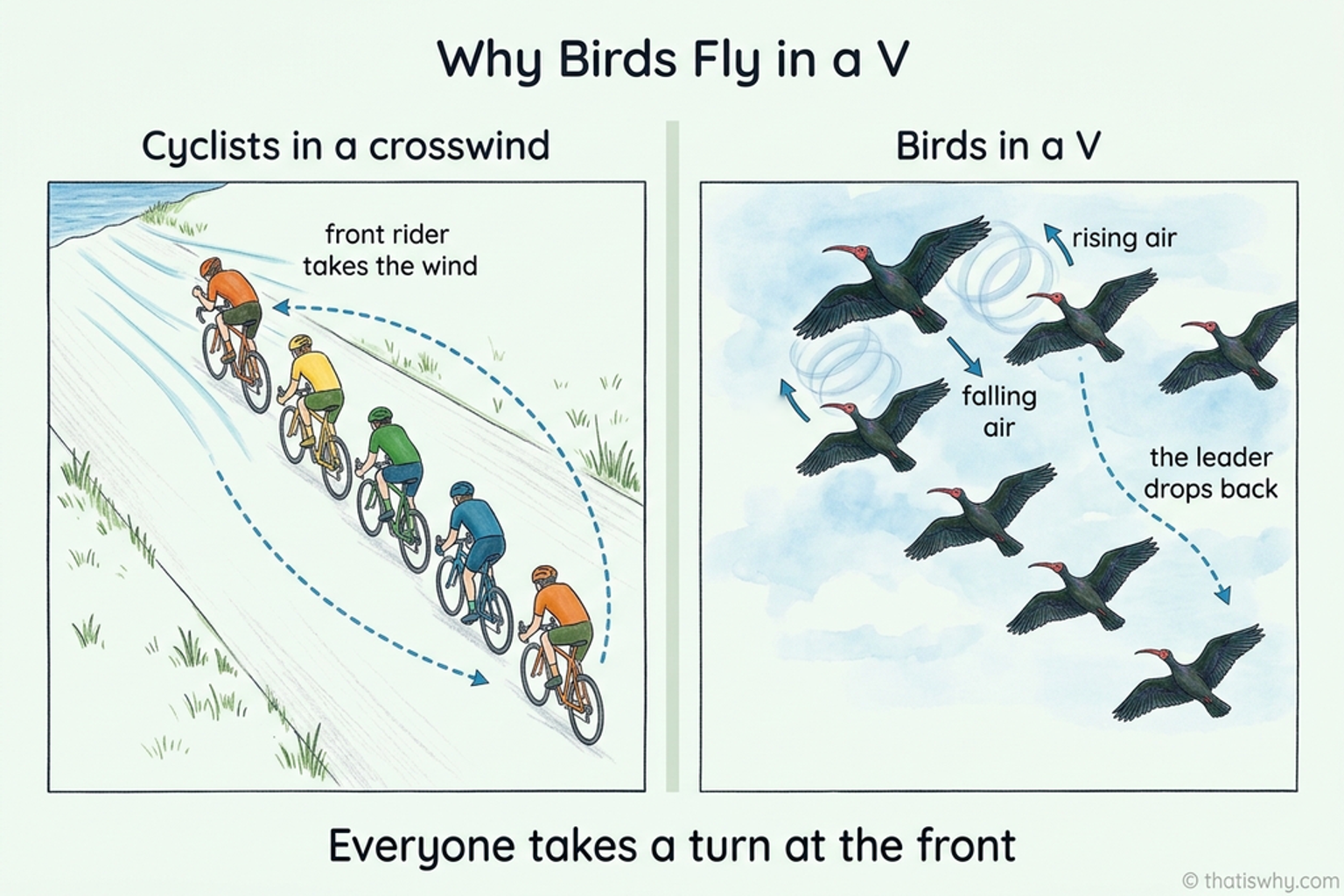
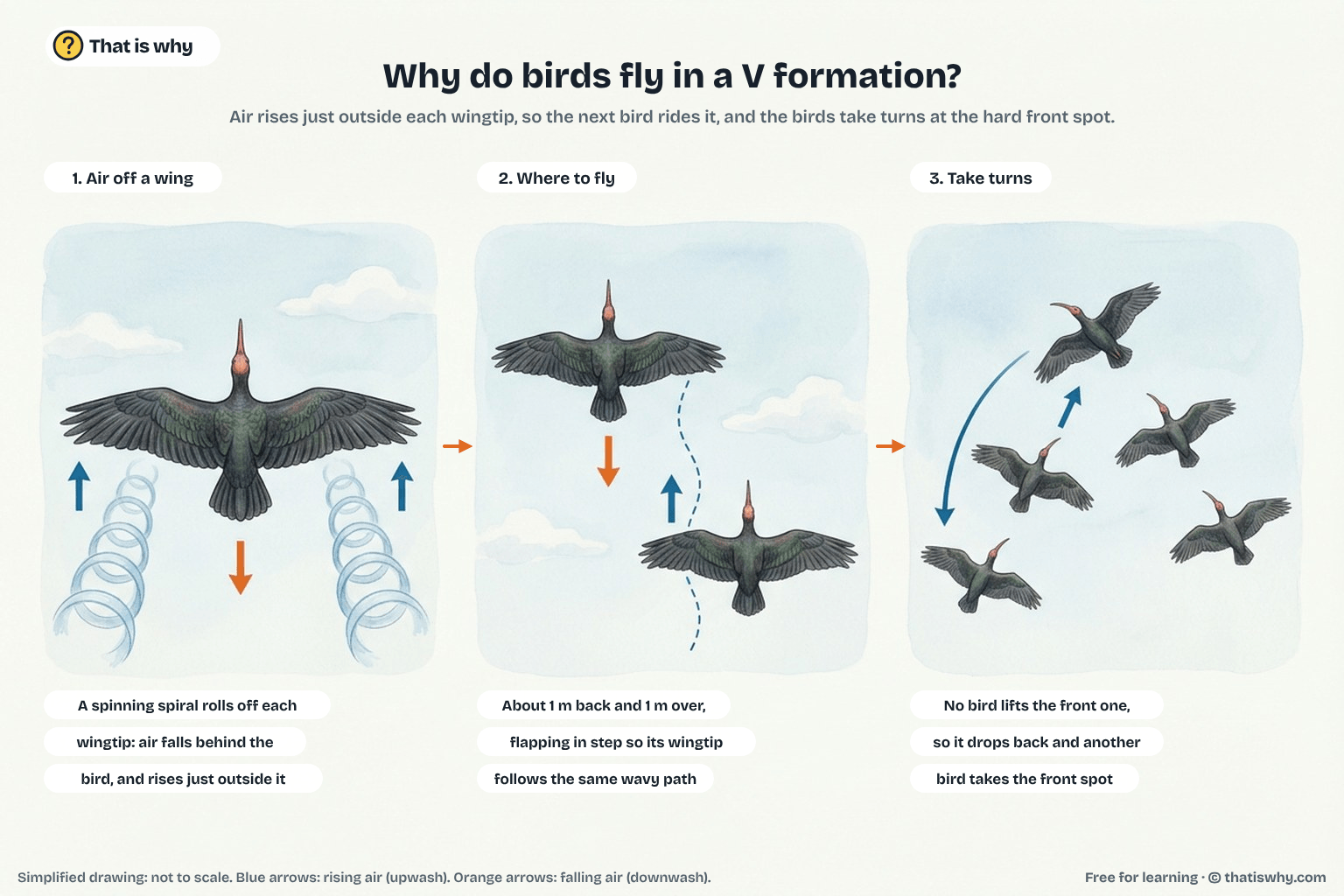
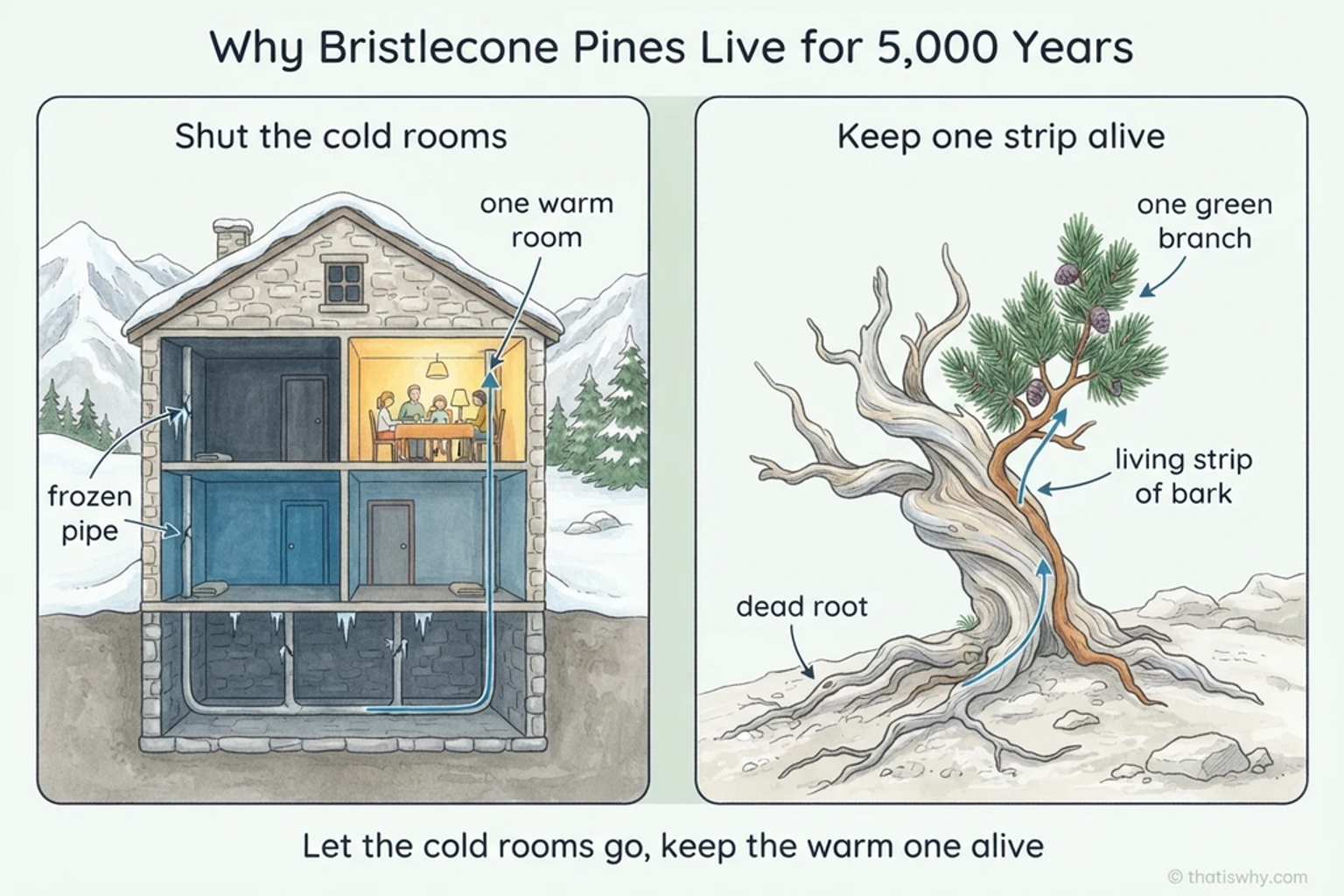
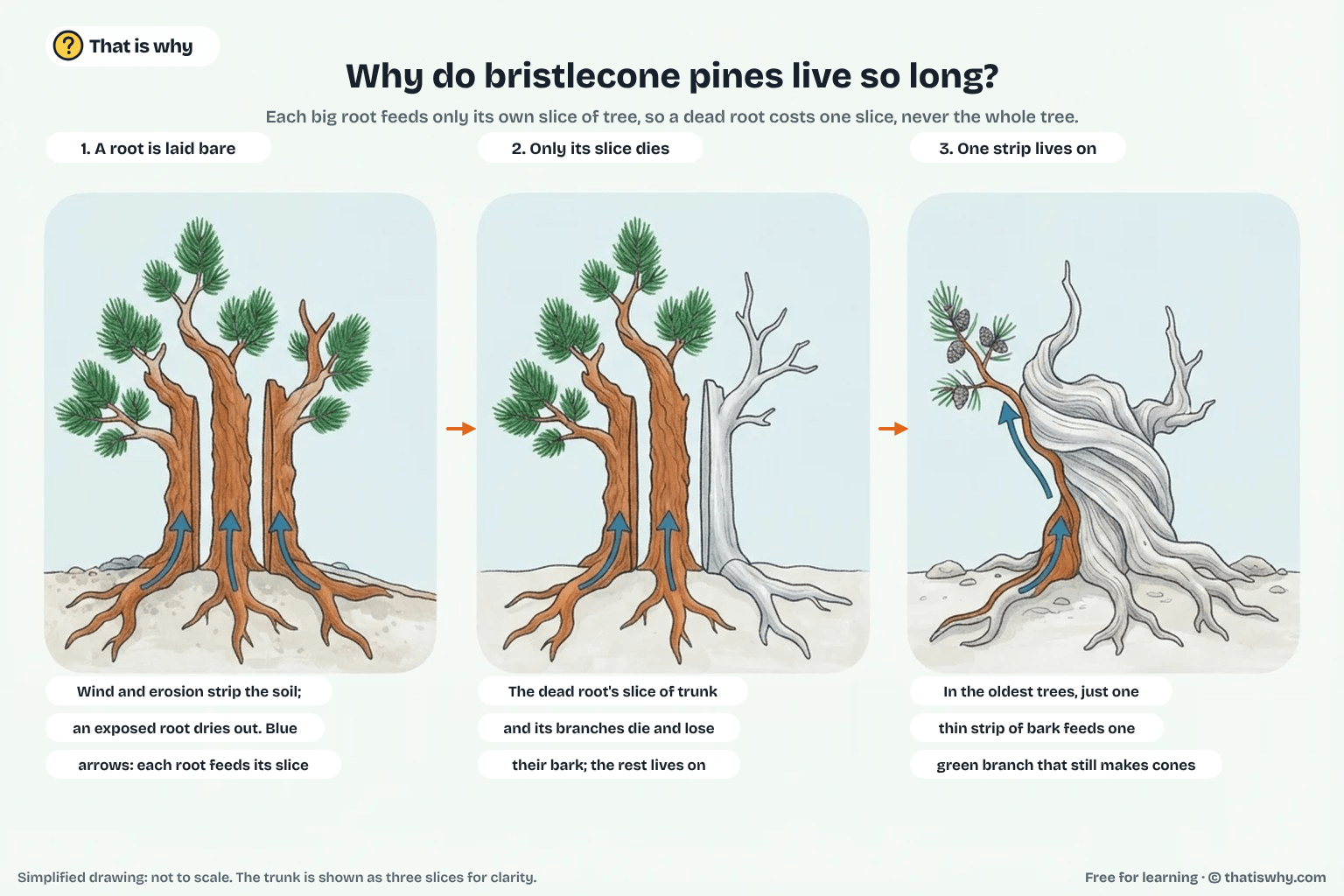
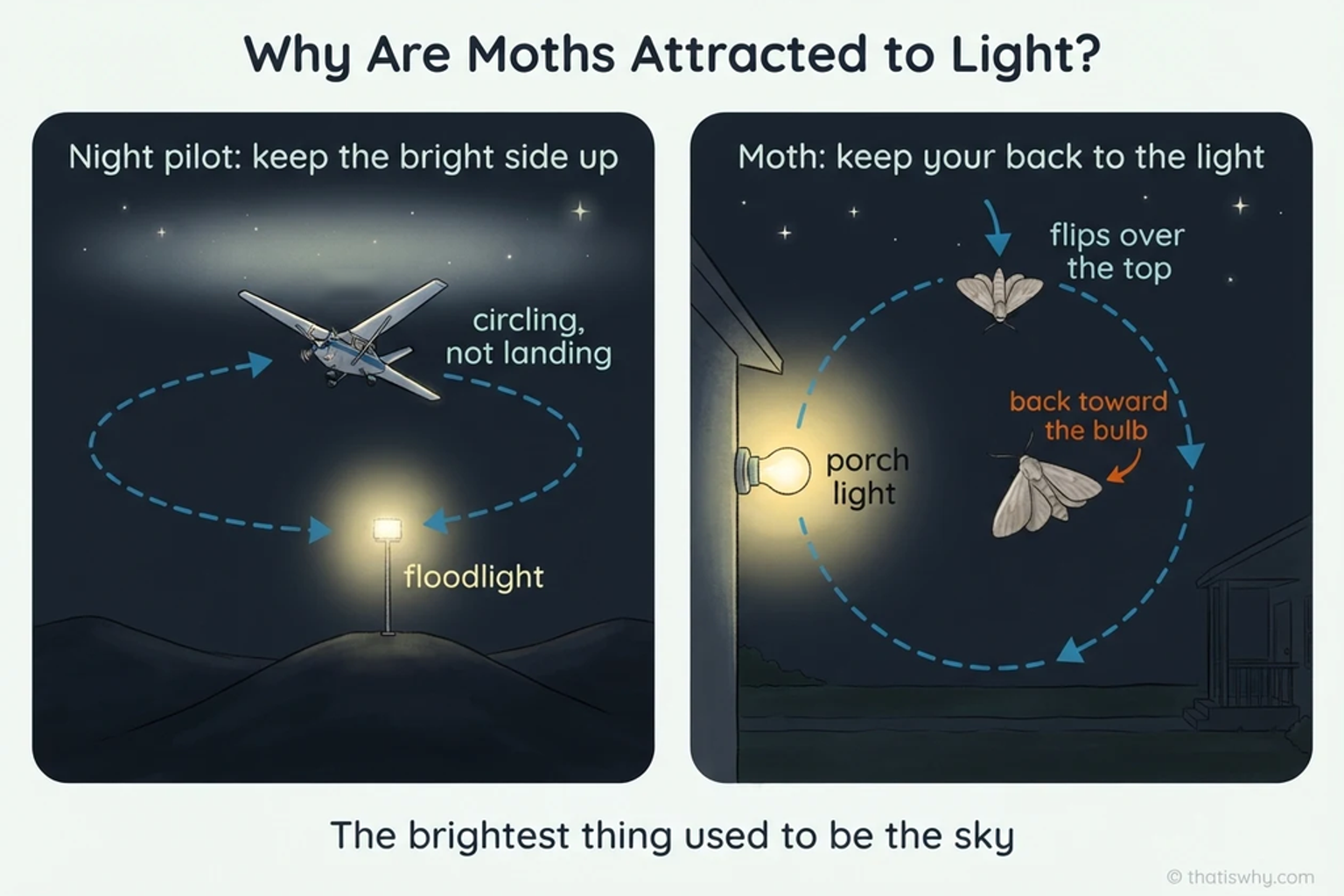
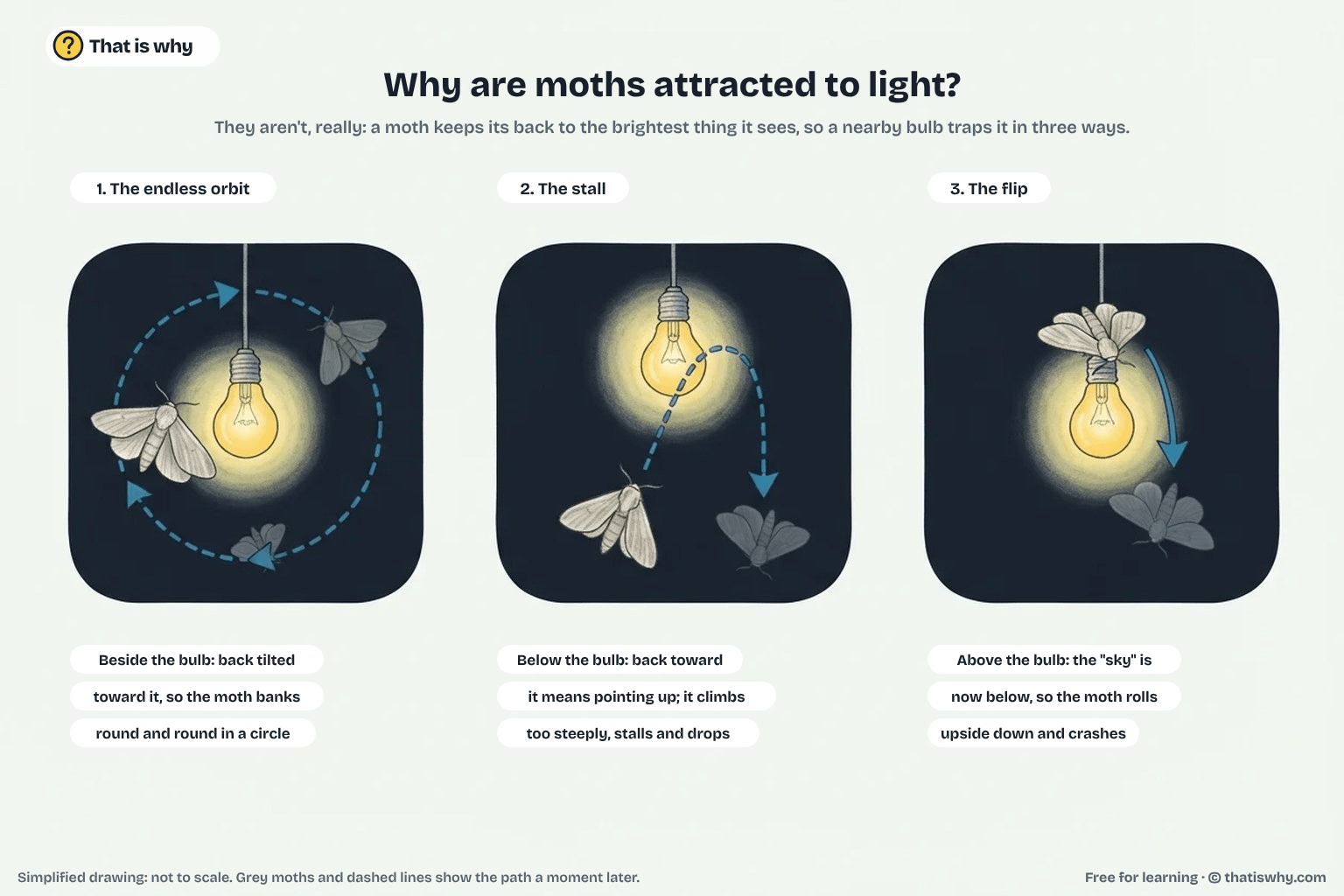
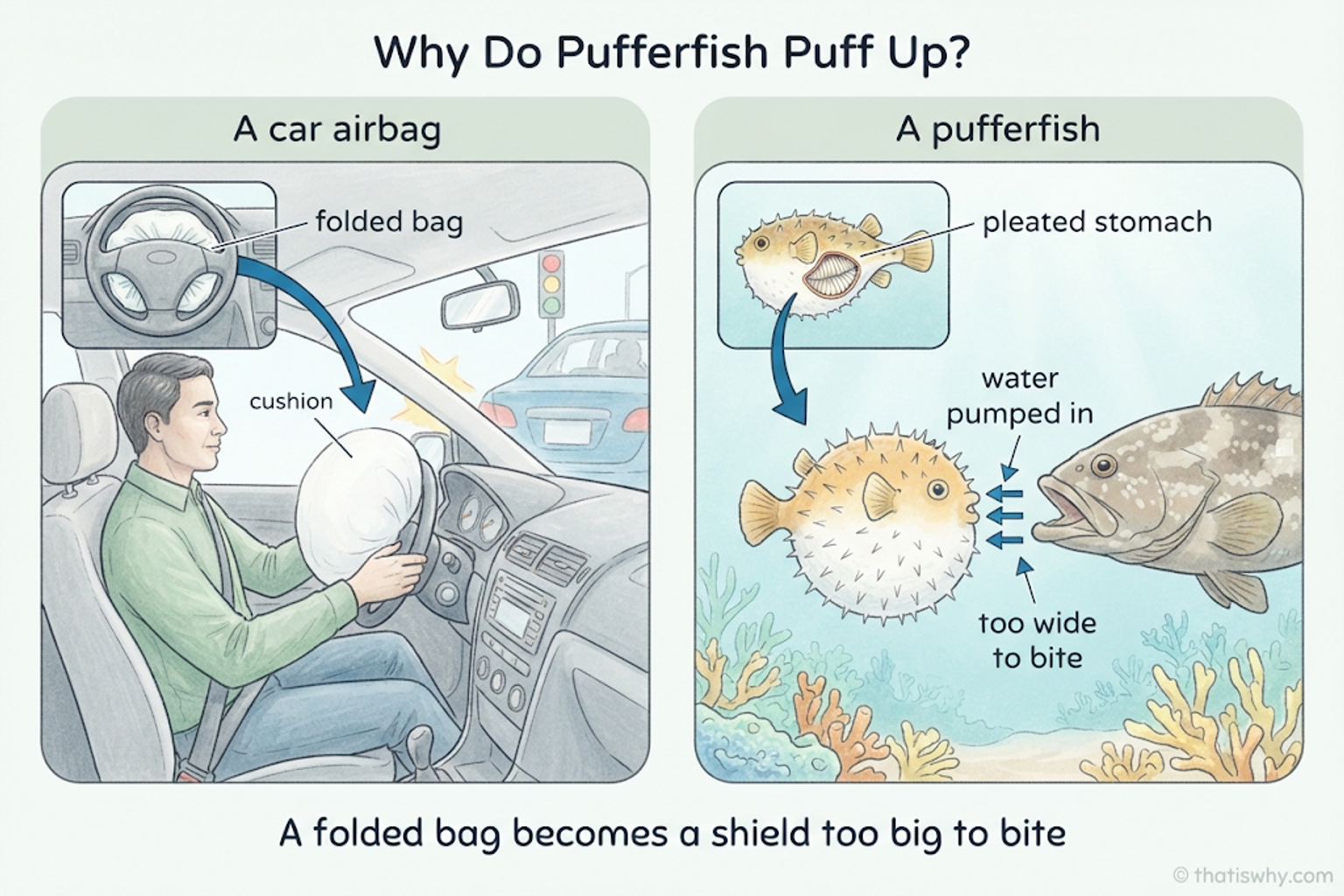
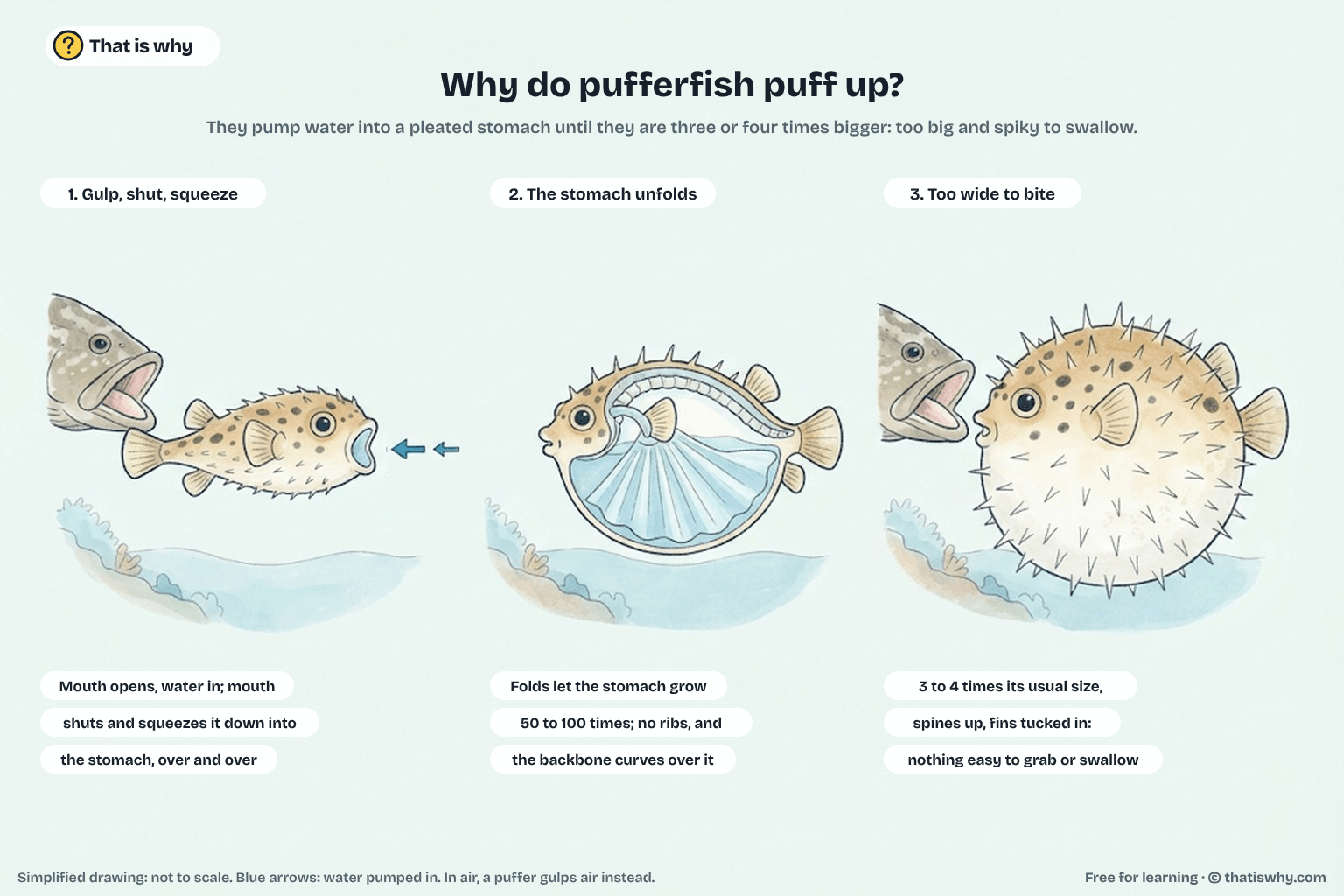
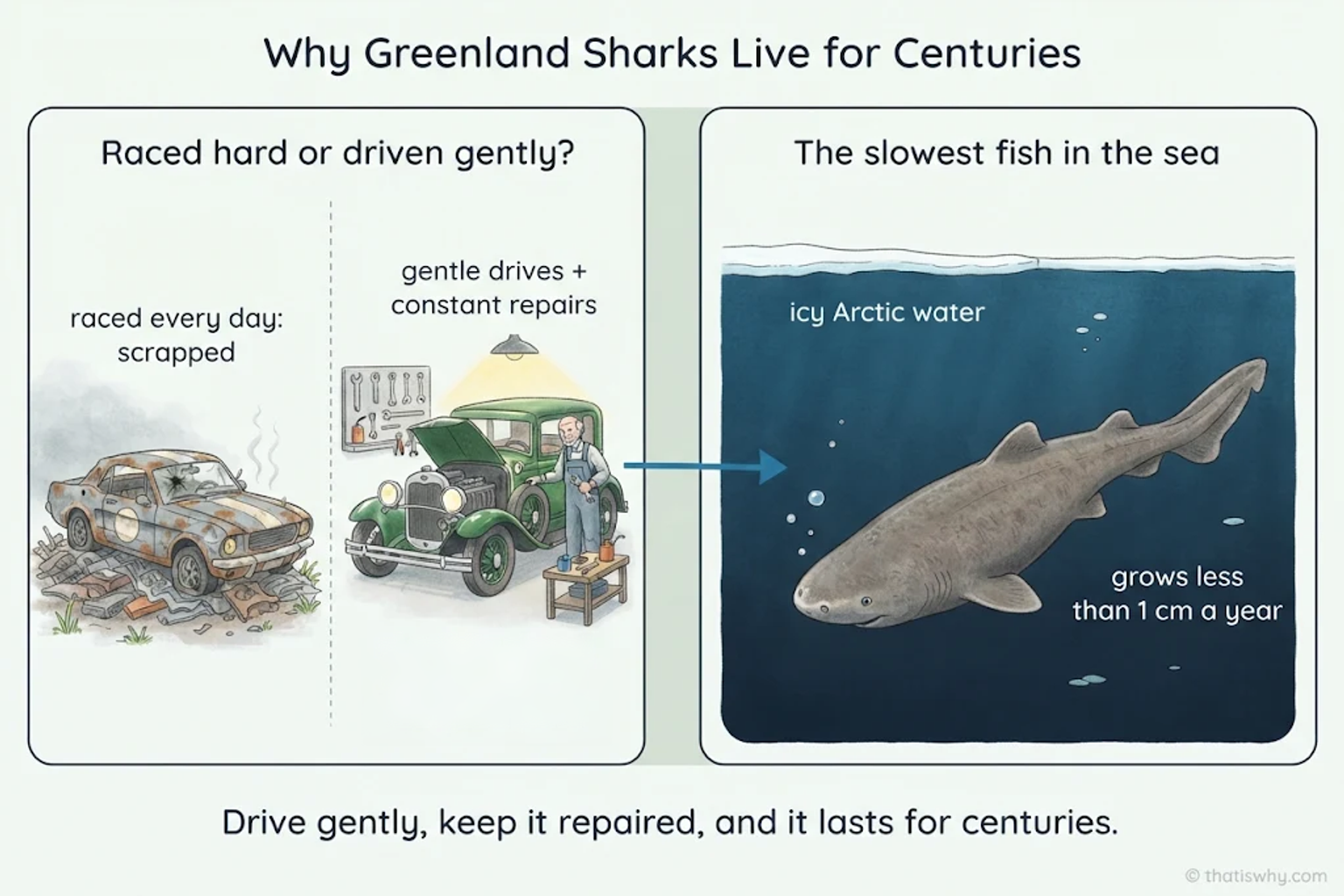
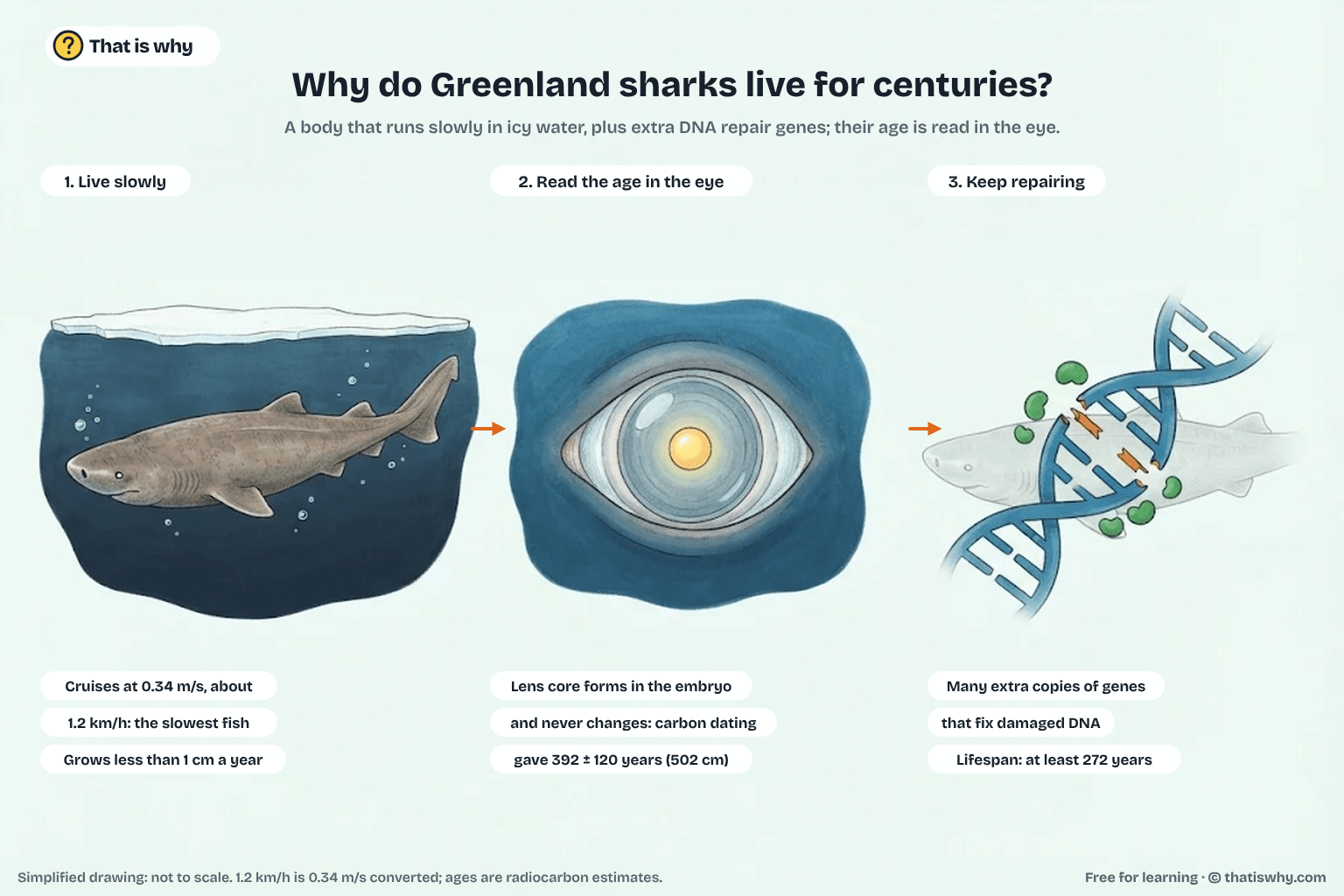
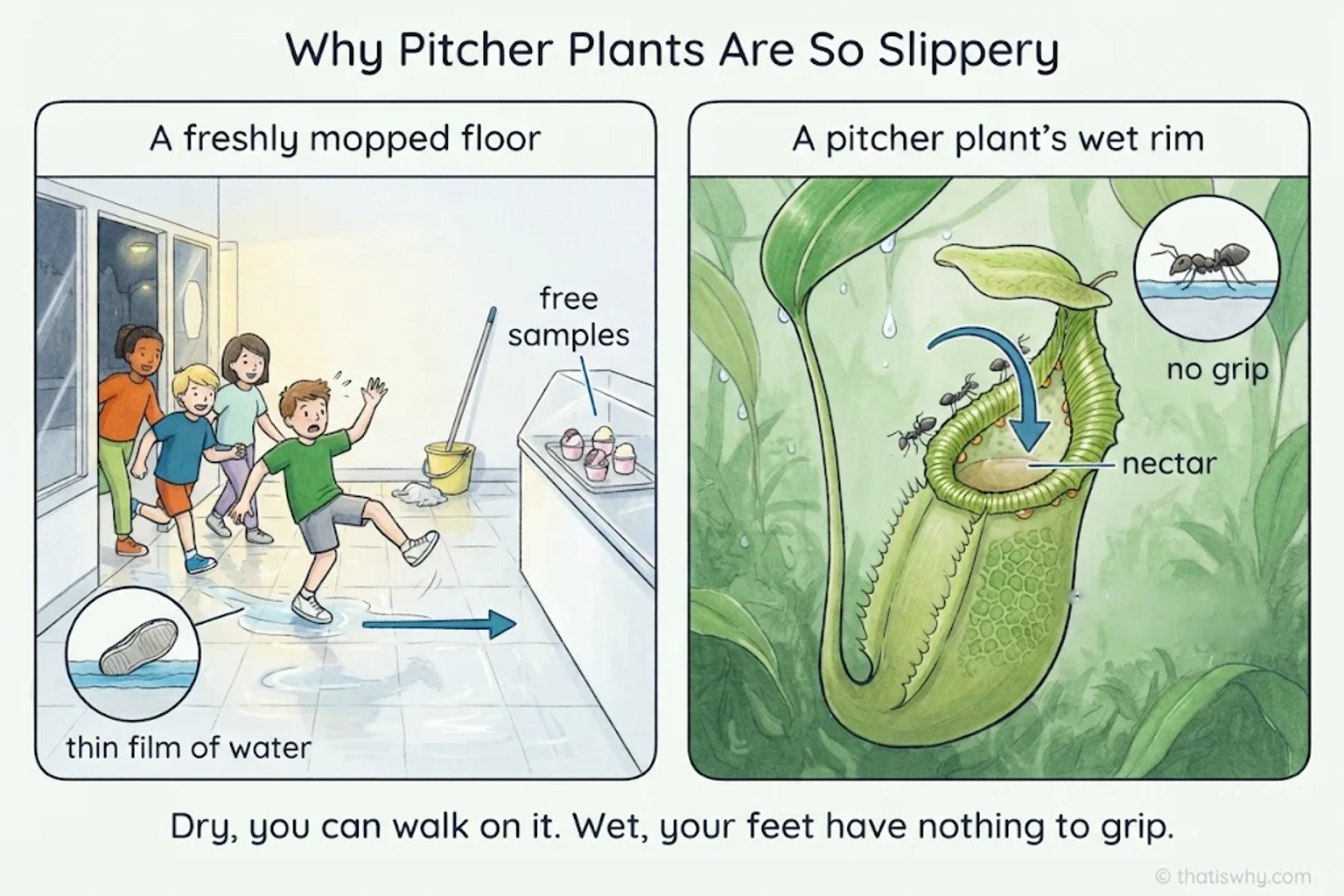
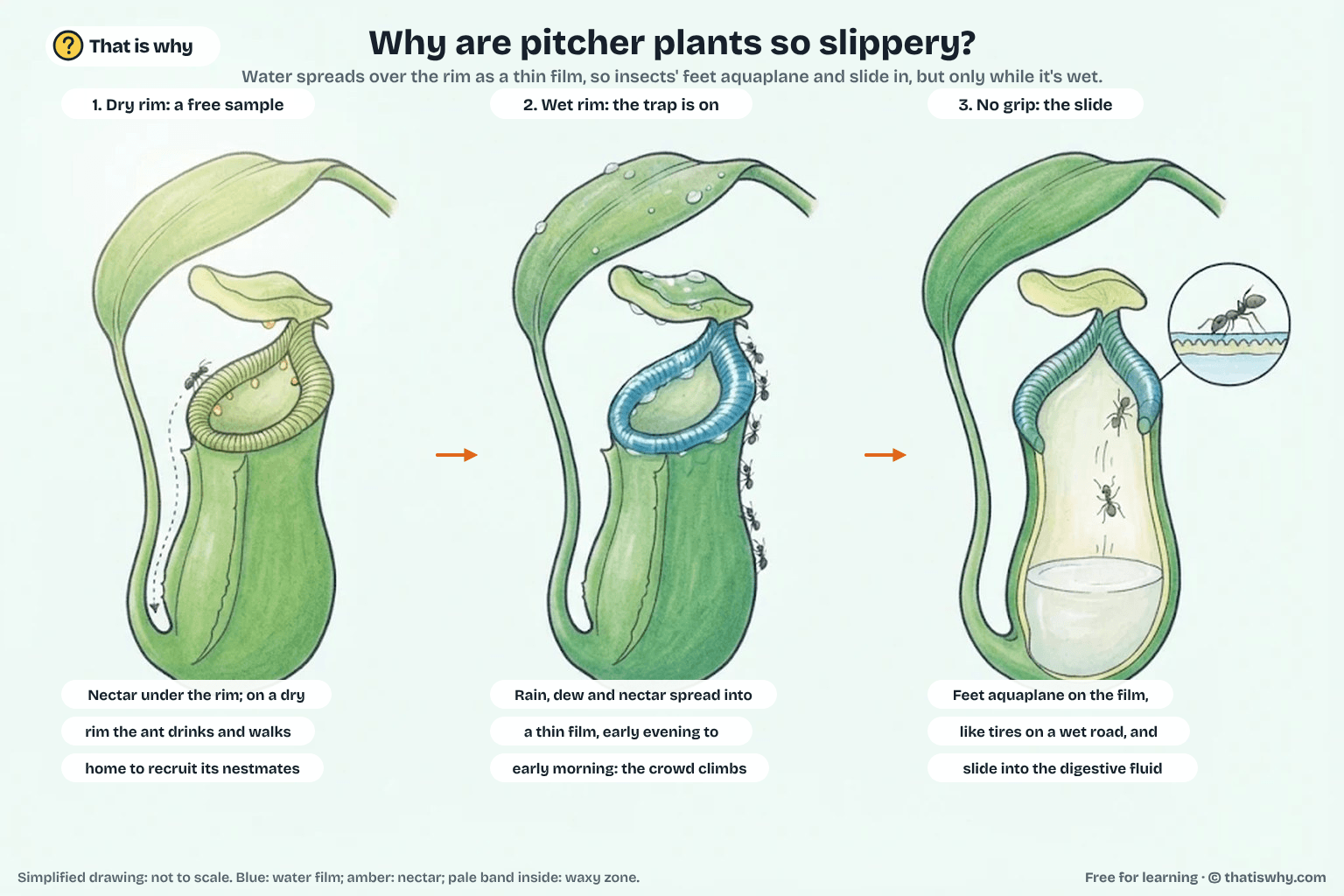
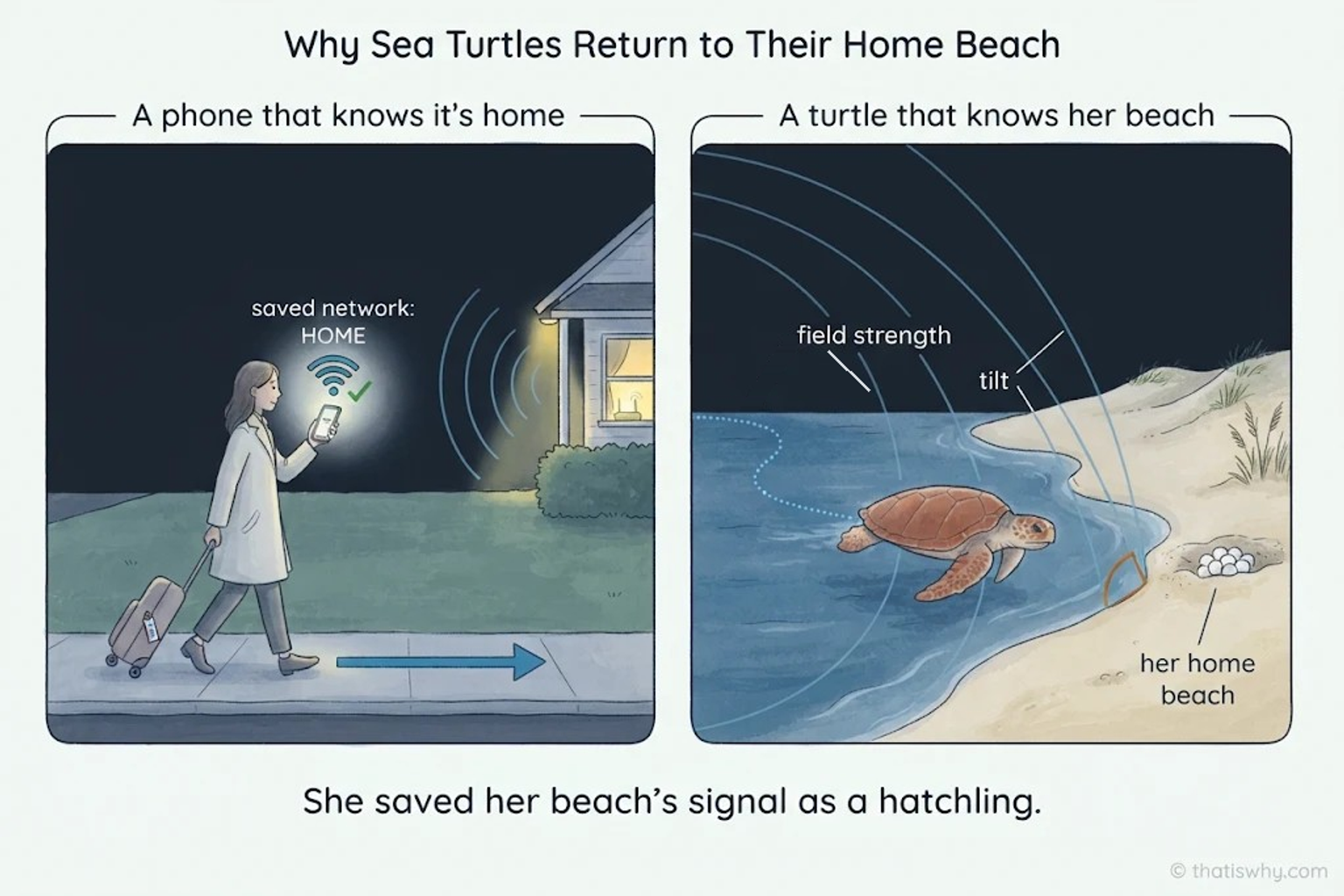
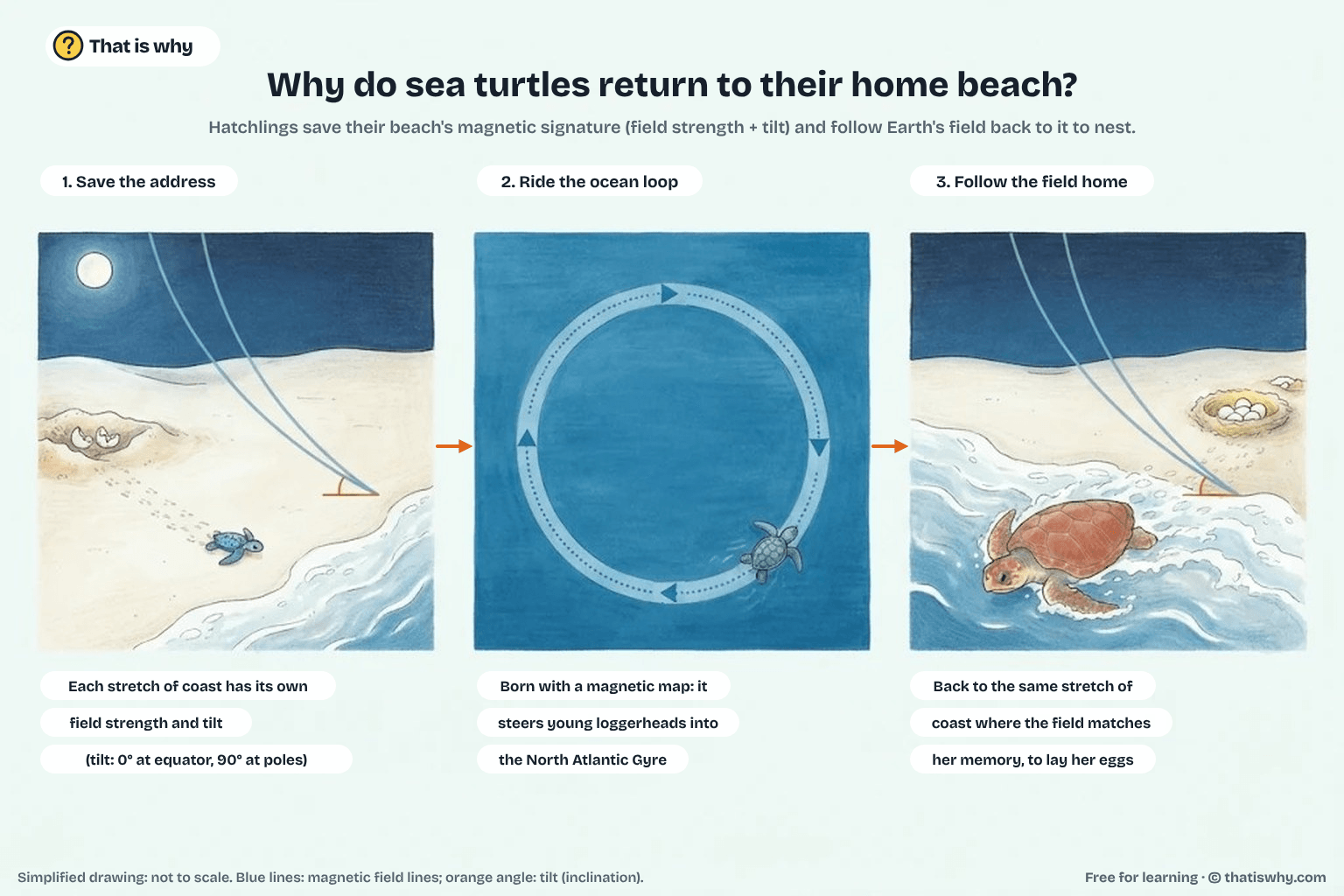
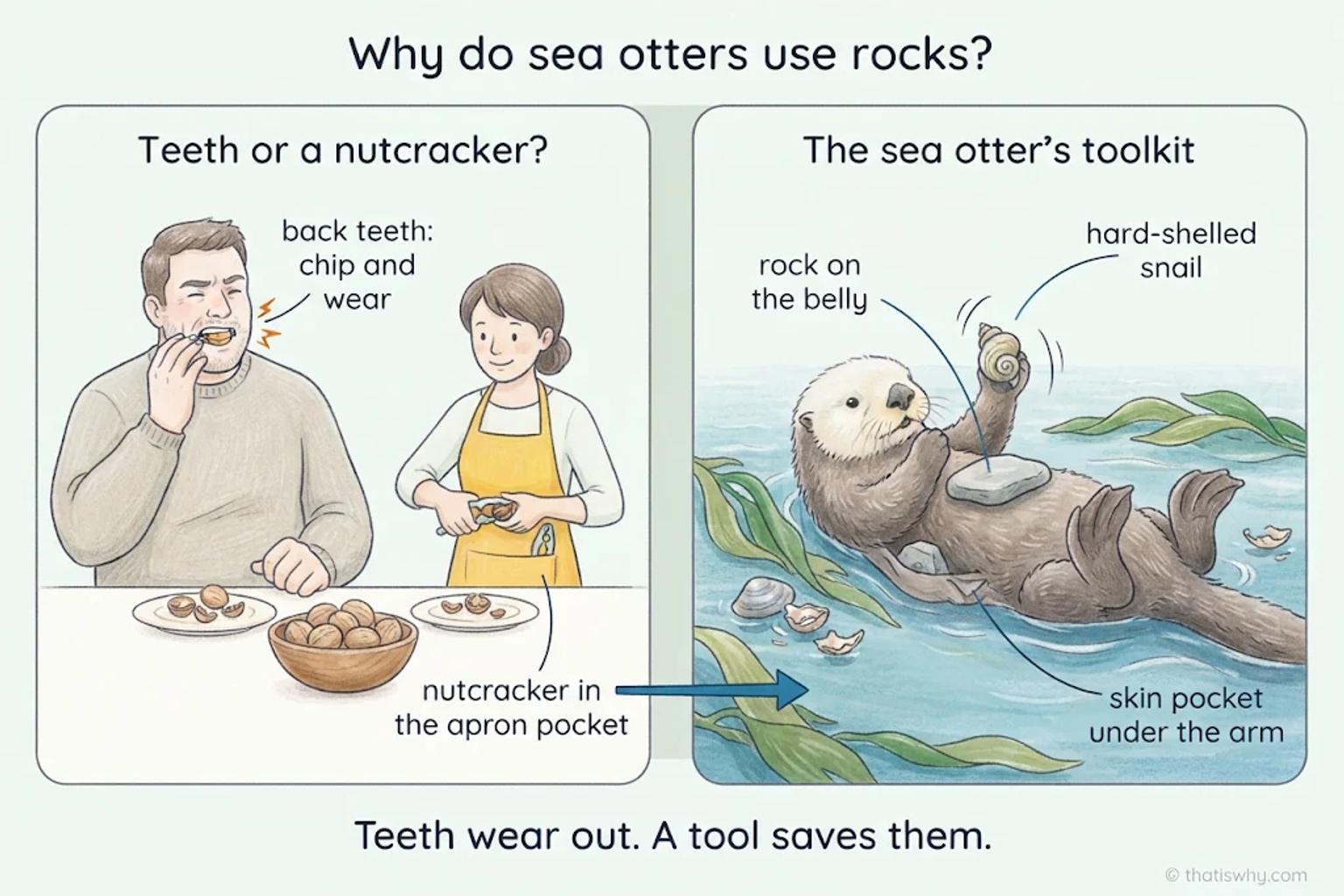
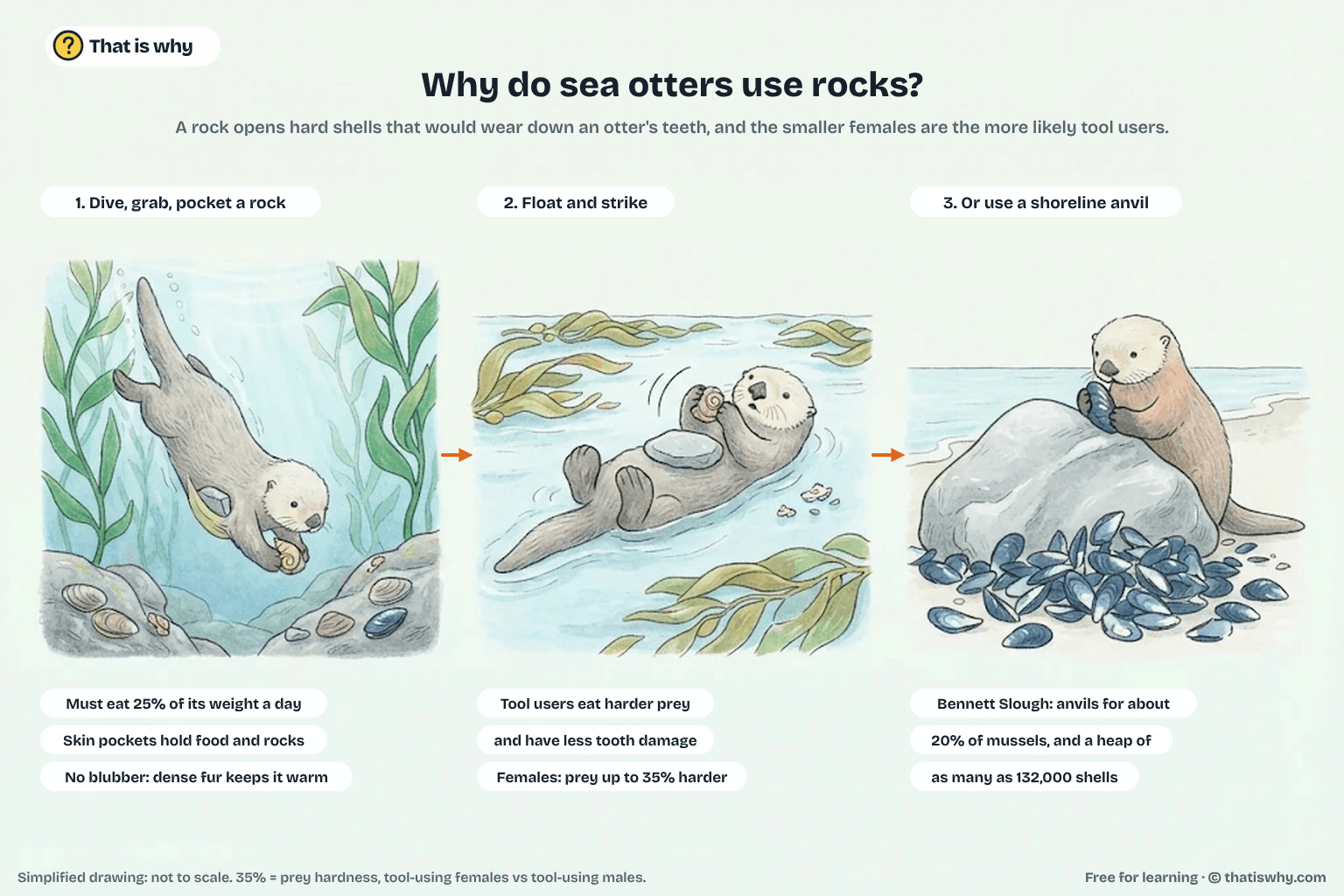
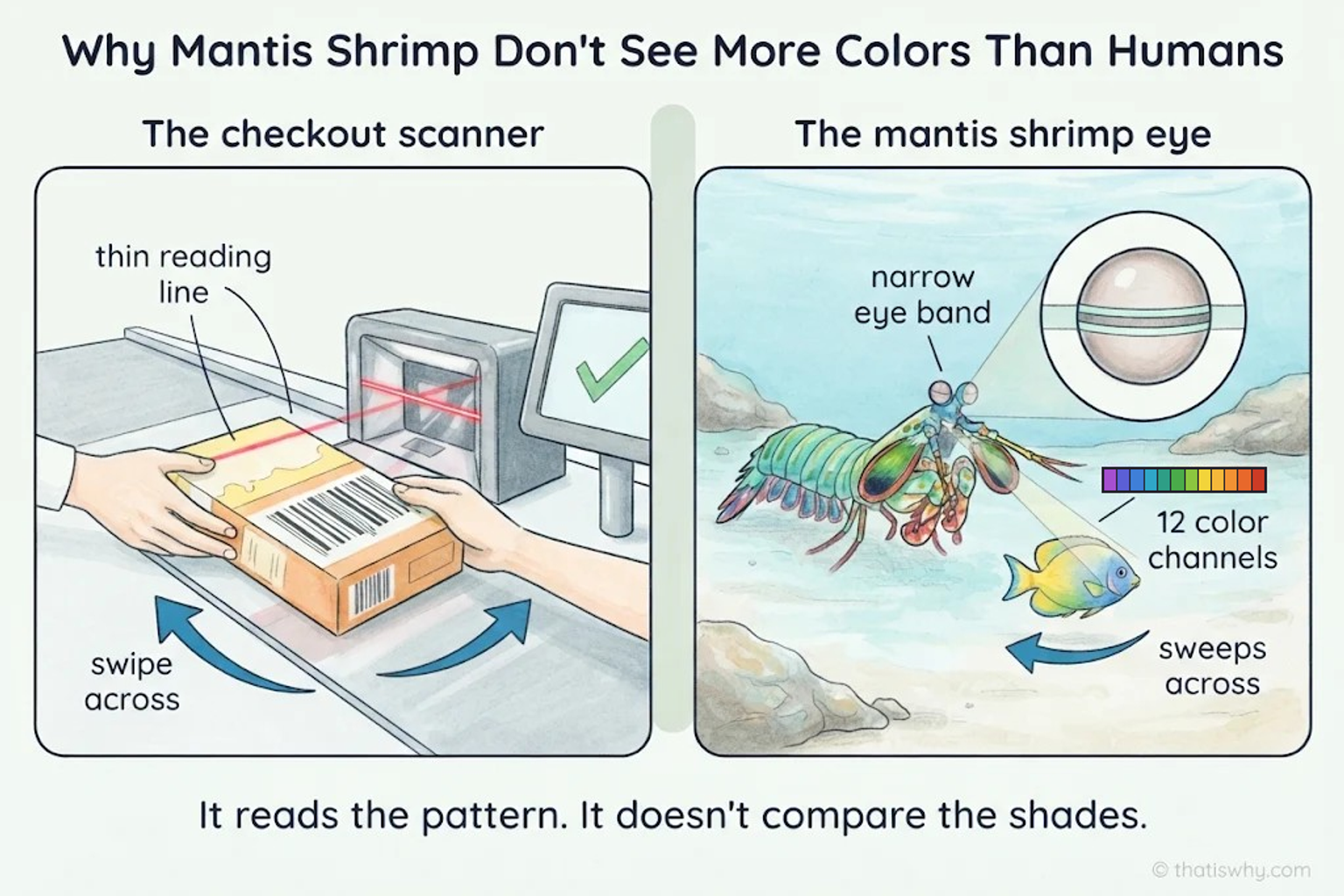
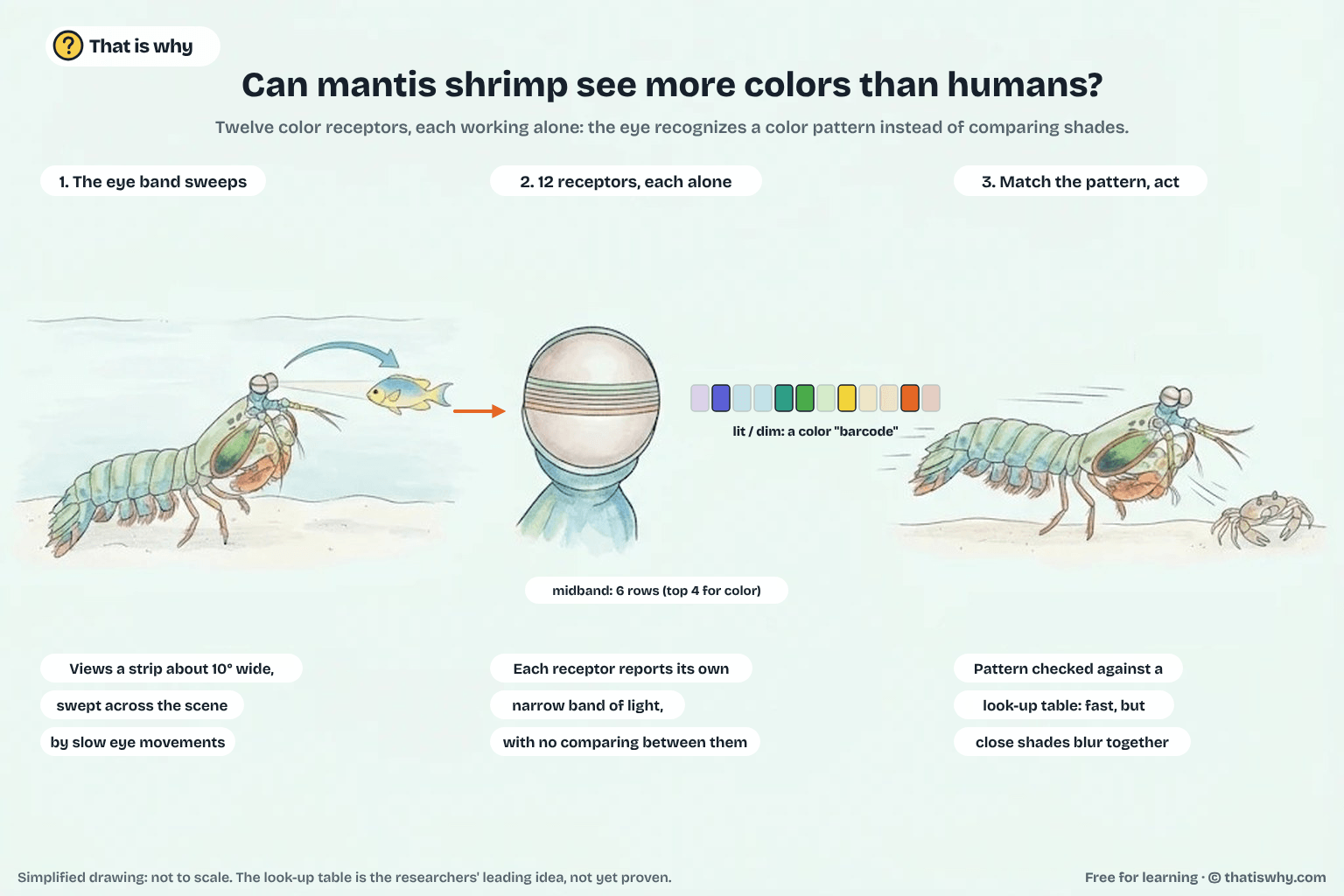
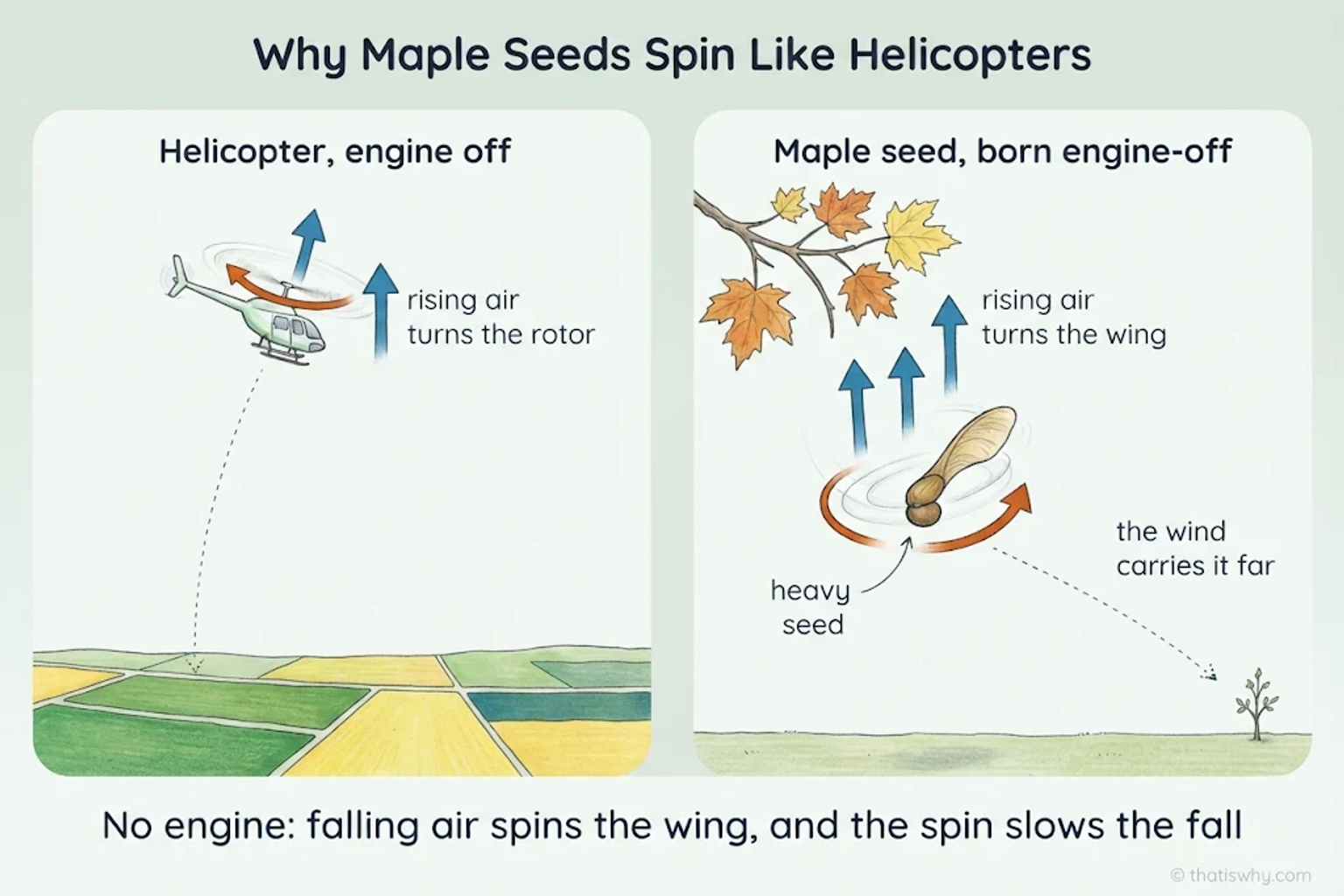
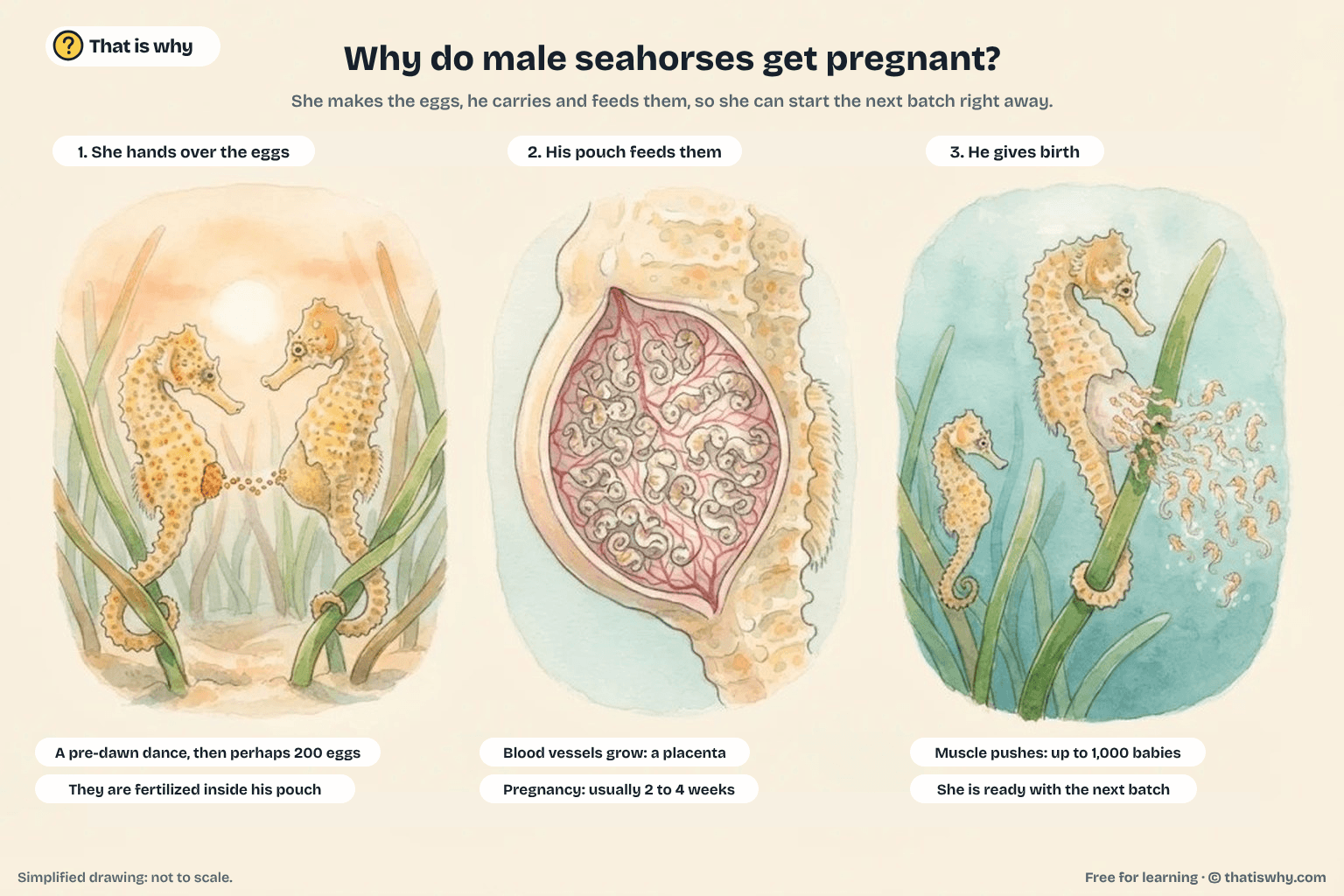
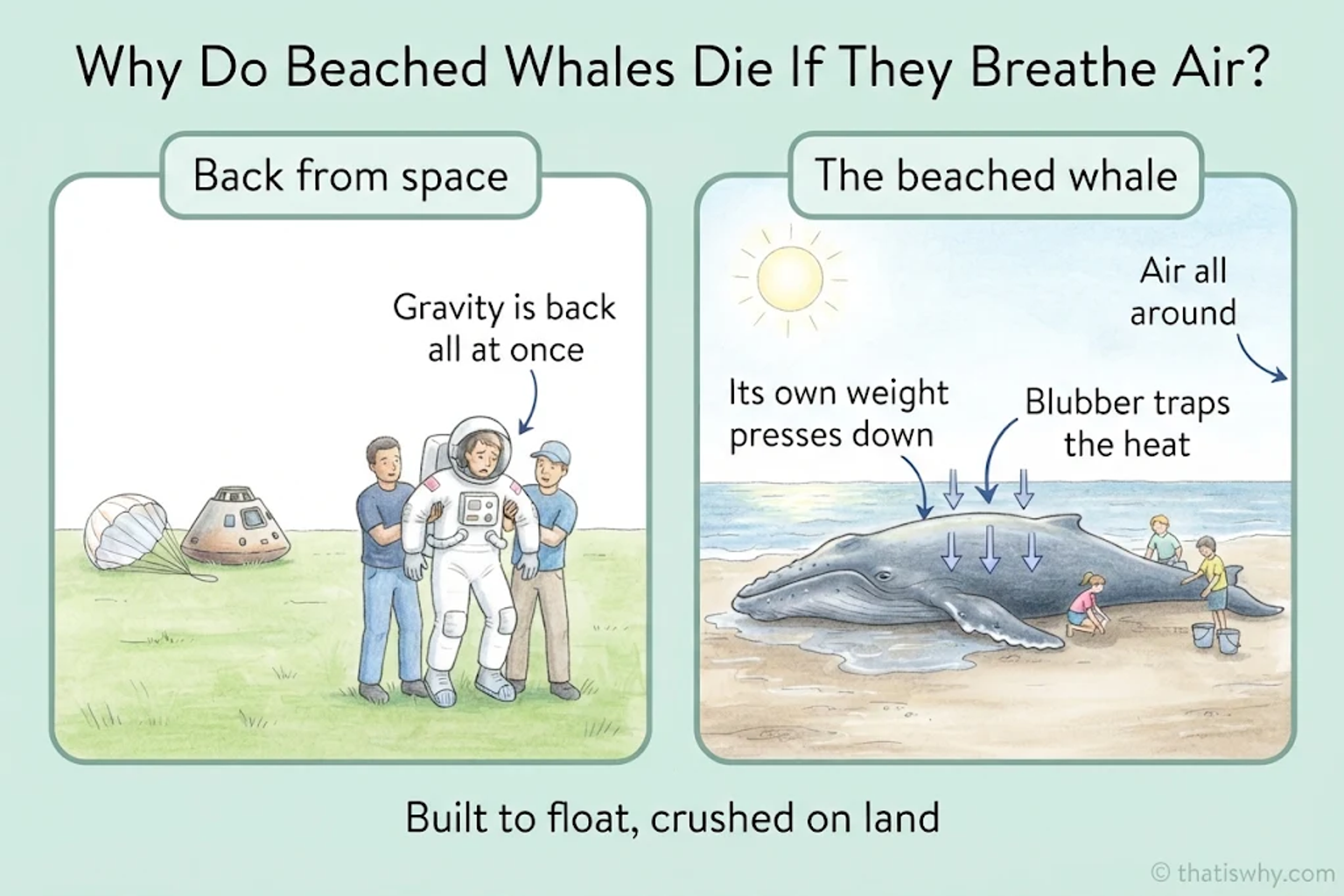
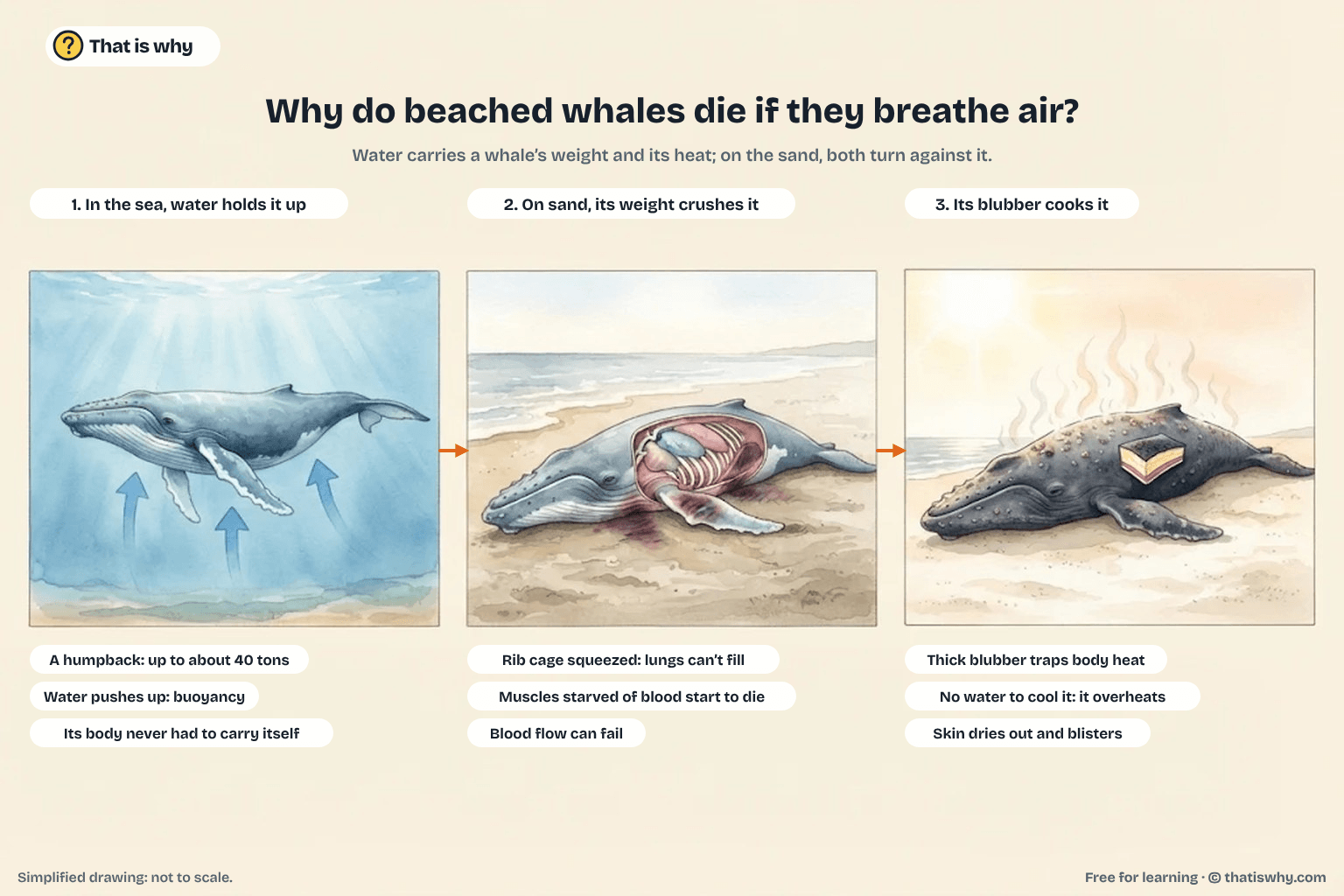
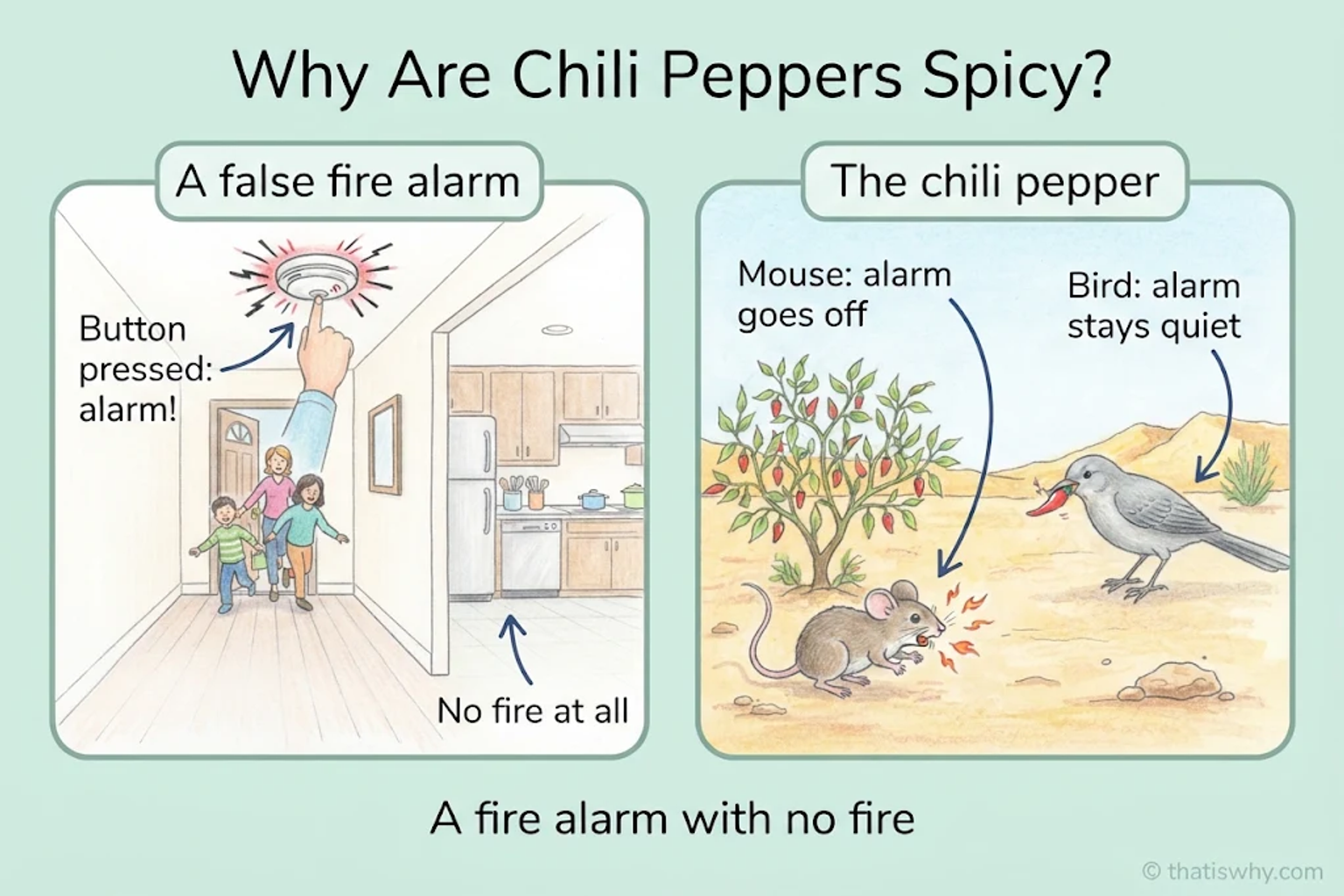
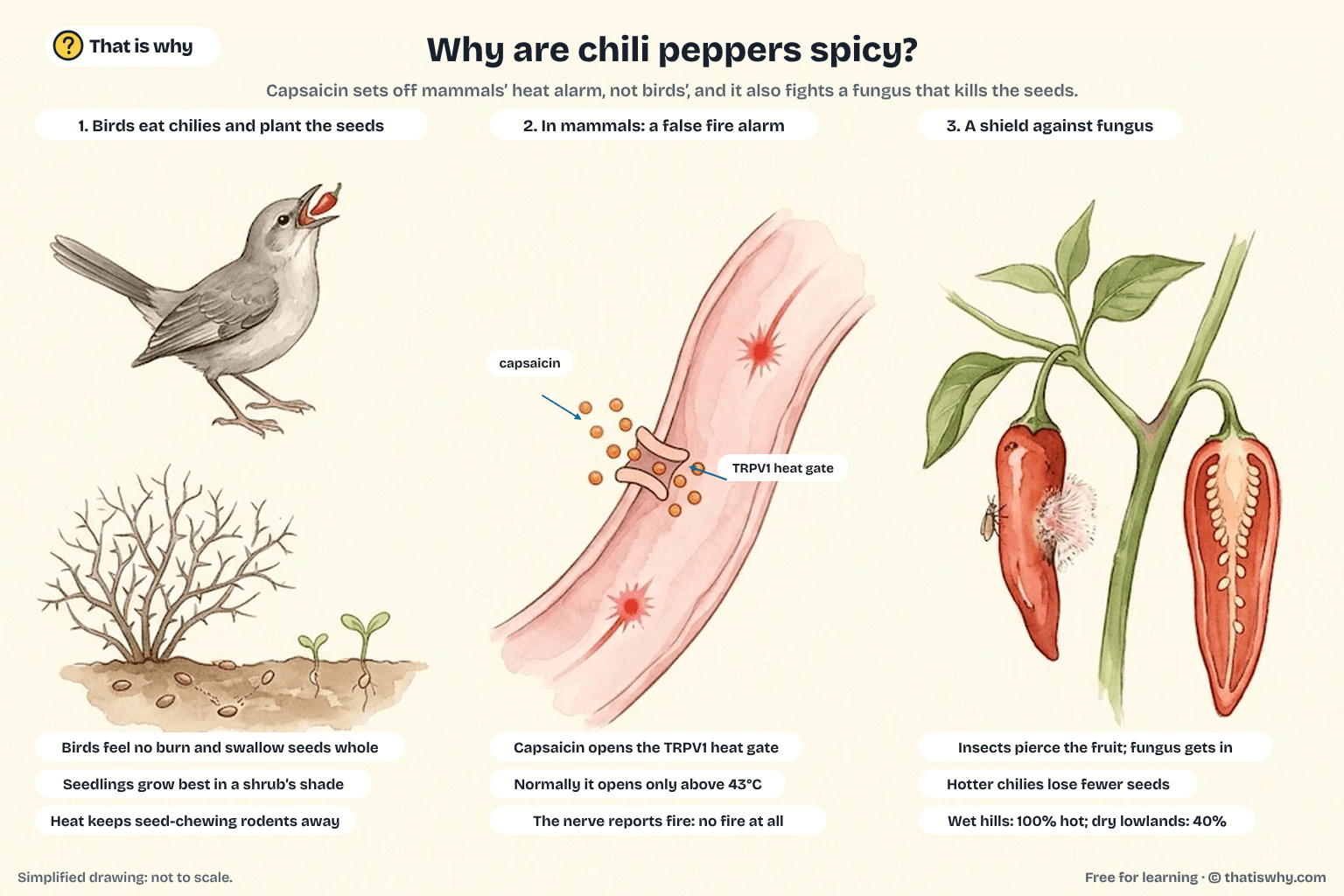
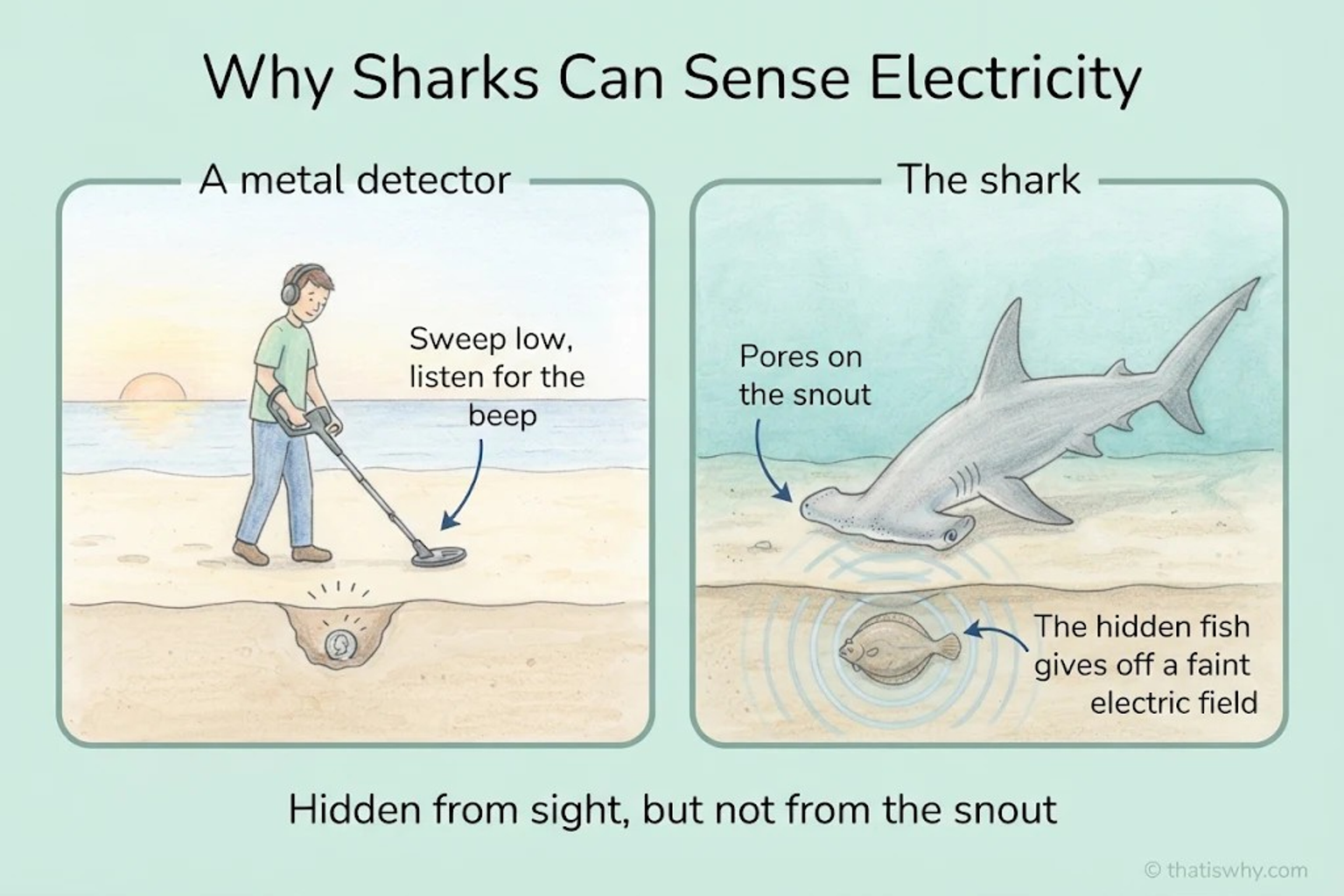
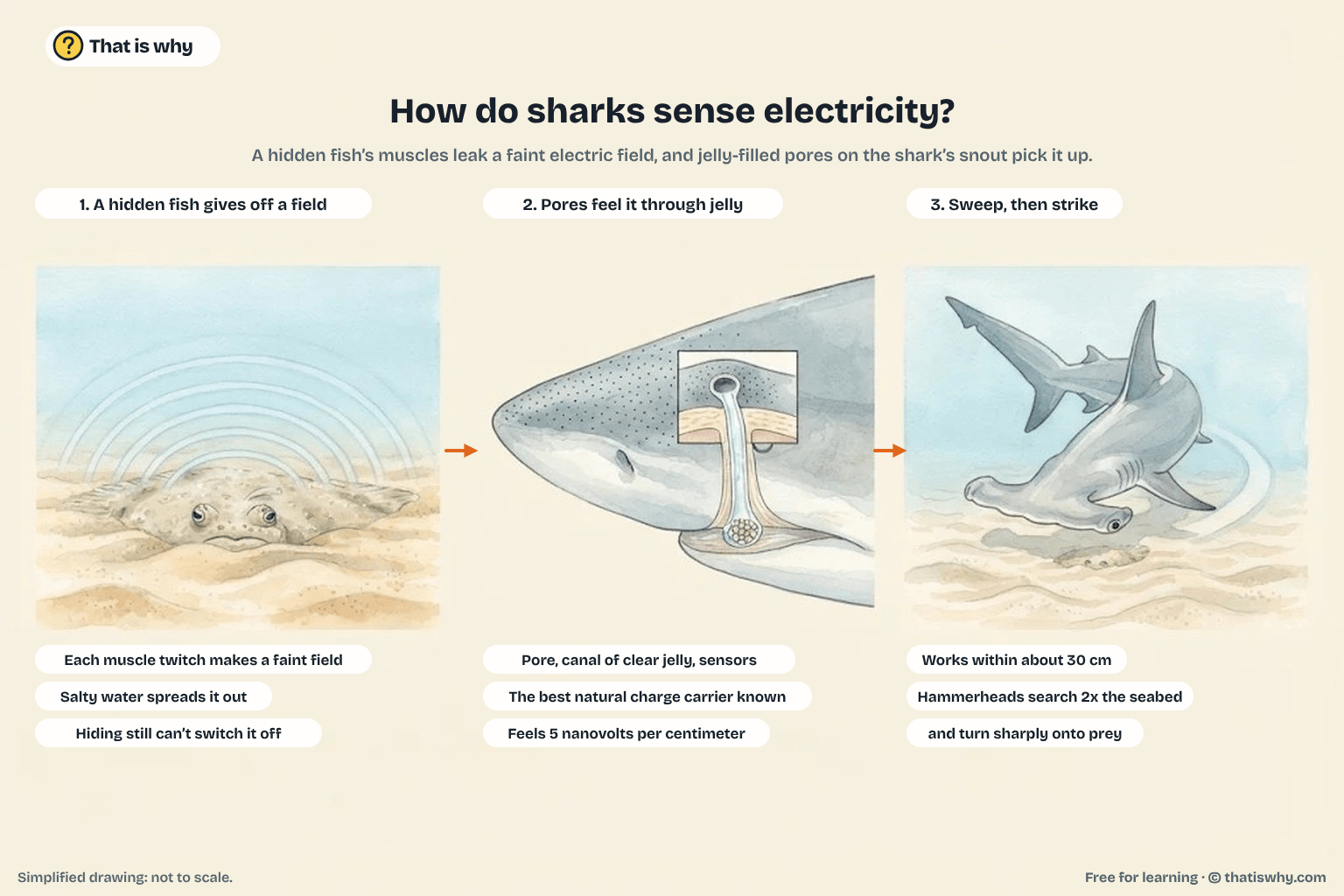
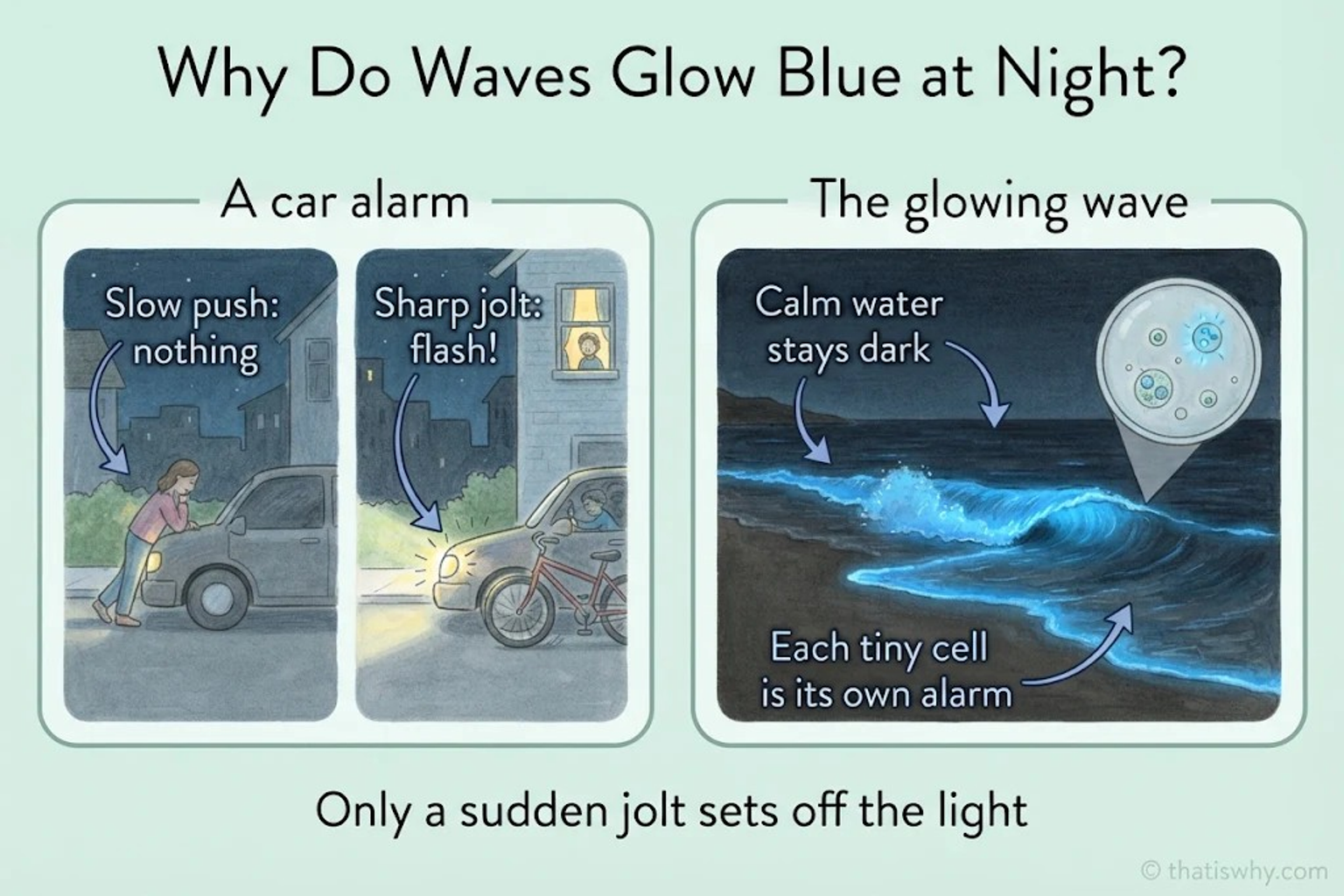
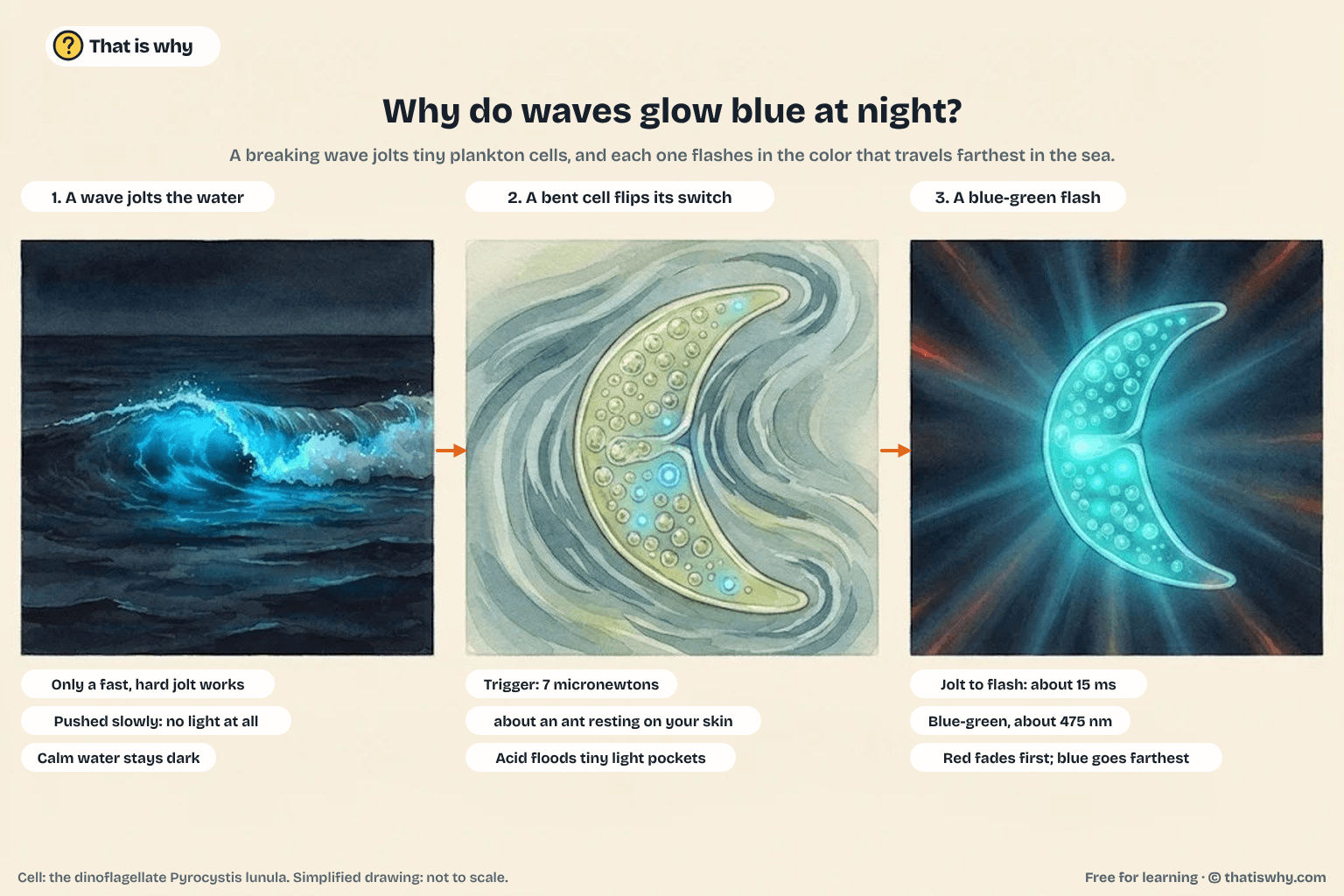
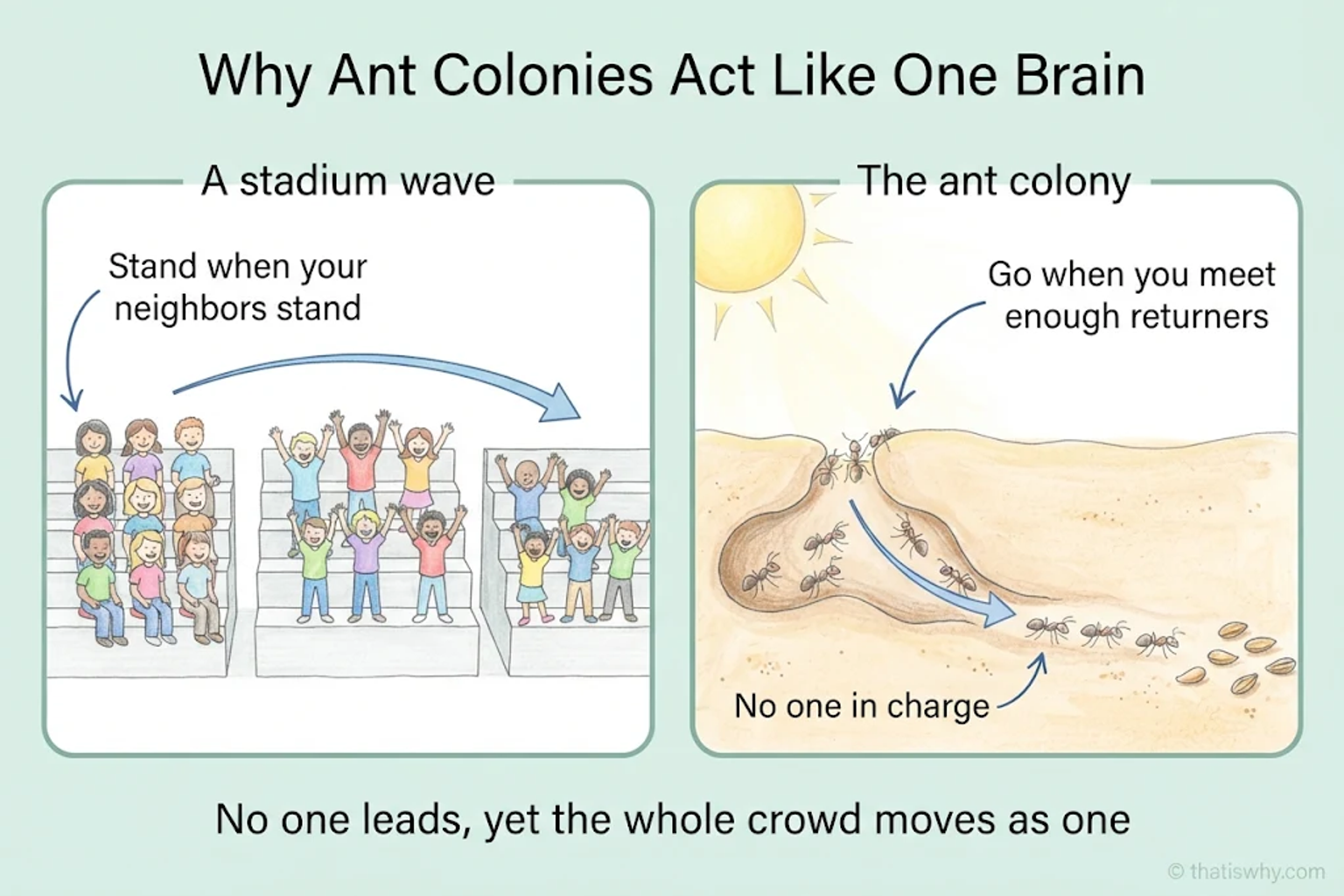
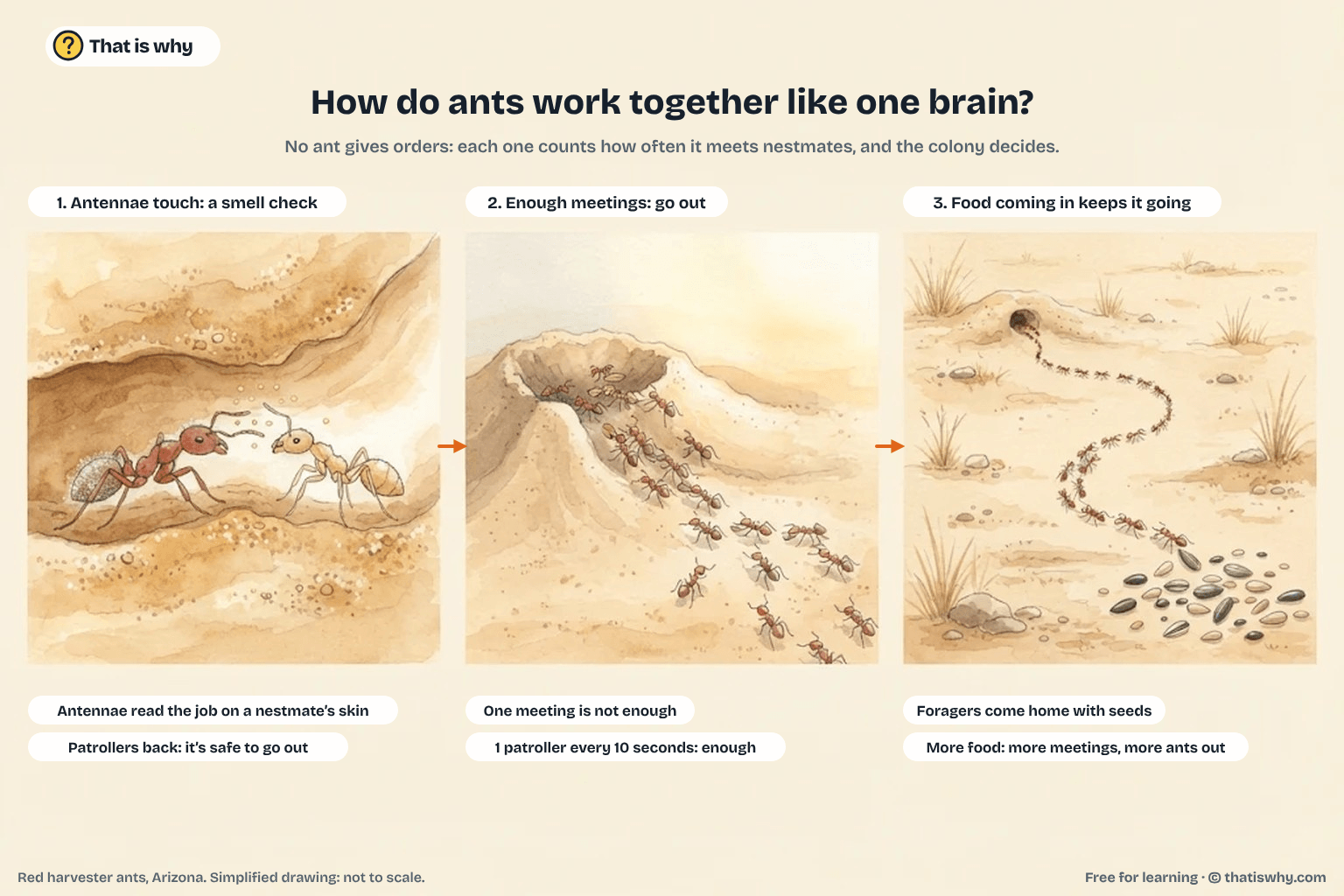
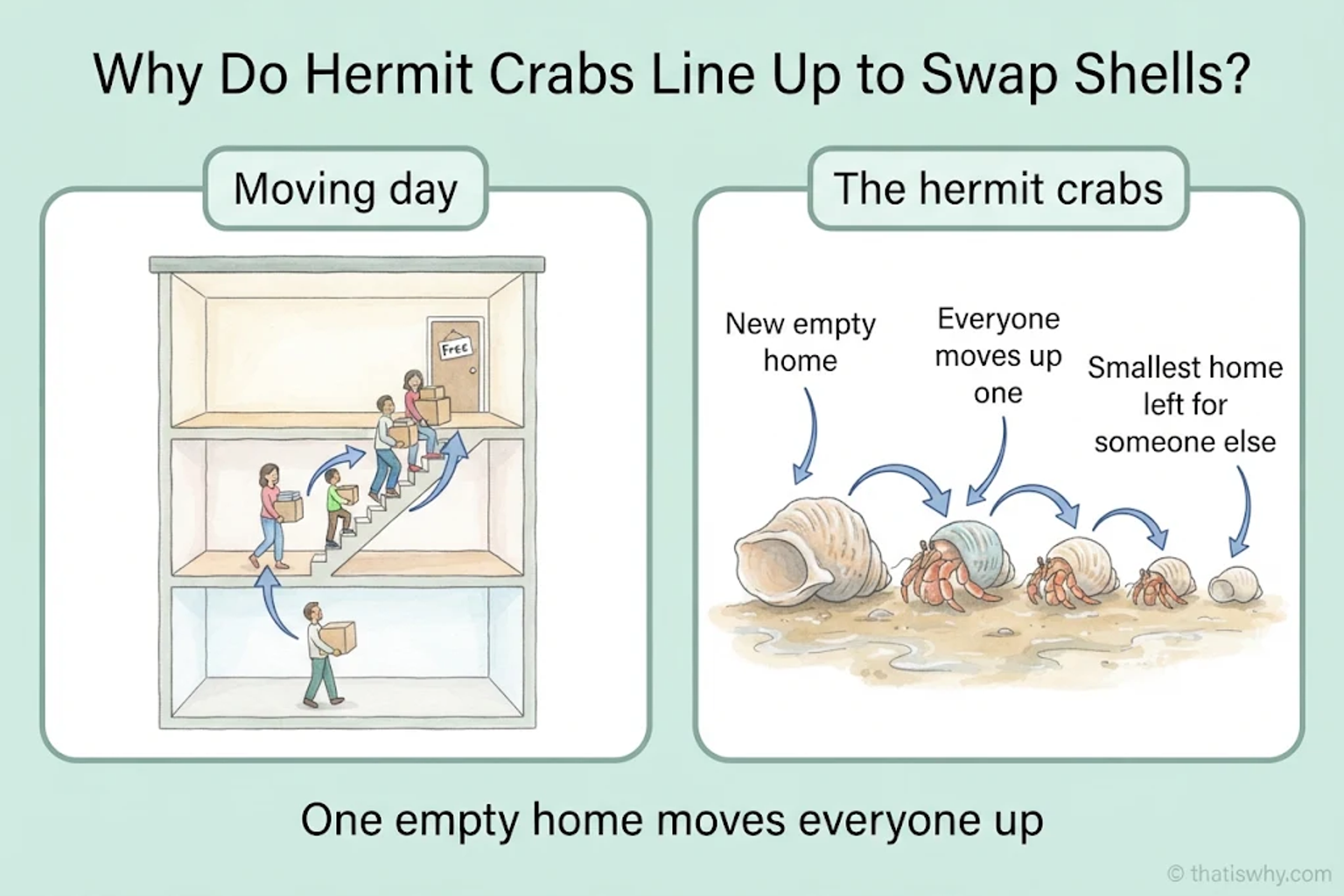
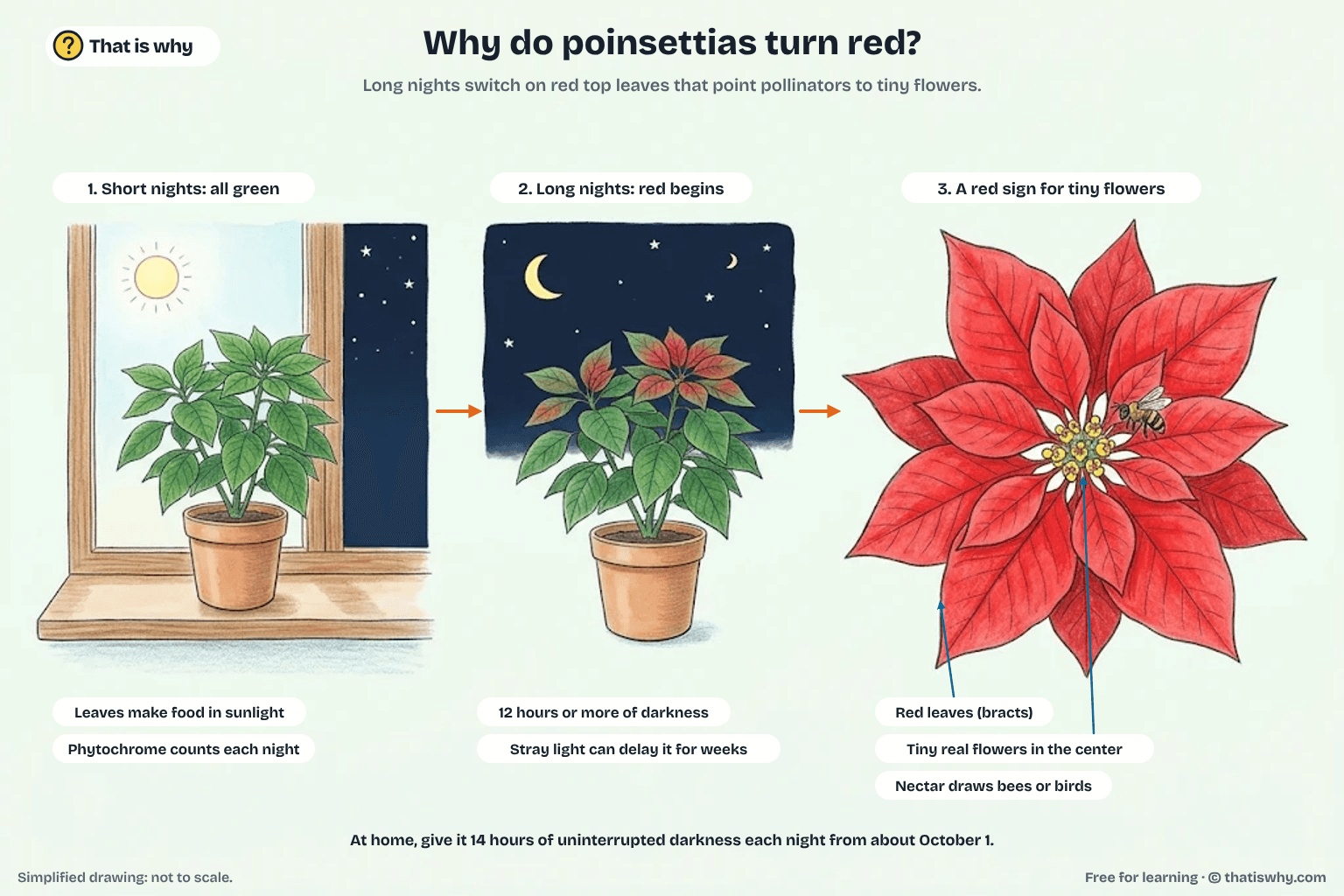
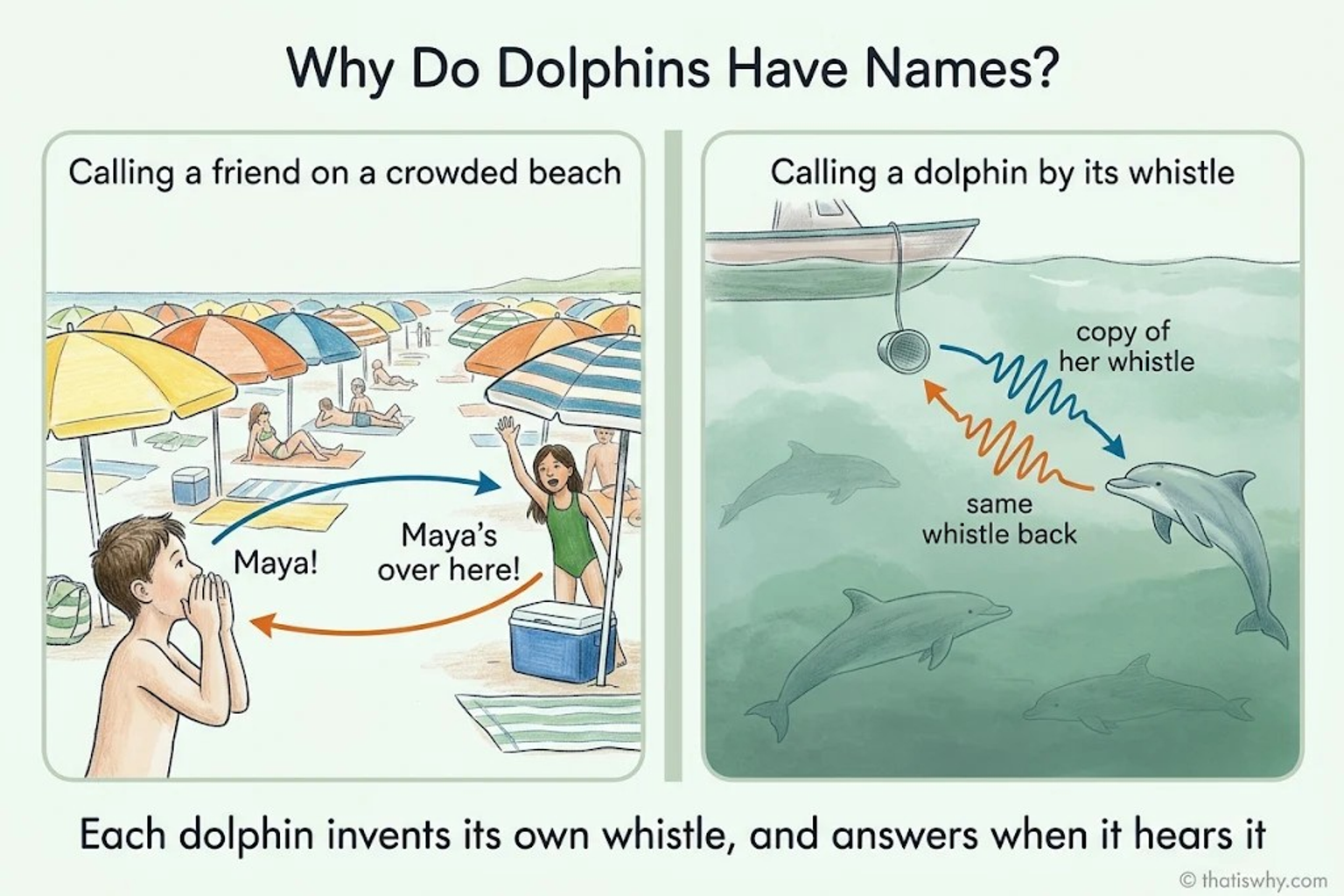
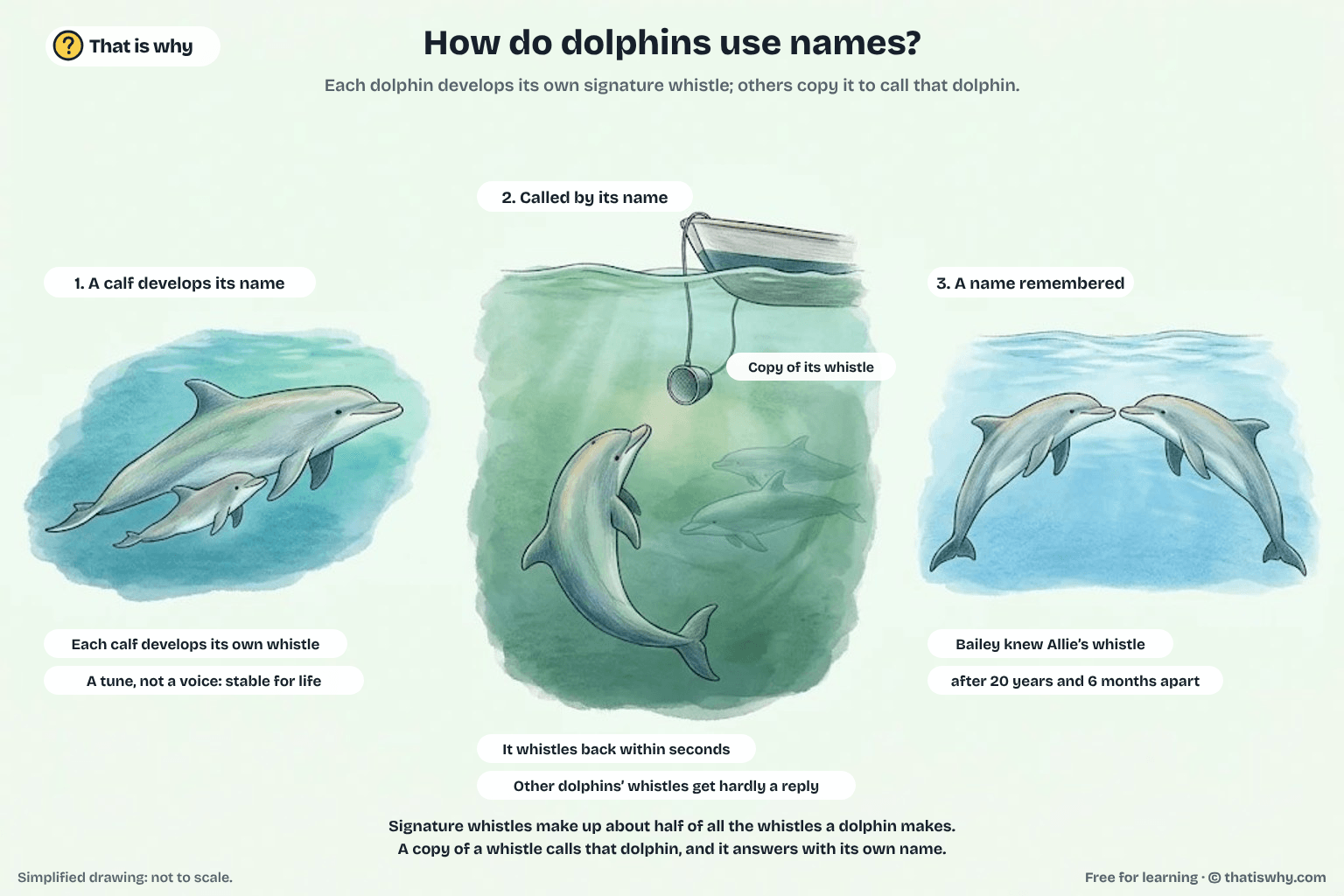
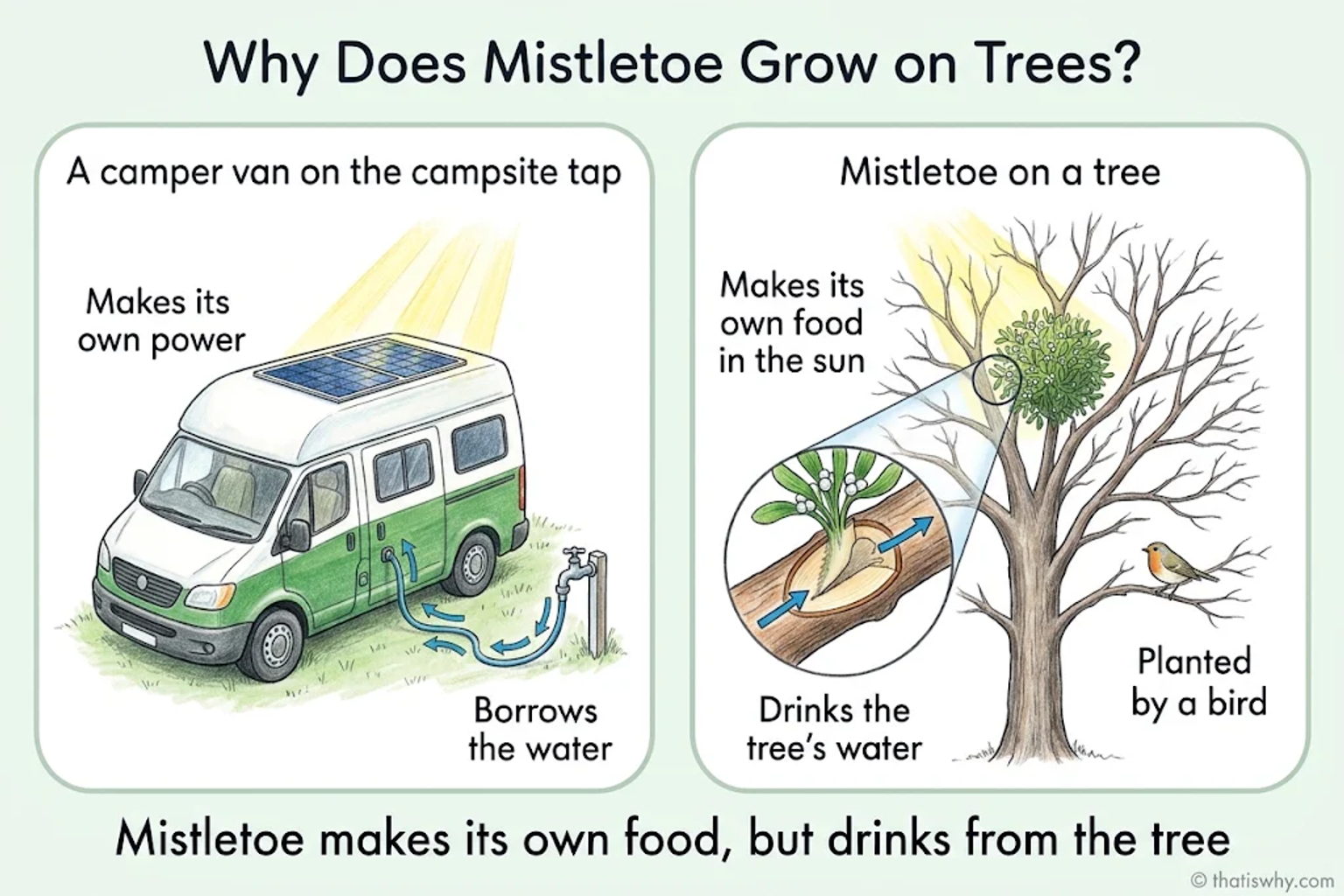
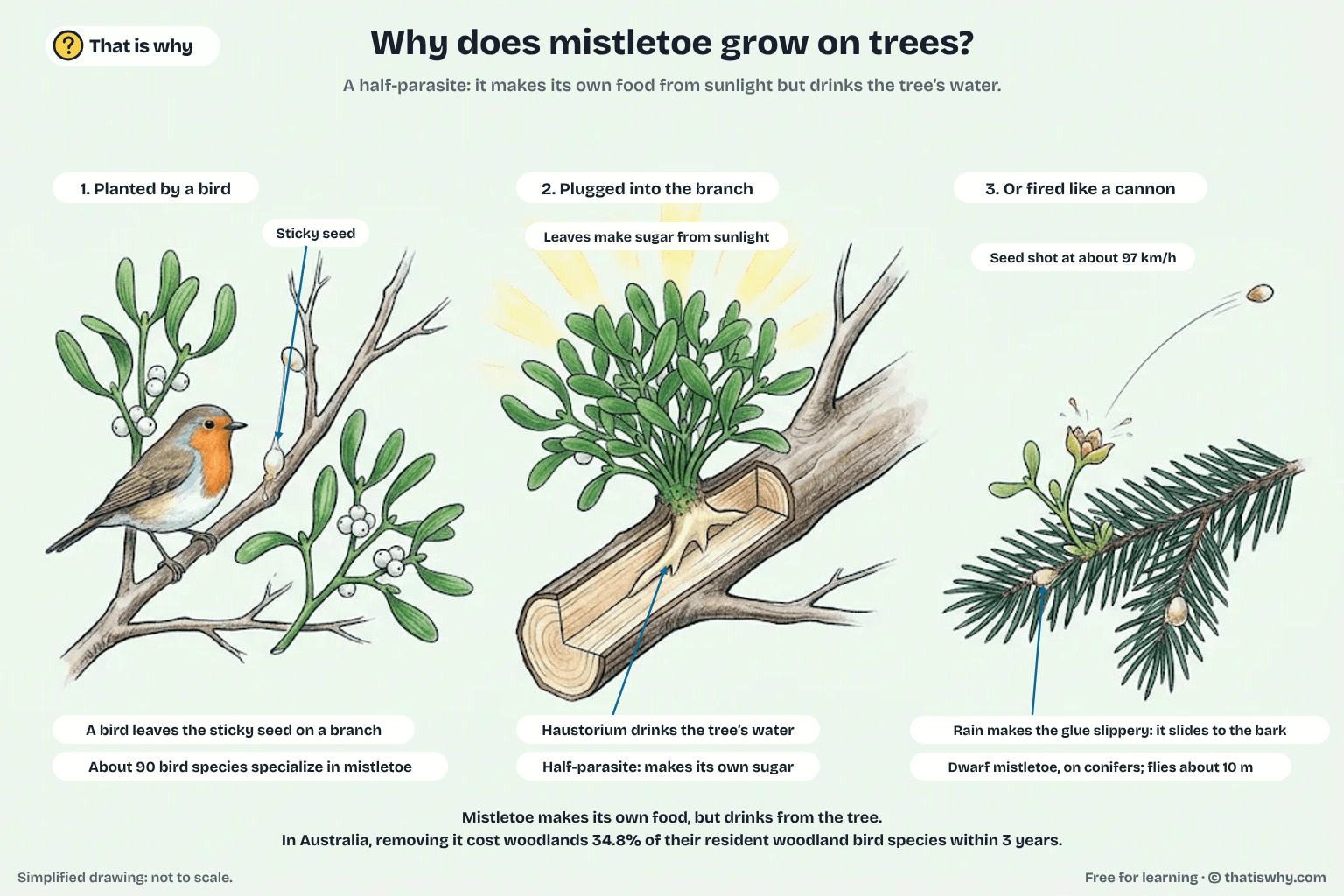
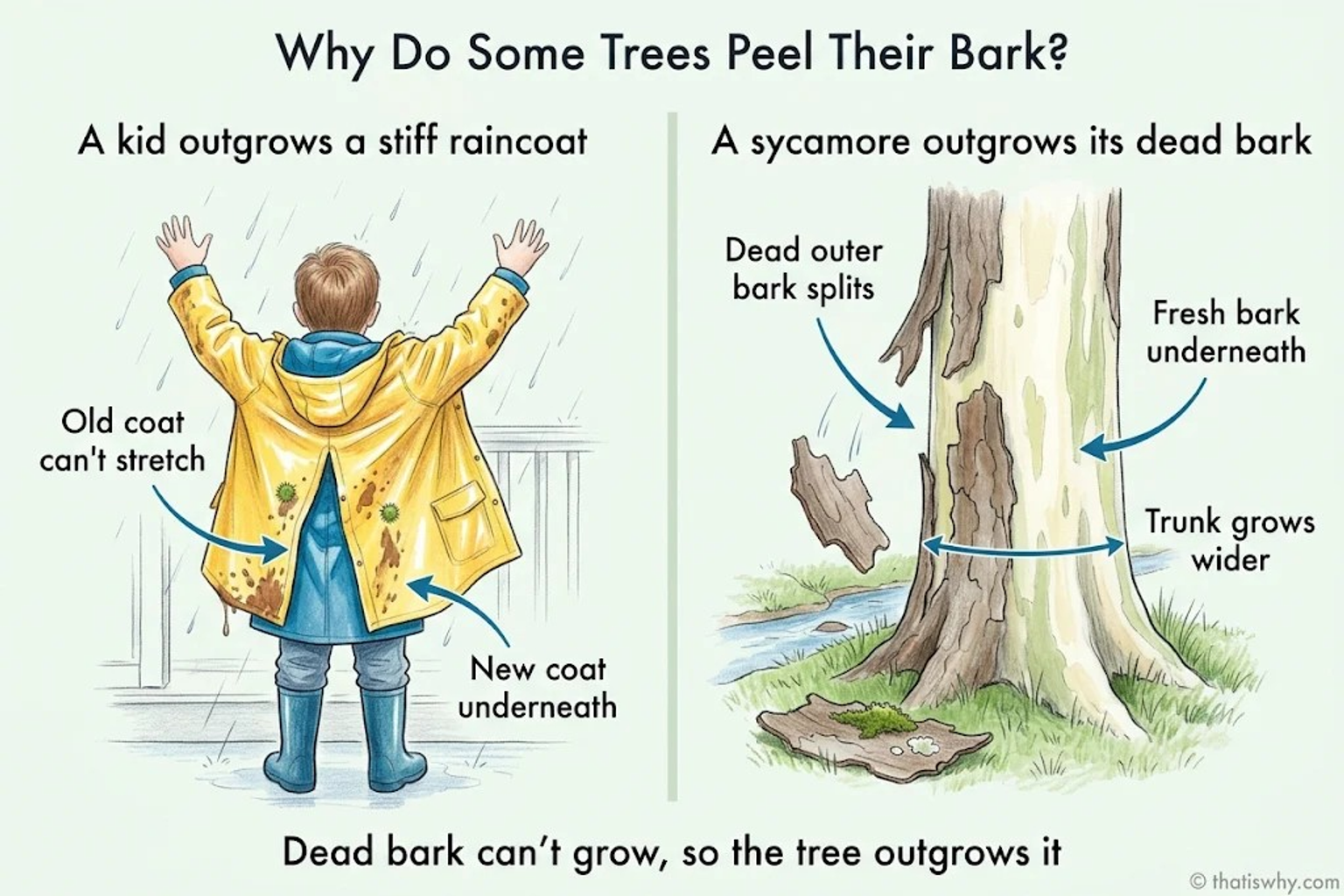
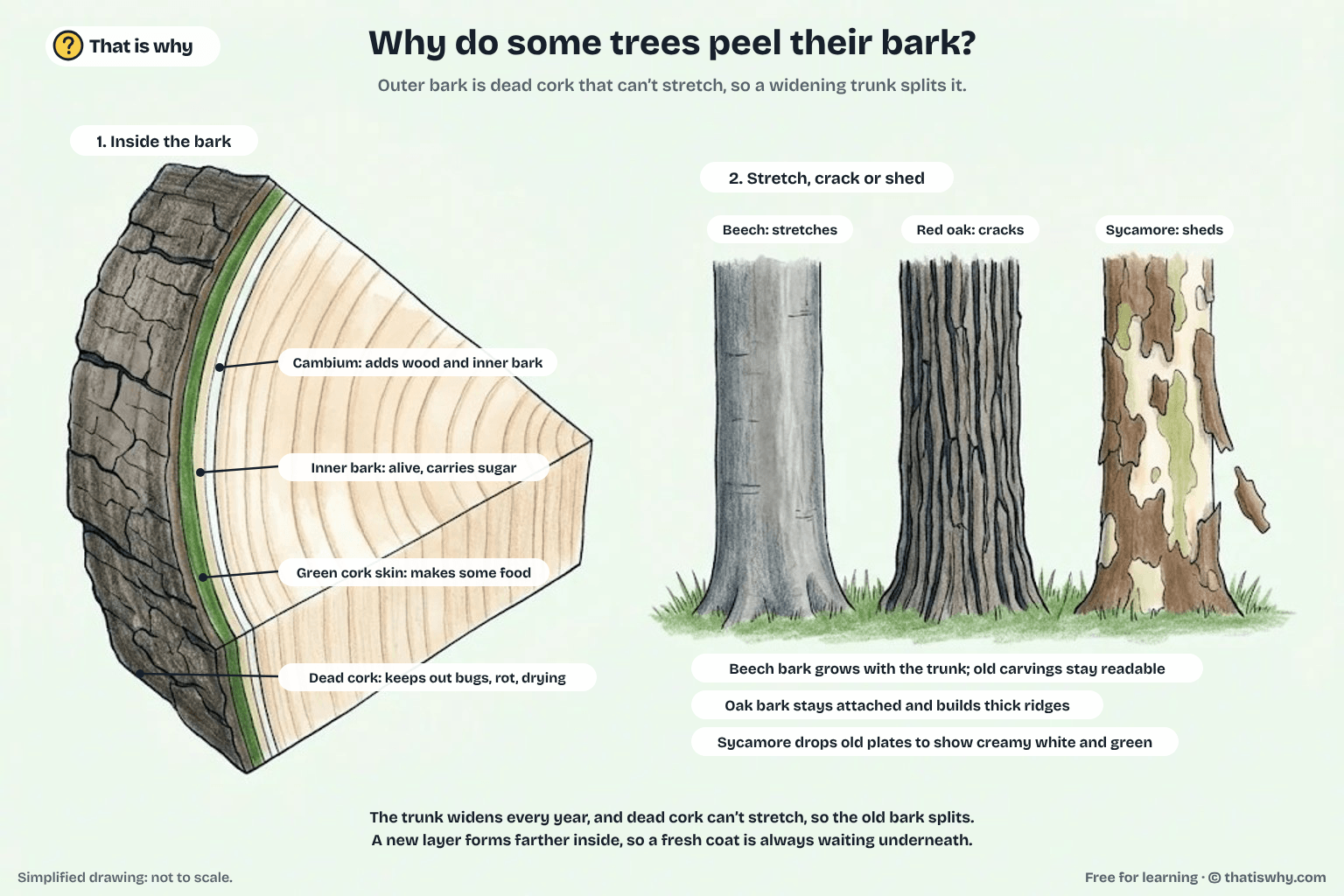
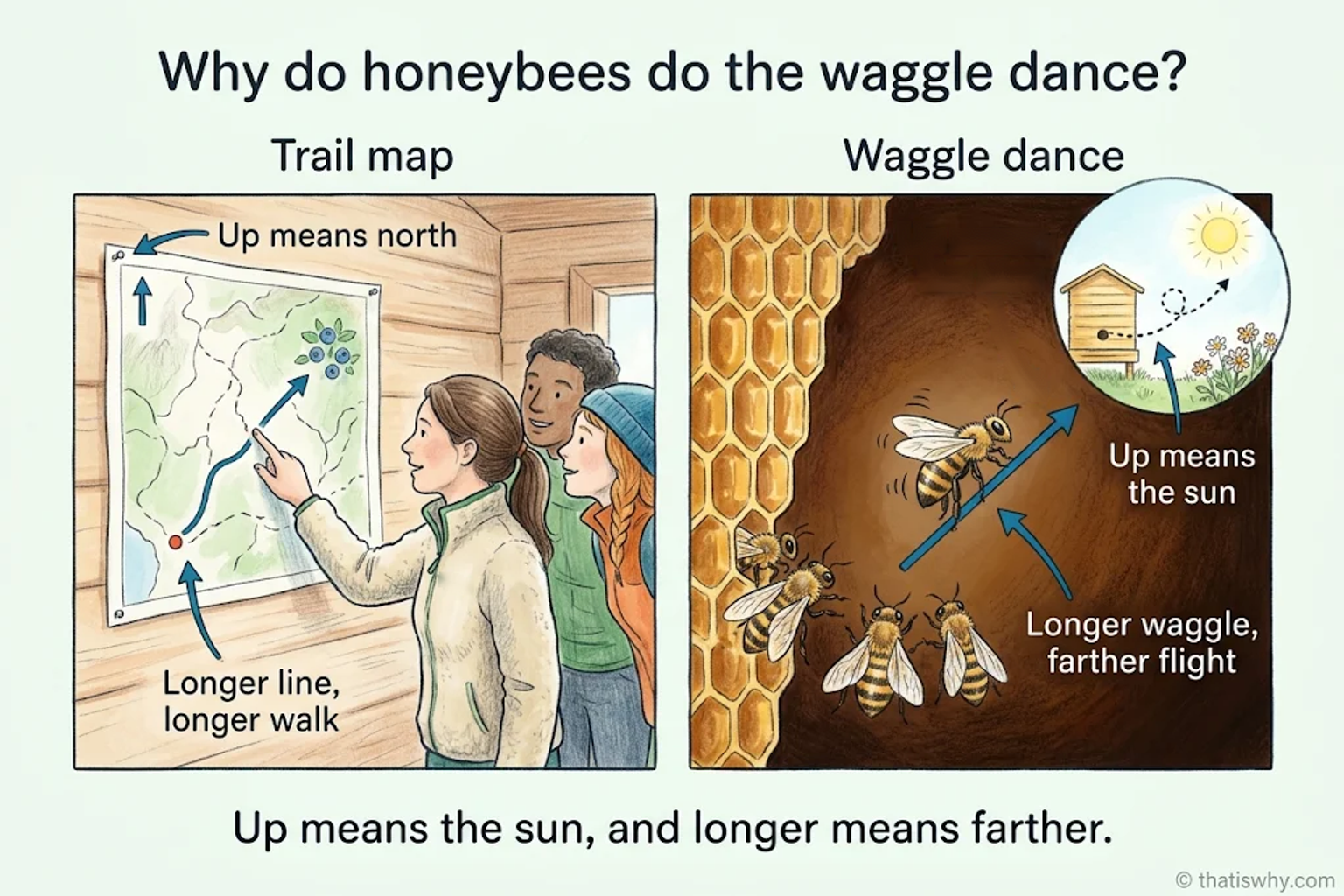
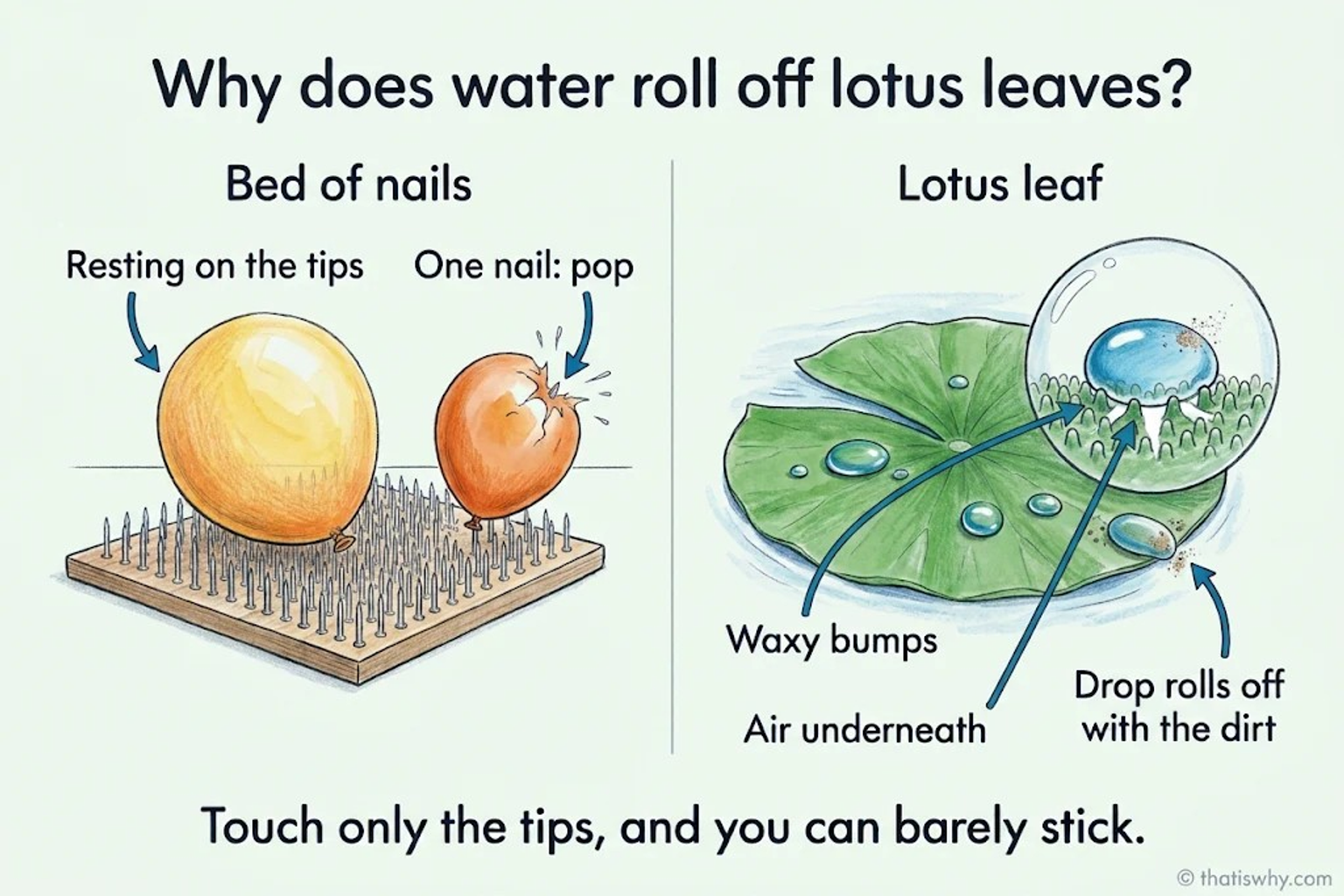
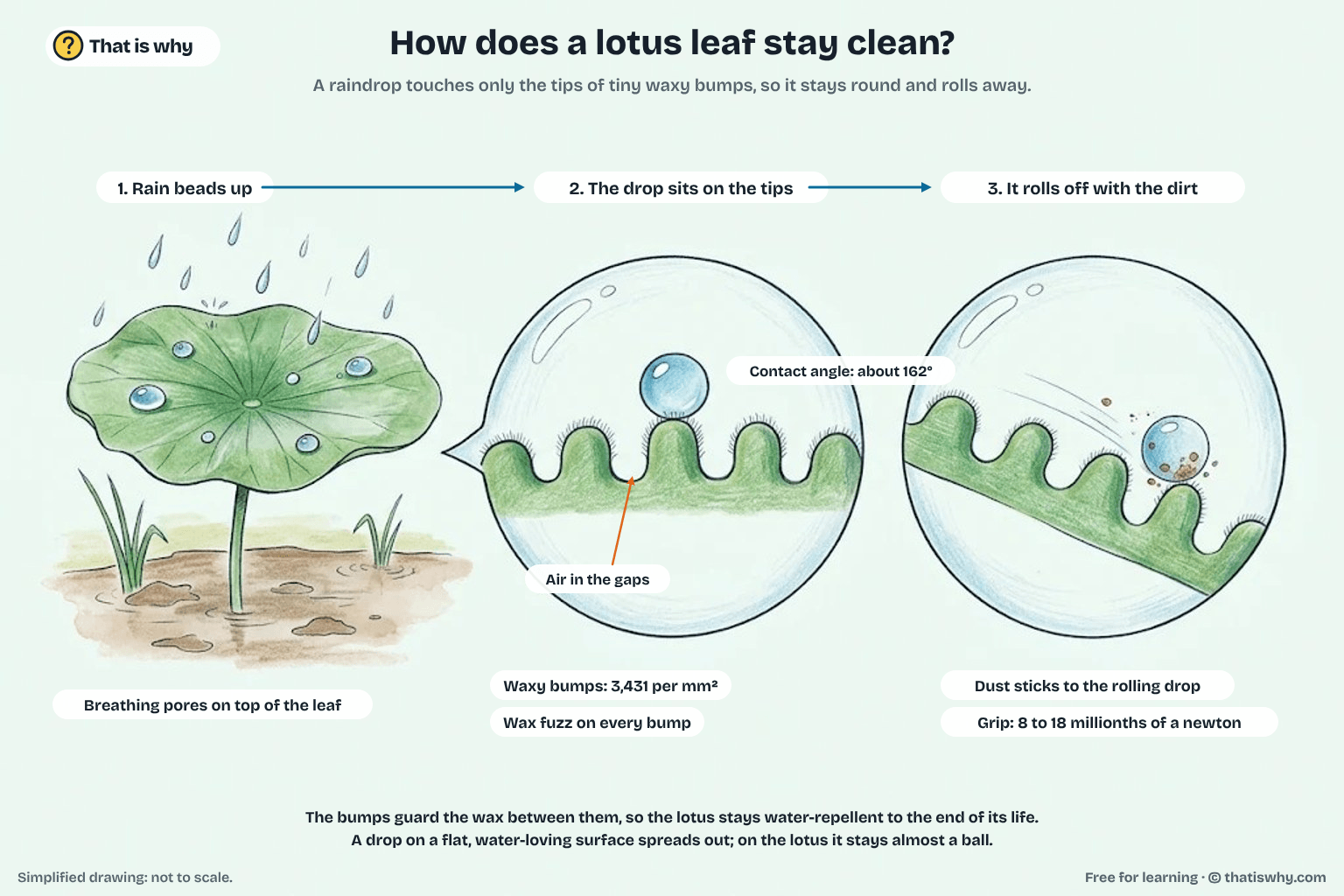
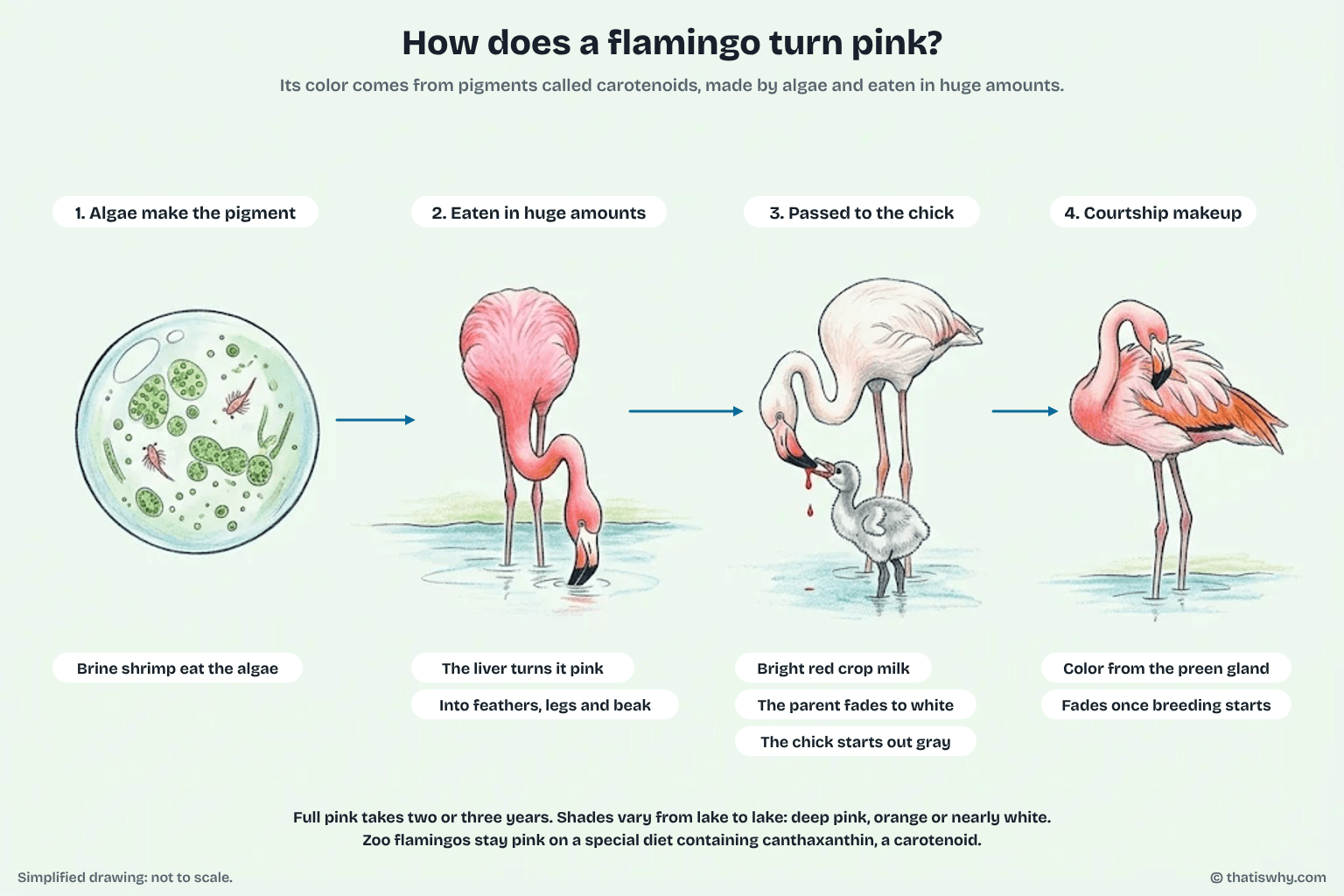
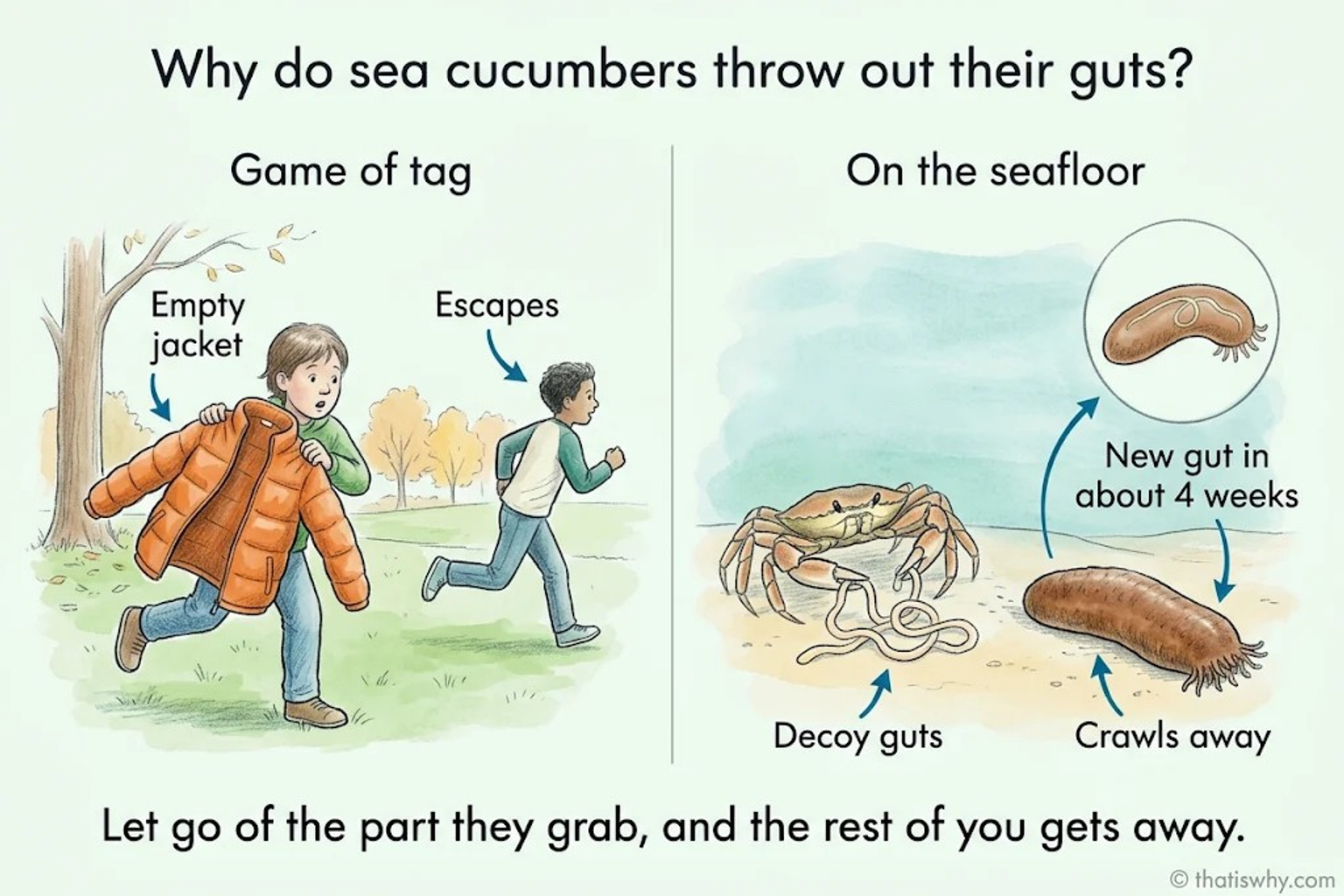
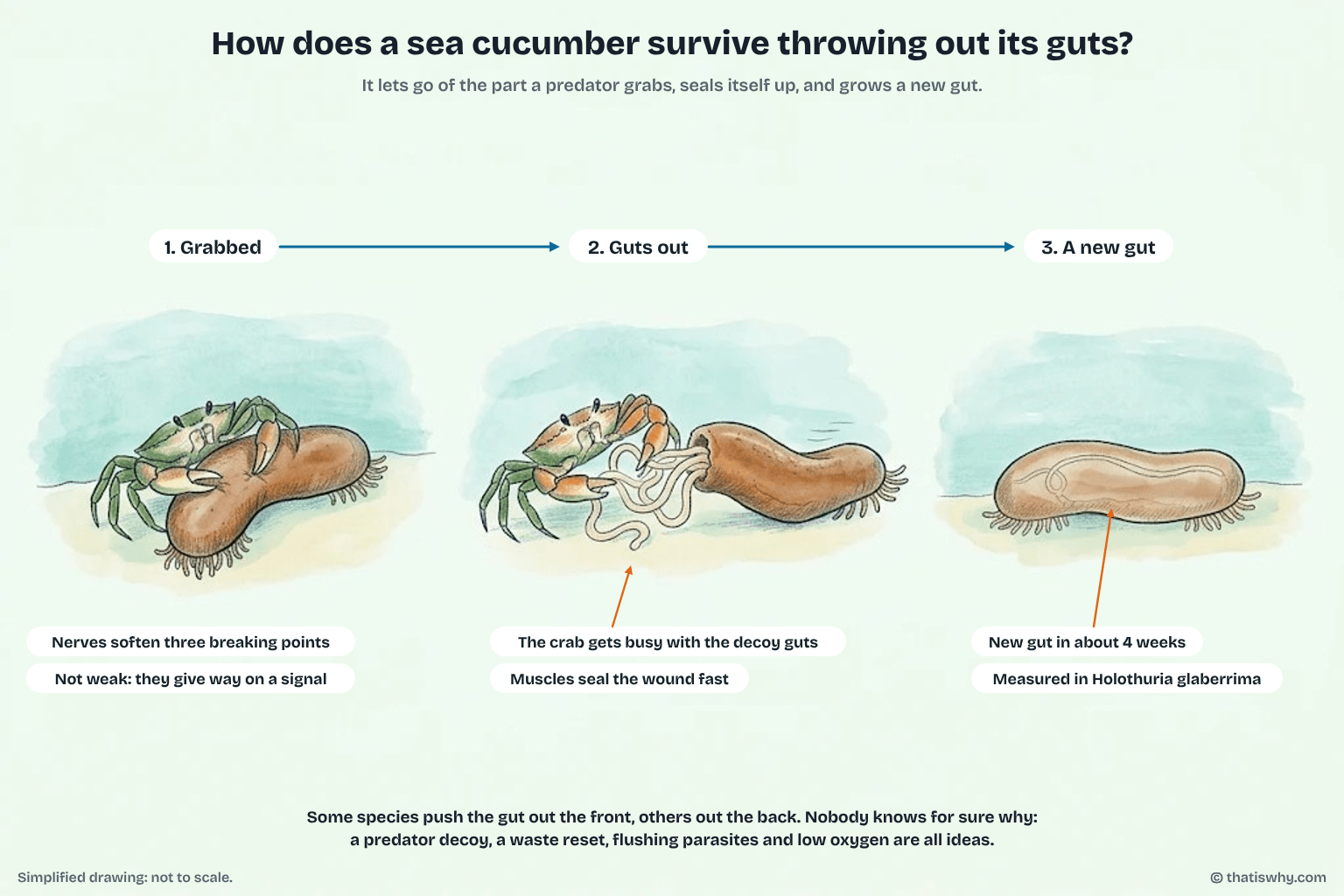
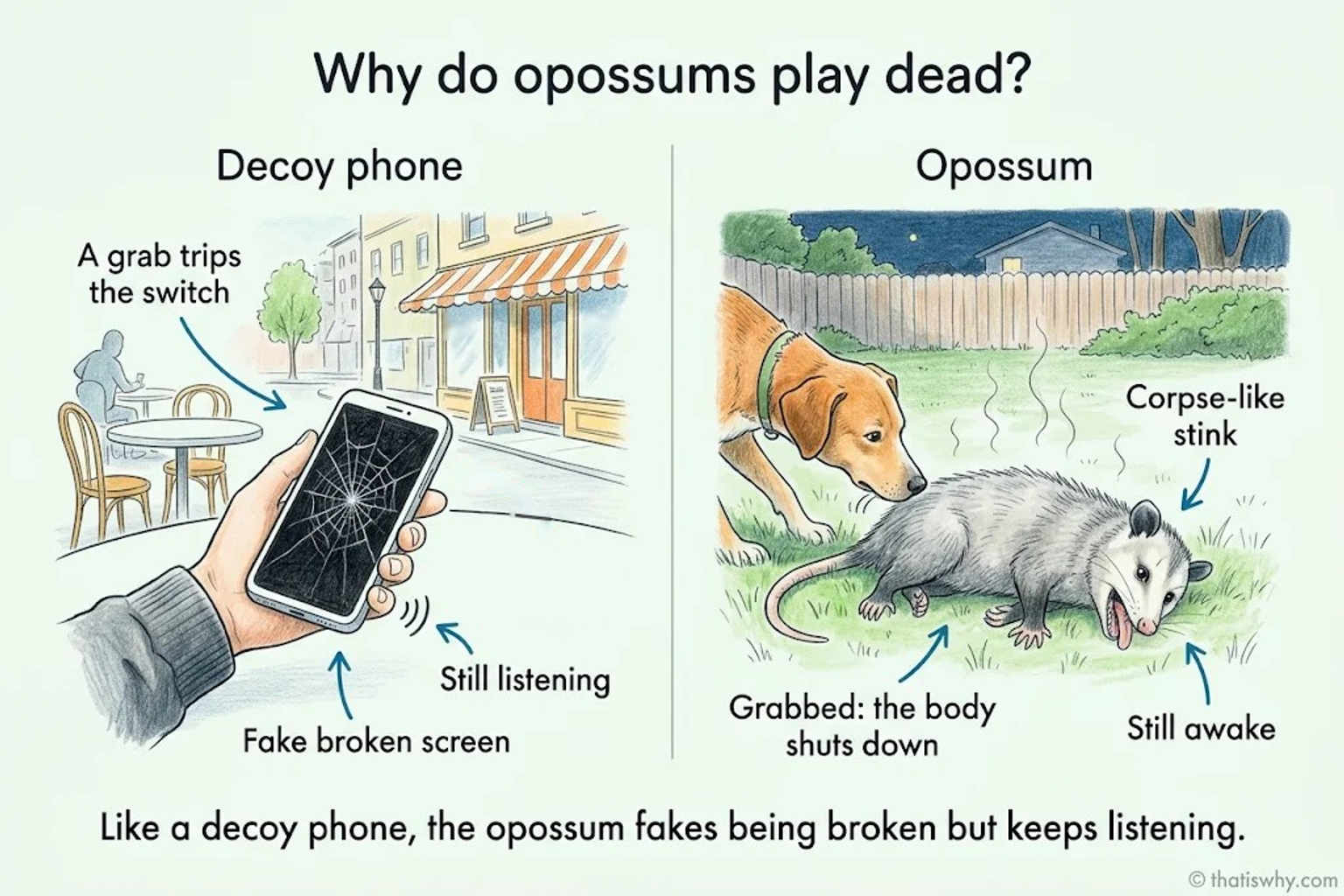
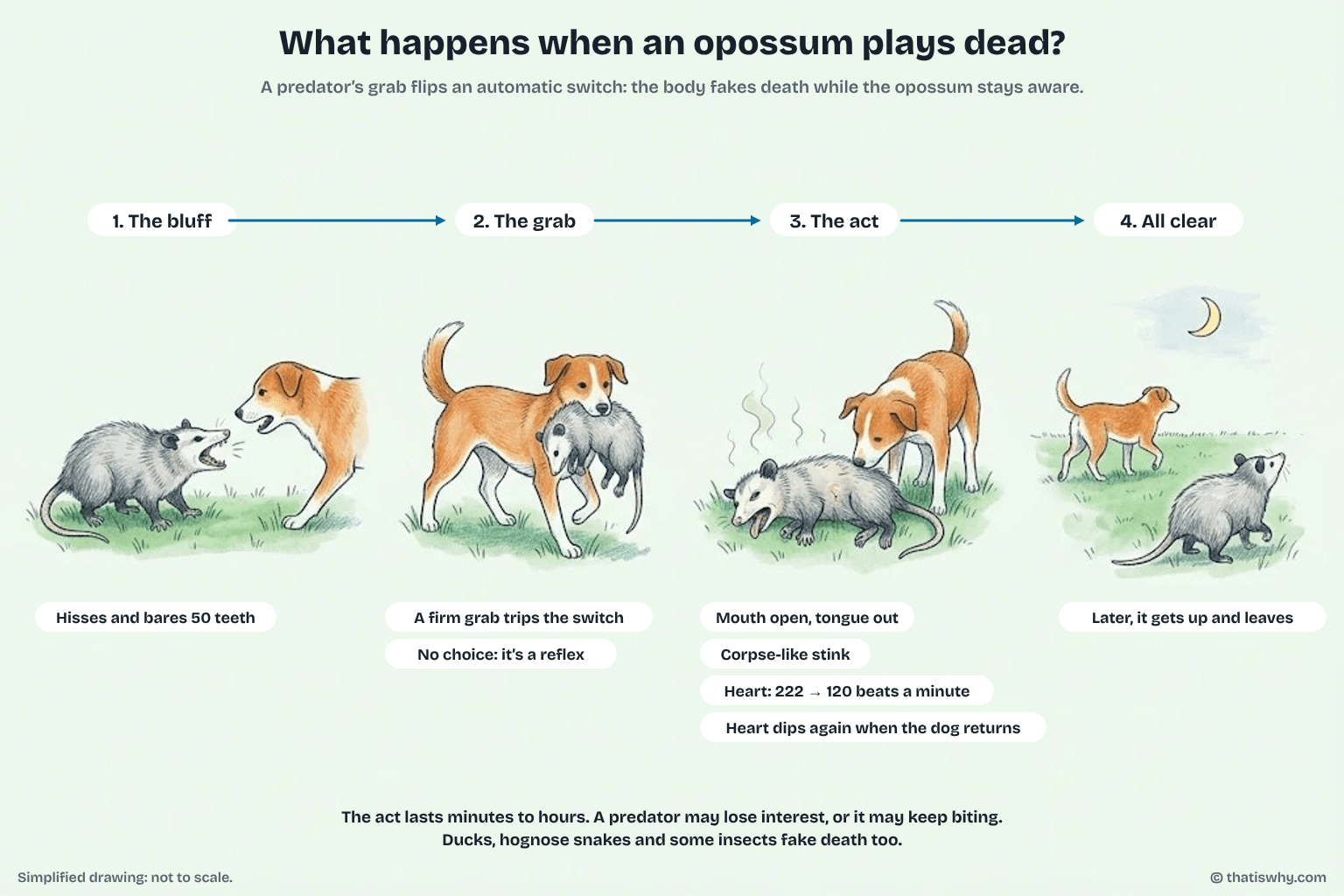
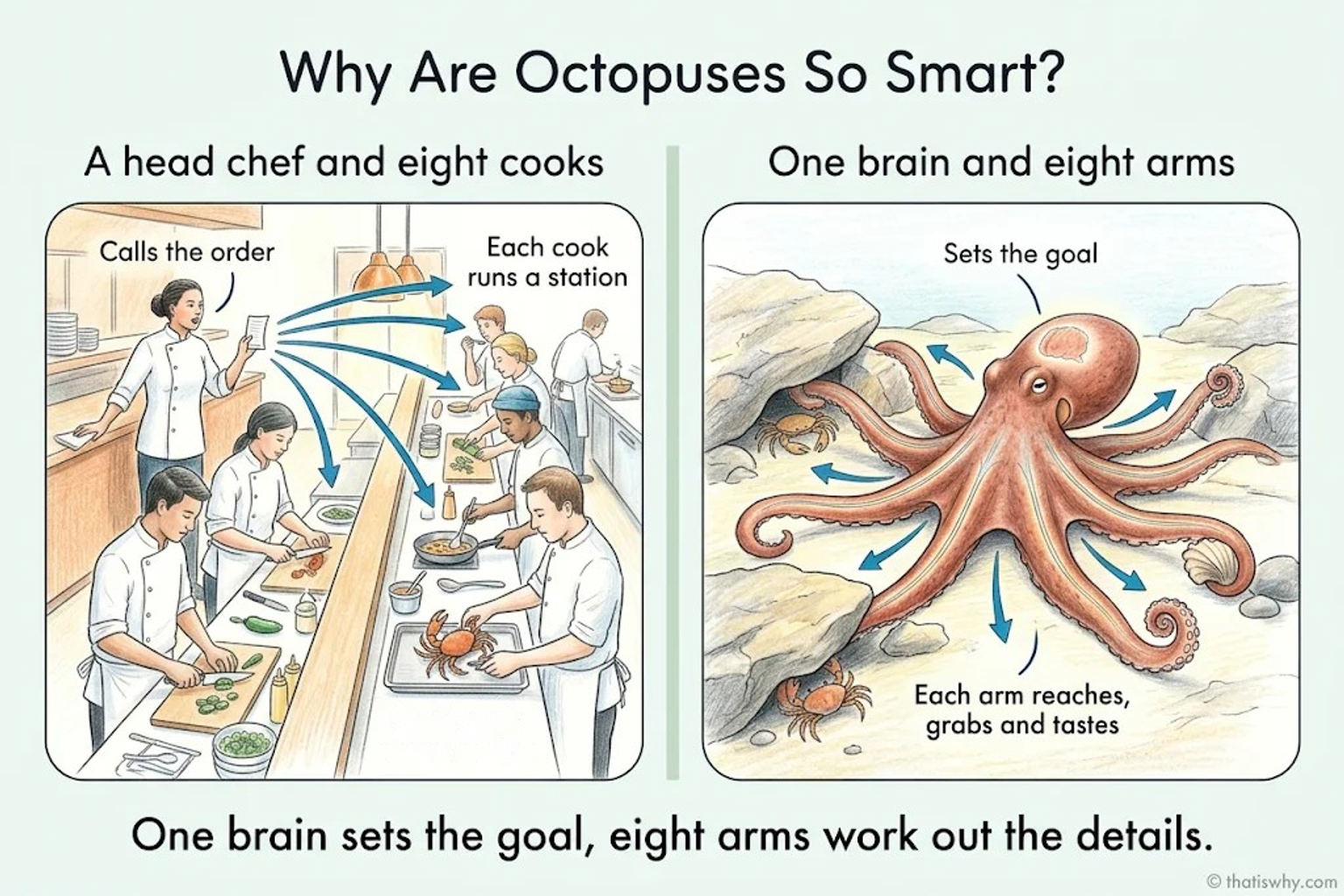
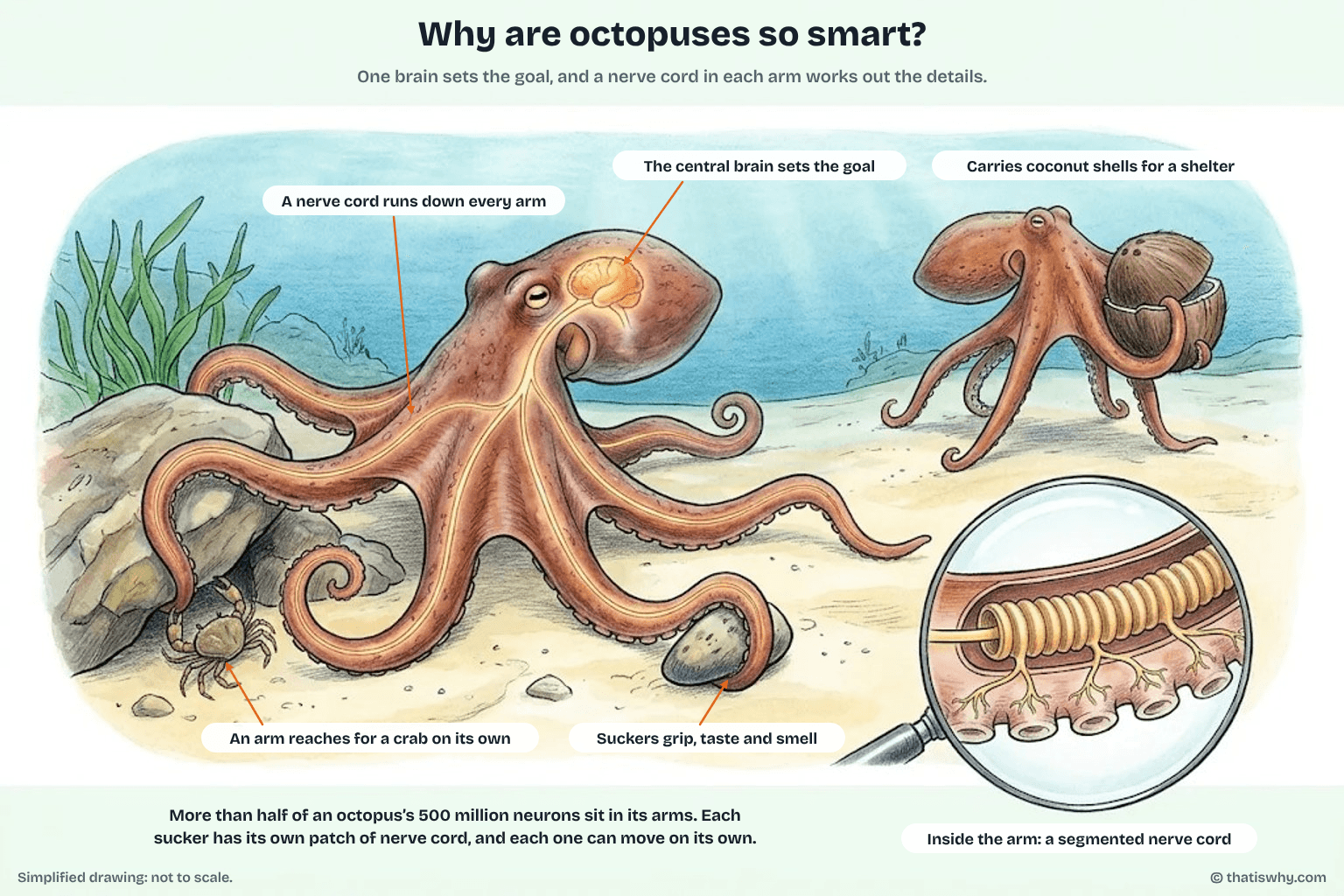
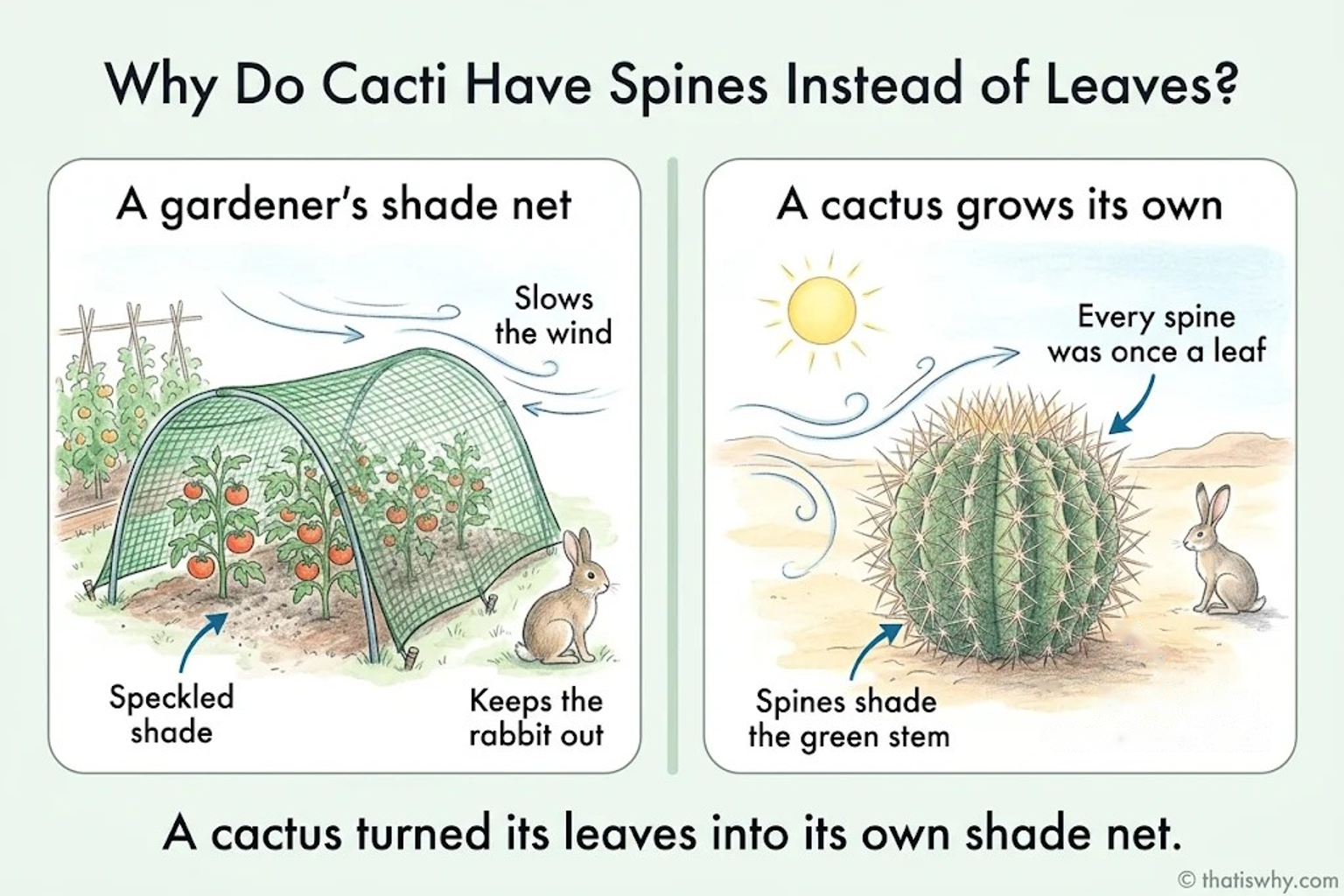
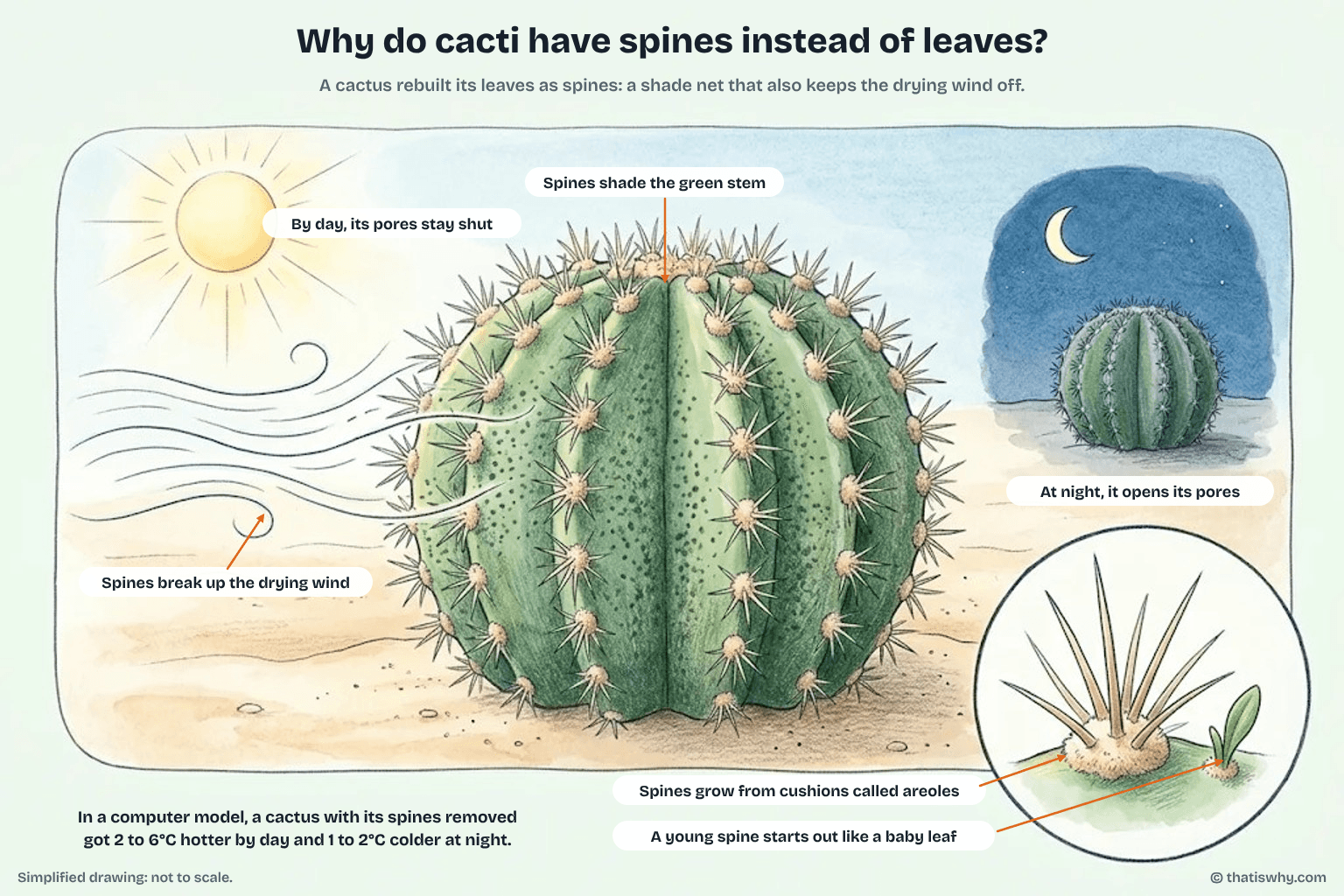
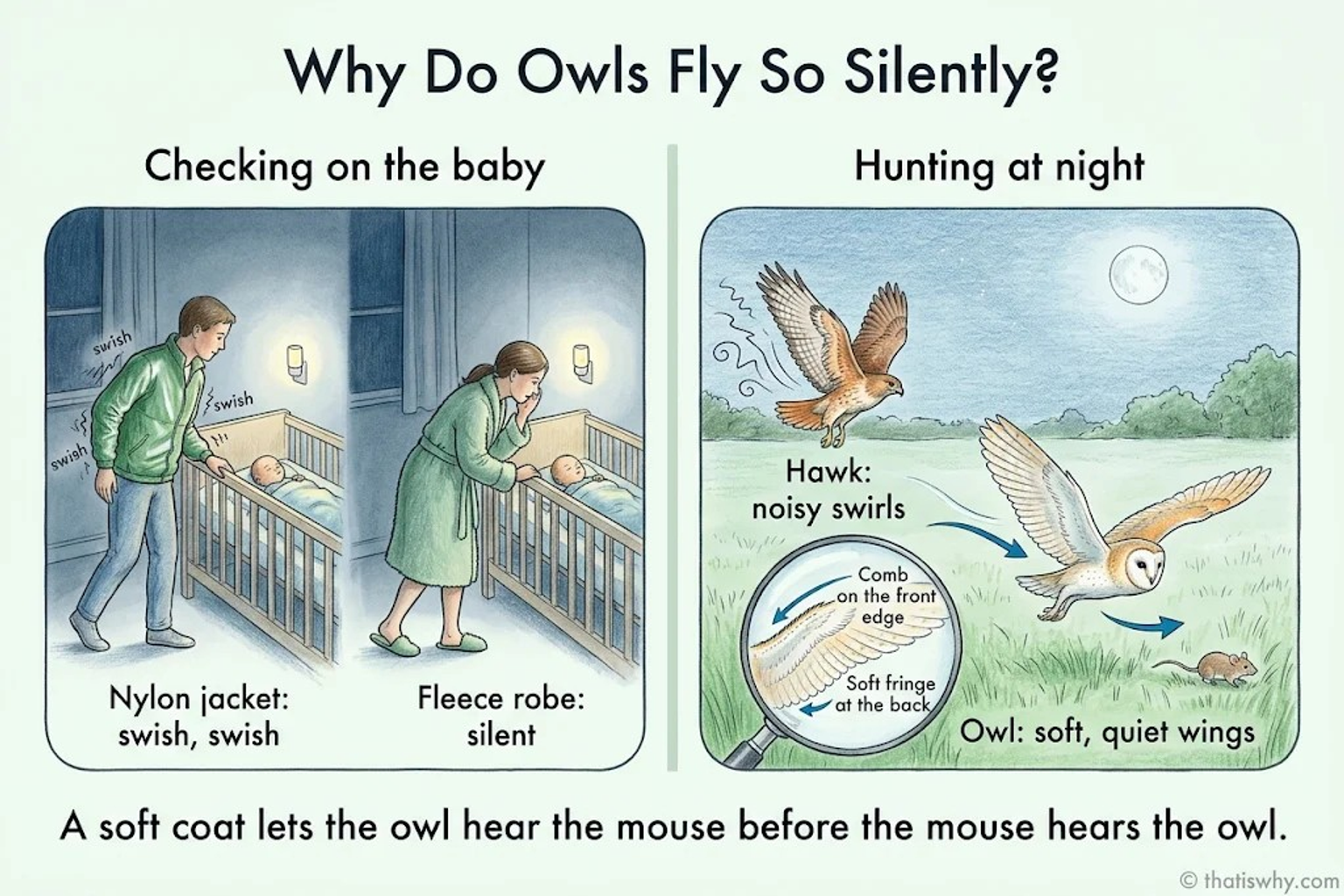
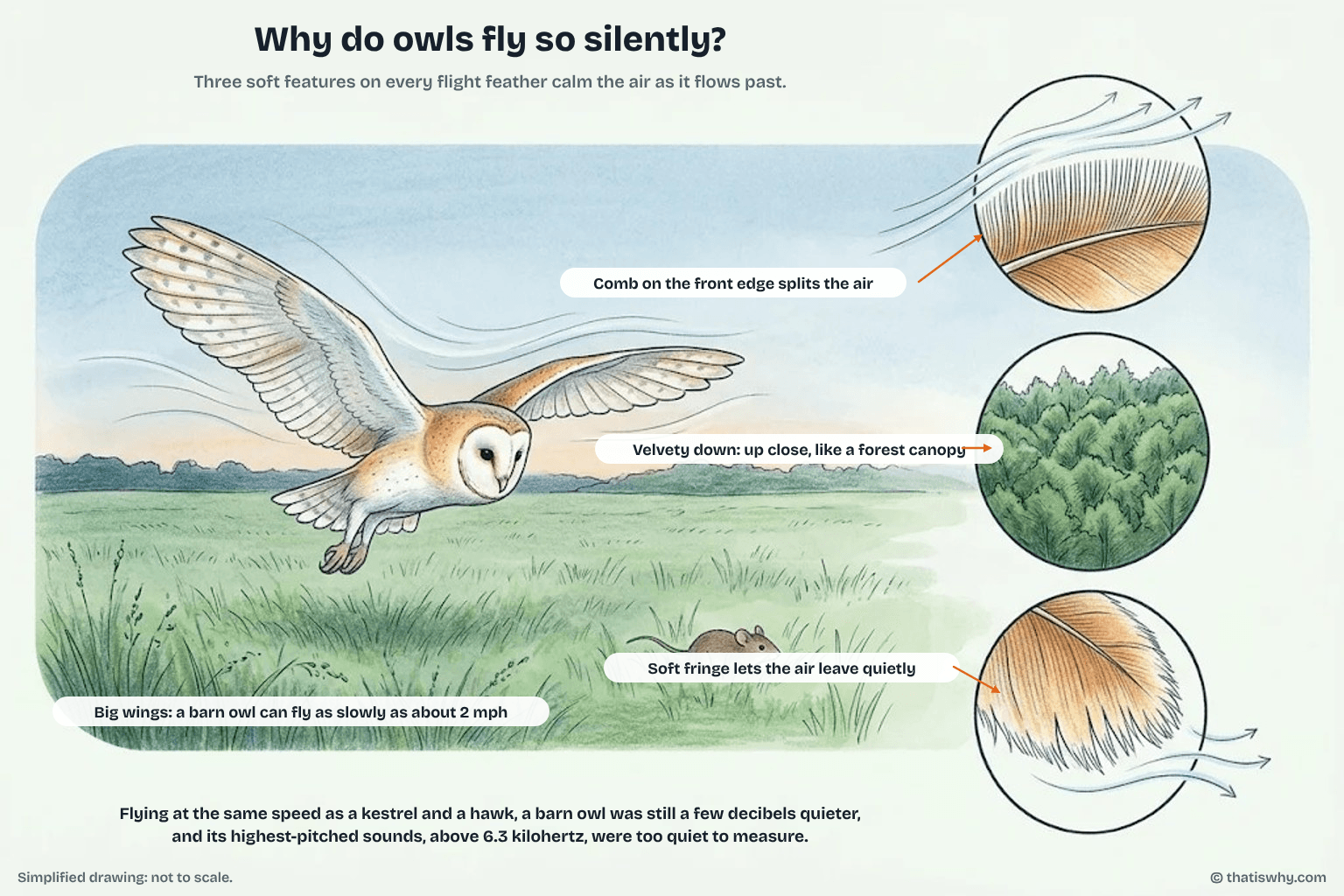
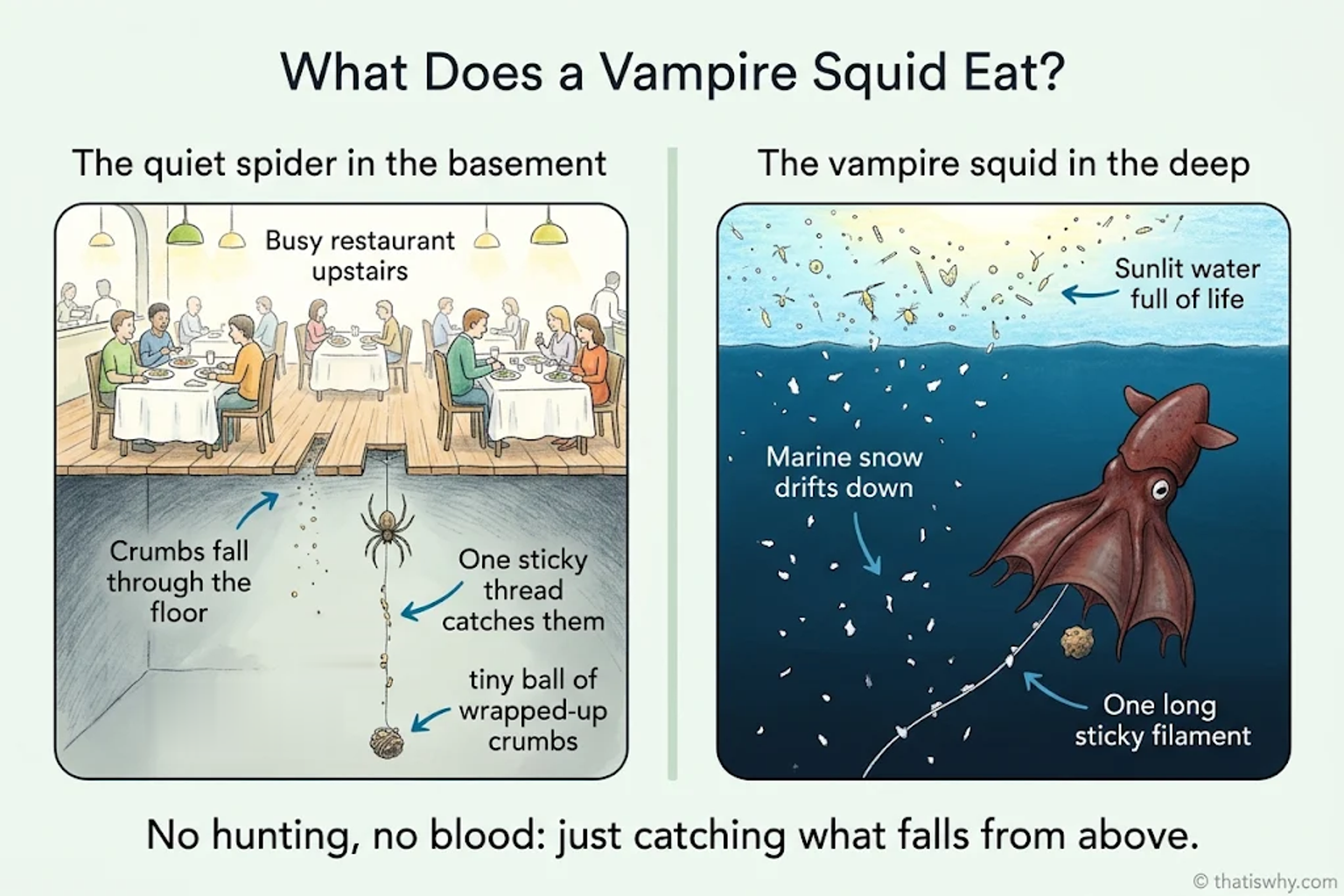
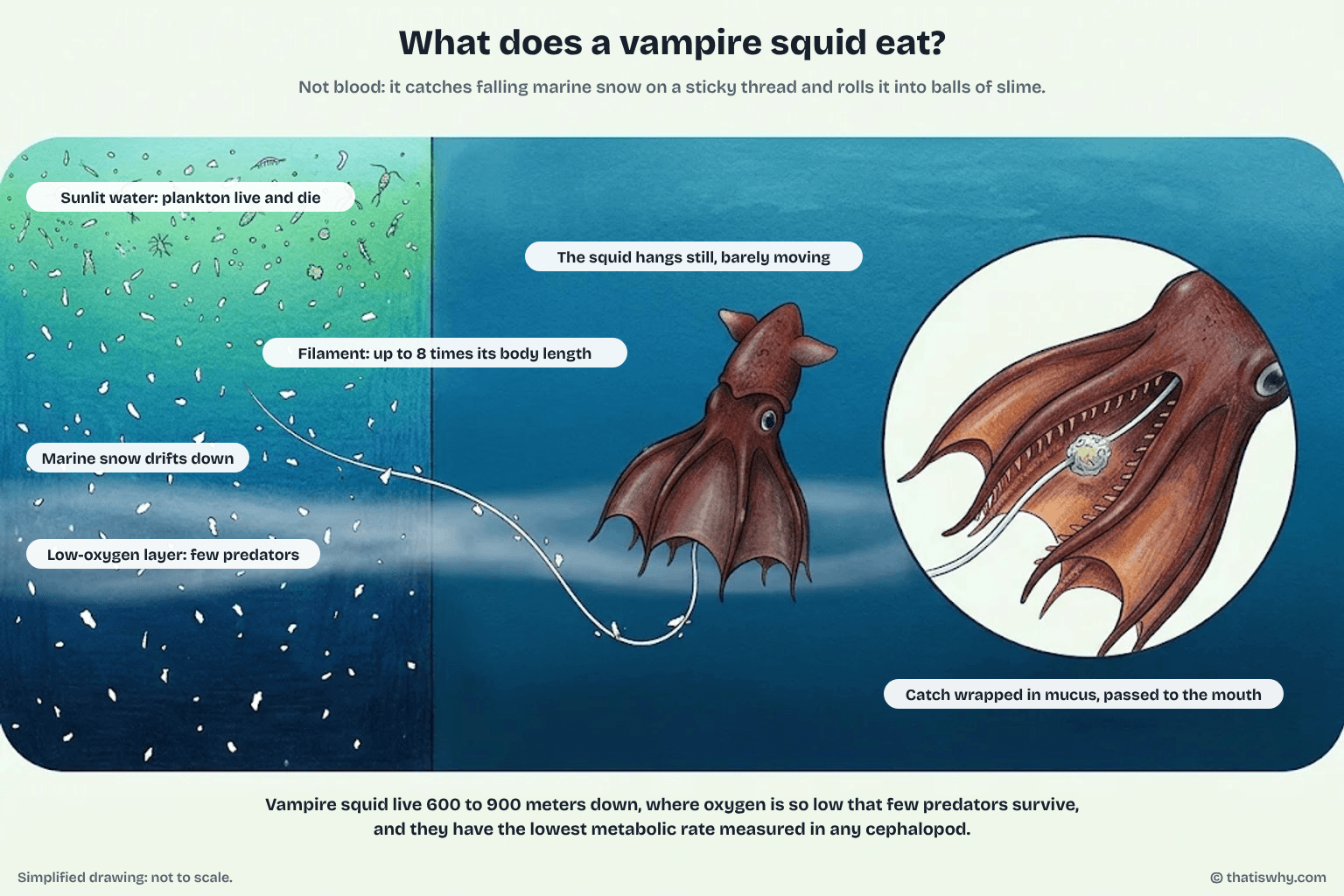
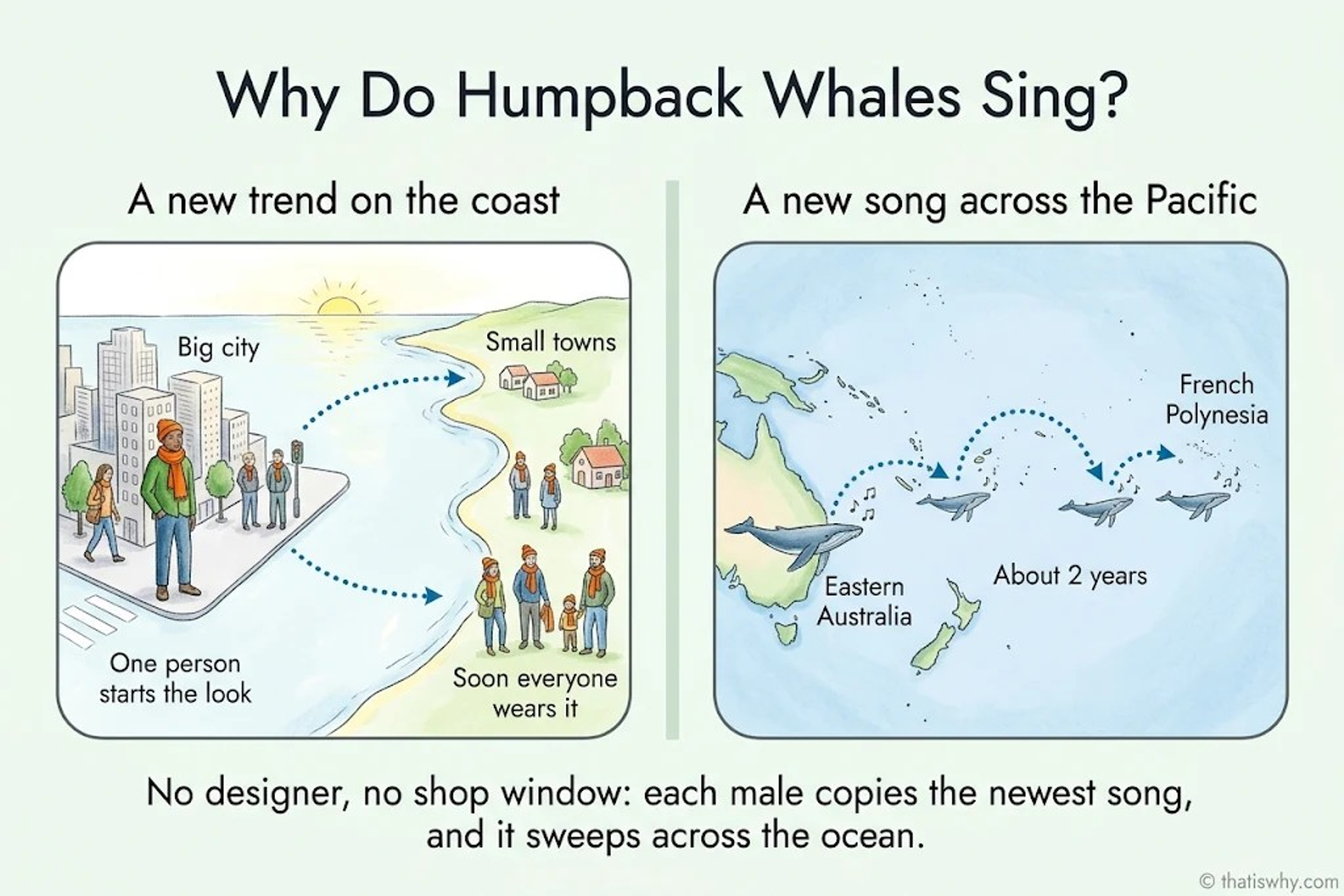
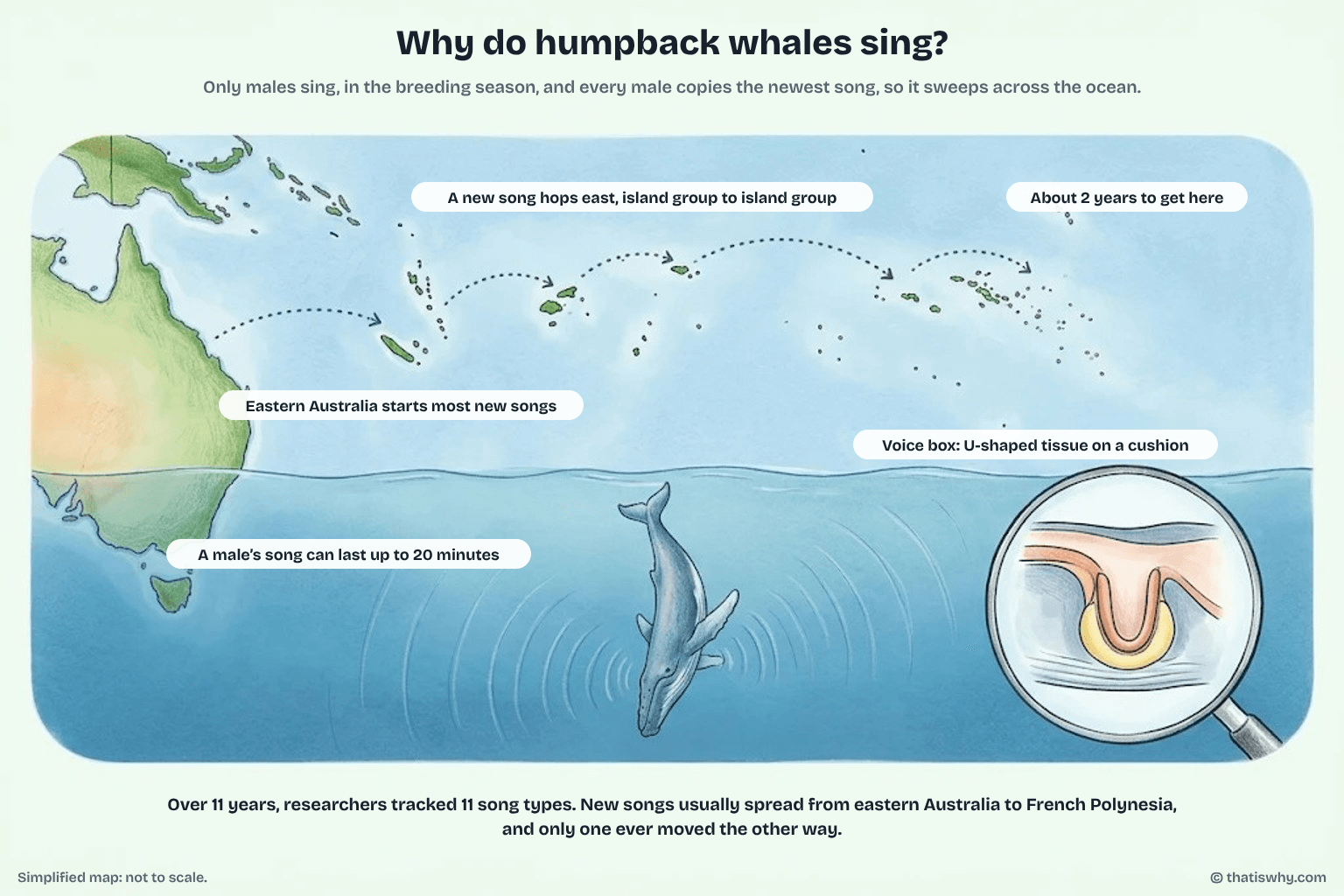
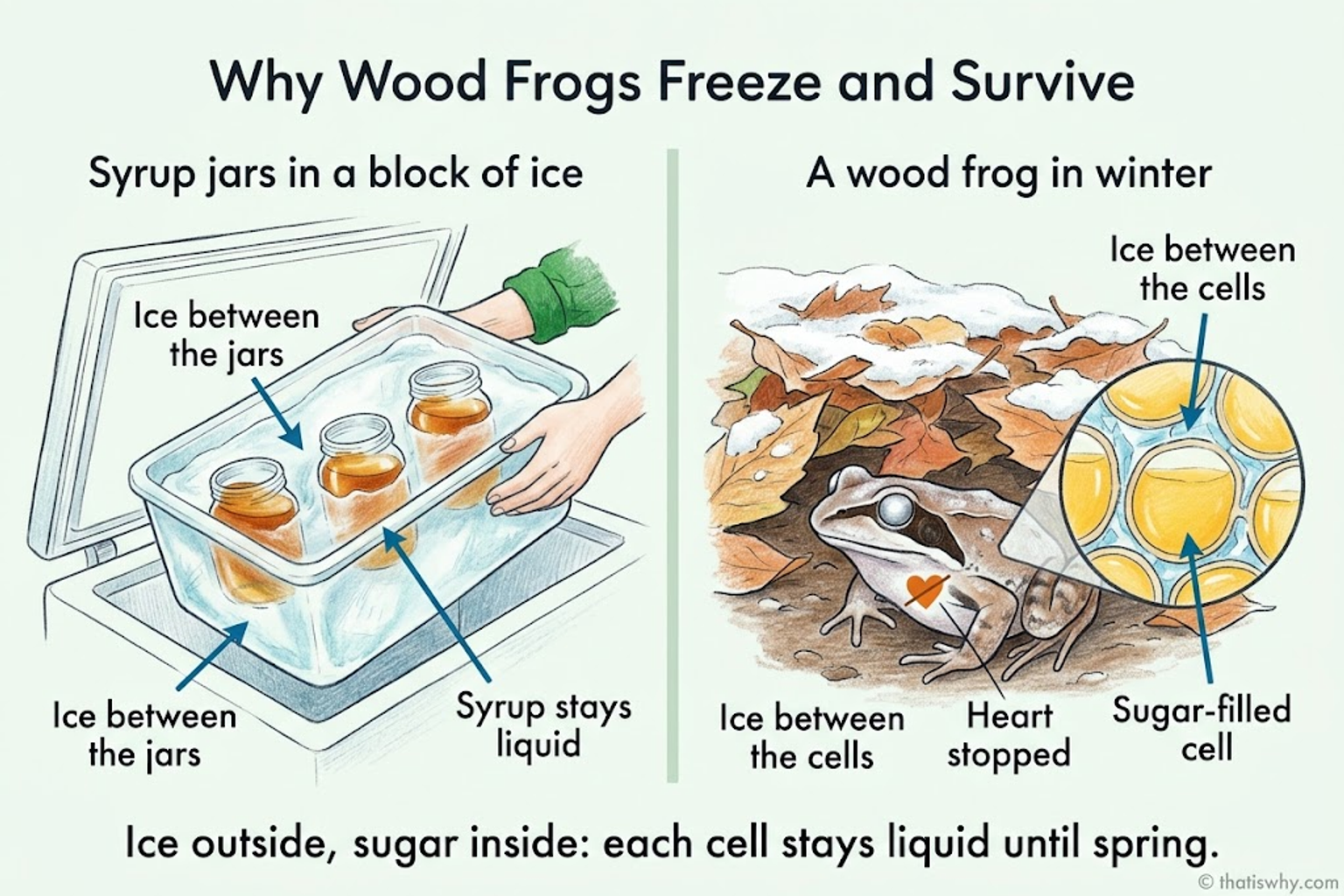
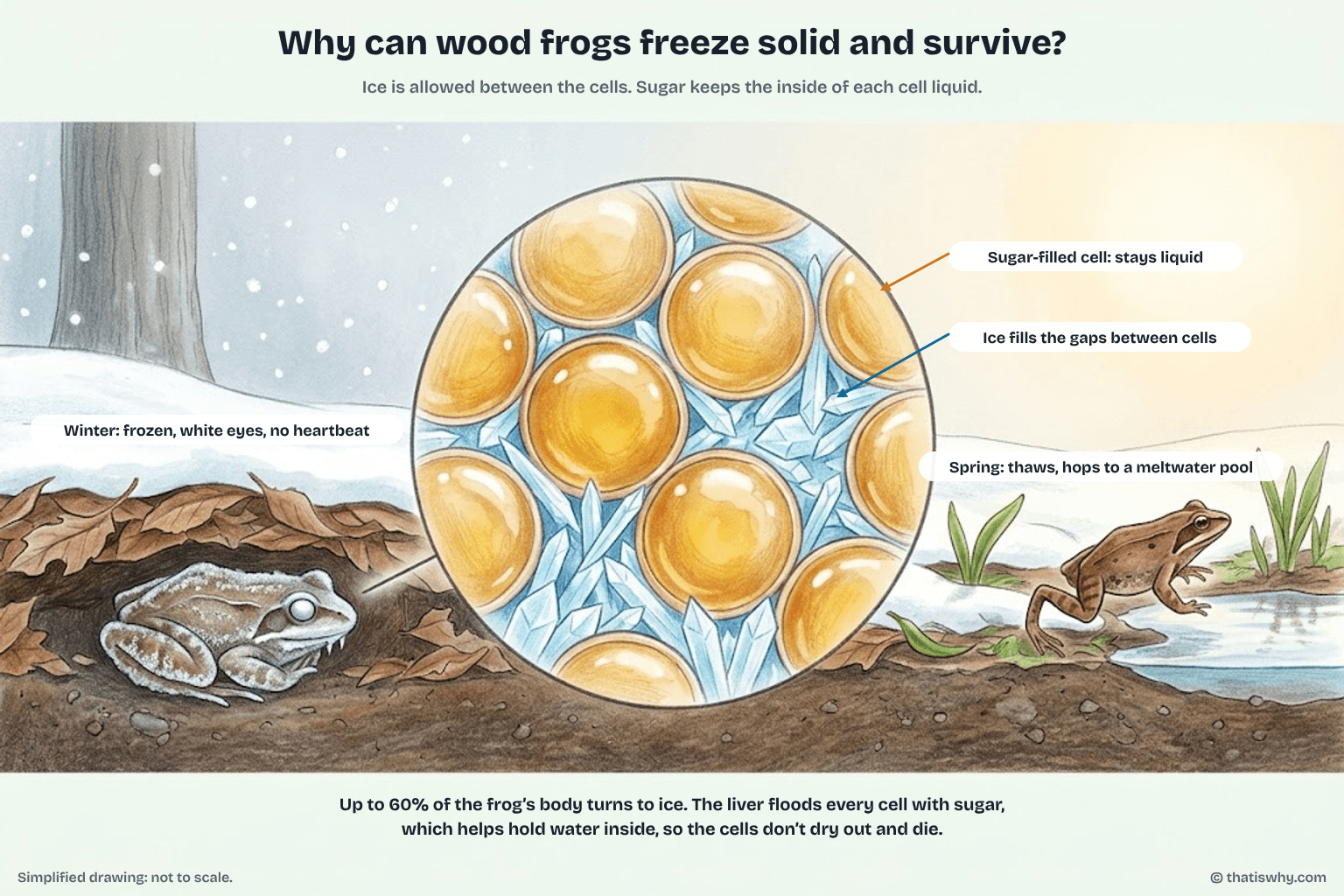
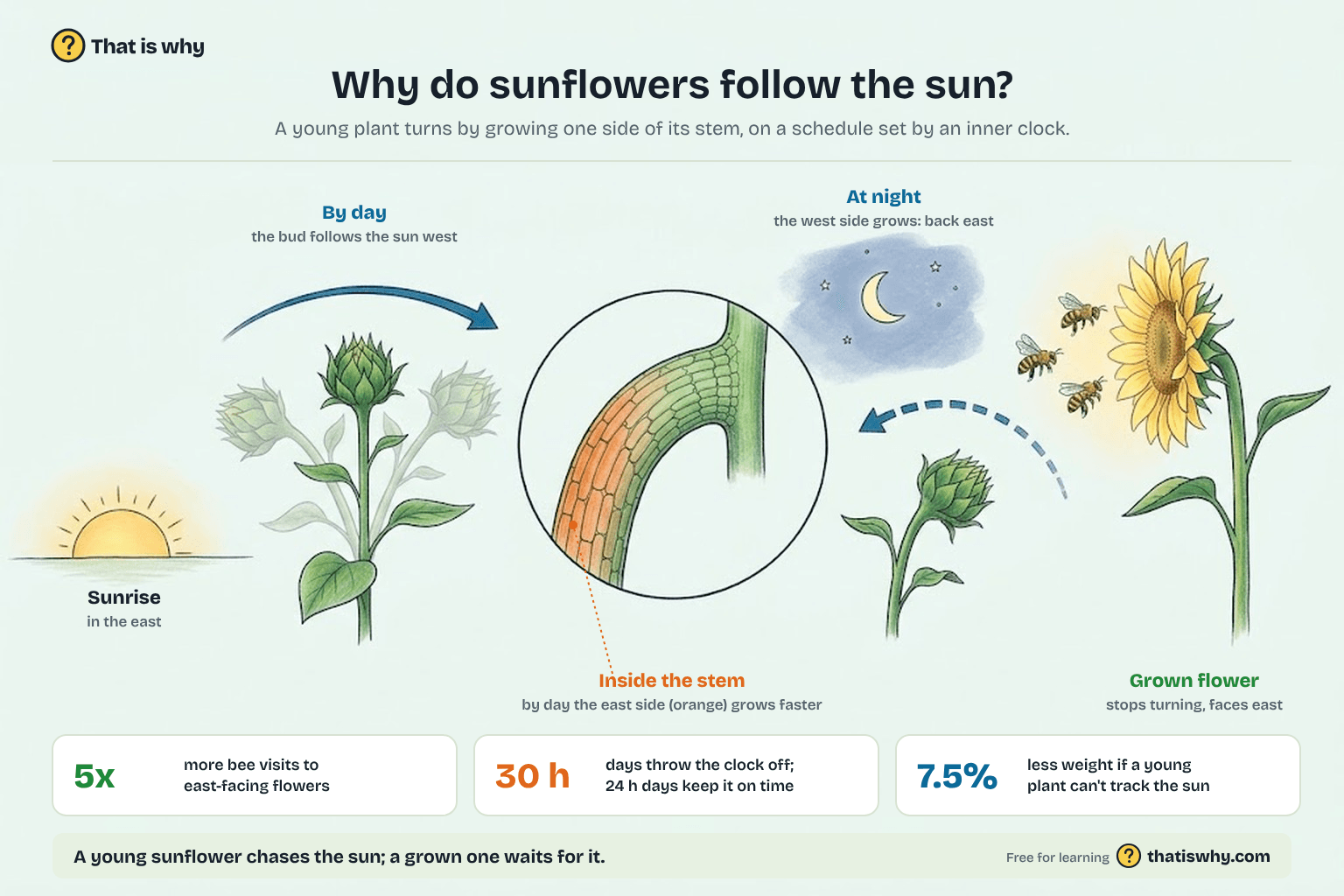
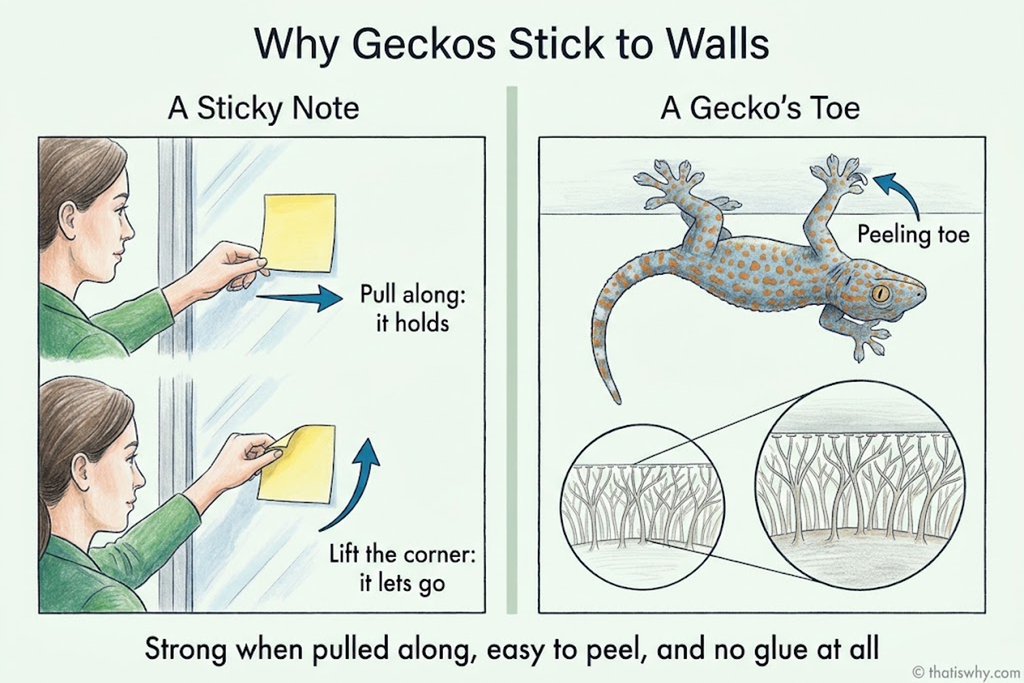
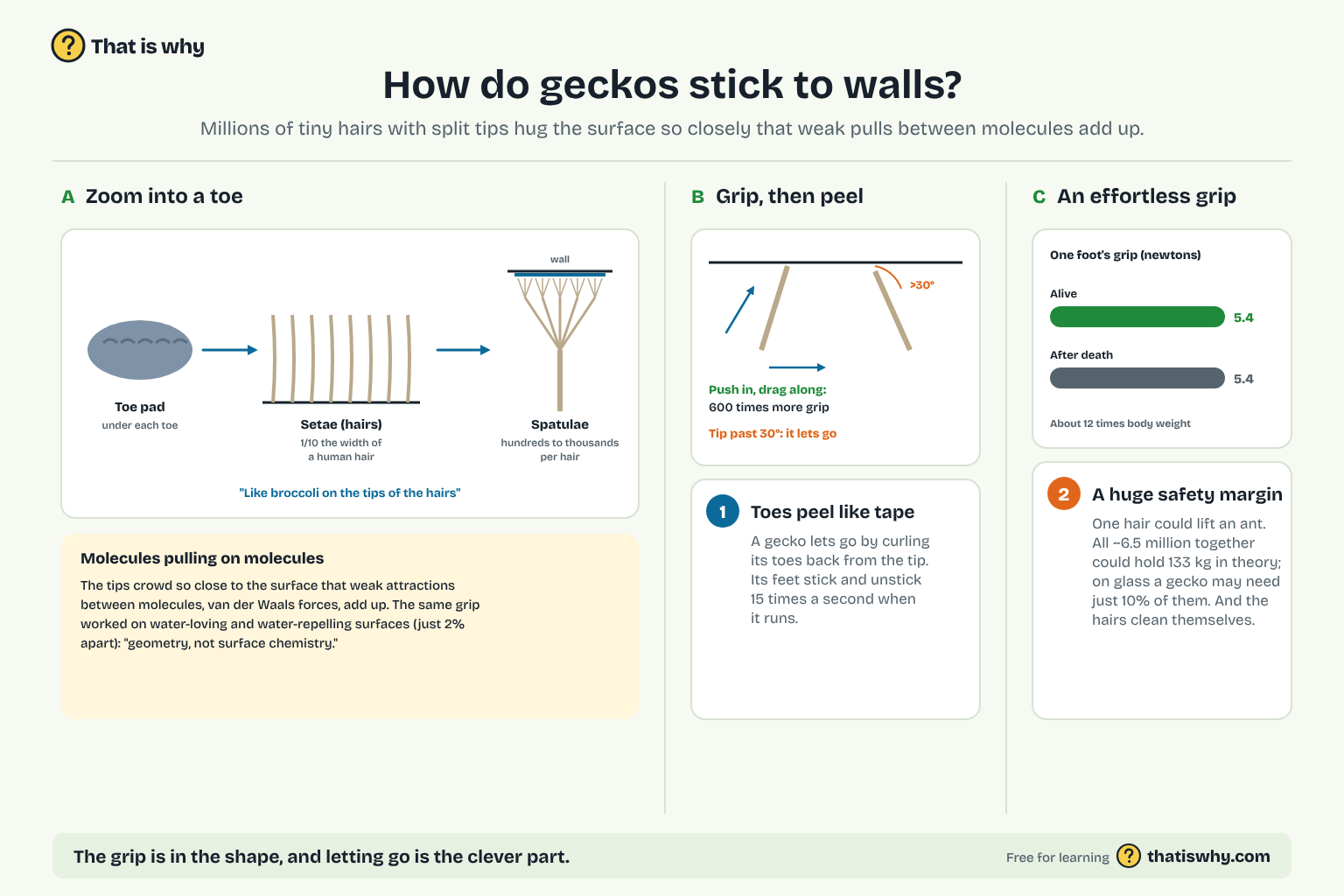
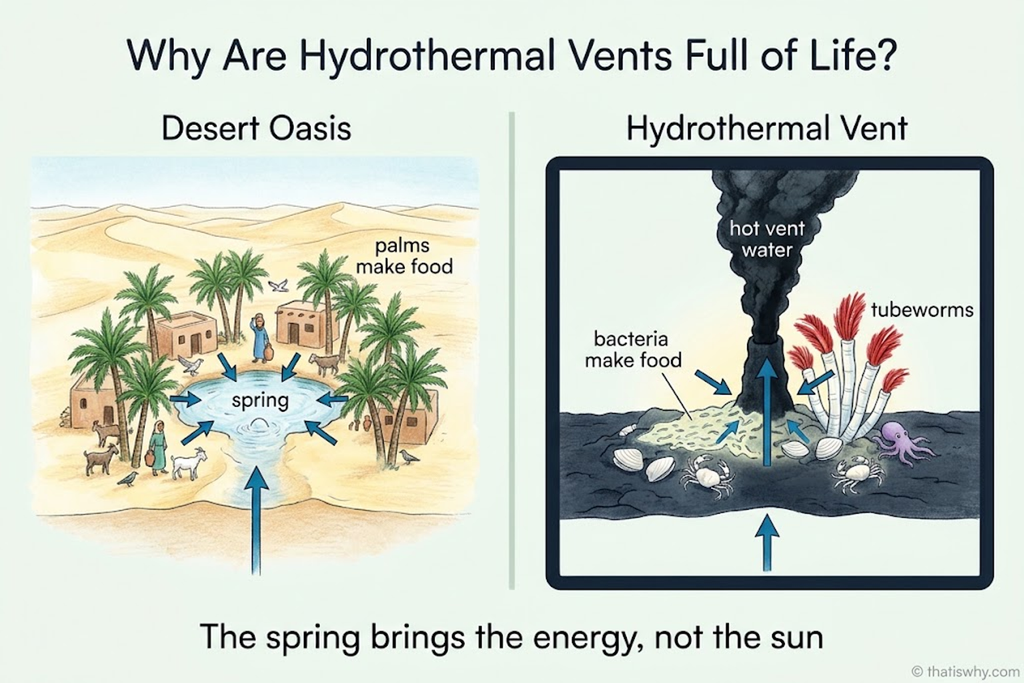
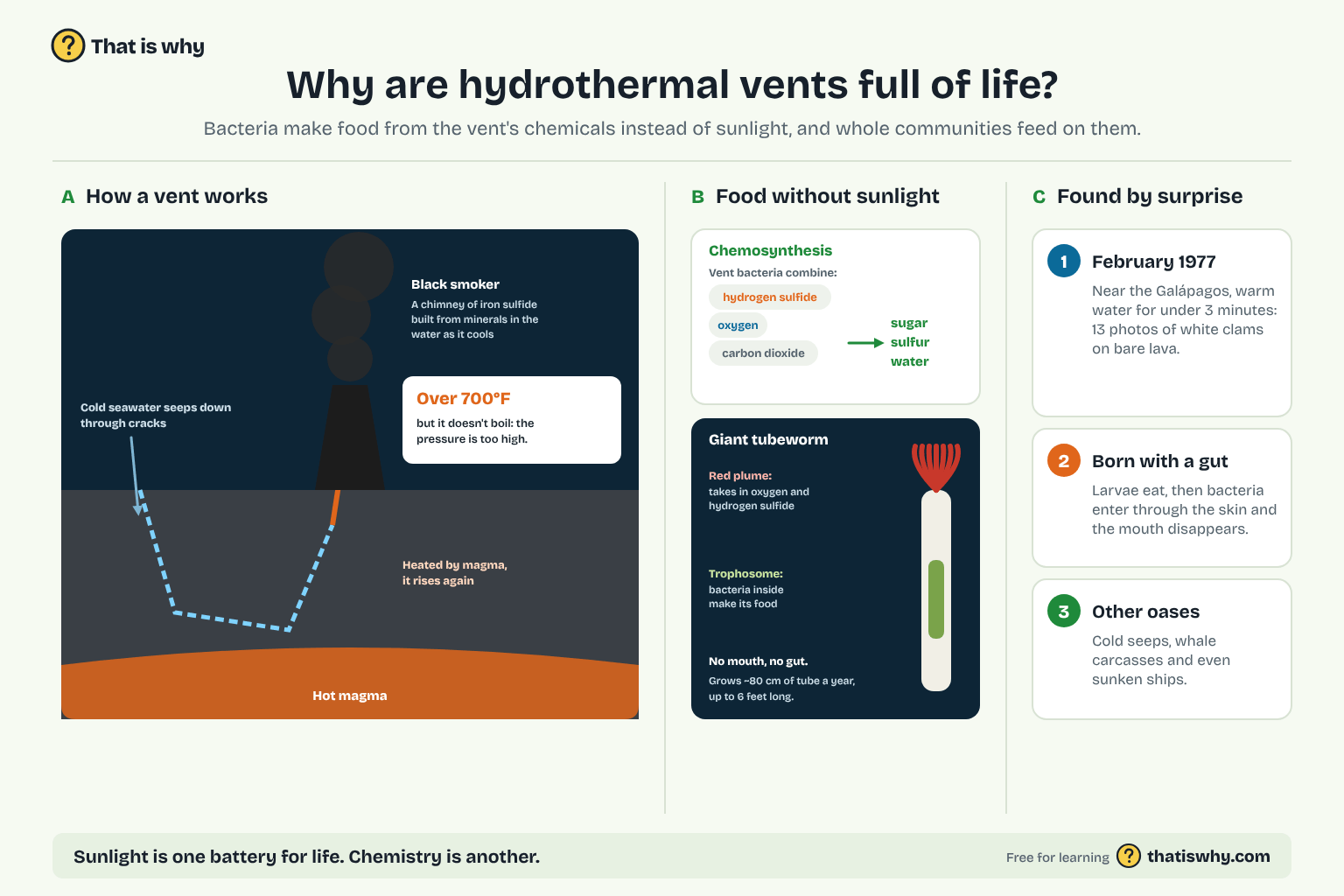
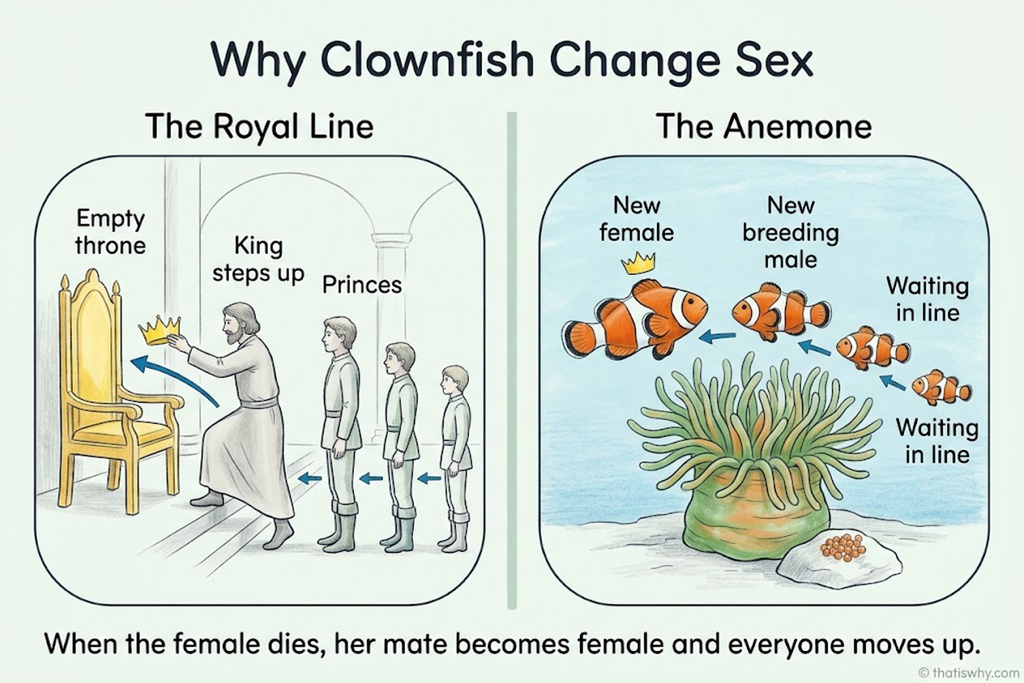
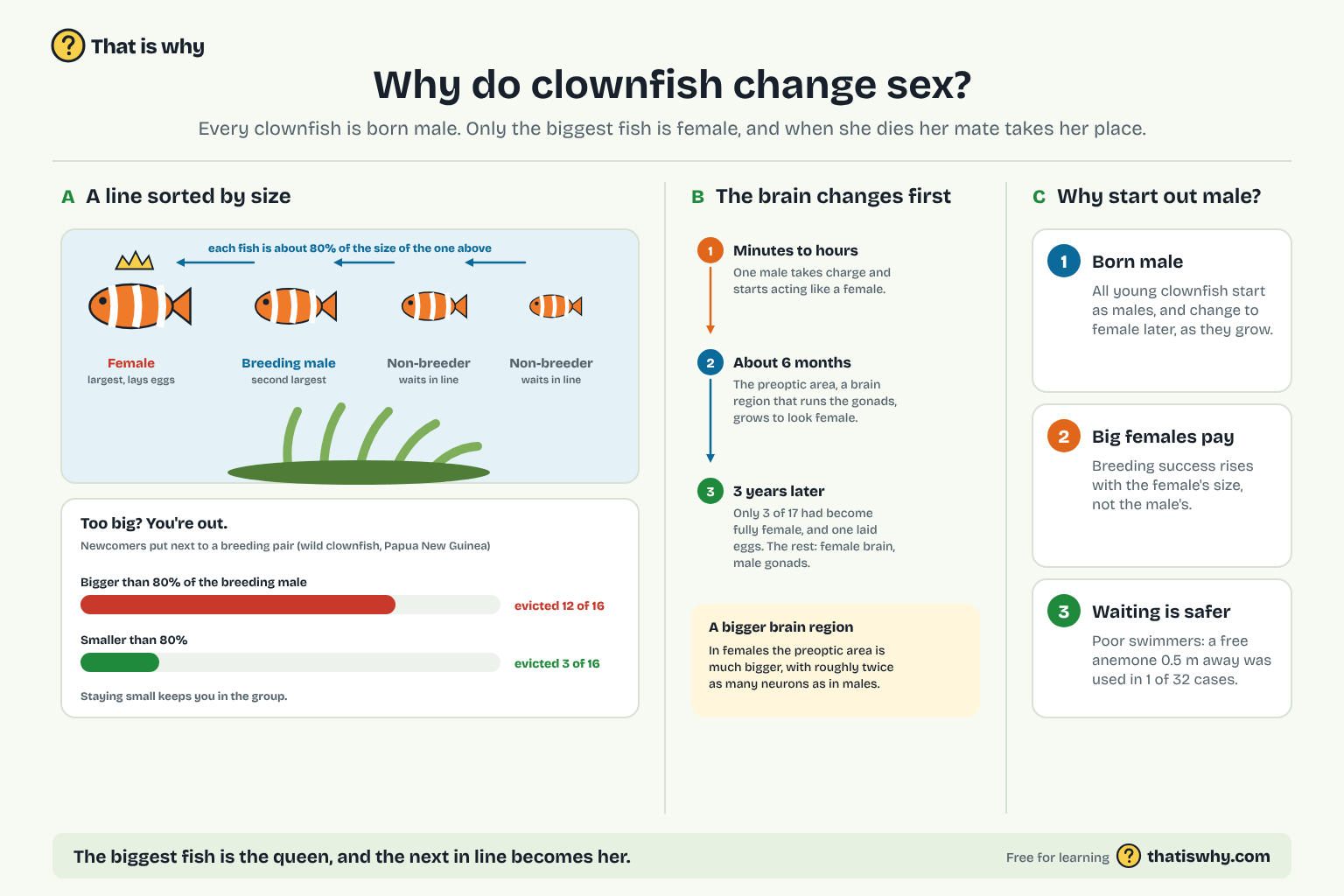
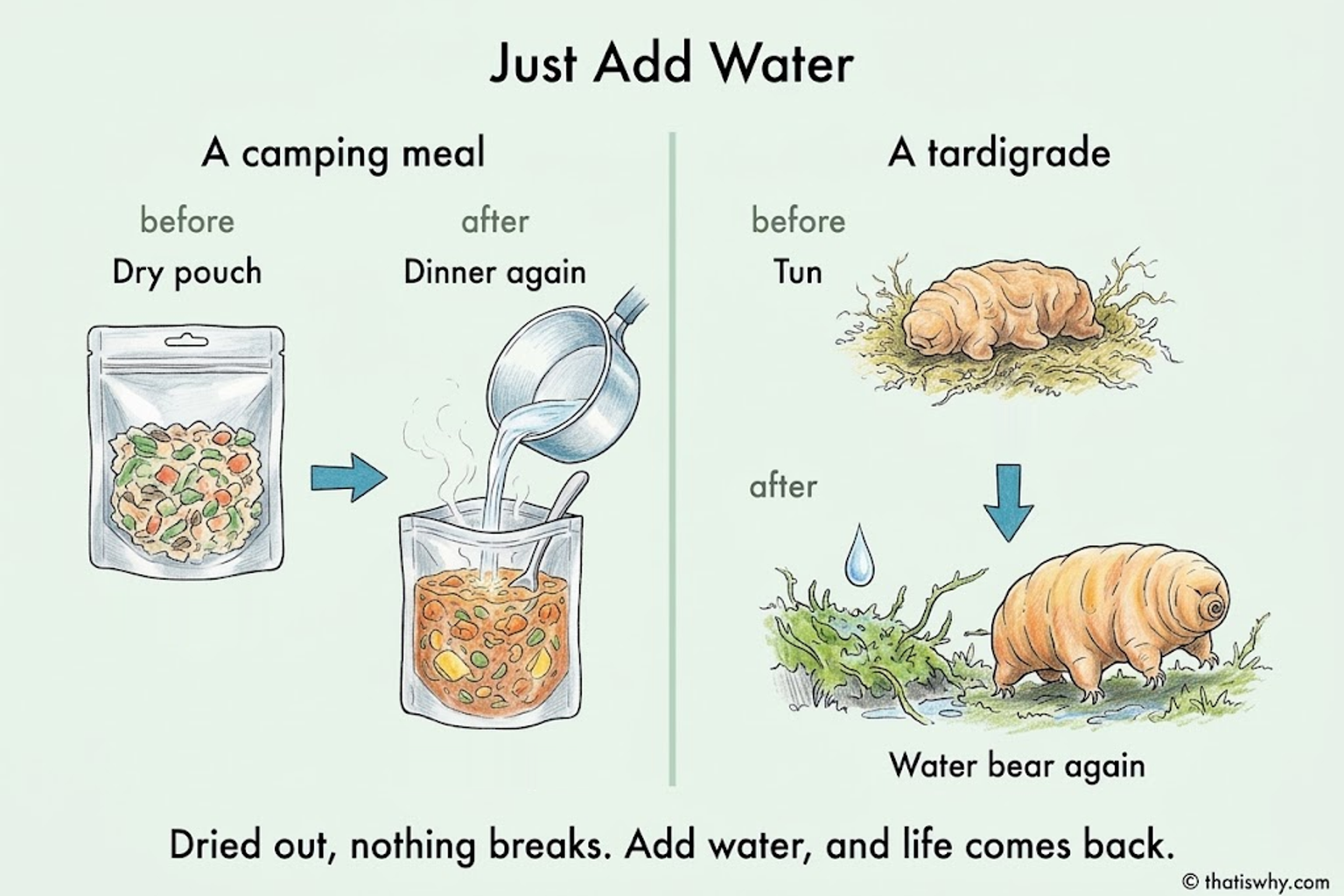
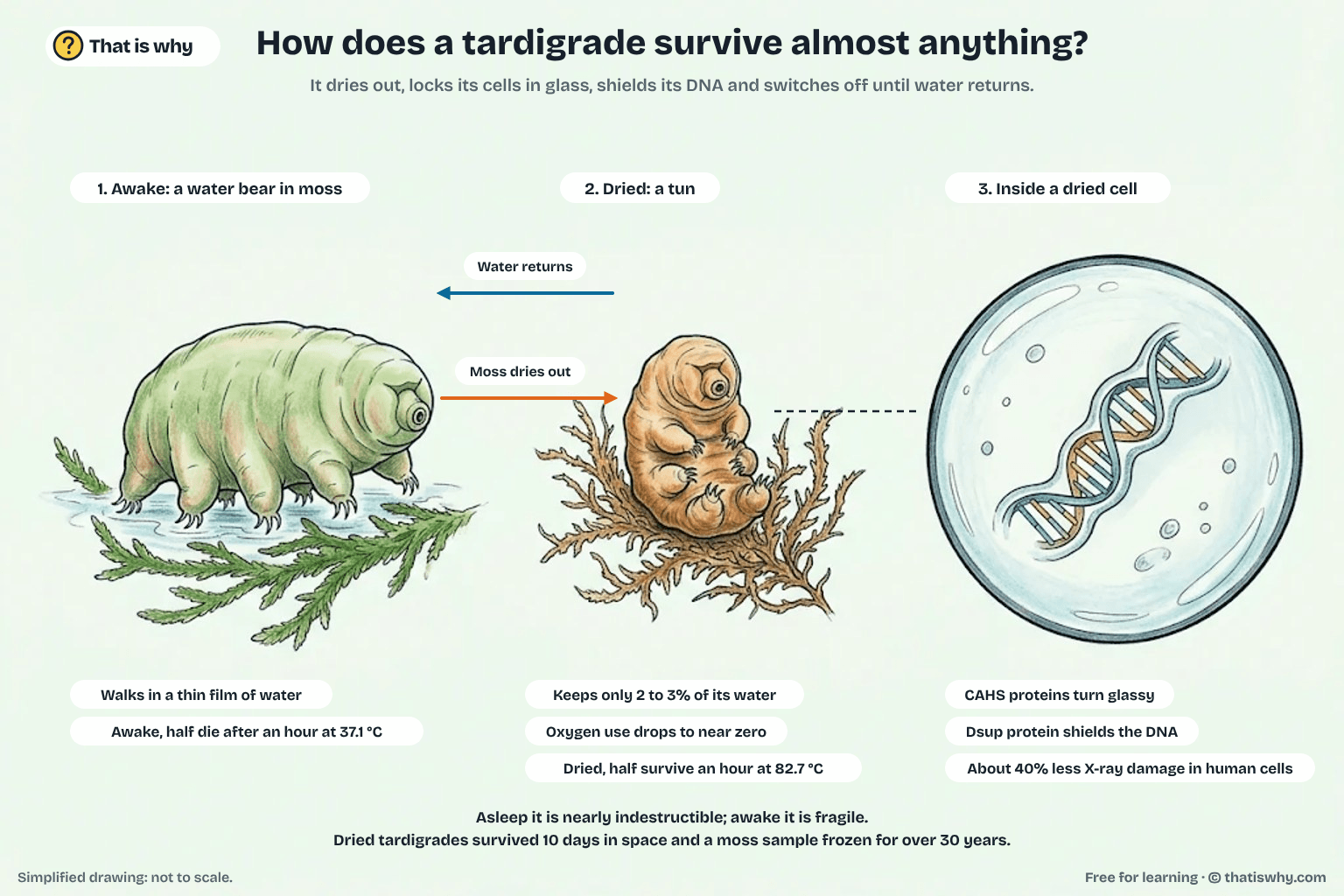
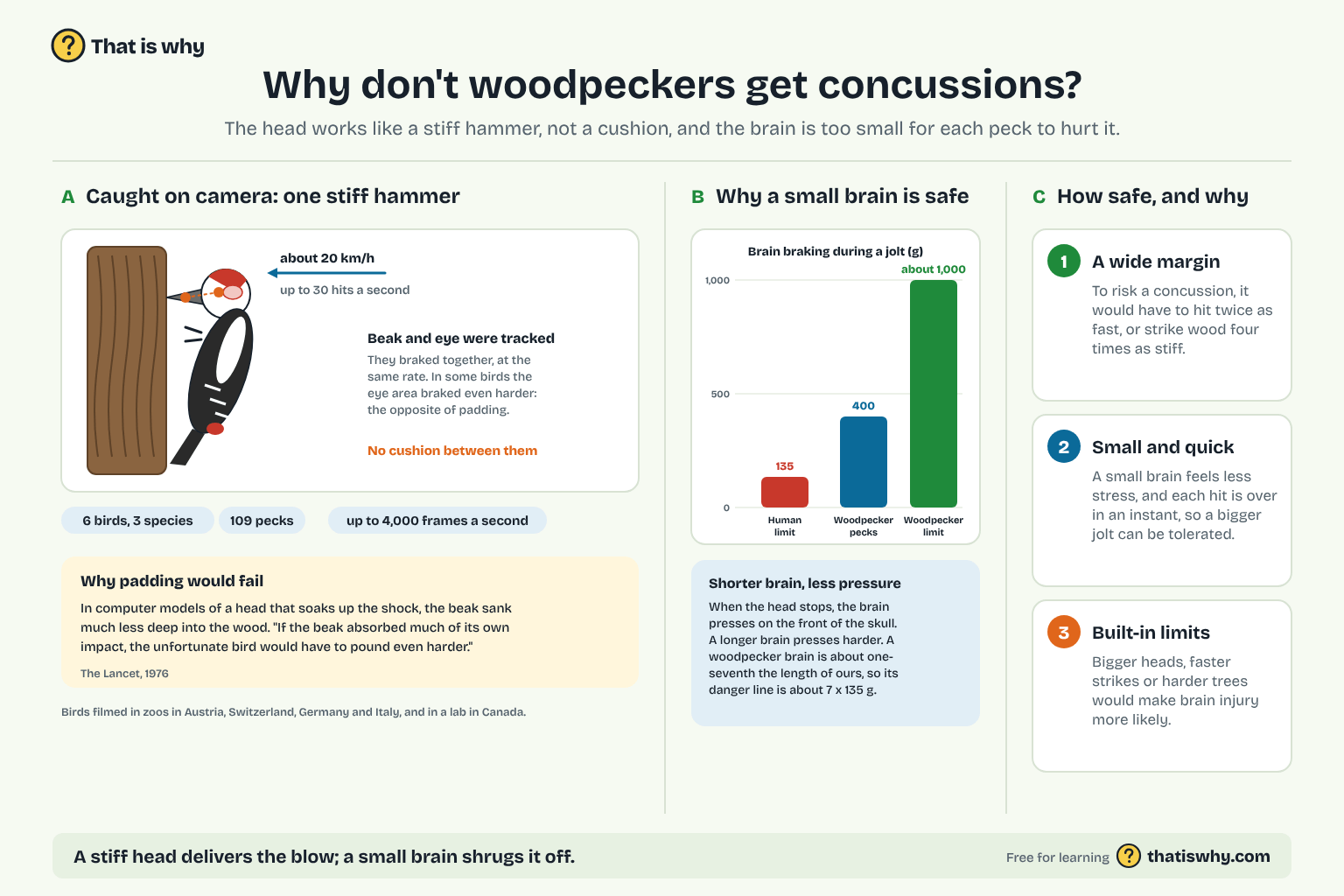
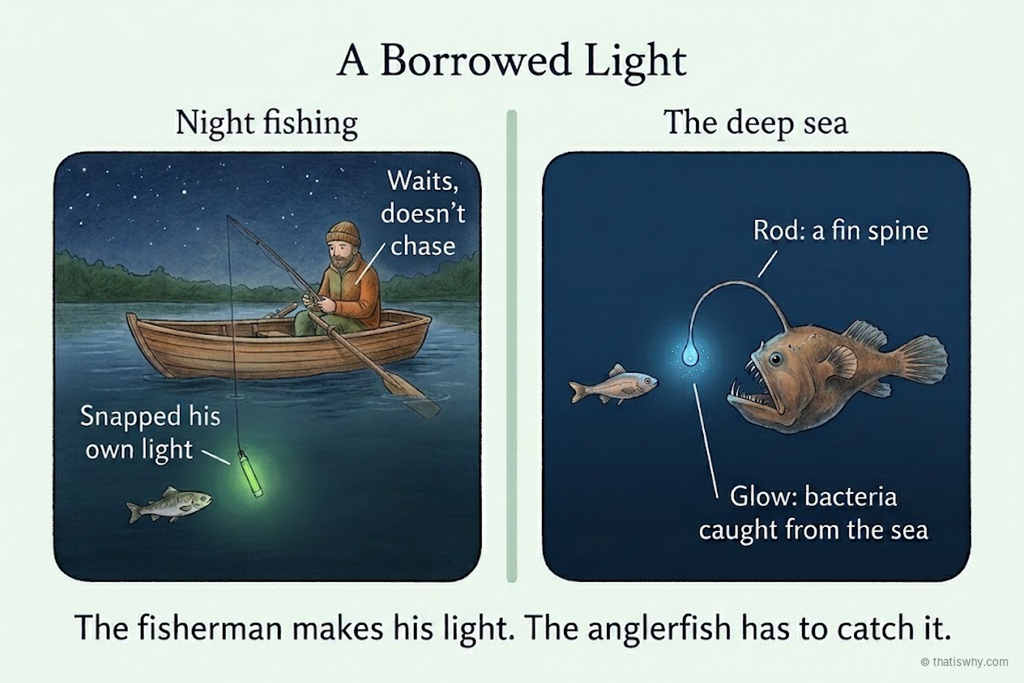
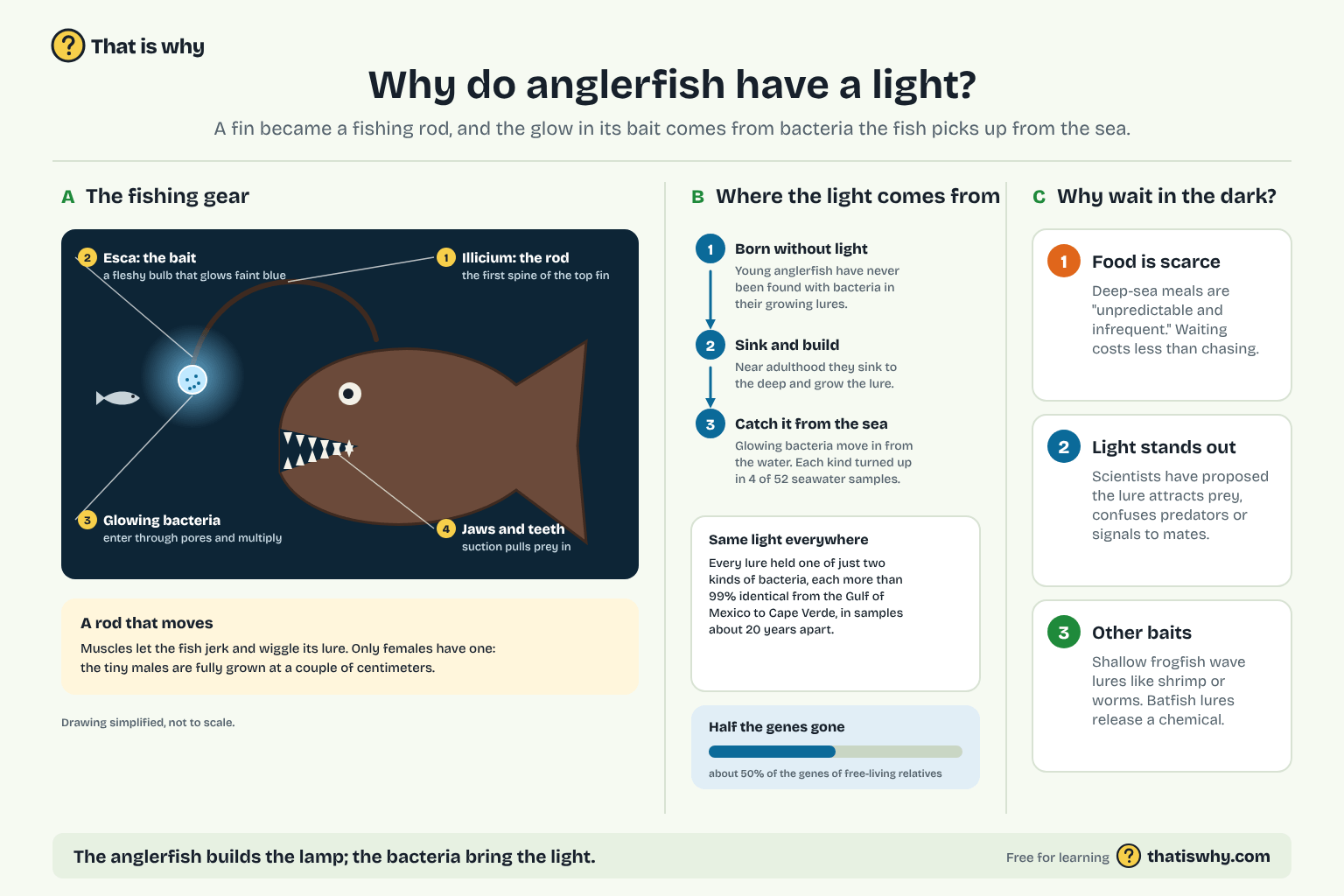
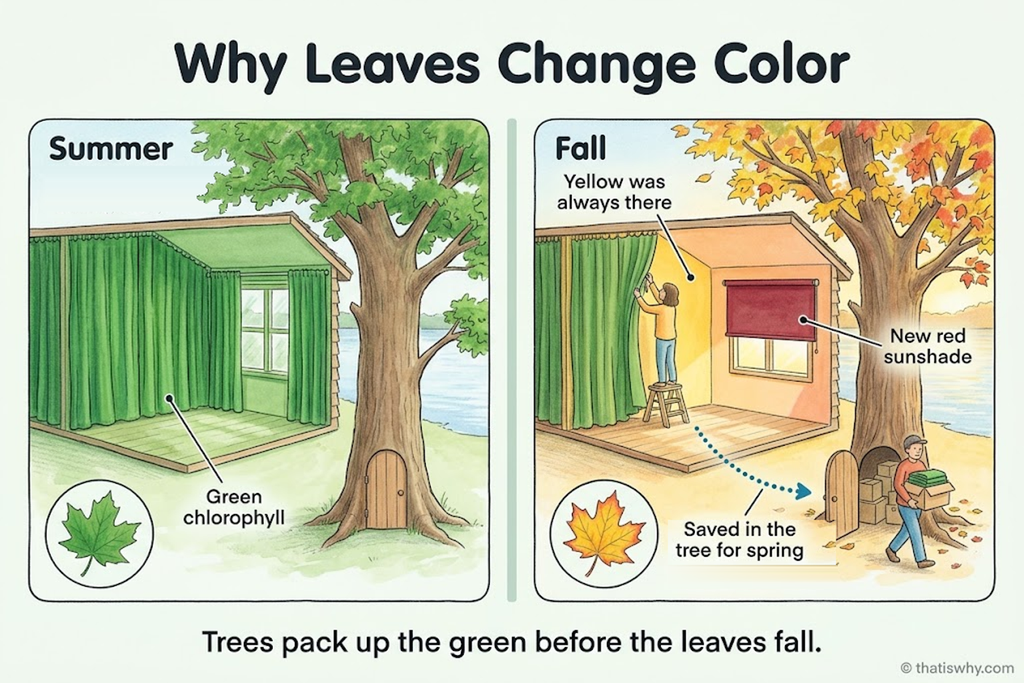
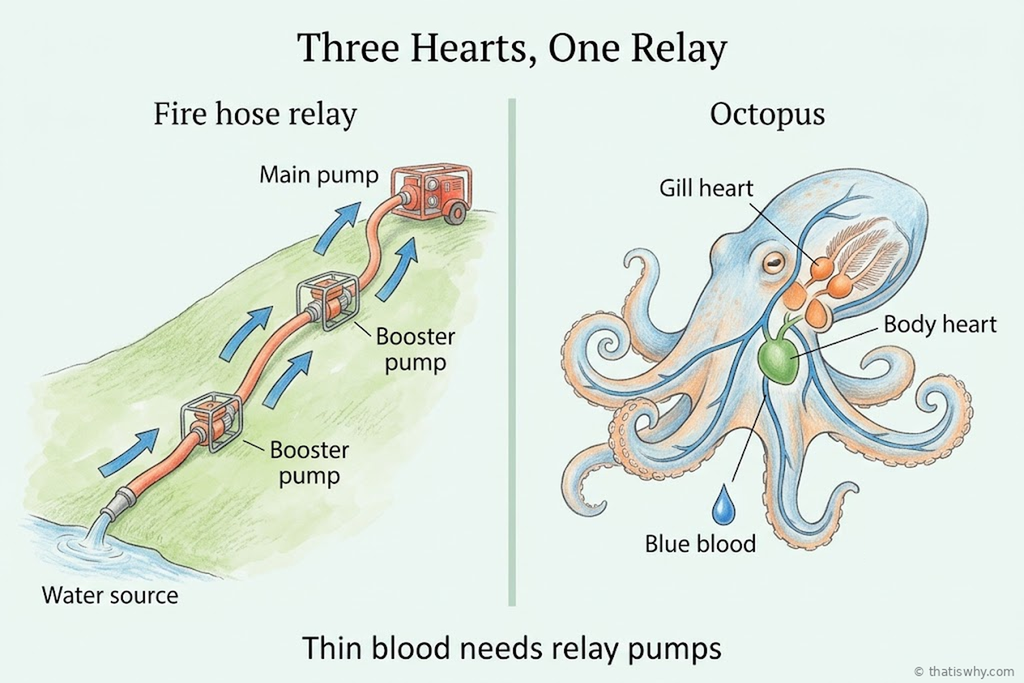
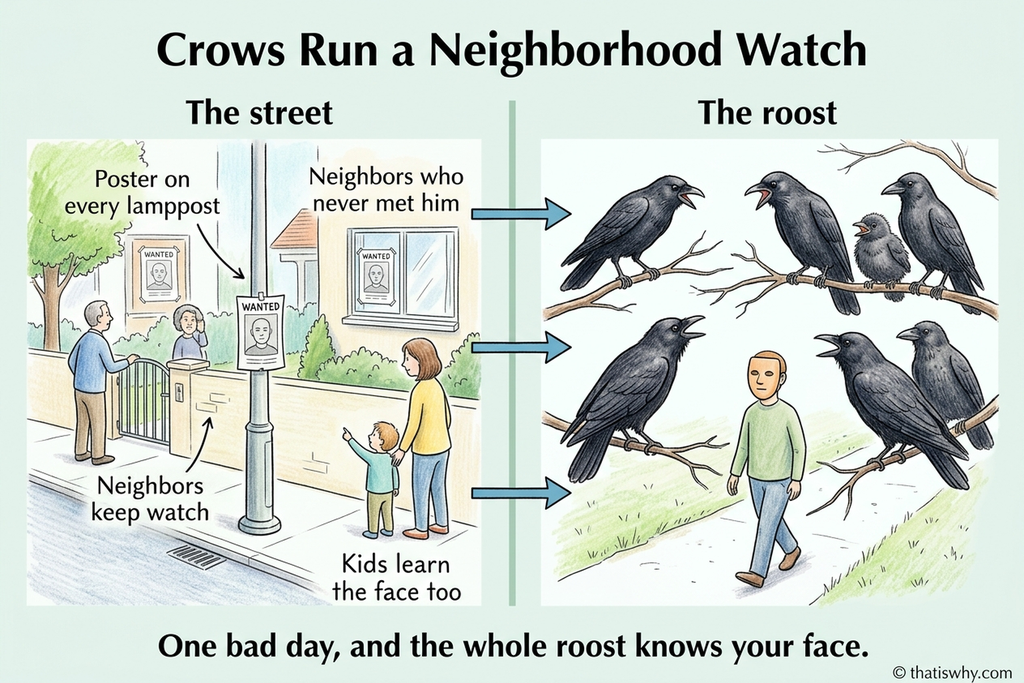
 How can an animal be see-through?
 Why do see-through animals have red stomachs?
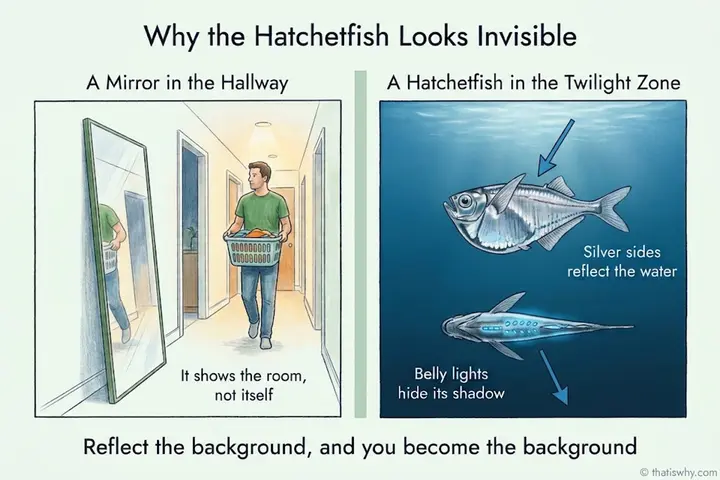 How does the hatchetfish turn invisible?
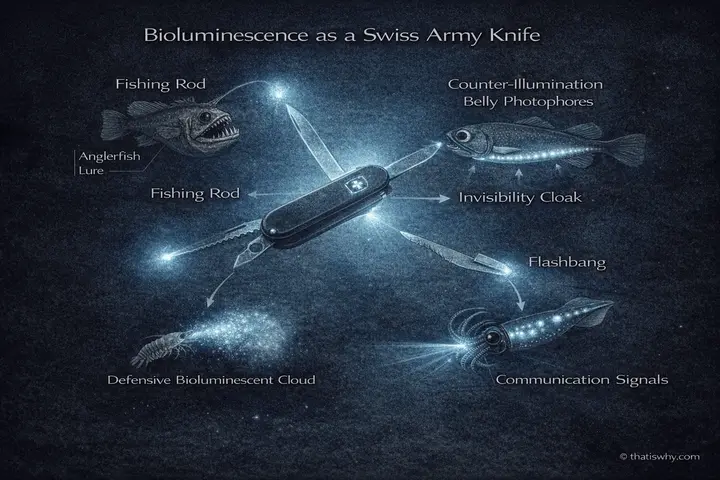 Why do deep-sea animals glow?
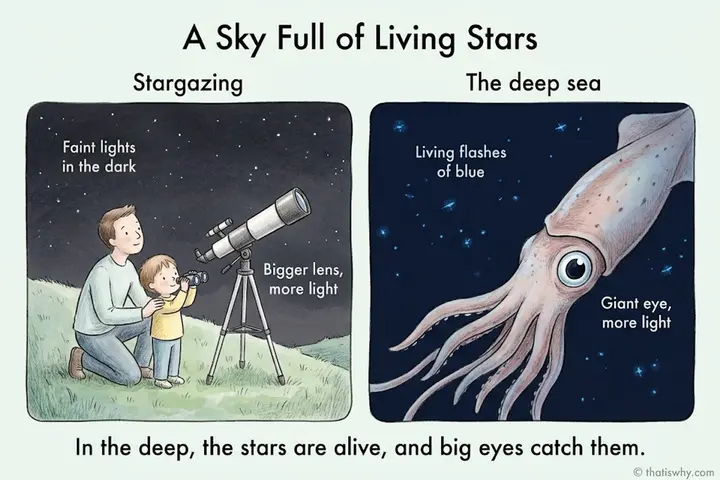 Why does the deep ocean look like a starry sky?
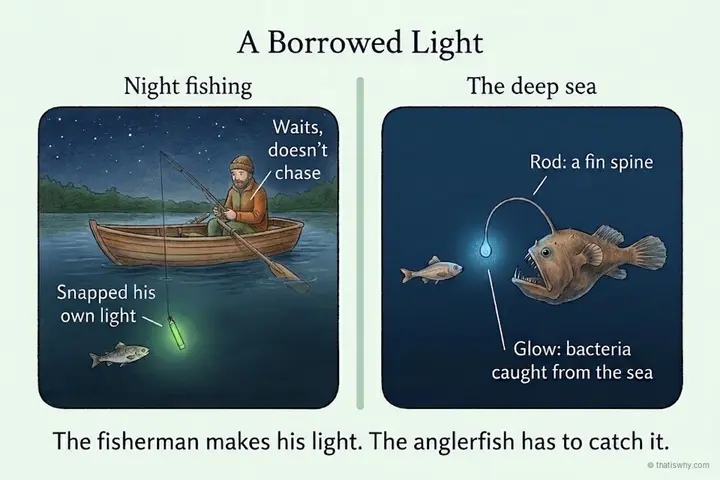 Why do anglerfish have a light?
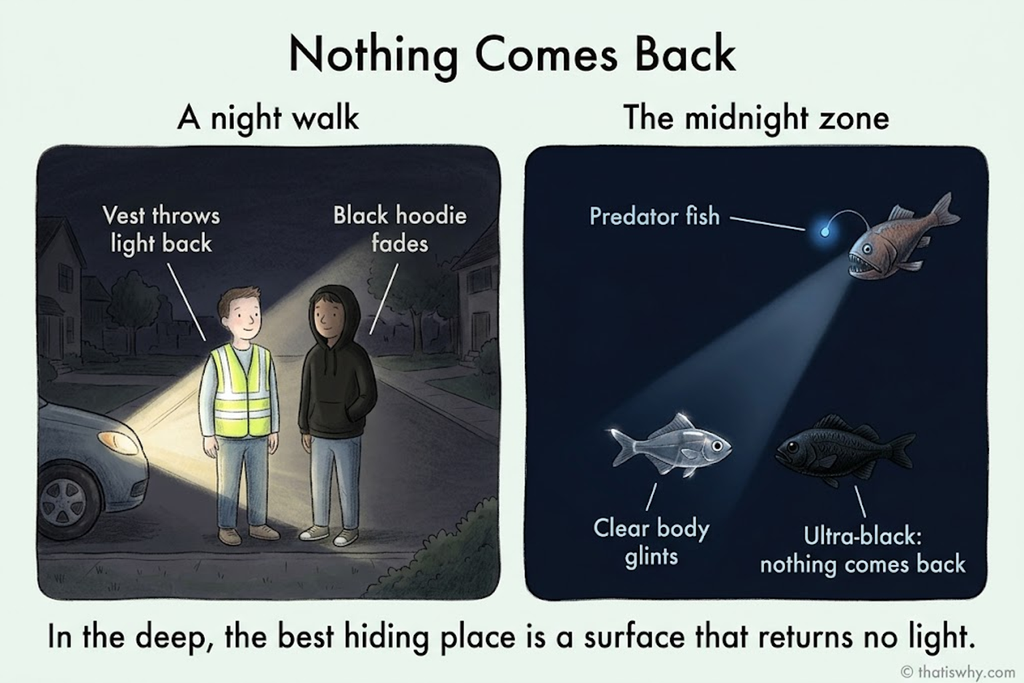
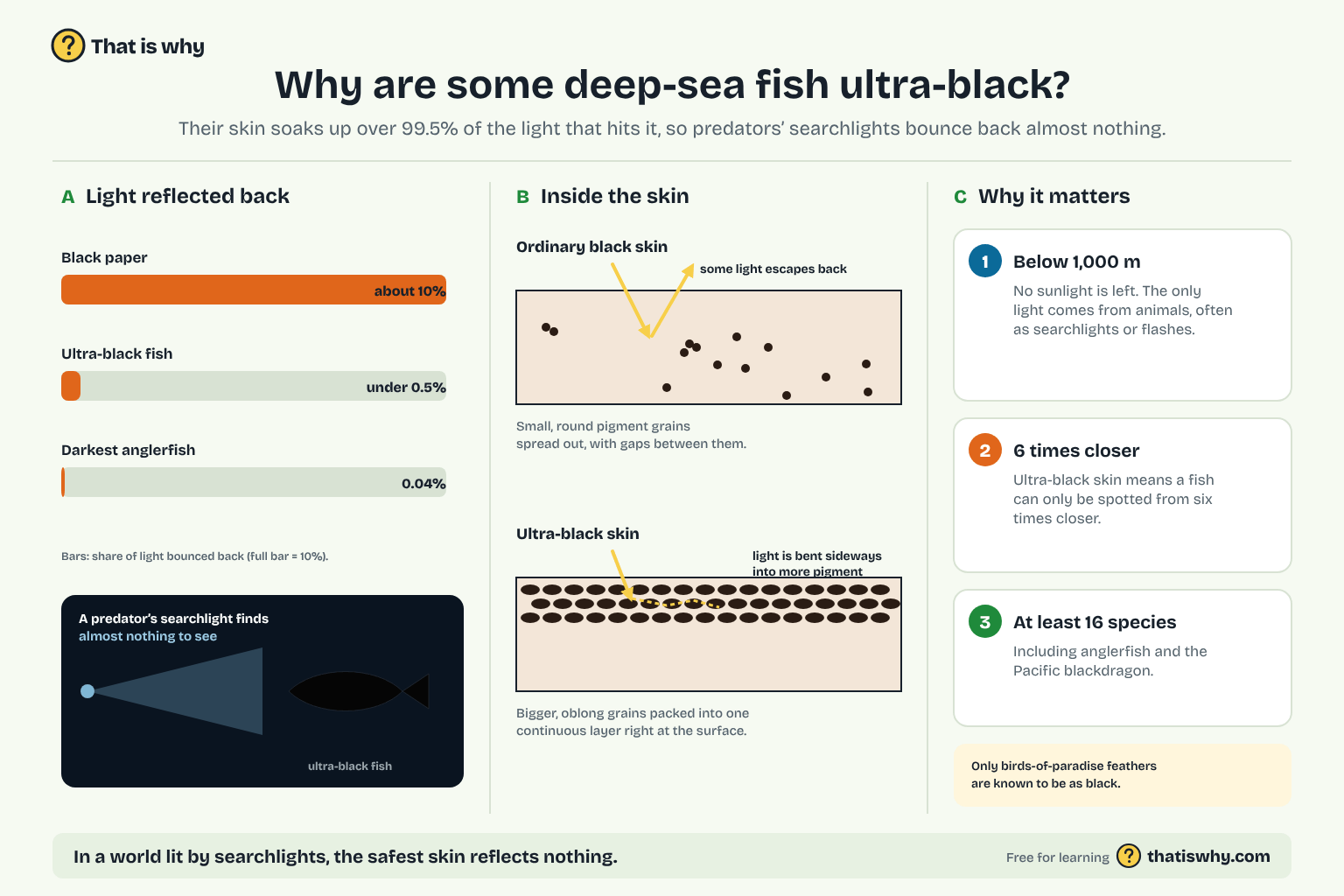
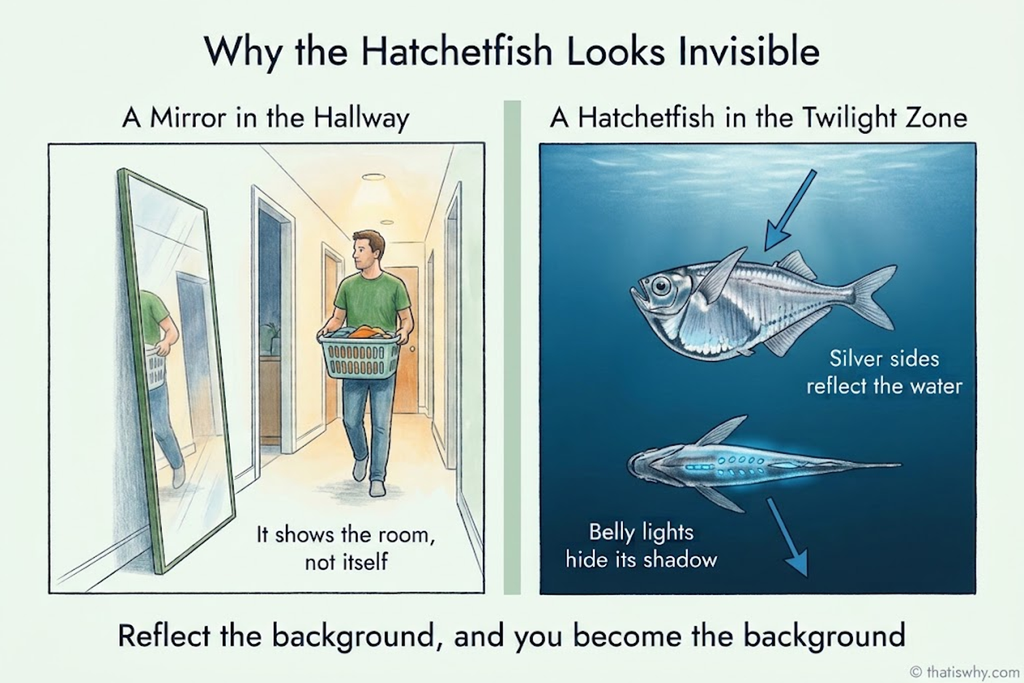
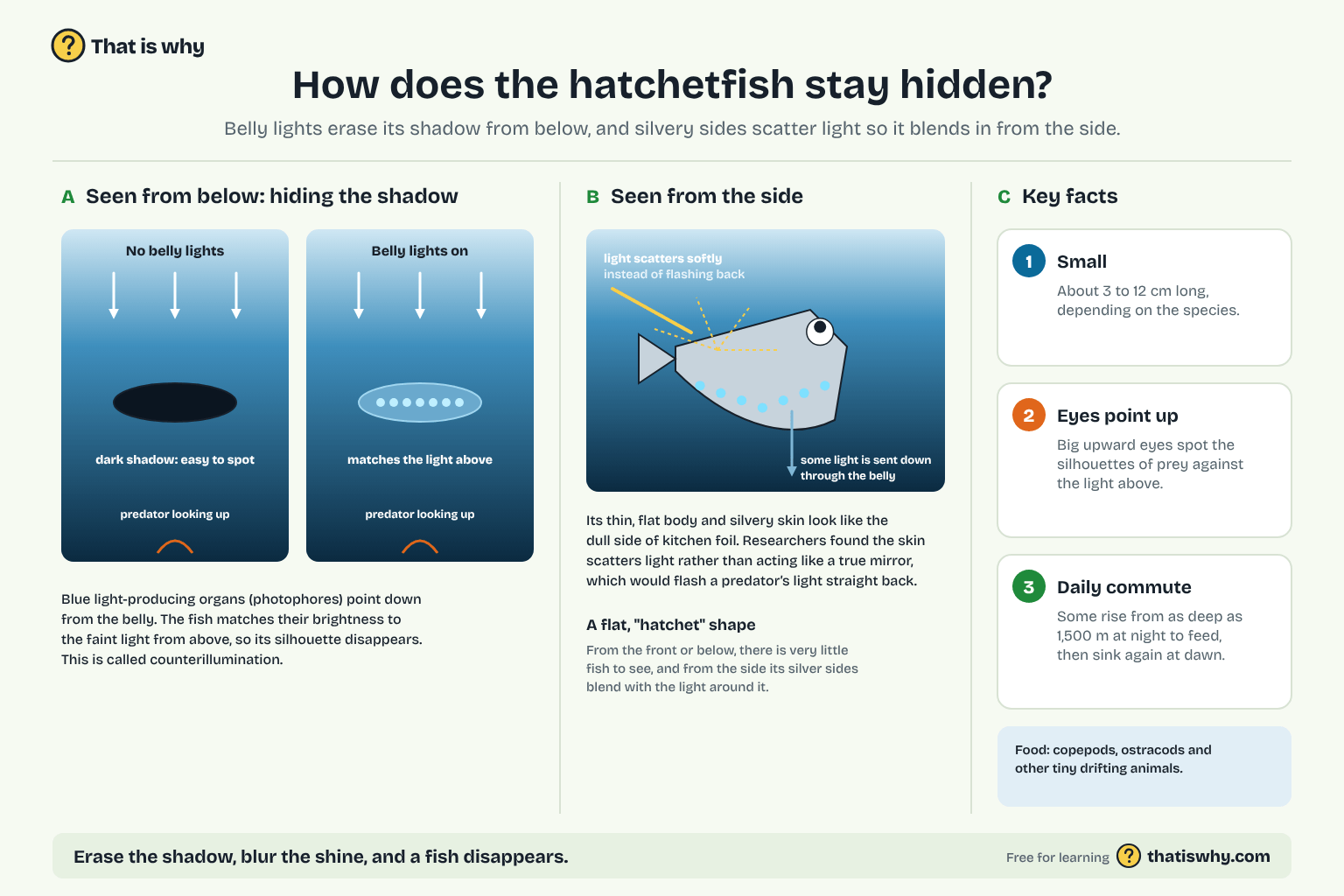
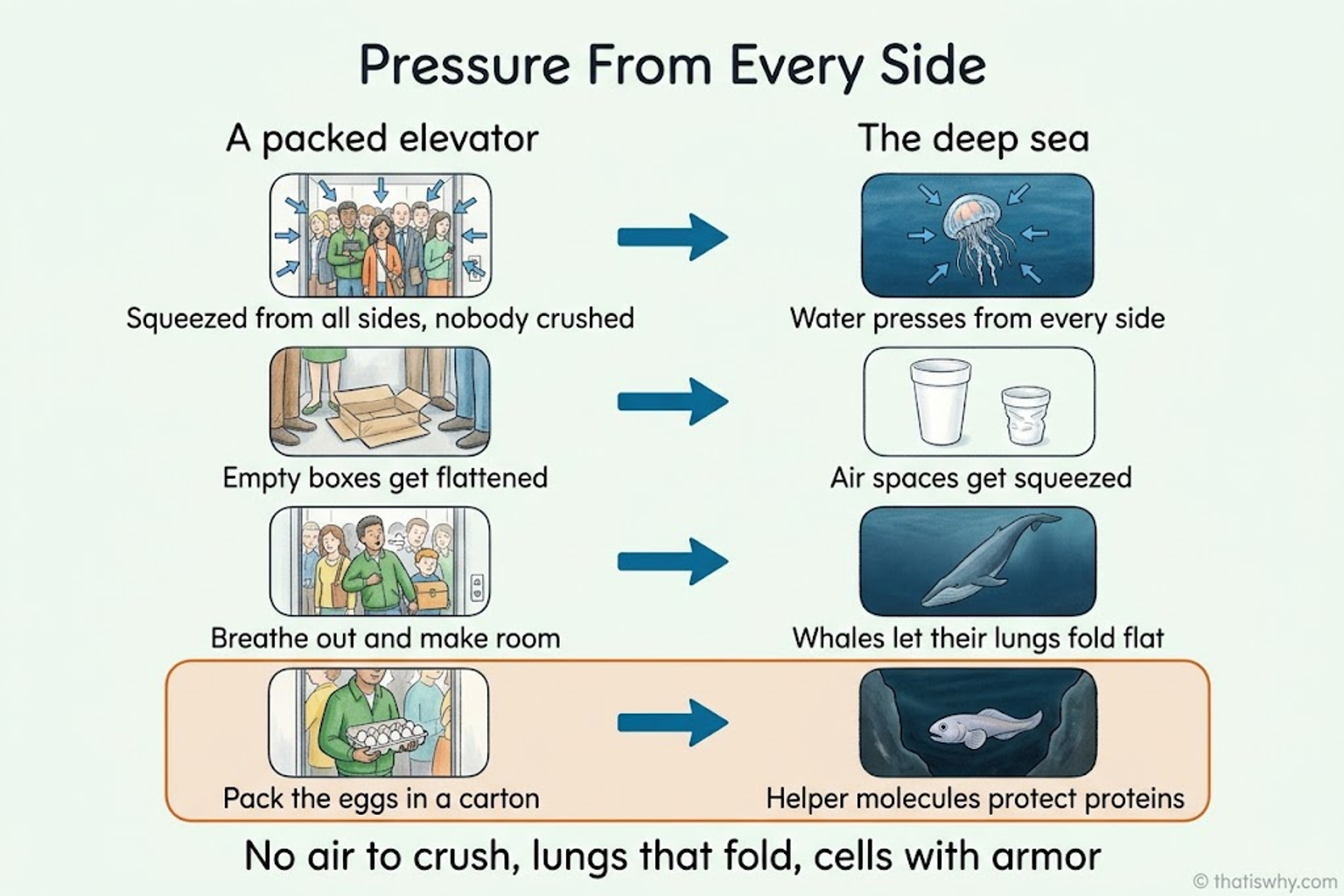
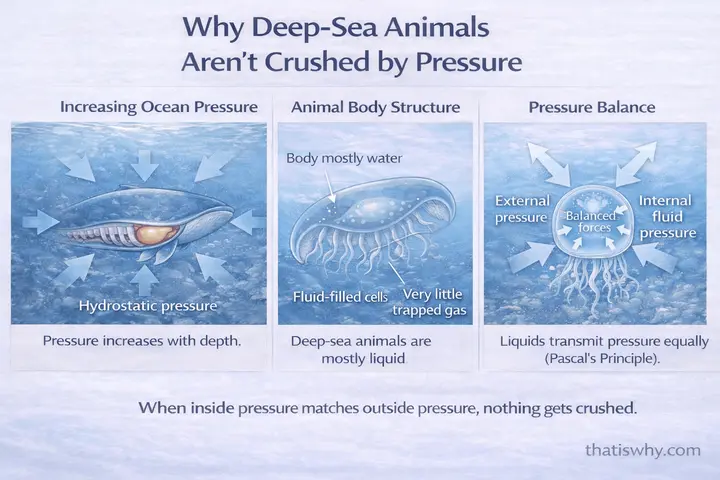 Why don't deep-sea animals get crushed?
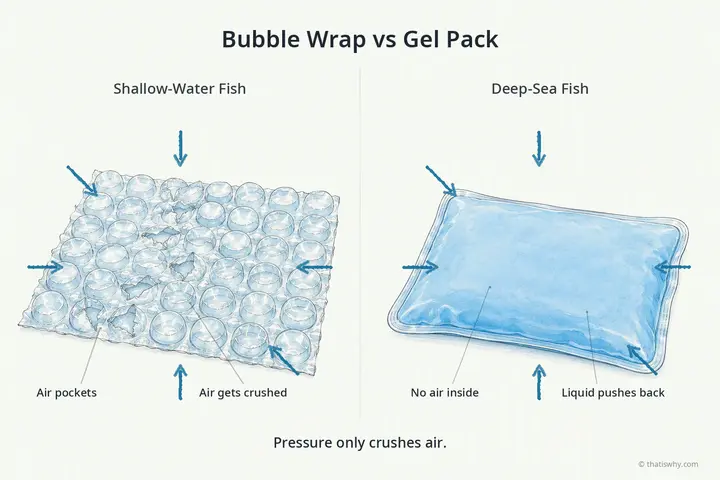 Why don't deep-sea fish implode?
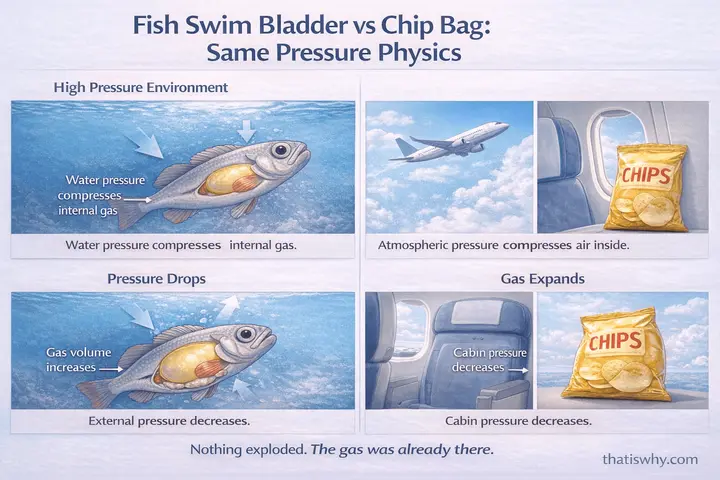 Why do deep-sea fish 'explode' at the surface?
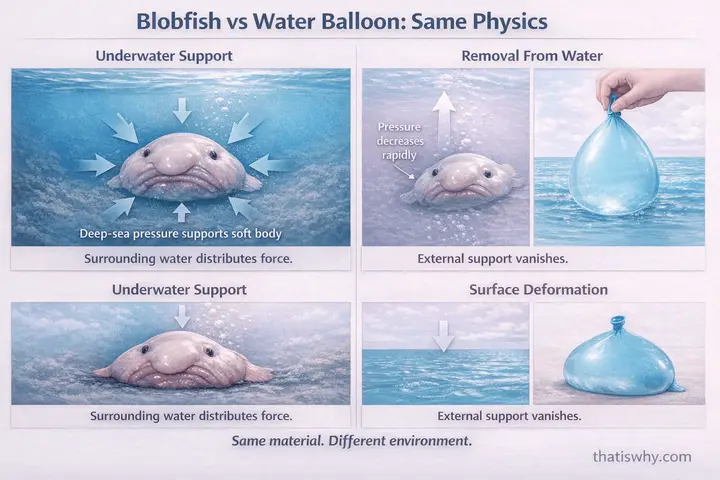 Is the blobfish really that ugly?
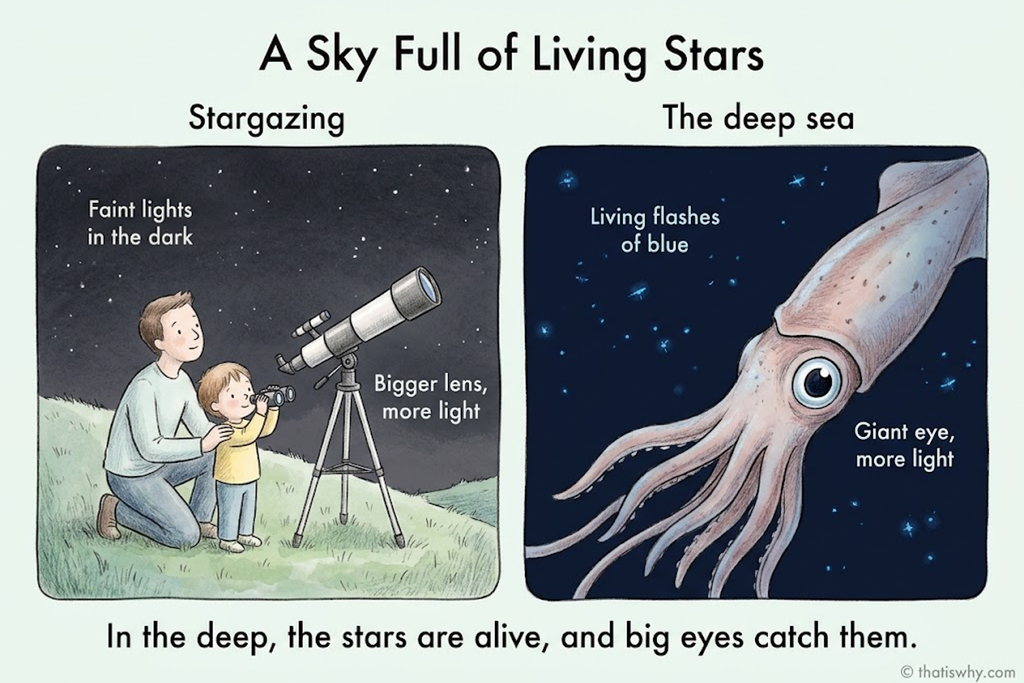
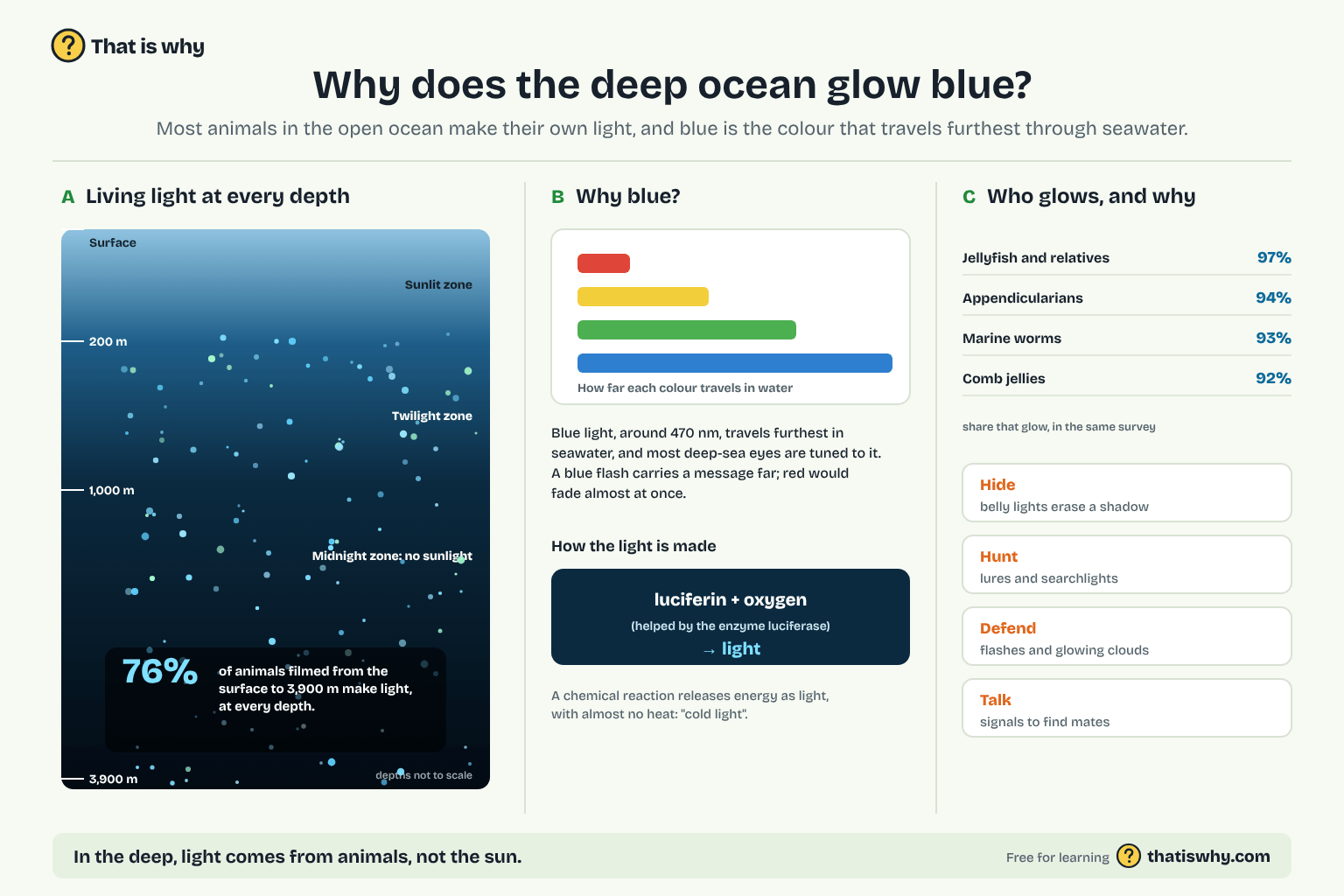
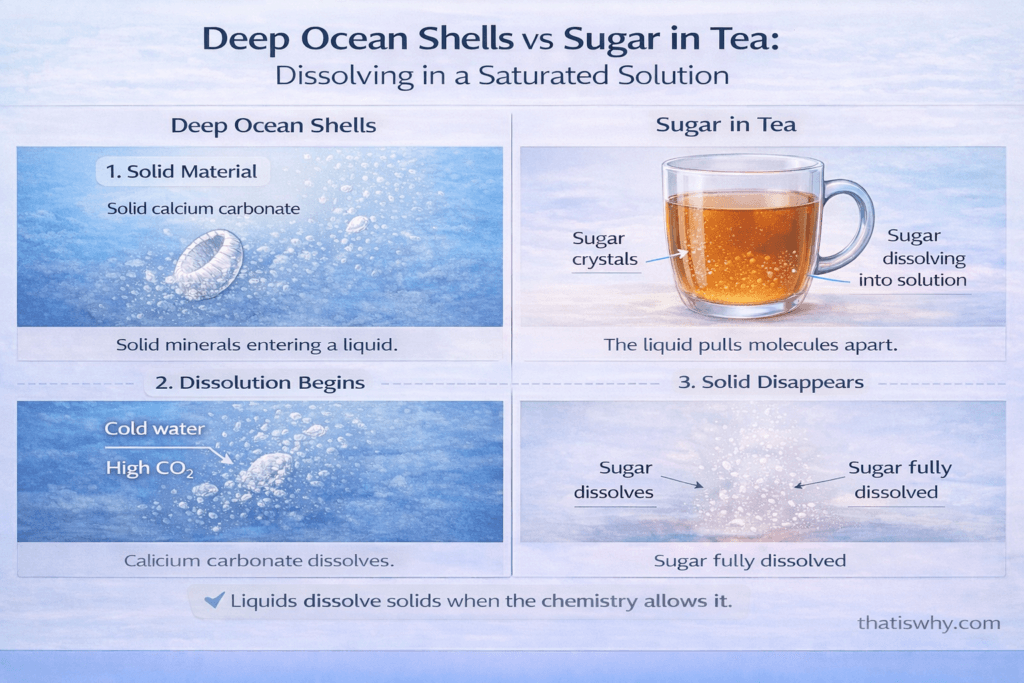
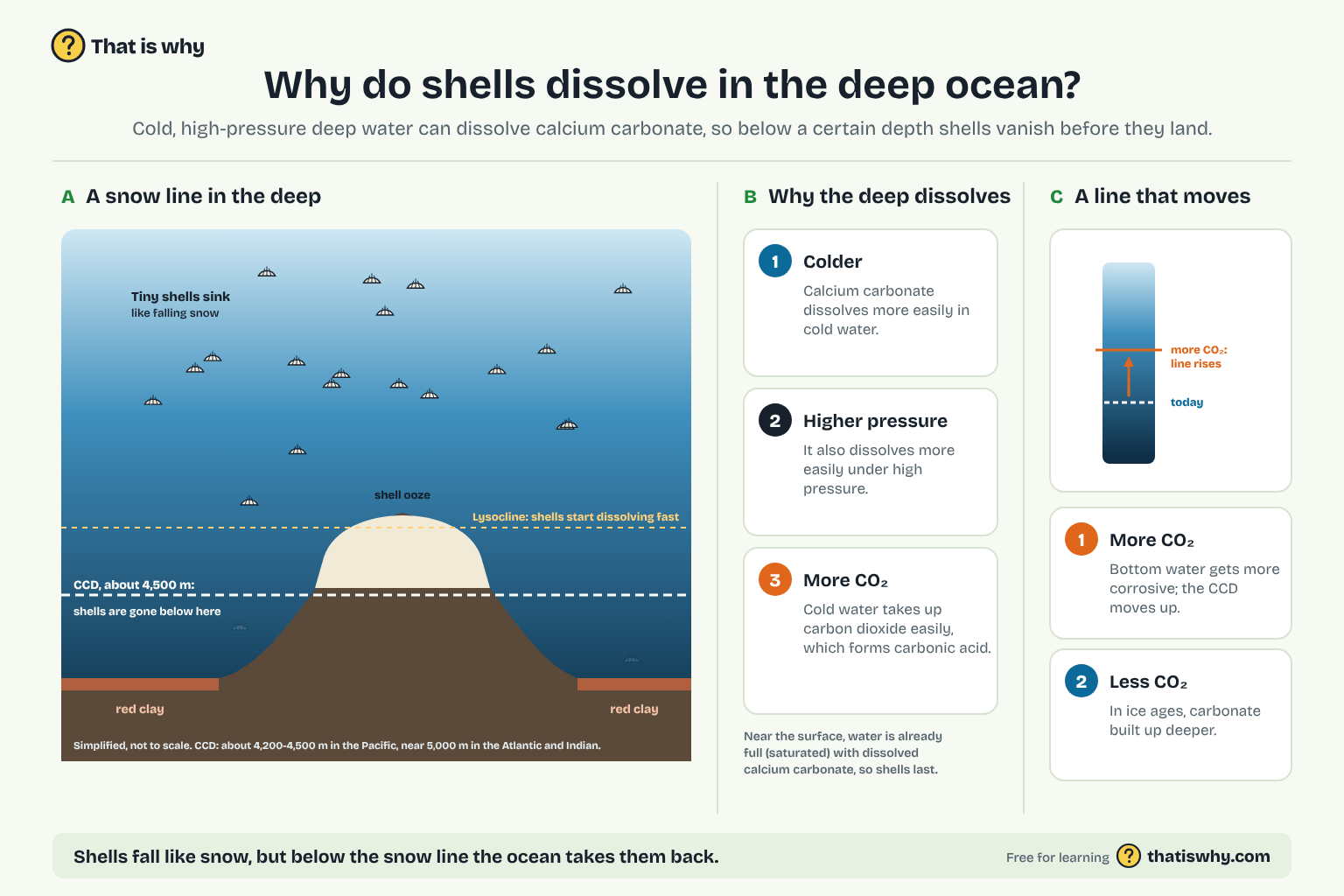
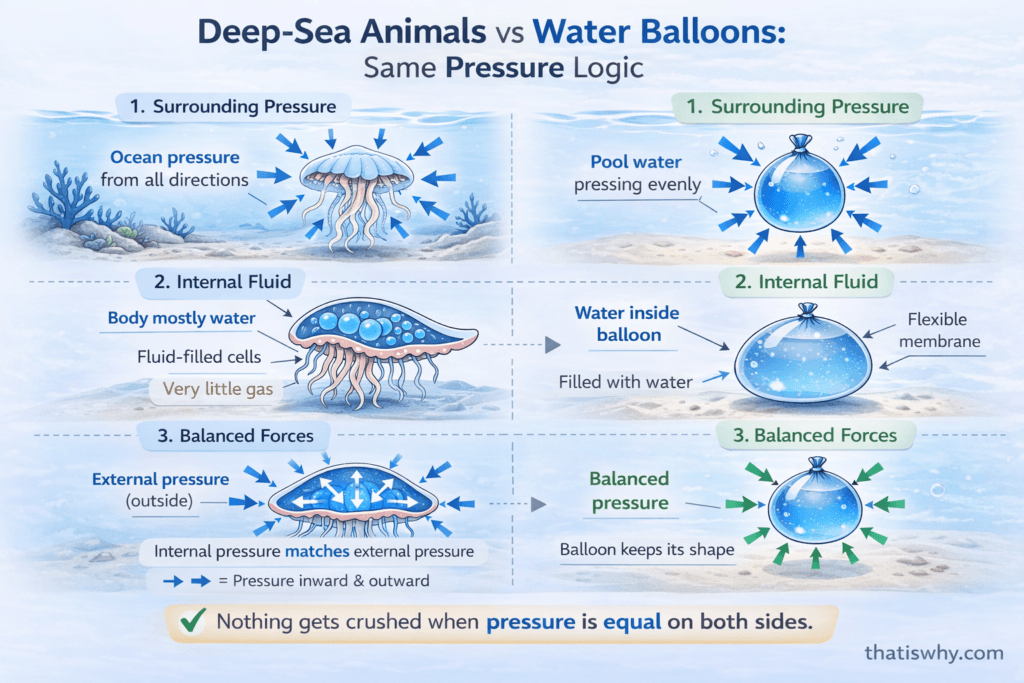
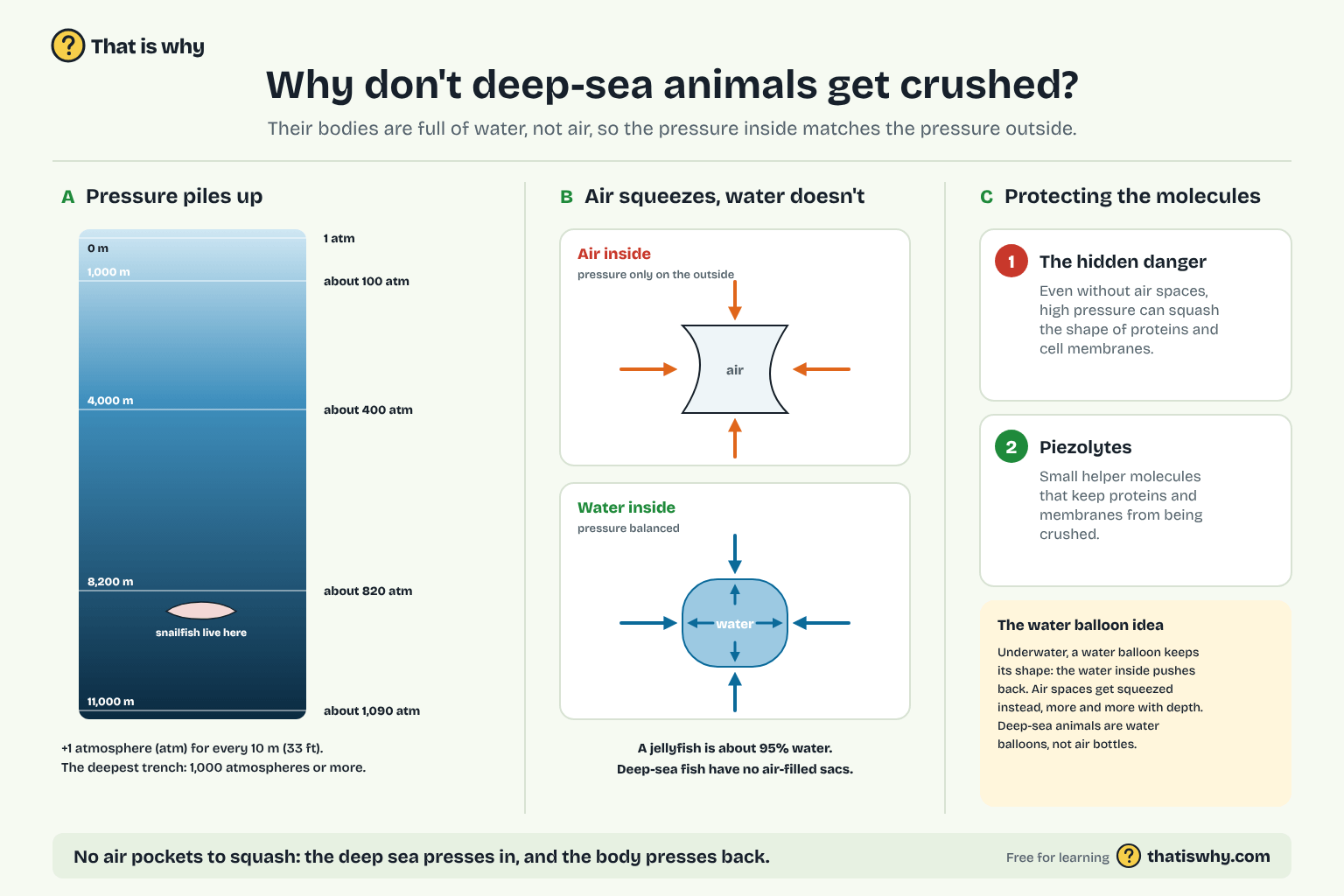
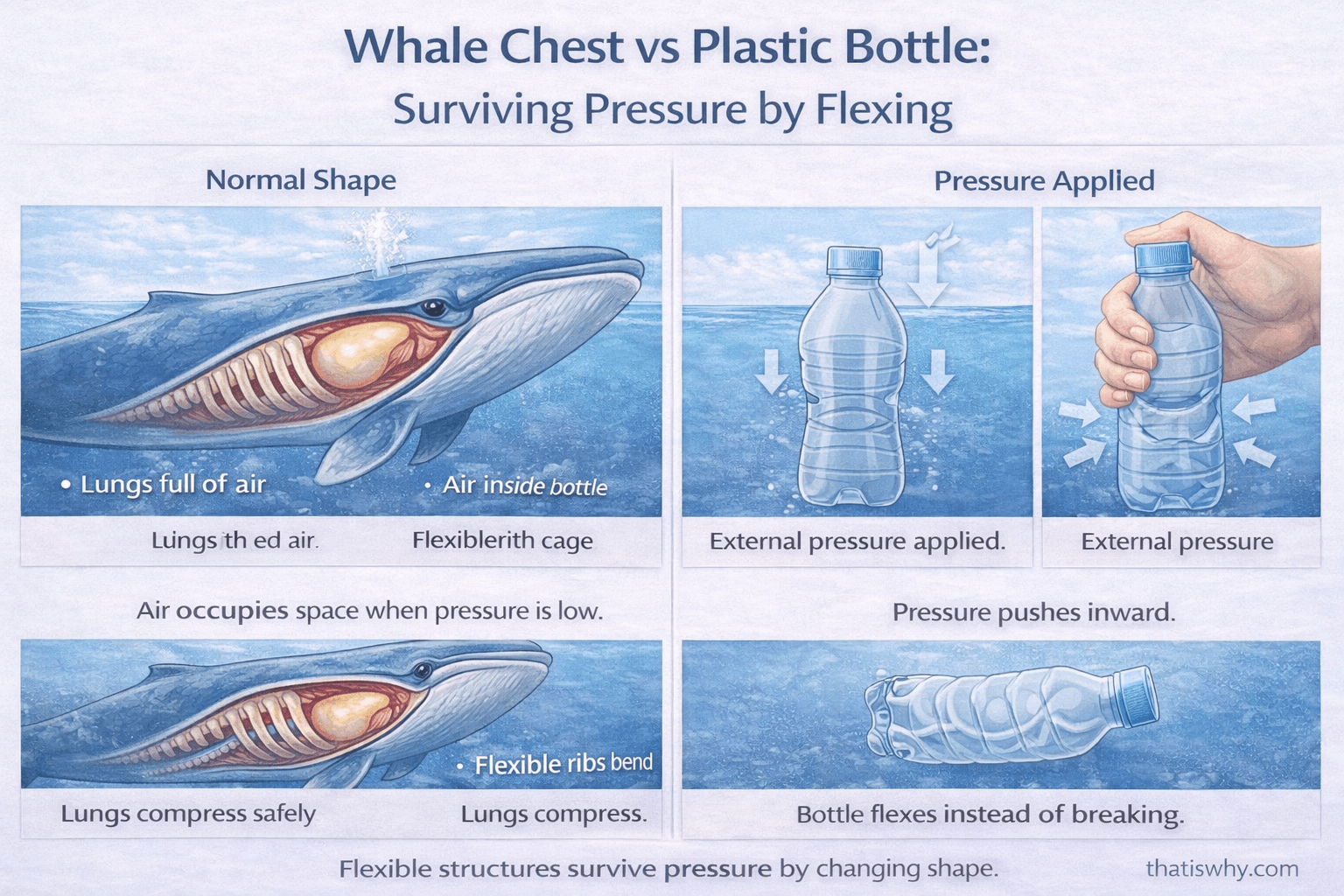
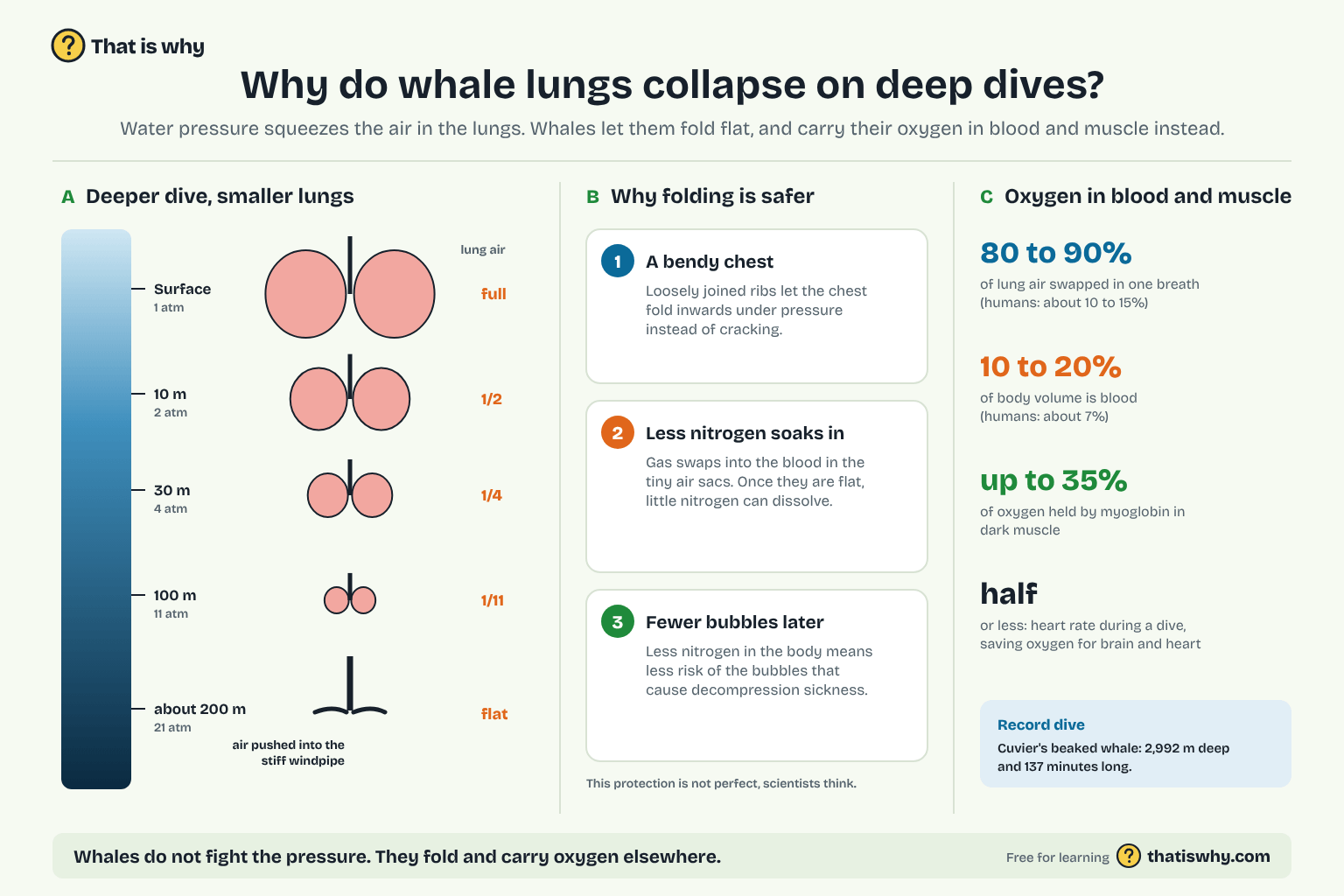
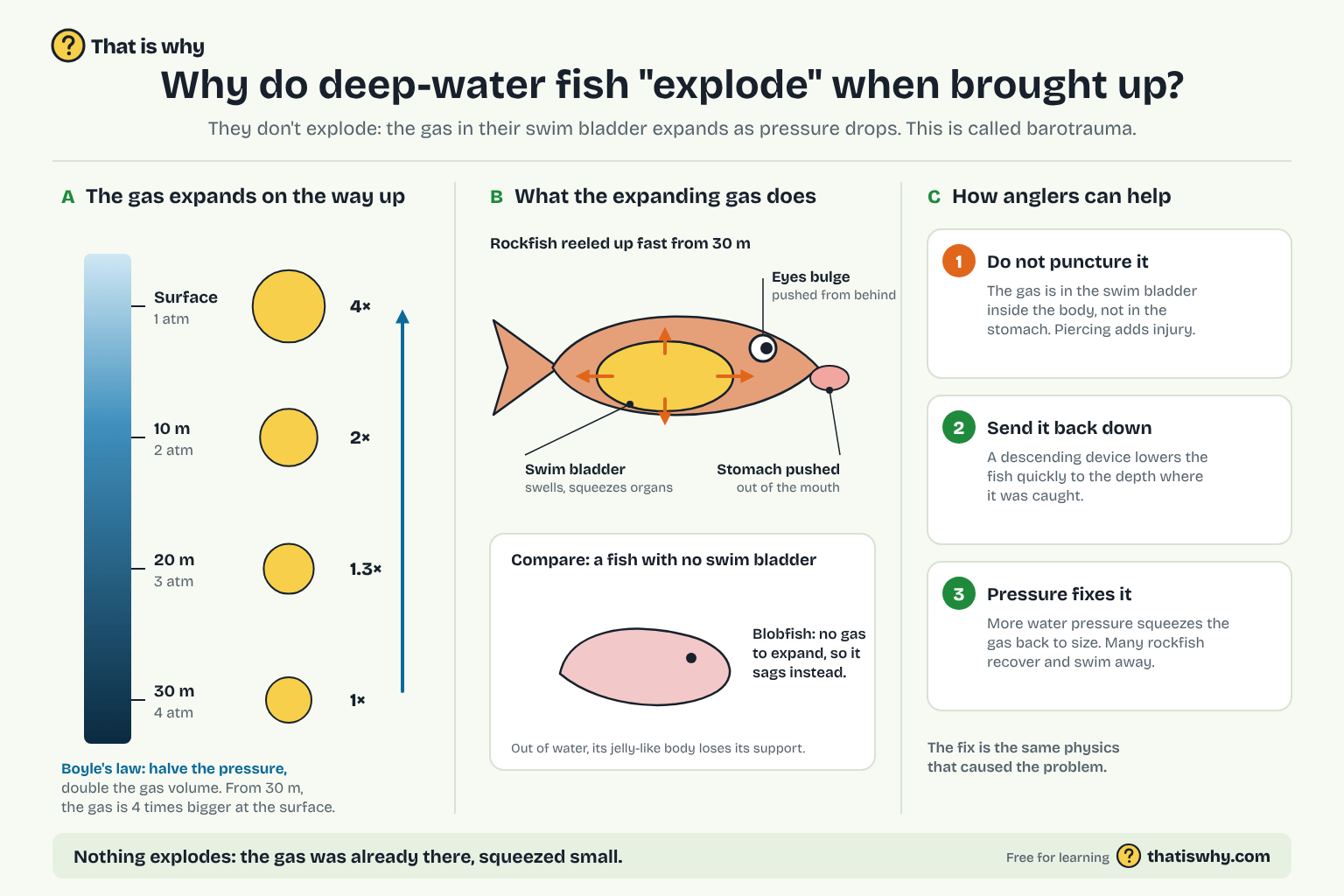
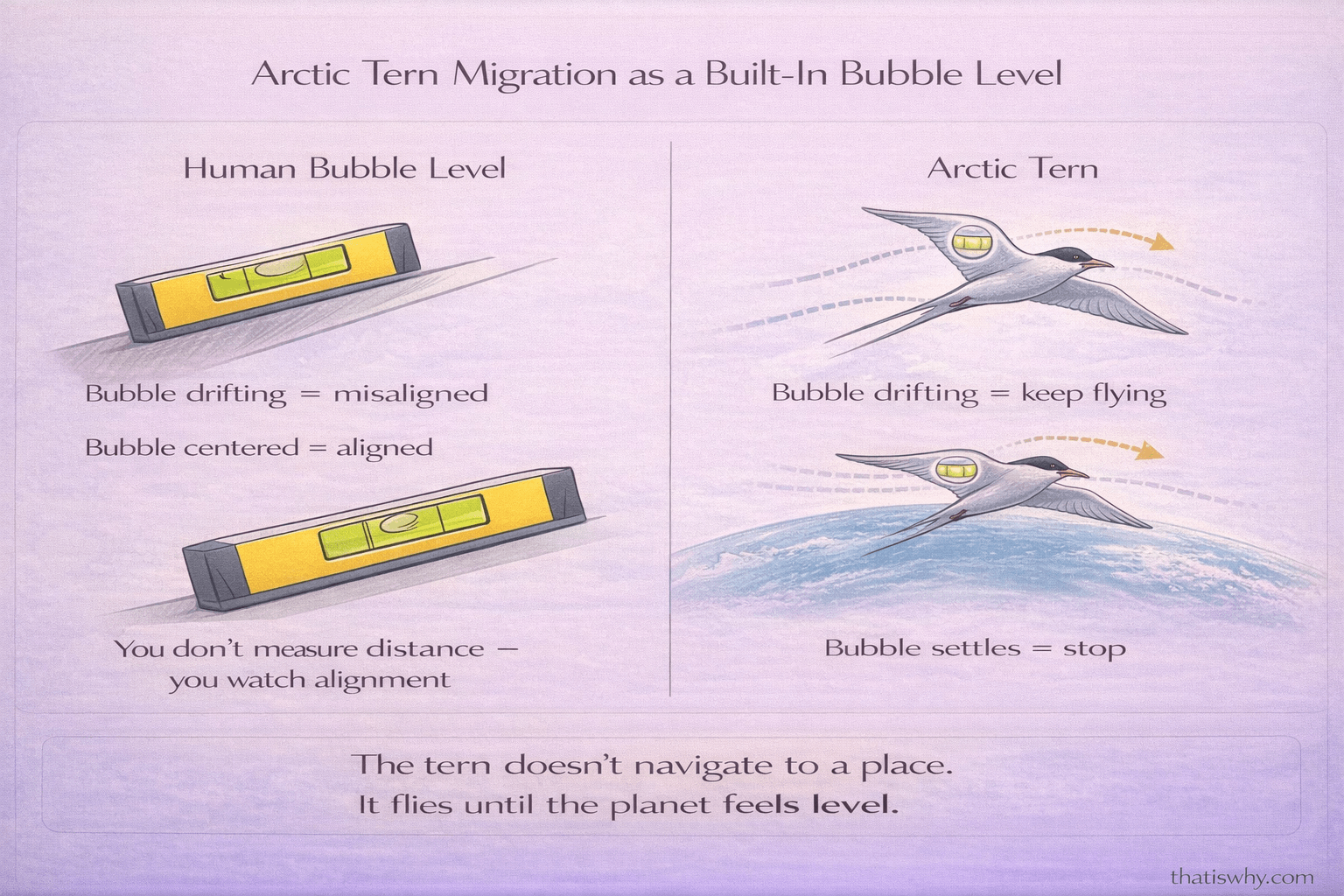
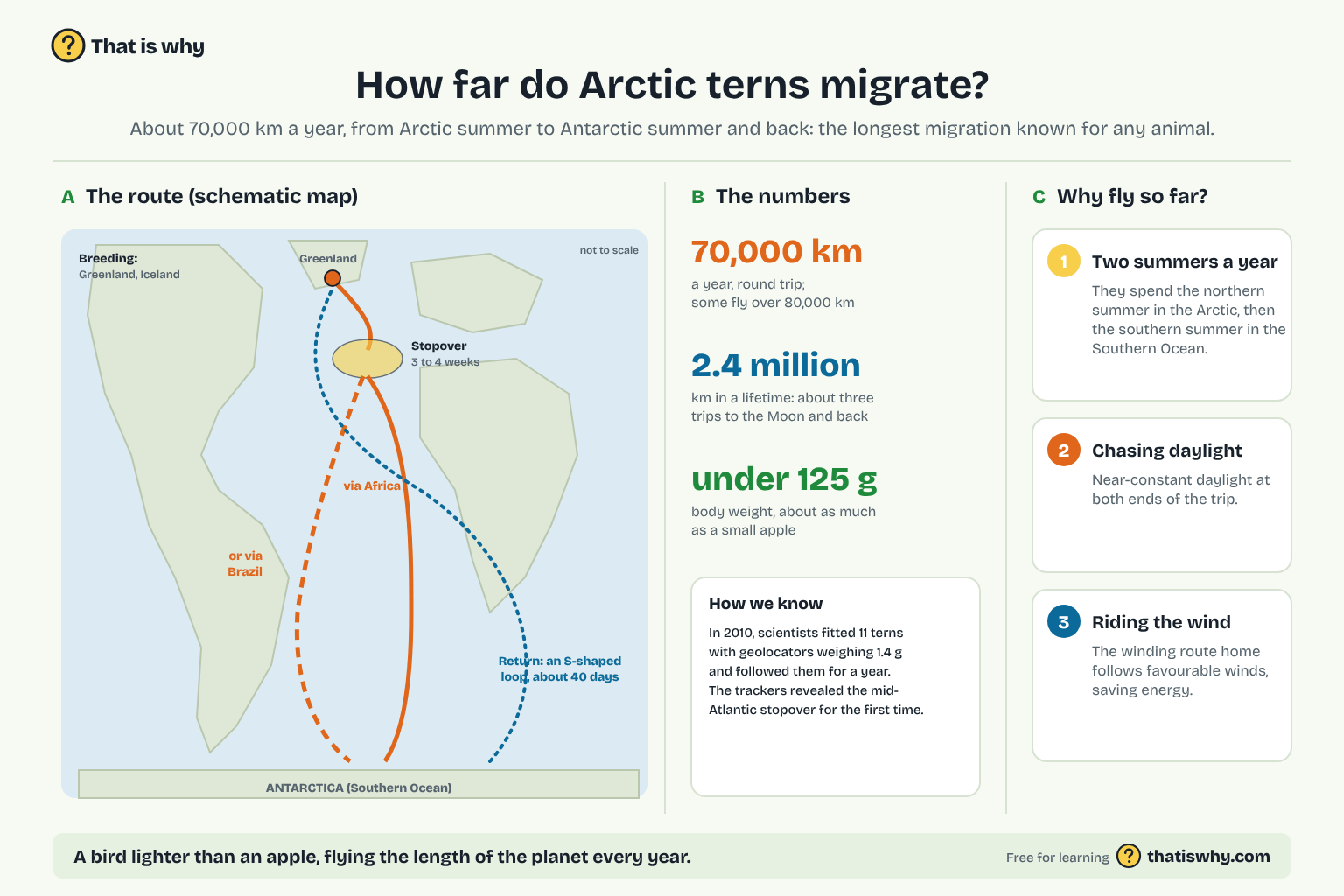
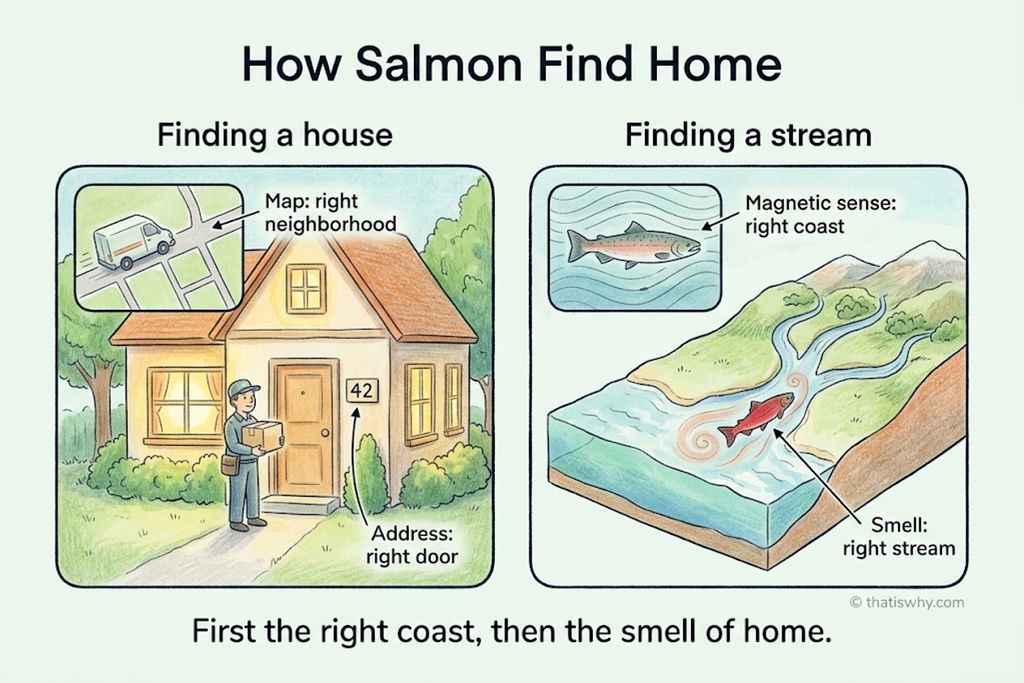
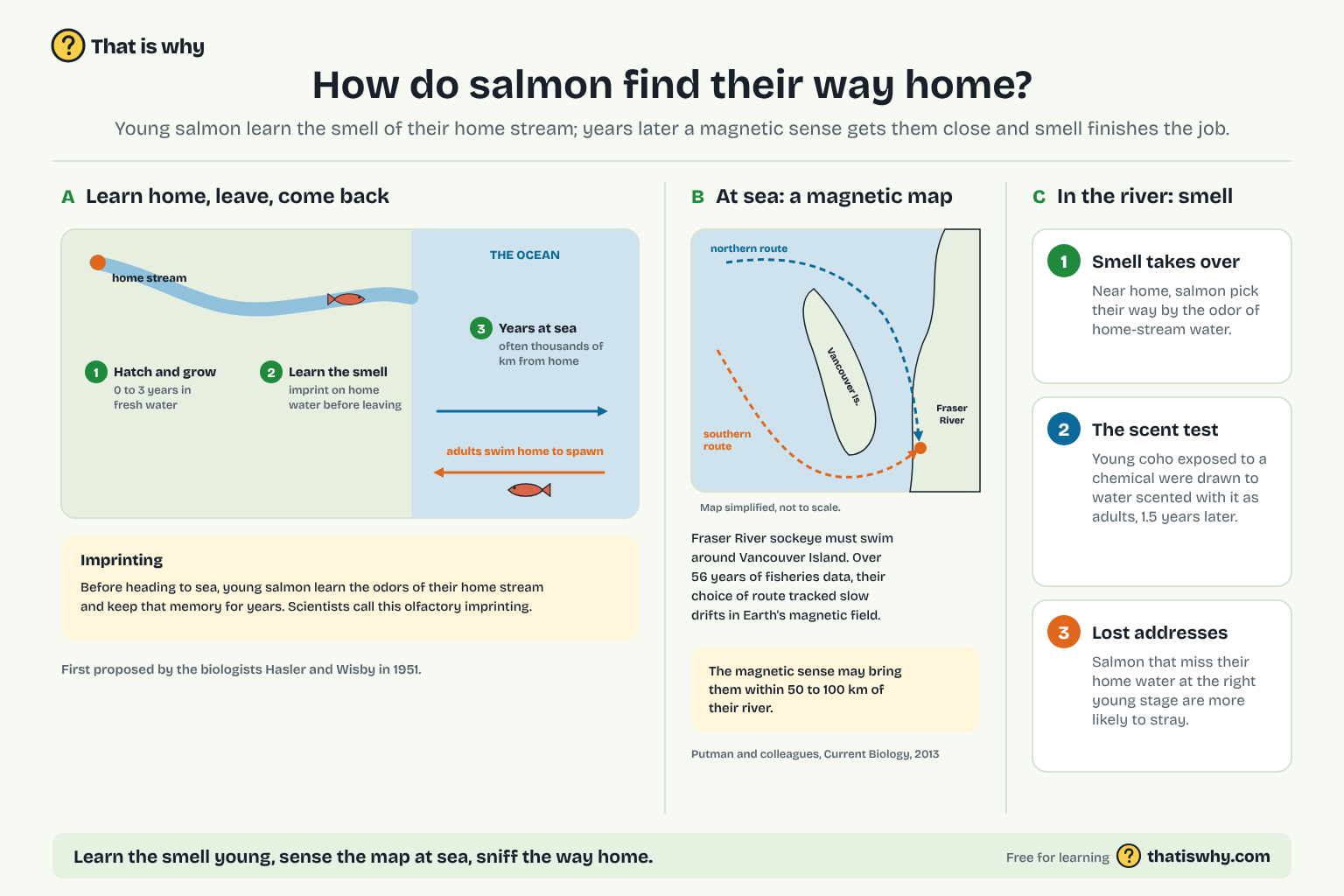
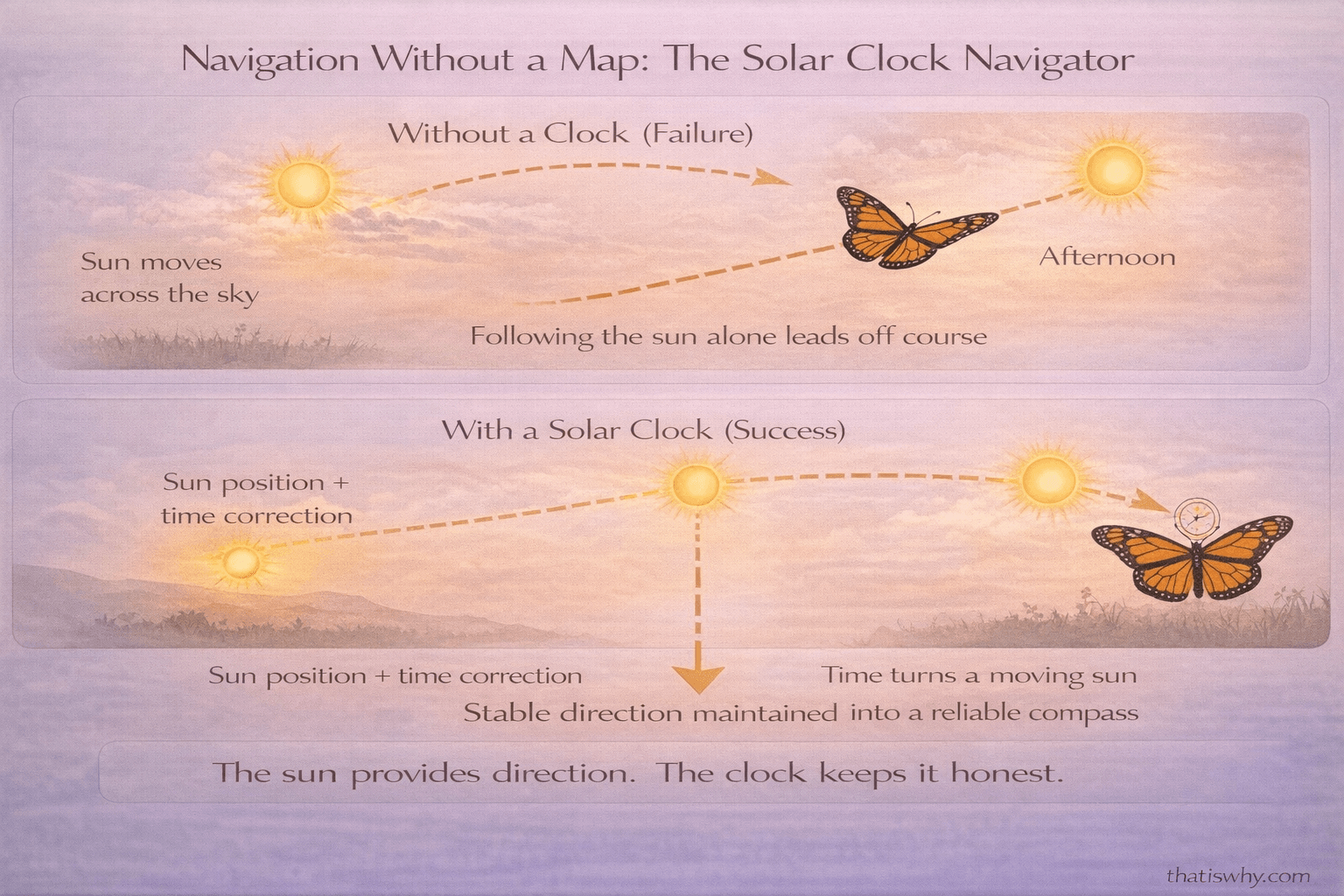
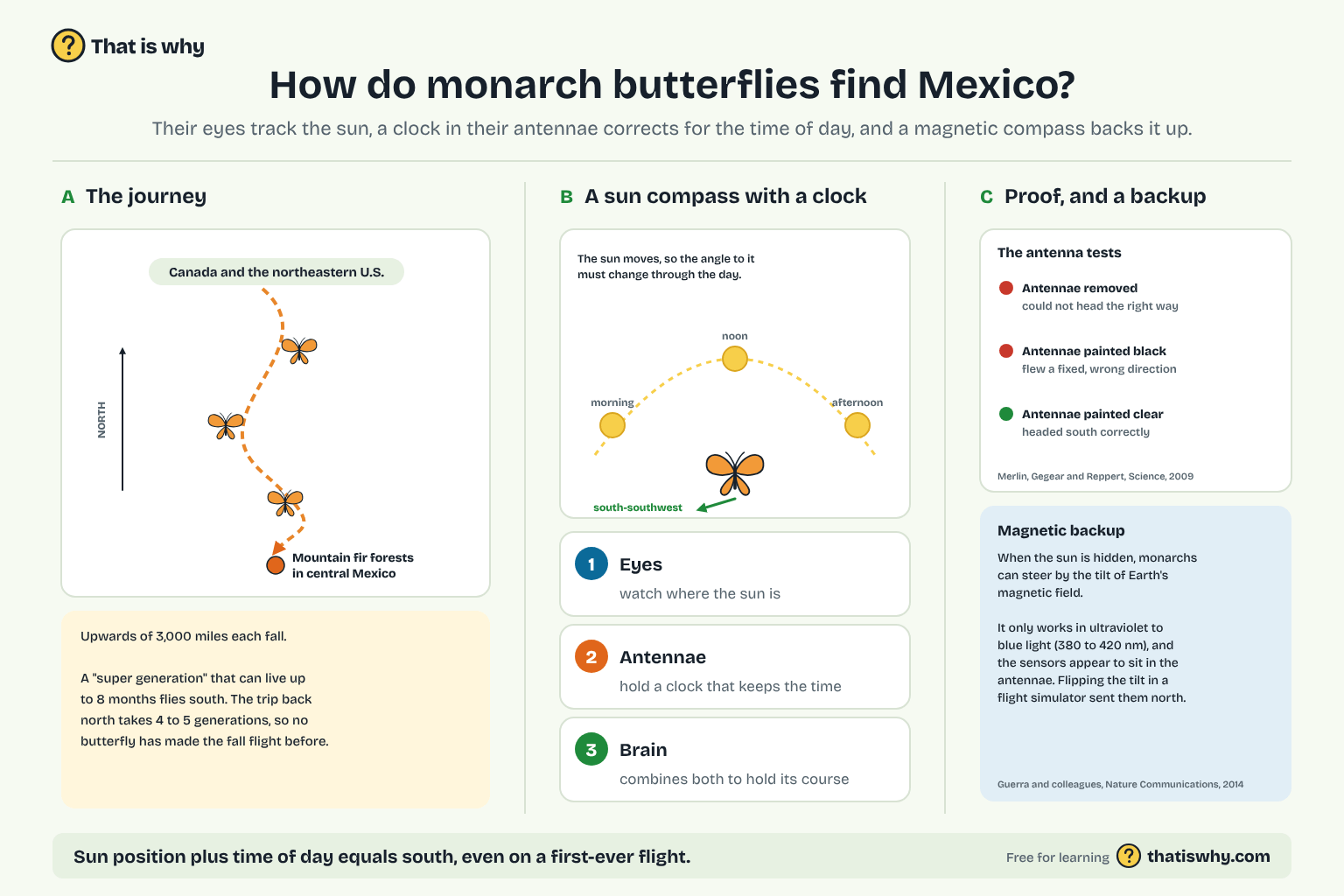
 Why does the volcano snail wear iron armor?
 Why are flamingos pink?
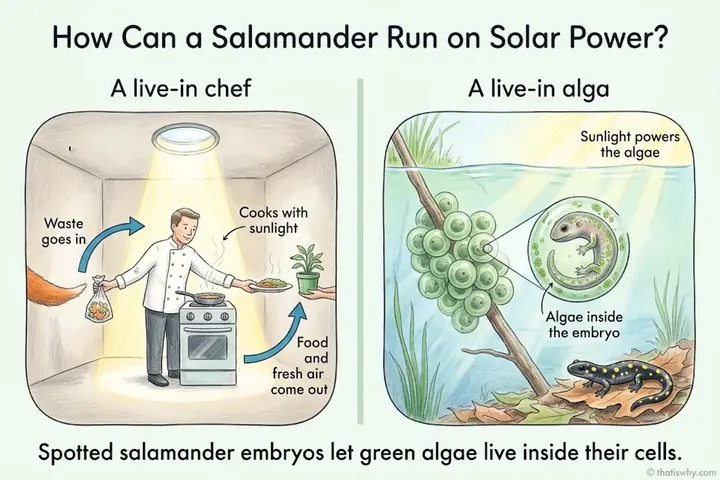 How can a salamander run on solar power?
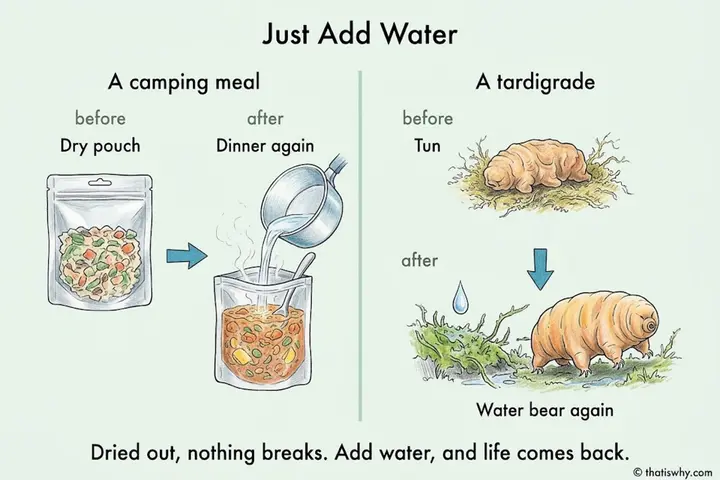 How do tardigrades survive extreme conditions?
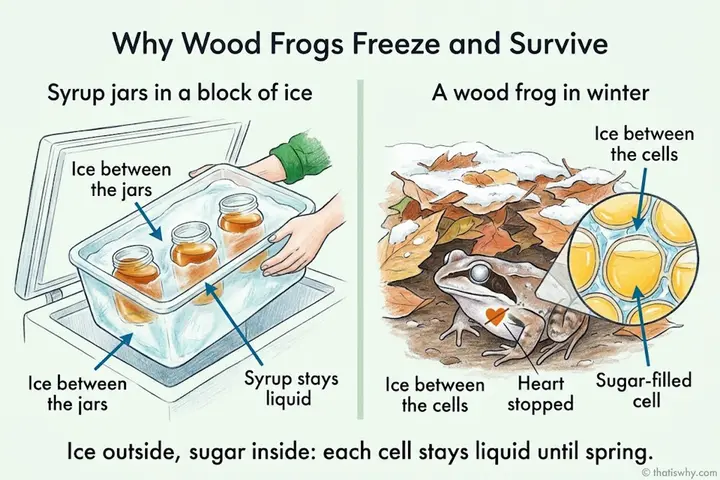 How do wood frogs survive being frozen?
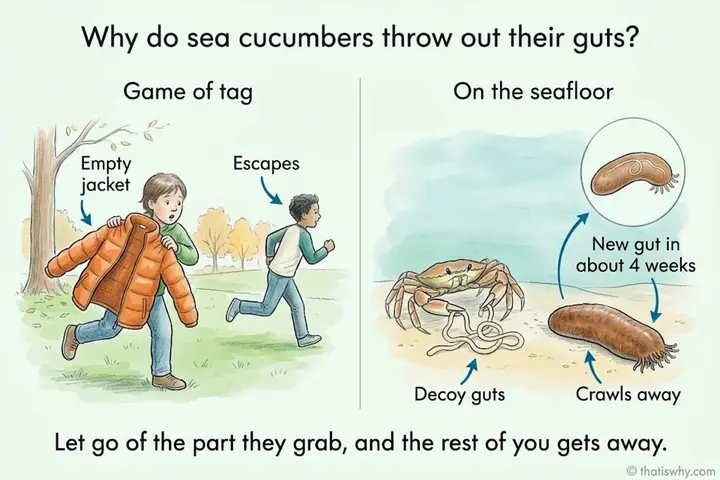 Why do sea cucumbers eject their organs?
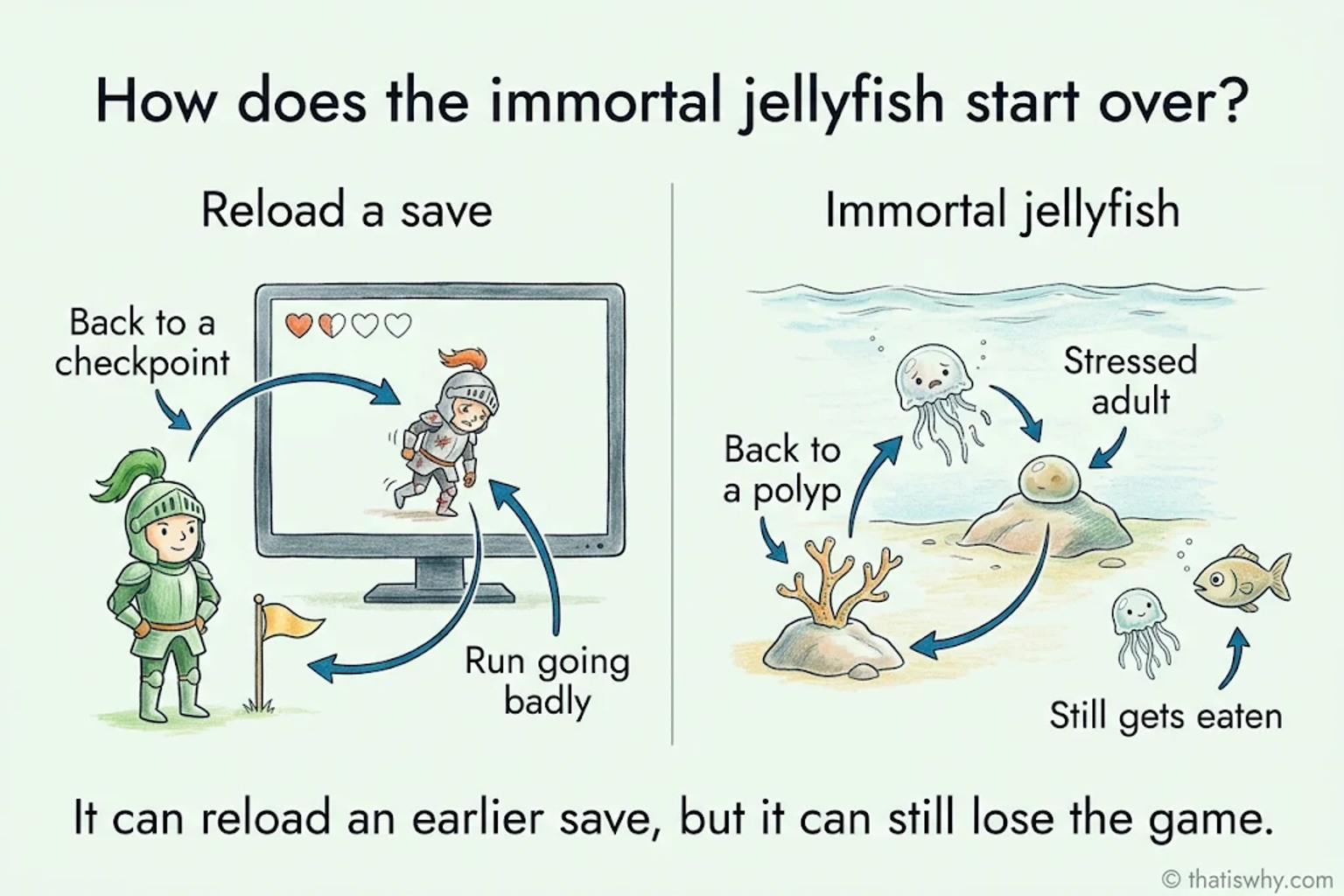
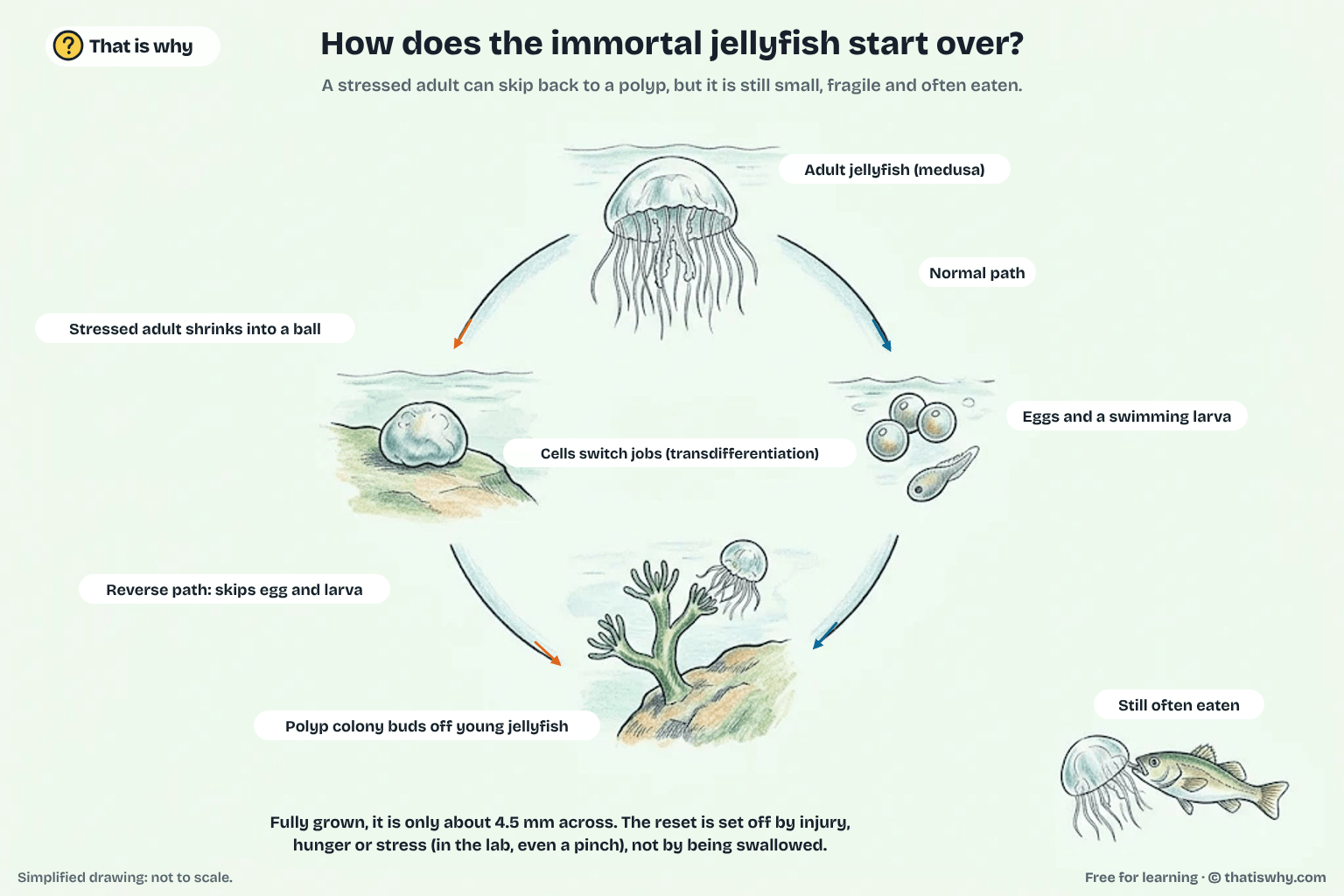
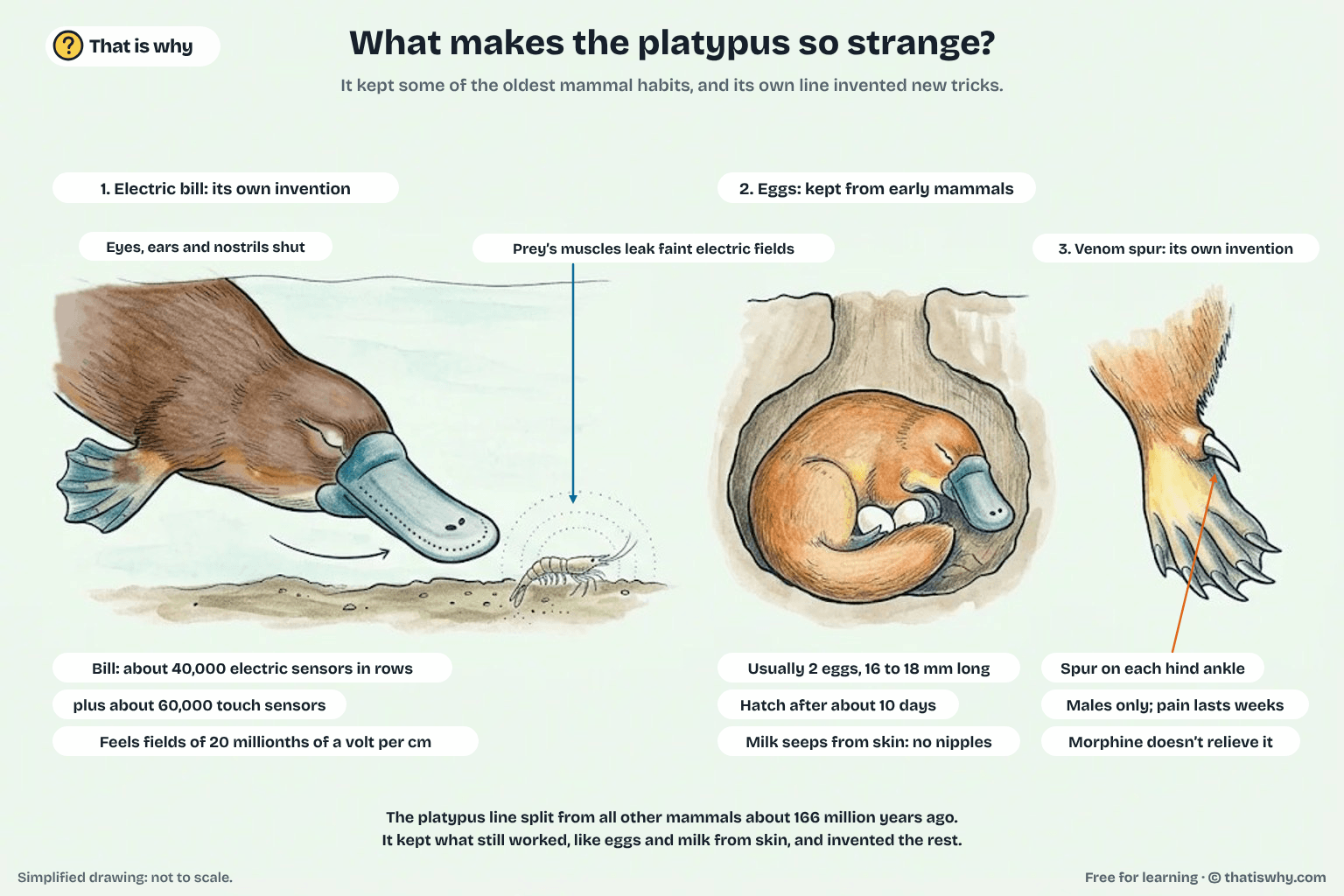
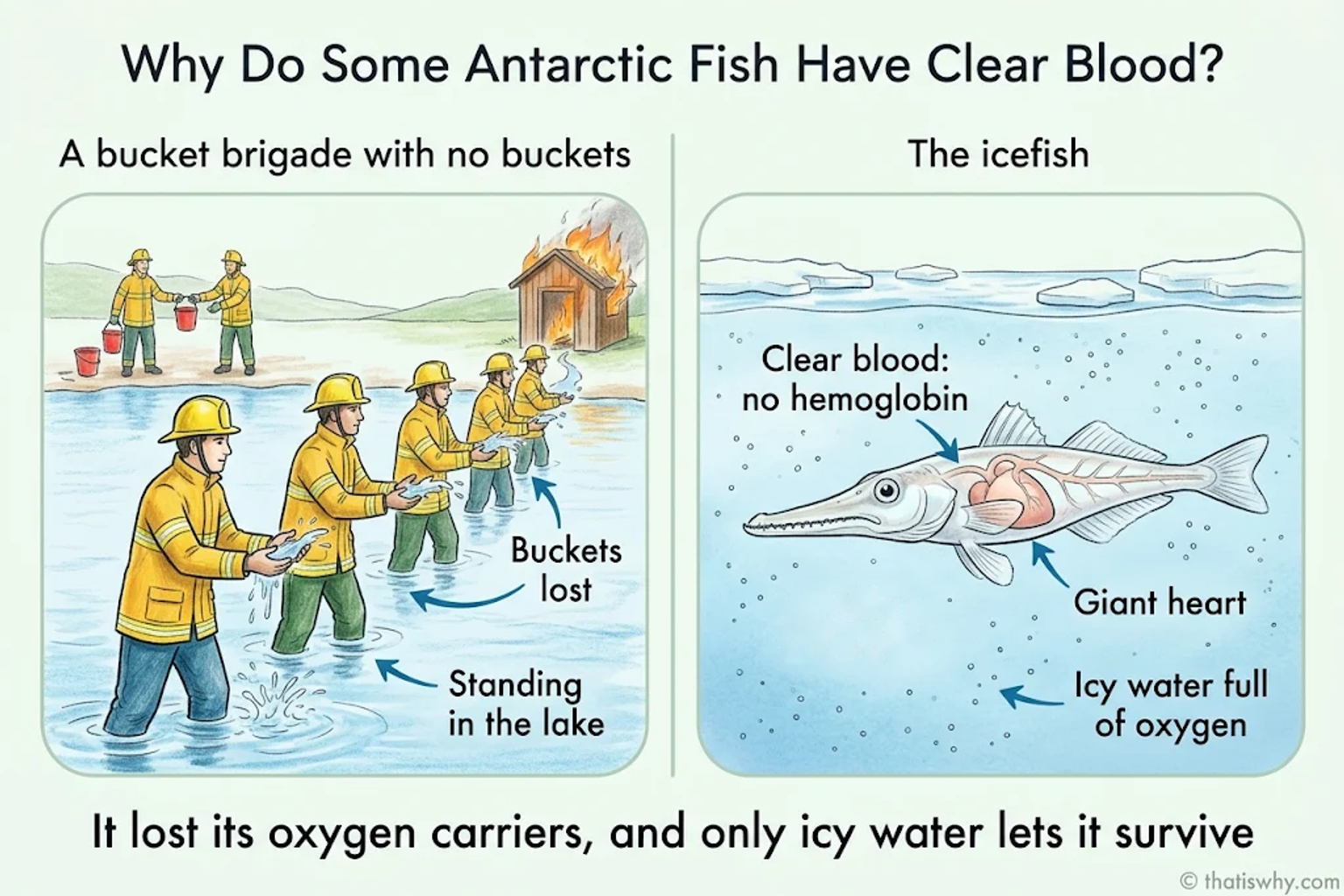
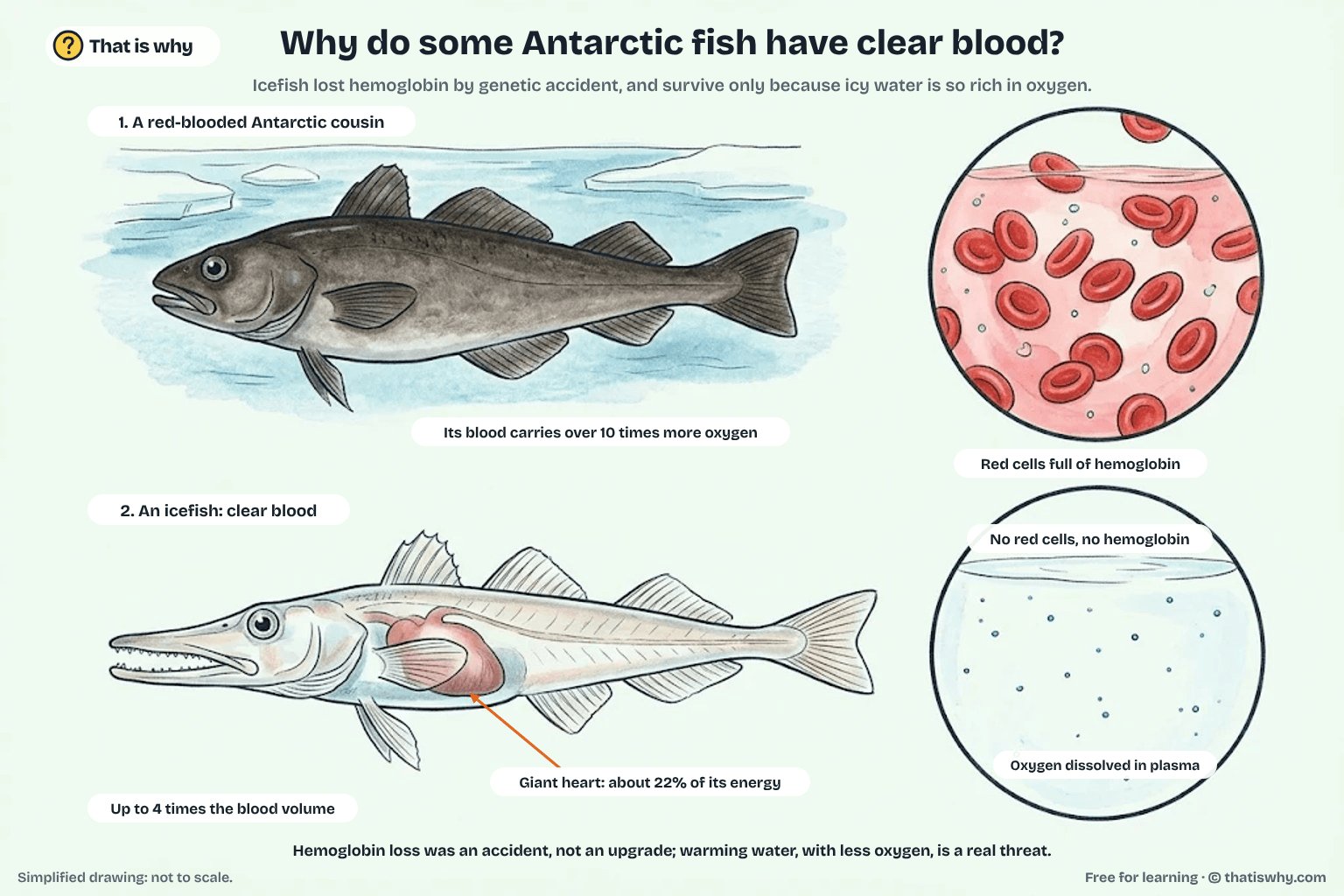
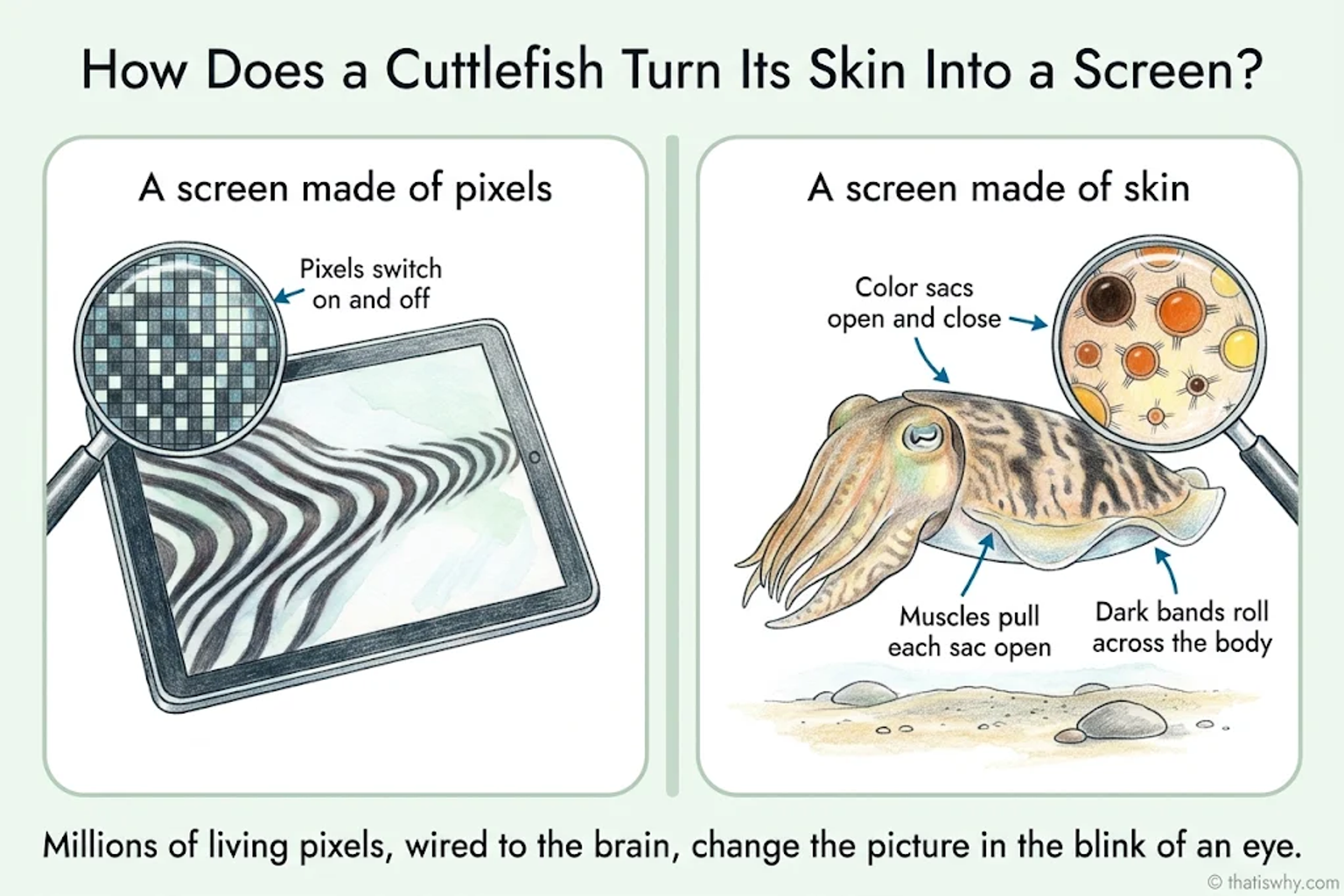
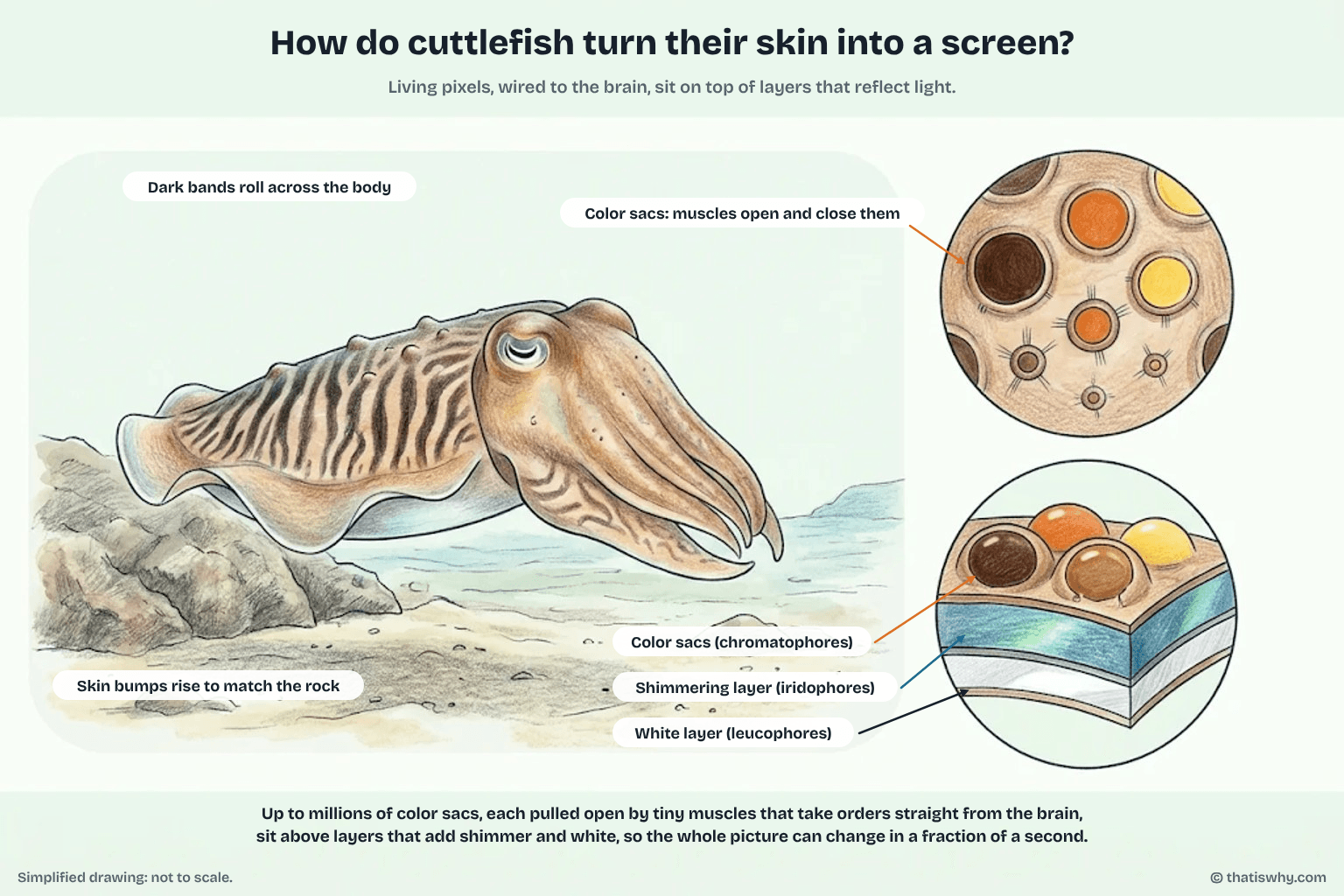
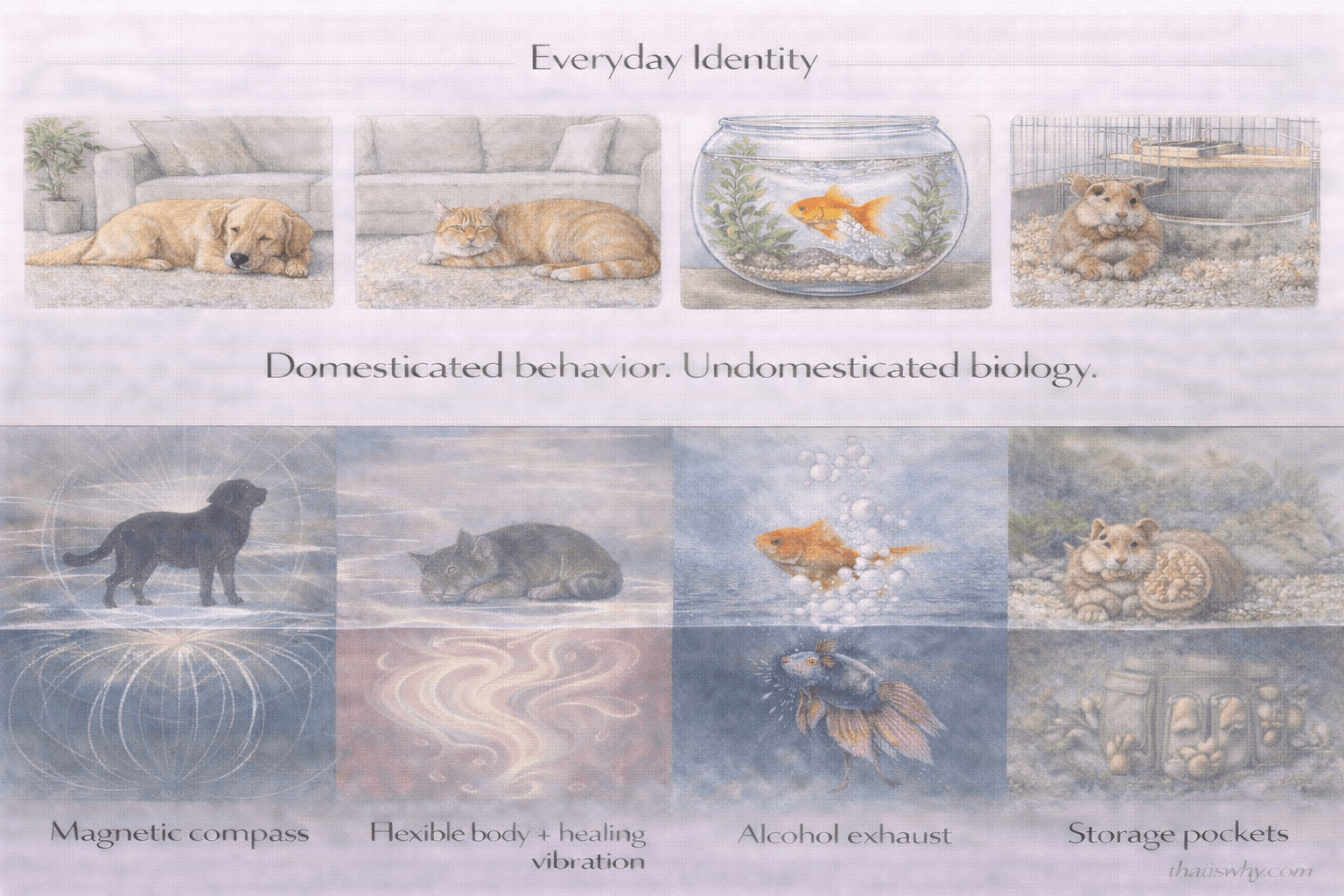
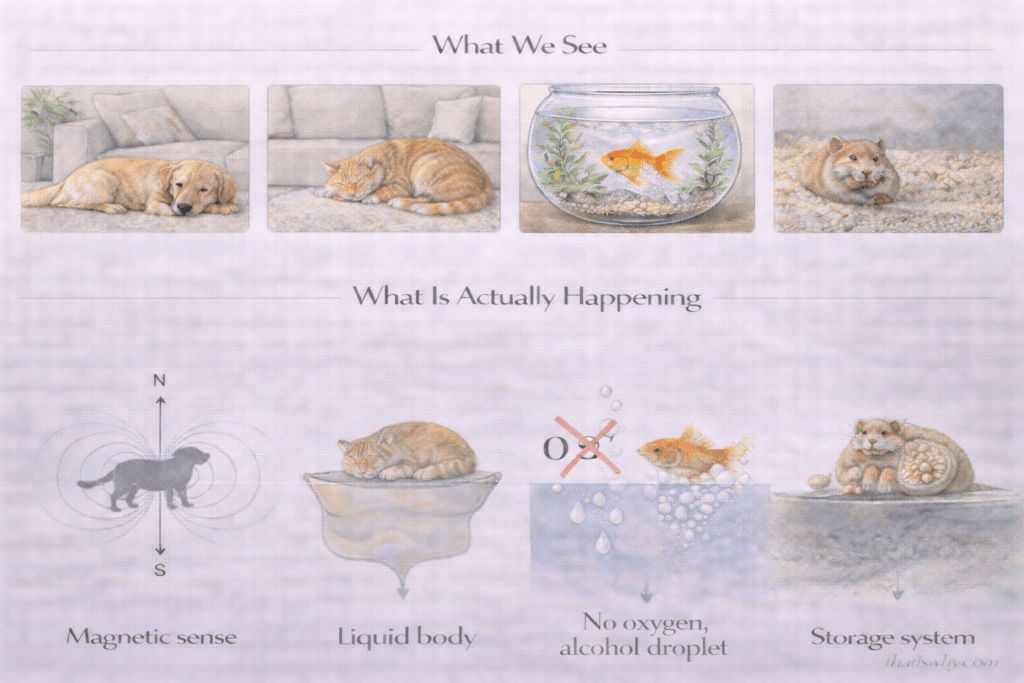
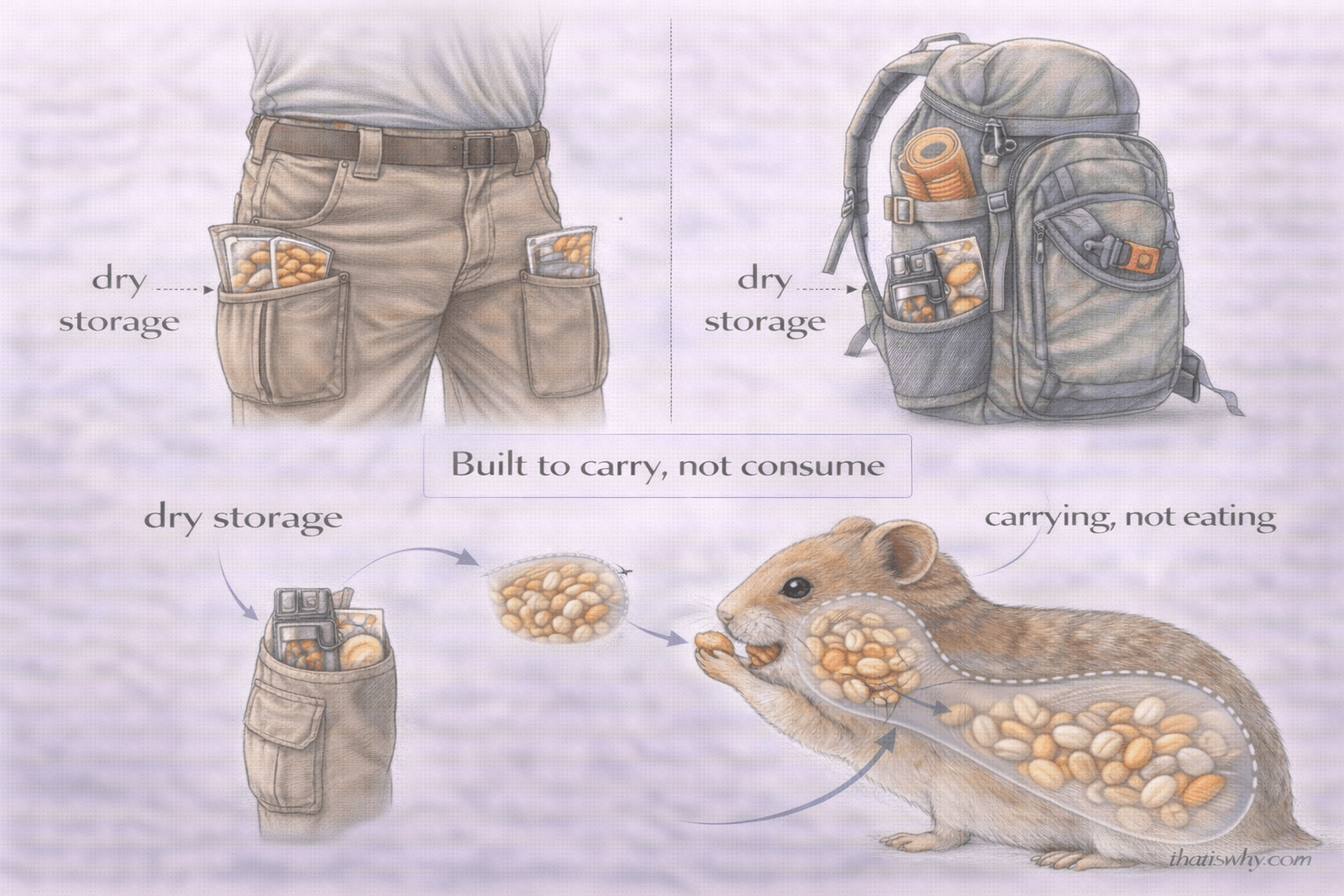
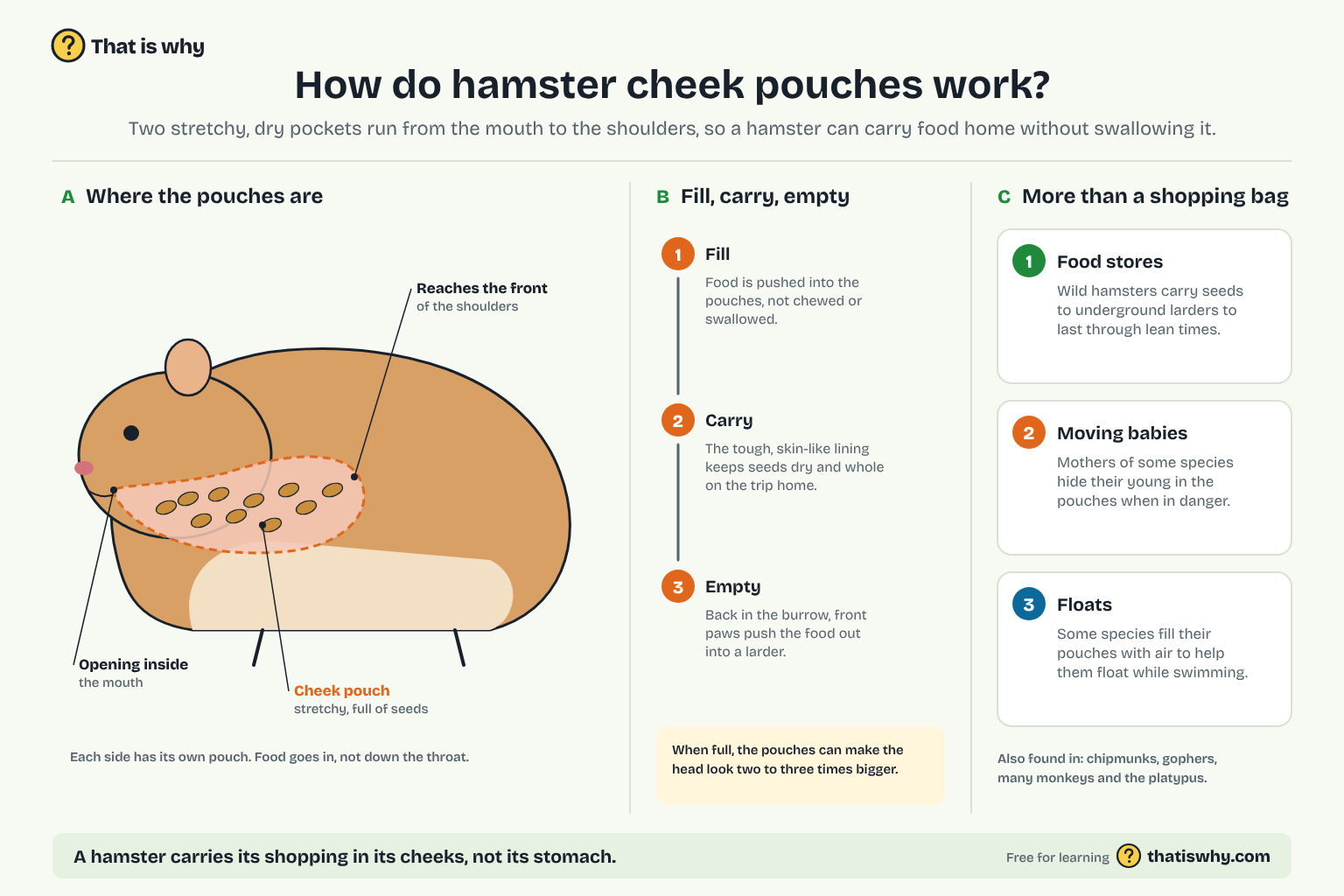
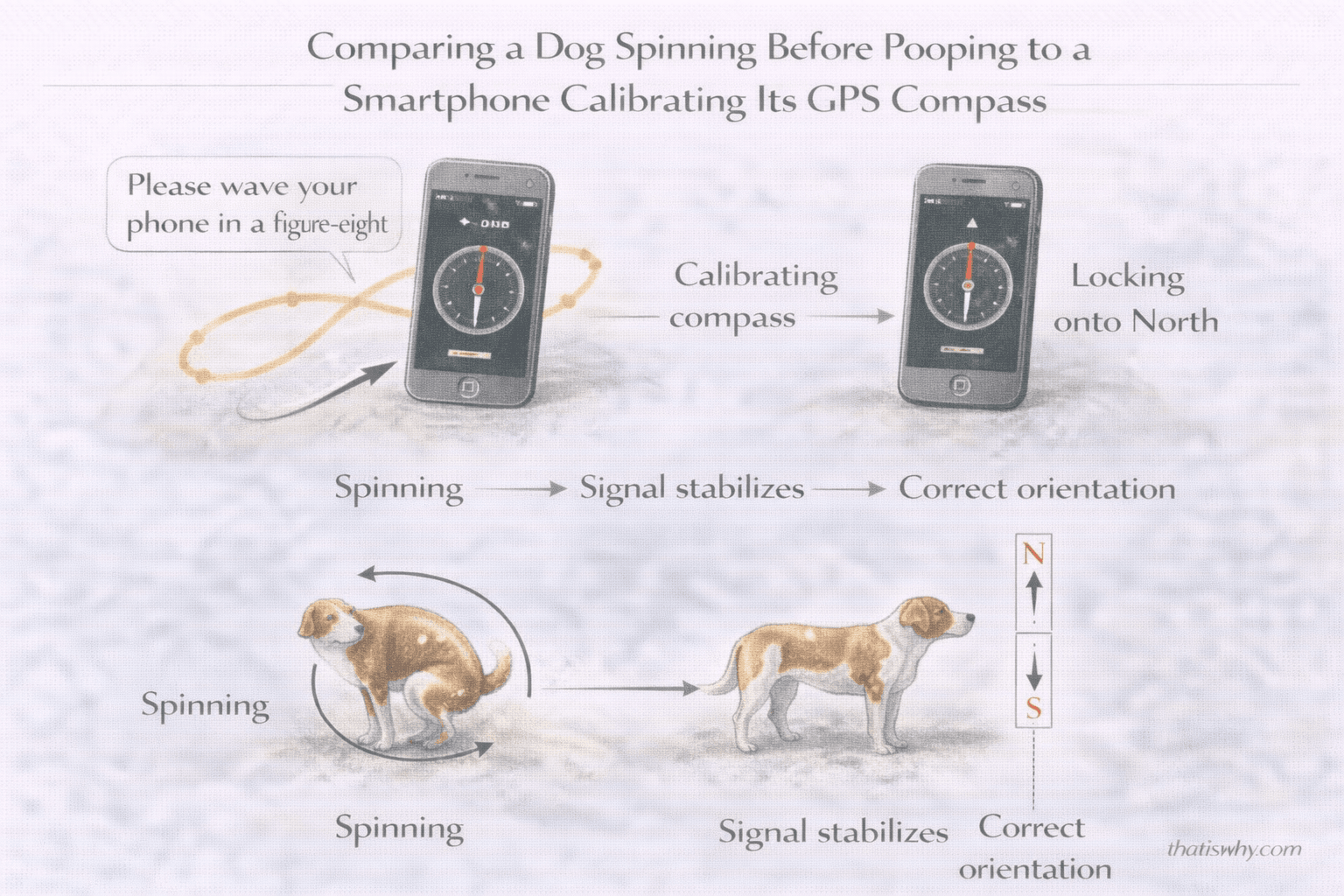
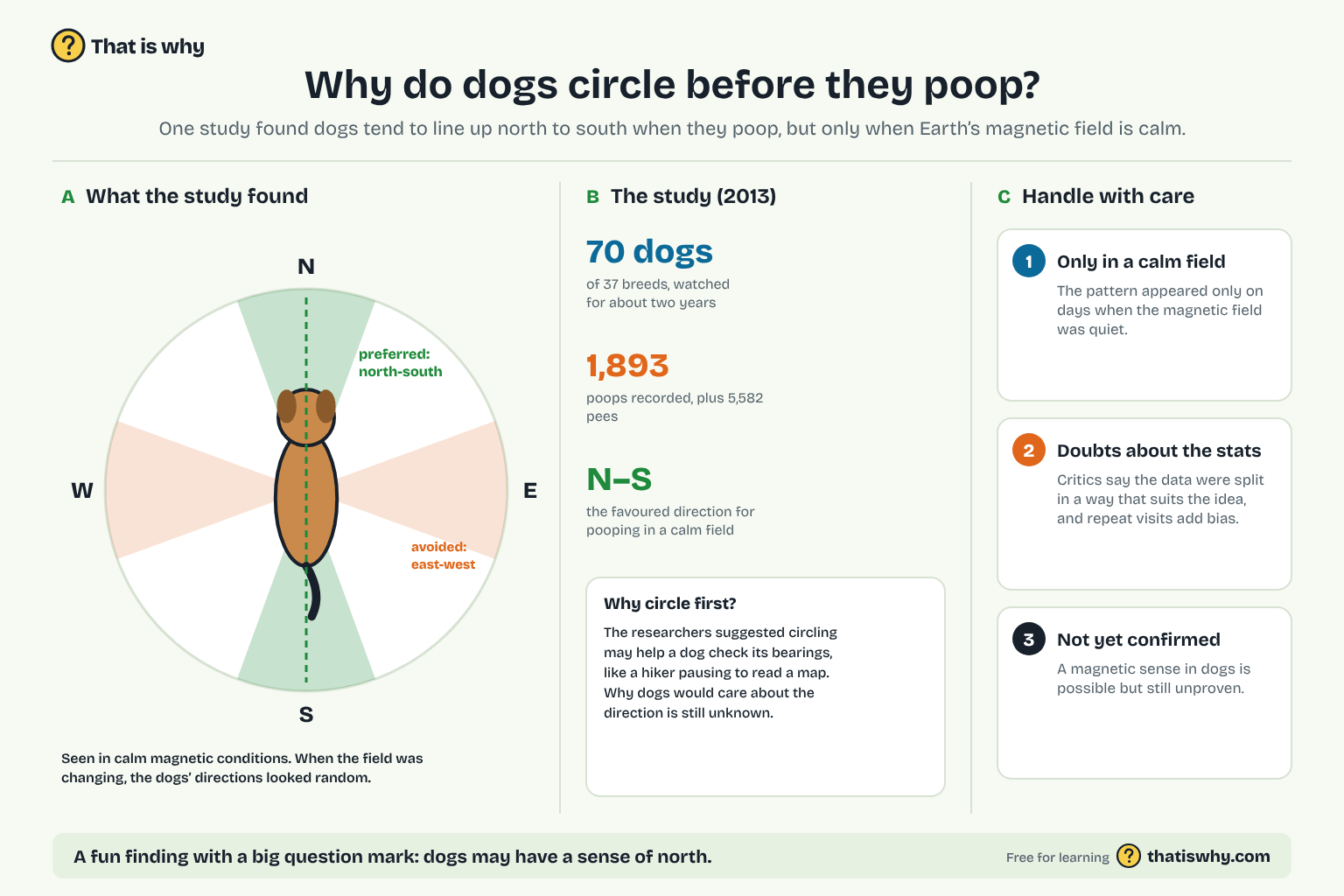
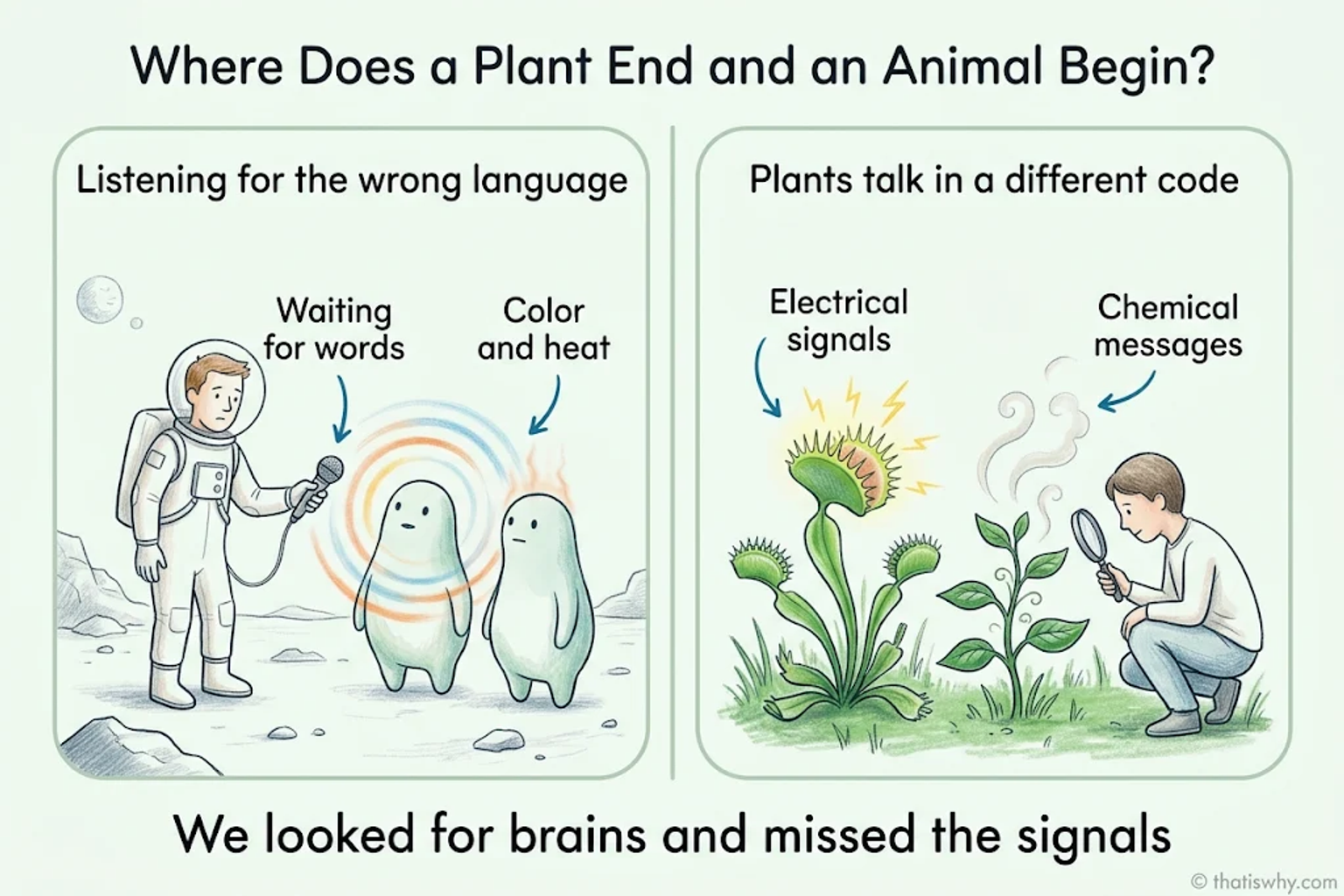
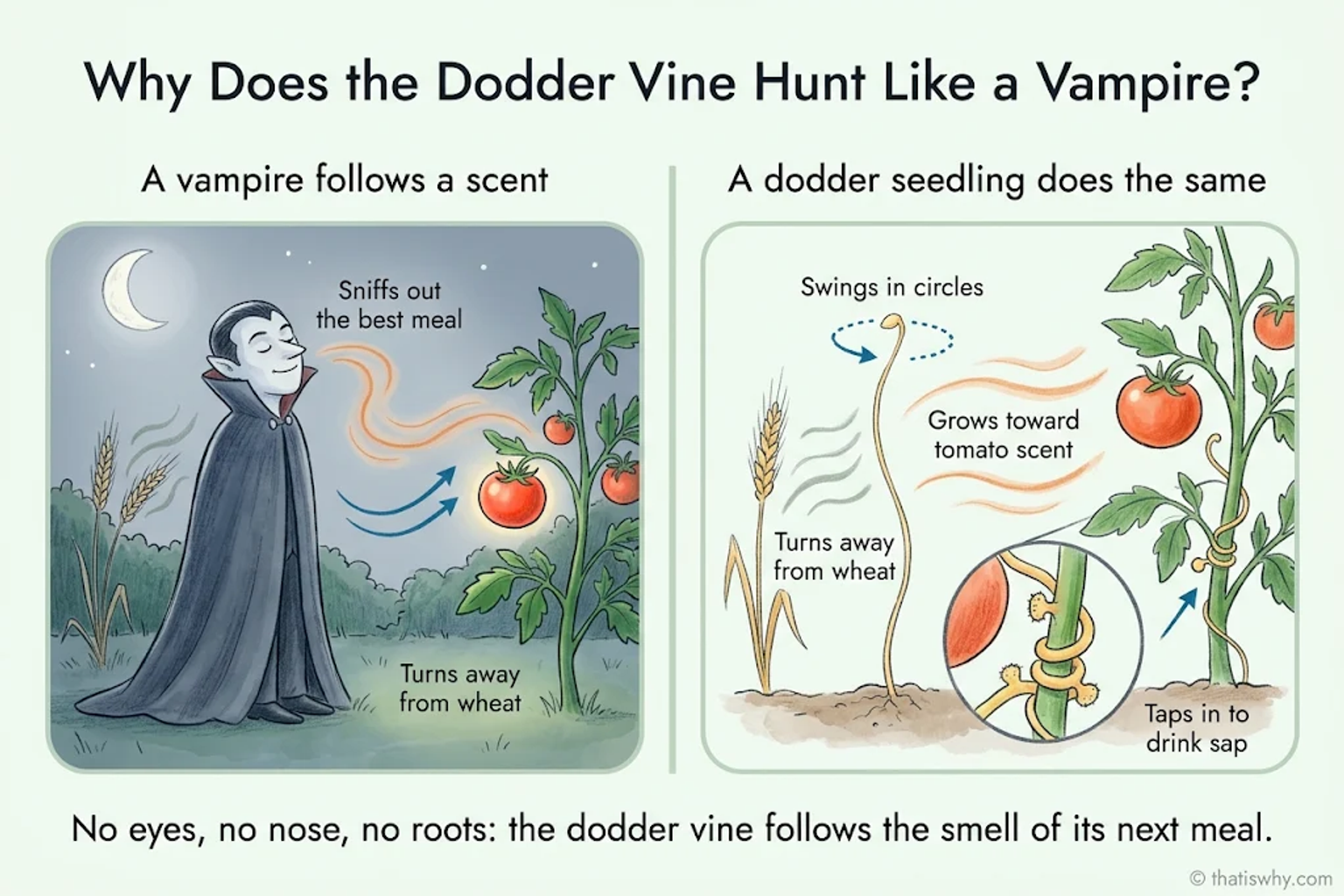
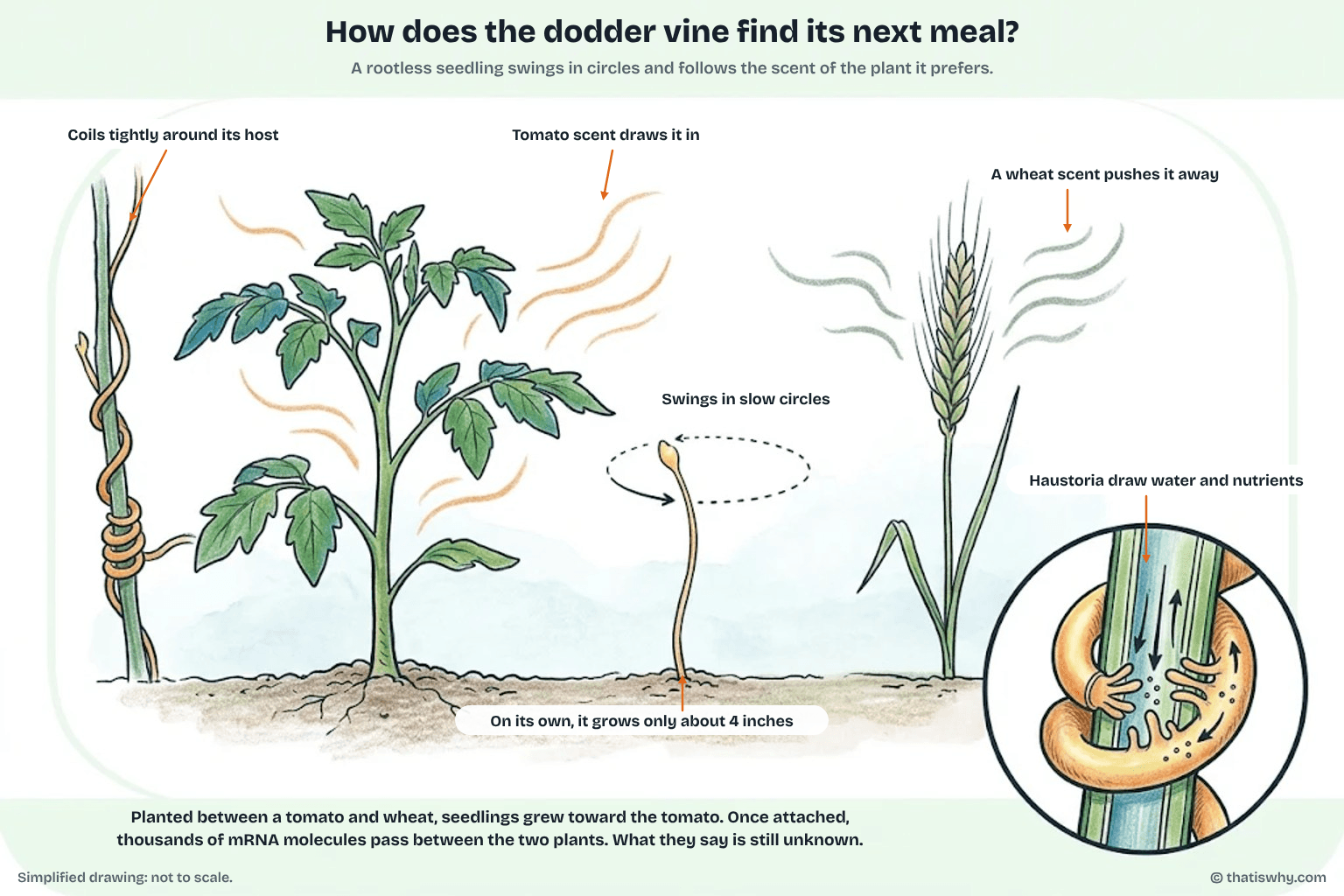
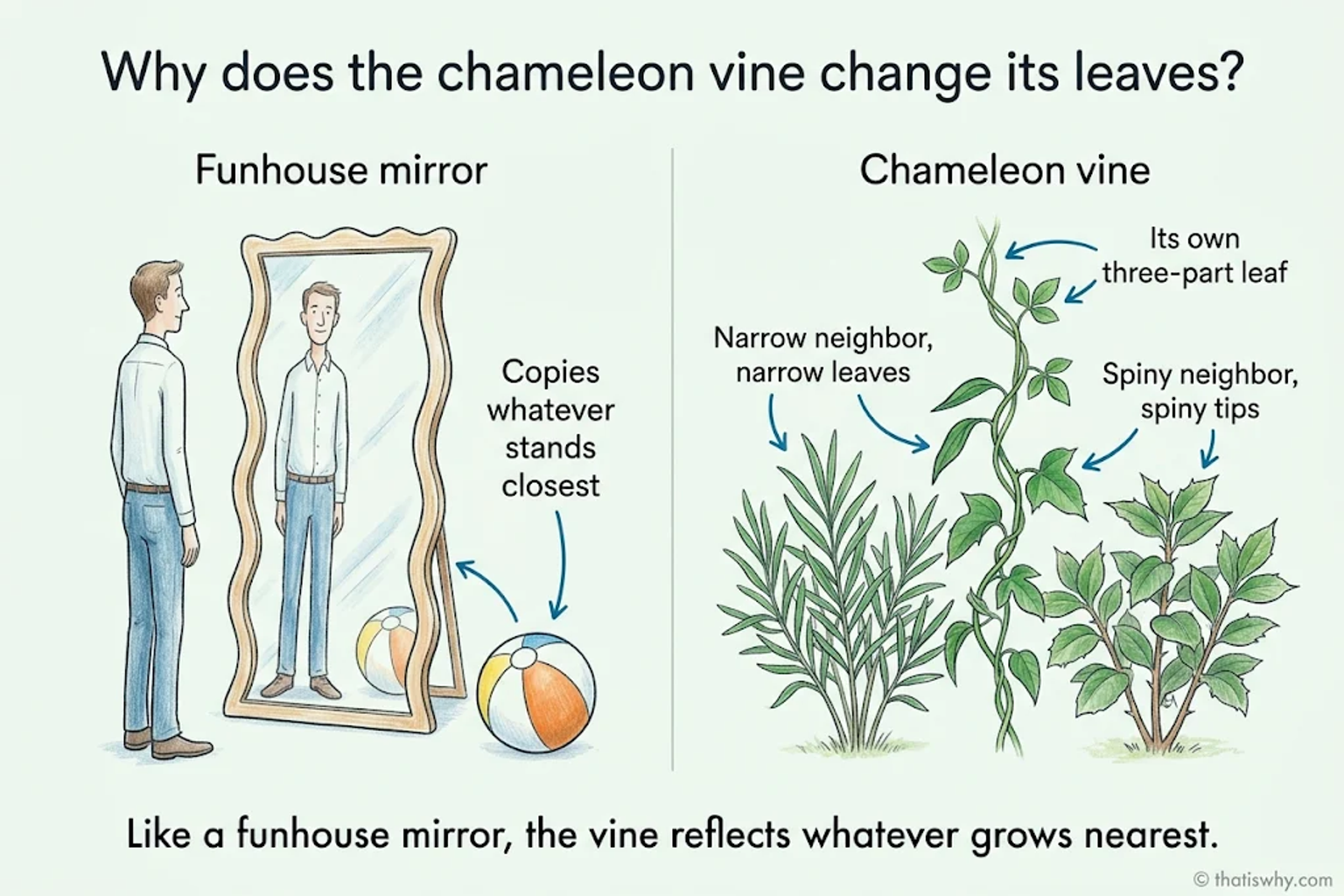
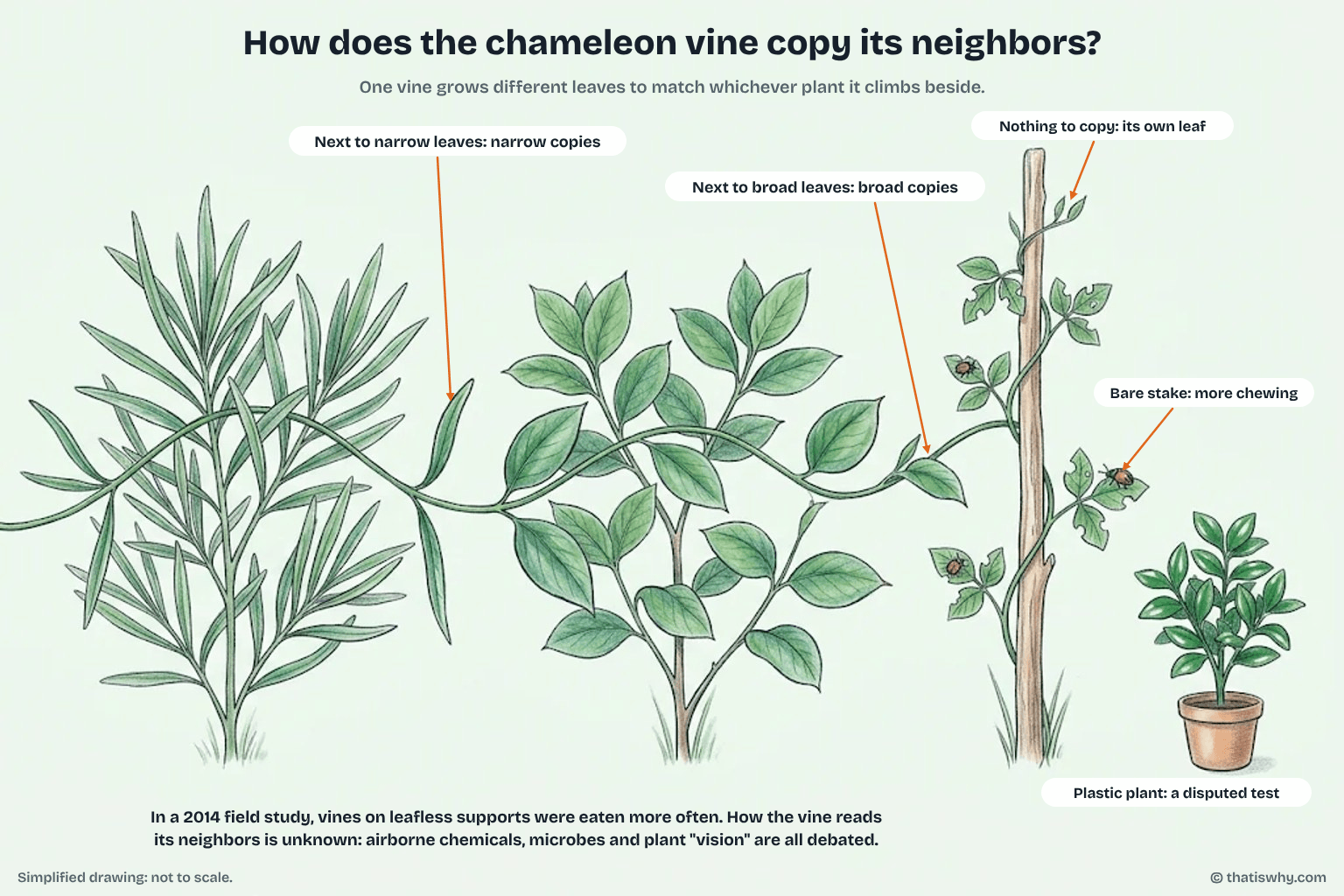
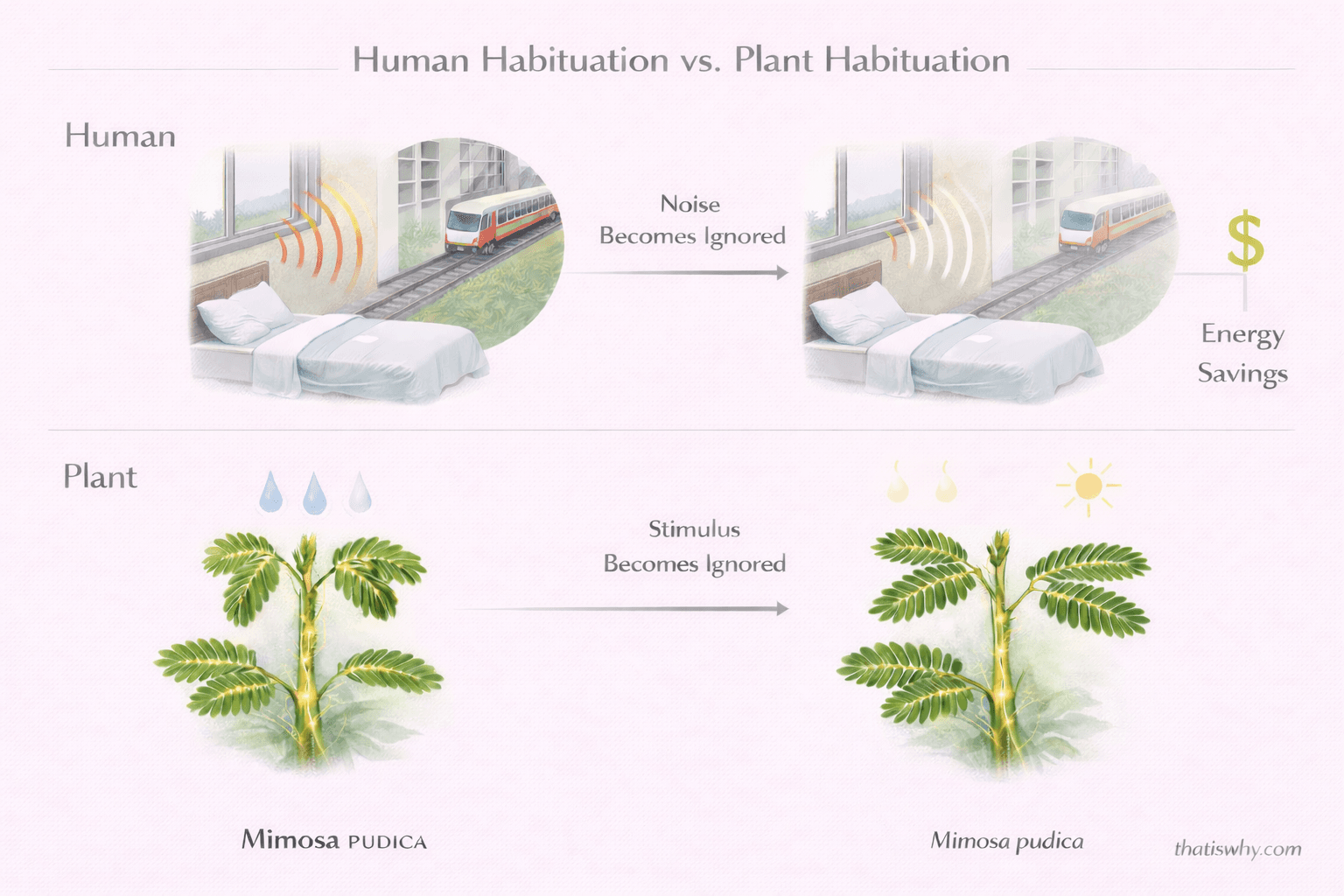
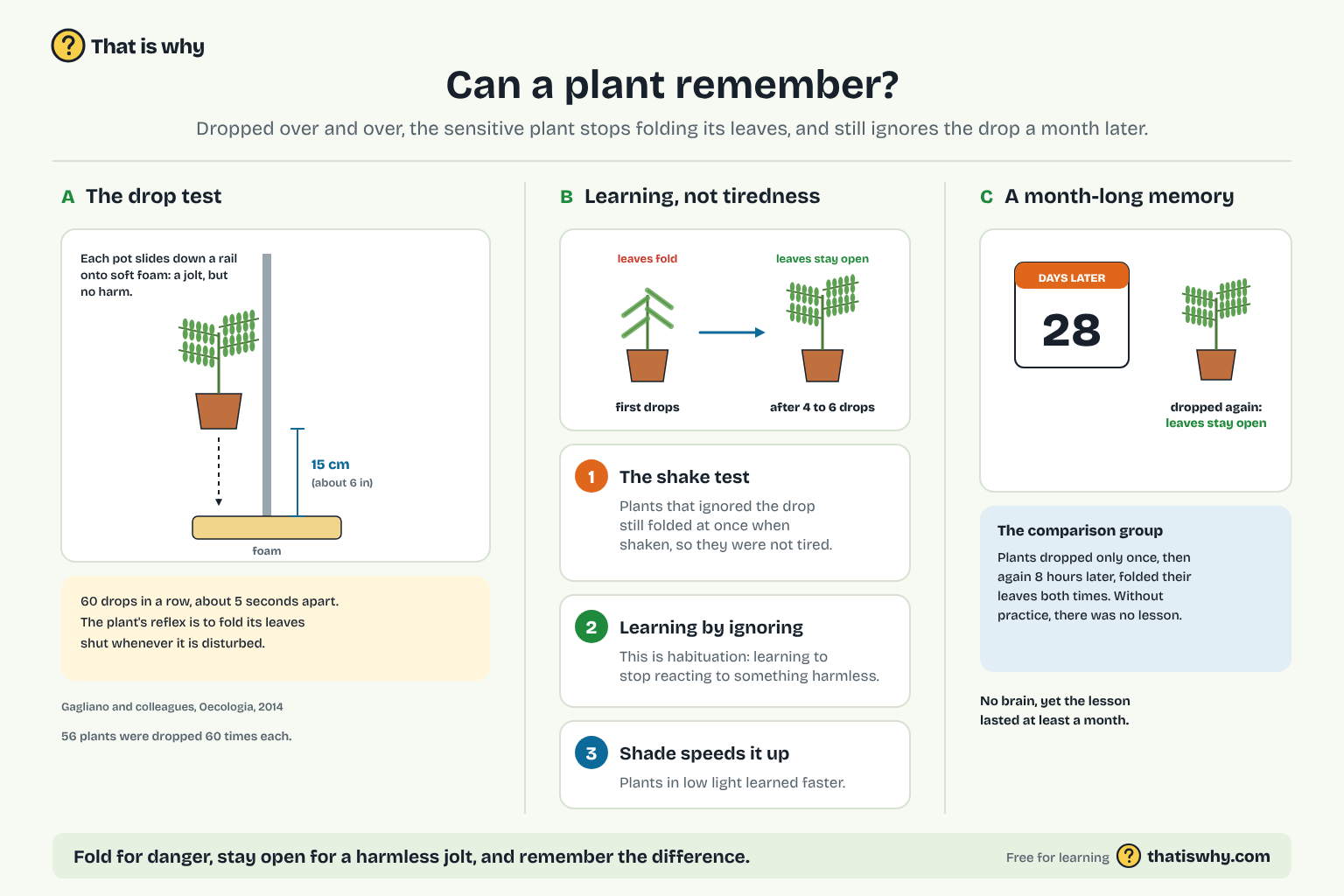
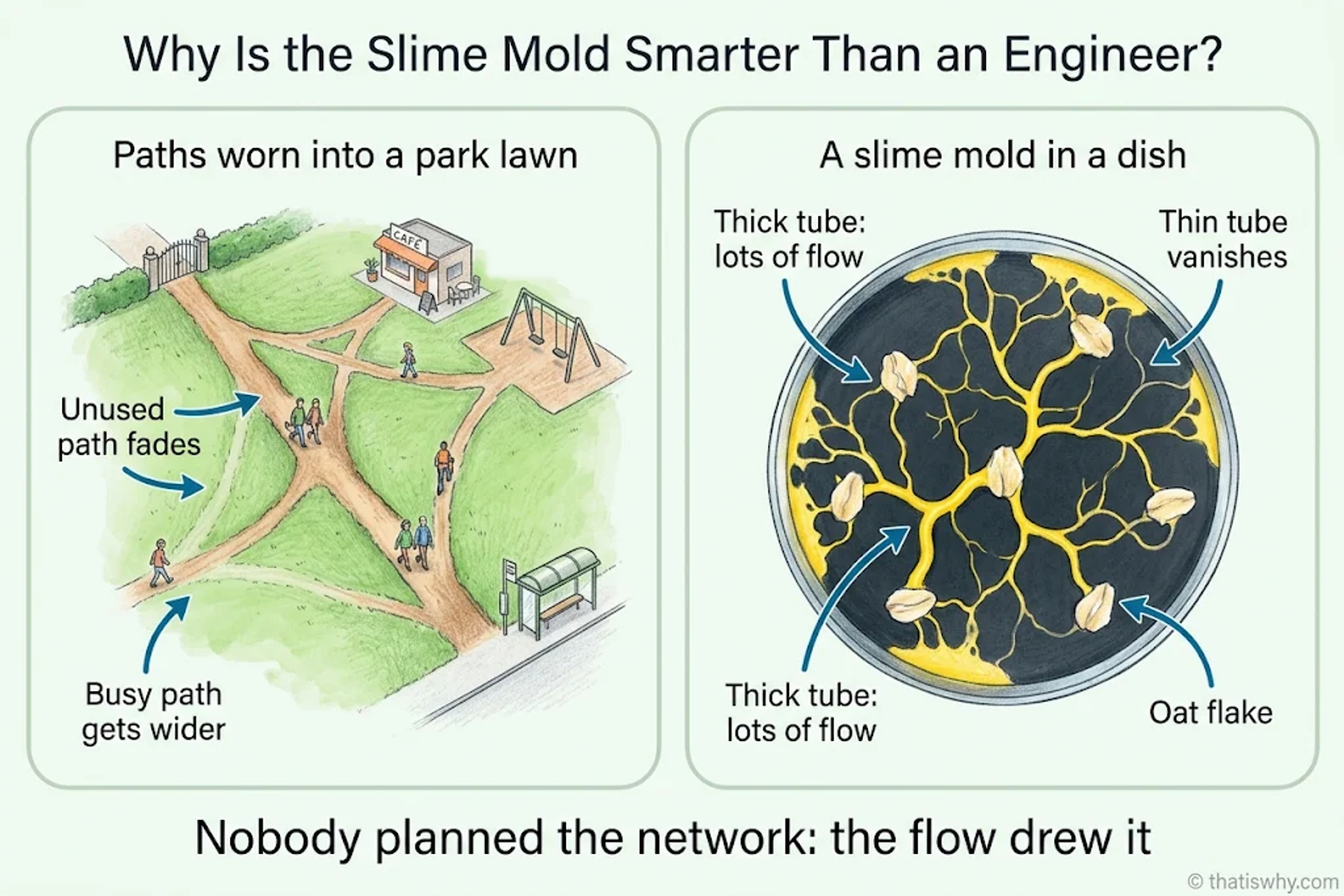
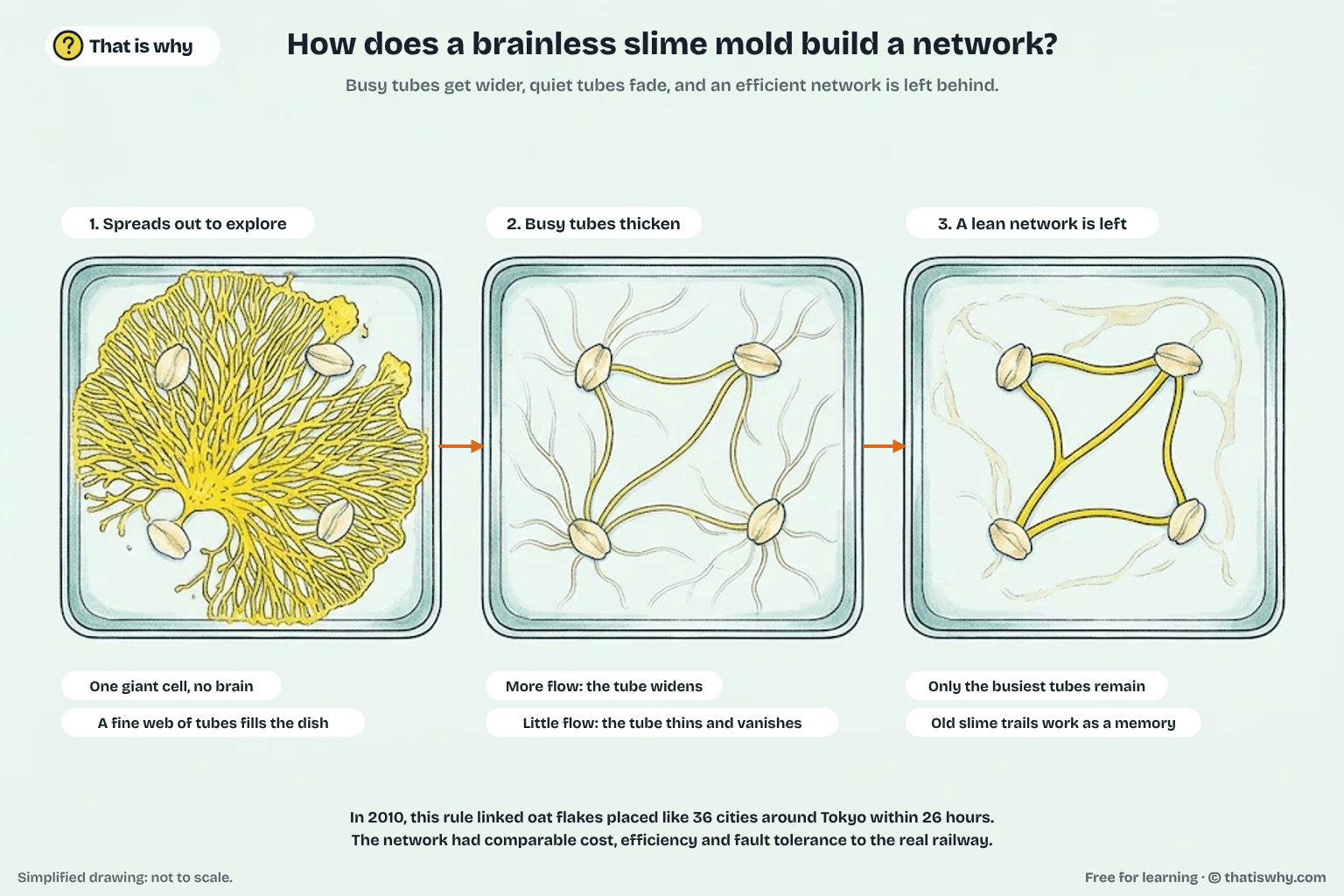
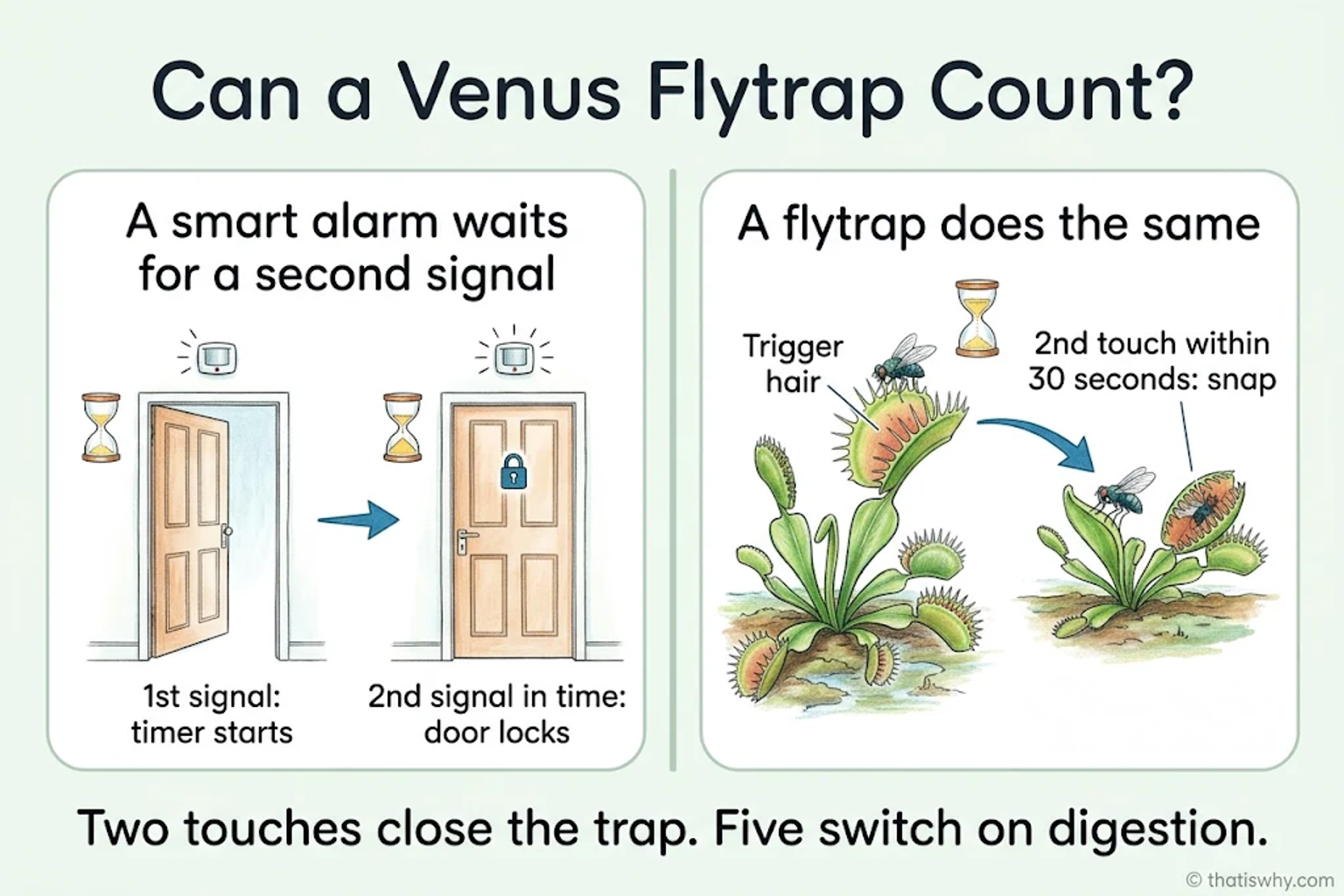
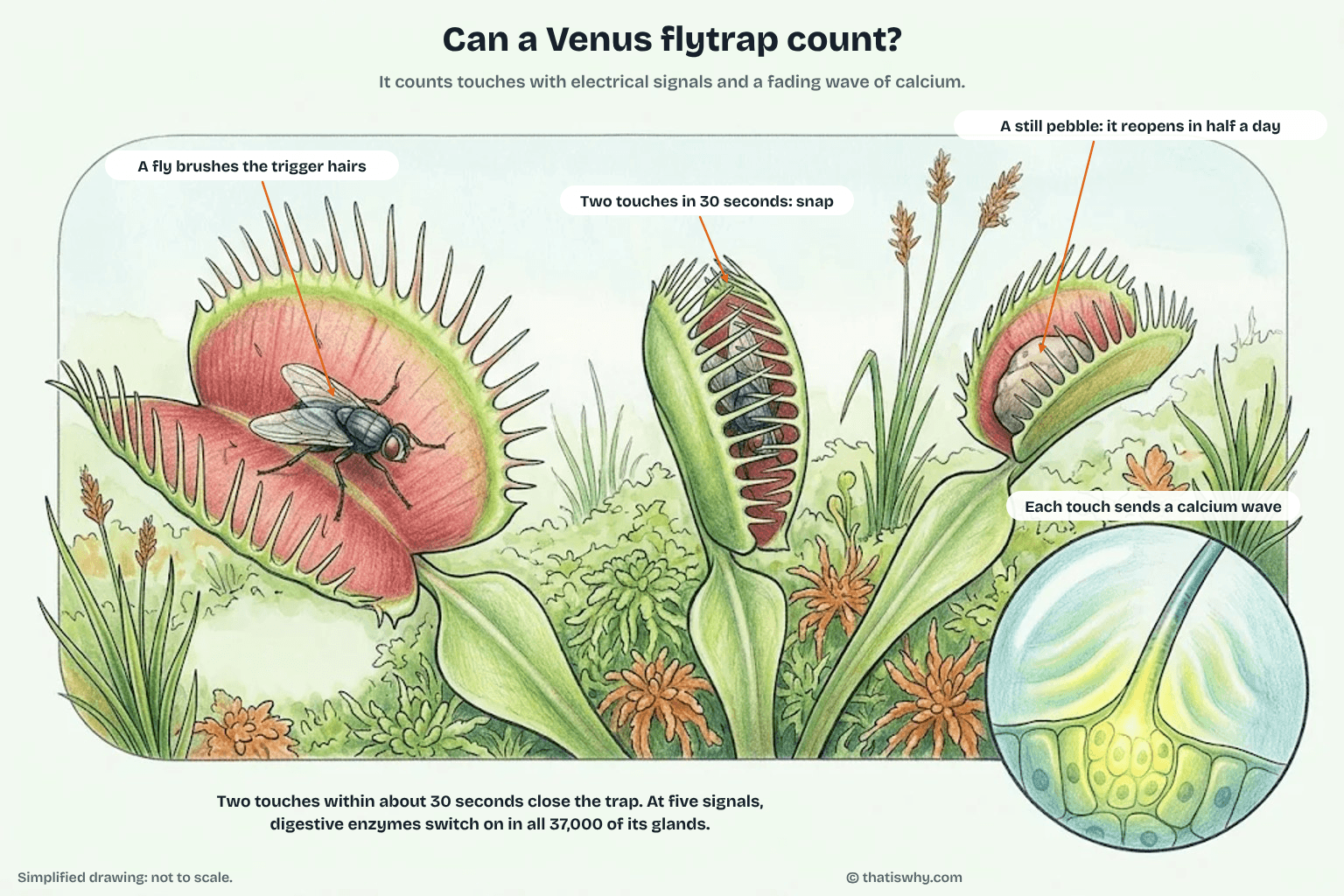
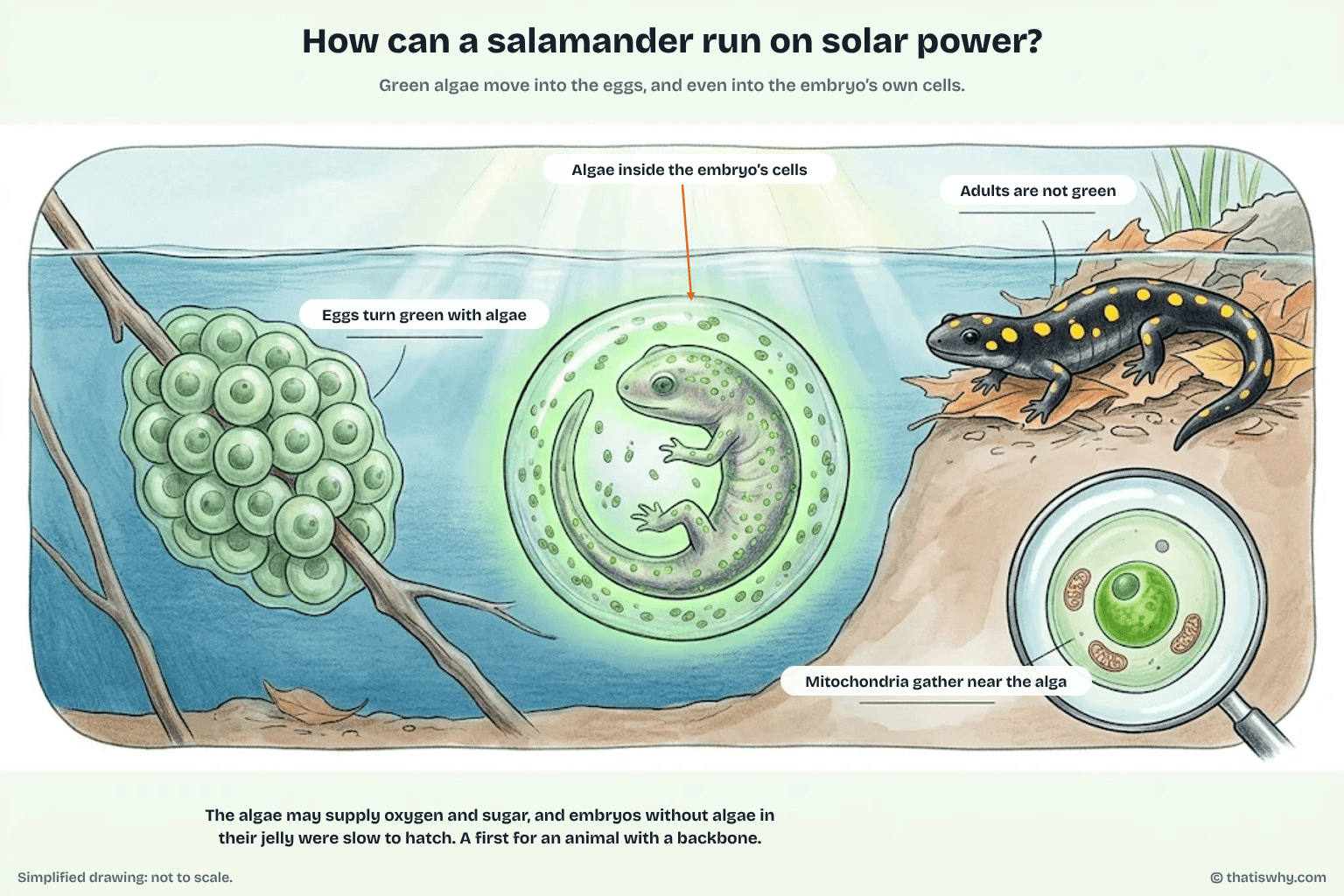
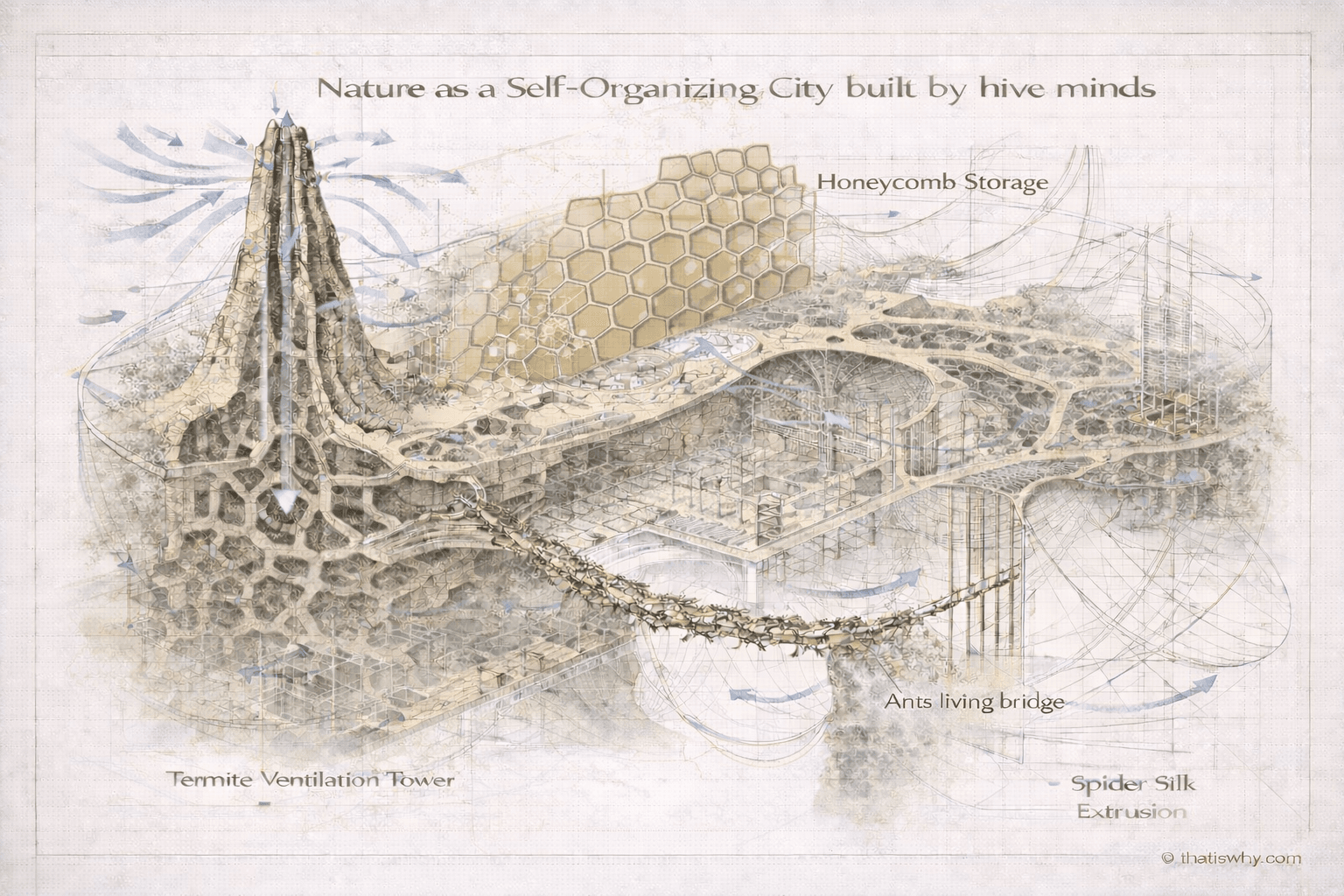
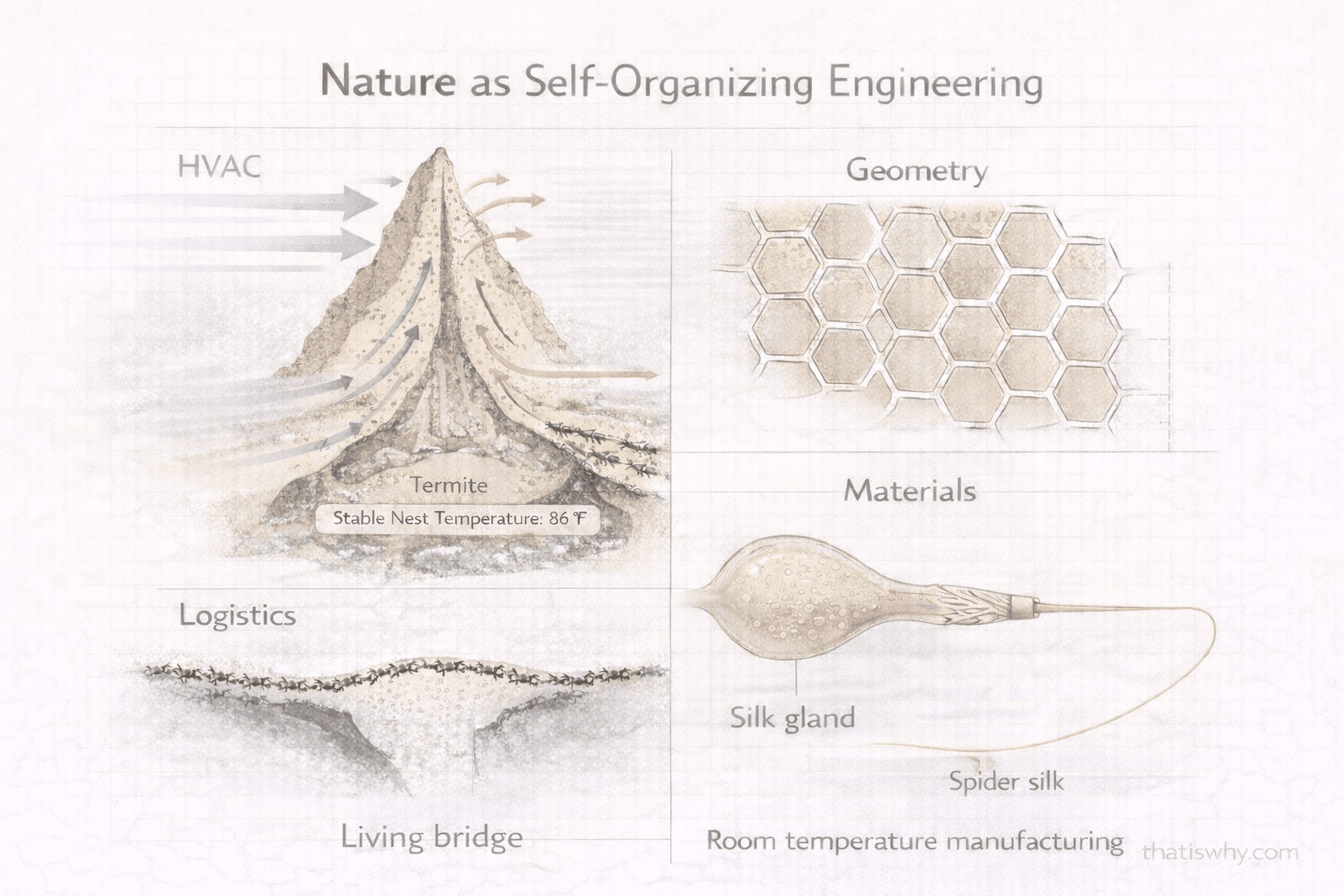
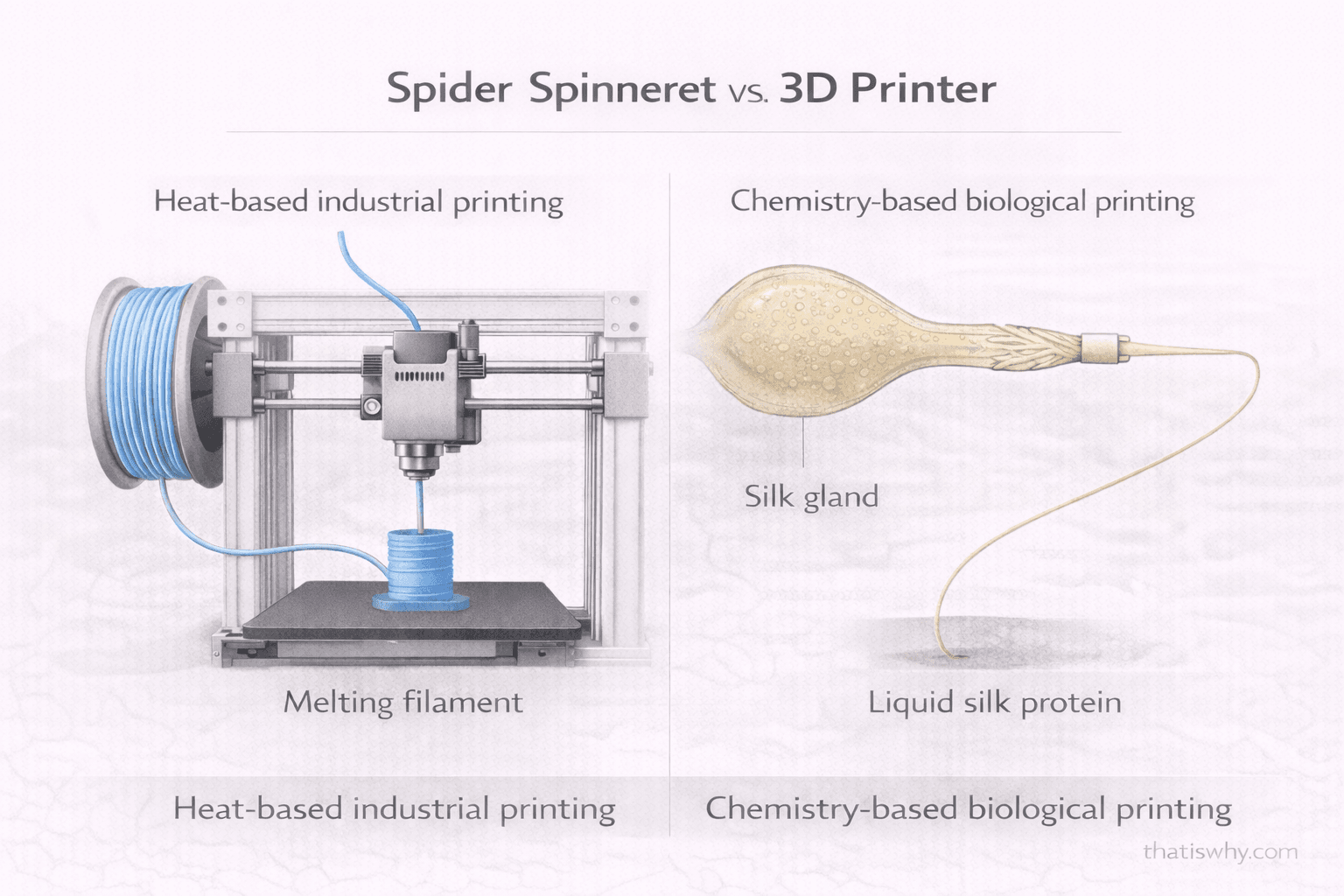
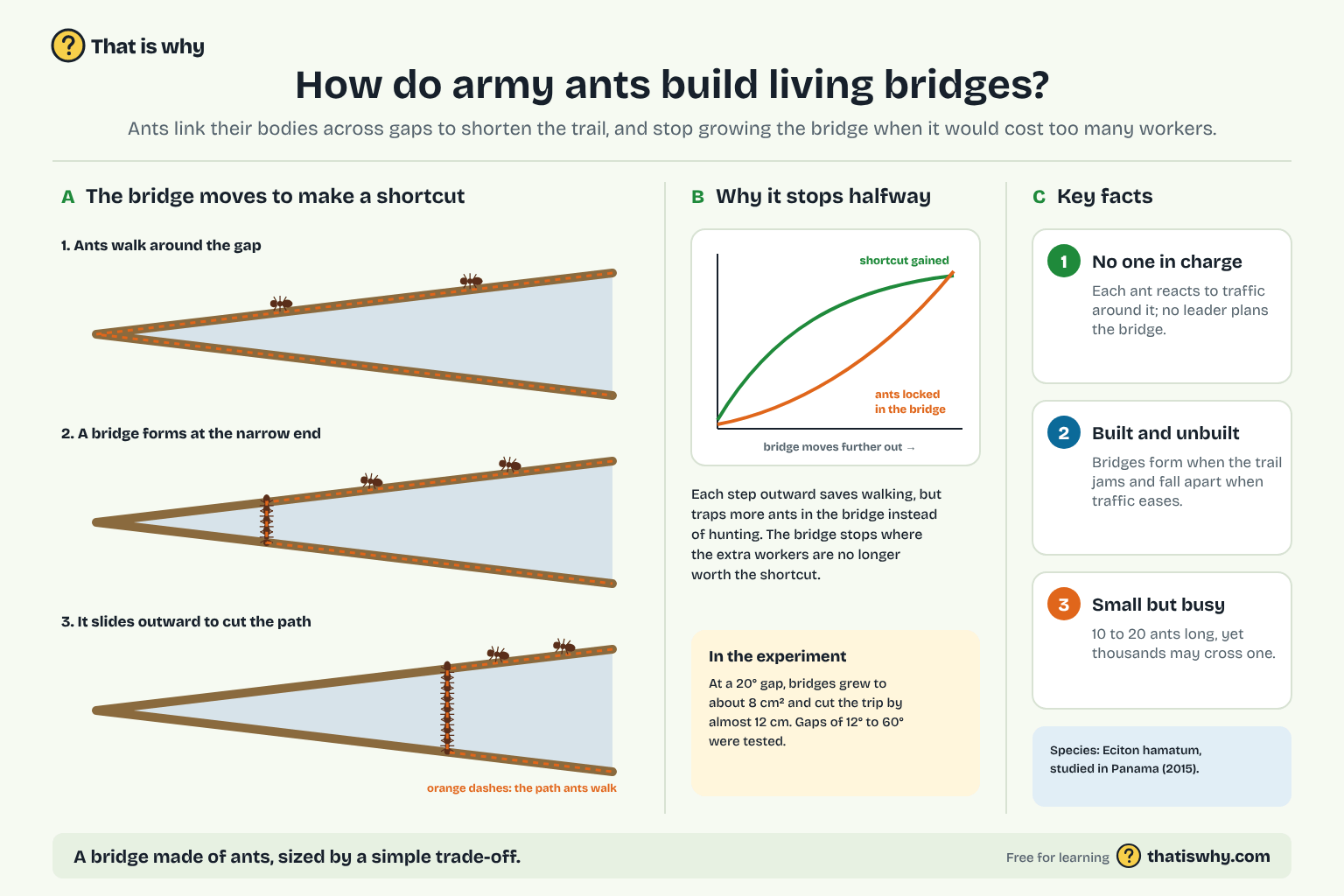
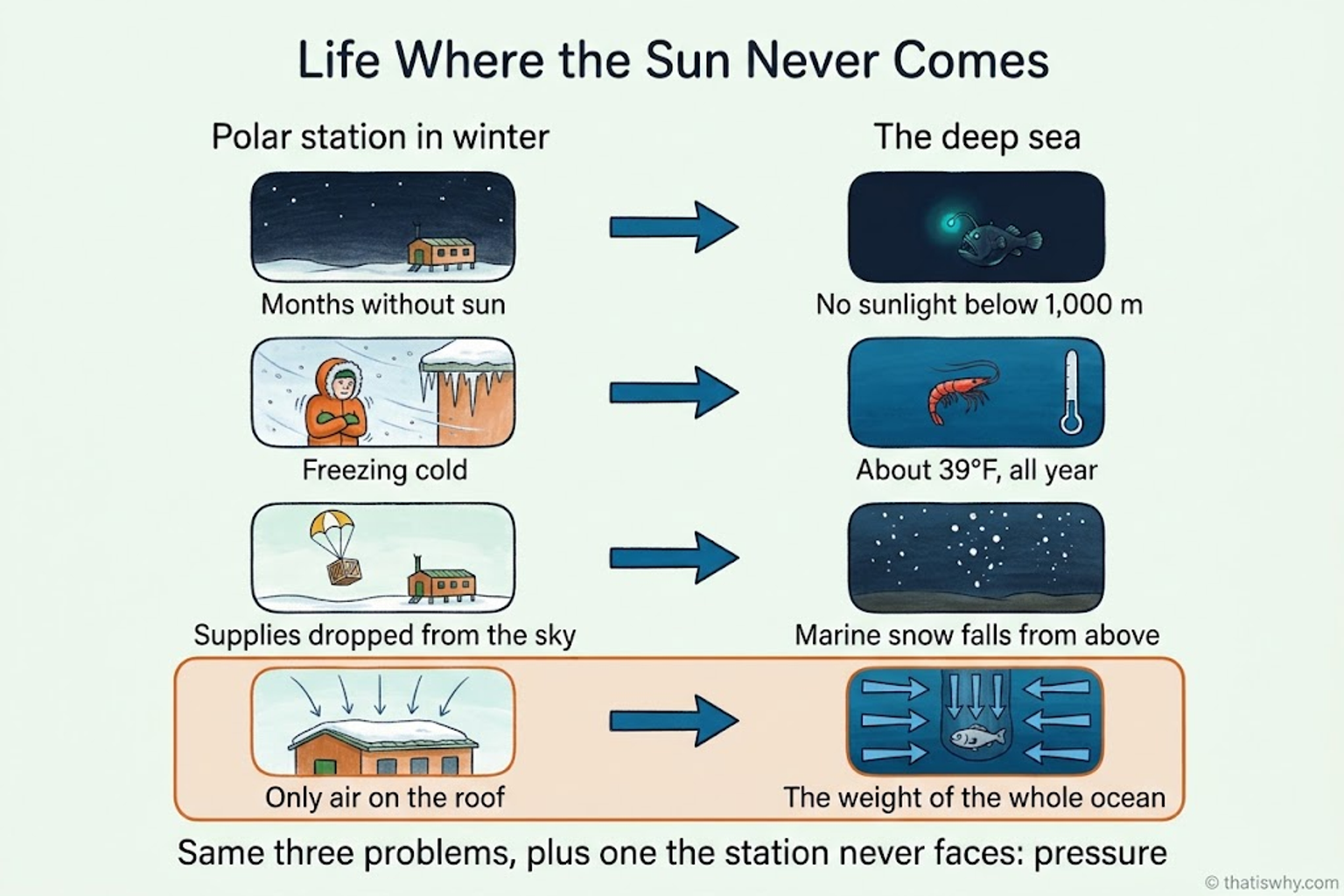
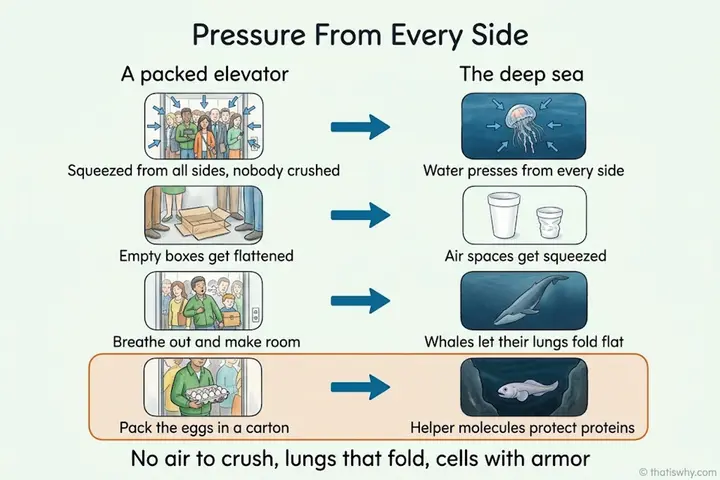 How can life exist under that much pressure? (start here)
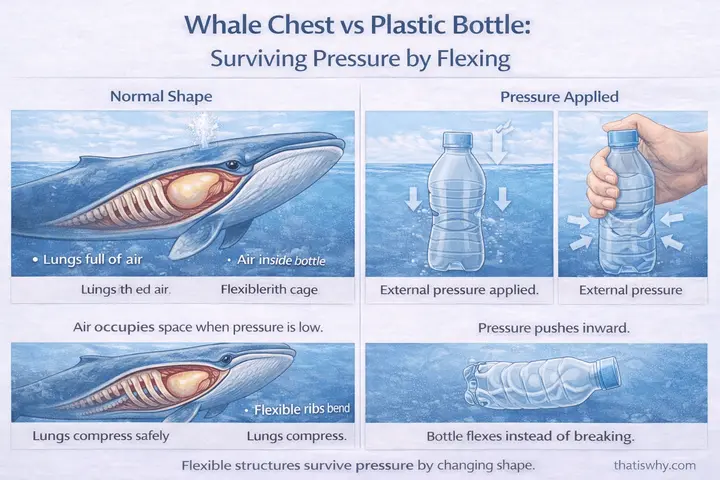 Why do whales let their lungs collapse on purpose?
 Why is a sperm whale's head full of wax?
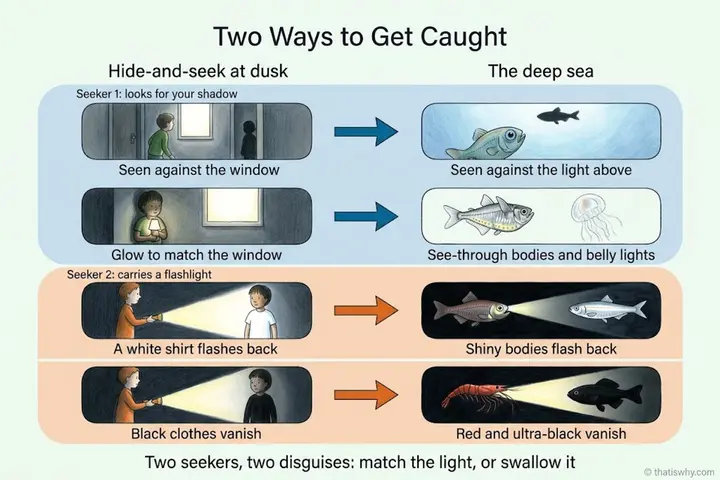 Why is the deep sea so good at hiding? (start here)
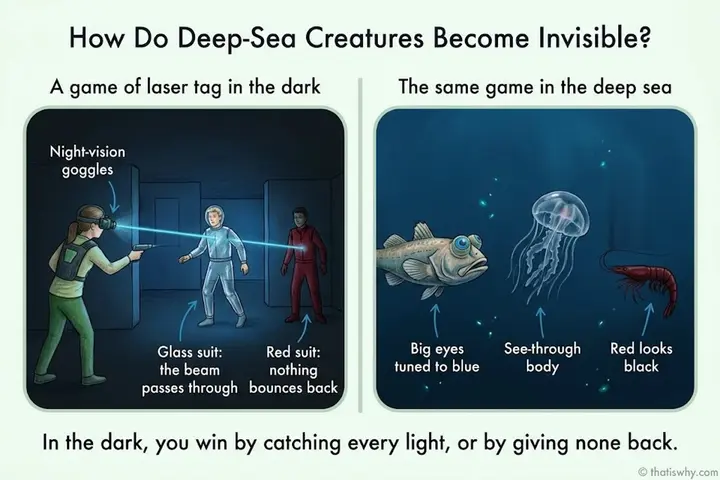 How do deep-sea creatures become invisible?
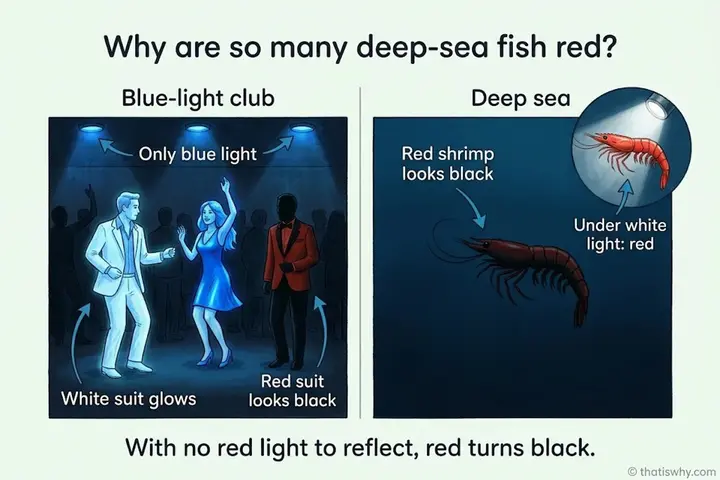 Why are so many deep-sea fish red?
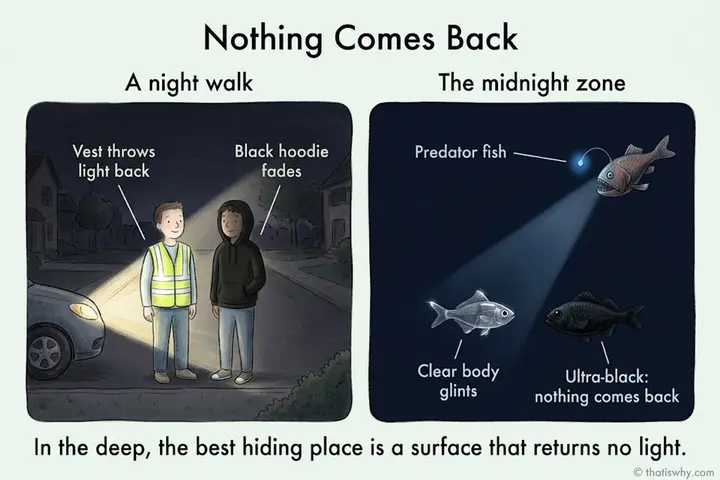 Why are the deepest fish ultra-black?
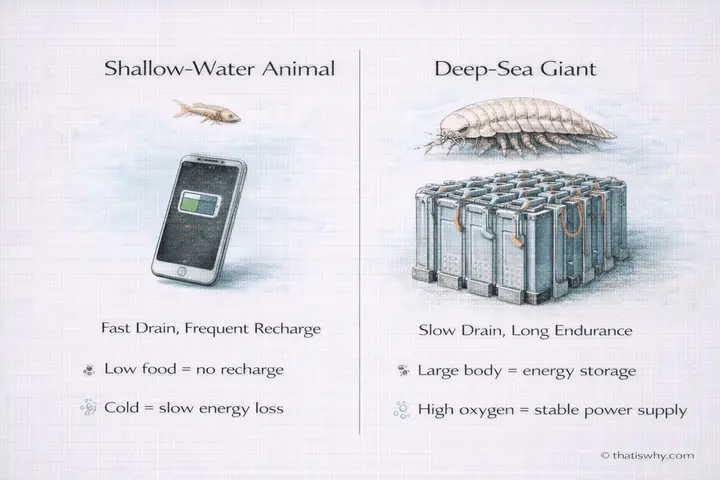 Why do deep-sea creatures grow into giants?
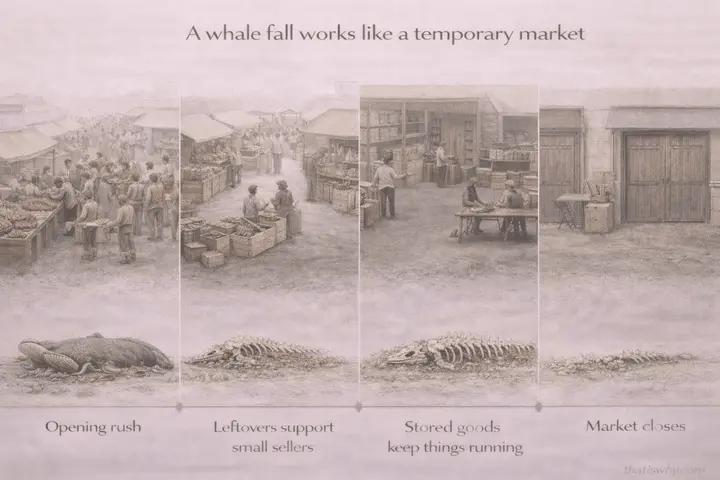 What happens when a whale sinks to the seafloor?
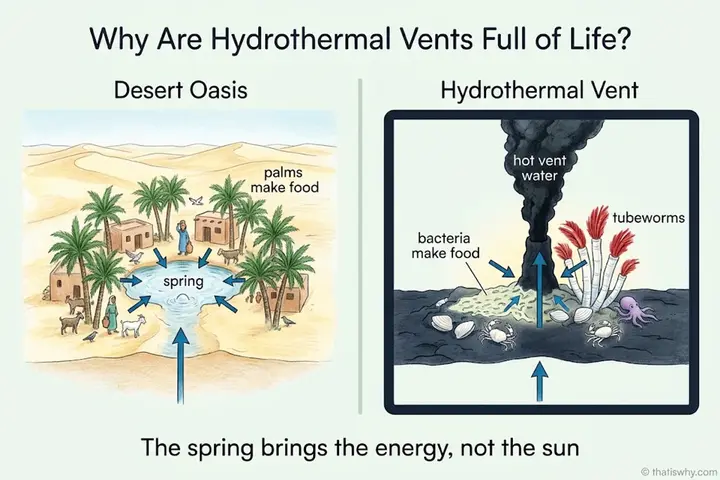 How does life survive at hydrothermal vents?
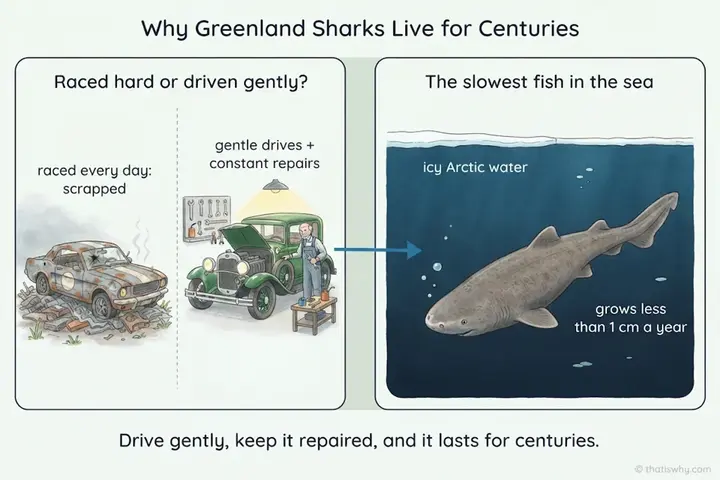 Why do Greenland sharks live for centuries?
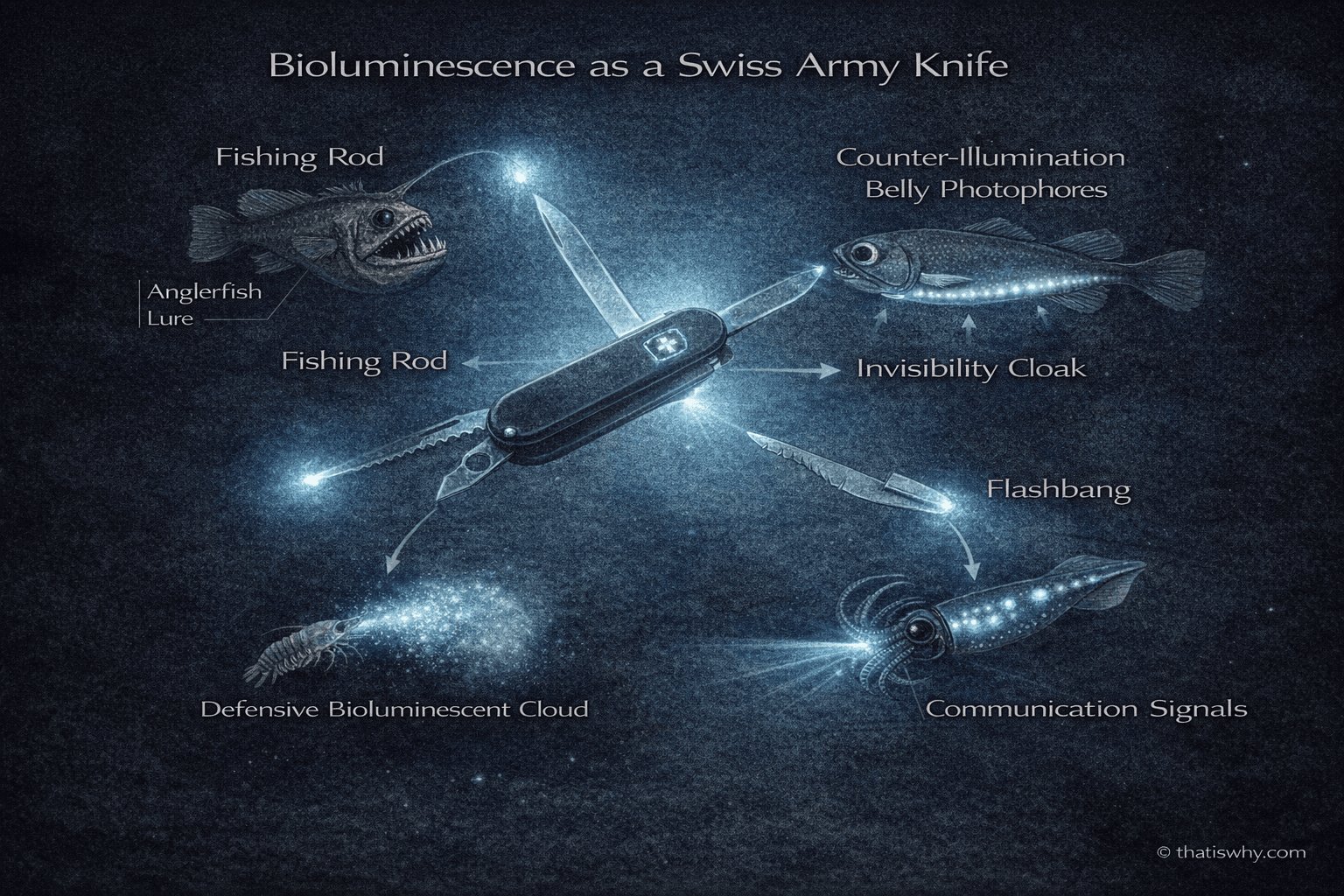
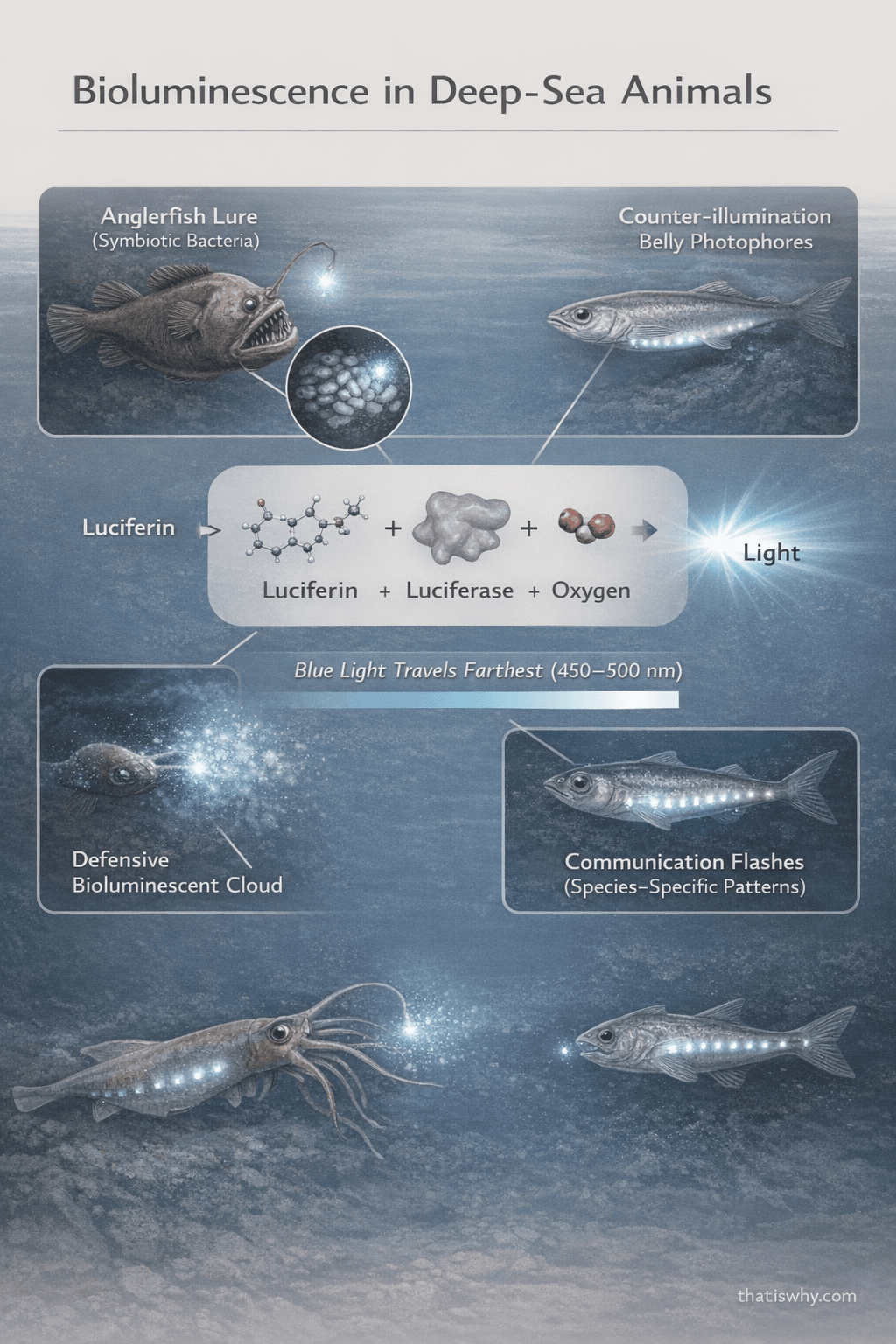
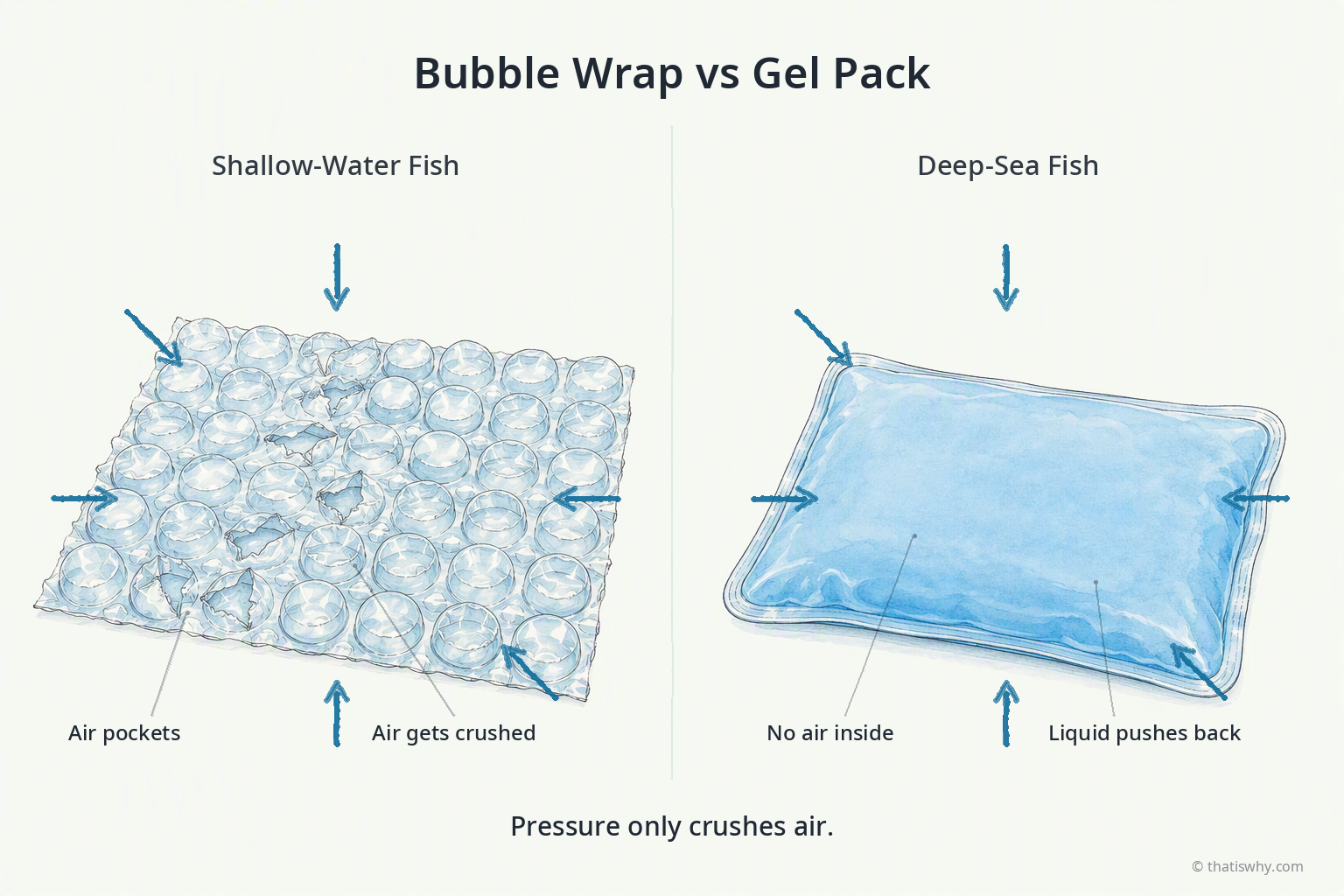
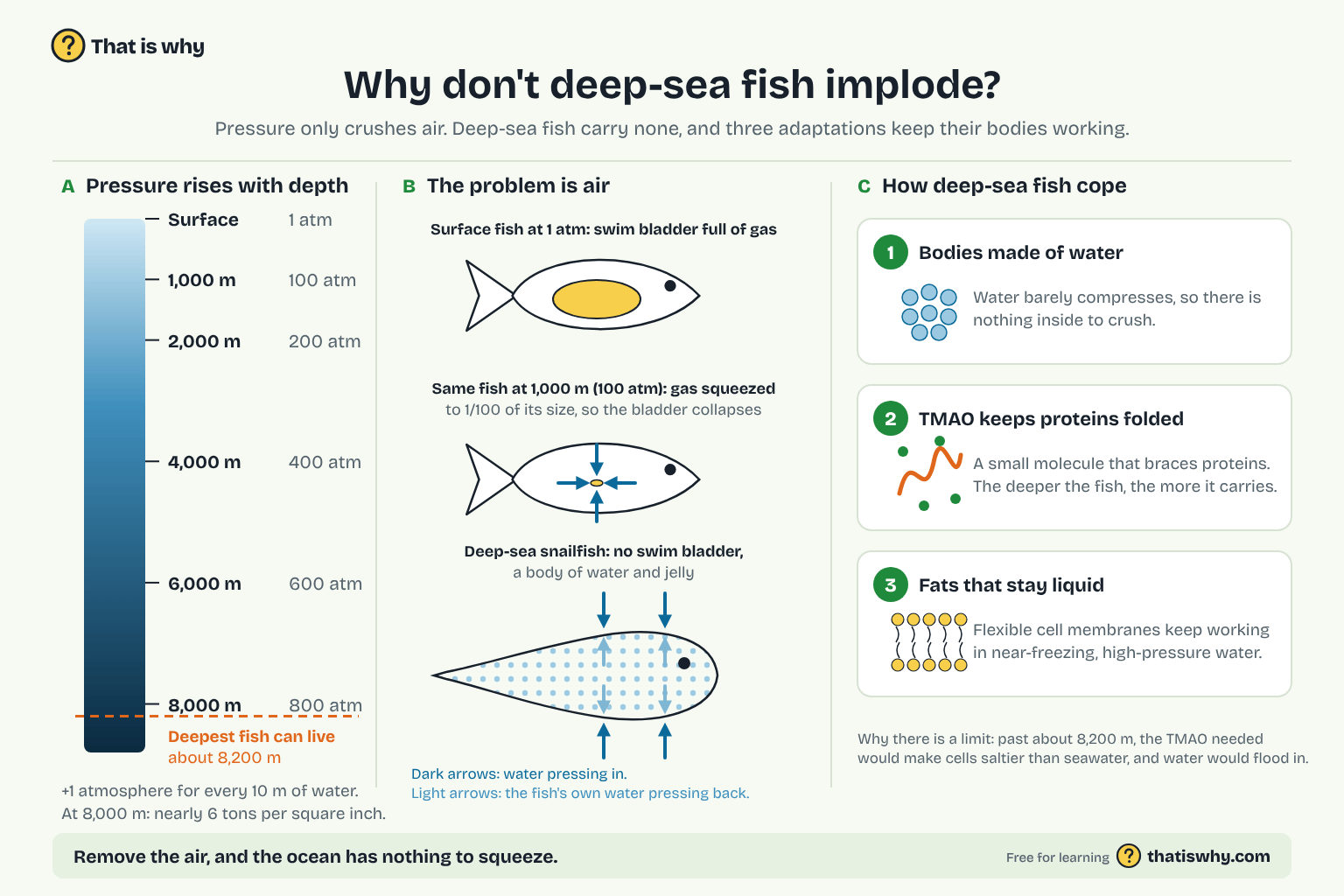
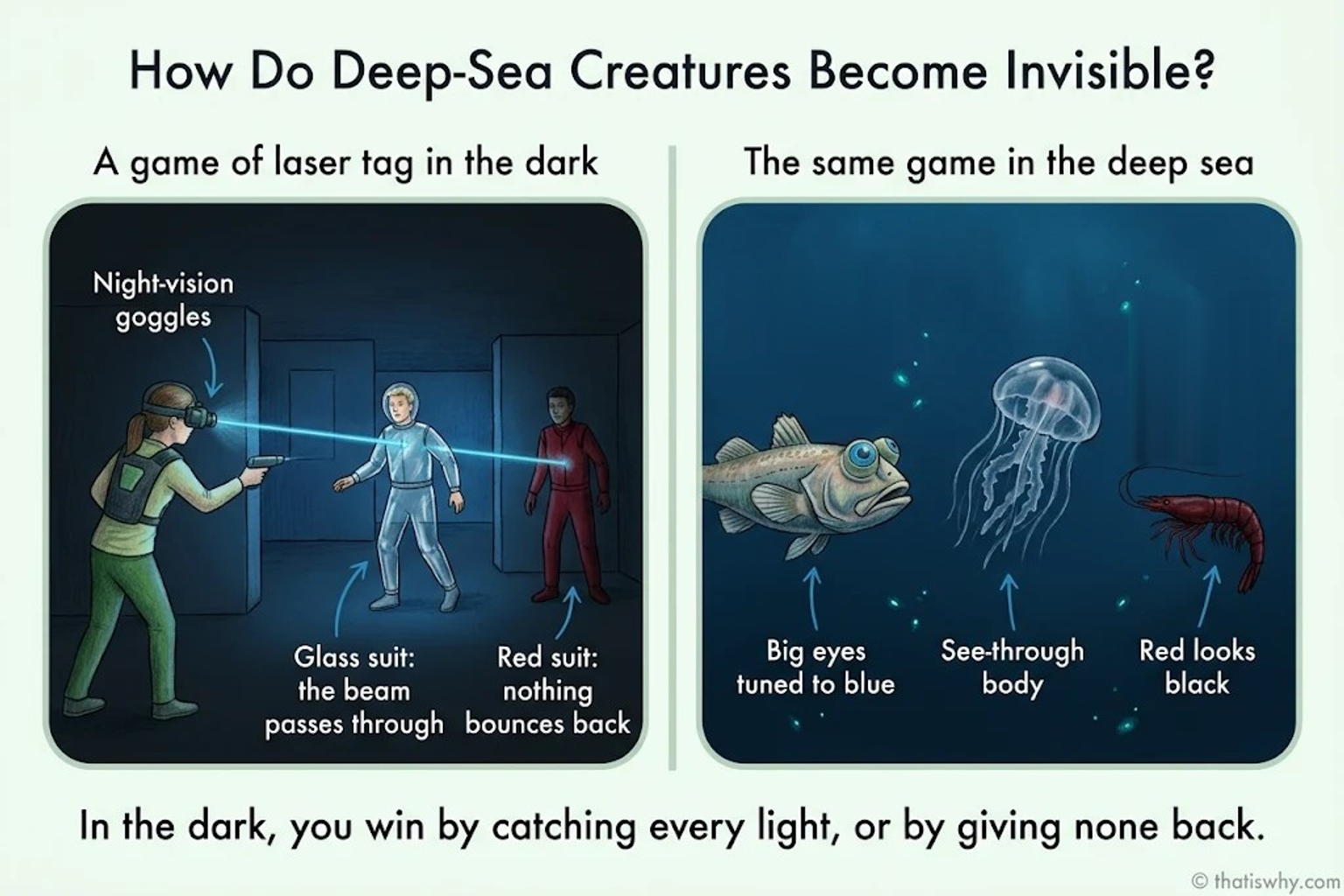
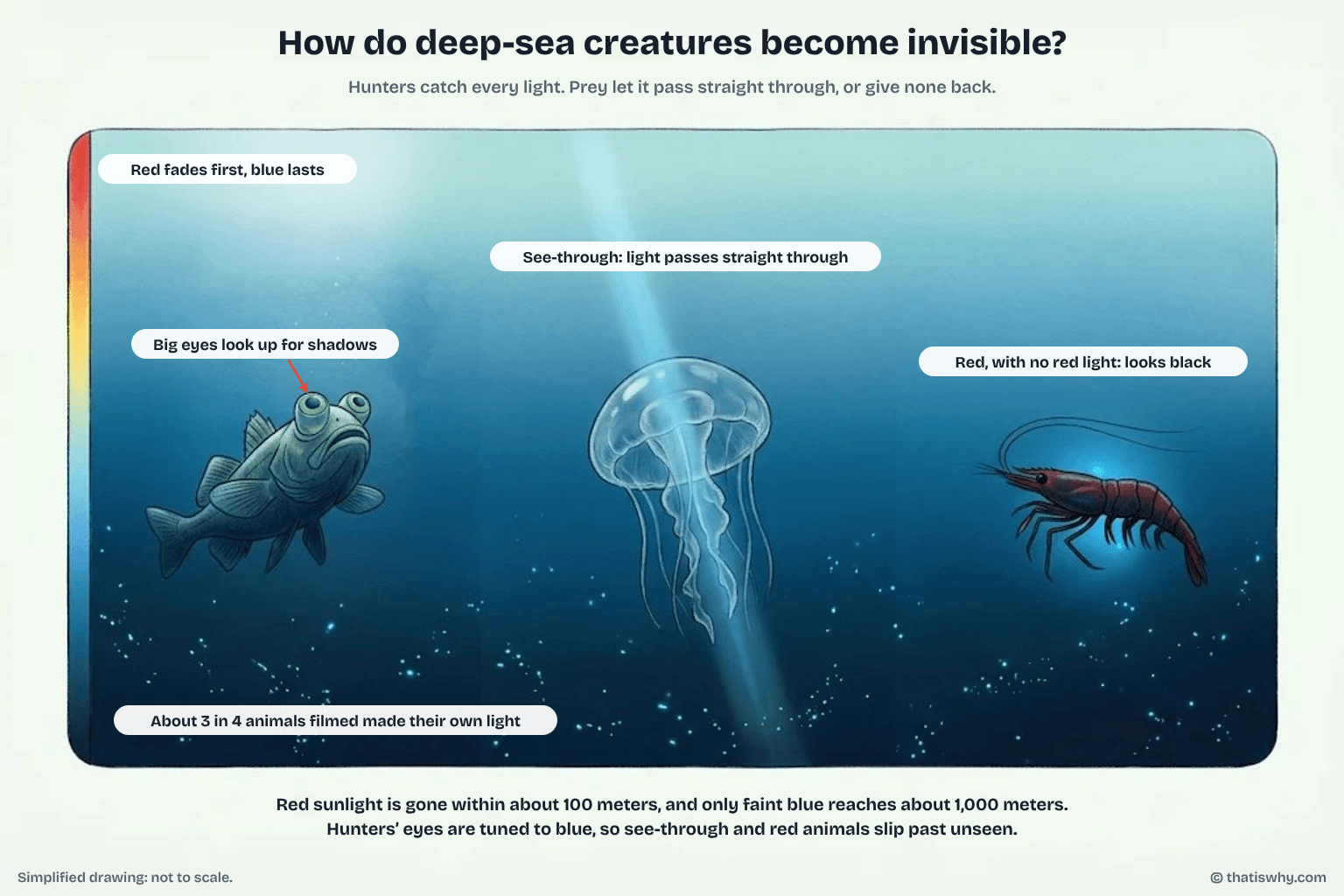
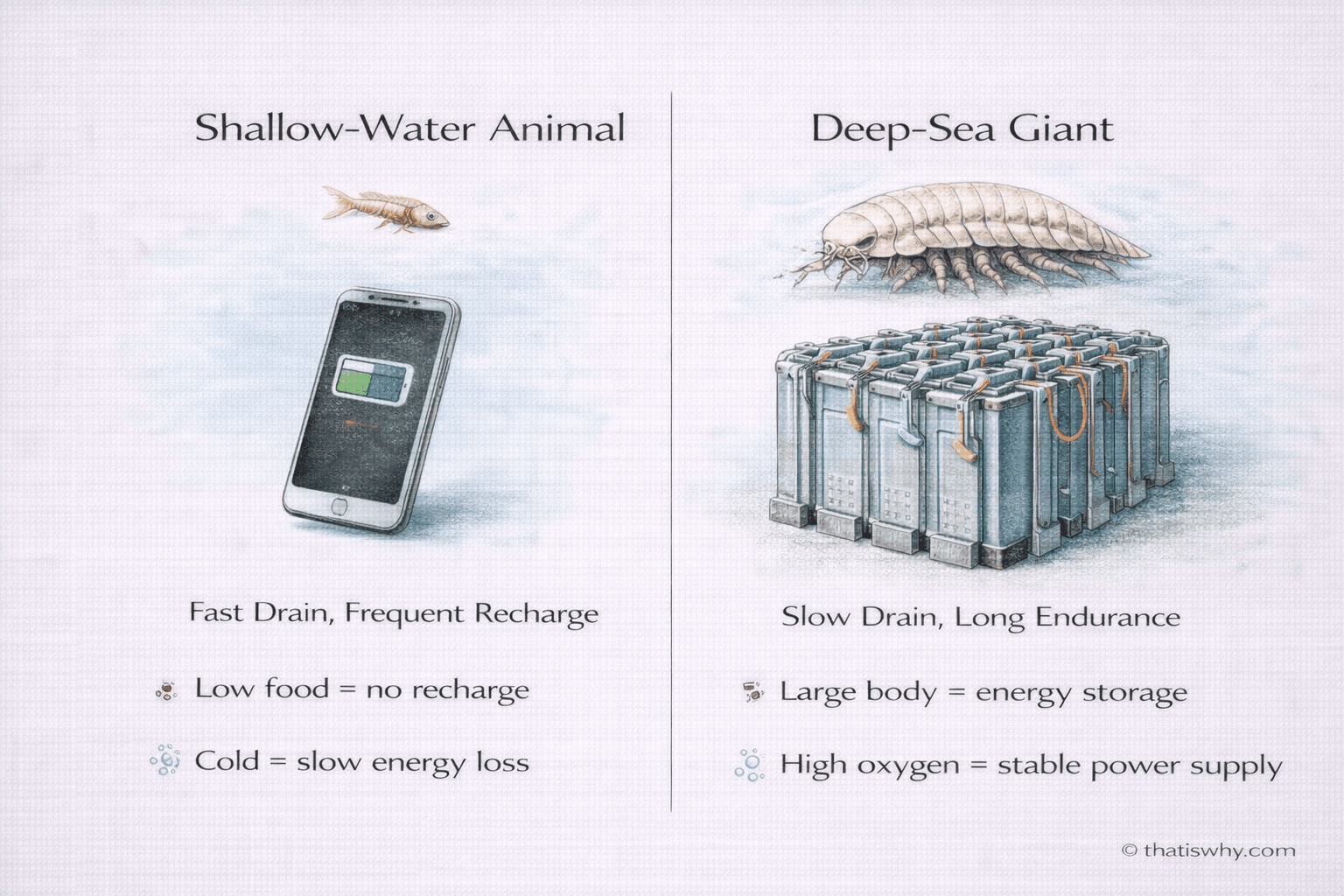
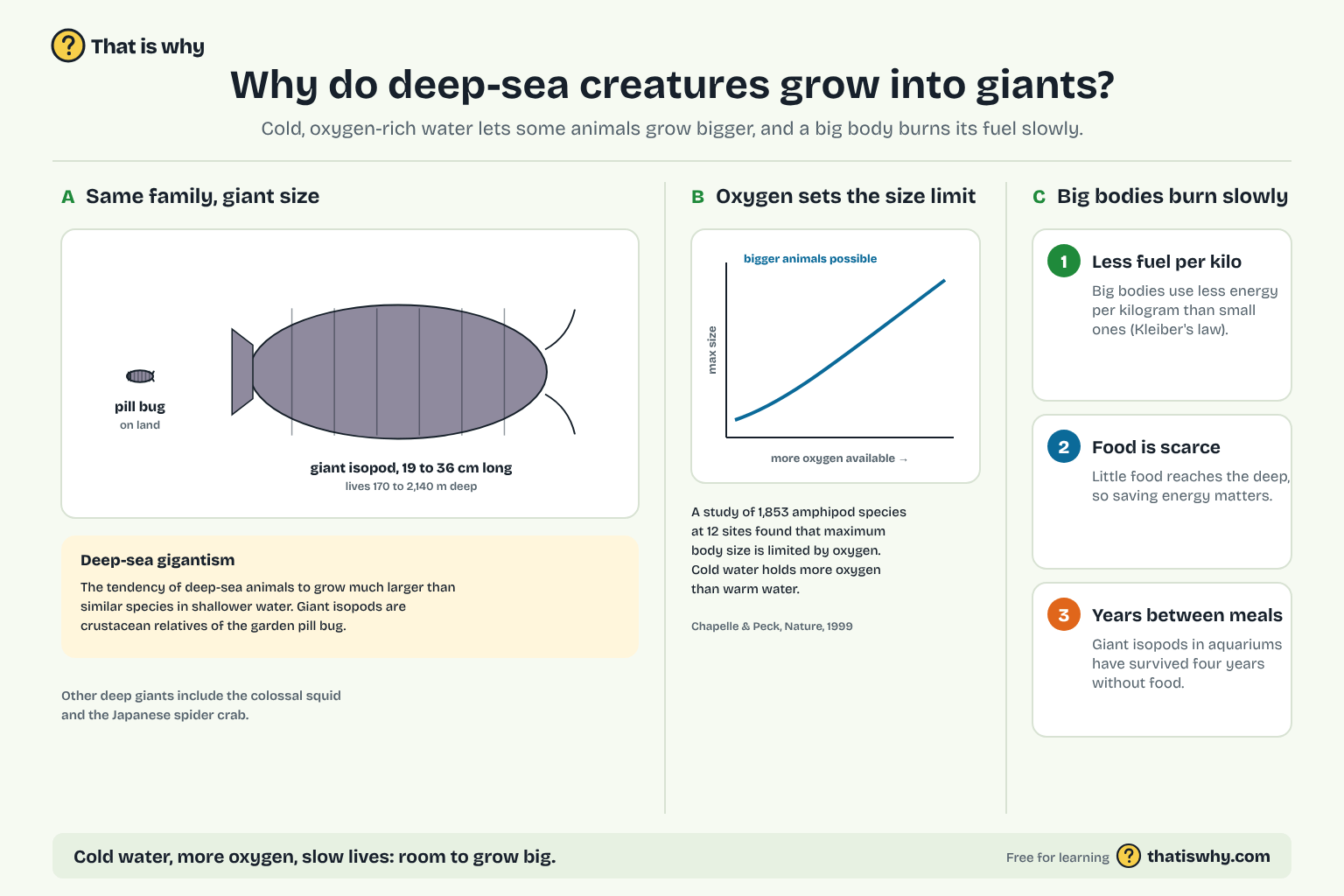
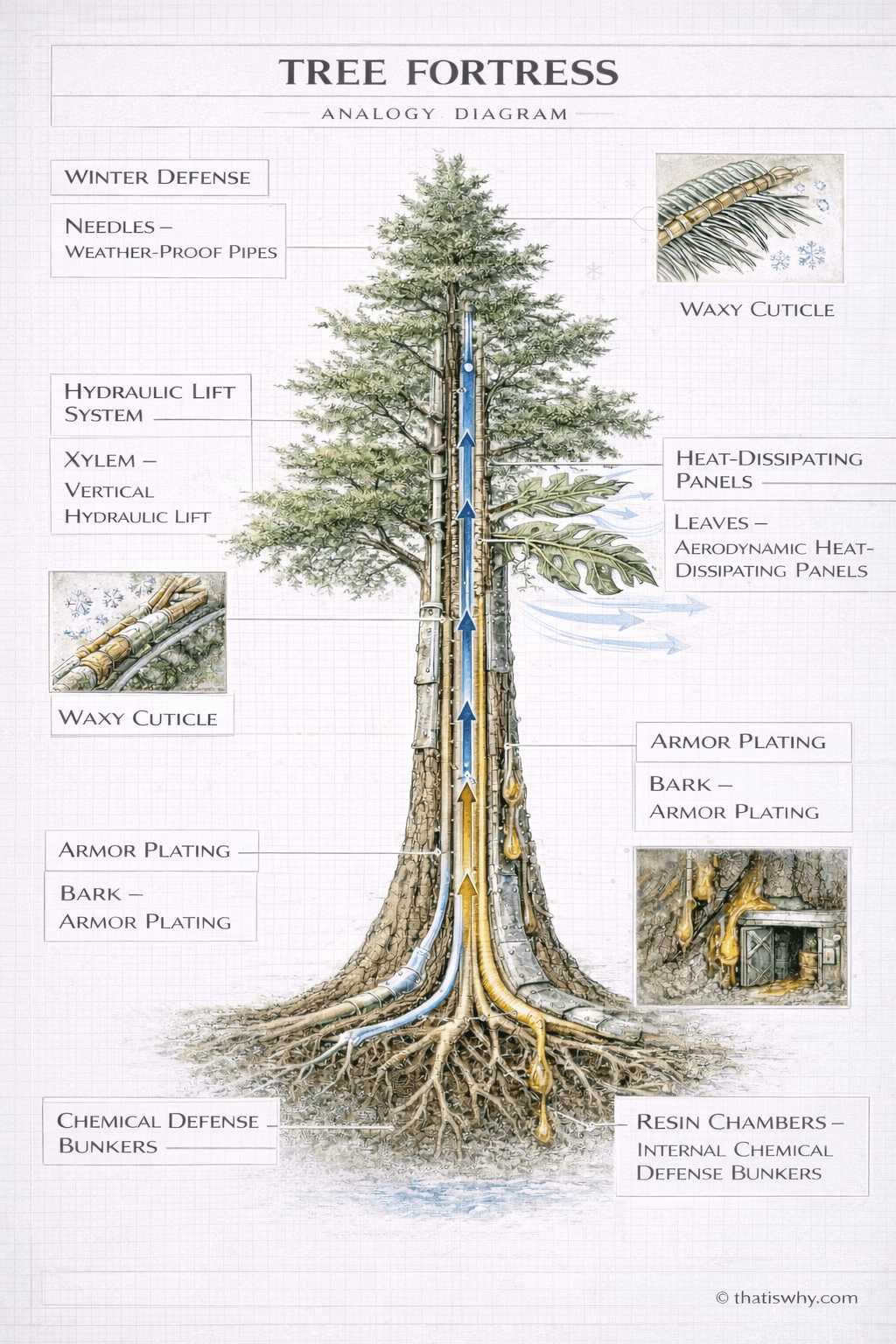
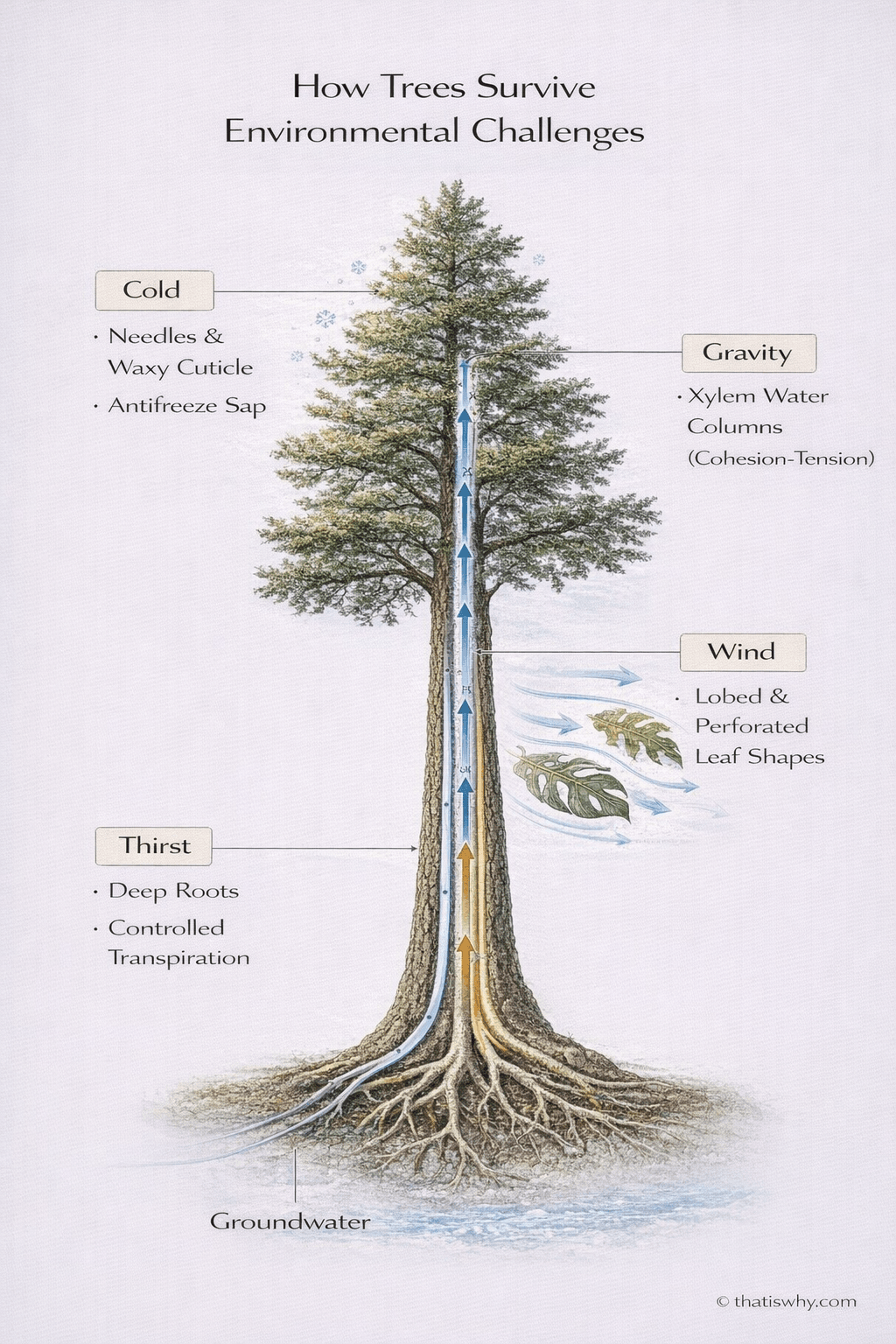
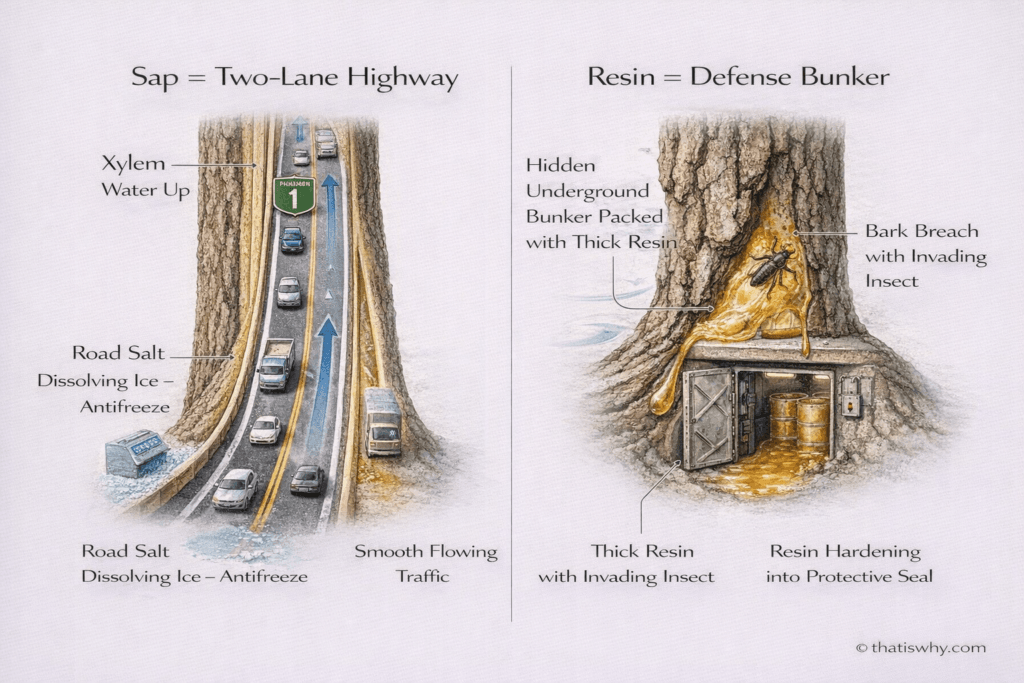
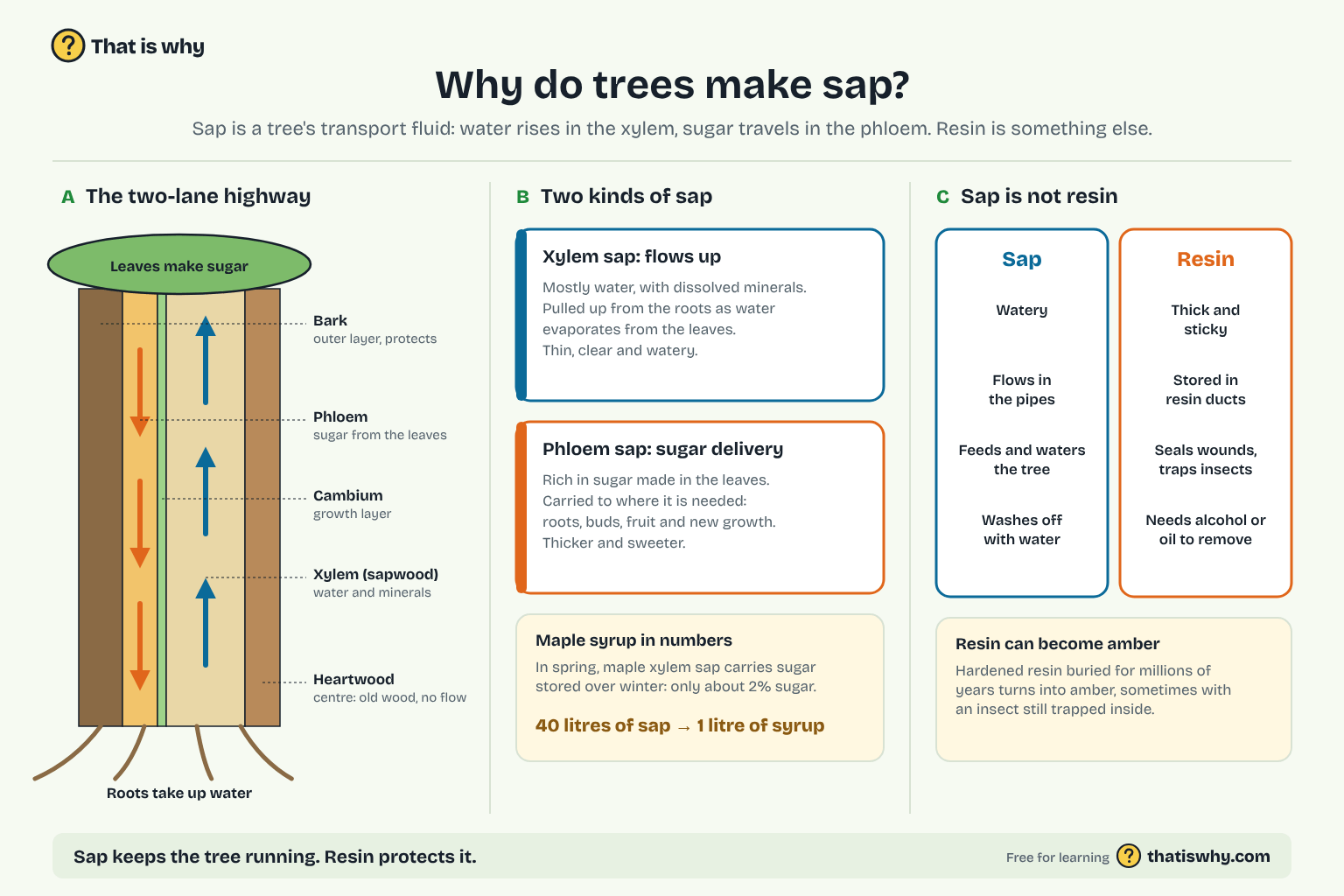
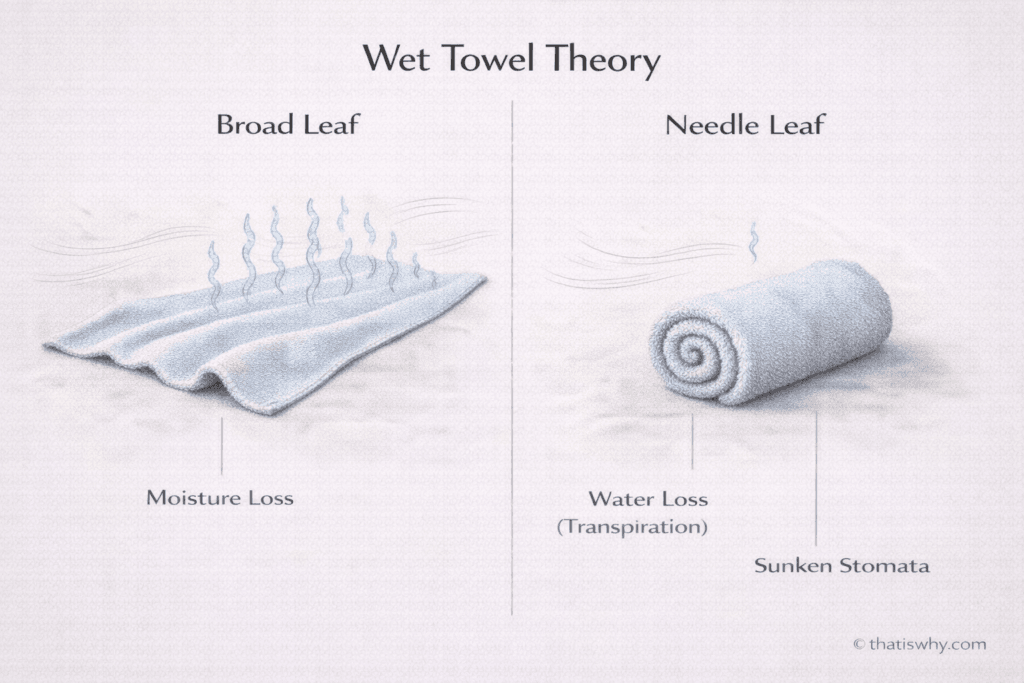
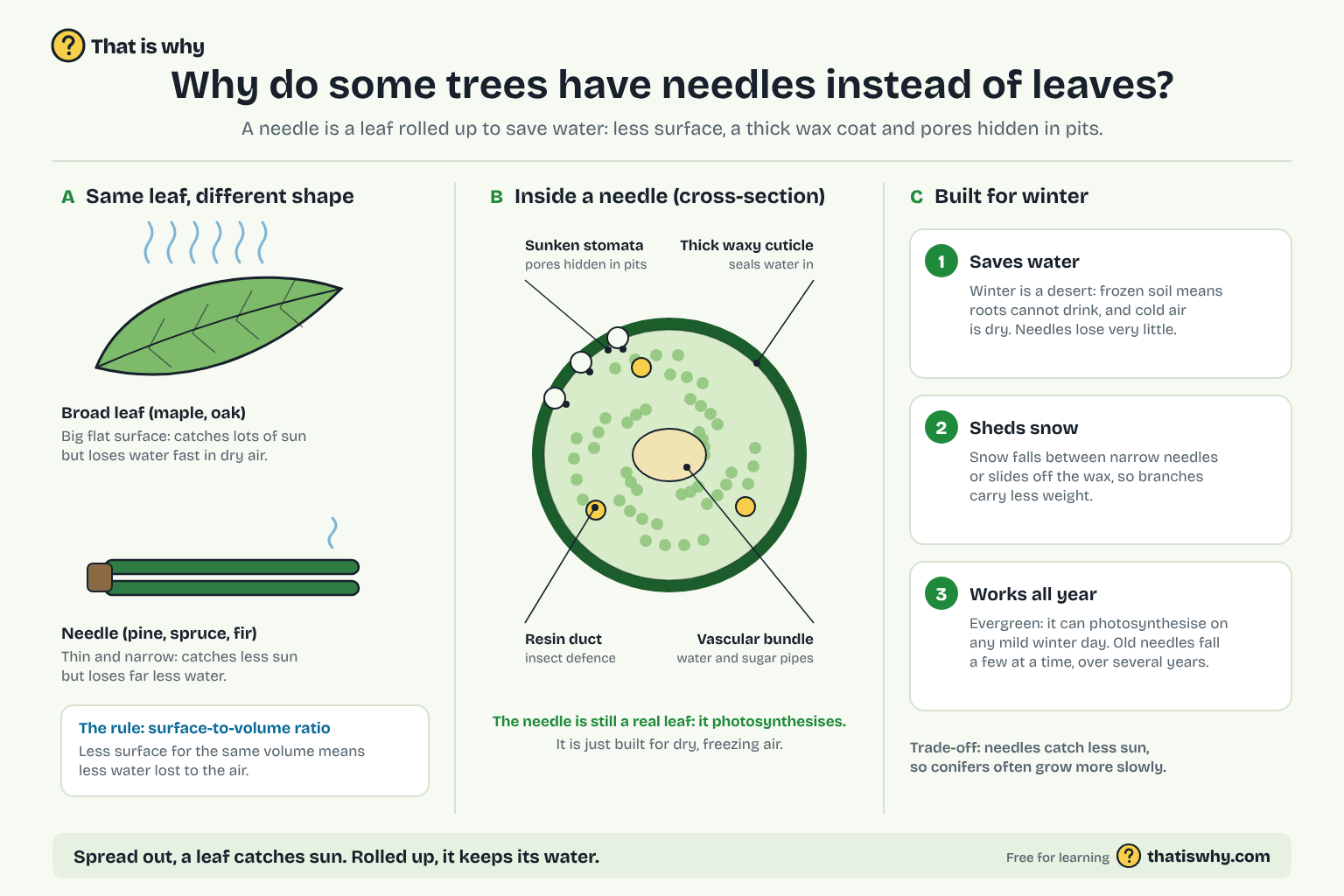
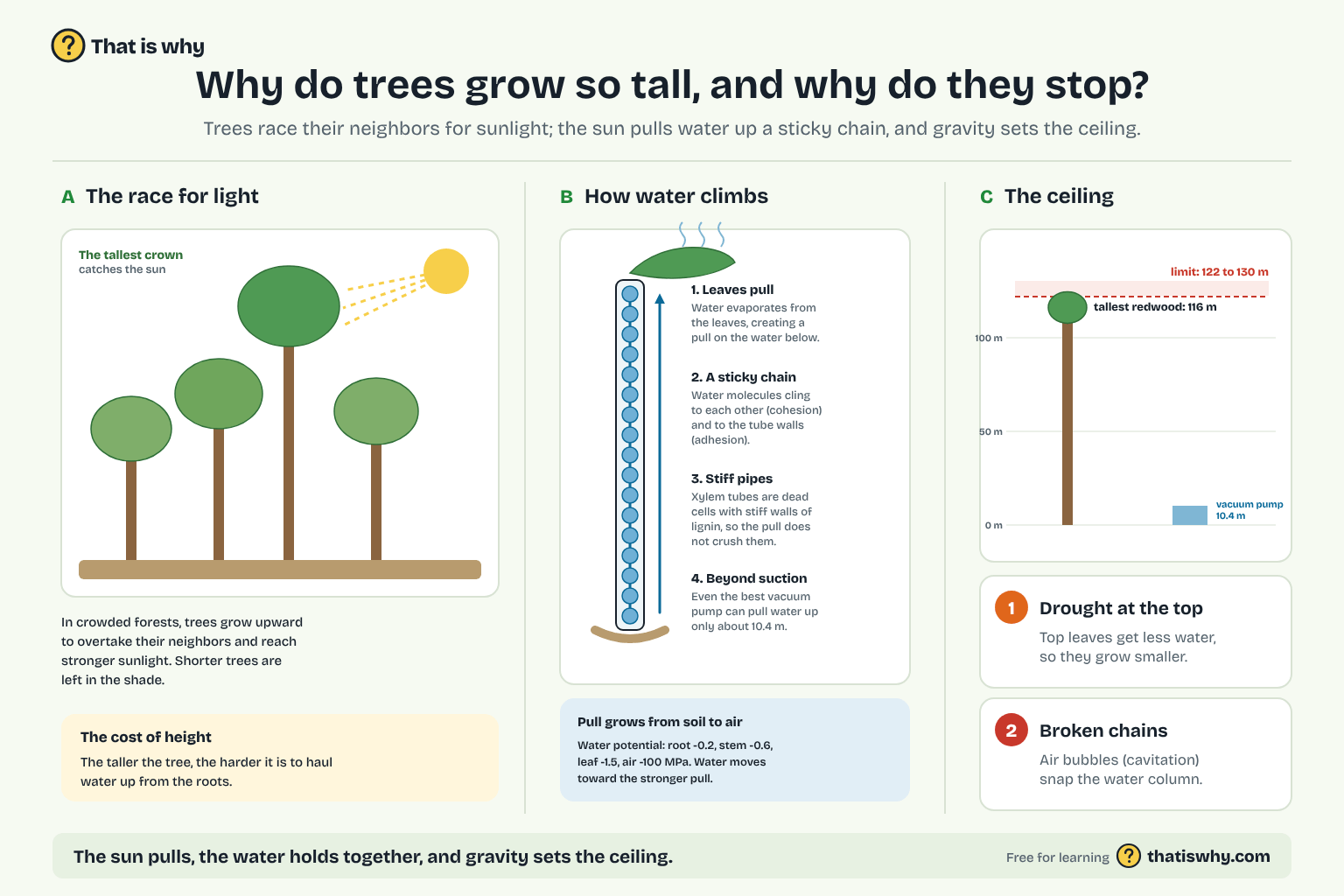
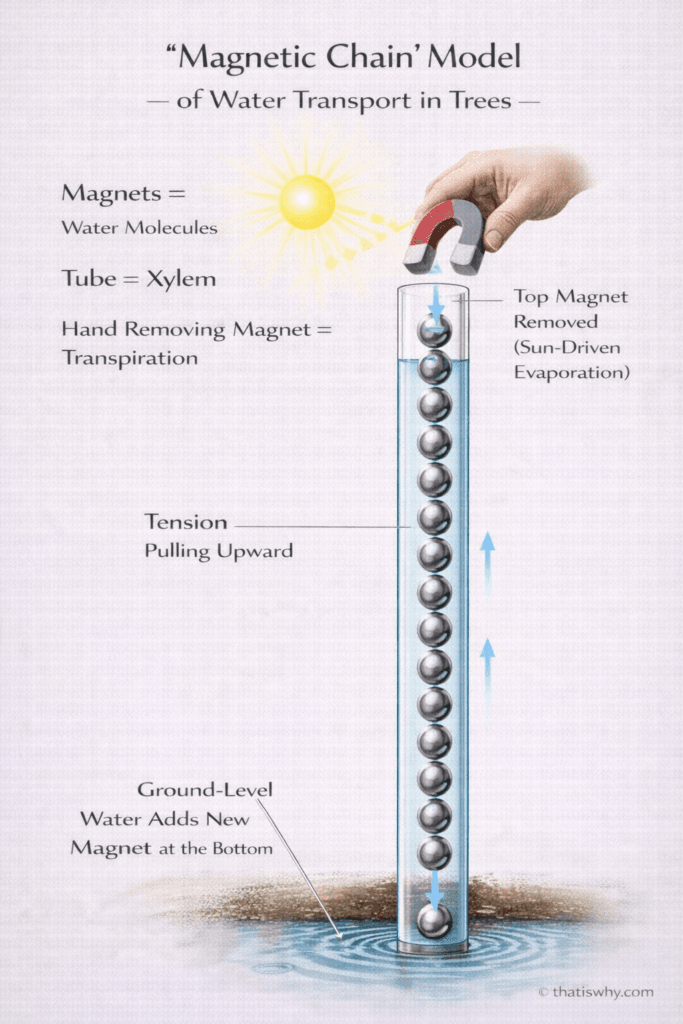
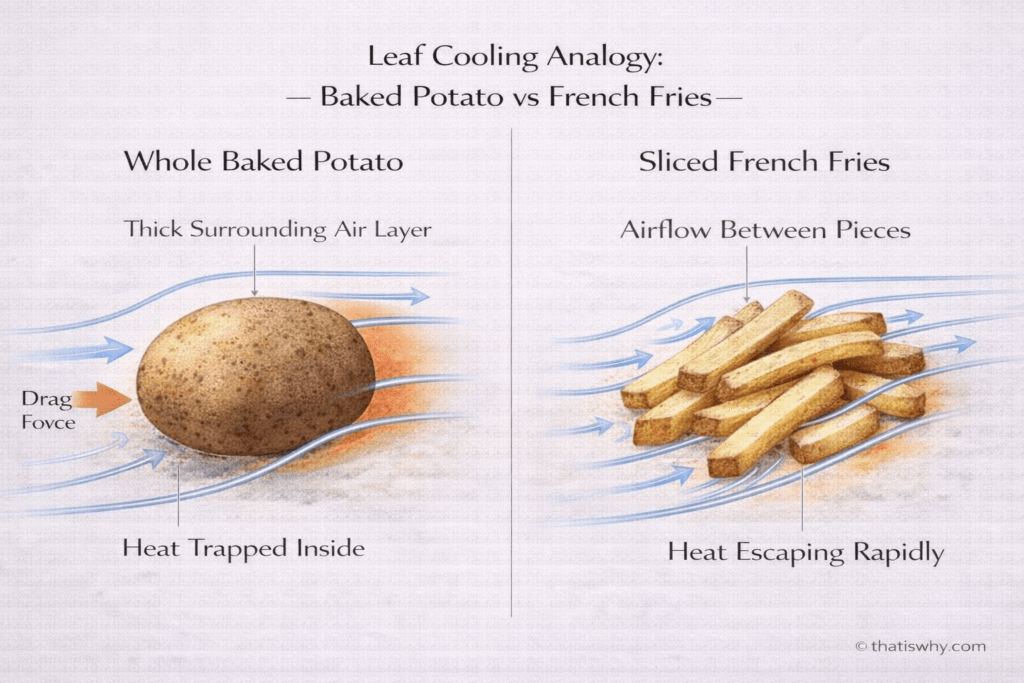
 How does a mantis out-bloom a real flower? (start here)
 Why does this viper have a spider on its tail?
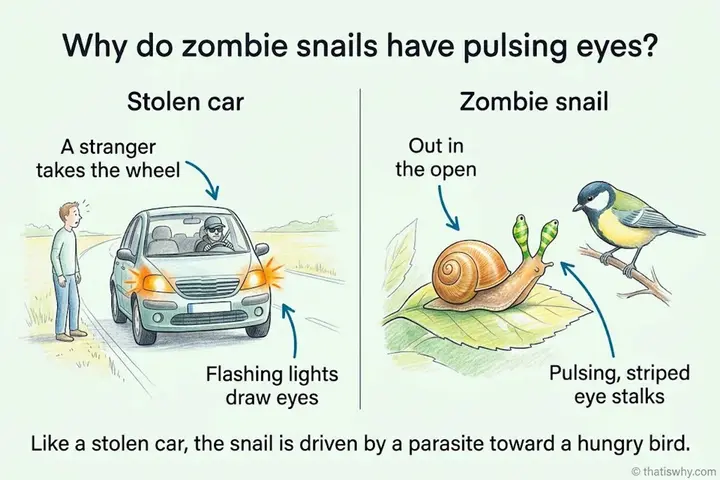 Why do zombie snails have pulsing eyes?
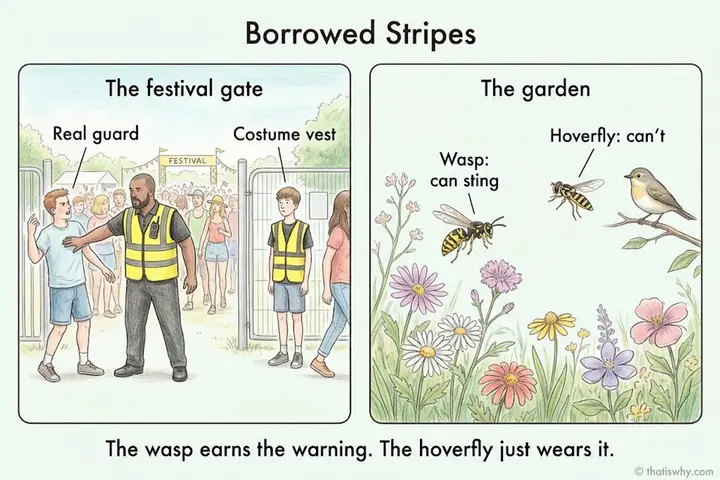 Why do hoverflies look like wasps? (start here)
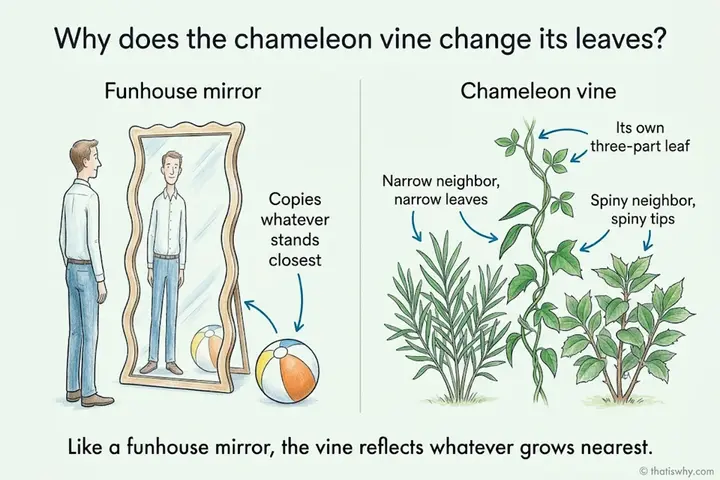 Can a plant see? The chameleon vine might.
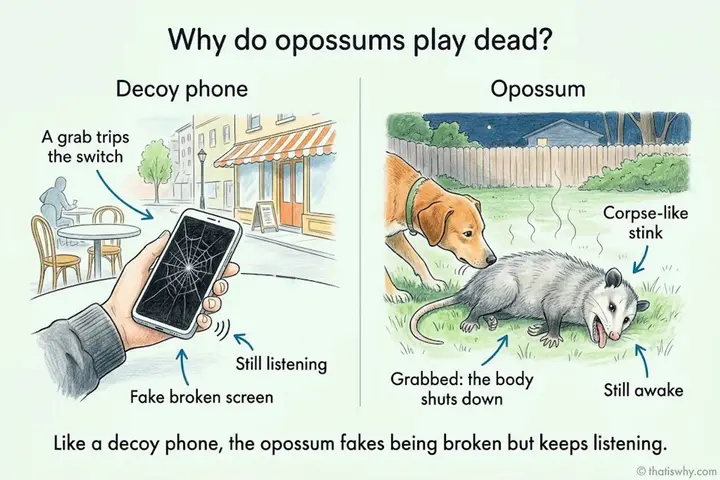 Why do opossums play dead?