Free teaching diagram
Sea Glass Diagram: How Waves and Water Frost Glass
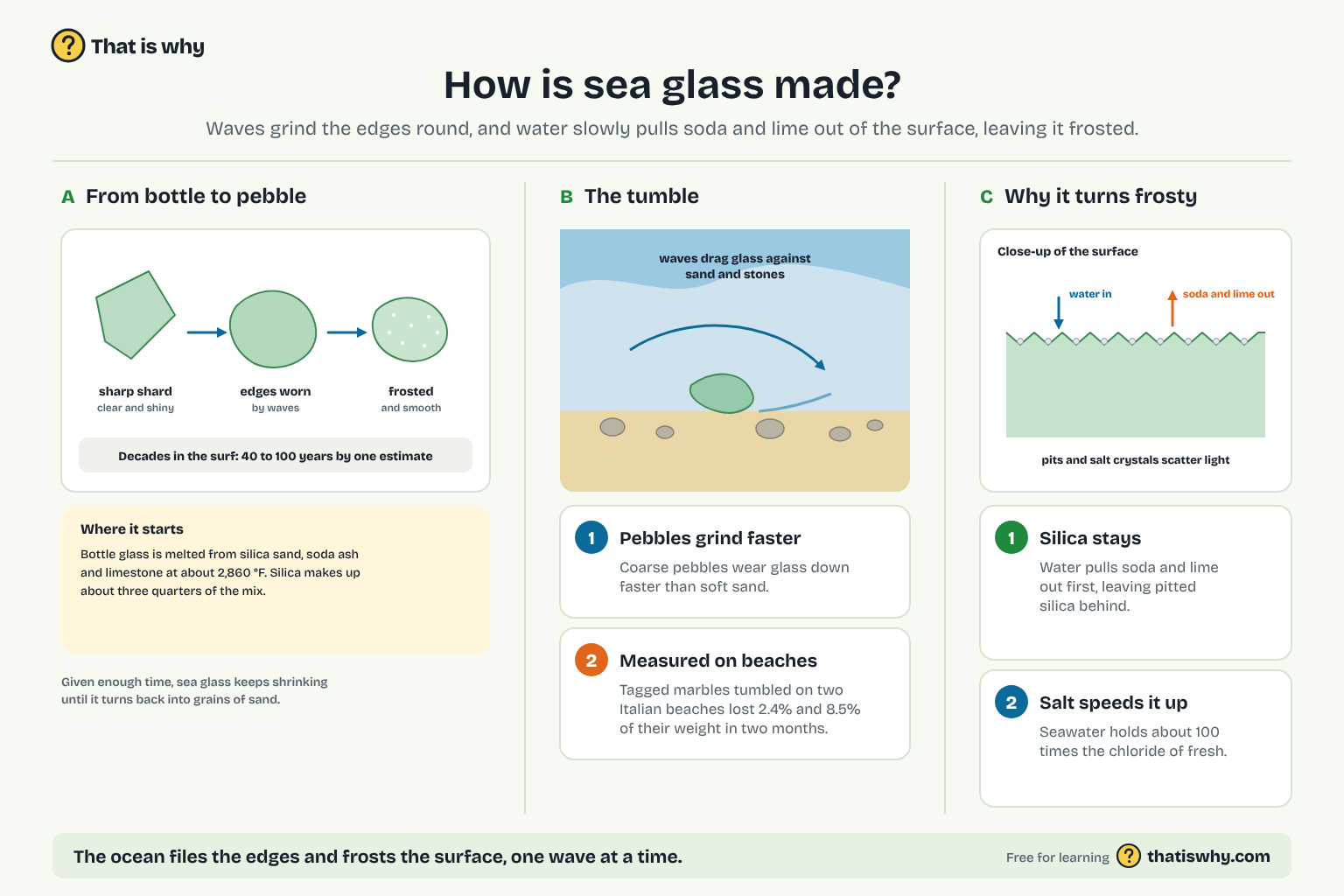
Waves grind sea glass round, and water slowly pulls soda and lime out of its surface, leaving it frosted.
What the diagram shows
A. From bottle to pebble. Bottle glass is melted from silica sand, soda ash and limestone at about 2,860 °F, and silica makes up about three quarters of the mix. In the sea, a sharp, shiny shard has its edges worn round and then turns frosted. It takes decades in the surf, 40 to 100 years by one estimate, and given enough time sea glass keeps shrinking until it turns back into grains of sand.
B. The tumble. Waves drag the glass against sand and stones, like a slow rock tumbler. Coarse pebbles wear glass down faster than soft sand. On two Italian beaches, tagged marbles lost 2.4% and 8.5% of their weight in just two months.
C. Why it turns frosty. Water soaks into the glass surface and pulls soda and lime out first, a process called leaching, which leaves pitted silica behind. Seawater, which holds about 100 times the chloride of fresh water, speeds this up, and salt crystals settle in the pits. The pits and crystals scatter light, turning the glass from clear to frosted.
Key numbers
| Fact | Value |
|---|---|
| Time to form | decades; 40 to 100 years by one estimate |
| Silica in bottle glass | about 75% |
| Weight lost by tagged marbles in two months | 2.4% and 8.5% |
| Chloride in seawater vs fresh water | about 100 times more |
Common misconceptions
Myth Sea glass forms in a year or two.
The truth It takes decades in the surf; one estimate puts it at 40 to 100 years.
Myth The frosting is just scratches from sand.
The truth Waves round the edges, but the frosting comes mostly from water leaching soda and lime out of the surface, leaving tiny pits that scatter light.
Myth Fresh water and seawater frost glass equally.
The truth Seawater holds about 100 times more chloride than fresh water, which makes it far more corrosive.
Questions to use in class
Tap a question to reveal a model answer.
1How long does sea glass take to form?
Decades in the surf; one estimate is 40 to 100 years.
2What rounds the edges?
Waves dragging the glass against sand and stones; coarse pebbles grind faster than soft sand.
3Why is sea glass frosted?
Water pulls soda and lime out of the surface first, leaving pitted silica; the pits and salt crystals scatter light.
4What is bottle glass made of?
Mostly silica sand, melted with soda ash and limestone at about 2,860 degrees F.
Key terms
- Leaching
- When water slowly dissolves some ingredients out of a solid. In sea glass, water pulls soda and lime out of the surface first, leaving pitted silica that looks frosted.
Sources
- The Science of Sea Glass Beachcombing Magazine
- Life Cycle of Sea Glass Beachcombing Magazine