
A growing collection of clear, evergreen explanations for why the natural world works the way it does.
Animals
Behavior, evolution, and survival strategies explained.
Plants & Forests
The silent mechanisms that power life on land.
All Guides
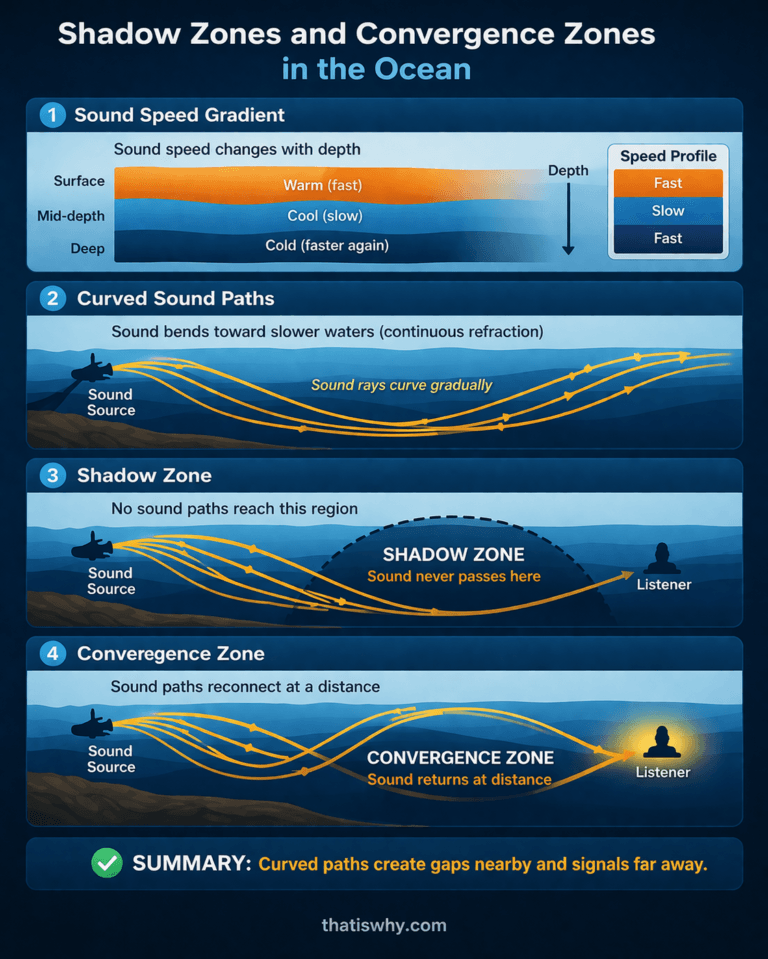
Why Sound Doesn’t Travel Everywhere in the Ocean : Shadow Zones Explained
At first, it looked like an equipment problem. A signal would appear clearly on sonar steady, easy to follow and then, after the submarine changed depth by what didn’t seem like much, it would vanish. Not fade into noise, not break apart, just stop showing up. What made it harder to explain was that the…
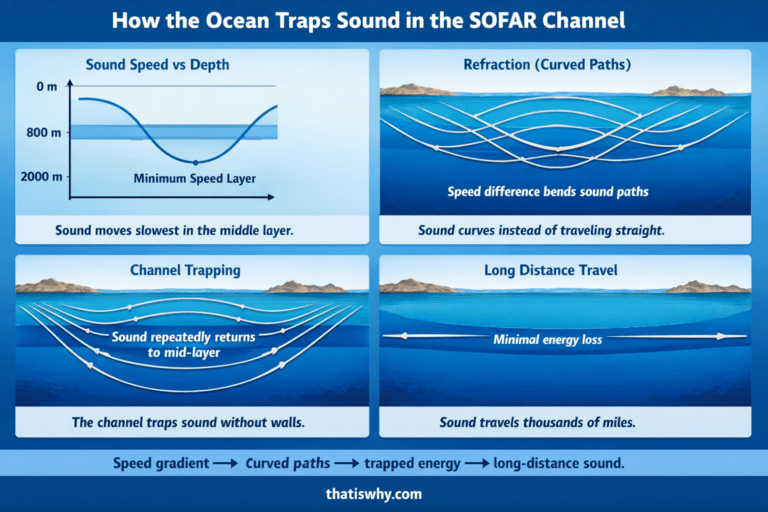
Why Sound Travels Thousands of Miles in One Layer of the Ocean
If you drop a sound into the ocean at just the right depth, somewhere around 800 meters, it doesn’t behave the way you’d expect. It doesn’t spread out and gradually fade into the background. Instead, it seems to slip into a narrow layer of water and just… keep going, carrying on for distances that can…
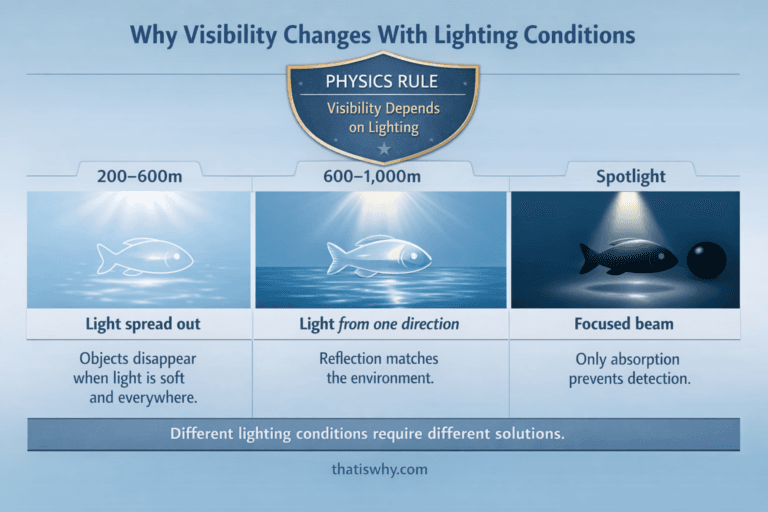
Why The Deep Sea Perfected Stealth : The Optical Arms Race
In the open ocean, there is nowhere to hide. There are no rocks, no caves, and no fixed background to blend into. Every movement happens in open water, where anything that reflects, bends, or blocks light can be detected. Because of that, camouflage cannot stay the same. As you descend through the ocean, the rules…
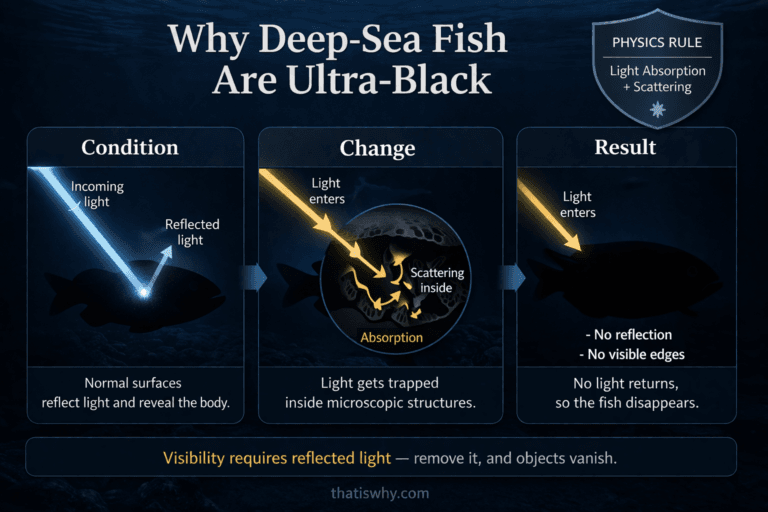
Why Deep sea fishes Are Velvet Black : The 1,000m Flip
Deep-sea fish below 1,000 meters are black because transparency stops working in total darkness. In the midnight zone, predators use bioluminescent light like searchlights. A transparent body can still glint when hit by a beam, but ultra-black skin absorbs nearly all incoming light and prevents any reflection. A reflective jacket catches light immediately, while a…
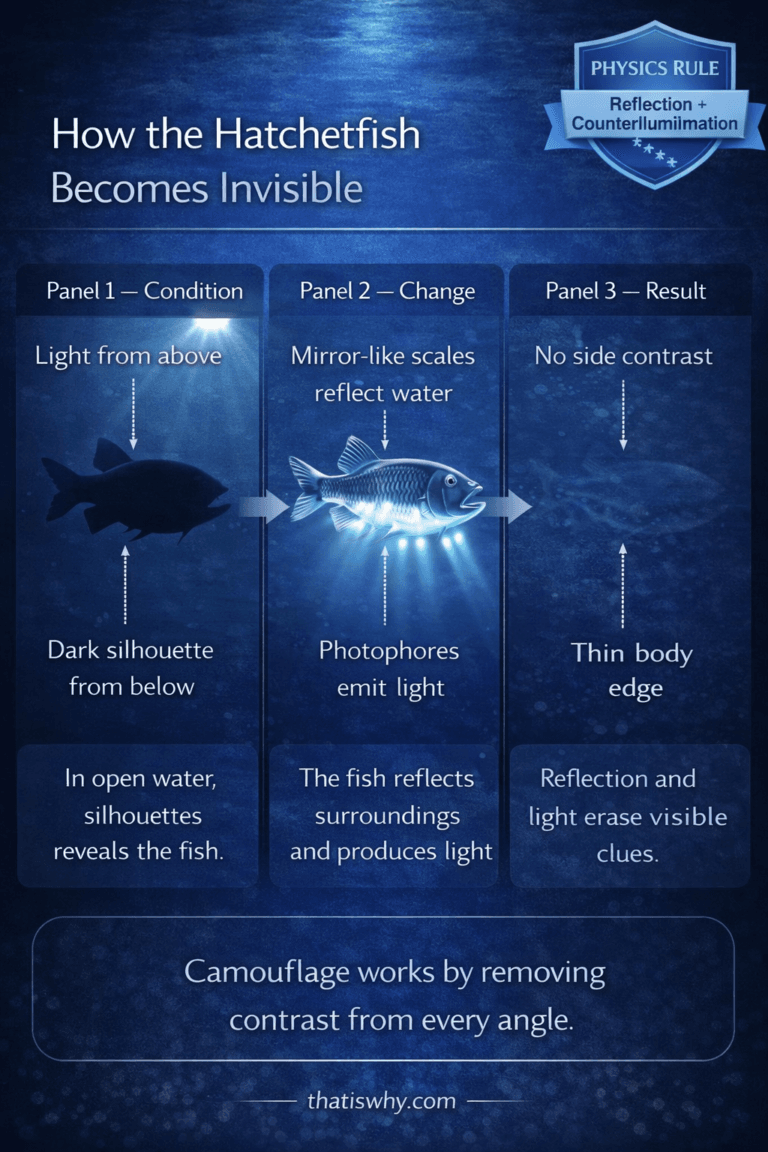
Why the Hatchetfish Looks Invisible : The Living Mirror Strategy
Hatchetfish hide by reflecting their surroundings like a mirror. Their sides are covered in microscopic crystals that bounce the ocean’s dim light back toward predators, making the fish blend into the water. From below, they erase their shadow using light-producing organs. A mirror leaning against a wall in a dim room can be surprisingly hard…
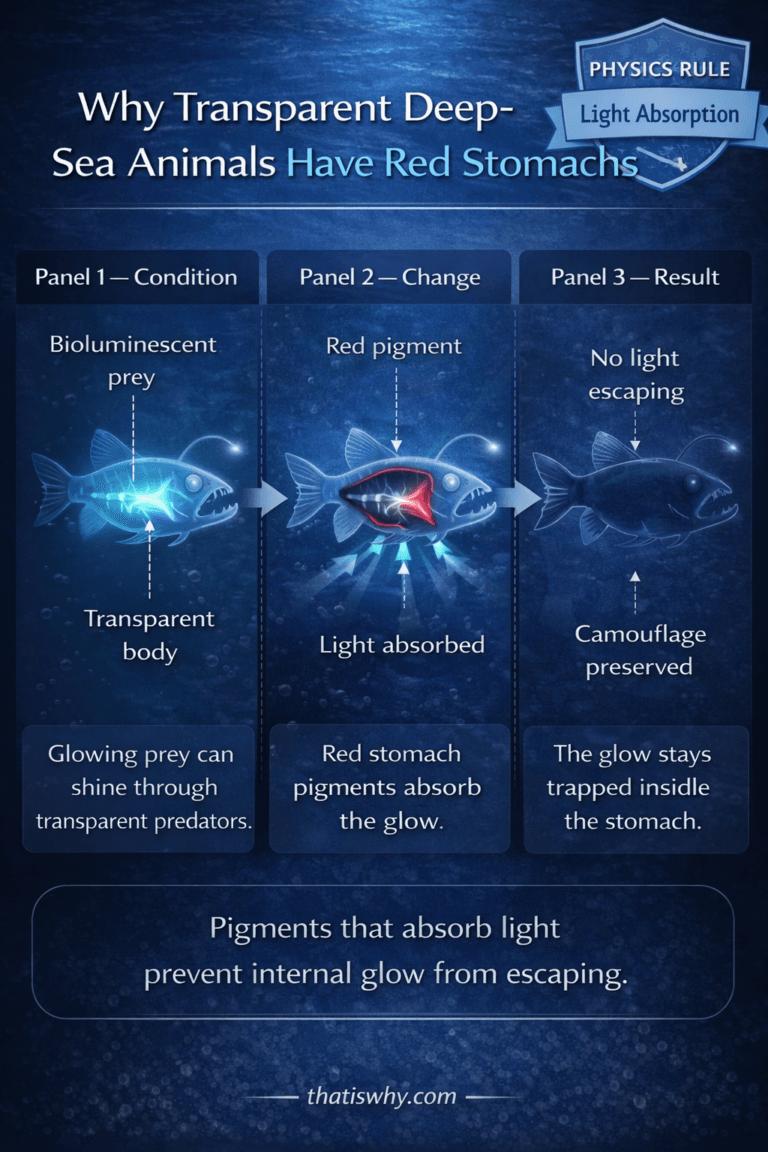
Why Transparent Deep-Sea Animals Have Red Stomachs : The Glowing Lunch Problem
Transparent deep-sea animals often have red or black stomachs for a simple reason: to hide the light from glowing prey. If a clear predator eats a bioluminescent organism, that glow could shine through its body and reveal its position. Red pigments absorb the light, acting like a natural blackout curtain. Look at the picture below…
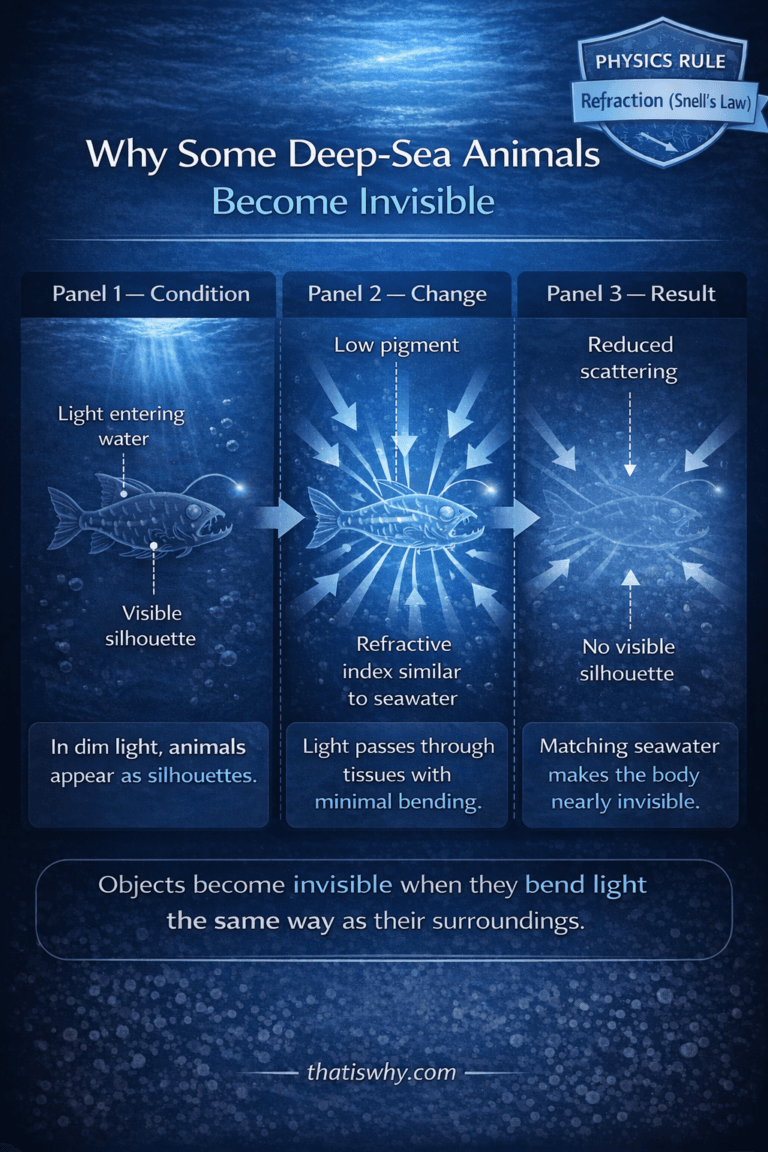
Why Some Deep-Sea Animals Become Invisible – The Physics of Ocean Transparency
Deep-sea animals become transparent by matching how seawater bends light. Their bodies contain very little pigment and are made mostly of water, allowing light to pass through with minimal scattering. When light moves through their tissues almost the same way it moves through seawater, their outline fades. In the dim waters of the ocean’s twilight…
Why Life Can Exist in the Crushing Depths of the Ocean: The Airless Empire
Life in the deep ocean survives pressures hundreds of times stronger than at the surface. The key is not resistance but equilibrium. Most deep-sea organisms avoid air pockets and build fluid-filled bodies that match the surrounding pressure, allowing the force of the ocean to pass through them rather than crush them. If a submarine hull…
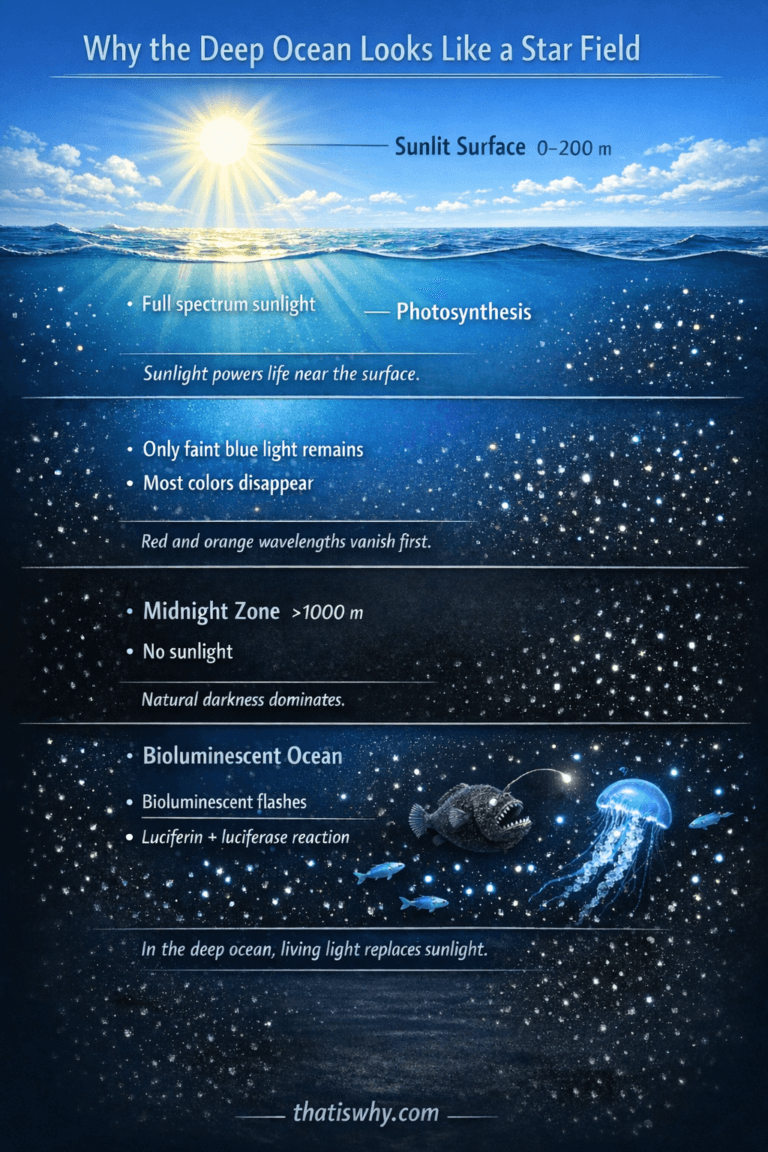
Why the Deep Ocean Looks Like a Blue Star Field
In the deep ocean, sunlight disappears and the only light that remains comes from living creatures. Instead of a brightly lit underwater world, the abyss looks more like a dark sky scattered with faint blue sparks of Bioluminescence. Most of the water would appear completely black, tiny flash of blue light would appear somewhere in…
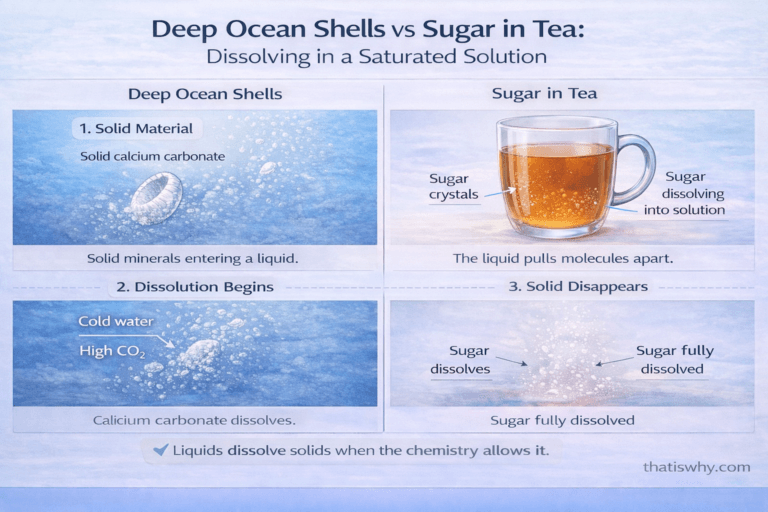
Why Shells Dissolve in the Deep Ocean
If you dropped a pearl into the deepest parts of the ocean, it would not simply sit on the seafloor forever. Given enough time, it would slowly dissolve. This happens because the deep ocean contains an invisible chemical boundary known as the Carbonate Compensation Depth. Somewhere between roughly four and five kilometers below the surface,…
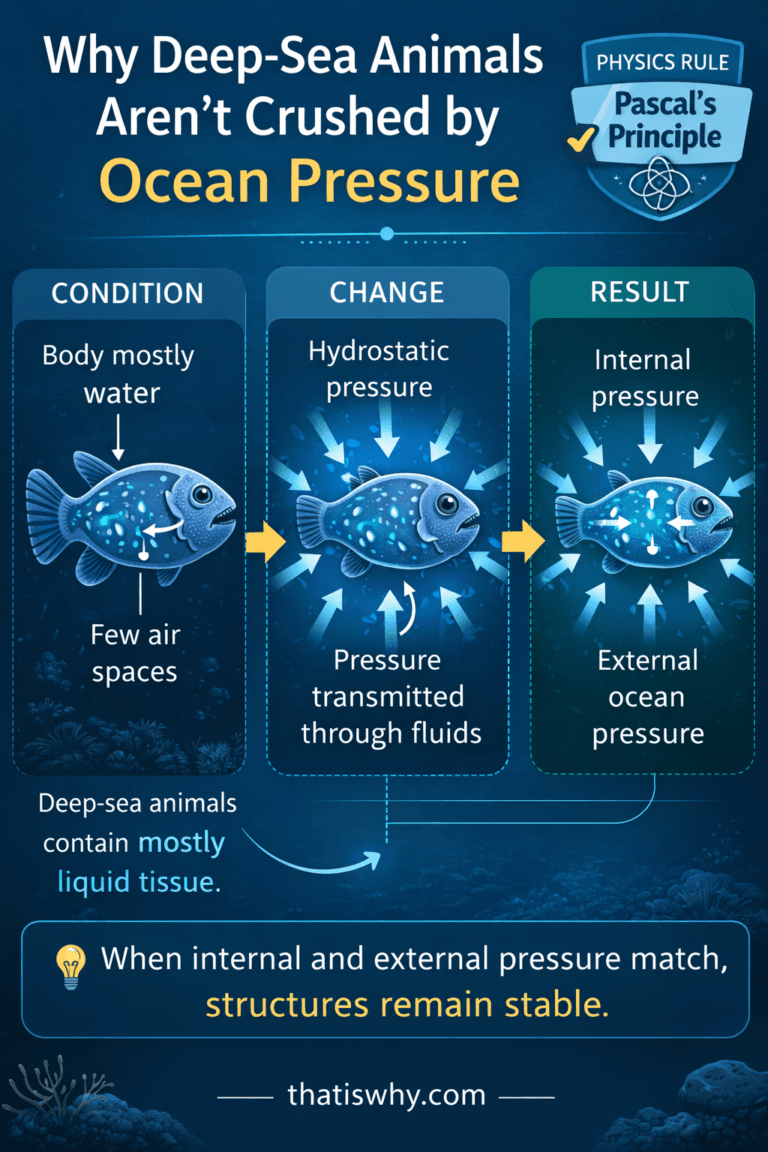
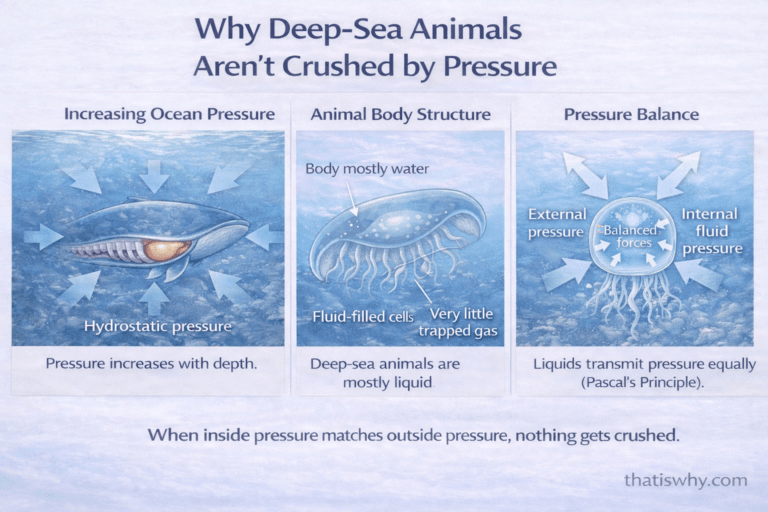
Why don’t deep-sea animals get crushed – The Water Balloon Logic
Deep-sea animals are not crushed by ocean pressure because their bodies are mostly water and solids, which resist compression. Since liquids transmit pressure equally in all directions according to Pascal’s Principle, the pressure inside their fluid-filled cells rises at the same rate as the surrounding ocean, keeping the forces balanced. Imagine holding a water balloon…
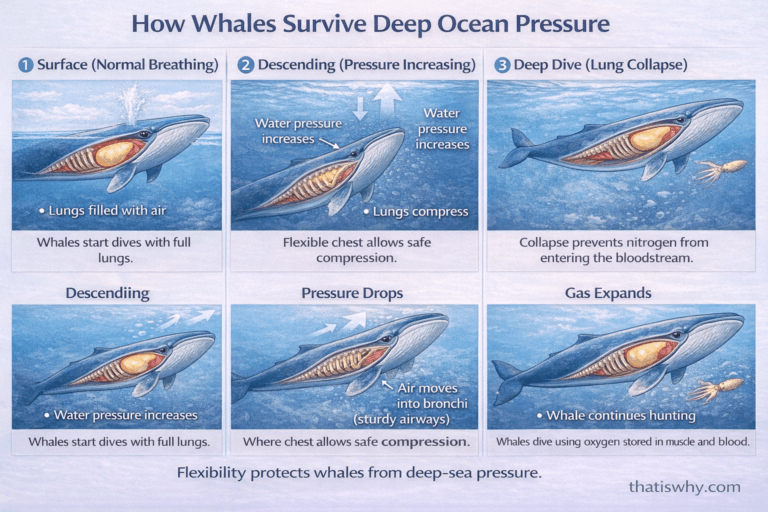
Why Whales Survive by “Breaking” Their Own Lungs : The Folding Giant
If a steel submarine sinks too deep into the ocean, the pressure eventually crushes the hull the way a soda can collapses when squeezed too hard. Engineers spend enormous effort designing thick metal structures that can resist that force. Whales solve the same problem in the opposite way. Instead of resisting pressure, they allow parts…
How to read these guides
Each guide focuses on one clear question. Start anywhere, then follow related explanations to explore deeper systems and connections.