Why Deep sea fishes Are Velvet Black : The 1,000m Flip
Deep-sea fish below 1,000 meters are black because transparency stops working in total darkness. In the midnight zone, predators use bioluminescent light like searchlights. A transparent body can still glint when hit by a beam, but ultra-black skin absorbs nearly all incoming light and prevents any reflection.
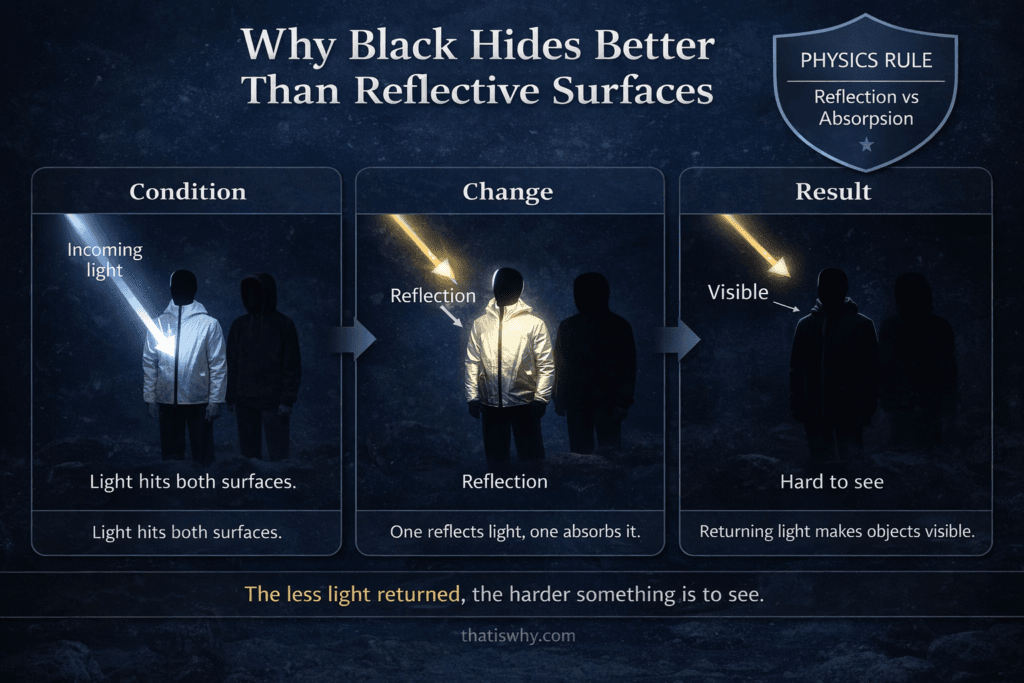
A reflective jacket catches light immediately, while a black hoodie does the opposite and fades in low light as its edges soften and its shape becomes harder to separate from the background.
That difference becomes critical in the deep ocean.
Below about 1,000 meters, sunlight disappears completely and the only light comes from living things. Small flashes drift through the water, and narrow beams cut through the darkness.
In that kind of environment, even a faint reflection stands out. A clear body no longer disappears because it produces a small glint when light hits it, and that is enough to reveal it.
The strategy changes at that point, instead of letting light pass through or reflecting it, these animals absorb it so nothing comes back.
Why Ultra-Black Skin Does Not Reflect Light
A black surface does not always behave the same way.
A black hoodie absorbs a lot of light, but it still shows folds and edges because some light always returns to your eyes.
Deep-sea fish push that idea further.
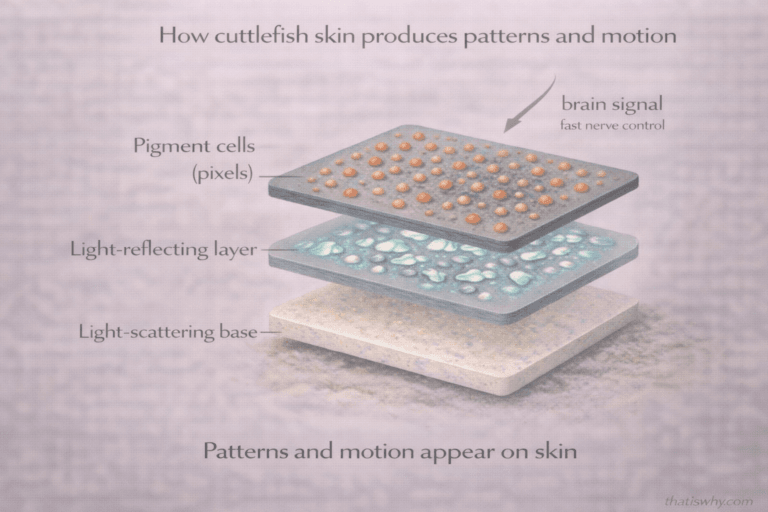
Their skin is not just dark in color, because it is built to trap light once it enters. Inside the skin are tiny pigment-filled structures packed tightly together and arranged at slightly different angles.
When light hits the surface, it does not bounce off cleanly.
It enters the skin and begins to scatter between these structures, losing energy as it moves through them. Each time it interacts with the surface, a small amount of that energy is absorbed.
By the time any of it could return, there is almost nothing left : the surface no longer behaves like fabric, light goes in, and it does not come back out.
Why Transparency Stops Working in the Midnight Zone
Transparency works when light is spread out.
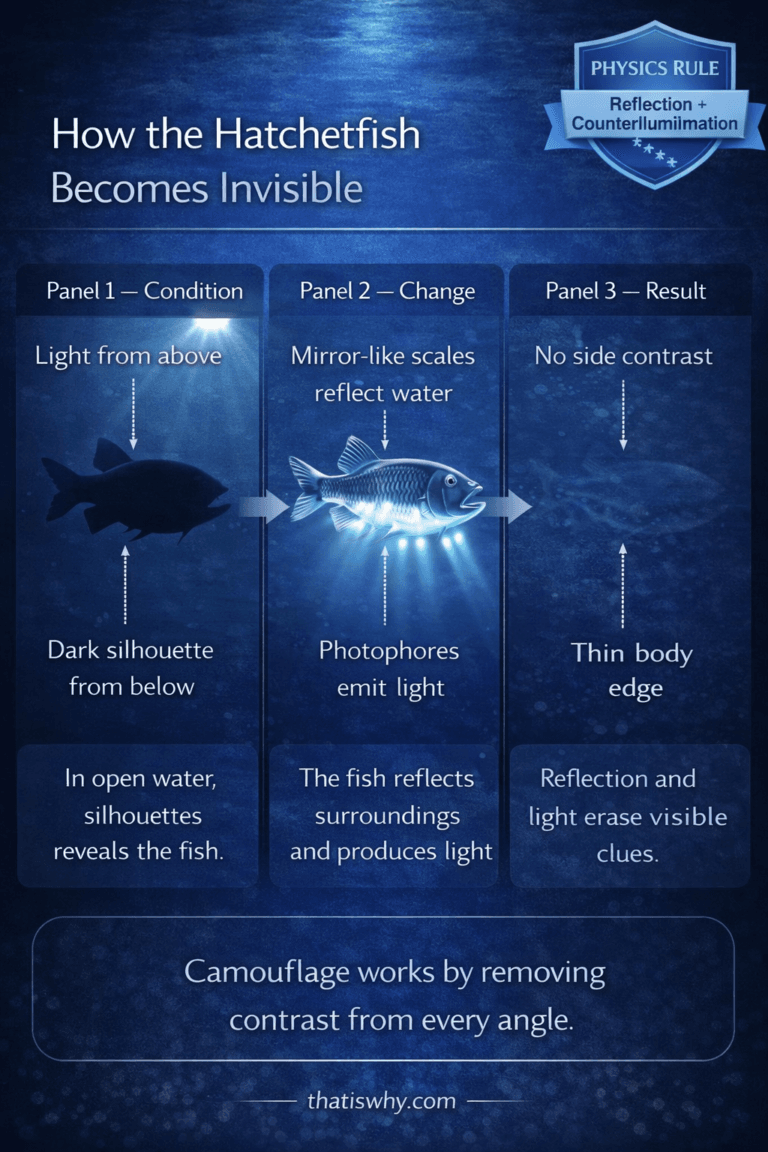
In the upper layers of the ocean, light comes from many directions at once, which allows a clear body to blend in because it does not interrupt a single strong beam. There is no sharp contrast, only a soft field of light moving through the water.
That condition disappears below about 1,000 meters.
Light is no longer ambient. It appears in isolated flashes and narrow beams produced by living organisms, and those beams cut through the darkness instead of blending into it.
In that environment, a transparent body behaves differently.
Even the clearest tissue bends light slightly. When a direct beam hits it, that small difference creates a faint glint. In a place that is otherwise completely dark, that glint stands out immediately.
The problem is not how much light is present, but how focused it is : a single beam is enough. Transparency can hide you in a field of light, but it cannot hide you from a spotlight.
The Fish That Leaves No Trace
Some deep-sea fish take this idea all the way.
The Pacific blackdragon does not just look dark. Its body absorbs almost all the light that reaches it, leaving almost nothing to reflect back. In the midnight zone, that difference changes everything.
Light in this part of the ocean is not a background. It comes in brief flashes and narrow beams, often used by predators to search the water in front of them. Anything that reflects even a small amount of that light becomes visible.
Most surfaces would give something back.This fish does not. When light reaches its skin, there is no flash, no edge, and no outline forming: light fades before it can return.
That totally changes how it moves within the water. It can drift close to a glowing lure or pass through a beam without revealing its presence. Where another body would create a faint signal, this one leaves nothing to detect.
The Bigger Pattern: When Light Stops Coming Back
The shift at 1,000 meters is not just about darkness. It changes the rules of what can be seen.
Above this depth, light is spread out, and animals can blend in by letting it pass through or by matching it. Below it, light becomes rare and directional, and anything that sends light back begins to stand out.
That changes the goal.
A reflective jacket gives itself away the moment light hits it, while a black hoodie fades because it returns less light. In the midnight zone, that difference is pushed much further, because even a faint return is enough to be noticed.
Some animals reduce reflection, but others go further and absorb nearly everything that reaches them. The surface stops behaving like fabric and starts behaving like a trap.
Light reaches it, moves through it, and fades instead of returning. This follows the same pattern seen across the deep ocean.
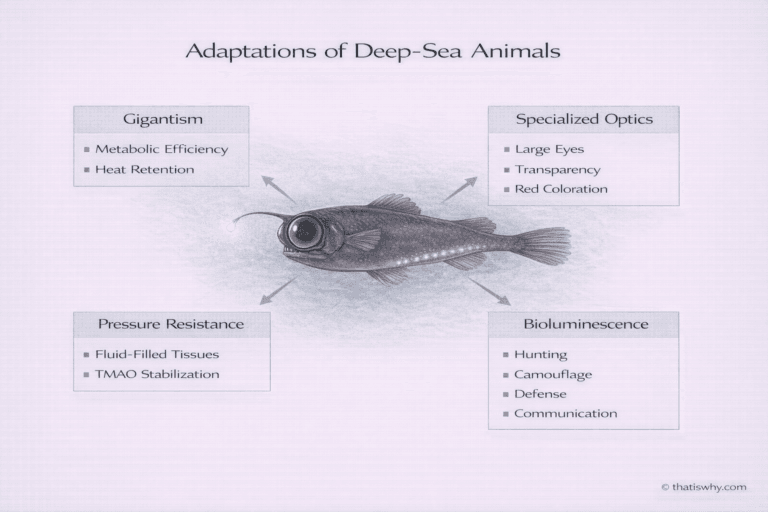
In Why Life Can Exist in the Crushing Depths of the Ocean: The Airless Empire, survival comes from matching the behavior of water. In Why Transparent Deep-Sea Animals Have Red Stomachs :The Glowing Lunch Problem, survival depends on controlling light inside the body. Here, survival depends on stopping light from coming back at all.
Different environments push the same idea in different directions.
The deeper the ocean gets, the less room there is for error, and at that point even the smallest reflection is enough to give something away.
Reality About Why Deep-Sea Fish Are Black
Myth #1 — Black Color Is Just Basic Camouflage
Truth — Black Means Light Does Not Come Back
Thinking these fish are black simply to blend into the dark, the same way animals on land use color to match their surroundings. That idea sounds right, but it misses the real point. A black hoodie fades in low light because it returns less light, but you can still see its shape and edges.
Deep-sea fish go further than that. Their skin absorbs incoming light so completely that almost nothing comes back to your eyes. Instead of blending into darkness, they remove the signal that would reveal them when light hits their bodies.
Myth #2 — If It Is Dark, Color No Longer Matters
Truth — Color Still Matters Because Light Still Moves
It might seem like color stops mattering once sunlight disappears but midnight zone is dark, but it is not empty, small flashes, glows, and narrow beams move through the water all the time.
When that light hits something, it either comes back or it does not.Transparent bodies can still produce a faint glint, while ultra-black surfaces absorb the light before it returns. That difference decides whether something is seen.
Myth #3 — Transparency Always Works Better
Truth — Transparency Breaks Under a Beam
IIt works so well in the upper ocean that it can seem like the best solution everywhere, in the twilight zone light is soft and spread out, so transparent bodies blend in.
In the midnight zone, light becomes focused. When a beam hits a clear body, even a small difference creates a visible glint. At that point, letting light pass through is no longer enough : the strategy shifts from blending with light to stopping it completely.
Why the Deepest Ocean Favors Surfaces That Leave No Trace
A reflective jacket stands out because it throws light back, while a black hoodie reduces that effect but still returns enough light to reveal a shape. In the midnight zone, even that small return can be enough to give something away.
What matters here is not how something looks in general, but what happens the moment light touches it.
Deep-sea fish take control of that moment. When light reaches their skin, it does not form a highlight, an edge, or a flash. It fades before anything can return to the observer, which means there is no clear signal to detect.
That changes how they appear in the water.
Instead of blending into darkness, they fail to produce the contrast that would define their shape. Without that contrast, there is no obvious boundary to lock onto.
As conditions shift deeper in the ocean, the rules become stricter.
Light becomes rare and directional, and anything that sends even a small amount back becomes visible. At that point, survival depends on leaving as little trace as possible.
How We Researched This :
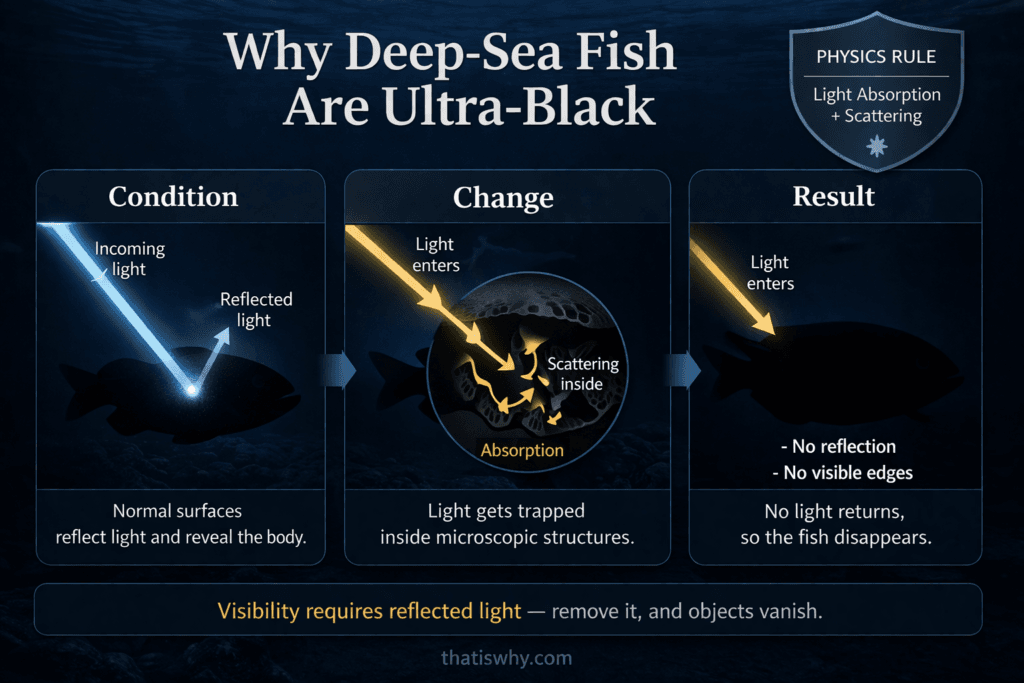
Understanding why some deep-sea fish are ultra-black, we looked at research in marine optics and biological materials, focusing on how certain animals absorb light instead of reflecting it. Studies on species such as Pacific blackdragon and other ultra-black fish show that their skin contains densely packed pigment structures that trap incoming light.
Research from institutions like Woods Hole Oceanographic Institution and Monterey Bay Aquarium Research Institute has helped explain how this structure works, showing how light can be redirected and absorbed within the surface before it has a chance to return.
But describing the structure alone does not make the effect easy to picture. The clearer question was what this behavior would look like in everyday life. That is what led to “the hoodies analogy“, where the difference between reflecting light and absorbing it feel intuitive.