Why Transparent Deep-Sea Animals Have Red Stomachs : The Glowing Lunch Problem
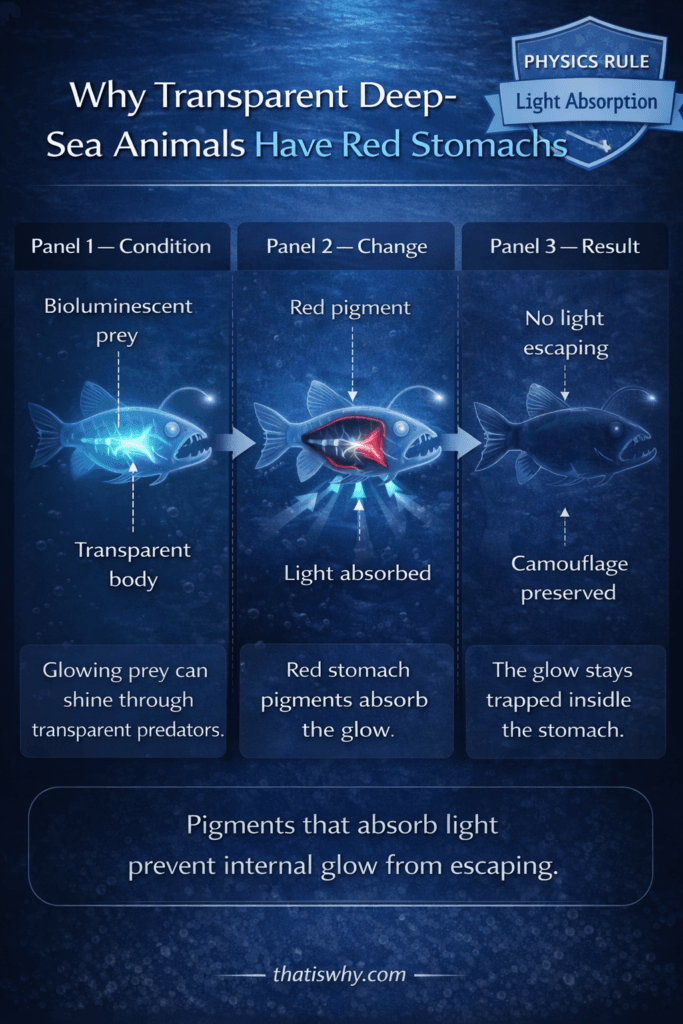
Transparent deep-sea animals often have red or black stomachs for a simple reason: to hide the light from glowing prey. If a clear predator eats a bioluminescent organism, that glow could shine through its body and reveal its position. Red pigments absorb the light, acting like a natural blackout curtain.
Look at the picture below placing a phone inside a clear plastic lunchbox and turning on the flashlight.
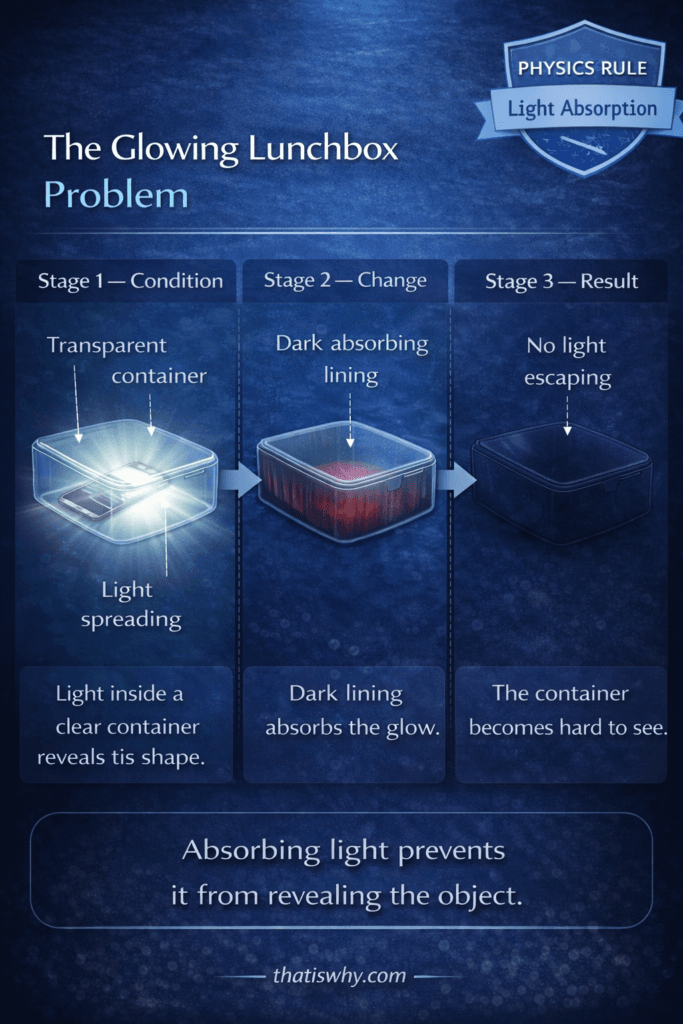
The container itself is transparent, yet the moment the light switches on the entire box becomes obvious. The glow spreads through the plastic and suddenly the shape of the box is impossible to miss.
Transparent predators in the deep ocean face the same challenge.
Many animals in the twilight zone rely on transparency to stay hidden. Their bodies allow light to pass through with very little disturbance, which makes them extremely difficult to see against the surrounding water. That optical trick, explained in our previous guide Why Some Deep-Sea Animals Become Invisible , works well until the animal catches something to eat.
If that prey produces bioluminescent light, the glow does not stop after it is swallowed.
Instead, it can shine from inside the predator’s body, turning a nearly invisible hunter into a drifting beacon in the dark ocean.
Evolution solved this problem, the digestive system becomes a blackout curtain.
Why a Red Stomach Works Like a Blackout Curtain
Think again about the lunchbox with your phone flashlight inside.
If the box were perfectly clear, the glow would spill through the plastic and reveal the whole container. The only way to stop that glow would be to place something inside that absorbs the light before it escapes.
That is exactly what the red stomach does. At first it seems like a strange color choice. If the goal is to hide light, why evolve a red organ instead of a black one?
The answer comes from the way light behaves in the ocean.
As sunlight travels downward, the colors disappear one by one. Red light fades first, usually within the upper hundred meters. By the time you reach the twilight zone, almost all that remains is dim blue light filtering from the surface.
In a world filled mostly with blue light, a red surface has nothing to reflect, instead of looking red, it simply looks dark.
For a transparent predator, that creates a useful shortcut. A stomach filled with red pigments behaves like a natural blackout curtain inside the body. When a glowing shrimp or copepod is swallowed, the pigments absorb most of that blue-green light before it can escape.
The lunchbox stays dark, even though the flashlight inside is still on. From the outside, the predator continues drifting through the water almost invisible, even while digesting a glowing meal.
Case Study: The Strange Body Plan of Cystisoma
A good example of this solution appears in a deep-sea crustacean called Cystisoma.
At first glance the animal looks almost unreal. Its body is long, delicate, and nearly transparent, so light passes through it with very little disturbance. Against the surrounding water the creature can be difficult to notice, as if a small piece of the ocean itself were drifting past.
Then you notice the one part that breaks the illusion. Near the center of the body sits a single dark structure shaped like a thin spindle. Everything around it appears clear, yet this one organ stands out.
That structure is the stomach.
Without that pigment the animal would face the same problem as the phone flashlight shining inside the clear lunchbox. Every time the Cystisoma swallowed a glowing copepod or shrimp, the light from that prey could shine through its transparent body and reveal its position.
The dark gut prevents that from happening.
Instead of letting the glow spread outward, the pigments inside the digestive tract absorb the light before it reaches the outer body. From the outside the animal continues drifting through the water almost invisibly, even while digesting prey that would otherwise glow like a tiny lantern inside it.
The Other Opaque Problem: Why Eyes Cannot Be Transparent
The red stomach solves the glowing lunch problem, but it is not the only place where transparency runs into limits.
Eyes create another one. Think again about the clear lunchbox with the phone flashlight inside. Even if the walls of the box remain nearly invisible, a bright or dark object inside would still reveal that something is there.
For transparent animals, the eyes play a similar role.
Seeing requires absorbing light. The retina captures incoming photons and converts them into signals the brain can interpret. If the eye were perfectly transparent, the light would simply pass through and the animal would see nothing.
So the eyes cannot disappear.
Against an otherwise clear body, they often appear as small dark points drifting through the water. Many deep-sea species reduce this problem by making those eyes as small and discreet as possible.
Some develop narrow tube-shaped eyes that point upward toward the faint light from the surface. Others angle their eyes so that most of the dark tissue stays hidden from the side, where predators are most likely to notice it.
The strategy follows the same logic as the red stomach lining the lunchbox.
The body remains clear, while the few parts that cannot stay invisible are kept small enough to avoid drawing attention.
Creatures like Cystisoma are good reminders that life in the deep ocean often solves problems with unusual designs. Many of those strange solutions appear in species that seem to break the usual rules of anatomy, which is why we explore them further in Biological Anomalies: Life That Breaks the Rules.
The Deeper Principle: When Camouflage Must Work From the Inside
By the time a transparent predator swallows glowing prey, the camouflage problem has moved inside the body.
The animal may already match the surrounding water so closely that predators cannot see its outline. Light can pass through the body with barely any distortion.
But bioluminescent prey changes the situation.
Instead of light coming from outside, the light now comes from within. A glowing shrimp inside a transparent body would shine outward in every direction, revealing the predator drifting in the water.
The red stomach solves that problem by turning the inside of the body into a light trap.
Instead of allowing the glow to leak outward, the pigments inside the digestive tract absorb it before it reaches the transparent tissues around it. From the outside, the animal continues drifting through the water with almost no visible trace.
What looks like a simple color change is really a continuation of the same strategy used across the deep ocean.
Creatures survive crushing pressure by filling their bodies with fluid that moves with the surrounding water. They stabilize their proteins so chemistry continues under enormous pressure. They shape their bodies to match the strange physics of the ocean around them.
The red stomach simply extends that idea one step further.
Even the light produced inside the body must be managed carefully if the animal wants to remain unseen.
In the twilight zone, survival often depends on controlling the smallest details. When predators are scanning the water for the faintest shimmer or flash, the difference between being invisible and being noticed can be nothing more than a meal glowing quietly inside your stomach.
Three Common Myths About Transparent Deep-Sea Animals
Myth #1 — Transparency Hides Everything Inside the Body
It is easy to imagine that a transparent animal hides everything inside its body.
But transparency can create the opposite problem.
Think again about the clear lunchbox with the phone flashlight inside. The container itself may be transparent, yet the moment the flashlight turns on the glow spreads through the plastic and reveals the entire box.
Transparent animals face the same risk when they swallow glowing prey.
Truth — Internal Light Must Be Contained
Many small deep-sea animals produce bioluminescent light. When a transparent predator eats one of these creatures, the glow can continue inside the stomach.
Without protection, that light would spread through the transparent body and reveal the predator’s position. The red stomach acts like a lining inside the lunchbox, absorbing the light before it escapes.
Myth #2 — A Red Organ Should Be Easy to See
On the surface, red is one of the most noticeable colors in nature. It might seem strange that an animal trying to stay hidden would evolve a bright red stomach.
Truth — Red Appears Dark in the Deep Ocean
As sunlight travels downward through seawater, red wavelengths disappear first. By the time you reach the twilight zone, the ocean is filled mostly with dim blue light.
Without red light to reflect, a red surface appears dark. In that environment, a red stomach functions almost exactly like a black one, trapping light instead of reflecting it.
Myth #3 — Transparency Works by Itself
A clear body might seem like a perfect camouflage strategy.
Truth — Transparency Works as Part of a System
Deep-sea animals remain hidden because several adjustments work together.
The body allows outside light to pass through, the stomach absorbs the glow of swallowed prey, and the eyes are shaped and positioned to minimize the dark surface that could reveal the animal.
Each change removes another clue that predators might use to detect a creature drifting through the dim twilight of the open ocean.
Why Invisibility in the Deep Ocean Is Really About Controlling Light
By the time a transparent predator swallows glowing prey, the camouflage problem has moved inside the body.
The animal may already match the surrounding water so closely that predators cannot see its outline. Light can pass through the body with very little disturbance.
But the moment light appears inside the body, the situation changes.
A glowing shrimp or copepod can turn a nearly invisible predator into a drifting signal in the water. The red stomach prevents that from happening.
Instead of letting the glow leak outward, the pigments inside the digestive tract absorb it before it reaches the clear tissues around it. From the outside, the animal continues drifting through the water with almost no visible trace.
In the twilight zone, where predators search for the faintest flash of light, even a successful meal has to be hidden carefully.
How We Researched This :
To explain why transparent deep-sea animals evolve red stomachs, we reviewed research in marine optics, deep-sea ecology, and bioluminescence. Much of the scientific understanding comes from studies of how light travels through seawater and how transparent organisms control scattering, reflection, and internal light.
Observations of mid-water species such as Cystisoma have shown how transparent predators isolate their digestive organs with pigments that absorb bioluminescent light. Research from institutions including the Woods Hole Oceanographic Institution and the Monterey Bay Aquarium Research Institute has documented how transparency, refractive index matching, and light absorption work together as camouflage strategies in the twilight zone.
But describing optical measurements alone does not make the idea intuitive. Our real job began when we asked a simpler question: what would this problem look like in everyday life? That question led us to the phone flashlight in a clear lunchbox analogy, which make the central challenge these animals face more intuitive.