Free teaching diagram
Gympie-Gympie Diagram: Why the Stinging Tree Hurts So Long
The gympie-gympie's hairs snap off like needles, inject a spider-like toxin, and can stay in the skin for months.
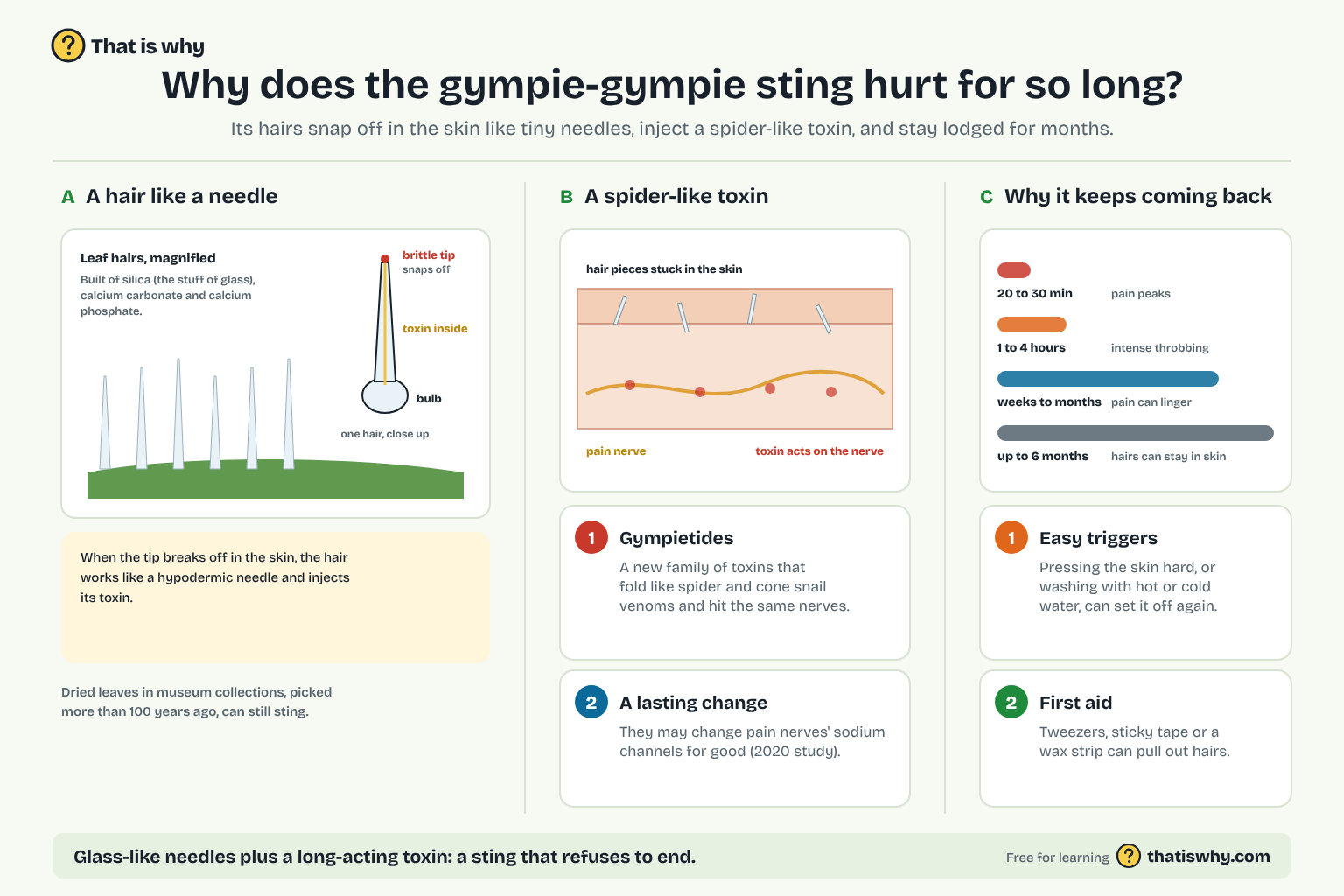
What the diagram shows
A. A hair like a needle. The gympie-gympie's leaves are covered in stinging hairs, or trichomes, built of silica, calcium carbonate and calcium phosphate. When the brittle tip snaps off in the skin, the hair works like a hypodermic needle and injects its toxin. Dried leaves in collections, picked more than 100 years ago, can still sting.
B. A spider-like toxin. In 2020, researchers at the University of Queensland found that the pain comes from gympietides, a new family of small toxin proteins. They fold like spider and cone snail venoms and target the same pain nerves, and they may change those nerves' sodium channels for good. Earlier suspects such as histamine, acetylcholine and formic acid did not reproduce the pain.
C. Why it keeps coming back. The pain peaks 20 to 30 minutes after contact, and intense throbbing lasts 1 to 4 hours, but symptoms can linger for weeks, sometimes months, and hairs can stay in the skin for up to six months. Pressing the skin hard or washing it with hot or cold water can set the pain off again. Tweezers, sticky tape or a hair-removal wax strip can pull the hairs out, and rubbing the sting should be avoided.
Key numbers
| Fact | Value |
|---|---|
| Pain peaks after | 20 to 30 minutes |
| Intense throbbing | 1 to 4 hours |
| Pain can linger | weeks, sometimes months |
| Hairs can stay in the skin | up to 6 months |
| Dried specimens that still sting | more than 100 years old |
Common misconceptions
Myth The sting is caused by a simple irritant like formic acid.
The truth Injecting histamine, acetylcholine or formic acid did not reproduce the pain; the culprits are gympietides, a new family of toxins.
Myth Once the leaf dries out, it's harmless.
The truth Dried specimens picked more than 100 years ago can still sting.
Myth The pain is over in a few minutes.
The truth Intense pain lasts 1 to 4 hours, and it can linger or flare up again for weeks, sometimes months.
Questions to use in class
Tap a question to reveal a model answer.
1What is the gympie-gympie?
An Australian stinging tree (Dendrocnide moroides) whose leaves are covered in stinging hairs.
2How do the hairs sting?
Their brittle tip snaps off in the skin and the hair injects toxin like a hypodermic needle.
3What toxin causes the pain?
Gympietides, small proteins that fold like spider and cone snail toxins and target the same pain nerves.
4Why does the pain come back?
Hairs can stay in the skin for up to six months, and pressing the skin or washing it with hot or cold water can set the pain off again.
Key terms
- Trichome
- A tiny hair on a plant's surface. On the gympie-gympie, each stinging hair has a brittle tip that snaps off in the skin and injects toxin, like a hypodermic needle.
- Gympietides
- A family of small toxin proteins found in Australian stinging trees. They fold like spider and cone snail toxins, target the same pain nerves, and may change those nerves' sodium channels for good.
Sources
- 'The worst kind of pain you can imagine': what it's like to be stung by a stinging tree The Conversation
- Native stinging tree toxins match the pain of spiders and scorpions (Gilding et al., Science Advances 2020) University of Queensland
- Will touching an Australian plant cause so much pain that animals and humans have killed themselves as a result? (with Health Direct first-aid advice) Africa Check