Why Whales Survive by “Breaking” Their Own Lungs : The Folding Giant
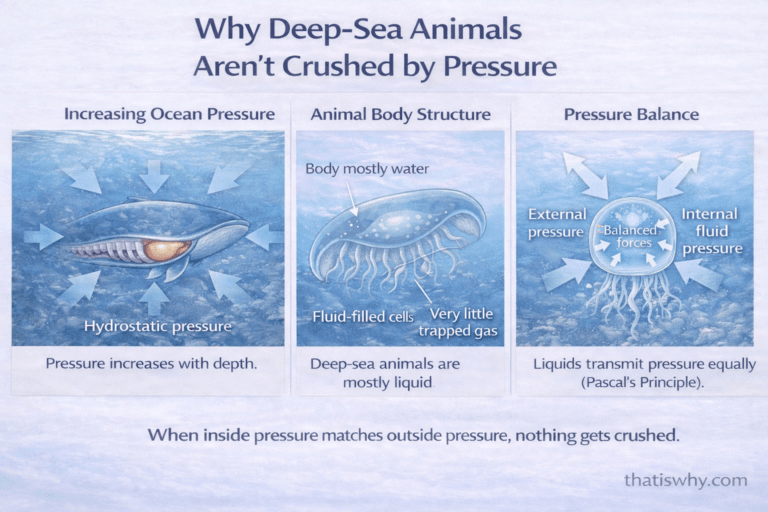
If a steel submarine sinks too deep into the ocean, the pressure eventually crushes the hull the way a soda can collapses when squeezed too hard. Engineers spend enormous effort designing thick metal structures that can resist that force.
Whales solve the same problem in the opposite way.
Instead of resisting pressure, they allow parts of their bodies to collapse safely during deep dives. Their lungs flatten, their chest compresses, and their ribs fold inward without breaking a single bone. What would destroy a machine is simply part of a whale’s normal routine.
Whale lungs really do collapse during deep dives, but they collapse in a controlled way that protects the animal.
The Animal That Survives by Folding Itself
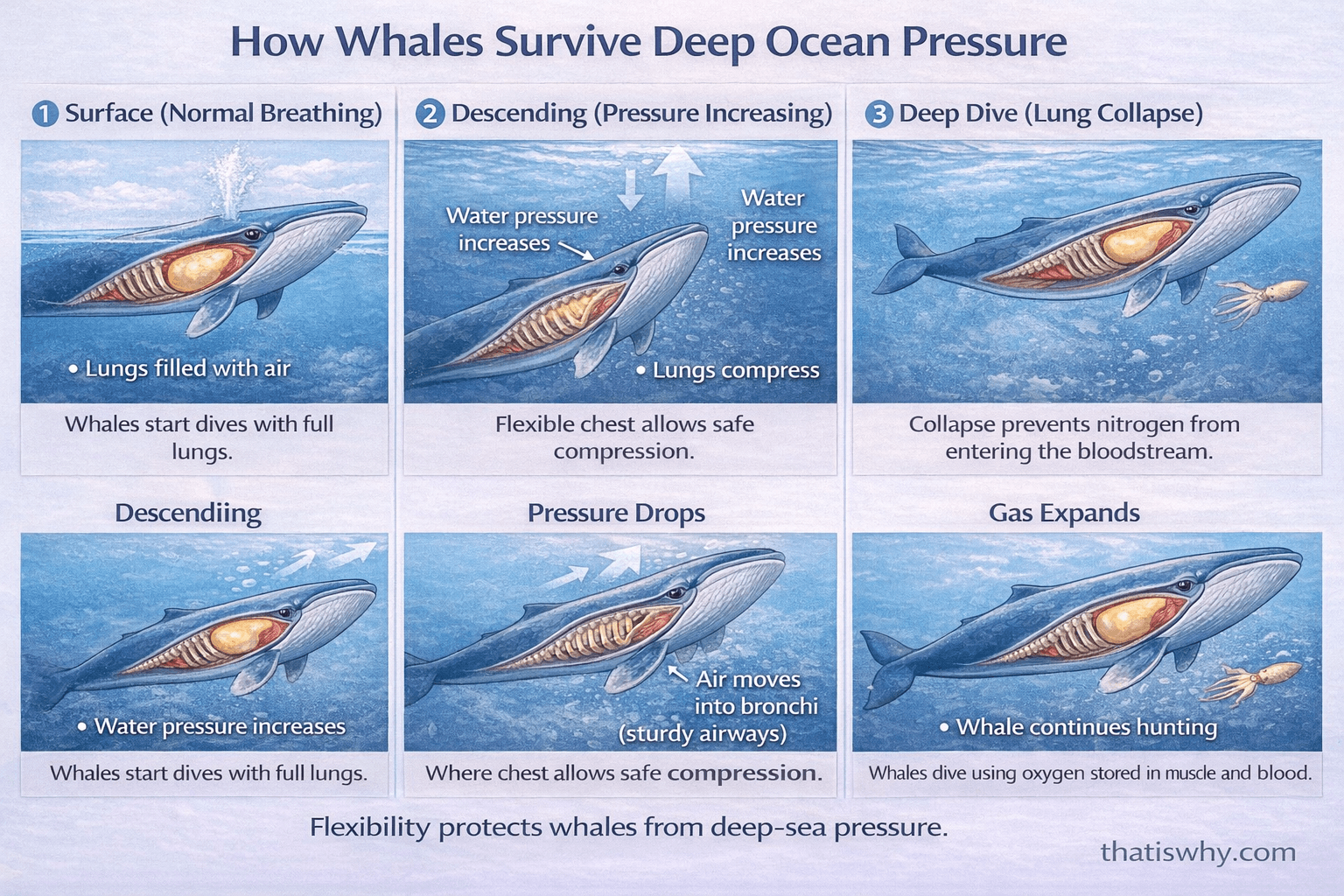
When a whale begins a dive, it starts with a full breath of air much like a human preparing to swim underwater. As the animal descends hundreds or even thousands of meters, the weight of the water above it increases steadily, squeezing any pocket of gas inside the body.
Some whales dive deeper than two thousand meters, and the record holder, the Cuvier’s beaked whale, has been recorded reaching nearly three thousand meters below the surface. At that depth the surrounding pressure is hundreds of times stronger than the pressure we experience on land.
A rigid structure would struggle under that force.
Whales survive because their bodies are designed to flex rather than resist.
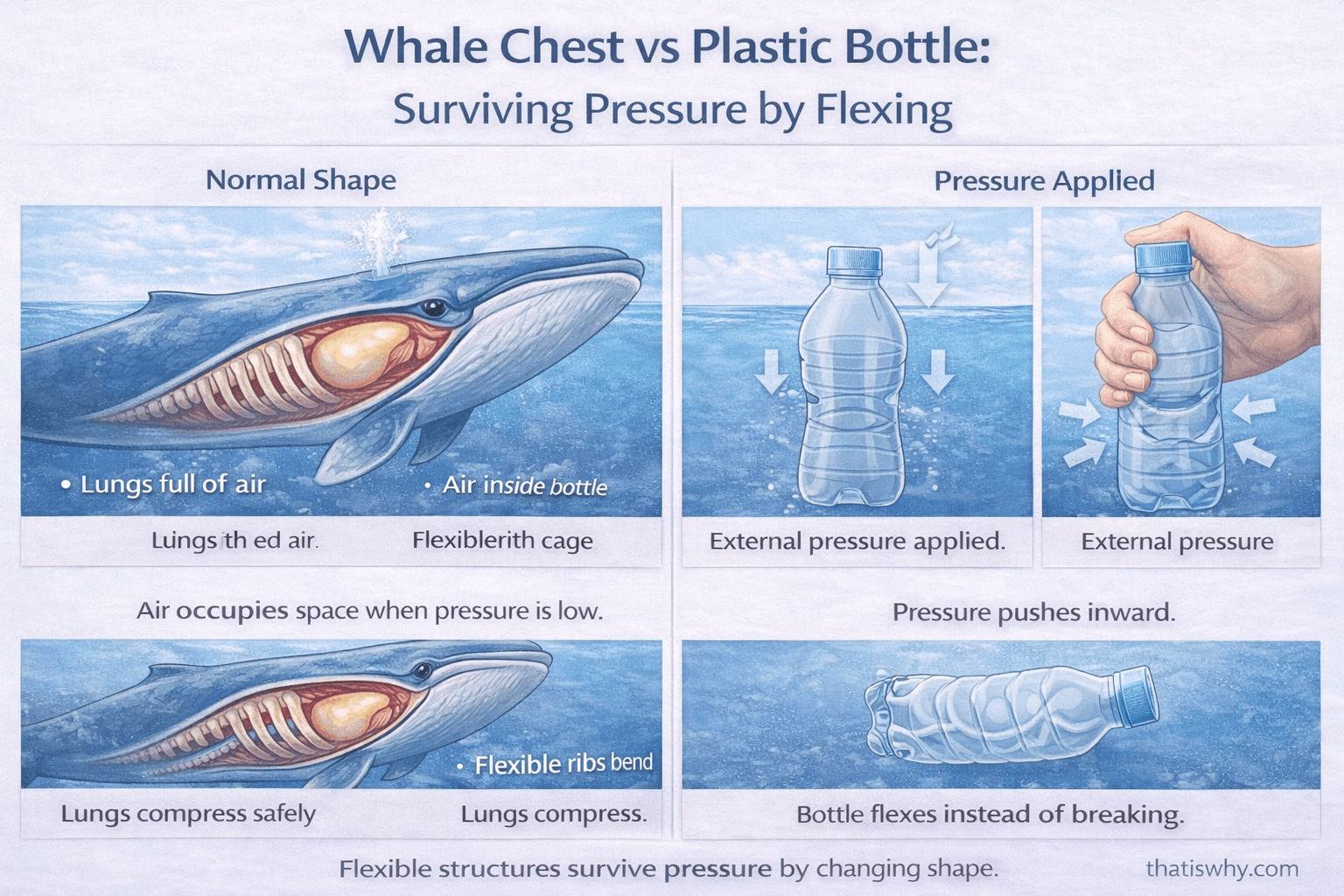
Their ribs are loosely connected and capable of folding inward as pressure increases, which allows the chest cavity to shrink safely. The lungs inside that chest compress along with it.
This becomes easier to picture with a simple comparison. A soda can collapses permanently when squeezed because the metal cannot flex. A plastic water bottle dents inward under pressure and springs back when the force disappears.
A whale’s chest behaves far more like that flexible bottle.
As the ocean presses inward, the rib cage yields and the lungs compress safely. When the whale returns to the surface, the chest expands again and breathing resumes normally.
This ability to fold also protects whales from a dangerous gas problem that affects divers and many deep-sea fish. If you read our earlier explanation of why some fish appear to explode when they are reeled up too quickly, you saw what happens when trapped gas expands during rapid pressure changes. Whales avoid that problem entirely by collapsing their lungs before the pressure can force dangerous gases into their bloodstream.
How a Whale’s Chest Bends Instead of Breaking
To understand what happens as a whale dives deeper, it helps to return to the plastic water bottle.
If you squeeze a flexible bottle with your hand, the sides dent inward and the bottle briefly changes shape. The structure absorbs the pressure instead of fighting it. When you release your grip, the bottle expands again and returns to its original form.
A whale’s rib cage works in a very similar way.
In humans, the ribs are tightly connected and form a relatively rigid cage around the lungs. That rigidity protects the organs, but it also means the chest cannot compress very far without injury.
Whales evolved a different design.
Their ribs connect more loosely to the spine and sternum, which allows the entire chest to flex inward as surrounding pressure increases. As the whale descends and the ocean presses harder against the body, the rib cage gradually folds inward instead of resisting the force.
The lungs inside the chest respond in the same way.
Air is easily compressed, so the gas inside the lungs becomes smaller as pressure increases. The tiny air sacs known as alveoli flatten, and the overall lung volume shrinks. Instead of acting like a rigid air-filled balloon, the lungs become a compressed pocket of air safely contained within the flexible chest.
Like with a plastic bottle, when pressure pushes inward, the bottle dents instead of breaking, whale’s chest absorbs the force in the same way, distributing the pressure through flexible bones and soft tissue.
At extreme depths, this compression becomes dramatic. By the time some whales reach several hundred meters below the surface, much of the air that once filled the lungs has been compressed into the larger airways.
That shift turns out to be incredibly important for another reason.
Preventing the Bends: Why Collapsing Lungs Keeps Whales Safe
When a sealed plastic water bottle is squeezed, the air inside becomes compressed and takes up less space. If the bottle remained rigid, the pressure would build until something cracked. Because the bottle can flex, the air simply shrinks into a smaller volume without damaging the structure.
Something very similar happens inside a whale during a deep dive.
As the rib cage folds inward and the lungs compress, the alveoli begin to collapse. for us, those alveoli are where oxygen enters the blood and nitrogen from the air can dissolve into it. At great depths, that process would become dangerous because high pressure forces more nitrogen into the bloodstream.
When a diver ascends too quickly, dissolved gases can form bubbles in tissues and blood, which is the condition known as Decompression sickness.
Whales avoid this problem in a surprisingly simple way.
As the lungs compress, the alveoli collapse and gas exchange effectively shuts down. The remaining air is pushed into the larger airways, which are not designed to transfer gases into the bloodstream. In practical terms, this means the whale stops absorbing nitrogen from its lungs once it reaches deeper parts of the dive.
When the bottle dents inward, the air inside is forced into whatever space remains. In a whale, that space becomes the sturdy windpipe and bronchi, which can hold compressed air without allowing nitrogen to enter the blood.
The lungs collapse in order to protect the whale.
Oxygen Scuba: How Whales Dive with Empty Lungs
If a whale’s lungs flatten during deep dives, where does the oxygen come from?
For us, lungs are the main oxygen reservoir. When we hold our breath, the oxygen stored in the air inside our lungs slowly feeds the bloodstream. If our lungs suddenly collapsed the way a whale’s do at depth, we would run out of usable oxygen very quickly.
Instead of storing most of their oxygen in their lungs, whales store it throughout their bodies. Their muscles are packed with enormous amounts of Myoglobin, a molecule that binds oxygen and holds onto it like a biological battery.
This is why whale muscle appears so dark. The color comes from tissue that is literally loaded with oxygen.
When a flexible bottle dents inward under pressure, the air inside becomes smaller and shifts into whatever space remains. In a whale, the lungs compress in a similar way as pressure increases during a dive.
The difference is that the whale does not depend on that shrinking air pocket for survival. By the time the lungs flatten, the oxygen the whale needs is already distributed through its blood and muscles. The animal is essentially diving with its oxygen supply preloaded throughout its body.
Many whale species can remain underwater for more than an hour while hunting in the deep ocean.
Why Flexibility Beats Strength in the Deep Ocean
When engineers design submarines, the goal is usually to build something strong enough to resist pressure. Thick metal hulls and rigid frames are meant to keep the ocean from crushing the vessel.
Whales survive by following the opposite strategy.
Instead of resisting the pressure, they allow their bodies to adapt to it. Their rib cages bend inward, their lungs flatten, and the pressure that would destroy a rigid structure is absorbed by flexibility.
The plastic bottle comparison makes this difference easy to see. A rigid soda can collapses permanently when squeezed, while a flexible bottle dents inward and springs back once the pressure disappears.
The bottle survives because it allows the shape to change.
Many deep-sea animals follow similar principles. Liquids, oils, and flexible tissues handle pressure far better than rigid air-filled structures. Whales simply take that strategy to an extreme.
The Three Biggest Misunderstandings About Whale Diving
Myth #1: Whale Lungs Stay Full of Air During Deep Dives
Truth: Whale lungs collapse on purpose.
As pressure increases during a dive, the alveoli inside the lungs collapse and push the remaining air into the larger airways. This prevents nitrogen from dissolving into the bloodstream and protects the whale from decompression sickness.
Myth #2: Whales Survive Pressure Because Their Bodies Are Stronger
Truth: Whales survive because their bodies are more flexible.
A rigid chest would struggle under the immense pressure found deep in the ocean. Whale ribs are loosely connected and able to flex inward as pressure increases, allowing the chest cavity to compress safely.
Myth #3: Whales Hold Their Breath Like Human Divers
Truth: Most of their oxygen is stored in muscle, not lungs.
Whales rely heavily on Myoglobin inside their muscles to store oxygen. This allows them to continue hunting long after their lungs have compressed during deep dives.
Why the Ocean Cannot Crush a Whale
When engineers build machines for the deep ocean, the instinct is usually to make everything stronger. Submarines rely on thick steel walls and rigid shapes designed to resist the weight of the water pressing inward.
Whales follow a completely different strategy.
Instead of resisting the pressure, they allow their bodies to adapt to it.
As the whale dives, the rib cage folds inward like a flexible plastic bottle being squeezed. The lungs compress, the air shifts into sturdier airways, and the body absorbs the pressure rather than fighting it. When the whale returns to the surface, the chest expands again and normal breathing resumes.
What would destroy a rigid machine becomes routine for a flexible body.
Once you understand that design, the whale’s dive begins to feel less mysterious. The ocean presses inward, the chest bends instead of breaking, the lungs collapse before nitrogen can enter the blood, and the oxygen needed for the hunt is already stored in muscle.
A whale is not surviving the deep ocean by brute strength. It survives because its body was built to change shape when pressure demands it.
How We Researched This :
To explain how whales survive extreme ocean pressure, we examined marine mammal physiology research on diving adaptations, including studies describing alveolar collapse in deep-diving marine mammals, and oxygen storage research involving high myoglobin concentrations in whale muscle tissue. We also reviewed dive depth records for species such as the Cuvier’s beaked whale (Ziphius cavirostris), the deepest-diving marine mammal ever recorded.
But we knew that simply listing lung anatomy and pressure data would not make the mechanism easy to picture. Our real job began when we asked, “What would this actually look like if you could watch it happen?” That question led us to the “plastic water bottle analogy“, a familiar example that makes the process of a chest bending under pressure feel intuitive.