Why Hamsters Are Walking Warehouses – The Dry Cargo pants
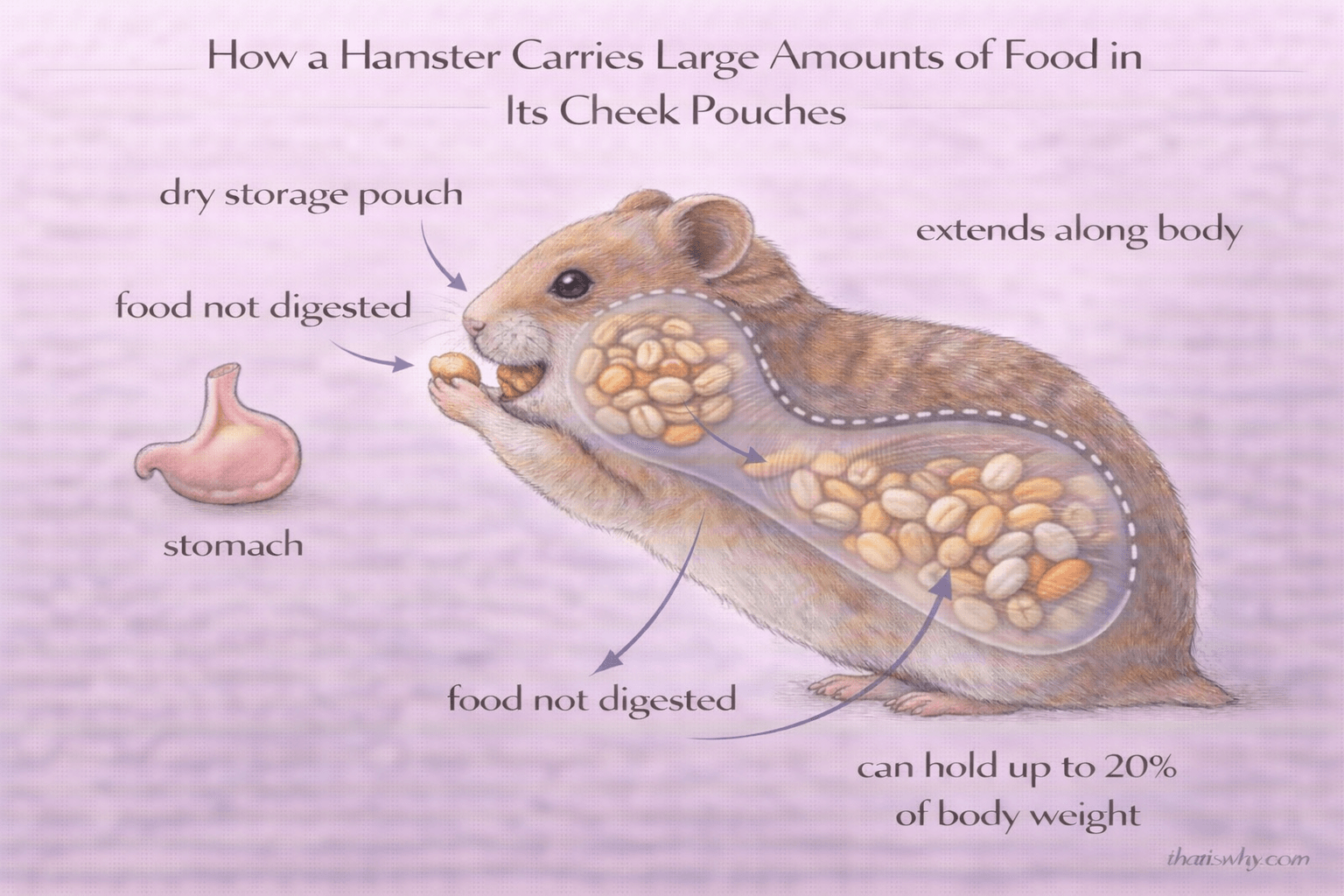
How much can a hamster hold in its cheeks? Hamsters can carry up to 20% of their own body weight in their cheek pouches. These pouches are specialized, expandable sacs that extend from the mouth all the way to the shoulder blades. They allow the animal to transport massive amounts of food without chewing or digesting it.
That is the biological answer. But seeing it happen feels like a magic trick.
If you hand a hamster a carrot that is bigger than its own head, it doesn’t nibble it. It shoves the whole thing in. You watch the carrot disappear, then a peanut, then a piece of broccoli. The hamster’s face never explode, the food just vanishes into the void.
To the observer, it looks impossible. Where is it going? It didn’t go down the throat or go into the stomach. It went into a secret compartment that makes the hamster one of the most efficient cargo haulers in the animal kingdom. It isn’t just eating; it is loading up the truck.
The Cargo Pants of Nature
To understand the anatomy, you have to stop thinking of these as “cheeks.” When you stuff your cheeks, the food stays in your mouth.
Hamsters are wearing Cargo Pants.
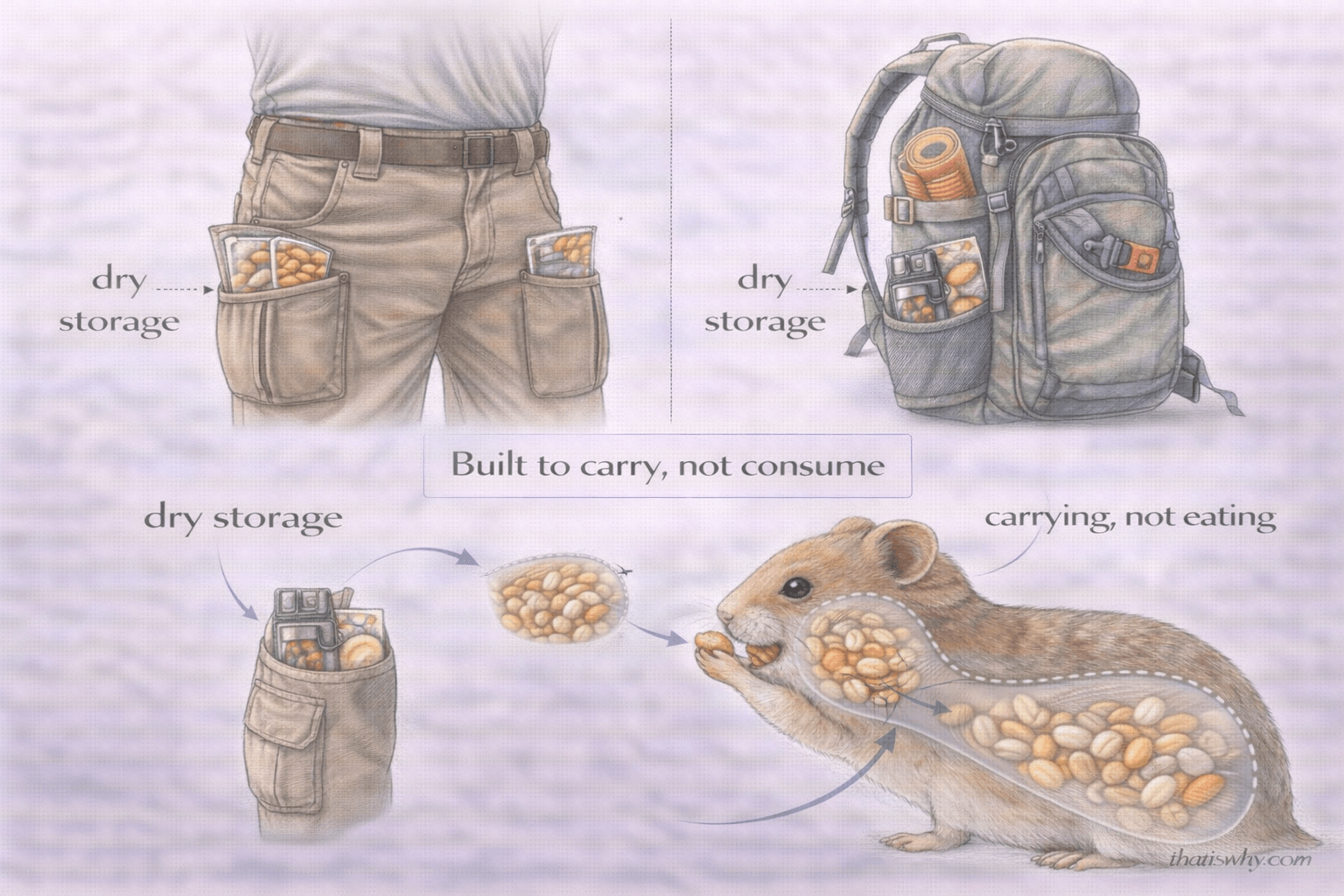
Imagine a pair of pants where the pockets don’t stop at the thigh. They keep going past the knee, all the way down to the ankle. The hamster’s pouch is a loose bag of skin that starts at the lips but runs all the way down the side of its body, past the shoulders, and ends near the hips.
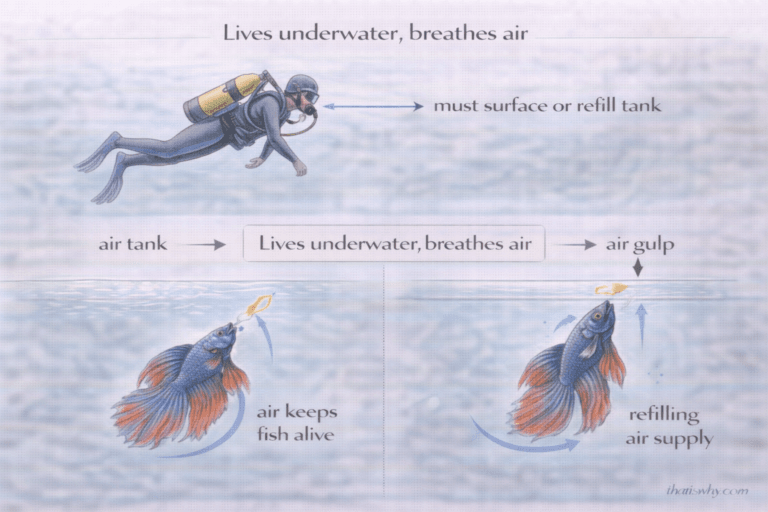
When the hamster stuffs that carrot in, it isn’t “eating.” It is packing. It pushes the food down into the deep pocket, sliding the cargo over its own ribs to distribute the weight. Like the Betta fish having bag of oxygen, hamster has literally one for food worn on the inside.
The Waterproof Lining
This design creates a massive problem. The mouth is wet. Saliva contains Amylase, an enzyme that starts digesting food immediately. If a hamster stored dry seeds in a wet cheek, they would turn to mush and mold.
So, the hamster installed a Waterproof Lining in its cargo pants.
The cheek pouches contain zero salivary glands. The lining isn’t mucous membrane; it is keratinized epithelium, basically dry, tough skin, just like the palm of your hand.
This ensures the cargo stays pristine. The food comes out exactly as dry as it went in. The hamster can transport biscuits, seeds, or bedding material for miles without getting them soggy. It is the only mouth in nature designed to keep food safe from digestion.
Emptying the Pockets
How do they get the food out? The pockets are deep, and hamsters have short arms.
They use a built-in drawstring. The pouch is anchored by a specialized Retractor Muscle that acts like the elastic waistband of the pants. When the hamster gets home, it relaxes this muscle and uses its front paws to push the cargo forward.
It looks like they are vomiting, but they aren’t. They are literally turning their pockets inside out. The food spills out dry, fresh, and ready for the pantry.
The Survival Tool: Airbags and Life Rafts
This Cargo Pant isn’t just for groceries. It’s a survival multi-tool.
The Life Raft : In the wild, Syrian hamsters sometimes have to cross streams. They are terrible swimmers. Their dense bodies sink, so they hack their own buoyancy. They inhale air, fill their cheek pouches like balloons, and clamp their mouths shut. This displaces enough water to make them float. The pouches act as buoyancy vests, keeping their heads above water while they paddle across.
The Panic Room : The pouches also double as an emergency vehicle. If a mother hamster feels threatened, she will sometimes stuff her live babies into her pouches. Because the pouches have no saliva, the babies don’t drown. Because the skin is thick, they are safe from impact. She turns her own head into an armored minivan to evacuate the family.
The Design Flaw
But this superpower has a fatal flaw. The cargo system relies on dry goods. If you introduce something sticky, the machinery jams.
This is why you never feed a hamster peanut butter. Without saliva to lubricate it, sticky food acts like glue. It cements the pocket shut. The hamster can’t eject the cargo it will causes an Impaction. The food rots inside the pocket, turning the backpack into a toxic waste dump. The “Dry Storage” feature that saves them in the wild becomes a liability in a house full of processed snacks.
The Prepper
When we see a chubby hamster stuffing its face, we laugh. We think it’s being greedy.
But it’s not greed. It’s planning. The hamster is a Doomsday Prepper. It evolved in harsh deserts where food disappears for months. It knows that winter is coming and ti be safe it built a body capable of carrying 50% of its own weight in supplies. It turned its own skin into a mobile warehouse.
Your hamster isn’t fat, it is the next level of logistics. It is ready to survive the apocalypse with nothing but the pockets in its cheeks, proving that the best place to keep your assets is right where you can see them.
How We Researched This :
To explain this anatomical marvel, we examined veterinary textbooks on the Syrian Hamster (Mesocricetus auratus) and referenced the medical history of the cheek pouch as an “Immunologically Privileged Site.”
But we knew that just citing anatomy isn’t helpful. Our real job began when we asked, “What does this feel like?” That question led us to the “Cargo Pants” analogy—a simple story to make the complex mechanics of carrying 20% of your body weight in your cheeks feel intuitive.